Empowering the Next Generation of Architects & Designers
Over the past two decades, ZGF has contributed nearly $400,000 to the Norm Zimmer Scholarship and Emerging Black Architects Scholarship funds to support the next generation of architects and designers.
Established in 2004 in memory of founding partner Norm Zimmer, the Norm Zimmer Scholarship exemplifies Norm’s spirit and devotion to design, community, and life-long learning. With this guiding ethos in mind, each year one student is selected to receive $10,000 for university tuition and fees and a paid internship with ZGF.
In 2020, following the George Floyd tragedy, ZGF employees came together to establish the Emerging Black Architects Scholarship, an annual $5,000 scholarship for two students along with a paid internship. ZGF staff raised $160,000 on Juneteenth and partnered with leadership to create a lasting opportunity to support Black students in their path to becoming architecture and design professionals. With the Partners’ continued commitment and contribution, ZGF has been able to award this scholarship for the past three years.
We’re thrilled to announce this year’s Norm Zimmer Scholarship and Emerging Black Architects Scholarship recipients.
“We look for signs of someone who will impact the profession in a transformational way.”
– Braulio Baptista, Partner, ZGF
2023 NORM ZIMMER SCHOLARSHIP: NICOLE NIAVA
Compassion for Communities
Nicole Niava stood out among nearly-100 Norm Zimmer Scholarship applicants for several reasons, including her compelling personal story, critical thinking, and socially charged essay discussing how architecture can be an instrument of division.
Born and raised in Abidjan, the largest city on the Ivory Coast of West Africa, Nicole was drawn to architecture at a young age—but she also observed its flaws. Namely, how it can isolate disadvantaged communities, highlight inequalities, and reinforce systemic biases through physical and spatial barriers.
“As designers, we have the power, skillsets, and creativity to better serve our communities,” she wrote in her application. “Designing with communities in mind is the essence of my work.”
Architects and designers must also be intentional about how they engage communities.
“We shouldn’t come in with our architect hats on, trying to solve every problem. We should listen and understand that providing flexibility and agency can be just as empowering as providing solutions,” Nicole said.
“Scholarships like this can make architecture school more accessible.”
– Nicole Niava, 2023 Norm Zimmer Scholar
One of her portfolio concepts, Sambou Toura Drame Elementary School, proposes an innovative yet practical solution for building sustainable schools in rural Senegal. Using readily available, affordable materials such as Typha reed—an invasive species—the project offers a low-tech and culturally driven solution that reduces the environmental impact of construction and sustains local craftsmanship among Senegalese youth.
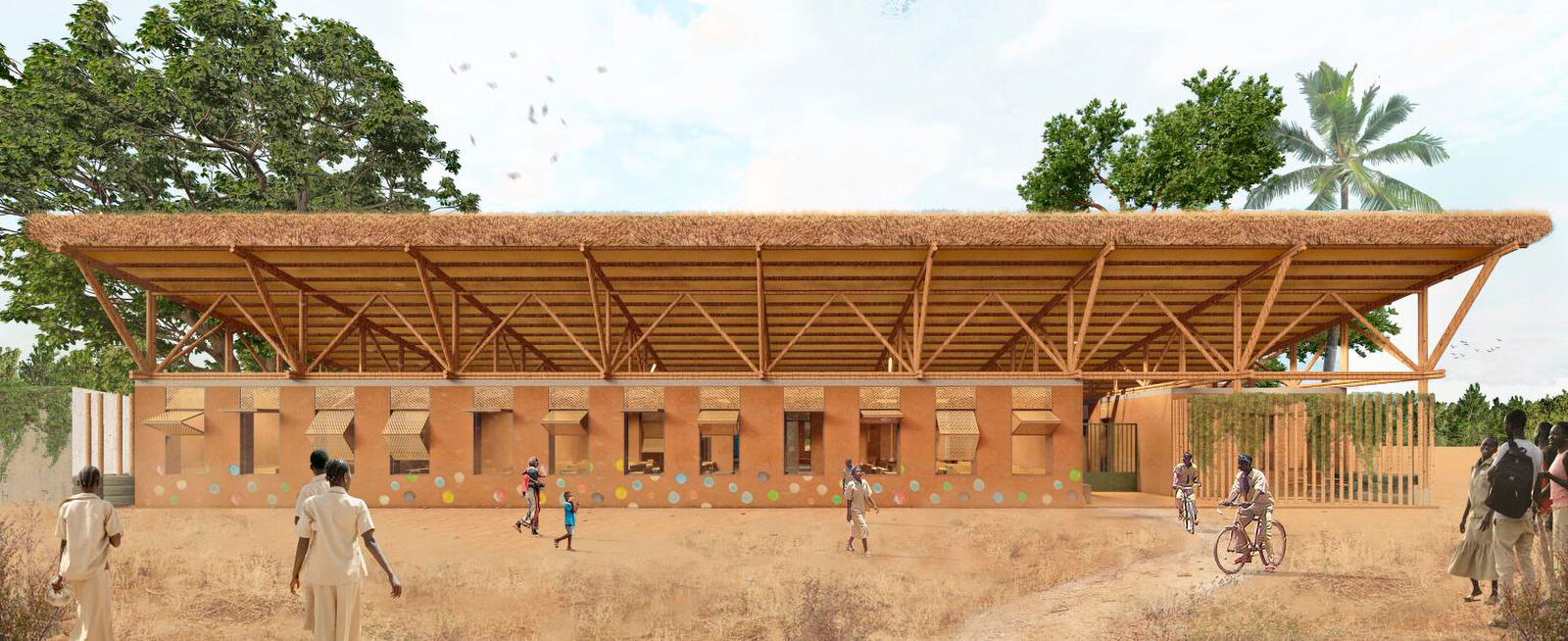
Sambou Toura Drame Elementary School, courtesy of Nicole Niava and Meissane Kouassi. Students were prompted to create an innovative solution using only local materials, ensuring it would be realistic for the community to build itself.
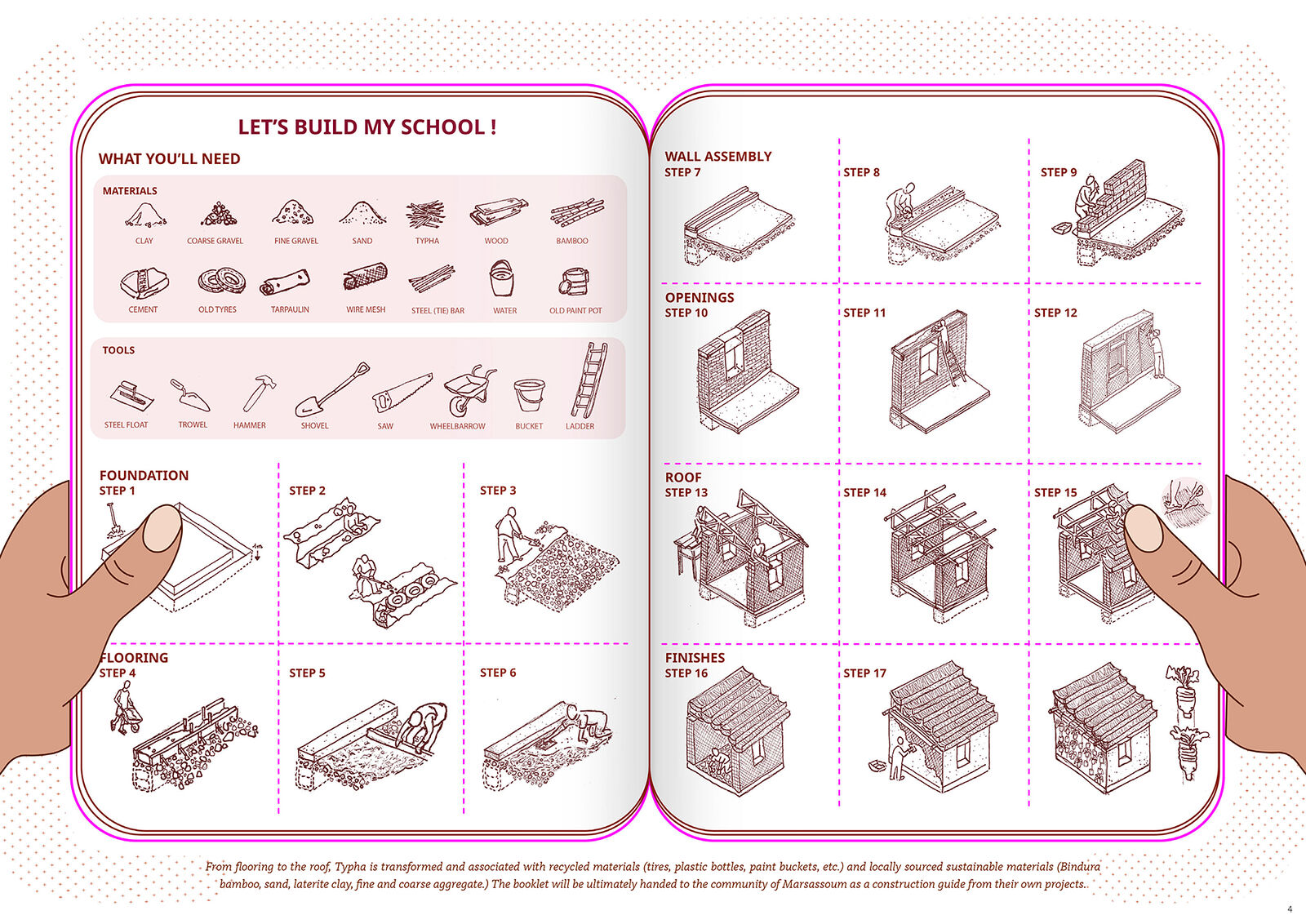
The project showcases how local communities can work together to build a school, including material selection and step-by-step building guides.
Nicole is currently a Master of Architecture candidate at Yale University. This summer she’ll be traveling abroad—first studying museums in London, and then embarking on a personal research project to study the Great Green Wall Initiative in Africa.
“I will travel through Senegal and Ethiopia with the John Belle Travel Fellowship to document the different landscape techniques used to restore degraded land in the Sahel and combat desertification,” she said.
2023 EMERGING BLACK ARCHITECTS SCHOLARSHIP: TEONNA COOKSEY & LAUREN JASPER
Entrepreneurial Spirit
Teonna Cooksey was nine years old when she started drawing the buildings outside her house. Her father took notice and purchased her first design book, piquing Teonna’s interest even more. She knew she wanted to become an architect when she realized it was “art that people could live in and occupy”—and she wanted to create that.
One of her portfolio concepts, Agency, is a primary school inspired by braiding hair. The project merges business and art programming to create a space where students learn to navigate life by questioning and creating simultaneously. Teonna didn’t land on the name until later in the project, when she realized the underlying meaning of her design.
“I wanted to empower students to understand themselves, how they interact with the world around them, and what they can contribute, without being told what they can contribute,” she said.
“Empowerment also means you can empower yourself.”
– Teonna Cooksey, 2023 Emerging Black Architect Scholar
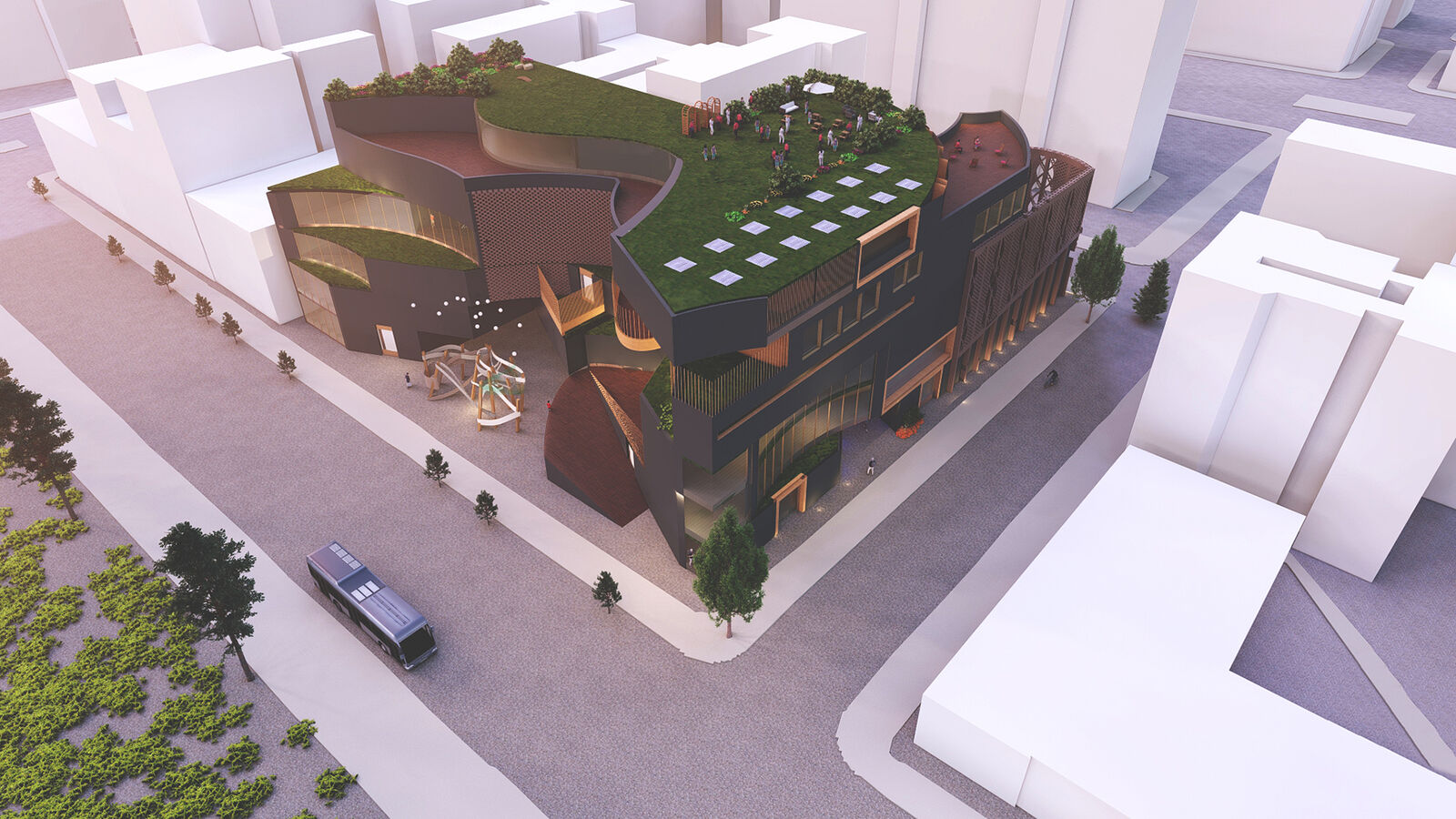
Agency, courtesy of Teonna Cooksey.
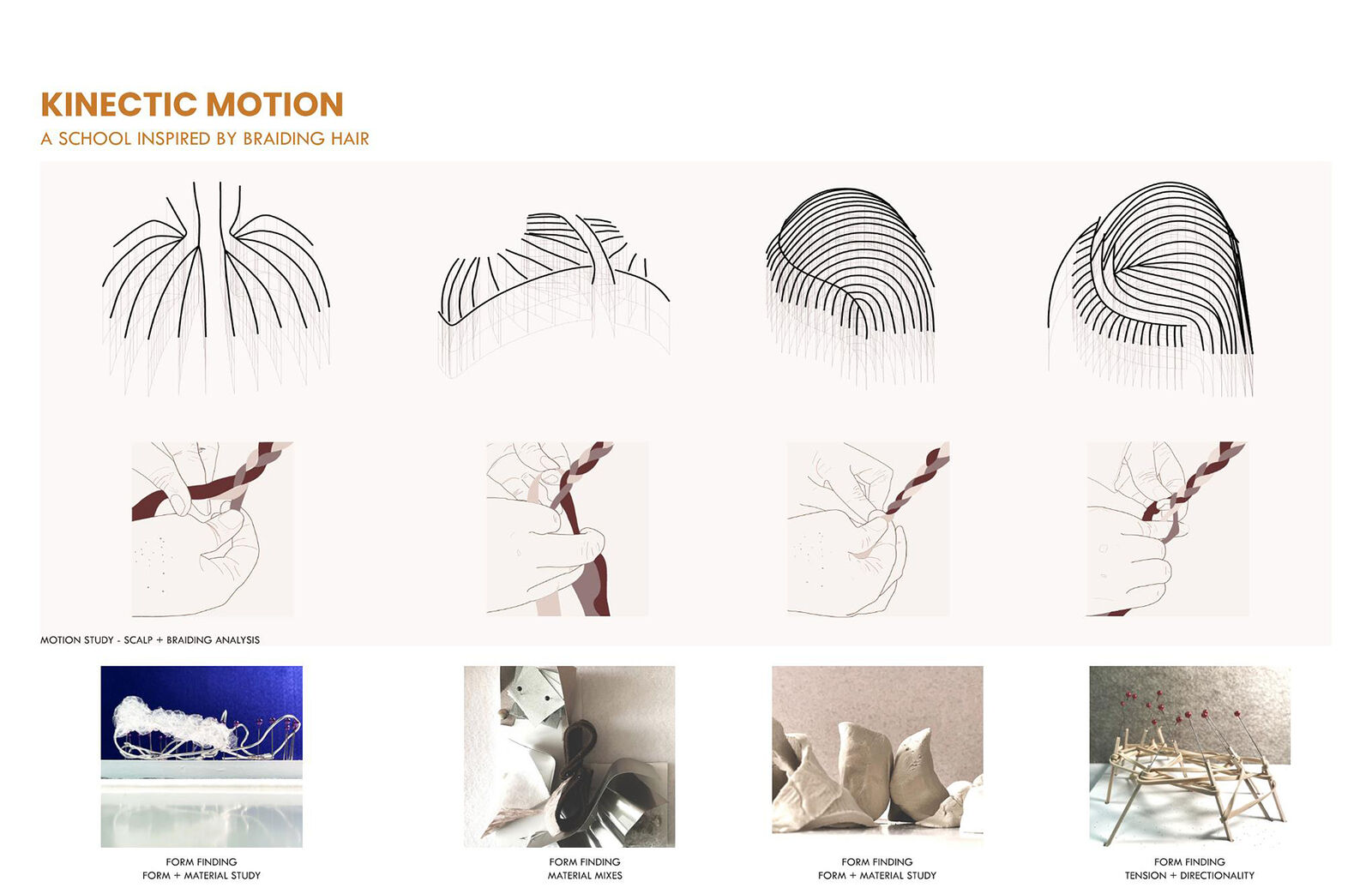
Students in her kinetic motion studio at Columbia University were prompted to design a building inspired by a movement that personally resonated with them. Teonna learned to braid hair at just three years old, which later enabled her to make an income and set her on a path to entrepreneurship. It also taught her the value of creating things with her own hands. In the design of Agency, braiding hair represents the notion of weaving objects together to establish new forms.
“Circulation becomes the most important aspect of the design, enabling students to weave through the building the same way they move through the multifaceted curriculum,” she added.
Teonna is currently a Master of Architecture and Master of Science in Urban Planning candidate at Columbia University, with concentrations in community and economic development. She accepted a summer internship with ZGF New York, where she hopes to learn more about technical design as well as business operations. She dreams of starting her own firm one day.
Sparking Social Change
Growing up in a predominantly Black Pittsburgh neighborhood, Lauren Jasper’s view of architecture formed through a social and ethical lens rather than a purely aesthetic one. In school, she was inspired by famous architects like Zaha Hadid and Antoni Gaudi, but their visually striking designs were always in stark contrast to the development projects she witnessed in her own city, which historically have resulted in gentrification and displacement of marginalized communities.
“Multiple perspectives, especially those from marginalized communities, are important at every step in the design process,” Lauren wrote in her application. “As an architect from an underrepresented community, I’ll draw from my background and identity to create positive change through design.”
One of her portfolio concepts, The Pool, dives into the topic of immigration, calling attention to the stories and perspectives that have been left out of history books. Set on Ellis Island, New York, the project speaks to methods of U.S. immigration through time—both chosen and forced. Lauren began with an artist analysis of Torkwase Dyson, whose use of simple geometries such as curves, squares, and triangles draws from the stories of enslaved people who used architecture as a means of liberation.

The Pool, courtesy of Lauren Jasper. Students were prompted to design a pool sited on Ellis Island
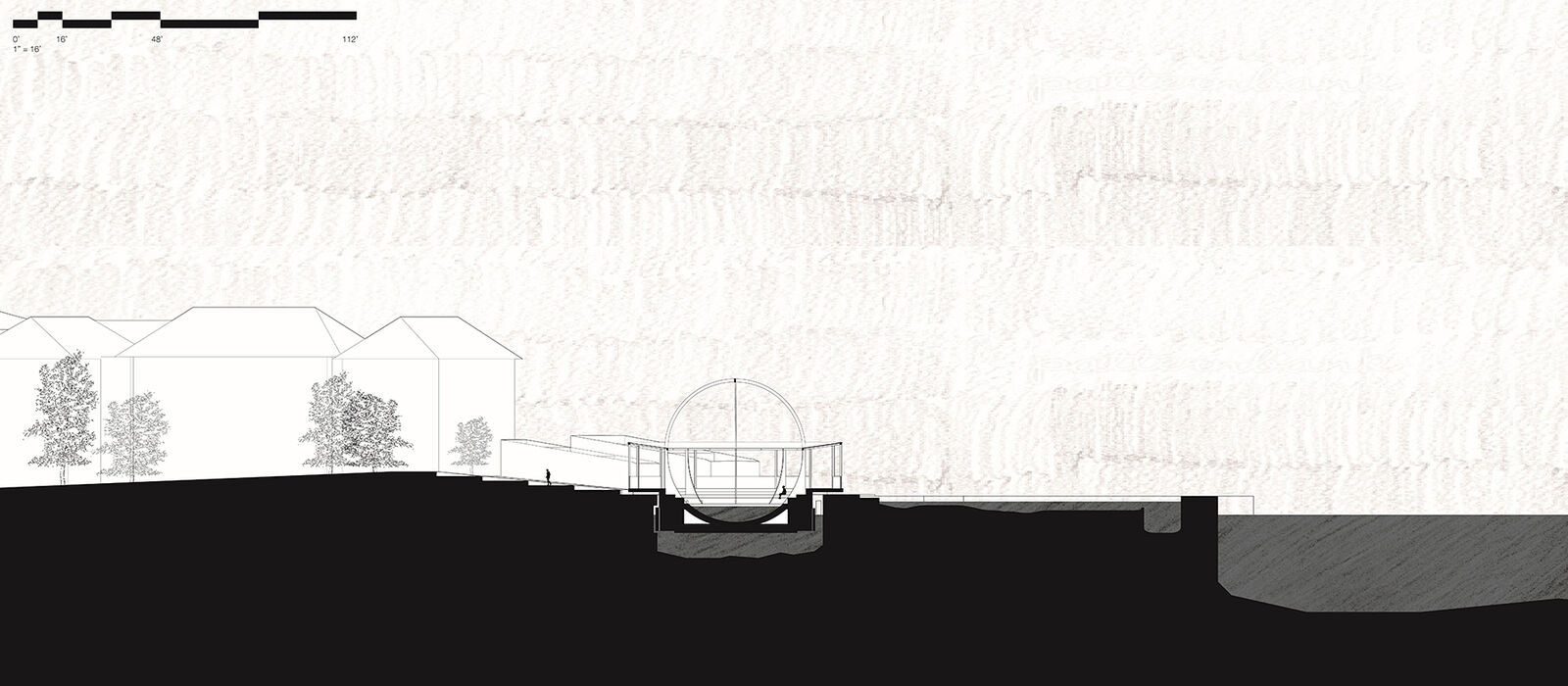
Applying triangle and circle geometries to represent limited access to Ellis Island and the Statue of Liberty—literally and figuratively—Lauren reimagined the site by splitting it into two sections. Terraced landscaping on one side represents the concrete and recorded number of European immigrants who entered through the island, seeking new opportunities. The other side features a wade pool with a hidden underwater landscape, representing the unrecorded stories of slaves and stowaways who arrived under much different circumstances. Lauren’s use of simple shapes to convey a deeper message speaks to both the history of Ellis Island and her own family’s history emigrating to the U.S.
“The project is highly conceptual, but it’s one of my favorites because it shows my thought process and approach to applying important and deep concepts to design,” Lauren said.
When asked how she will impact her community as a design professional, Lauren said, “I’m very aware that my experience as a Black woman studying architecture, especially in the Ivy League, is rare. As uncomfortable as my experience can sometimes be, recognizing the uniqueness of my perspective has made me appreciate its value.”
“It’s grown my confidence as a designer because it’s given me a stronger sense of self.”
– Lauren Jasper, 2023 Emerging Black Architect Scholar
Lauren knew at a young age she wanted to become an architect, but often experienced imposter syndrome as the only person of color in her high school and early college programs. Learning to articulate and defend her ideas has empowered Lauren speak up more in class.
“My unique experience helps me talk about architecture in a different way than my peers, which makes me even more passionate about increasing representation in the industry,” she said.
What’s next for Lauren? She’ll be working and studying in New York City for the next several months, where she hopes to gain residential design experience and eventually work on affordable housing projects for underserved communities. She’s currently a Bachelor of Architecture student at Cornell University.
The Judges
Special recognition goes to the 2023 judging panels for their time and commitment to these scholarships. Both panels are made up of a majority non-ZGF staff and formally recommend the winners to the Oregon Community Foundation.
2023 Norm Zimmer Scholarship judging panel:
- Scott Baker, Founding Principal, RELM
- Jenna McKnight, Architectural Journalist and Senior Contributing Editor, Dezeen
- Mark Gardner, Assistant Professor of Architectural Practice and Society, Parsons School of Design; Principal, Jaklitsch/Gardner Architects
- Braulio Baptista, Partner, ZGF
- Kate Mann, Partner, ZGF
2023 Emerging Black Architects judging panel:
- Renee Kemp-Rotan, President/CEO, Studio Rotan
- John Sivills, Lead Urban Designer, City of Detroit Department of Planning & Development
- Michael Marshall, President/CEO, Michael Marshall Design
- Steven Lewis, Principal, ZGF
Learn more at zgf.com/scholarships.
ZGF Employees Fund New Emerging Black Architects Scholarship

9 Women Challenging Perceptions & Expectations in Design

ZGF Announces 2020 Scholarship Winner: Araceli Lopez

ZGF Announces 2019 Scholarship Winner: Hong Xi