Building Champions: Designing Sports Facilities That Elevate Performance, Culture, and Community

Building Champions: Designing Sports Facilities That Elevate Performance, Culture, and Community

Methodology December 02, 2024

The path to building a championship culture is paved with many key elements: recruiting and retaining top talent, attracting elite coaching, and cultivating outstanding human performance. Also crucial to the mix is having a state-of the-art practice facility that is tailored to players' needs, and built to make players who can play like champions—feel like champions.    

In November 2006, when ZGF began a partnership with the University of Oregon, the univeristy had a win-loss ratio of 53.8%. Today, almost 20 years later, the Ducks ended the 2024 season undefeated and are ranked number one in the AP poll, an incredible accomplishment that the entire state is proud of.

Over the years, ZGF has continued to work with the university to build a series of top-tier facilities that not only reflect physical strength in their architectural design but also serve to support the community of both players and staff, create a sense of pride, and reinforce the university’s culture and brand. Innovative buildings that cater to player health and optimize player performance with cutting-edge technology and amenities tailored to player needs, with physical therapy facilities and spa-like treatment rooms; full-service dining in the training facility; and spaces that support player’s academic studies. Facilities that help the UO in their mission to attract top talent by showing the university’s dedication to supporting student-athlete’s bodies—and their minds. A clear investment in student-athlete's future after collegiate sports, and the future of the UO athletic program.

“We took sports facilities in a very different direction—we put athletes first.”
Gene Sandoval, ZGF Partner

Here we take a look at ZGF’s projects at UO over the years:  

University of Oregon, Athletic Medicine Center

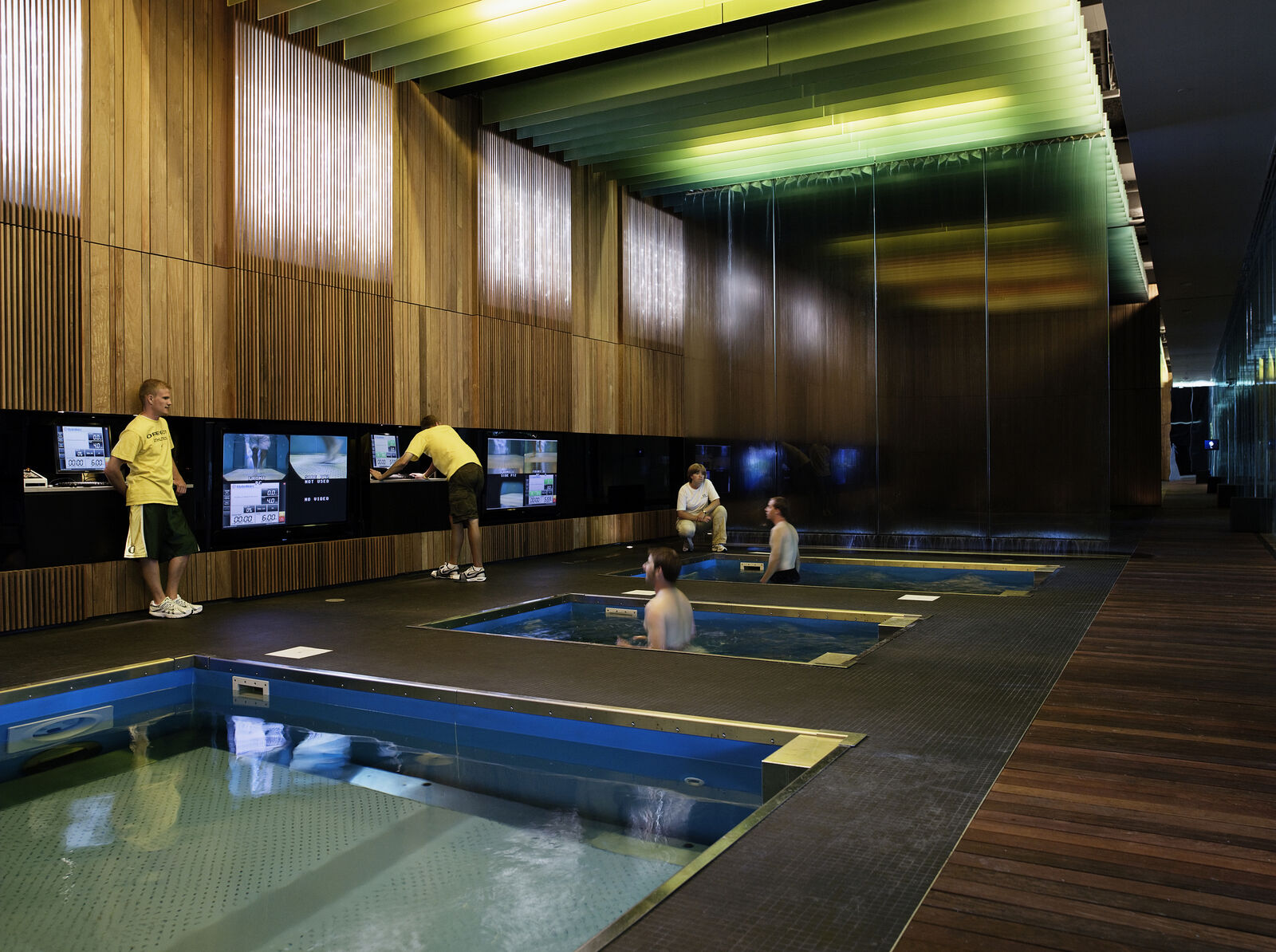
The ZGF-designed Athletic Medicine Center provides the University of Oregon’s athletic department with a state-of-the-art sports therapy and training facility for more than 400 student-athletes. The facility reflects the University’s desire for a holistic approach to healing, stimulation, and focus for its athletes. Comprising three larger spaces bordered by conference and treatment rooms, the Athletic Medicine Center provides ample space for treadmills and exercise bikes, three hydrotherapy tubs, hot and cold tubs, a nutrition bar, a treatment area with adjacent examination rooms, massage and taping tables, a student seating area, an X-ray facility, and meeting rooms. The design approaches sports therapy as a healing environment more comparable to a spa than a clinic.  
University of Oregon, John E. Jaqua Academic Center for Student Athletes

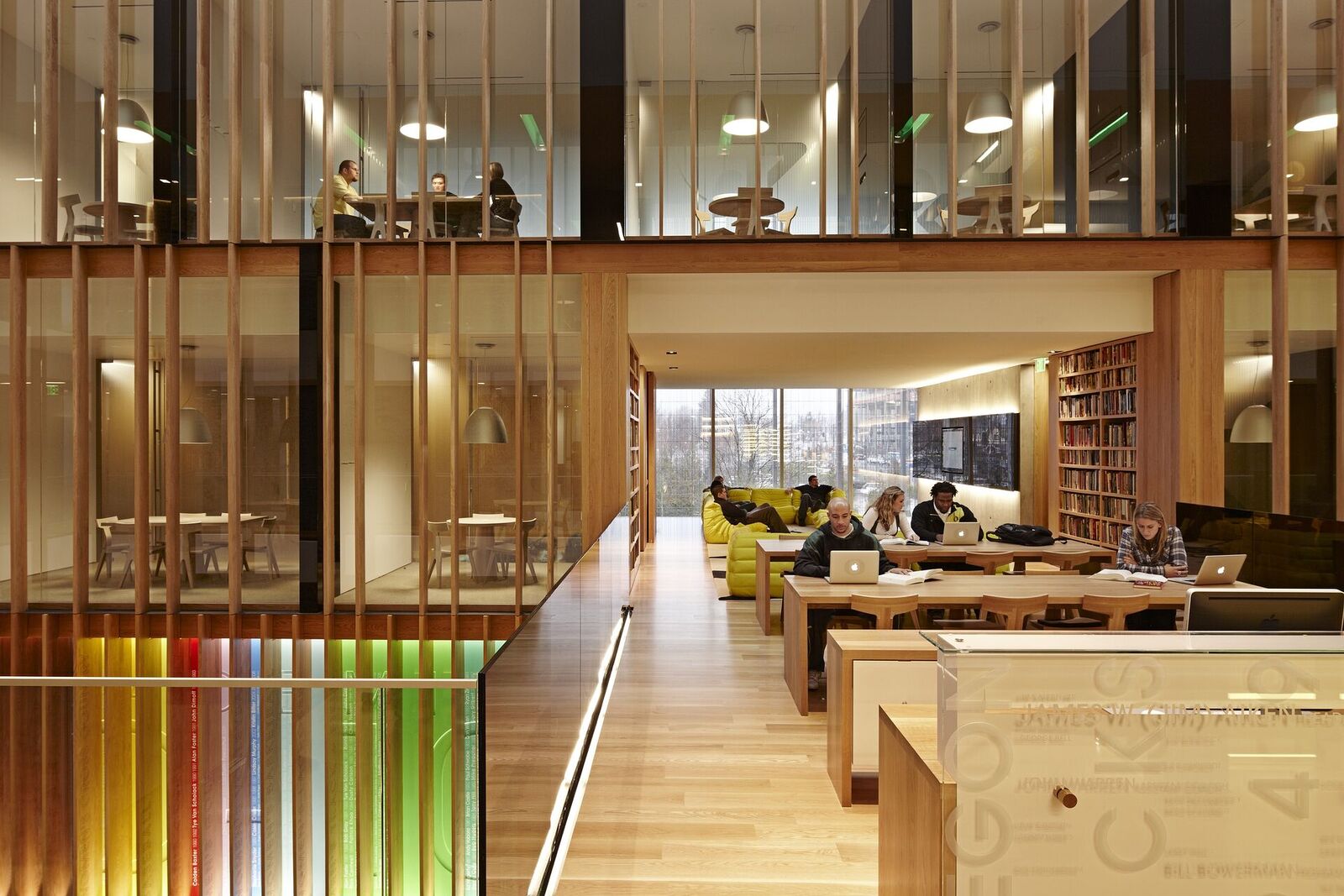
Through the seamless integration of art, environmental graphics, and architecture, the Jaqua Academic Center for Student Athletes serves to inspire and celebrate student achievements. This cutting-edge learning center incorporates a range of learning environments, ranging from small spaces for individual tutorials to a large auditorium. The mix of uses is intended to facilitate learning through collaboration and peer interaction. The building’s first floor is open to the public, with a café, an auditorium, an atrium for public events, and heritage space that recognizes past, present, and future student athletes at the University.   

University of Oregon, Hatfield-Dowlin Complex, Football Operations Center

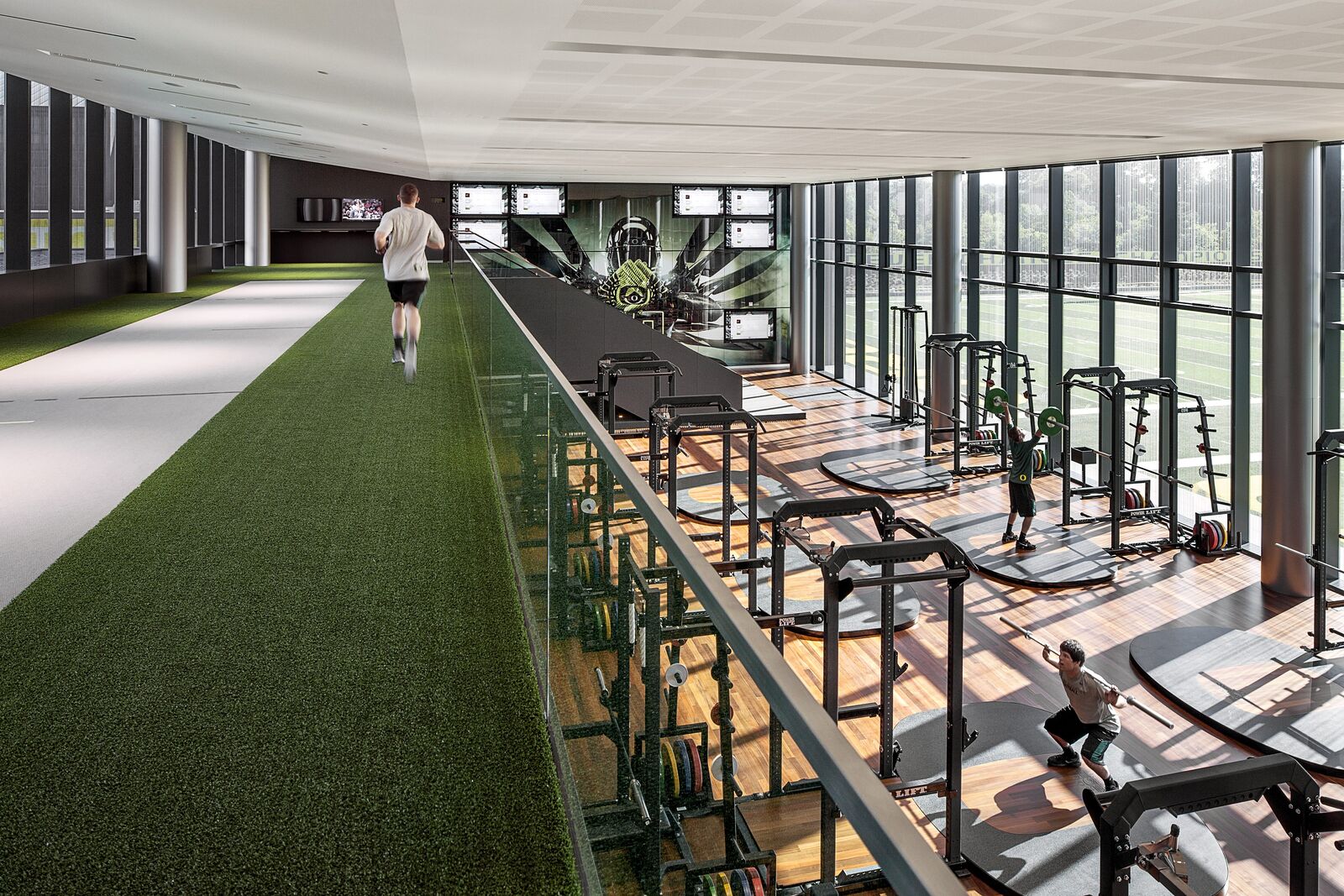
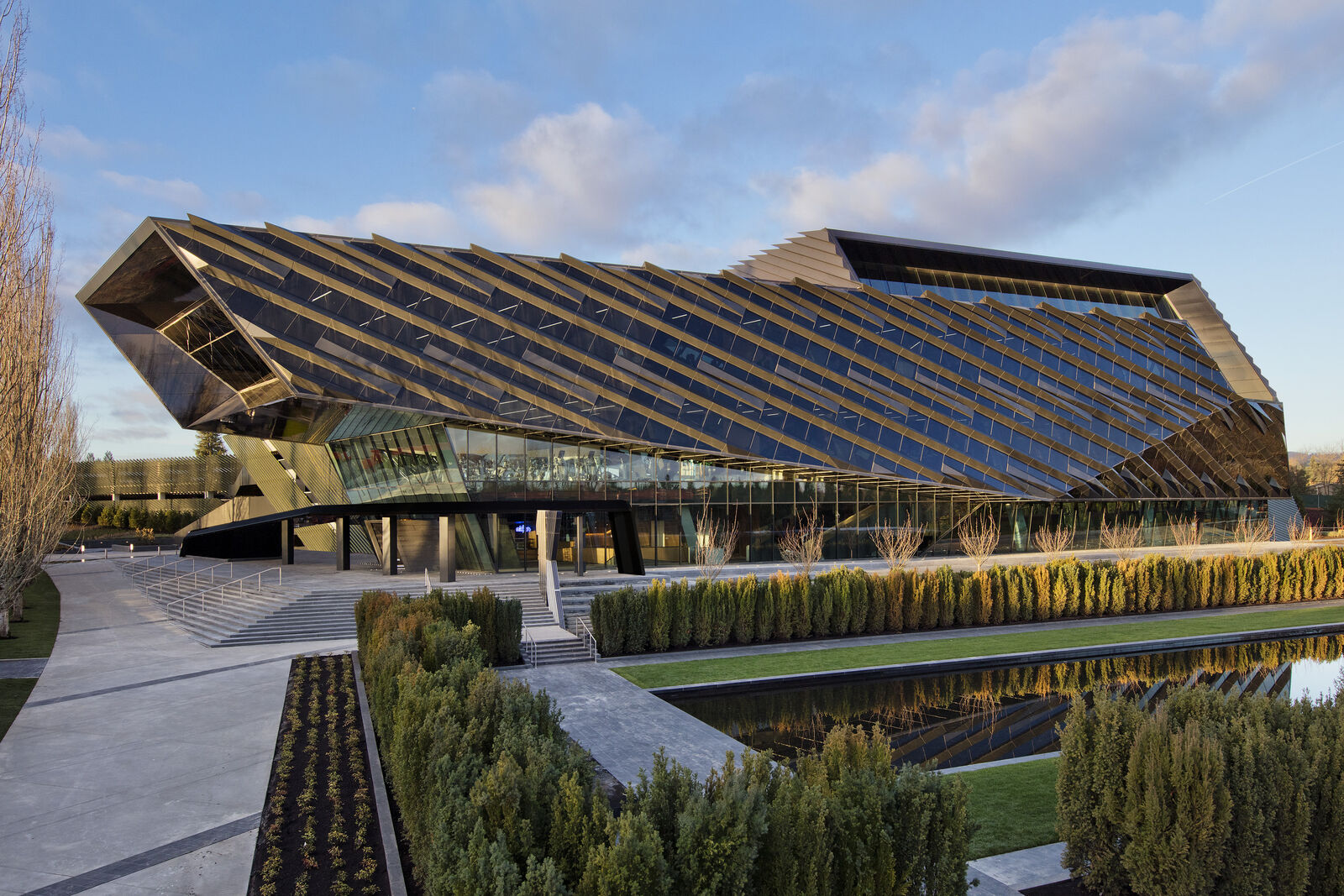
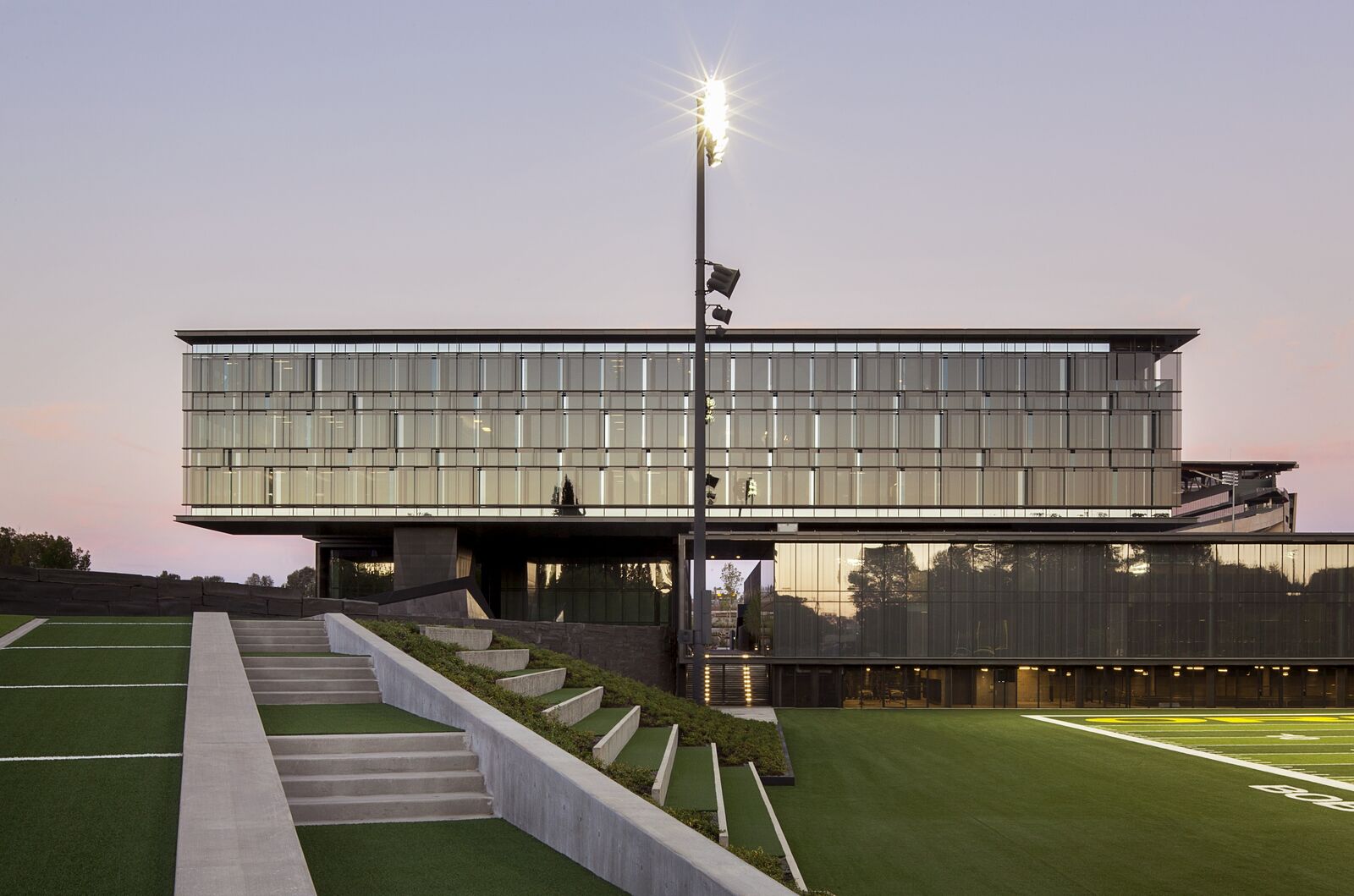
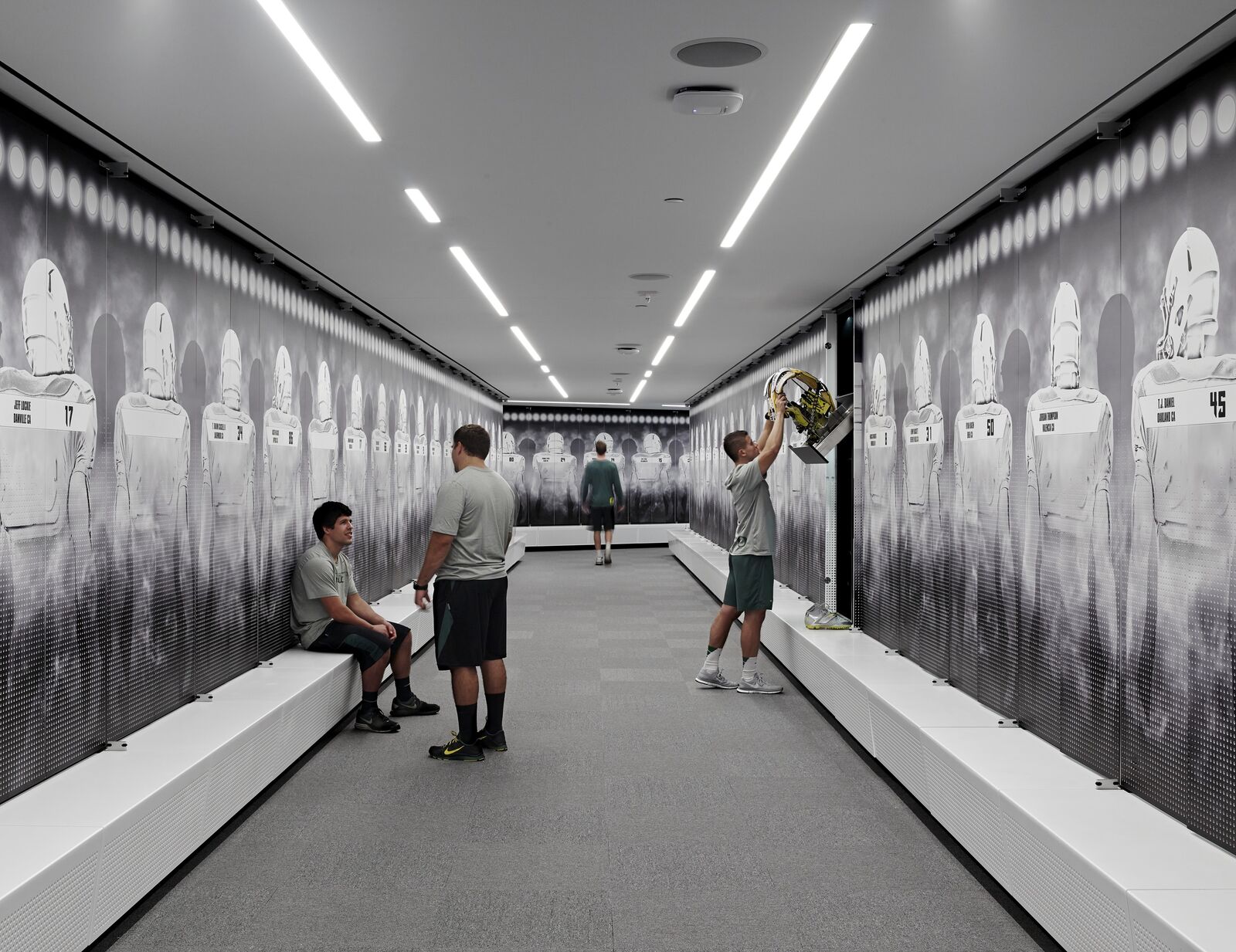
Designed to appeal to the rising stars of high school football nationwide, the 145,000 SF Hatfield-Dowlin Complex plays an important role in the recruitment and retention of the University of Oregon’s football program. The Complex is comprised of two buildings—a “teaching box” and an “office bar”—with the building program divided into box-like elements, interlocking as a cohesive and interdependent composition. The public lobby and reception areas feature elements that celebrate the legacy of the football program and acknowledge the program’s donors and sponsors. An outdoor plaza, with a cascading fountain and benches, serves as a public hub. Tucked under the plaza is a parking garage and plunge pools. The program includes a weight room, indoor sprint track, dedicated football position meeting rooms, team video theaters, offense and defense strategy rooms, and a conference suite that accommodates the entire coaching staff. This suite serves as a central hub for fostering communication and collaboration among offensive and defensive coaches.