The Facts and Fictions of Post-Pandemic Workplace Predictions
Everything you’ve heard about après-quarantine office design is at least partially wrong. Here’s why.
James Woolum, a partner at ZGF and co-lead of our interior architecture practice, looks at the rampant crisis-casting that has been taking place regarding the future of workplace in the post-quarantine era. Read on to find out which predictions he deems true, false, or somewhere in between.
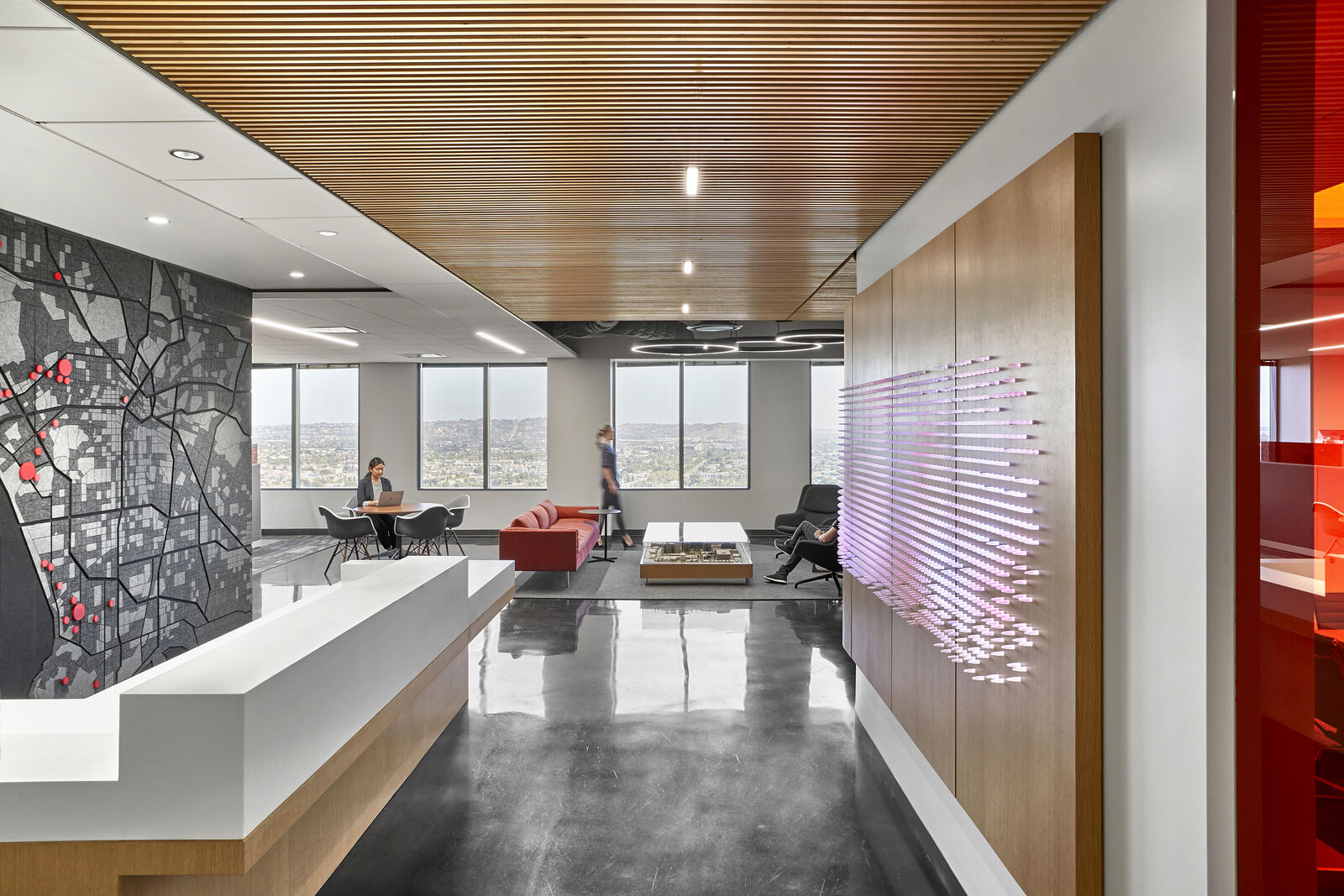
Publishers Clearing House, Headquarters
1. The Claim: More Space, Fewer Desks
The Verdict: Partly False
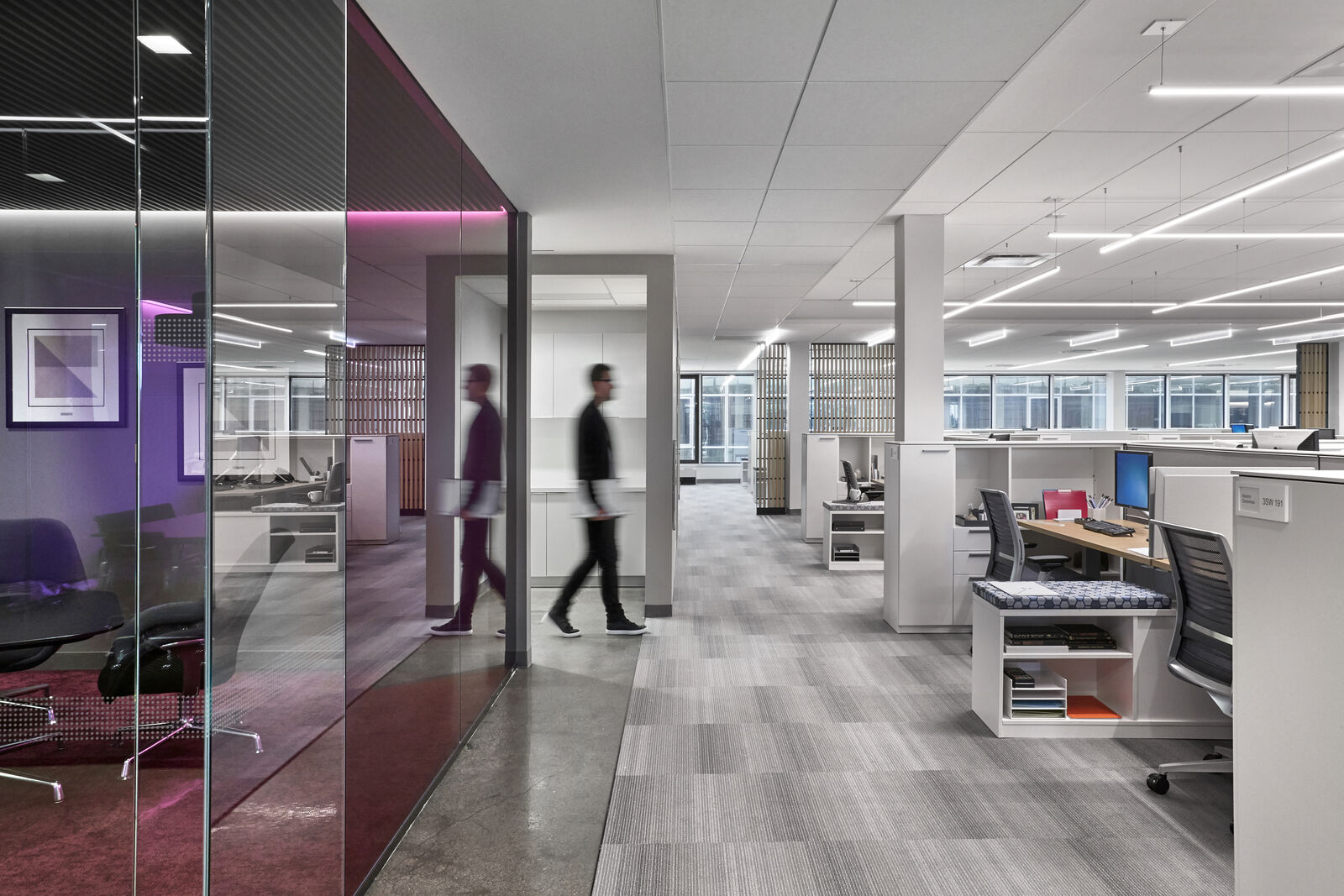
We’ve been reading and hearing a lot of chatter about de-densification of workspace, increasing spacing between workstations, fewer desks in a given area, etc. The economic realities of the workplace market did not support this approach before COVID-19 and are even less likely to do so after the quarantine is lifted. The fact is that we’re going to be in recovery mode for some time, both health-wise and financially-speaking, and the idea of ‘doing less with more’ flies in the face of the realities that both people and organizations will be navigating. It is imperative that we take this time now, as well as what will no doubt be a measured return to public life, to observe and analyze how we can sensitively, strategically, and safely design workplaces that actually do more with the same and in some cases less than before.
ZGF, Los Angeles Office
2. The Claim: It’s the End of the Office
The Verdict: False
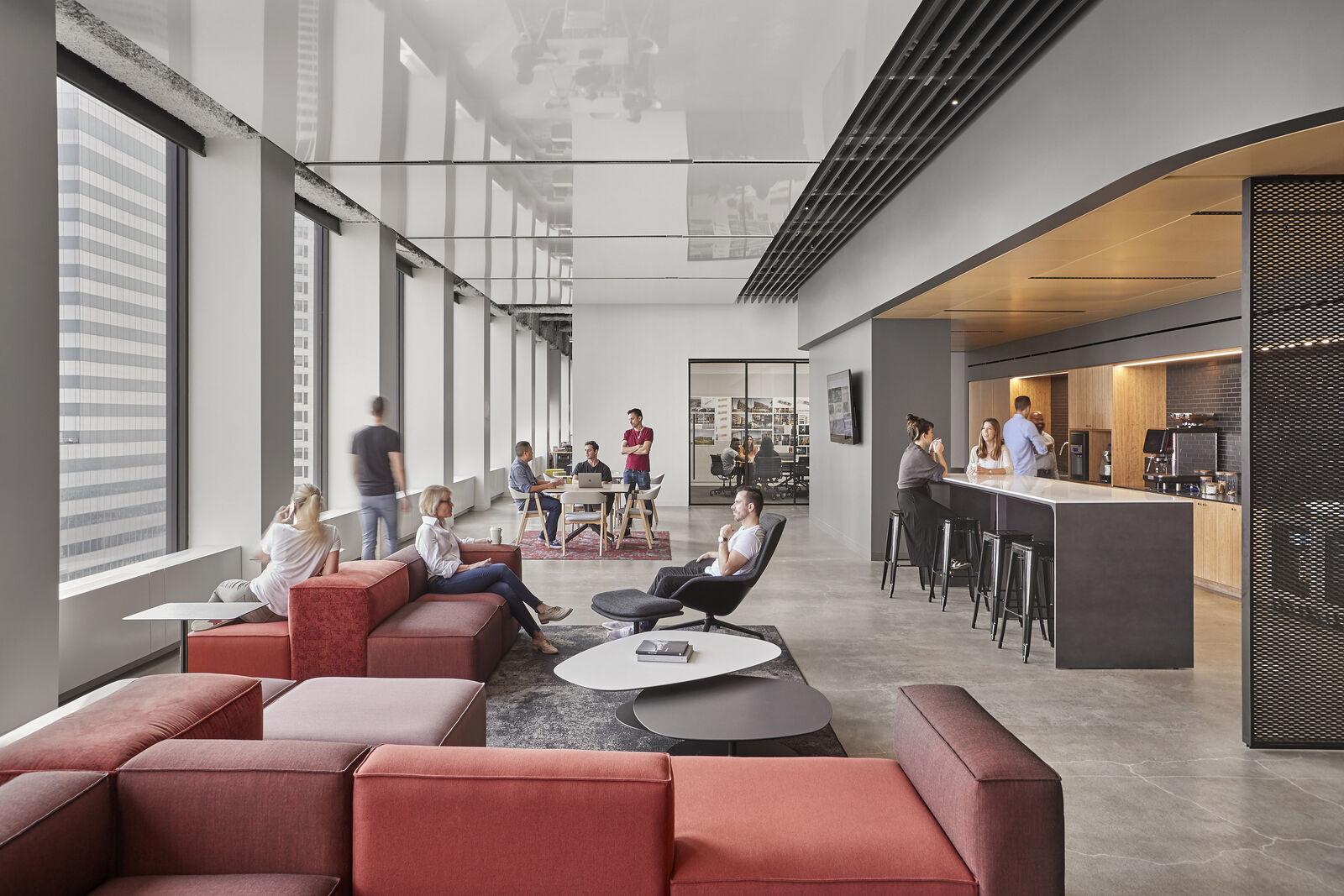
We’ve proven we can Zoom, Skype, and Microsoft Teams with one another in between emails, texts, FaceTime, and chasing kids, cats, dogs, and significant others away from our home desks. If you’re so inclined, there’s even Goat-to-Meeting. It’s no surprise that we quickly adapted our professional (and social) lives to revolve entirely around technology; we were already so tied to our phones and to the digital realm that the jump to WFH was less like hyperspace and more like a slight side-shuffle. But it’s important to remember that even before the quarantine many people were feeling lonely and isolated and, dare I say, socially distanced. For a lot of us, the office is the last remaining outlet for daily face to face social interaction. The business and personal well-being benefits of being in a shared work environment, able to engage IRL with colleagues and clients cannot be denied and aren’t going anywhere. Perhaps safer to say that this is the beginning of the end of proximity bias and that employers will have a much higher comfort level with employees working from home when they need to, for any reason.
The Lundquist Institute, Medical Research Building 1
3. The Claim: Anti-Infection Workplace Design Interventions will be the new Must-Haves
The Verdict: Yes. And probably no. It’s complicated.
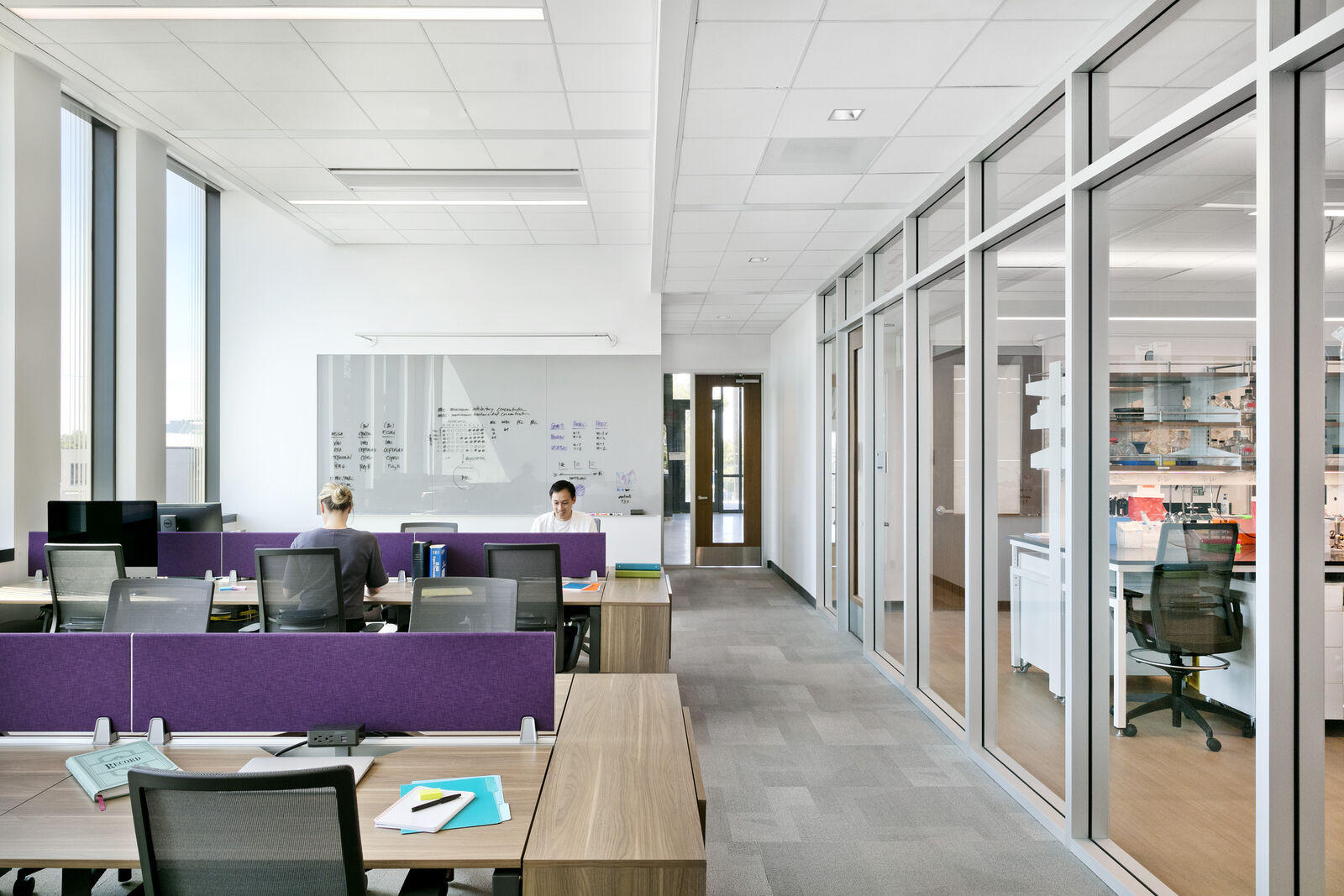
Will we see a return to 8×8 workstations with higher panels or the addition of Plexi-Glass divider screens—essentially “breath barriers,” which one might argue some needed even before the global outbreak? It could happen, but we’ll just be debating their effectiveness for years in the same way we’ve debated high vs low panels for acoustical isolation. Will touchless technology for doors, elevators, coffee makers, and more become the new norm when we specify products for workplace environments? I’d say yes, but that was all probably coming our way regardless; the COVID crisis will have only sped those choices to market. Will new technologies for fabrics and surfaces allow for more frequent, aggressive, or high-powered cleaning methods? Sure, but we’ve been doing that for years in healthcare environments so it’s just time for the corporate workplace to catch up. All that said, I would argue that major changes in—and expectations of—hygiene and behavior in shared environments will take a front seat, in the end influencing the degree to which more physical interventions are necessary. Will the harsh realities of the post-COVID world alter time hewn preferences and behaviors of the workforce? Absolutely, but only time will tell how drastic or enduring those changes will be.
So, what then is the future of workplace design? The simple truth is that we just don’t know yet. What we do know is that humans tend to overreact to the short-term ramifications of change (or social upheaval) but underestimate its long-term effects. Quite simply, it’s way too early in the game for hard and fast answers. As designers, we have a duty to observe without bias or preconception and a responsibility to approach issues new and old with sensitivity and optimism. Now, more than ever, we in the design community must remain open-minded, agile, and committed to being part of the solution—whatever form it may take. For now, in the immortal words of Bette Davis, “fasten your seatbelts, it’s going to be a bumpy night.”
With a career in architecture spanning 28 years, James Woolum, FAIA, has significant experience designing corporate, healthcare, research, and institutional environments. His design approach leads to honest, authentic, and user-focused solutions deeply rooted in the unique culture, process, and community of each client. James has led design and workplace strategy efforts for a variety of media, technology, and financial services clients, such as Google, Publishers Clearing House, and California Air Resources Board. James is a member of both the American Institute of Architects and the Commercial Interior Design Association. He holds a Bachelor of Architecture from the University of Southern California.