Strategies for Biophilic Site Design
By Dave Grant, PLA, ASLA, LEED AP
We know intuitively what research has confirmed: that people have an intrinsic need to connect with the natural world through interactions with weather, plants, water, etc. I was first introduced to this notion as a child playing around my neighborhood. One of my first memories of landscape was sitting on a boulder under a low spreading pine tree on a plant bed in a parking lot. Even in that inhospitable setting I felt comfortable and sheltered, as if I was in an outdoor “house.” At the time I couldn’t quite put my finger on what made that little outpost feel special, but it left an indelible memory, and I have thought back to that experience many times over my academic and professional life as I work to express the natural world on a site.
When designing a landscape, I try to create meaningful connections with the natural world. Sometimes this is an end to itself, such as in therapeutic garden design, but I try to employ these ideas in all contexts – from transit, to academic, to healthcare. Beyond circulation and amenity, landscapes can provide calming and respite, or uplift spirits.
When embarking on a project design, I begin by looking at what the site already has to offer, and what can be pulled into the site or framed as a view, utilizing the Asian landscape tradition of “borrowed scenery.” What is the underlying sense of place, and how can we enhance and convey it? Are there stressors in the viewshed that can be screened?
Through thoughtful design we can draw the visitor into and through the landscape by creating a sequence of outdoor rooms – some large, some small. Guiding them through areas of compression and expansion by bending site lines to entice movement implies a destination “just around the bend.” We can also lead the visitor with “breadcrumbs” – a runnel of water, a distinctive sequence of plants, pavement treatments, or interpretive elements.
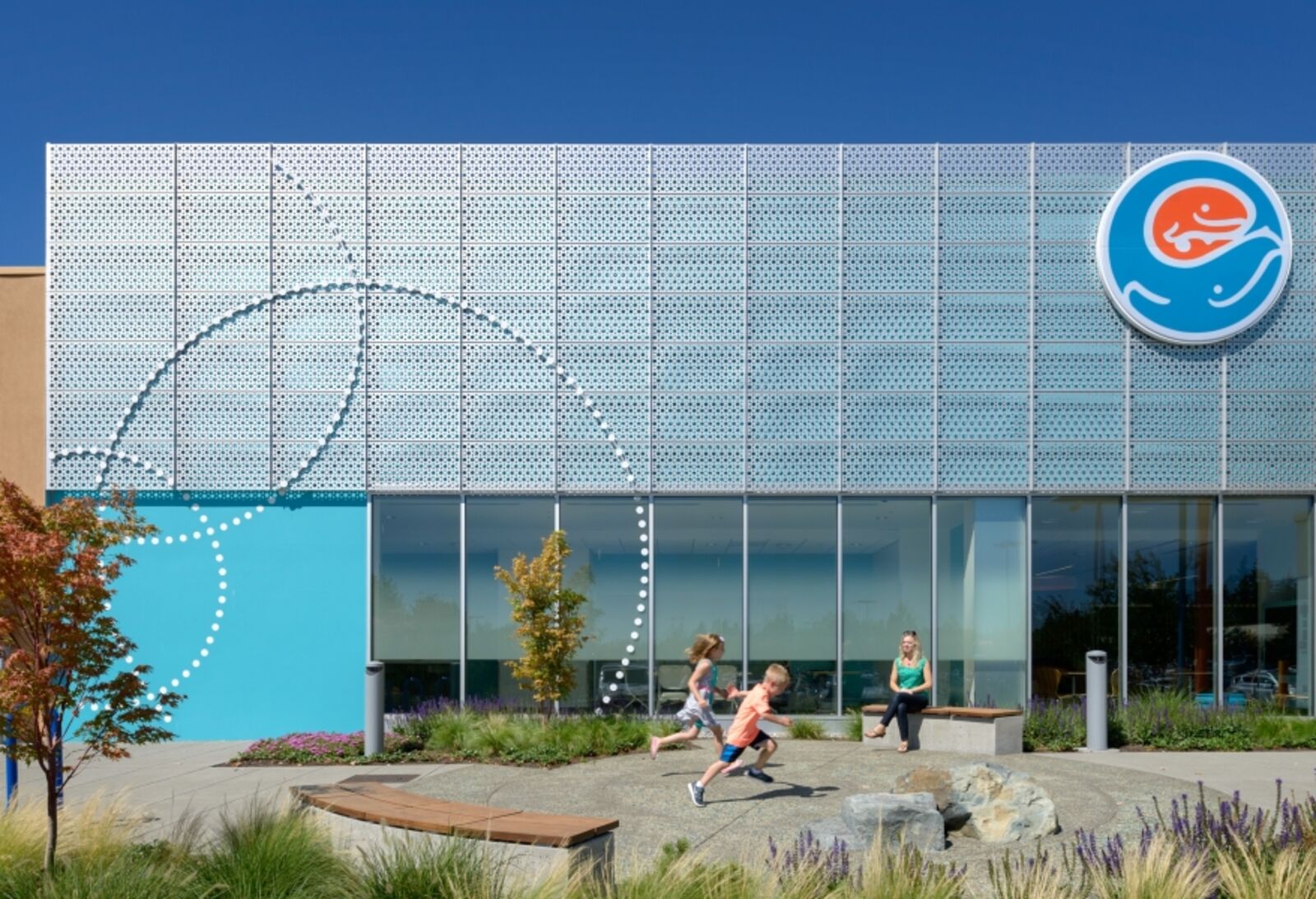
We can mark places with art, water, a clearing, or opportunities for play. Create places to simply “be” by providing seating or a perch. The draw does not have to be physical; a site can be “walked” with the eyes or the imagination from a point of prospect. We have an innate appreciation for the ability to survey our surroundings while feeling protected from behind and above – the notions of prospect and refuge.
One of the most powerful ways to connect people with nature is to engage the senses. Employ the hypnotic effect of gazing into a fire, the beautiful sounds of flowing water, and the coolness, both real and imagined, that it conveys. Plants can be selected to express the movement of air through foliage – the sway of tall grasses, the rustling of leaves exaggerated by leaf and stem shape, such as with quaking aspen, or visually conveyed by leaves with contrasting undersides to create a flashing effect as they blow and dance. Provide a place to watch the play of light on rippled water and to listen to the sound of lapping at water’s edge.
Smell is a particularly effective way to appeal to the visitor and can carry one’s mind away – sweetly scented flowers, the spicy scents of leaves, bark, and duff. We can appeal to the sense of touch with textured pavements (stone, plants, earth, gravel), seating surfaces, and natural materials like rock and wood. In dry environments, water can also provide the welcome feeling of humidity.
We can provide visual interest year-round through the texture and color of foliage and flowers, limited not just to autumn but a year-round procession of color through the seasons. Trees can be selected and staged for their sculptural winter forms – textured bark, bare twigs, buds and birds’ nests revealed. One doesn’t need to be outside to enjoy these landscapes either. These visual cues are legible from indoors and keep one connected to the natural world, which research has shown can lower elevated blood pressure, positively impact mood, and in medical contexts, reduce perceived pain and improve patient outcomes.
Beyond the senses, engage the mind. Appeal to human curiosity and provide whimsy and interest through built forms and interpretation of the natural world through art. Borrow “actors” by creating a stage, through the provision of space and habitat, and invite people, animals, birds, and insects to animate the space. They, in turn, provide more movement, sound, and visual interest.
Biophilic site design can set the stage for meaningful encounters with the natural world, no matter the context. Increasingly, owners, designers, and users are becoming aware of the positive roles the natural world can play in the way we experience a building or site. ZGF has been working with clients across all sectors to realize projects that support the wellbeing of their occupants and users. Through client education and collaboration, we’ve been able to facilitate their embrace of biophilic design principles
David Grant, PLA, ASLA, LEED AP, is a landscape architect and urban planner at ZGF Architects in Seattle, with over 24 years of professional experience focusing on design within a strong urban context. His interest in how urban public spaces can promote social exchange and interaction with the natural world has informed his design philosophy and work. By engaging stakeholders to develop a sense of context and design character, he is able to create environments that reflect the community identity. His work seeks to minimize environmental impact through thoughtful, ecological design, plantings, and methods. Since joining ZGF, David has worked on a number of high-profile projects, ranging from civic buildings to healthcare facilities.