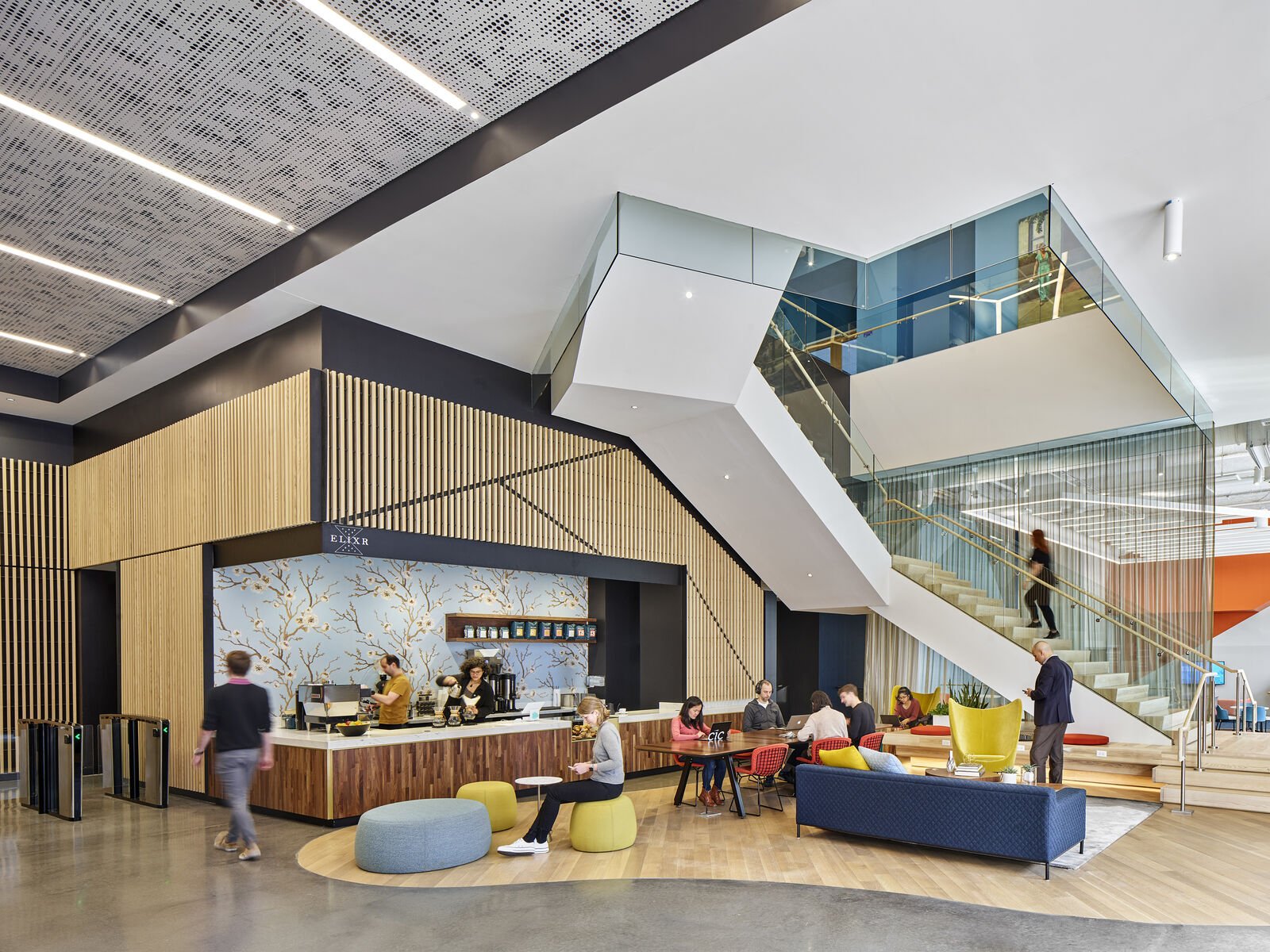
Designing the High-Performance Labs of the Future
By Ted Hyman, FAIA, LEED AP, BD+C
Just like a bustling technology company invests in their workplaces to drive innovation, life science developers, universities, and research institutions require their spaces to support and enhance the latest biomedical discoveries. Not only do these buildings need to offer leading scientific technology and smart space planning, but also robust sustainable solutions that negate energy consumption. Also crucial for the future of scientific discovery are venues for interdisciplinary collaboration. As time goes on, the complexity of remaining scientific mysteries is escalating. These quandaries are uncovered when specialized minds trained in different fields put their brain power together. When these concepts unite, a truly high-performance laboratory is created—one that supports researchers today and is primed to meet the scientific and environmental challenges of the future.
Over the last several decades of designing labs, we have considered these needs in the face of current and future challenges, and I feel confident saying that we are living in one of the most challenging moments in our recent history. With everything from rapid climate change to global pandemics top of mind, we offer up a few key trends in lab design that are focusing our thinking toward developing the next generation of high-performance labs.
Building Community at Every Corner
More than ever, the R&D industry’s brightest talent prefers to live in vibrant communities with diverse people and areas of expertise, amenities, and—perhaps most importantly—other scientists from various disciplines. After all, world-changing discoveries are made when ideas collide, and design can foster the intellectual overlaps needed to drive ingenuity.
Our work with UC Davis to transform their medical school campus to a vibrant innovation hub is a case in point. The 8.25-acre site, currently a surface parking lot, will connect the schools of Education, Agriculture, and Medicine, the city of Davis, entrepreneurs, and citizens to create a synergistic knowledge ecosystem rooted in an interdisciplinary approach to both education and research. The hub will fit into the surrounding community with its own unique character inspired by Sacramentan porch design to support the primary concept of outdoor rooms. To create around the clock vibrancy in the district, market rate housing will be built specifically for UC Davis students.
The new development even has a plan for investing in local and sustainable food systems. UC Davis partnered with chef and educator Alice Waters to have a nutritional health kitchen. The Alice Waters Institute for Edible Education gives the project a unique social heart given their mission: using scientific innovation to bring nutritious food to underserved communities in California.
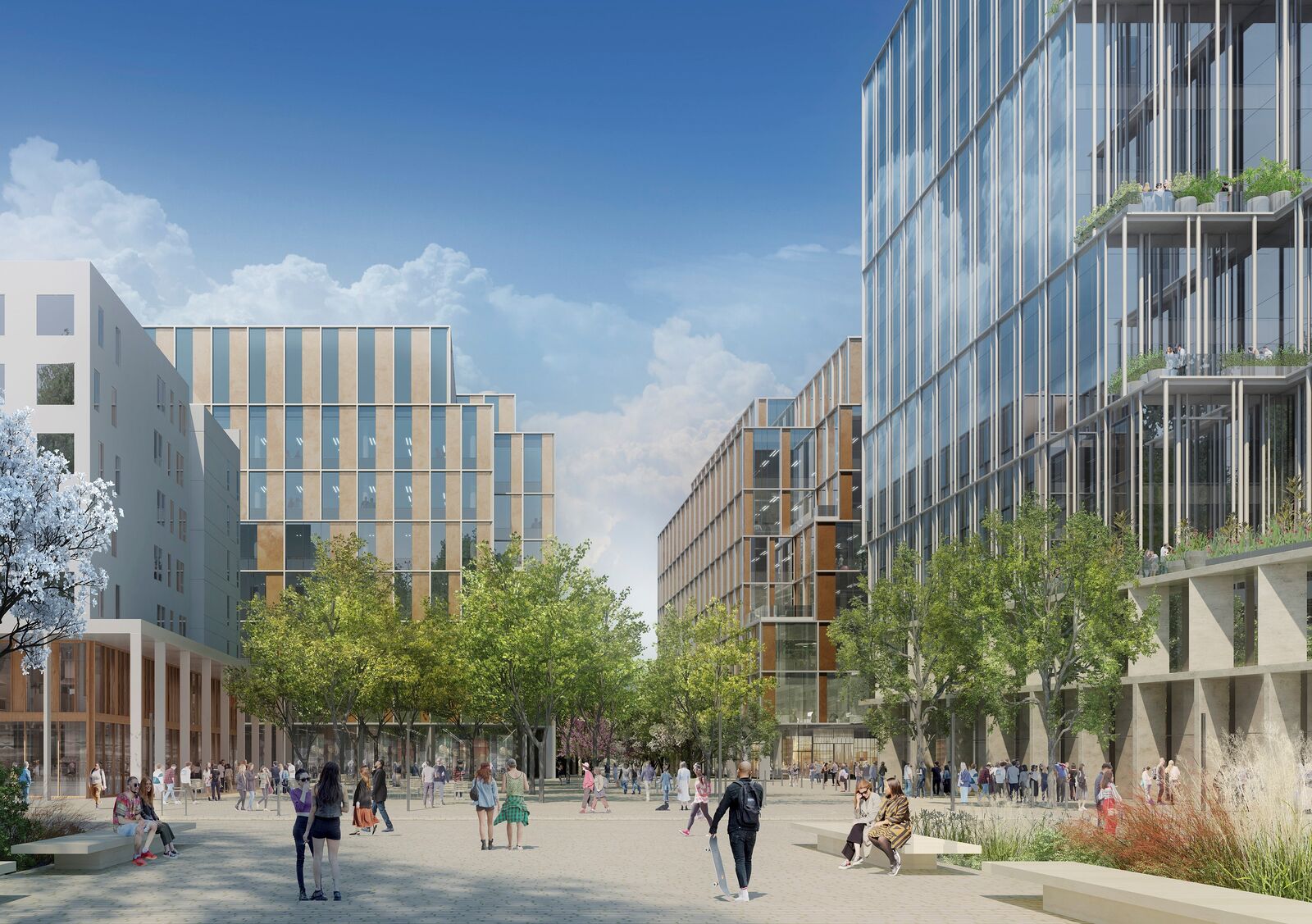
Aggie Square, Wexford Science + Technology / University of California, Davis
Reuse, Reposition, Revive
With a rise in vacant building stock and a boom in the demand for scientific discovery, repositioning is an enticing possibility. It presents a win-win for building owners and the environment thanks to embodied carbon and the cost savings that come with repositioning rather than building new.
The big question: feasibility. Property owners eyeing lab conversions have a lot to consider with floor-to-floor heights, space for specialized equipment, foundation limitations, and flexible space planning all informing the final design. However, with the right mechanical system strategies, nearly any space (even a hundred-year-old Ford Motor plant) can be converted into lab space—and in our experience, these strategies lead to not just a successful conversion, they also lower the building’s energy loads and operational costs.
In the case of a vacant Ford Motor plant in Pittsburgh, our team studied the building’s unique structural systems and created a design that takes advantage of innovative engineering strategies to maximize the spatial and structural constraints of the existing building. Interstitial mechanical service spaces and chilled beams in the open lab and office areas will all be part of the new lab space.
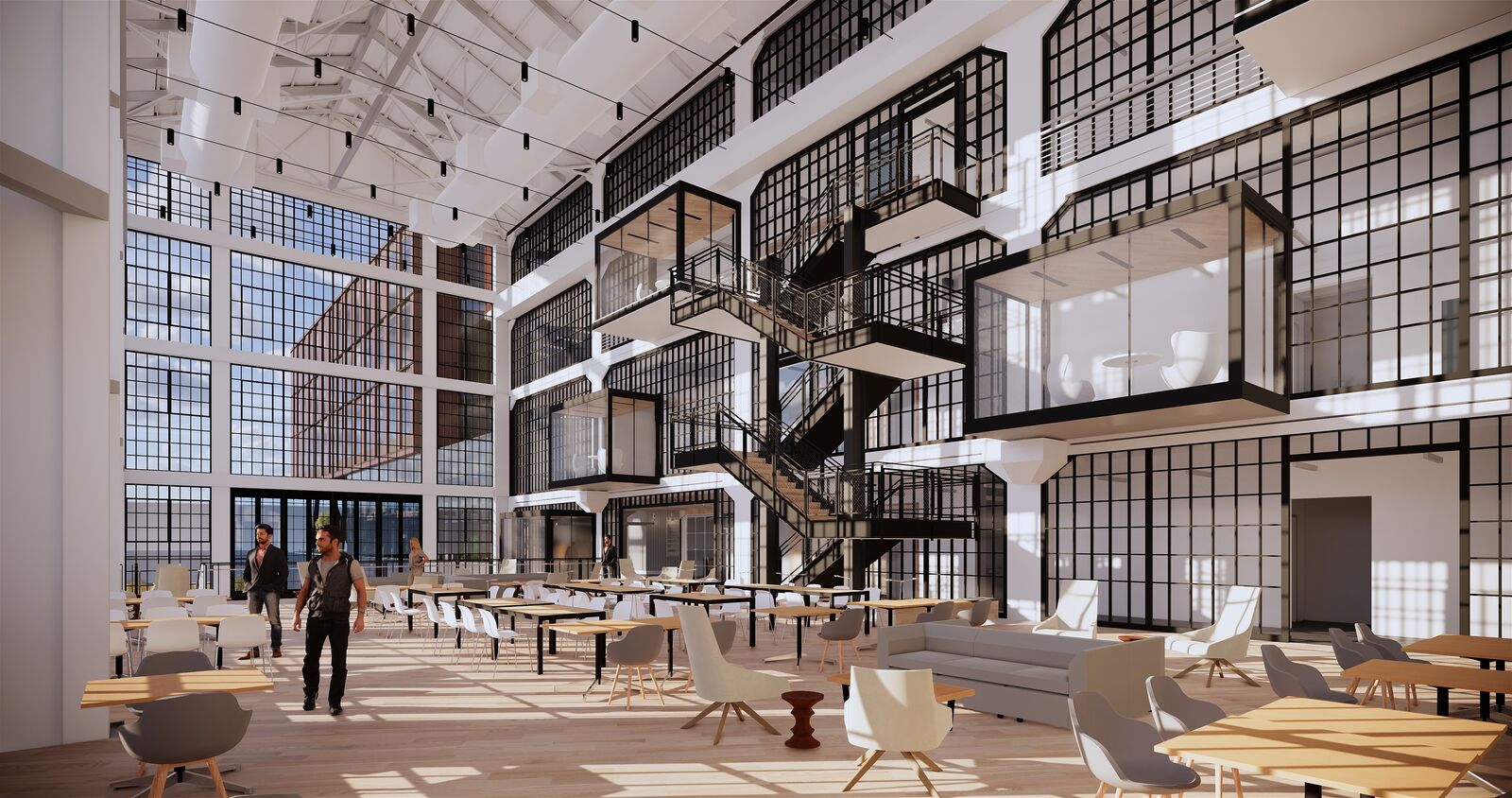
In collaboration with the University of Pittsburgh and Wexford Science + Technology, we are transforming a vacant automotive assembly plant built in 1915 into a modern innovation hub for biomedical researchers.
Resiliency with Returns
Building sustainably offers returns that make it a smart business decision for the bottom line and the planet. Technological advances in systems and materials ensure that sacrificing beauty for performance is no longer necessary. Sustainable buildings increasingly command higher rents and sale prices with structural resilience, occupant health, and good design serving as key selling points. In other words, beauty, health and wealth can co-exist under one roof by building strategically and sustainably.
The LEED Platinum® Biodesign Institute C at Arizona State University makes a powerful statement but it isn’t just a pretty façade—it sets a new bar for sustainability and spatial efficiency, all while meeting an ambitiously lean budget. The result is an economically efficient design balancing initial and long-term costs that stands as a striking identity for the university. With a whopping 62% in annual energy costs and delivering a payback on investment just under four years, Biodesign C proves that high performance design can be pleasing to the eye and the bottom line.
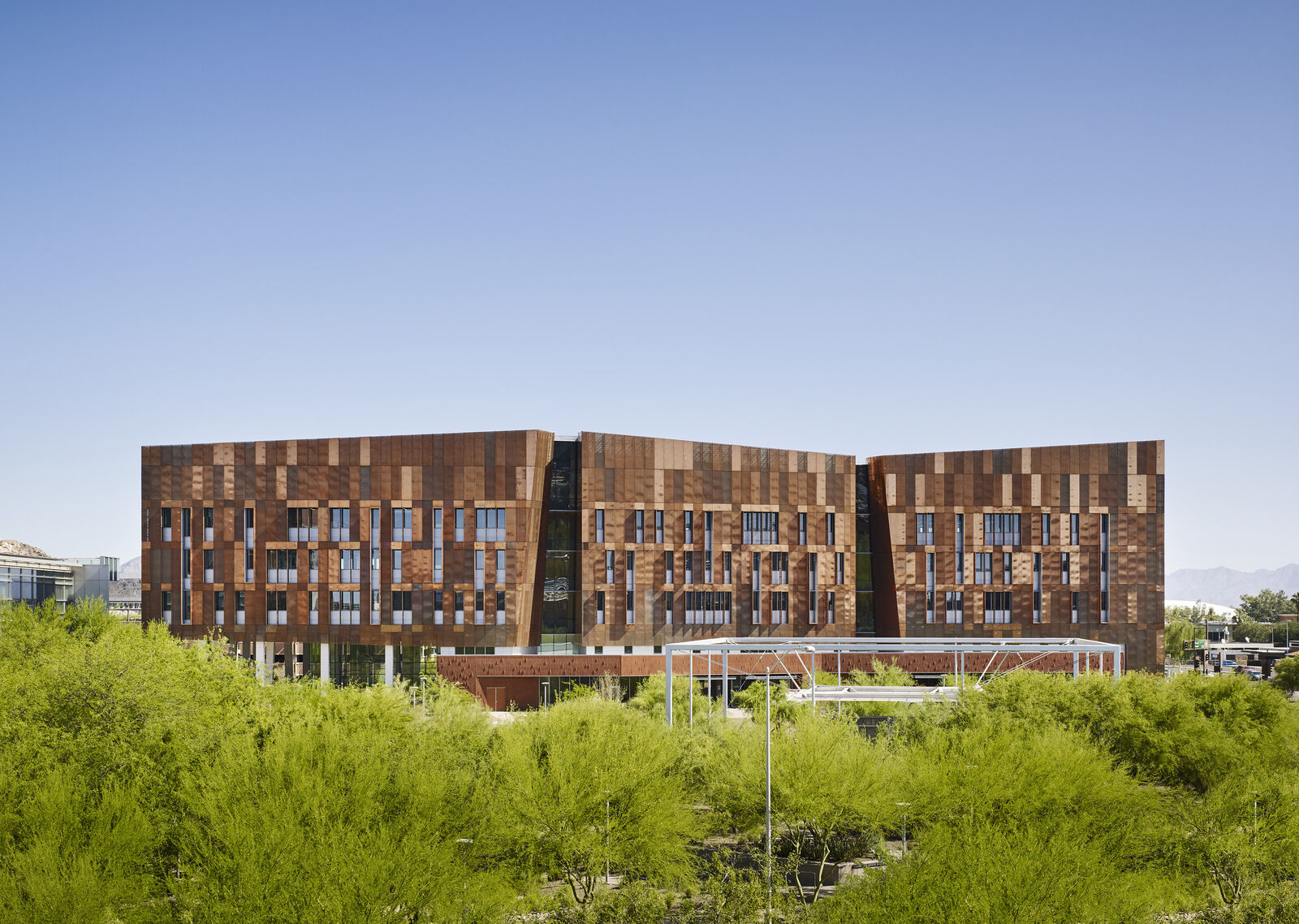
Arizona State University, Biodesign Institute C
Collaboration is King
Aspects of workplace design found their way into the lab space long before the pandemic and this trend is accelerating, driven by stiff competition for top talent, employee health and wellness, and speed to market concerns. On that note, collaboration spaces to enhance innovation are more critical than ever. According to CBRE’s 2020 Lab of the Future report, a typical lab will devote just 7% of its square footage to collaboration space. We know that collaboration is critical for ideation, innovation, and the a-ha moments that lead to breakthroughs. With average speed to market for new drugs clocking in at more than a decade there is a real need to design buildings that inherently expedite innovation.
At Stanford University’s new Biomedical Innovations Building, the main entrance opens to a research quad with floor-to-ceiling glass walls, blurring the boundaries between inside and out, while welcoming people into the lobby with accents of warm wood and stone. From that vantage point the collaboration process is in full view with small huddle booths with dry erase walls nearby and adjacent to a square spiral staircase that leads to wet lab space above and encourages movement from floor to floor. Further supporting the R&D lifecycle, an 80-seat auditorium for hosting scientific symposia and a large outdoor terrace for receptions are incorporated to create a life sciences workplace conducive to collaboration productivity and wellness.
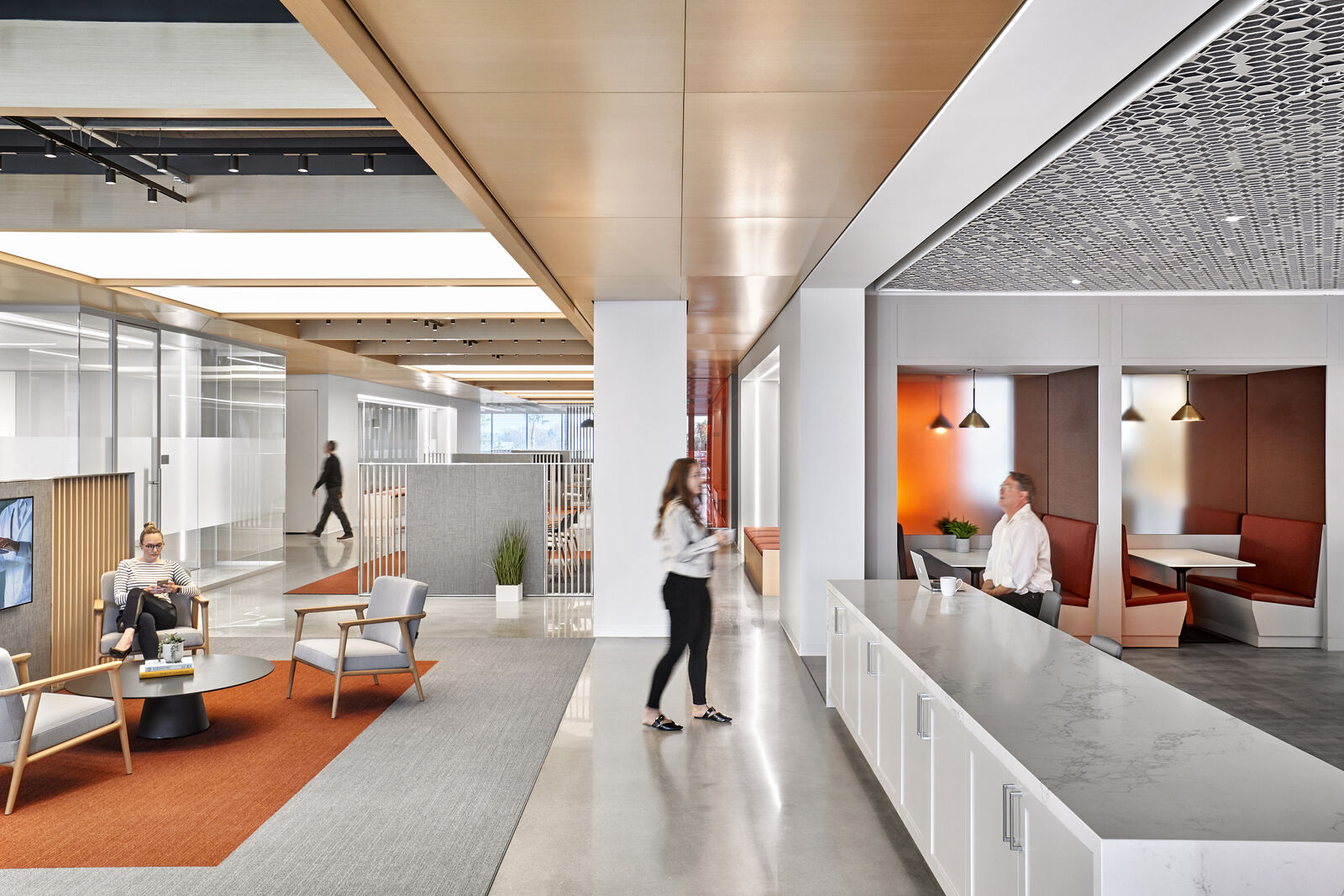
ZGF worked with the University of California, Los Angeles to convert a former hospital building to accommodate state-of-the-art research wet laboratories and associated office functions to support the David Geffen School of Medicine’s research and education programs. As the largest single building located in the 2,400,000 SF Center for the Health Sciences Complex, the 443,387 SF South Tower is physically connected to buildings on all sides, yet is structurally independent. After the 1994 Northridge earthquake, damage assessment and engineering studies determined that the 12-story Tower required structural improvements to meet current building codes and standards.
The ZGF team was also asked to address the building’s energy efficiency and life safety infrastructure with the ultimate goal of providing a flexible laboratory environment in a cost-effective, functionally efficient building that is seismically safe and sustainable. The double LEED Platinum® renovation was phased to maintain existing operations of lower level medical laboratories. Phase 1 (Interior Demolition and Hazardous Materials Abatement of Levels 2-10), Phase 2 (Interior Demolition and Abatement of Levels B, A, and 1; seismic renovation; and core + shell improvements), and Phase 3 (Basic Tenant Improvements) are completed. The new space provides a “warm shell” for flexible wet laboratory space with interior finishes, but without specific casework and equipment. Phase 4 involved post-occupancy tenant improvements, customizing the generic “warm shell” space on levels two through seven based on research themes per floor to meet specific research needs of the user groups.
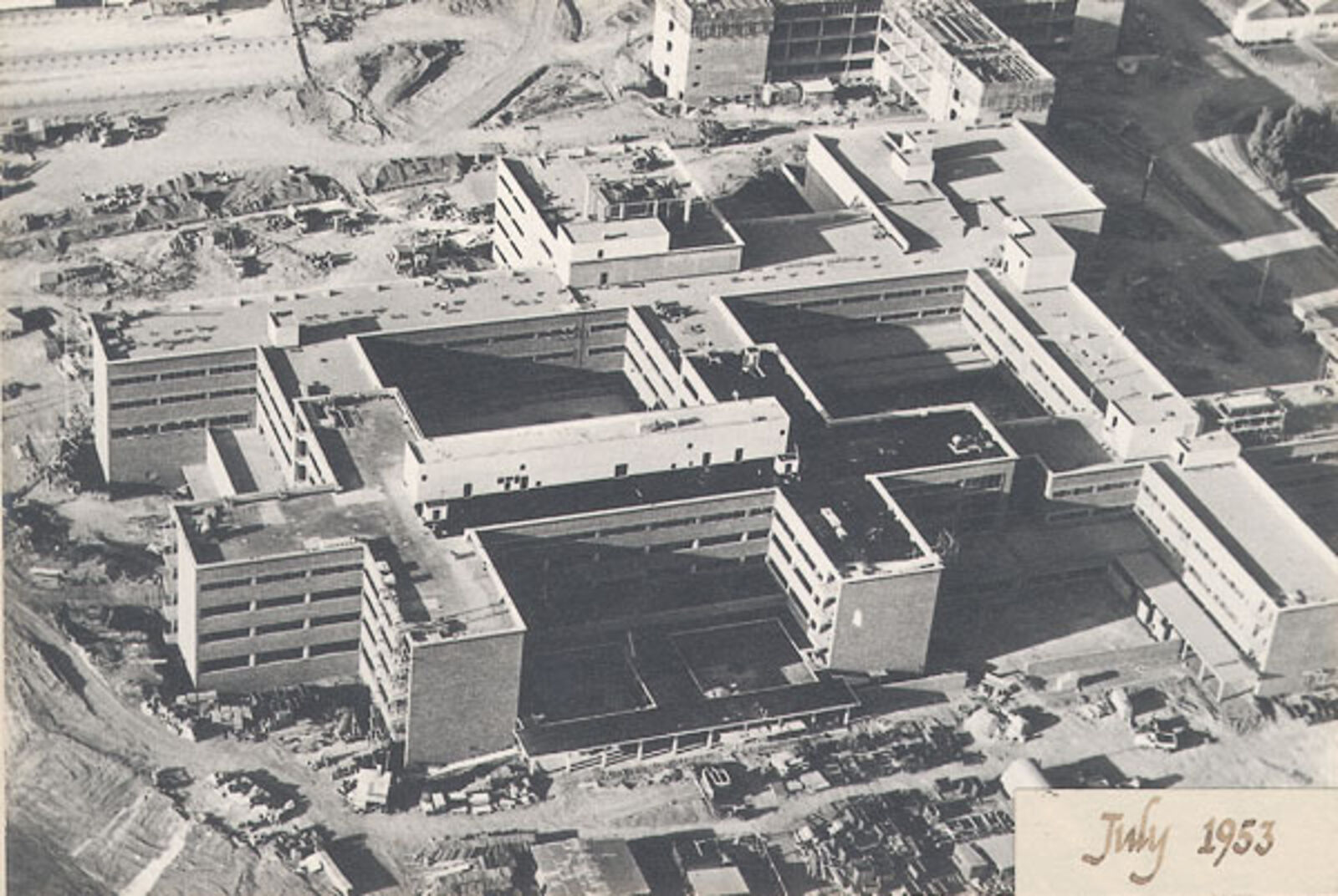
University of California, Los Angeles, Center for Health Sciences, South Tower Seismic Renovation
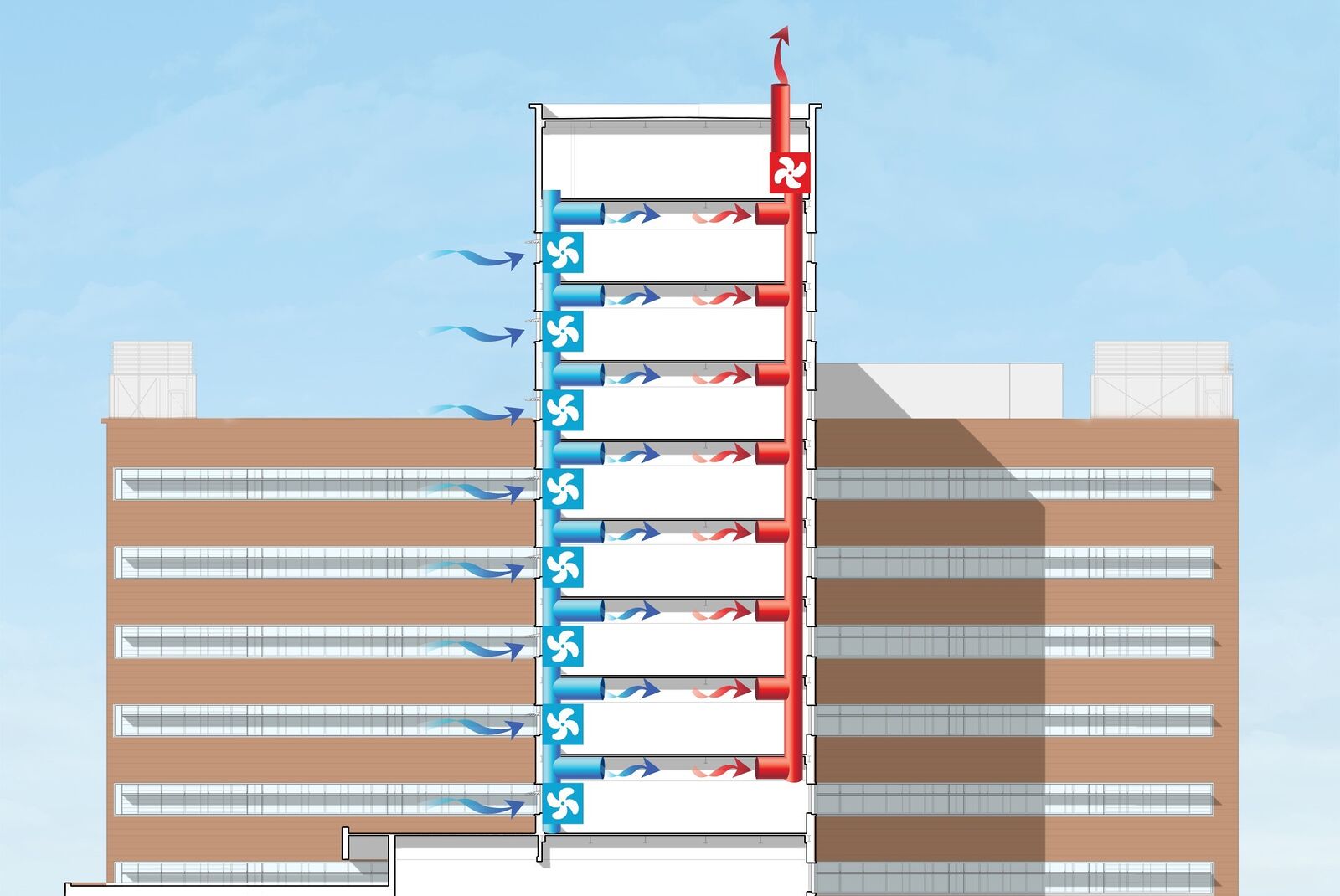
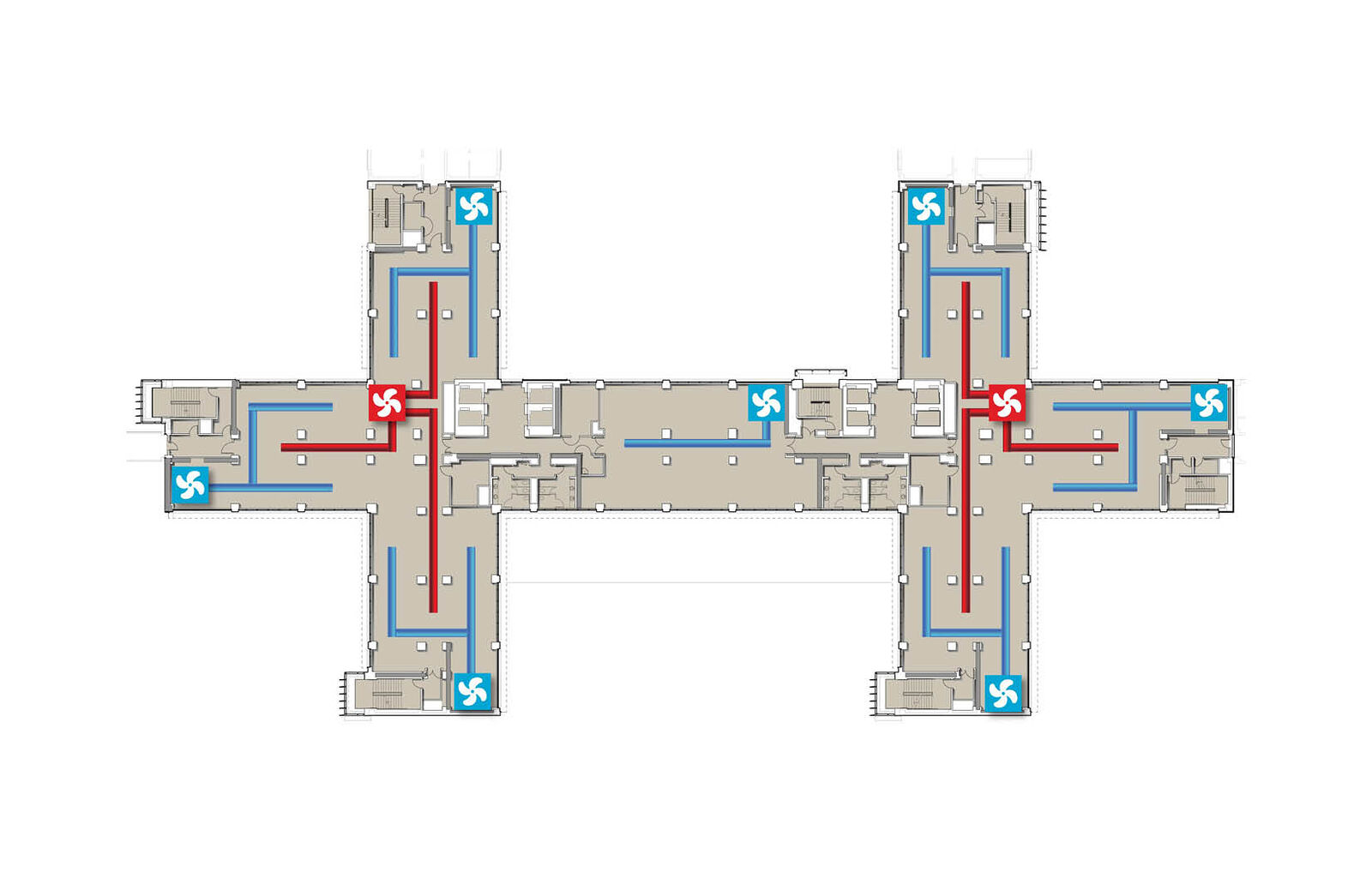
UCLA Center for Health Sciences South Tower, Mechanical Systems Integration
Developing the next generation of high-performance laboratories requires an understanding of the most pressing challenges the world faces today: solving for the most complex biomedical mysteries while confronting the dwindling predicament of climate change. Building sustainable, flexible research workplaces that coalesce scientists in environments where they can reach new heights of discovery is imperative to the future of science and human health.