For Youth, By Youth: Seattle’s Youth Achievement Center
Addressing Systemic Injustice
As the cost of living in Seattle has steadily risen over the last decade, many of the city’s under resourced and marginalized communities face firsthand the effects of gentrification, lack of affordable housing, social services, and an increasingly difficult path to keep their families fed, in school, and healthy. Black, Indigenous, and people of color (BIPOC) communities are disproportionately affected.
According to United Way of King County—a local nonprofit that works to fight homelessness and break the cycle of poverty—there were roughly 14,000 King County youth in 2019 alone without a diploma and neither working nor attending school. Many of them were also homeless or unstably housed. That number is likely much higher now, heading into the third year of a global pandemic.
The need for equitable community resources, social services, and affordable housing has never been greater. That’s why, when ZGF began conversations with Africatown Community Land Trust in 2020, we were eager to find a way to support their mission of acquiring, developing, and stewarding land in the greater Seattle area to empower and preserve the Black Diaspora community.
Africatown had been enlisted in 2019 by the Youth Consortium, a collective of youth from Community Passageways and Creative Justice, two of the driving forces behind the Youth Achievement Center Coalition, to support the process of acquiring two underutilized parcels near the Columbia City light rail station in South Seattle. When ZGF learned about their vision for the Youth Achievement center, we offered our services pro bono as part of Public Architecture’s 1+ program.
The Power of Youth Voices
Community Passageways and Creative Justice both work with youth who are impacted by incarceration policies that disproportionately target BIPOC communities. Representatives from these two groups along with the Rainier Beach Action Coalition make up the Youth Consortium, a youth-led advocacy group focused on building community power and youth and young adult leadership.
The Youth Consortium envisions a place where children and young adults can come, not only for community-based programs and support, but for a truly holistic environment with housing and programs co-located and designed to support the emotional, physical, and spiritual growth of Seattle’s BIPOC youth.
The partnership of these community groups, with the leadership and experience of the Africatown Community Land Trust, creates a powerful team to make this vision a reality.
“It means everything to me to know that my ideas, my voice, and the voices of my peers and the young adults I work with matters and is getting heard.”
Marisol Santos-Perez, Rainier Beach Action Coalition
ZGF met with the Youth Consortium in several engagement session to understand their needs and how they want the project to look and feel. Their feedback led to two core concepts that have guided the design of the Youth Achievement Center to-date:
- Afrofuturism: The idea that the Center should embody a tangible hope for the future rather than the tethered oppression of the past.
- Natural Light: In contrast to institutional buildings that have historically stifled youth development, the Center leverages the healing properties of natural light and provides youth a place to flourish and grow.
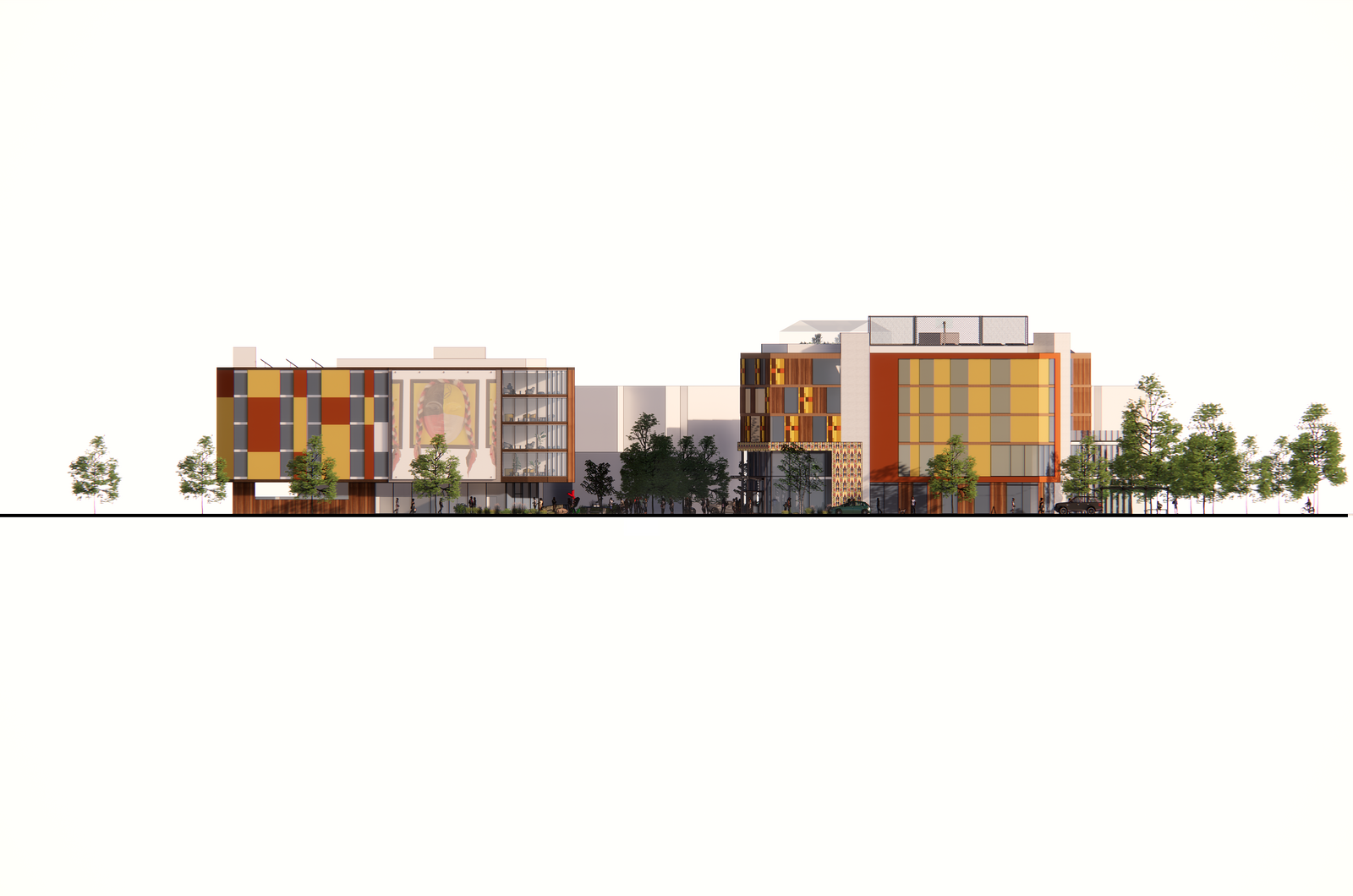
West elevation
Strengthening Our Community
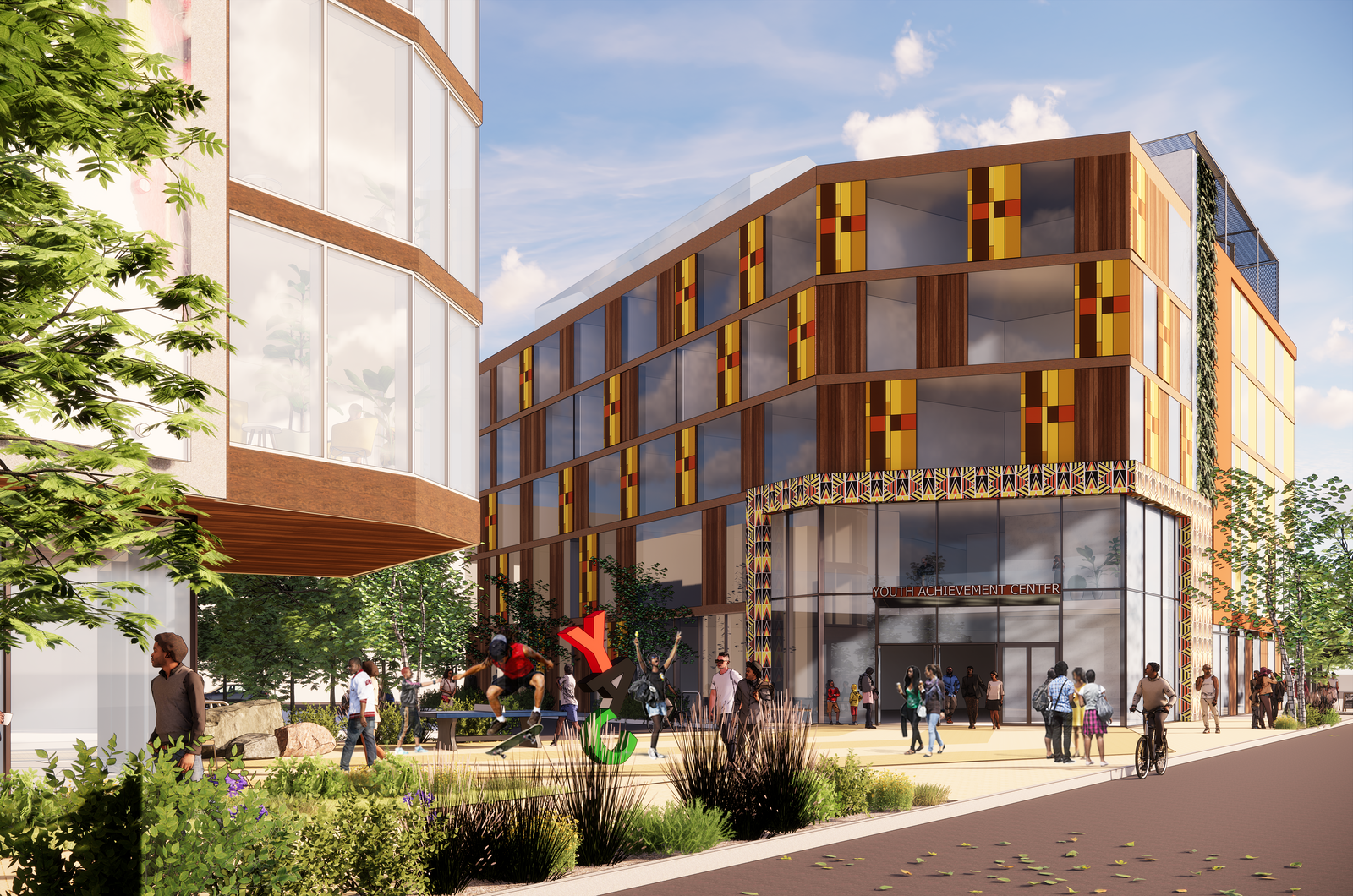
Proximity to the Columbia City light rail station ensures the Youth Achievement Center will be a highly visible and accessible community resource. Community members will be greeted by two multi-story buildings with exterior facades that take inspiration both from youth art and from traditional, Afrocentric patterns and designs. Inside, the design focuses on creating a warm, welcoming, and safe environment where youth feel a sense of belonging and feel empowered to seek support.
Both the north and south sites will utilize lower floors for support services and activities to nurture youth and maintain the upper floors for housing. Spaces for emotional, physical, and social growth work in harmony to support the individual youth as well as the community.
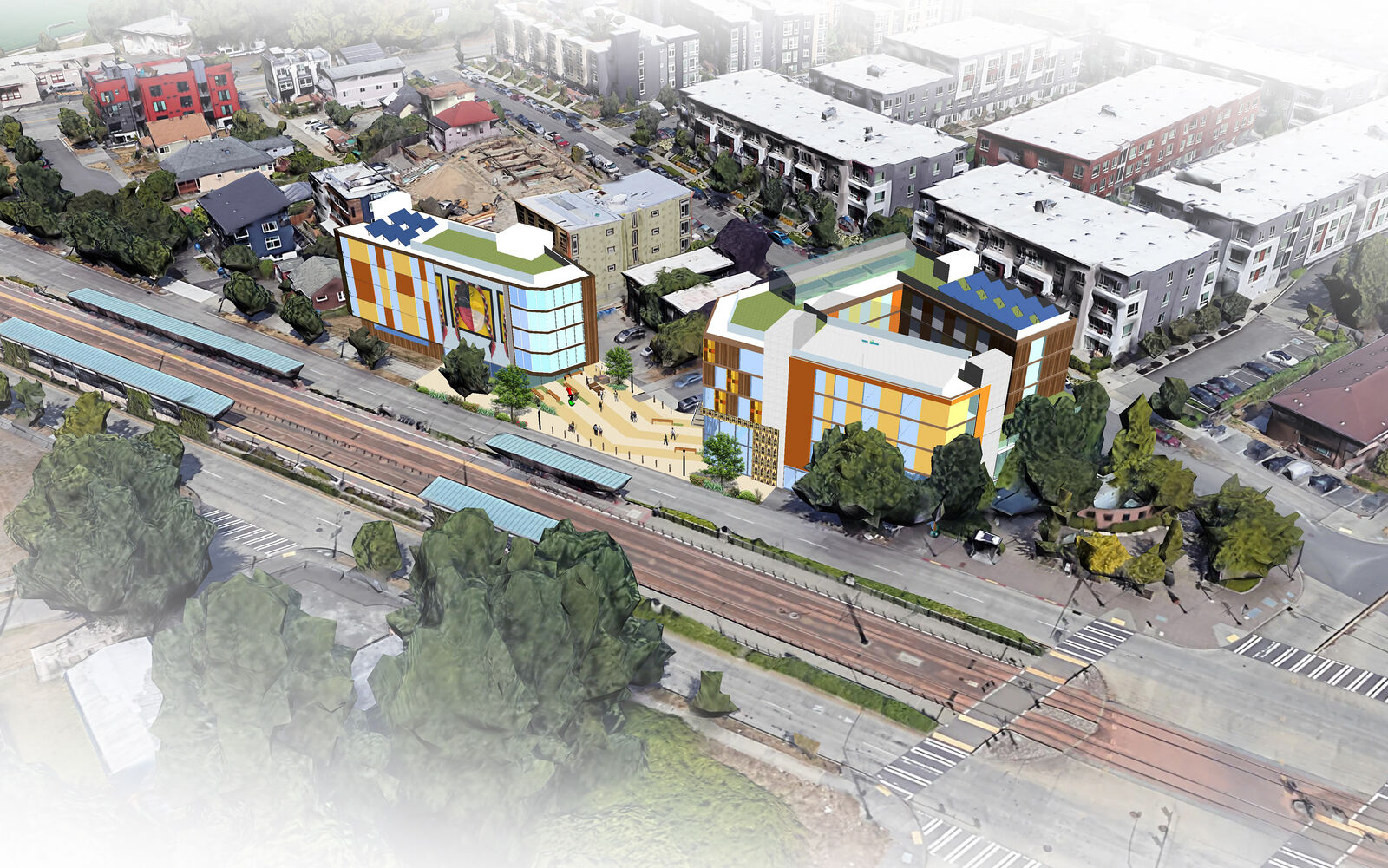
Aerial view
“We’ve even had conversations with ZGF where the youth have been like, ‘That particular design actually doesn’t feel warm or inviting. It has an African pattern, but it’s not quite one that I feel represents who we are.’ It’s been beautiful to partner with architects who say, ‘Great, how can we change it?’”
Nikkita Oliver, Creative Justice
Our Role as Designers
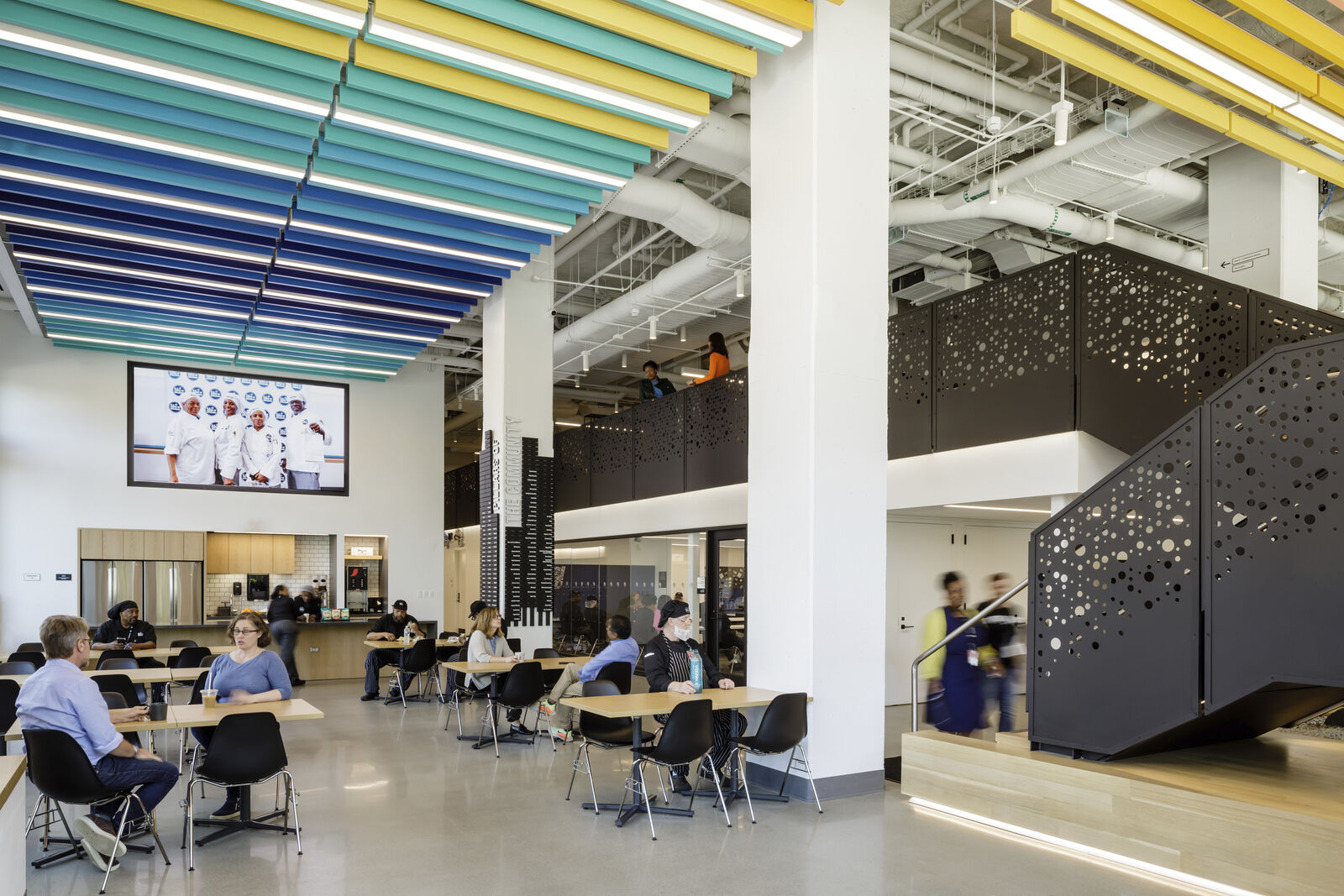
As architects and designers our work should always serve a greater good for people and the planet. As a firm, we are committed to supporting our local communities and projects that uplift them, such as the Youth Achievement Center, DC Central Kitchen, and The Latino Network. By taking a “listen and learn” first approach, we can better understand the lived experiences of our communities and their barriers to equity. Only then can we use our collective power and skillsets to make real progress.
We look forward to continuing our partnership with Africatown, Community Passageways, Creative Justice, the Rainier Beach Action Coalition, and all other community partners who are actively working to make the Youth Achievement Center a reality.
