Healthcare Has Long Covid, Architecture Can Help
Coming out of the pandemic, healthcare providers are having to respond to a different type of long covid: the lingering effects of months and years of delayed care and preemptive screenings caused by lockdowns and overburdened health facilities that have left people sicker than ever. The good news is architecture may be the shot in the arm that providers need to get through it. ZGF principal and healthcare lead Janet Pangman shares some of her key insights:
The usual, with a twist
The majority of our academic medical center clients have expanded their services into the communities they serve to provide better and easier access to care. The success of this strategy and the ability to perform more complex procedures in an outpatient setting is leading to more innovative and robust outpatient services beyond the typical primary care clinics and doubling down on this will bolster their ability to maintain patient care during the next pandemic. These highly specialized services include cardiology and urology outpatient clinics, as well as comprehensive cancer centers, ambulatory surgery centers, and imaging services.
The twist is the move to expand on this approach by integrating specialty hospitals alongside specialized outpatient facilities. This is particularly important here in California where the cost of building hospitals is significantly more expensive and takes much longer to construct than an ambulatory building.
Lately…
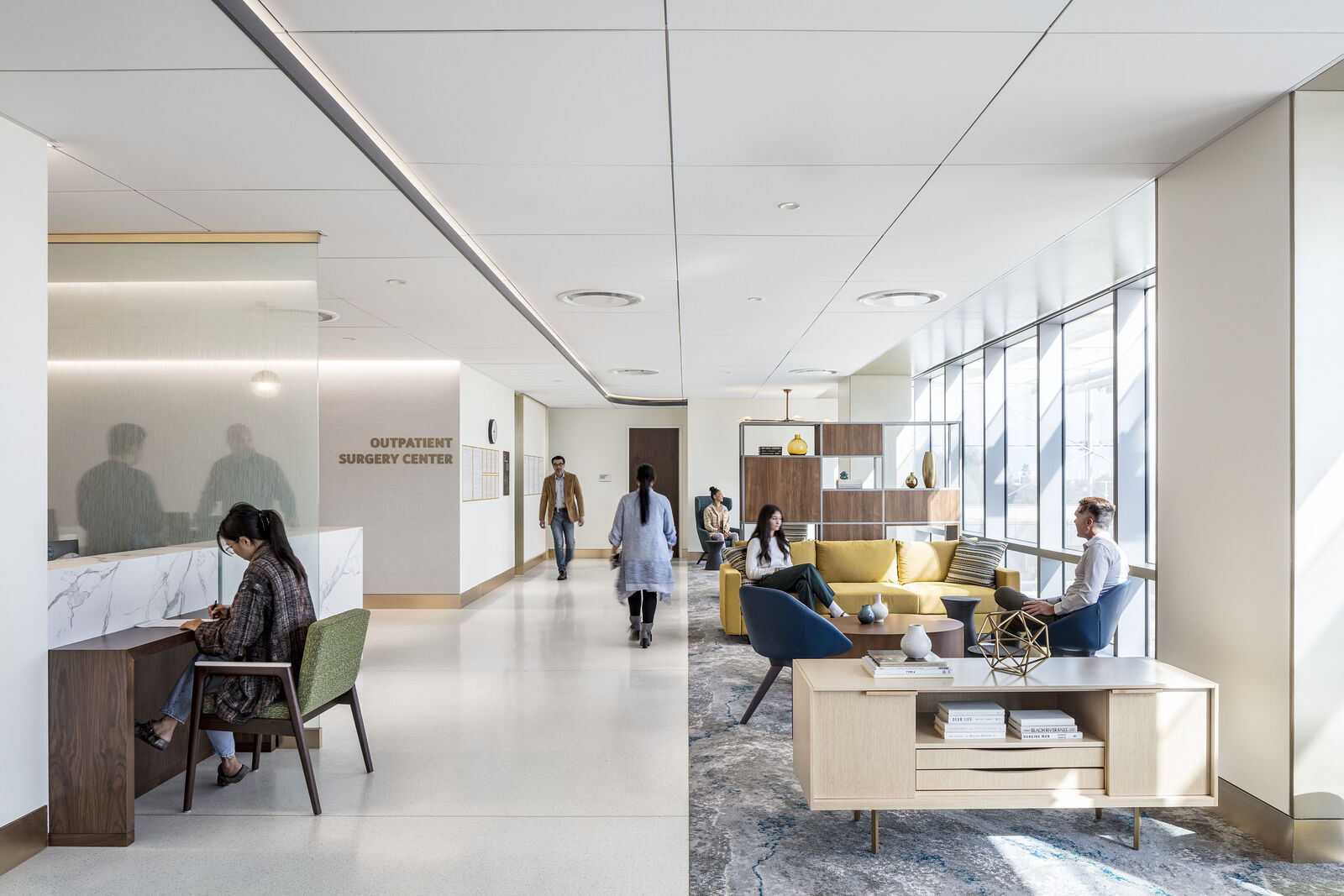
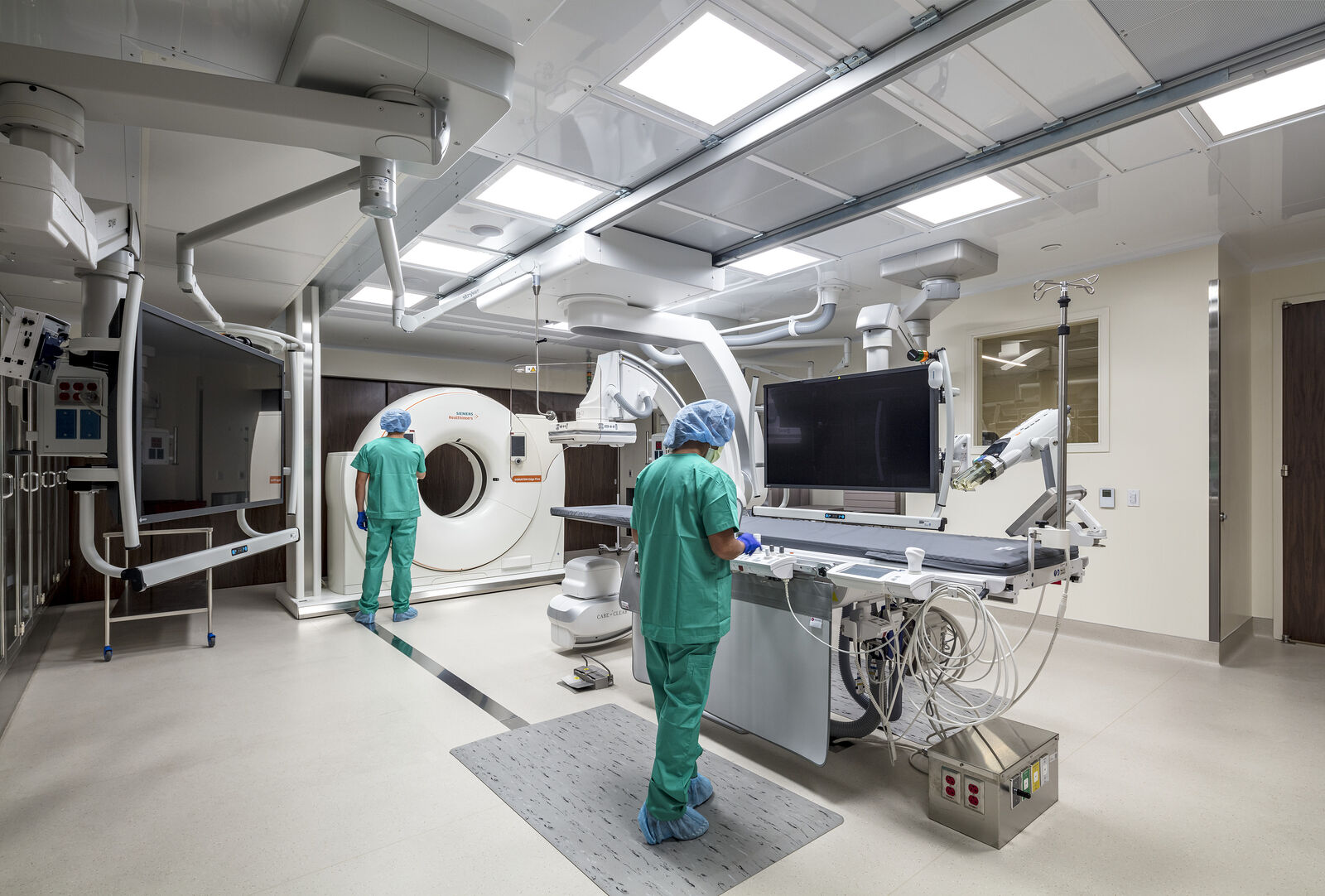
We worked with City of Hope to convert an existing office building into the outpatient Lennar Foundation Cancer Center for their community in Irvine, California. It sounds like a streamlined way to expand into a new market, but when the building needs to be adapted from workplace to cancer care and must be designed to seamlessly connect to a new-build specialty hospital, the process requires some inspired and technical design thinking.
Thinking about adaptive reuse? You’re going to want to read this
As CMS (Centers for Medicare and Medicaid Services) continues to expand which procedures can be performed outside the hospital, the need for specialty outpatient settings will continue to grow. And as organizations expand to bring more specialized care closer to patients, the use of existing office buildings as opposed to new construction has helped support a speed to market approach that also leans into sustainability goals. But it’s not without challenges. Here are three tips on how to approach an adaptive reuse opportunity.
- When choosing a building, a careful evaluation of the required services and goals of the project should be done to properly evaluate the existing building to determine if it is going to meet the needs of the project. Is it zoned for medical facilities or hospitals? What site constraints may affect access, not only for patients and staff but for materials to get into the building and waste to get out?
- Not all office buildings are created equal. Just as the care provided is highly specialized, so too are the requirements of the built environment. Think structural upgrades for advanced imaging equipment, the addition of piped medical gases, significantly higher emergency power requirements well above those required for a traditional outpatient clinic, and much more advanced mechanical systems to meet specific temperature and humidity requirements. The constraints of existing floor-to-floor heights will have an impact on the design of the outpatient services like surgery, as well as a potential adjoining hospital.
- Is the building in an office park that may act as an HOA, controlling exterior design, signage, access, and additions or modifications to the building?
The good news is that, just like long covid itself, it may be a journey but it’s all treatable.

Cedars-Sinai Ventana Cancer Care Clinic