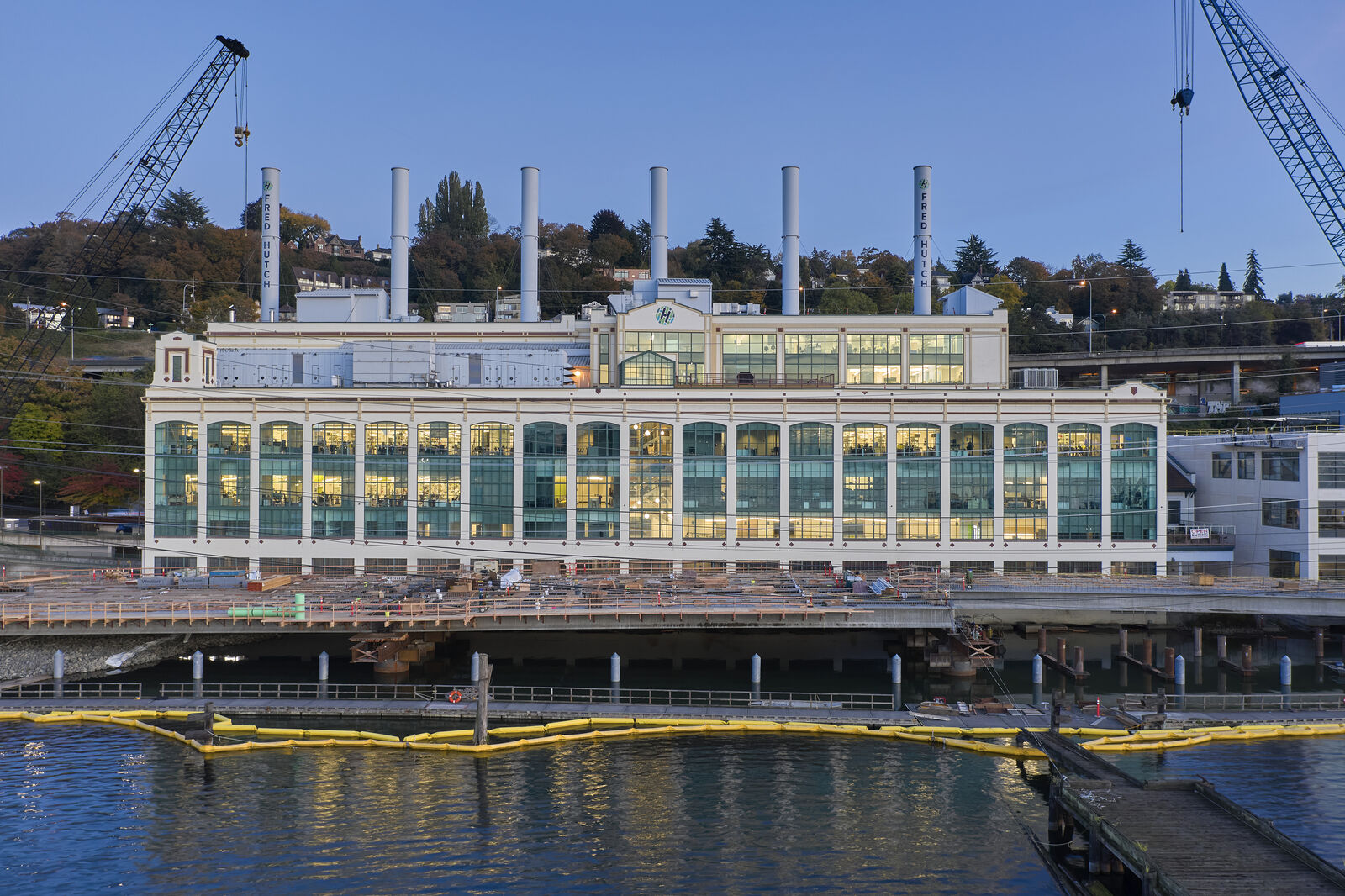
Attracting Talent, Catalyzing Discovery
The University of Texas at Arlington, Science and Engineering Innovation and Research Building
Laboratories and Research, Higher Education
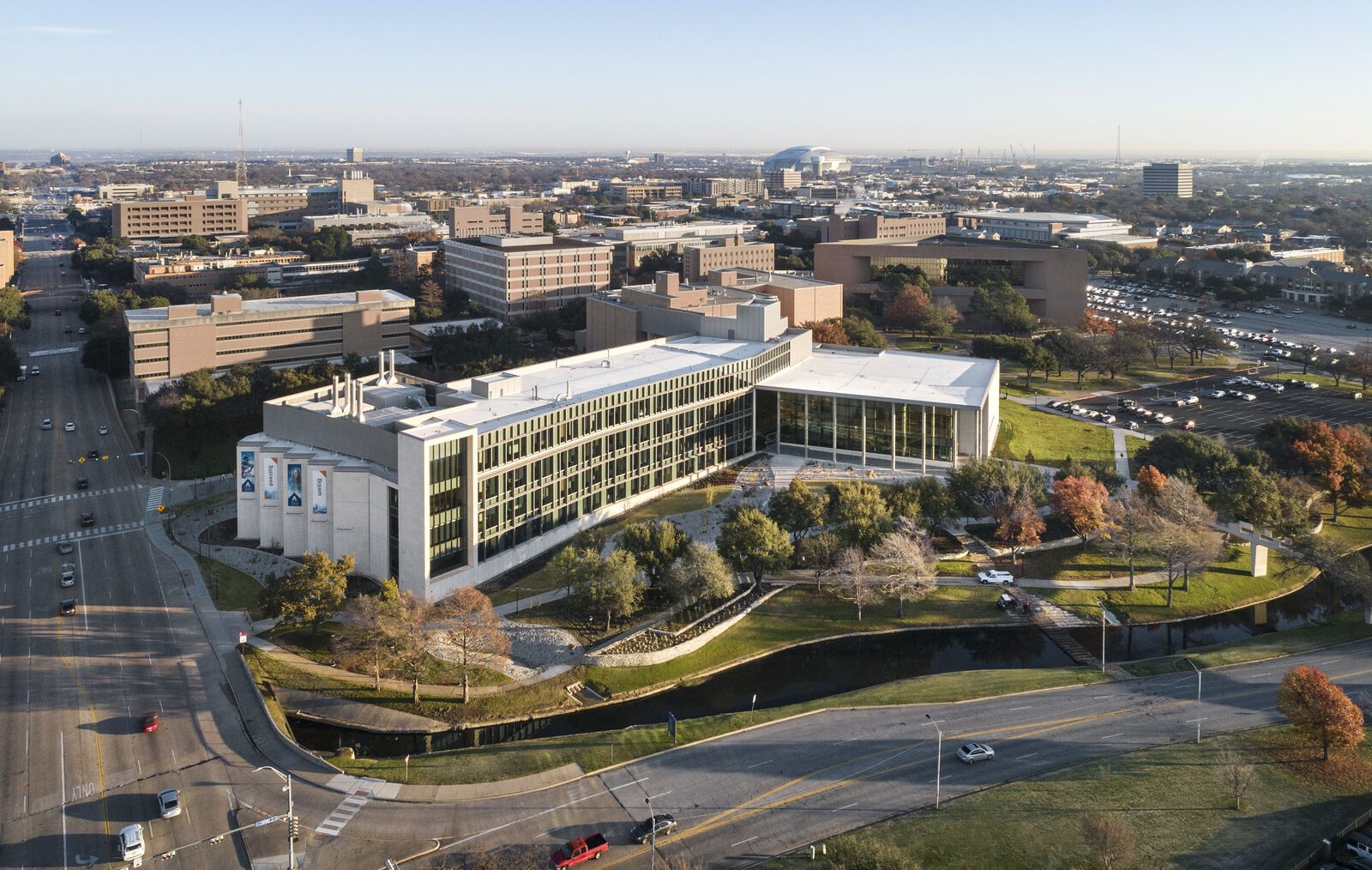
As an urban-serving, Carnegie R-1 research university, the University of Texas at Arlington (UTA) sought to invest in a new science building—one that would catalyze its research efforts and strengthen North Texas as a center for biotechnology and the health sciences. UTA hired ZGF in association with PAGE to program and design the new Science and Engineering Innovation and Research Building, envisioned as a state-of-the-art, interdisciplinary environment that would attract luminary faculty to the rapidly expanding university.
Challenged with designing an entirely speculative building that would meet the needs of undefined future users, ZGF structured and led a rigorous programming and design process that engaged a broad slice of university departments, including biology, chemistry, bioengineering, neuroscience, nursing, computer science, and kinesiology. The engagement was organized to maintain UTA’s focus on creating a building not “owned” by any specific departments or disciplines. Through collaborative, hands-on workshops, the group defined project goals and agreed to a building program that would maximize the building’s utility for interdisciplinary research and interaction.
Location
Arlington, TX
Square Feet
229,206
Completion date
2018
Project Component
Architecture services
Interior design and space planning

The building's simple and dignified composition is characterized by precise proportions, generous glazing, and local Texas limestone.
The Science and Engineering Innovation and Research Building is organized in two wings that flank a central Great Hall – a soaring, five-story space for circulation, study, and gathering. The space connects all primary program elements, including an executive conferencing facility, laboratories, and four state-of-the-art teaching and event halls. The Great Hall has become a popular destination for students on campus. With a grab-and-go cafe and a variety of movable furniture and study nooks, it is an ideal location for both individual study and collaborative projects.
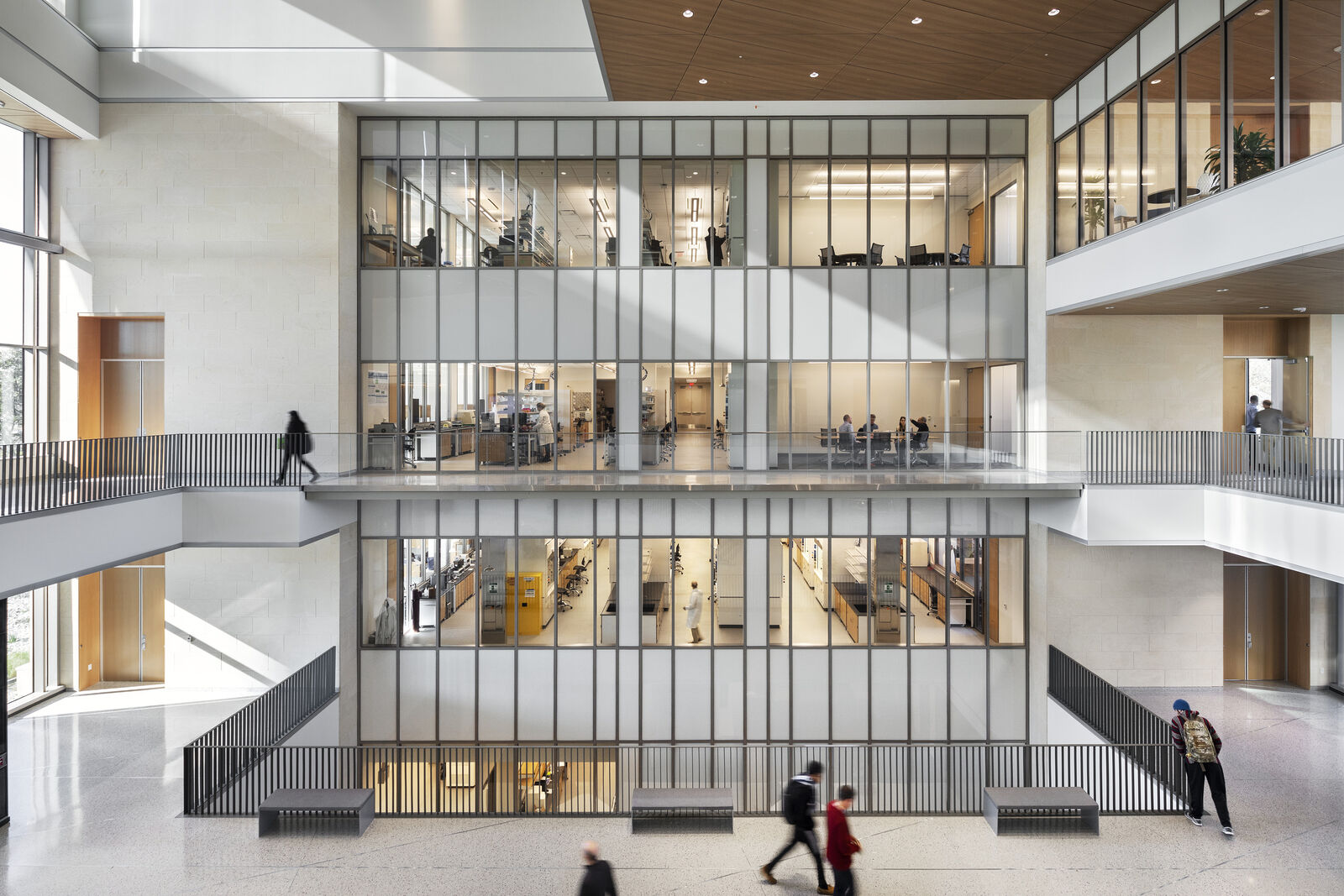
A large window between the Great Hall and laboratory wing invites students to observe scientists at work as they pass by on their way to class.
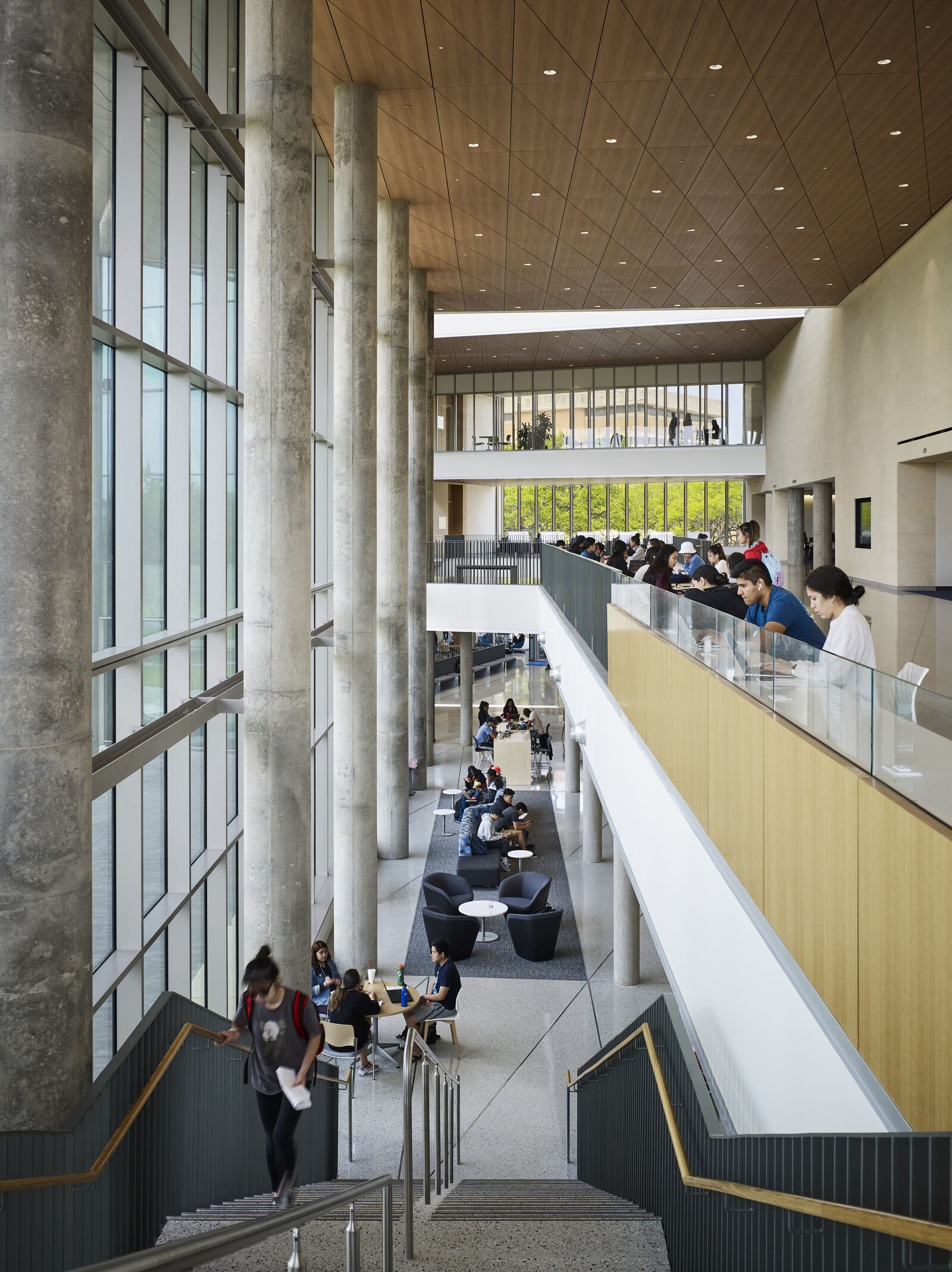
A variety of collaboration and study spaces benefit from views through the building's portico to the landscape beyond.
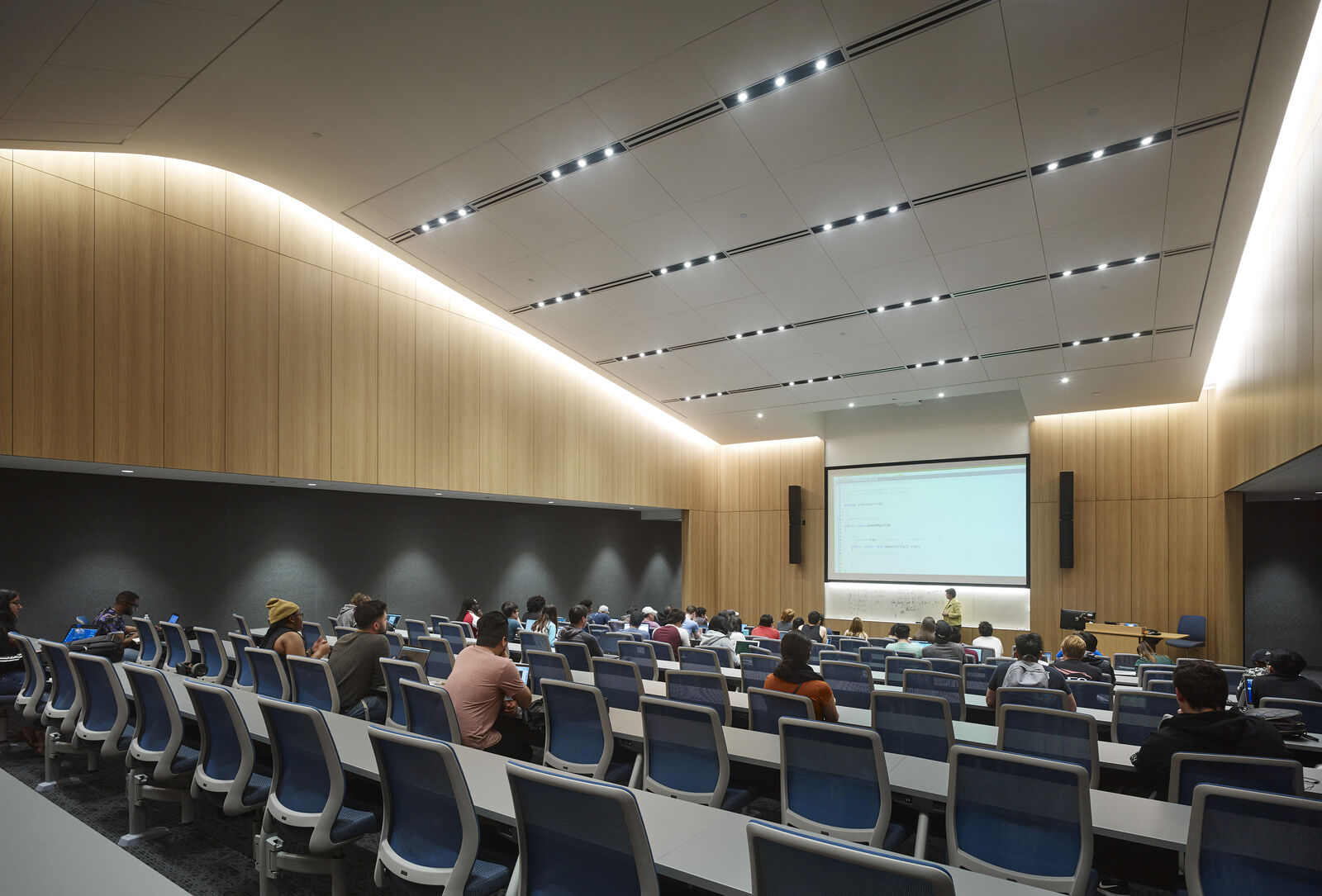
A two-story classroom wing contains four large lecture halls that support training for the next generation of health science professionals.
Within the four-story laboratory wing, advanced laboratories and equipment allow researchers to push the boundaries of scientific discovery and spark the next wave of innovations. Twelve research neighborhoods bring together teams from a wide range of disciplines to work in close proximity, allowing for a freer exchange of ideas. A flexible planning solution allows research neighborhoods to change between experimental, computational, and clinical space. In addition, core laboratories provide shared research facilities. The building houses the North Texas Genome Center, which offers whole genome sequencing and data interpretation on a fee-for-services basis.
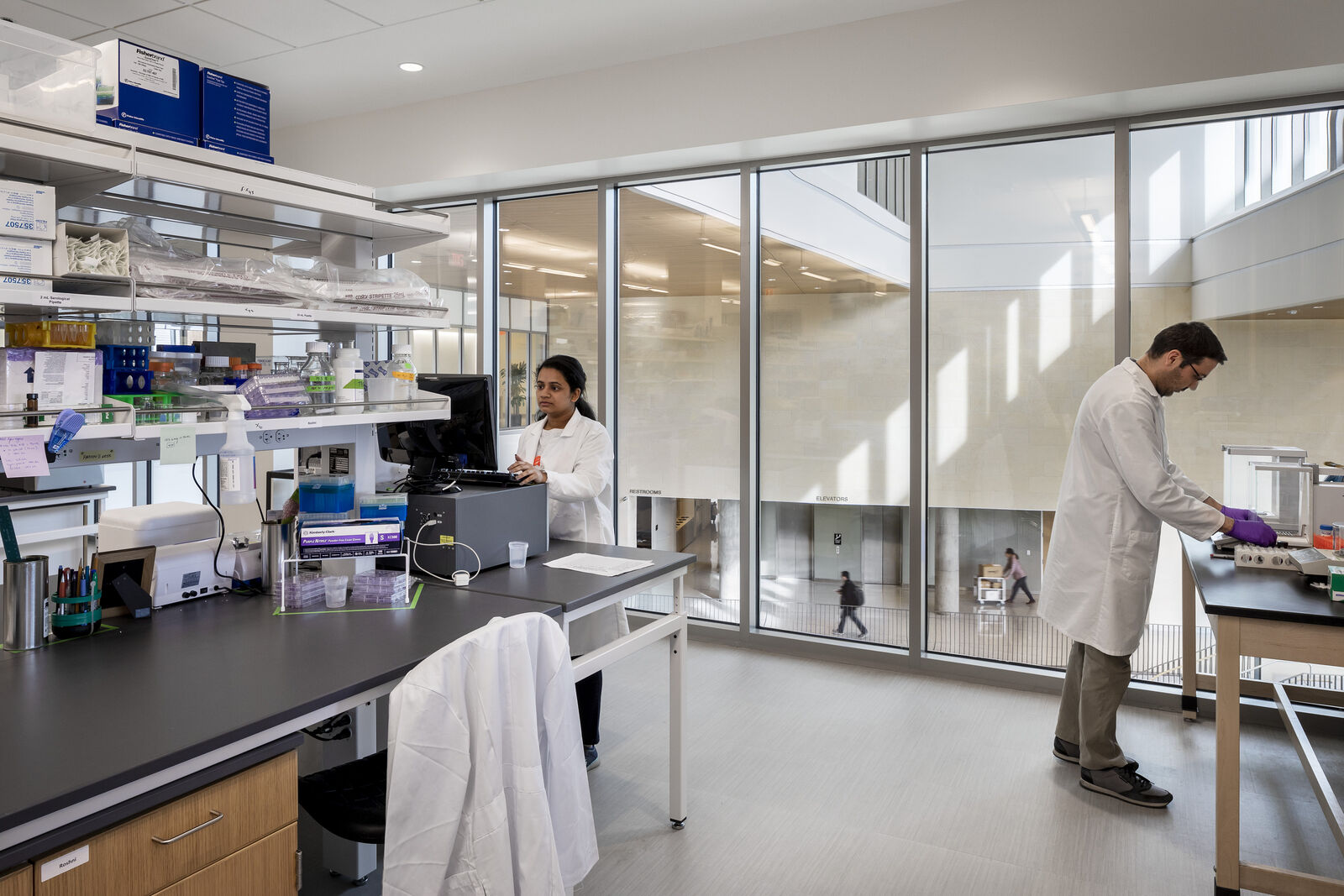
The building's plan allows all scientists to access natural daylight and views, whether they are behind the bench, occupying a write-up station, or in a private office.
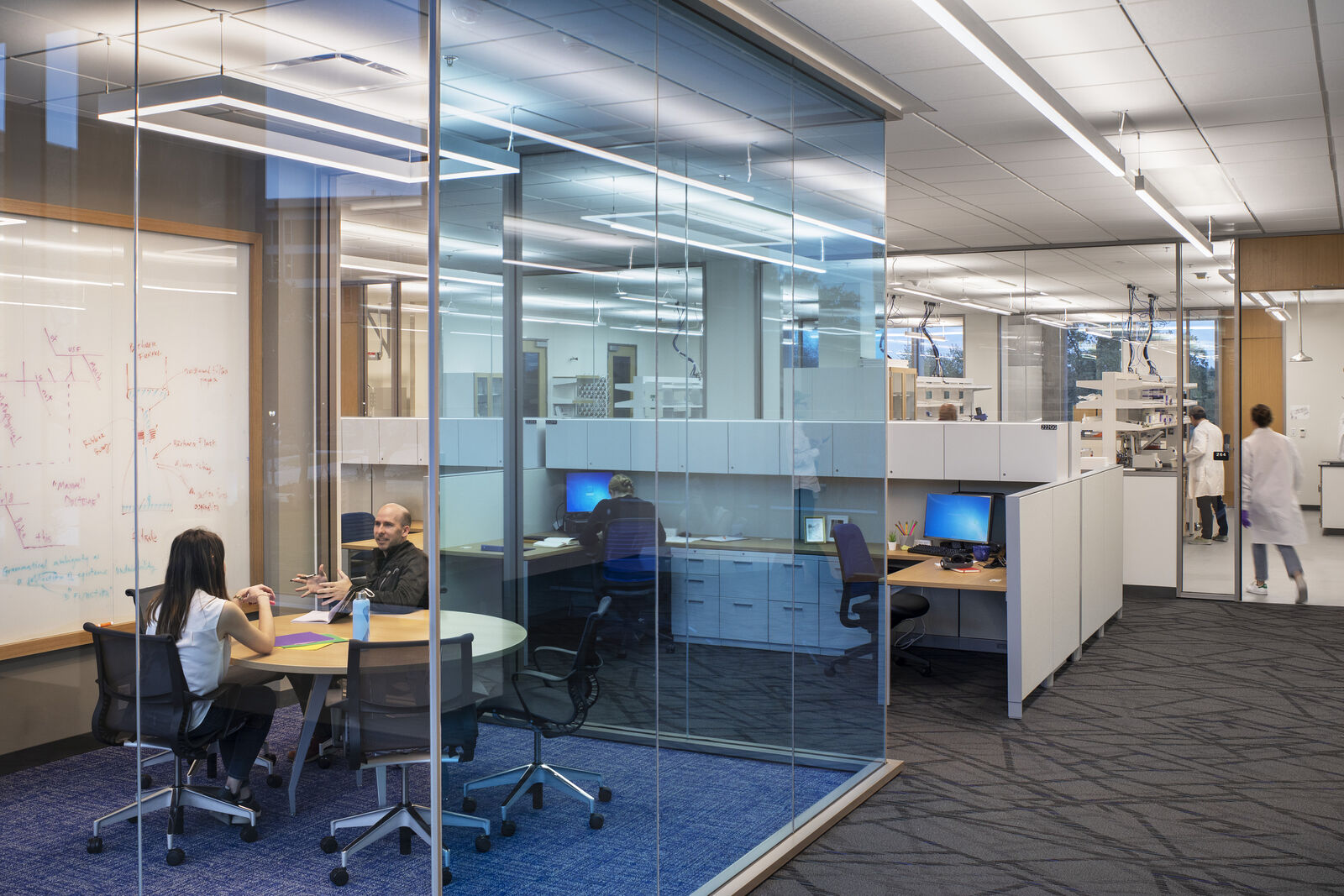
The balance between wet and dry laboratories was a key point of program study and debate, as computational research is a relatively new but fast-growing discipline. The design splits research neighborhoods down the middle, allowing for a hybrid wet/dry solution.
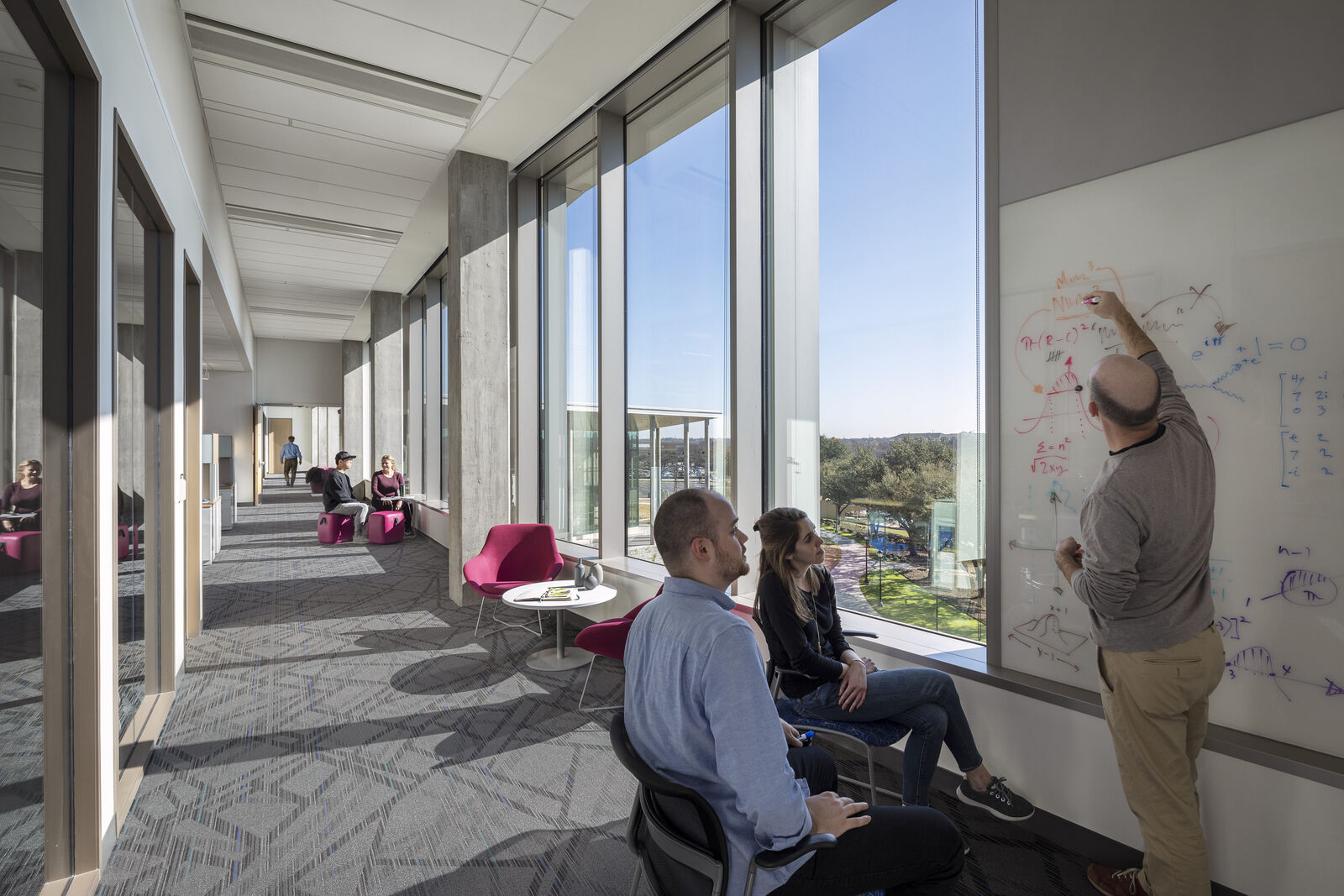
Faculty and graduate offices on all levels share a perimeter corridor outside the laboratories, a more thermally efficient solution than placing private offices at the exterior. The plan allows occupants to maintain a consistent orientation to the campus, while daylighting lounge, conference, and teaming areas.
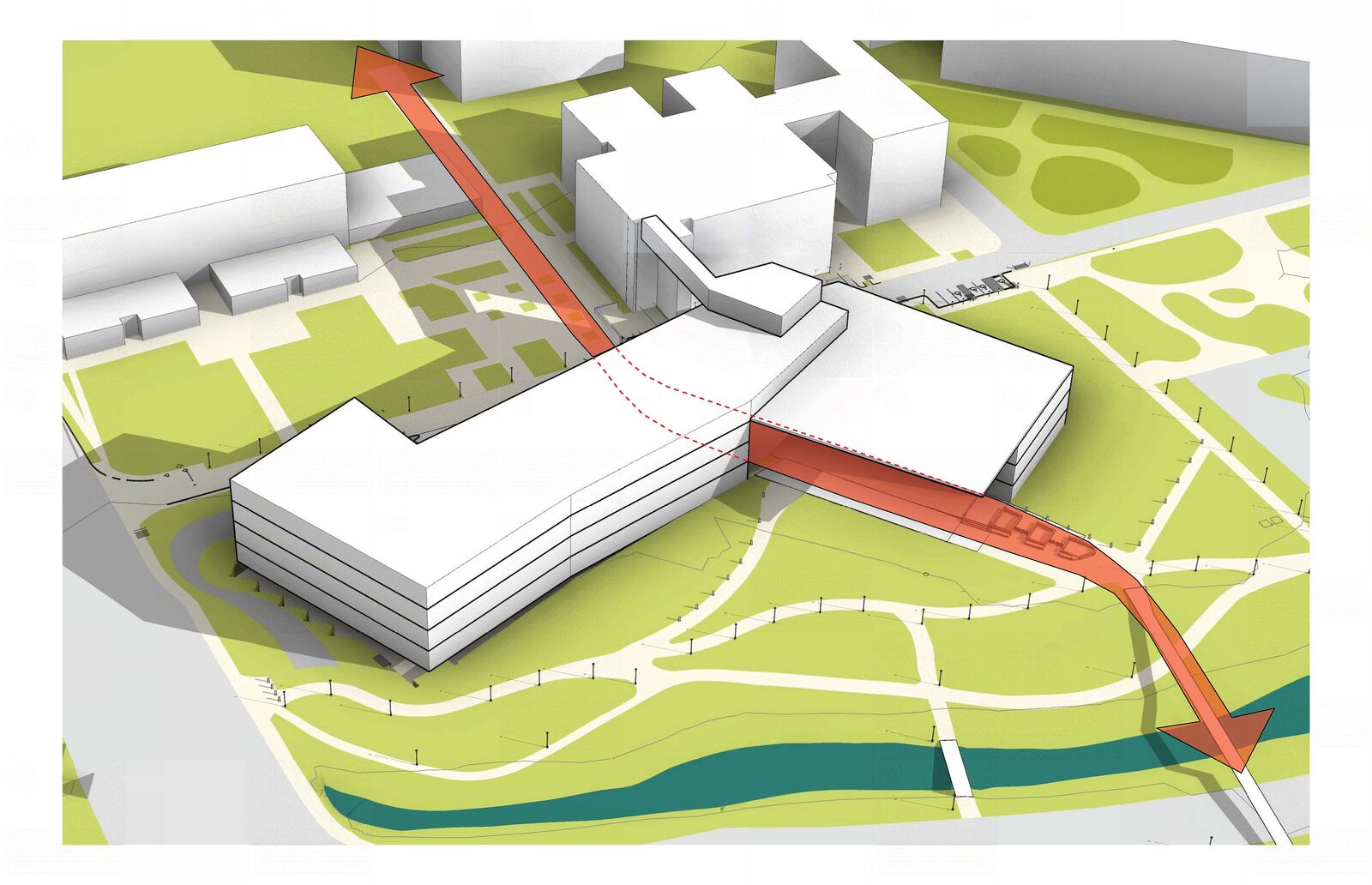
The new Science and Engineering Innovation and Research Building aligns with the university’s long-term Campus Master Plan, and its site design creates new outdoor spaces for the use of students, faculty, staff, and Arlington residents. The building connects directly, via a two-story bridge connection, to the existing Life Sciences Building, growing the long-term value of an existing asset while increasing planning flexibility for the campus. The building exceeds LEED Silver® standards for new construction, integrating the performance of the building’s massing, envelope, shading, mechanical system, and daylighting potential.
Since the building opened in 2018, UTA has steadily grown its health science funding, recruited new faculty, and furthered its goal of expanding its reputation as a top research institution. In 2019, after a growth of 52% over five years, the university achieved a new record with more than $116 million in research expenditures.
Arizona State University, Biodesign Institute C
UC San Diego, Altman Clinical and Translational Research Institute
J. Craig Venter Institute, J. Craig Venter Institute La Jolla

The University of Arizona, Bioscience Research Laboratories