
Crafted for Champions
San Antonio Spurs, Victory Capital Performance Center
Interiors, Sports and Human Performance
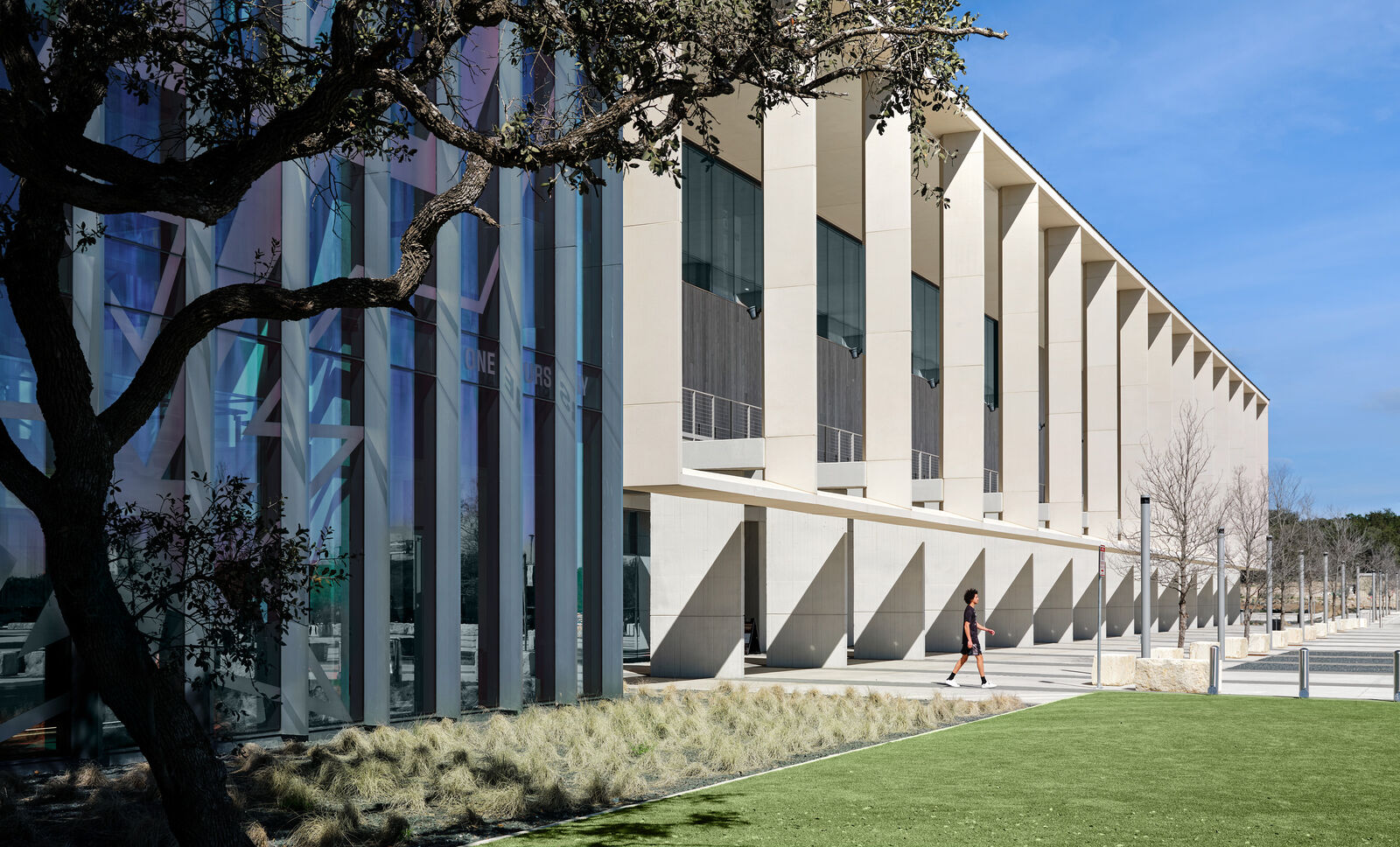
The new training facility for the San Antonio Spurs, Victory Capital Performance Center, creates a home for the Spurs organization that is value based, people focused and championship driven. Surrounded by rolling terrain of aged oak and cedar trees, the facility is bespoke to place and culture while providing a bedrock of health and wellness for the future of the organization.
The center is the first mass timber practice facility of its kind. The Spurs and ZGF benchmarked dozens of facilities globally dating back to 2014 to better understand how athletes from many disciplines trained, recovered, and interacted to achieve top performance. Those learnings are now reflected in a world class home fitting for a franchise with five NBA titles and hopes for more with players like number one draft pick Victor Wembanyama.
The performance center is located in the suburban northwest side of San Antonio on a 25-acre site that is in the process of being developed into a wellness hub for the greater San Antonio community. It promises to be the heart of the community-focused development which will include an events plaza, parks, human performance research center, wellness centers, team store, and more. The building includes practice courts, locker rooms, athletic training and performance areas, hydrotherapy pools, work environments for up to 70 staff members, including conference and meeting rooms, kitchens and dining.
The development, a partnership between Spurs Sports & Entertainment and Lincoln Property Company, is named the “The Rock at La Cantera” and was inspired by a favorite quote of the Spurs by Jacob Riis.
Location
San Antonio, Texas
Square Feet
138,900
Completion date
2023
Project Component
Architecture Services
Interior Design & Space Planning
"When nothing seems to help, I go and look at a stonecutter hammering away at his rock, perhaps a hundred times without as much as a crack showing in it. Yet at the hundred and first blow, it will split in two. And I know it was not that blow that did it, but all that had gone before."
Jacob Riis, Journalist
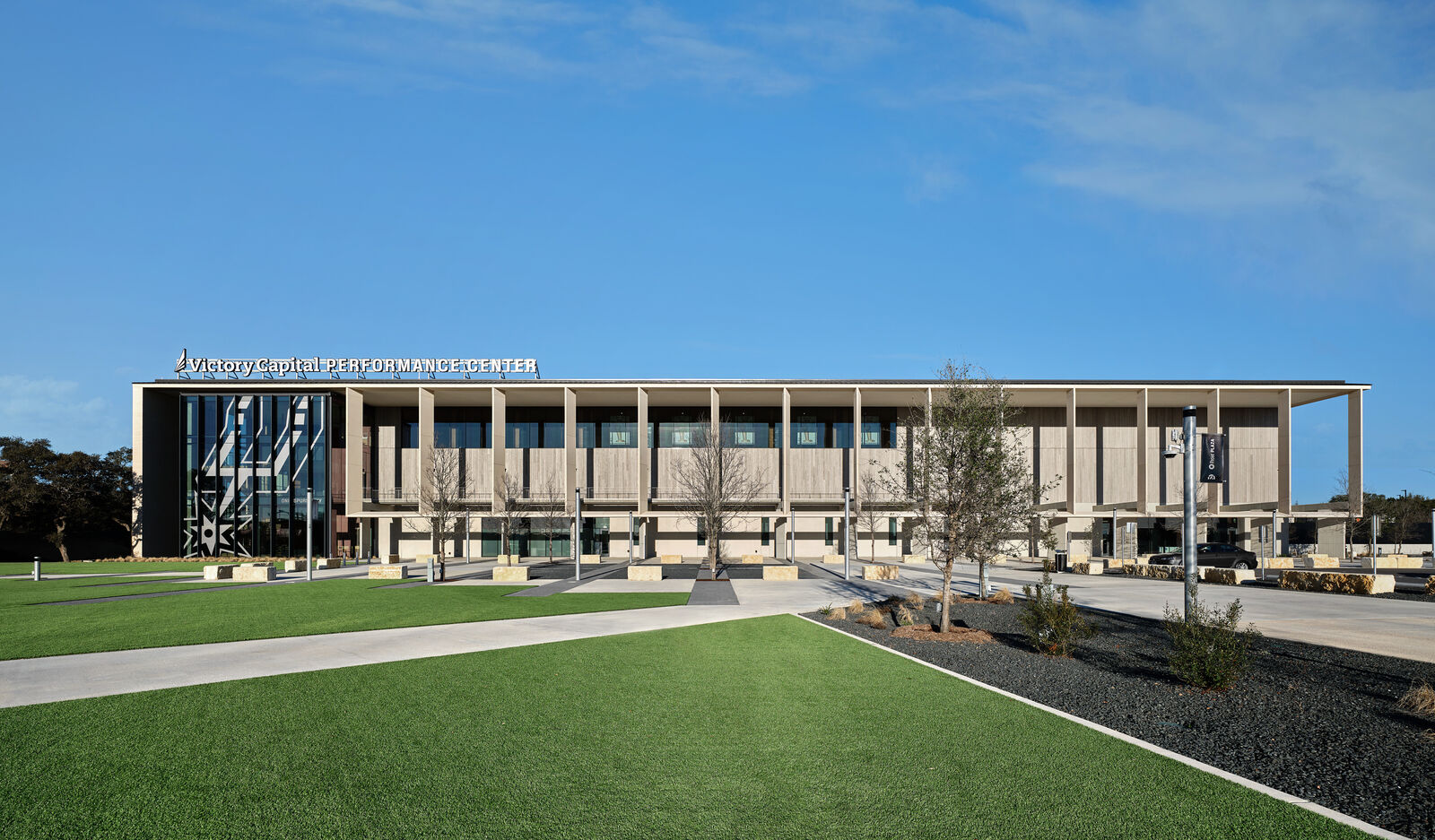
The community focused Spurs Plaza in the front of the structure where the community is welcome to gather in a grassy setting to watch games on a large-screen broadcast and enjoy cuisine from food carts.
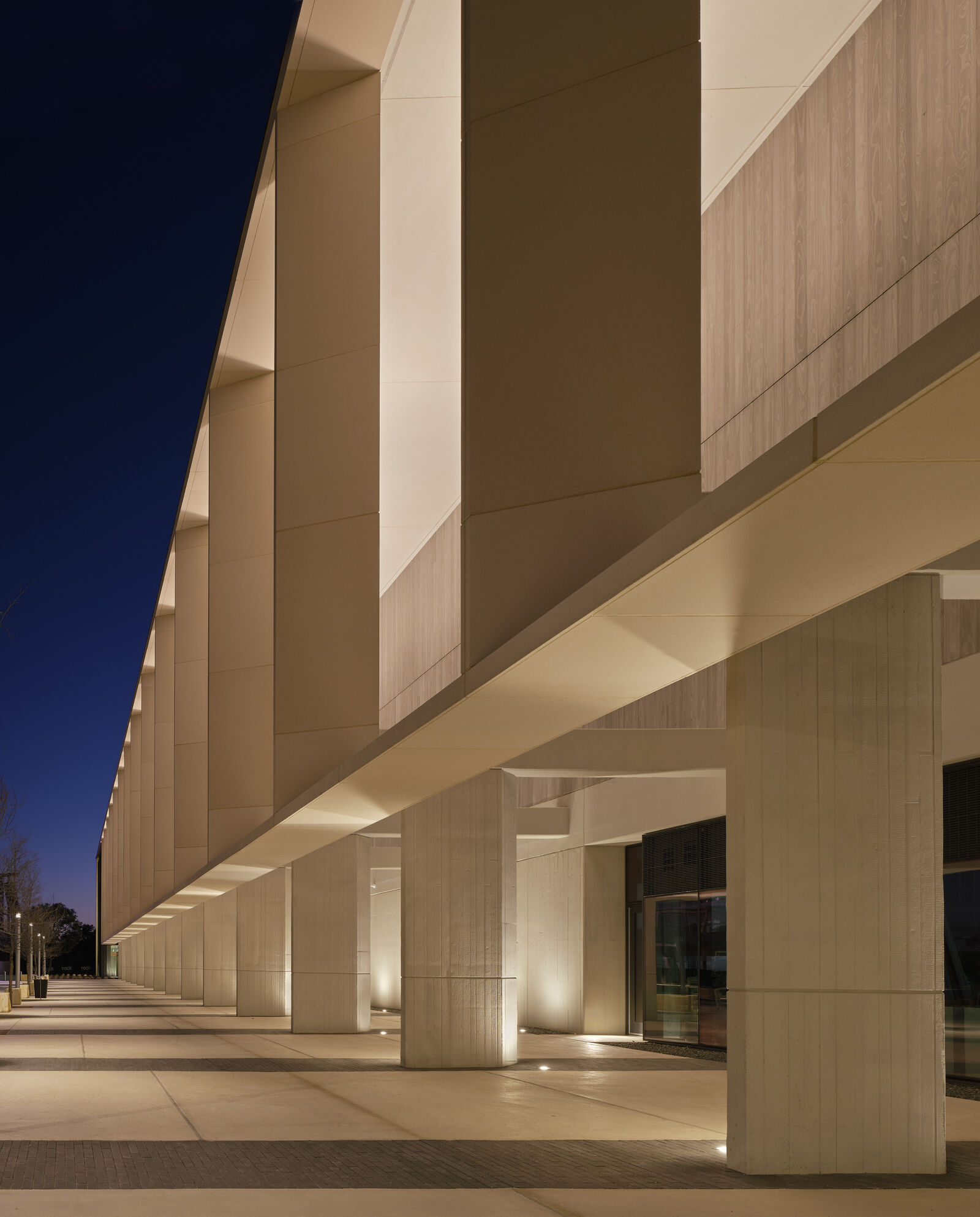
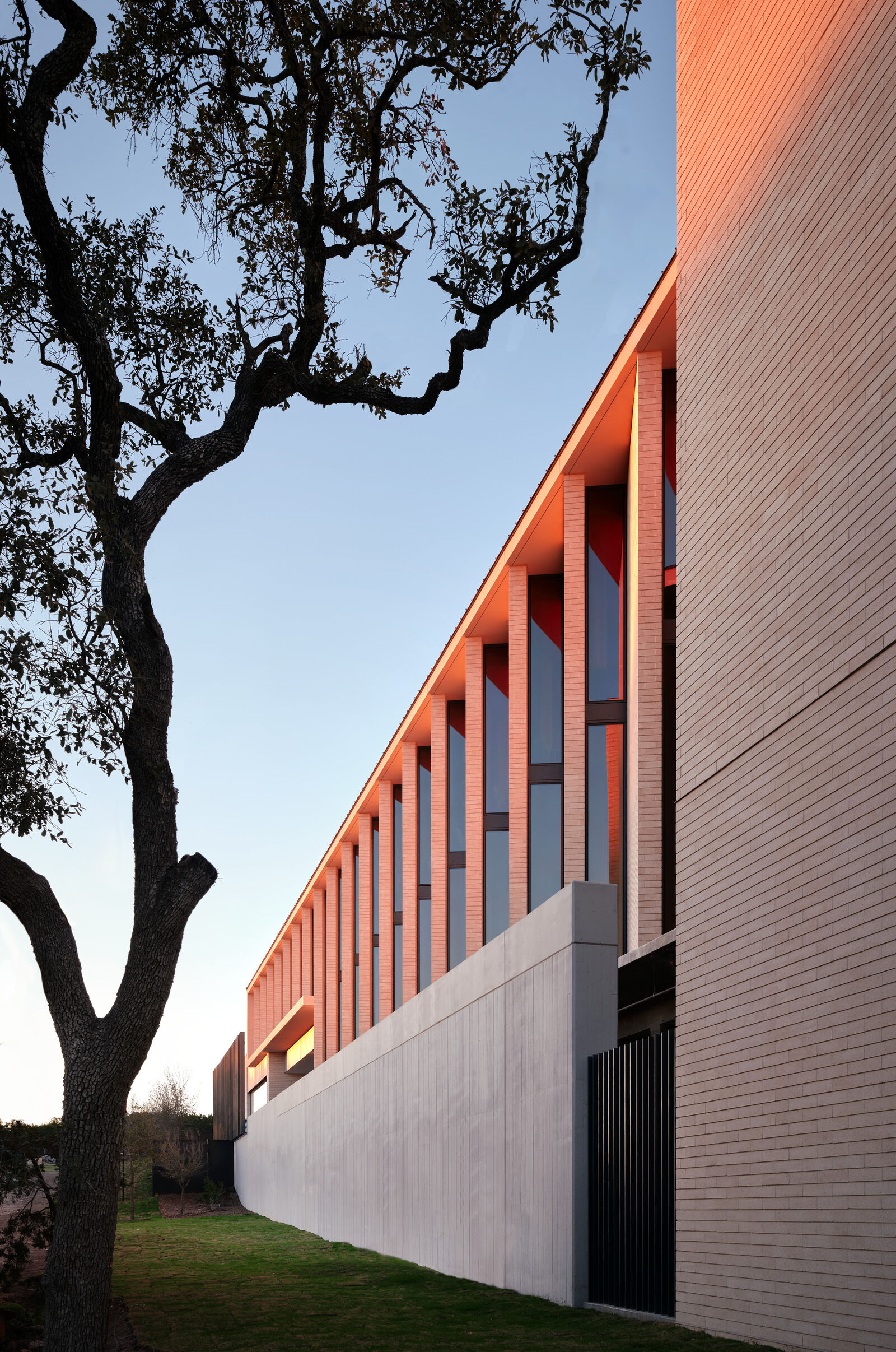
San Antonio is a rich confluence of culture, sports, and history. The center is designed to provide a sense of place for a diverse array of players who call different cities home. It is informed by the vernacular and landscape of the region, particularly the Mission-style architecture, subtropical landscape, and the San Antonio River Walk.
At the front on the east elevation, a public façade is marked by board-formed concrete and glass fiber reinforced concrete (GFRC) piers that form a colonnade playing with light, shadow, and depth to highlight the high-bay space, show off champion banners, and guide visitors to the glass box entry lobby.
The overall design is structurally expressive and exposes construction materials, including cross-laminated timber, glulam beams, and concrete masonry units (CMU), in their natural form.
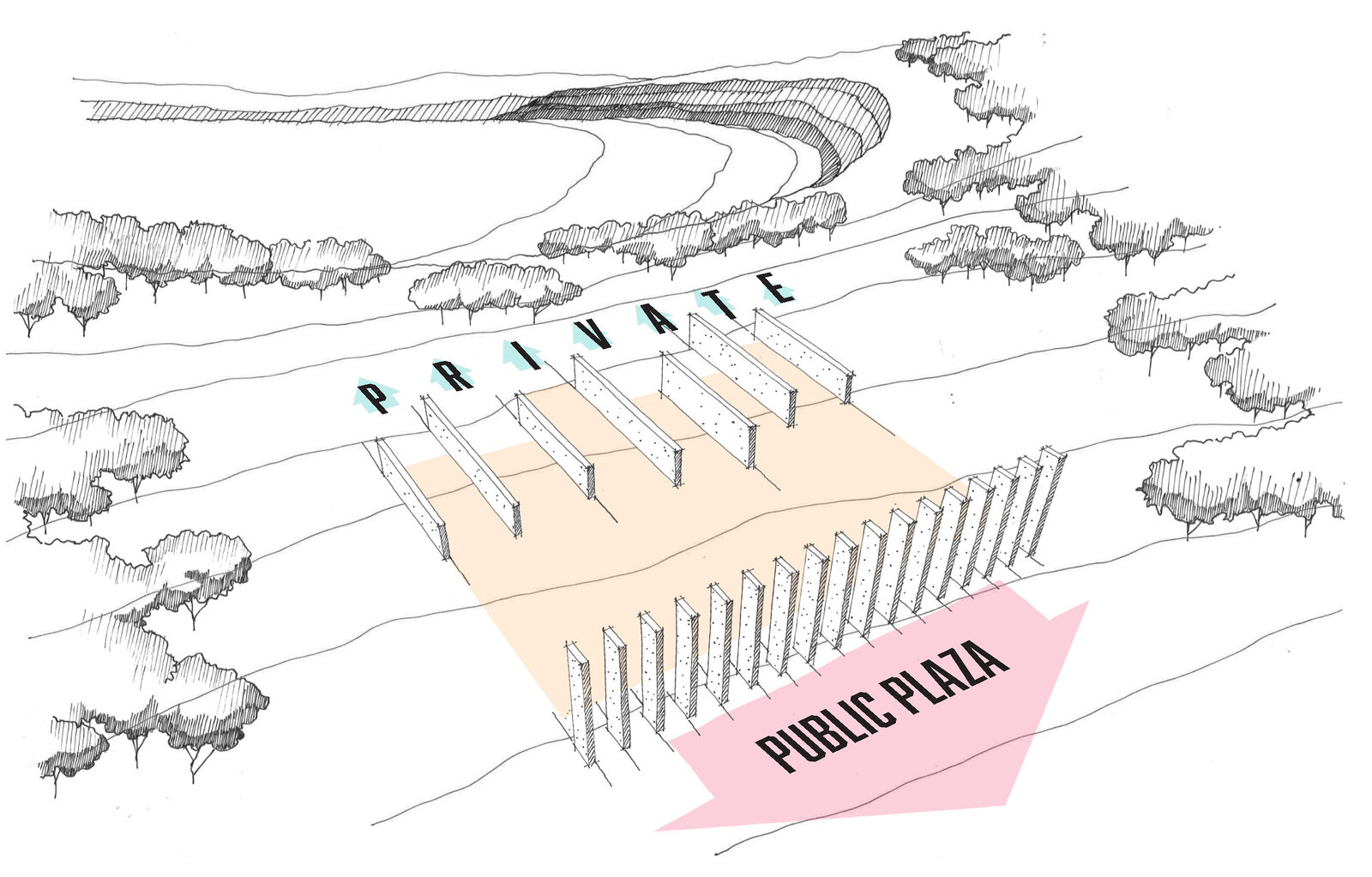
As an organization that is primarily focused on public entertainment, the Spurs must meet the demands for the public to connect to their team while also balancing the players’ need to have a private space for respite. The building creates a delicate balance between these requirements. It is organized into two distinct scales necessary to accommodate the programmed spaces. In the front, a high-bay space sits facing the public side of the campus and houses the practice courts and training spaces, while in the back, smaller-scale spaces are for privacy, gathering, and recovery.
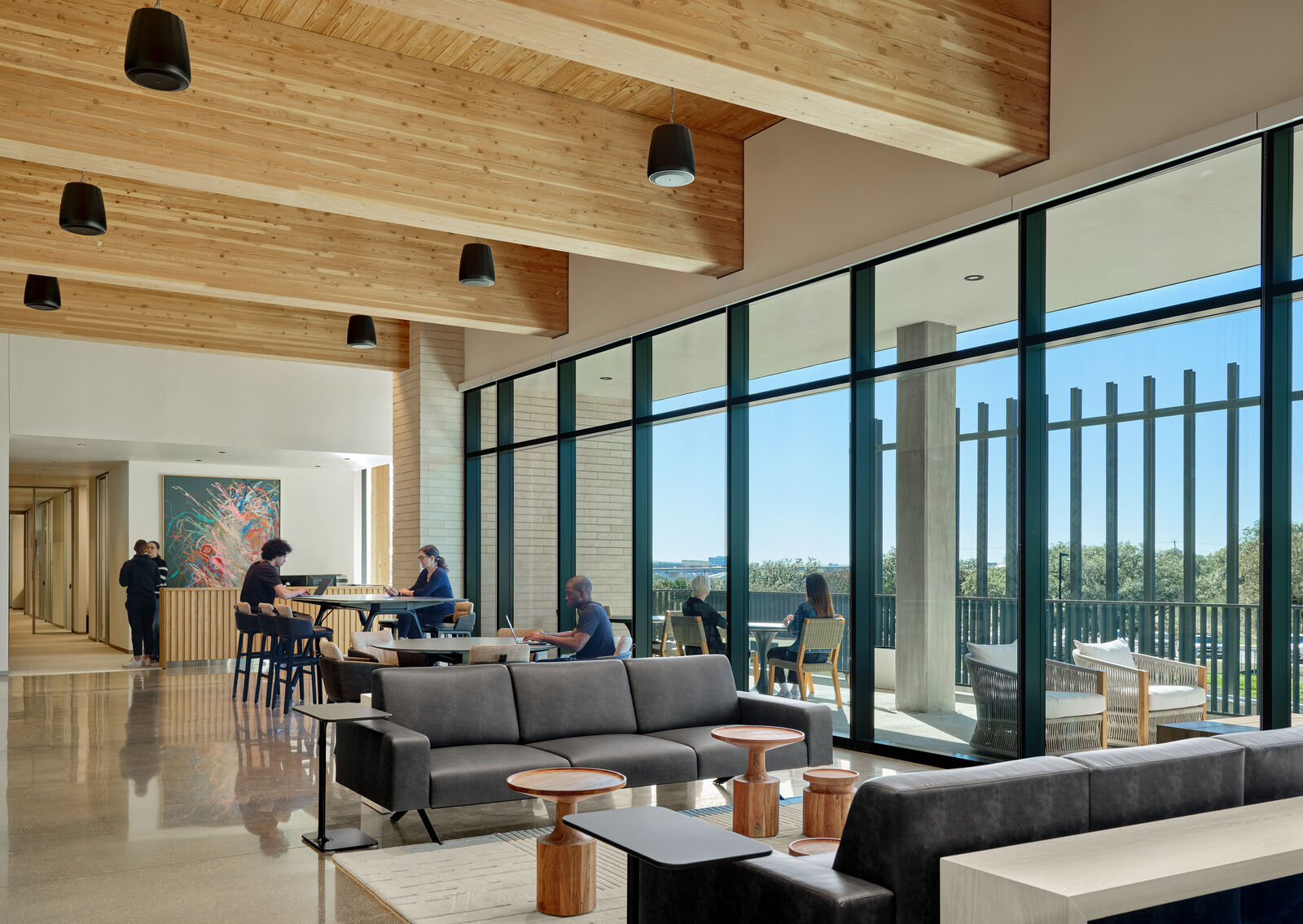
Inside, it was important to create a home-like environment for the players that is residential in feel. The spaces prioritize access to natural light and the outdoors and are articulated with a palette that builds upon the exterior, adding warmth and texture using natural materials. Local limestone, knotty oak, and leathers speak to the vernacular architecture and offer a sense of craft that feels uniquely Texan.
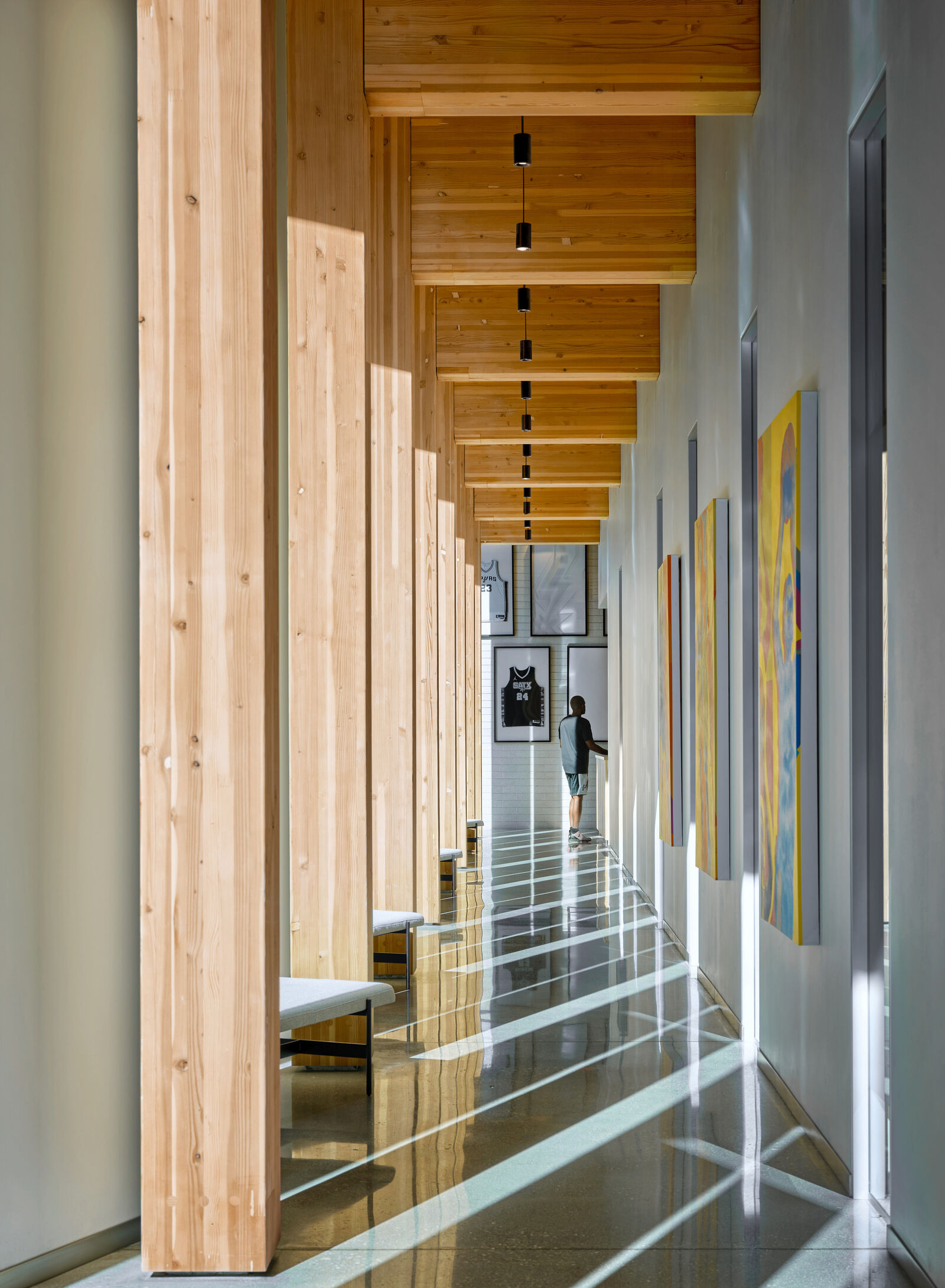
The structure is formed by masonry shear walls and wood spanning beams. The interior hallway mirrors the exterior structure by reflecting the colonnade playing with light, shadow, and depth.
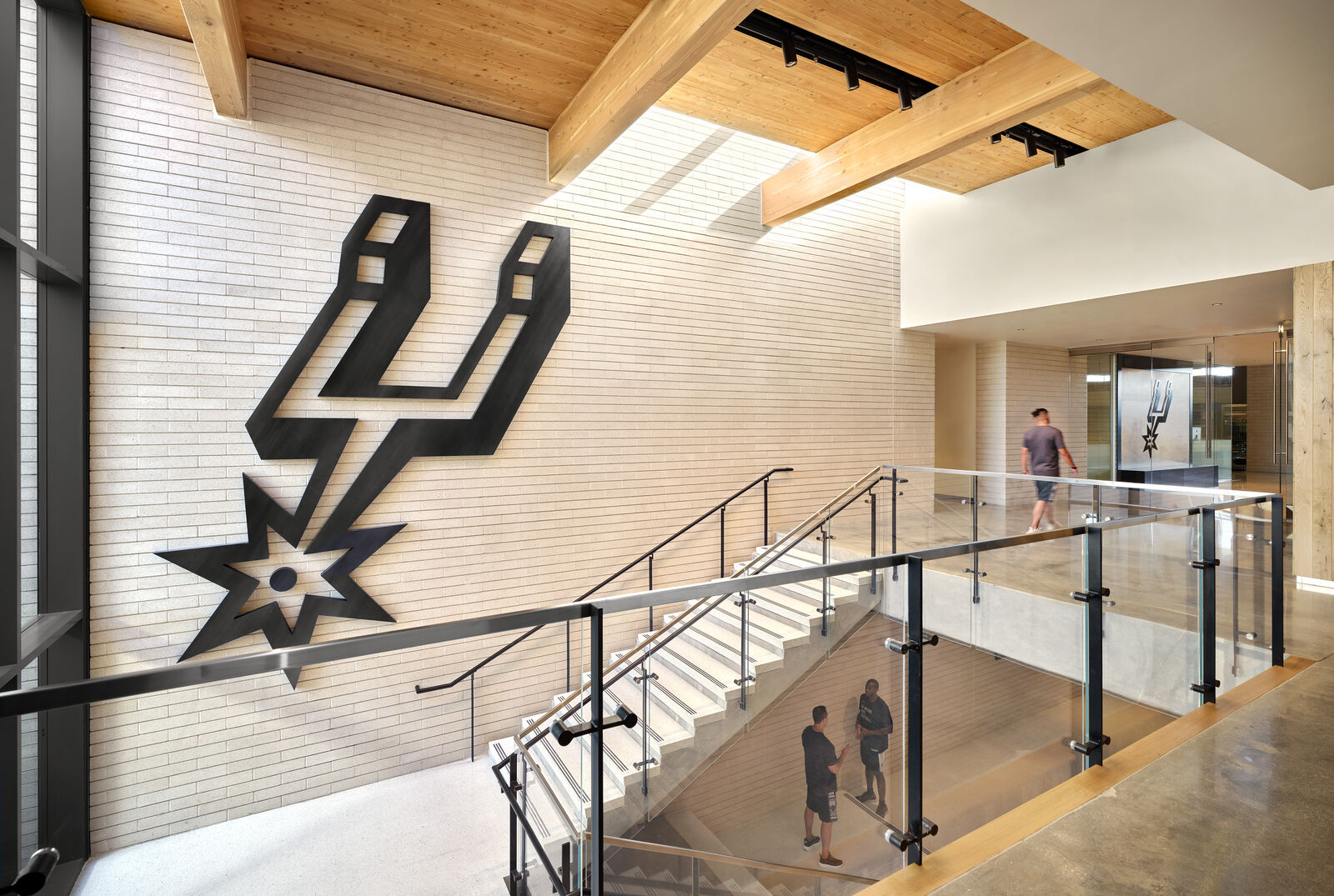
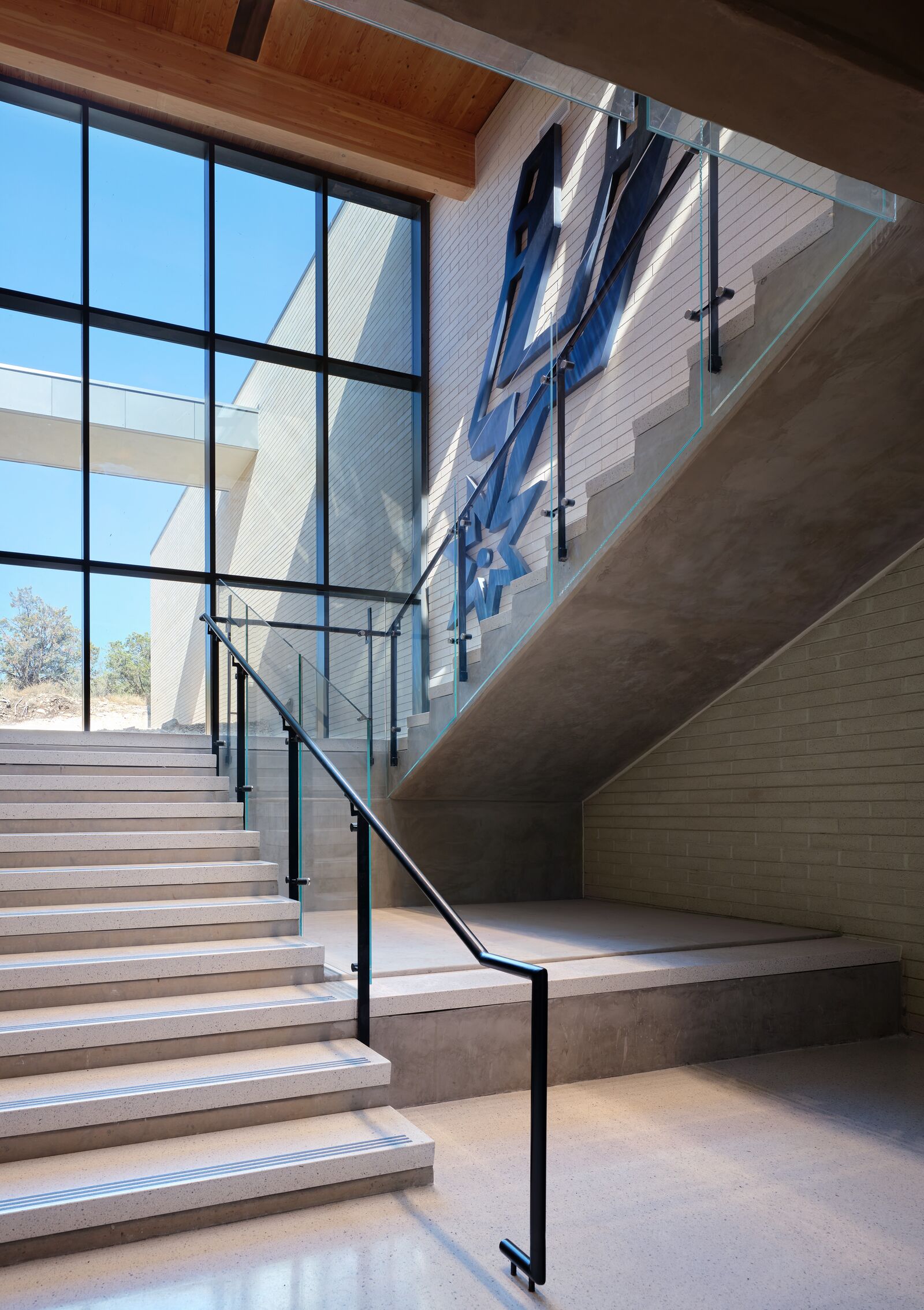
The two story staircase leads players from the private parking garage and entryway and opens to the lobby and public entrance to the space, with a glass curtainwall highlighting the connection to nature and the event space outside.
Elevating wellness and performance for the entire Spurs family
While heavily focused on training the players to win championships, the facility is equally focused on promoting their wellbeing and mental health, helping players to feel more grounded when they are back home and away from the stresses of being on the road and supporting the community they serve.
One of the take-aways from the benchmarking tours of other practice facilities was an understanding that NBA athletes spend a significant amount of time indoors; traveling across time zones, players must adjust daily schedules constantly to accomodate late nights and early mornings, and move from place to place with little consistency in sleep and workout schedules. There were limited opportunities to be outdoors and connect with the natural circadian rhythms. Lack of daylight access made it difficult to recover and adjust.
As a result, one of the design drivers for the Victory Capital Performance Center was the impetus to get players outside and connect to the local environment. It was essential to provide outdoor areas that would allow the entire organization to harness the restorative effects of connection to nature, which include lower heart rate and blood pressure. In the finished building, terraces and patios provide space for everything from workplace collaboration to player training, informal meetings, and dining. Other strategies include the use of natural materials and daylighting spaces typically relegated to artificial light. This is evident inside the Spurs practice courts, where 150-foot glulam beams and wooden columns give natural warmth with daylight streaming in through a series of windows.
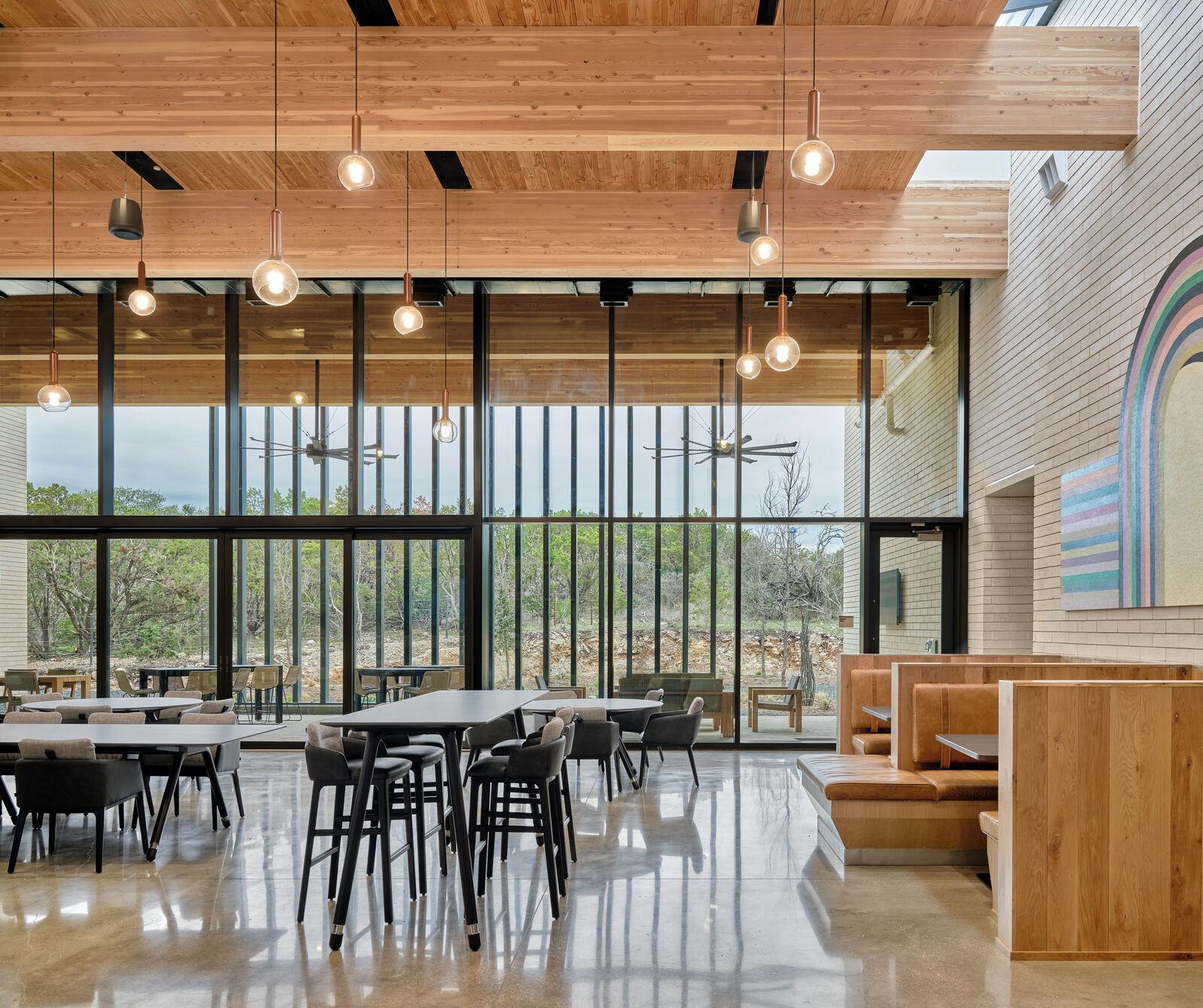
The dining and food hall are the primary socialization spaces, and both are placed near the back of the center to maximize outside views. Linear skylights run along lengths of CMU walls and help wash the primary materials in daylight, bringing the exterior in seamlessly.
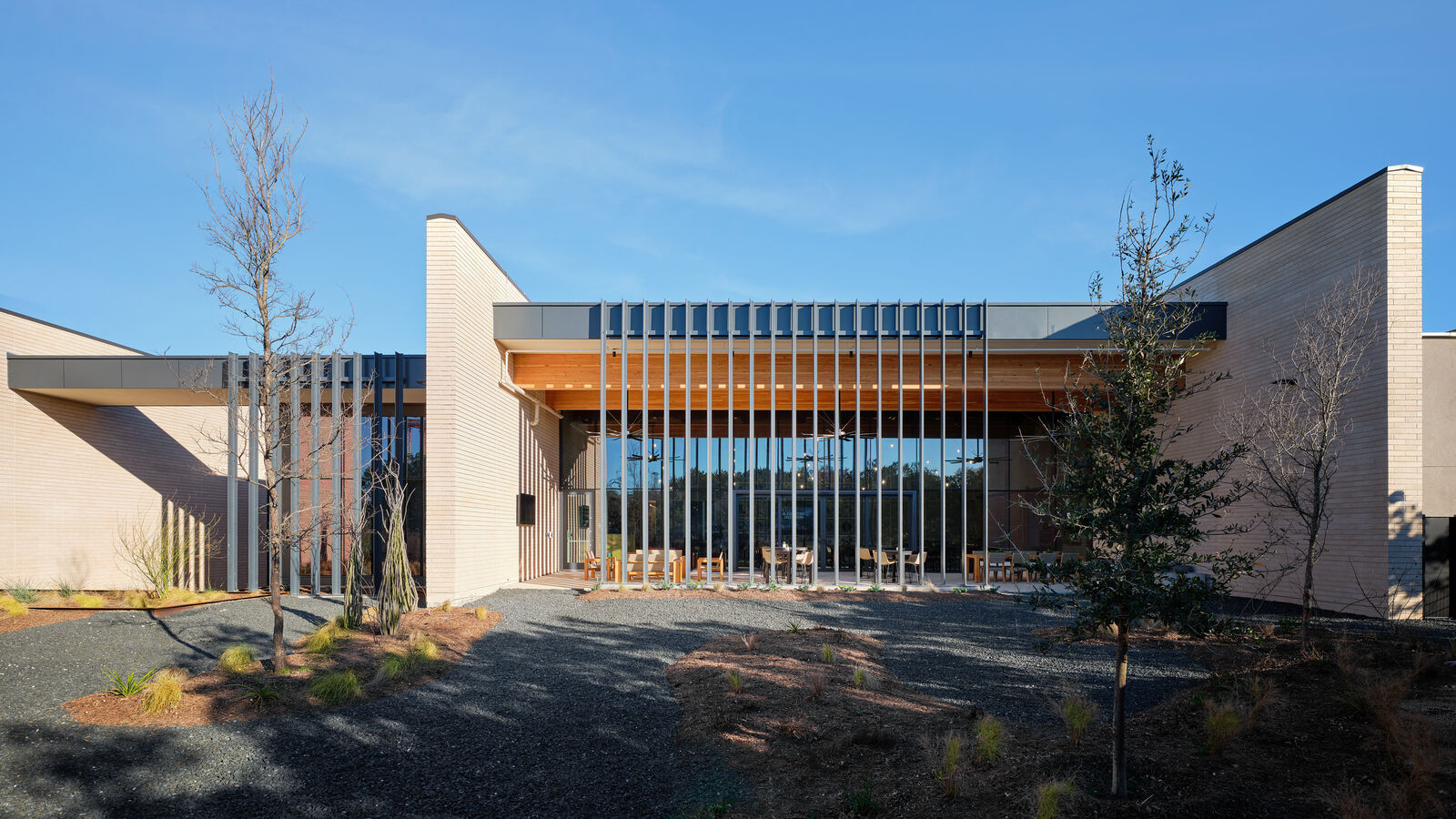
The exterior courtyard sits outside the dining area providing outside views, natural light and connection to the landscape.
The Victory Capital Performance Center features the largest mass timber construction in the state of Texas and the largest mass timber training facility in professional sports.
Wood is a renewable, carbon-sequestering alternative to carbon-intensive structural materials like concrete and steel. As a tree grows, it absorbs carbon dioxide from the atmosphere and stores the carbon in its wood fibers. The practice facility utilizes both cross-laminated timber and glue-laminated timber (glulam) from U.S. forests. In total, the structural wood sequesters the carbon equivalent of taking 422 passenger cars off the road for a year, or equivalent to the amount of carbon sequestered by 2,260 acres of U.S. forest in one year of growth.
The wood structure is exposed throughout the facility and serves multiple purposes: as a healthy material, as a natural interior element that provides warmth, and as a carbon-friendly construction alternative.
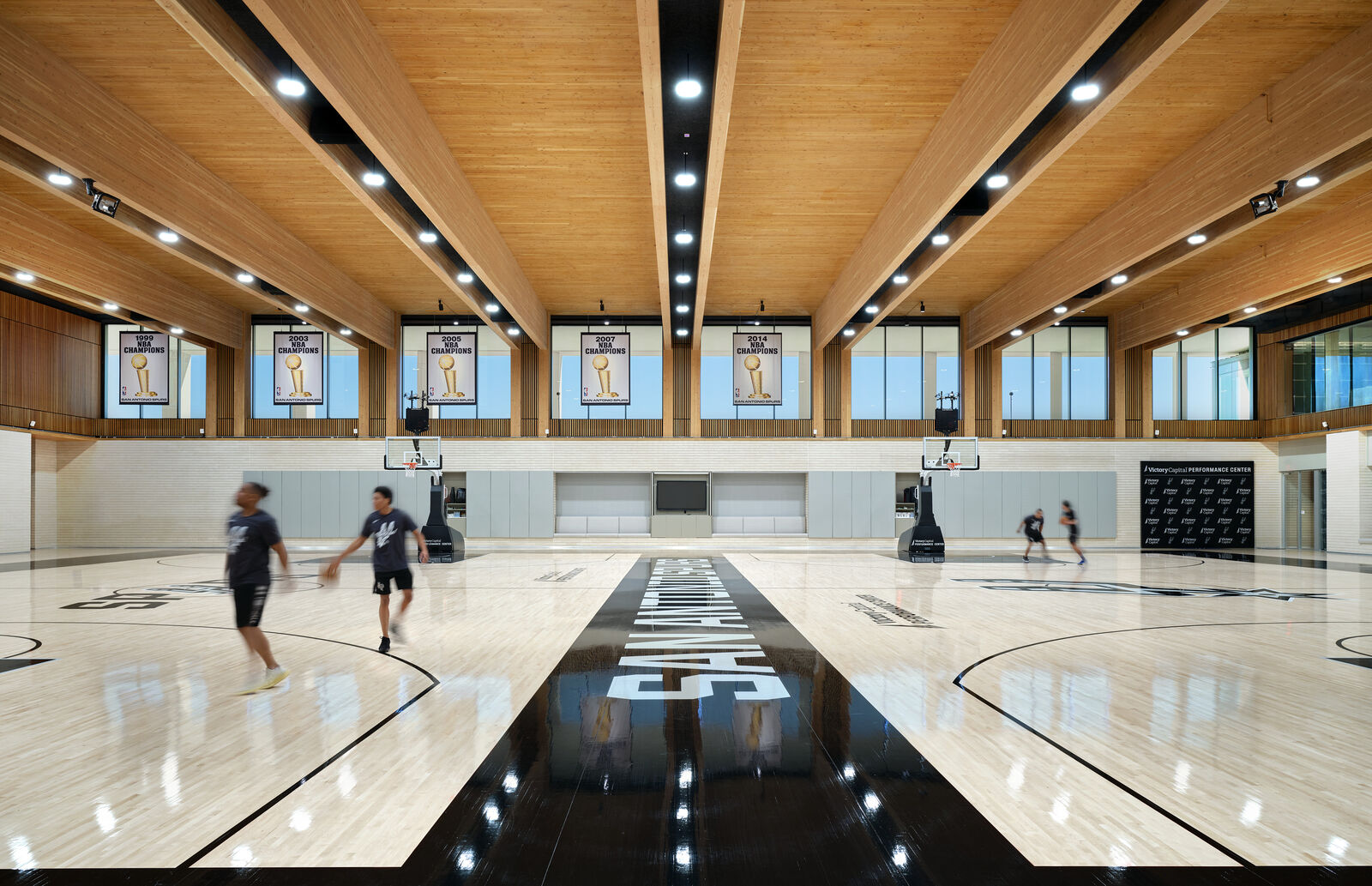
The practice courts are a celebration of the warmth of the CLT structure, with 150-foot glulam beams and wooden columns, between which wood screens filter the natural light from a series of clerestory windows to prevent any glare on the courts below.
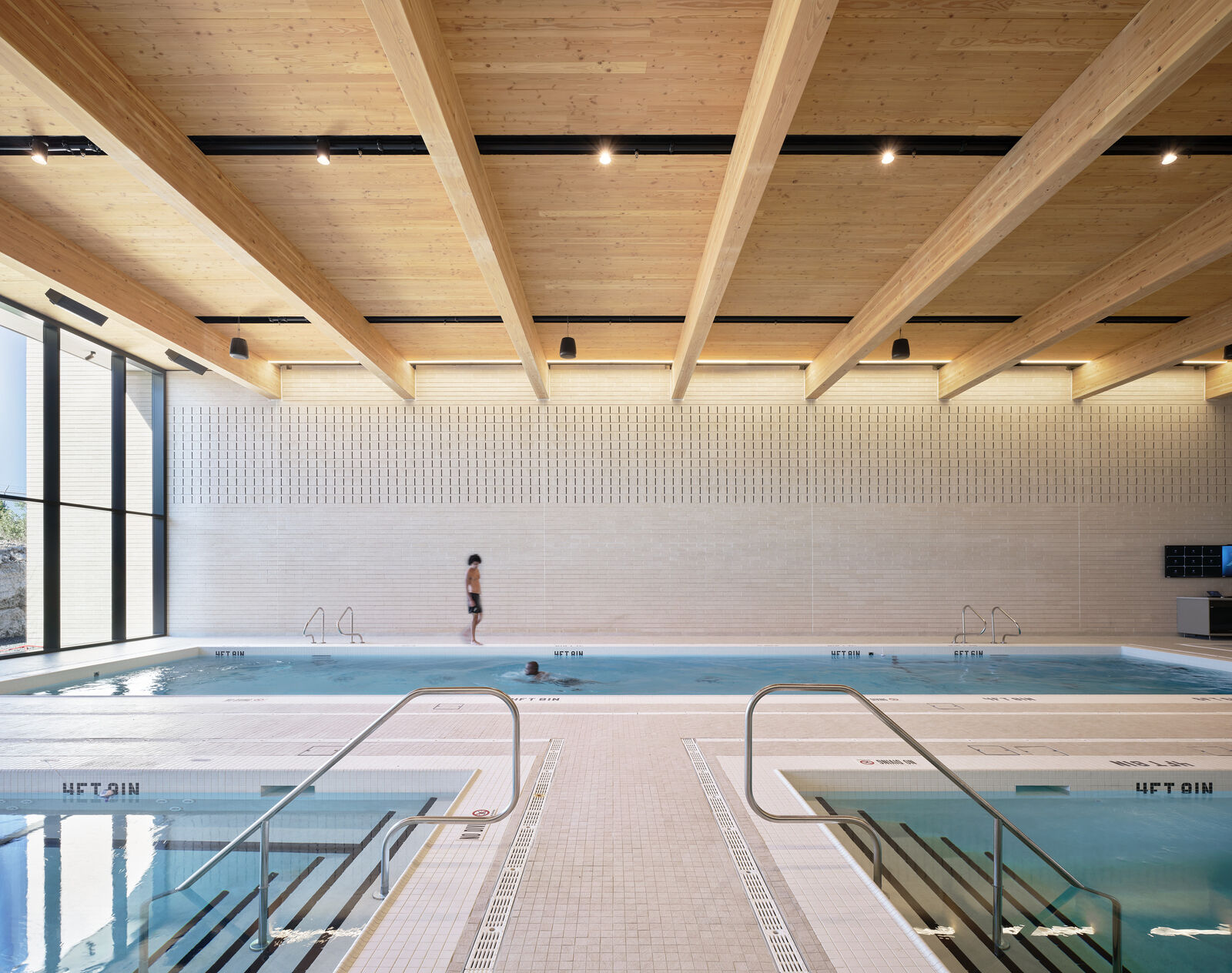
Spaces near the back of the structure, including locker rooms, aquatics, and recovery areas, are oriented to overlook the landscape. A serene environment is established by using a low-contrast material palette and diffused lighting and views to the outside bathe the CMU walls in daylight.
Phoenix Suns, Verizon 5G Performance Center
University of Oregon, John E. Jaqua Academic Center for Student Athletes
Nike World Headquarters Expansion, Mike Krzyzewski Fitness Center and Parking Garage

University of Oregon, Hatfield-Dowlin Complex, Football Operations Center
