A Station Catering to the Community it Serves
Montgomery County Department of Transportation, US 29 BRT Station Design
Urbanism and Landscapes
With worsening traffic and limited access to convenient public transportation in Maryland’s DC suburbs, Montgomery County sought to provide its 1 million residents with improved transit options, while promoting economic development and reducing carbon emissions. This is how the county’s Bus Rapid Transit (BRT) system was born. ZGF partnered with Montgomery County Department of Transportation to first develop a prototype for the system’s new stations and to then implement the stations along US29—the first of eleven BRT corridors the county has planned.
Designed with flexible and sustainable infrastructure, the first phase of BRT service on US29 connects 11 stations across 14 miles with frequent service and is planned to support up to 20,000 daily riders by 2040.
Key to creating an innovative and successful BRT system that would adequately serve riders, was the project team's focus on shaping accessible, adaptable, and sustainable station architecture that would meet the needs of its unique community.
Location
Montgomery County, MD
Completion date
2020
Project Component
Urban design
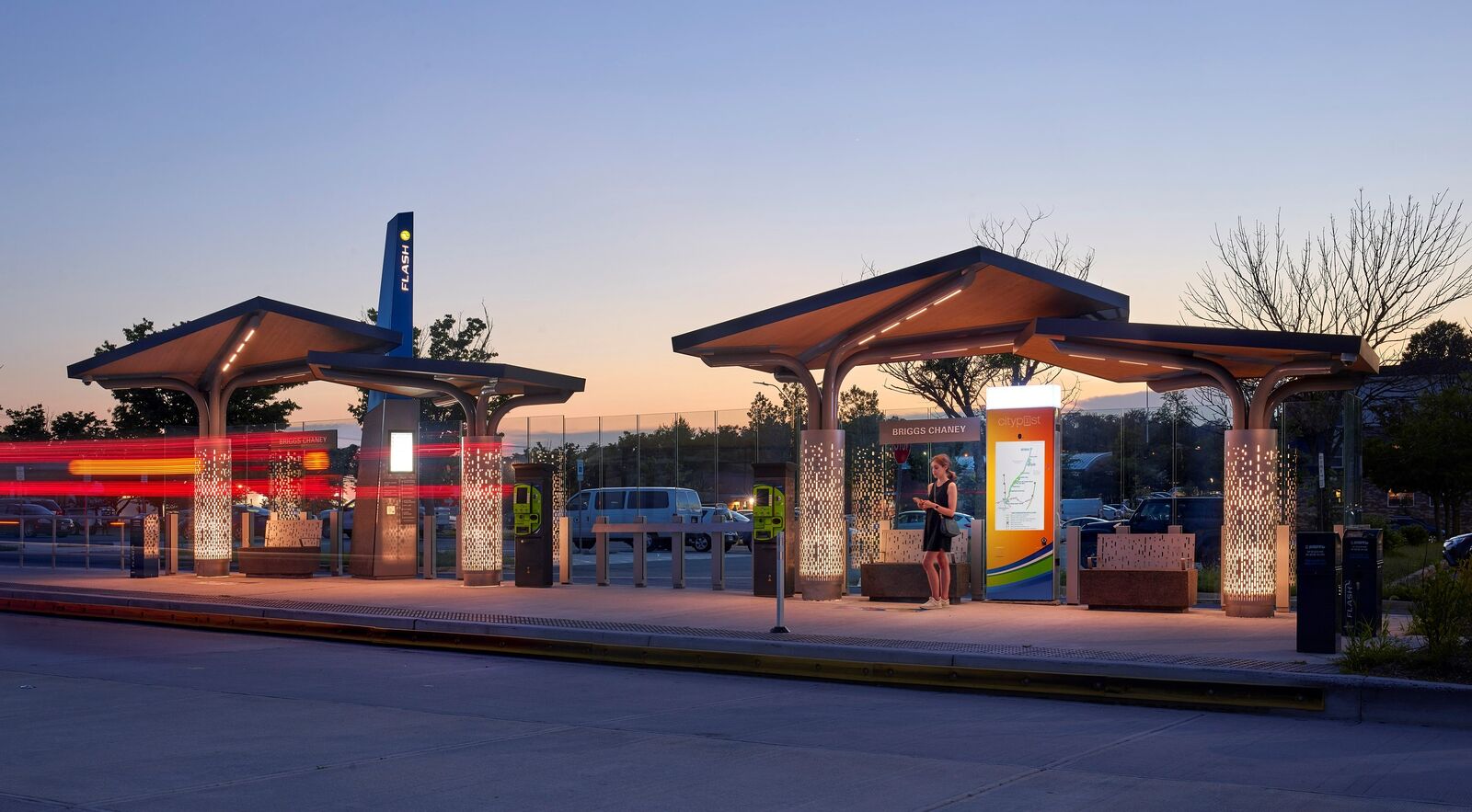
Each station is equipped with brightly lit pillars to ensure riders can easily identify stops in the dark, while also providing a lit transit spot for evening riders to safely await the bus.
Accessibility
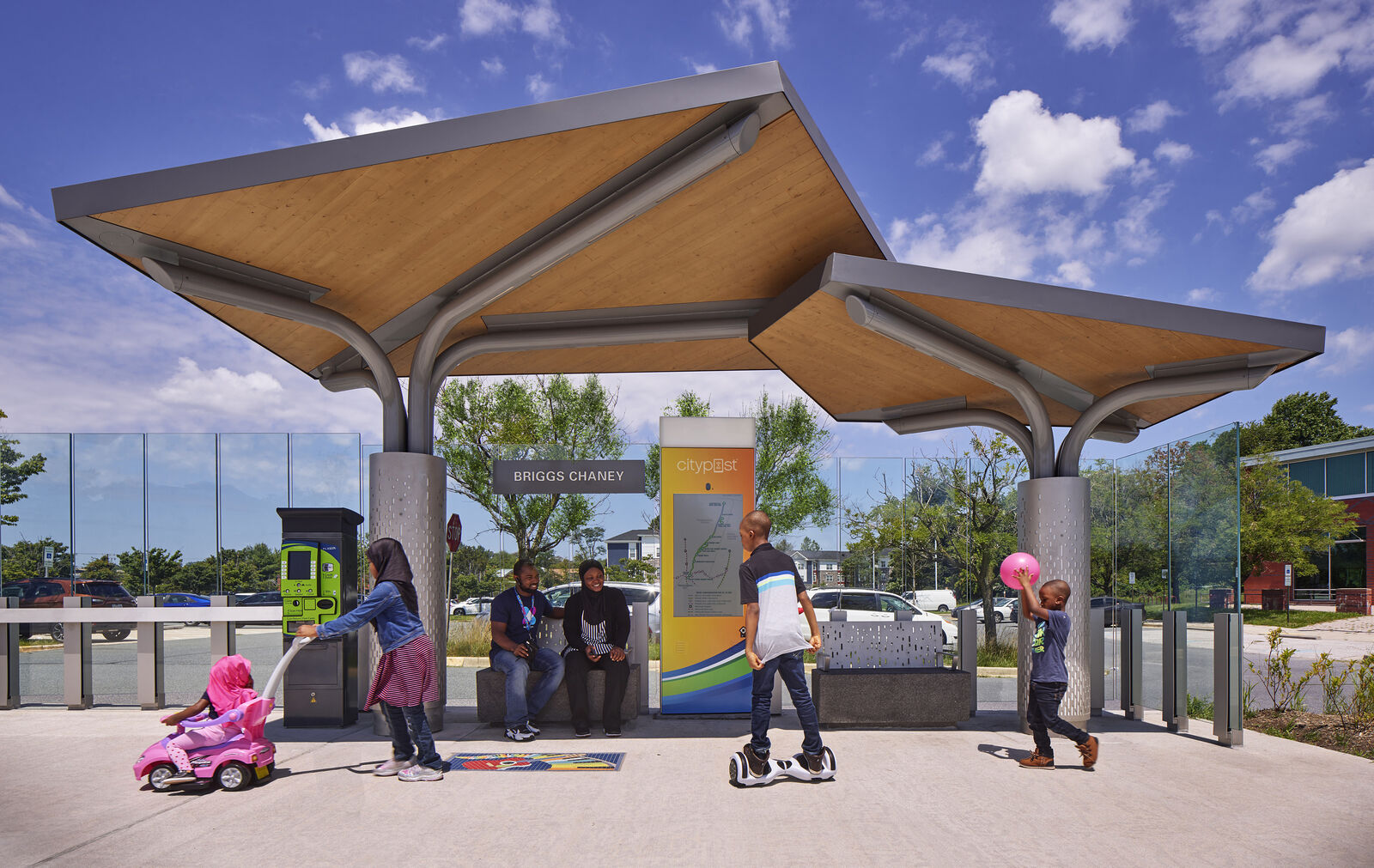
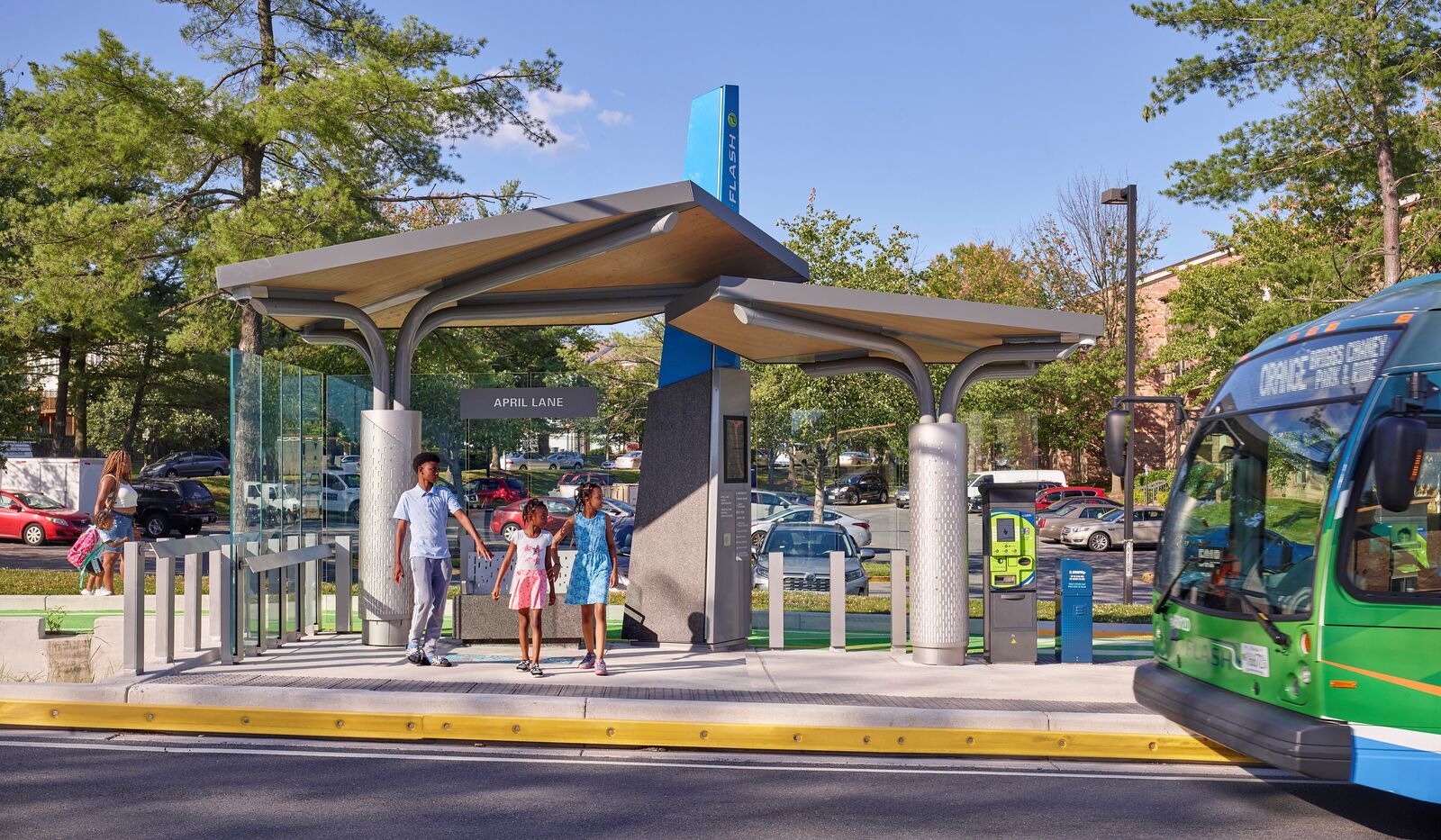
A well-designed transit system is useless if not easily accessible to riders. The BRT system addresses this challenge by ensuring frequent, all-day service with 62’ long, amenity-equipped buses to accommodate a higher ridership. The corridors help connect underserved communities directly to commercial centers and ultimately the DC metro system. Tall, brightly lit markers make each station easy for users to find, and windscreens promote air flow and weather protection for awaiting passengers. For quick and efficient boarding, pre-payment stations with tap poles are located at the entry to each platform. Interactive screens display real-time information with routes and bus arrival times. To better serve riders with physical disabilities while meeting ADA compliance, platforms are raised for even boarding and include a safety tactile zone along the curb line.
"This is more than just a new bus service. This is hope. This is optimism.”
Joana Conklin, Montgomery County Department of Transportation, Rapid Transit Development Manager
Adaptability
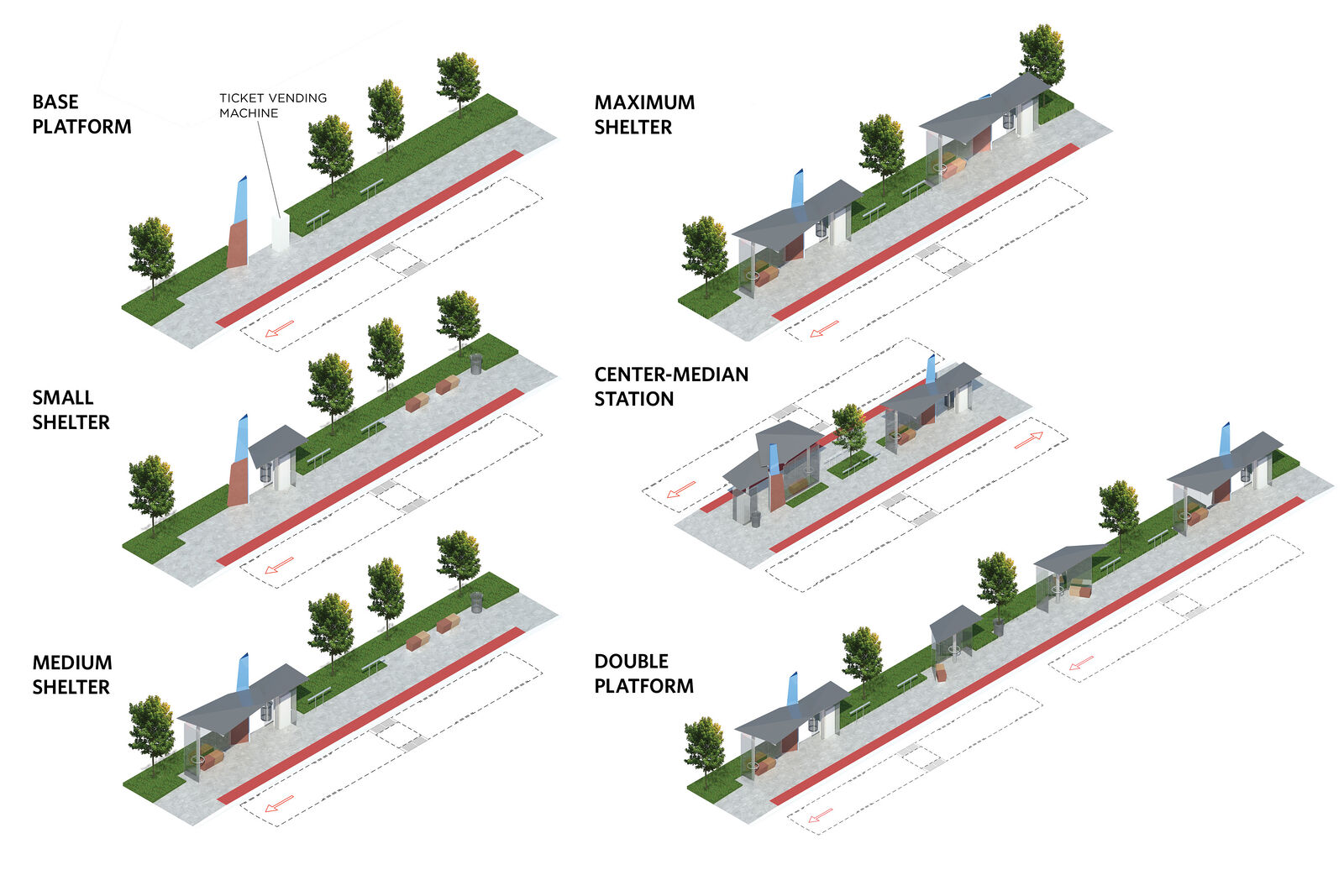
As community priorities and population needs shift overtime, environments must be capable of evolving just as quickly. Therefore, the BRT station prototype was designed with modularity in mind, allowing individual stations to fit into unique contexts and adapt to changing ridership demands. Each station was built with a “kit-of-parts” approach to ensure that all elements are independent of each other and can be adjusted as needed. The ‘single point’ structure of the station canopies enables future additions with minimal impact to on-going operations at an affordable cost. This customizable approach allows for the option to increase shelter coverage through linear expansion and the introduction of multiple independent canopies. This flexibility prevents a monolithic structure and allows canopies to be spread along the platform, making it ideal for back door boarding.
Sustainability
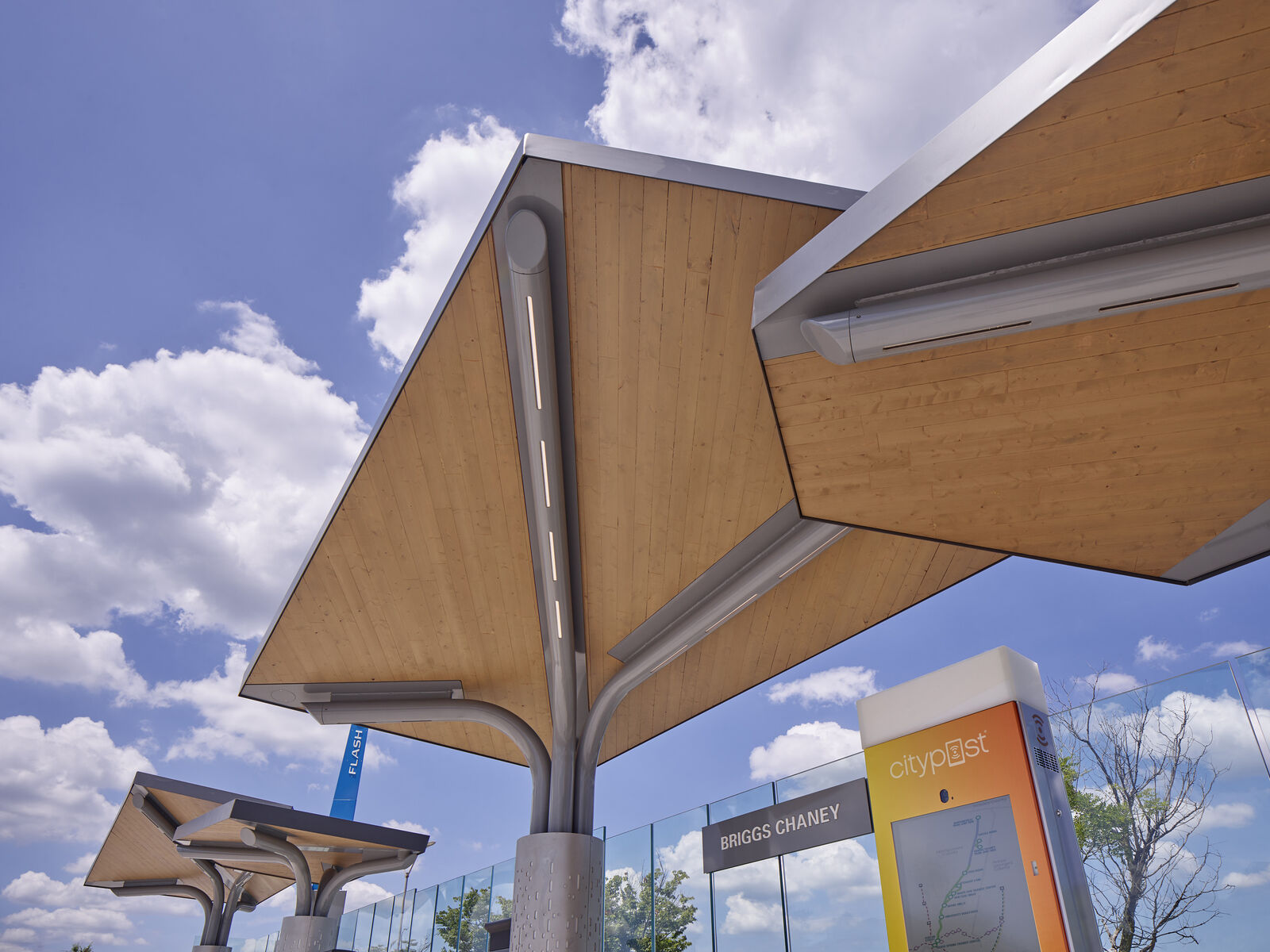
The station design reflects community aspirations through the integration of sustainable landscape and materials. Renewable materials, such as cross laminated timber, are used for the stations’ canopies. The canopies are also designed to support future PV panels, with the goal of reaching net zero energy. The design employs low-impact development strategies—bioswales and tree pits are included in the stations’ kit-of-parts, and native plantings are used as groundcover around the platforms. Each station includes bike racks and D.C. Metro’s bike sharing service, Capital BikeShare, as an additional transit option and to further reduce the carbon footprint within the community.
Community
The most important step in the development of the BRT system was ensuring that county residents were heard and represented throughout the project. Community meetings were held to facilitate conversation and invite resident input during the prototype and design phases. When residents were asked during a visioning exercise to describe Montgomery County, they used words including “green,” “high-tech,” and “diverse.” This language helped shape a station design that is dynamic in form, rich in materiality, and authentic to the communities it serves. In addition to the timber used in the canopies, locally sourced granite was used to create the benches and base of the station markers, exemplary of the county’s history of quarrying stone. The project also engaged the community by working with local high school arts group, Arts on the Block, to create the inlay mosaics adorned at each station.
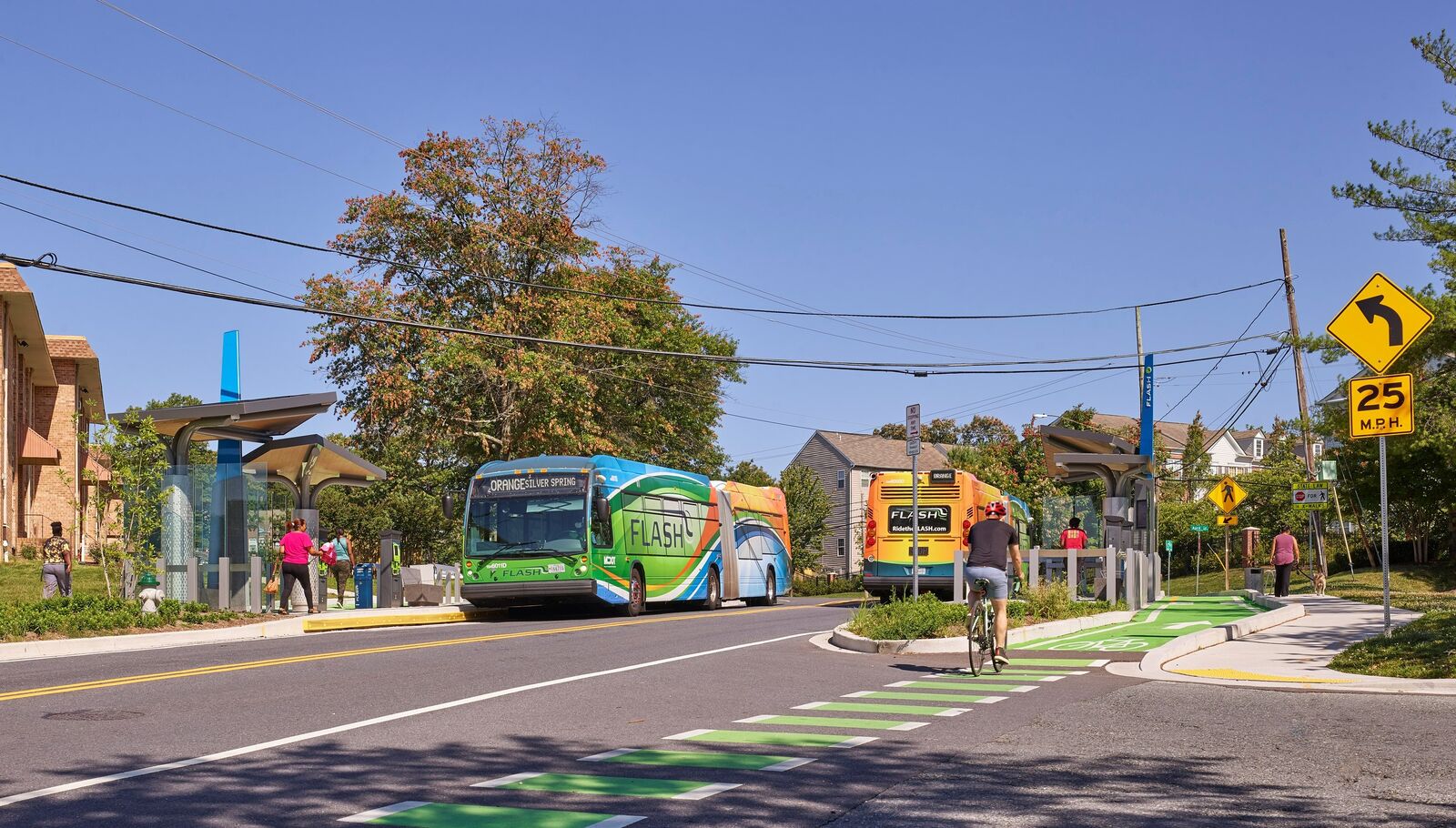
April Lane is one of many stops accessible by wide sidewalks and clear, marked bike paths that run parallel alonside the bus rapid transit route.
Public transportation carries the responsibility of ensuring communities remain connected and accesible through affordable means. The innovation of the Bus Rapid Transit project is vital for kickstarting a cycle of necessary transportation improvements across Maryland. By improving the perception and accessibility of the bus, we improve ridership, therefore justifying further transit funding and expansion that will pave the way for more equitable and sustainable communities.
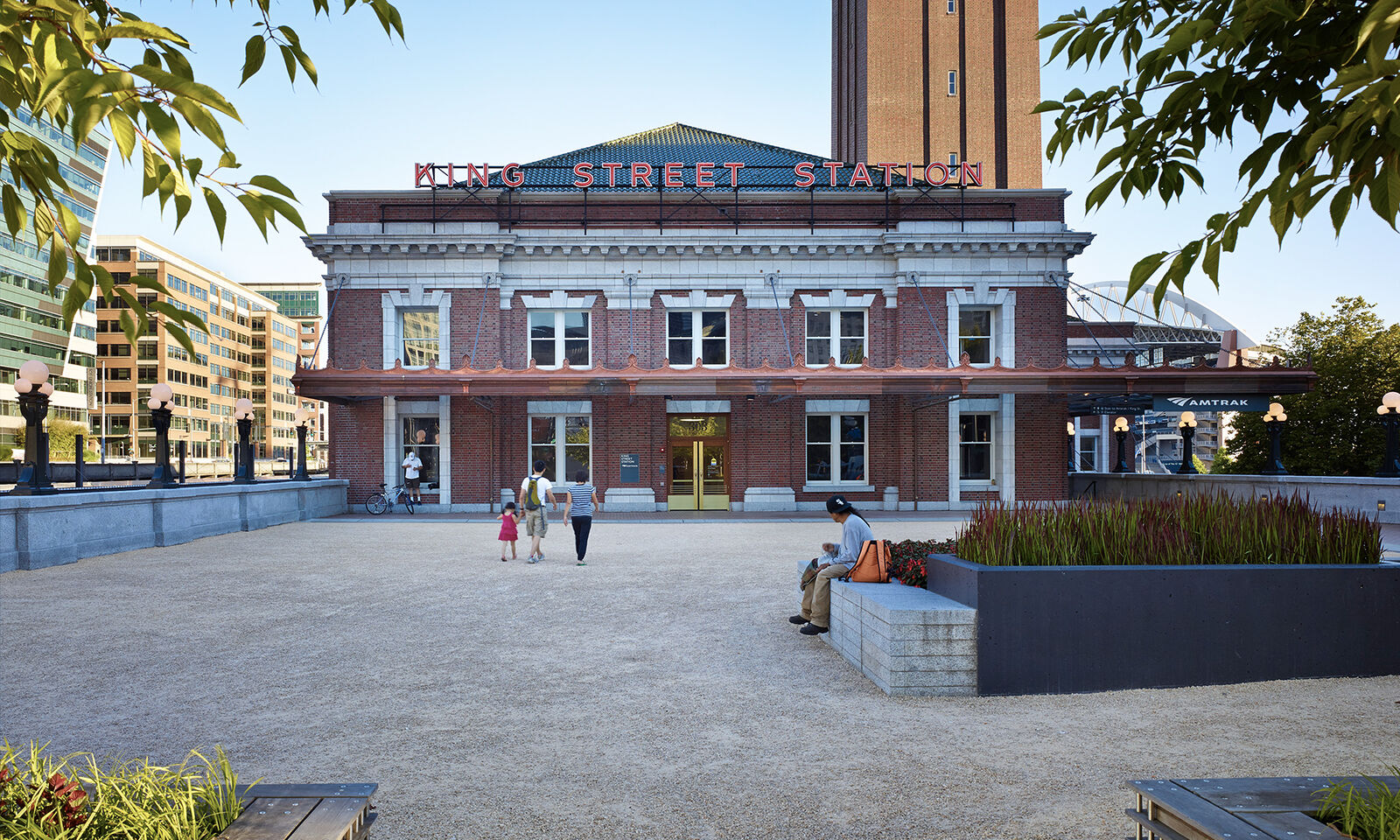
City of Seattle, King Street Station Renovation
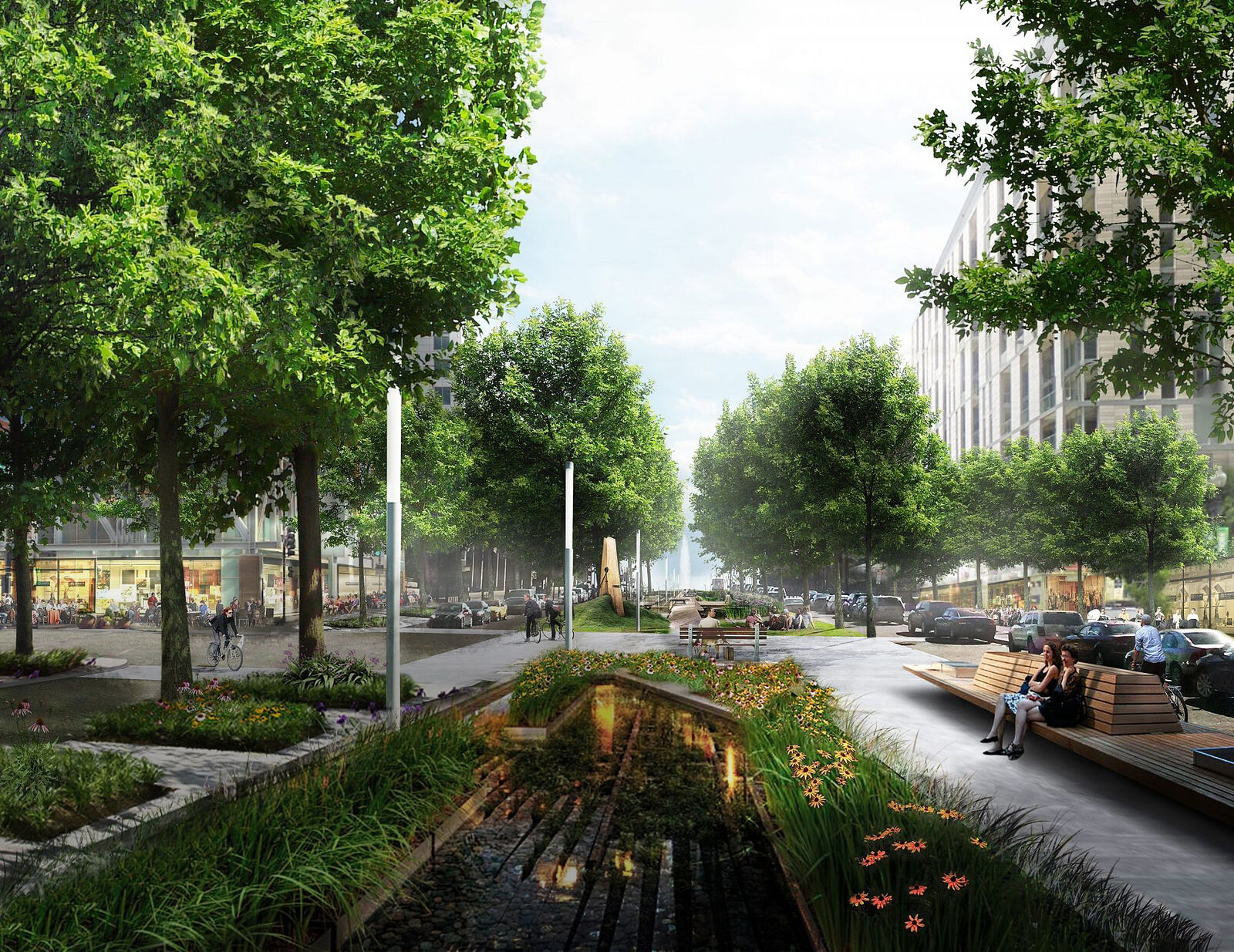
National Capital Planning Commission / U.S. General Services Administration, SW Ecodistrict
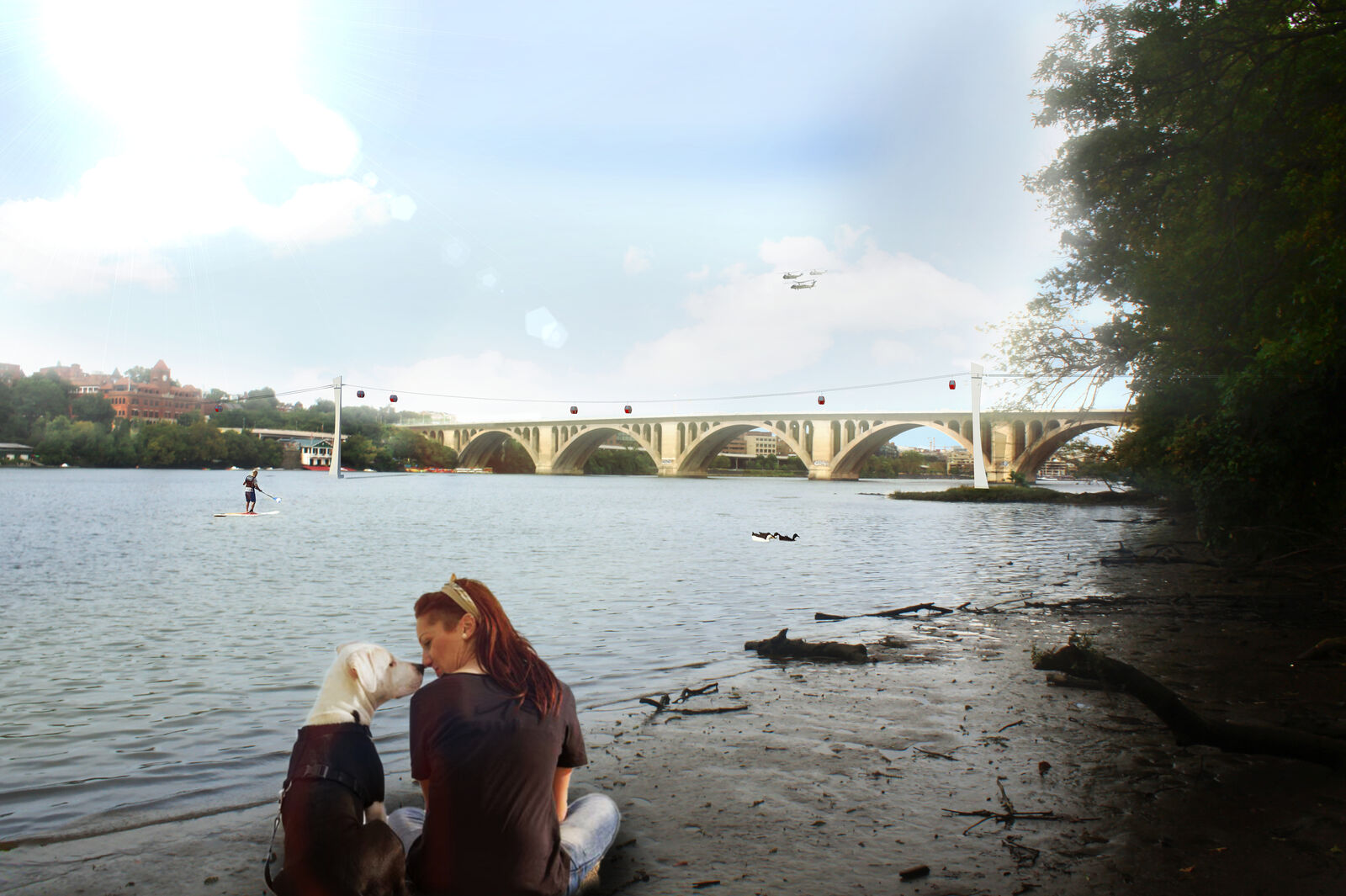
DC Surface Transit Inc., Georgetown-Rosslyn Gondola Feasibility Study
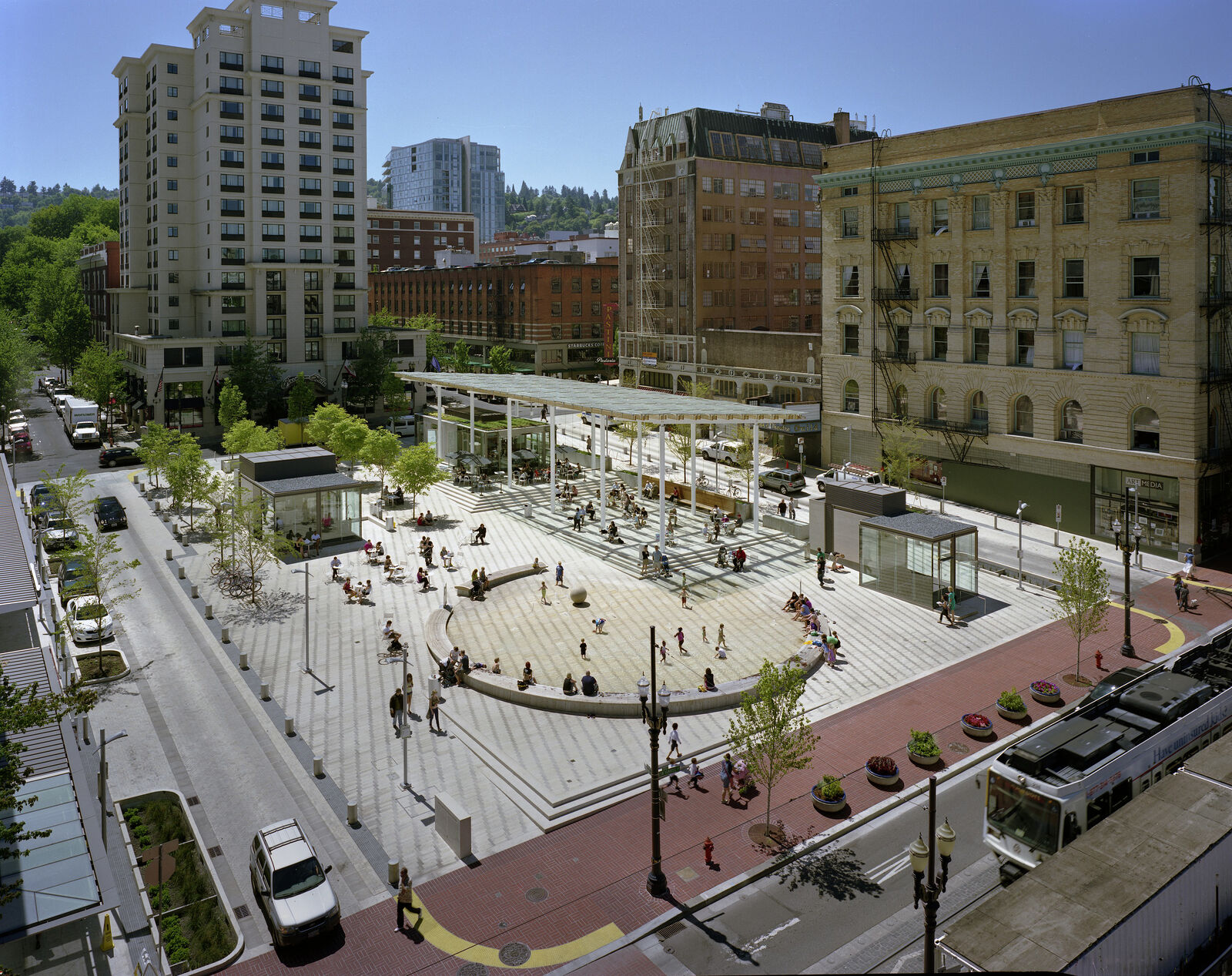
City of Portland, Simon and Helen Director Park