At the Intersection of Form, Function, and Mission
U.S. Food and Drug Administration Regional Laboratory and District Office
Laboratories and Research
ZGF, in a joint venture with HDR, programmed and designed a new facility to serve the U.S. Food and Drug Administration’s (FDA) Pacific Region, replacing and consolidating a 50-year-old Los Angeles laboratory and a former district office in Irvine. Completion of the 133,470 SF building marked the culmination of the agency’s strategic plan to consolidate its aging laboratories throughout the U.S. and facilitate a changing institutional culture and new methods of working to address advances in technology and science.
The two-story facility comprises testing laboratories, laboratory services, and offices, along with a conference center, dining area, library, and training area. Each laboratory is used for a specific purpose: medical device engineering, entomology / sanitation, organoleptic, pesticide chemistry, microbiology, drug chemistry, and food chemistry. Eliminating visual barriers between the office and laboratory modules was key to the design, as was harmonizing the building with its 10-acre site adjacent to a freshwater marsh reserve. The building is oriented so that both floors of offices have a view of the wetlands to the northeast; laboratories on the south side face a landscaped parking lot.
Although the project was awarded and designed prior to the establishment of LEED, it incorporates many sustainable design features. Located partially on a former landfill, the site was remediated prior to construction and landscaped with native and drought-tolerant species. In consideration of the adjacent wetland, the bioswales were designed to capture rainwater for site irrigation use. FDA at Irvine has been recognized with numerous awards, including R&D Magazine Laboratory of the Year High Honors.
Location
Irvine, CA
Square Feet
133,470
Completion date
2003
Project Component
Architectural Services
Interior Design & Space Planning
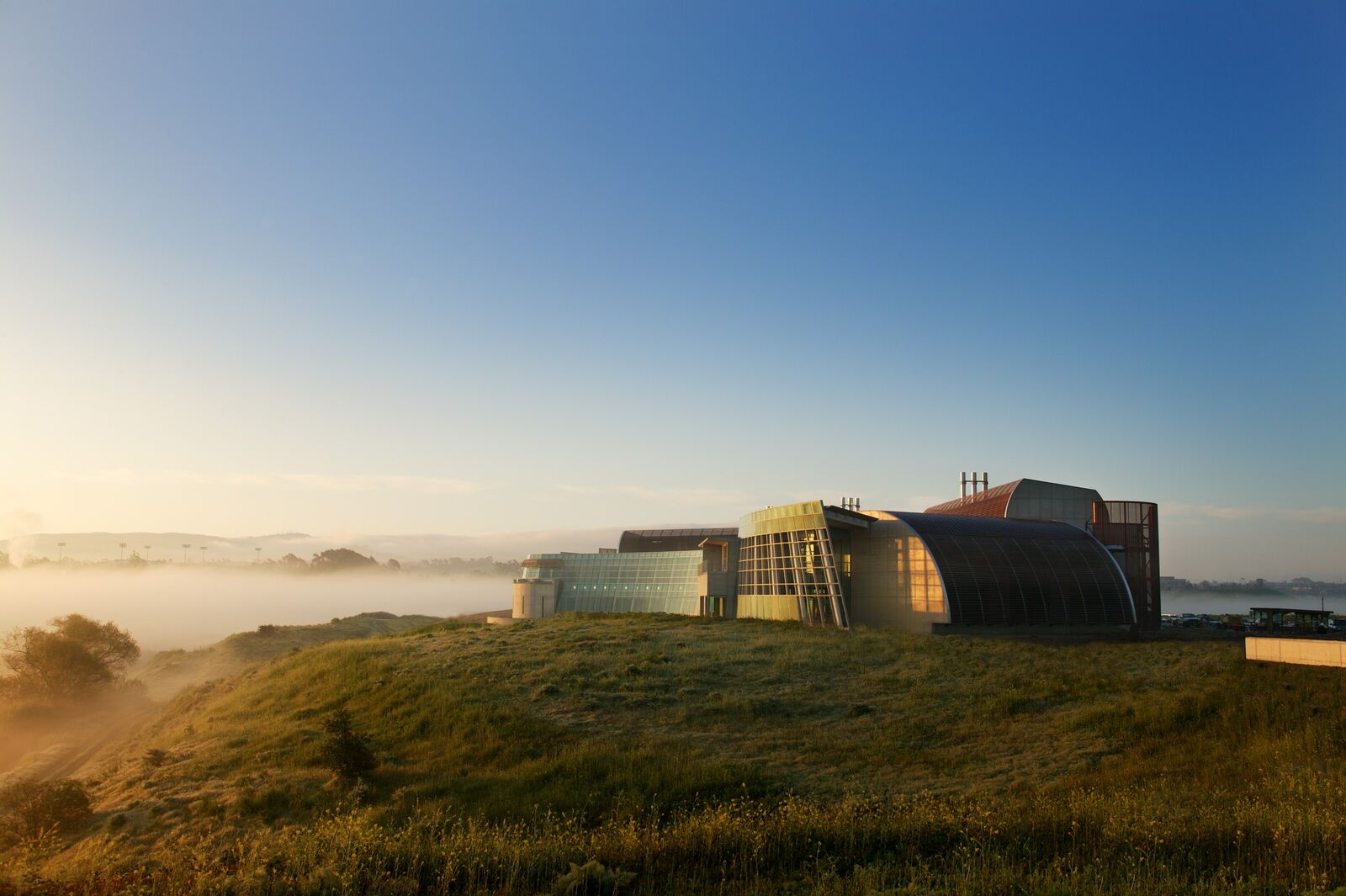
The FDA selected a 10-acre, undeveloped site near the UC Irvine campus, adjacent to the San Joaquin Marsh Reserve—a critical habitat along the Pacific Flyway for migratory species and one of the few remaining wetland complexes along the Southern California coast—because it represented the best value in terms of cost, access to California’s highway systems, and afforded a unique opportunity for future collaboration with UC Irvine. The design team took advantage of the site, taking care to protect the wetlands by following the existing ridgeline and natural swale that descends into the marsh. The curved building form embraces views of the marsh and the mountains beyond.
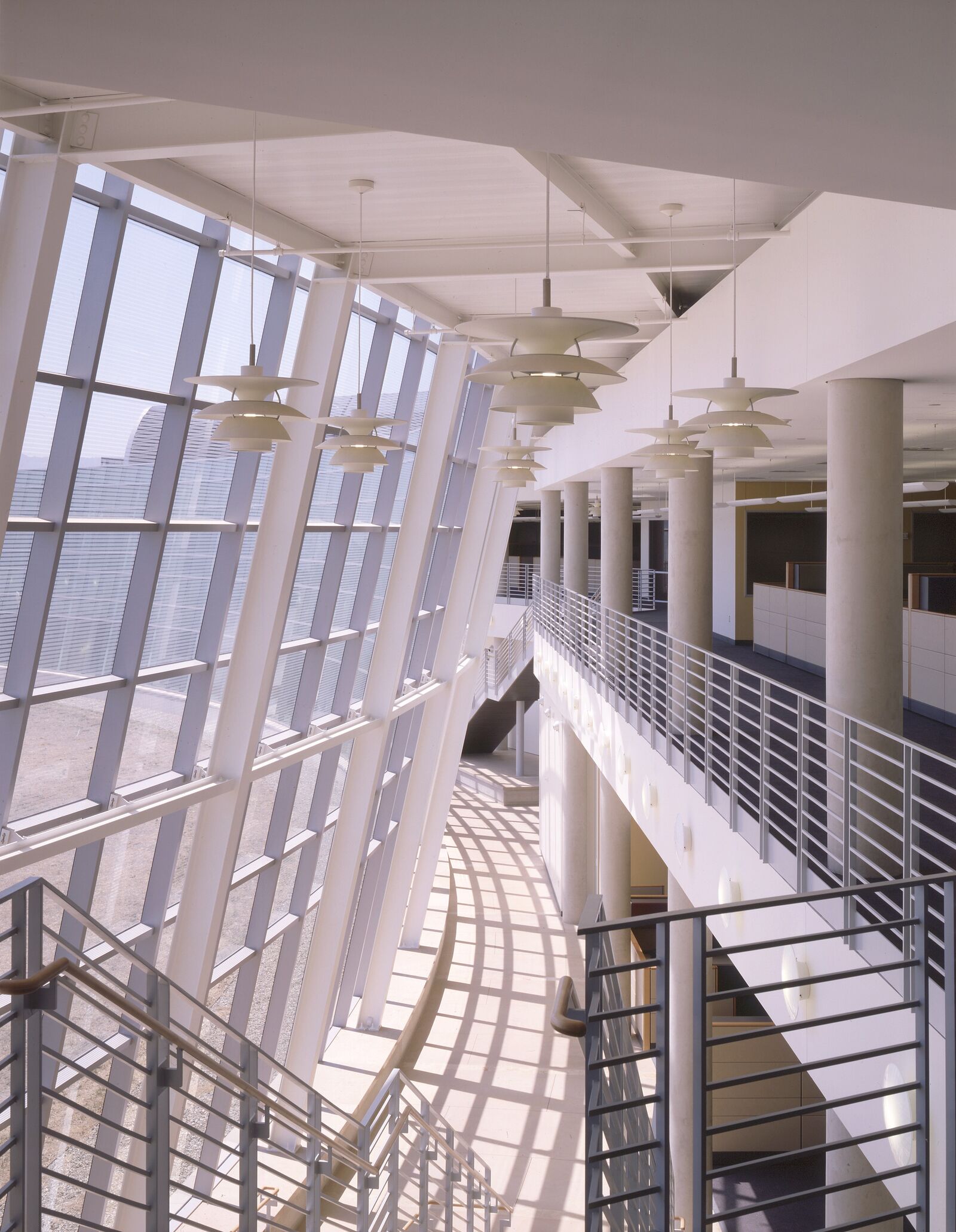
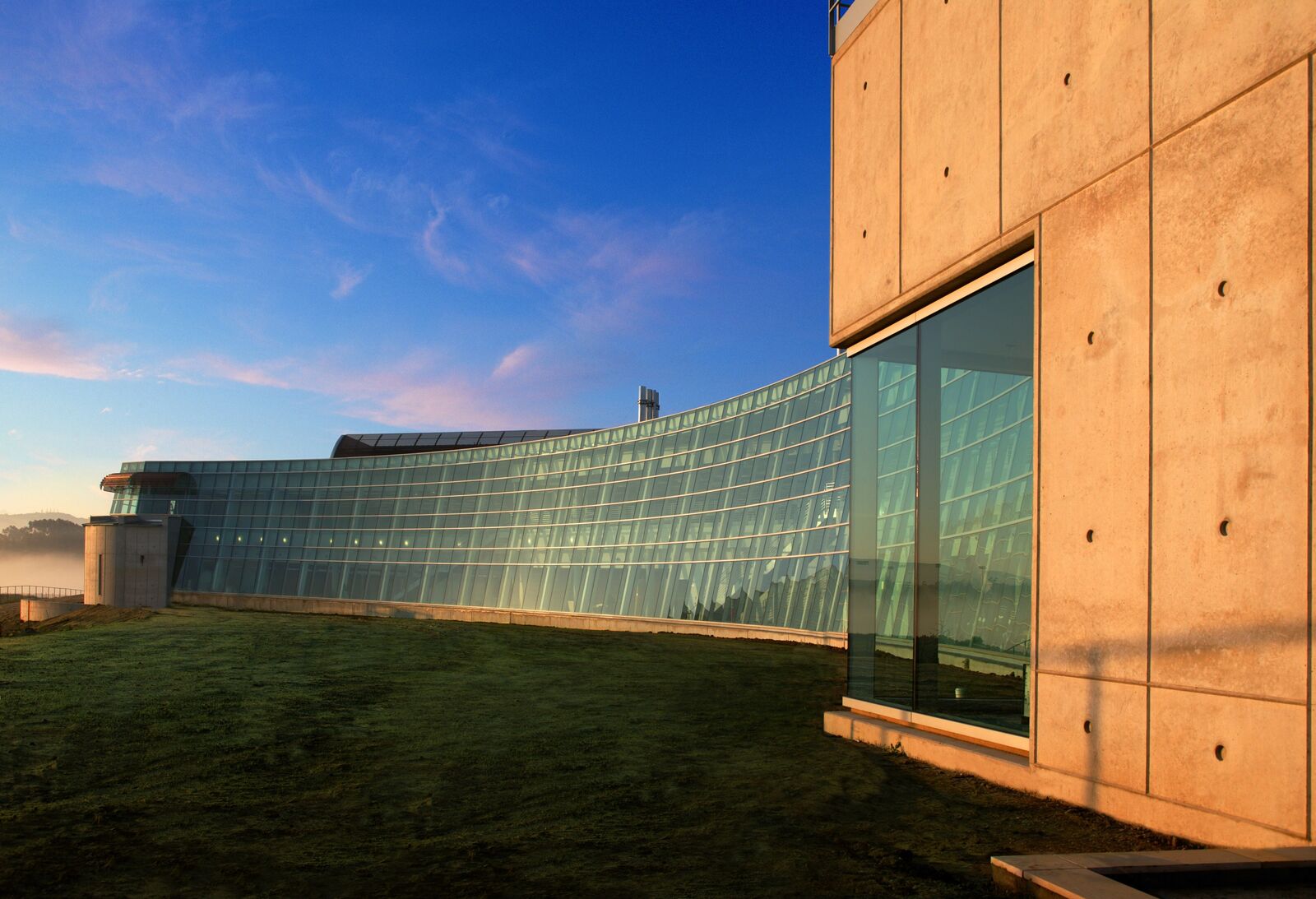
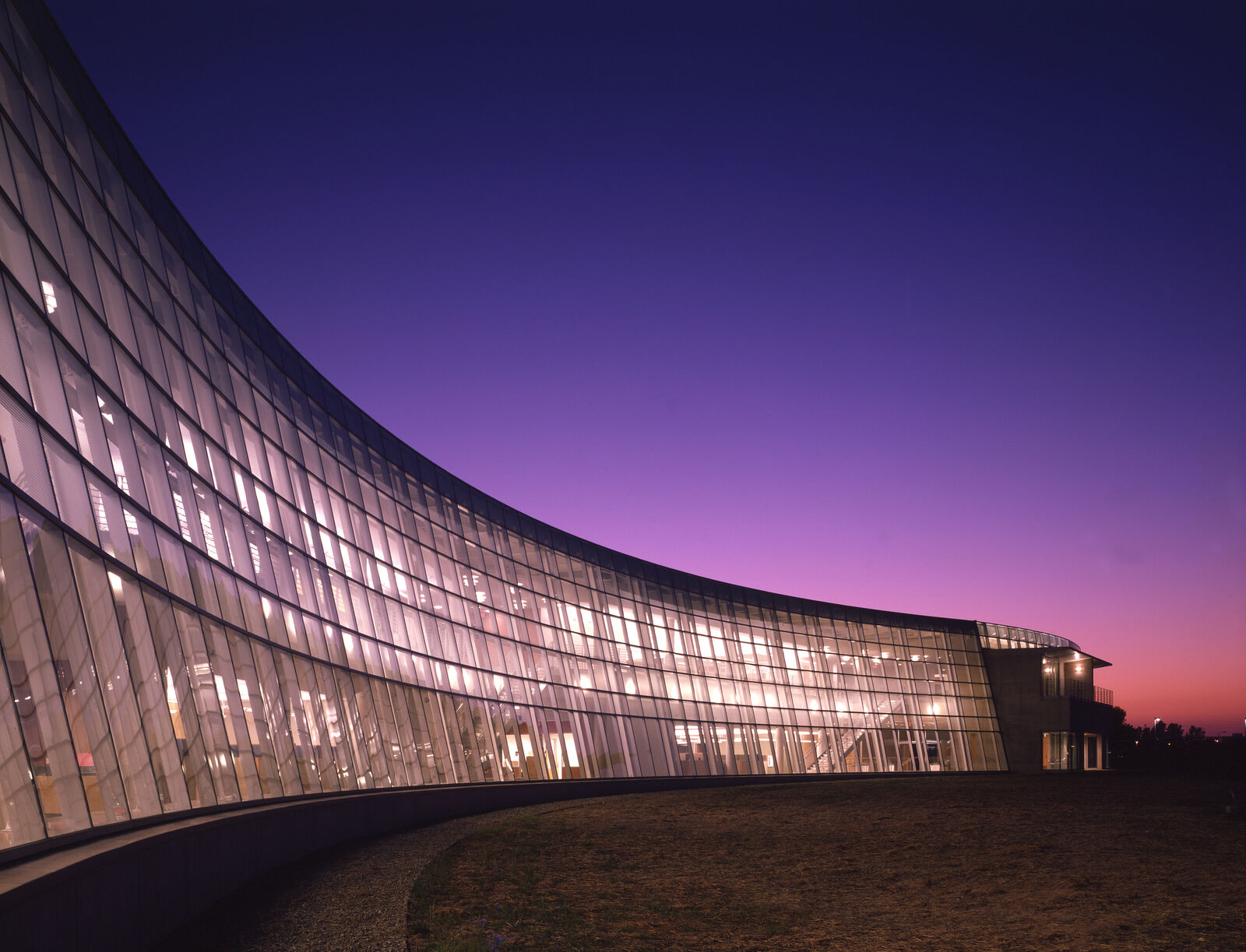
The north office elevation is a sweeping, serpentine glass wall that wraps the building around the existing swale and takes advantage of daylight and views.
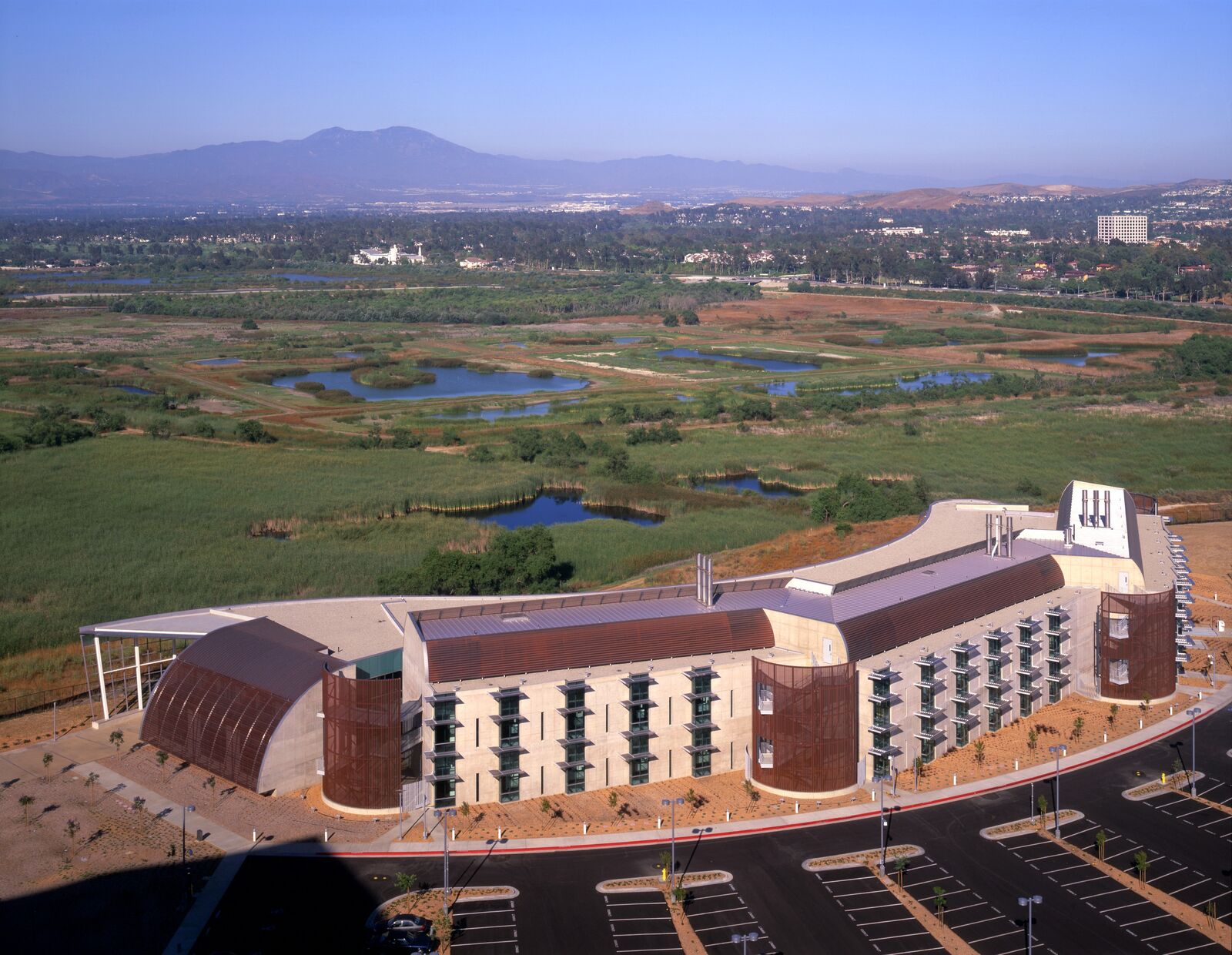
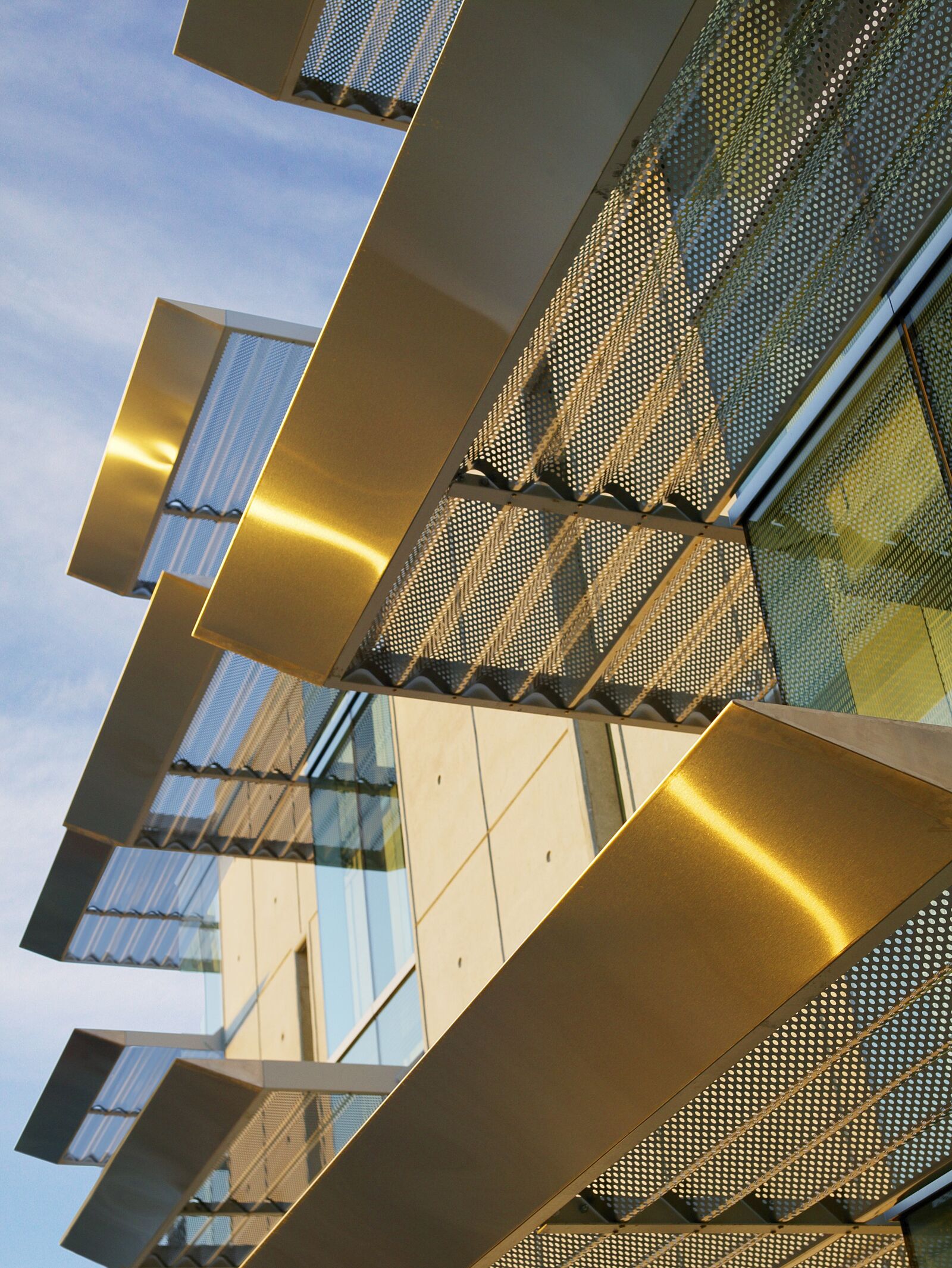
The laboratory wings are constructed of concrete to address their southerly orientation. Their shape and size are built around the concept of linking interchangeable (flexible) laboratory modules, each provided with a standardized set of mechanical, electrical, piping, and plumbing services. Three two-story rectangular laboratory wings are linked in a faceted manner, with vertical circulation nodes at each end and at the knuckles. The exterior stairs are protected from the elements by curved, perforated metal screen walls, which act as a counterpoint to the more austere serrated concrete walls of the laboratory wings. The modularity that exists in the laboratories is carried through to the office spaces, affording initial and long-term flexibility to administrative functions.
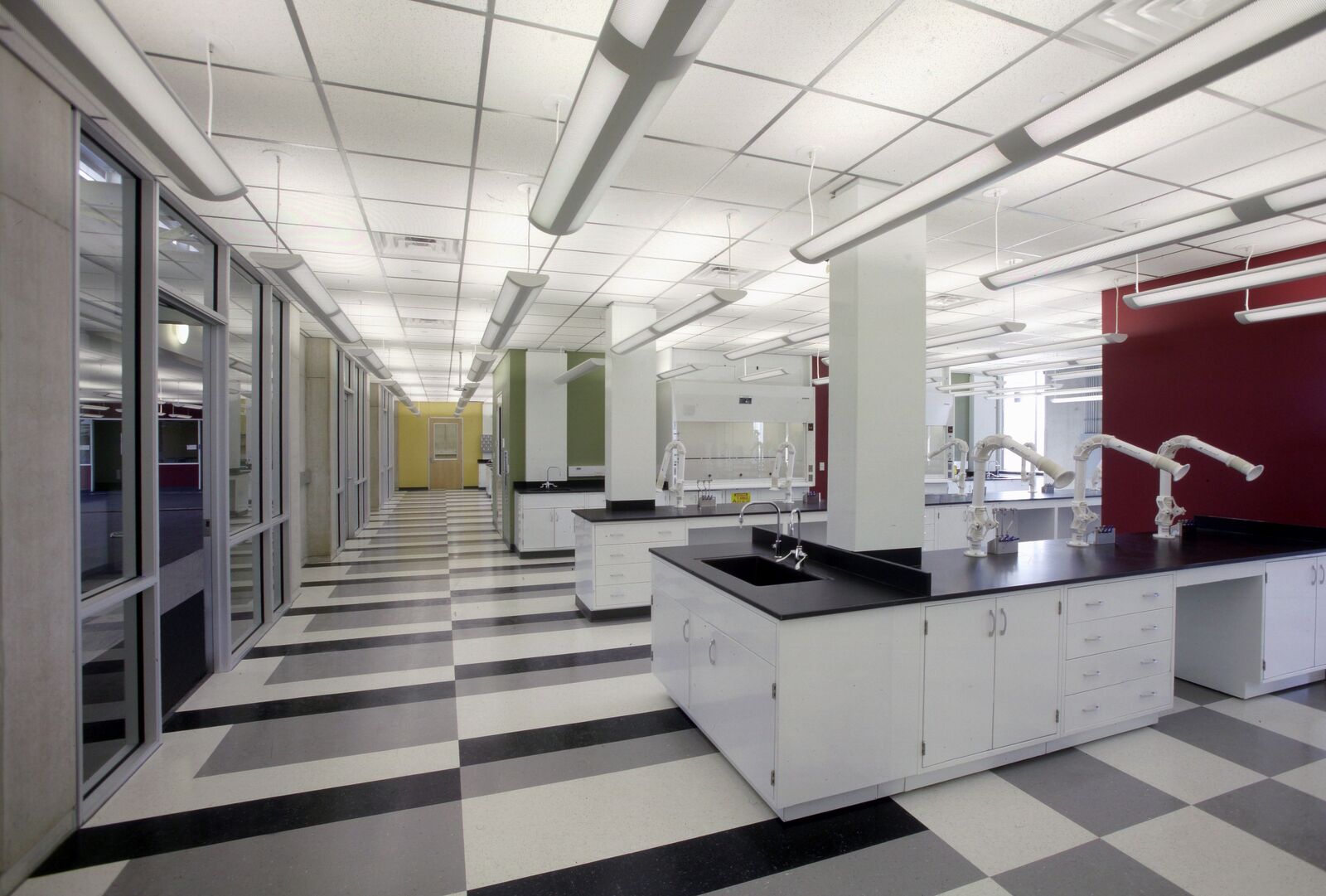
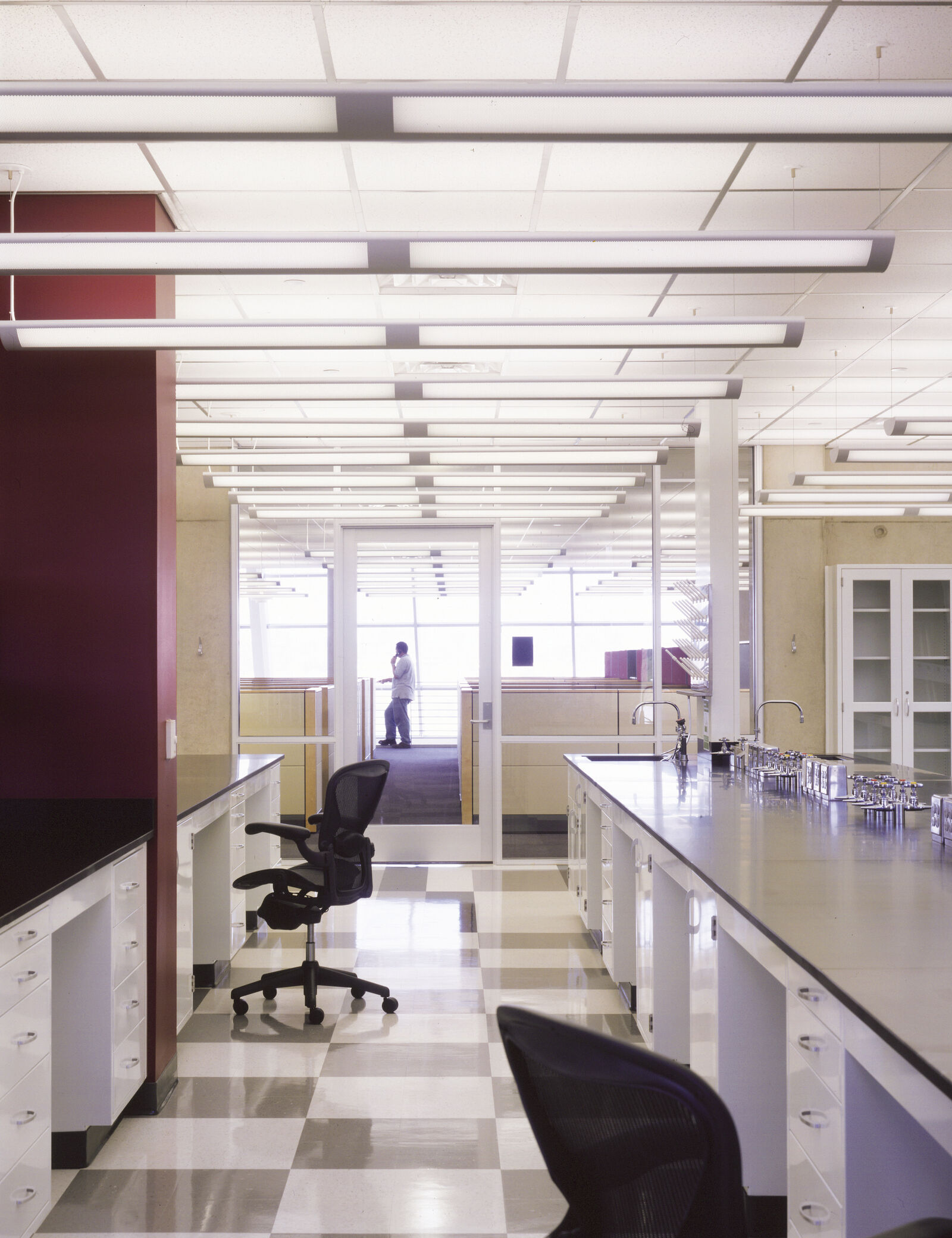
At the interior, a partial glass wall physically separates the laboratories from the offices, yet visually connects them.
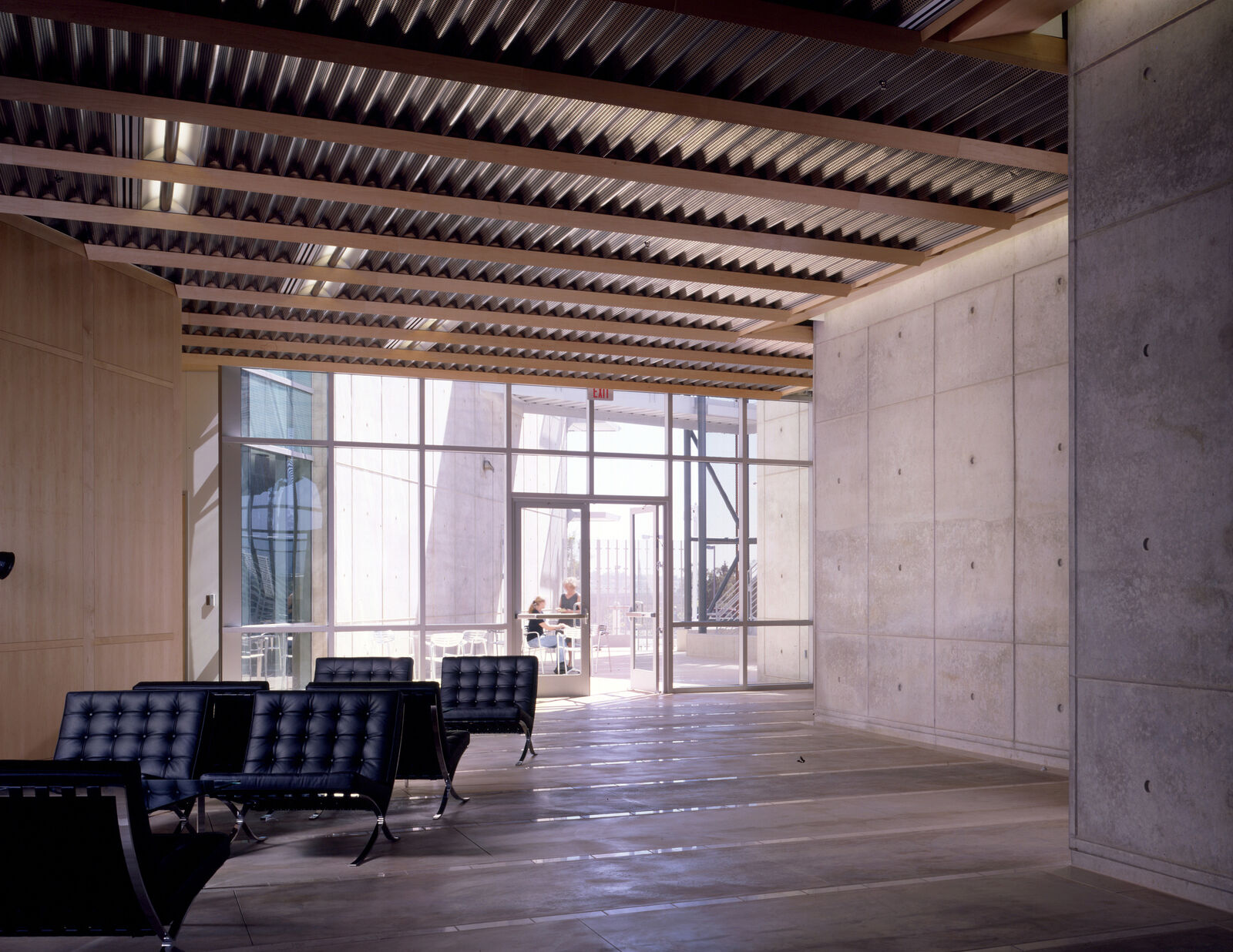
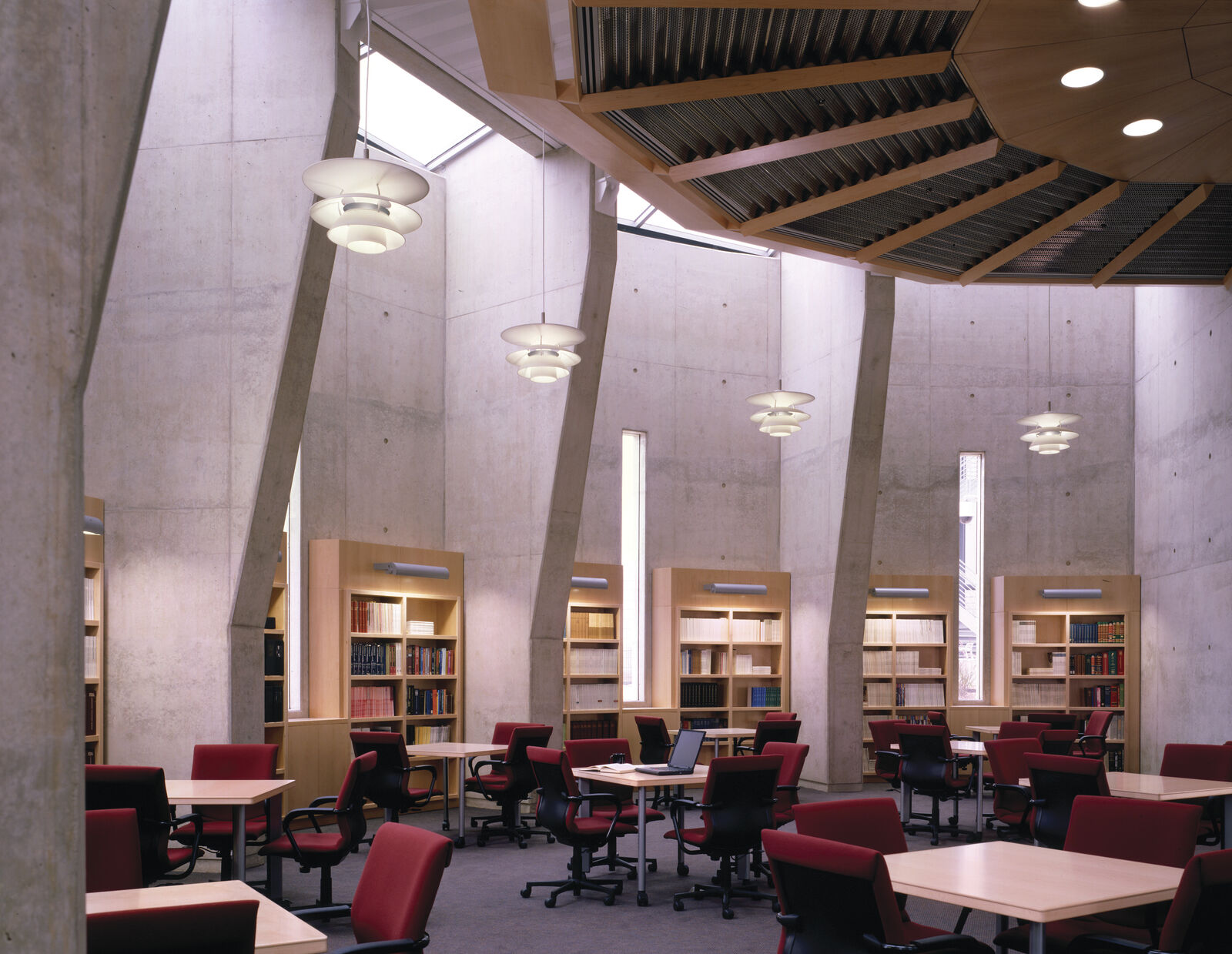
Both the laboratories and office areas are designed to be as open as possible while accommodating the limited number of programmatically enclosed spaces at the ends of the wings—a layout that encourages cross-disciplinary collaboration. While laboratories and offices can be found on both levels, the social spaces that anchor the building are divided between floors. A conference center, dining area, and library are located on the first floor, while the directors’ suite and training room are on the second floor. Adjacent to the lobby, the 230-person conference center can be divided into three smaller rooms. Additional meeting and conference rooms are located throughout the building.
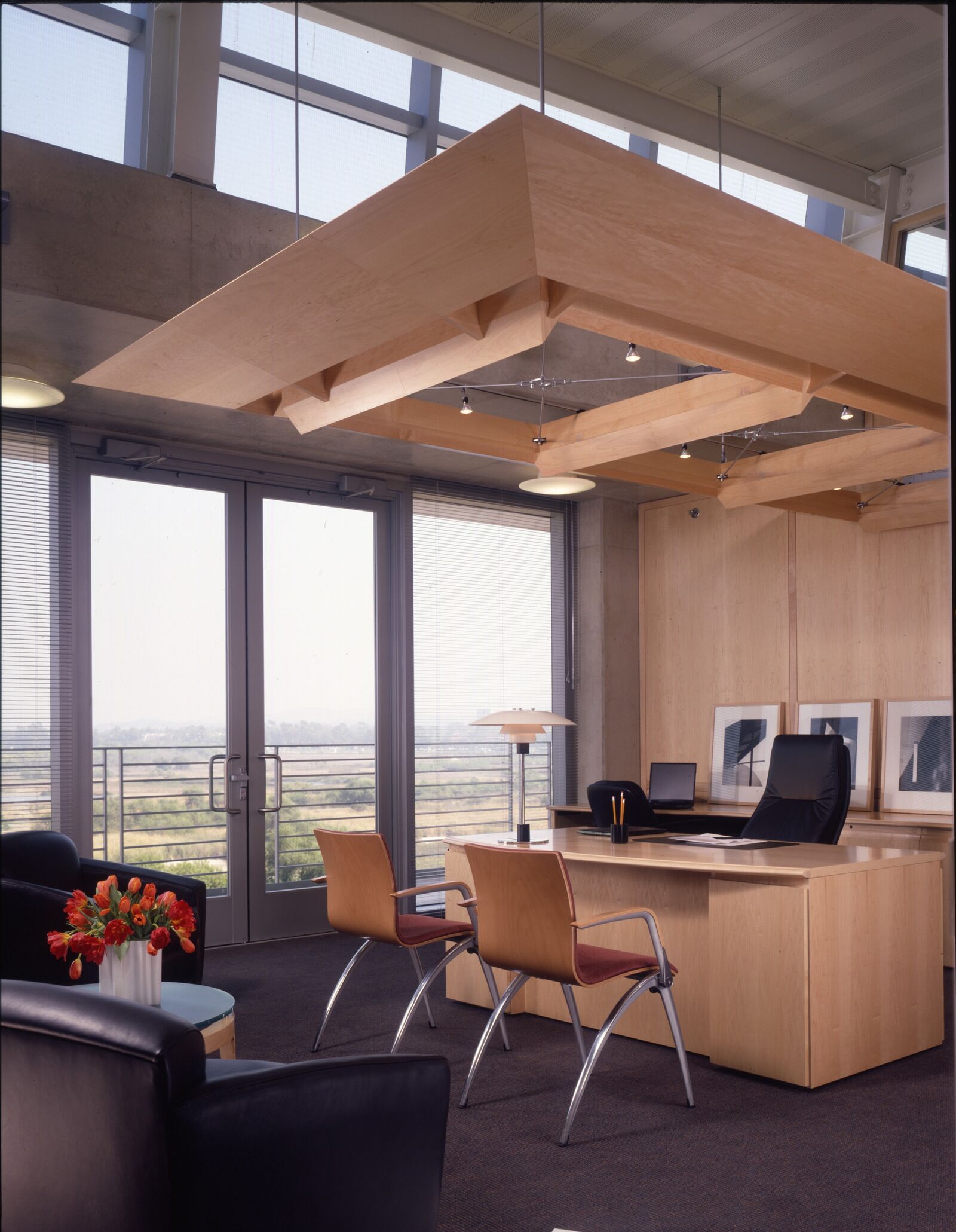
Warmth is integrated in each of the social spaces in the form of wood detailing, terraces, and special design elements that take advantage of natural light and views, while supporting an indoor-outdoor harmony.
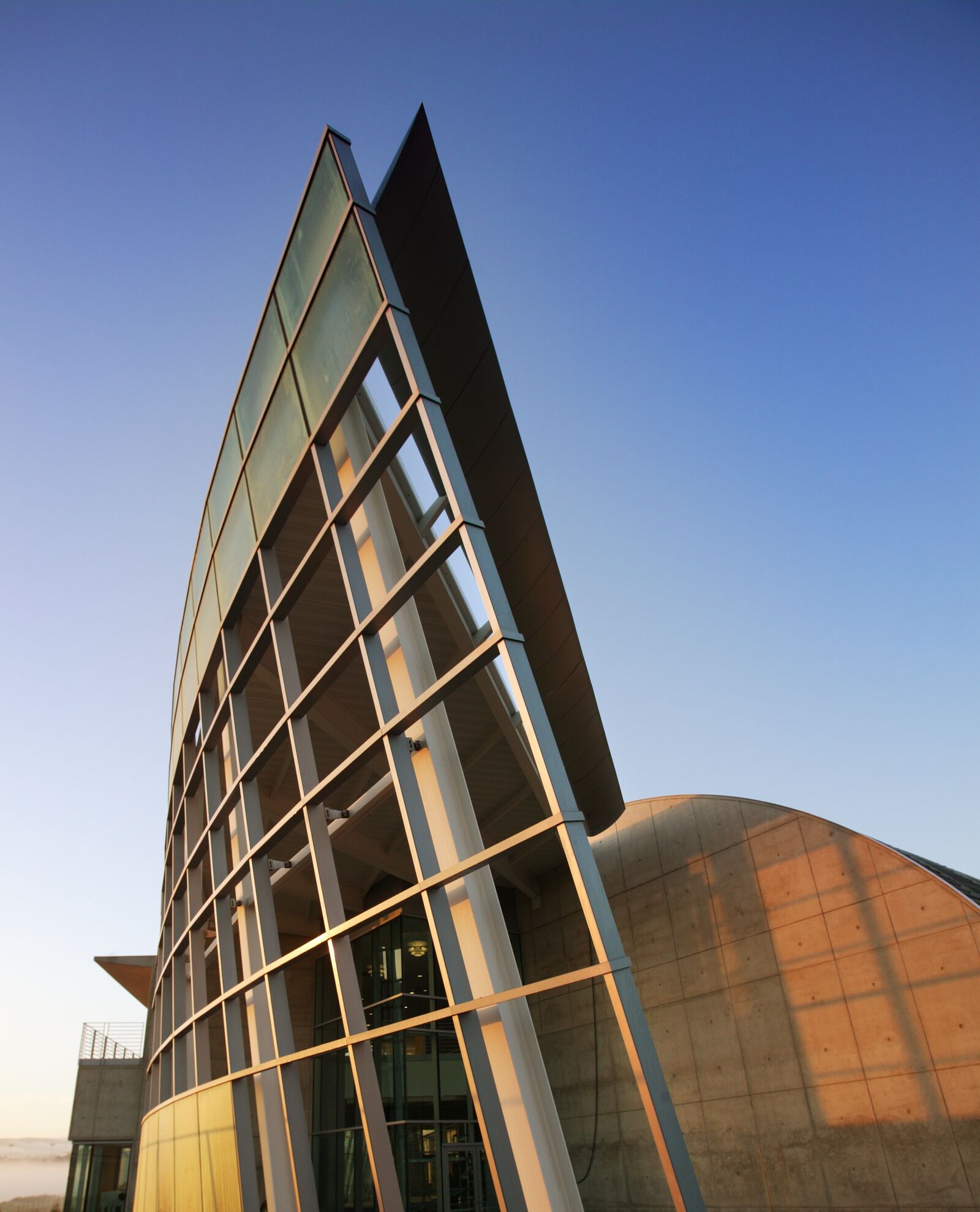
The building is constructed of concrete and steel that is intermingled with details of copper and stainless steel. The deliberate use of easy-to-care-for natural materials, combined with an efficient layout of laboratories, offices and public spaces, results in a facility that will be easy and economical to maintain over time.