An All-Electric Future: Approaches to Electrifying Our Building Stock
By: Avideh Haghighi, AIA, LFA
Everyday tasks like cooking, laundry, and running appliances can have a major impact on carbon emissions. Ten percent of all US carbon emissions come from burning the fossil fuels, primarily natural gas, needed for essential operations in homes and businesses.
Electrifying our buildings is a critical step in moving away from fossil fuel dependence and lowering greenhouse gas emissions. But how do we do this quickly, efficiently, and effectively?
Defining Electrification
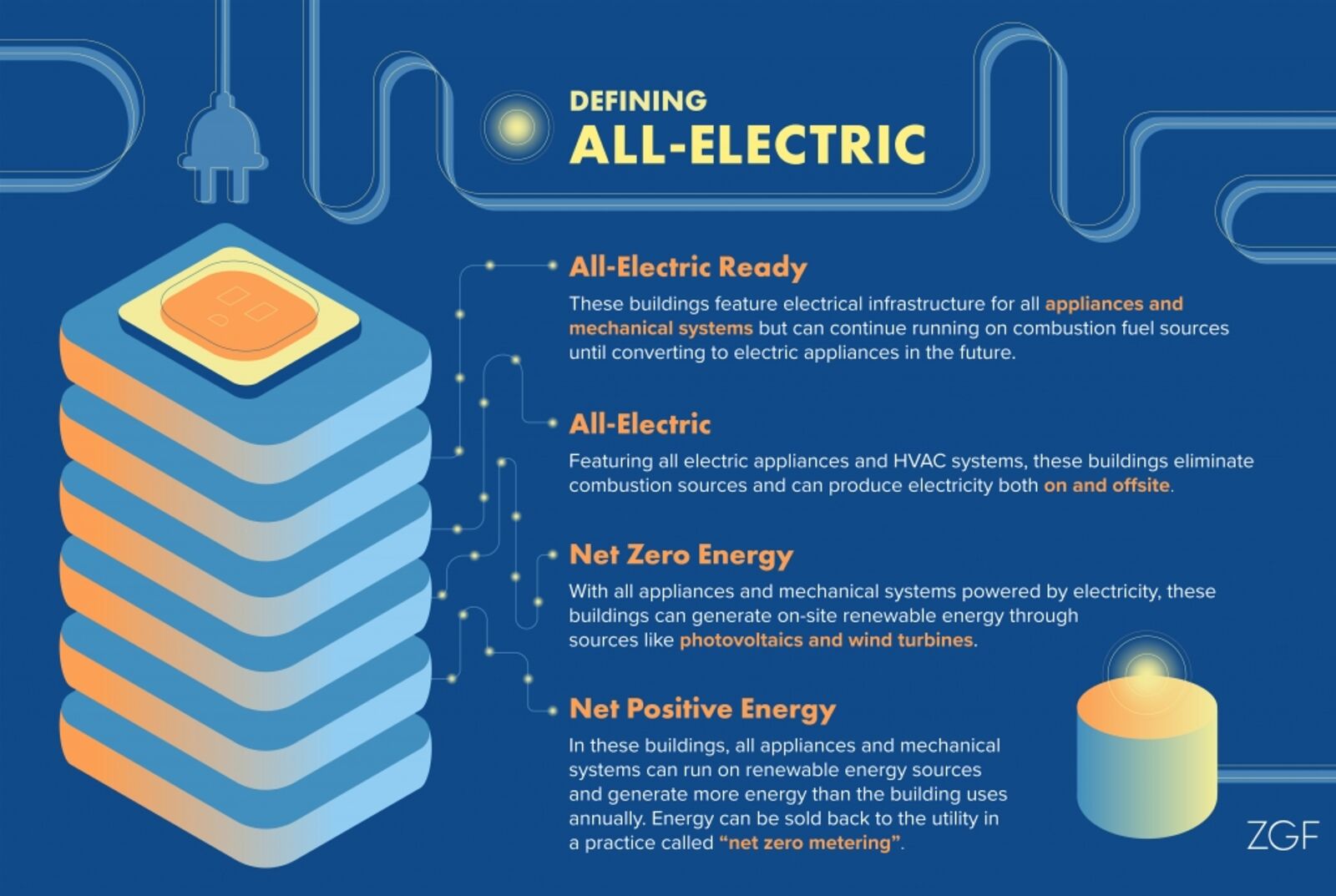
Simply put, an “all-electric” building has no combustion fuel sources for power: no gas, no coal. While all-electric buildings are not always net zero energy—where a building produces as much energy onsite as it uses—they support the infrastructure for a zero-emissions power system in the future.
All electric buildings help lower carbon emissions by lowering construction and lifecycle costs as well as increasing efficiency and resiliency. In many new buildings, full electrification is typically more cost efficient than operating with fossil fuels, with costs continuing to decrease.
“All Electric” Design Strategies to Reduce Demand
A building’s site, use, and current availability for non-combustible fuel sources all play a role when considering going all electric.
Designers must also consider the most energy-intensive spaces and strategies to reduce demand. One of those spaces is the commercial kitchen, using on average five-10 times more energy per square foot than rest of the building. Combination ovens for high temperature cooking, rapid-cook ovens, and high-efficiency griddles all provide major energy savings. Less often evaluated, but equally important, are menu considerations. Avoiding grilled or frozen items and batch cooking vs. cook to order can all significantly reduce energy loads.
Kitchens also provide an opportunity for heat recovery. Dishwashers, steamers, and other equipment use considerable amounts of hot water, while ovens and other equipment generate a lot of heat. Capturing heat from kitchen equipment to produce hot water needed for other equipment is a smart strategy for reducing energy loads.
Heating and cooling commercial buildings also require high energy loads, which is why architects and engineers are returning to an ancient paradigm of passive ventilation to reduce reliance on mechanical systems. Passive and displacement ventilation strategies leverage pressure differentials to effectively enhance occupant comfort while dropping energy loads.
Notably, heat pumps, which are 400% more efficient than traditional heat sources, are enabling widespread electrification and offer a two-for-one benefit: heating and air-conditioning from the same equipment. Heat pumps are effective across varied climates, with lower maintenance costs compared to a traditional boiler system.
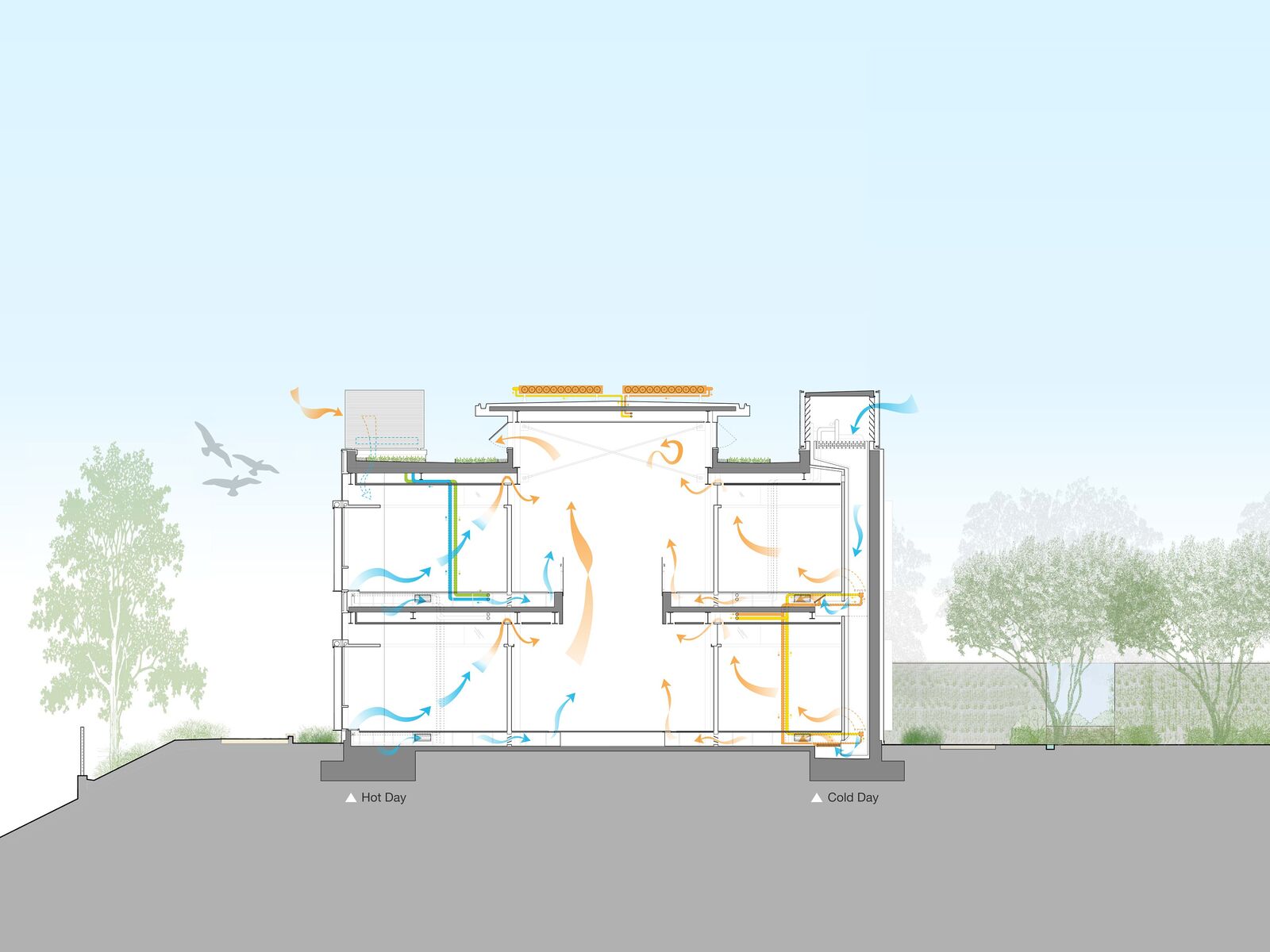
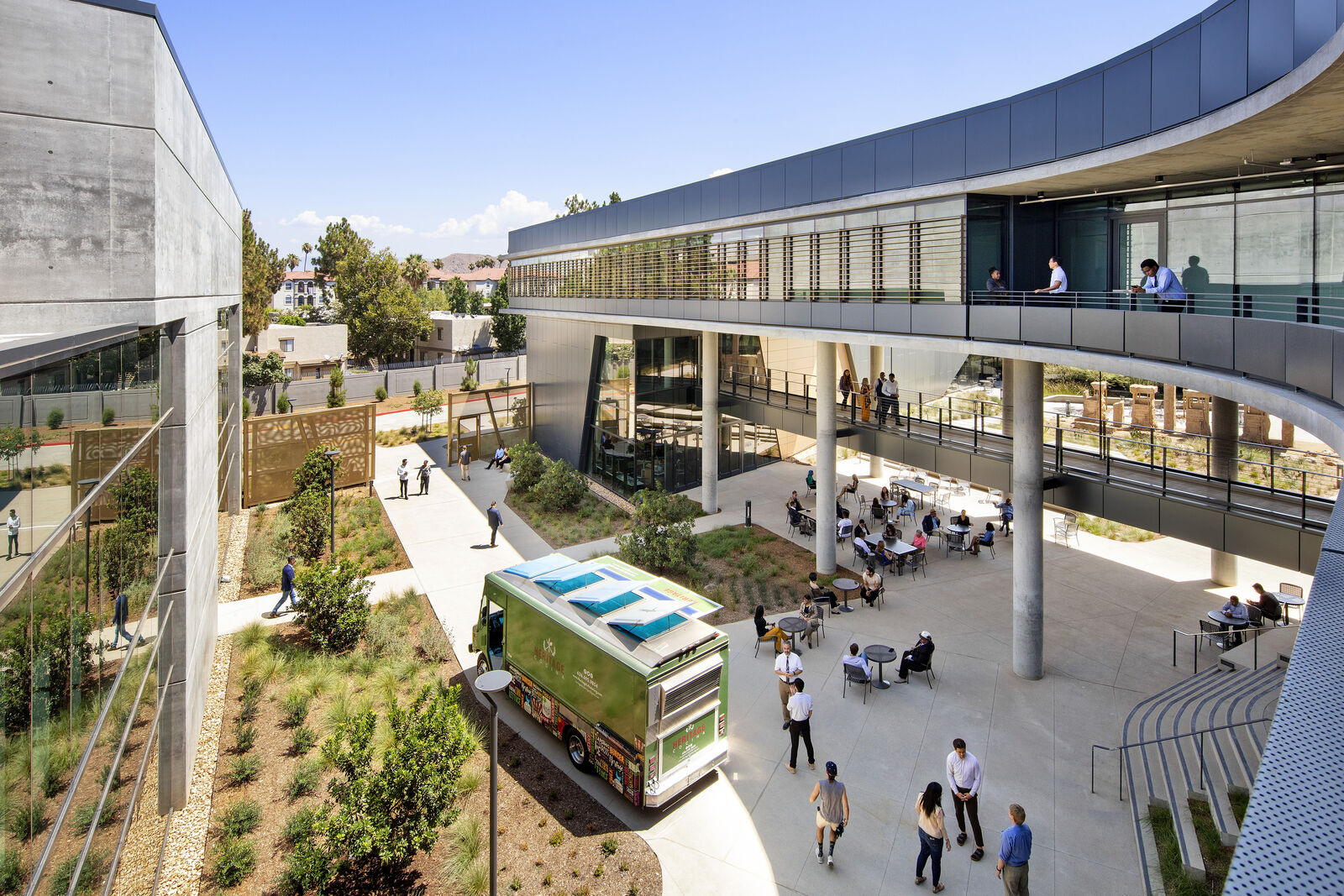
Conrad N. Hilton Foundation, Passive Downdraft System
Sourcing Power Onsite
Providing renewable energy onsite is advantageous with low-rise structures, or “landscrapers,” with plenty of roof area or parking. While renewable energy can be generated onsite for mid-rise and high-rise buildings, due to the density of these typologies, the limited roof area cannot produce 100% of the energy needed.
At the Department of General Services, California Air Resources Board (CARB) headquarters in Riverside, California, the design team made an energy intensive program energy-neutral by reducing energy demands, using energy efficient systems and equipment, and incorporating a clean supply of onsite renewable energy. The photovoltaic system covers 204,903 SF between the facility rooftop and parking pavilions; while the building’s pinwheel shape reduces energy loads during the day by allowing natural light to penetrate throughout.
The 3.75 megawatt system is anticipated to generate roughly 6,235,000 kWh reusable energy per year—enough to power a Tesla Model 3 for 25.6 million miles. The facility is designed to go beyond Net Zero Energy, producing a surplus of reusable energy that will be stored in onsite batteries and used to power EV charging stations.
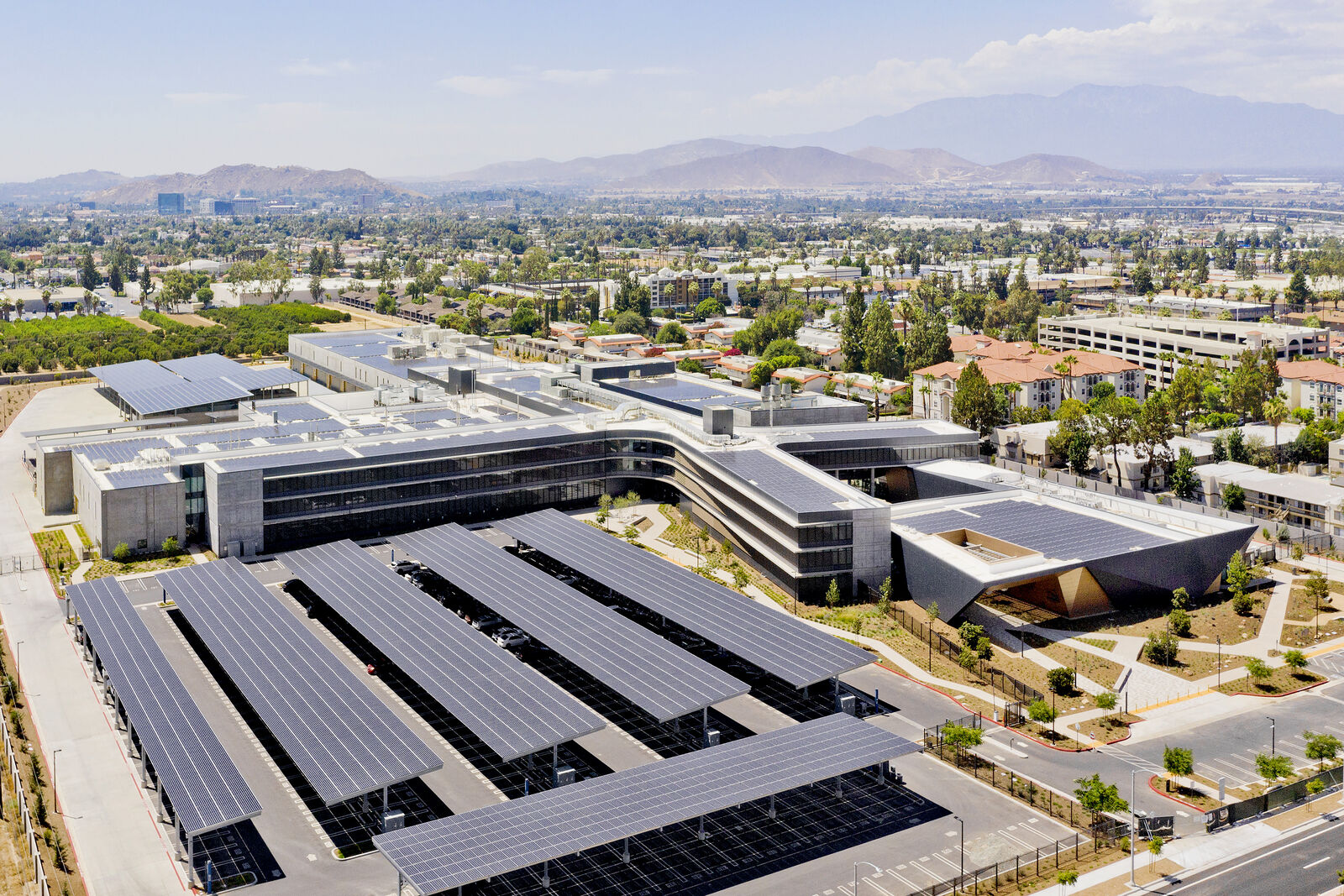
CARB's +3.5 megawatt PV system is anticipated to generate roughly 6,235,000 kWh reusable energy per year—enough to power an electric car for 25.6 million miles.
Sourcing Power Offsite
For buildings or campuses with limited onsite capacity to support renewable energy sources, such as high-rise buildings, sourcing power offsite is a cost-effective option to meet electrification and net zero carbon goals. However, this solution does not automatically ensure Net Zero Carbon performance—carbon emissions of procured electricity depends on the grid and how the power is obtained.
Net zero energy and carbon were mandated for the 1,250,000 SF all-electric Richards Boulevard Office Complex in Sacramento, California. The entire site will be powered by state-purchased carbon-free green power through the local utility provider, effectively making this complex Net Zero Carbon. In addition, the design team leveraged several strategies to lower overall energy usage of the complex, which will include the largest all-electric commercial kitchen in California. Strategies such as load reduction through air-to-air heat recovery, energy reduction through heat recovery boilers, radiant heating for optimum thermal comfort, and efficient domestic hot water heating via heat pumps all contribute to the carbon targets.
Moving Toward a Zero Emissions Future
Electrification is a critical step toward a healthy, zero emissions future. That future is increasingly more attainable thanks to rapidly decreasing prices for renewables, and states and cities across the country that are looking to low-carbon electric infrastructure to meet their climate goals. In 2019, Berkeley, California was the first city in the country to ban natural gas hookups in new construction. Today, major cities are considering pro-electric legislation and many states have set a goal of 100% renewable electricity by 2040. Adoption is likely to be further bolstered by the Biden Administration’s commitment to halving U.S. carbon emissions by 2030.
We’re committed to helping clients find the electrification strategies that support their needs today while helping them prepare for an all-electric future.
Avideh Haghighi is an associate principal and high-performance building specialist in our Los Angeles office.