
International Women’s Day 2022: Spotlight on Shara Castillo
If the last five years of Shara Castillo’s life prove one thing, it’s this: working women can have it all. From leading the team that designed the largest net-zero energy building of its type in the world—which landed her in Fast Company—and being named among Building Design + Construction’s 2021 Top 40 Under 40, to meeting her husband, having two children, and running multiple marathons along the way, Shara has met each milestone in her career with one in her personal life. She recently joined ZGF Communications Director, Monica Schaffer, to discuss her experience as a female architect, purpose-driven design, and the power of time management.
This interview has been edited and condensed for clarity and length.
Monica Schaffer: Shara, you’ve been in the industry for 17 years and with ZGF for 15 of those. When did you realize you have a passion for sustainable design?
Shara Castillo: I began my career at a firm in Chicago designing high-rise condos. My clients were building park- and river-front residential towers filled with condos worth millions of dollars, so I was designing luxurious spaces for the top 1%. When I was introduced to ZGF and the purpose-driven work the firm does, light bulbs went off. I realized I wasn’t interested in dedicating the rest of my career to a cause I don’t believe in. ZGF’s work starts with the cause, whether we’re designing a sustainable children’s hospital or net-zero laboratories for cancer research. Also, the complexity of my projects skyrocketed once I joined ZGF.
Monica Schaffer: You’ve been part of many significant projects during your career, most recently the California Air Resources Board’s (CARB) new headquarters. What were some of the projects you worked on before CARB?
Shara Castillo: The first project I worked on at ZGF was the Ann & Robert H. Lurie Children’s Hospital of Chicago, which was a building of many firsts. It was the tallest children’s hospital in the world with ERs on the second floor and sited on one acre. The project itself was so ambitious and complex that the thought of layering in sustainable design overwhelmed our client, but eventually they warmed up to the idea. This is when I began to take a critical role in developing sustainability solutions for our healthcare projects. Next, I worked on The University of Texas at Dallas, Bioengineering and Sciences Building, the Cottonwood Medical Clinic for Intermountain Healthcare and then The Bechtel Residence at California Institute of Technology.
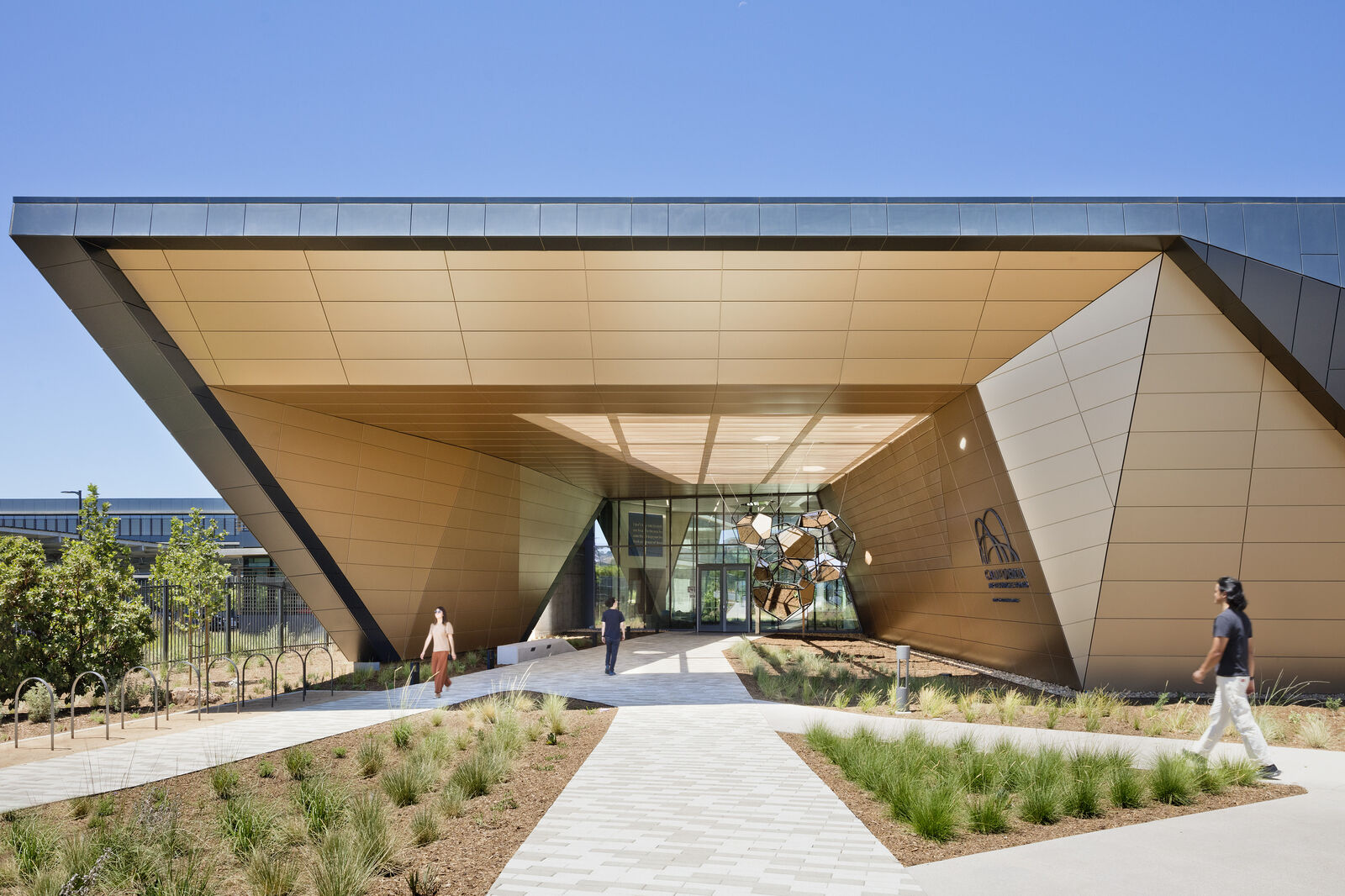
California Air Resources Board Southern California Headquarters, Mary D. Nichols Campus
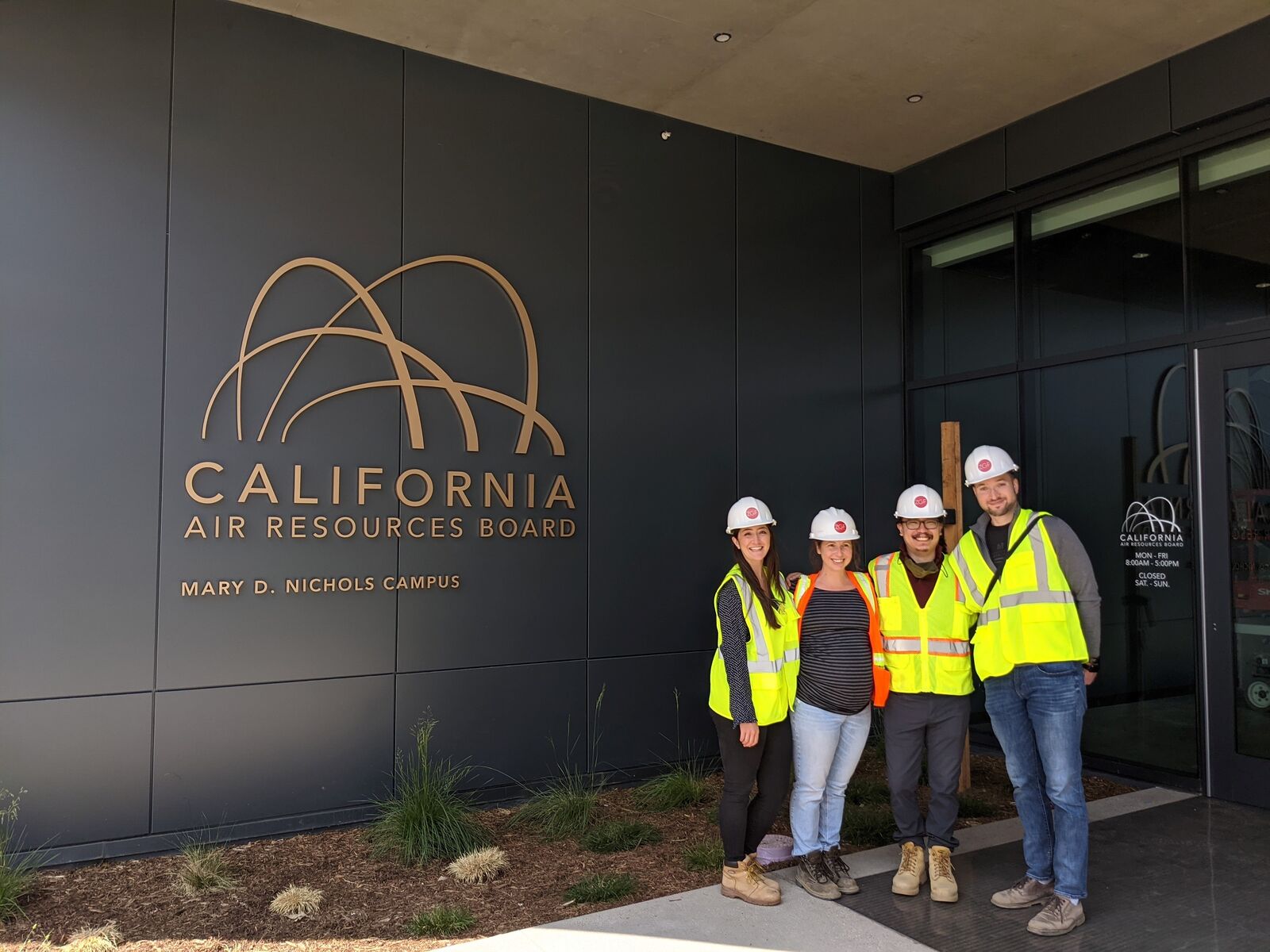
Shara (second to the left) with CARB project designers Marisa Keckeisen, Alan Kawahara, and Harold Wolfe.
Monica Schaffer: What would you say has been the common thread between these projects?
Shara Castillo: There really isn’t one. While they are all complex projects, each of them differs in size, type, and even climate zone. The one common denominator is I was part of each of these projects from beginning to finish, so I was present for conversations in which clients were reluctant to embrace sustainable design early in my career. It’s just been in the past five years that the urgency to combat climate change has heightened and high-performance design has become a lot more palatable to clients. Even for owners who aren’t concerned about climate change, they are looking to recruit the next generation of talent and they realize future generations’ environmentalist values.
I’ve spent a lot of time educating clients on how to make the most impact with sustainable design and making sure they understand the facilities systems that are much different from traditional systems, but much more energy efficient. Early in my career there was lots of greenwashing going on in the industry, so it was my mission to ensure the authenticity of our sustainable design stories.

Ann & Robert H. Lurie Children’s Hospital of Chicago

Crown Sky Garden at Lurie Children's Hospital
Monica Schaffer: You have big responsibilities on your projects and most recently you had two children while the CARB headquarters was completing. How did you handle everything during that time?
Shara Castillo: The invaluable experience I gained early in my career from having those heavy responsibilities and working on projects from start to finish gave me the foundation I needed to groom my team. Before I left for maternity leave for the first time, I focused all my efforts on the people who support me. I wanted them to not just be prepared to do the work I do every day, but for them to feel confident they were ready to take it on.
Monica Schaffer: I’m sure wearing multiple hats over the course of your career pre-motherhood has set you up well to be a mom.
Shara Castillo: Yes. Becoming a mother has influenced the way I work substantially, and vice versa. I know for a fact that once I became a mother, I became softer and more empathetic to what was going on in my colleagues lives outside of work. At this time, I was at a place where my stature in my career and my personal life started to merge. I became better at listening and really trying to nurture my team so their skills and talents were being bolstered.
Monica Schaffer: Have you felt like you’ve had to make sacrifices either at home or at work in order to uphold your responsibilities?
Shara Castillo: Of course, but I’ve found when you have supportive people surrounding you both at work and at home, the compromises feel easy—more like win-wins. Recently, I was part of the pursuit team for a prospective cancer clinic project, which required traveling to the client for the project interview. The meeting location was two hours from the nearest airport, so the team had to stay overnight. With a six-month old daughter at home, this was out of the question for me. The team was so supportive—they made me feel like it was no big deal. After helping the team prepare the presentation and fine tuning their talking points, we were all able to walk away feeling confident the interview team was ready. I’m so grateful to work in an environment where “compromises” don’t leave me, my colleagues, or my family feeling guilty or underprepared.

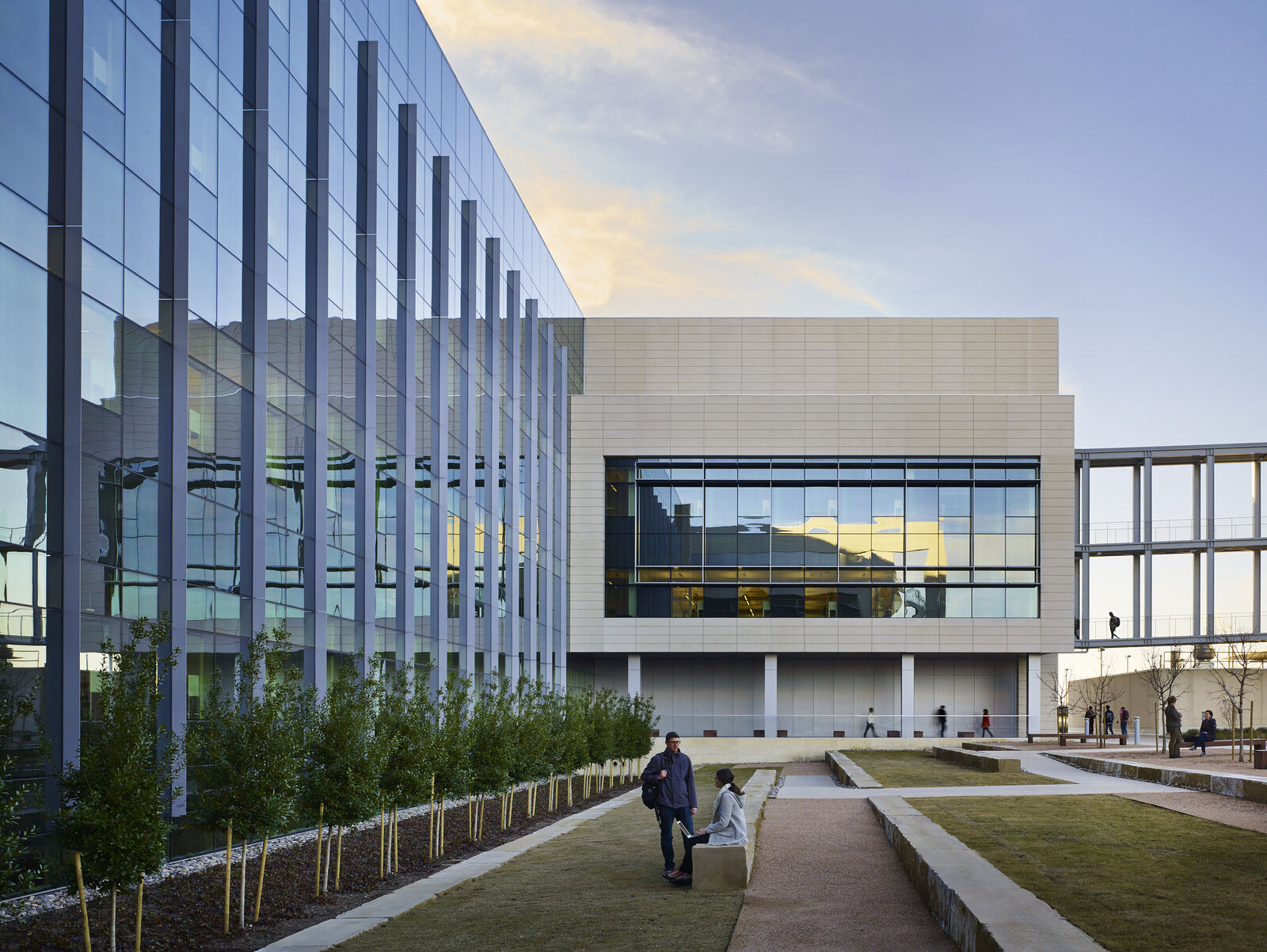
The University of Texas at Dallas, Bioengineering and Sciences Building
Monica Schaffer: That is so key. The question that always comes up here is how do we find balance? But I’m convinced that achieving balance isn’t possible for working mothers—especially ones like you who are in-demand at work and have two children under the age of three at home. Yet you are doing it all. So, what I’m curious about is what your day-to-day juggle looks like?
Shara Castillo: You’re so right, balance isn’t possible for me right now. And I would say that I’m not doing it all—at least not in the way I was before children—but I am making it all work. I have my priorities that I stick to, and sometimes that means I must make compromises and sacrifices. There have been times I’ve missed bedtime with my kids because of an unexpected work situation that I chose to prioritize. When things like that happen, I respect the decision I made in that moment, take note of what I would do differently next time, and move on. I don’t believe in dwelling on mistakes.
Monica Schaffer: So looking at the nuts and bolts of your day, what’s top of mind when you wake up in the morning and how does your day usually unfold from there?
Shara Castillo: My first thought is always, “How many hours of sleep did I get?” Right now, sometimes it’s eight hours but sometimes it’s only four. From there, my mornings from 6:30-8:30am are dedicated to my children. Whether I’m getting them up, dressed, and fed, or if we’re just spending time together—that’s our time. My colleagues know I won’t be in meetings before 9am, just like my children and husband know my afternoons and early evenings are dedicated to work. Once I logon to work at 9am, I make my priorities list for the day and work as hard as I can to complete the list by 5:30pm when I have a hard stop. After I have dinner with my family and put my children to bed, then I usually work for a few more hours. This has been the biggest change about the transition to motherhood. I used to just work until all tasks were complete, but now I have a split schedule where I prioritize my family at certain times throughout the day. This is how I’ve chosen to do things. It’s not the only way, but it’s what’s working for me.
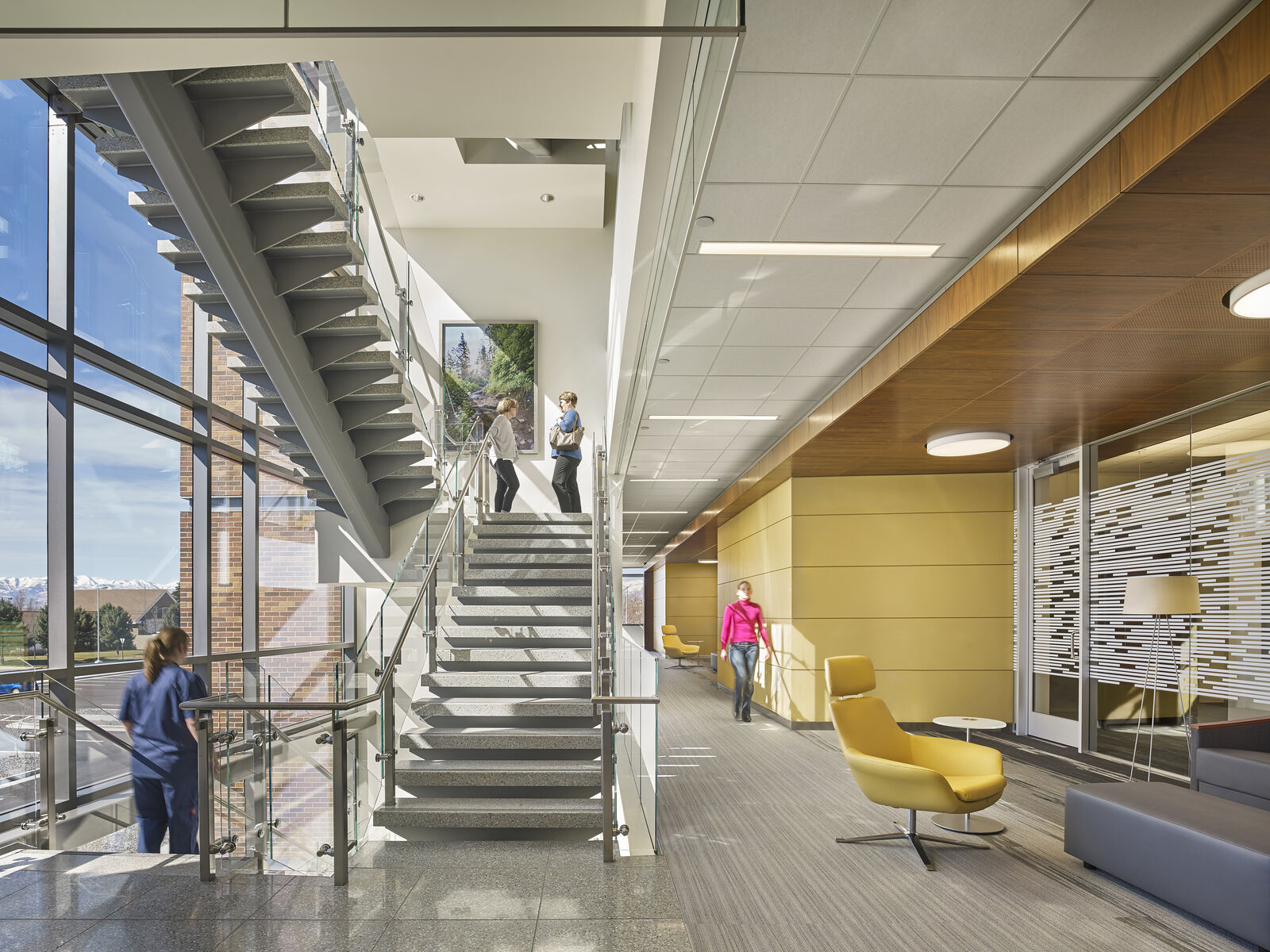
Intermountain Healthcare, Cottonwood Medical Clinic
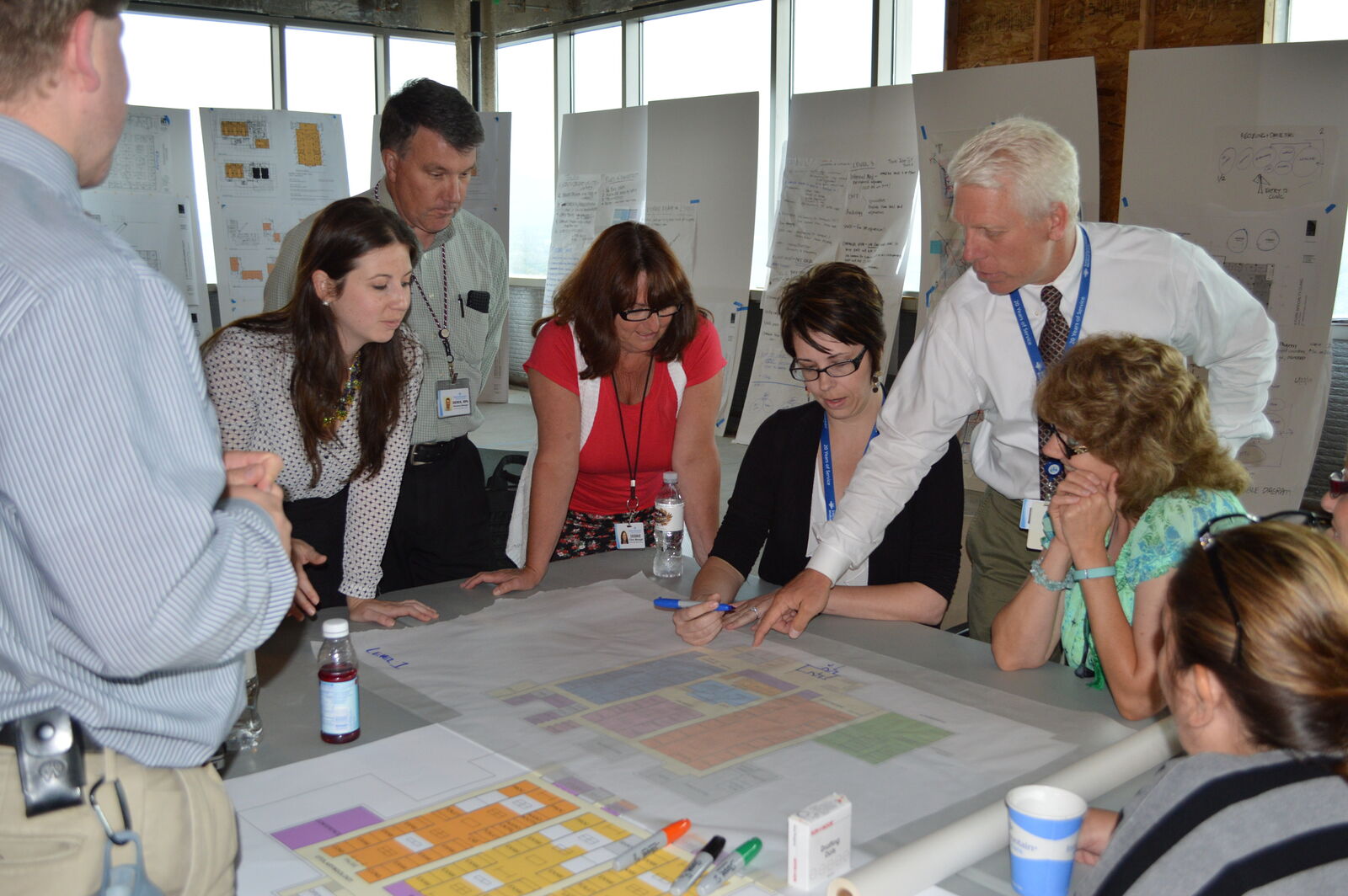
Shara leading design meetings for Intermountain Healthcare's Cottonwood Mecial Clinic in Murray, Utah.
Monica Schaffer: At work you’re a project manager, and it sounds like life right now is a project you’re managing too. What skills from your architectural career have you been applying to your personal life?
Shara Castillo: It really all comes down to time management, so I’ve learned to schedule literally everything. I have time blocked on my calendar daily for showers, workouts, and any other things I must do each day to not only cover all my responsibilities, but to make sure I’m taking care of myself amidst all the chaos as well.
Monica Schaffer: That’s so important, and sadly selfcare is something working mothers often let fall to the wayside.
Shara Castillo: I see taking care of myself as the ultimate self-respect that also has huge benefits for my family and colleagues. If I’m not taking care of myself, I can’t be my best for all the people who depend on me.
Monica Schaffer: Absolutely! With that, what advice would you give female professionals who want to achieve both in their personal and professional lives?
Shara Castillo: I think the most important thing for women to understand is you don’t have to choose between having a career or having a family—but you do have to be strategic. I went into my career thinking I would have to choose, and because I was young and ambitious, I chose my career. I moved away from my family to chase my dreams, but I found that after immersing myself in my career for 10 years and gaining so much experience, I was able to develop a refined understanding of my ambitions and became more comfortable and confident in my roles at work. It was then that it dawned on me: I think I can do both.

Ann & Robert H. Lurie Children’s Hospital of Chicago
