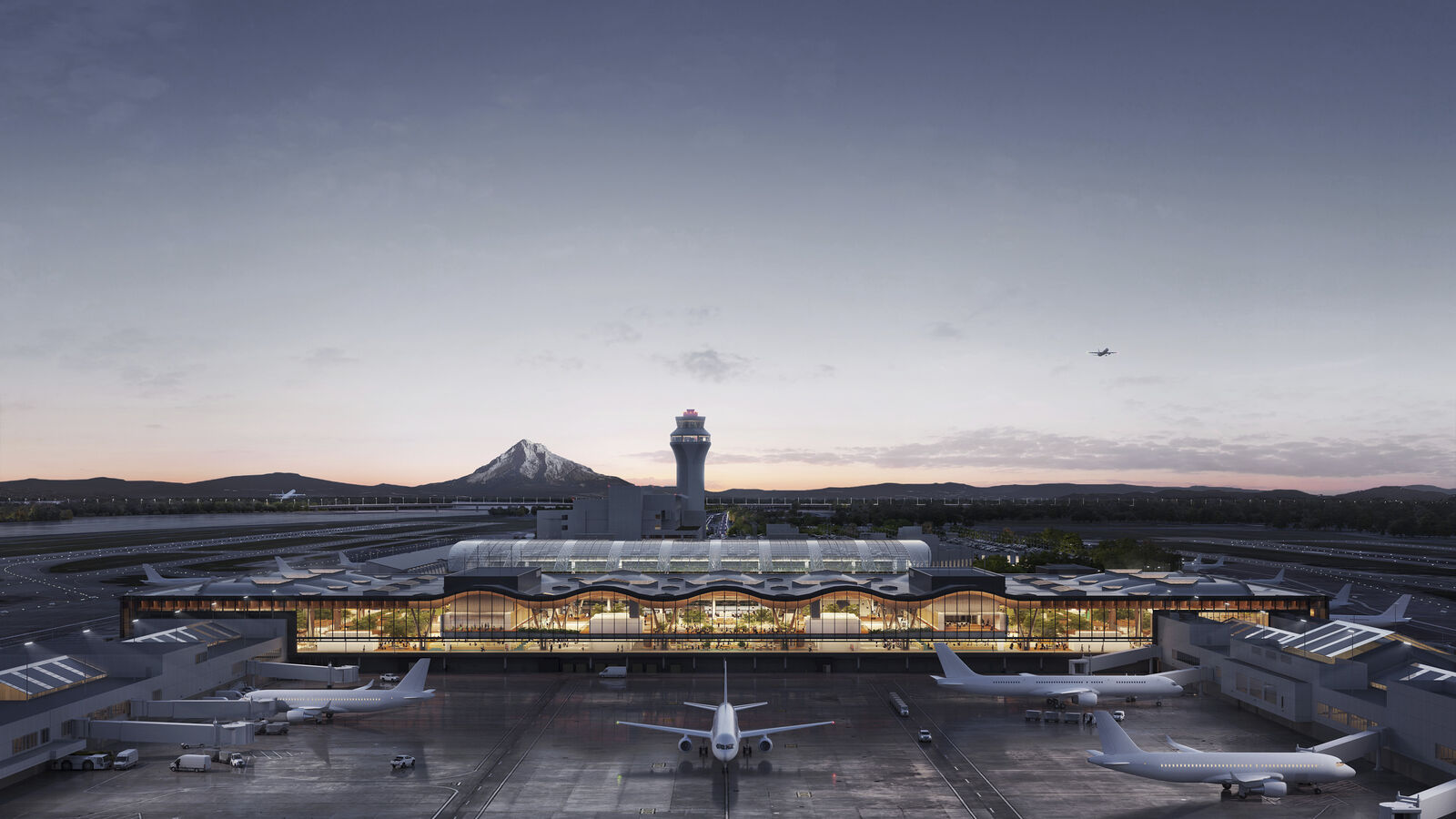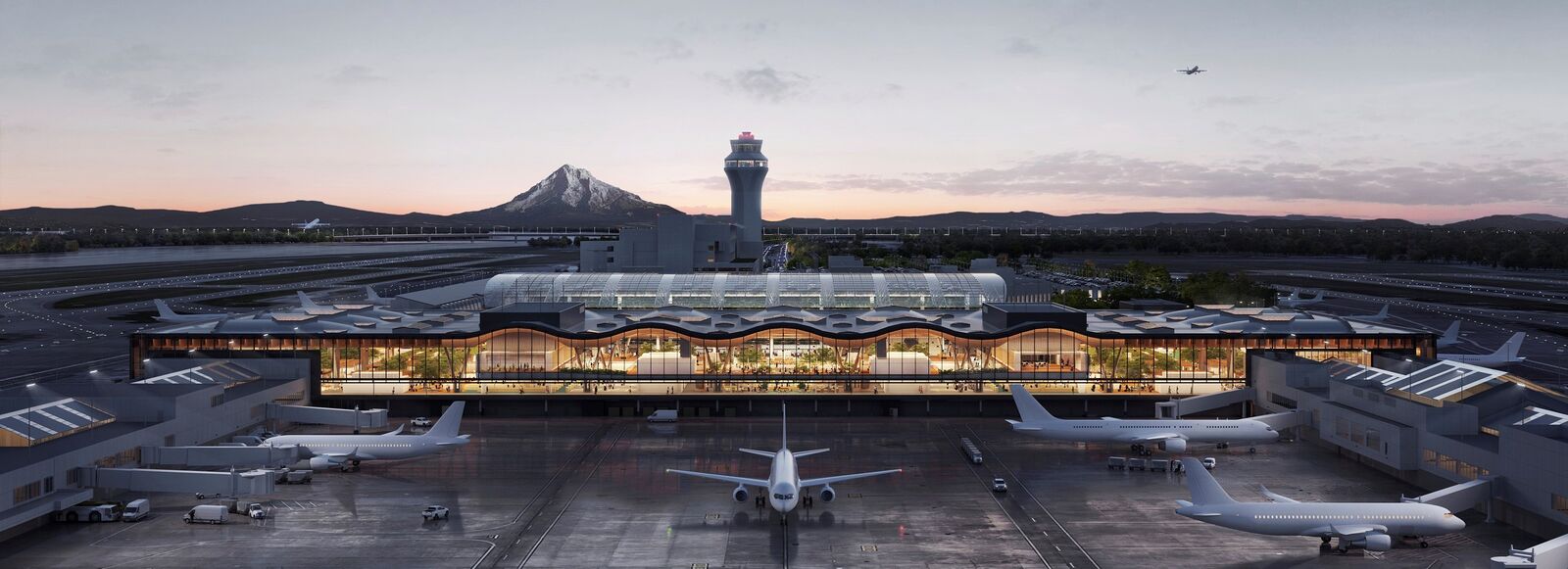
Redefining the Airport Experience
Traveling can be stressful. Expectations are high for airports to adapt as technology advances and the needs of passengers change. Designers are looking beyond the typical terminal to make traveling easier for passengers and airline employees alike. We sat down to talk comfort and ease of travel with Sharron van der Meulen. As an interior designer and Partner in our Portland office, she leads efforts to craft stress-reducing interior environments for complex projects that range from civic buildings to children’s hospitals. Sharron shared her thoughts on airport design: the good, the bad, and the trending.
What is the passenger experience and why are people trying to improve it?
It starts at home with buying a ticket. From the drop-off at the airport curb to take off, the passenger experience is all the steps a person goes through in order to travel by air.
Improving the passenger experience is about designing solutions that are more convenient for people. Frustrating processes like waiting in line or getting through security shouldn’t define traveling through an airport. The goal is to fade these processes into the background to allow more valuable and joyful experiences to come forward.
Why does it feel like we’re suddenly hearing about the passenger experience everywhere?
The aviation industry has seen dramatic growth over the past 20 years. Passenger numbers more than doubled from 1.5 billion in 1998 to almost 4 billion in 2017, thanks in large part to a rapid increase in travel affordability. While airlines are modernizing fleets and ramping up to serve more passengers, airports are investing in design. Airports want to create interior environments that will serve the next generation of travelers.
Airports are also looking to improve the passenger experience because air travel has become synonymous with stress and pressure. If you think about traveling by airplane today and the attitude it evokes, it’s not a positive association. 50 years ago, there was a sense of pleasure when it came to travel. Airports held a certain promise of adventure and passengers were excited to fly. Designers are trying to capture what is delightful and inspiring about the idea of flight again.
Travel is just more complicated. We’re seeing the evolution of airport design as a response. One of the most obvious changes is with technology. We can move through cities, states, and countries using nothing more than our phones and a passport. The need for interaction with people at the airport is decreasing. As a result, more emphasis is being placed on the environment, including how it makes a passenger feel, the attitude it evokes, and whether or not the design supports passenger needs.
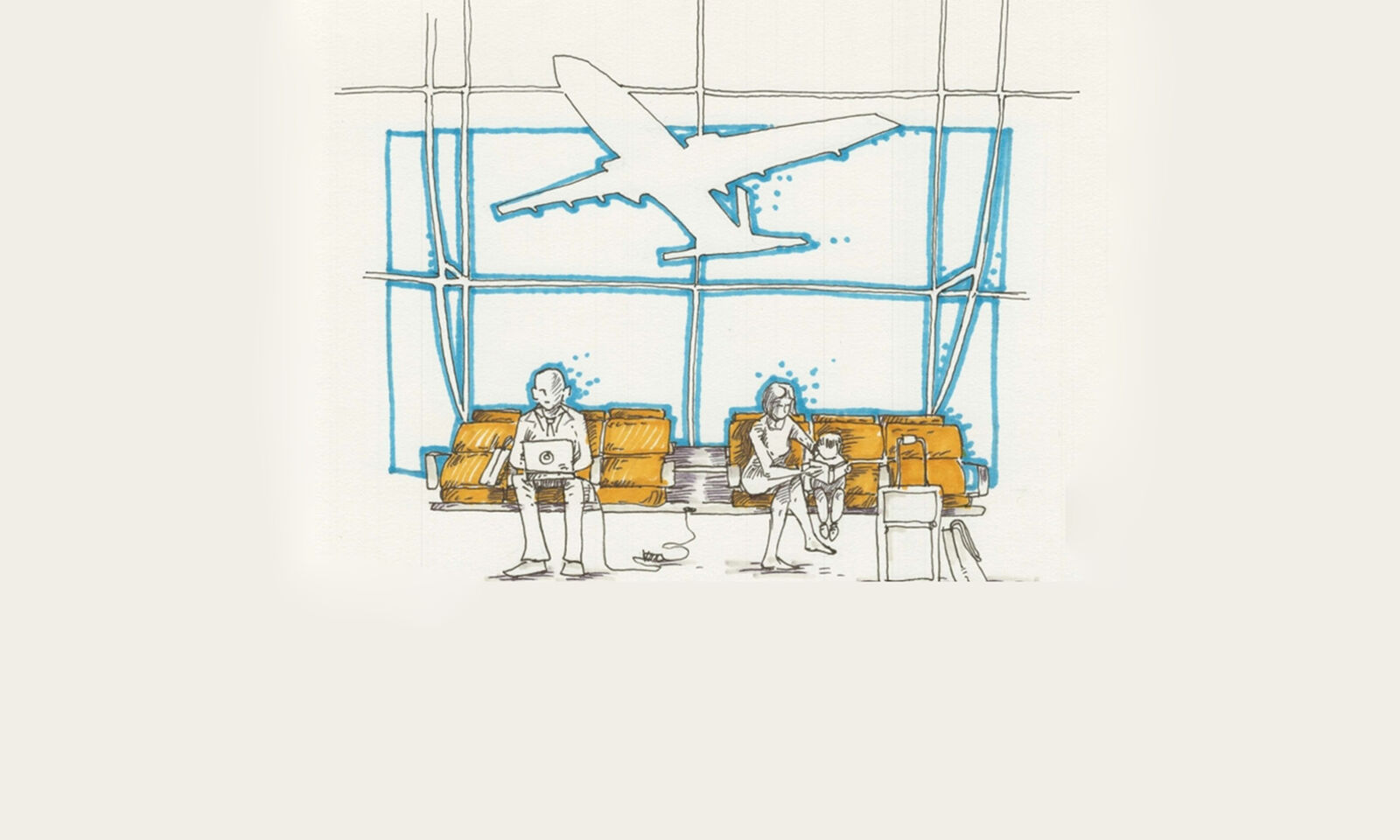
We’re also serving a wider spectrum of travelers than ever before. The key to managing the variety of needs for a modern airport is finding balance. There are older generations that have a certain expectation of face-to-face service traveling alongside families that might be looking for entertainment for their children. Those groups have different needs from the business traveler who wants a place to pull out a laptop and answer emails or the college student on the hunt for a place to charge her phone.
You travel a fair amount. What’s a recent airport experience that stuck out to you?
The spaces that I keep coming back to for their excellence are ones that incorporate the following two design principles:
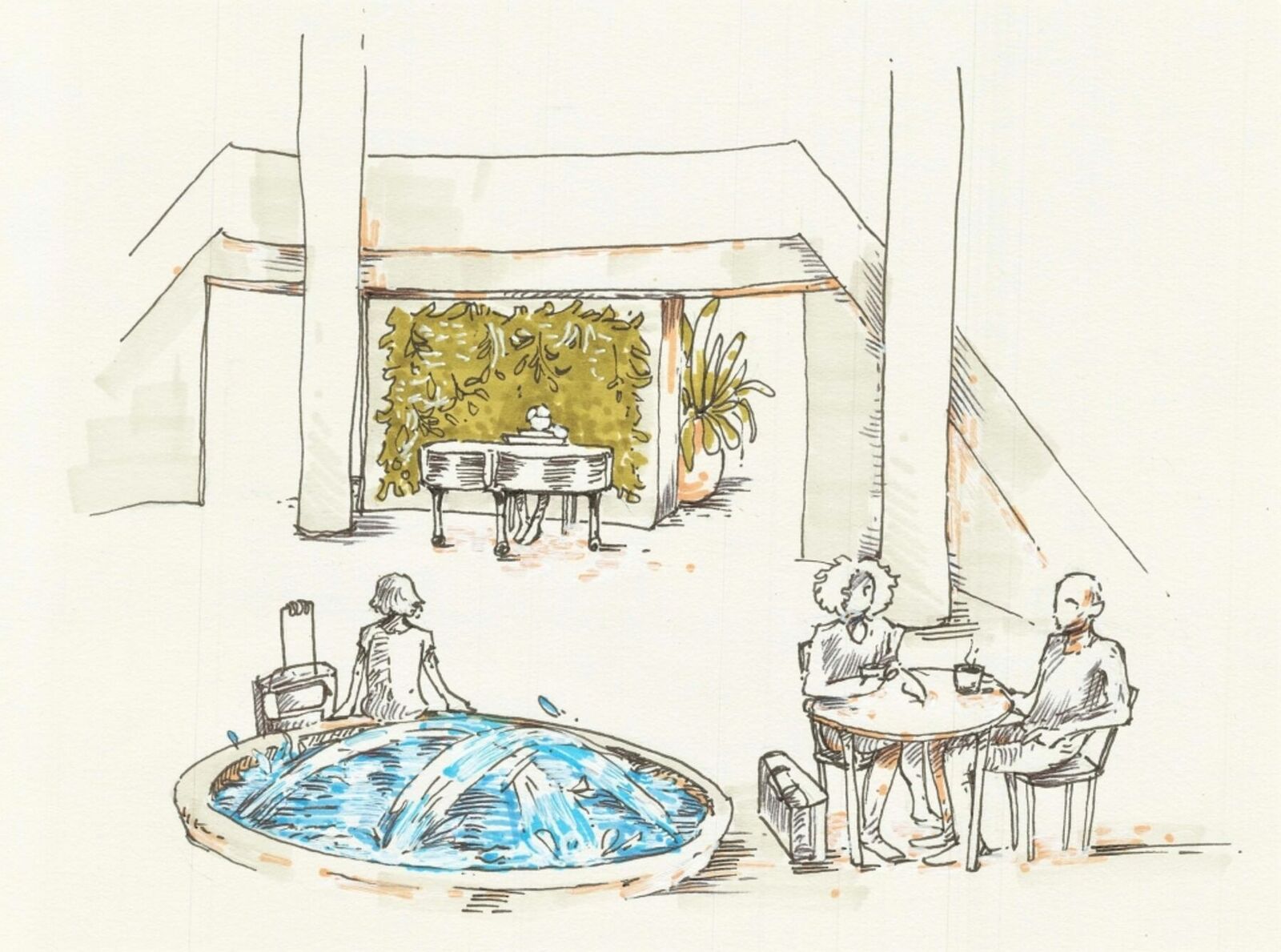
- Designing for sensory delight. One of the best ways design can influence memory is to touch the senses. Our mood is affected by the sights and sounds that surround us. Music, or perhaps ambient noise reminiscent of local wildlife, can have an immediate and transformative effect on a traveler. The same is true for designing with delicate scents and making choices that delight the eyes. Do you look around and see a bright space filled with lush greenery, or do you see a dark hallway crowded with lines? Do you hear the babble of a water feature, or the din of chaos? Travelers are looking for an immersive experience that they will remember.
- Design that reflects the community it serves. Airports are responsible for providing travelers with the first and last impression of a city. Every design choice – the building materials, interior palette, art, music, food, biophilia – should harmonize to transport and connect travelers to where they landed. One of the common threads between award-winning airports is a commitment to a deep sense of place. Airports that act as an extension of the community they serve can become destinations unto themselves.
What are some emergent trends that you think will be standard in the next few years?
There are so many interesting trends we’re seeing emerge in aviation. I’ve seen airports that are striving to become a destination for entertainment and investments in next-generation technology that will move millions of passengers faster and more securely than ever before. But I have my eye on the following developments:
The widespread affordability of air travel and increase in passenger loads are placing greater emphasis on space utilization at airports. Private spaces dedicated to members-only clubs are losing their appeal, while pay-as-you-go lounges for common use are on the rise. Passengers are willing to pay for the convenience and opportunity to have a first-class experience.
Hospitality is also influencing airport design. Some of the design choices that have defined modern hospitality spaces are starting to emerge in airports, including access to amenities, providing flexible space that allows travelers to be productive or get rest, and increasing comfort for guests. Airport hold rooms are a good example. Airlines are looking for a way to improve the way people wait. From lounge chairs to bistro tables, they are beginning to offer a variety of seating to allow people choose their experience while they wait. Food and beverage are becoming more common in holding rooms just like a coffee shop in a hotel lobby.
In your search to better understand today’s traveler, what is something you learned that you wish more people knew about?
Airports are sensitive ecosystems. As travelers, the way we treat others can have a ripple effect on the overall experience. Much of what I read and hear about airports doesn’t take into consideration the airport as a workplace. But it is. Airports are staffed by real people trying their best to keep us safe. The employees get up early and spend all day interacting with the public in a stressful environment. Happy employees start with a healthy work environment – fresh air, access to daylight, flexible space – but passengers also make a difference.

New Tool Helps Designers Measure Lifecycle Impacts of Wood