Research: ZGF Releases Low Carbon Concrete Guidelines
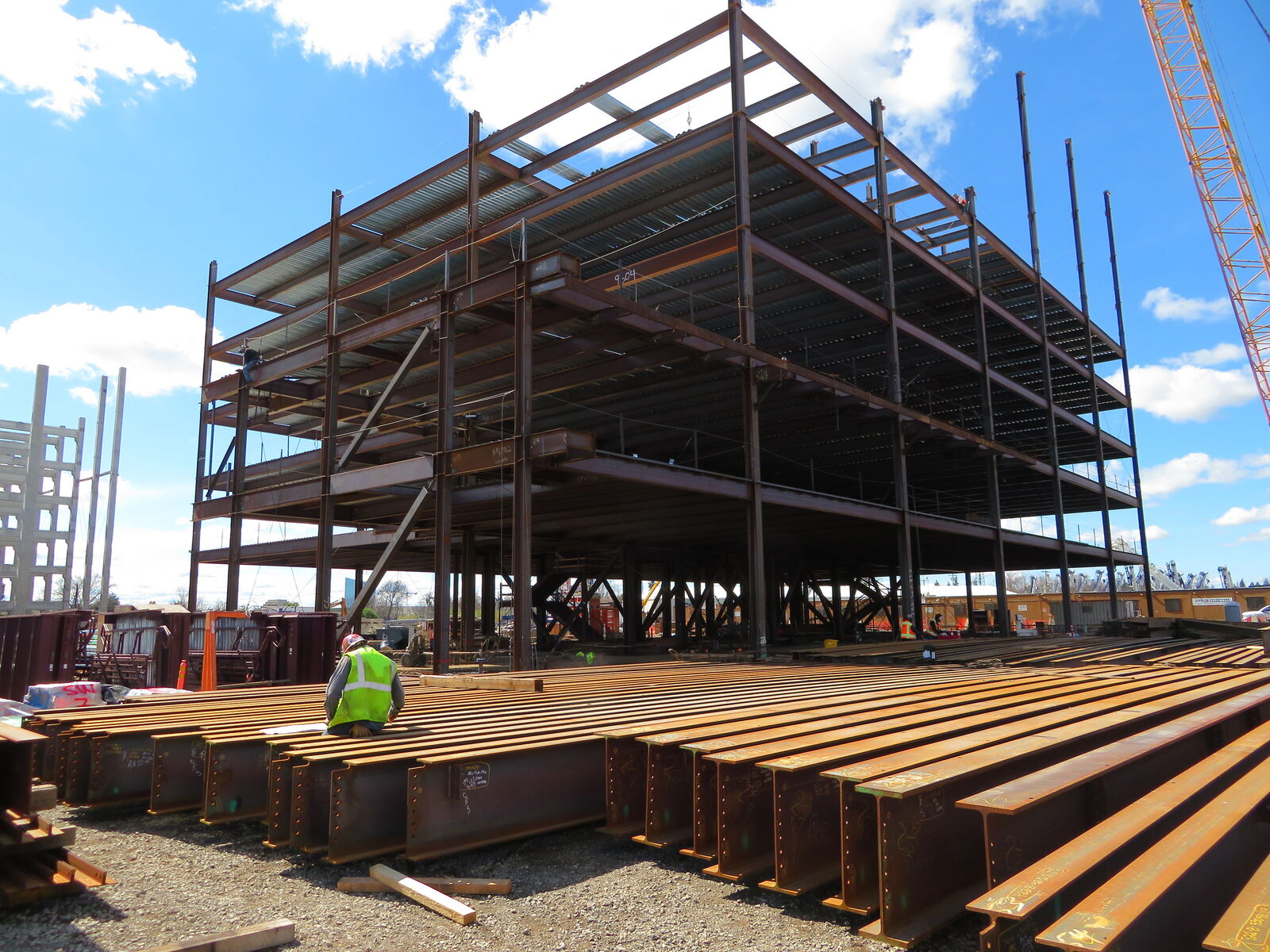
Decarbonizing buildings is a critical step in the transition to a low-carbon future and is necessary to meet global climate goals. Concrete, one of the most widely used structural materials, is also typically the single largest contributor to a building’s embodied carbon, requiring a significant amount of energy and emissions in its production. A new interactive guide offers project teams strategies to reduce concrete’s impact.
Concrete: A Pragmatic Approach to Lowering Embodied Carbon is an easy-to-use interactive guide that provides cost effective and efficient strategies for reducing embodied carbon of concrete in the built environment. Co-authored by ZGF Architects, Fast+Epp, EllisDon, and Lafarge, the technical guide has been developed for owners, architects, engineers, contractors, concrete suppliers, and other stakeholders in the Lower Mainland of British Columbia, Canada.
The guide outlines steps for project teams at every phase of the design process, including many cost-effective strategies to reduce the global warming impact of concrete. These clear and actionable steps are intended to aid project teams in reducing the embodied carbon of any project utilizing concrete. Note, these are regionally specific to the Lower Mainland of BC and may differ for other markets.
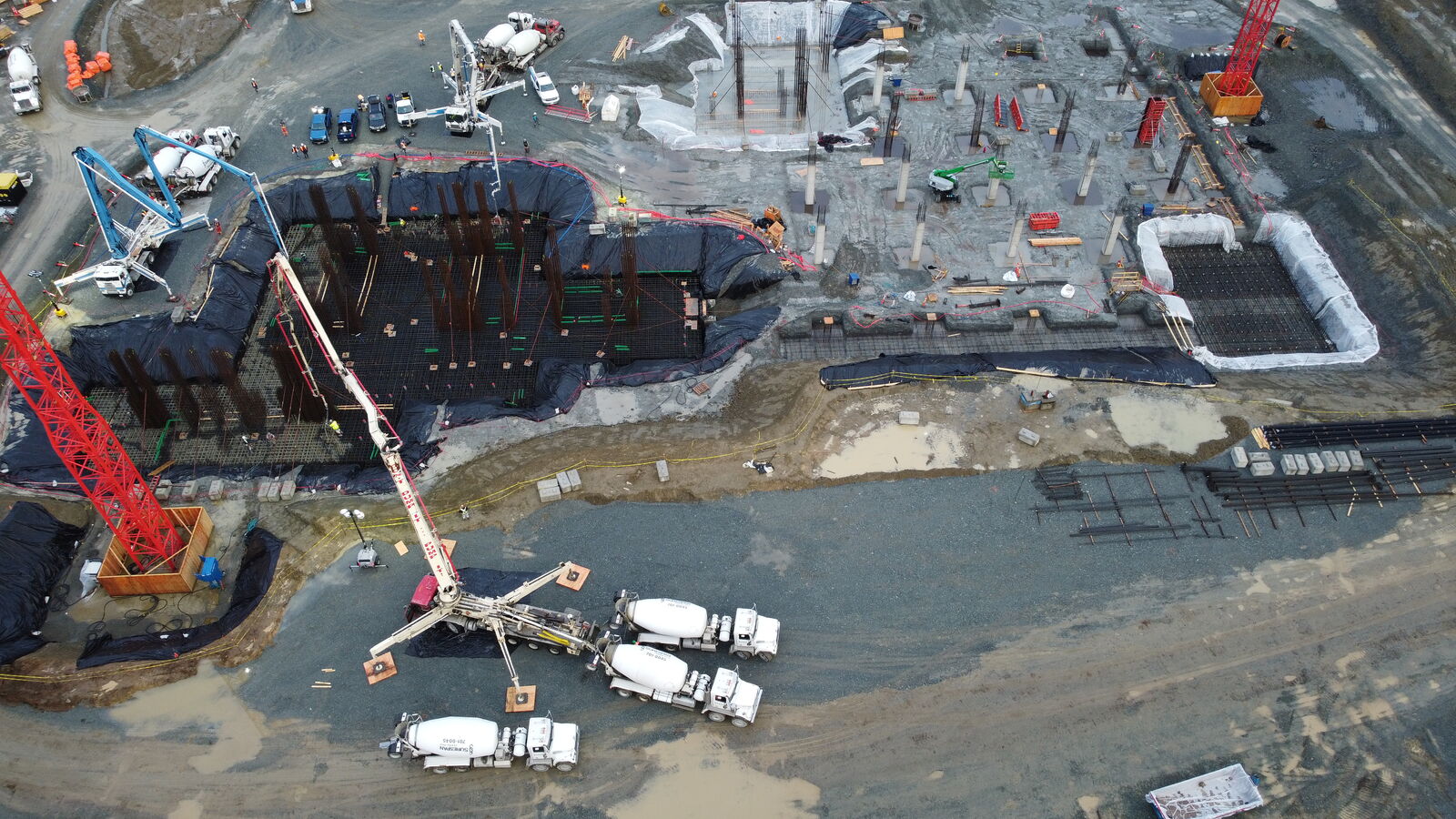
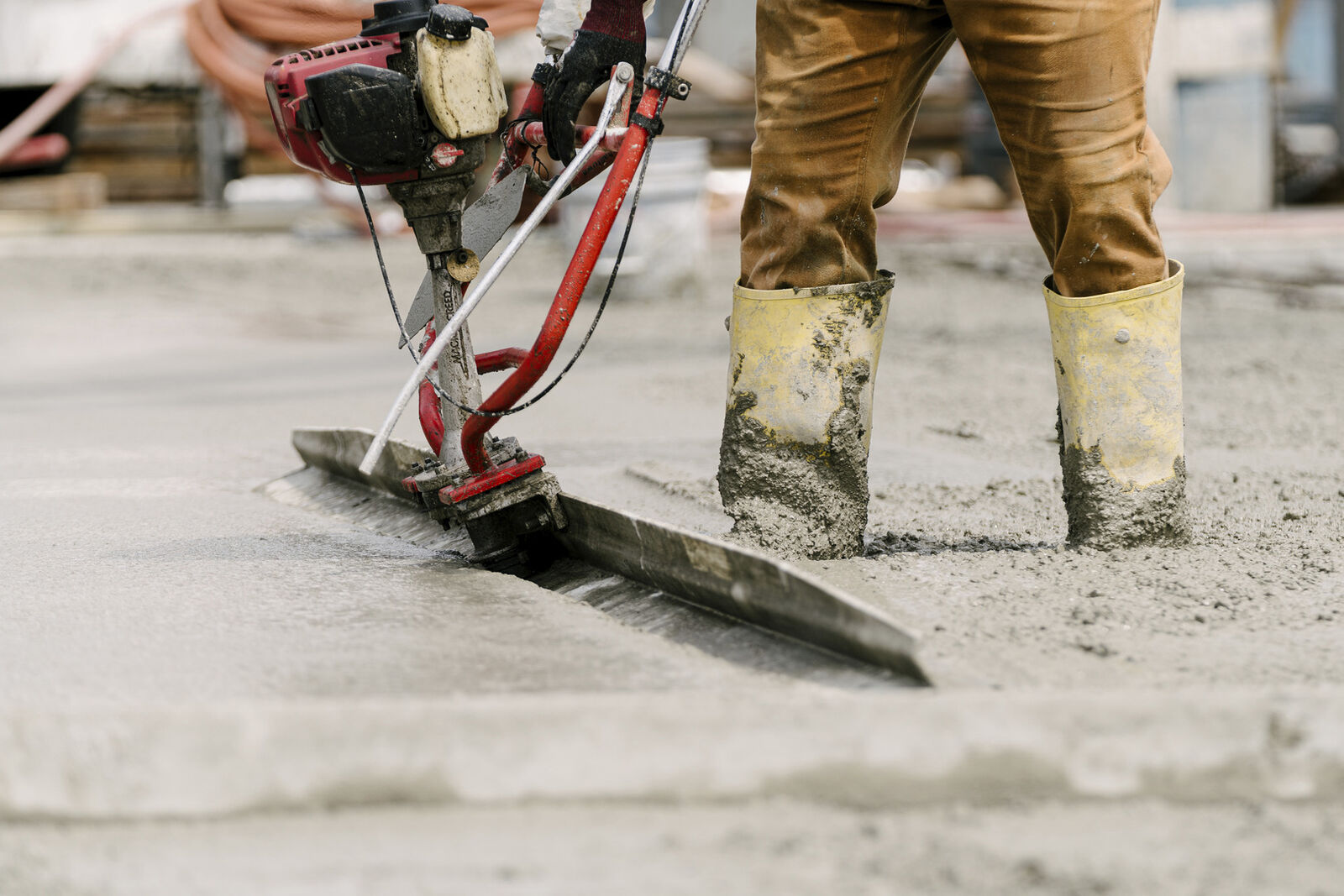
Strategies including concrete mix optimization can be implemented with no or negligible added project cost. (Image courtesy of Michael Chrisanthopoulos of EllisDon)
Among the Report Key Takeaways
- Collaboration: Effective collaboration among project teams from the start is critical to success, as is ensuring all key decision makers are involved.
- Start Early: Setting carbon reduction goals early allows for the evaluation of a greater number of opportunities to reduce the embodied carbon of concrete (though it’s not too late for projects already in design to optimize concrete mix design).
- Cost Effective: Strategies, including concrete mix optimization, can be implemented with no or negligible added project cost.
- Reduce Concrete Volumes: Utilizing less concrete volume per floor area, leading to lower overall embodied carbon, can be accomplished through designing a more efficient structural system. The guide highlights strategies for volume reduction, including:
- Evaluation of alternative structural systems
- Reduction of parkade levels
- Optimizing structural design to minimize transfer slabs
- Optimize Mix Design: Concrete mix design optimization, including altering the amount of Supplementary Cementitious Materials (SCMs) in a given mix, can minimize cement and significantly reduce the embodied carbon of a given concrete mix.
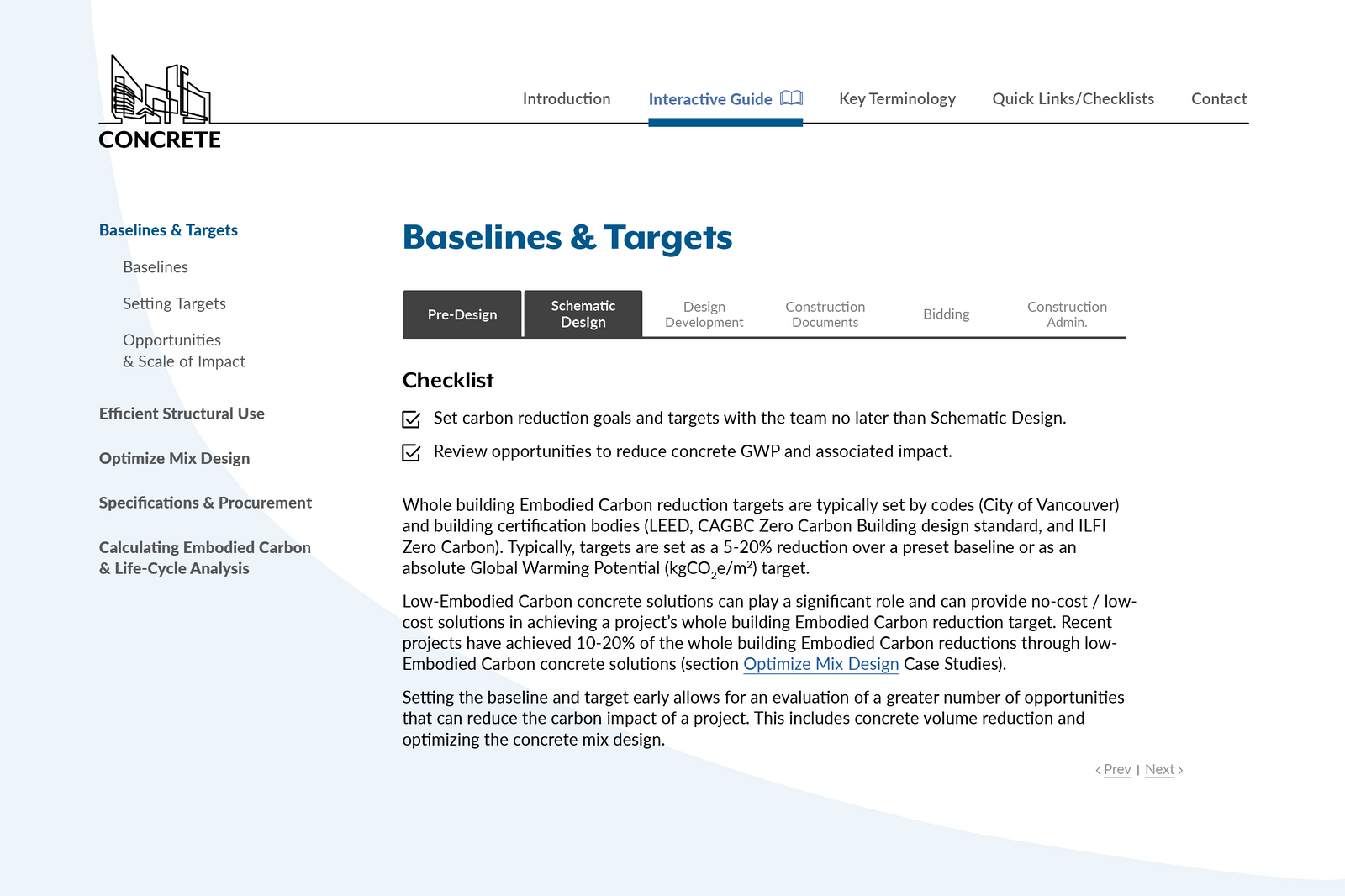
Setting carbon reduction goals early in the project allows for more opportunities to reduce the embodied carbon of concrete.
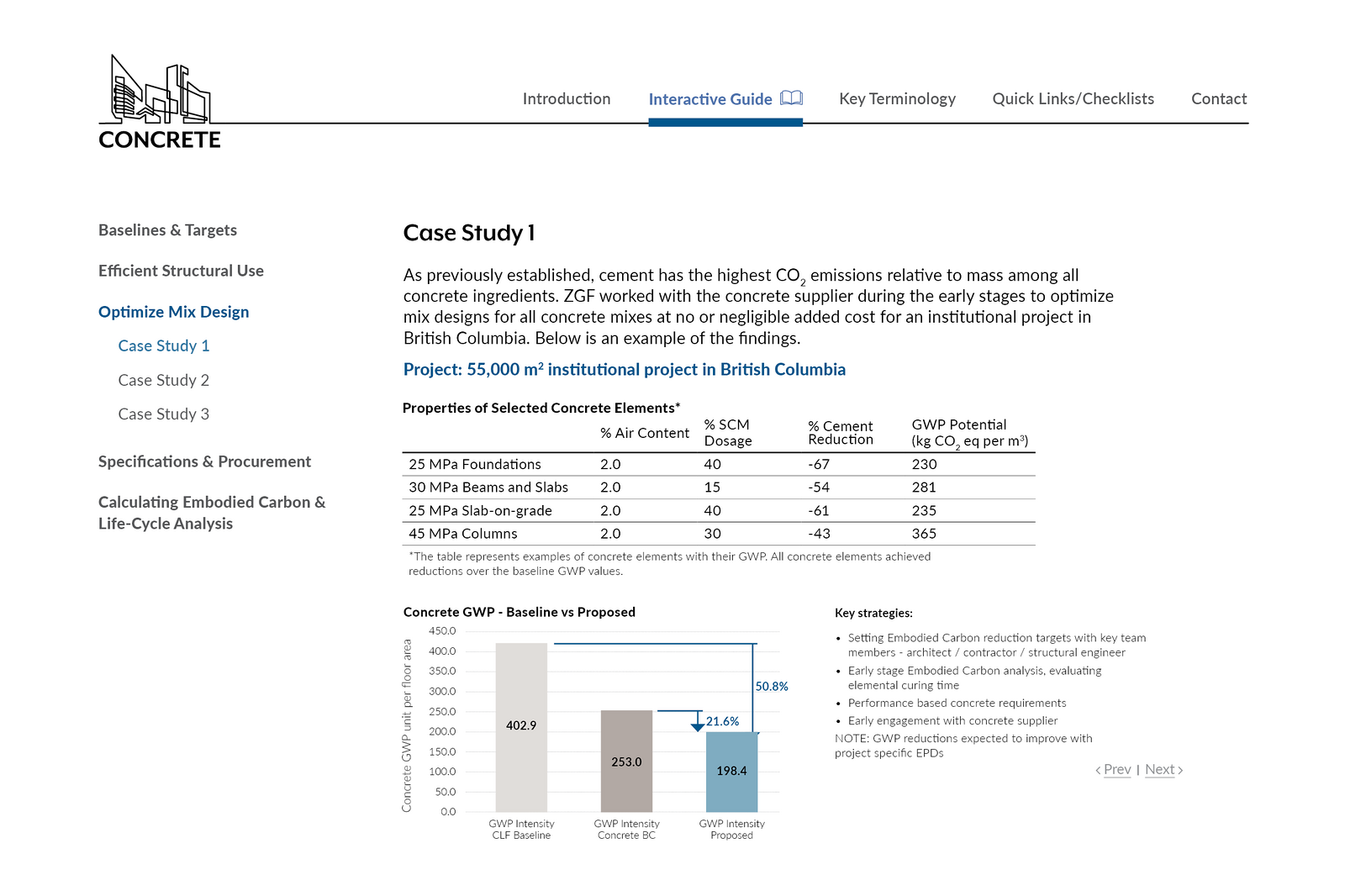
Tackling embodied carbon is critical to addressing the climate crisis and minimizing the overall footprint of the built environment. Concrete: A Pragmatic Approach to Lowering Embodied Carbon is a free, publicly available guide for owners and project teams to support the evaluation and implementation of lower-carbon concrete solutions.
Click here to download Concrete: A Pragmatic Approach to Lowering Embodied Carbon.
ZGF Joins First Movers Coalition to Accelerate Market for Net-Zero Building Materials

LCA Calculator Reduces Concrete’s Embodied Carbon

Report: Making Mass Timber Work for High-Rise Residential in BC

How to Drive Rapid Decarbonization With a Few Easy Tools