Renovating the PDX Airport in Place
By Nat Slayton, Principal at ZGF
The average American airport terminal is over 40 years old and typically the result of decades of upgrades and expansions stitched together over time. Now, many of these facilities are being faced with a crucial decision: whether to continue to grow in place or to start over and relocate to new facilities able to accommodate future demands. Most airports—especially urban airports—don’t have the luxury of space and must look to find ways to grow from within. The challenge for these facilities is how to radically transform and modernize their operations, increase capacities, and upgrade their aging structures without disrupting passenger operations.
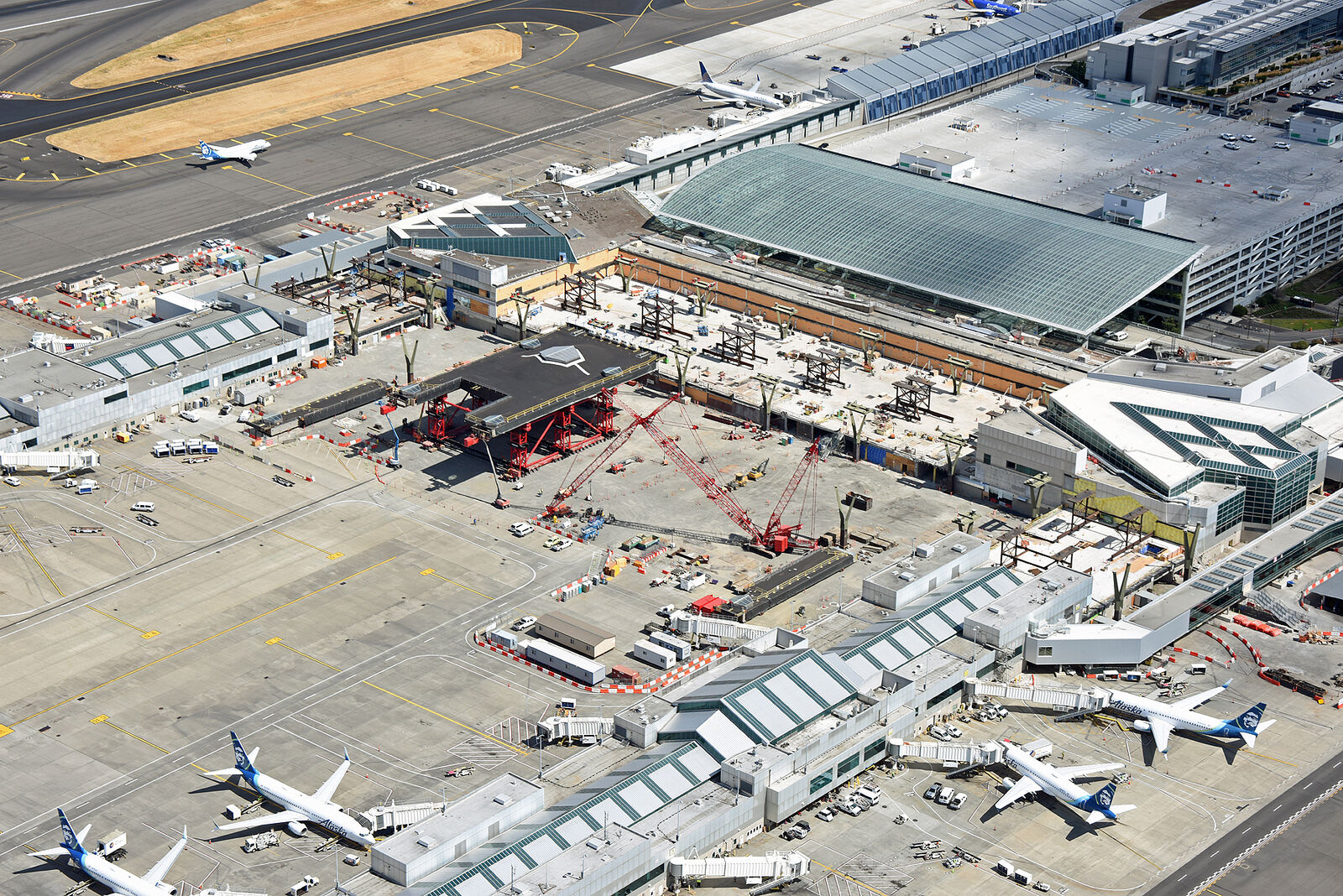
Construction of the new terminal in the heart of an operating airport required the careful choreography of construction activities. The two triangular volumes containing the existing passenger security processing areas needed to stay operational being replaced in the new Phase 1 terminal space. Once replaced, they get demolished and Phase 2 of the expansion begins.
The Portland International Airport (PDX) was no exception. The goal for the airport's main terminal expansion project was to grow in place—preserving the basic operational DNA of the terminal while finding ways to upgrade nearly everything and create a new footprint that could accommodate decades of future growth. The most significant challenge of this project was keeping the airport—most importantly, the check-in lobby, security checkpoints and baggage systems—fully operational during the five years of phased construction.
Solving this challenge required rethinking how the project could be designed and built. Early in the design process, the full team of architects, engineers, contractors, and airport stakeholders developed a comprehensive approach that would level the playing field. All major elements of the project: design, cost, schedule, phasing and operational impacts were made accountable to each other. This meant that design decisions were made not just because of cost or schedule, but also because they could be substantiated—because of how they reduced operational impacts, enabled phasing opportunities, or improved the passenger experience both during and after construction.
These considerations led us to innovative solutions to minimize impacts to passenger experience, maximize the advantages of offsite and modularized construction, and leverage the use of existing building systems and structures.
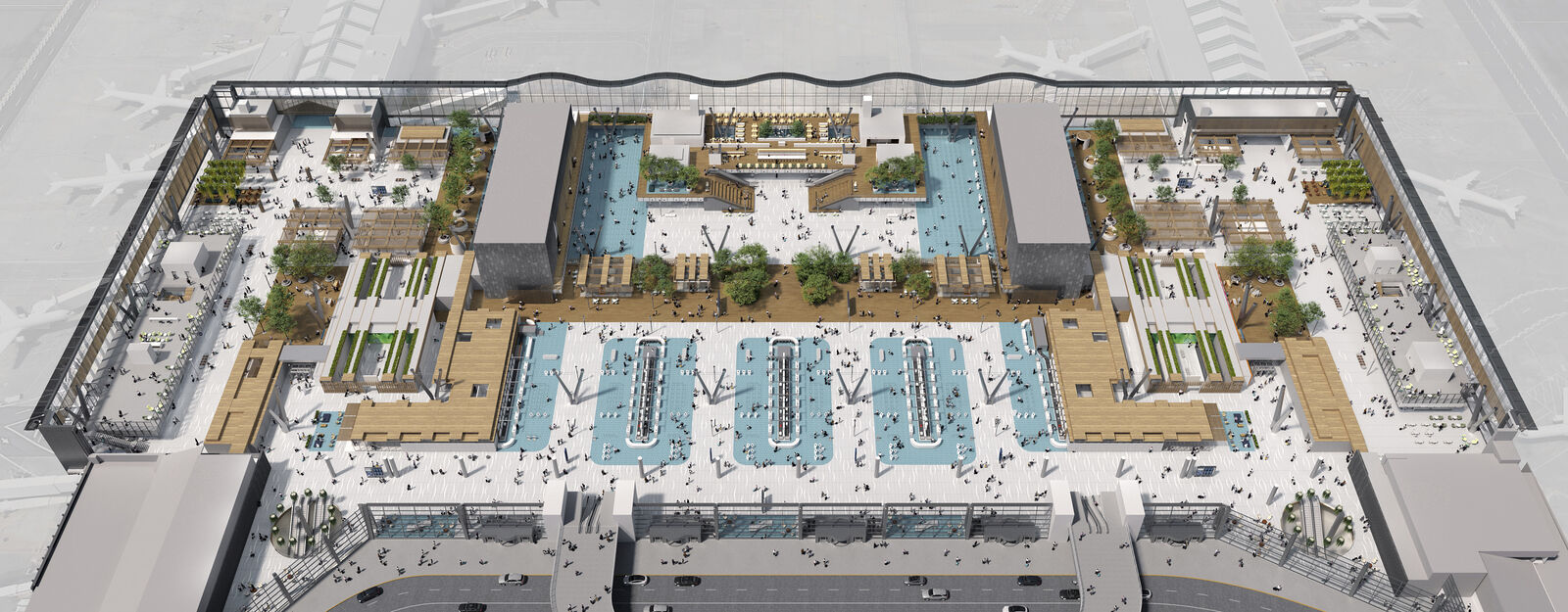
The new terminal shares the basic DNA of the original building's organization, but prioritizes the passenger experience in new ways. For example, passengers are now visually connected to almost every critical space in the terminal from the moment they enter the airport, from ticketing, to security—all the way to the airfield.
Maintaining a smooth passenger experience
Remodeling occupied buildings is always challenging. Remodeling and expanding the heart of an operating airport terminal involves challenges not just in keeping things functional, but also in keeping things familiar to the millions of passengers and staff that pass through the site each year. Passenger experience often gets overlooked or sacrificed by the needs of construction efficiencies. From the start, we worked closely with the contracting team and airport stakeholders to design as straightforward a phasing approach as possible, keeping familiar spaces and systems functional for as long as was possible and consolidating changes into as few steps as was possible. This meant getting the “behind the scenes” work done while passengers continued to experience the same ticket hall and same security processing areas they had been accustomed to for decades.
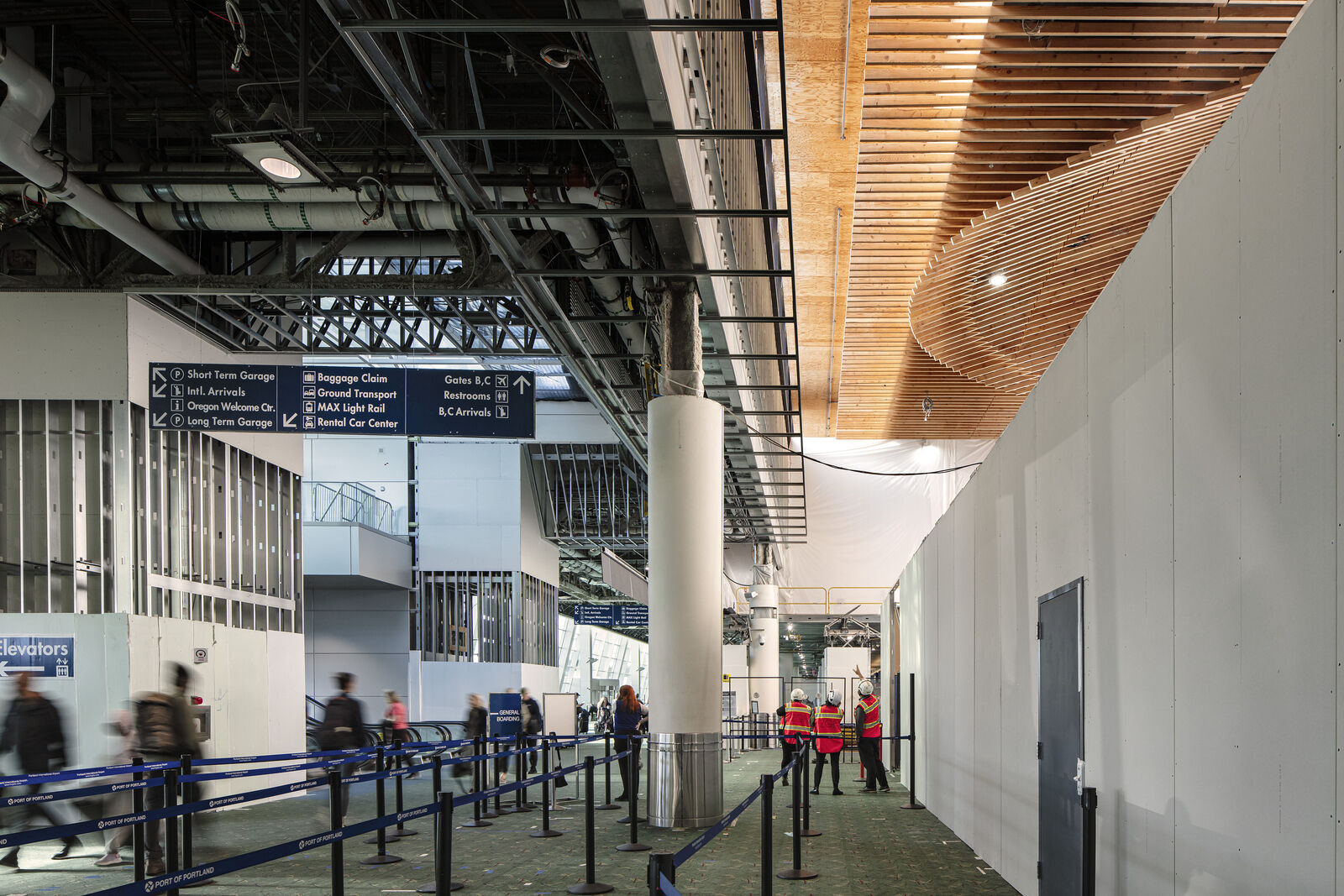
The new terminal roof was designed with a large structural cantilever over the existing ticket hall and existing ticket counters. This allowed passenger processing to continue without the phasing disruptions that a perimeter column line would have created.
The advantages of prefabrication
When construction on the terminal began, the team simultaneously leveraged offsite work to minimize impacts to passengers, operations, and existing critical systems while maximizing worker safety and productivity.
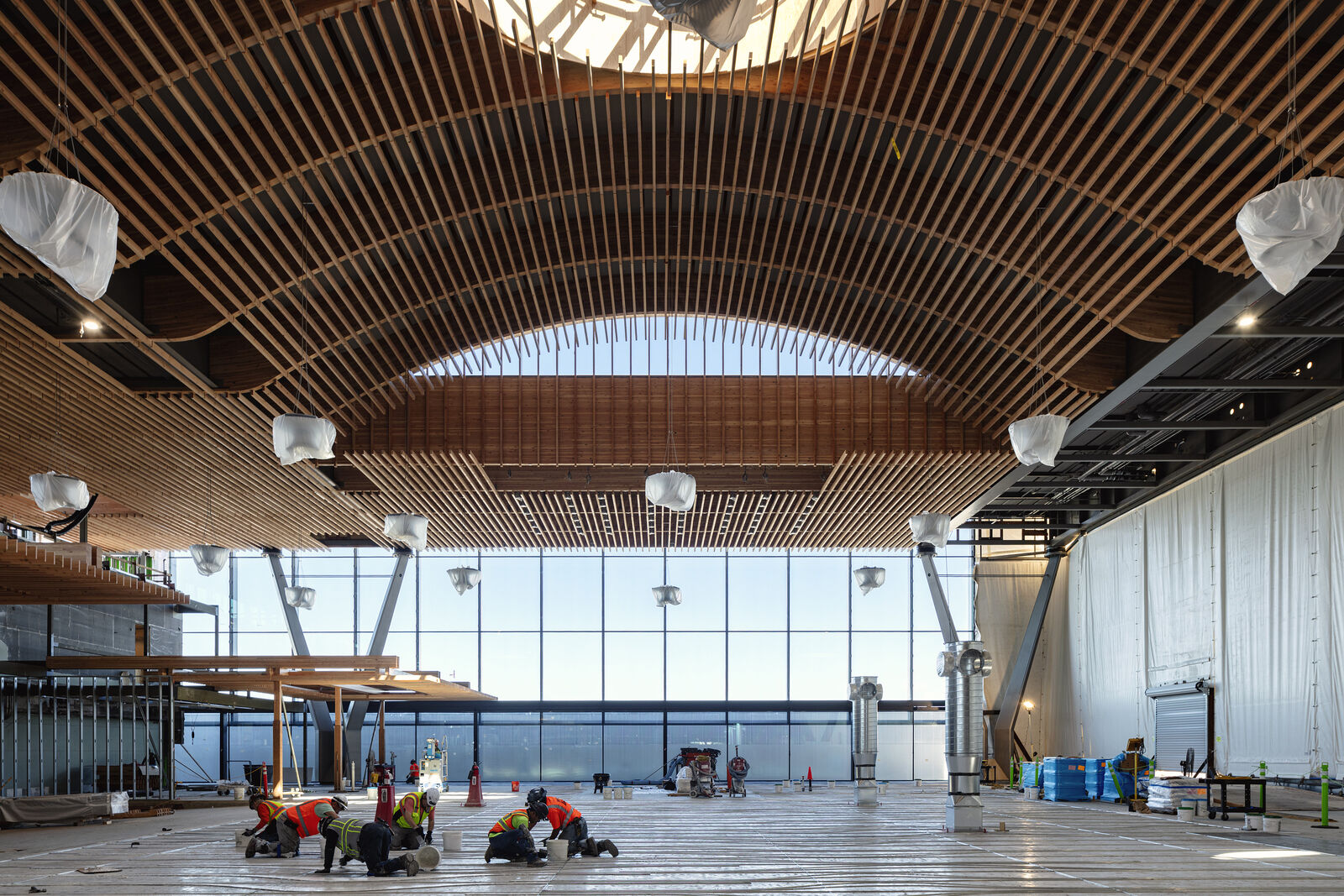
The new terminal roof was prefabricated at a nearby location on the airfield and then installed over a three- and half-month period during an FAA-regulated window at night when there were no passengers or occupants below the construction area. Prefabricating the roof enabled a high level of craftsmanship and allowed construction to take place without disrupting airport operations—and lowered logistical costs. Working offsite also improved productivity because it reduced the amount of time craftspeople spend getting to and from the work areas. It also reduced the number of craftspeople that needed to be within the terminal at any given time, and reduced the pressures of lay-down and logistics space that would otherwise encumber aviation operations areas. The benefits of prefabrication weren’t limited to the roof. The team designed modularized and prefabricated elements at all scales: from the roof, to 50’ utility racks, to concessions structures, stairs—and even the TSA screening rooms.
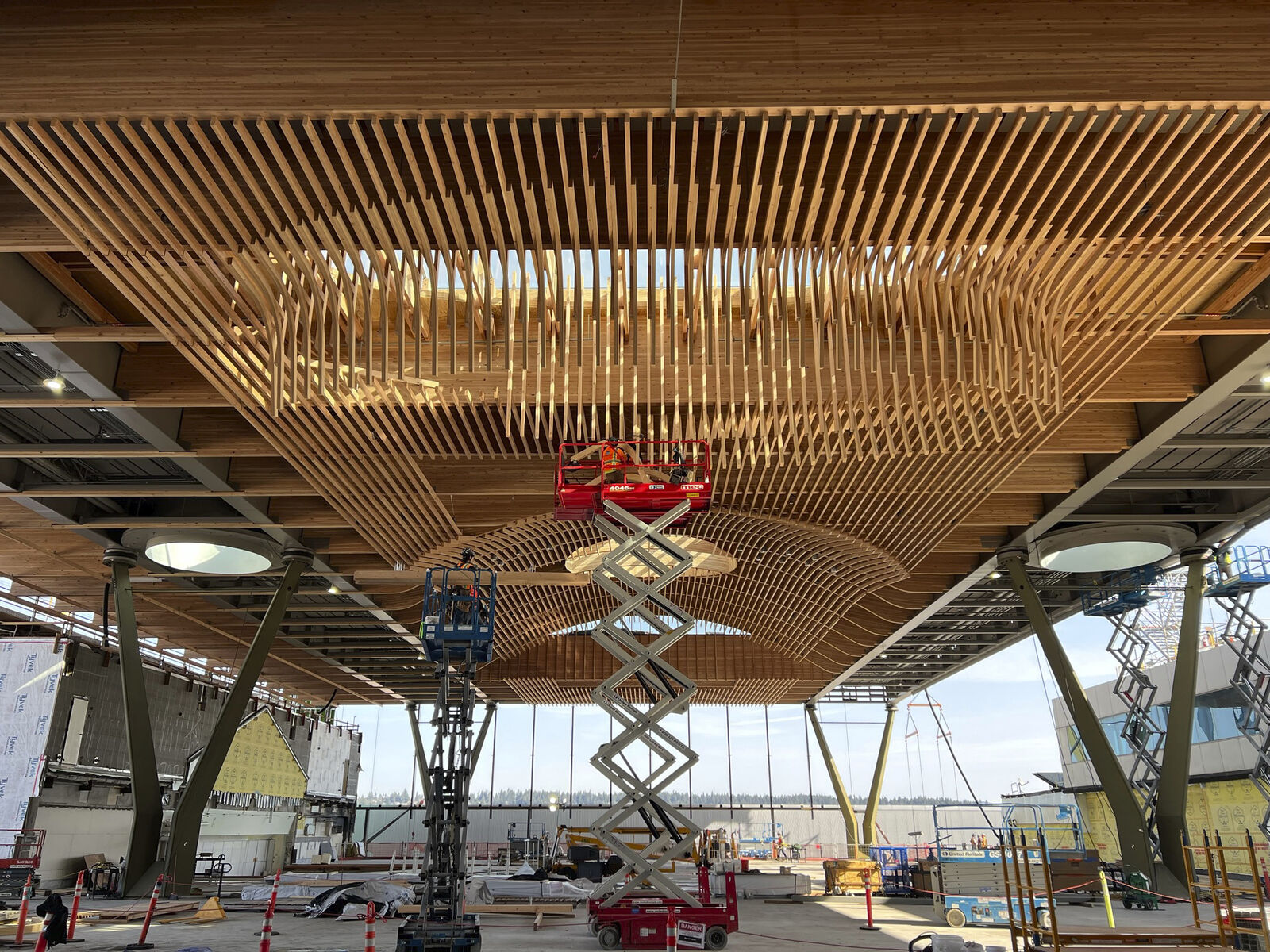
Modular construction allowed long-span sections of roof upwards of 250' long by 150'wide to be placed over existing structures such they are supported by just four columns placed just outside the existing concourse foundations. By straddling the concourse the team minimized disruption to the existing baggage systems and other critical infrastructures.
Leveraging existing systems
Designing an expanded terminal started with a deep dive into finding opportunities to reuse, upgrade, and augment existing structures, systems and processes to help reduce project cost and schedule. Instead of building an entirely new terminal and designing multiple points of connection, the team worked surgically to integrate new resilient systems into the existing airport ecosystem.
Baggage systems are the largely “unseen” beating heart of any airport, they can’t close or take a break. The team built a 4D digital model of all new and existing building elements and created a phasing roadmap that kept baggage moving to and from airplanes while also dramatically increasing capacity and providing state-of-the art automated security facilities and new links to balance capacities between previously isolated areas of the airport.
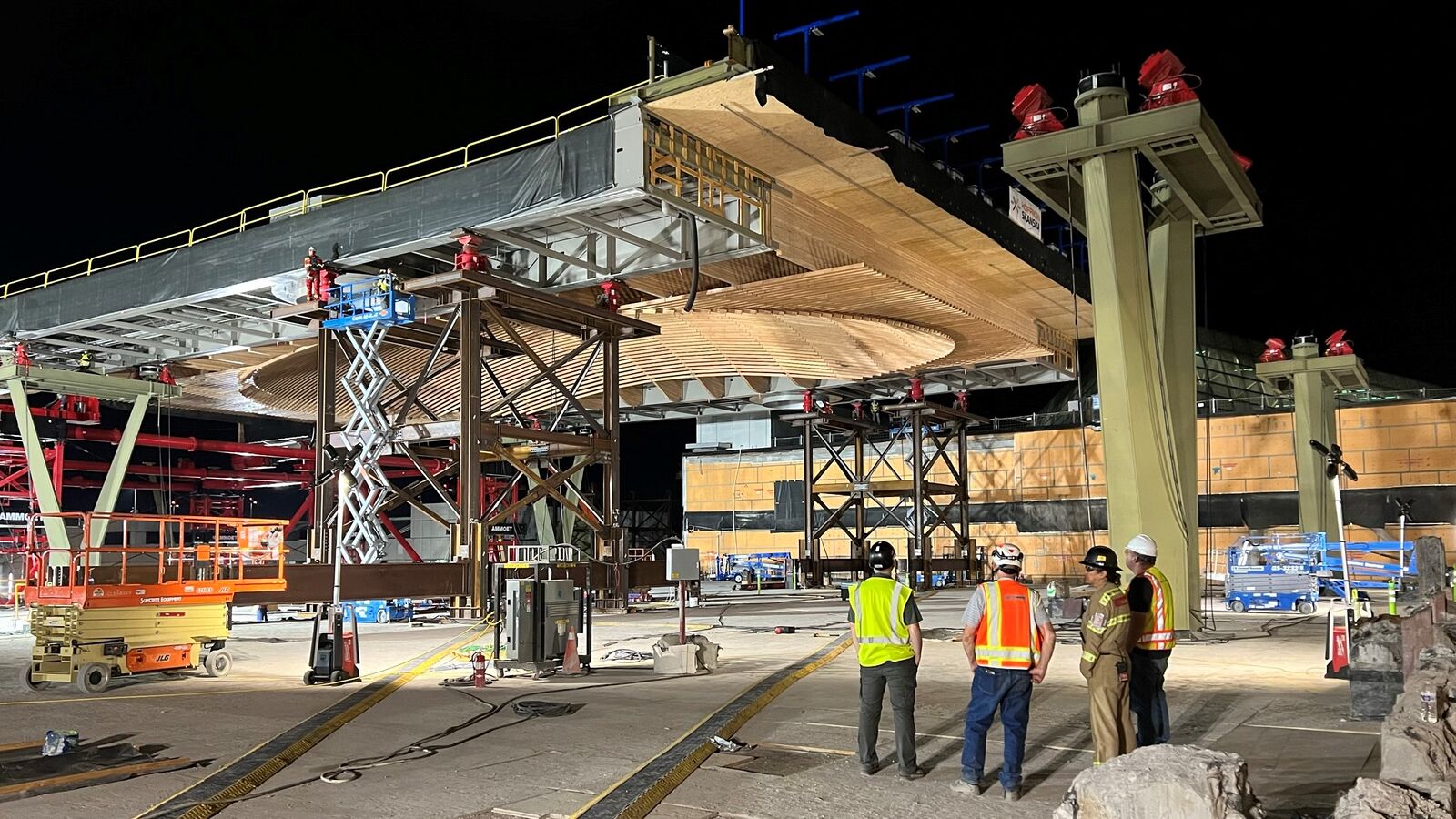
Temporary structures were built over existing columns to support the new roof during construction.The team found creative ways to utilize existing columns, beams and foundation systems to help enable the complex construction sequencing.
Integrating mechanical systems
The design process started with an audit of systems diagnostics to understand how decades of mechanical, electrical, and plumbing systems could be leveraged to support the temporary and permanent terminal building. For example, the interim ticket hall was ‘back fed’ with a repurposed air handling system and the team was able to significantly reduce cost by reallocating reserve capacities on existing mechanical units to serve the new terminal. The team even designed the new roof modules such that they could be installed without needing to demolish existing rooftop mechanical spaces that helped serve interim functions.
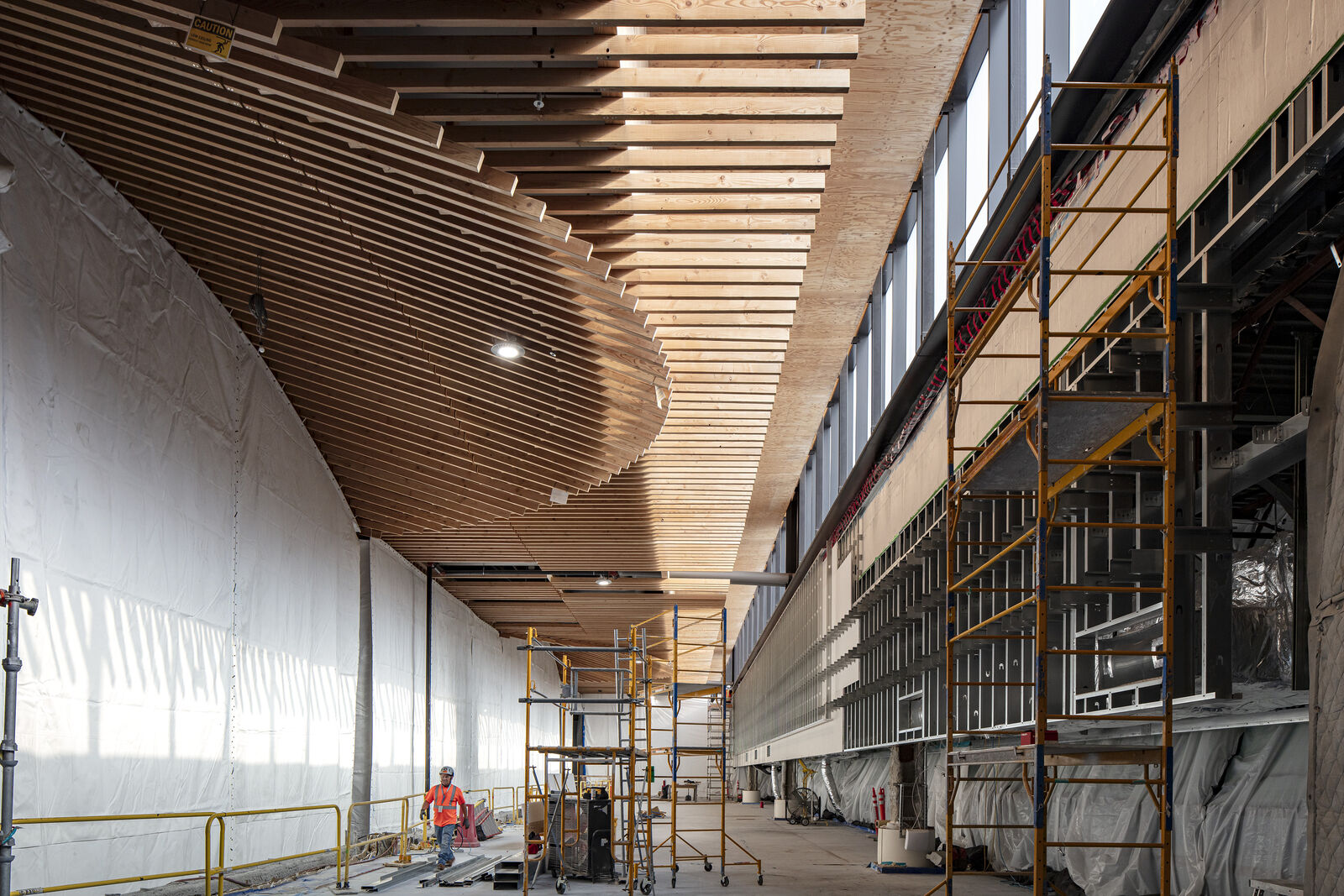
Where the new roof overlaps with the original ticket hall roof, a series of mechanical systems was repurposed and redirected to serve the new space.
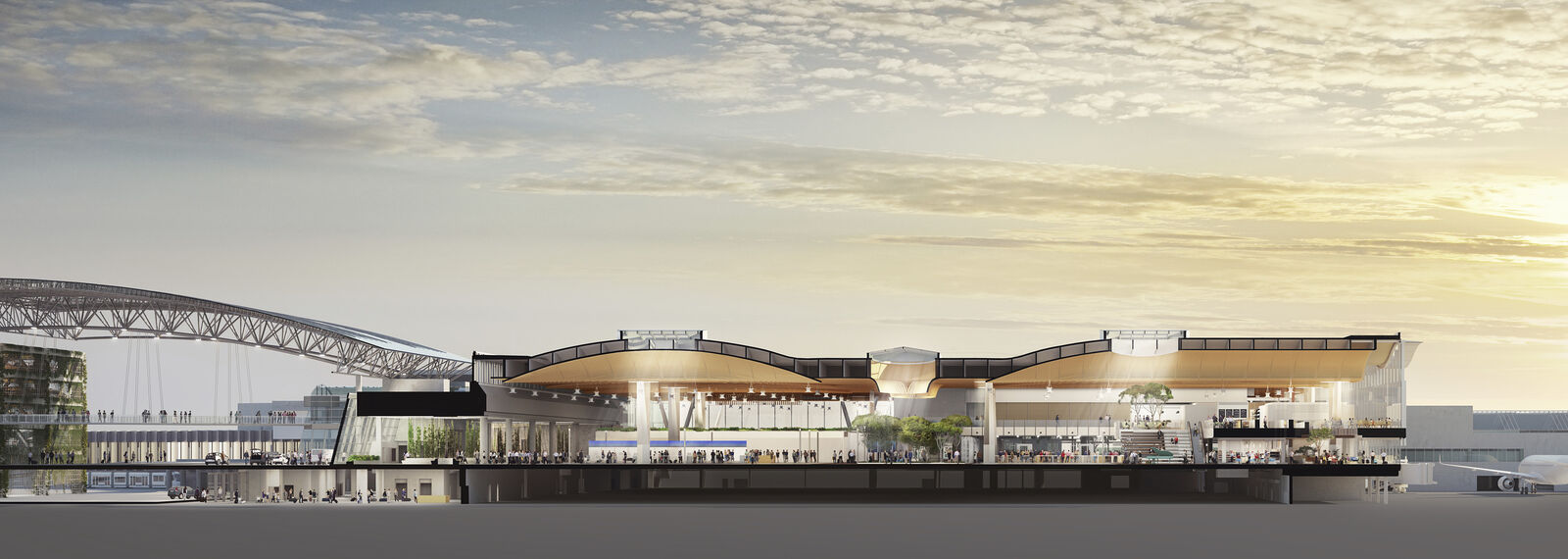
The new terminal shares the front door of the original building, but "piggybacks" over the existing baggage systems and associated critical utility spaces. This allowed these spaces to remain online during construction with minimal disruption.
Piggybacking structures
Lifting the new roof structure over the operating terminal building meant that the team had to find creative ways to brace and support the roof as it moved into place. The team devised a way to piggy-back over the existing steel columns and foundations with temporary bracing towers- each one uniquely designed to perfectly align with the existing building steel. These towers allowed the existing building foundations to continuously support the new roof as it was being slid into place onto the new columns. This enabled the terminal to stay operational, as different parts of the building only had minimal down time from the overhead roof work—closures that otherwise would have lasted days were limited to just a few short hours.
Recycling building elements as construction tunnels
One of the biggest hurdles to remodeling a terminal building—or any hub facility—is how to safely move people around the construction zone and also support efficiencies in sequencing. Typically, connections through construction areas are done with hardened ‘tunnels’ that shift back and forth to allow finished work to be tied together. This is inefficient and can be difficult for passengers to navigate. To avoid these issues, the design and contracting teams collaborated to find a way to move and repurpose an existing 700-foot sterile passenger corridor to use as the temporary construction site bypass between concourses. The existing connector between concourses was built as a long truss structure—the team found a way to cut the truss in half and move one section to the north of the terminal and the other to the south, linking the concourses on either side of the construction site.
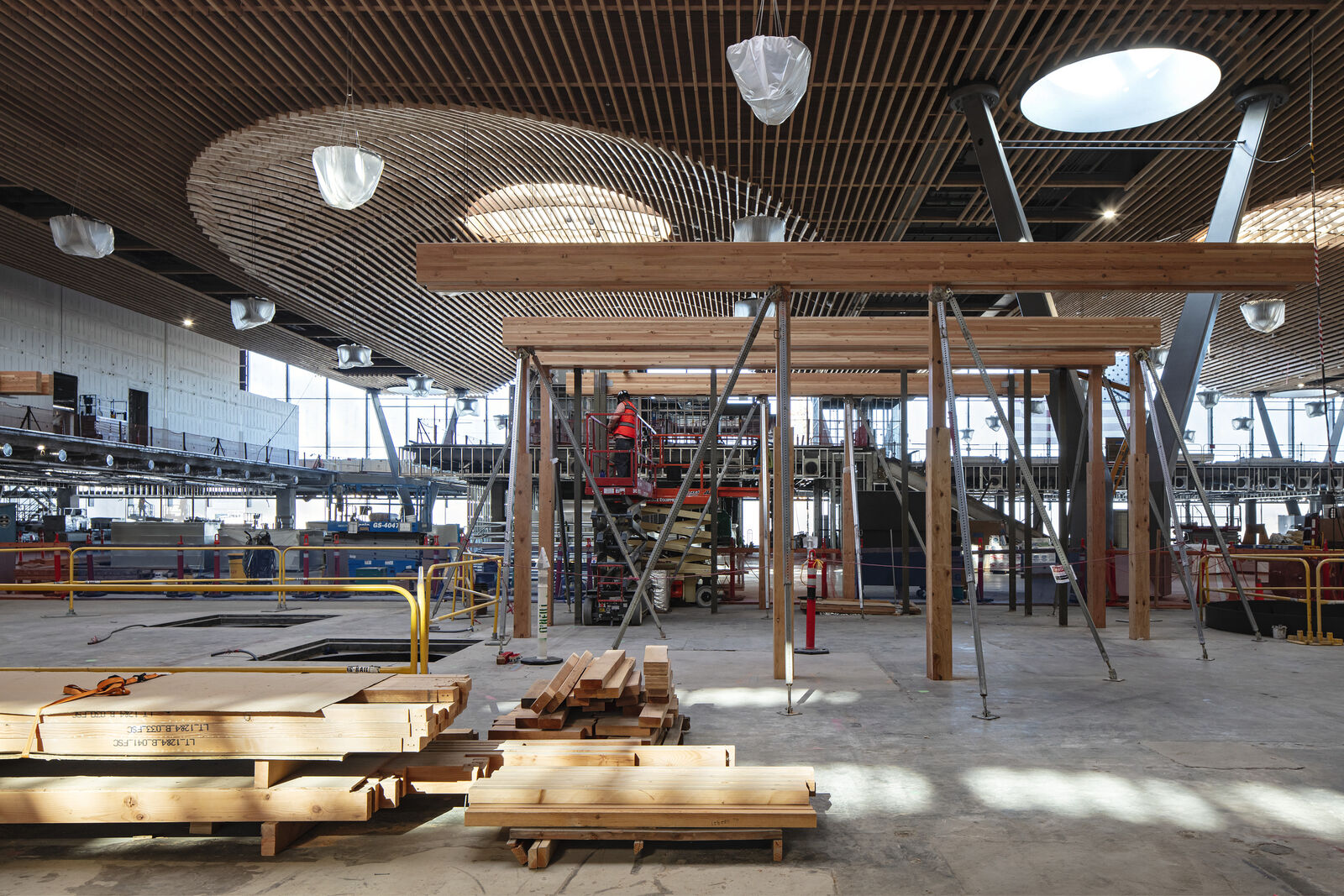
Even new mass timber retail concessions structures were prefabricated offsite. This helped minimize construction activities and compress the construction schedule.
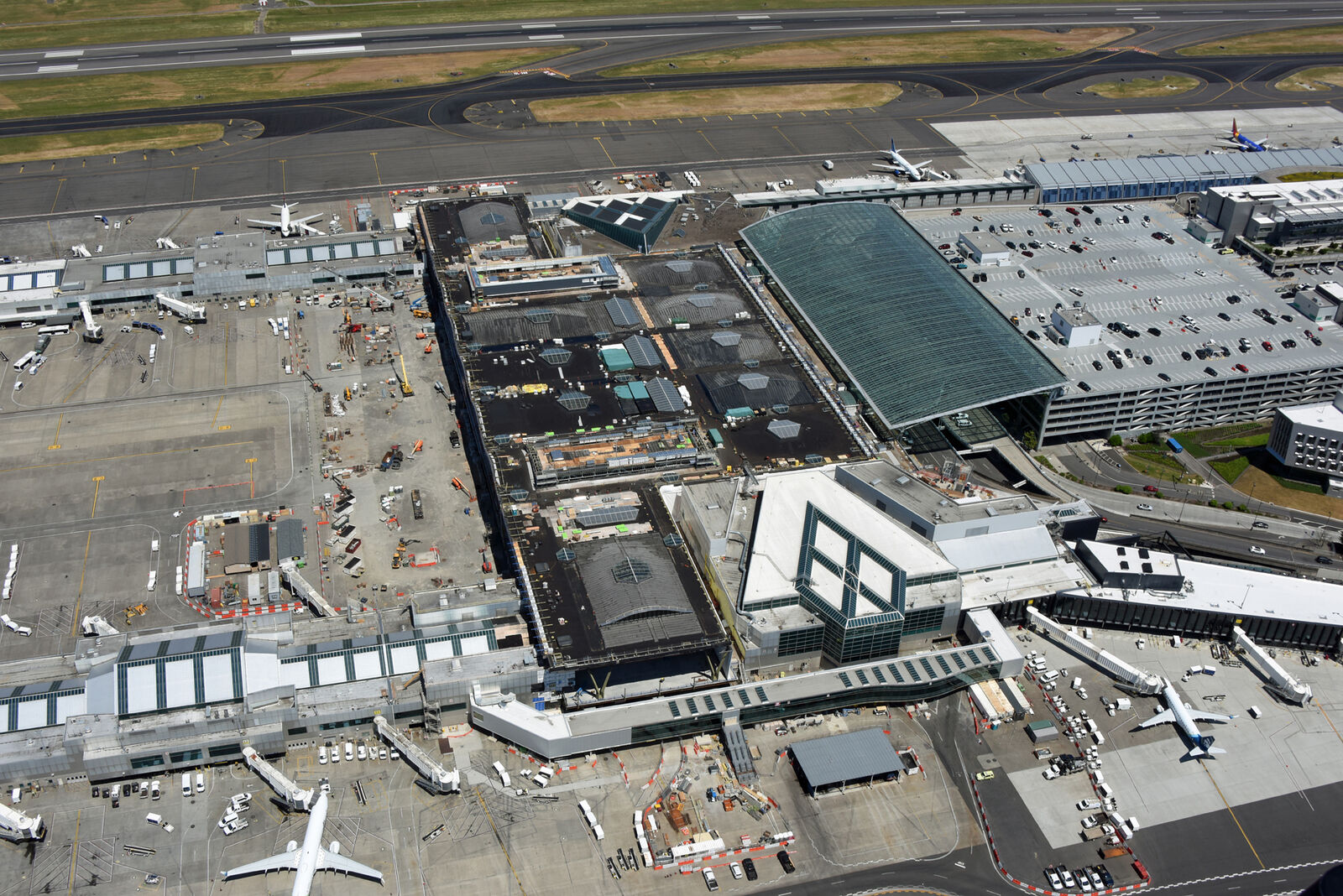
Phase 1 of the new terminal creates a "T-shaped" roof. The existing triangular security nodes will be demolished in Phase 2 and the new terminal roof will infill these corners. A temporary construction by-pass tunnel (a recycled element from the original terminal) allows passengers to safely avoid the construction area as the connect between concourses.
Retooling existing infrastructures
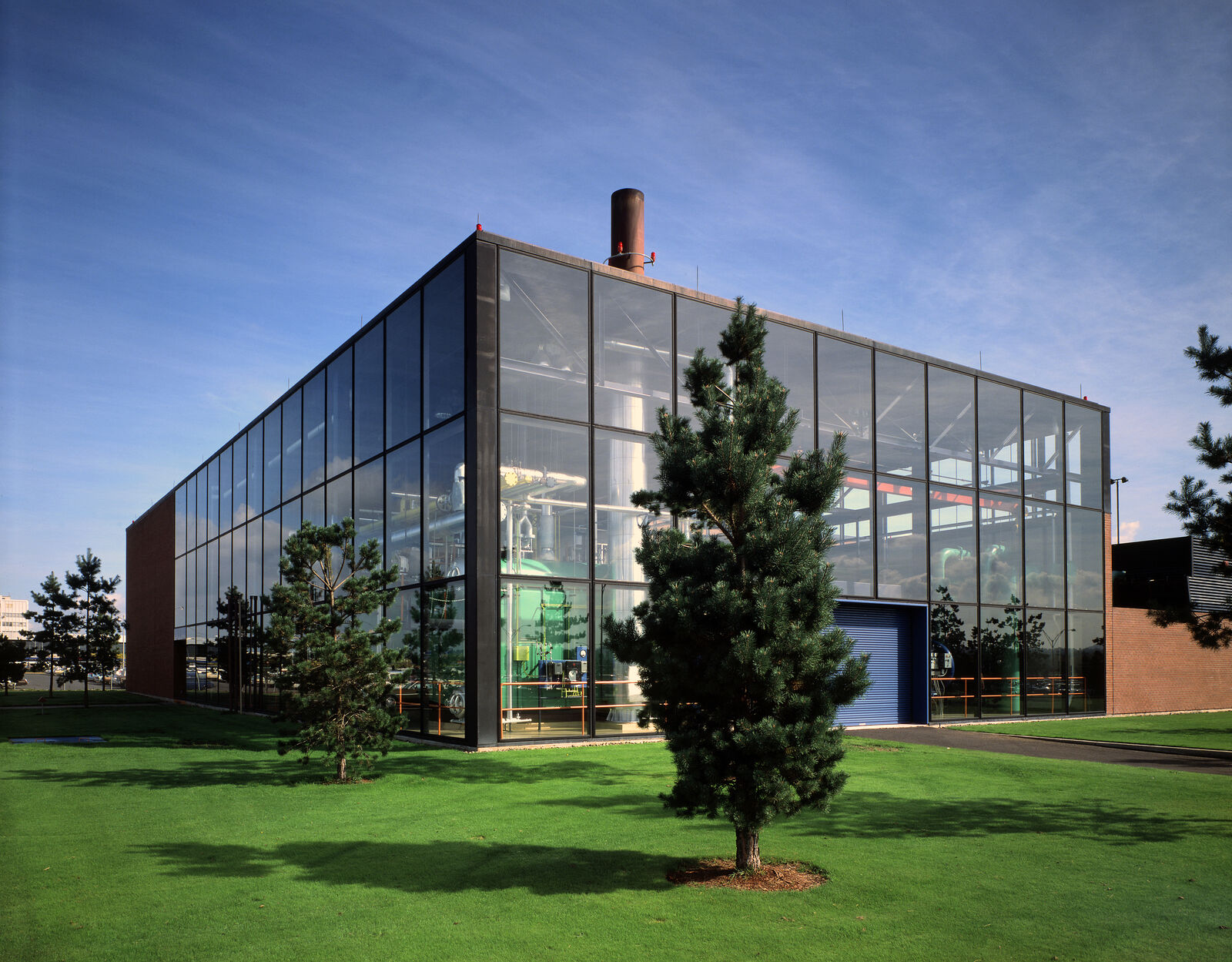
While the project nearly doubles the processing capacity of the terminal, it doesn’t impact the footprint of the existing central utility plant (CUP). The existing CUP is land-locked, hemmed in all sides by FAA buildings and parking garages. It can’t grow. To accommodate increased capacity, the team converted the plant from gas-powered steam to electric heat exchanges tied to new geothermal wells. Thousands of feet of existing steam piping were then repurposed for low temperature water. This allowed the project to avoid the cost and schedule impacts associated with installing a new distribution system and helped isolate the system disruption to just swapping out the primary plant equipment.
Creative sequencing: upside-down documentation
The complexity associated with keeping the airport operational meant that new terminal design required a documentation process that ensured creative sequencing of construction activities and kept critical programs functioning. Over 50 separate document packages were created to allow work to be distributed in a way that allowed new scopes to be built in parallel to keeping existing systems operational. For example, we prioritized the roof design to allow early procurement and fabrication of the roof elements such that it could happen simultaneous to the structural demolition of the existing building. Overlapping these activities saved over a year in the construction schedule.
Reserving capacities for different impacted functions required the coordination of multiple simultaneous chess games. Enabling the construction of new columns required creating relocated baggage make up units, reconfiguring electrical rooms and relocating baggage support offices. Each displaced or impacted program element was accommodated by a separate document effort, each carefully coordinated in sequence such that the terminal could keep processing passengers.
With a conventional approach to documentation, the project would have taken years longer, been more expensive and would have been more disruptive to the traveling public. By breaking down each element of the project into as discrete and surgical scales of work as possible, and then structuring the design team to align with these scales, we were able to keep the work focused on each critical activity in as tightly controlled sequence as possible and minimize impacts.
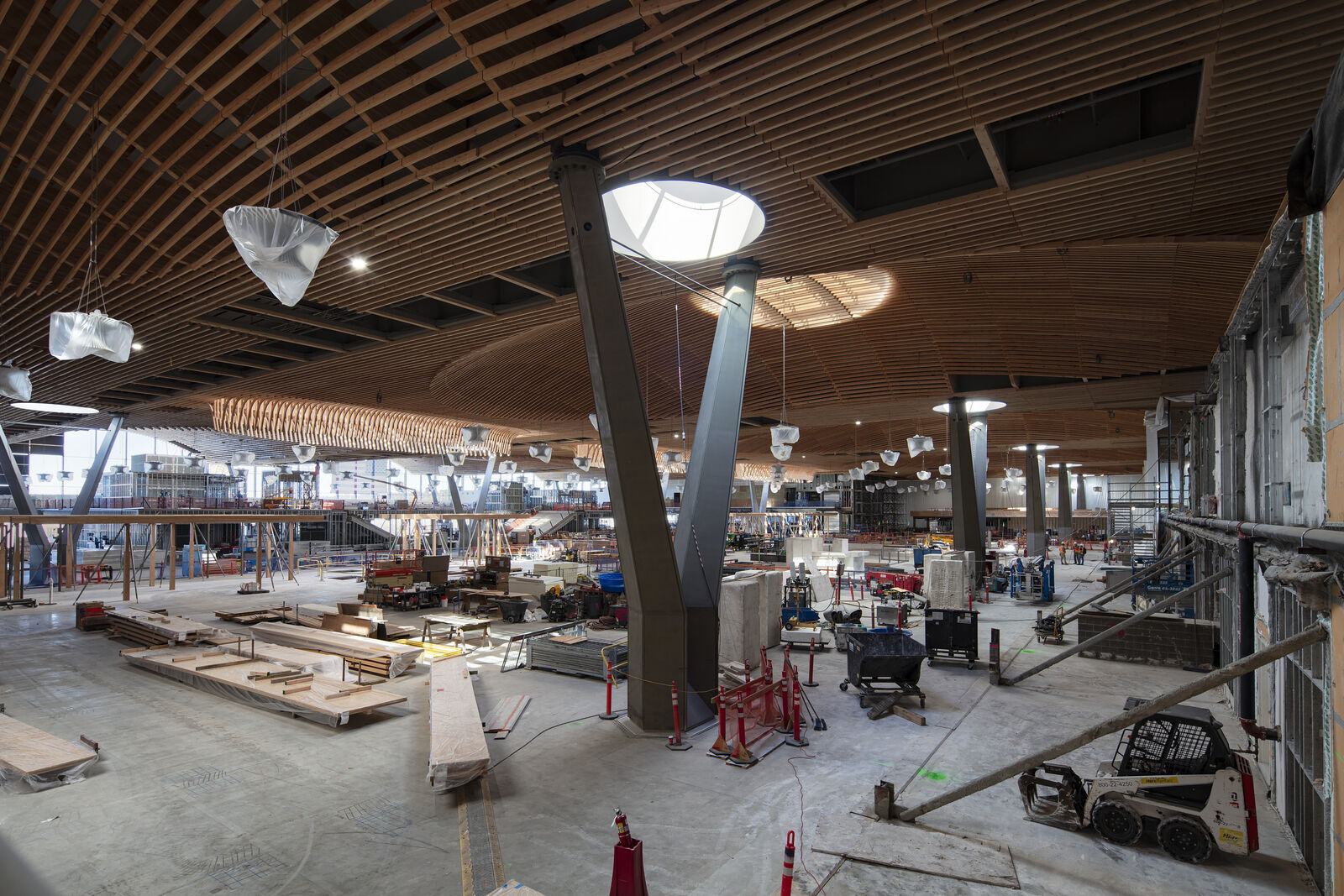
The success of the PDX Main Terminal Expansion demonstrates the power of innovative thinking, collaboration, and meticulous planning in achieving large-scale renovations without disrupting operations. By leveraging offsite prefabrication, integrating new systems with existing infrastructure, and carefully sequencing construction activities, the project team managed to maintain a seamless passenger experience while significantly enhancing the airport’s capacity and functionality. This approach not only preserved the operational DNA of the terminal but also set a new standard for how airports can grow in place.