
Designing High-Performance Sports Facilities That Support Athletes Holistically
Elite professional and collegiate athletes face intense pressure to play—and stay—at the top of their game, and to do so within a bright public spotlight. In many cases, high-profile athletes have been specializing in their sport and feeling this pressure for most of their lives, putting strain on both their bodies and minds. As many as 35% of elite athletes report mental health symptoms each year. The pressure is often even greater on women. The NCAA reports that 38% of female student-athletes have everyday feelings of mental exhaustion, compared with 22% of males.
Teams, leagues, and universities are beginning to pay attention to the role they play and to decipher whether they’re doing all they can to support athletes holistically. They’re recognizing that it is more crucial to consider athletes’ everyday needs because this can have a greater impact on long-term team performance. Services and amenities that align with health, safety, and quality of life support athletes’ wellbeing and elevate the team’s reputation, which greatly affects recruiting and retention.
Through our work on sports venues and training centers, we’ve benchmarked dozens of facilities around the world to understand the ways professional and collegiate athletes achieve top performance. We’ve encountered many organizations who are ready and willing to prioritize human experience and resilience, recognizing that athletes are a team’s biggest and most important investment and that the team can’t win if its players aren’t fit, both physically and mentally.
Here’s what prioritizing athlete wellbeing can look like and some of the strategies that we encourage teams to keep in mind when renovating, expanding, or developing new facilities:
Reinforce the mind-body connection
Spaces that address athletes’ holistic approach to strength, training, and recovery ensure their comprehensive health and well-being. Outfitting training spaces with top-tier fitness equipment with the flexibility to evolve over time, quiet spaces dedicated to mindfulness and rest, and aquatic amenities that include hot and cold plunge pools help reinforce the mind body-connection. Full-service dining facilities, hydration stations, and snack bars with chefs and nutritionists are necessary to power peak athletic performance. Additionally, spaces that accommodate dental and optical services, as well as core medical personnel serve athletes’ need for both easily accessible care and privacy.
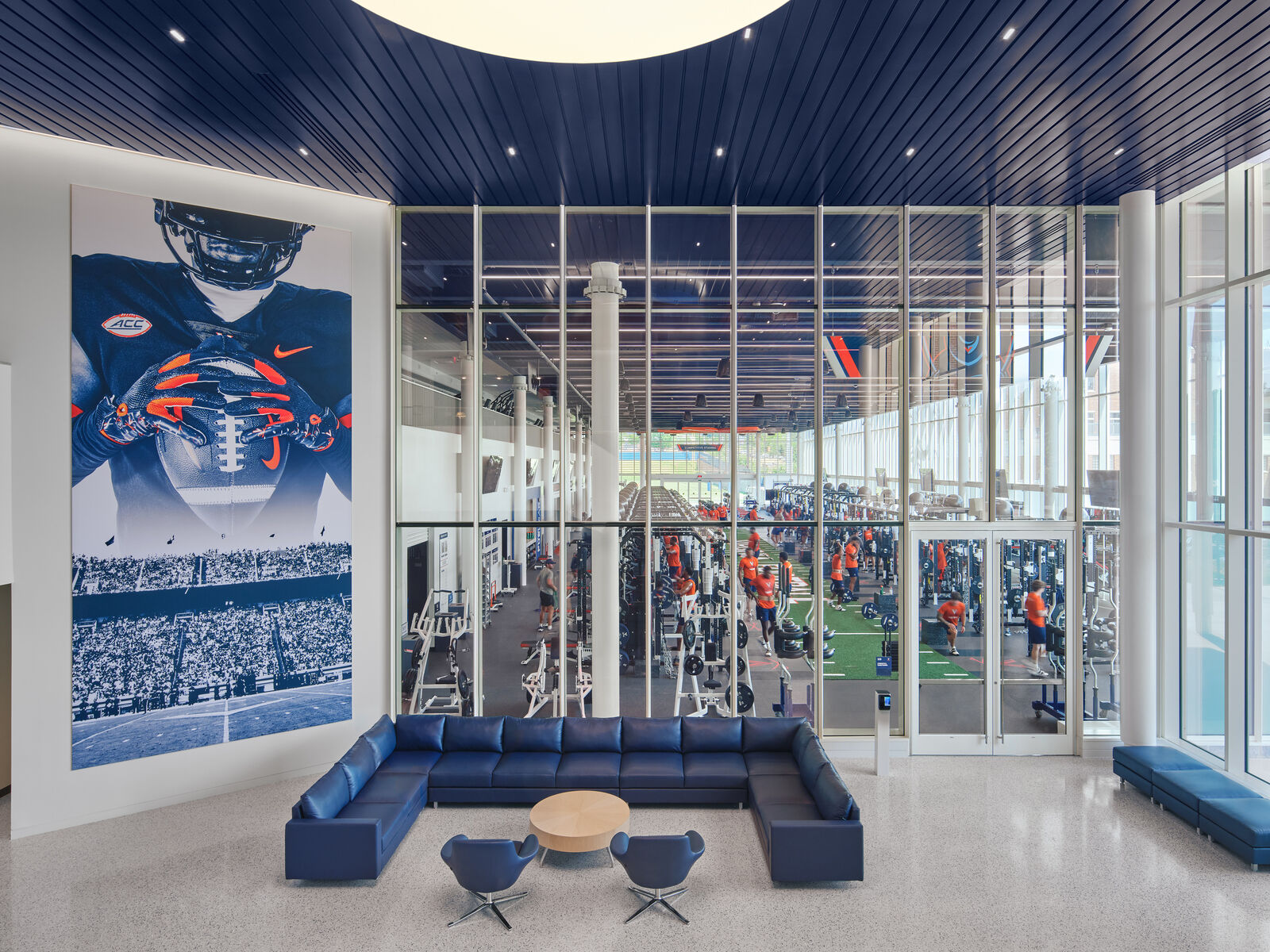
The University of Virginia’s Hardie Football Operations Center elevates the conventional strength and conditioning experience with expansive windows and high-vaulted ceilings that bring in abundant daylight—and are visible from the lobby.
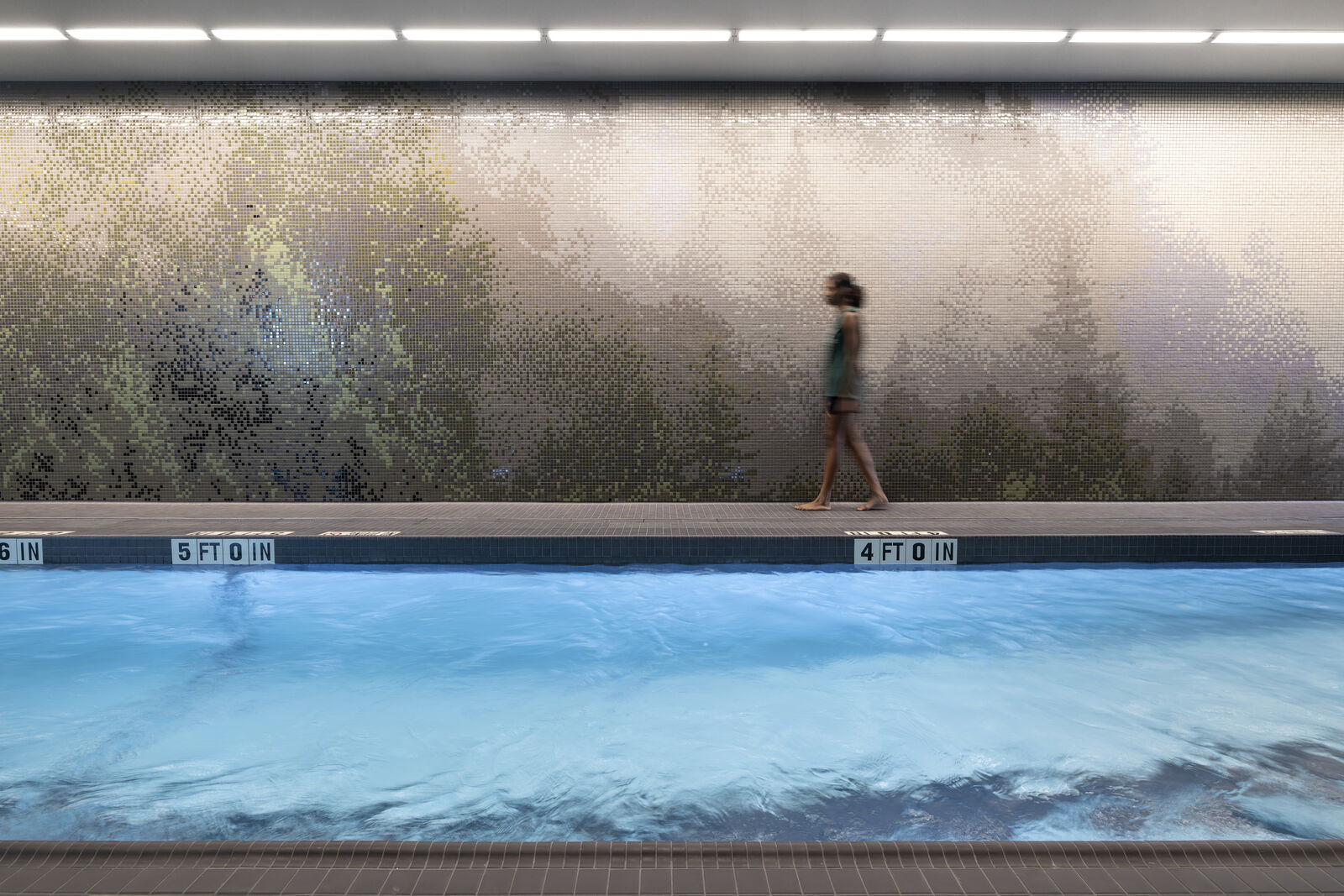
Aquatic spaces within the Seattle Storm’s BECU Storm Center for Basketball Performance feature soothing, spa-like features, including a tile mosaic that depicts a pixelated impression of the Pacific Northwest region’s misty climate.
Reduce stress and boost energy
Access to nature reduces stress and boosts energy—helping athletes recover from their inconsistent training schedules and frequent travel across time zones. Incorporating biophilic design strategies is important. The use of natural materials like wood or stone, interior landscapes, and easy and abundant access to daylight in spaces typically relegated to artificial light—can make all the difference. A strong indoor-outdoor connection can be created by adding exterior patios, terraces, and gardens, all of which can further ease player's stress.
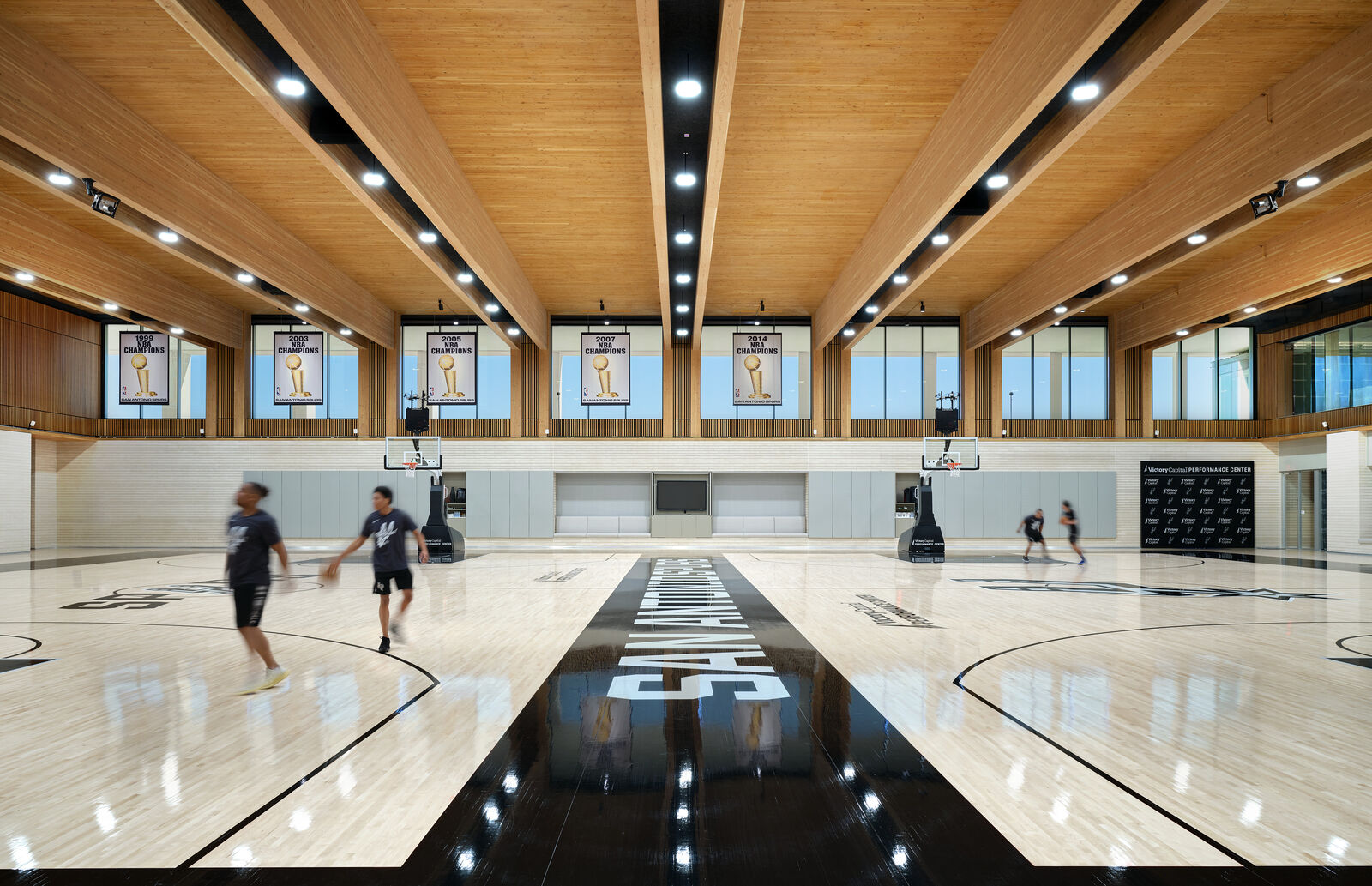
The practice courts within the San Antonio Spurs Victory Capital Performance Center feature 150-foot mass timber beams and columns that provide natural warmth and allow daylight to stream in through large windows.
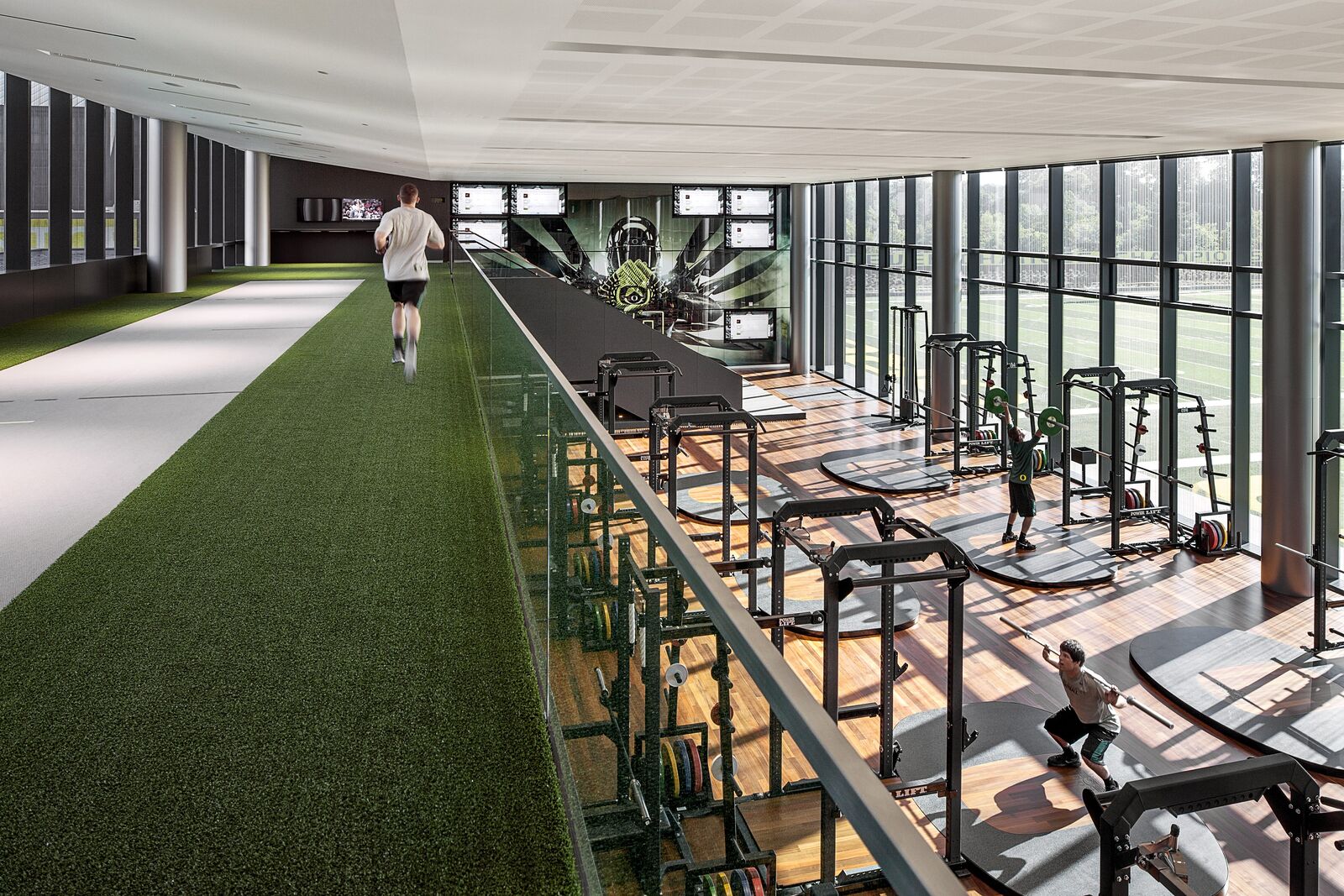
At the University of Oregon’s Hatfield-Downlin Complex, Football Operations Center, an indoor sprint track overlooks a state-of-the-art weight room, which is flanked by a variety of training and medical treatment facilities and private consultation spaces.
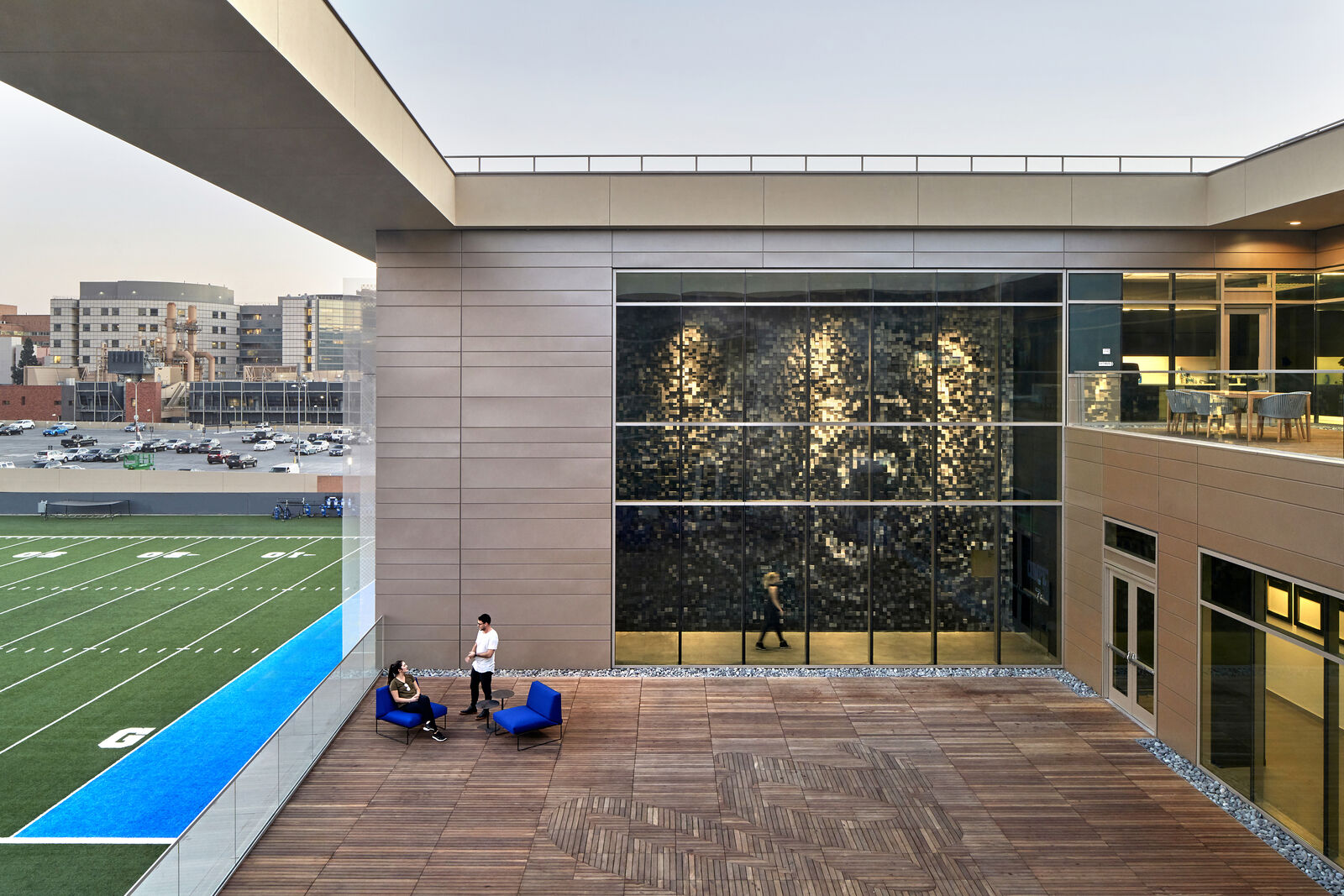
An open terrace with floor-to-ceiling windows creates a strong indoor-outdoor connection at the University of California, Los Angeles, Wasserman Football Center.
Create a home away from home
Residential-style spaces that create a safe space and serve as a home away from home help athletes dealing with the potential stress of frequent travel. Comfortable furnishings in a variety of arrangements where individuals and small groups can gather and unwind with low-contrast material palettes and warm textures add an inviting environment. Circadian lighting systems that mimic biological clocks and support improved sleep and recovery support athletes overcome the fatigue that comes with a life on the road.
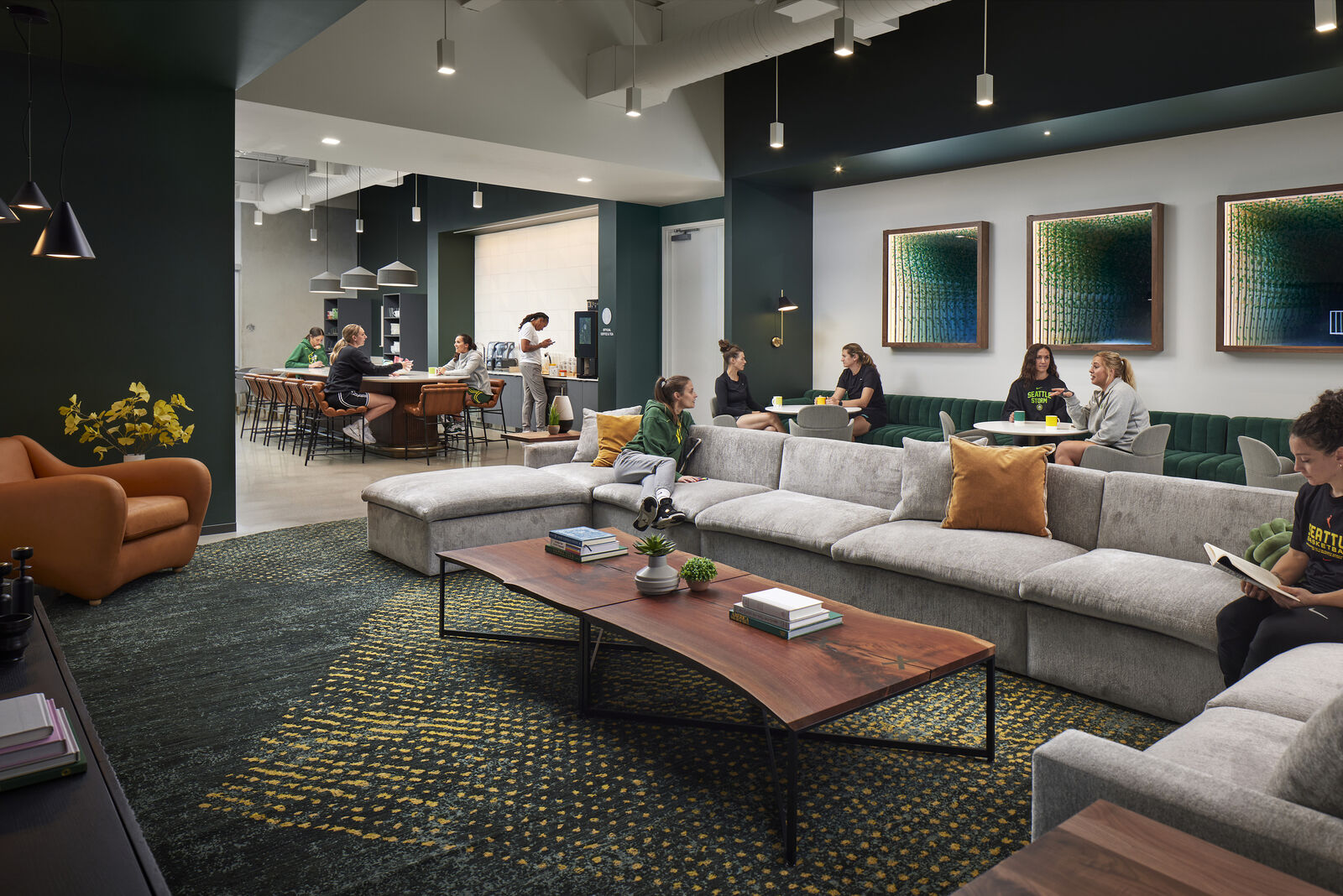
The Seattle Storm’s BECU Center for Basketball Performance features separate public and player entrances and a private parking lot for players that allows the women to park and enter their own lounge without being on display.
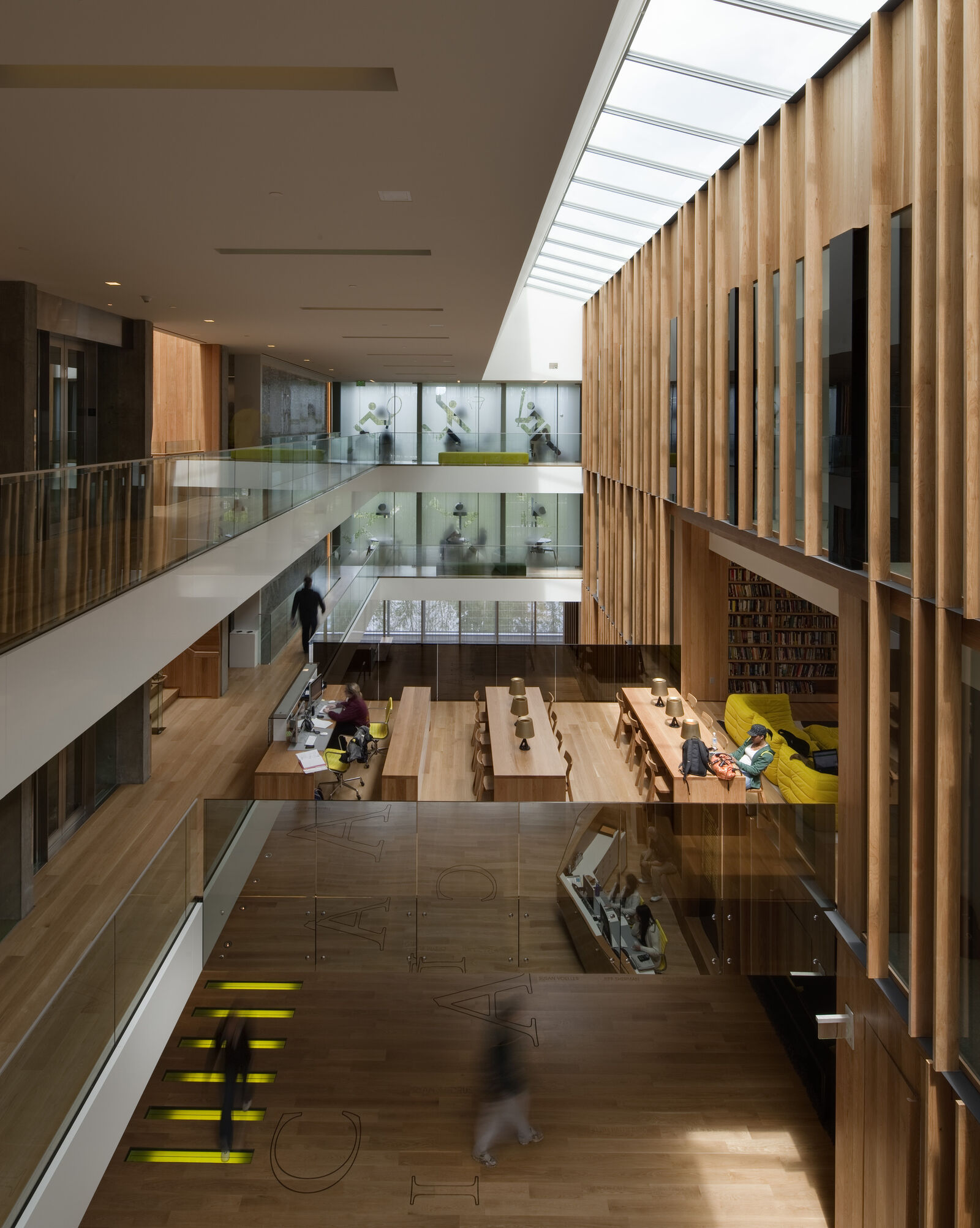
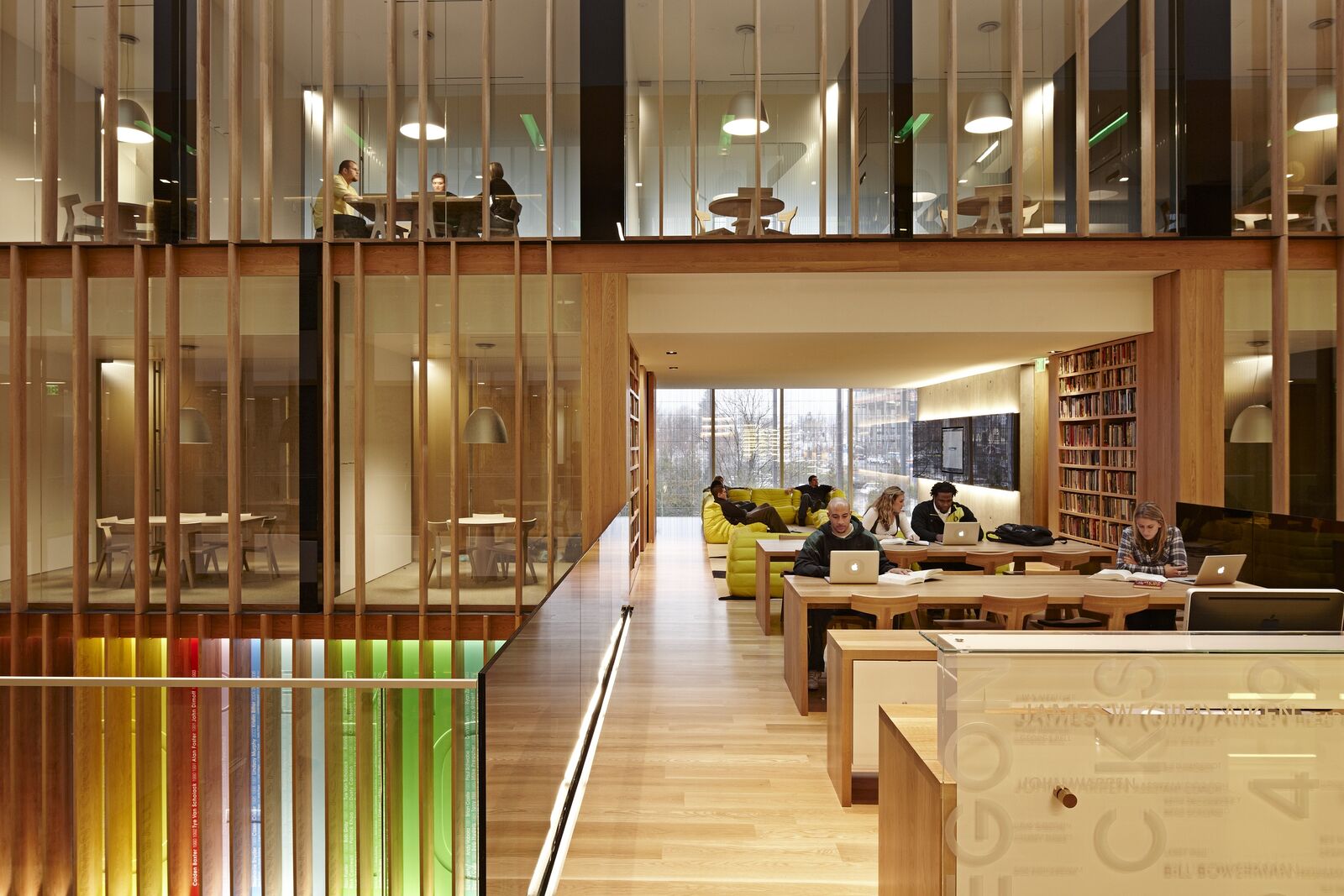
Centrally located on the University of Oregon campus, the Jaqua Academic Center for Student Athletes offers athletes a wide variety of dedicated spaces ranging from study nooks with soft furnishings and small tutoring rooms to specialized classrooms and an event auditorium.
Set athletes up for the future
Spaces that prioritize life beyond the sport and help set athletes up for future success, placed front-and-center rather than presented as secondary afterthoughts. These can include academic centers dedicated to student athletes, dedicated libraries and labs, studying and tutoring spaces, and spaces that support post-sports career training, financial planning, life skills development and more.
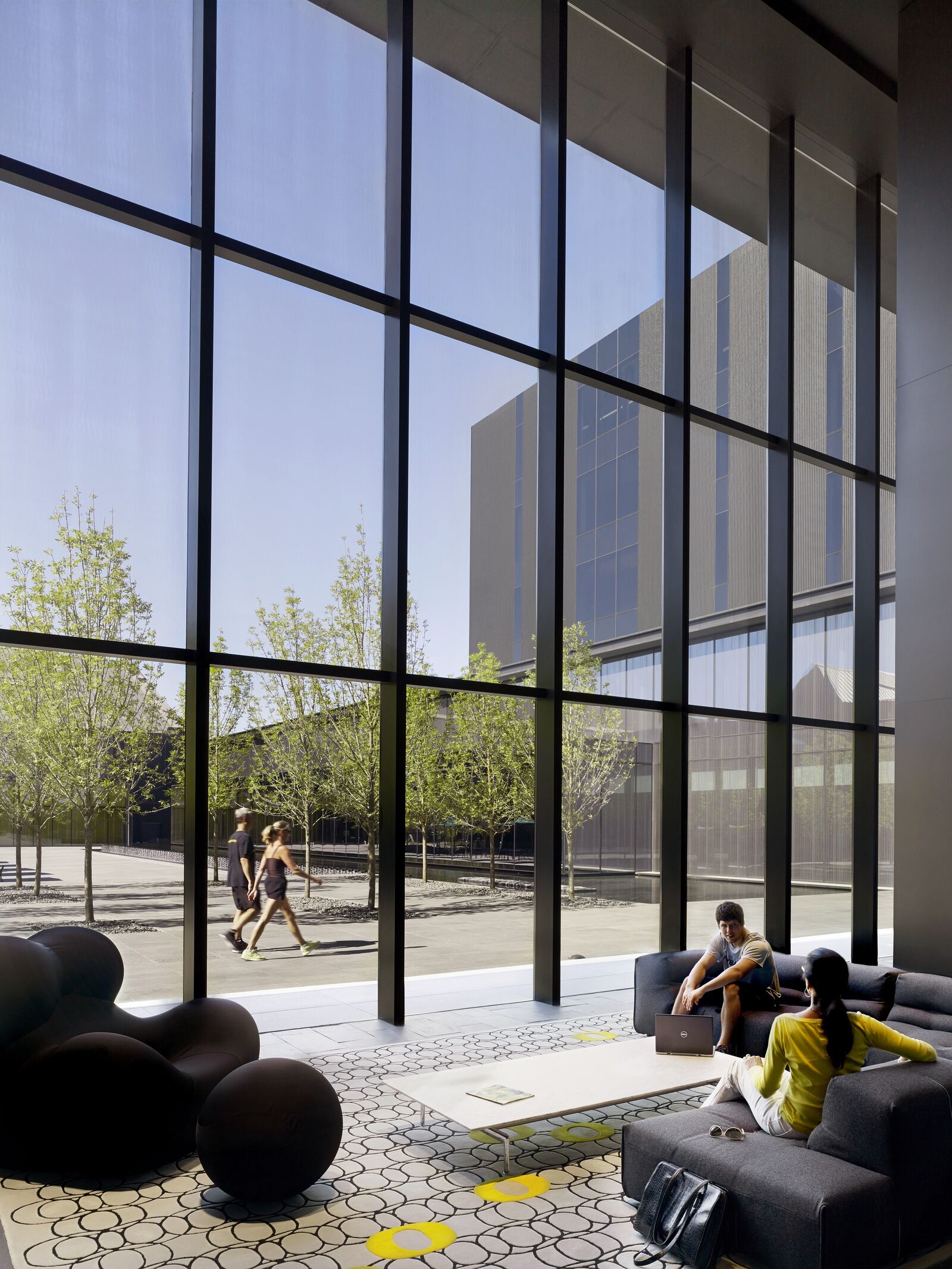
A light-filled lounge at the University of Oregon’s Hatfield-Downlin Complex, Football Operations Center is a comfortable spot for students to both study and network.
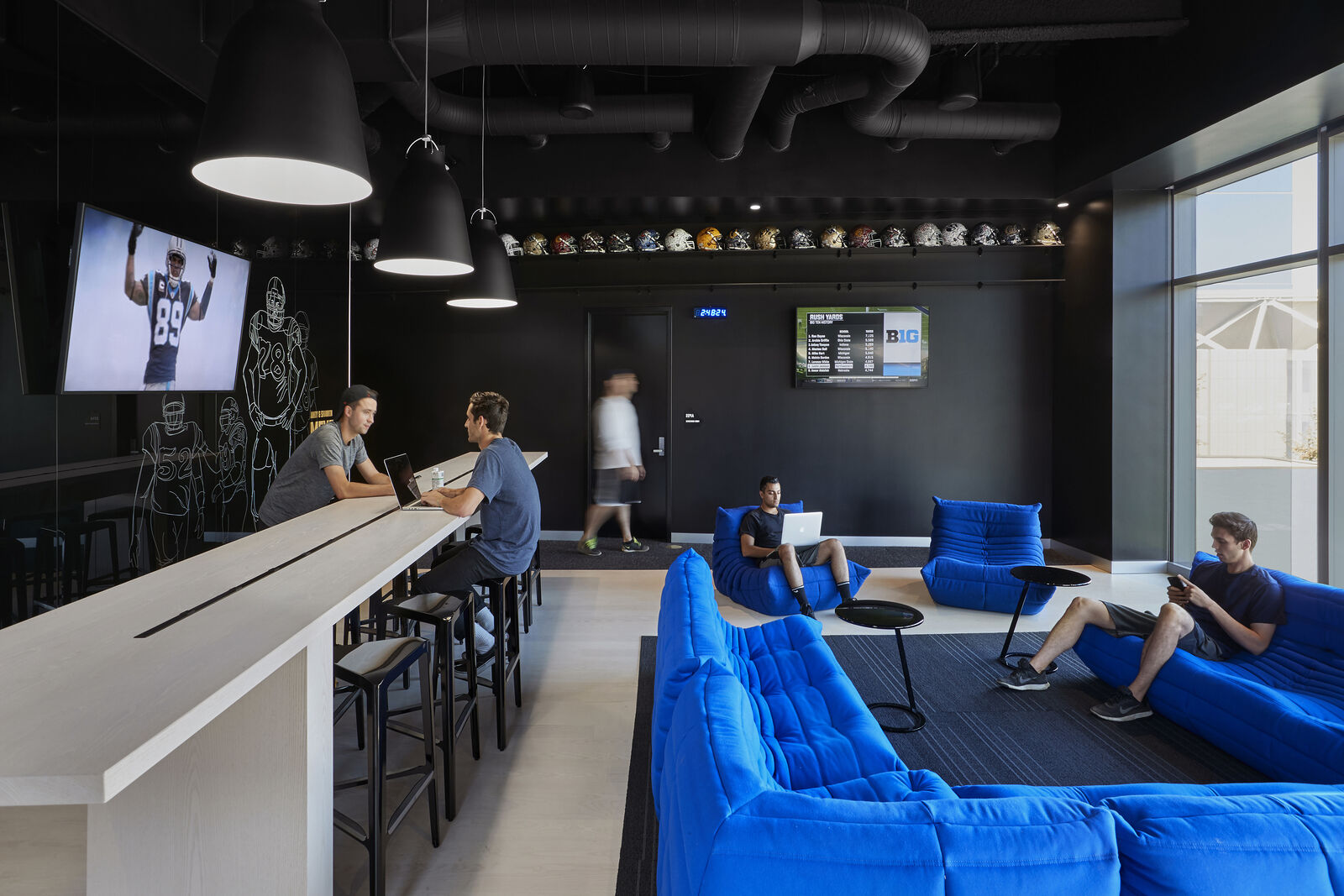
UCLA’s Wasserman Football Center co-locates football staff and student-athletes on the campus for the first time, and features a variety of meeting and gathering spaces, as well as player amenities that encourage off-field bonding and team camaraderie.
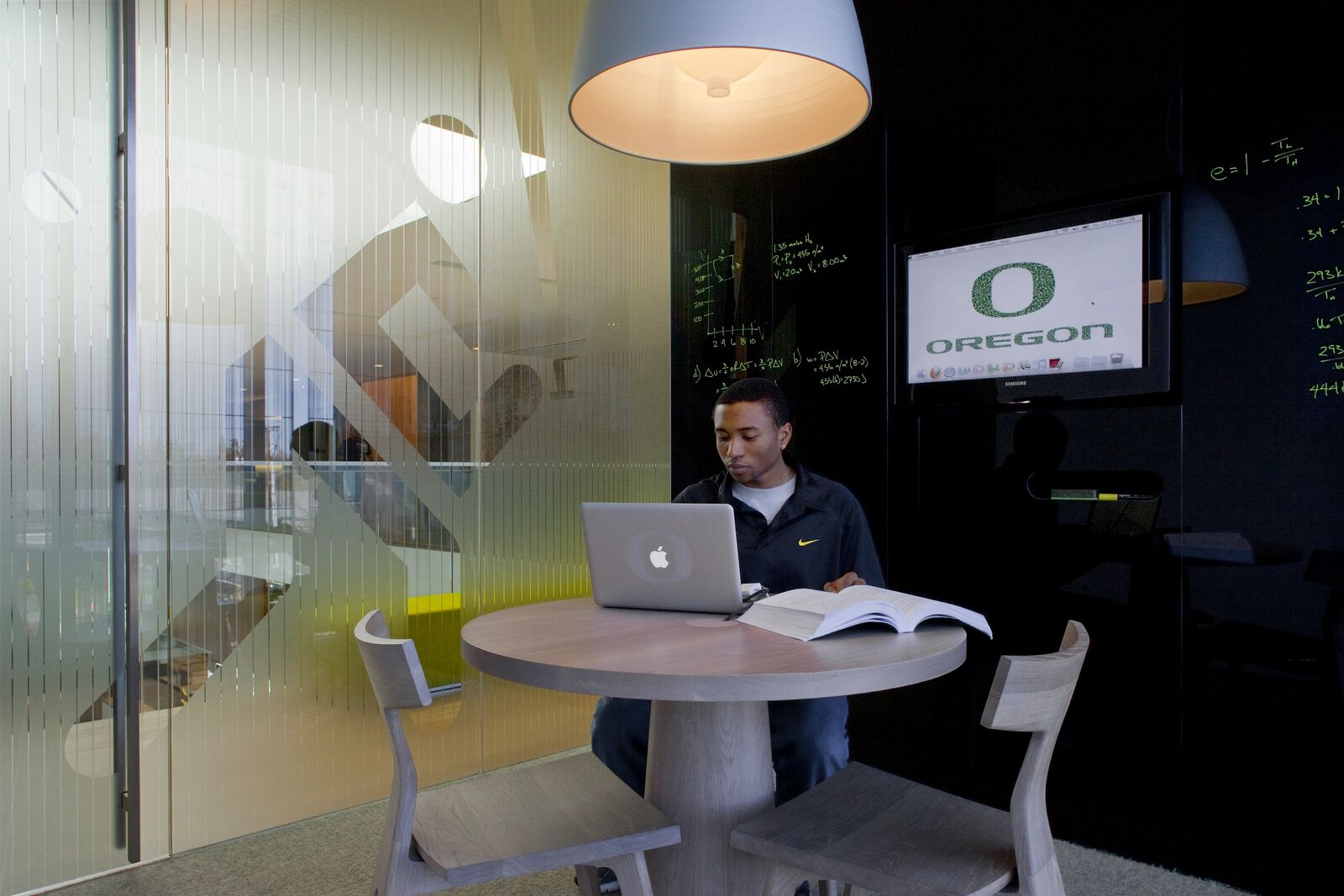
The University of Oregon’s Jaqua Academic Center for Student Athletes provides private, dedicated spaces for studying, tutoring, classes and events, all within a centrally located building that underscores the school’s support for its athletes, and shows appreciation for the athletes’ meaningful contributions to the school.
Tell the team story
Engaging environmental graphics that tell a team’s story and illustrate the athlete’s important role within it can help build camaraderie and boost mental well-being—and team spirit. Murals and artwork that honor past athletes and their legacies alongside installations and immersive environments that celebrate sponsors and donors, whose contributions fund the facilities, as well as the experiences within it.
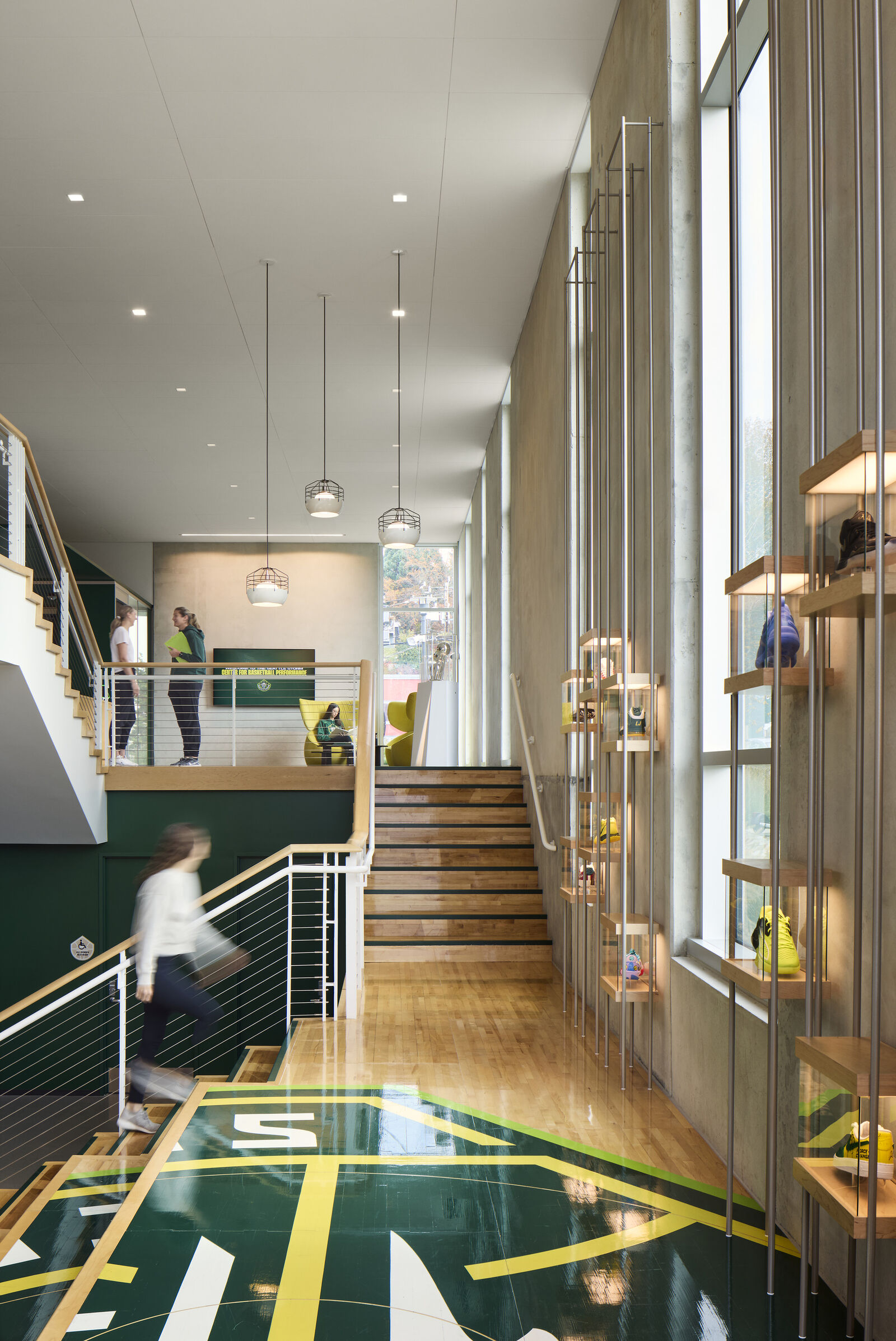
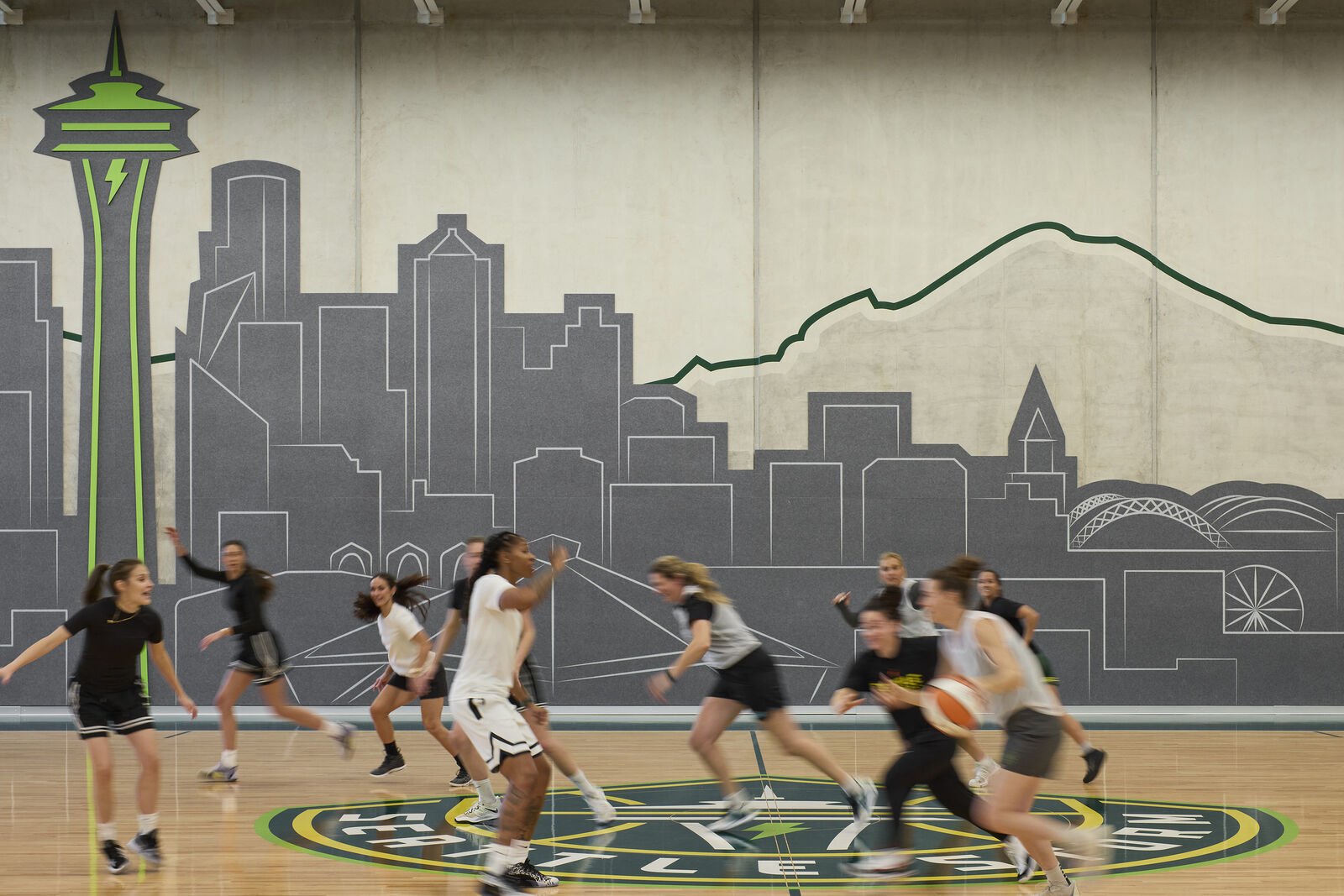
The Seattle Storm’s team branding is established upon entry to the BECU Storm Center for Basketball Performance. In addition to the teams signature branding, four championship trophies displayed in glass casings beautifully highlight the team’s competitive ethos. Descending from the split-level entry, the stadium stairs are designed with reclaimed panels from the team’s championship court flooring.
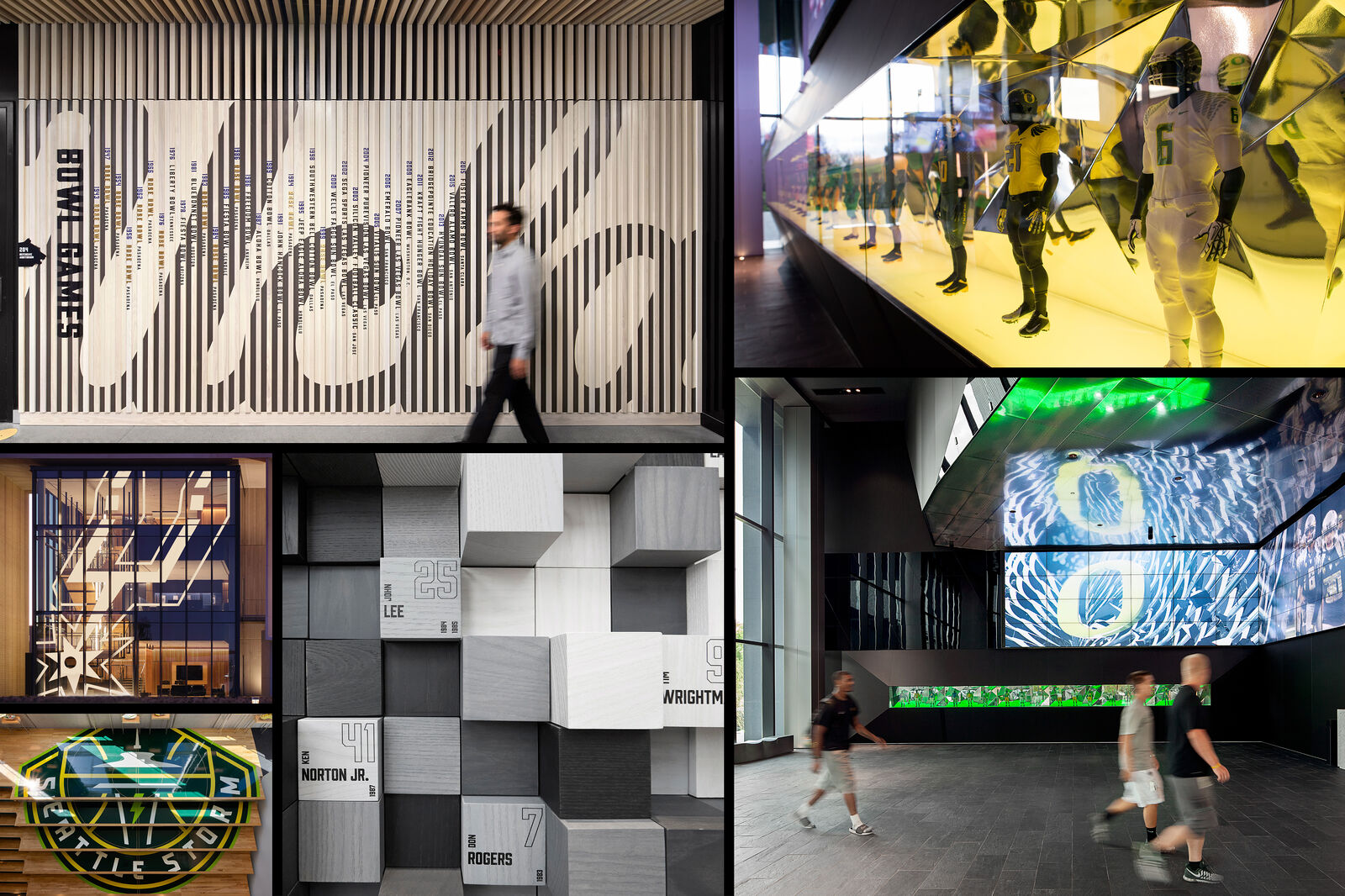
In addition to aesthetic choices that tell the story of a team and help reinforce their brand, EGD and immersive experiences aid in wayfinding, build team spirit, reinforce team identity, and inspire recruitment and retention.
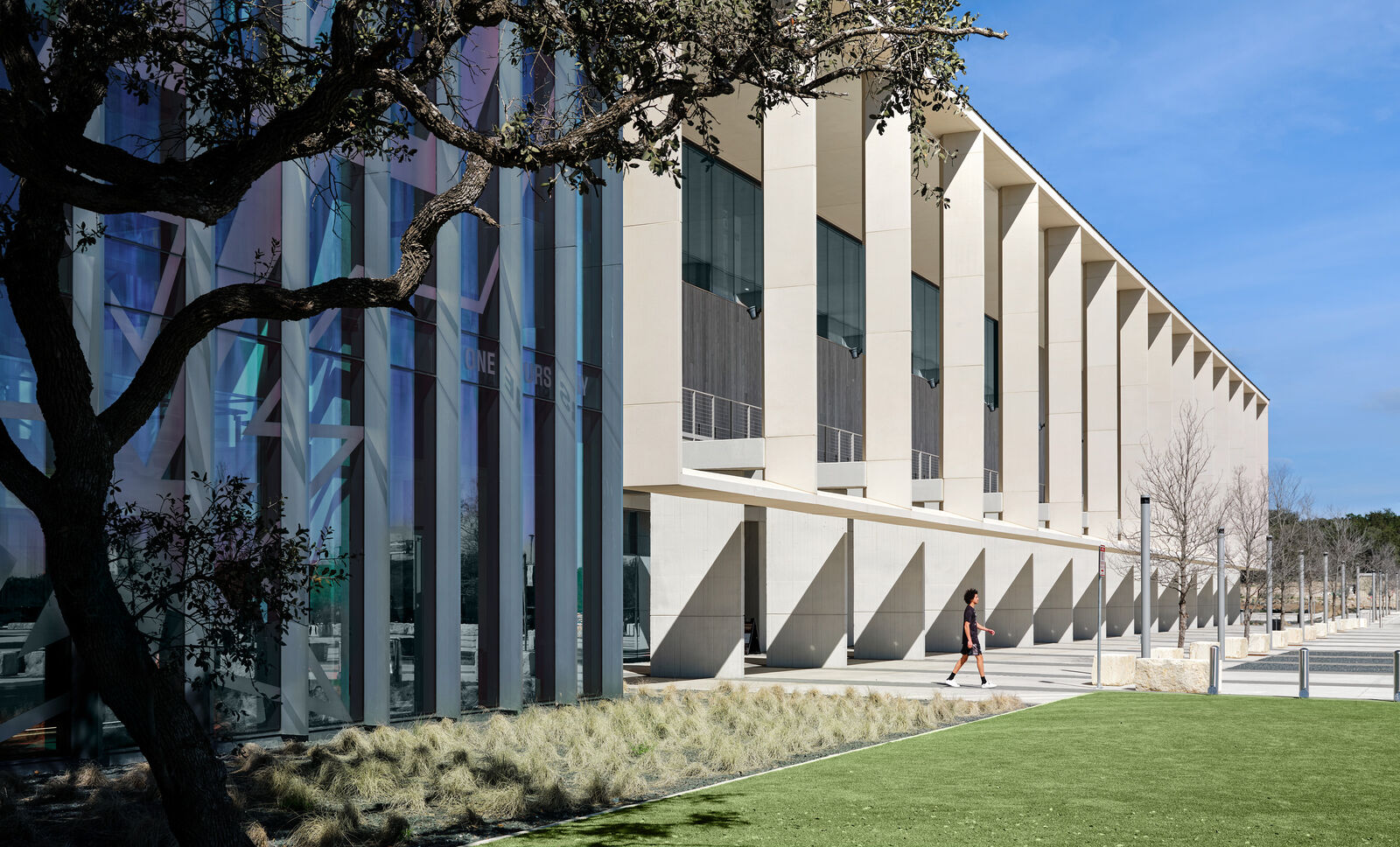
San Antonio Spurs, Victory Capital Performance Center
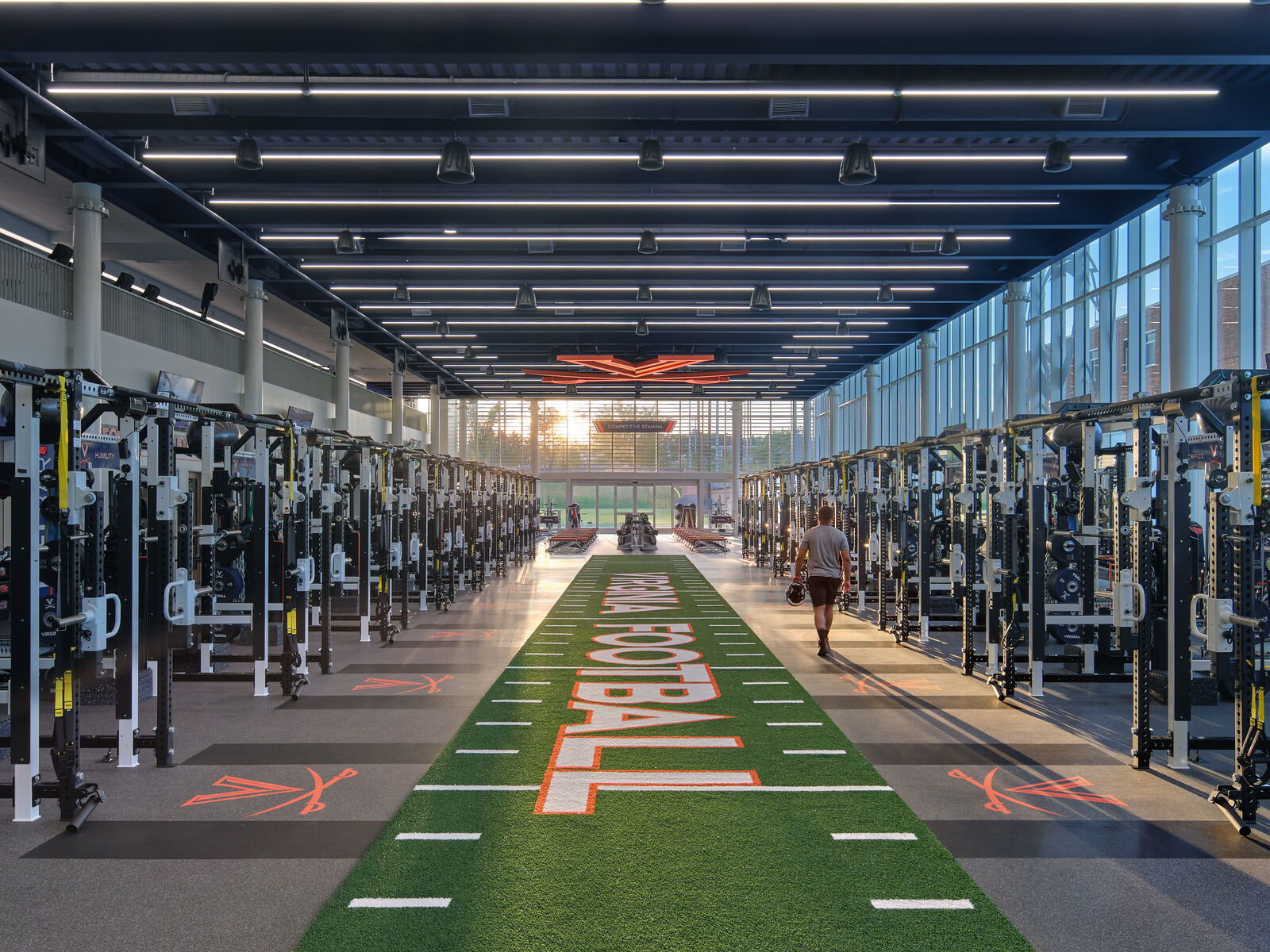
University of Virginia, Hardie Football Operations Center
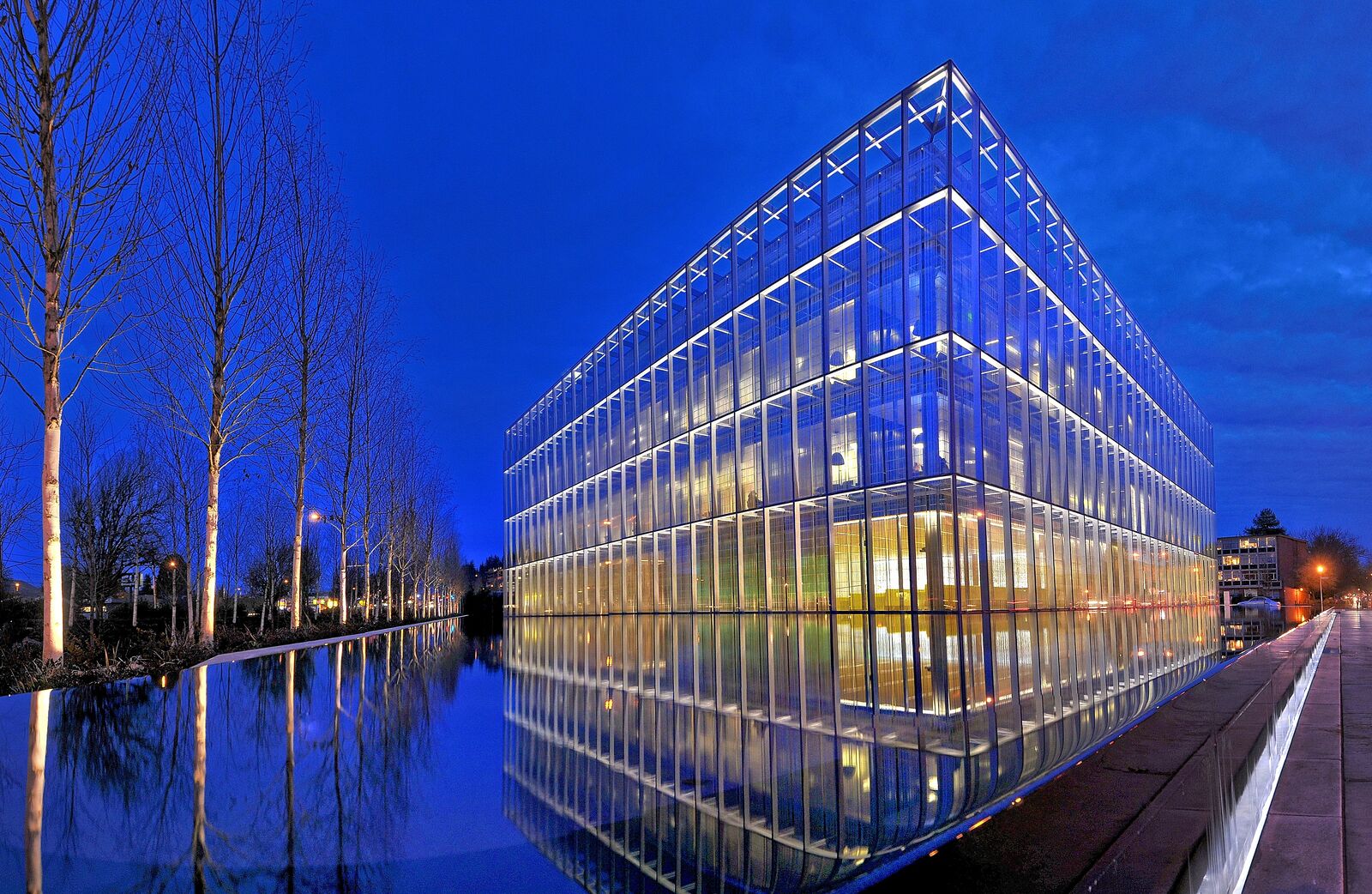
University of Oregon, John E. Jaqua Academic Center for Student Athletes

University of California, Los Angeles, Wasserman Football Center
