Powering AI Responsibly: A New Era for Data Center Design
Artificial intelligence (AI) is fundamentally reshaping the digital landscape and accelerating the need for infrastructure that can support it. At the center of this shift are data centers, the critical hubs that keep digital technologies running, and demand is surging. Global data center capacity is projected to grow by 15% annually, nearly doubling from 2023 to 2027. Yet, the demand for more capacity is outpacing the infrastructure available to support this growth.
As data centers are being fast-tracked across the U.S. to meet this need, communities are also expressing concerns about their impacts, from potential increases in energy costs and environmental degradation to issues like noise, aesthetics, and effects on property values. Without smart planning and thoughtful design, these facilities can be perceived as burdens rather than assets.
Large-scale data centers have traditionally been built in remote or rural locations where land is more cost effective and utilities are easier to access. But moving a portion of the market toward denser urban and suburban areas—through smaller-scale, more efficient, and collocated facilities—can create opportunities for greater flexibility, improved transparency, and stronger community alignment.
Urban-adapted models also help reframe data centers as visible civic infrastructure rather than distant or disruptive. By integrating sustainability and design transparency into these projects, concerns can be addressed that arise even in rural communities—creating facilities that are quieter, more efficient, more beautiful, and more beneficial to the surrounding area.
ZGF’s cross-sector portfolio offers compelling examples of how this shift might take shape.
Harvesting Heat to Reduce Costs and Emissions
Colocating a data center with academic, healthcare, commercial office, multifamily residential, or other high-occupancy building types with year-round heating demands creates a valuable opportunity to reduce energy consumption and costs through heat-sharing.
Currently under construction in Corvallis, Oregon, The Jen-Hsun Huang and Lori Mills Huang Collaborative Innovation Complex at Oregon State University will feature one of the nation’s most advanced supercomputers, yet is designed to achieve net zero operations by 2030. The supercomputer’s heat output will be harvested to warm the entire 143,000-square-foot complex as well as adjacent buildings in the future, ultimately providing significant cost savings for the university over time.
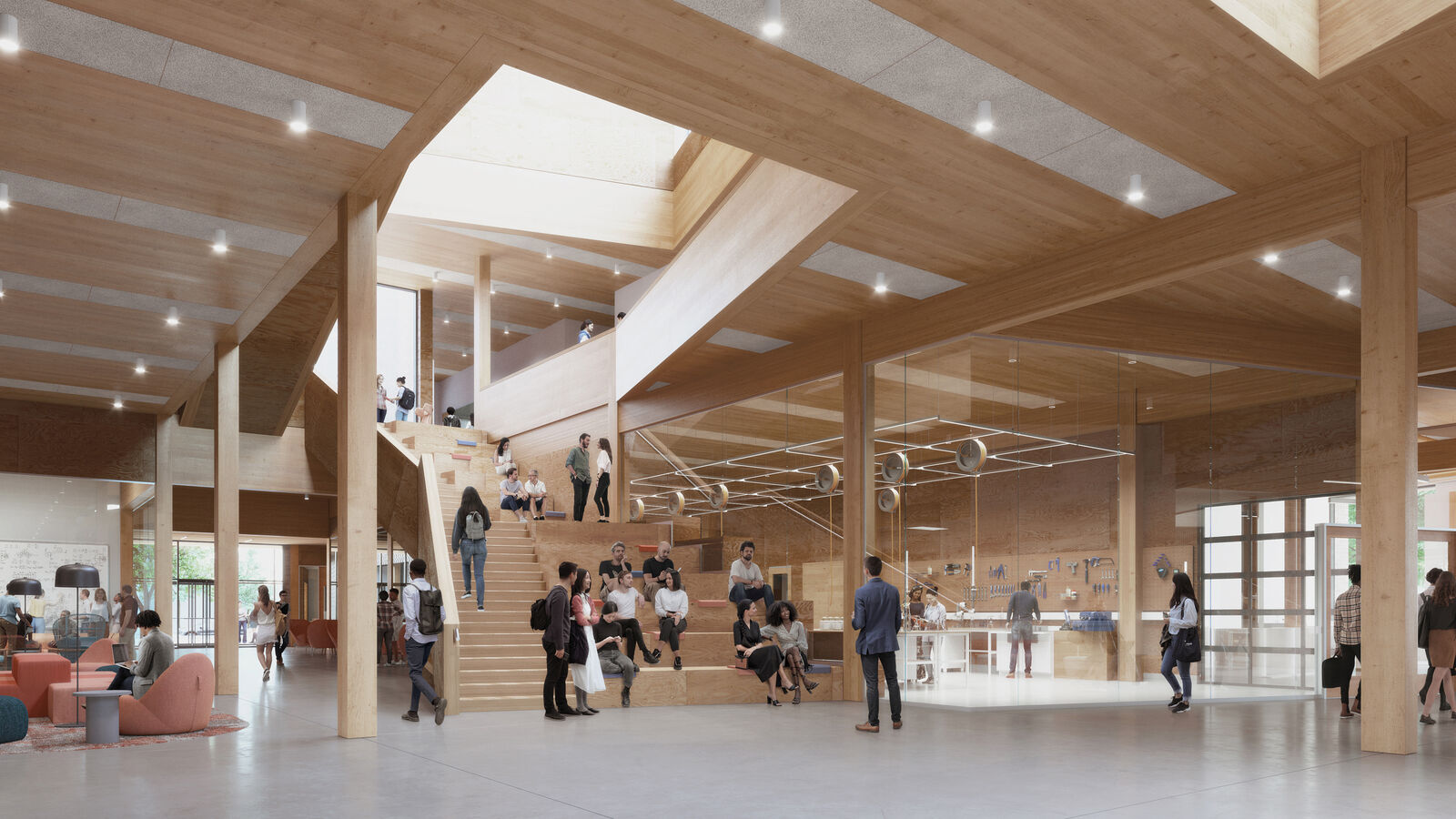
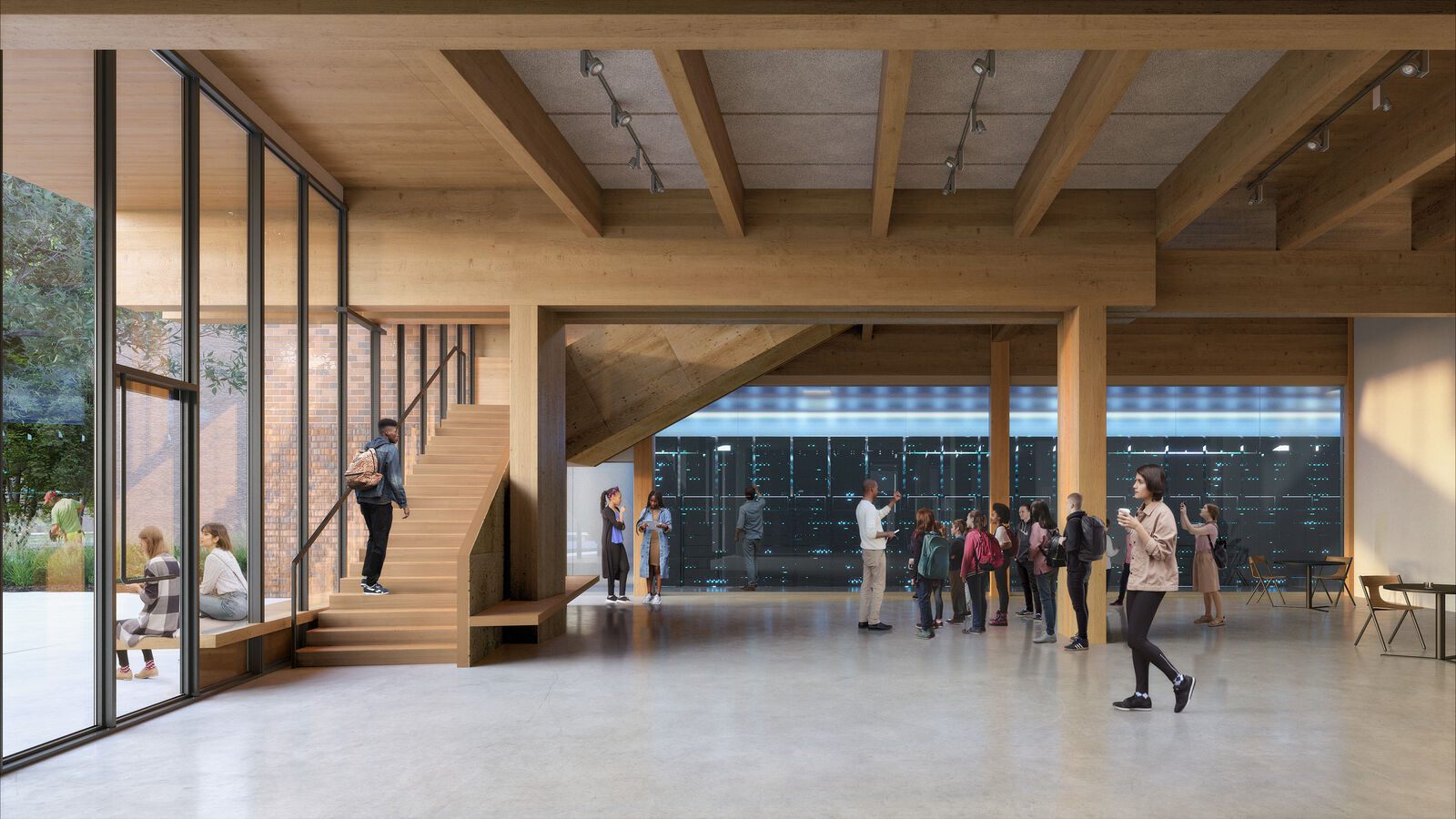
The Jen-Hsun Huang and Lori Mills Huang Collaborative Innovation Complex at Oregon State University will feature one of the nation's most advanced supercomputers. Fully capturing the rejected heat from the supercomputer will improve the overall energy performance of the district plant.
Integrating Onsite Data and Aligning Space Uses to Balance Utility Loads
Bringing data centers closer to the urban centers where their energy and data services are in highest demand can help not only to optimize real estate and energy efficiency, but can also reduce latency.
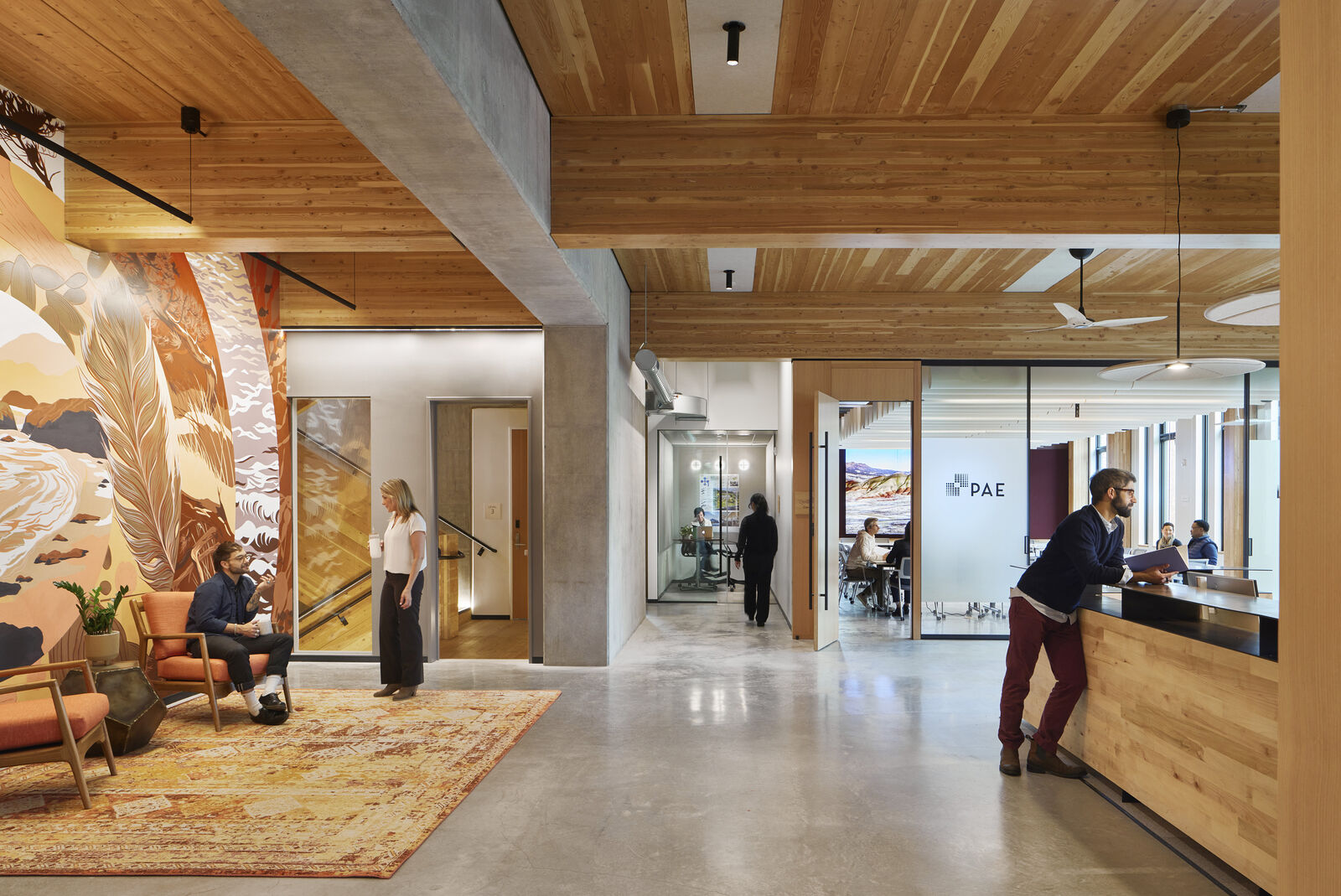
Headquarters to PAE, whose work prioritizes regenerative engineering, the mixed-use, multi-tenant PAE Living Building in Portland, Oregon, operates as net zero energy, water, and carbon. The all-electric building includes a small data center to support tenants’ technologies. To offset the heat being generated, PAE placed the building’s domestic hot water heat pump—which emits cool air—directly across from the data center, balancing the spaces’ waste outputs and minimizing their energy use with a simple colocation strategy.
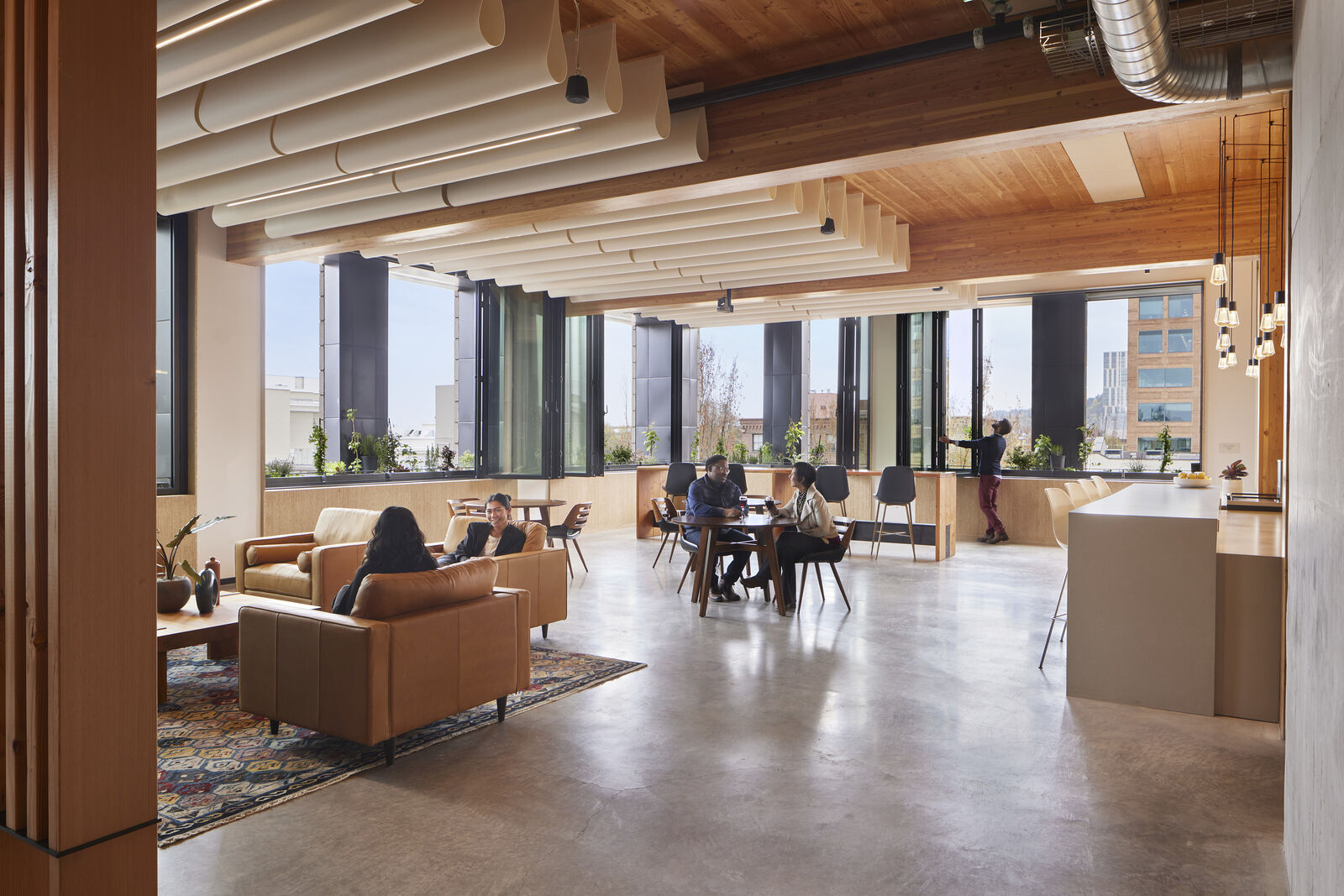
The all-electric PAE Living Building includes a small data center to support tenants’ technologies.
Leveraging Mass Timber for Speed, Sustainability, and Strength
Mass timber lends itself to a “kit of parts” approach, making it ideal for faster assembly compared to concrete or steel. Quicker construction schedules help reduce costs, especially in dense urban environments where logistics are more complex. The community benefits too, from timber manufacturing’s significantly lower carbon emissions versus traditional materials like concrete and steel, saving over 50% of the embodied carbon footprint of a project when factoring in the carbon stored in the wood itself.
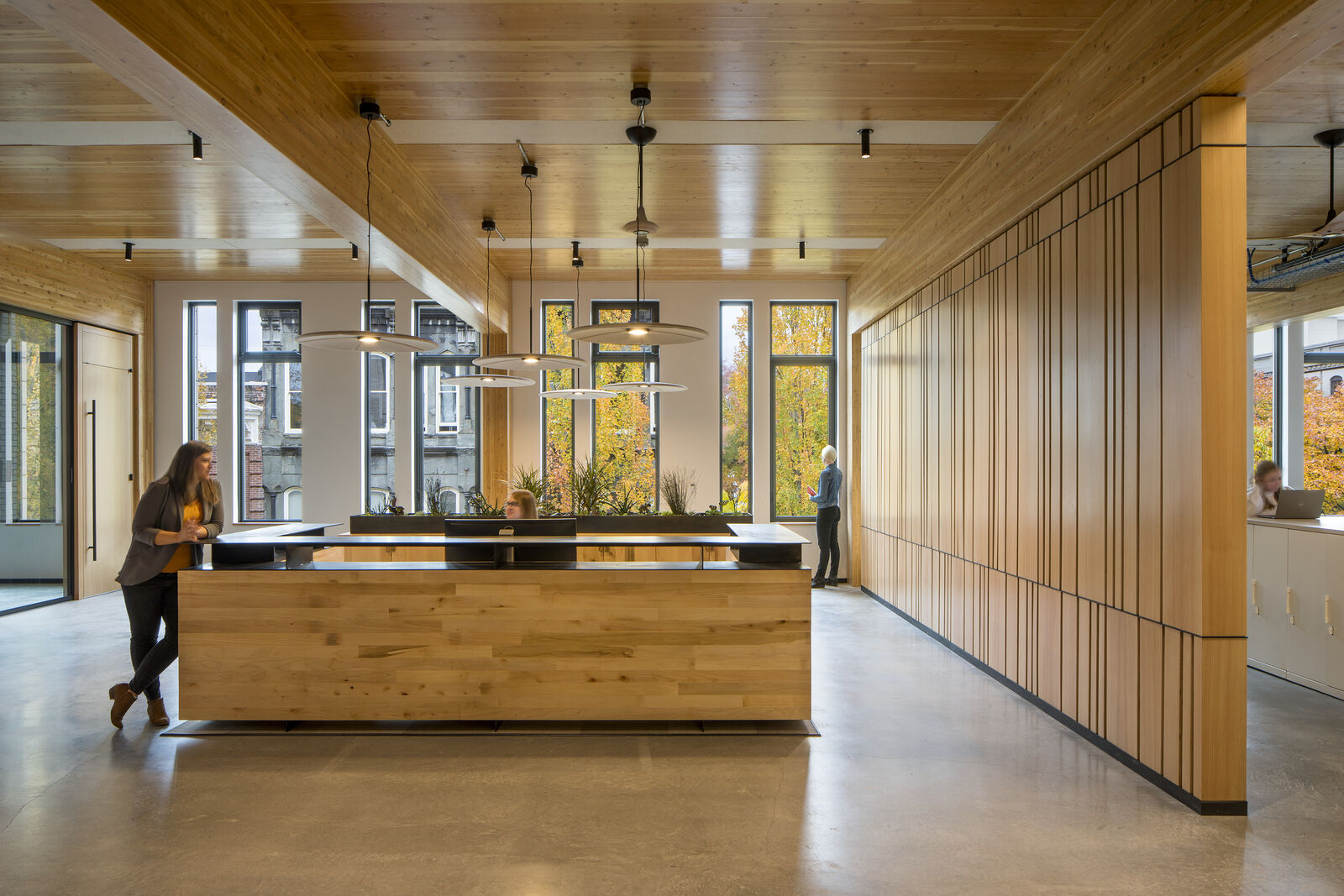
The PAE Living Building illustrates how mass timber can streamline delivery and support sustainability goals. The five-story building was constructed in just over a year—a pace made possible in large part by its prefabricated timber frame. As a Living Building Challenge certified project, it proves that high-performance buildings can be built faster, cleaner, and more beautifully, even in tight urban conditions.
Bringing Sustainable Infrastructure Front-and-Center
Data centers are often hidden—by design and by default. But as their role in the digital economy grows, so should their visibility as responsible, community-integrated infrastructure. Thoughtful, regenerative design can help shift data centers from being perceived as isolated energy consumers to becoming integrated contributors to community and sustainability goals.
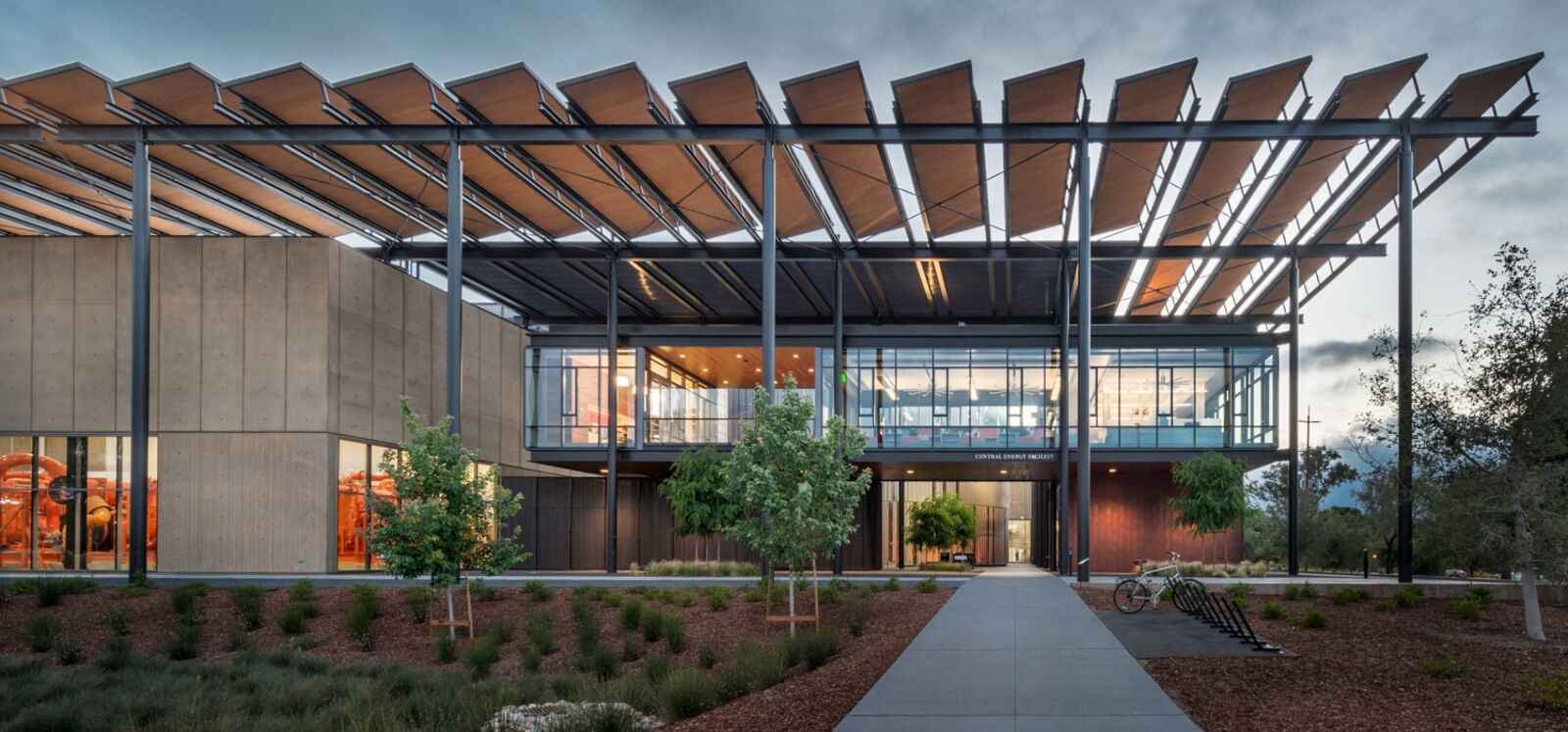
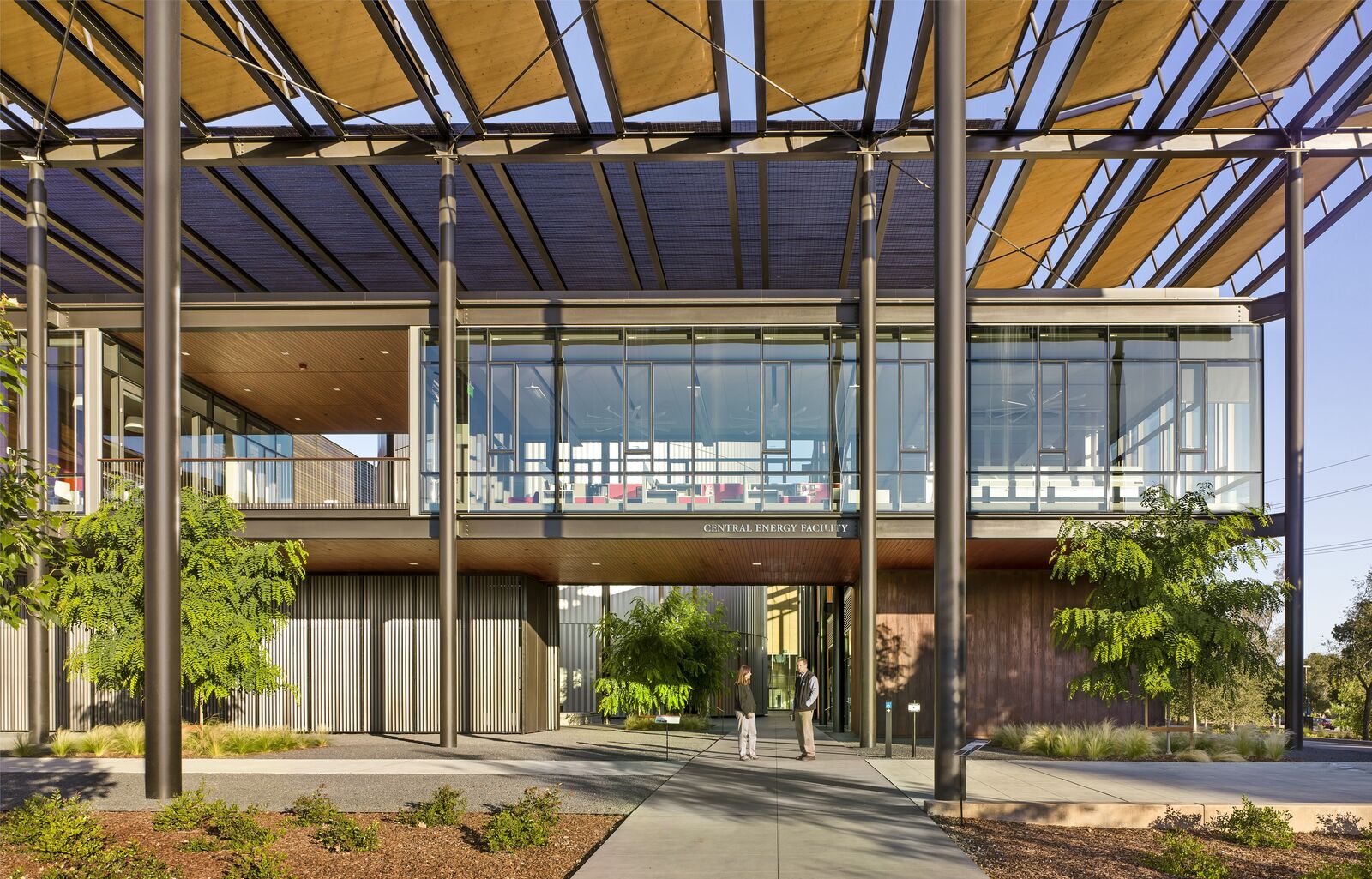
Stanford University’s Central Energy Facility, while not a data center, offers a compelling parallel. Replacing a 100% fossil-fuel-based cogeneration plant, the facility now runs on grid-sourced electricity and features a first-of-its-kind heat recovery system. The result: a 68% reduction in greenhouse gas emissions, a 65% drop in fossil fuel use, and an 18% cut in water consumption campus-wide. Just as important, the facility was designed to be seen. Its design emphasizes lightness, transparency, and sustainability—communicating its purpose to the broader community.
This visibility matters. While data centers face unique operational challenges, transparency can help build public trust and demonstrate sustainability in action. Whether through visible clean energy systems, shared resources, or low-carbon materials, putting innovation on display marks a step toward more responsible digital infrastructure.
As AI continues to reshape daily life, data center design must undergo a similarly bold transformation to keep pace with accelerating demands and evolving technology. This shift calls for thoughtful, deliberate strategies—not just to meet performance expectations, but to build infrastructure that endures. When designed to give back—to communities, the environment, and the economy—data centers can become lasting assets, not just functional necessities. By prioritizing visibility, sustainability, and integration, they can move from being hidden consumers of resources to visible contributors to a more connected, resilient, and equitable urban future.
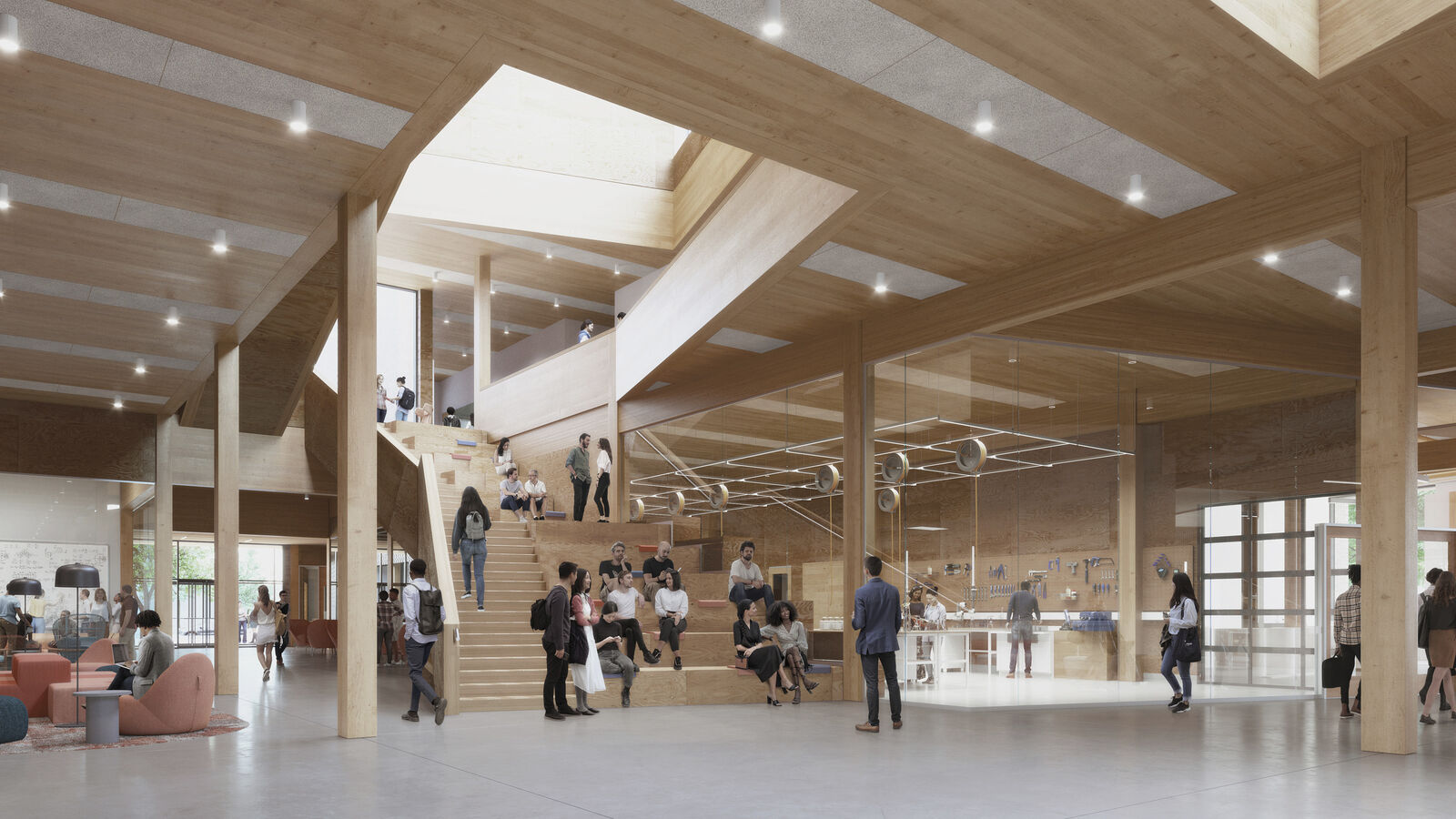
Oregon State University, Jen-Hsun Huang and Lori Mills Huang Collaborative Innovation Complex