A First-of-Its-Kind Mass Timber Lab
Oregon State University, Jen-Hsun Huang and Lori Mills Huang Collaborative Innovation Complex
Higher Education, Laboratories and Research
The Jen-Hsun Huang and Lori Mills Huang Collaborative Innovation Complex at Oregon State University (OSU) is designed as a catalyst for the university’s science programs that will foster the collaboration among faculty, students, and the private sector. The 143,000 SF facility will feature one of the nation’s most advanced supercomputers and it will be the first all-mass-timber laboratory in the US that meets rigorous vibration criteria (2000 MIPS) for experimental research labs. The building has the potential to be net zero operational carbon by 2030. As part of the 2025 Path to Carbon Neutrality, the complex supports the university’s desire to meet bigger campus sustainability goals in a way that integrates science, performance, and high design aspirations.
Location
Corvallis, Oregon
Square Feet
143,000
Completion date
2026
Project Component
Architecture Services
Interior Design & Space Planning
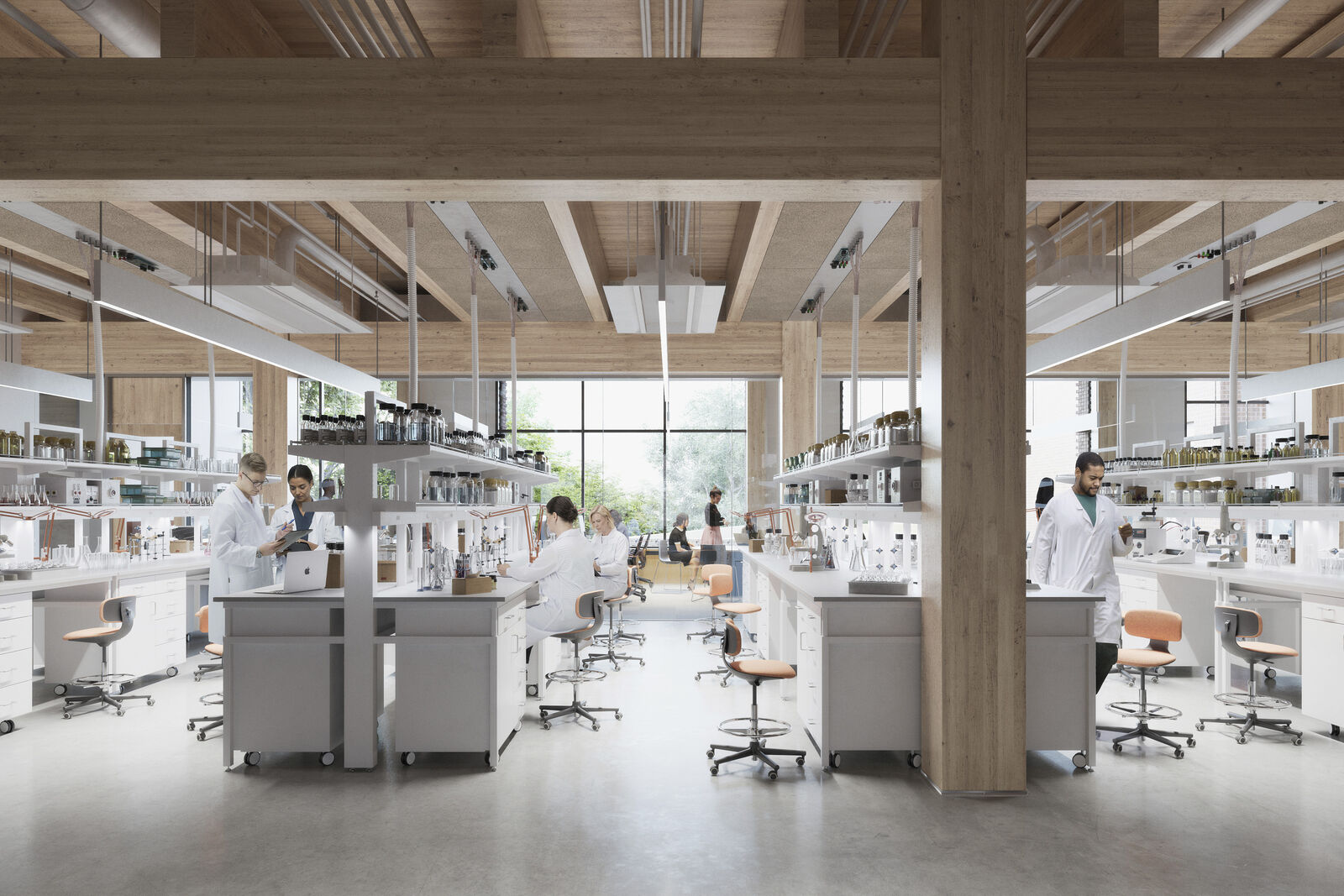
The complex will be the first all-mass-timber laboratory in the US that meets rigorous vibration criteria (2000 MIPS) for experimental research labs.
A $50 million gift to the OSU Foundation from NVIDIA founder and CEO Jen-Hsun Huang and his spouse, Lori—both College of Engineering graduates—emphasizes the importance of the sciences and STEM research and increases OSU’s support for Oregon’s semiconductor and technology industry. Regionally sourced mass timber (including some from OSU managed forests) is a sustainable choice leveraging OSU’s College of Forestry and the local timber industry’s expertise in wood and forestry practices. A collaboration that resulted in the project attaining certification for use of MPP for structural members, an innovation supporting the local economy.
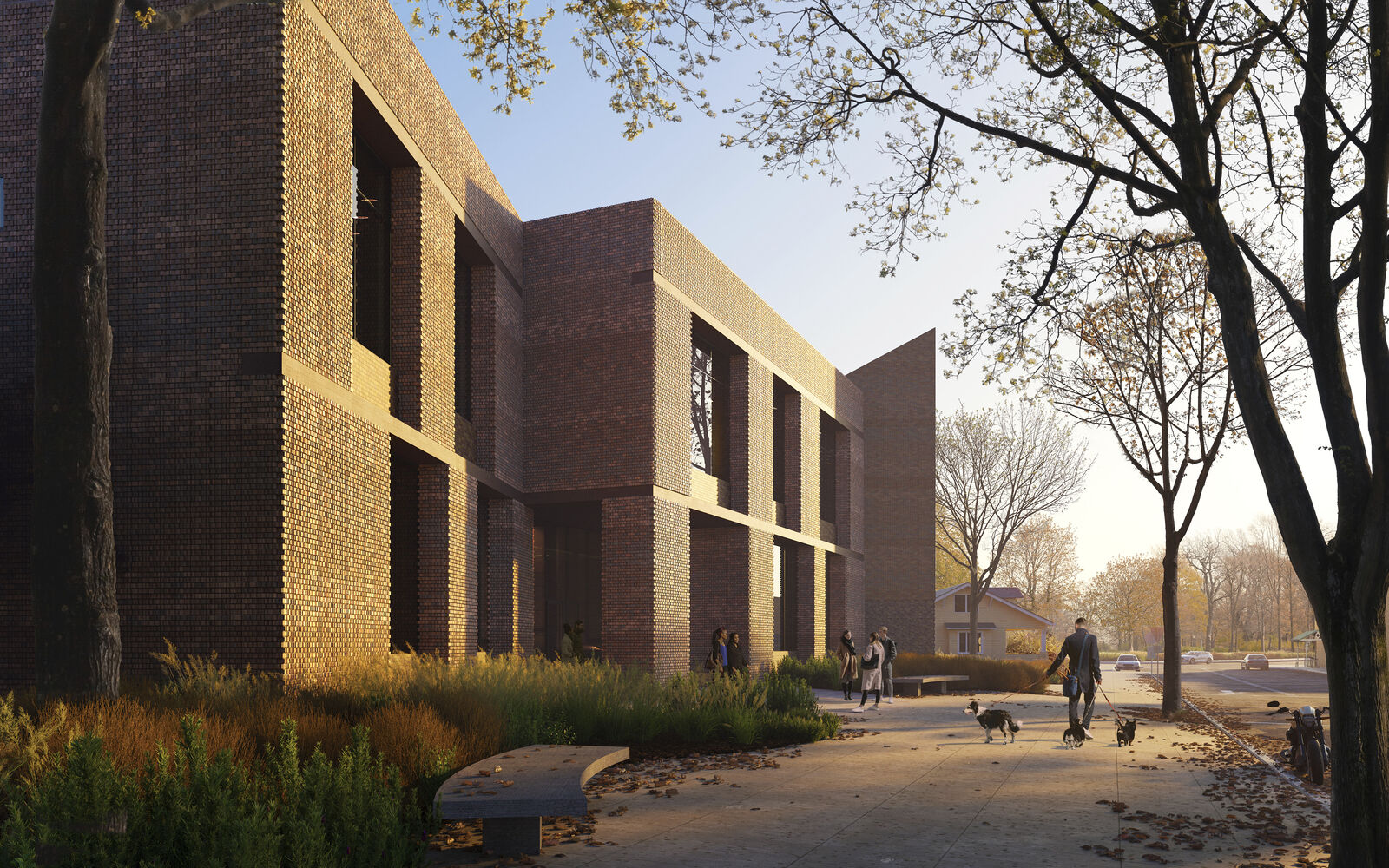
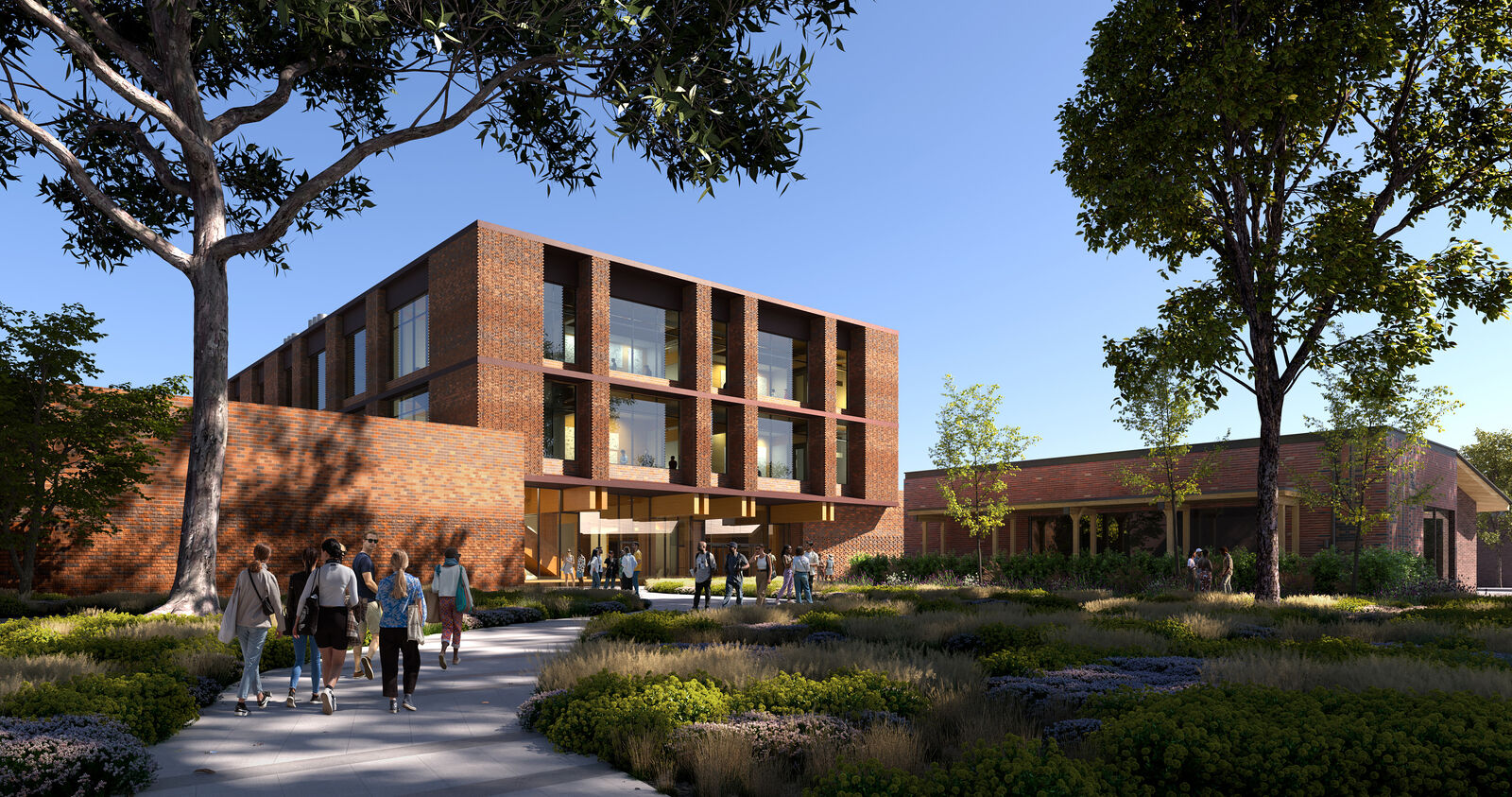
A view of the main entrance from NW Monroe Ave.
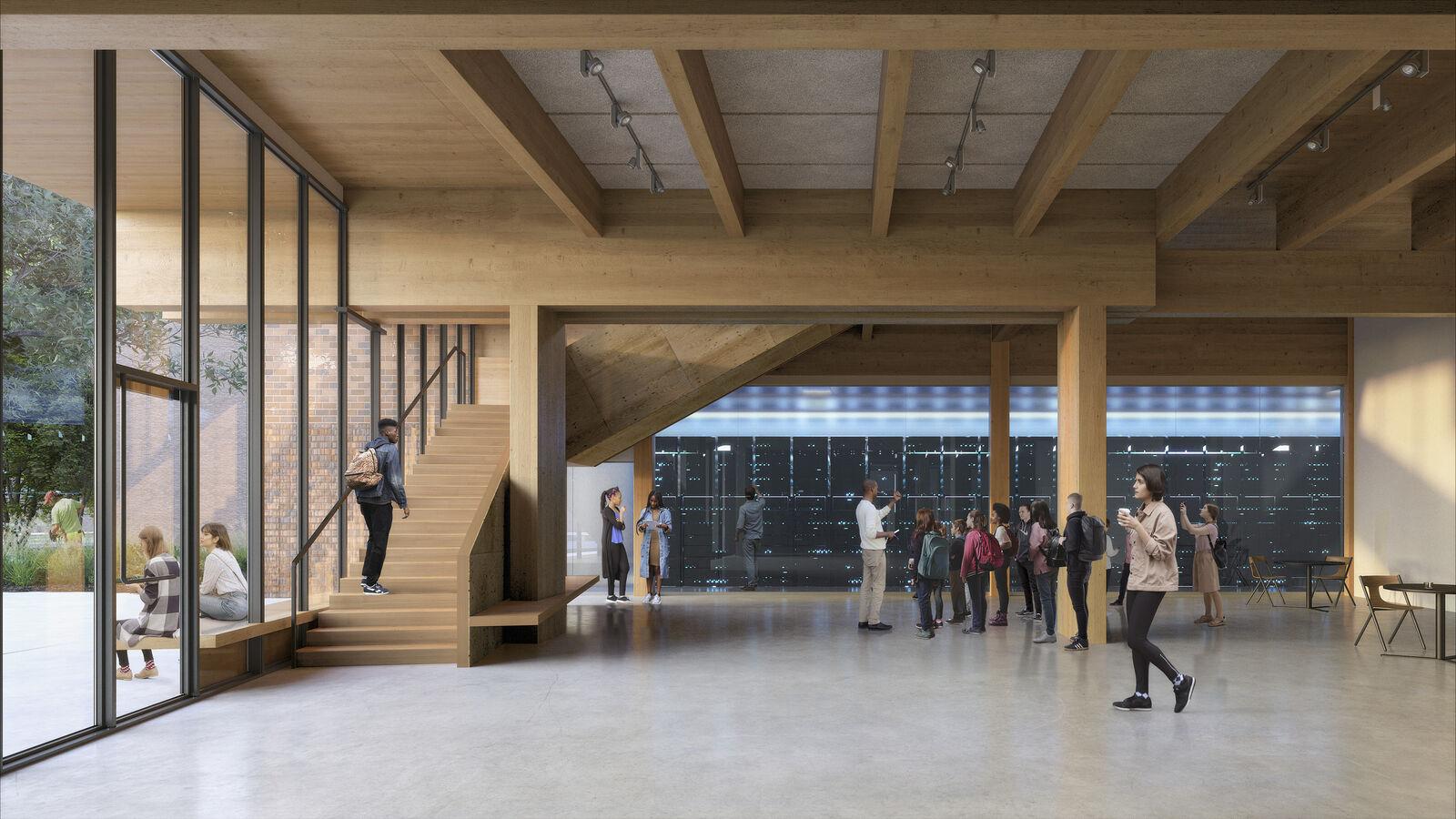
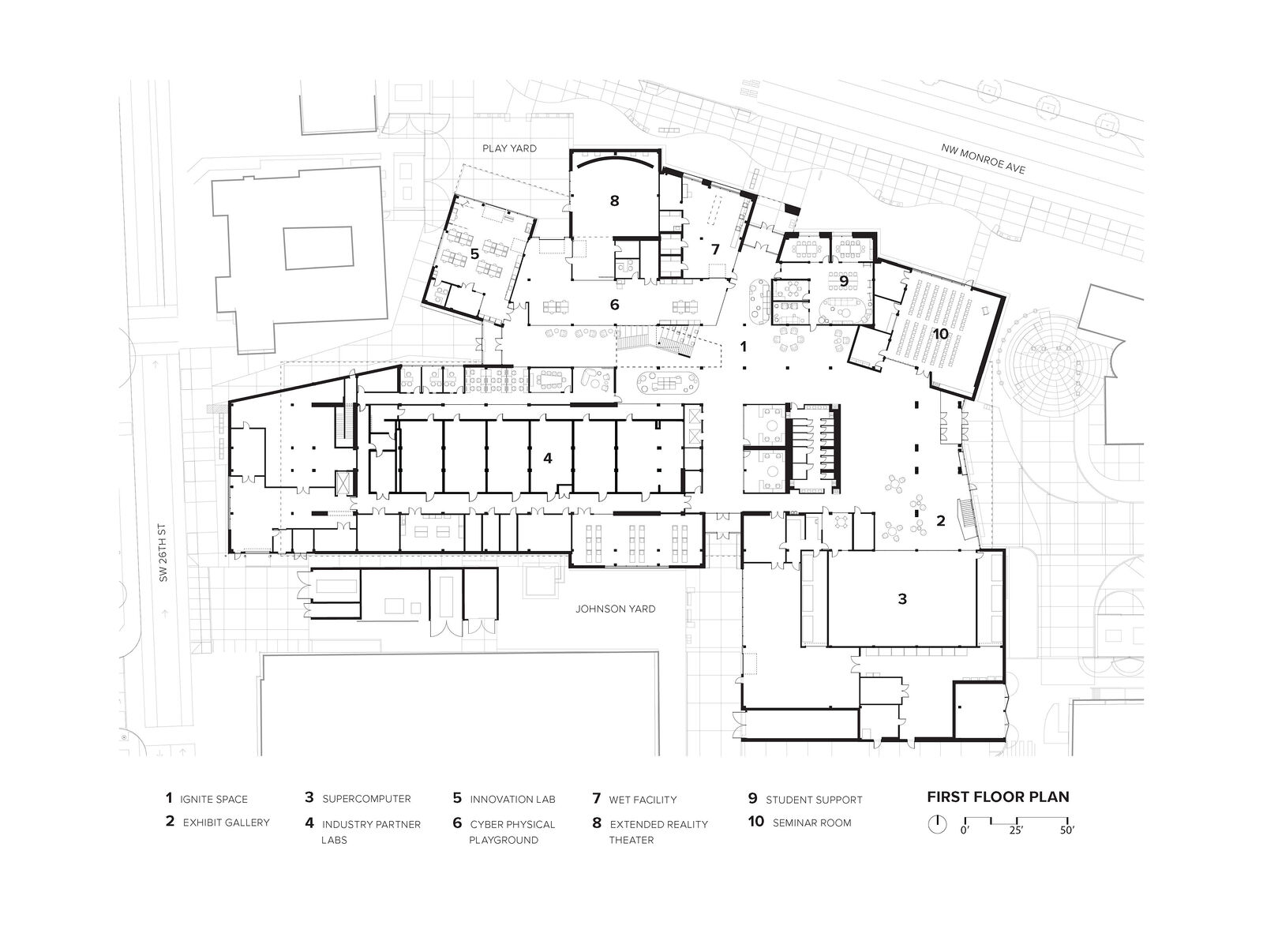
The complex will feature one of the nation's most advanced supercomputers. Fully capturing the rejected heat from the supercomputer will improve the overall energy performance of the district plant.
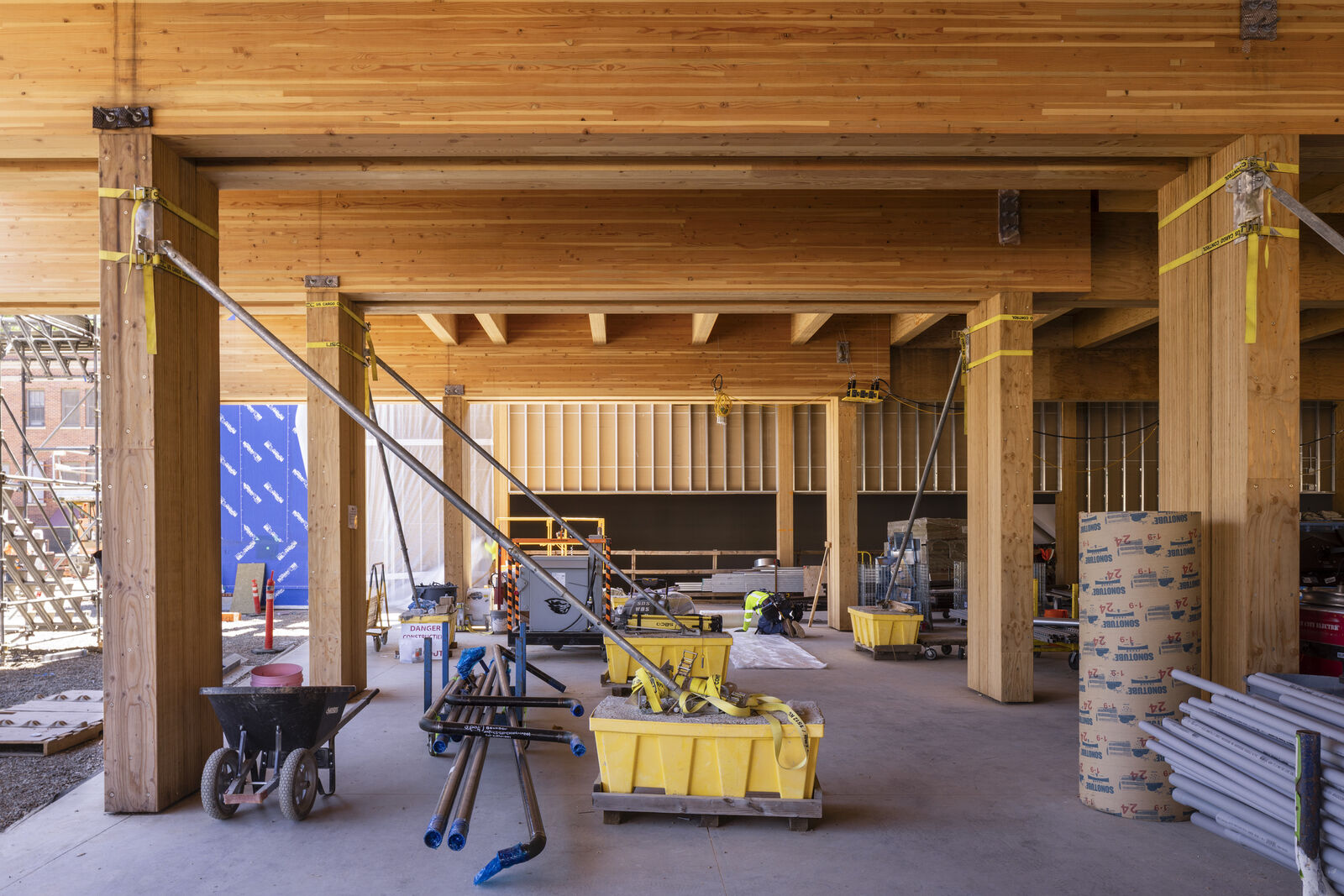
Construction image, June 2025

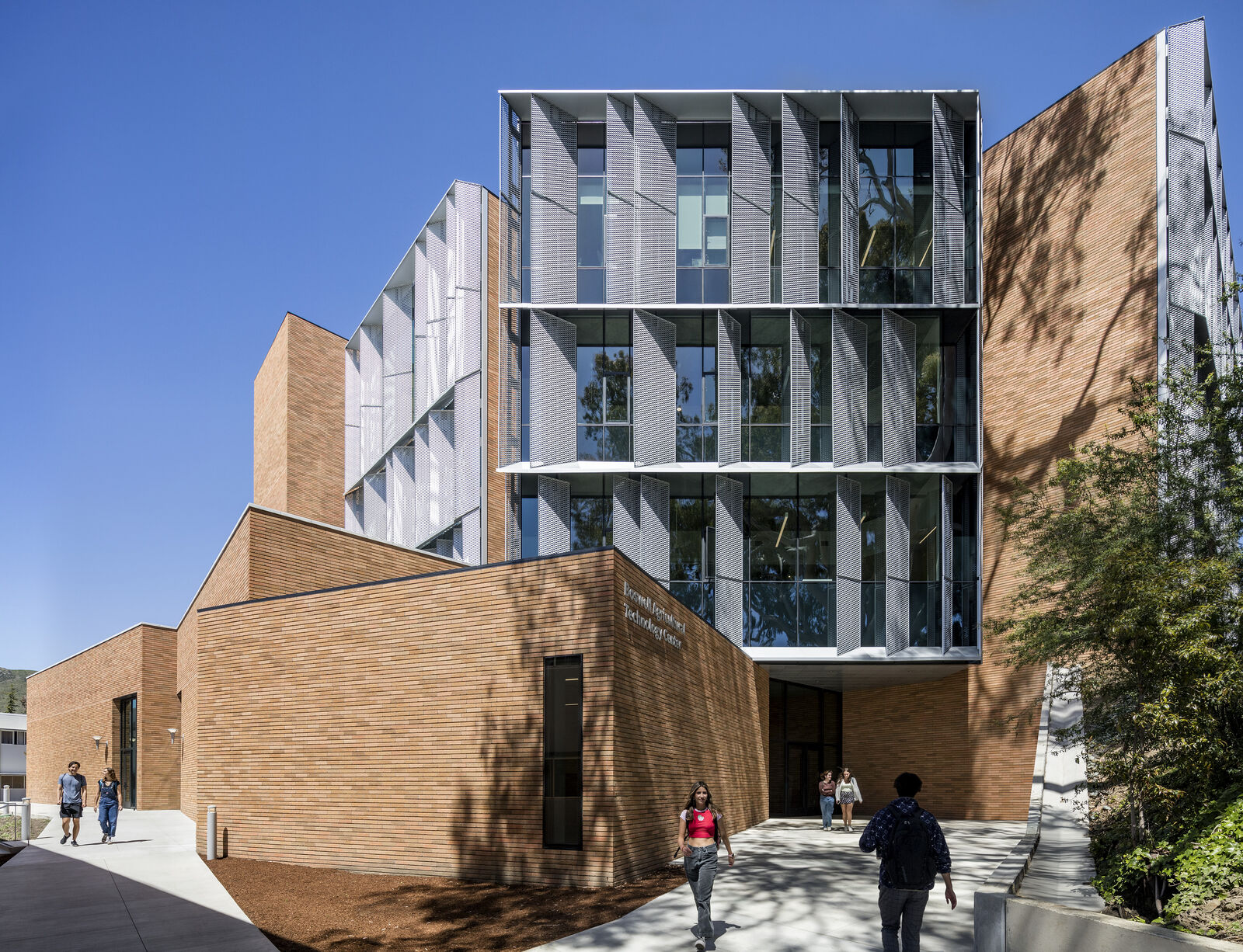
The complex creates a new gateway to the north edge of campus, sited within the university’s National Historic District between the engineering district and a retail/residential area. The building is designed to integrate into campus architecture and create a connection between the university and the community of Corvallis. The design team analyzed the surrounding context to create a pedestrian-friendly environment and keep the scale and massing compatible with the proportions and scale of surrounding buildings and the town.
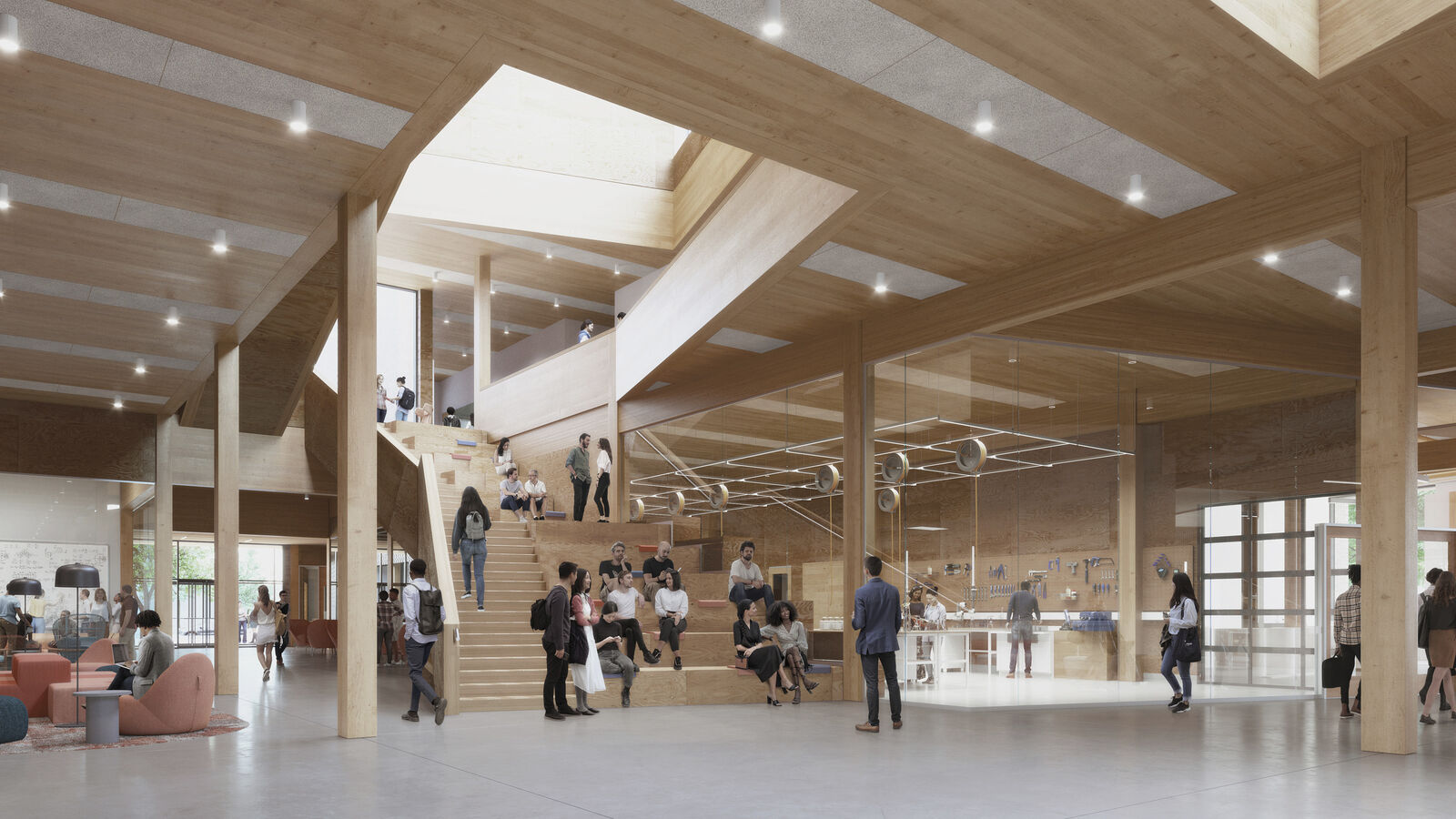
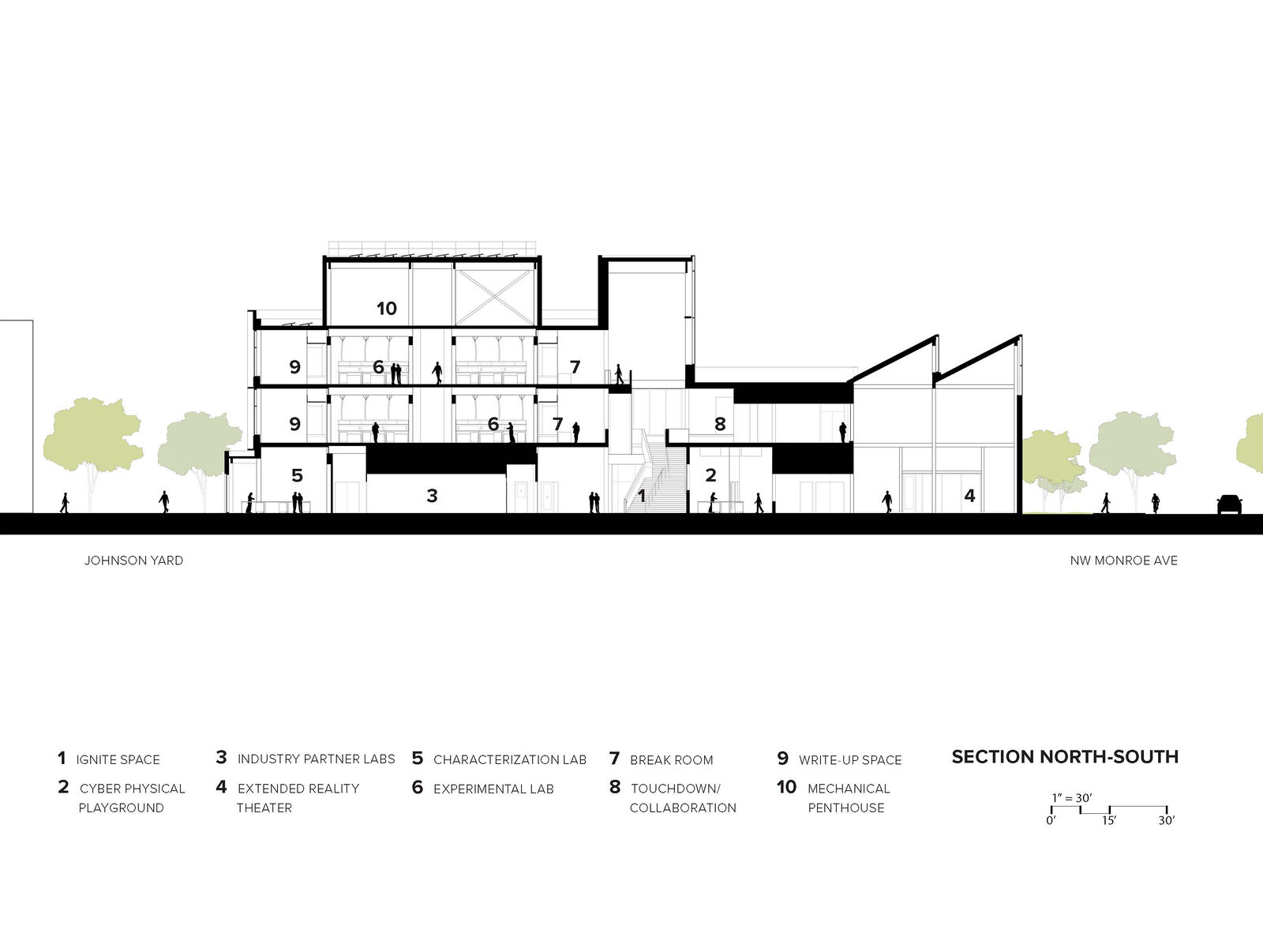
The design team engaged in listening sessions with several campus groups to provide a variety of spaces that make the complex welcoming for OSU’s diverse student body. Access to daylight and exposed wood structure provide warm, biophilic interiors. The supercomputer offers high transparency, visible to public spaces inside the building, while the workshop features garage doors opening to the main street—placing science on display for the entire community.
The complex creates a new gateway to the north edge of campus and a connection between the university and the community of Corvallis.
Facing SW Memorial Place, the main entrance features the exposed wood structure and transparency into the main research spaces.
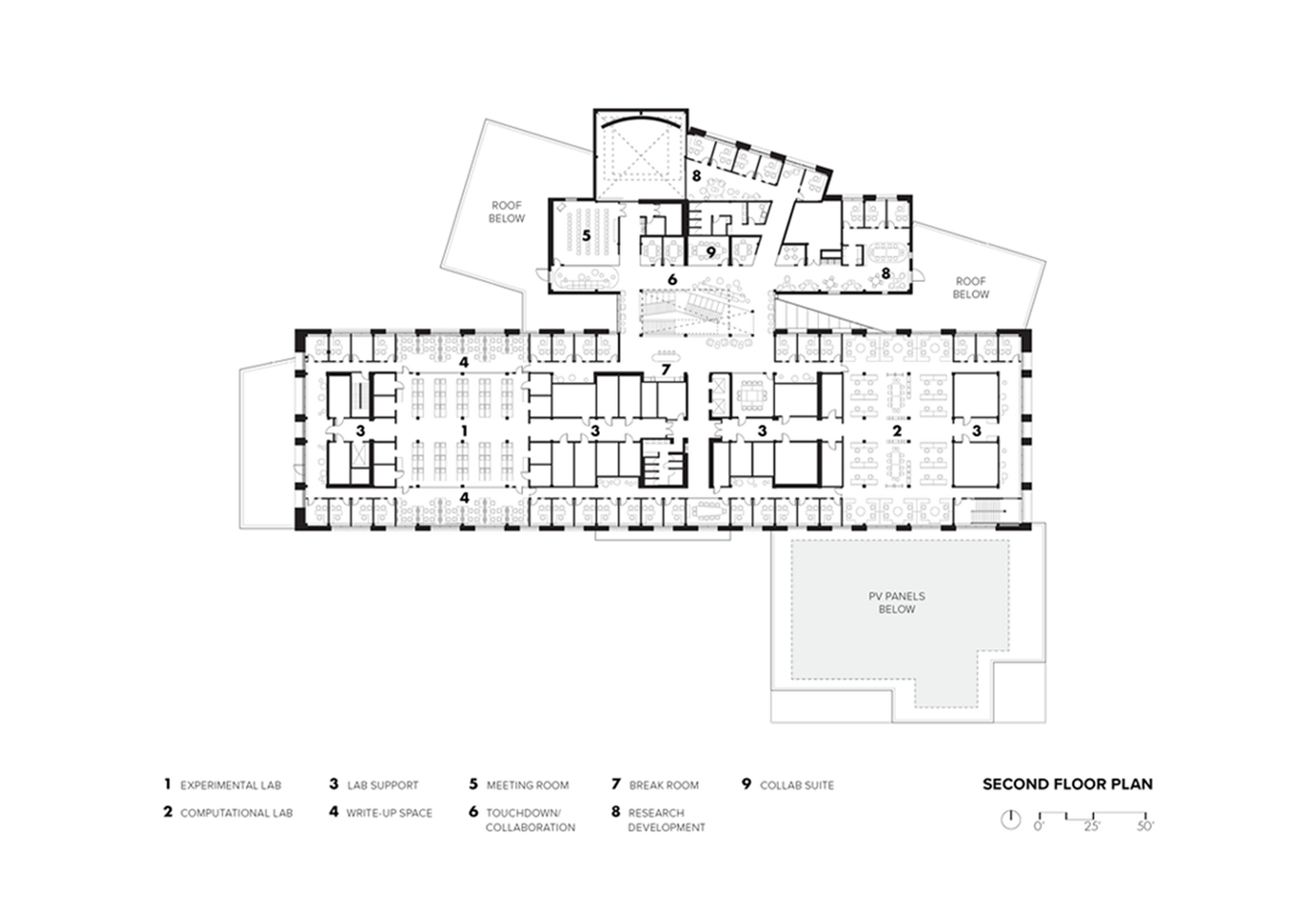
Second floor plan
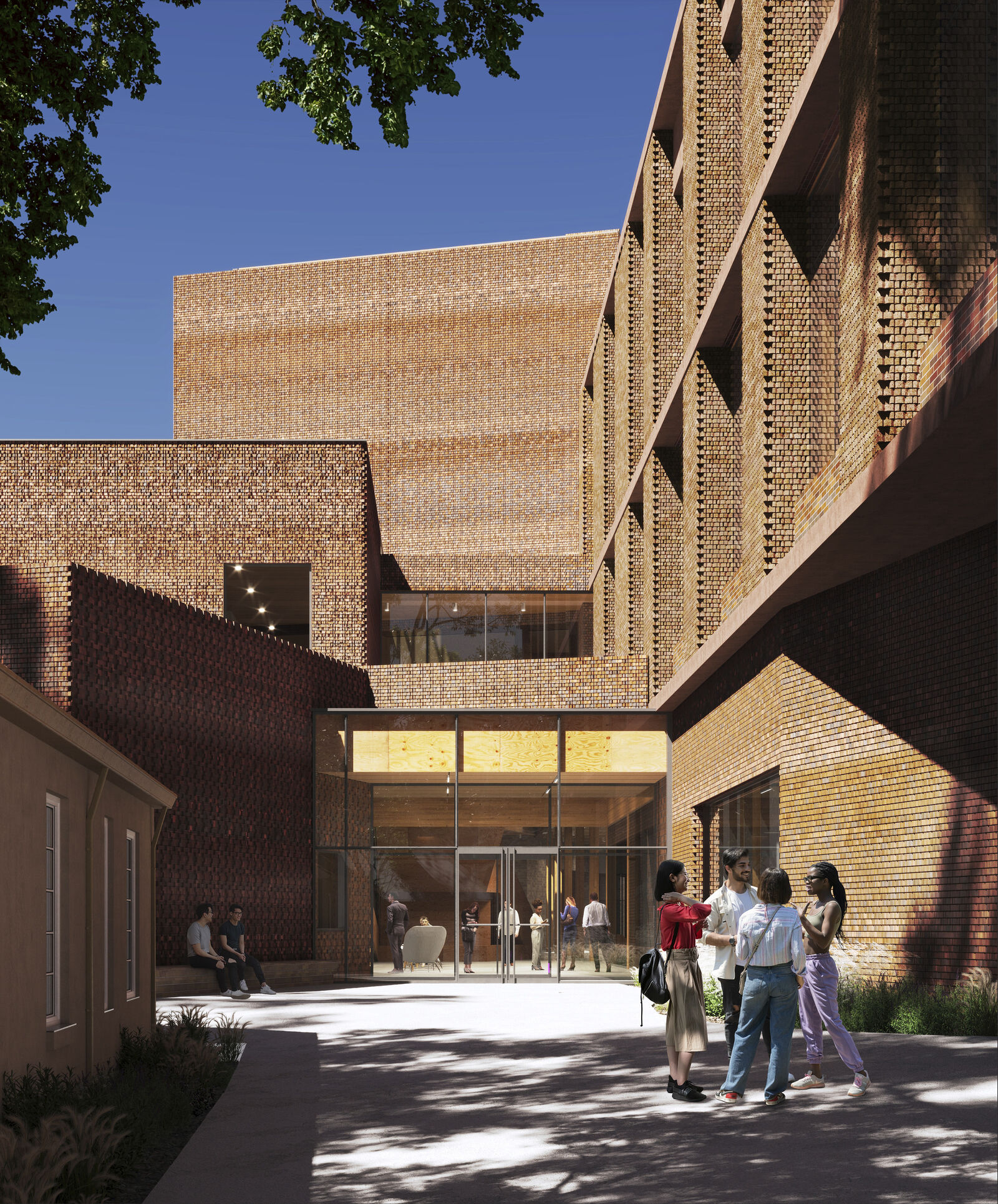
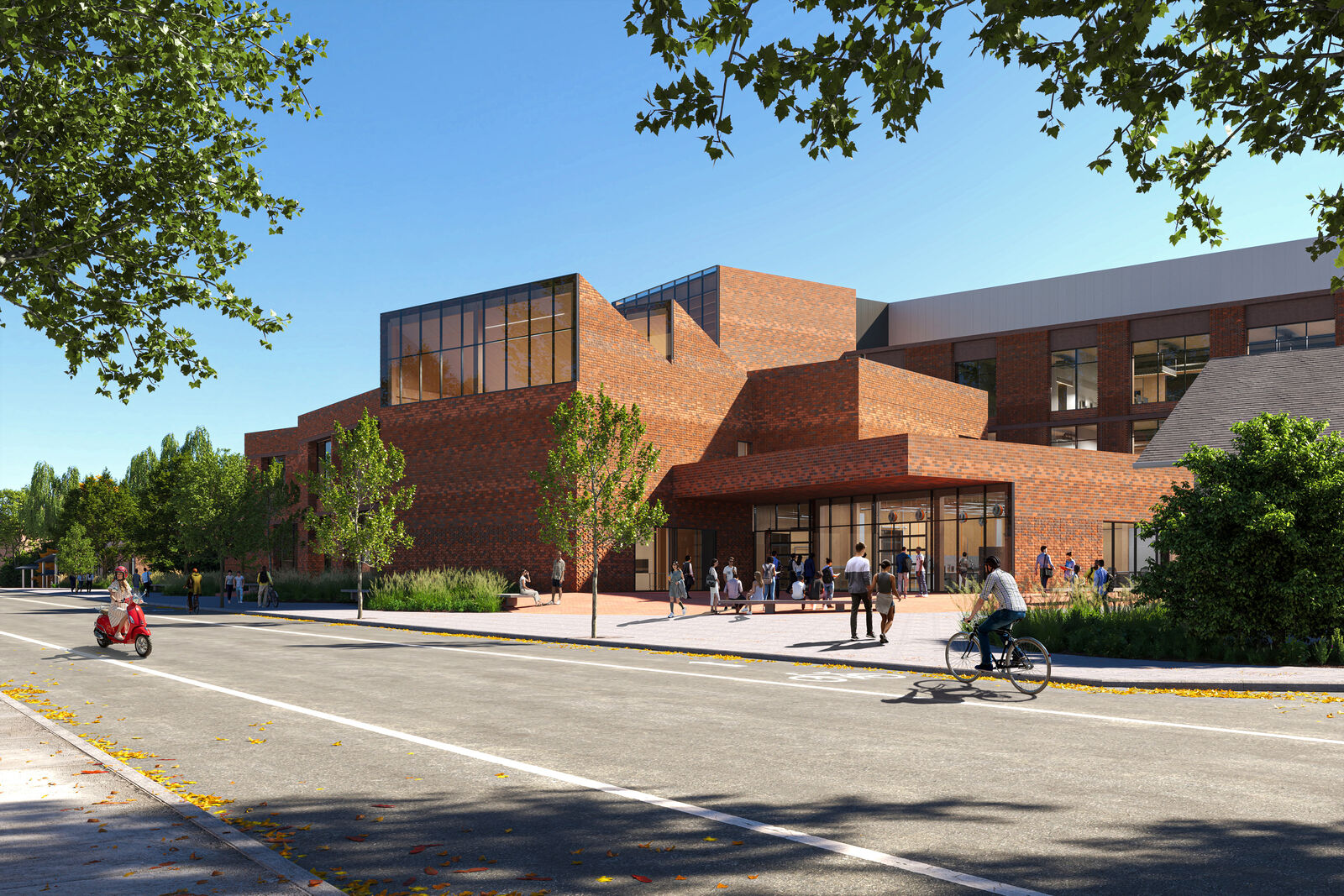
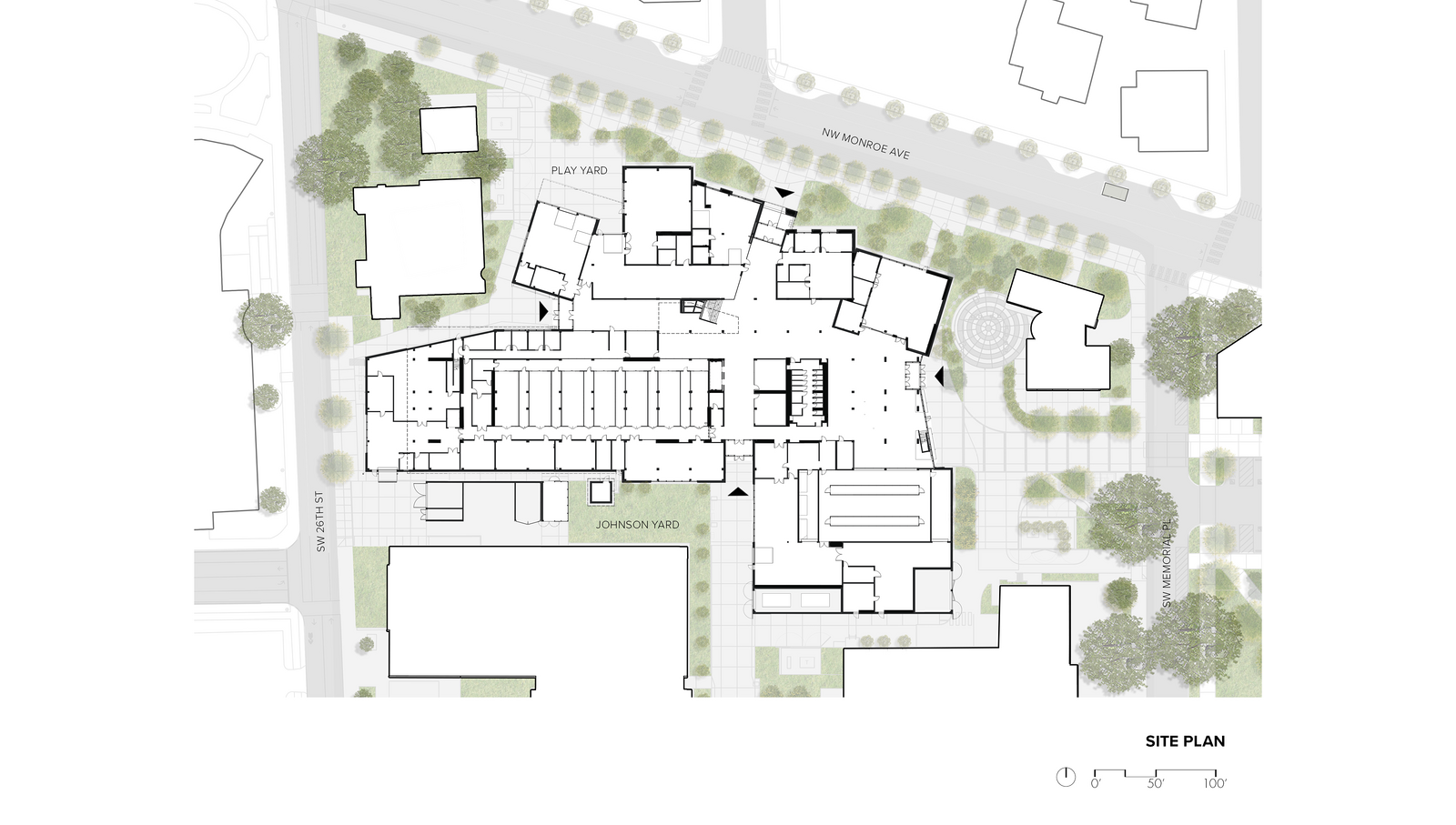
The relationship between the building's massing, adjacent structures, and public spaces is evident along NW Monroe Avenue.
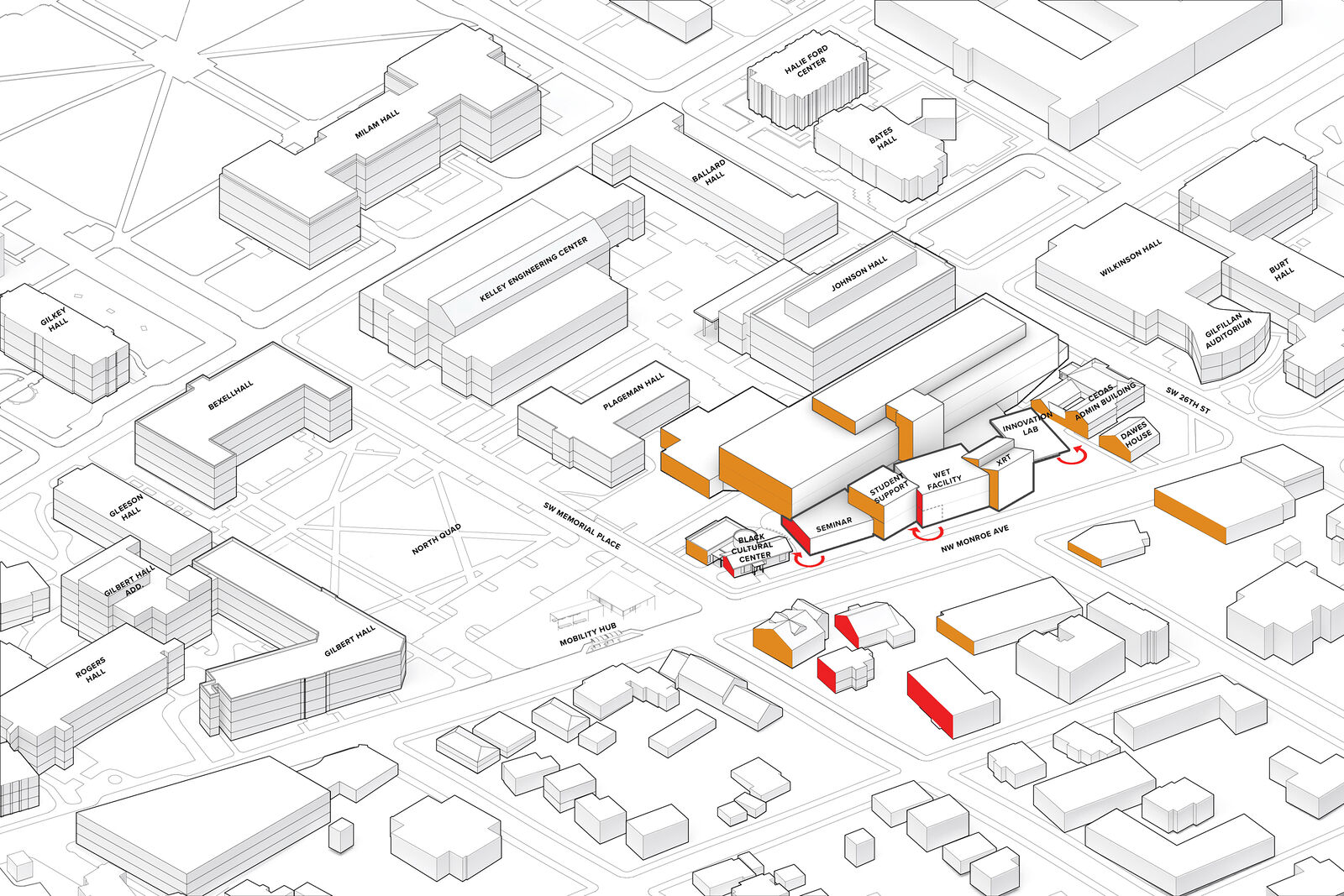
The building responds both to the campus context of larger research buildings and of smaller scale buildings nearby.
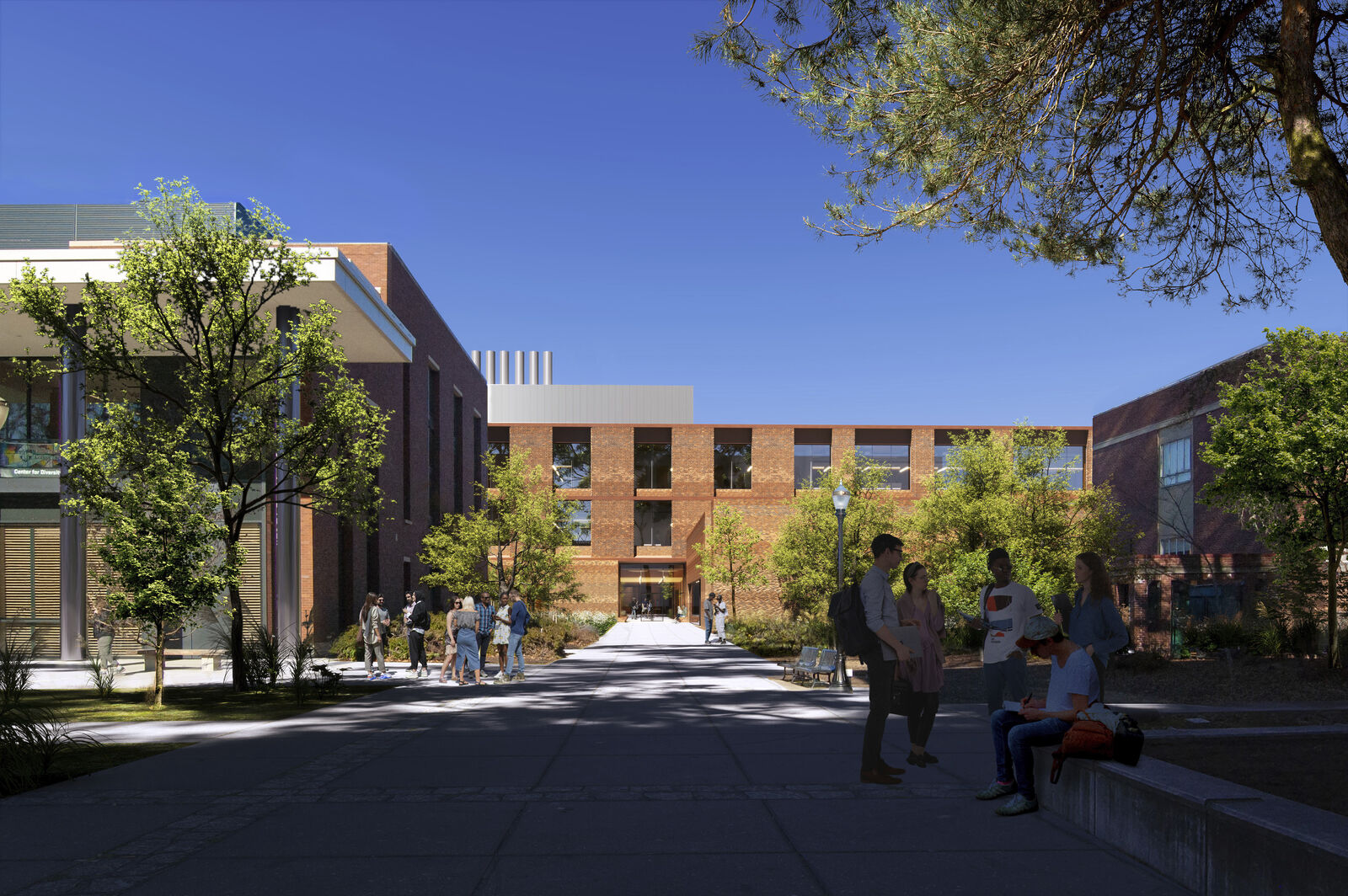
A view of the lab bar from the main campus.
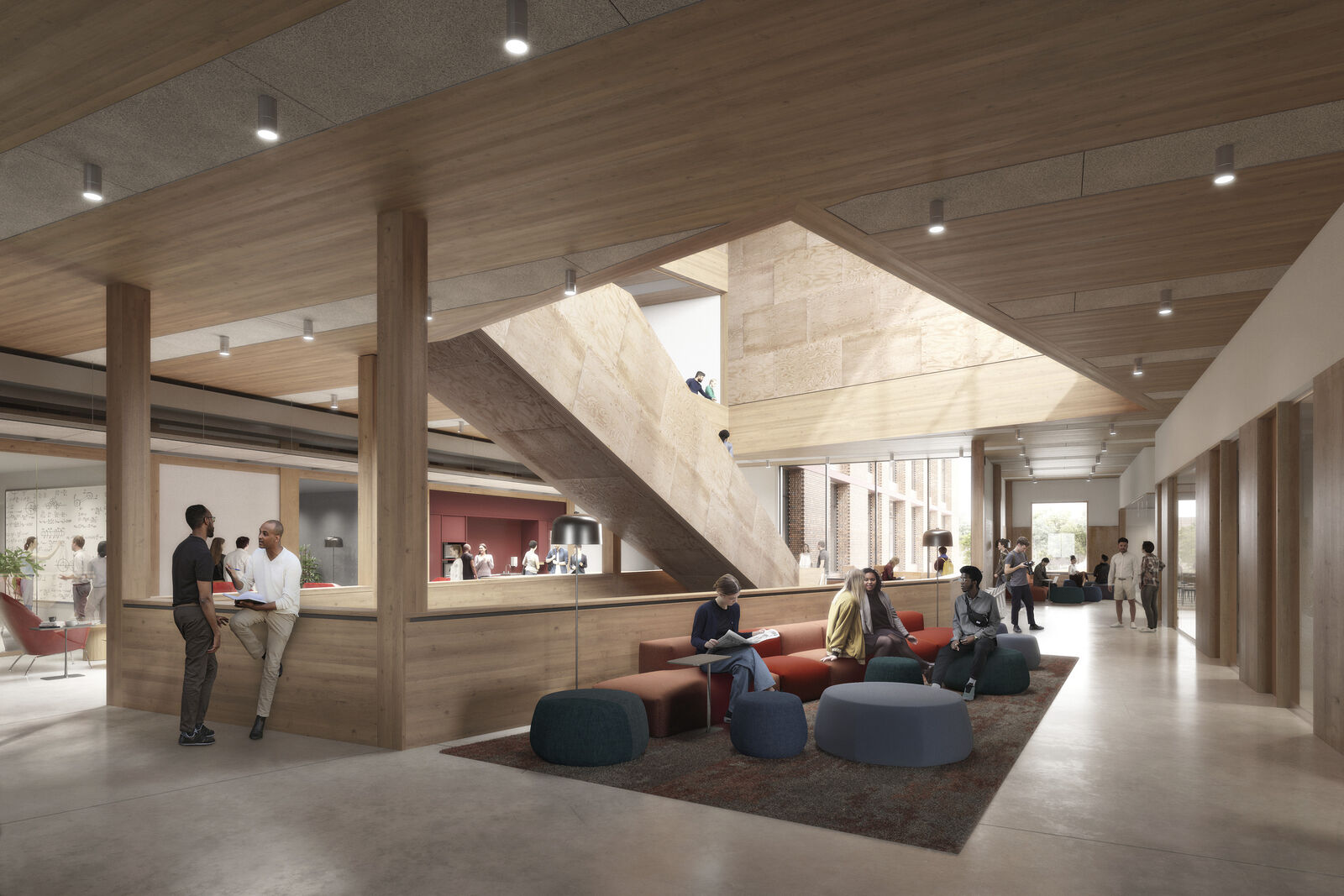
The central collaboration spaces connect multiple floors, exposing the texture and tonality of the wood structure. MPP is used on the main structure, staircase, and railing.
Decarbonization efforts have been a challenge with experimental research buildings. Using timber in this building type has been limited thus far by the structural vibration criteria of 2000 MIPS. The Huang Complex is the first building to respond to this by using a unique structural solution with mass timber columns, beams, and a composite deck (CLT + concrete topping slab). This innovation reduces embodied carbon emissions by 108% over traditional all-concrete approach; provides the structural stability necessary for the use of sensitive equipment—and results in beautiful interiors.
Harvesting heat from the supercomputer to heat the complex, with the potential to heat adjacent buildings in the future—provides significant cost savings for the university over time, accelerating OSU’s sustainability goals. Additional energy-efficient strategies and operational savings include PVs, high performance envelope, and cascading air.
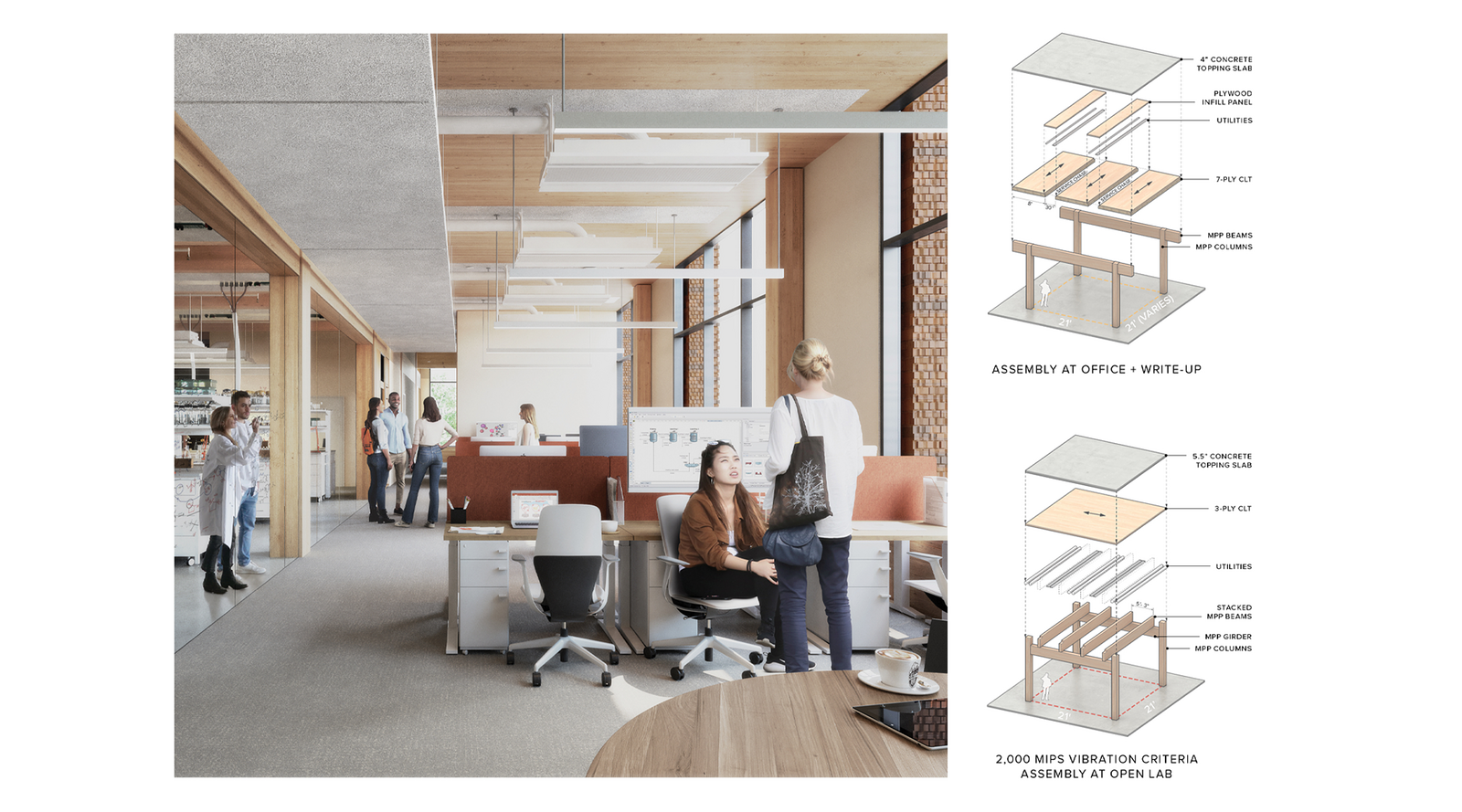
The structural bay is comprised of MPP columns, beams, and a composite deck (CLT + concrete topping slab). The structural make up for labs is more stringent to meet the vibration criteria of 2,000 MIPS.
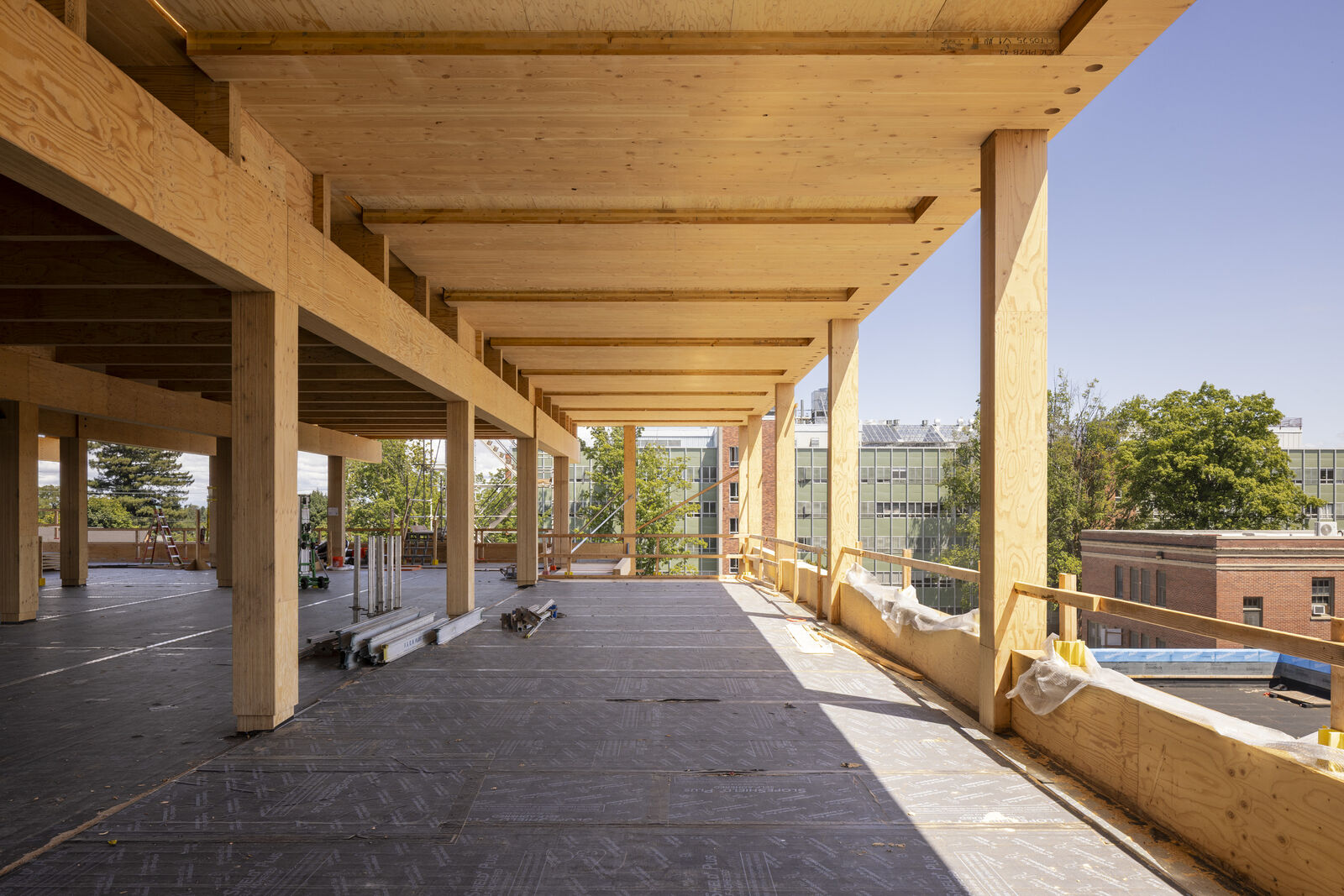
Structural bay in construction, June 2025
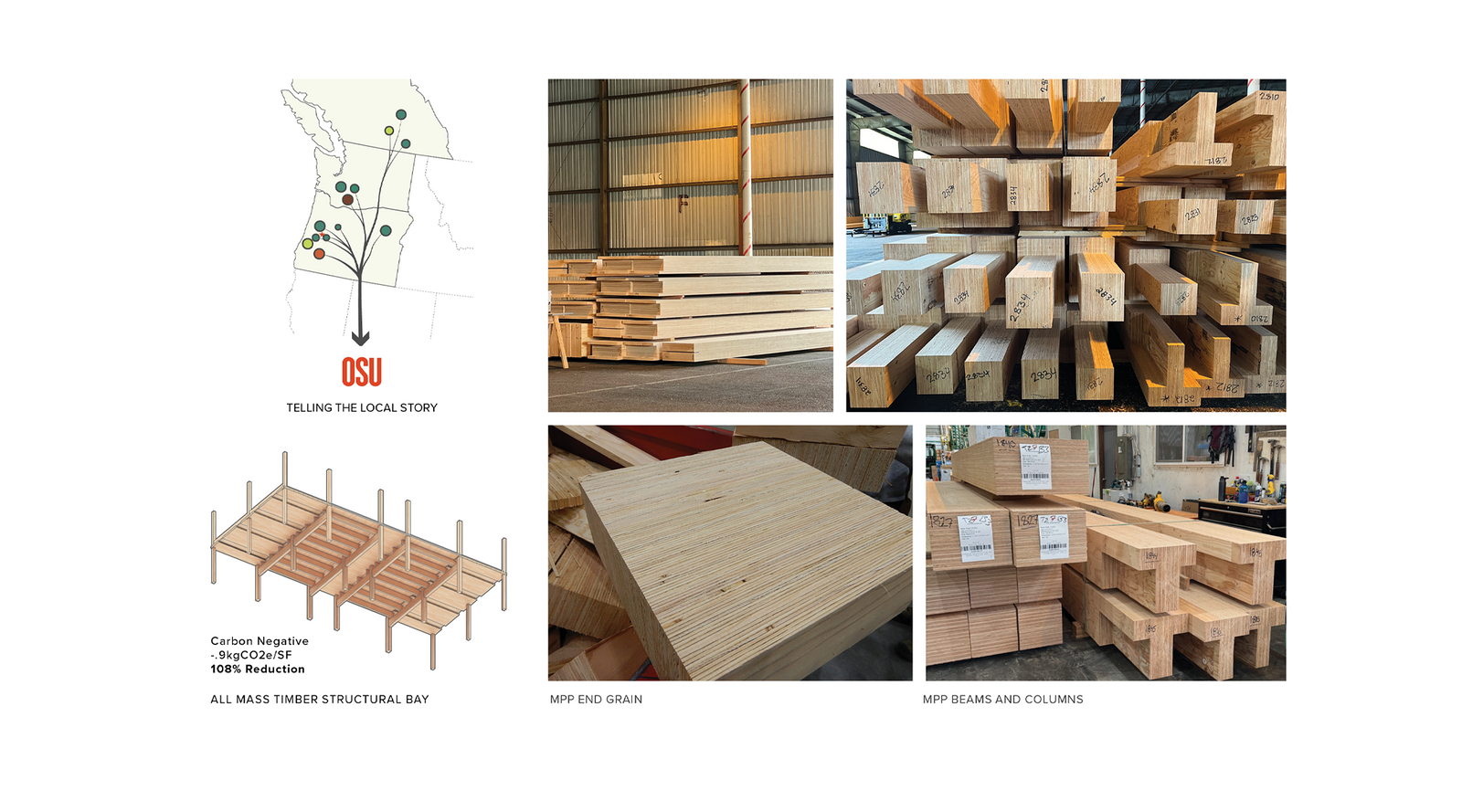
Procuring regional wood benefits the local Oregon economy and is a sustainable choice that reduces embodied carbon of the typical structural bay by over 108% over a traditional all-concrete approach.

Princeton University, High Performance Campus Infrastructure Projects
Mercat del Peix Research Center

Wexford Science + Technology / University of Pittsburgh, The Assembly