Designing for a Carbon-Free Future: 10 Years of Learning from the RMI Innovation Center
At ZGF, our approach to sustainable design has always been rooted in resilience and community, designing buildings to stand the test of time. We are fortunate to have a rich history of clients who share this passion and have worked with us hand-in-hand to push the boundaries.
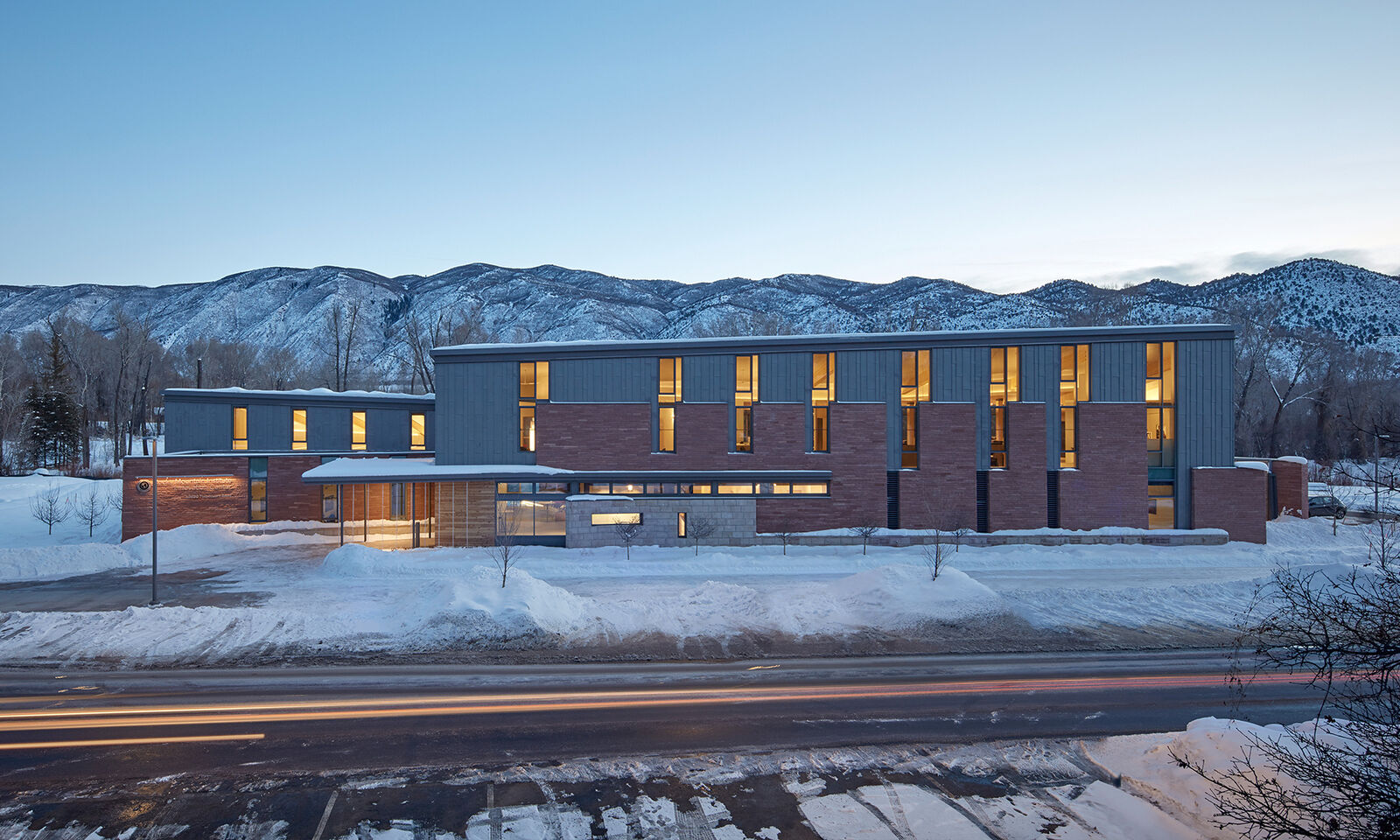
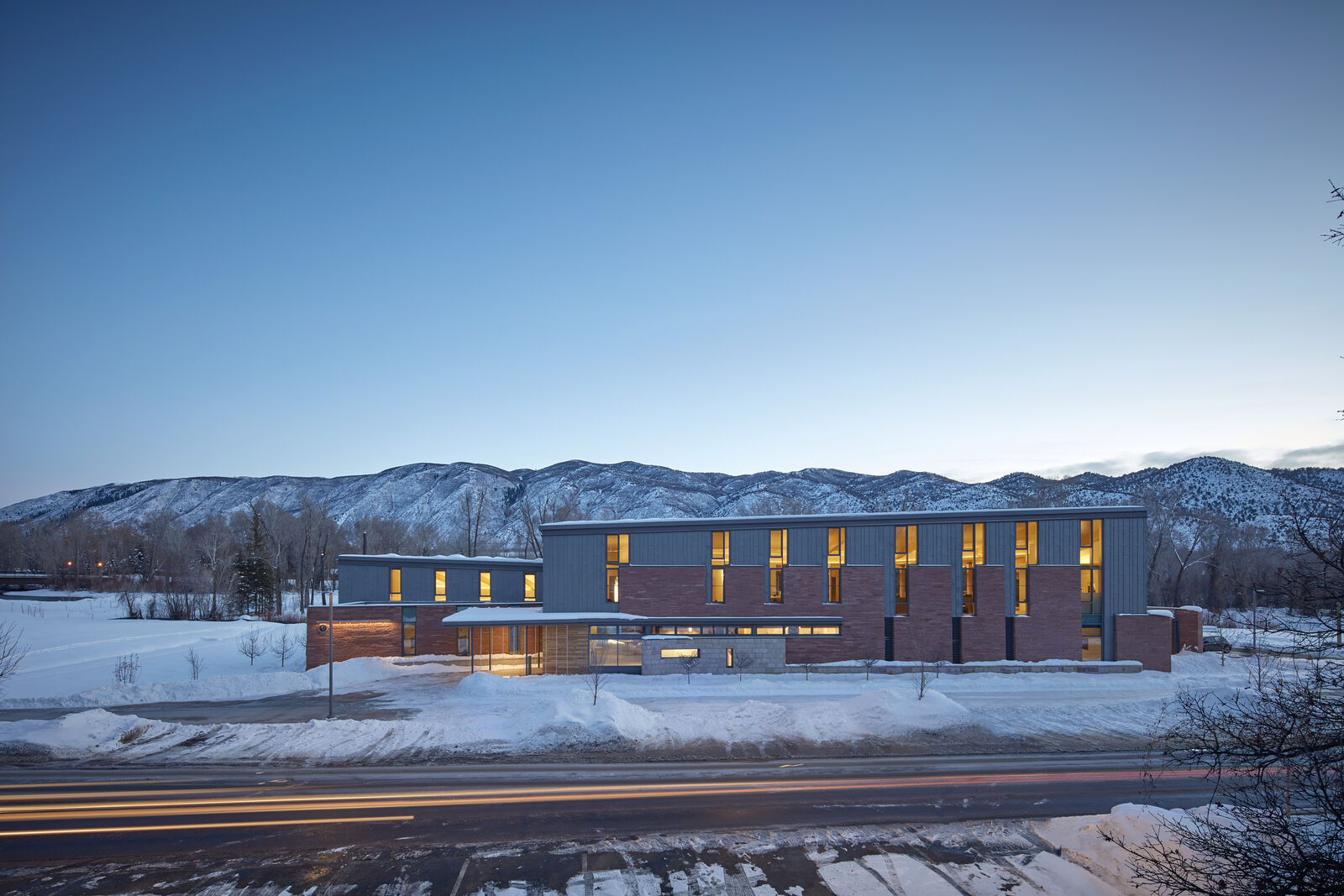
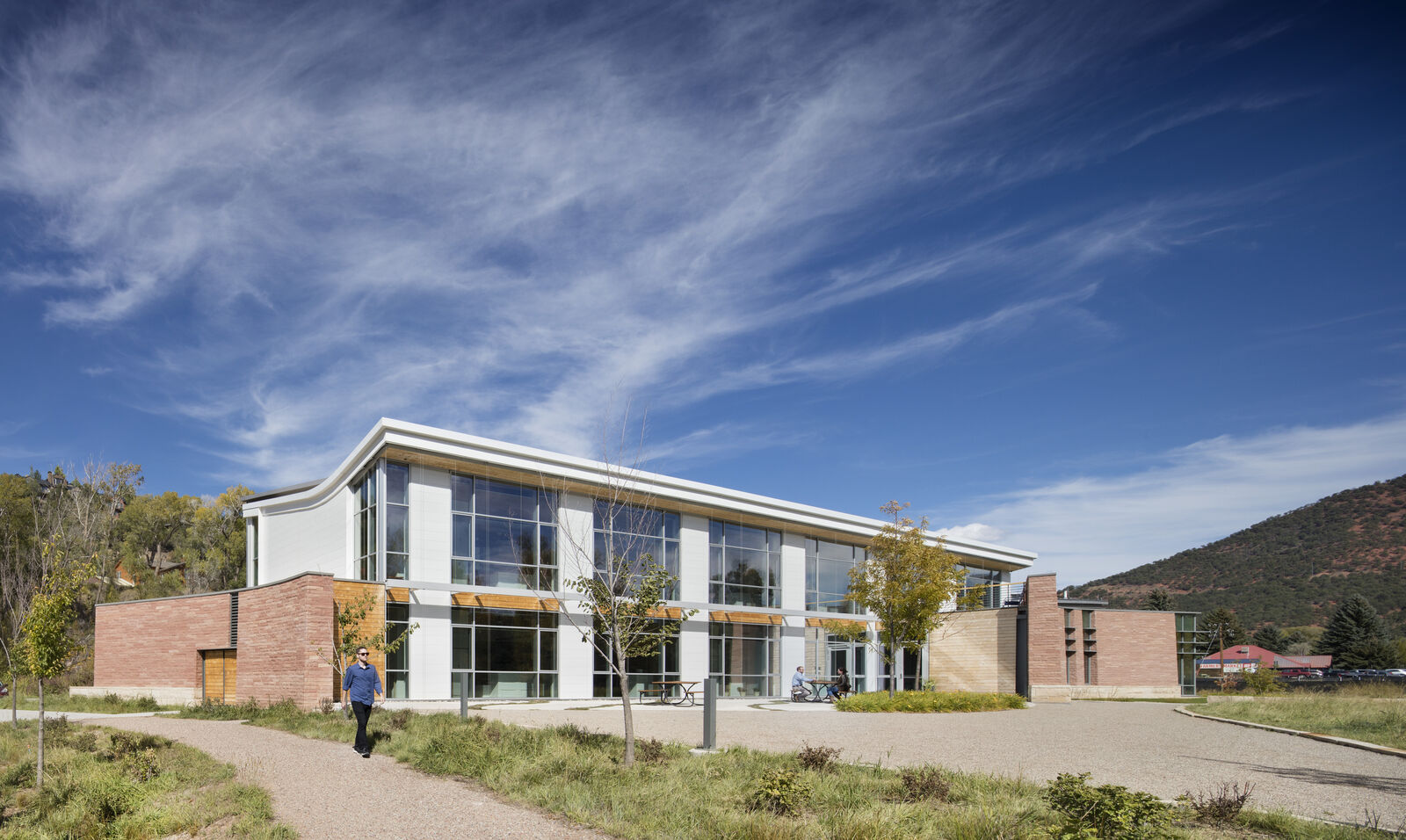
In 2015, we celebrated the opening of the Rocky Mountain Institute (RMI) Innovation Center in Basalt, Colorado, representing a seminal moment in our pursuit of a carbon-free future. Designed to achieve Net-Zero Energy (NZE), LEED Platinum, and Passive House standards, the building aimed to meet aggressive environmental goals without compromising occupant comfort or experience—serving as a healthy workplace was paramount. A decade later, the RMI Innovation Center has not only performed beyond expectations, it has reshaped the conversation around what’s possible in high-performance design.
"After working in and hosting many internal and external groups in the Innovation Center for 10 years, I am still amazed at how well it performs. The natural light, the efficiency, the biomimicry, all make it a wonderful place to be. And it continues to be a teaching model for high performance buildings of its size." Marty Pickett, RMI Trustee and General Counsel
A Prototype for What’s Possible
At an elevation of 6,600 feet in one of North America’s coldest climate zones, the 15,000-square-foot facility had to perform in a region with wide temperature swings and extended winters. The result is one of the most uncompromising energy-efficient buildings in the United States, proof that if NZE can be achieved here, it can be done anywhere.
The solution combined a suite of advanced strategies developed through rigorous modeling and focused collaboration. Delivered via the Integrated Project Delivery (IPD) model, the process brought together architects, engineers, contractors, trades, and RMI staff from day one. This enabled real-time feedback and ensured alignment between performance goals and design decisions at every level.
This data-driven, integrated approach helped us recognize that NZE design must start with the building’s orientation and thermal envelope—an approach that we’ve continued to refine in our work since RMI. This project also helped us think more holistically about all-electric buildings, and honed our skills on life cycle assessment (LCA) and overall decarbonization.
Energy modeling was not a check-the-box activity—it was a design driver. Models were run early and often to test envelope details, glazing ratios, and mechanical strategies. This process reinforced that performance is not a byproduct of design, but an intentional mission. And the results speak for themselves: in its first year, the building produced 146% of its annual energy use, and occupant surveys ranked it in the 99th percentile for both thermal and visual comfort.
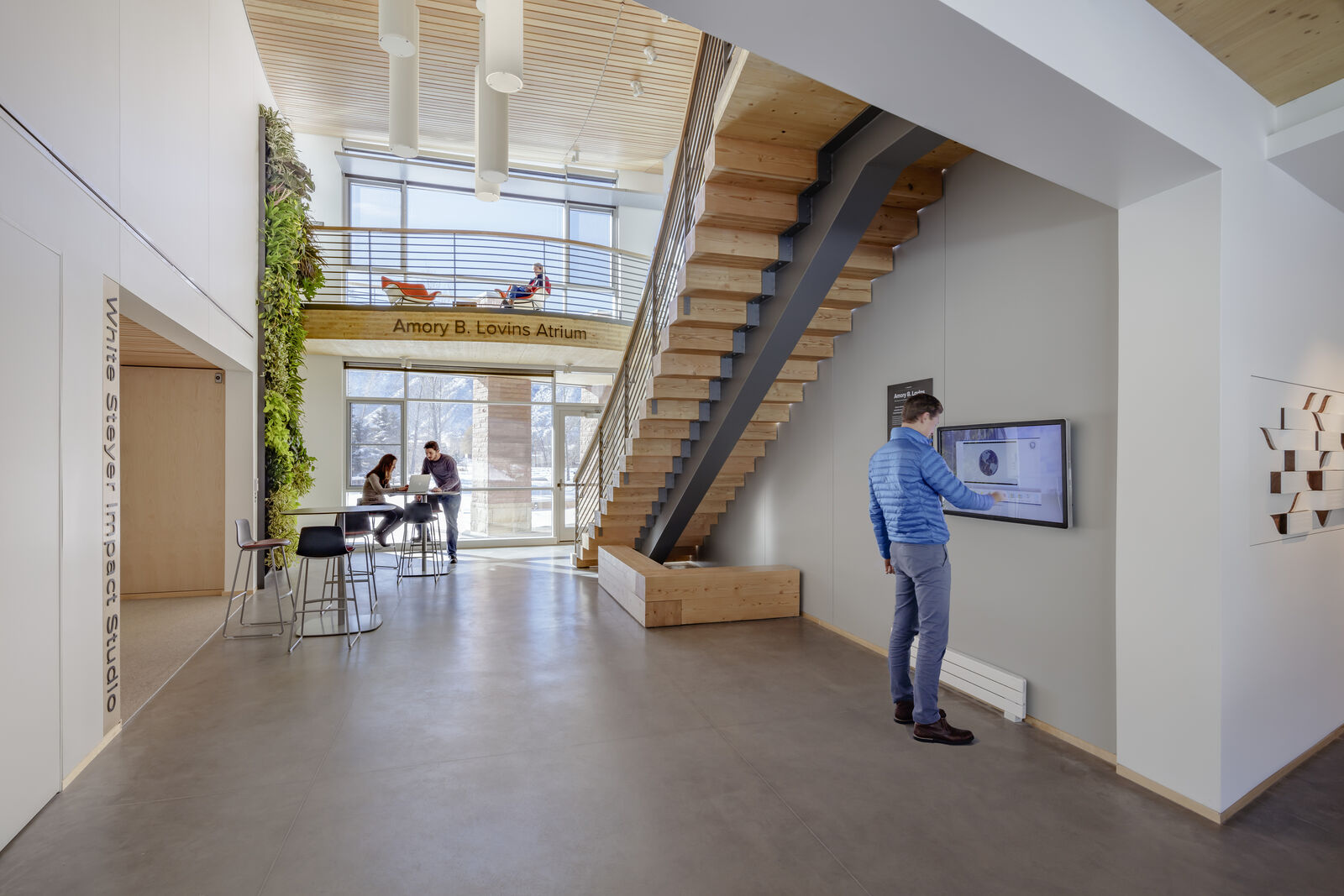
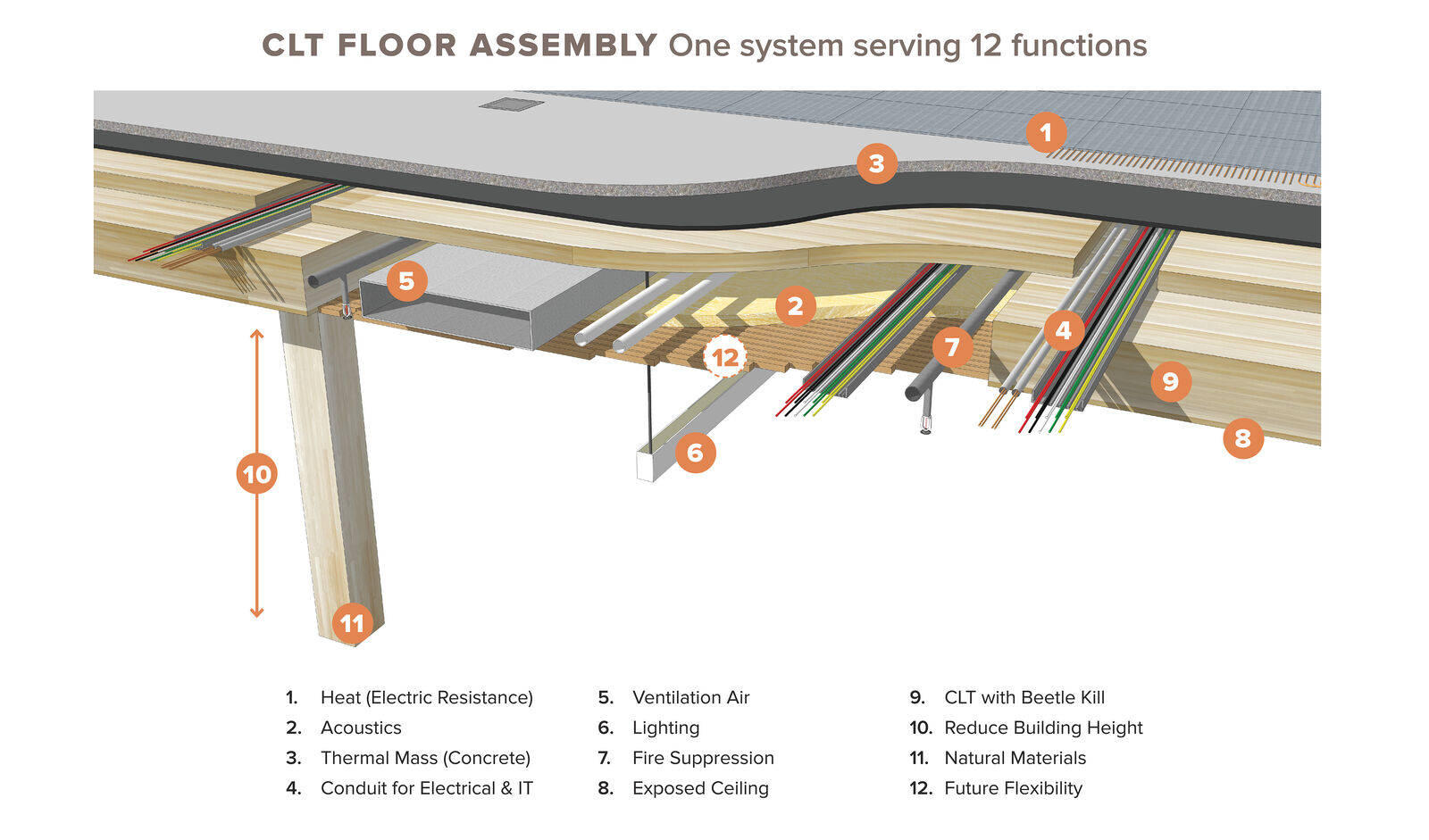
A key takeaway from the Innovation Center was the value of simplification. Rather than over-engineer, we focused on minimizing complexity. This was one of our first projects to explore whole-building LCA and utilize more sustainable materials, including structural mass timber and reducing or eliminating mechanical components like ductwork and piping that traditionally have high embodied carbon.
At the time, our decisions were guided more by intuition and mission than robust data. Embodied carbon was rarely discussed and the industry lacked the tools and benchmarks we have today. Since then, our modeling capabilities have matured. We now use full LCAs and focused analysis on projects from the outset to the end of design—informing the selection of structural and architectural materials and evaluating MEP systems and interiors with a clearer understanding of long-term impacts.
Mass timber, in particular, proved both carbon-efficient and practical. By sharing models with contractors early and prefabricating the structure, we simplified site assembly and minimized construction time. The IPD approach made every conversation collaborative, with the entire team aligned behind the project’s goals.
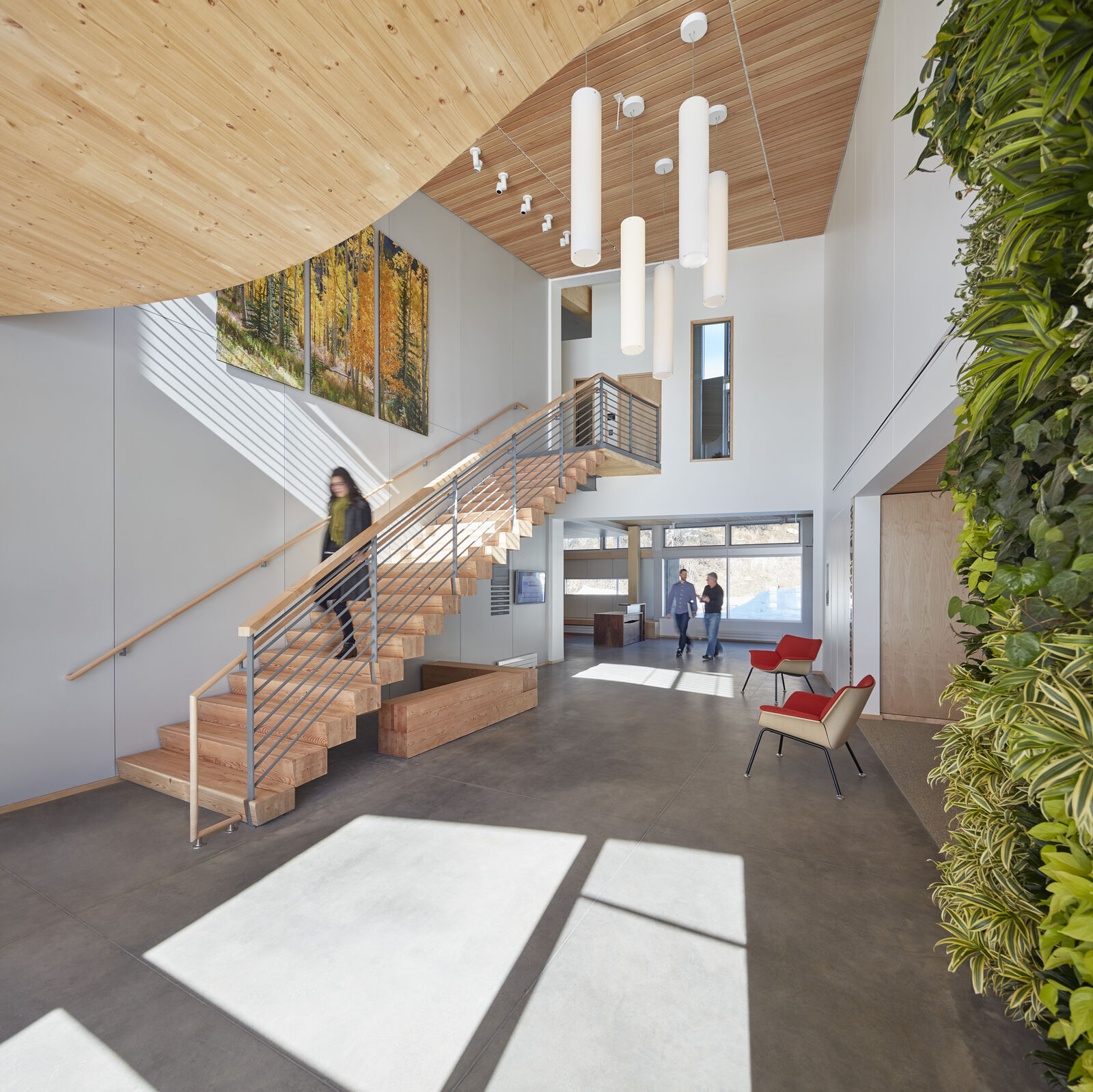
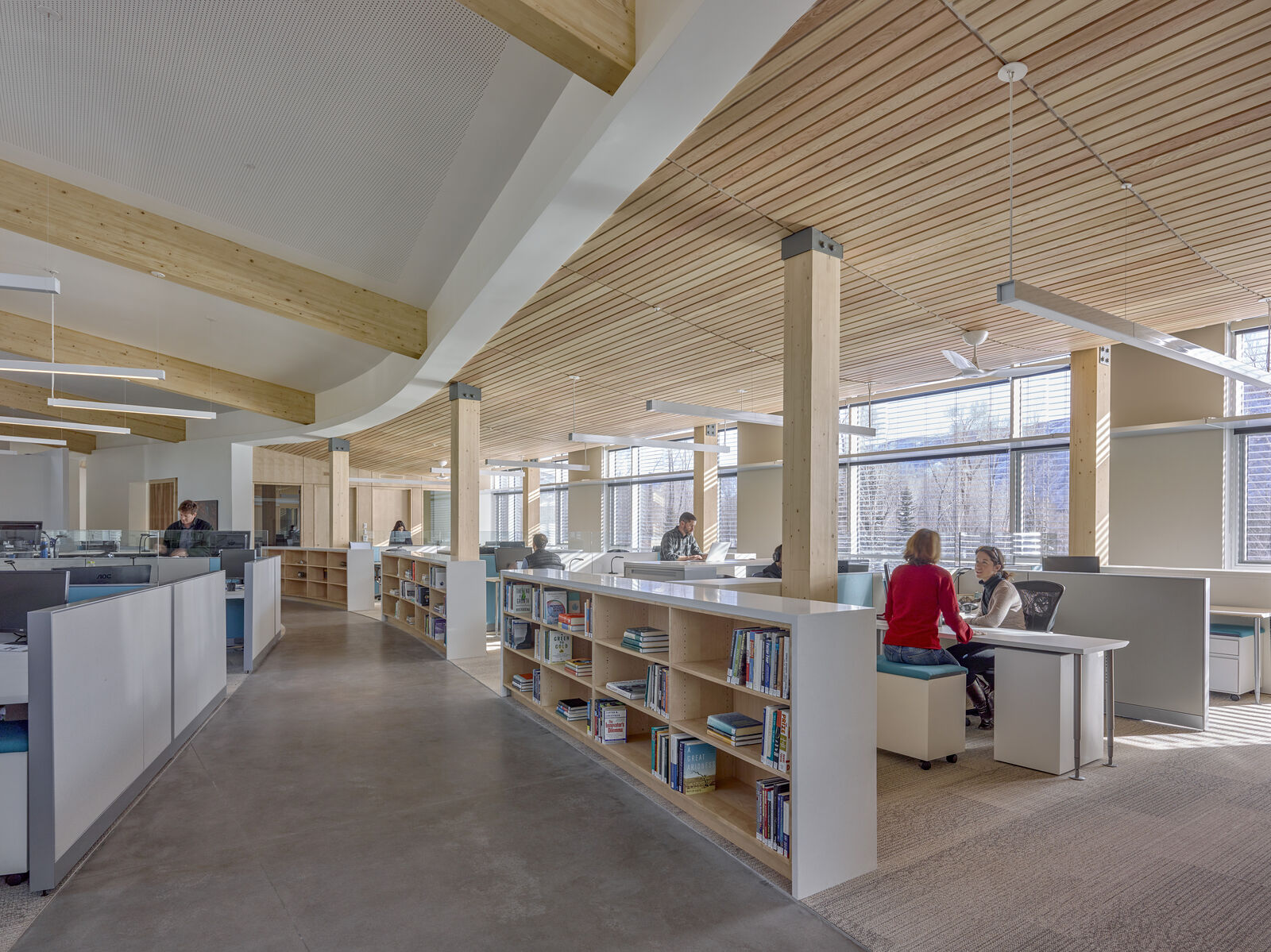
Designed to achieve Net-Zero Energy, LEED Platinum, and Passive House standards, the Innovation Center meets aggressive environmental goals without compromising occupant comfort.
A Mission to Walk the Talk
RMI worked because everyone on the team committed at the project’s outset and pushed forward with positive intent. The client, the design team, the contractors—we all set a goal and did not waver. As a non-profit organization with its own mission to “transform the global energy system to secure a clean, prosperous, zero-carbon future for all,” RMI was motivated to show, with a tangible example, that this is possible.
This mission also underscored the importance of post-occupancy evaluation, in addition to rigorous pre-construction modeling. Monitoring tools are embedded into the building and continue to yield insights, which RMI shares in an online dashboard. This helps to tune the building over time and improve operations, while informing future projects as well as the broader conversation on building decarbonization.
A Foundation to Build On
For 10 years, the Innovation Center has functioned as a living laboratory that continues to evolve along with the world around it. RMI has weathered wildfires less than a quarter mile away. It’s adapted to post-pandemic occupancy levels and shifting work modes. And, having paved the way for this specific location along the Roaring Fork River, it’s endured neighboring development. In our portfolio and beyond, projects now follow and improve upon the RMI playbook for electrification and decarbonization.
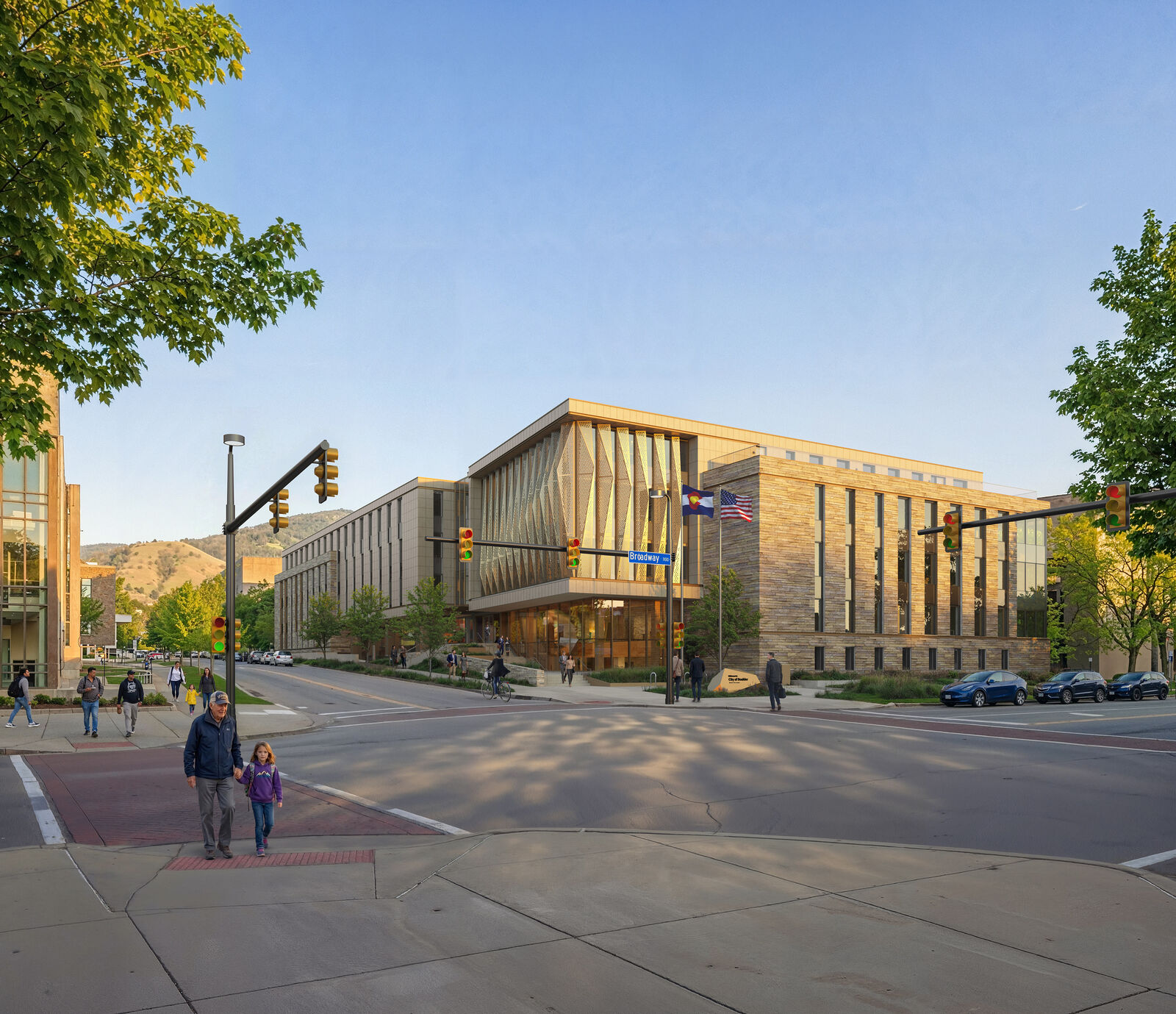
On the City of Boulder’s Western City Campus, for example, we are transforming a former medical office into a municipal building that saves 73% in embodied carbon compared to new construction. Mass timber, low-carbon concrete, and rooftop solar support electrification and resilience, showing that adaptive reuse can serve both environmental and civic goals.
In Portland, Oregon, the PAE Living Building pushes these ideas further, designed with a 500-year lifespan in mind. It meets all energy and water needs through on-site systems and is engineered to operate off-grid for 100 days. The low-carbon mass timber structure also pushes the boundaries of seismic resilience, demonstrating the intersection of sustainability and long-term performance.
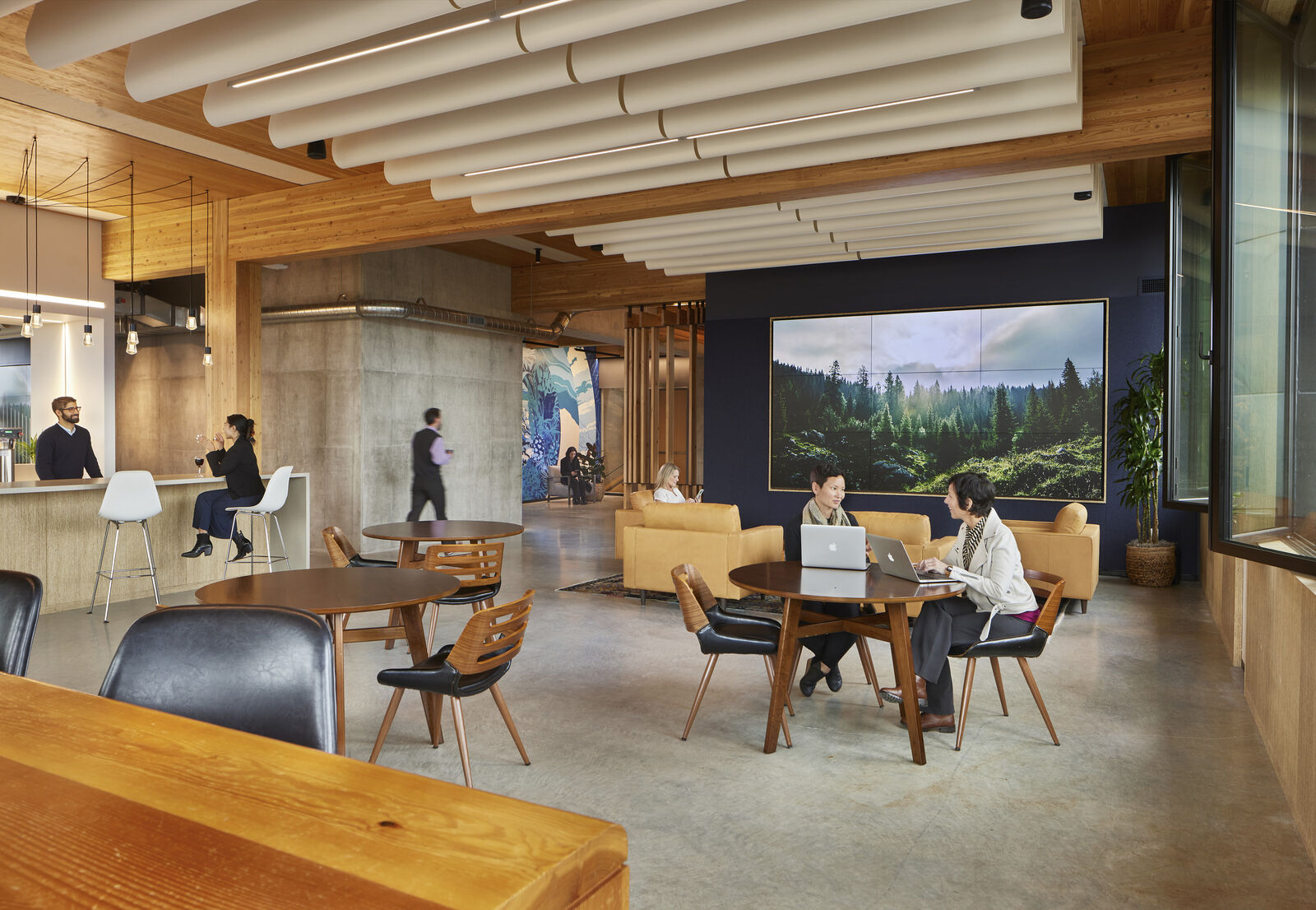
Projects like the PAE Living Building, the first fully certified Living Buiding in Oregon, follow and improve upon the RMI playbook for electrification and decarbonization.
Guiding a Path Forward
We remain motivated to design the most sustainable buildings possible, driving energy use intensity (EUI) and other metrics as low as we can. When RMI opened, the average U.S. office building had an EUI of 91. RMI and the PAE Living Building both achieve an EUI of just 16.
In many ways, RMI’s biggest contribution is cultural. It challenges clients, designers, and policymakers to rethink assumptions and raise expectations. As the urgency of climate change accelerates, it proves that high-performance, all-electric, deep decarbonization is not a distant ideal but a necessity that is achievable today through collaboration, creativity, and rigor. The solutions already exist, and buildings like the RMI Innovation Center offer a roadmap.
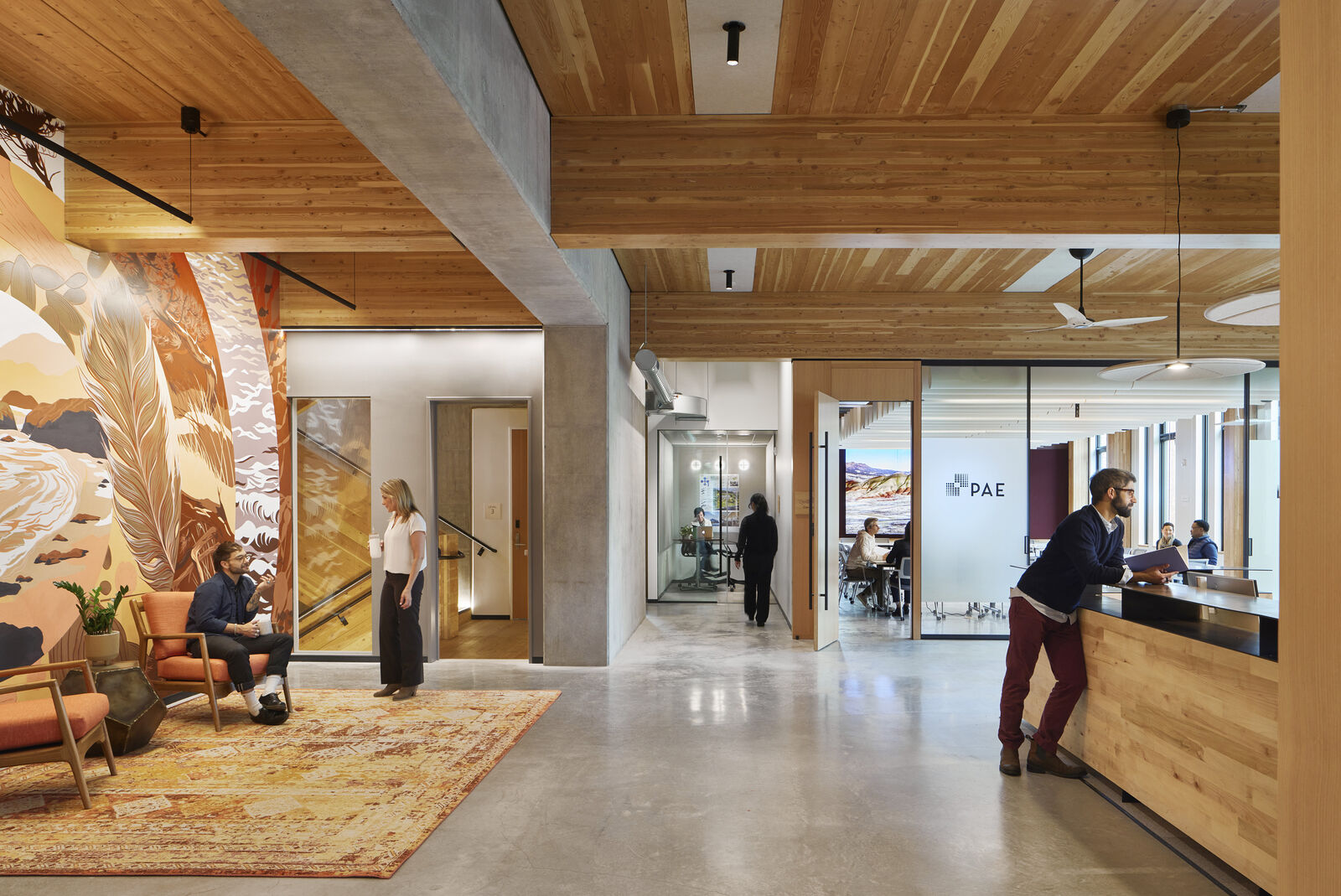
PAE Engineers, The PAE Living Building