A Model for Low-Carbon Redevelopment
City of Boulder, Western City Campus
Workplace, Adaptive Reuse
The City of Boulder’s new Western City Campus transforms a former hospital campus into a vibrant and sustainable hub for community and municipal services. Part of a larger Alpine-Balsam area plan, the site was purchased by the City of Boulder in 2015 to help the city meet its goals for long-term social and environmental responsibility and financial stewardship.
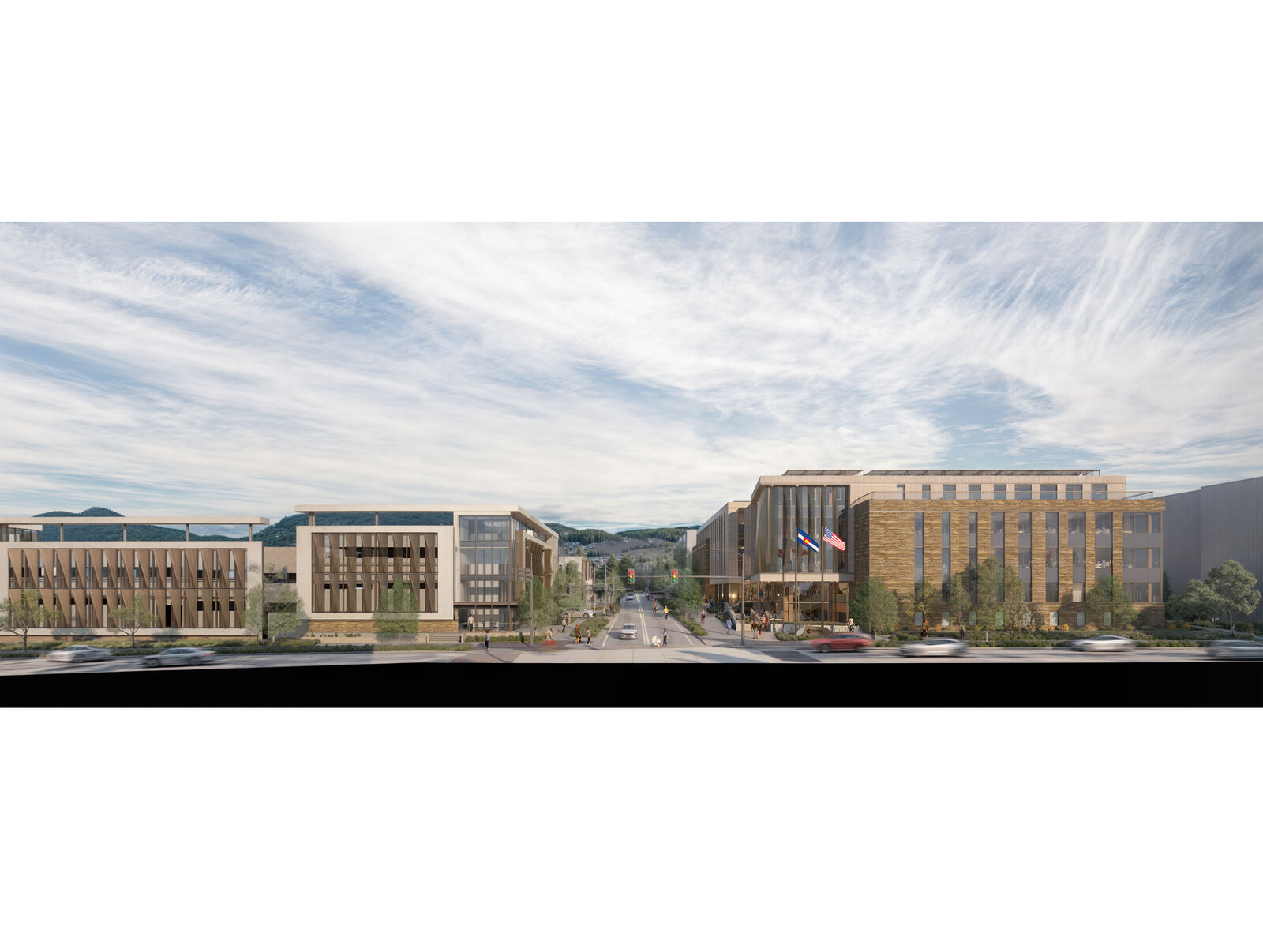
At the heart of the Western City Campus is the ZGF-designed transformation of a former medical official building into a new workplace for municipal services and a new civic plaza.
Location
Boulder, Colorado
Square Feet
117,000
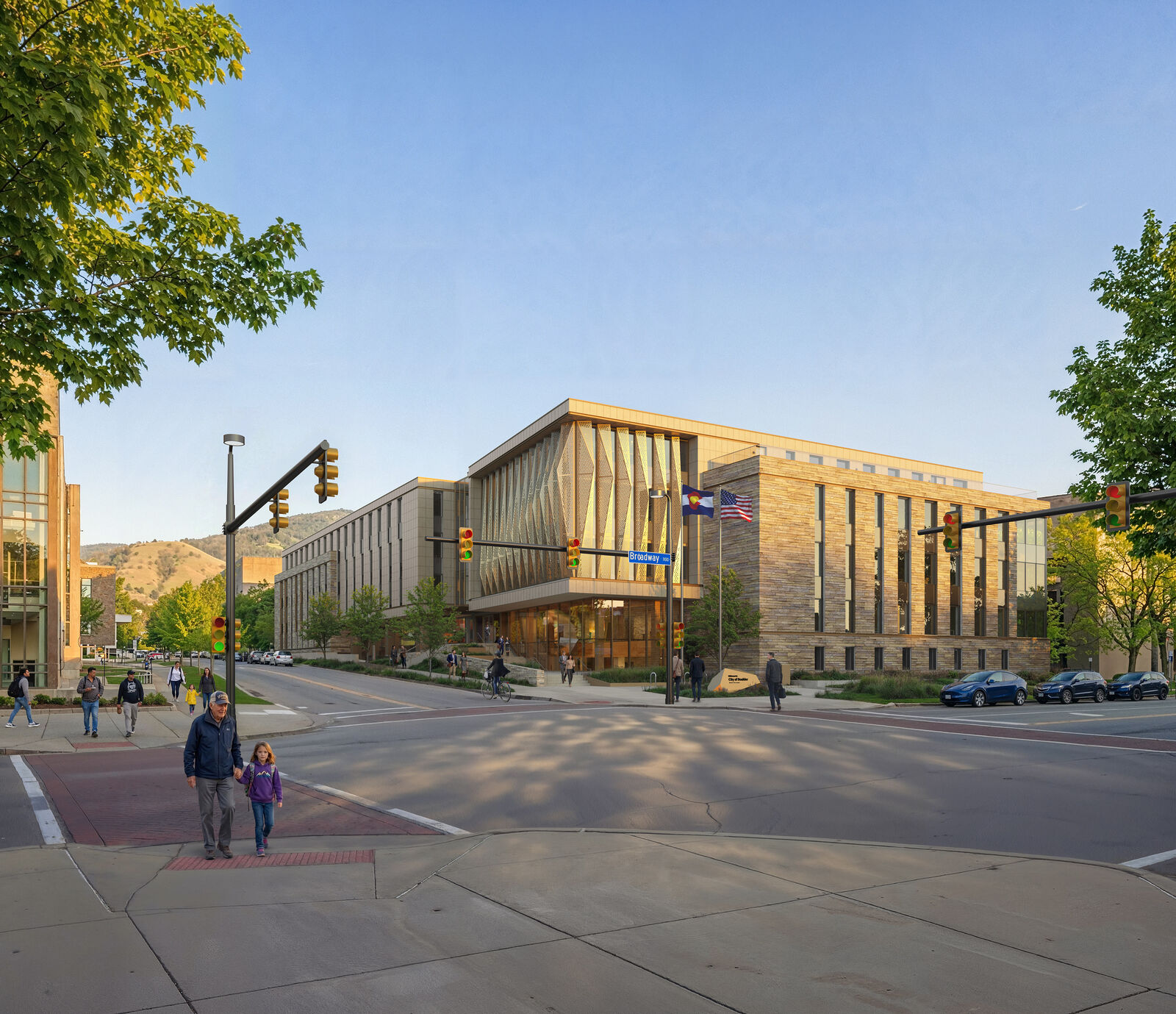
The adapted and expanded 117,000 SF building will anchor the new campus, nearly doubling the square footage of the existing structure. It is designed to create a welcoming and connected environment for community members to access most city services in one convenient location, a recurring desire heard throughout years of community engagement.
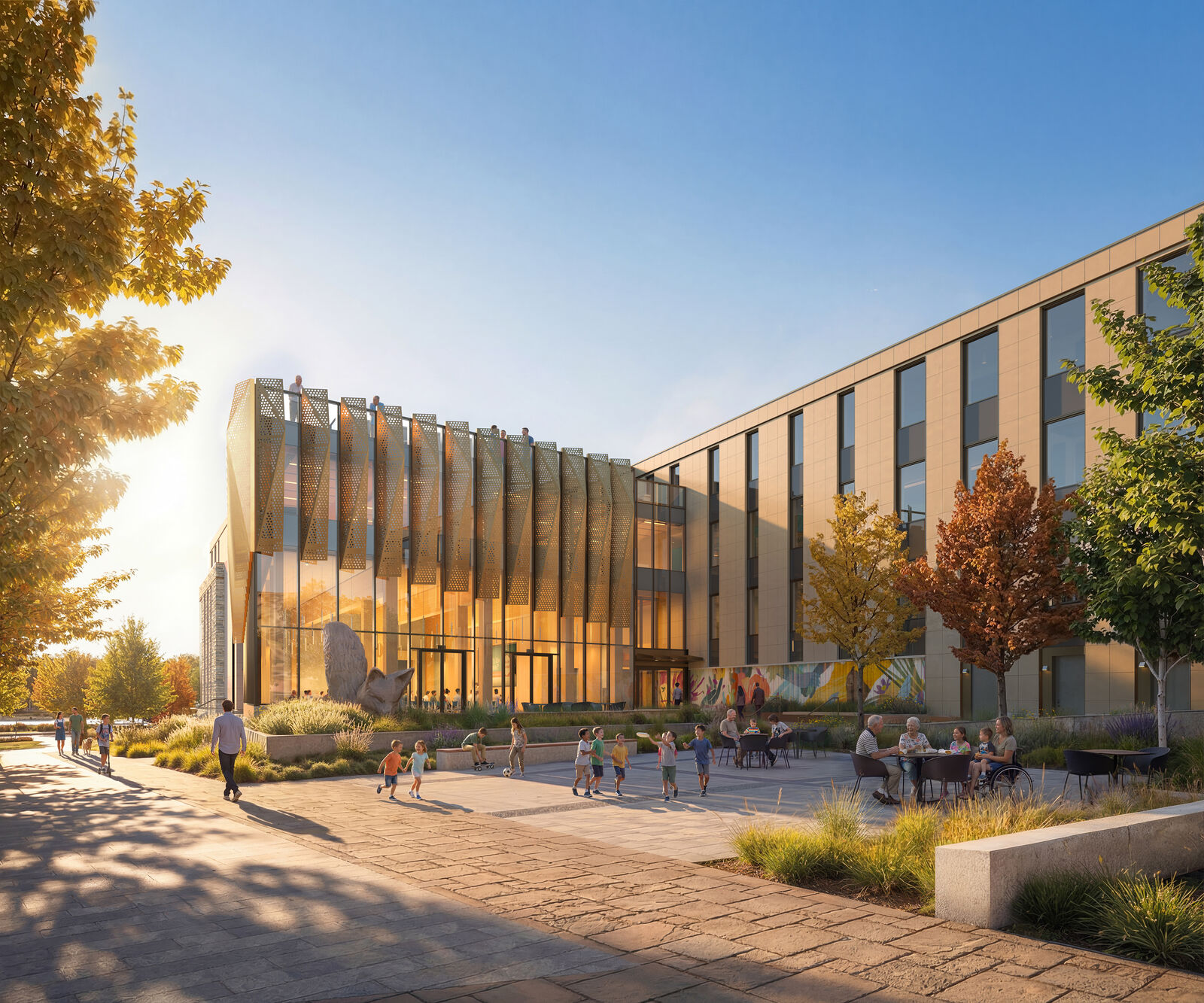
A refreshed exterior will take inspiration from the Flatiron rock formations that lie beyond the city. Rich layers of stone and perforated metal screens will break up the massing and create a distinctive gateway into the campus.
One of primary design drivers is to enhance connections between the interior and outdoors, leveraging civic corners to put the public realm on display from within. Exterior and interior graphics will celebrate Boulder’s natural surroundings, evoking the community’s sense of adventure and beloved traditions, such as the annual “tube to work day.”
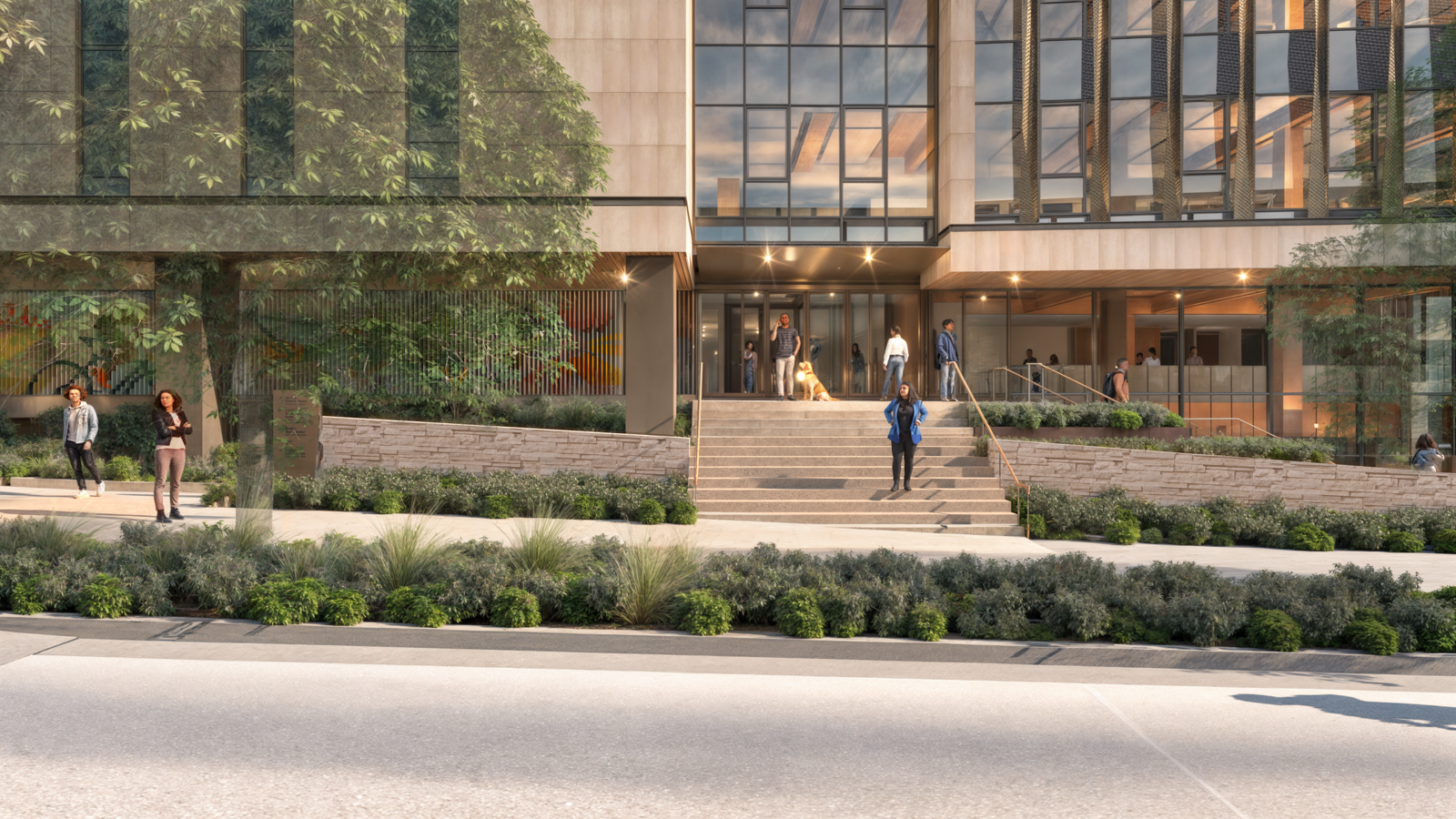
The street level will support a transparent and active ground plane, while a multi-purpose event space will allow visual connections into the courtyard, extending the warmth of the exposed mass timber to passerby.
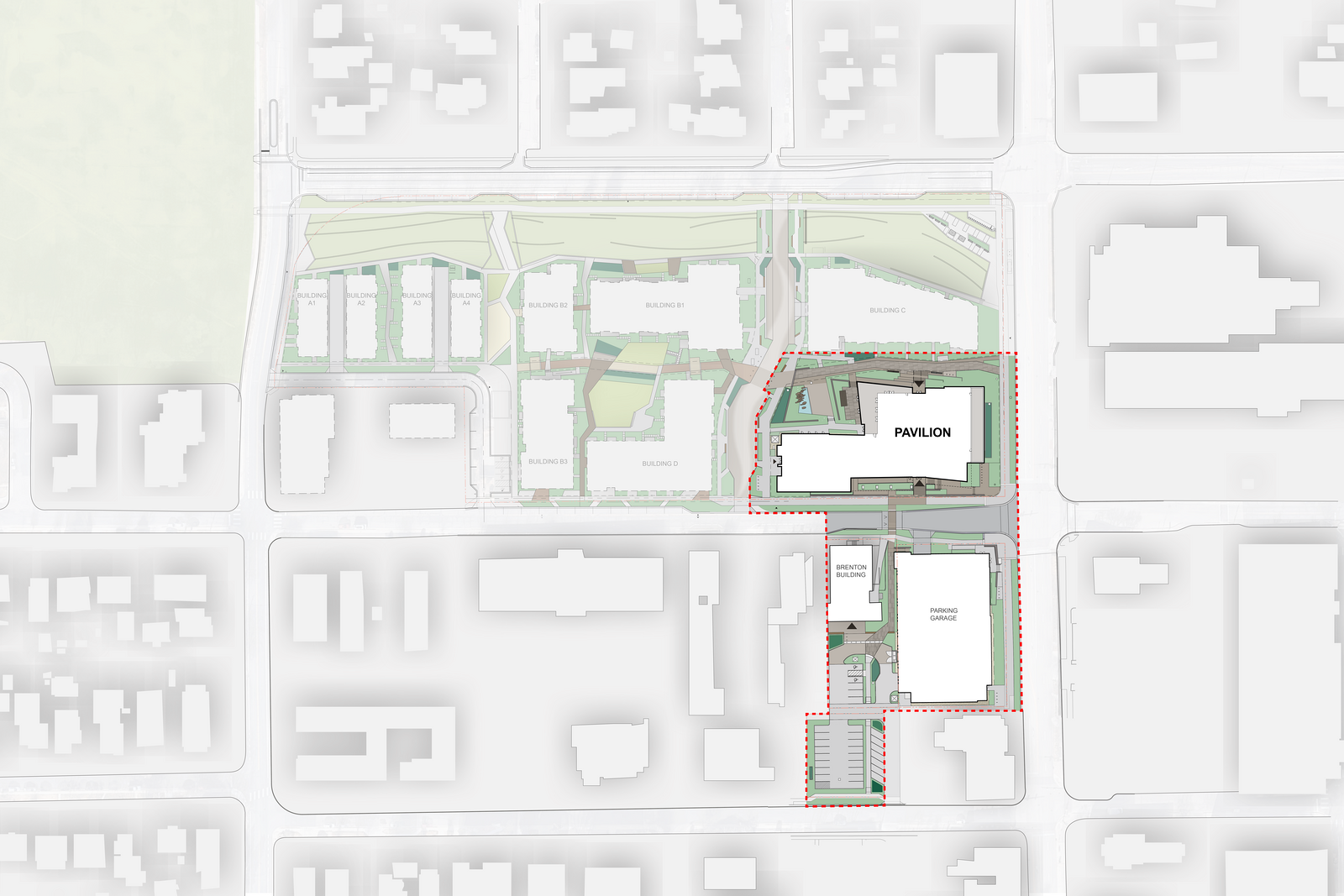
In addition to the reimagined municipal building, a new facade and vertical circulation elements for the existing parking structure will create cohesion between the garage and the Brenton Building, which ZGF is updating with a rooftop solar array. Construction of a new flood channel by CEI Constructors will remove the entire 8.8 acre Alpine Balsam property out of a 100-year flood plain.
The transformation goal for the former medical office building into a new municipal building is twofold: increase the square footage to maximize city and community programming areas while decreasing the overall carbon impact. By keeping much of the existing structure intact, the team is realizing a 73% embodied carbon savings over new construction.
Thoughtful material selections for the expanded structure prioritize low-carbon options, including mass timber and low-carbon concrete as well as salvaged steel from the former hospital on campus. A new super insulated building envelope will support occupant comfort through temperature extremes and healthy indoor spaces even when the outside air quality is poor.
A rooftop solar array will provide nearly 40% of the energy needs and help the building achieve 81% energy saving over the 2030 baseline. The transformation to all-electric operations in municipal building as well as all structures on campus will eliminate onsite emissions and ensure the City of Boulder’s operational carbon footprint continues to reduce with the greening of the grid over time.
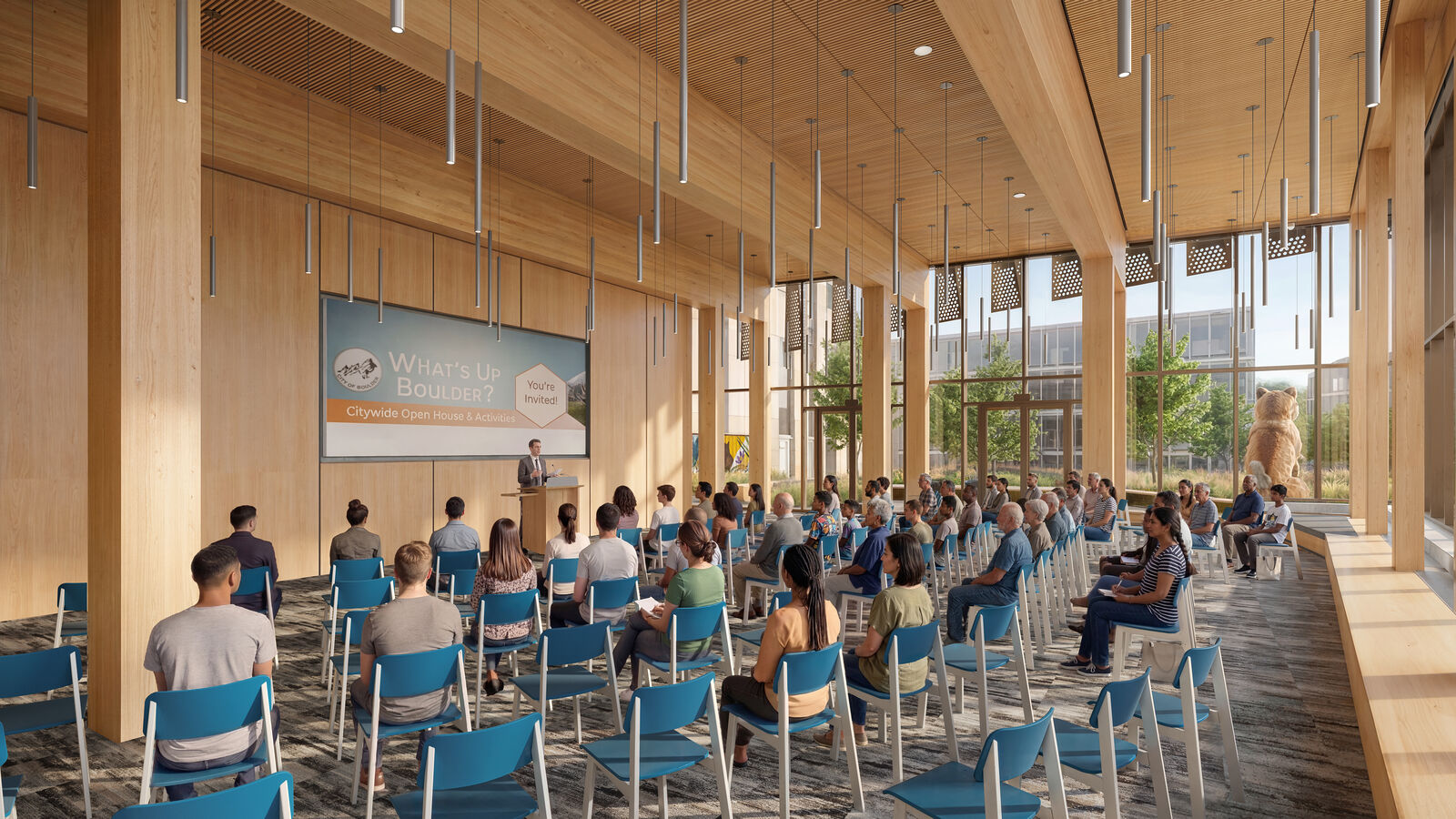
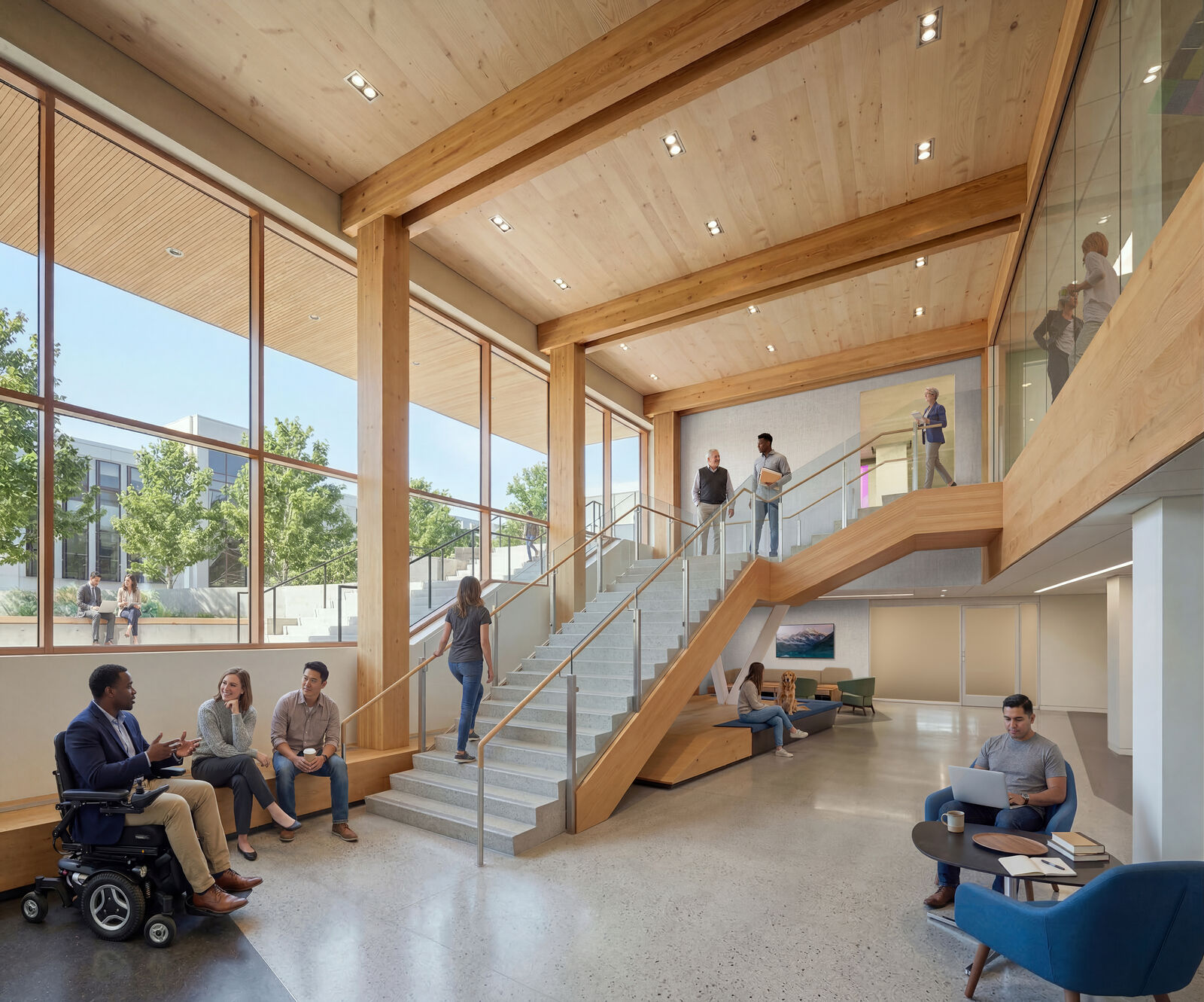
Mass timber will provide multiple benefits, including supporting the City’s low carbon goals and maximizing daylighting and transparency to enhance the occupant experience.
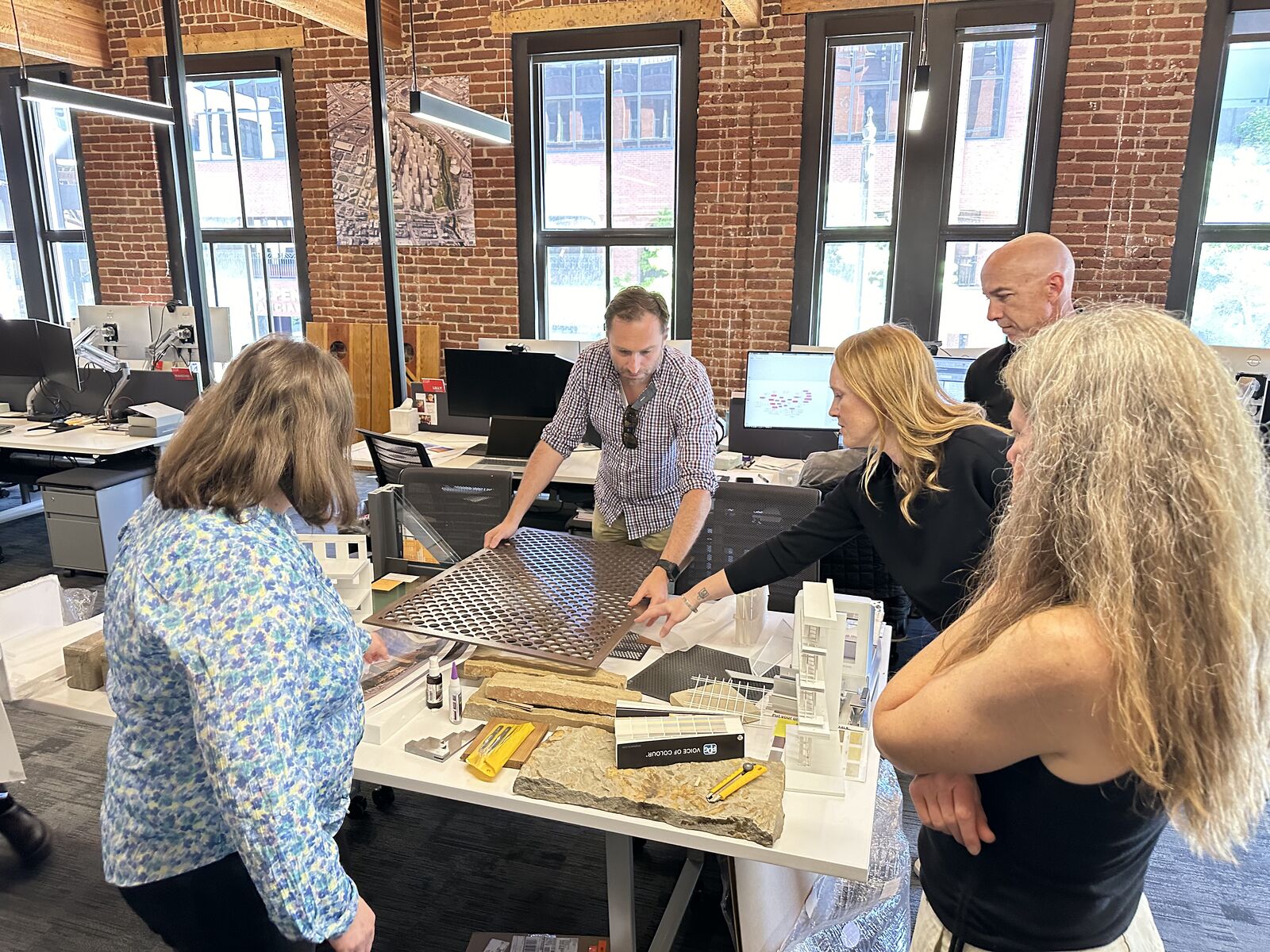
Insights surfaced during stakeholder workshops emphasized the importance of variety, well-being, and functionality. Natural materials and daylighting will create warm and welcoming spaces for employees and the community.
Building New Program
Code restrictions prevented increasing the building’s overall height to support new programming. Instead, ZGF is encapsulating the existing structure on three sides, building square footage horizontally and designing a one-story vertical expansion. The team selected mass timber for the 62,000 SF expansion, which nearly doubles the existing medical office building footprint.
The wood will provide multiple benefits: supporting the City of Boulder’s low carbon goals, maximizing the floor to ceiling area, and increasing daylighting and transparency to enhance the occupant experience. Two large multi-purpose spaces will support programming for city staff and community and business events. Three floors of office space will enable the City of Boulder to bring together employees that currently work across several buildings and consolidate key city services into one accessible location.
The team encapsulated the existing structure on three sides, building square footage horizontally and designing a one-story vertical expansion.
– Watch on YouTube
Prioritizing Stakeholder Input
Collaboration, inclusivity, accessibility, and transparency were key goals from the start, beginning with the campus masterplan. Visioning and discovery sessions facilitated by ZGF and D.O.R.I.S. research institute gathered input, feedback, and ideas from the City of Boulder leadership team and various stakeholder groups to help inform the basis for design.
Insights surfaced during stakeholder workshops emphasized the importance of variety, well-being, and functionality; voiced a preference for nature-inspired spaces that provide support, freedom, and a seamless indoor-outdoor connection; and expressed a desire for a place that offers a welcoming arrival experience, engages both staff and the community, inspires a sense of belonging, promotes wellness, and caters to different working styles and needs. Additional elements of focus ranged from incorporating natural elements and daylighting to striking a balance between professionalism and playfulness to a push for functionality with no wasted space. A bright, neutral, and natural palette with pops of color in active spaces emerged as an aesthetic preference.


University of Colorado, Anschutz Health Sciences Building
