A Research Hub Built for a Quantum Future
The University of Arizona, Grand Challenges Research Building
Higher Education, Laboratories and Research
Grand challenges call for grand solutions. The University of Arizona’s Grand Challenges Research Building is designed to do just that: provide an interdisciplinary venue for developing quantitative solutions for the eight ‘grand challenges’ of the Fourth Industrial Revolution. This includes water, energy, climate change, precision medicine, neuroscience, space exploration, quantum information, and material science as it relates to advanced analytics, automation, and advanced-manufacturing technology.
Housing the University’s Research Innovation and Impact Initiative (RII), which includes the Center for Quantum Networks, the building facilitates cross-pollination between physical, digital, and biological disciplines to forge unprecedented scientific breakthroughs that will fundamentally shape the future of our society.
With the intention of uniting diverse scientists from across campus, the building is conceptually connected to research across the University, while being physically connected to the adjacent Meinel Optical Sciences Building. Within its six stories, the building accommodates optical science research, damp research, and associated dry research. To support a collaborative research culture, space types such as lounge spaces, kitchenettes, outdoor terraces, flex offices, and conferences rooms provide venues for both spontaneous interaction and intentional gathering.
Location
Tucson, AZ
Square Feet
125,340
Completion date
2024
Project Component
Architecture services
Interior design
Laboratory planning
Every square foot of the Grand Challenges Research Building has been thoughtfully designed to promote the University’s culture of collaboration and innovation while imparting up-to-the-minute knowledge and developing cutting-edge technology in optics, quantum information science, advanced communications, and biomedical technologies.
Elizabeth Cantwell, University of Arizona Senior Vice President for Research and Innovation
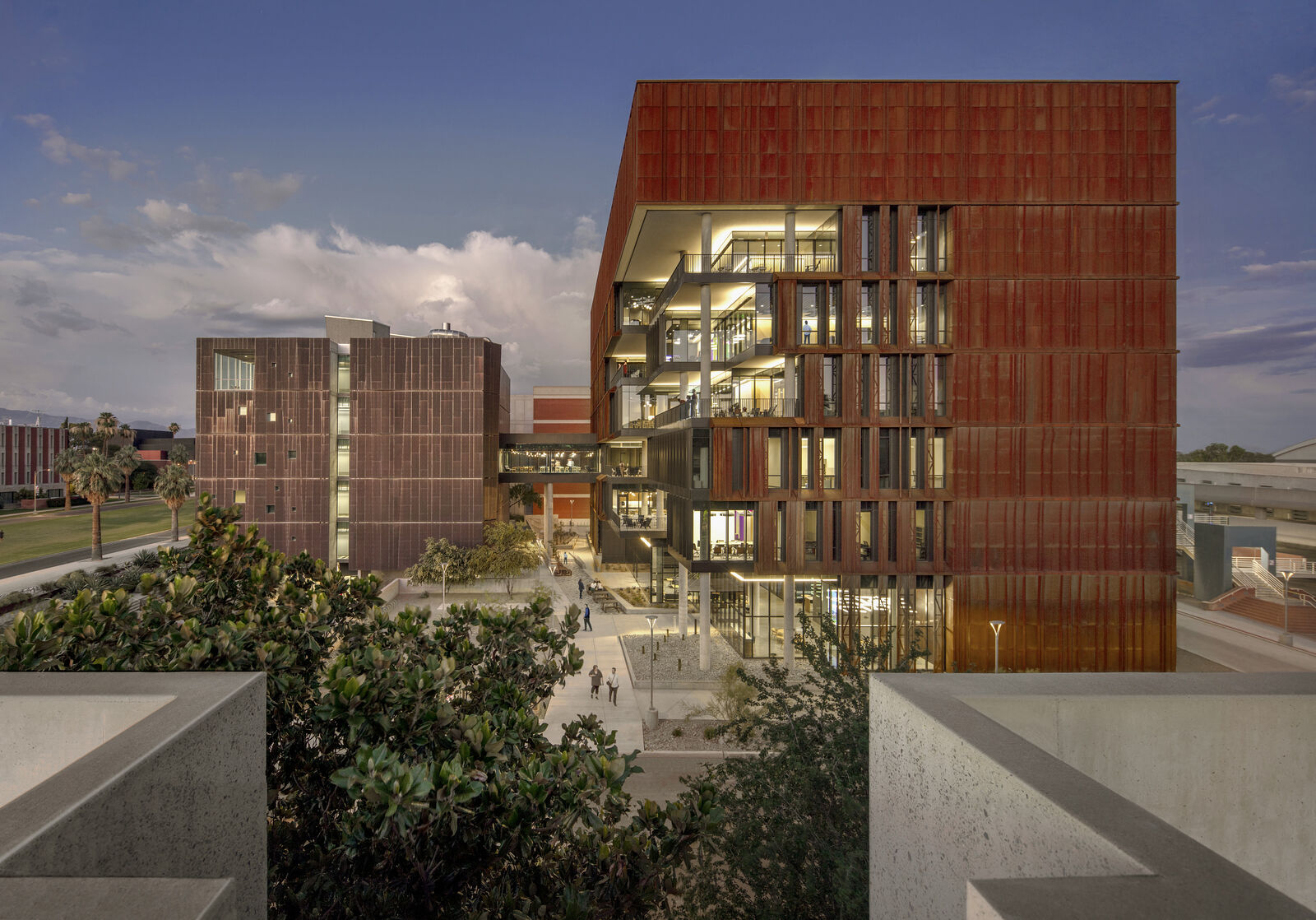
Nestled between some of the University’s most trafficked public spaces and sports destinations, including the football stadium, basketball arena, library, and the University mall where game day tailgating takes place, the Grand Challenges Research Building is uniquely sited in a prominent campus location. With high volumes of foot traffic anticipated from students and University of Arizona sports fans, the design team seized the opportunity to integrate the building into the pedestrian journey to these campus destinations, connecting the research in this specialized facility to the broader public.
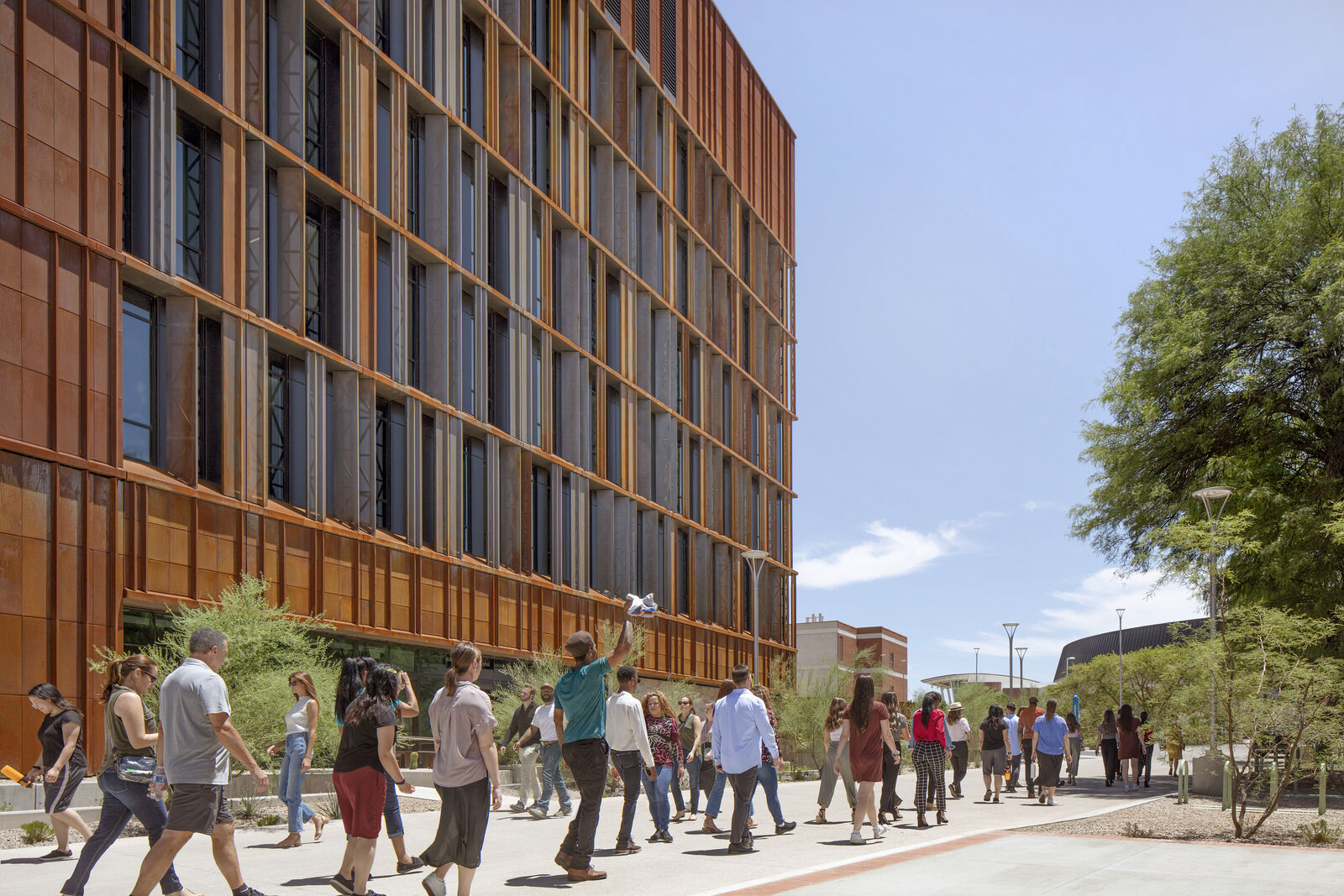
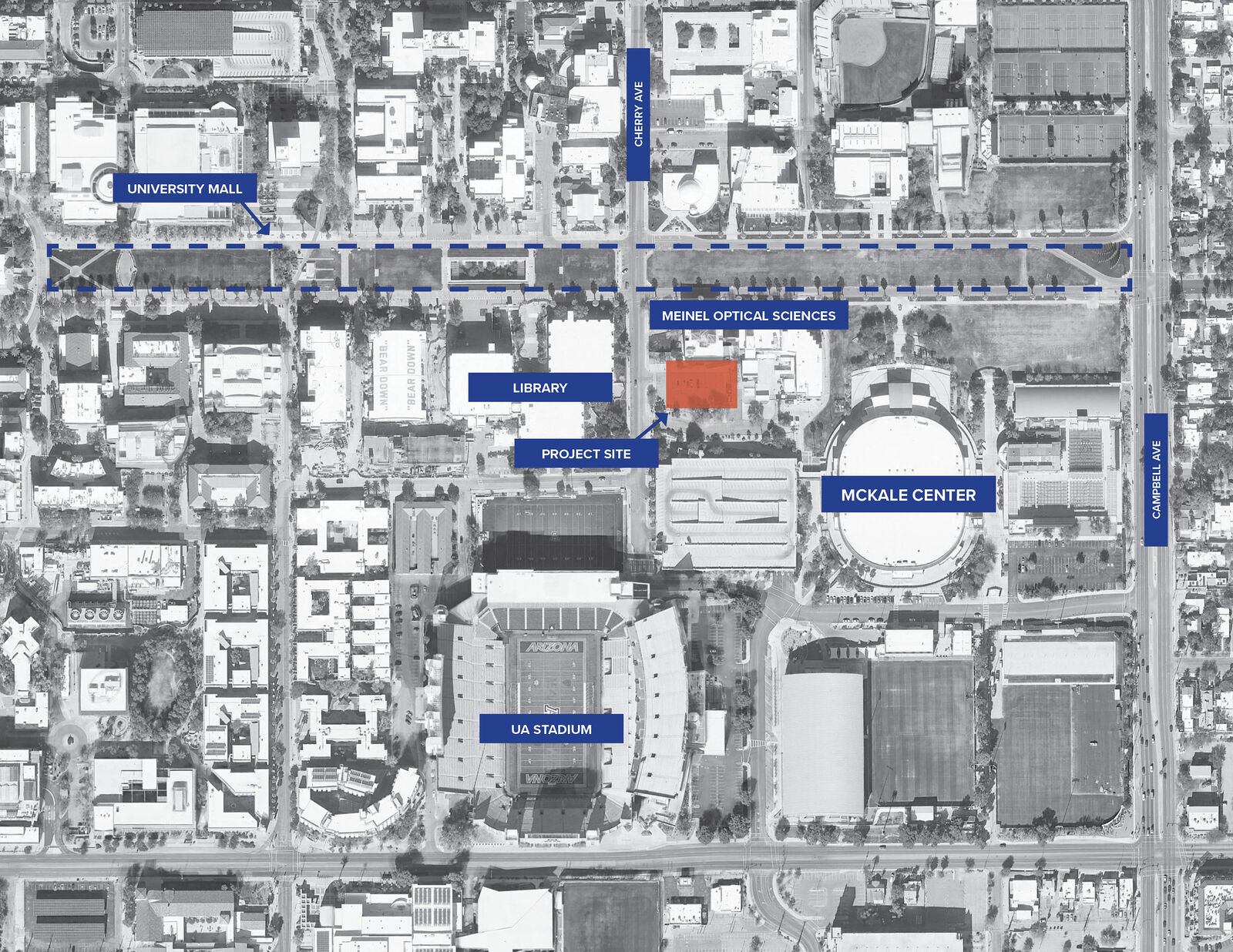
Establishing an outward feeling of connection given the building’s site and programming requirements was challenging. With the Meinel Optical Sciences building placed between the mall and the project site, which was previously a parking lot along a service alley, coupled with the enclosed, windowless rooms required for optical sciences laboratories, the design team innovated to prevent the building from being isolated with insular spaces.
The solution was two-pronged: the design team leveraged the existing landscaping in front of the Meinel Optical Sciences building and extended the landscaping into the project site to blur the boundaries between the two buildings. From there, all the building’s active spaces, such as breakrooms, conference rooms, multipurpose rooms, and reception areas were concentrated in the north side of the building along the landscaped outdoor space.
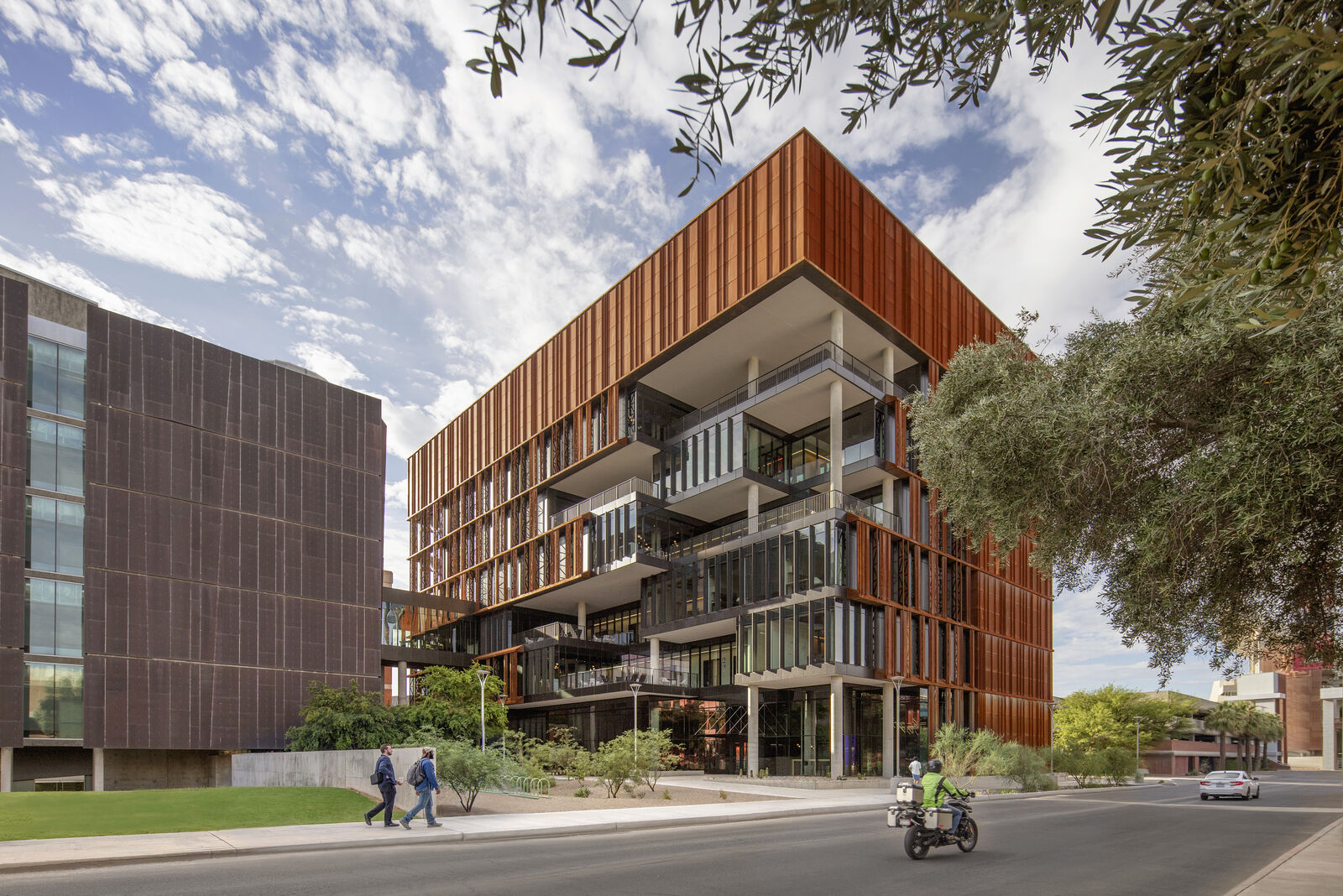
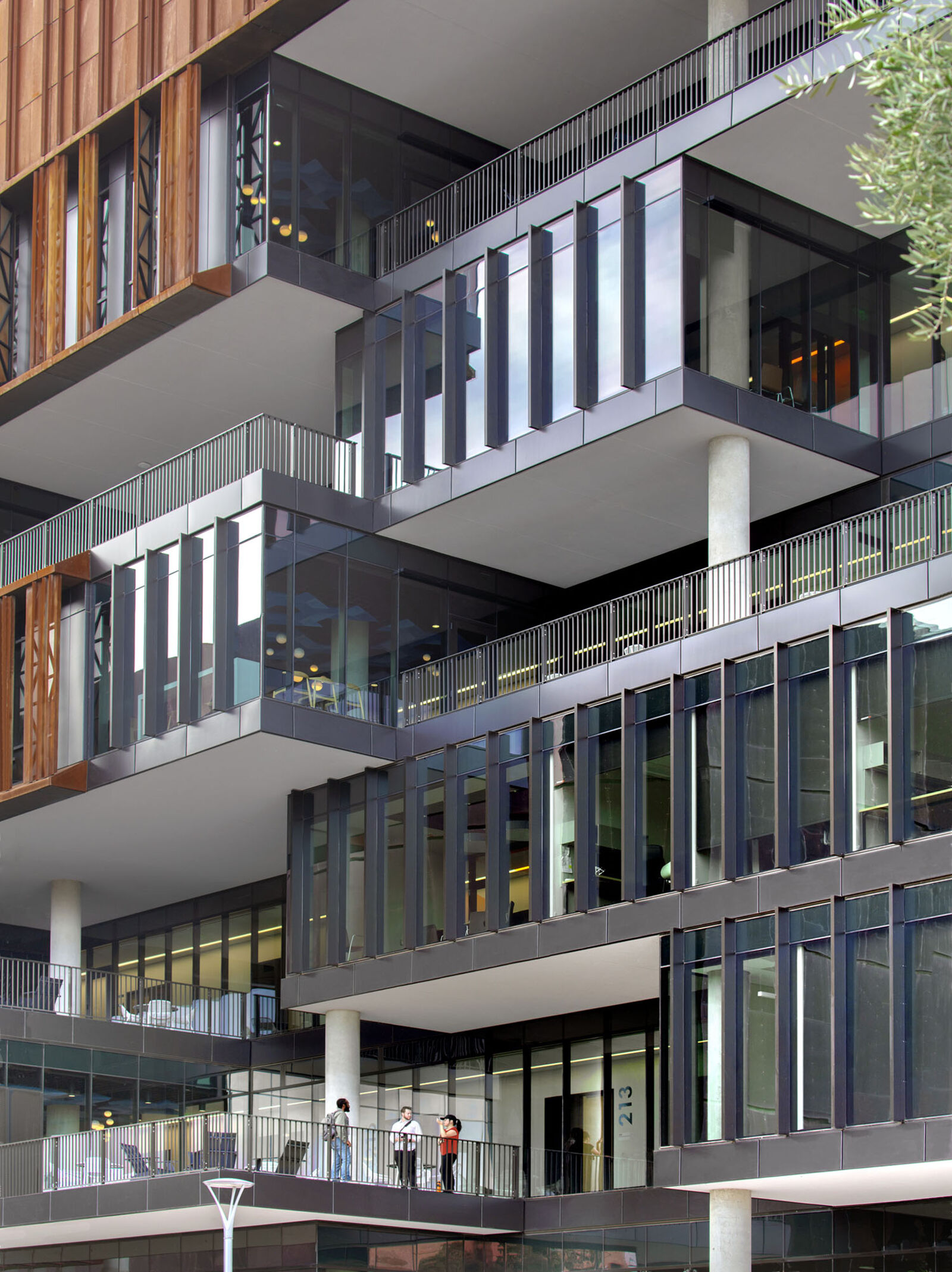
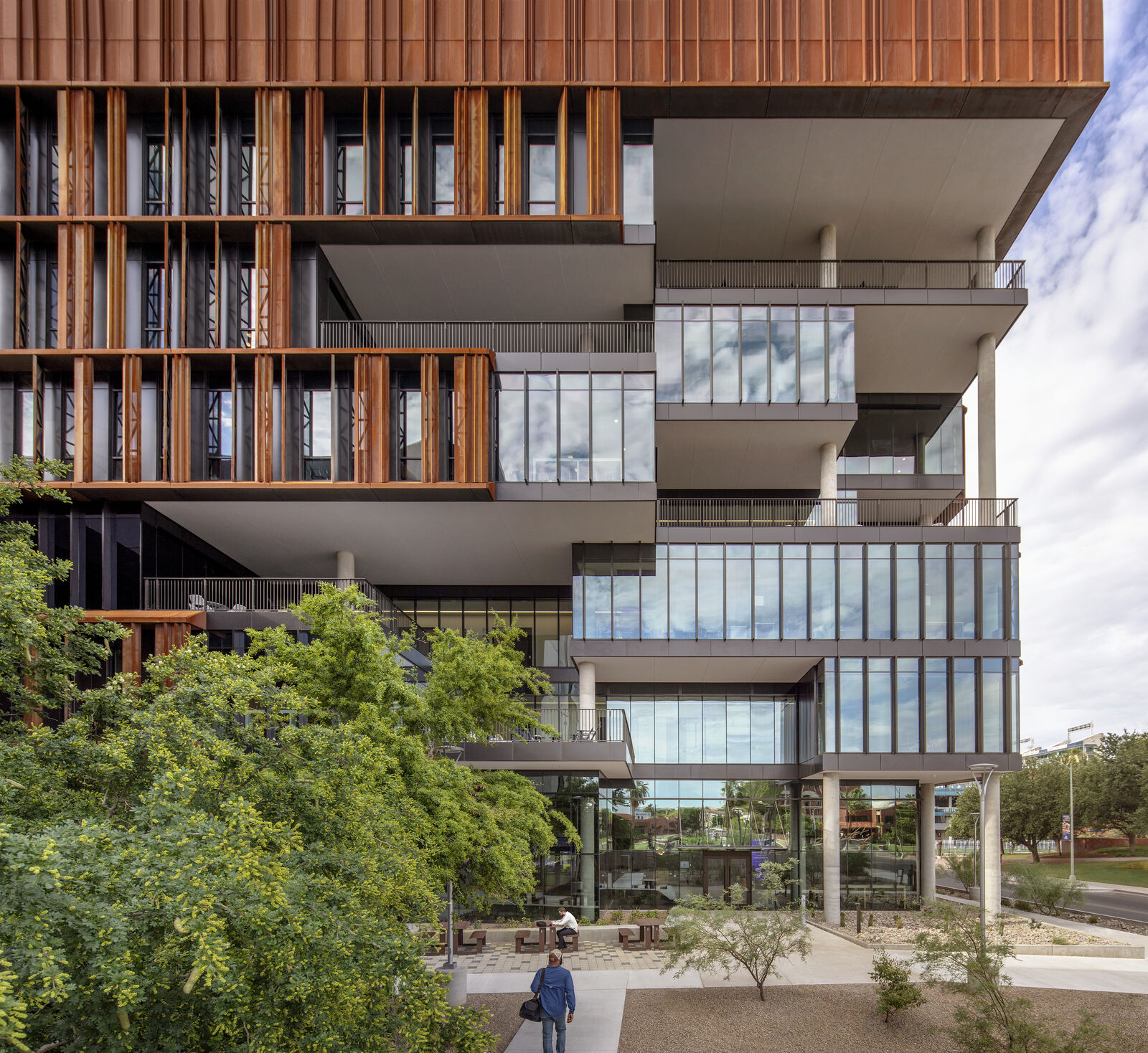
The architectural expression supports this solution, with outdoor terraces carved out of the building adjacent to the active spaces. The terraces are staggered rather than stacked to create diagonal views between floors, connecting occupants on all levels more closely to one another. This not only provides a visual connection from the terraces out to the main mall, but from the main mall back to the terraces.
The primary building envelope is made from weathering steel skin that extends the palette of the site walls made from the same material in the adjacent outdoor spaces. The metal façade provides crisp definition of the primary rectilinear form and a sense of protection from the blistering desert environment, while the spaces within the formal erosion are wrapped in floor-to-ceiling glass—another design choice made to maximize the literal and figurative connection between these spaces and the broader campus.
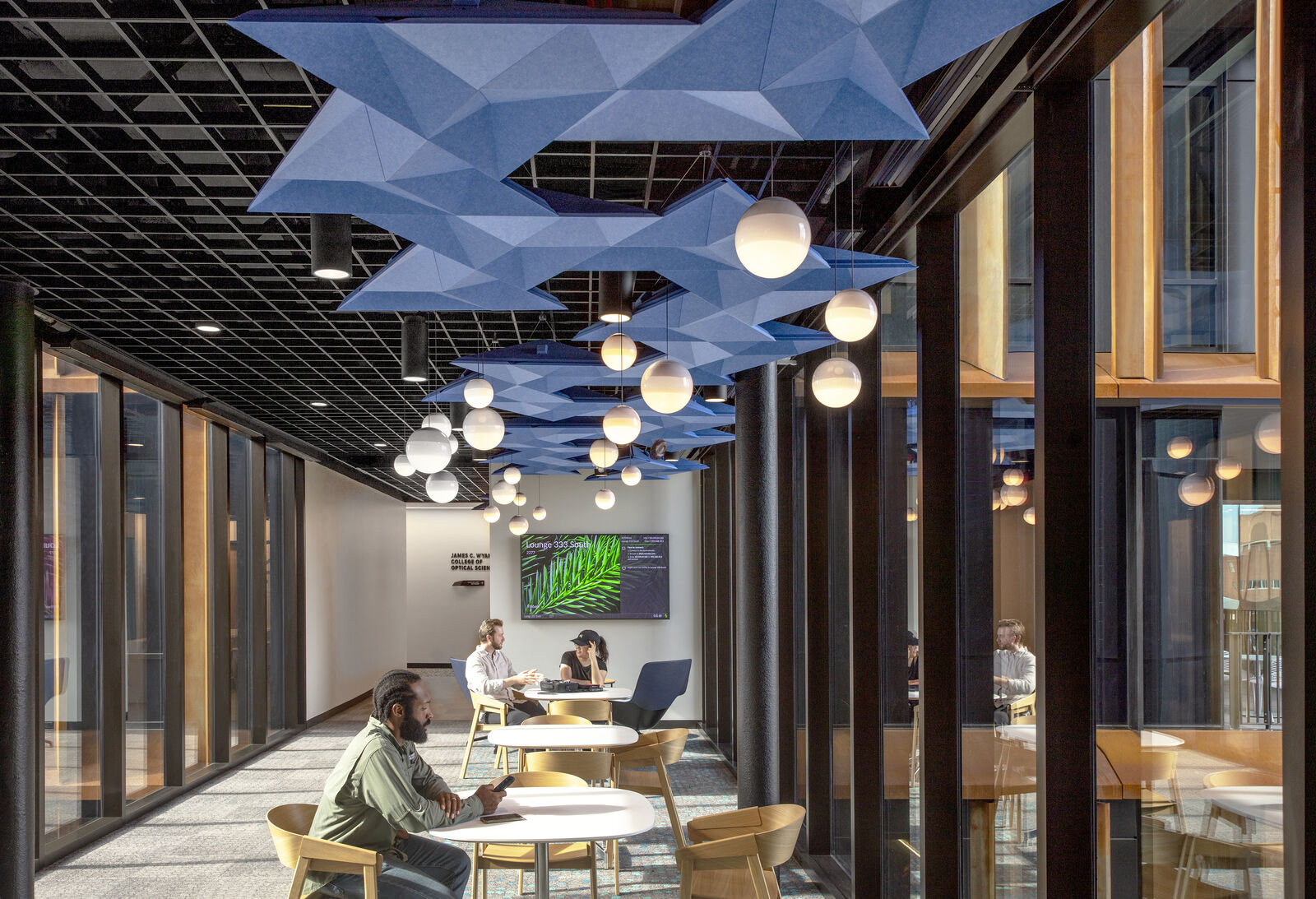
The bridge connecting the Grand Challenges Research Building to the Meinel Optical Sciences building is more than a passageway. With visual connections out to the terraces, spaces for both collaborative work and nooks for respite, and a color story that at once reflects the University’s brand colors while being evocative of Tucson’s natural palette, the design of the bridge reinforces the building’s connection to its place.
With the intention of creating an environment of openness, collaboration, and understanding, the interior is designed to put occupants at ease. Aptly scaled spaces filled with warm tones inspired by the Sonoran Desert landscape are coupled with an outpouring of natural light. For ease of navigation, there is an environmental graphics and wayfinding package inspired by quantum physics, which can be seen in applications such as the dichroic film spanning glass panels that exudes an energetic sensibility. This establishes a welcoming environment rooted in both place and the research, putting building occupants in the best frame of mind to do groundbreaking work.
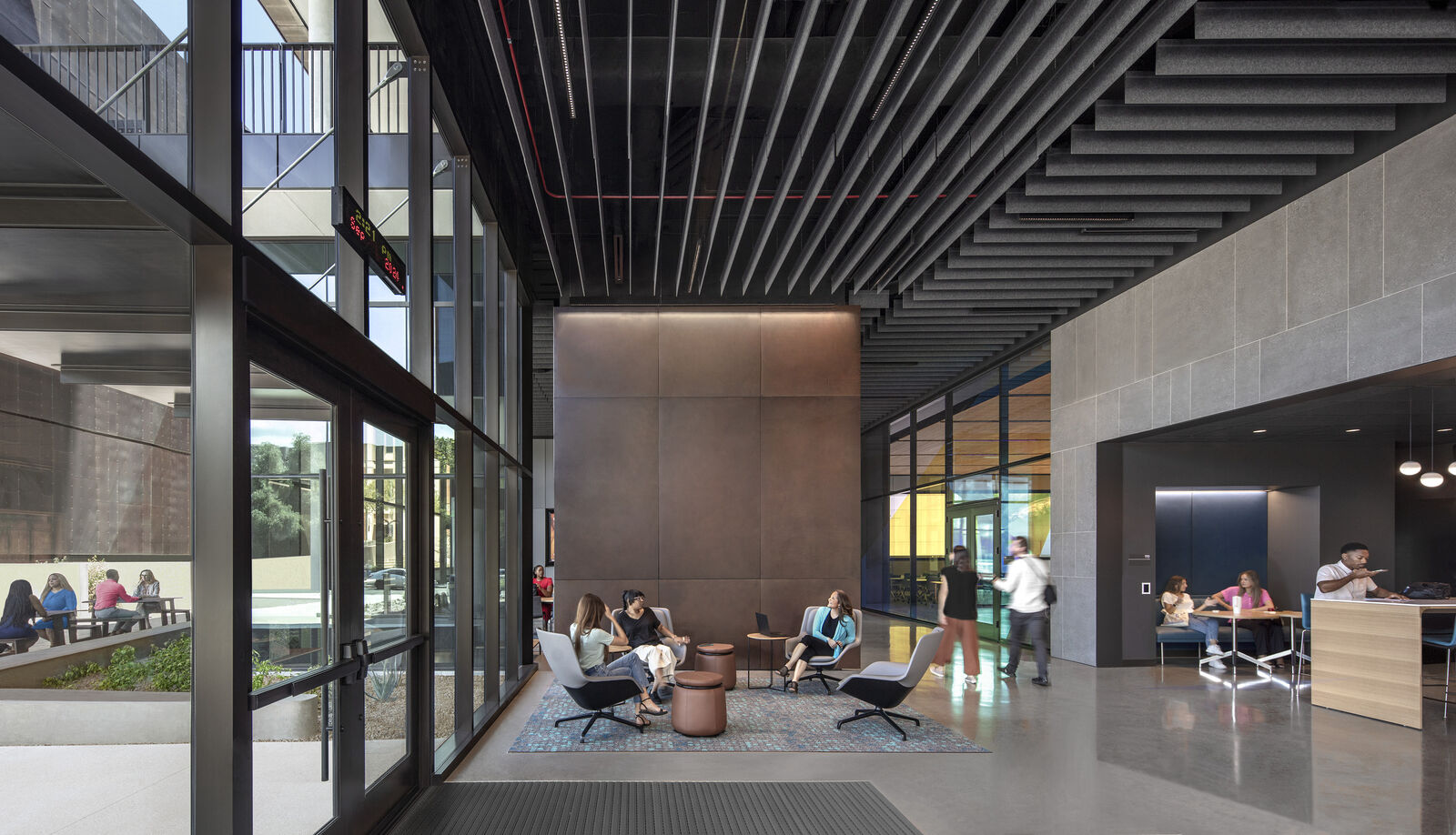
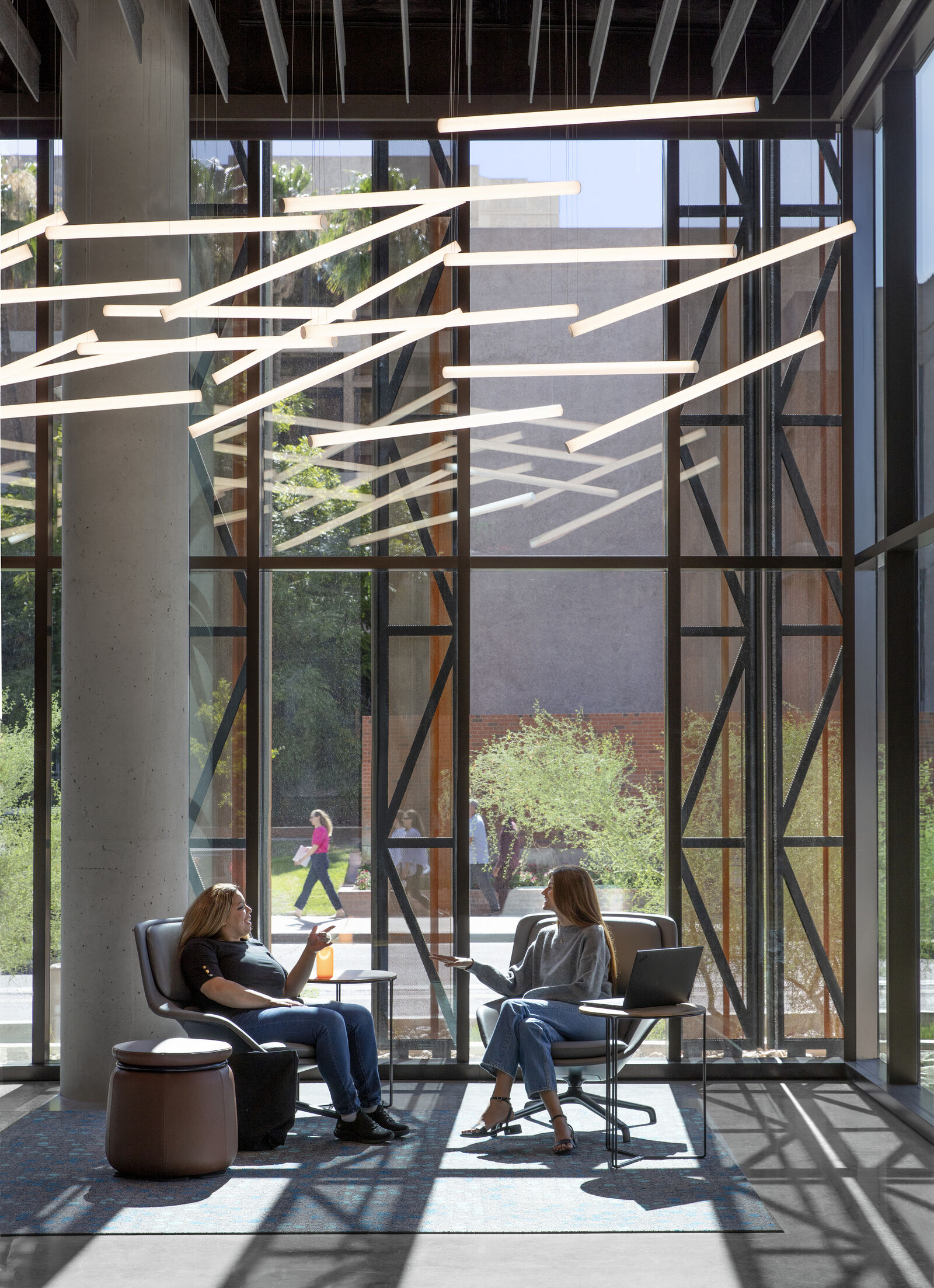
An expansive lobby serves as the collaborative heart at the base of the building's erosion from the main rectilinear form. Housing various types of meeting spaces, high end vending machines, and a mix of hard and soft seating, the publicly accessible lobby provides an inviting place to hang out between classes, study with classmates, host events, or grab a quick bite. By drawing in students and faculty from beyond the research groups housed within building, this collaborative heart connects the building to the broader campus.
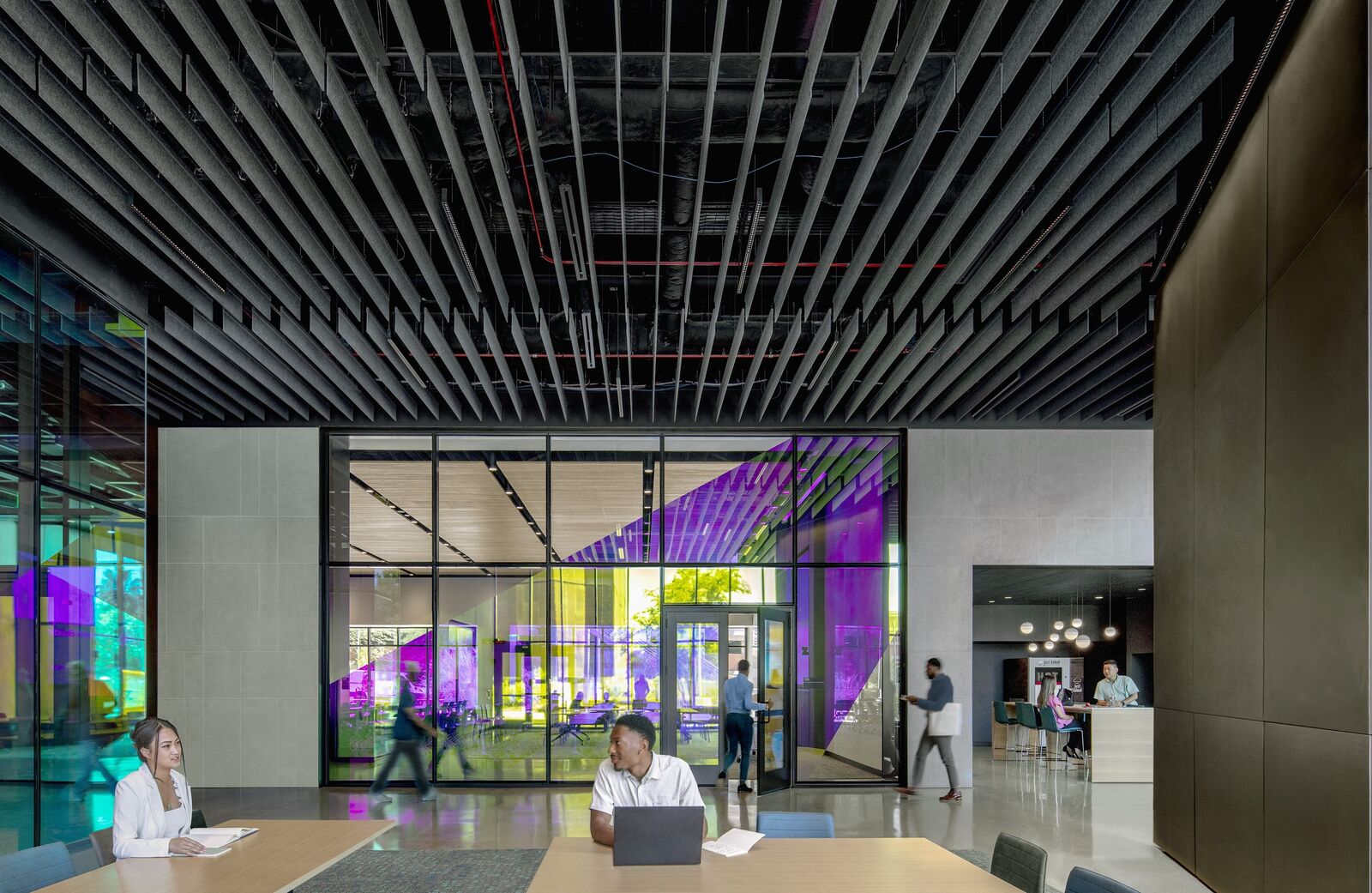
Dichroic film applied to glass throughout the interior provides a nod to optical science research, while creating a sense of playfullness and adding color to the neutral palette.
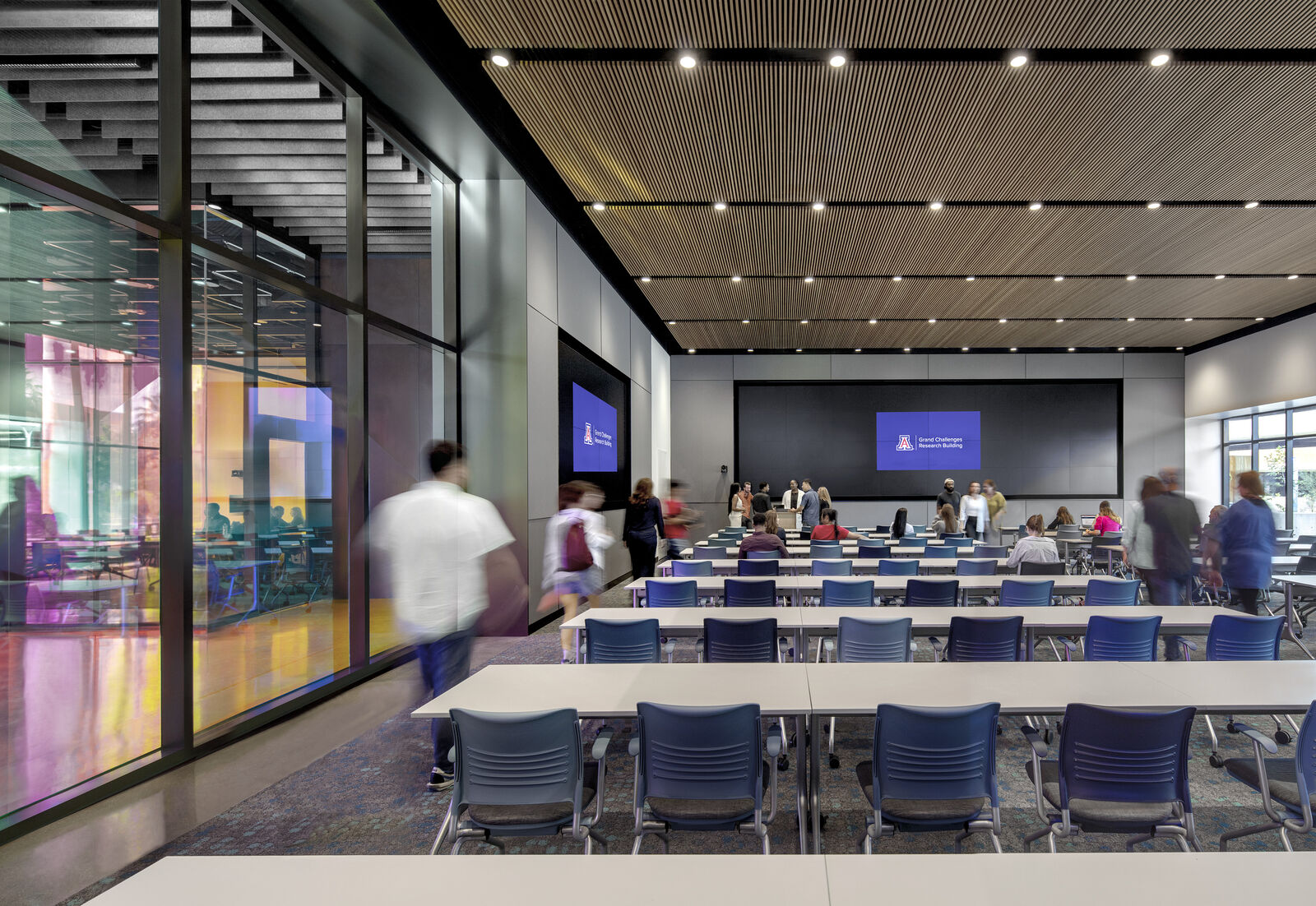
A lecture hall on the ground floor is characterized by transparency and flexibility. Flanked by floor-to-ceiling glass lengthwise and equipped with wall-to-wall LED screens on either end, the learning environment can flex into numerous layouts to suit different learning and lecturing styles.
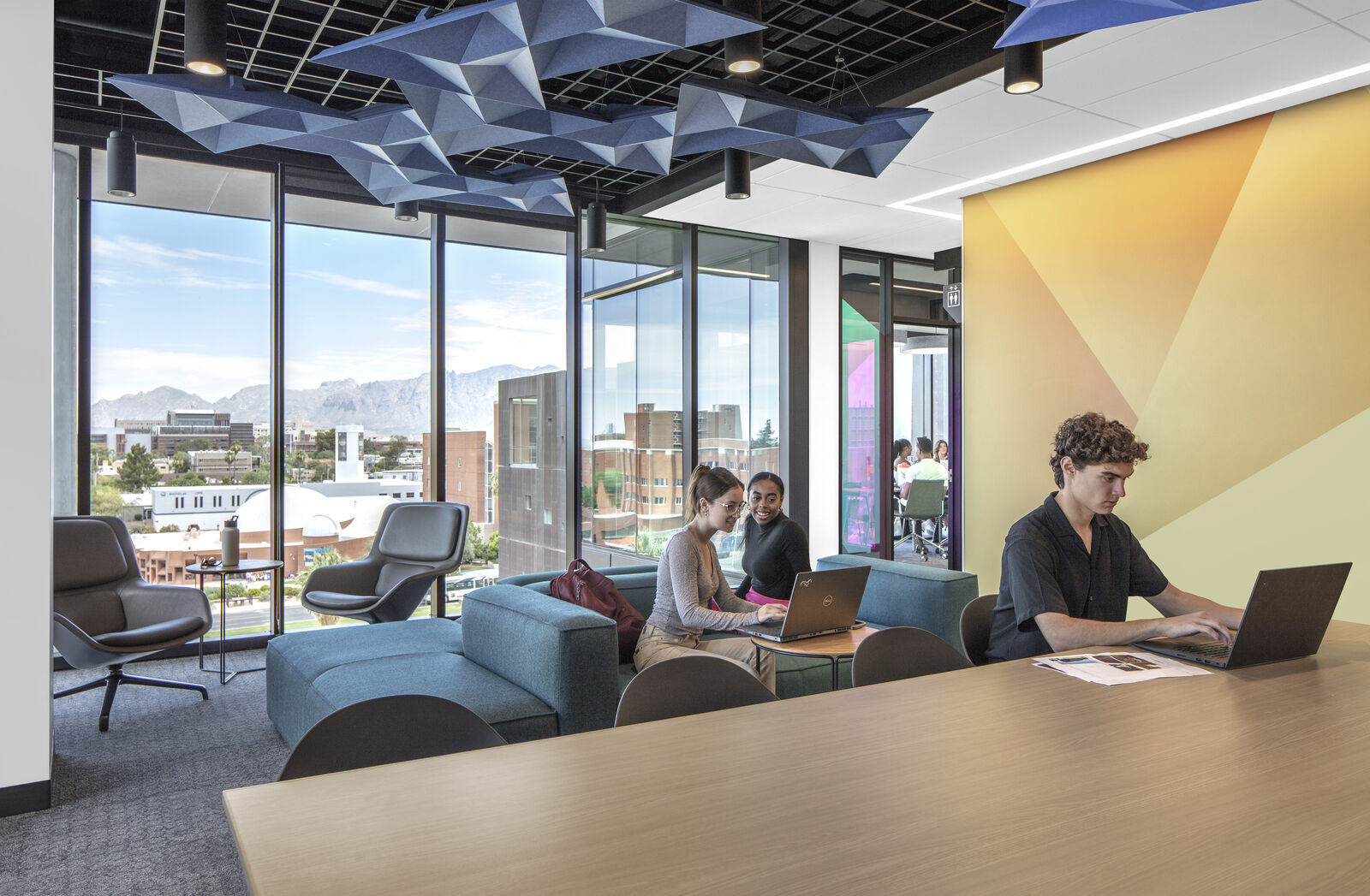
Active spaces are concentrated on the north side of the building, including collaboration spaces such as study nooks, conference rooms, and kitchenettes. This configuration enhances user comfort by avoiding the harsh south facing sun, while affording views out to the Catalina Mountains.
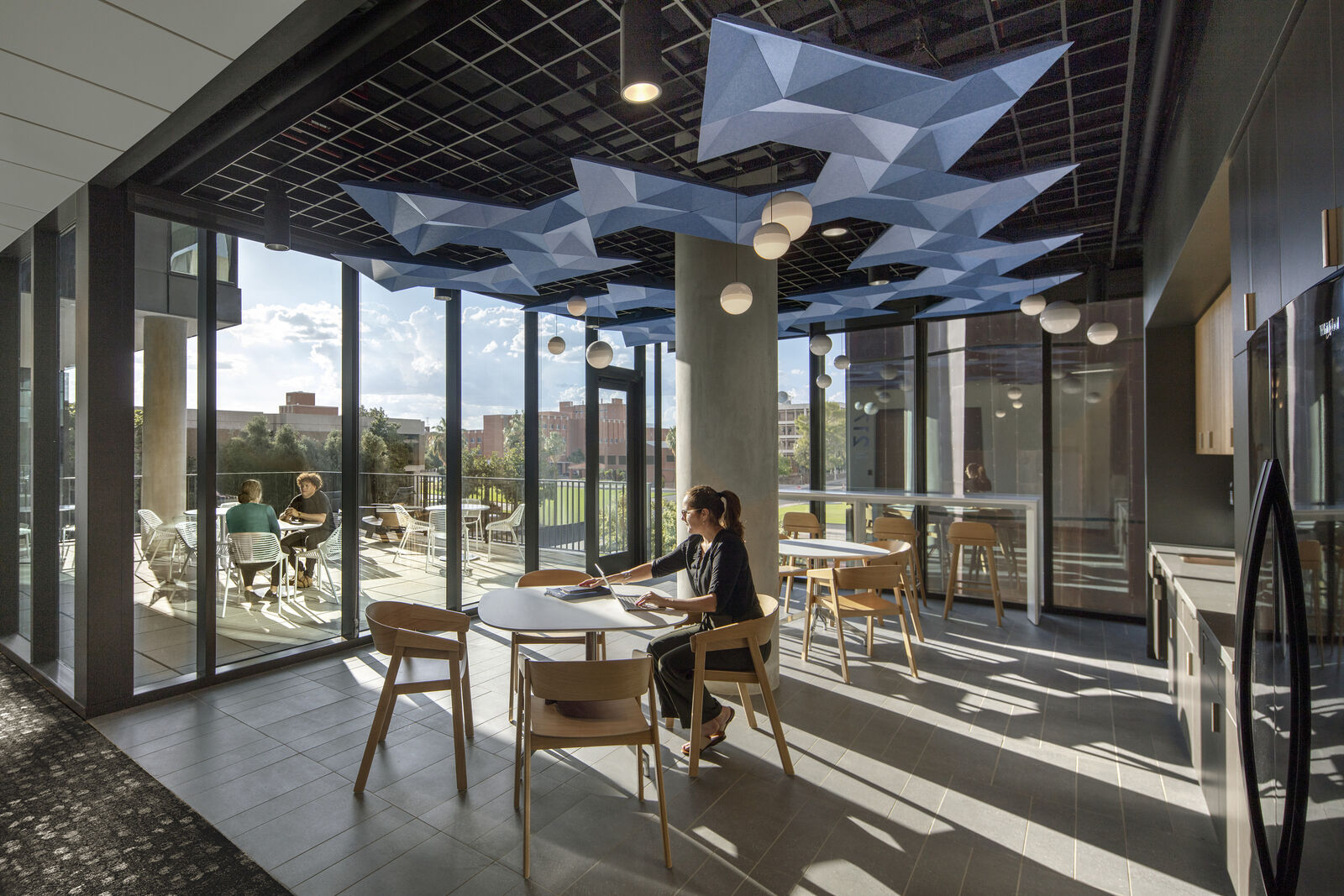
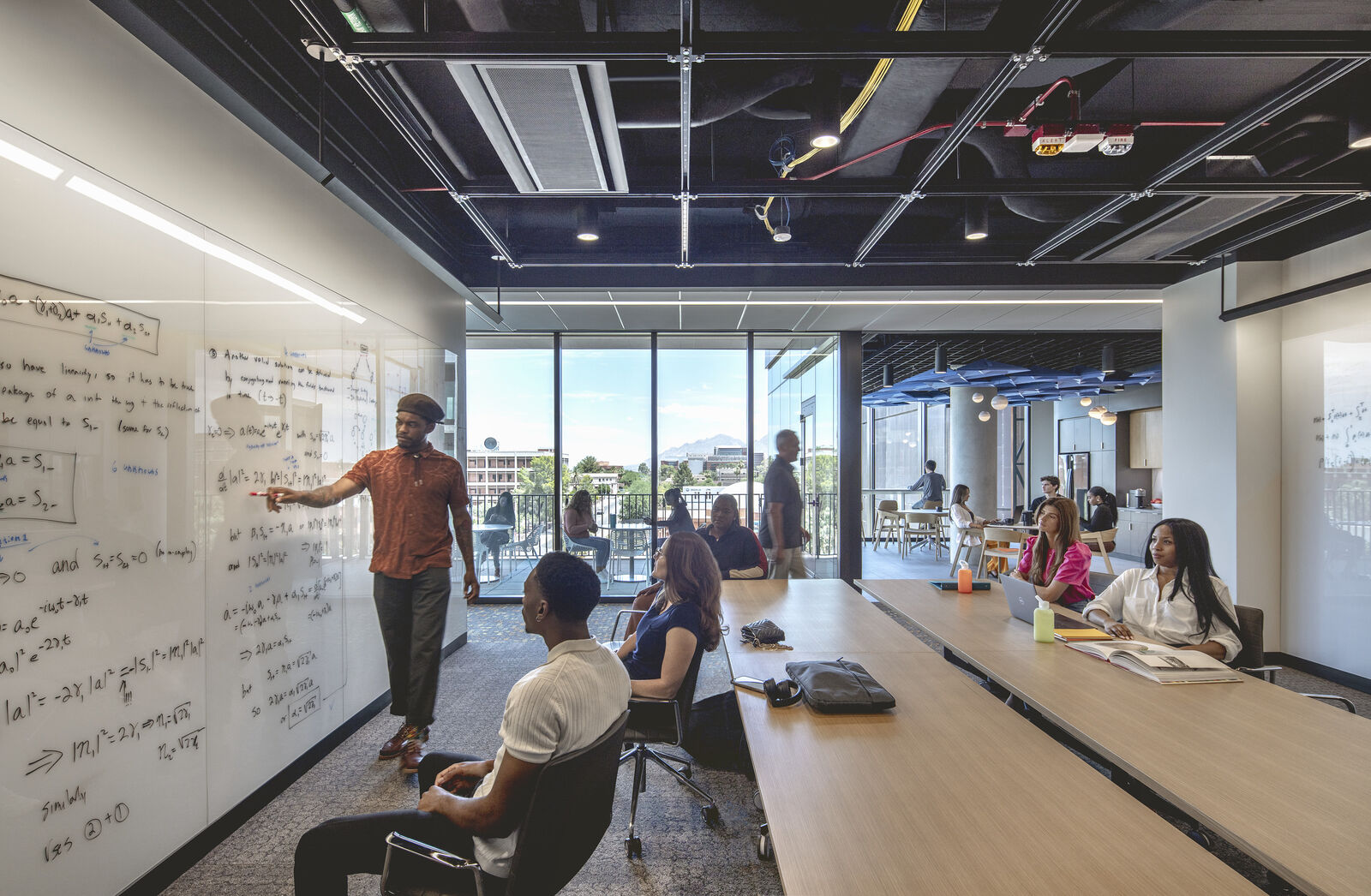
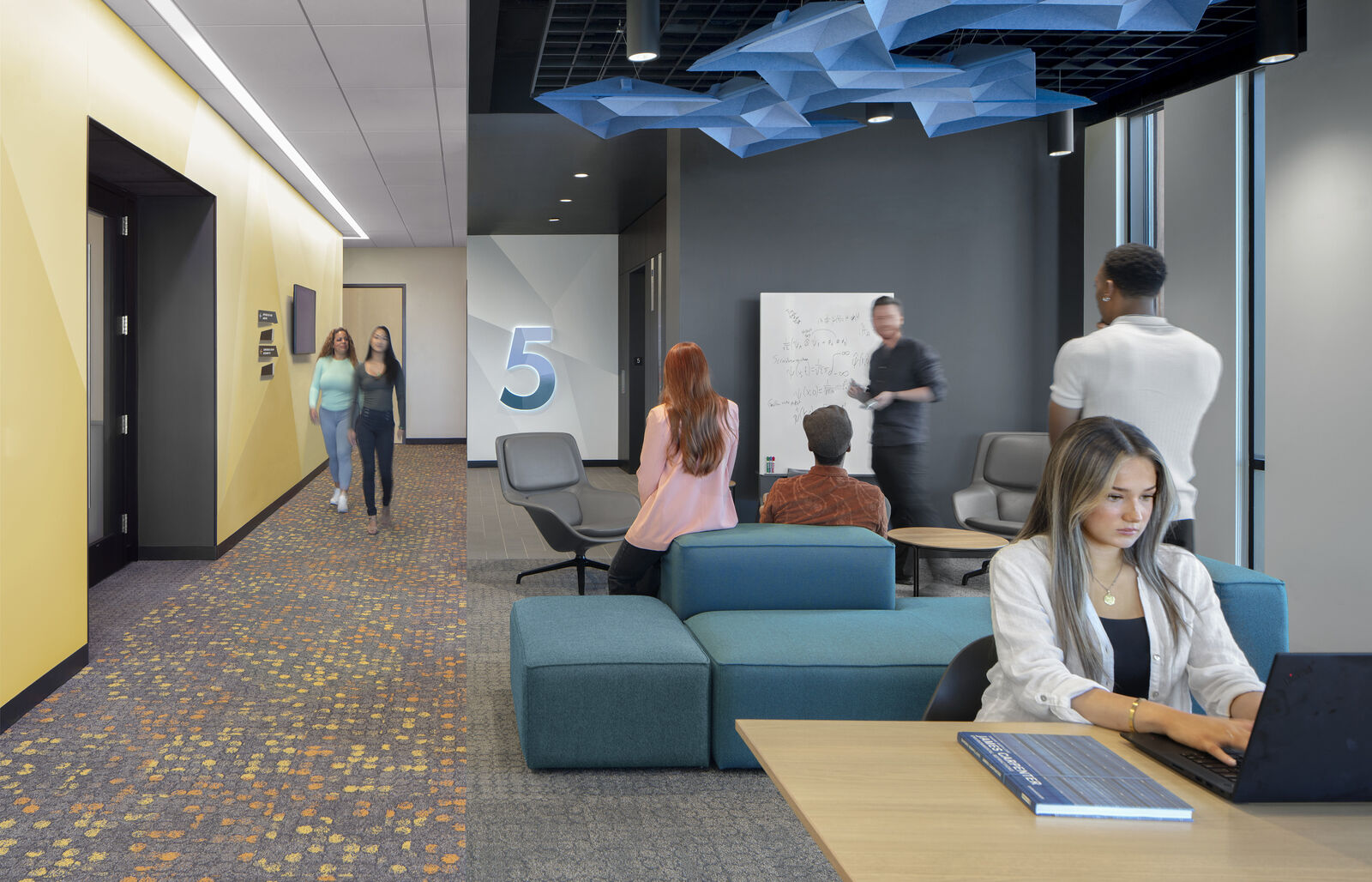
The environmental graphics, wayfinding, and signage program is inspired by the research taking place within the building. A visual story of quantum physics is infused in the wall graphics and wayfinding systems in the form of an angular design that helps users navigate the space with ease.
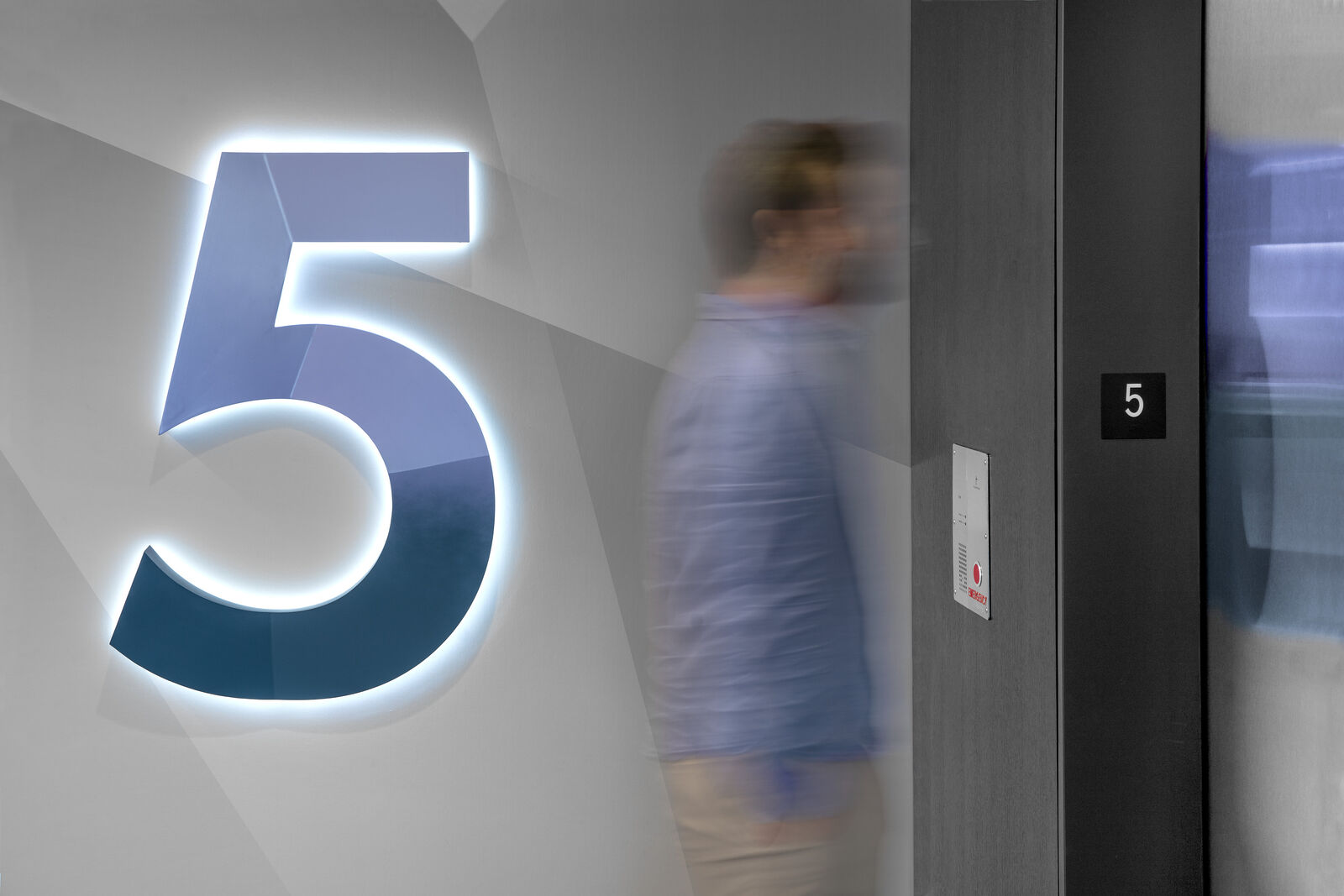
At the elevator lobbies, extruded aluminum signage is illuminated to identify each level, with a custom wall covering that provides an illusionary effect. The angular design motif extends to directional wayfinding in the hallways and room identification signage.
The mission of the University of Arizona Wyant College of Optical Sciences is to provide the state of Arizona and the nation with an internationally pre-eminent program in education, research, and outreach in all aspects of the science and application of light. The quantum and optical sciences laboratories in the Grand Challenges Research Building are designed support this mission by providing the space and equipment for scientists to rapidly advance mobile digital processing, sensing, imaging, medicine, networked informatics, artificial intelligence, and machine learning that are converging with the Fourth Industrial Revolution.
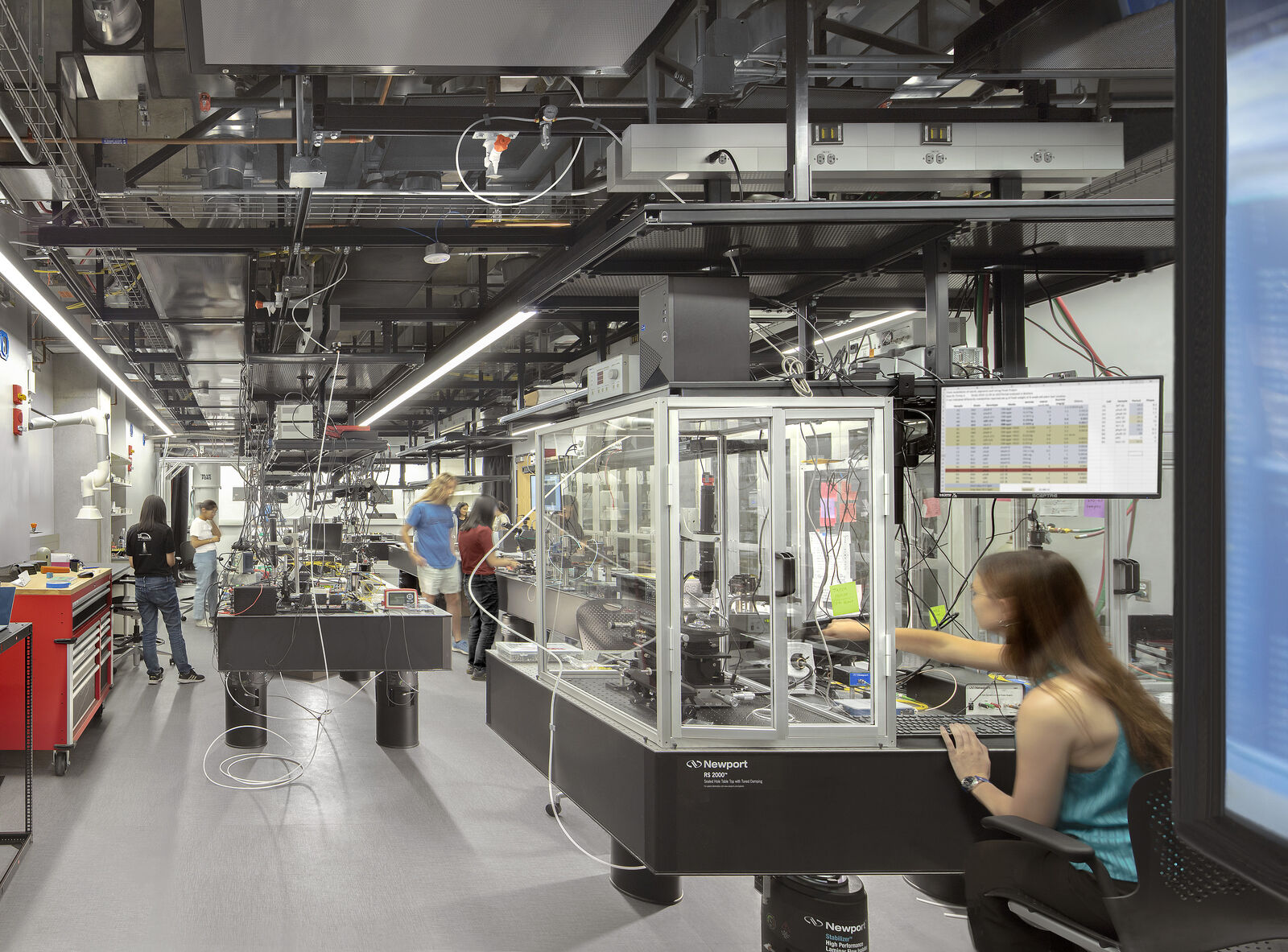
Optical laboratory.
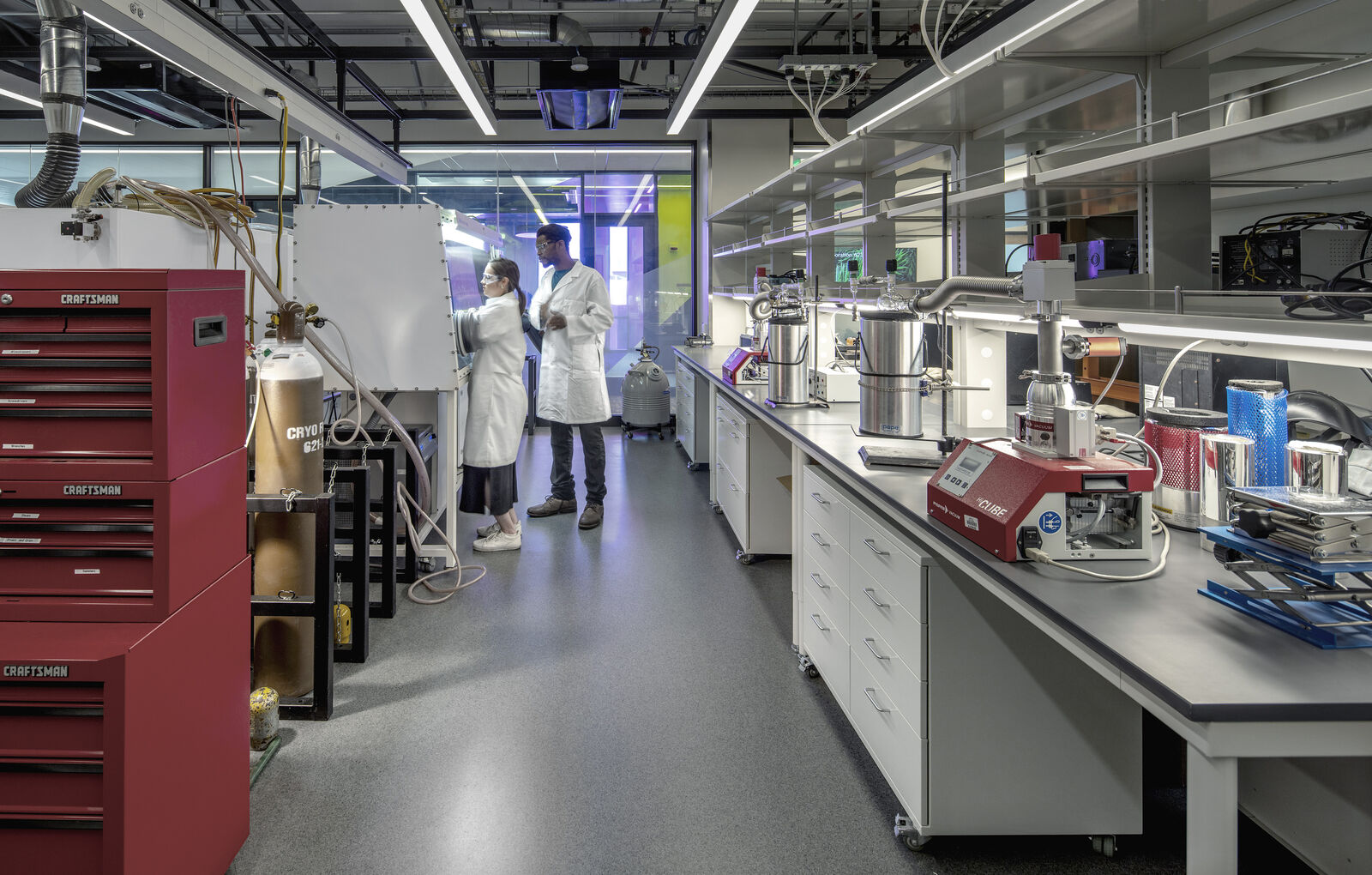
Quantum laboratory.
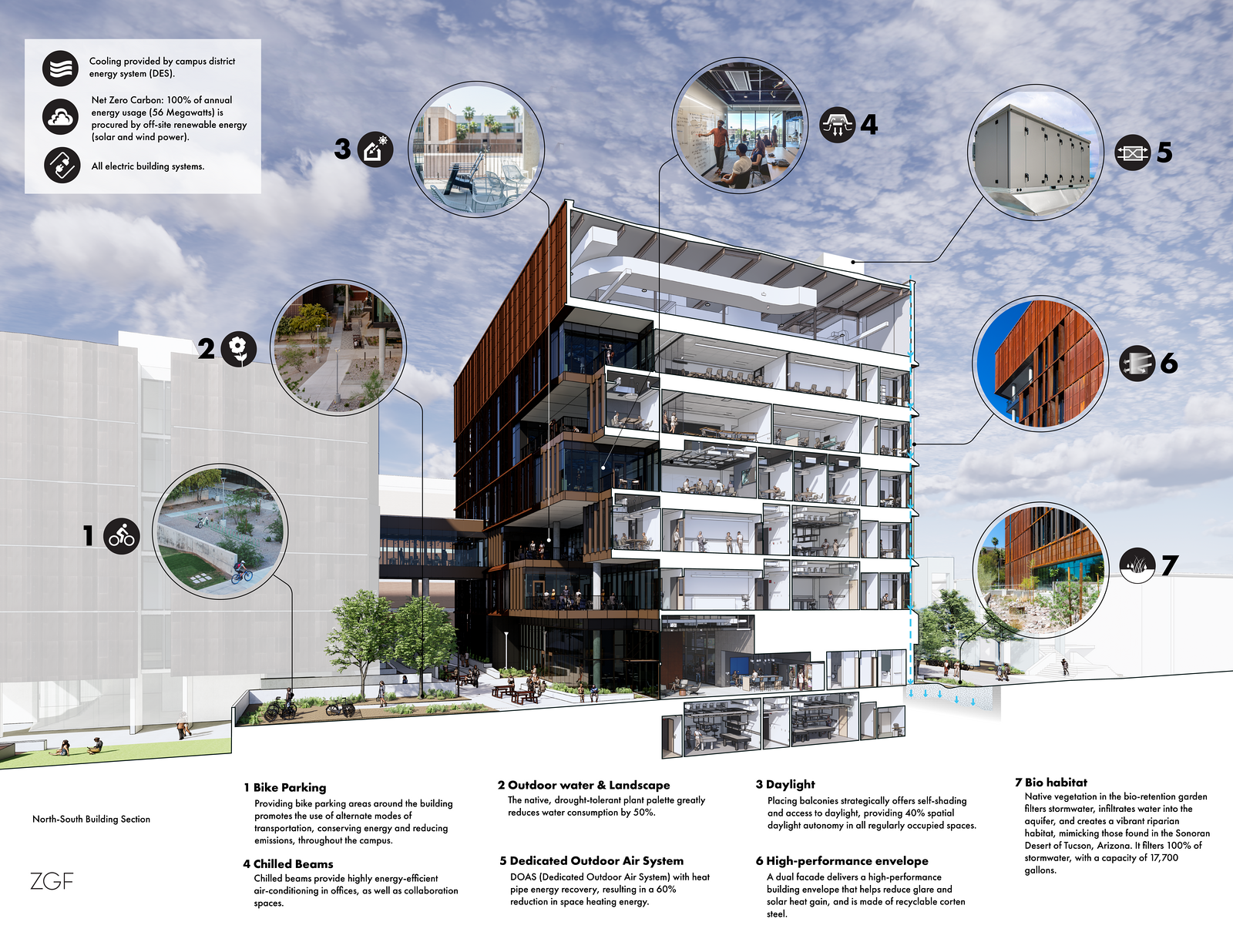
The all-electric solution was constructed to achieve LEED Gold® accreditation, with decarbonization strategies that influence the design holistically. From the high-performance envelope constructed of 100% recycled materials, and efficient MEP systems, to the orientation of spaces, water conservation strategies, and materials selection, the design supports University of Arizona's goals of reaching net-zero carbon emissions by 2040.

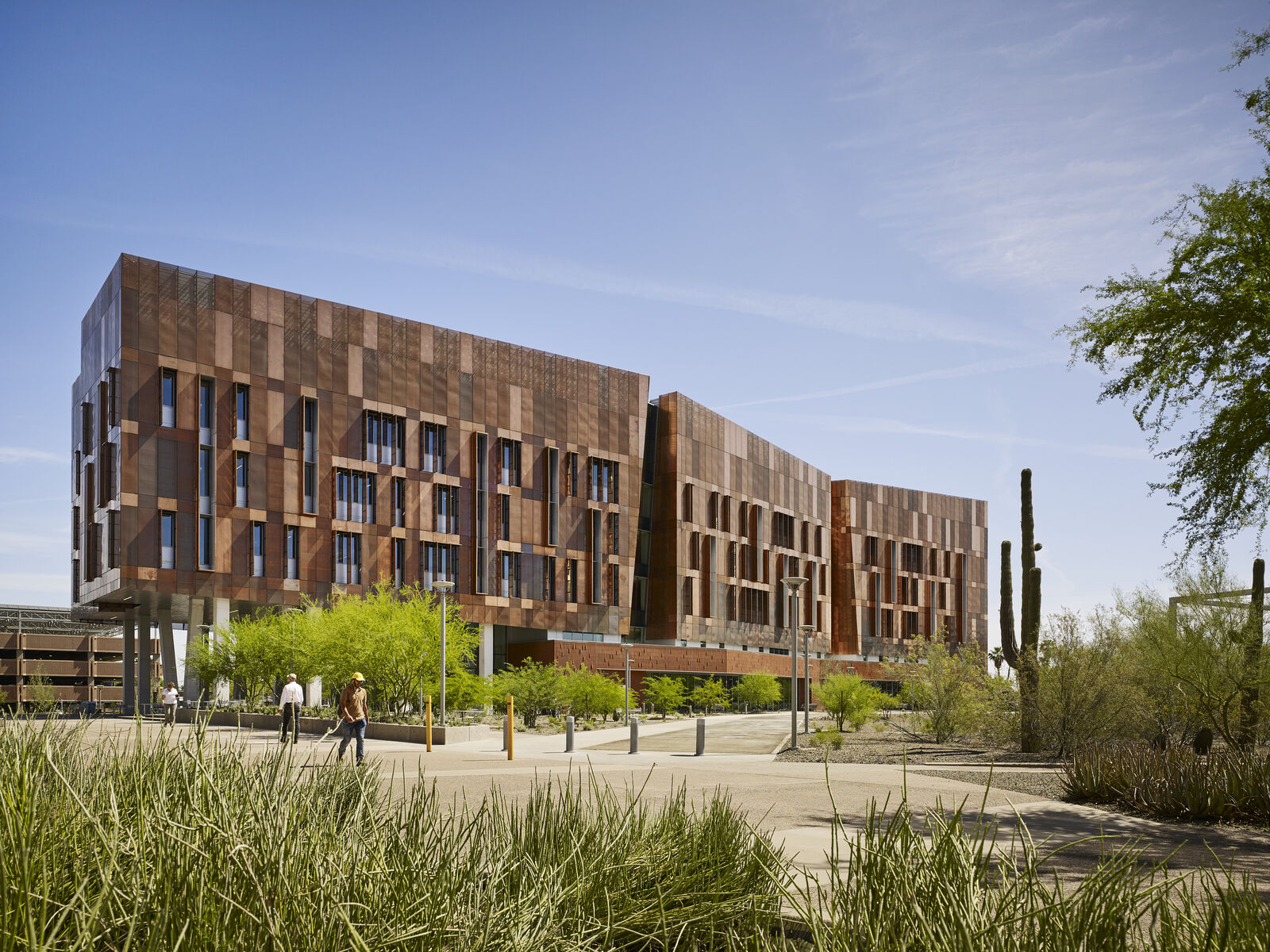
The University of Arizona, Bioscience Research Laboratories