Engineering Education in the Heart of Mountain West
University of Wyoming, Engineering Education and Research Building
Higher Education
With the natural beauty of the Rocky Mountains as its backdrop, the University of Wyoming boasts one of the most beautiful campuses in the country matched with cutting-edge learning facilities. Its most recent addition, the Engineering Education and Research Building (EERB), delivers the next generation of classrooms, research labs, and makerspaces to continue propelling the university’s prominence in undergraduate education, research, and economic development within the state.
ZGF and local architect GSG programmed and designed both the EERB and the High Bay Research Facility (HBRF). Located just outside the campus core in a newly developed “STEM extension,” the two facilities function individually but work together to support the latest advancements in engineering education and applied sciences.
Campus gothic with a contemporary twist
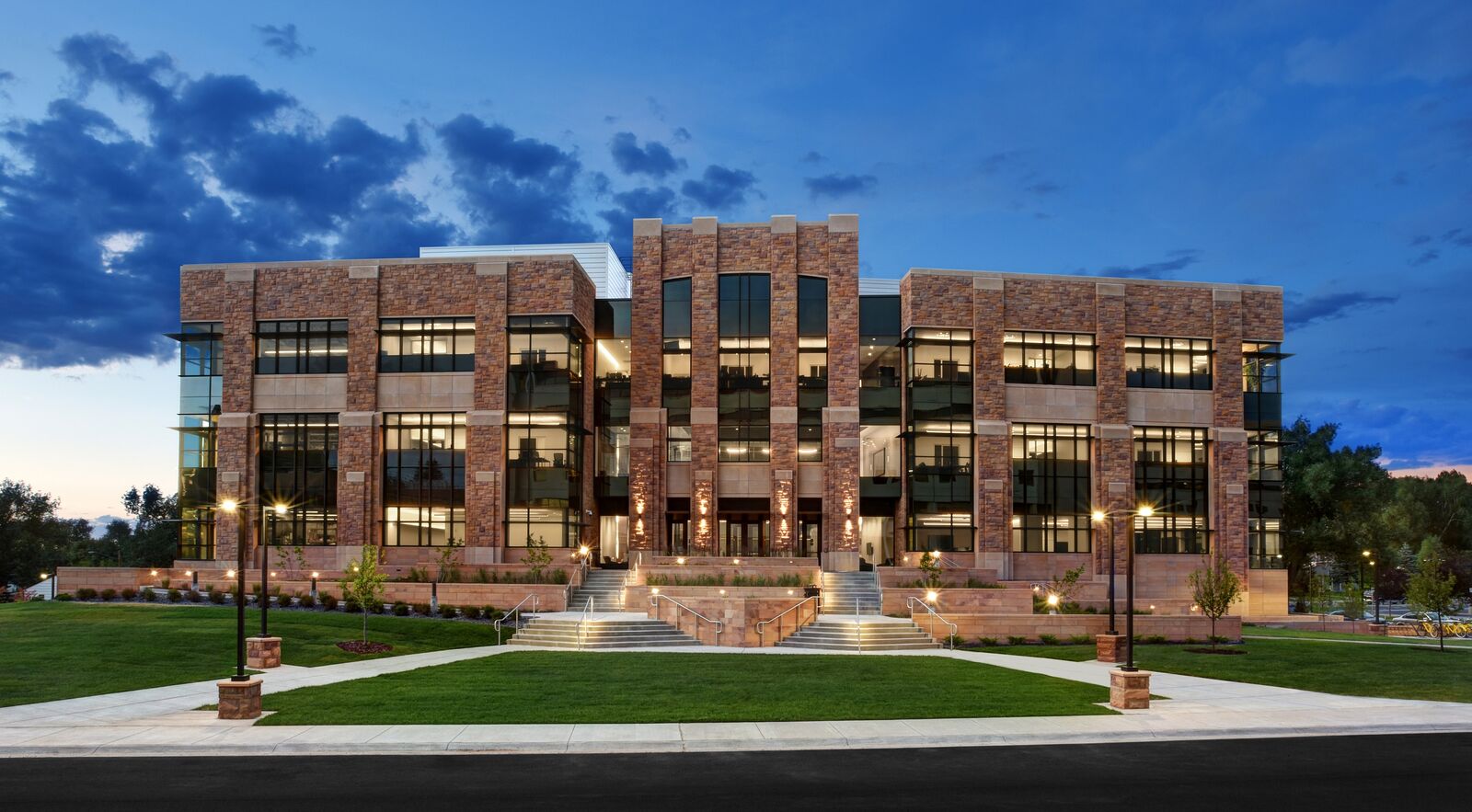
The building design is grounded in campus context but with a contemporary twist. Existing buildings in the campus core feature gothic style architecture, built using a specific sandstone from Utah. Being in the outer ring of campus, the EERB bridges that context between campus gothic and contemporary.
Location
Laramie, WY
Square Feet
109,000
Completion date
2019
Project Component
Programming
Architectural Services
Interior design and space planning
Certifications
LEED Silver
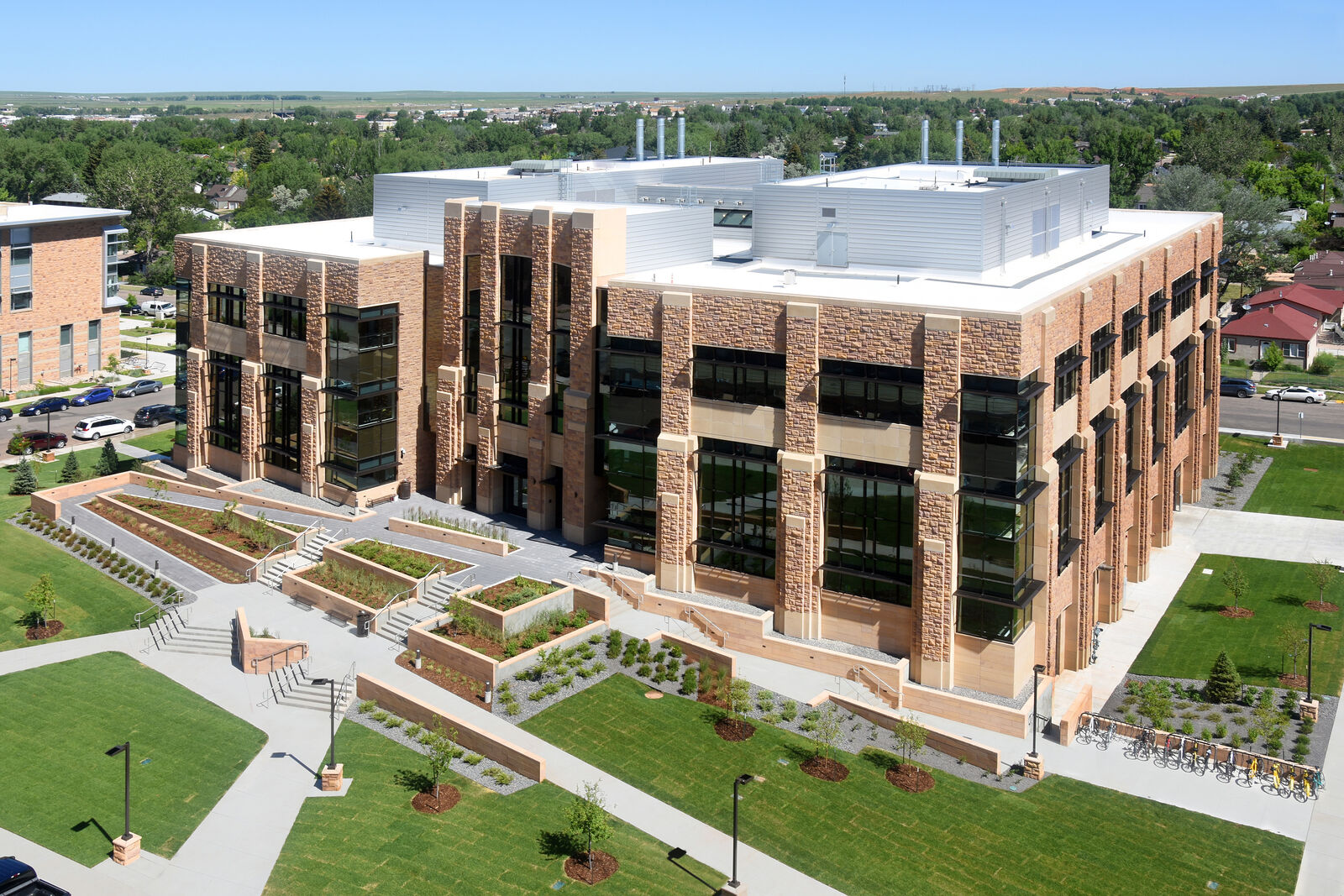
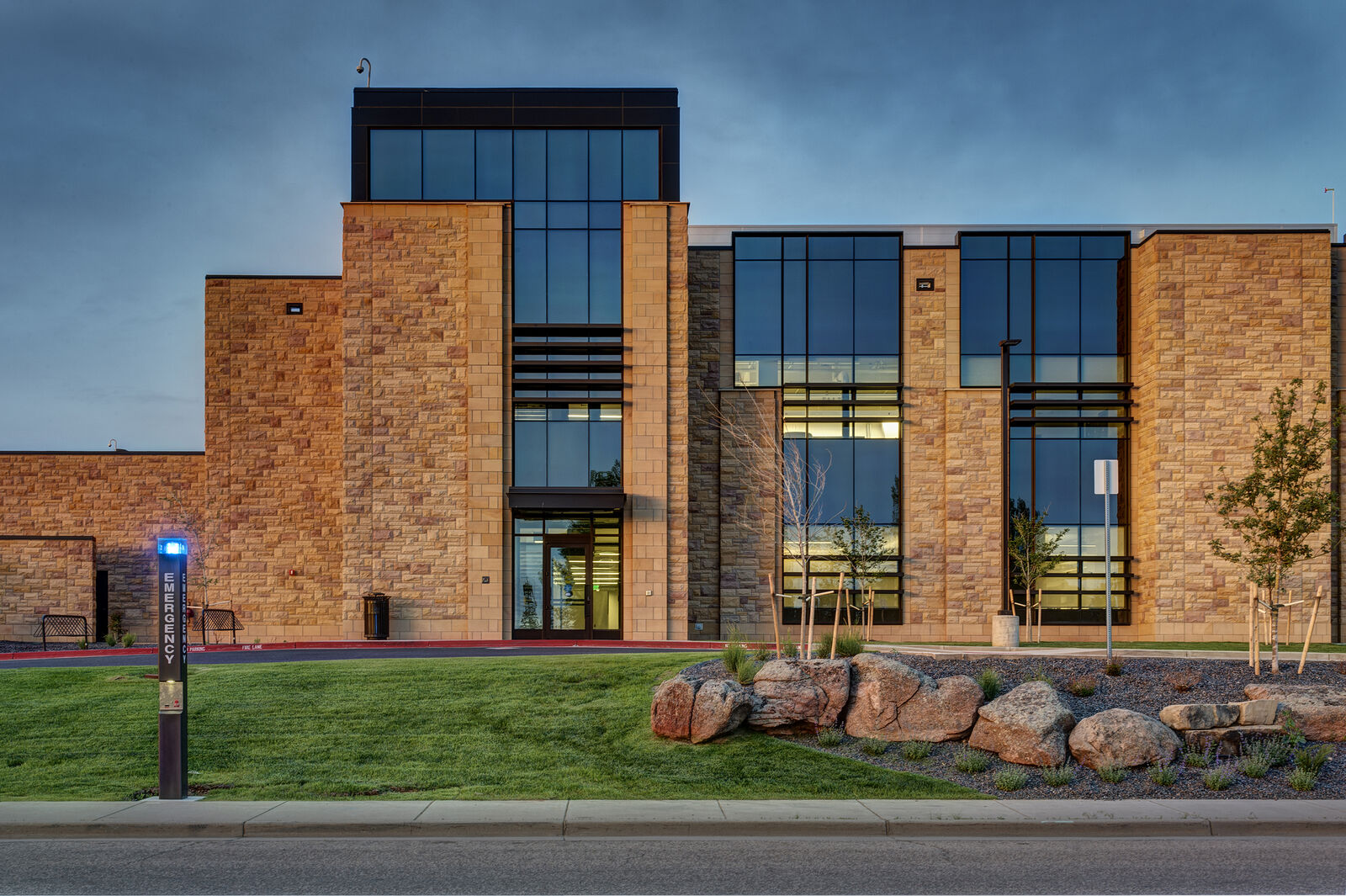
Sandstone is utilized on the exterior, paired with a high-performance curtain wall system.
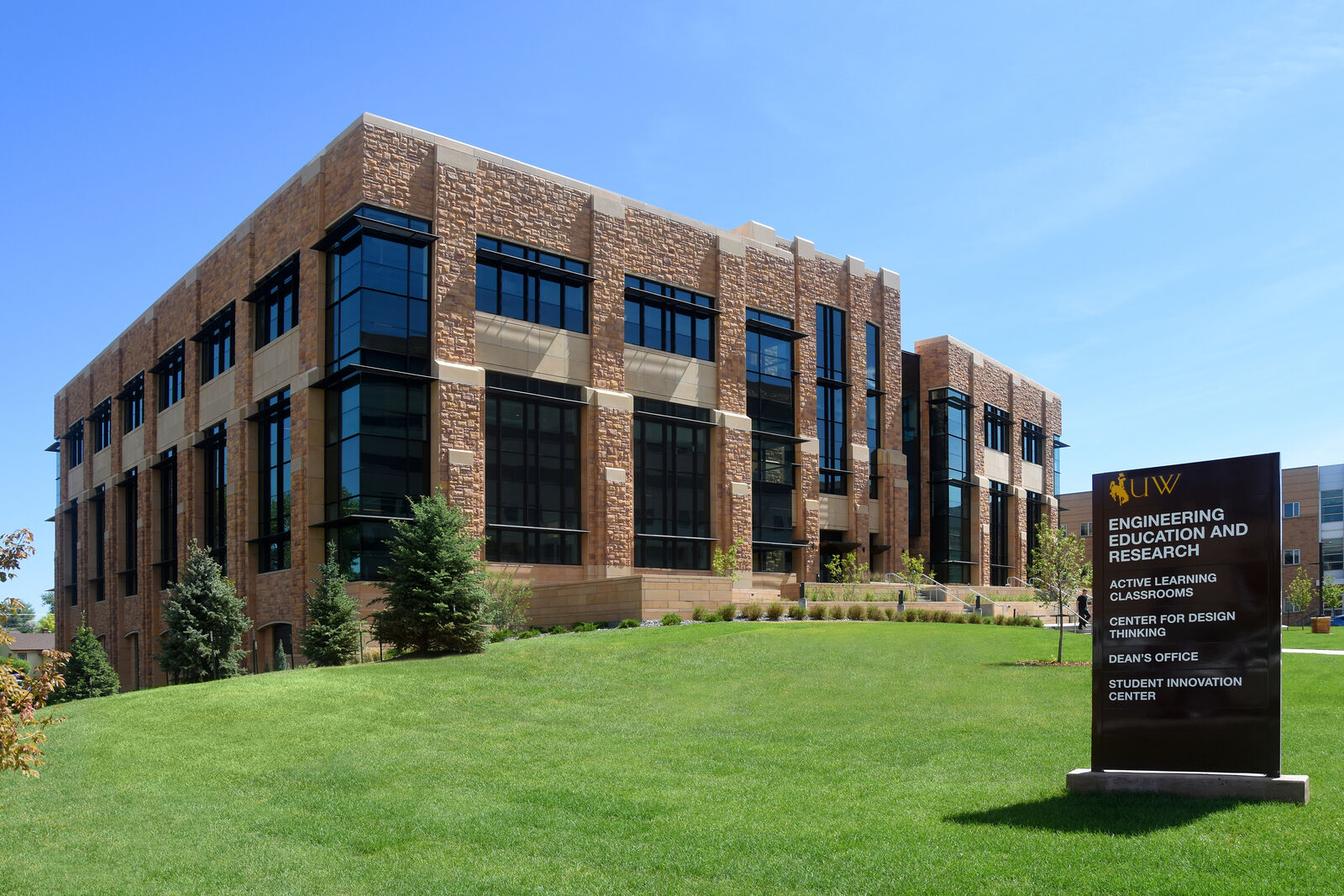
Strong vertical lines and pilasters nod to the existing campus architecture, while full height glazing and blackened steel details add a modern expression from the outside-in.
A one-story grade change between east and west entrances, with a residential area fronting the east side, created an opportunity to use the building as a shortcut through campus. The project takes advantage of higher foot traffic by putting science on display and thus generating greater interest in STEM disciplines.
Of its place
Sitting at an elevation of nearly 7,200’, Laramie is known for blue skies even when temperatures drop below zero. The building’s natural daylighting strategies celebrate the special quality of light while allowing control over heating and cooling, since it can also get extremely hot in summer months. A roof monitor with skylights lets northern light filter deep into the building, while fins on exterior windows mitigate glare and heat gain.
The interior design echoes Wyoming’s rugged outcroppings, natural materials, and local craftsmanship. From blackened steel to leather furniture, skilled tradespeople were deployed from around the state to bring a level of craft and quality that would resonate with the local community. As a 100-year building, the materials are made to wear well and last a long time.
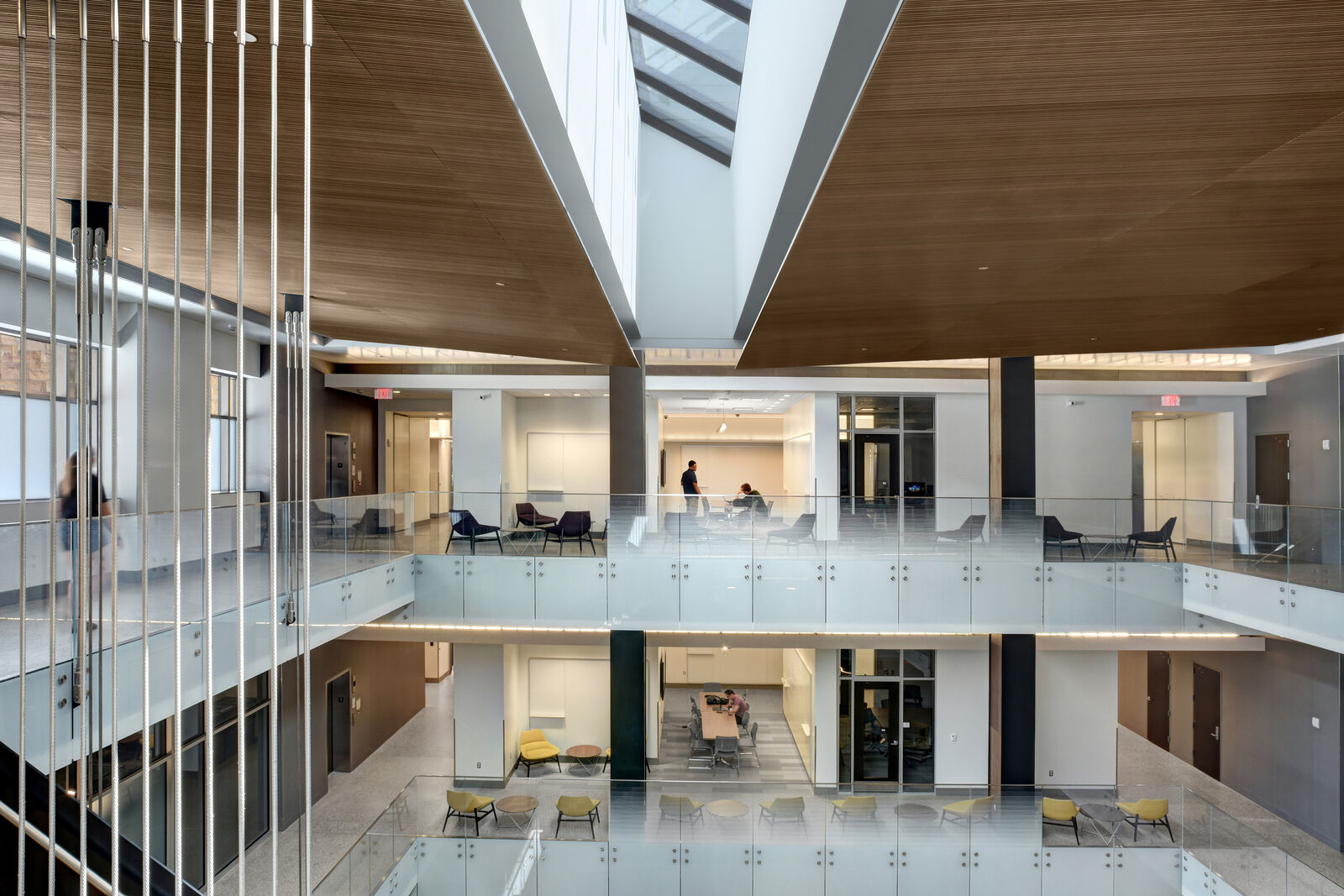
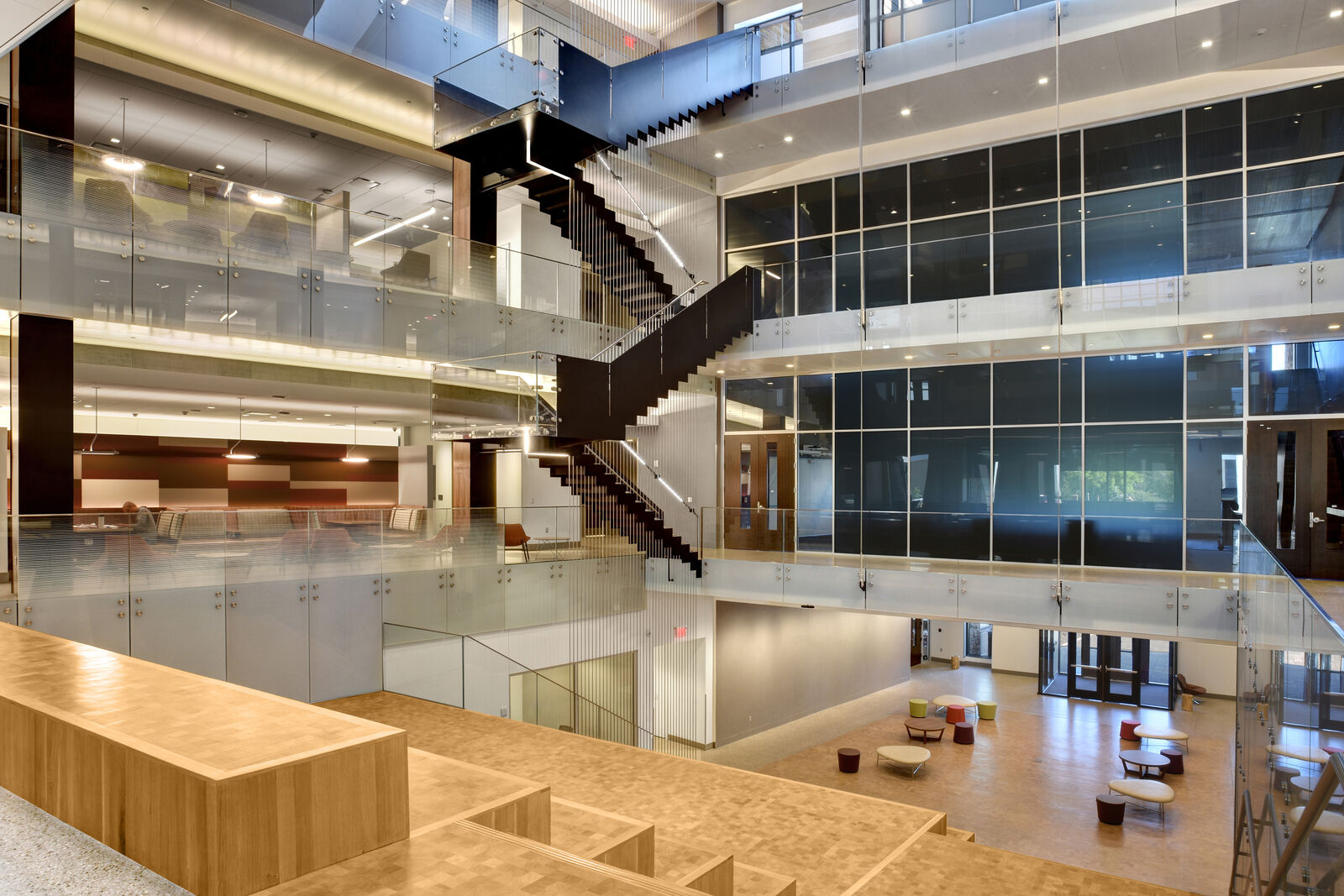
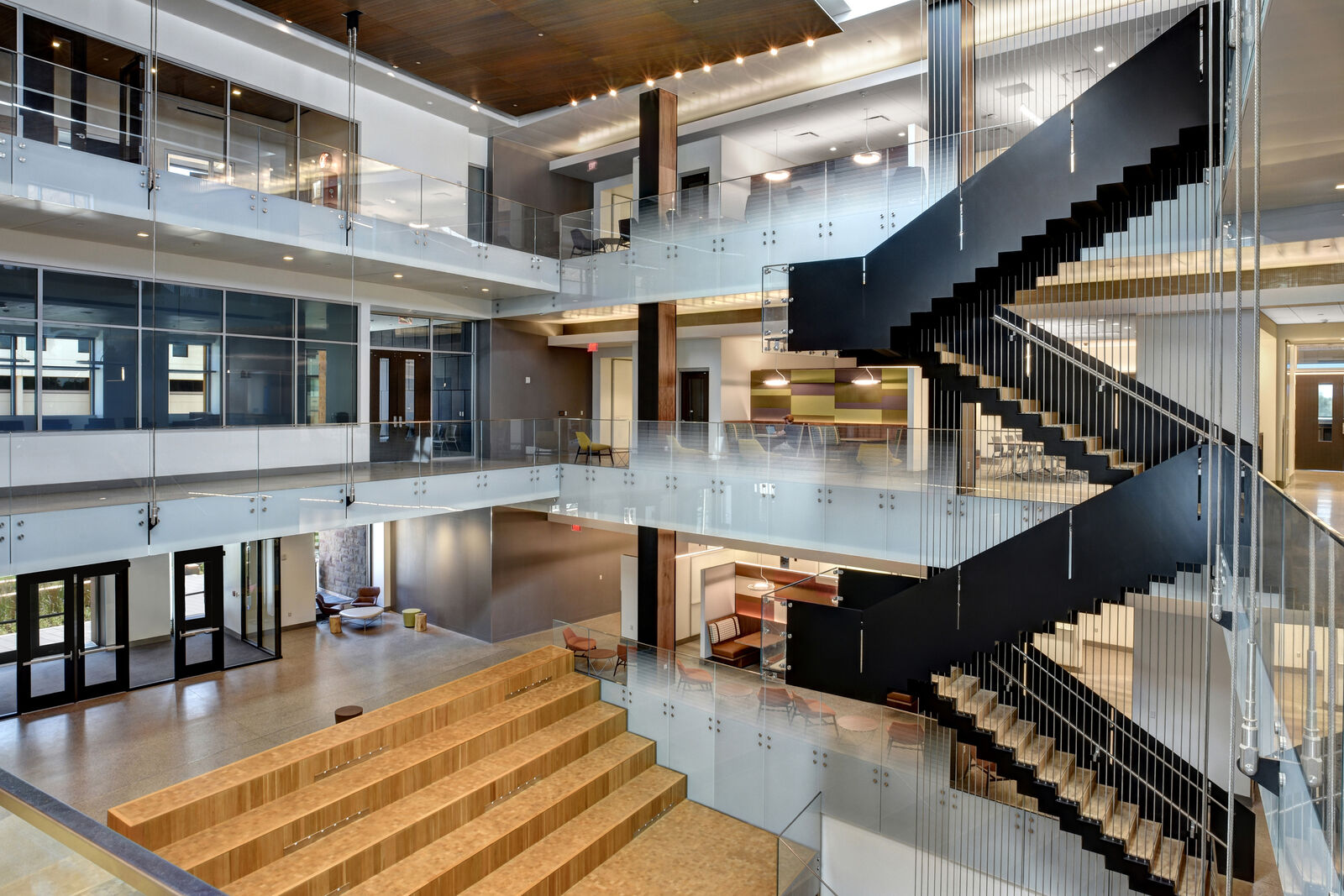
The central atrium features a grandstand stair with end grain white oak flooring and a cable-suspended communicating stair that draws the eye upward.
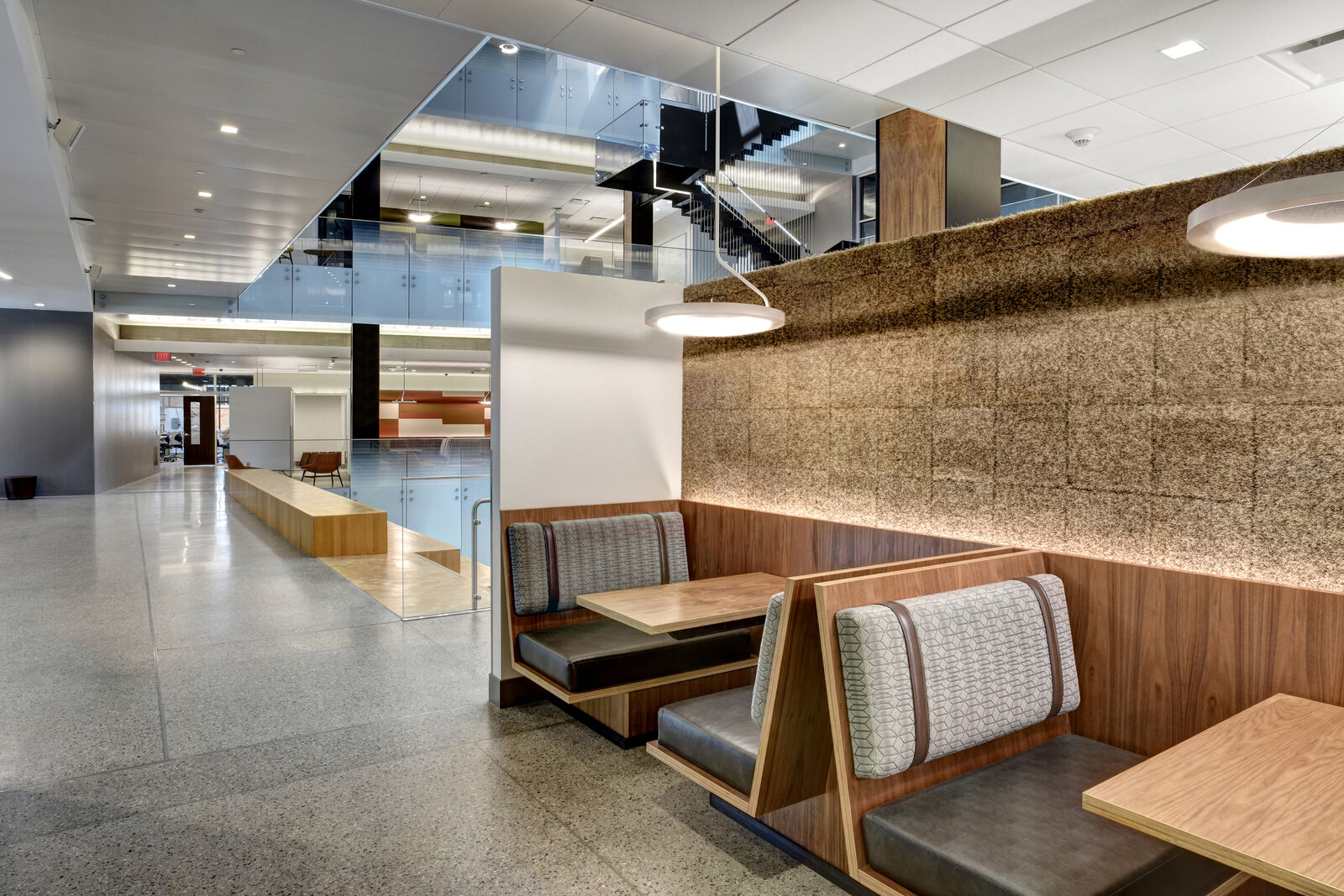
Natural materials in earthy tones, such as wood, leather, cork, and bristle brush wall coverings, contrast with the blackened steel and extensive glazing throughout the building.
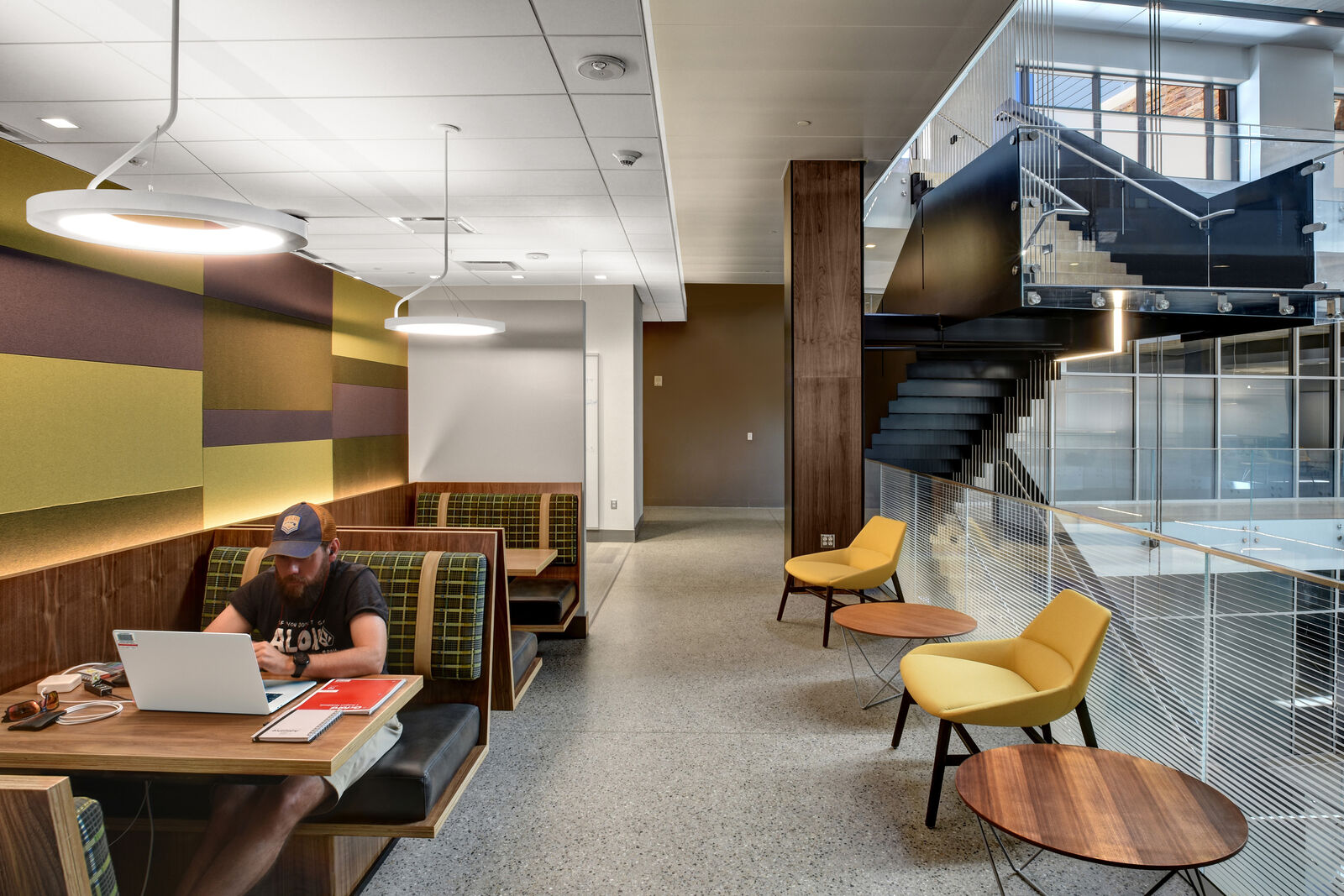
Color is used sparingly, primarily in furniture, so the design remains timeless.
“Students say it’s the one place on campus they can come and do everything they need to do.”
- Jeanne Moede, College Affairs Coordinator, University of Wyoming
Growing with the community
The EERB has become a campus hub for students of all backgrounds and majors, from engineering to business and the arts. They are drawn to the building as their preferred study space because it excites them about the possibilities of learning. Communal spaces are in the heart of the building to reinforce this energy and excitement, break down siloes, and create visibility into what people are working on. The central stair is a focal point for community—an idea that started with the academic community but has grown as more groups have started utilizing the building.
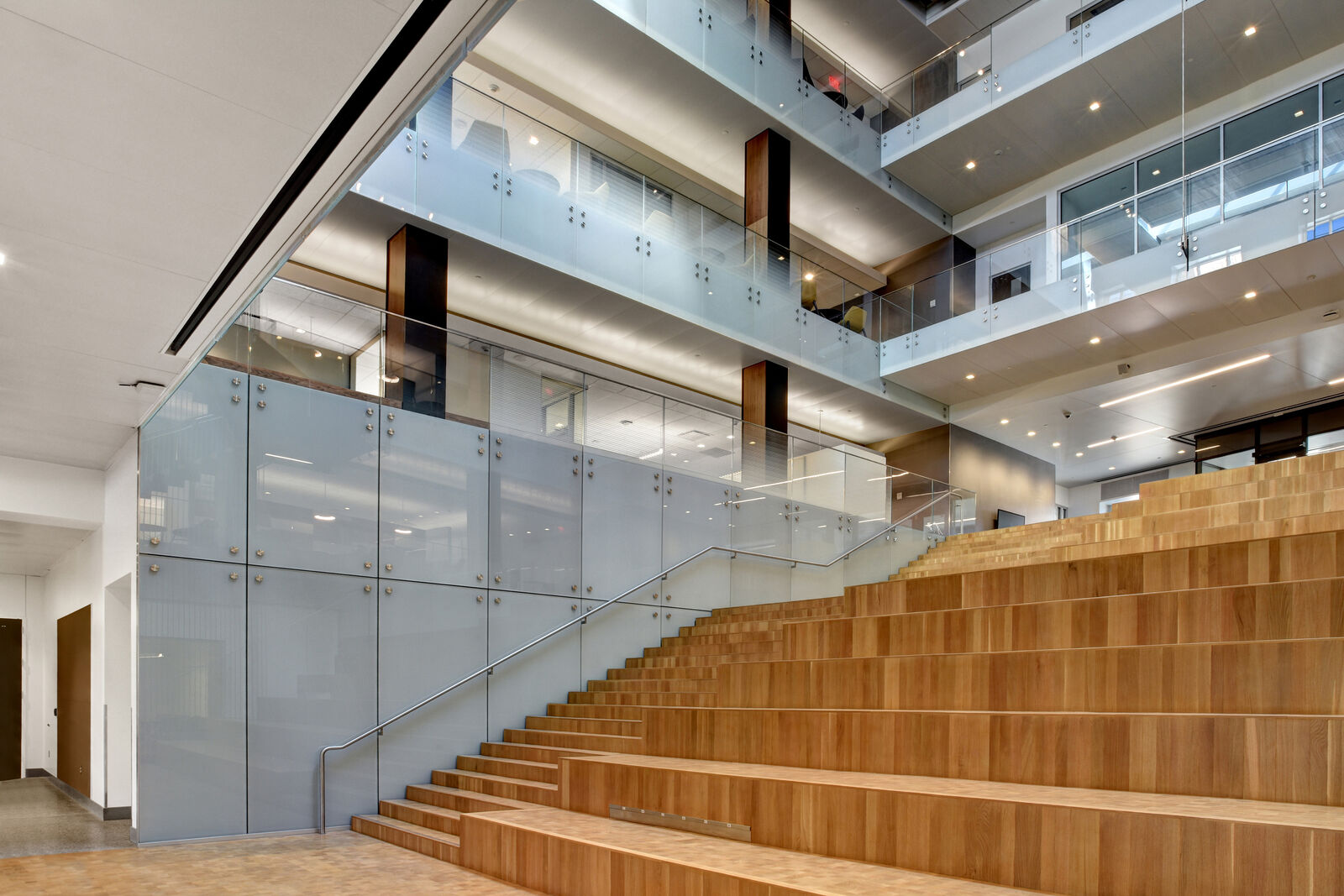
The atrium serves multiple functions, from large group presentations to more intimate gatherings.
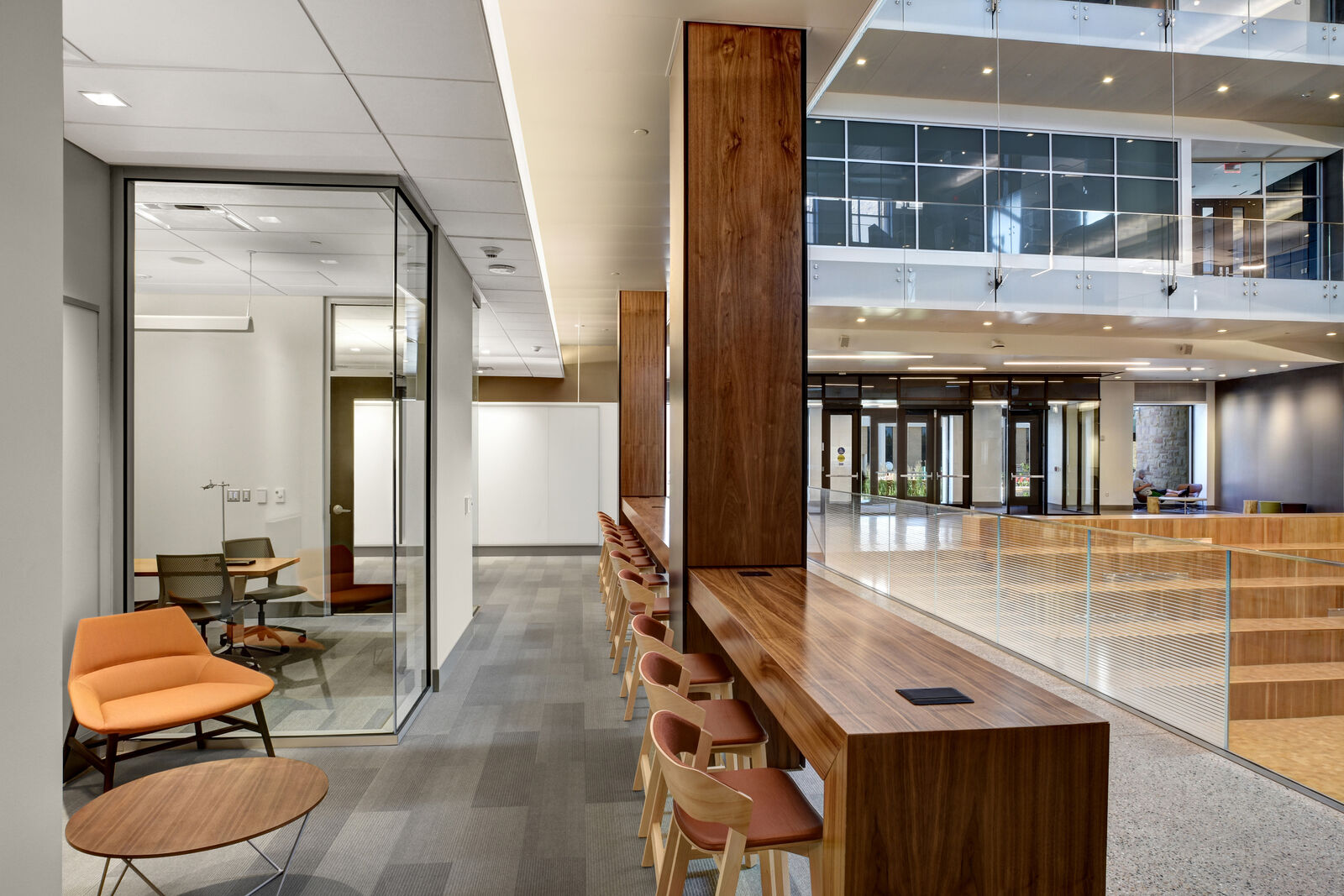
Open areas around the atrium allow students to study, meet with professors, and bump into researchers, without having to leave building for heads-down work.
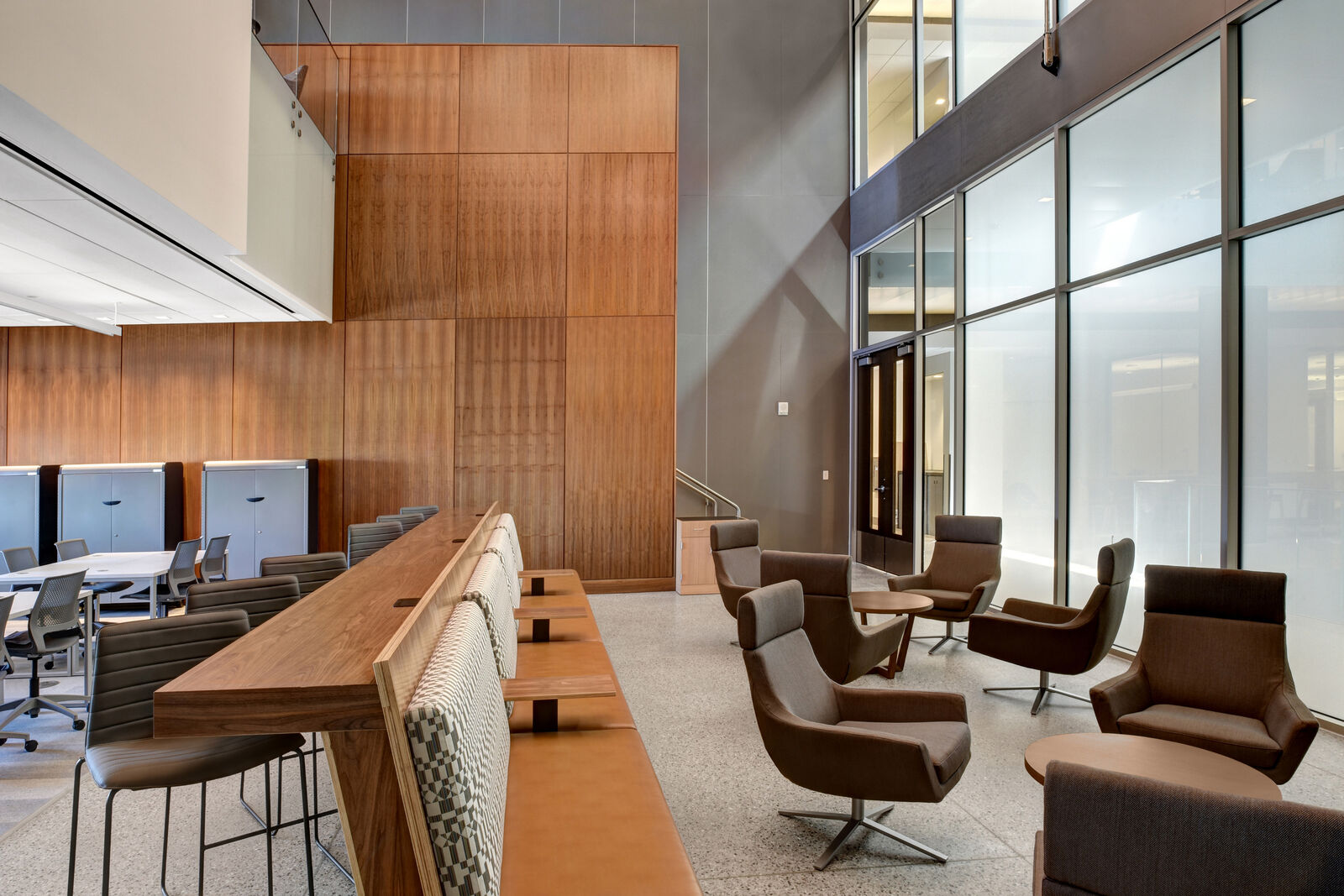
A double height space beyond the atrium was intended to be a collaboration zone for students to gather and work on presentations, but it has since been transformed into a cryptocurrency computer lab.
Making it happen
Labs and makerspaces are designed to be flexible and adaptable over time as the university’s programs and research needs change. Large, open spaces accommodate a wide range of uses and equipment, such as advanced 3D printers and modeling technology, laser cutters, CNCs, and carbon fiber machinery.
Material science students evaluating material properties can work in proximity to mechanical engineering researchers developing new materials, fueling formal and informal collaboration. The Health Sciences Department can model various body parts to show medical students how to operate and have hands-on discussions in class. Connected vehicle technologies are being explored in the simulation lab, in collaboration with the Wyoming Department of Transportation.
One lab has even been modified for the university’s artificial intelligence (AI) research group, which didn’t need the typical lab benches, casework, and overhead carriers. With a few cosmetic changes, such as lowering the table heights, removing the chemically resistant counters and extra casework—and adding a ping-pong table—computer scientists now have a lab space tailored for AI research.
“Our philosophy is, if you can think it, you can probably make it.”
– Rebecca Austin, Maker Space Coordinator, University of Wyoming
Makerspaces are used primarily for class projects but are open for personal use too. Having full-time university staff on hand is a major draw, allowing students to learn how to use the equipment, introducing them to the possibilities, and troubleshooting obstacles. The EERB has also become a resource for elementary schools, high schools, and families with children who want to learn the latest technologies. Democratizing access to science and engineering has sparked a new wave of excitement around hands-on learning, collaborating, innovating, building, inventing, tinkering, and creating amazing things—and it all happens in the EERB.
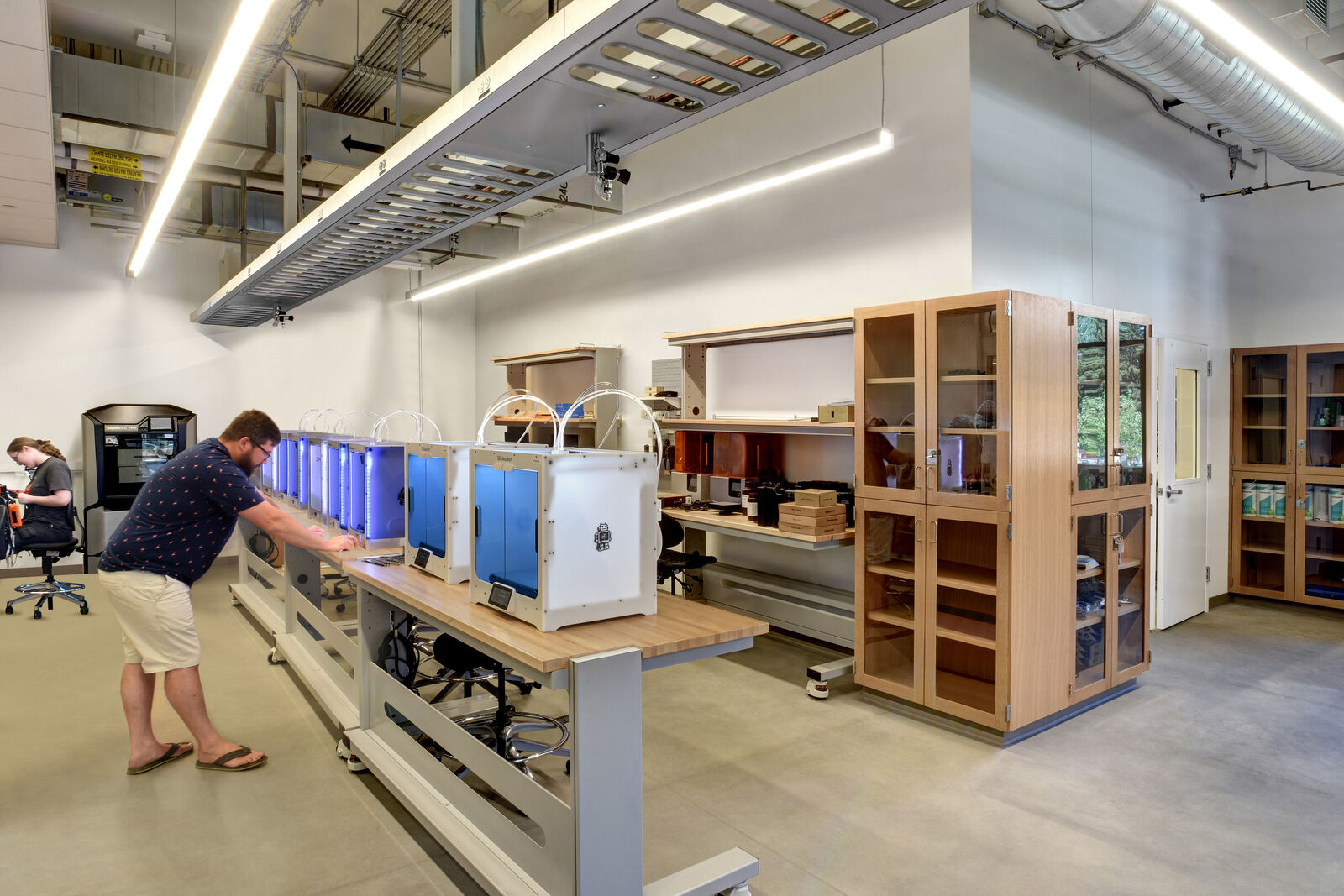
Workshops encourage hands-on learning and cross-pollination of ideas.
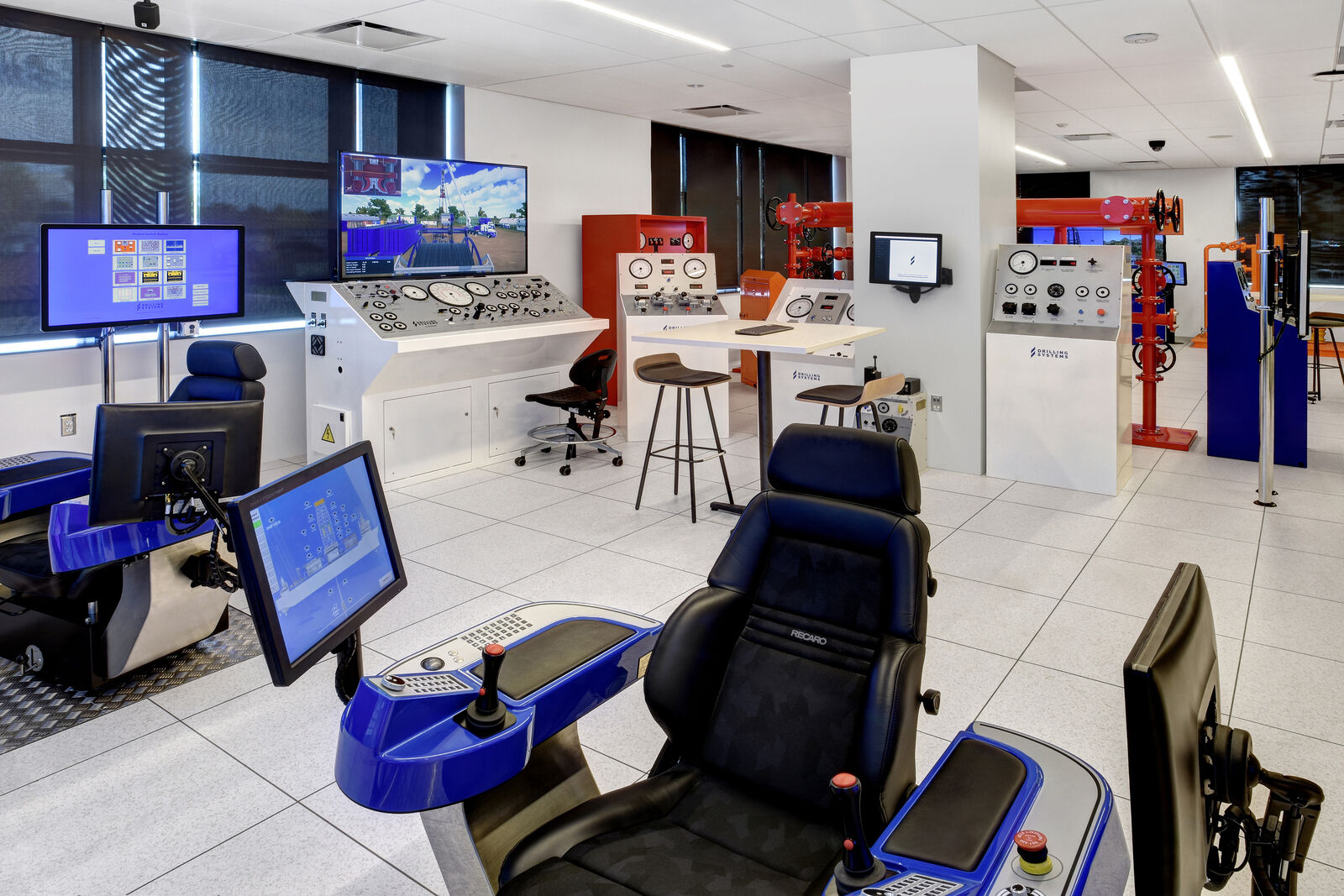
The simulation lab features state-of-the-art equipment and technology for modeling resource exploration, recovery, and conservation—important economic drivers for the state.
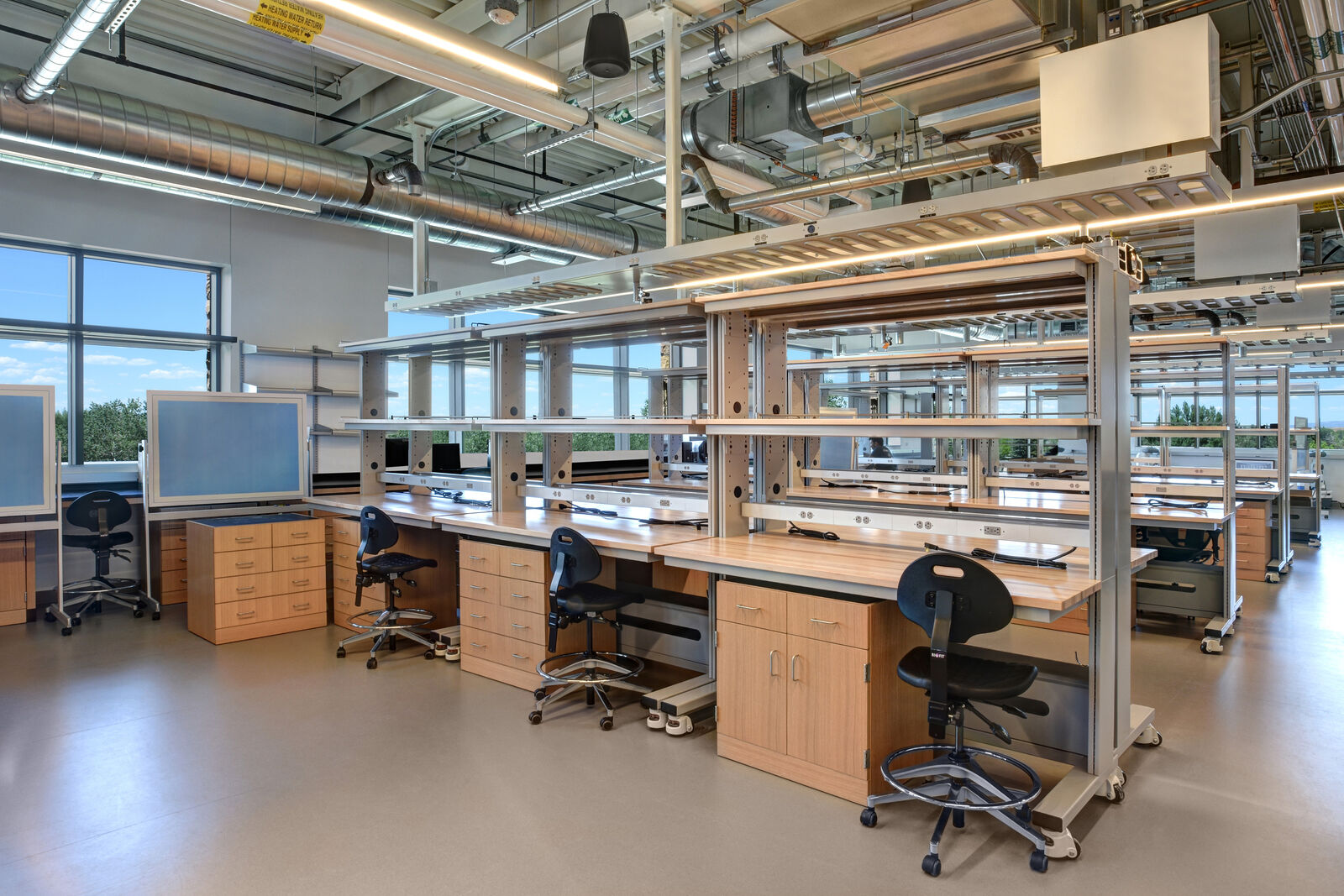
Open, daylit labs create the ideal environment for research and discovery.
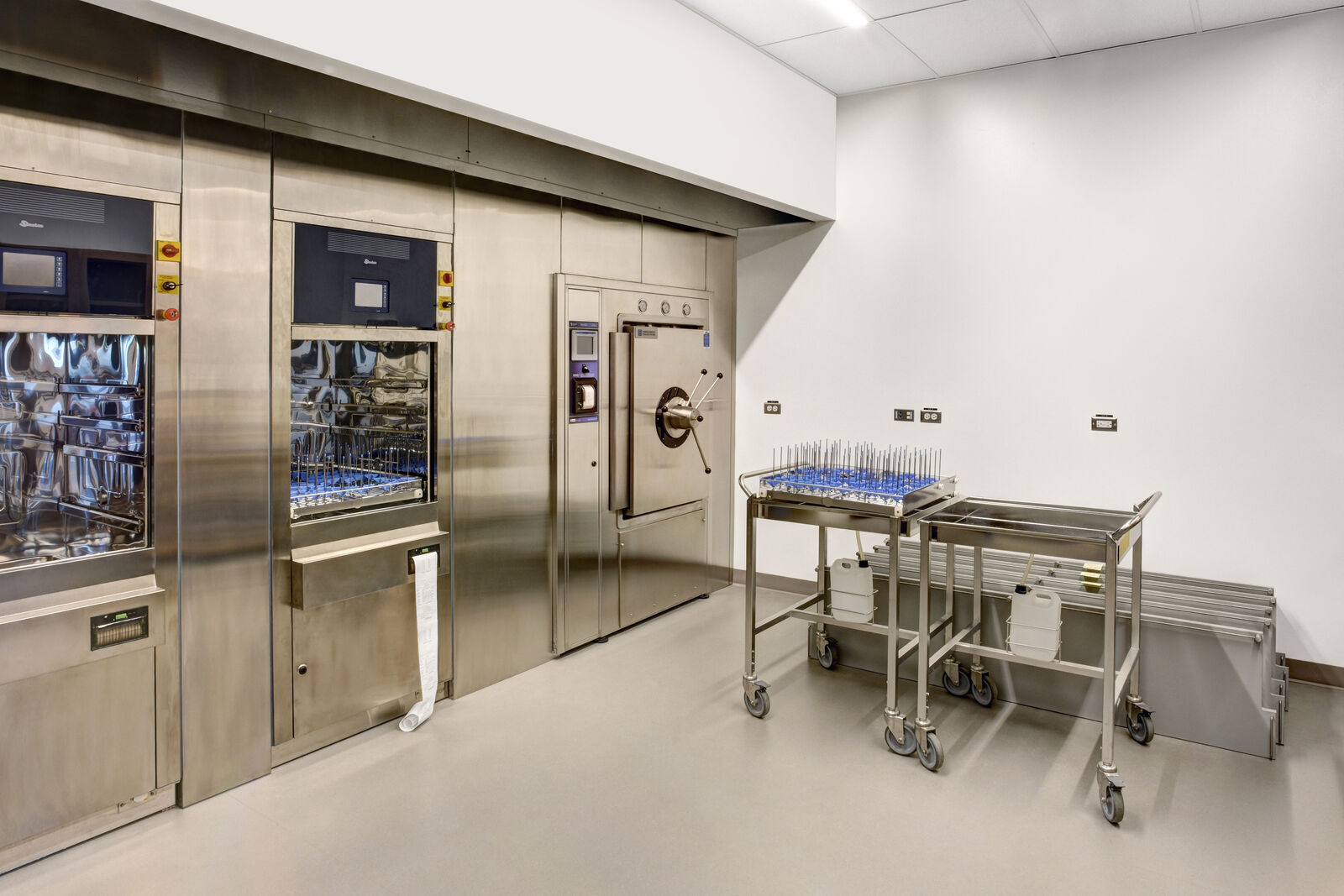
A bioengineering lab focuses on materials and collaborations with the College of Agriculture and Natural Resources.
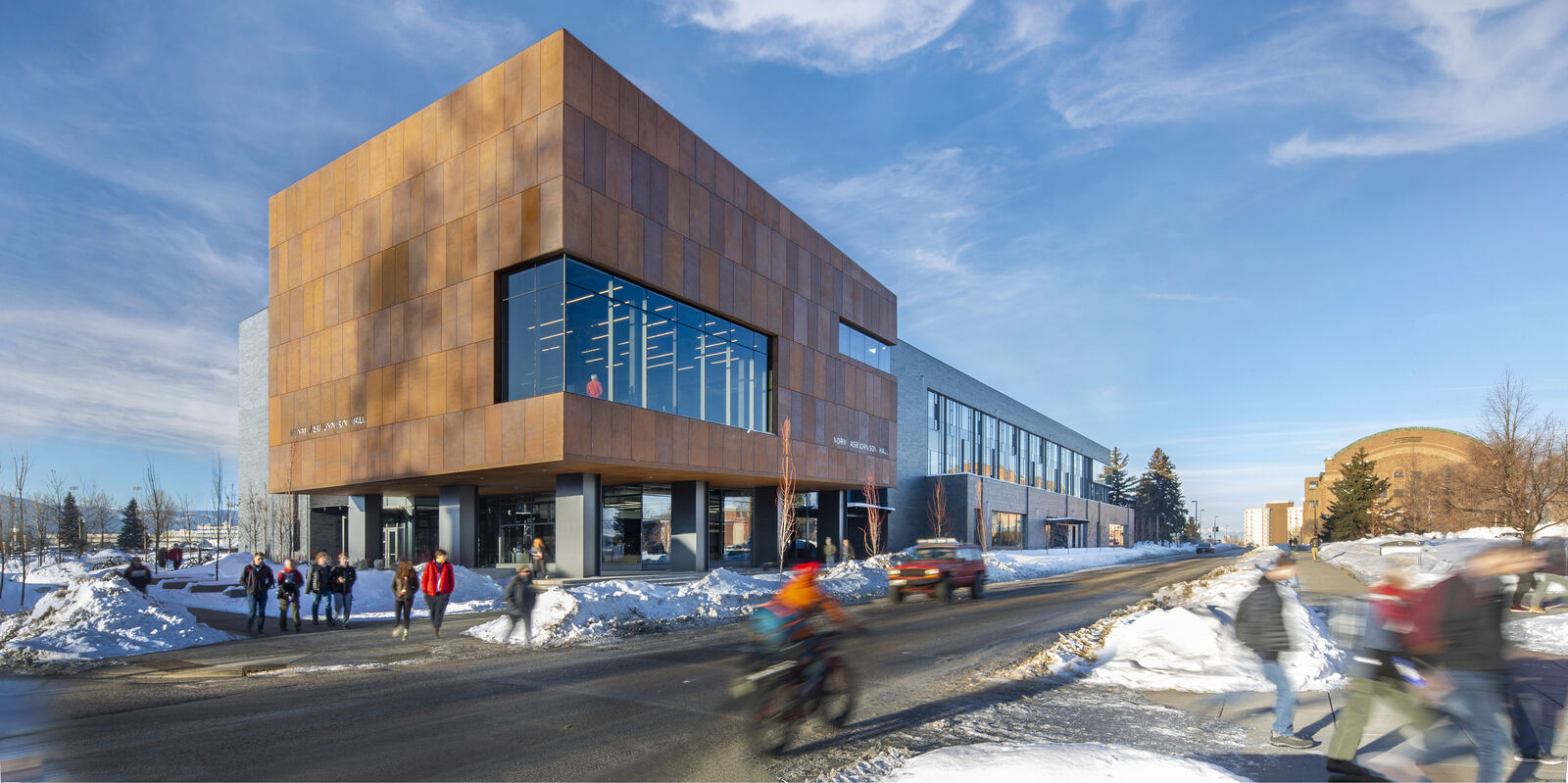
Montana State University, Norm Asbjornson Hall
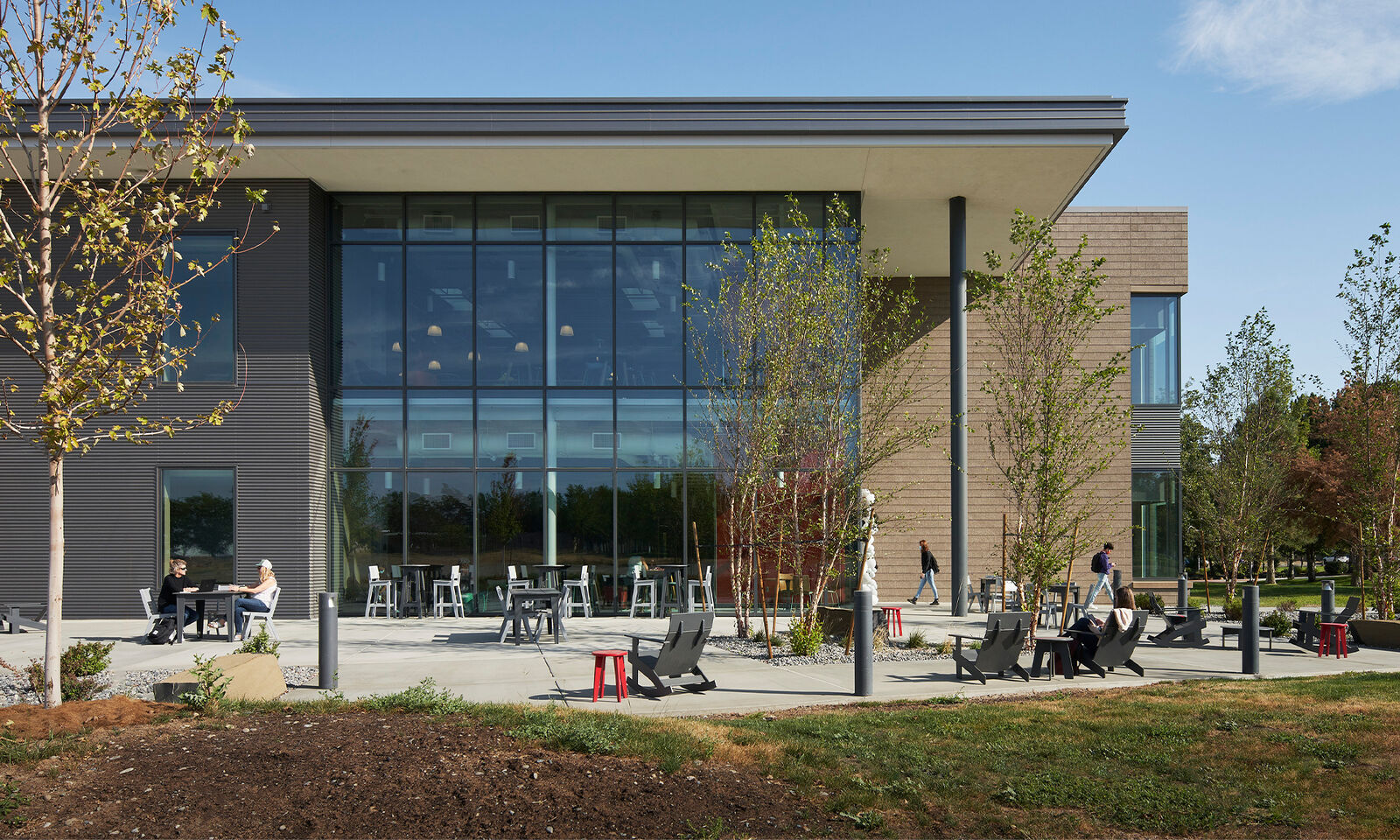
Washington State University Tri-Cities, Collaboration Hall

The University of Texas at Arlington, Science and Engineering Innovation and Research Building
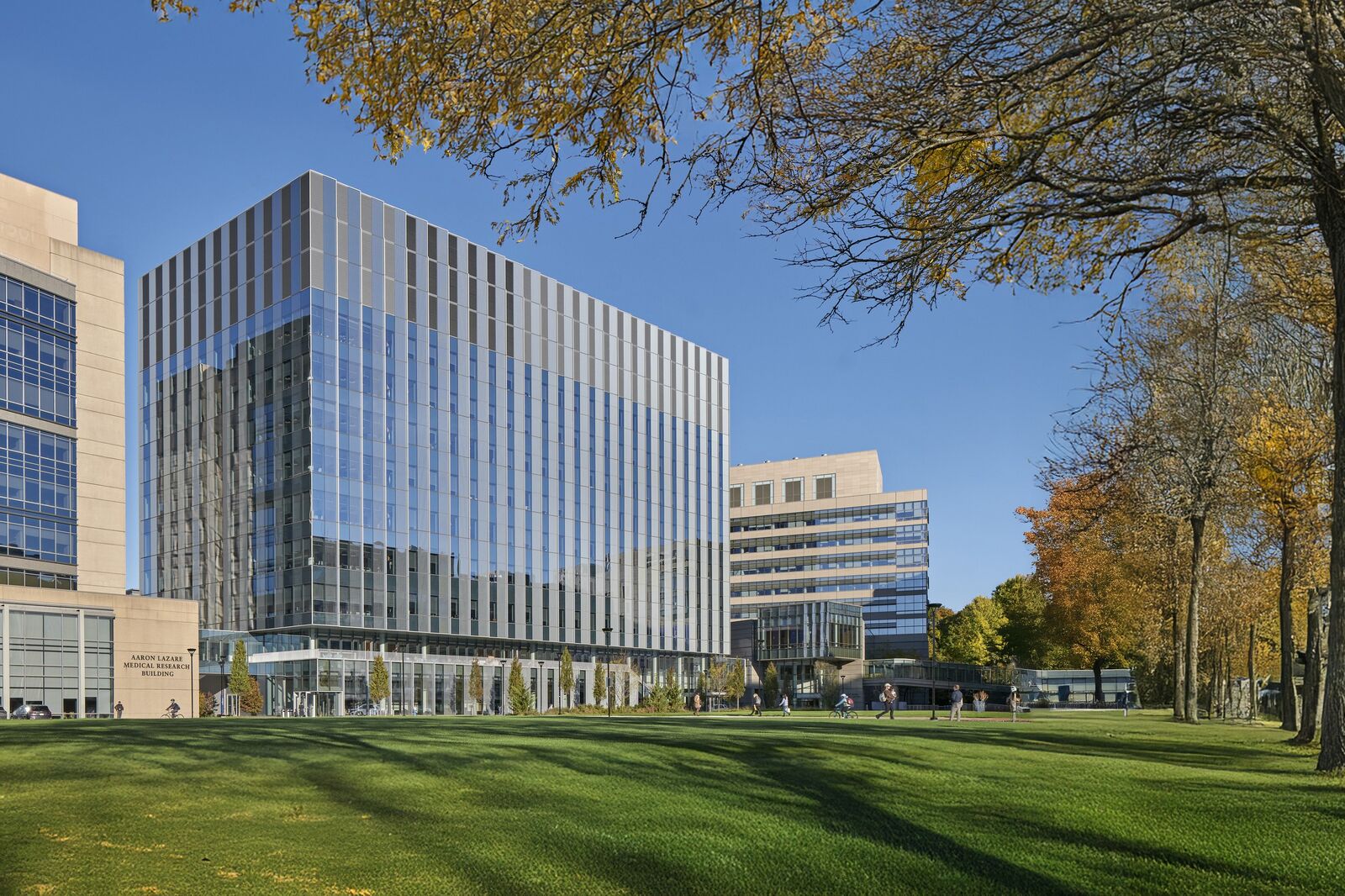
UMass Chan Medical School, The Paul J. DiMare Center
