A Welcoming New Home for Alaska Airlines
Port of Portland, PDX Next Concourse B
Civic and Public, Aviation and Transportation
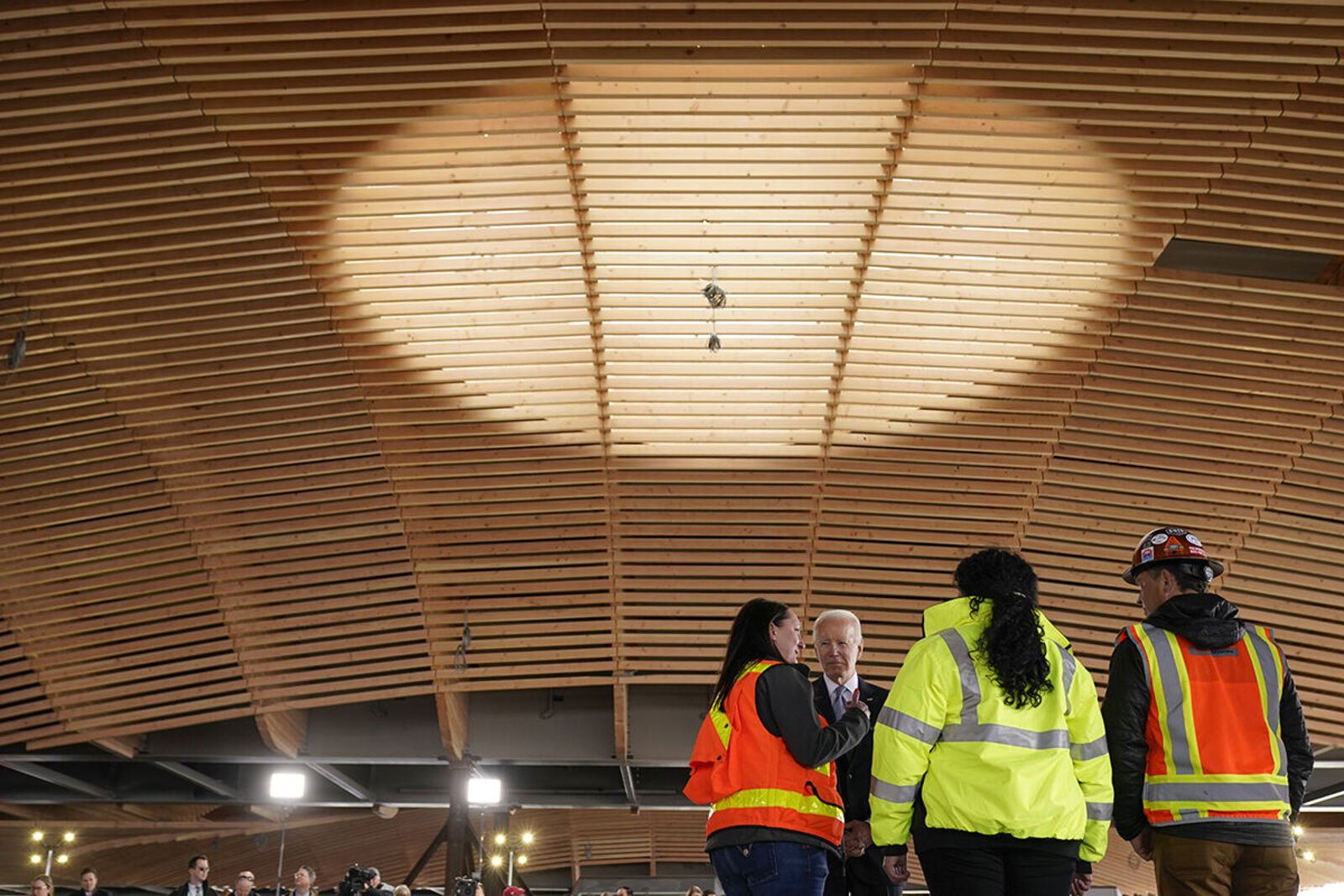
In Fall 2019, Portland International Airport (PDX) bid farewell to a dim, crowded Concourse A, demolishing this aging wing of the airport in favor of a bright, airy, and more modern Concourse B. The completely redeveloped and expanded concourse, which opened to travelers in December 2021, complements the ongoing redevelopment of PDX’s main terminal (with phase one of the project opening in spring 2024 and final completion in December 2025), continuing its calming passenger experience with Pacific Northwest-influenced design elements throughout.
A two-story addition features 10 new arrival/departure gates serving Alaska Airlines and their subsidiary Horizon Air. The double-height volume allows passengers to easily locate their gates as they descend from the upper level—with two concession areas stacked vertically to make all options visually accessible.
Location
Portland, Oregon
Square Feet
60,000
Completion date
2021
Project Component
Architecture services
Interior design and space planning
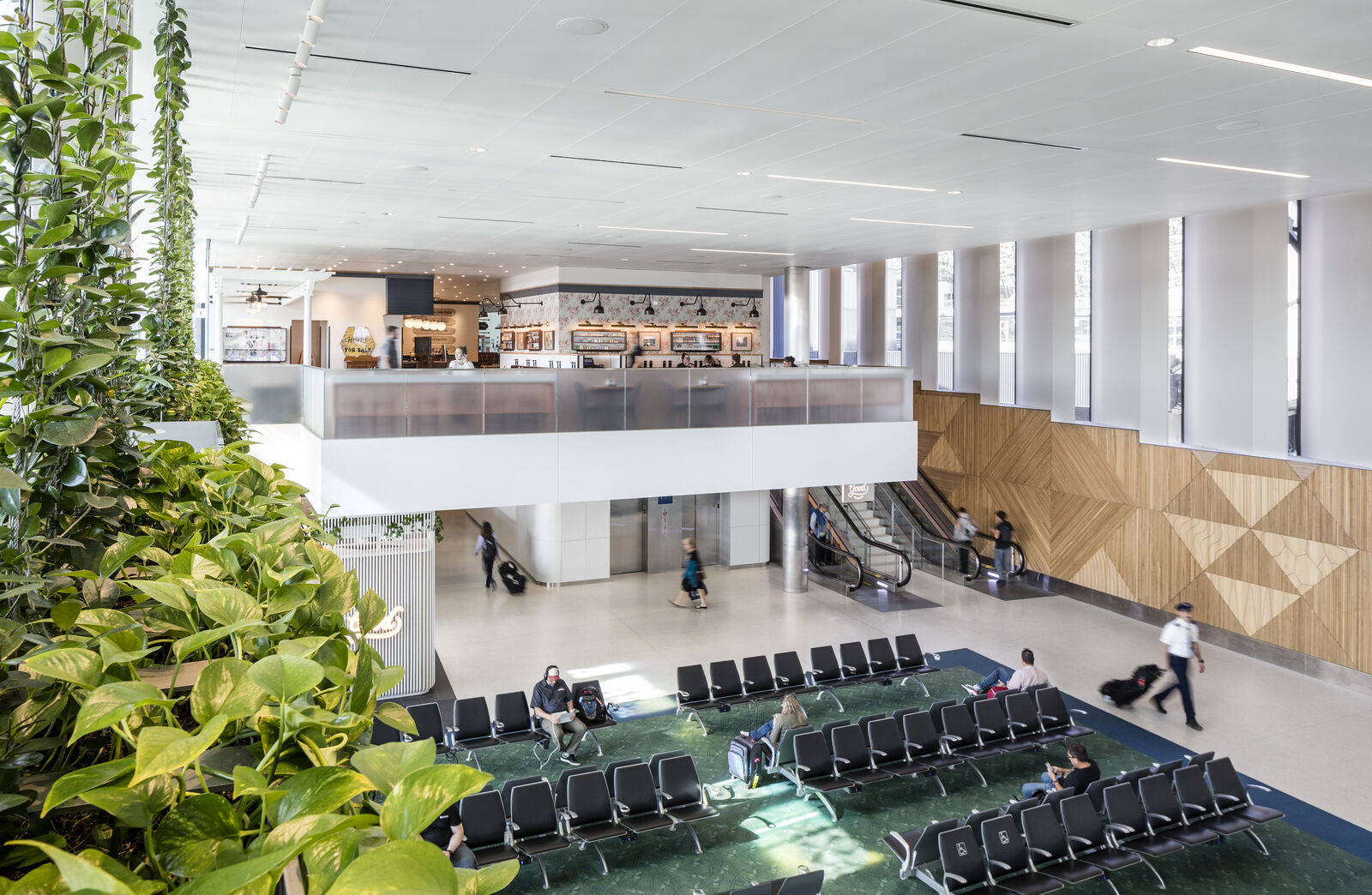
The two-story design makes it easier for passengers to navigate the concourse.
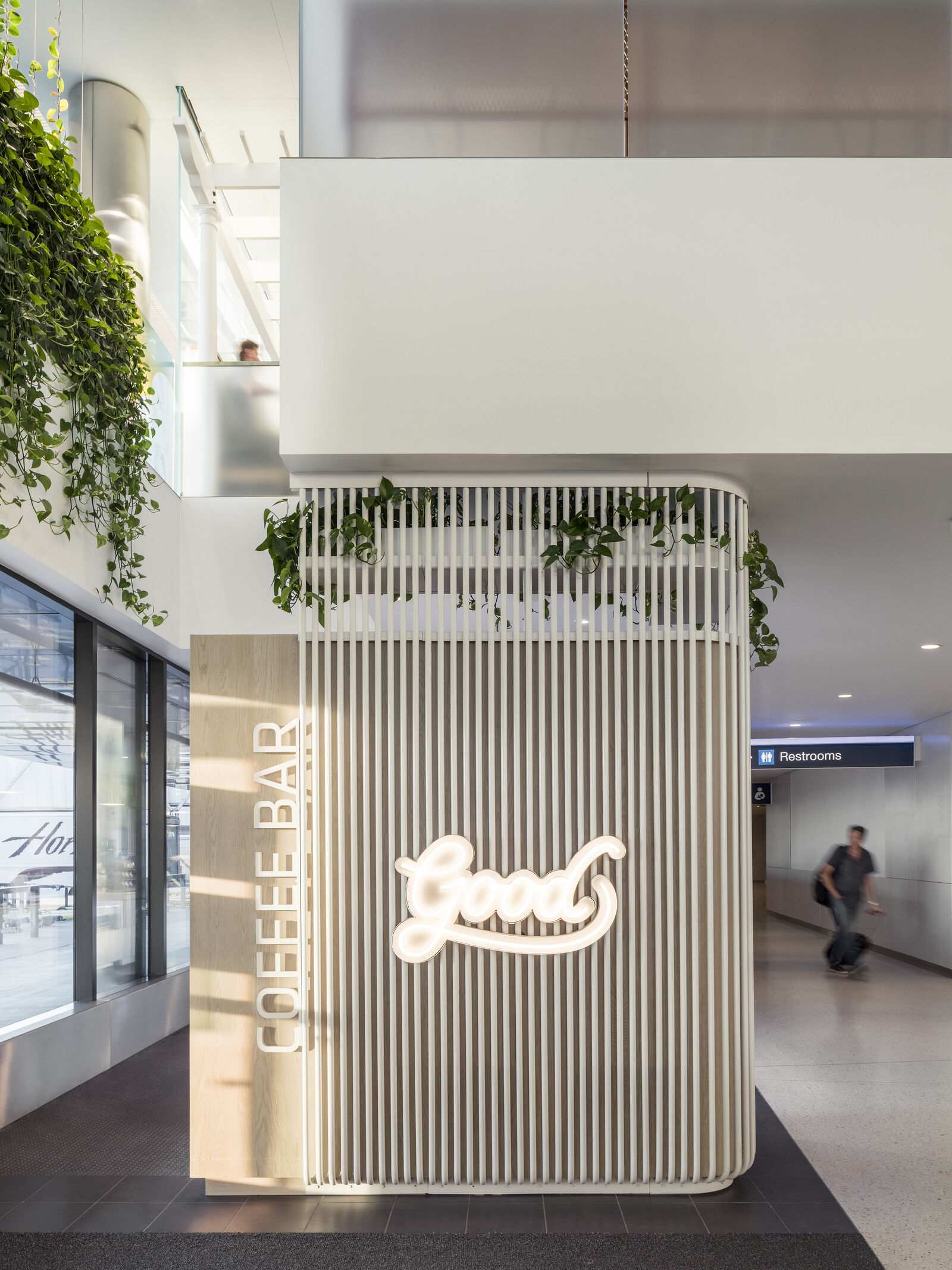
Biophilia and natural elements feature throughout.
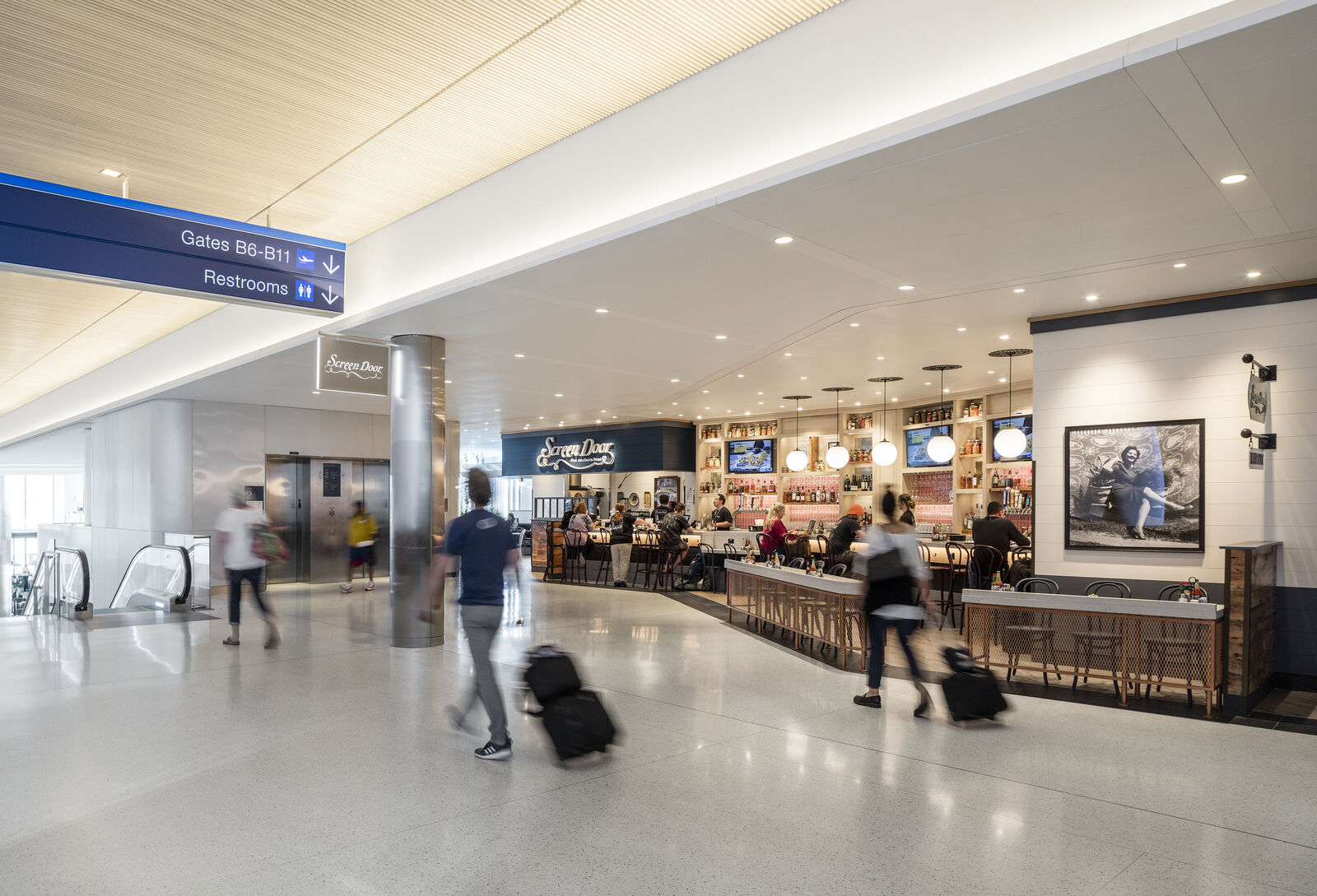
New hold rooms, traveler amenities, and improved, intuitive wayfinding are key to the redesign.
The concourse was designed with a strong connection to nature to increase the quality of the passenger experience and reduce the stress of traveling. Full-height windows offer expansive views out to the airfield and increased natural light which filters through the interior plantings with exterior sunshades that provide maximum comfort. Daylight optimization went beyond the façade design; the ceiling is designed to hit the optimal level of light reflectance value (LRV), a process that involves the color, perforation size, surface glossiness, and selection of light fixtures. The design allows daylight to penetrate deep into the space to further improve passenger comfort.
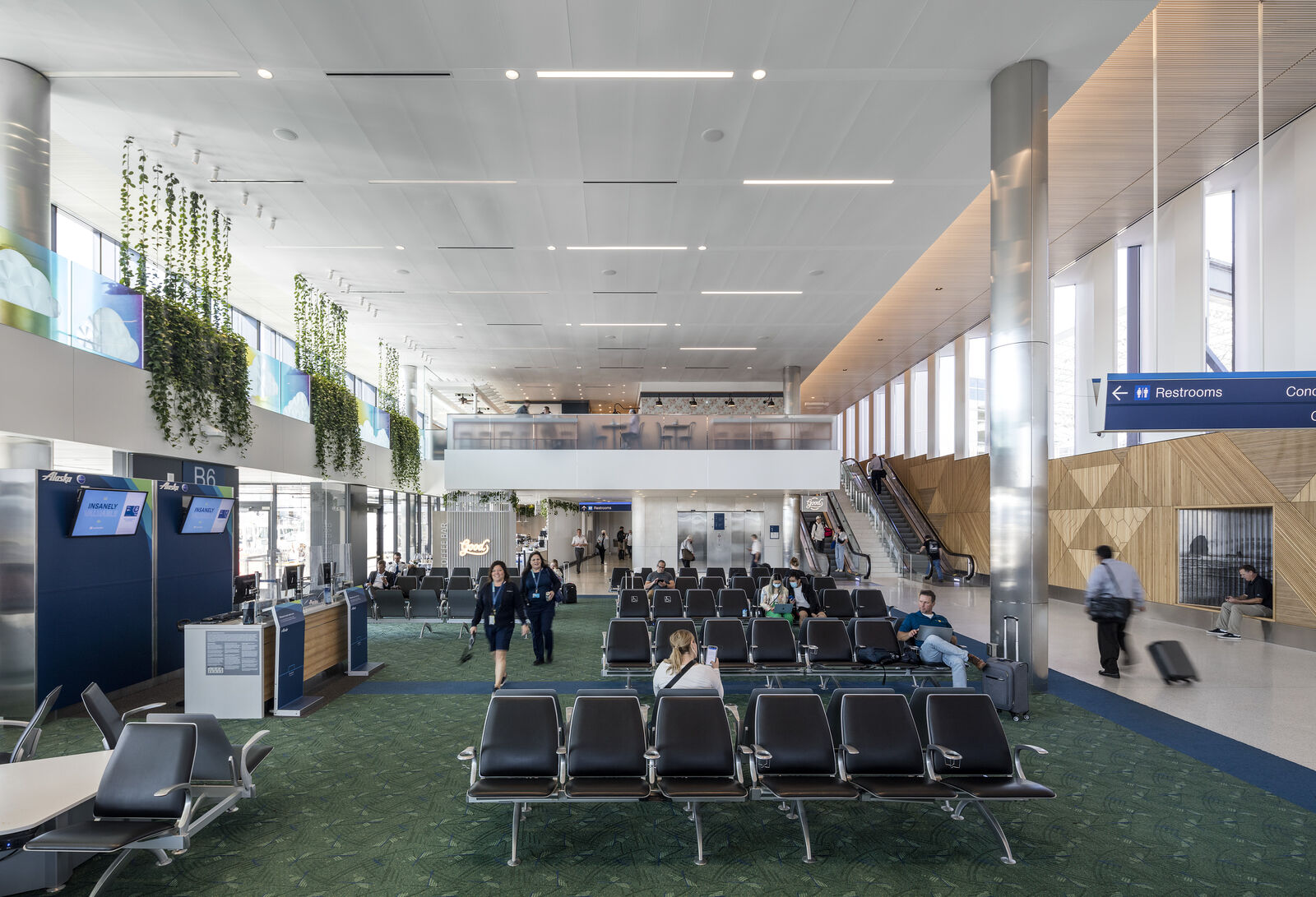
Daylight streams throughout the space on either side with exterior sunshades and interior plantings providing soft filters.
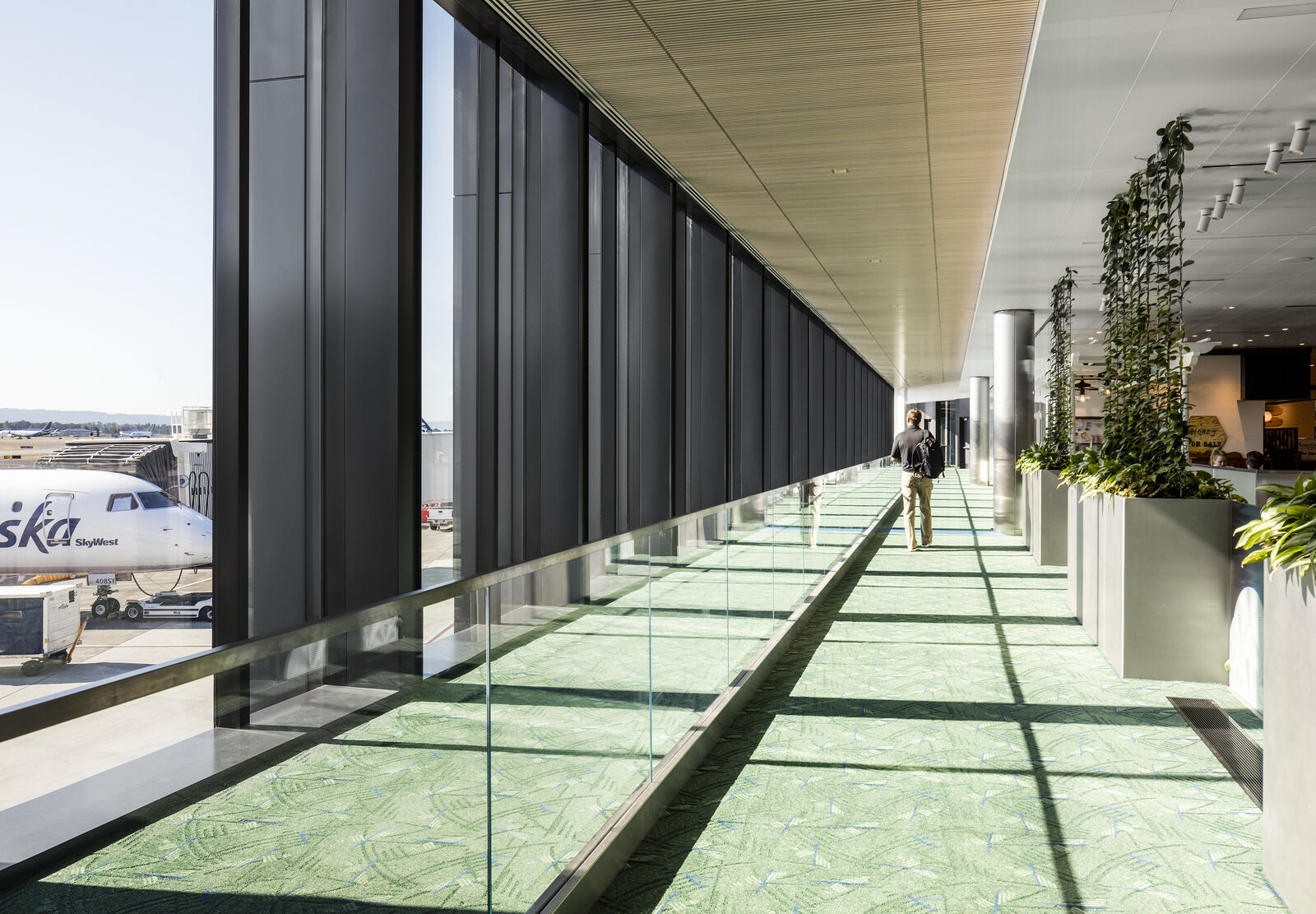
Full-height windows on the mezzanine boarding level offer expansive views out to the airfield and maximize natural light.
Importance was placed on the selection of sustainable and locally sourced materials, examples of which are featured prominently throughout the concourse. Along the main circulation of the double-story space, 9,000-board-feet of FSC-certified Oregon White Oak was sourced from within a 60-mile radius of Salem, Oregon. The wood provides acoustical benefits which balance the hard terrazzo flooring, contributing to volume control for greater passenger comfort. Hold rooms also feature the iconic “PDX carpet”, which the airport is well-known for, offering both comfort and familiarity. A wood ceiling in the main circulation area serves to differentiate the space from the ceiling tiles in the hold rooms.
Pacific Northwest-inspired biophilic—or nature-based design elements—reference Oregon flora and are part of the elevated new restroom design by Sara Schmidt Design, which are incorporated throughout the airport to create a cohesive narrative. The entries to the restrooms in Concourse B are marked by graphic, oversized, mosaic ferns in calming shades of green that connect with the greenery throughout the concourse.
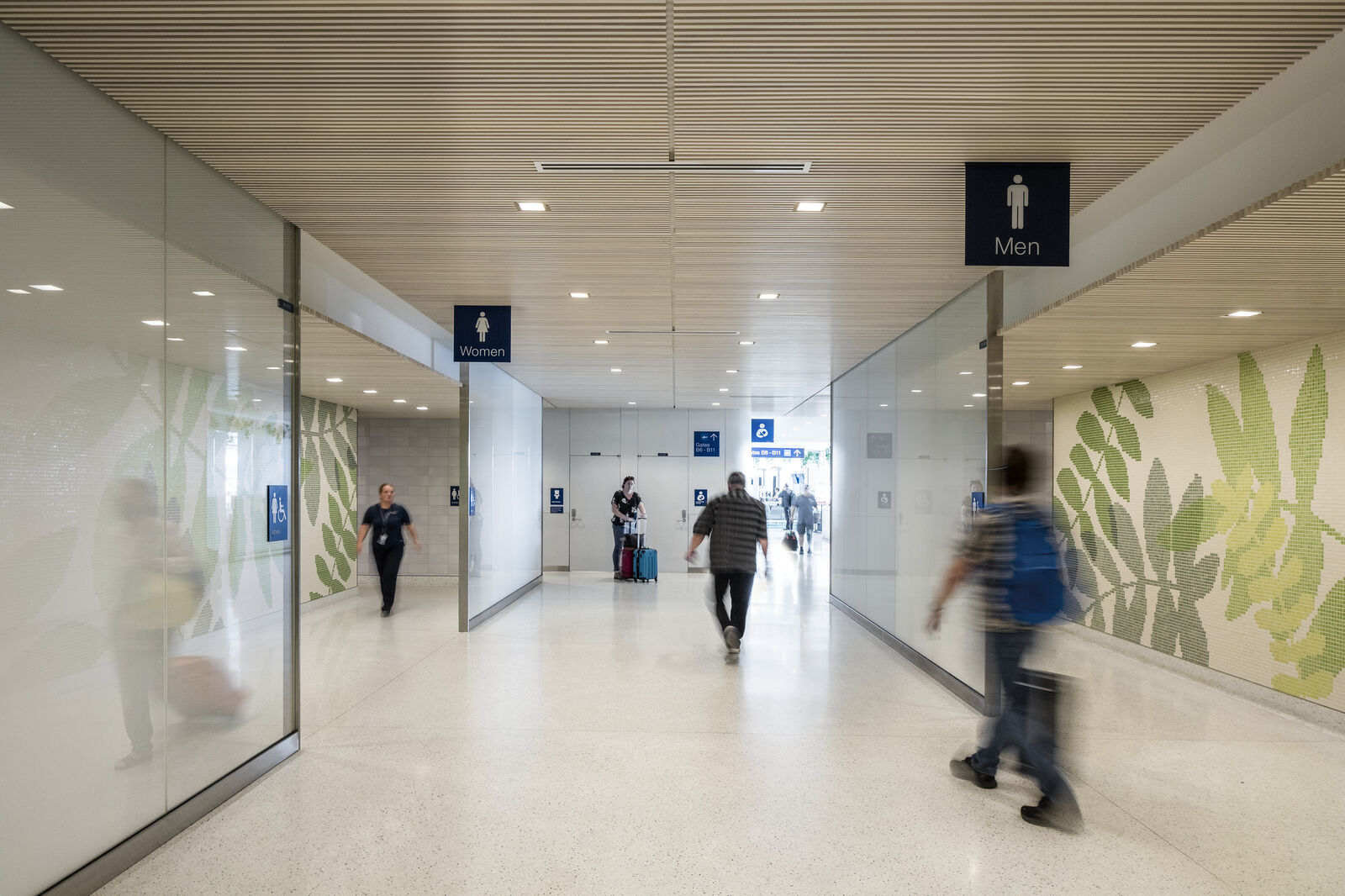
The graphic, oversized, mosaic ferns designed by Sara Schmidt Design feature tiles sourced from Pratt + Larson, a handmade ceramic tilemaker located in Portland.
The northeast façade’s folds and pleats form tall windows, framing views of the terminal’s iconic canopy. Inside, a graphic wood wall, designed by EGD consultant Sara Schmidt Design in collaboration with ZGF, welcomes visitors with a pattern crafted from Oregon white oak.
RYAN! Fedderson, a Tacoma, Washington-based artist and a member of the Confederated Tribes of the Colville Reservation, created Inhabitance, an immersive series of three interconnected artworks: the Sentinel landscapes featuring PNW land biomes; abstract Habitat Tiles which conjure the texture and patterns of these habitats; and the gently rolling, rainbow-infused Cloud Walk which rims the second level. The artworks, which include depictions of a coastal beach, native prairie, temperate rainforest, high desert, and alpine mountain range, add to the sense of place and highlight the exceptional diversity of the Pacific Northwest biomes. They are also a moment to amplify the Port of Portland’s commitment to their core values of diversity, equity, and inclusion.
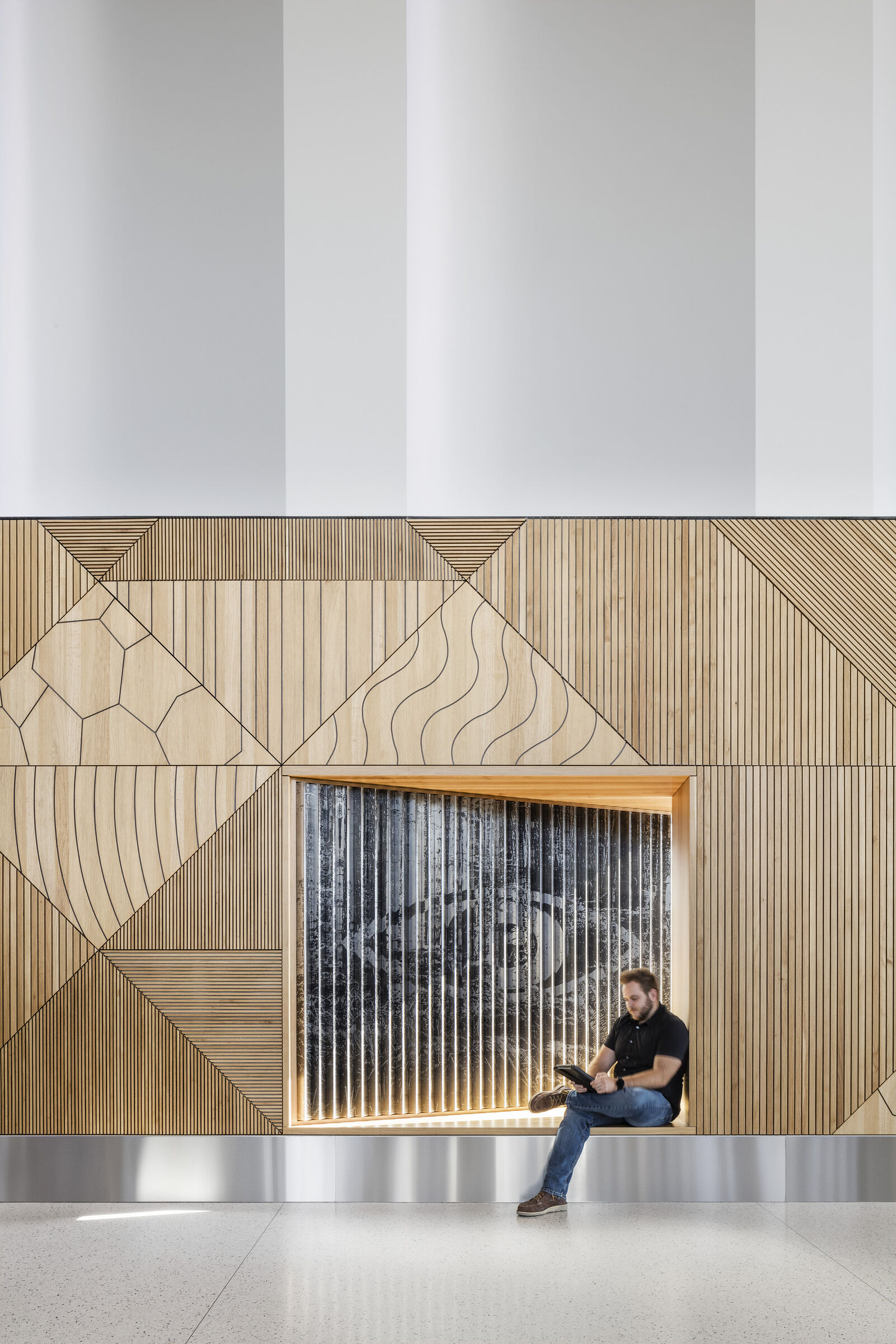
At the passenger level, integrated seats feature RYAN! Feddersen’s optical illusions—technically known as lenticular portraits—prompt a playful interaction with passengers, making the viewer not only pause to look at the art, but also physically move around the space to see every dimension of it. The seating nooks have fast become passengers' favorite place to pass the time while waiting to board.
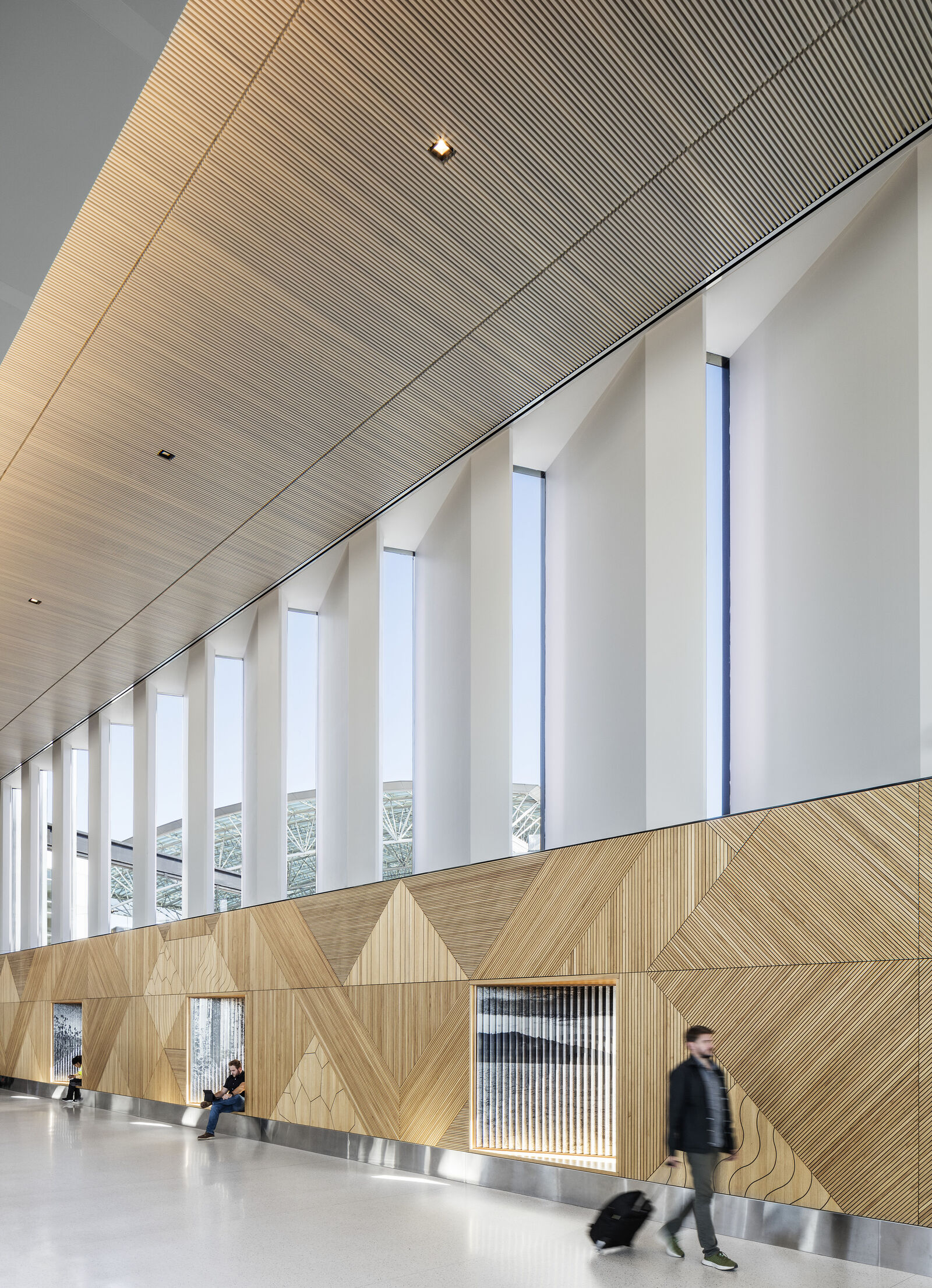
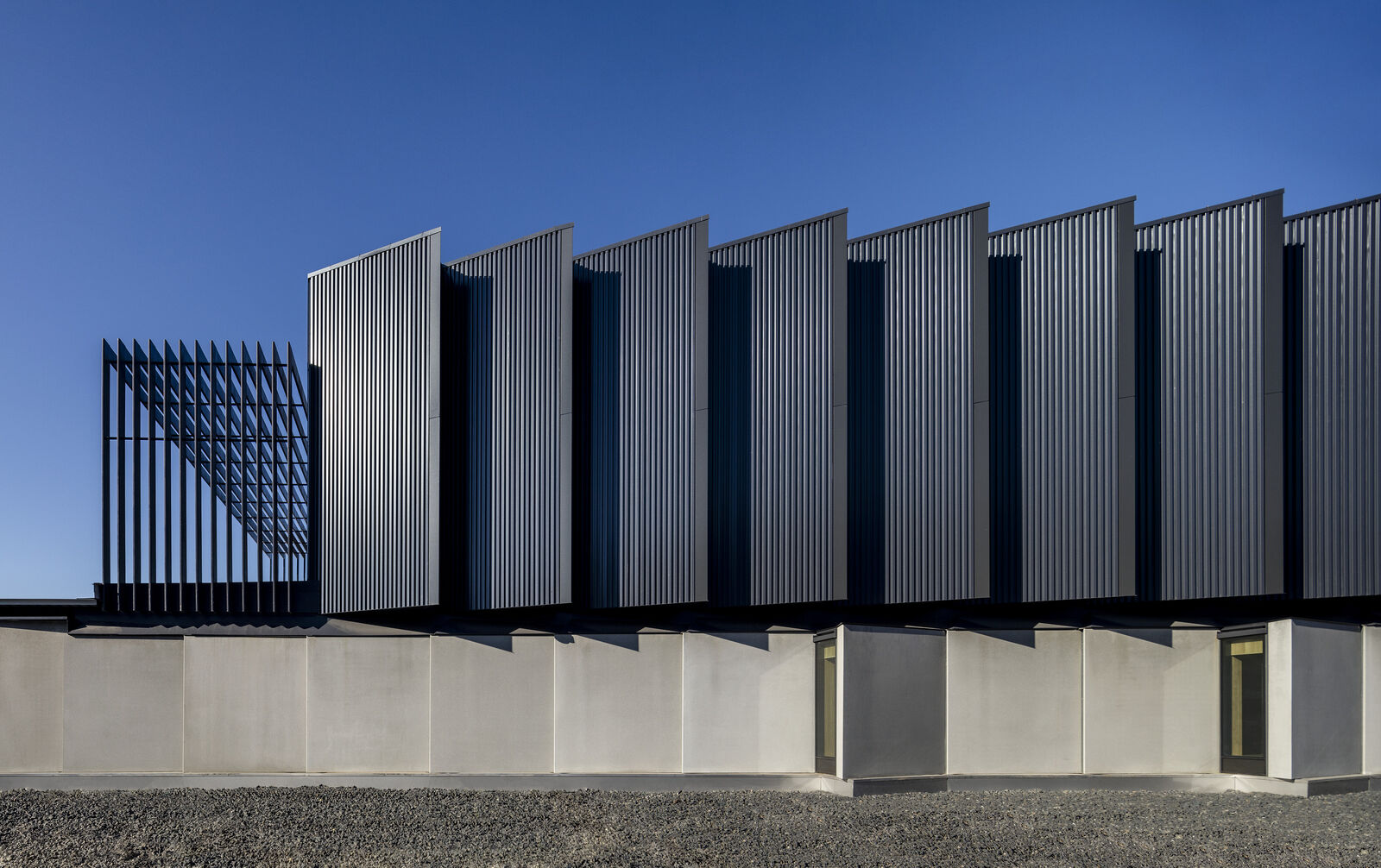
The folds and pleats on the northeast façade create tall windows that point northwest, offering views back to the terminal’s iconic canopy. The graphic wood wall, designed by EGD consultant Sara Schmidt Design in collaboration with ZGF, features a pattern crafted from Oregon white oak.
Other key design elements include a 750-foot-long covered walkway for ground loading planes. Tall glass walls protect passengers from the damp northwest elements when boarding the plane, while also providing a sense of connection and views to the airfield.
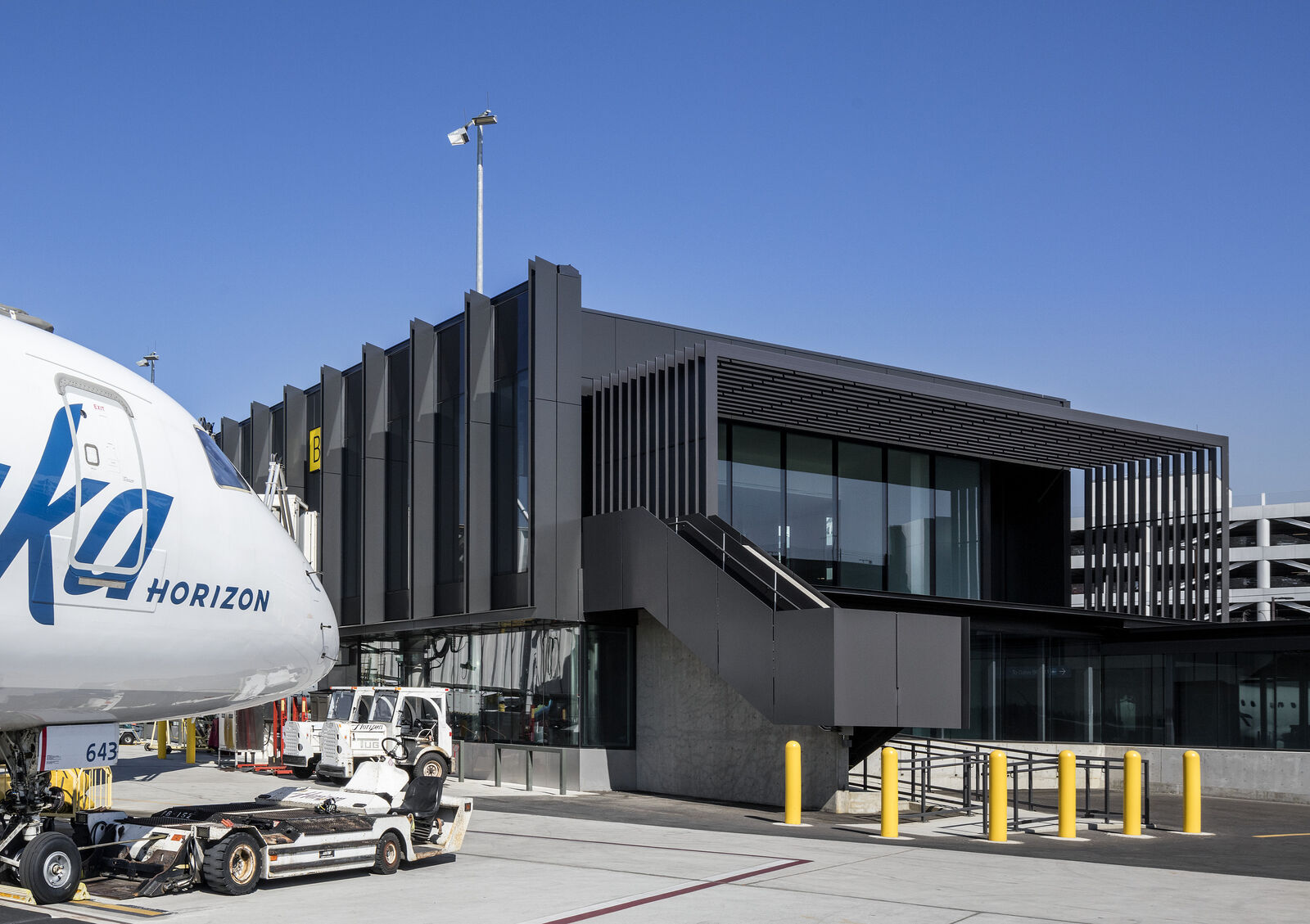
The southwest exterior features folds and pleats that provide sunshade and echo the design found on the northeast wall.
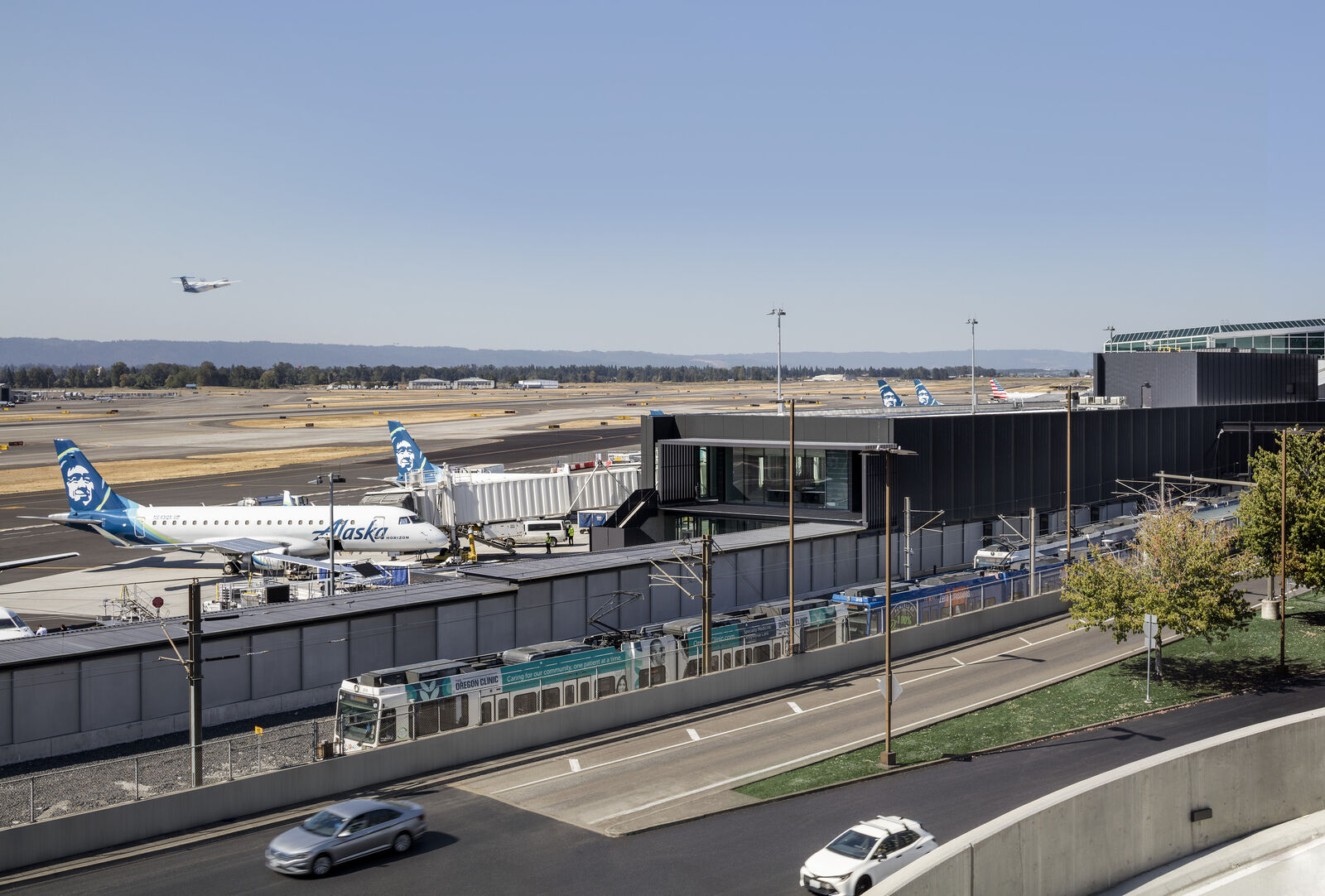
A bird’s eye view of Concourse B showing the 750-foot-long covered walkway with full-height windows allowing passengers to view planes taking off as they board.
The Port of Portland prioritized sustainability from the start of the design process, and by simply choosing to renovate the existing concourse instead of building a new one, the project achieved significant embodied carbon savings. Sustainability goals were met through the use of locally sourced wood, responsibly sourced materials, reduced fossil fuels, the use of LEDs, and water consumption reduction strategies. Each façade was tuned to its orientation’s unique sun trajectories to increase daylight, create biophilic shadow play, provide thermal comfort, and control painful glare from direct sun for both passengers and employees.
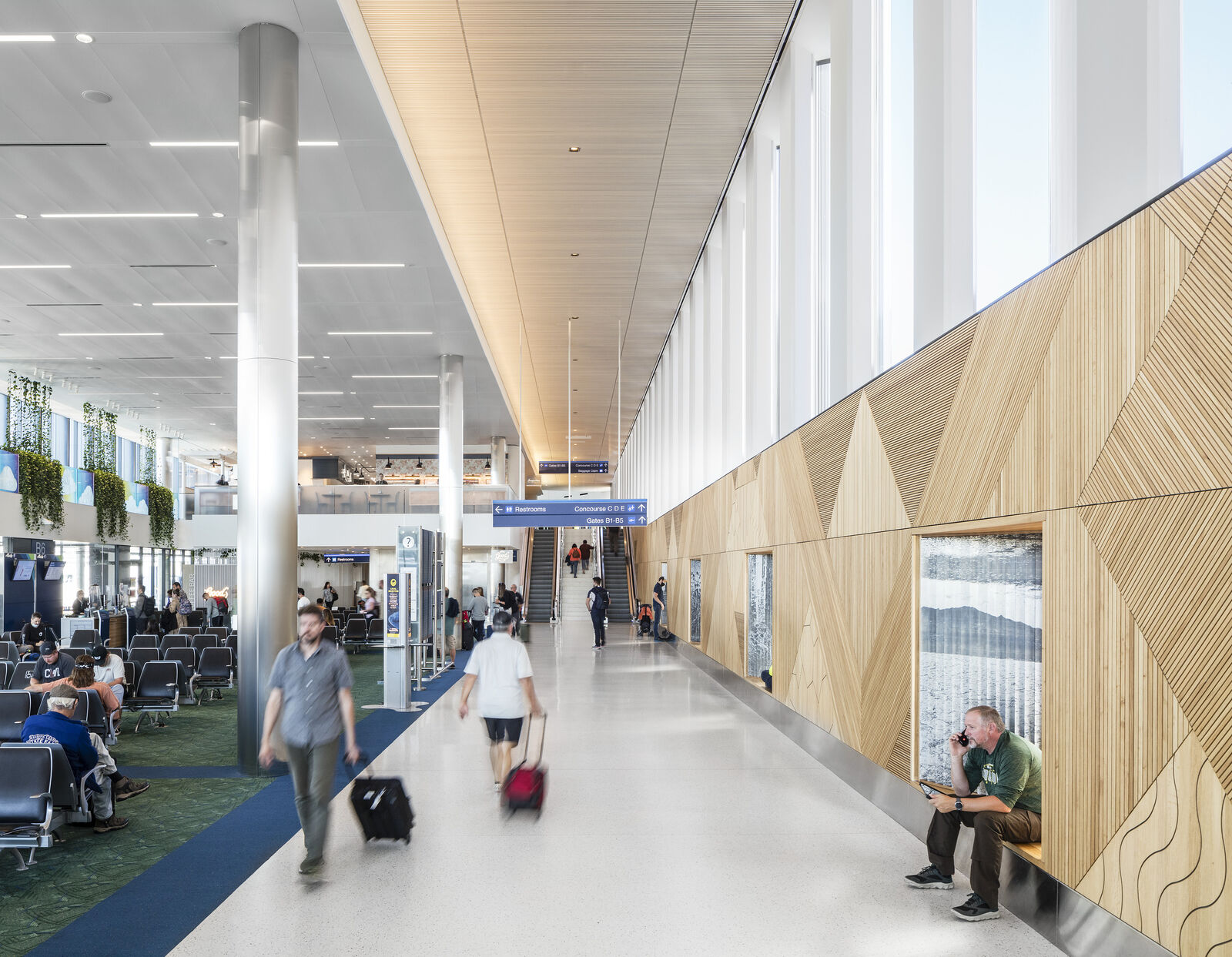
These folds allow natural light to wash across the wall surface of the main circulation without admitting any direct sun.
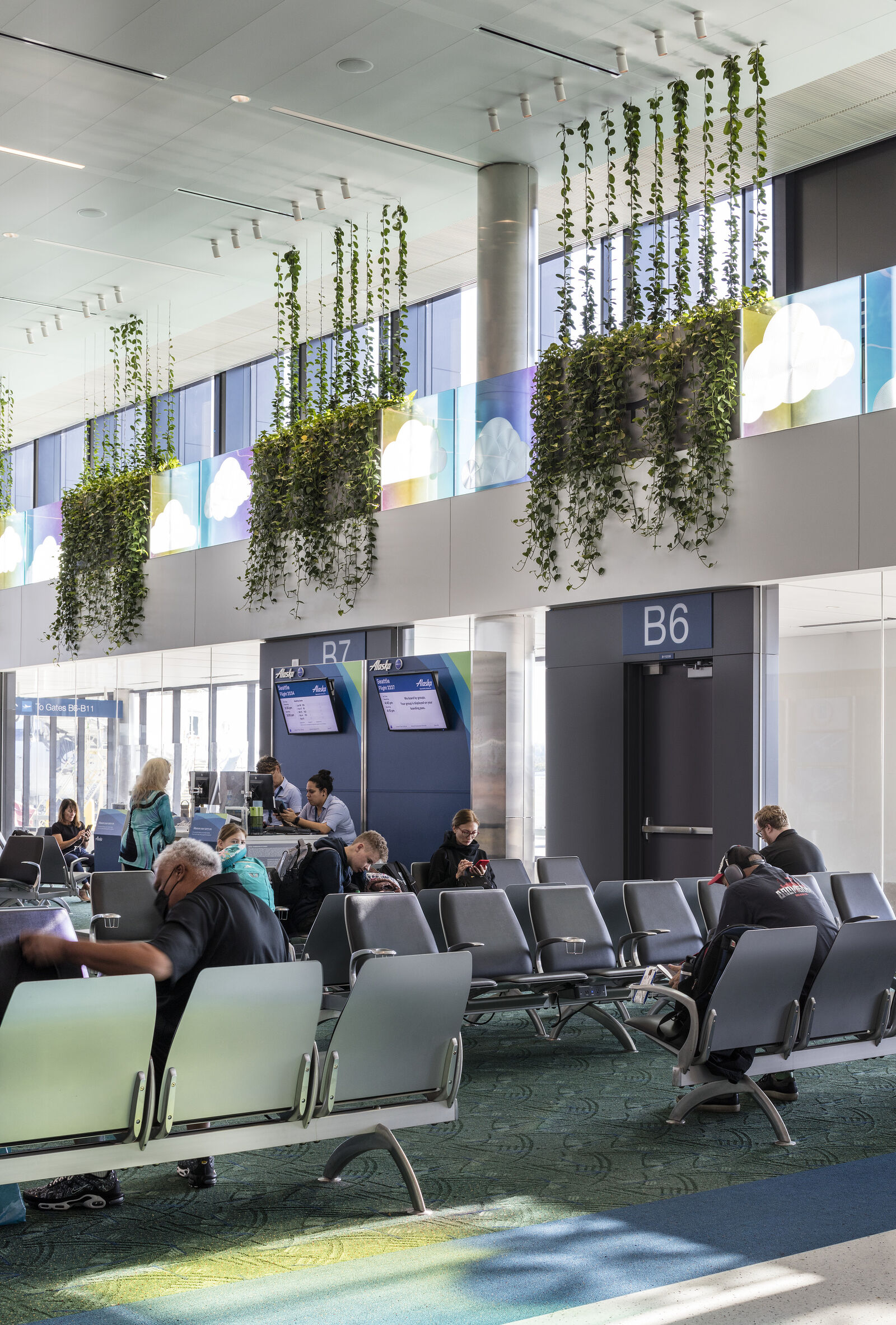
The southwest facade uses a series of deep, exterior vertical fins to buffer solar gain and provide glare control for ticket counter areas. Inside, hanging planters, and artist-curated cloud graphics on glass railings play with and break up the sun to provide a visually comfortable, biophilic experience in the concourse.
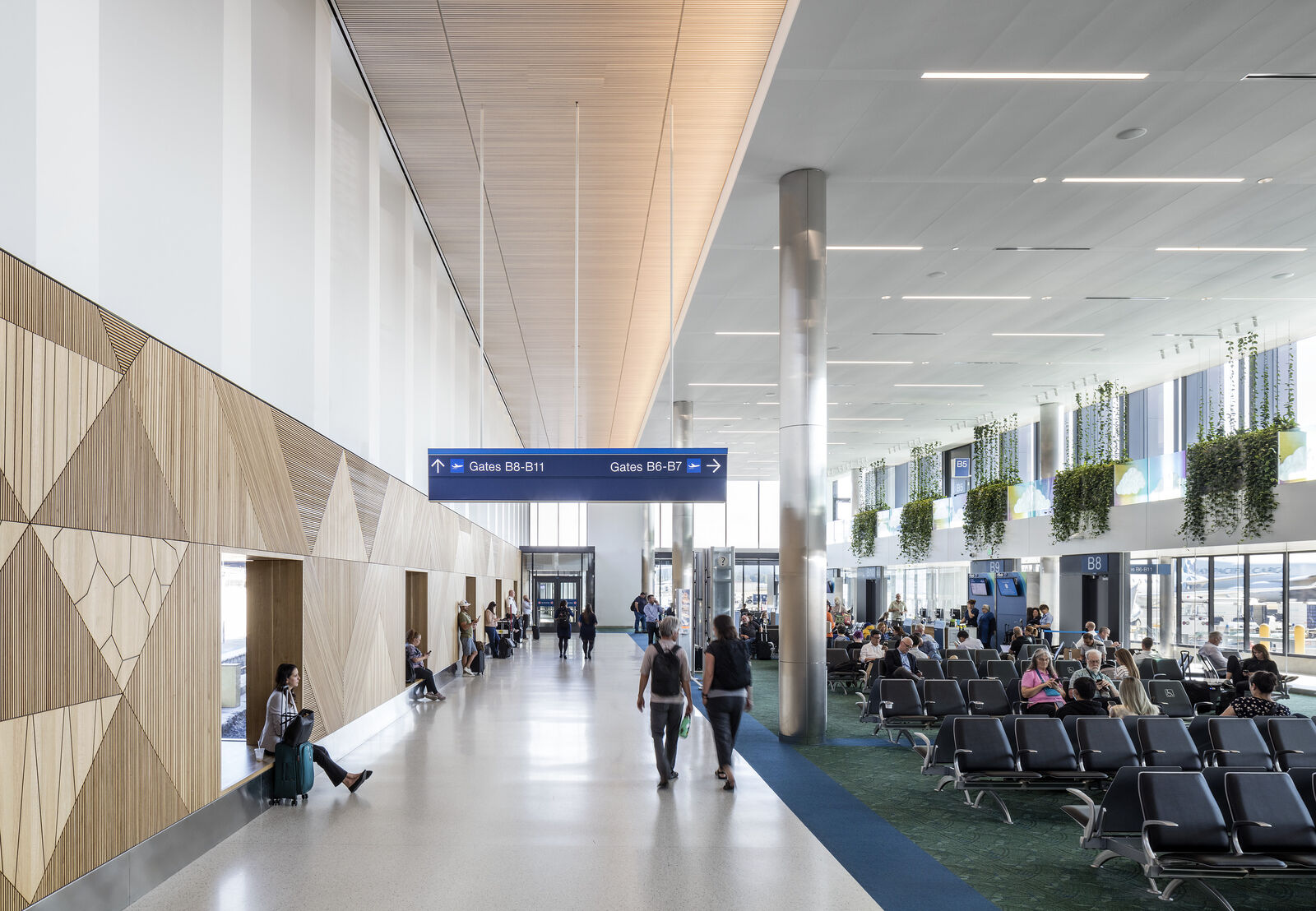
The southeast façade employs a deep, louvered overhang and motorized shades along the upper windows to block low angle sun and glare. The space features windows on multiple sides which helps create an overall balanced and comfortable daylight quality in the circulation and hold rooms.
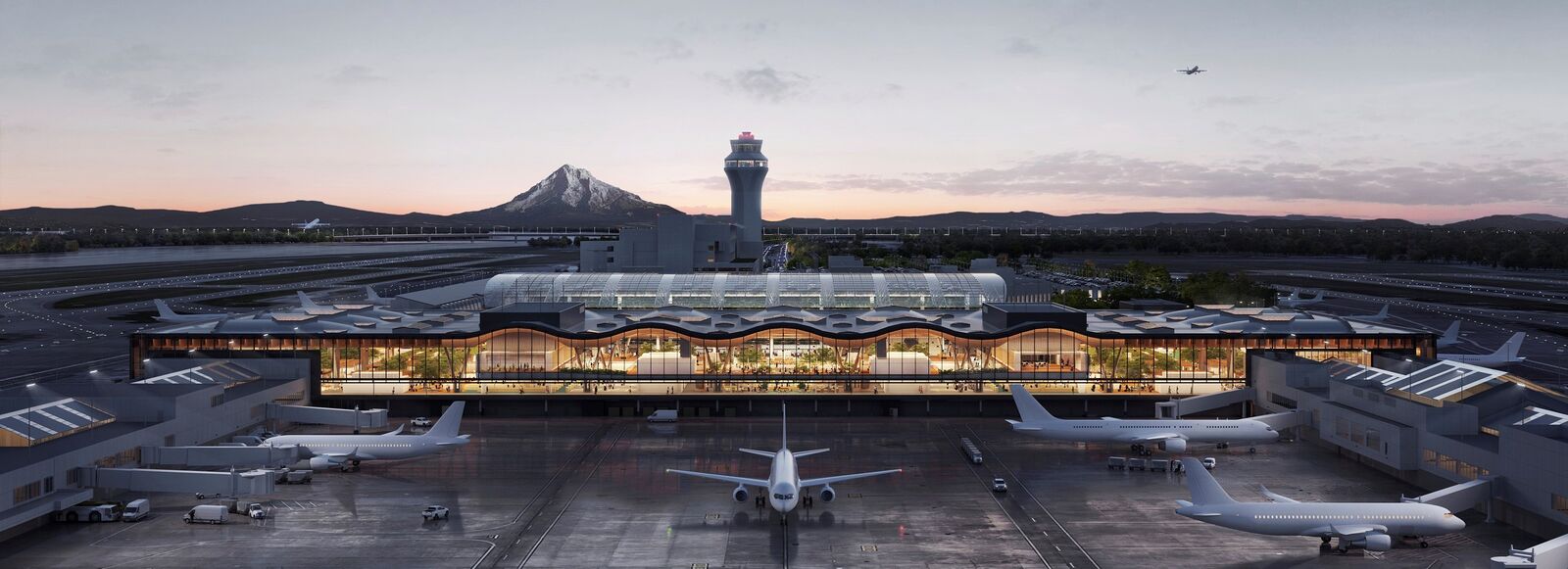
Port of Portland, PDX Airport Main Terminal Expansion
Port of Portland, Headquarters and Long-Term Parking Garage
Port of Portland, Portland International Airport (OLD post don't publish)
City of Seattle, King Street Station Renovation