CARBON FREE CORPORATE CAMPUS
Confidential High-Tech Client, East Campus Modernization Project
Workplace
HELLO, WORLD
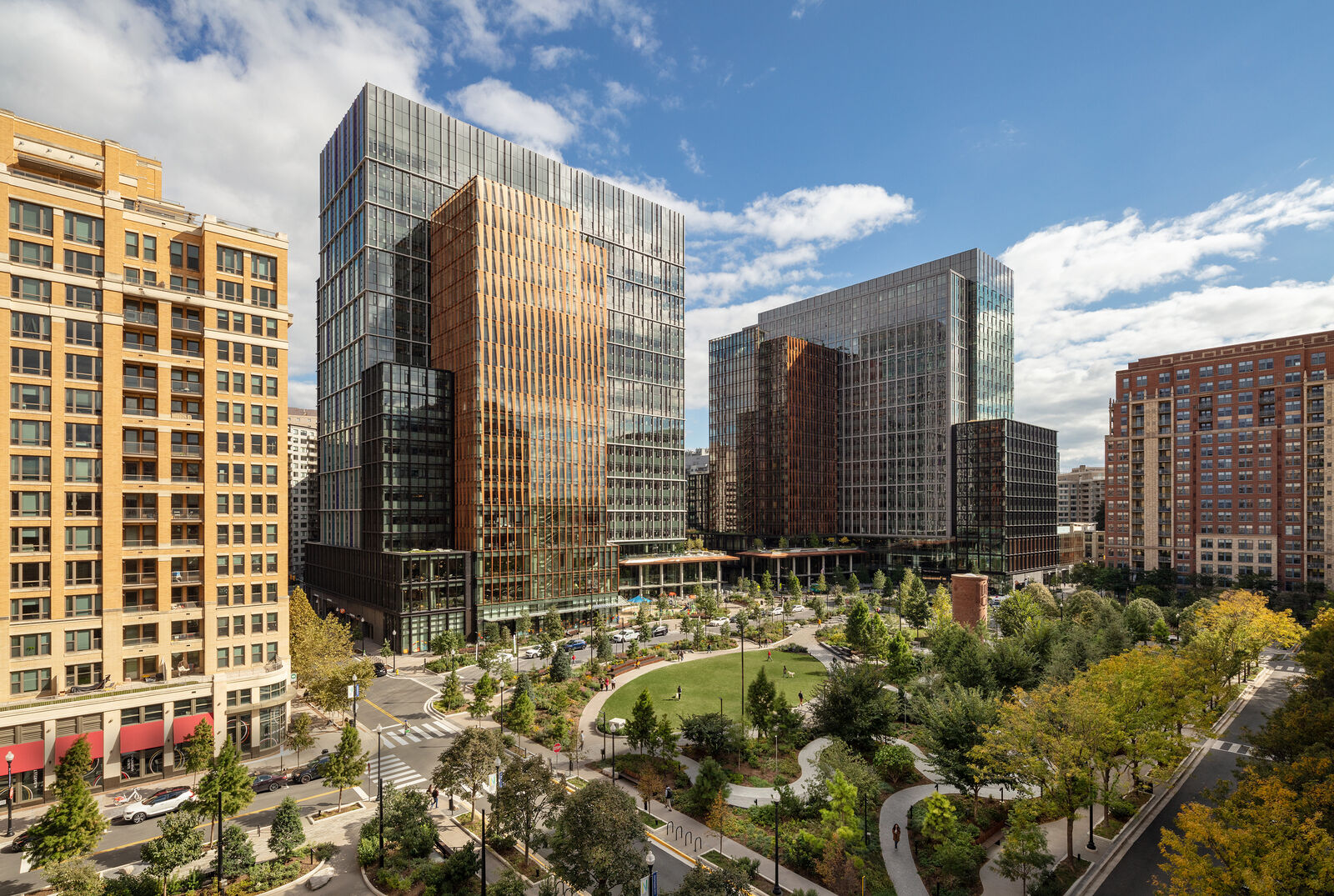
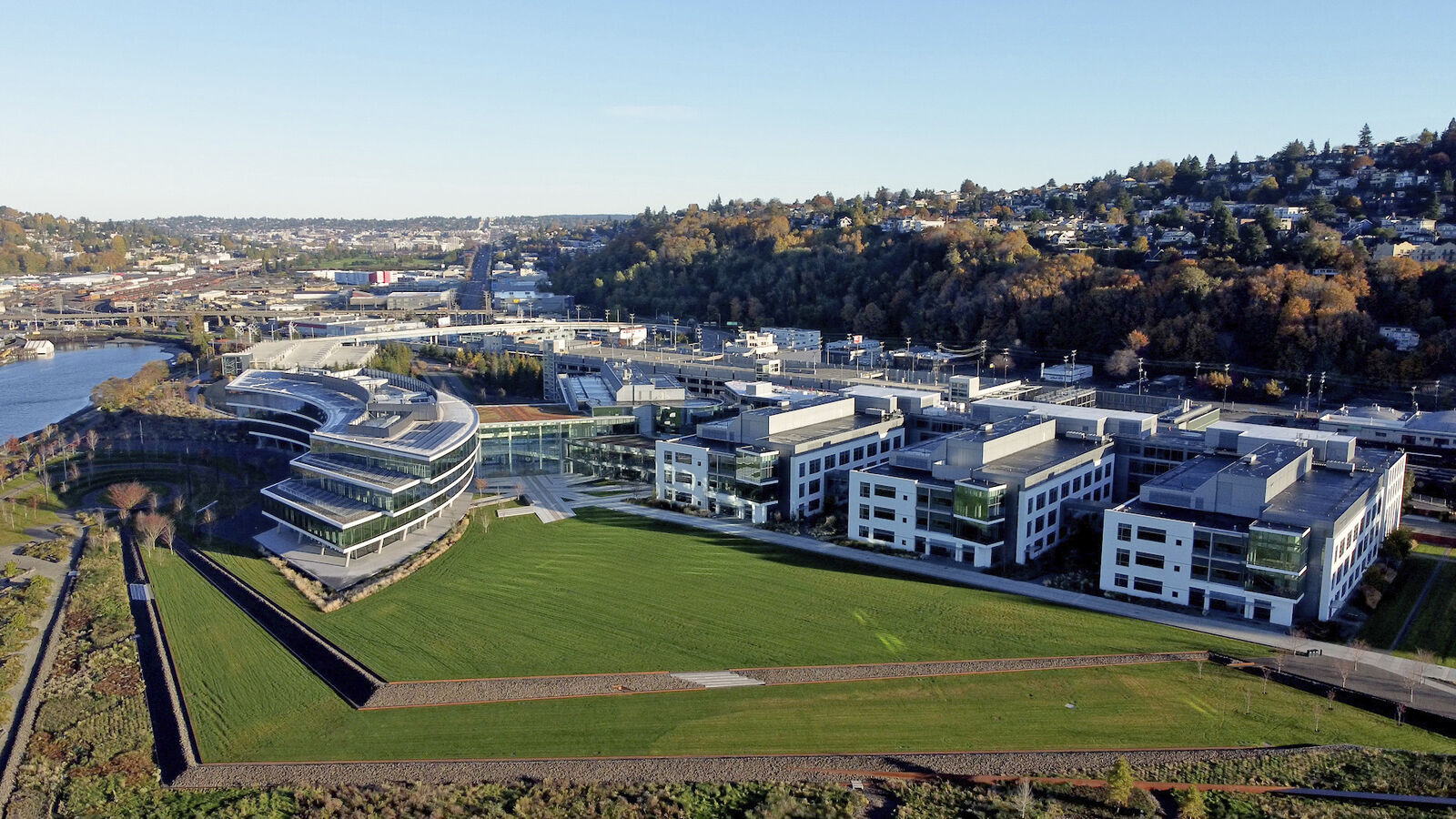
Our collaboration with this high-tech client spans over 25 years and 8+ million square feet of transformative workspaces as the company has evolved from traditional offices to dynamic, amenity-rich hybrid workspaces and buildings that express its deep commitment to sustainability. ZGF’s latest work on the Redmond campus modernization encompasses three million square feet of new workspace and amenities across 17 buildings comprising the 72-acre East Campus. The all-electric, zero carbon certified, LEED Platinum, Salmon Safe design encapsulates the company’s singular aim to create the best campus in the world. As one of four architecture firms involved in the historic project, ZGF designed the Washington Village, consisting of five buildings with 782,000 SF of dynamic workspace, retail, and culinary hubs to draw employees to campus.
Location
Redmond, WA
Square Feet
782,000 SF
Completion date
November 2023
Project Component
Architecture services
Interior design and space planning
Certifications
Zero Carbon
LEED Platinum
Salmon Safe

ZGF has partnered with the global technology company since the 1990’s, designing spaces that fuel its mission to empower every person and organization to achieve more.
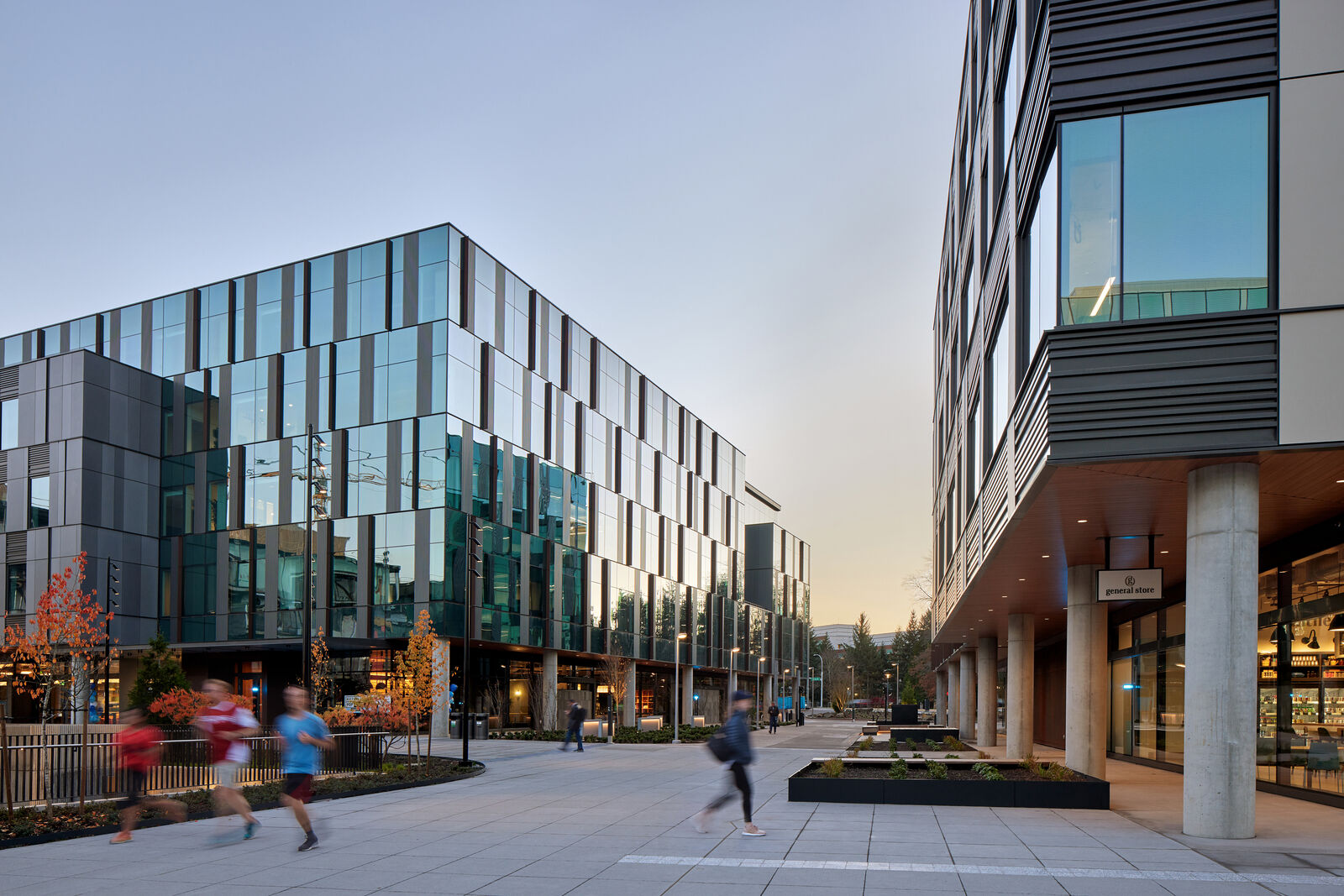
Each building is unique yet together they evoke a distinct sense of place in the Pacific Northwest.
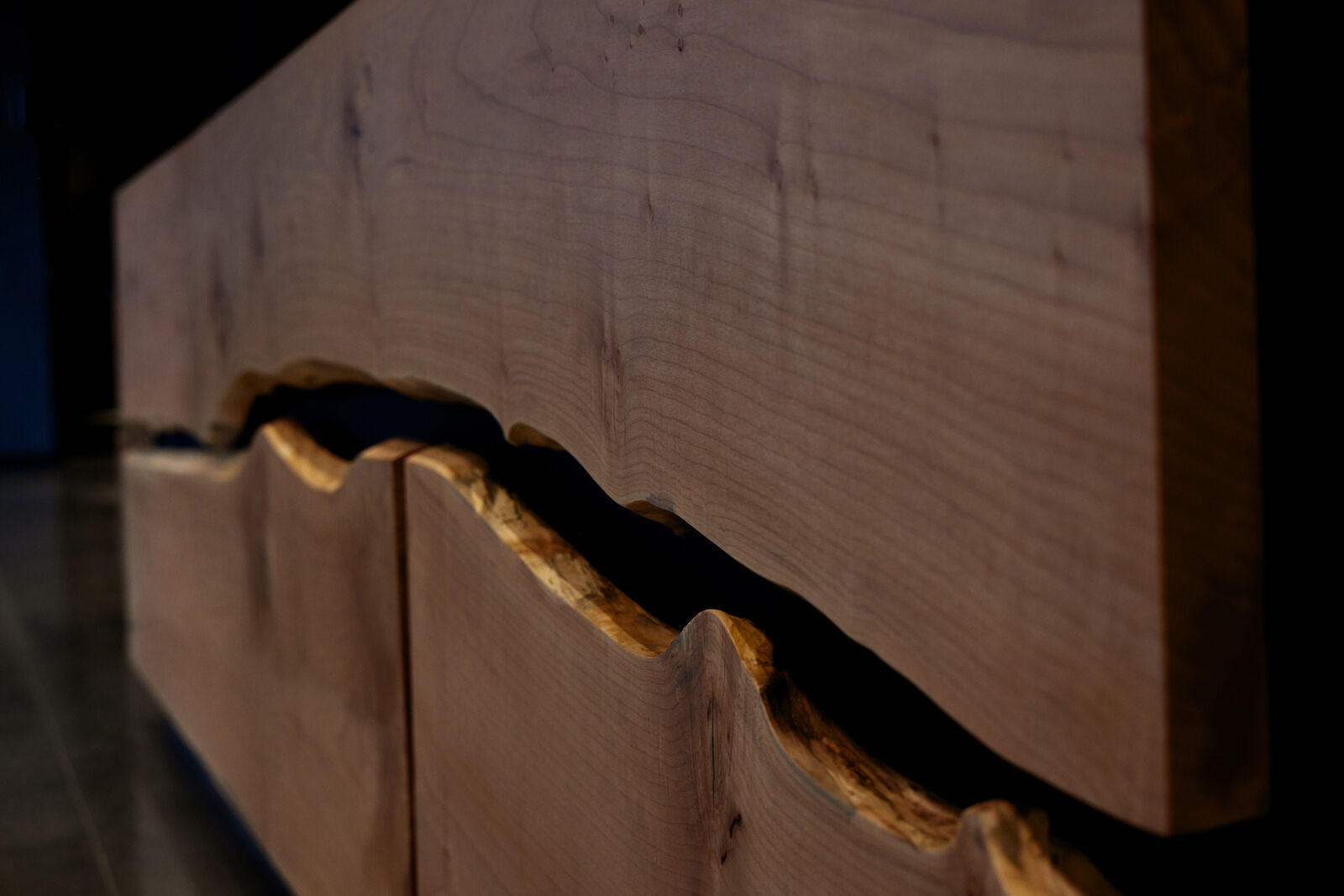
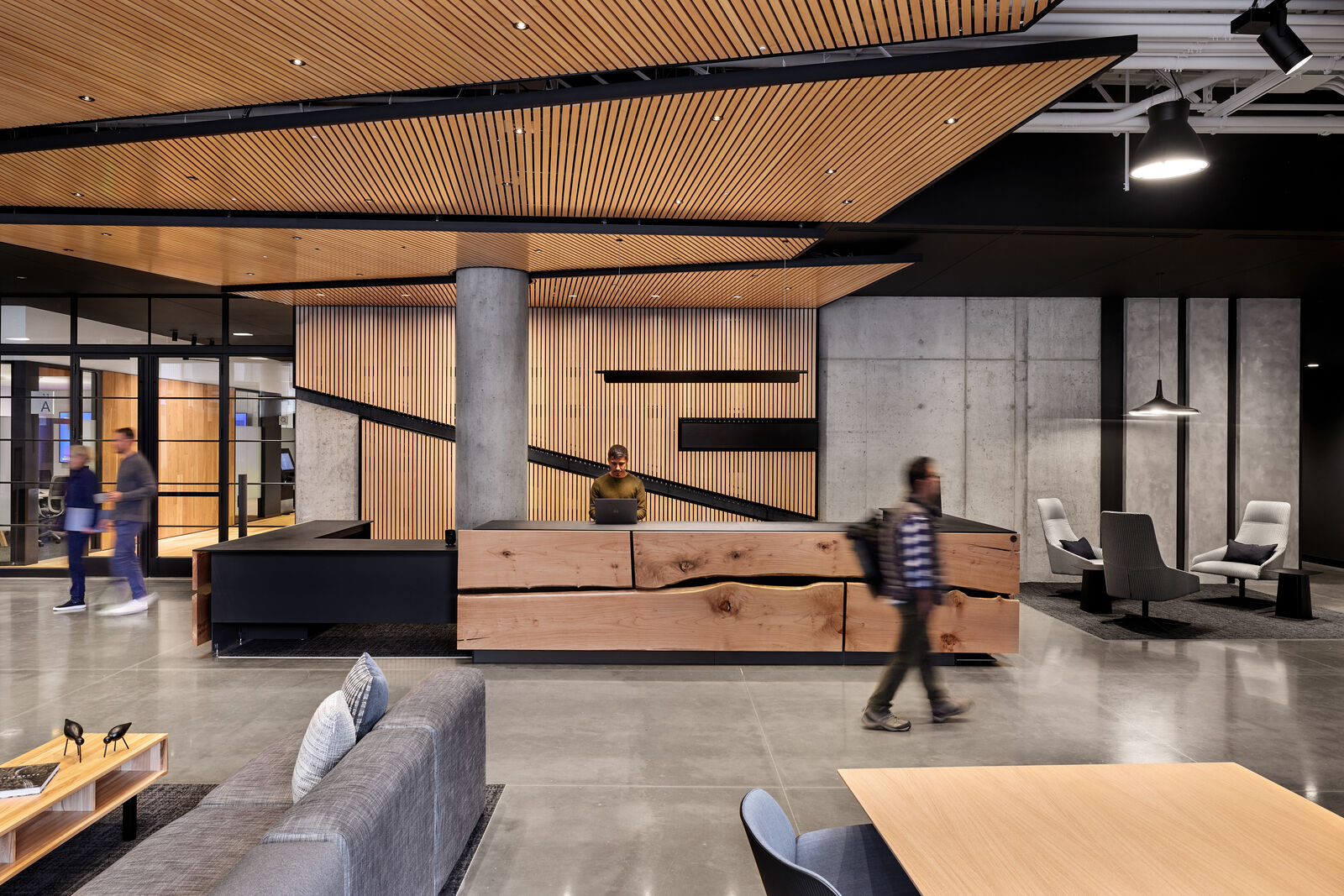
Live-edge wood reception desks made from onsite salvaged trees show careful attention to detail and craft.
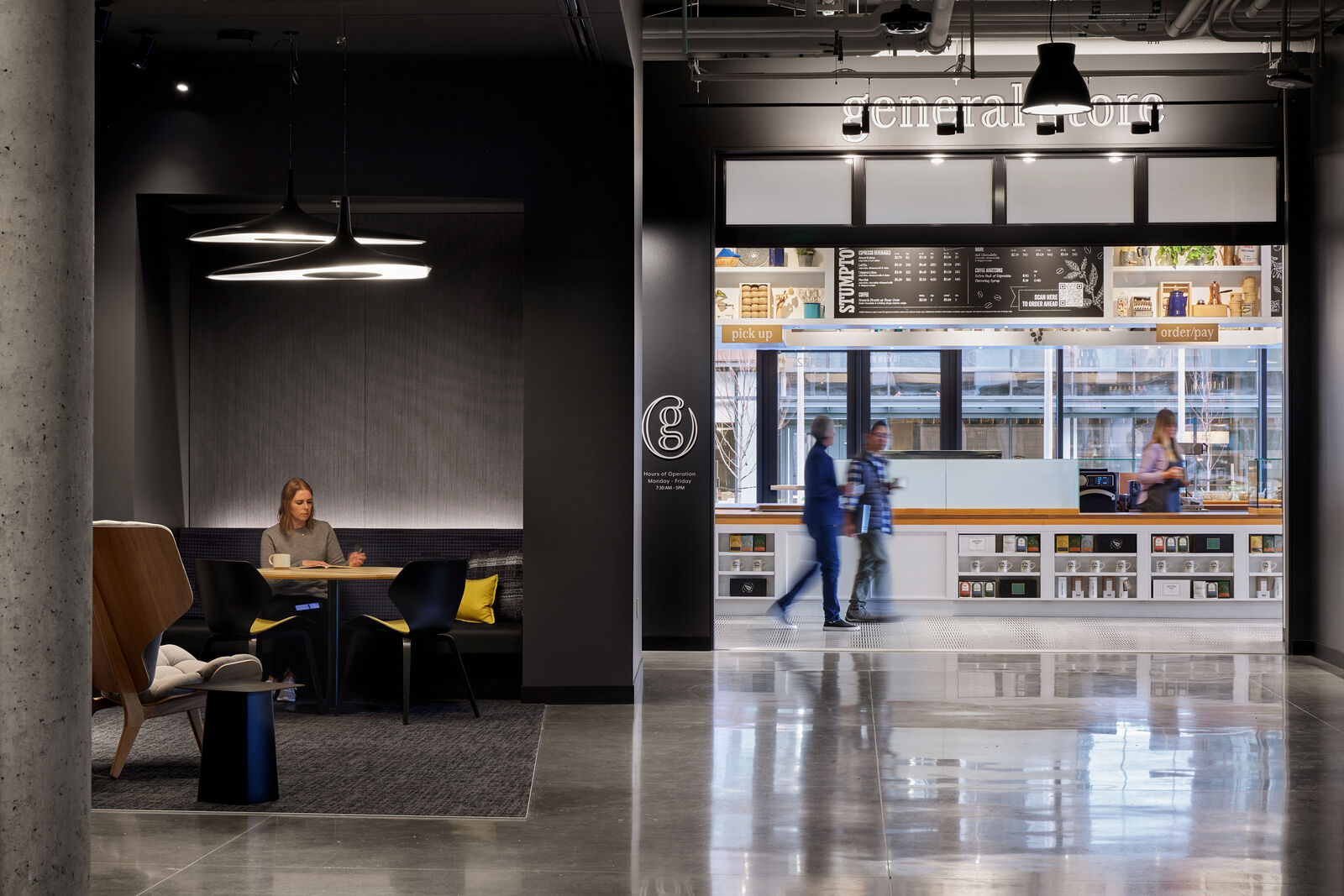
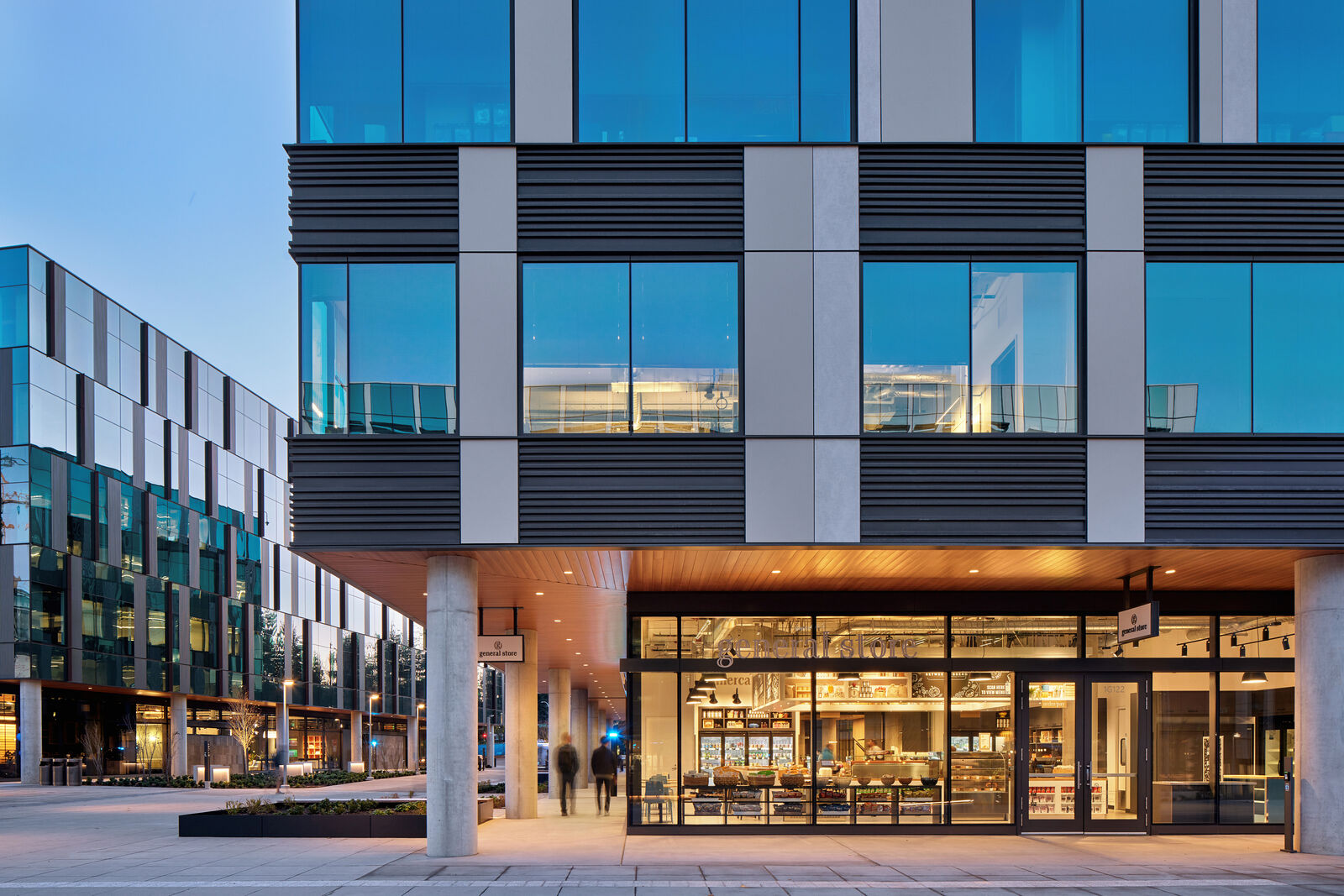
A grab-and-go general store offers Stumptown coffee, sandwiches, and salads.
“Our practices are forever changed, especially from a carbon accounting perspective.”
– Marty Brennan, Principal, ZGF
BUILDING A MORE SUSTAINABLE FUTURE
Accounting for Carbon
All four architecture firms involved in the project—each with their own general contractor, engineers, and suppliers—developed shared goals, metrics, and specifications for reducing embodied carbon emissions from the project’s design and construction. Because of its size and scale, the project can be credited with transforming the regional market for low-carbon concrete.
ZGF used Tally and EC3 for carbon modeling and leading a low-carbon concrete integrative process with KPFF (structural engineer), Sellen (general contractor), and the concrete supplier. The project targeted more than 50% reduction in embodied carbon from low-carbon concrete mixes and nearly 25% reduction in the overall project embodied carbon, including the building envelope, relative to Carbon Leadership baselines for ILFI Zero Carbon certification. The team also incorporated low carbon steel, wood, gypsum wallboard, carpet, glazing, and insulation.
To create the healthiest, most productive workplace environment, ZGF’s interiors team did extensive research with other spec writers identifying embodied carbon limits, finding compliant products, reaching out to manufacturers, and writing realistic but meaningful embodied carbon limits into our specifications. Advocacy across all four design teams led to the creation of new Environmental Product Declarations (EPDs) both in the Seattle region and for other manufacturers wanting to supply the project.
Eliminating Fossil Fuels
To eliminate fossil fuels in daily operations, the all-electric campus is powered by a closed-loop Thermal Energy Center that runs on renewable energy. Optimized daylighting and electric lighting further reduce energy demand by 30% for the Washington Village.
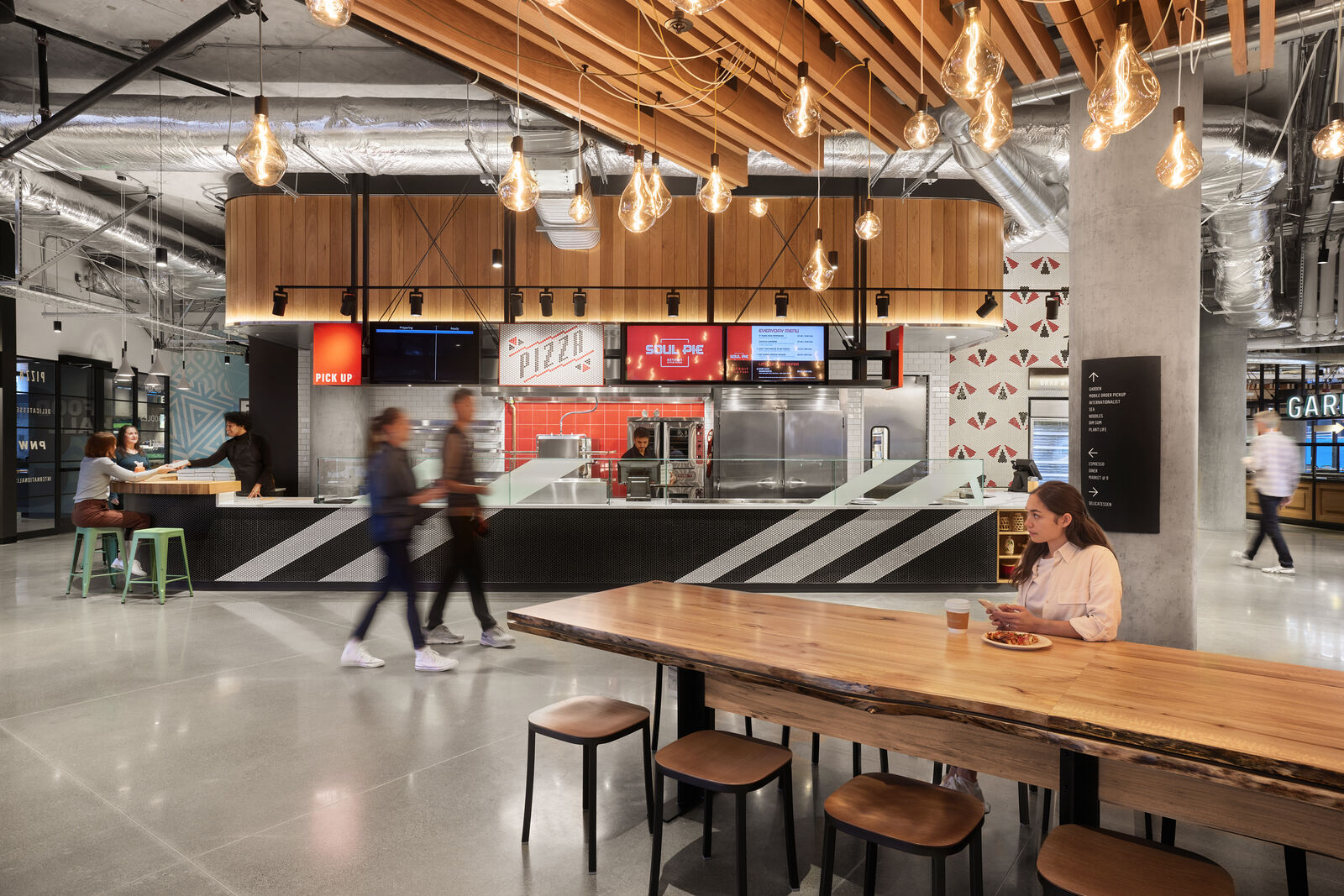
From dim sum to Detroit-style pizza, the Building 9 Food Hall eliminates natural gas in favor of an induction commercial kitchen.
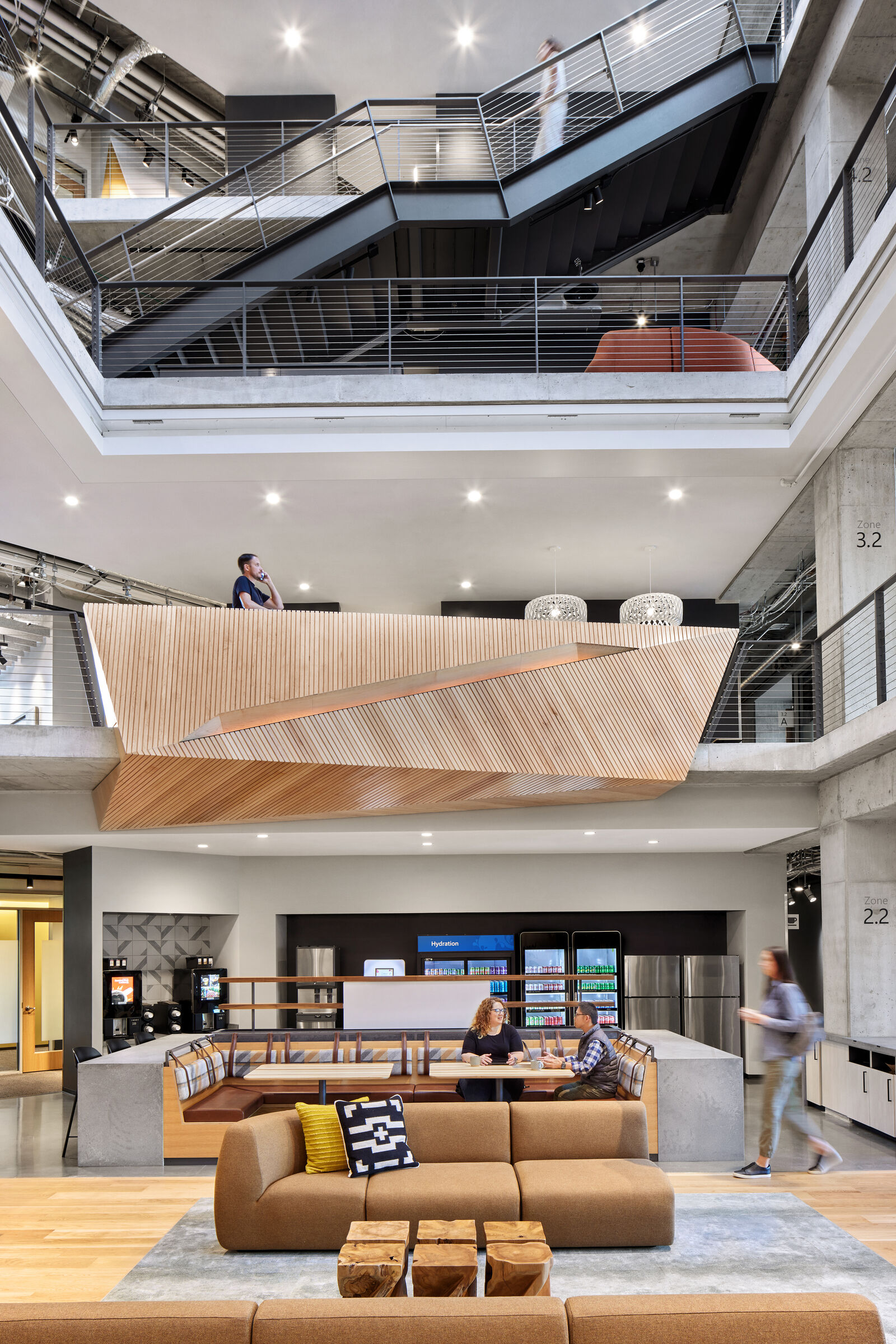
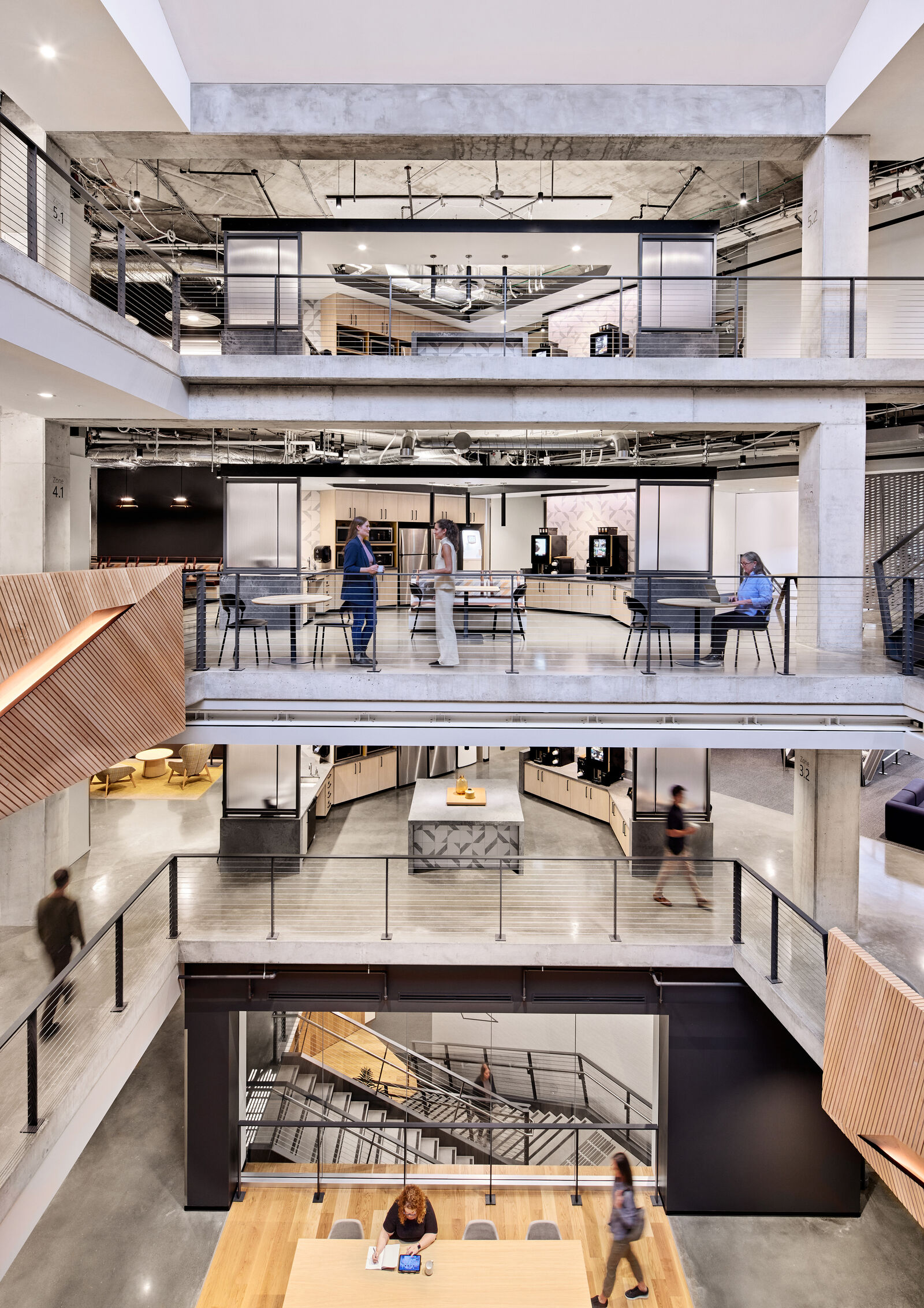
ZGF’s in-house project performance team ran various studies to evaluate daylight from every level of the atriums. Another study looked at the best locations for plants based on sun exposure in each building.
Conserving Water
Eight large cisterns throughout East Campus store rainwater for flushing in each building. Efficient fixtures further reduce demand for indoor potable water by more than 50%. The Thermal Energy Center saves over eight million gallons of water annually by using efficient cooling systems.
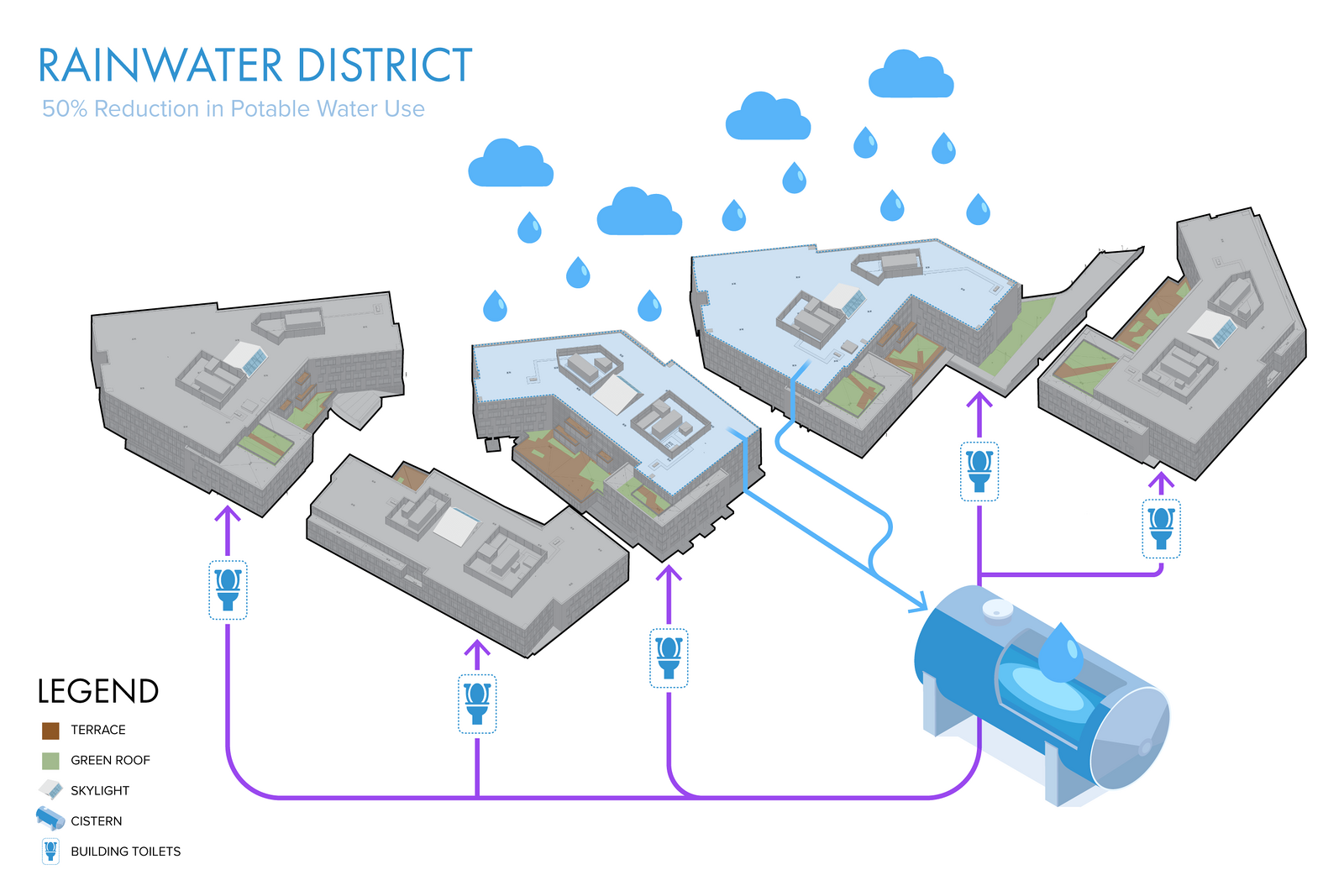
Washington Village employs a unique rainwater district approach, with one central tank capturing water from Buildings 8 and 9 to serve the entire village, rather than individual tanks serving each building separately.
Encouraging Mobility
East Campus is walkable, bikeable, and universally accessible on the ground plane, blending the built and natural edges to create a car-free, pedestrian-friendly zone.
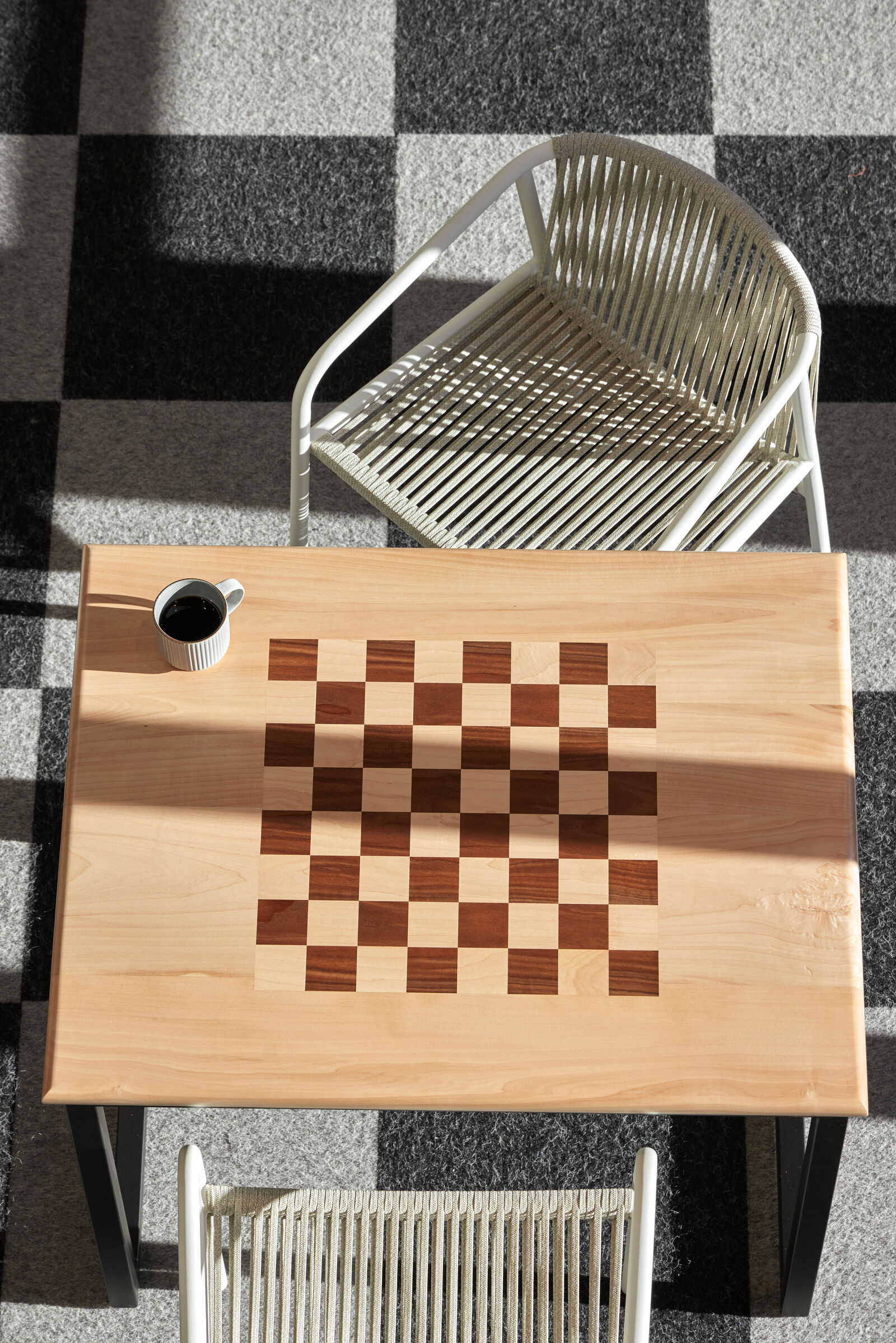
Partnering with accessibility consultant Studio Pacifica ensured the interiors and furniture were also accessible across campus.
Washington Village receives the new pedestrian bridge connecting East and West Campus over State Route 520.
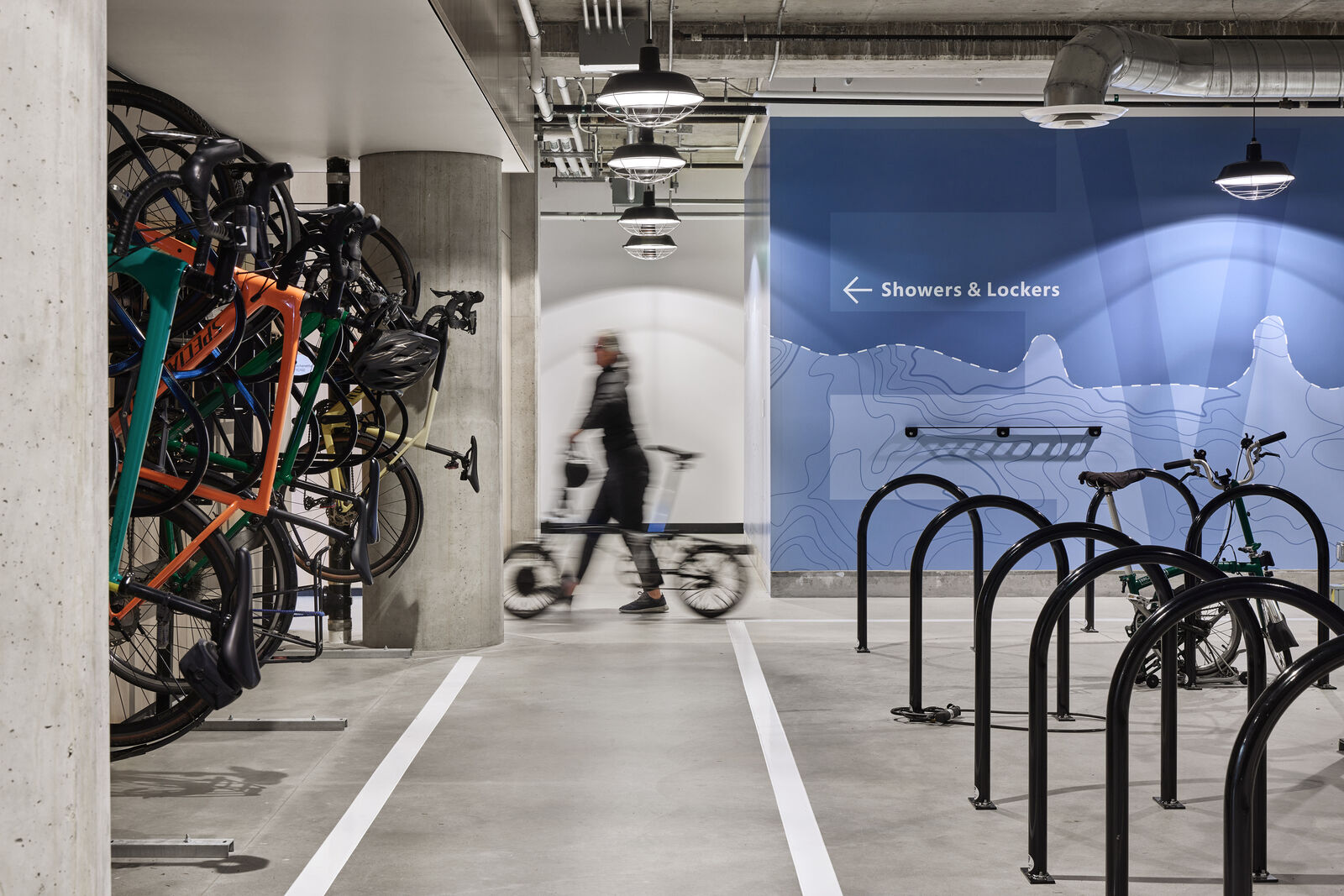
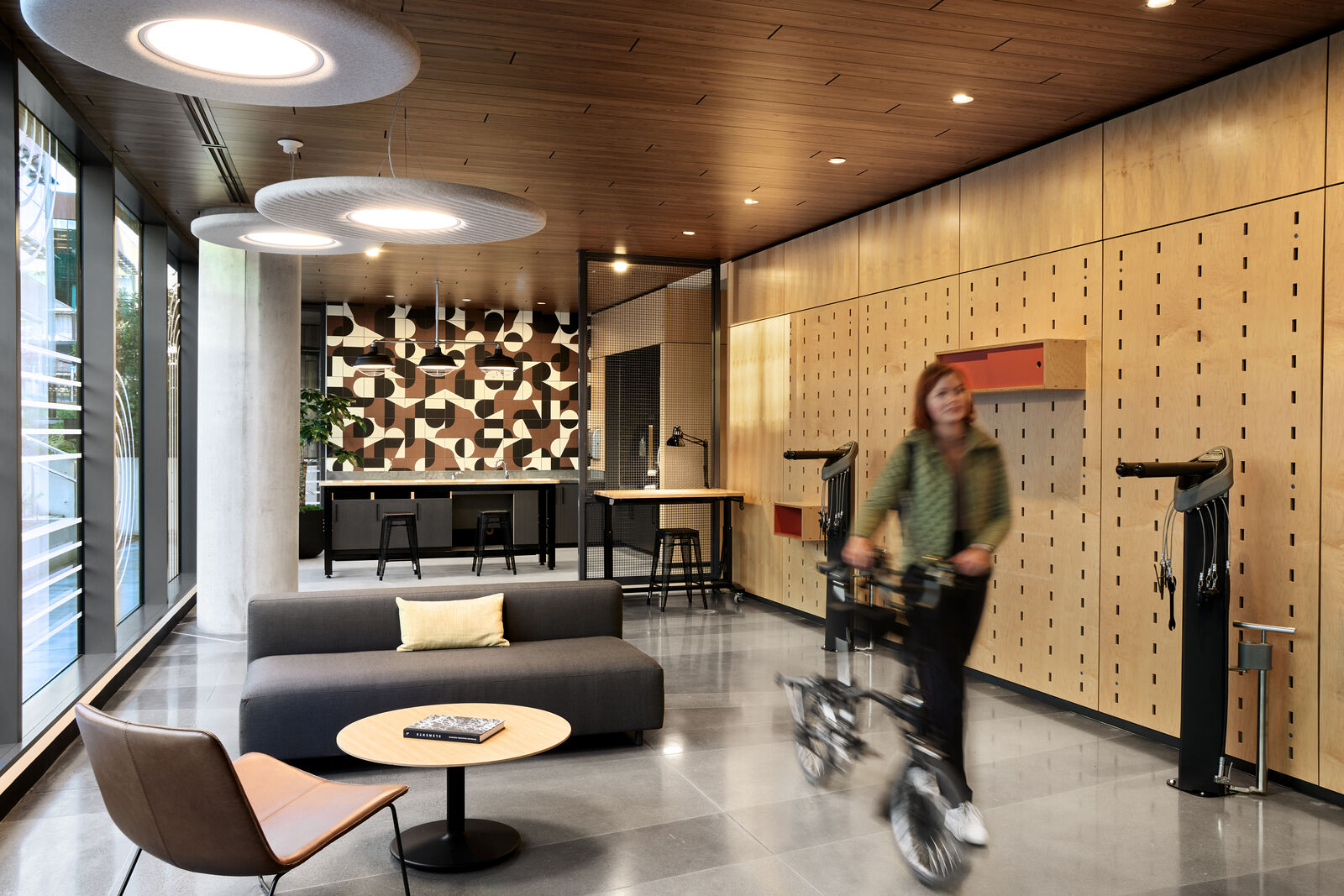
Nestled beneath the bridge, a large bike room provides ample storage, showers, a gear drying room, and repair shop to keep self-propelled commuters rolling smoothly.
BRIDGING BUILT + NATURAL ENVIRONMENTS
The project embraces the client’s directive to seamlessly bridge the built and natural environments—permeating the employee and visitor experience at all scales. Outdoors and indoors overlap. Campus placemaking, building form, and workplace planning go hand in hand to fuel activity, productivity, and innovation. This vision comes to life through two unique concepts for the Washington Village:
The Geode
The exterior architecture draws inspiration from the organic nature of geodes, with their rugged outer edges and dynamic inner crystalline clusters. ZGF strategically oriented the five buildings of Washington Village to express the moment of geodes splitting open, forging organic yet purposeful connections as if each structure were meticulously crafted from interrelated components. The buildings open up to each other and toward the central Square with full-height, glassy façade expressions that evoke the inner, crystalline structure of a geode. Weathered steel-lined boxes push and pull within the glassy façade to create playful splashes of color echoing the rock and crystal formations.
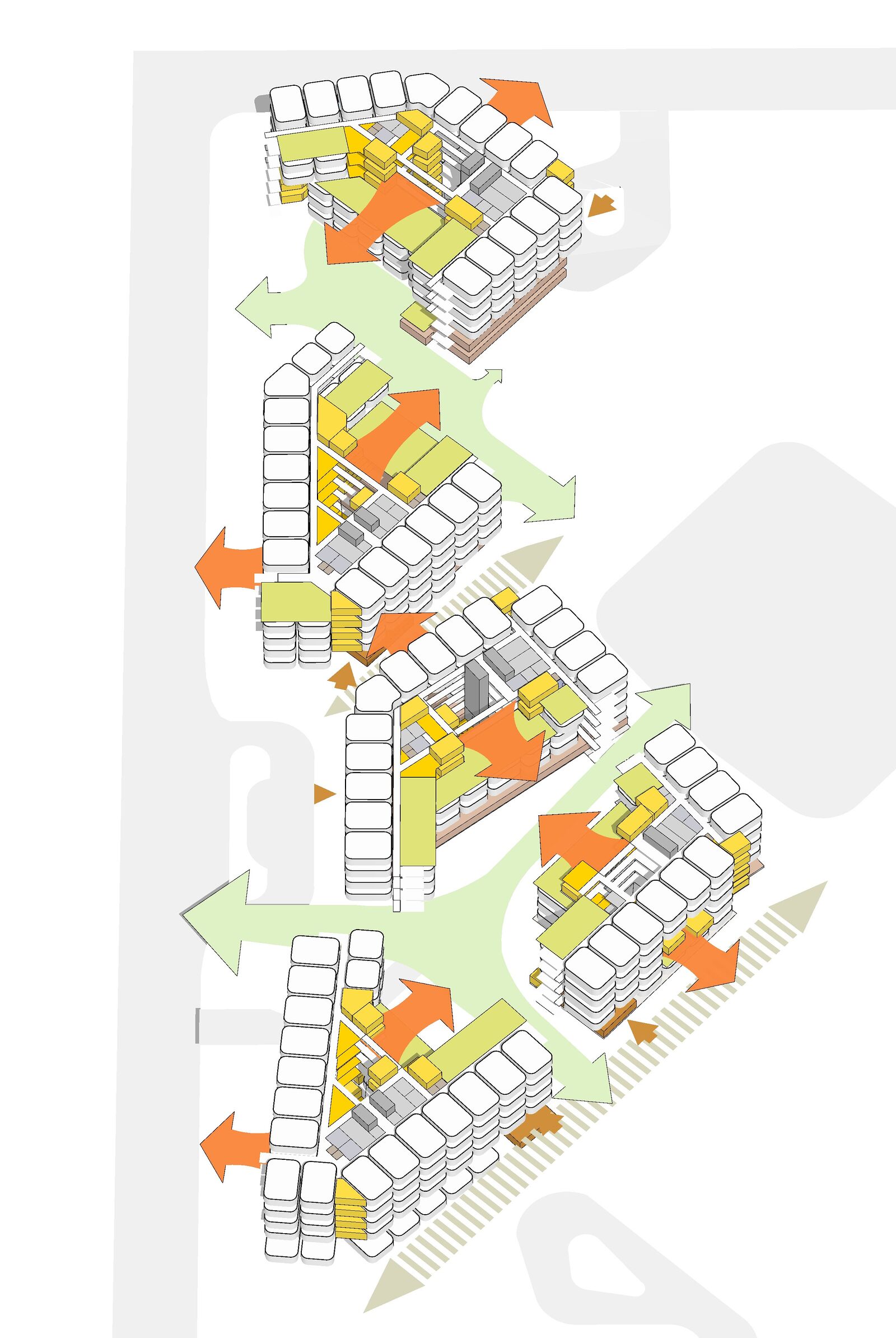
The outer perimeter of Washington Village creates the most prominent public edge of East Campus on 156th Ave NE.
“The geode emerged from the idea of clustering buildings facing into grade at the heart, and then slicing it open to expose the common spaces within. The center and the edge are one in the same.”
– Dan Simpson, Principal, ZGF
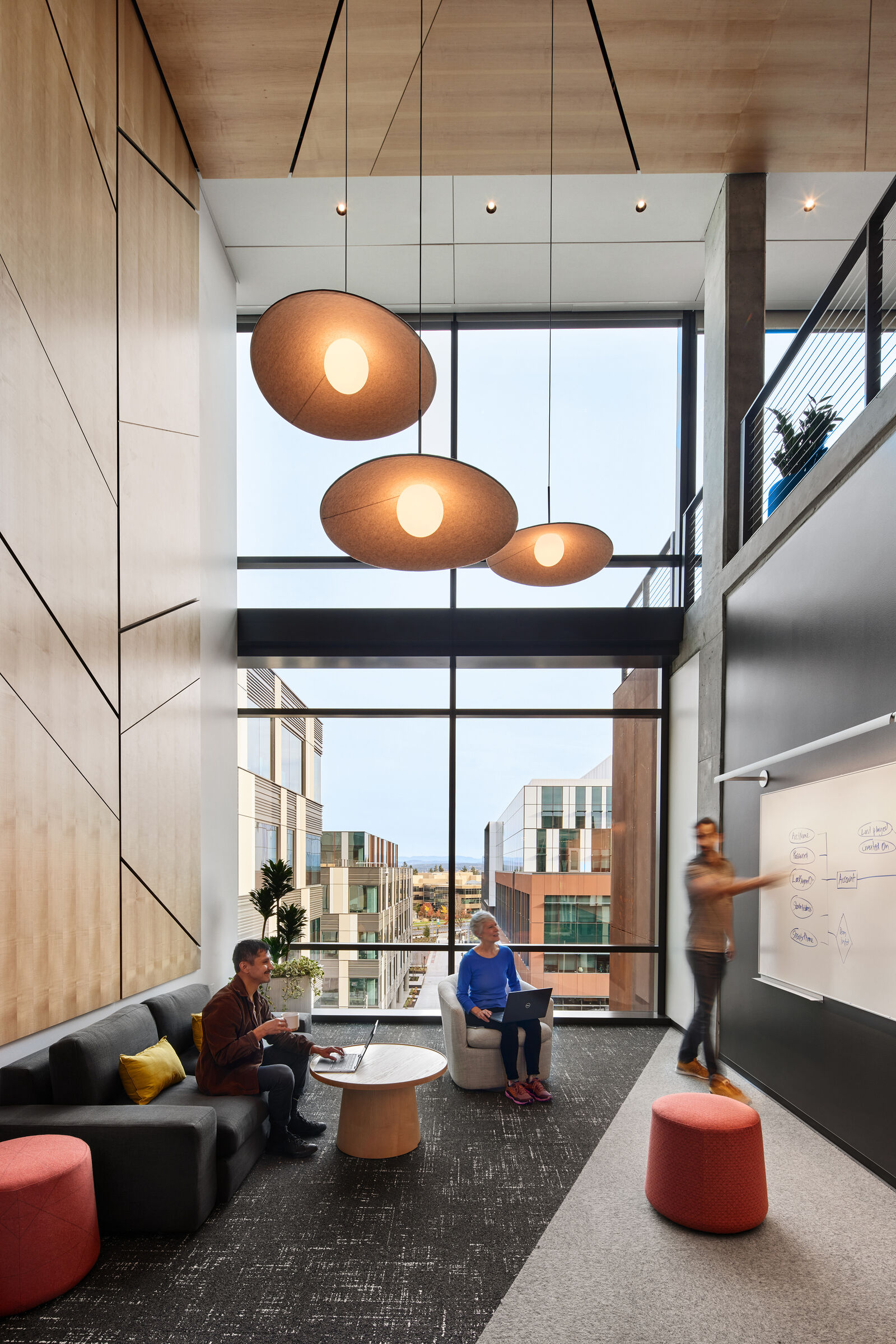
The geode concept also appears in the interior planning: quieter, individual workspaces wrap around shared collaborative spaces that crack open to the site to allow daylight and air in and extend the indoors out.
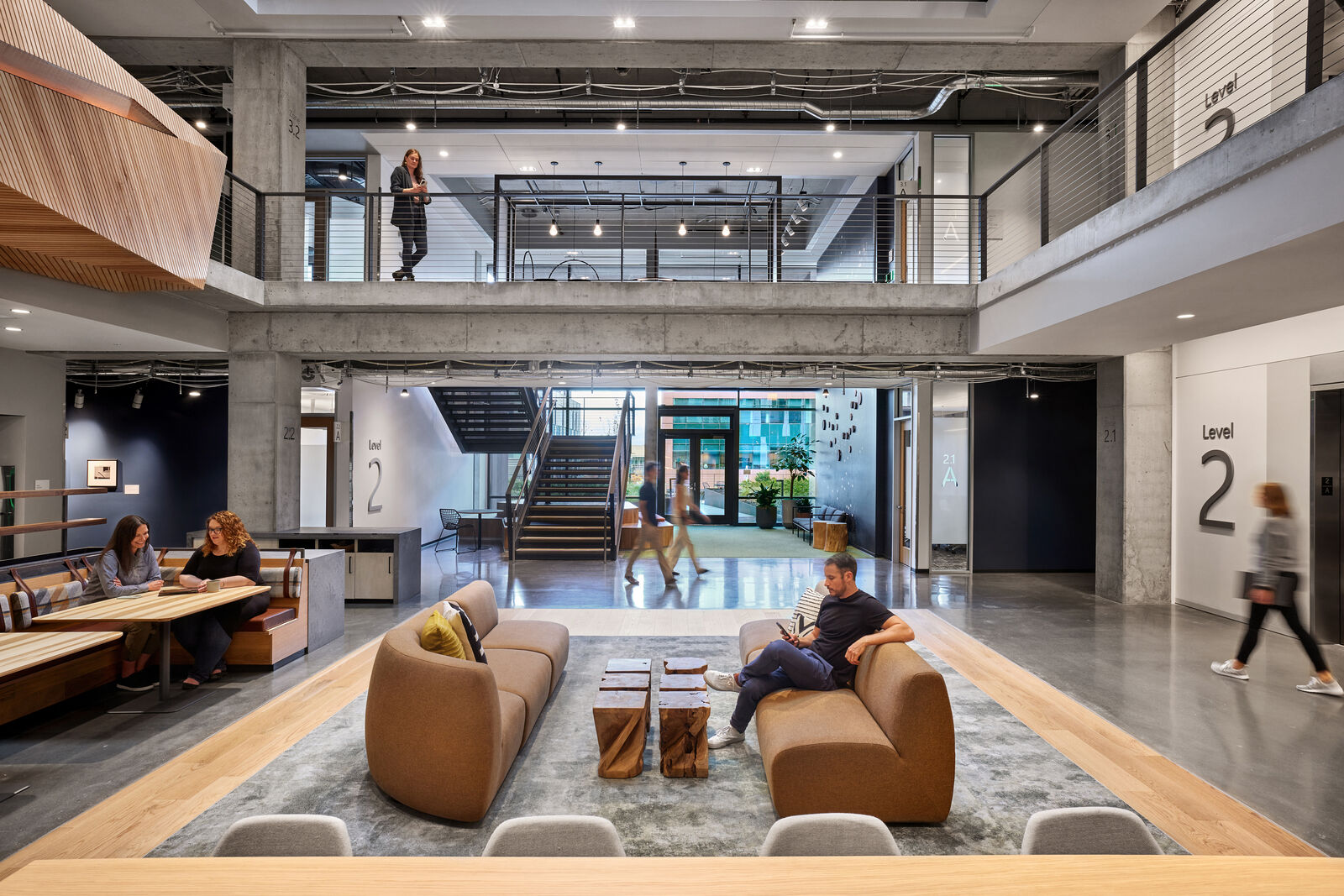
The Forest Thread
To integrate ZGF’s five buildings with the surrounding landscape and other campus buildings, the interiors continue the overarching site design concept of a "forest thread." Likened to the immersive experience of hiking or biking through the woodlands of Redmond, the forest thread manifests as a network of intersecting horizontal and vertical circulation paths.
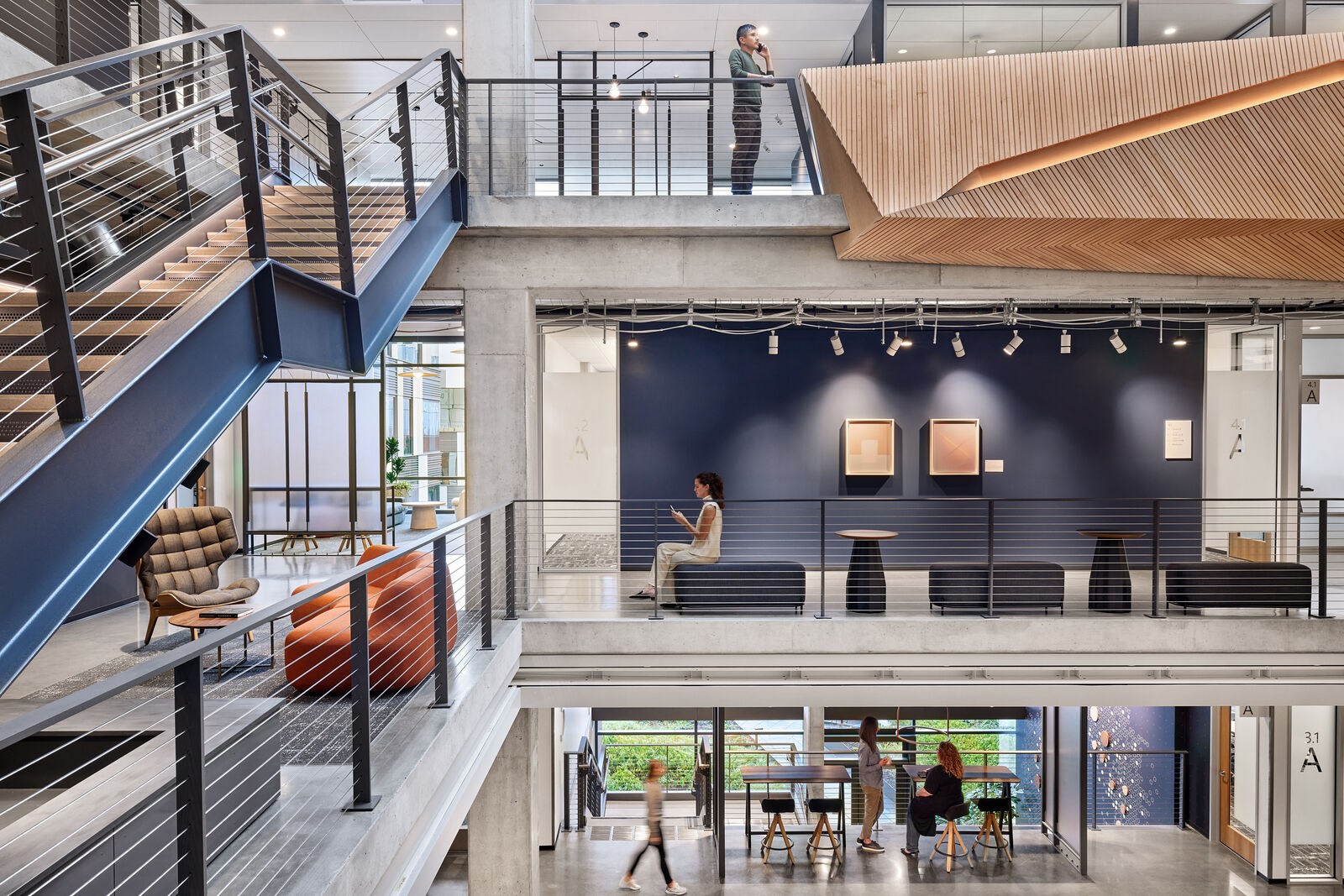
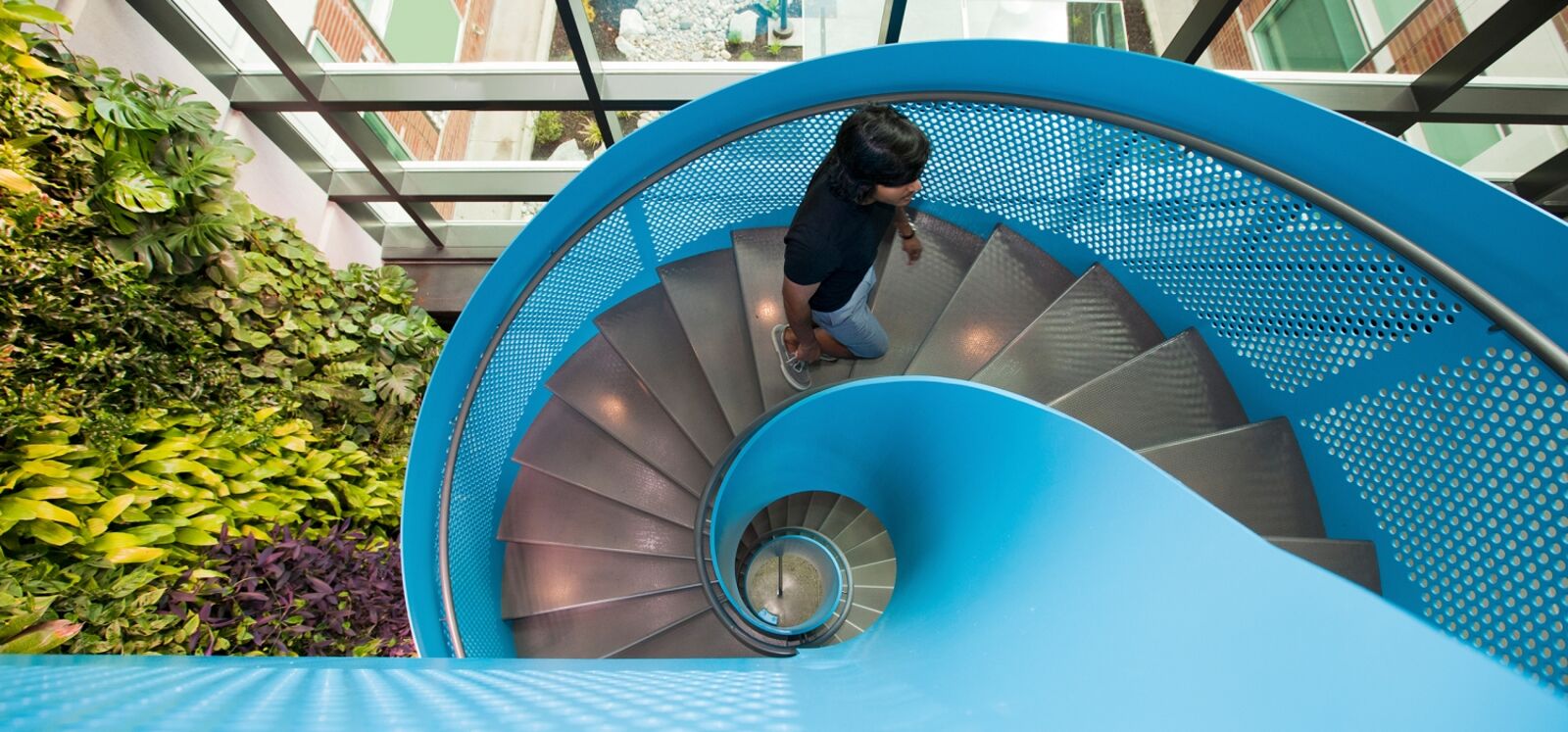
Non-stacking stairs traverse across and through the daylit atriums, where spontaneous interactions activate the central core.
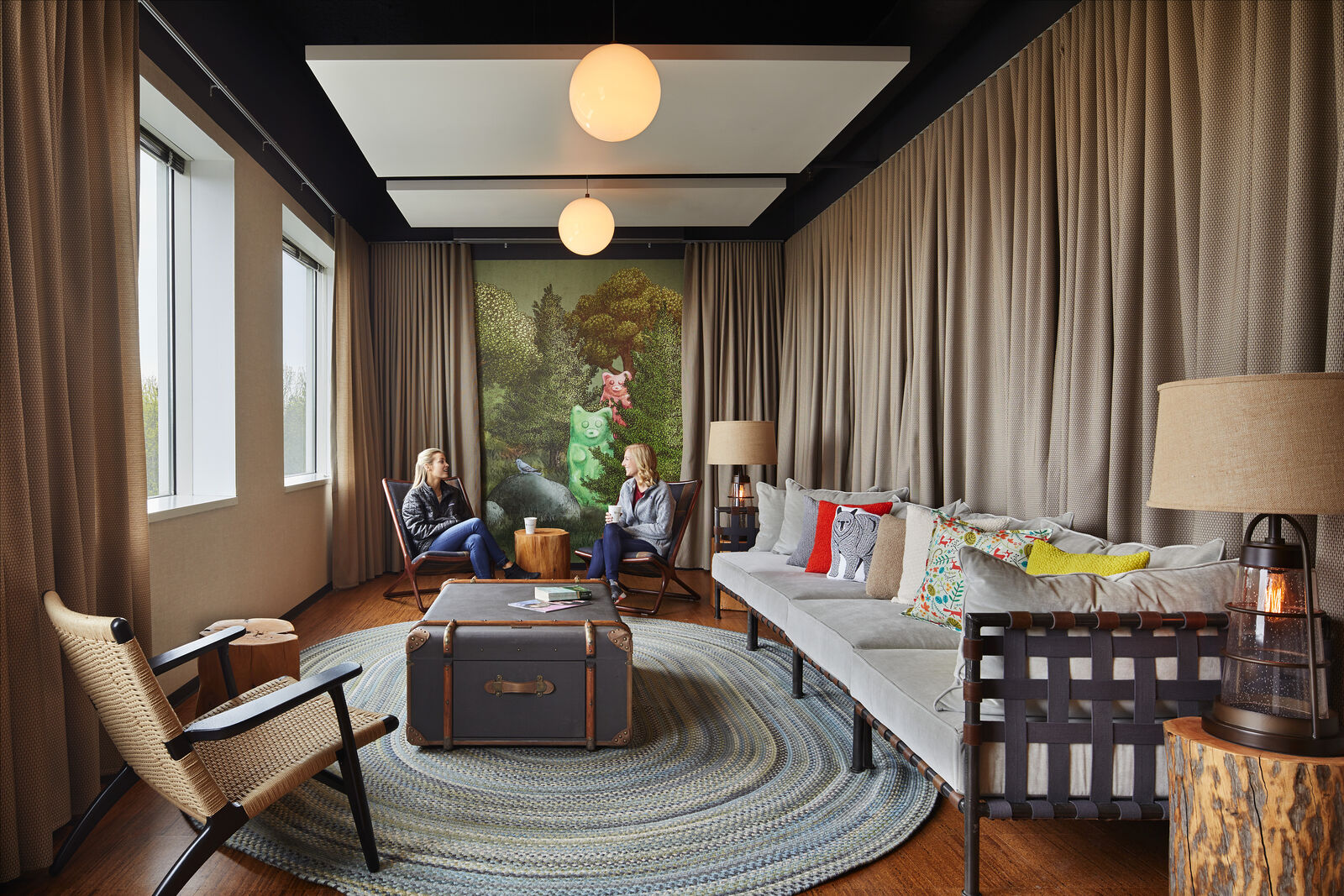
Each building is conceived as a distinct "campsite" offering experiential waypoints along the forest trail. The Building 9 Food Hall, for instance, embraces the rustic charm of a log cabin for its association with cooking around a campfire. The central atrium in each building serves as a metaphorical campfire where people gather for community and connection.
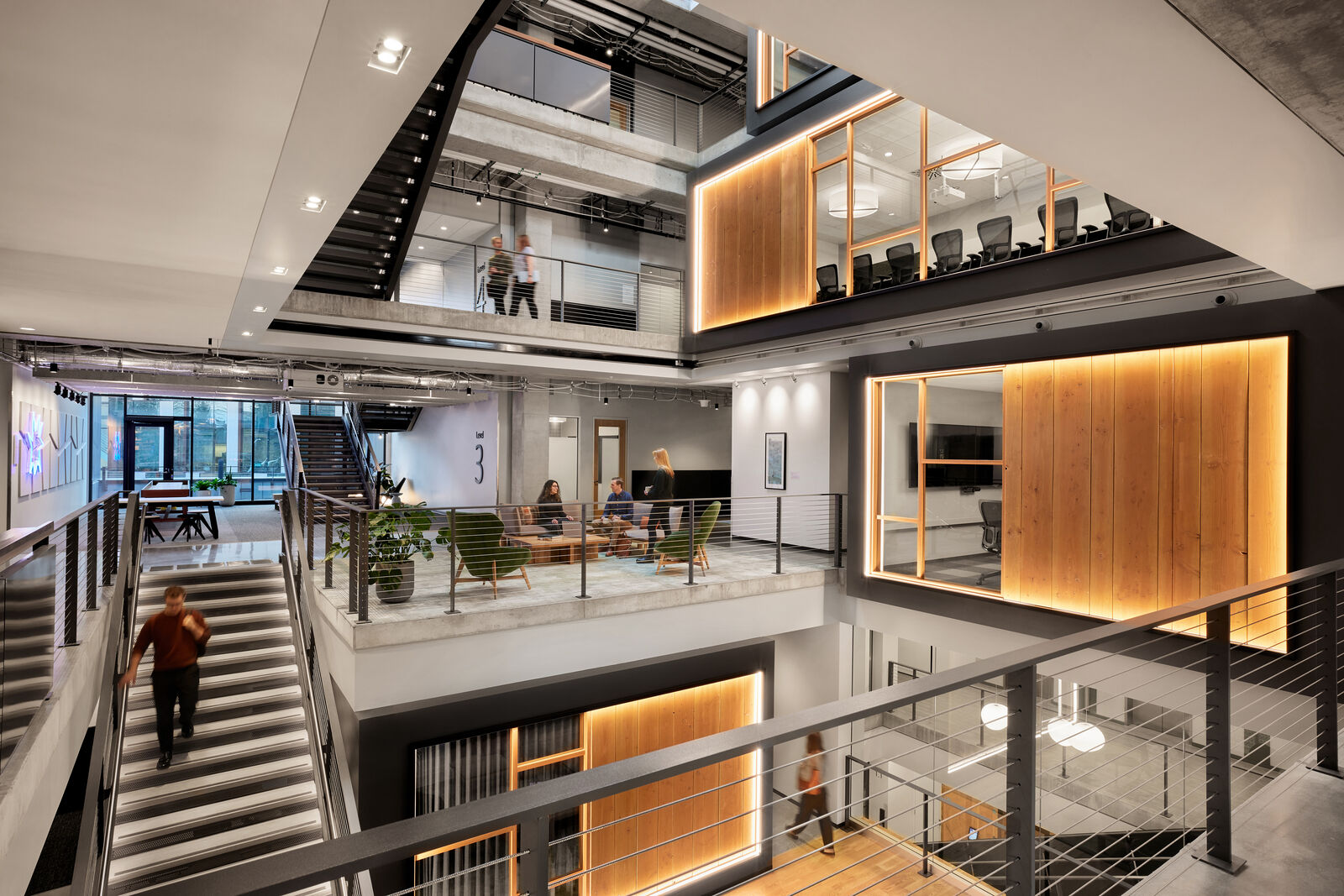
Distinct architectural features adorn each atrium—most notably, wood elements further the connection to the forest thread.
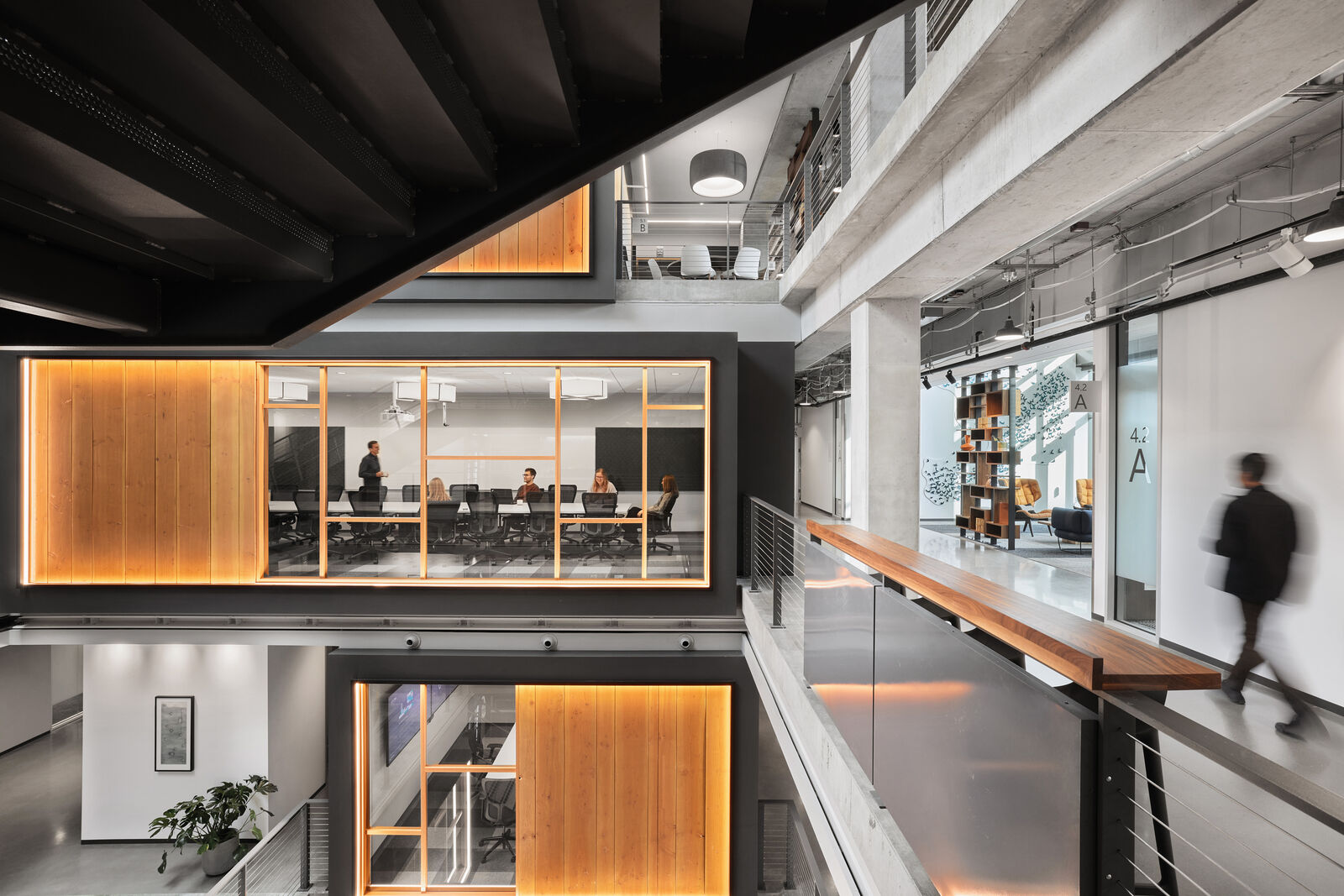
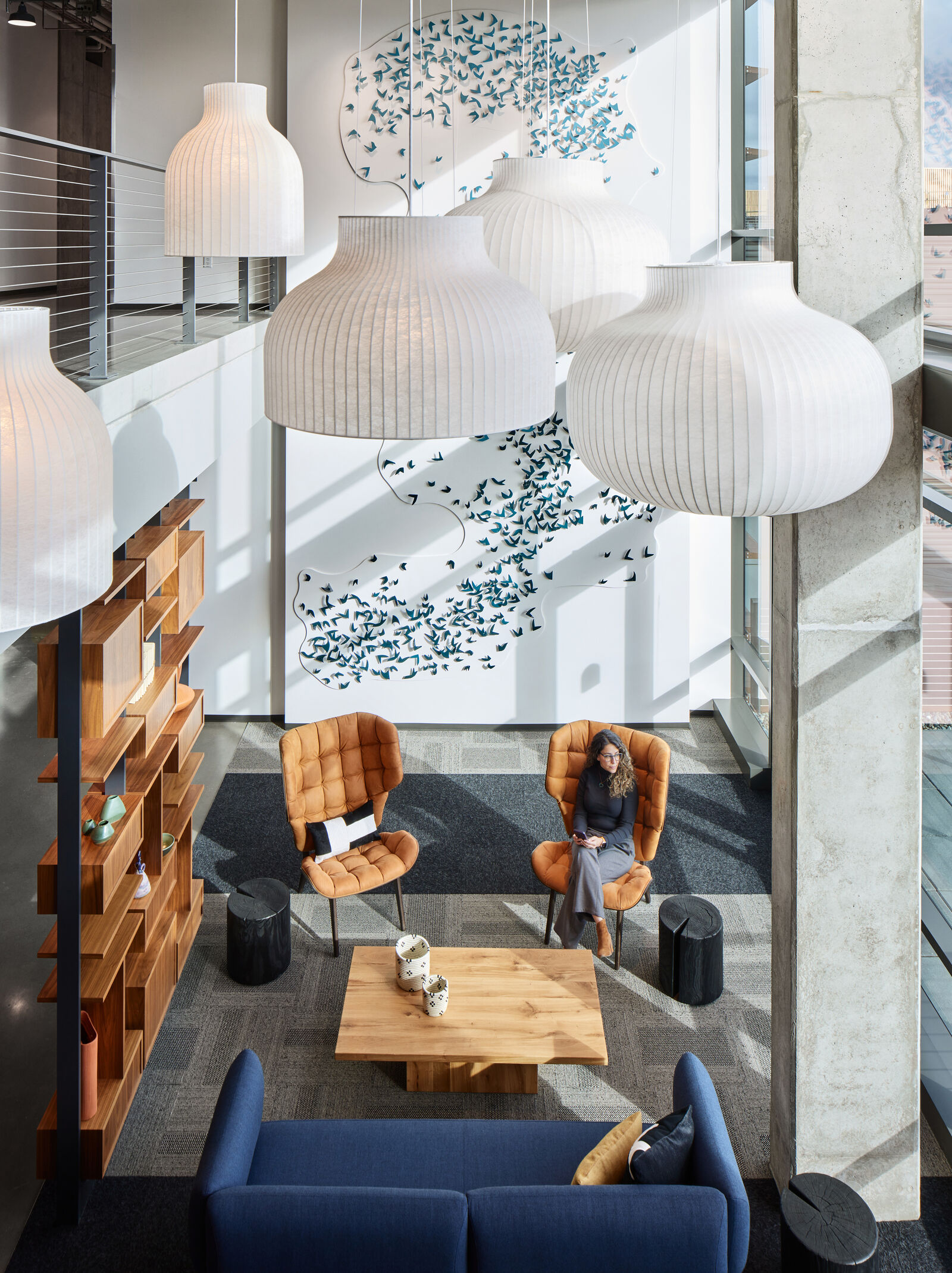
Feature walls orient employees toward the outdoor terraces in each building.
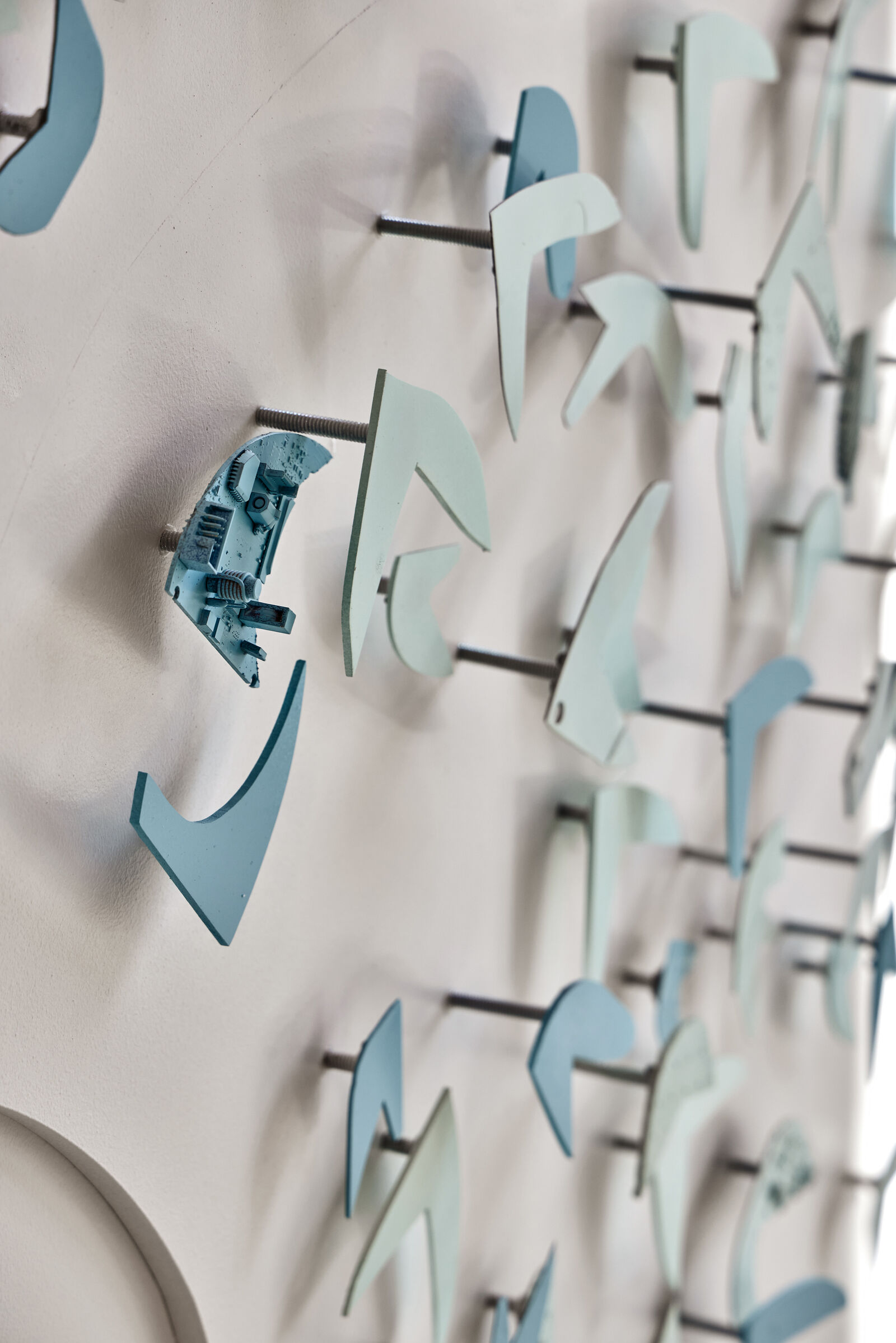
Upcycled motherboards constitute an abstract flock of birds in Building 9.
The lighting strategies and color palette of each building were informed by the effect daylighting has on an individual’s perception of color during a particular time of day on the trail—starting with rich, warm early morning colors in Building 7 and ending with deep, moody dusk colors in Building 11.
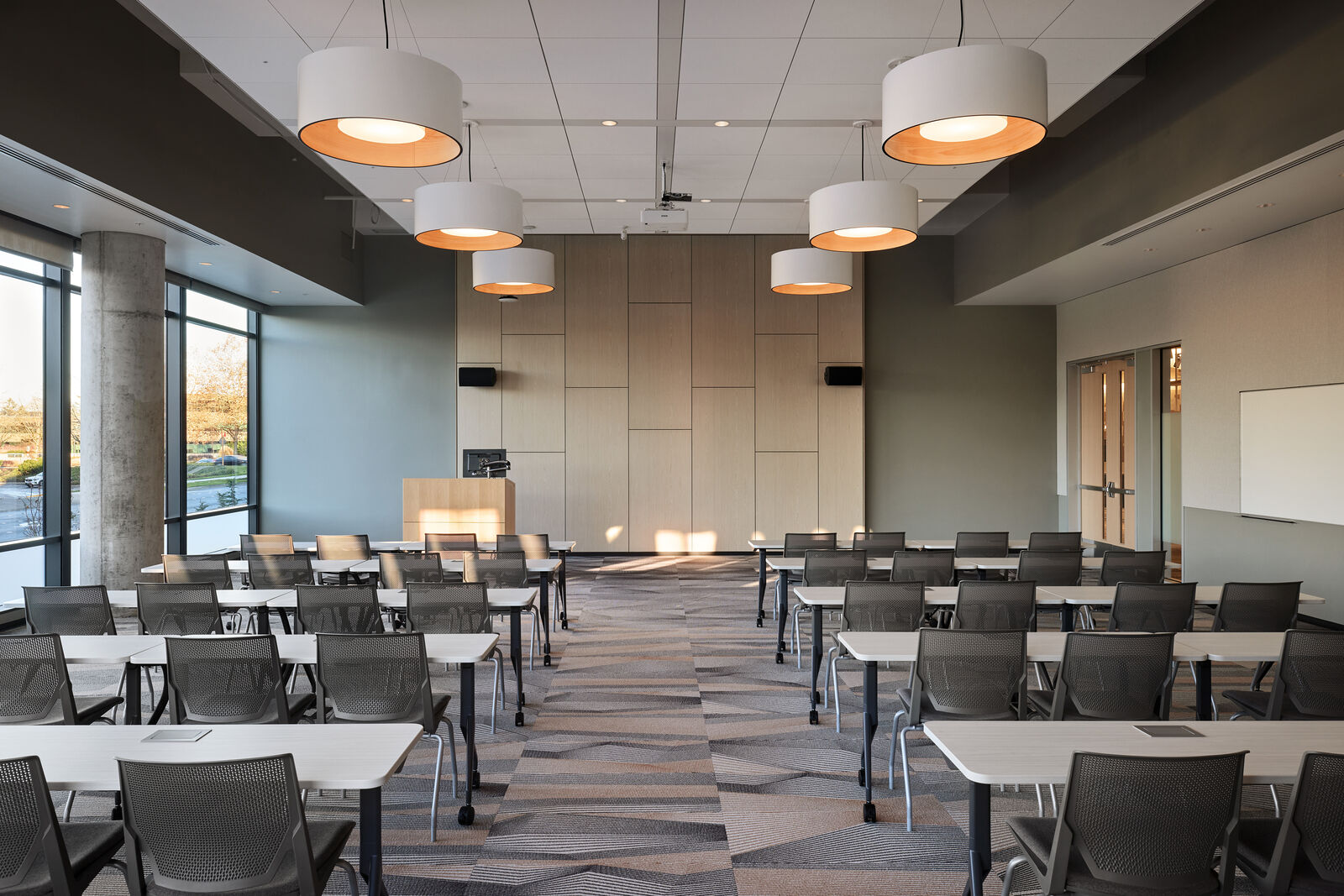
Building 7’s light and bright interiors energize the multipurpose rooms for large meetings, events, and conferences.
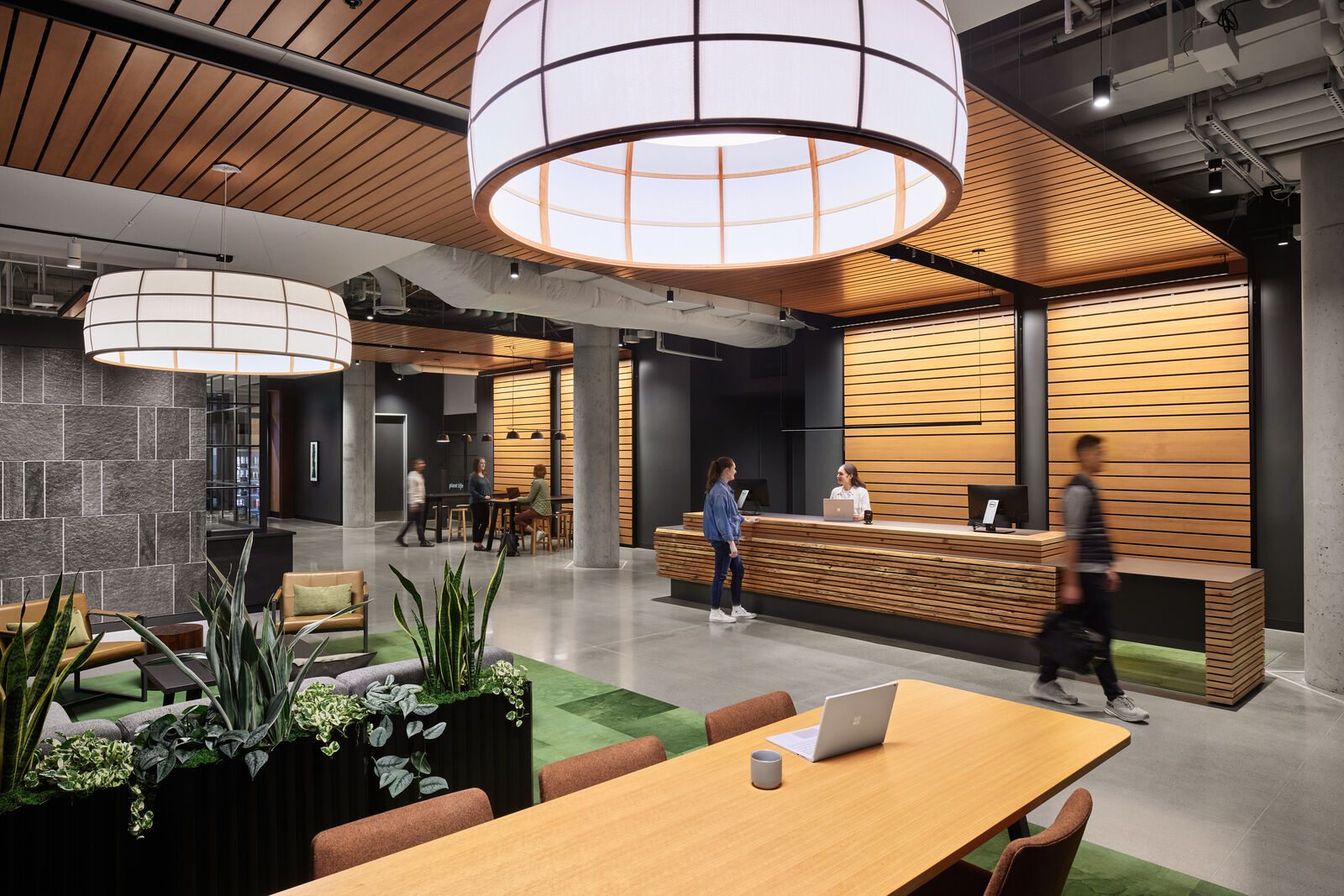
Building 9’s darker palette creates a modern yet cozy workplace atmosphere.
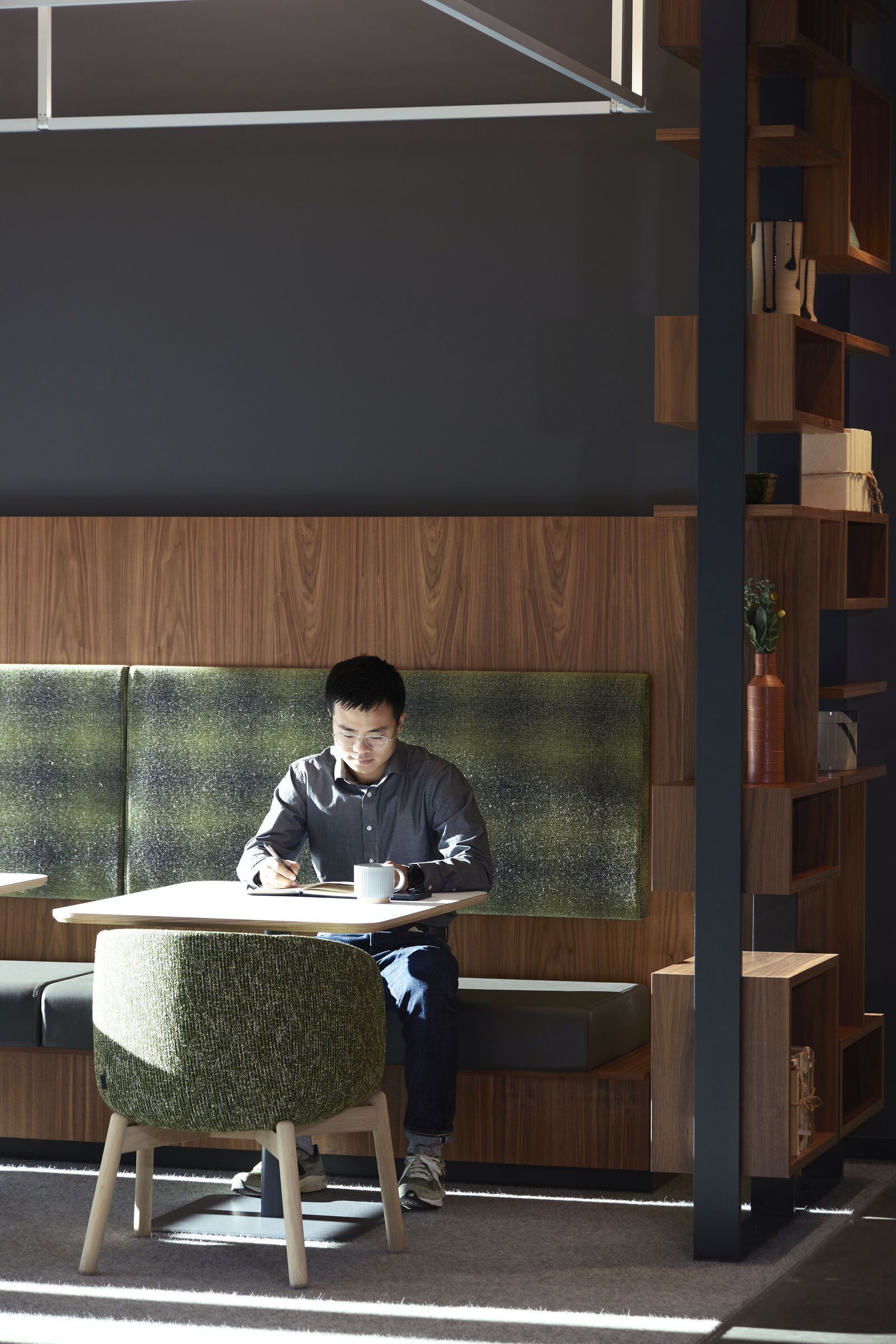
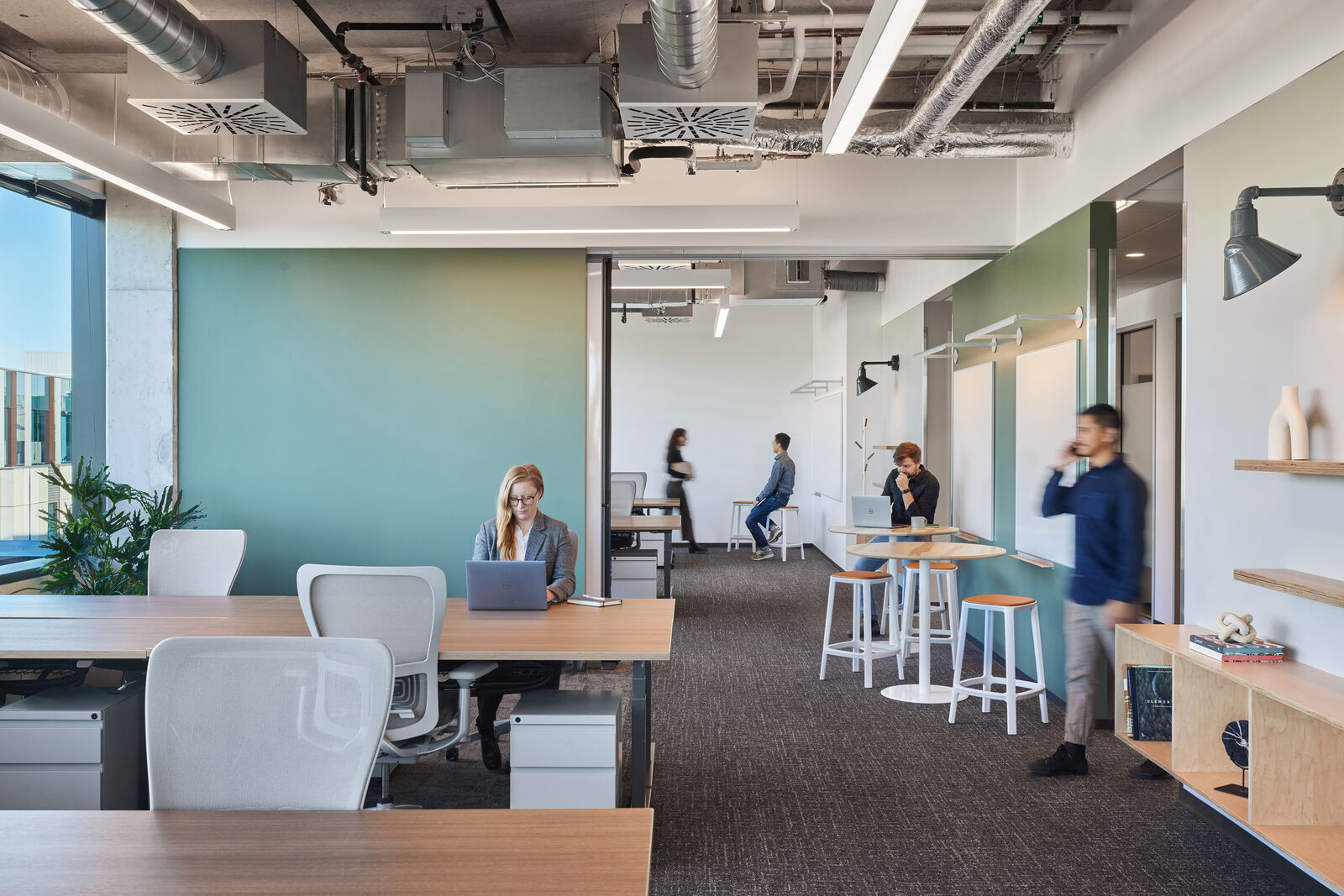
On the upper floors of each building, the workplace unfolds into team-based neighborhoods surrounded by breakout zones for meeting and socializing.
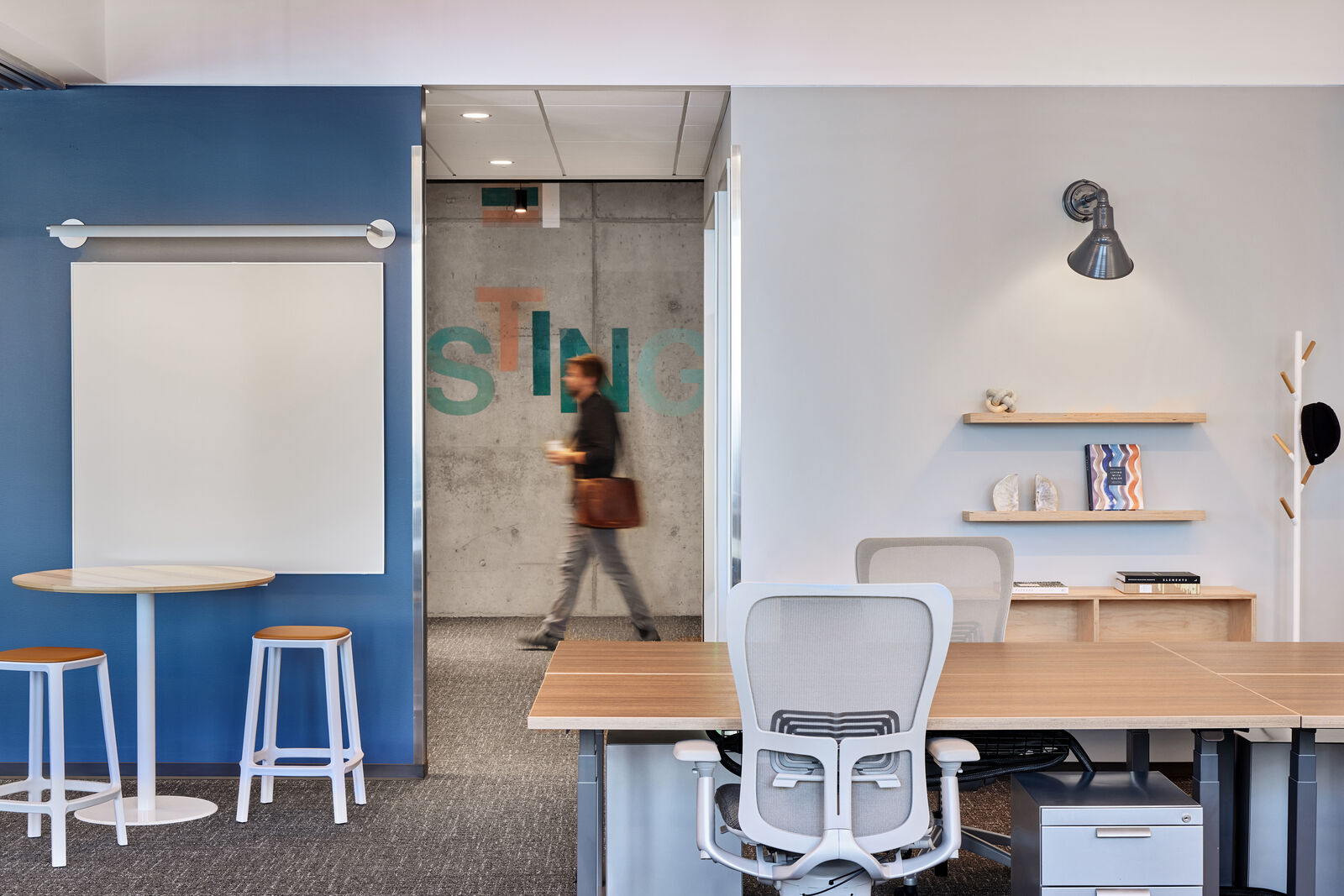
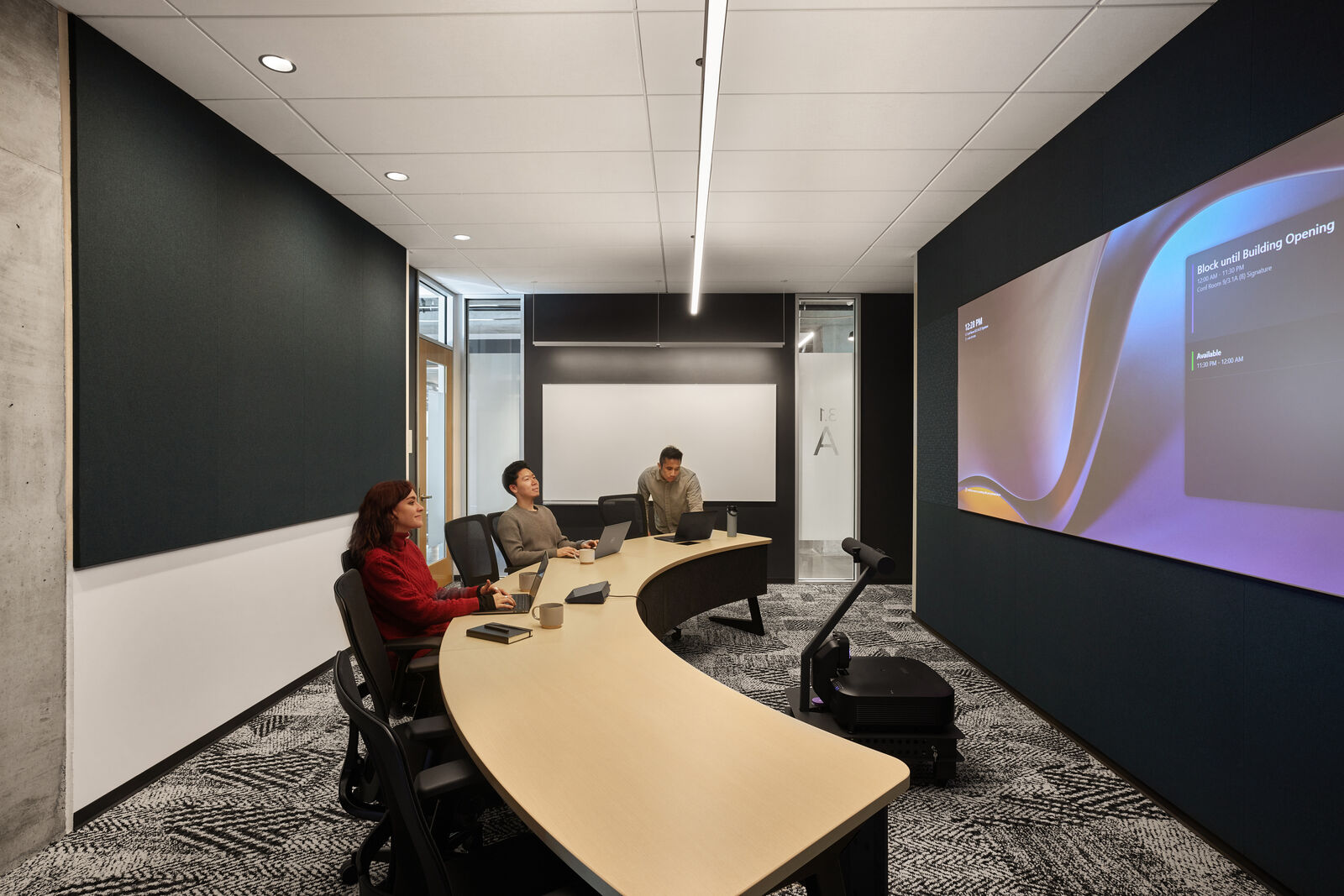
Both digital and in-room solutions, from conference room furniture to enhanced audio and visual technology, enable all voices to be heard in a hybrid world.
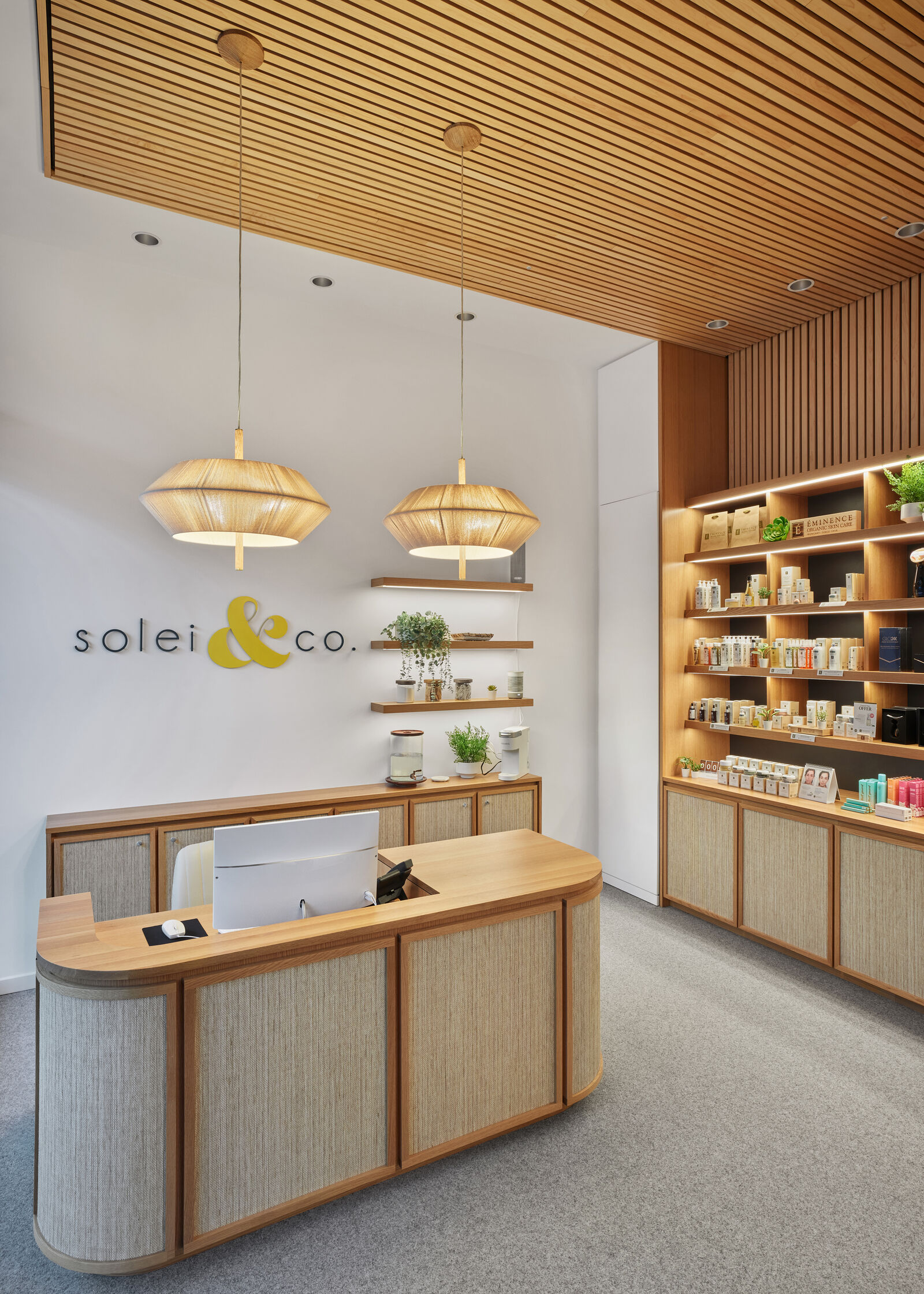
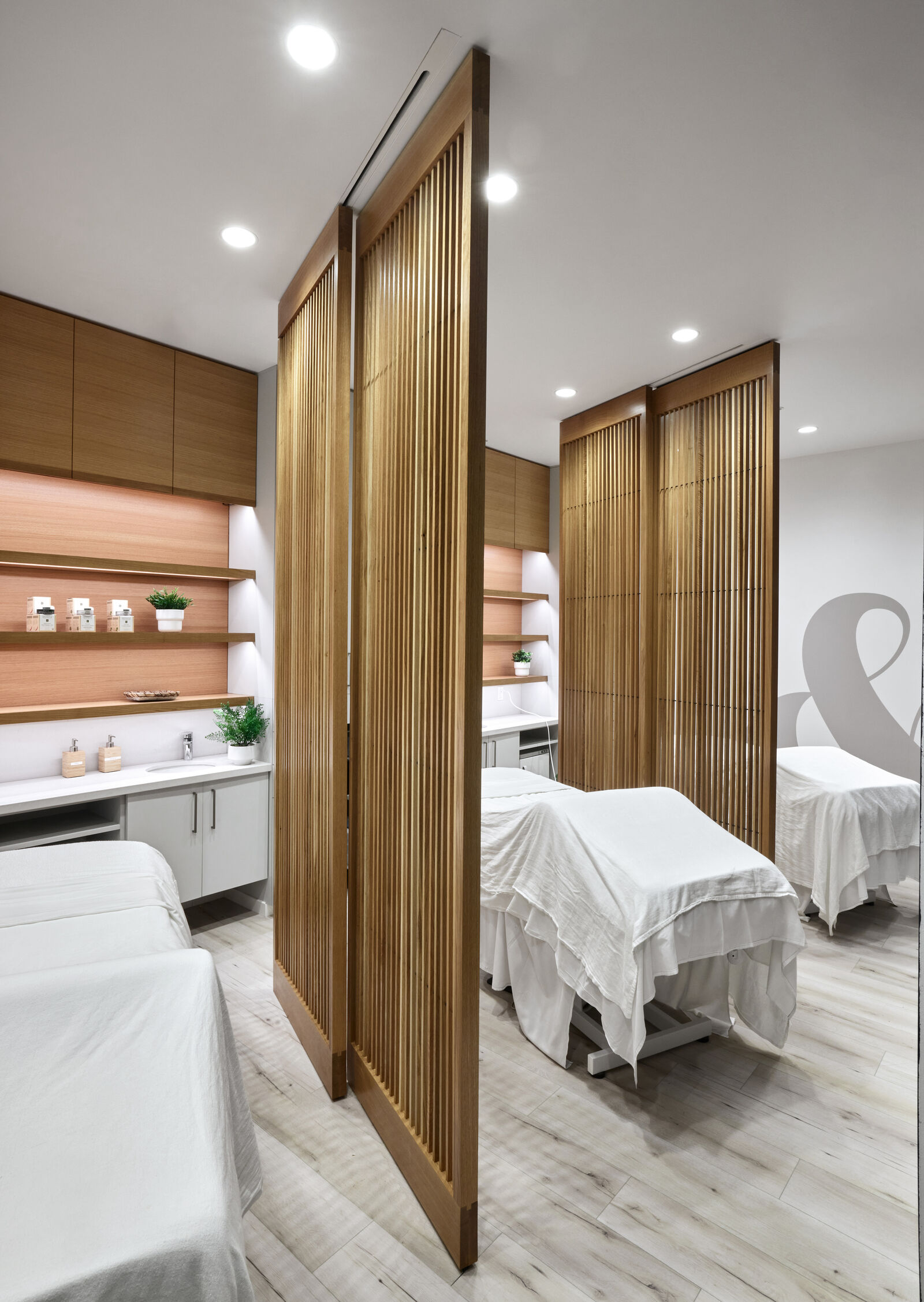
Solei & Co, a women-owned day spa and skin studio in Building 8, is one of several local retailers providing a curated campus experience.
Confidential High-Tech Client, Expanding a Legacy
Confidential High-Tech Client, Building 42
Expedia Group, Seattle Headquarters
Google, Spruce Goose
Expensify, Portland Office
Nike World Headquarters Expansion, Sebastian Coe Building
Nike World Headquarters Expansion, Mike Krzyzewski Fitness Center and Parking Garage
