From Aging Shopping Mall to Engaged Public Realm
Urban Renaissance Group, Lloyd Center Redevelopment
Civic and Public, Urbanism and Landscapes
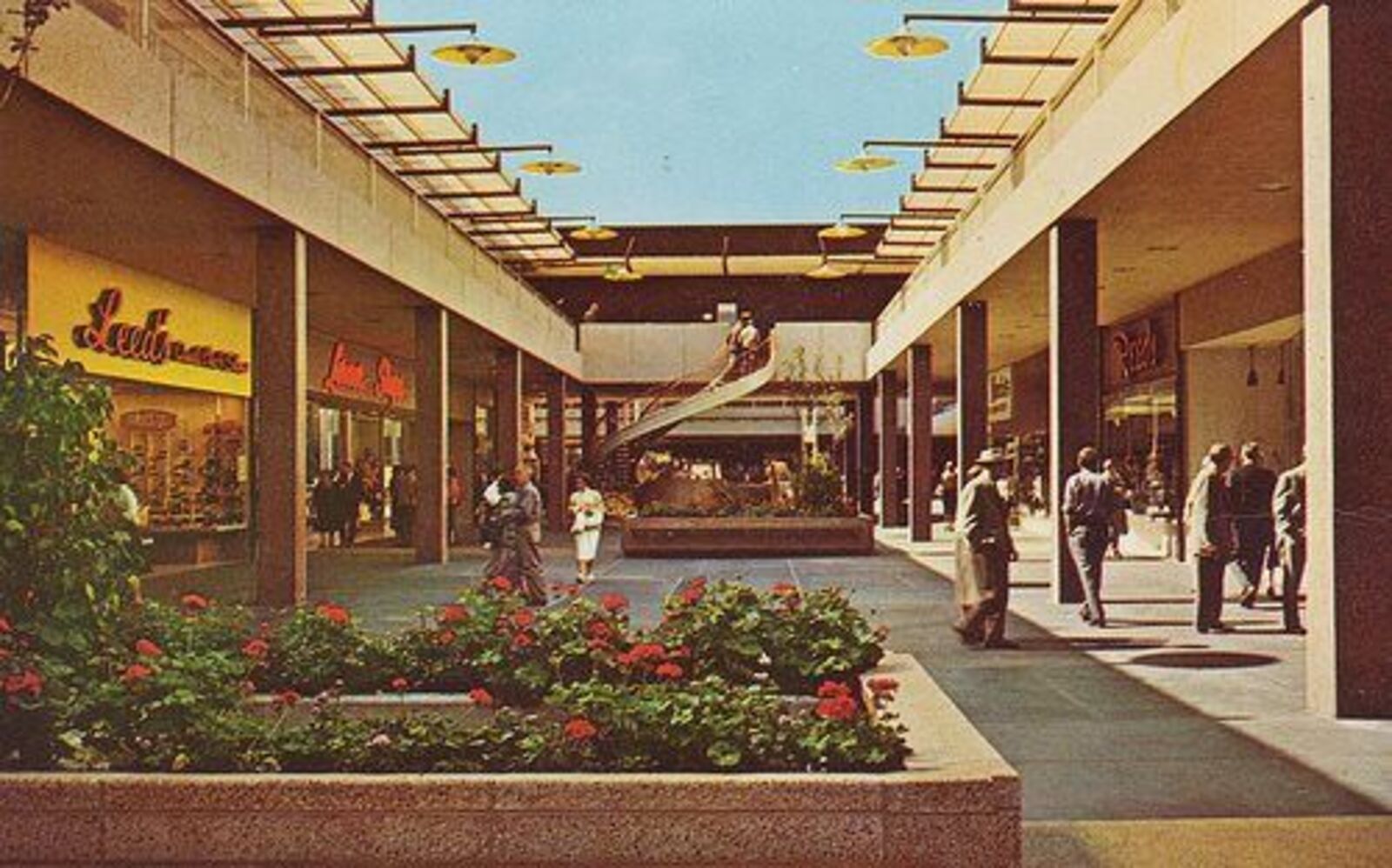
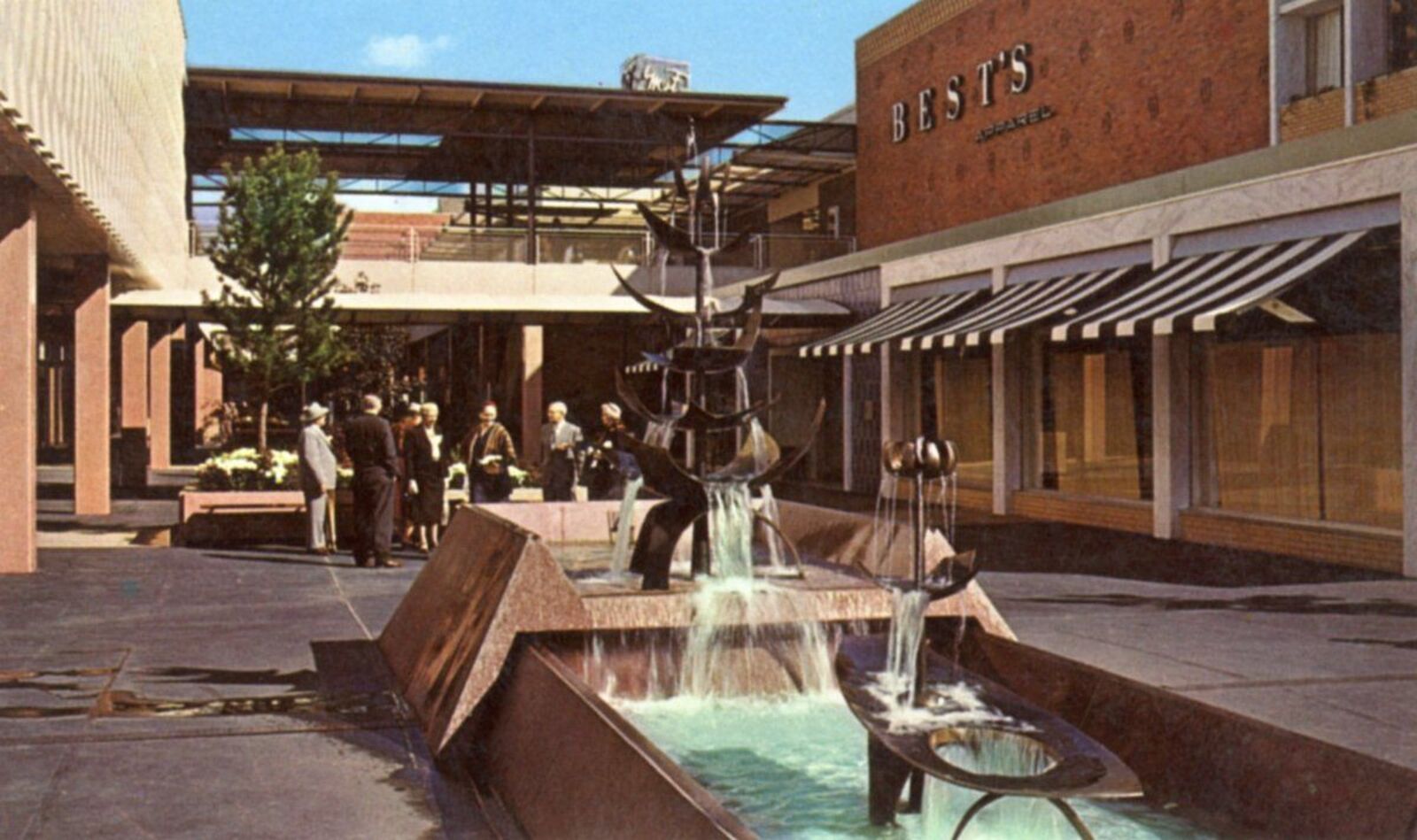
The Lloyd Center Mall has been a Portland, Oregon landmark since its opening over 60 years ago. Originally the largest open-air mall in the United States, the Lloyd Center was an aspirational place, with a unified aesthetic characterized by interior gardens, fountains, and public art, flanked by retail arcades.
Throughout the 80s and 90s, the mall underwent a series of redevelopments similar to others around the country: the addition of parking along the perimeter and new walls enclosing the building, both of which served to isolate the mall from its residential and commercial context. Lacking a defined identity or sense of place, and with no remaining traditional anchors, Lloyd Center has since struggled to compete with the rise in e-commerce.
Location
Portland, Oregon
Square Feet
NA
Completion date
2024
Project Component
Urban Planning
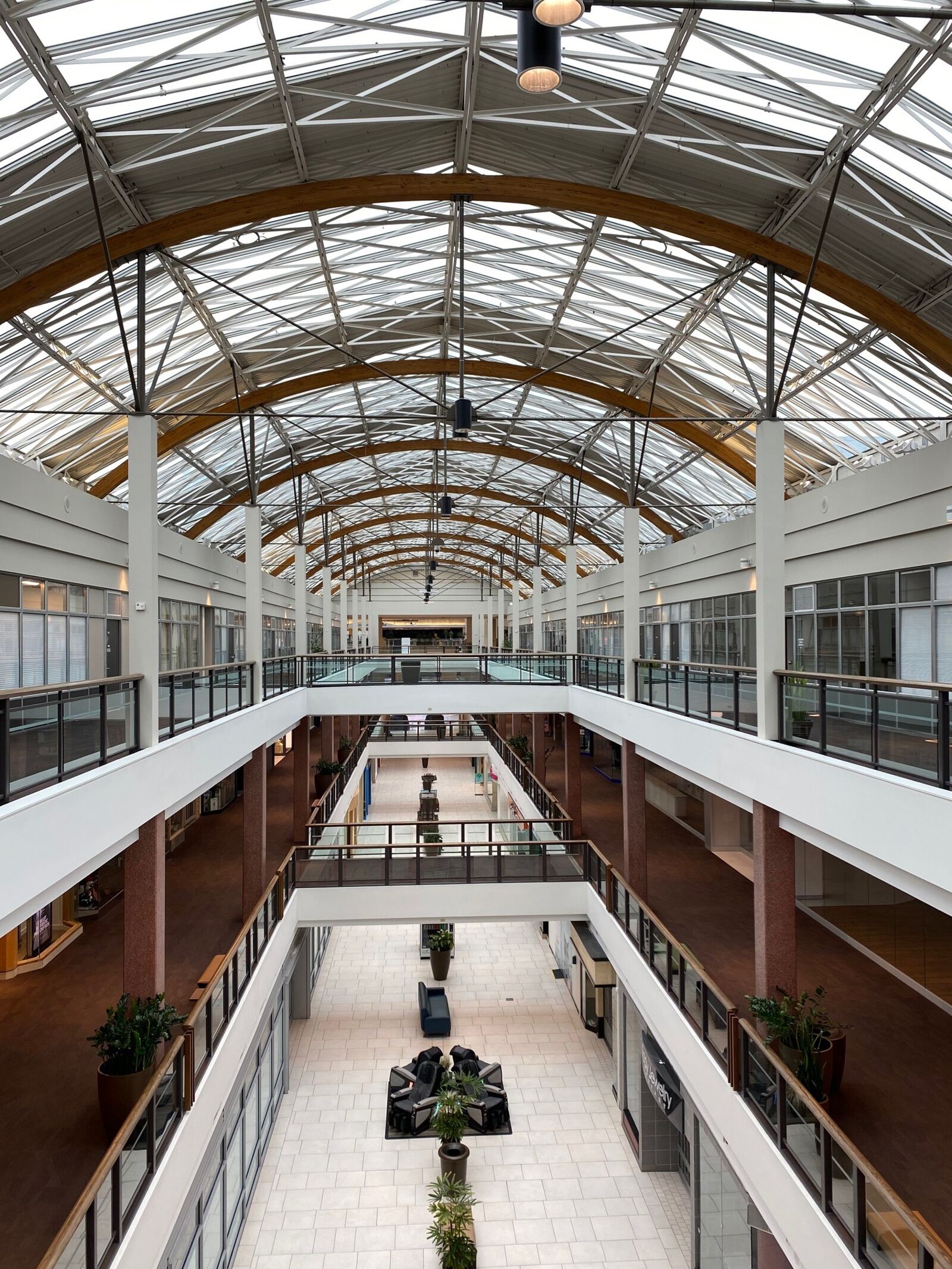
Today, the mall is disconnected from the surrounding neighborhoods and commercial districts. Blocks in the Lloyd subdistrict were originally platted with Portland’s traditional 200’ x 200’ grid, but the fine-scaled urban fabric that characterized that grid elsewhere in Portland was never realized in Lloyd. Instead, major infrastructure and urban renewal projects, including Interstate 5, Interstate 84, Veterans Memorial Coliseum, Lloyd Center Mall, Moda Center, and Oregon Convention Center, created superblocks throughout the district. These very large, conjoined blocks catered to automobile uses and obstructed the free circulation of pedestrians that nourished the finer-scaled urban fabric elsewhere in the city.
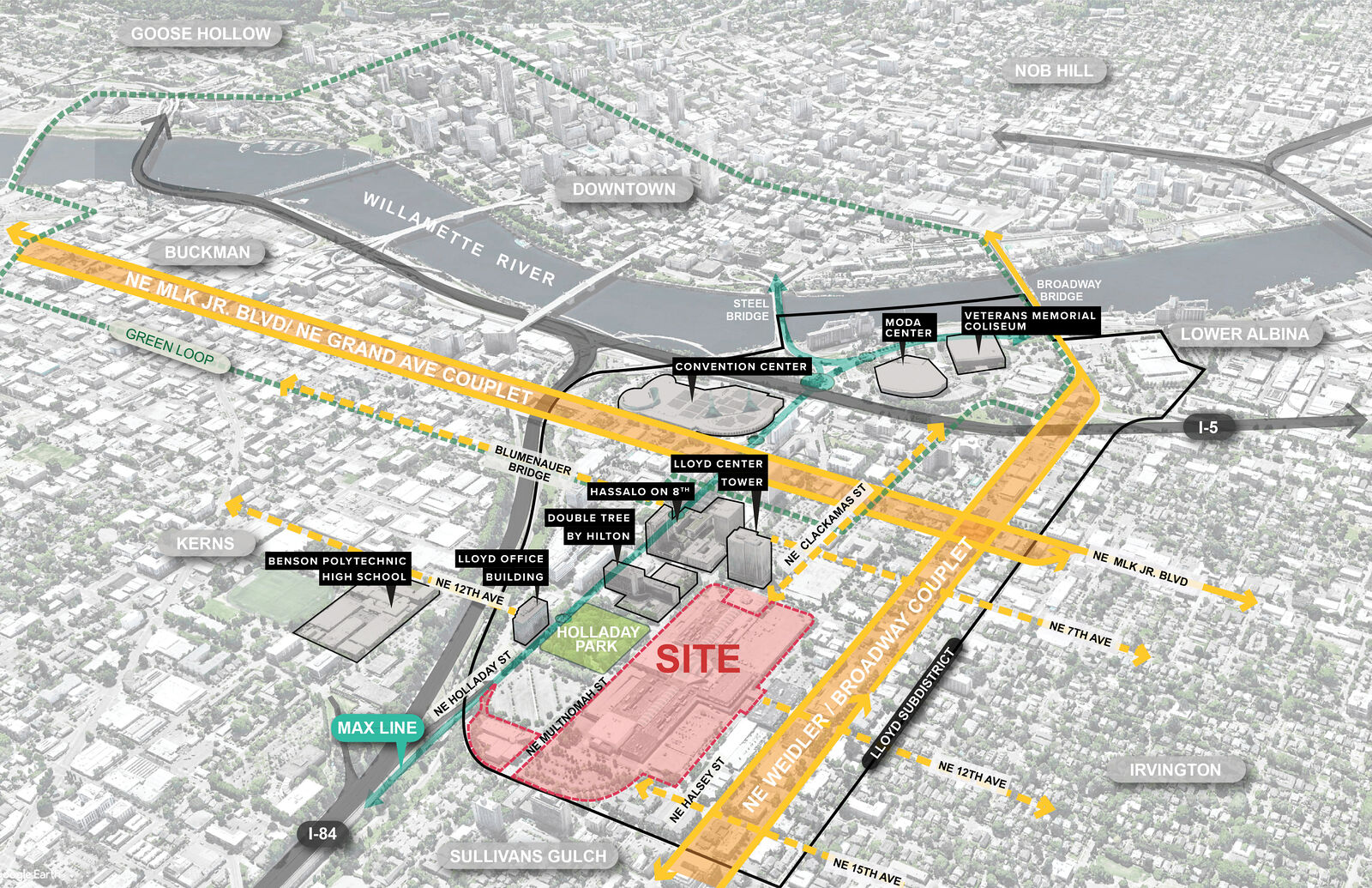
Yet Lloyd remains well connected with the Portland-metro transportation system. It is served by multiple major surface roads, four MAX light rail lines, the Portland streetcar, four bus lines, and robust infrastructure for pedestrians and cyclists. Coupled with its close proximity to downtown Portland and regional attractions such as the Moda Center and Oregon Convention Center, the sentiment emerged post-pandemic that the underutilized site could be an excellent opportunity for redevelopment.
The Lloyd Center re-development site is 29.3 acres located just northeast of downtown Portland. It is zoned Central Commercial, in which the City of Portland intends high-density, mixed-use development, with a design overlay, which means that with approval of a master plan framework, each individual development proposal would then undergo applicable design review.
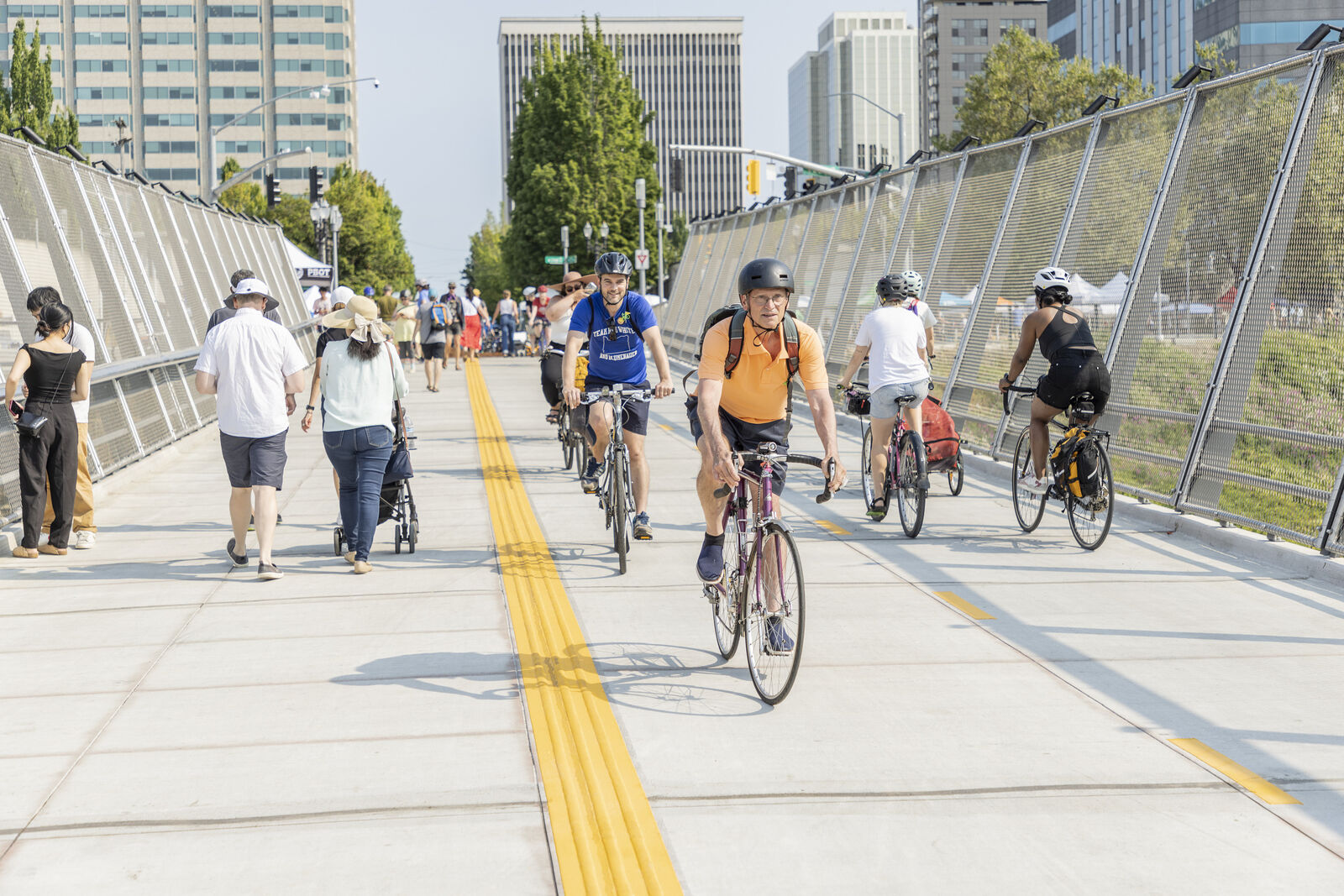
U.S. Congressman Earl Blumenauer riding his bike on the Blumenauer Bridge, which sits within the Lloyd and is part of the Green Loop connection
“The Lloyd Center is a tremendous opportunity right in the heart of Northeast Portland. There is a vision for this site’s unique potential and the historic role it has played...the health and future of a vibrant Lloyd District has never been more critical."
Earl Blumenauer, U.S. Congressman
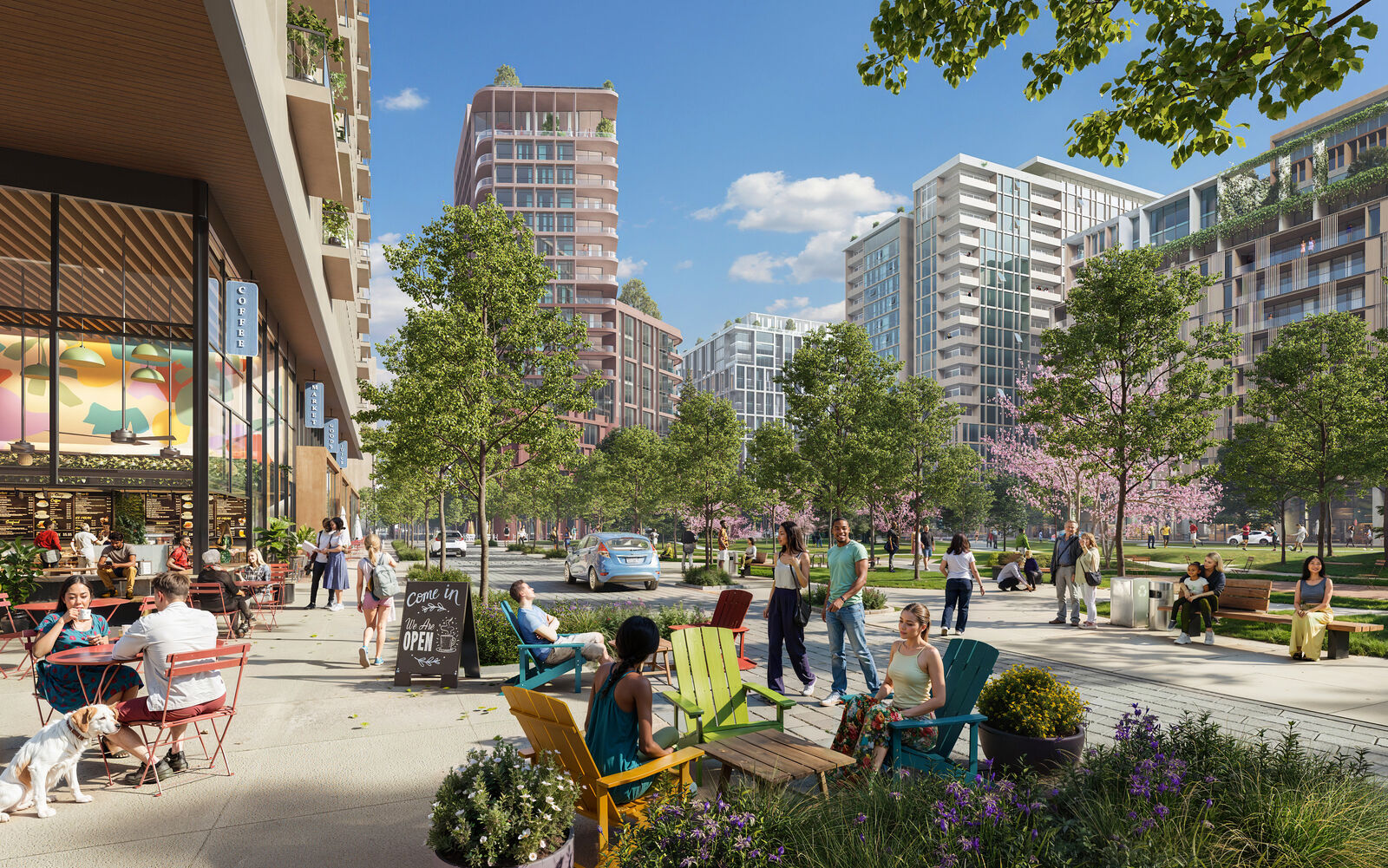
Engagement with the local community was a critical priority for any Lloyd planning effort. The Seattle-based commercial real estate developer, Urban Renaissance Group, conducted significant community engagement before and during the master plan process. This included outreach sessions with Lloyd District Association, Go Lloyd, Lloyd EcoDistrict, the Sullivan's Gulch and Irvington Neighborhood Associations, more than 80 opinion leader interviews, and a city-wide poll.
The key findings from this engagement were that Portlanders are ready for bold change in Lloyd, and that there is support for taking the property in an entirely new direction.
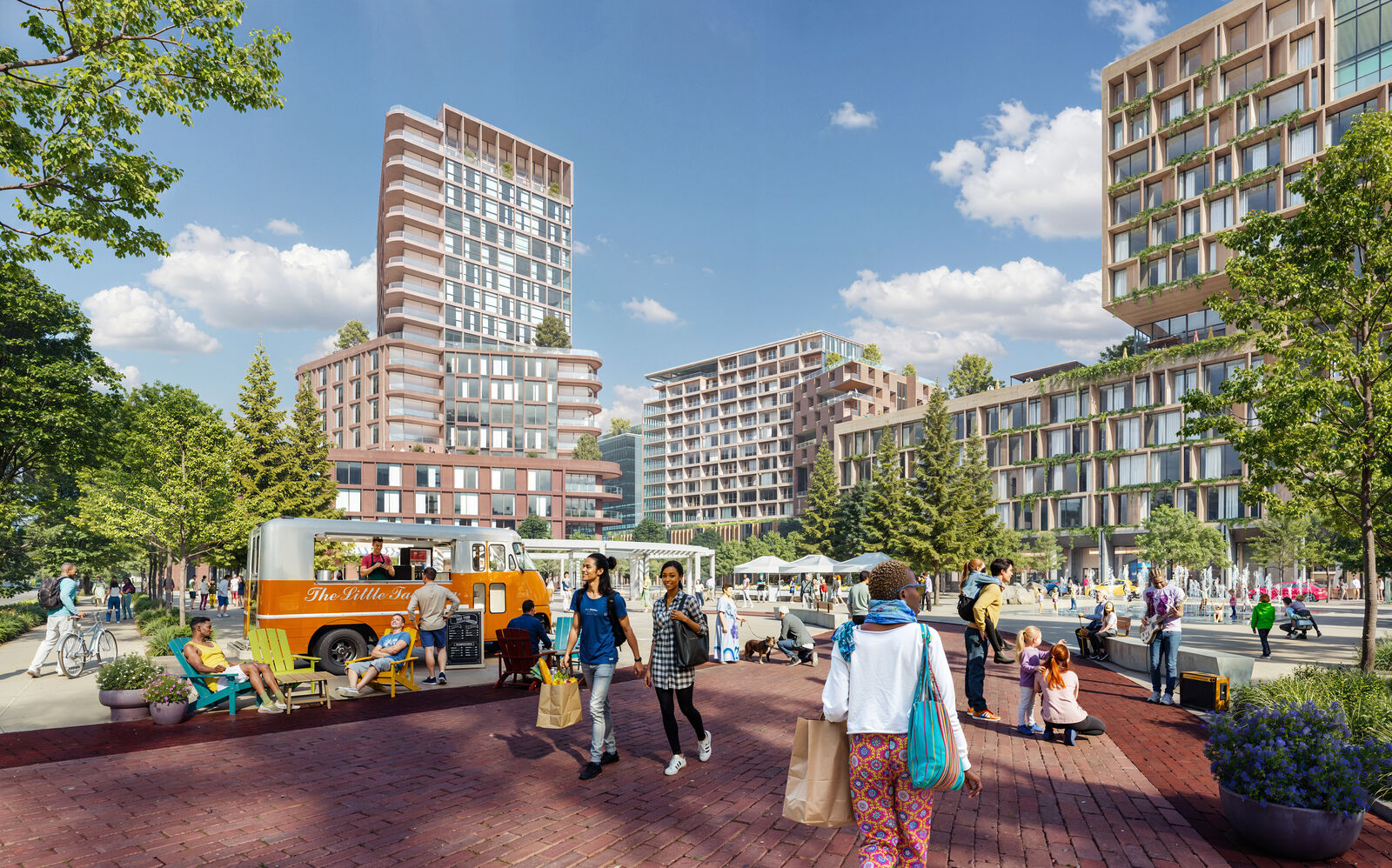
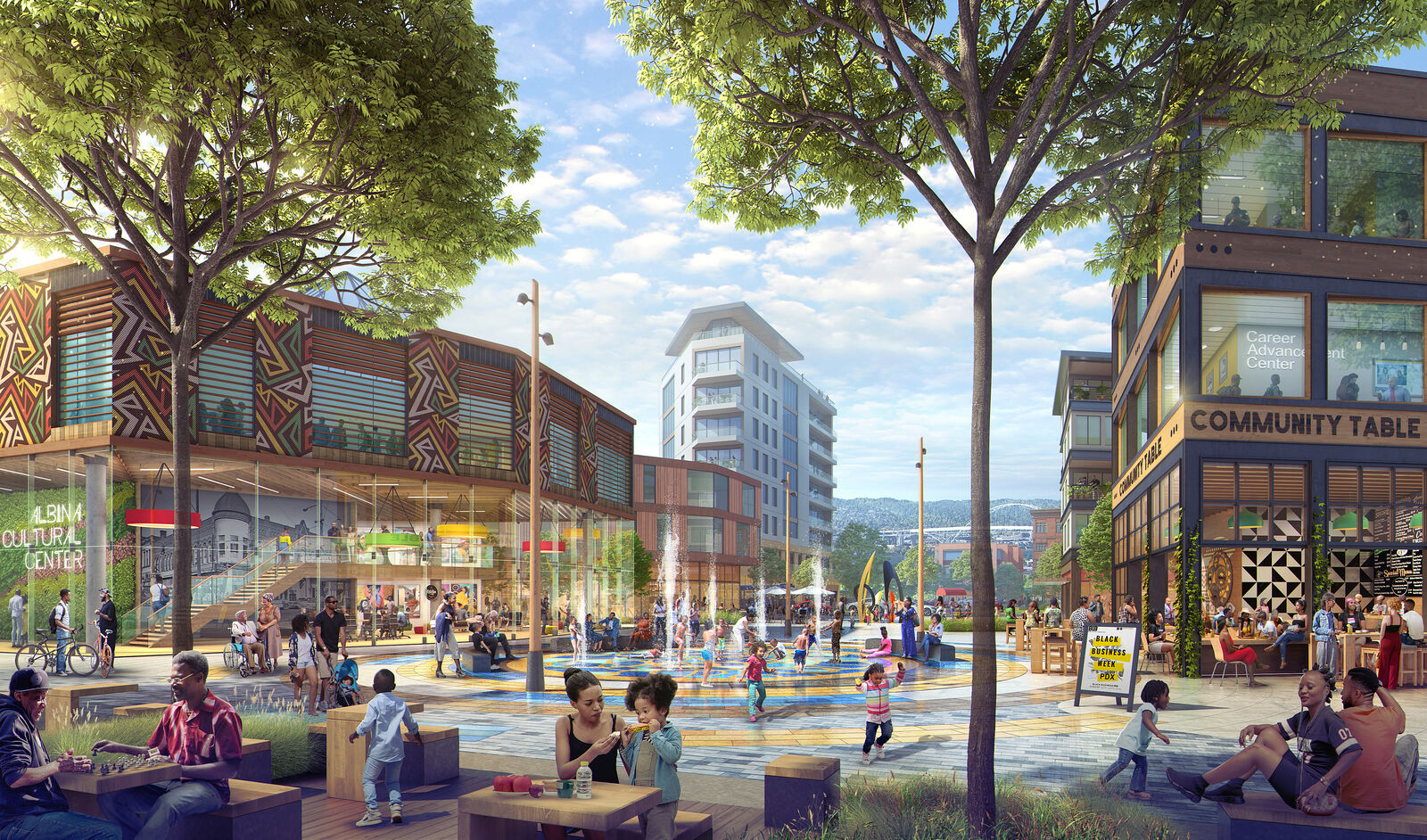
The design priorities of the proposed Lloyd Center master plan are to create a high-density, mixed-use development integrated with a continuous and varied public realm, and to reconnect the site with its context. This included strategies to reconnect the street grid without generating overwhelming through-traffic and provide a variety of public realm experiences and recreational opportunities. In addition, this redevelopment directly across NE Multnomah Street would activate Holladay Park, a beloved park known for community events and at 4.5 acres, the largest open space in Lloyd, but suffering from a lack of attention. Other priorities of the propose master plan are to allow for a range of development area sizes, including some quite large, and to preserve and enhance opportunities for the site to continue to act as a community gathering space.
The preferred concept strikes a balance between the traditional 200’ Portland grid, the opportunity to retain large development parcels, and the opportunity for a network of contiguous open spaces. It reverses the inward focus of the existing structure by breaking up the superblock, and allowing direct north-south and east-west connections to context. The orientation of the proposed development areas around the open space network supports variety in type and scale of building massing. This avoids monotony, preserves light and air through the site, and enables greater foot traffic throughout the new district.
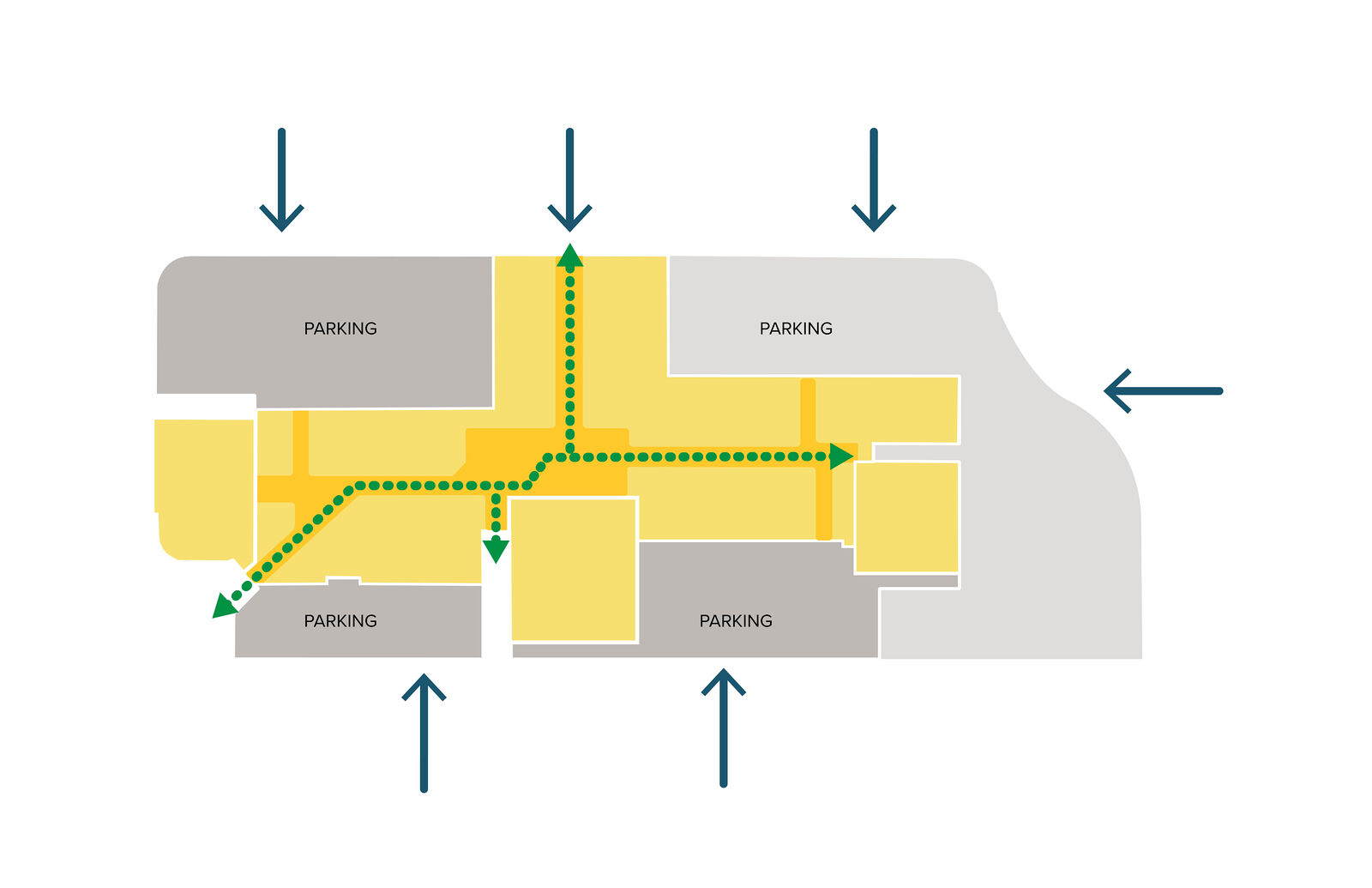
Big Idea 1: Reverse the Inward Focus
The Lloyd Center is disconnected from adjacent neighborhoods. The Lloyd Center redevelopment aims to reverse the inward focus by eliminating the "wall of parking."
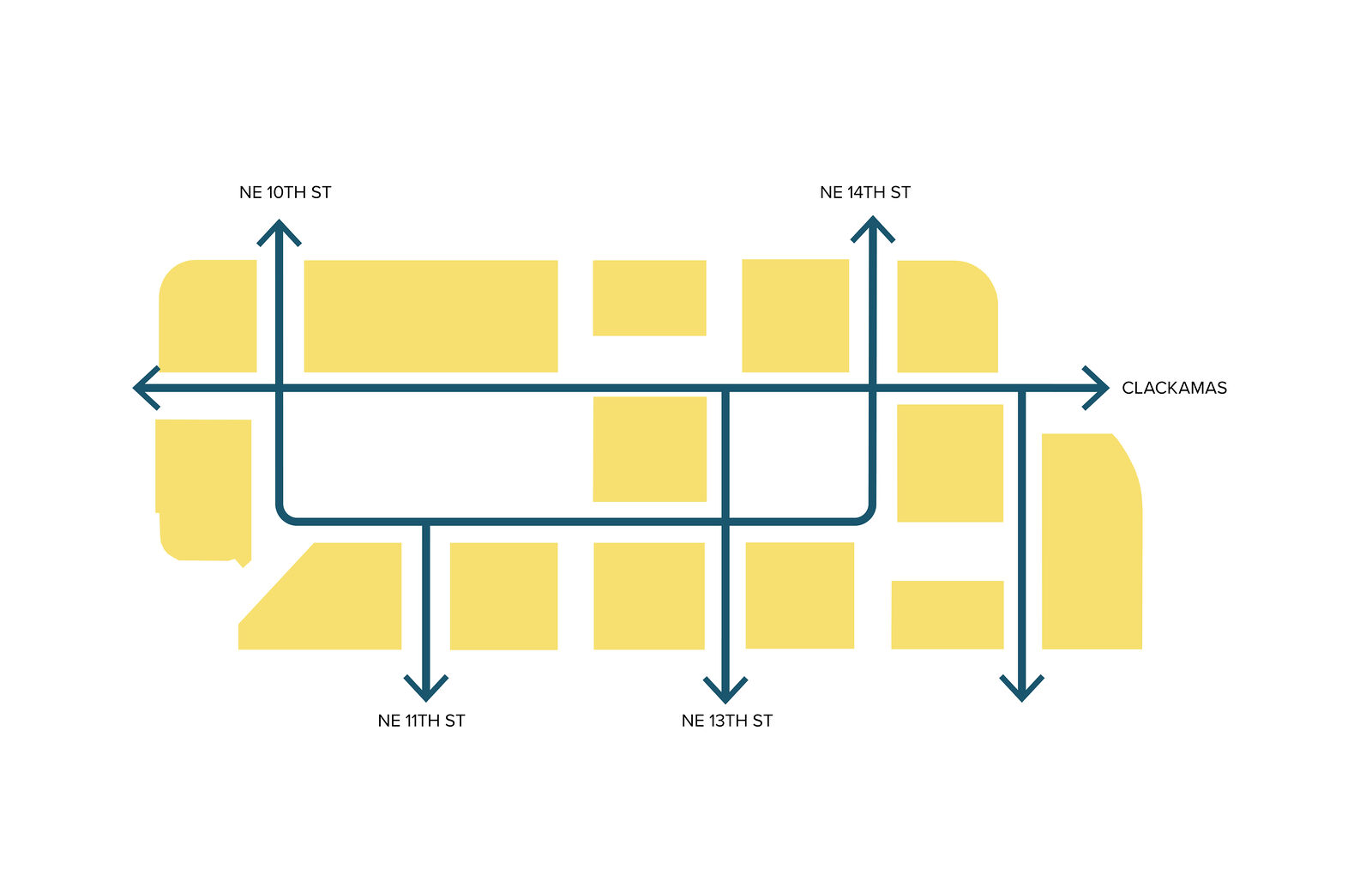
Big Idea 2: Reconnect the Grid
Breaking up the superblock enables reconnection to the Portland grid. It creates a mix of smaller and larger blocks that better reflect the character and history of the surrounding neighborhoods, while new open spaces planned within the site add a sense of placemaking.
Big Idea 3: A Neighborhood Built Around Open Space
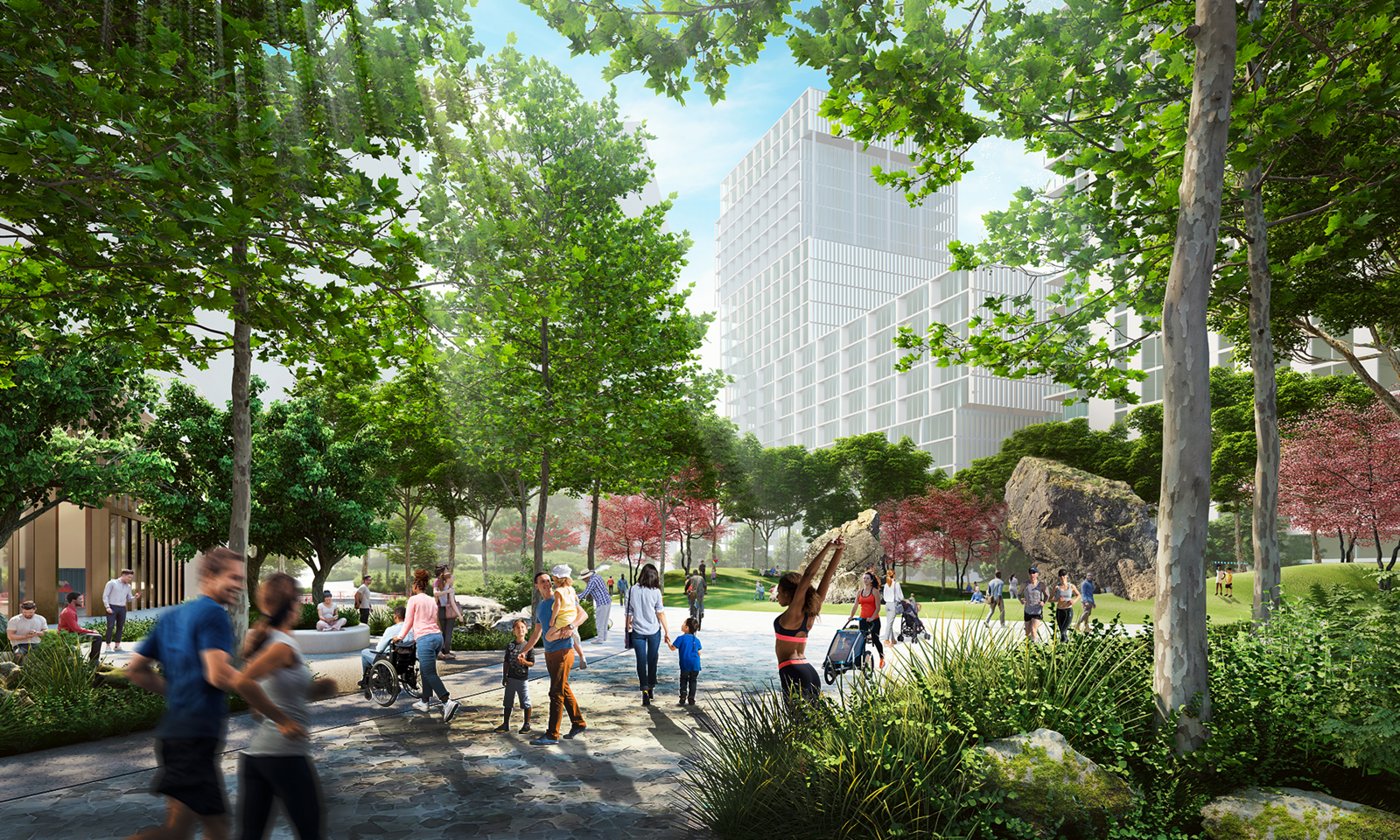
A series of parks meandering east to west through the heart of the site will offer distinctive character and placemaking while providing continuity and connectivity.
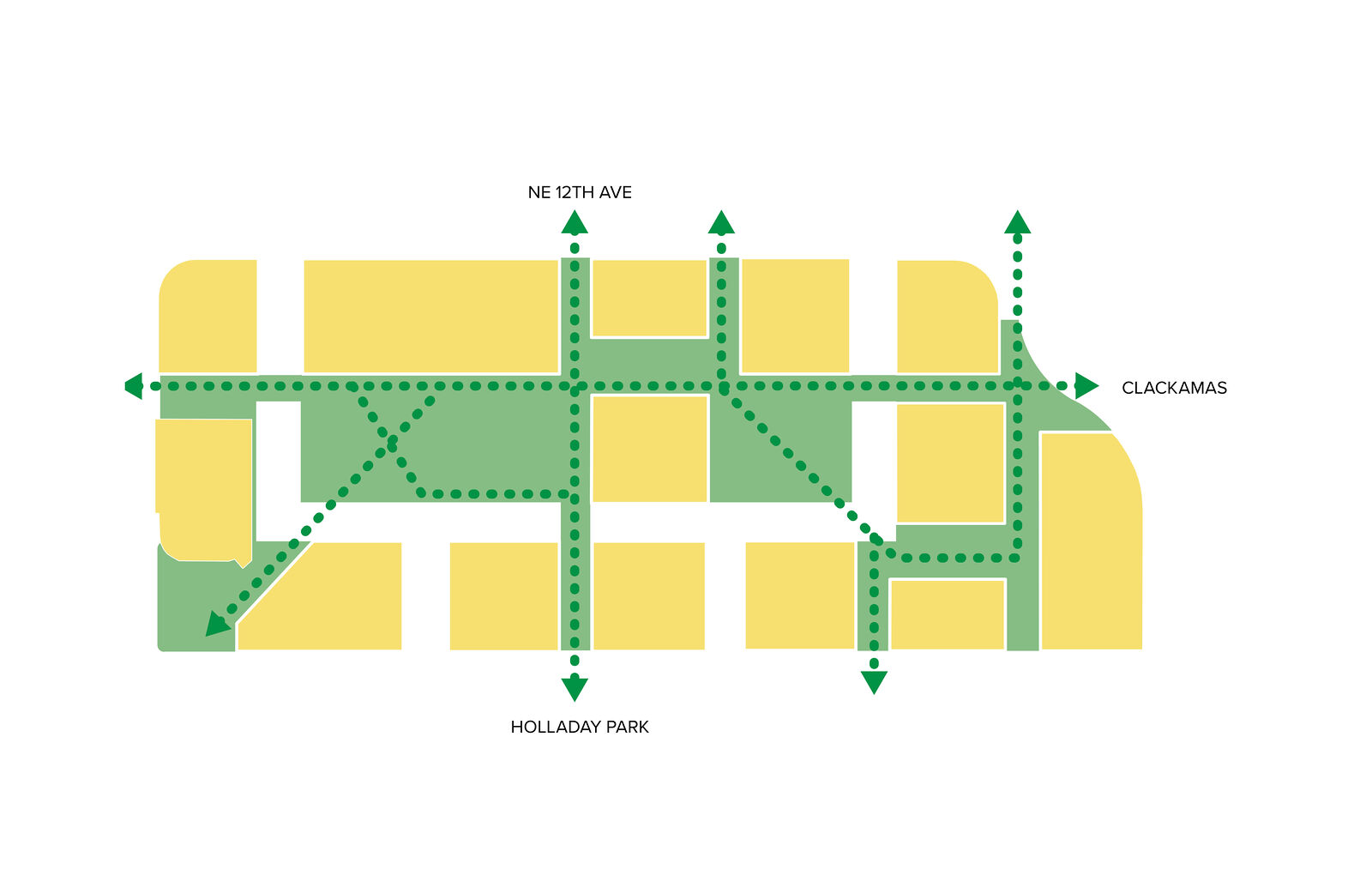
An Open, Walkable Future
Our project partner, Field Operations, proposed a network of interlaced plazas and gardens that meander through the plan area, fostering movement, exchange, and variety. The network creates a unique backbone within the district and, with the wide sidewalks planned, establishes a pedestrian-friendly environment. Two large spaces anchor the open space plan: The Commons and The Market Square. The Commons is a soft-scaped park-like environment bordered by urban programming while The Market Square is a hardscaped plaza reminiscent of other popular plazas throughout downtown Portland. In addition to the sidewalks, parks and plazas, a pair of privately-owned, pedestrian-oriented promenades will add flexibility and make direct north-south and east-west connections to the surrounding neighborhoods.
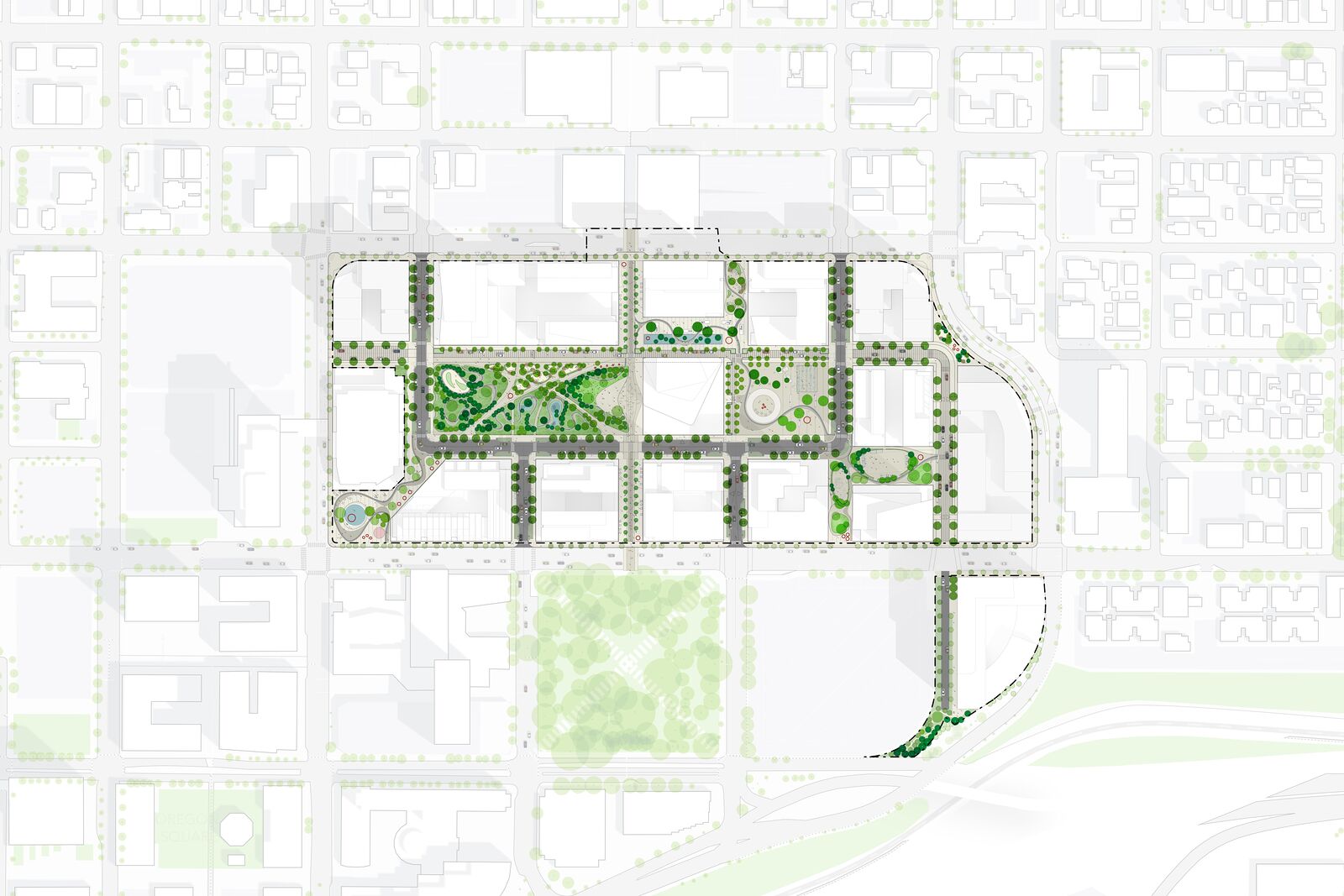
Site plan by Field Operations featuring a network of plazas and gardens that meader through the proposed Lloyd Center Redevelopment plan, fostering movement, exchange, and variety.
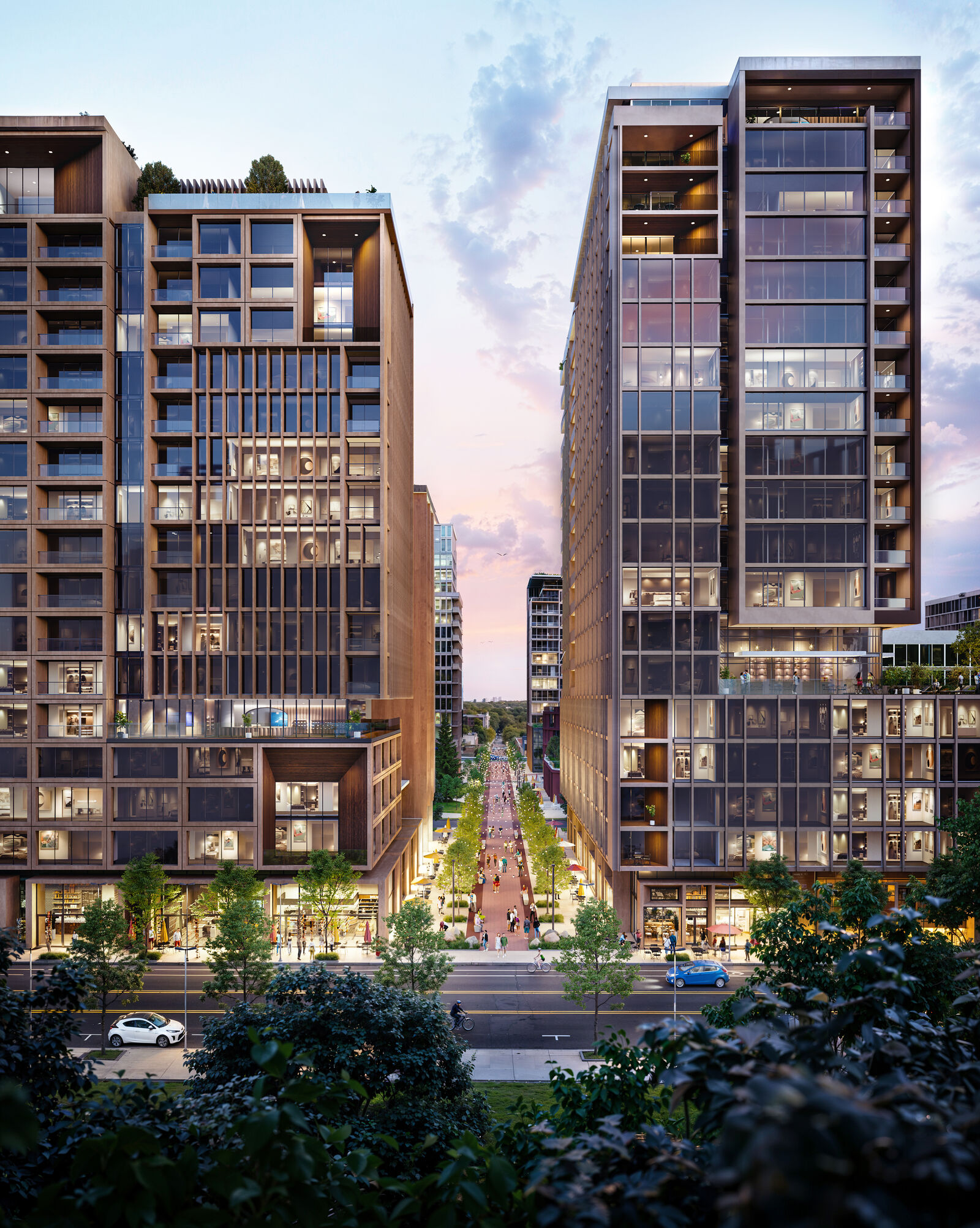
Given the dramatic shifts in the commercial development market in the past decade and the changes to come over the next generation, the project team avoided prescribing strict program elements to the planned parcels. Instead, the team focused on what the responsibility of each block, street, park, plaza or promenade is to the public realm, regardless of their future specific design or uses.
The proposed Lloyd Center re-development master plan plan maintains the spirit of the original Lloyd Center—a human-centered open-air space with opportunities for lingering and activation. It provides a framework for 21st century, high-density, mixed-use neighborhood development. To encourage long-term feasibility, the plan provides a healthy neighborhood development framework that will support a variety of uses that can develop organically as market drivers shift.
"The plan for Lloyd Center centers on creating a vibrant community, reestablishing the site as a regional destination, encouraging private investment, and building a sustainable and resilient future."
Nolan Lienhart, Principal and Director of ZGF Urban Design
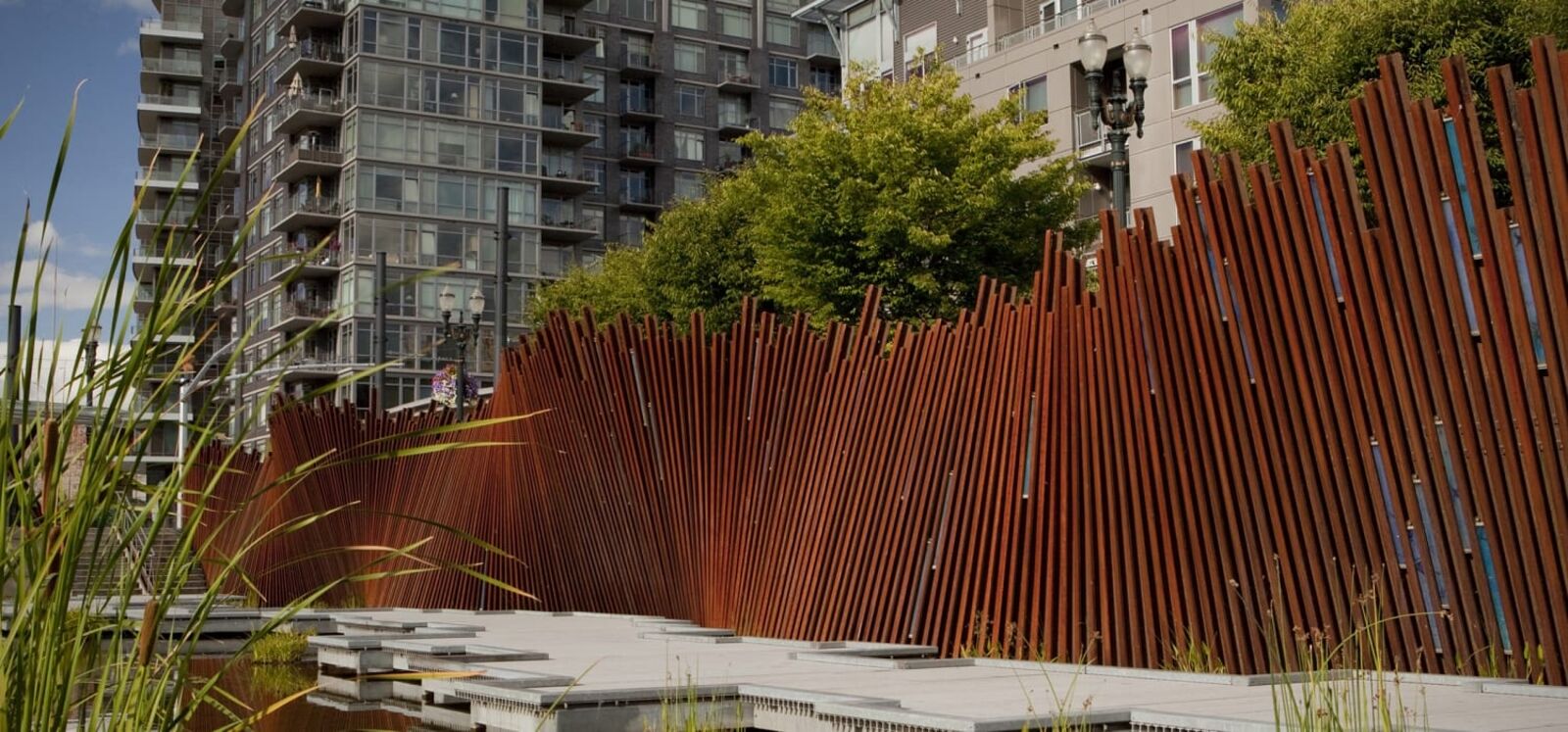
City of Portland, River District Development Plan, Portland, OR