Restorative Justice on Portland’s Interstate 5
I-5 Rose Quarter Independent Cover Assessment
Urbanism and Landscapes
The Lower Albina neighborhood was a vibrant center of the Black community. The original construction of I-5 and subsequent urban renewal projects demolished its homes and businesses, choked the neighborhood with vehicle traffic, fractured the community and forced residents to relocate across the Portland metro area. Despite this diaspora, North and Northeast Portland remain cultural and emotional hubs for many Black Portlanders who were born and raised there. They hold the largest concentration of cultural institutions of Portland’s Black community and many members of the Black community strongly desire to revitalize and repopulate Historic Albina.
The original scope of ODOT’s Rose Quarter Improvement Project was to resolve a congestion bottleneck, improve mainline safety and operations and add more east to west connections across the highway. It included two highway covers to create new community spaces and enhance pedestrian connections in the Historic Albina neighborhood. It became apparent to the community, through concepts developed by the Albina Vision Trust, that the project could be leveraged to facilitate restorative justice for the Albina community. In 2020, in response to requests from local project stakeholders, the Oregon Transportation Commission directed ODOT to retain a consultant team of urban design, engineering, and environmental experts to conduct an independent assessment of the potential for highway covers. The Independent Cover Assessment team’s role was to work with residents and stakeholders who had been impacted by the freeway to understand their vision and goals for the highway covers and develop a range of design scenarios. The team sought to clearly represent design trade-offs and helped them come to consensus.
Location
Portland, Oregon
Completion date
2021
Project Component
Urban design
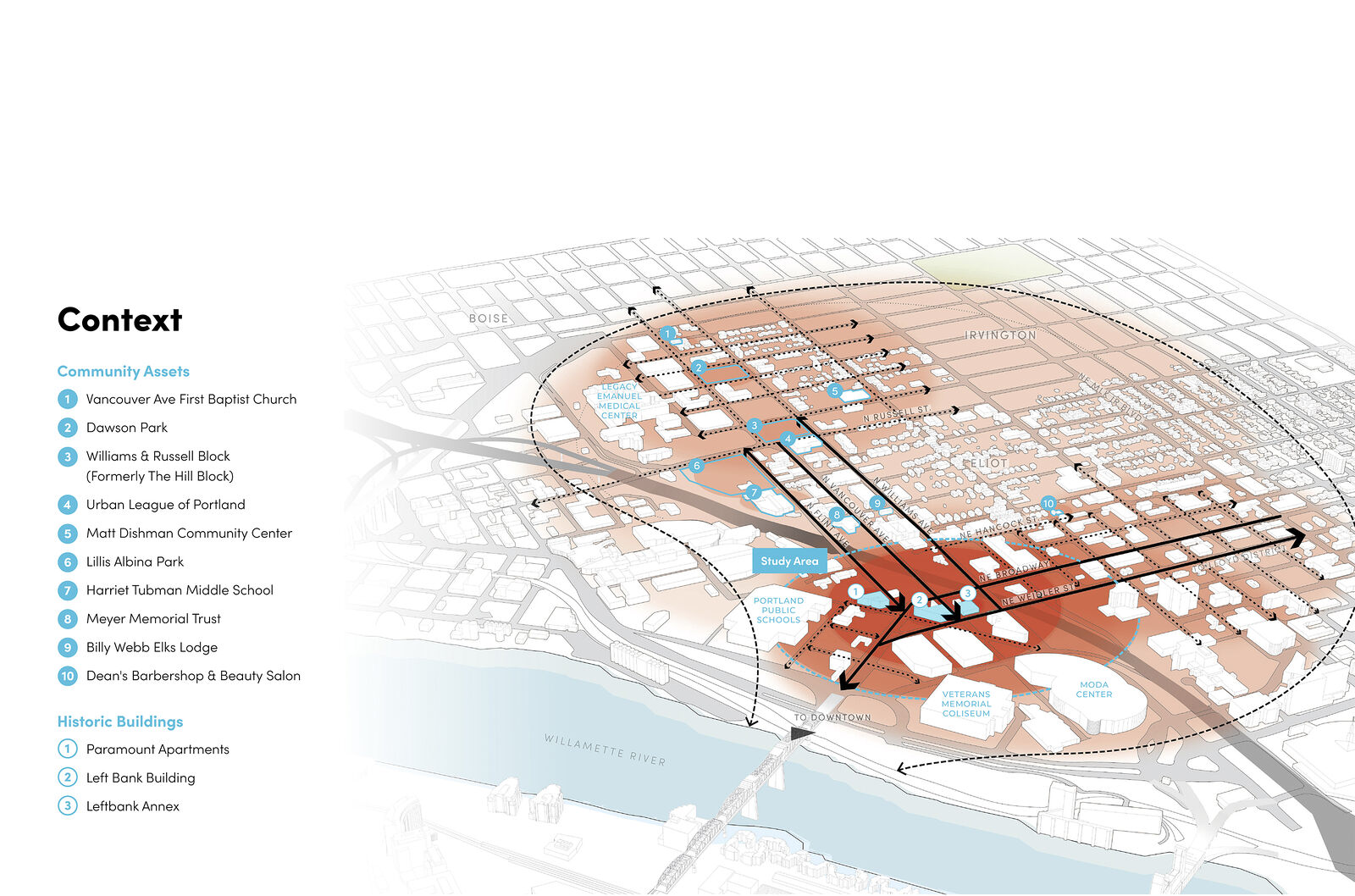
The I-5 Rose Quarter Cover seeks to restore a historically disrupted neighborhood, reconnecting significant community places.
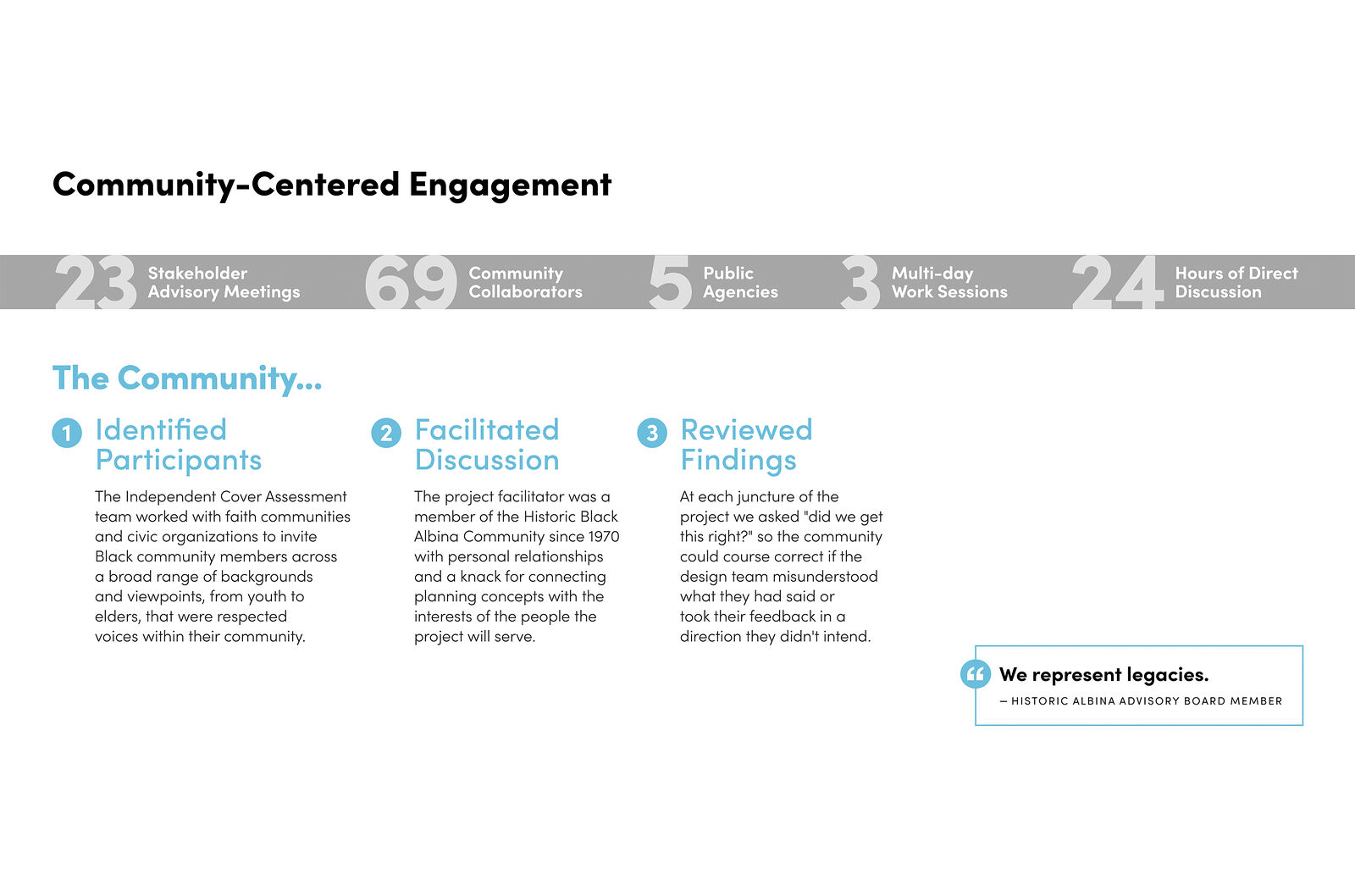
Our team listened to what local community members and stakeholders said and reflected it back, ensuring design concepts accurately reflected their goals.
Many members of the Albina community still vividly remember the impact of the brutal, discriminatory process that decimated their neighborhood. Their homes, jobs, and community were taken from them, causing understandable distrust of another public transportation project. The Independent Cover Assessment team purposefully centered the community in its process. To receive meaningful feedback, our team worked with a community facilitator who was well-known to the Black community. She brought the community to the table with direct outreach, building trust into the project and its outcomes. The team held three public work sessions to solicit input and feedback from community stakeholders, including residents, business owners, civic organizations, faith communities, public agencies and the general public. These work sessions generated feedback for the highway cover scenarios and identified implementation strategies for the final recommendation to the Oregon Transportation Commission.
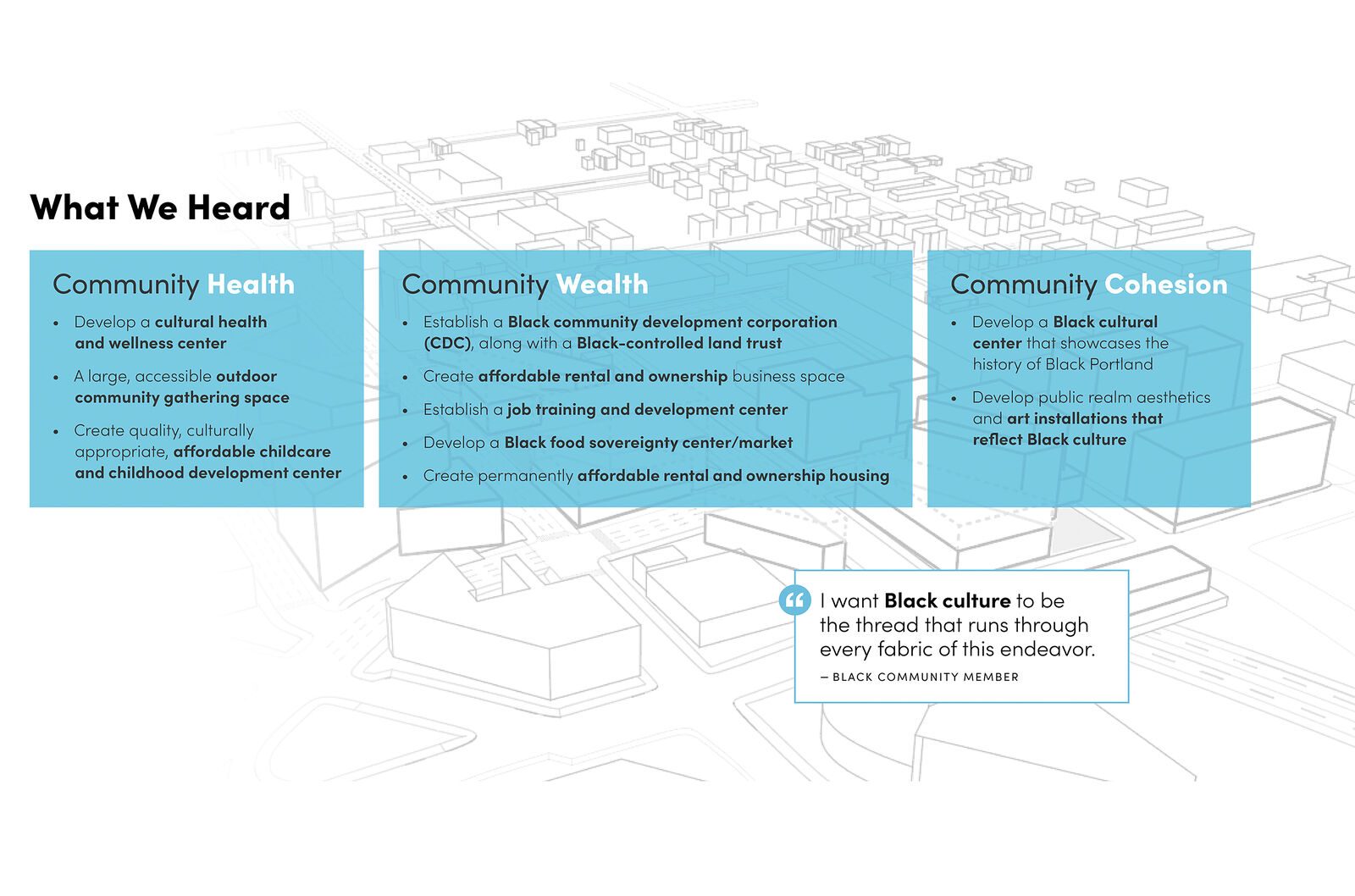
Over the course of the work sessions the design team listened to what people said and reflected it back, helping stakeholders hear how their input was shaping the project and allowing them to ensure the Independent Cover Assessment team’s concepts accurately reflected the community’s shared aspirations. . Ultimately, the team identified the community’s desired outcomes as: community health, community wealth, and community cohesion, which became the framework for design efforts and decision making moving forward. Serving these outcomes required design concepts with high-quality development parcels, active and pedestrian-friendly streets, development flexibility, and reduced highway impacts.
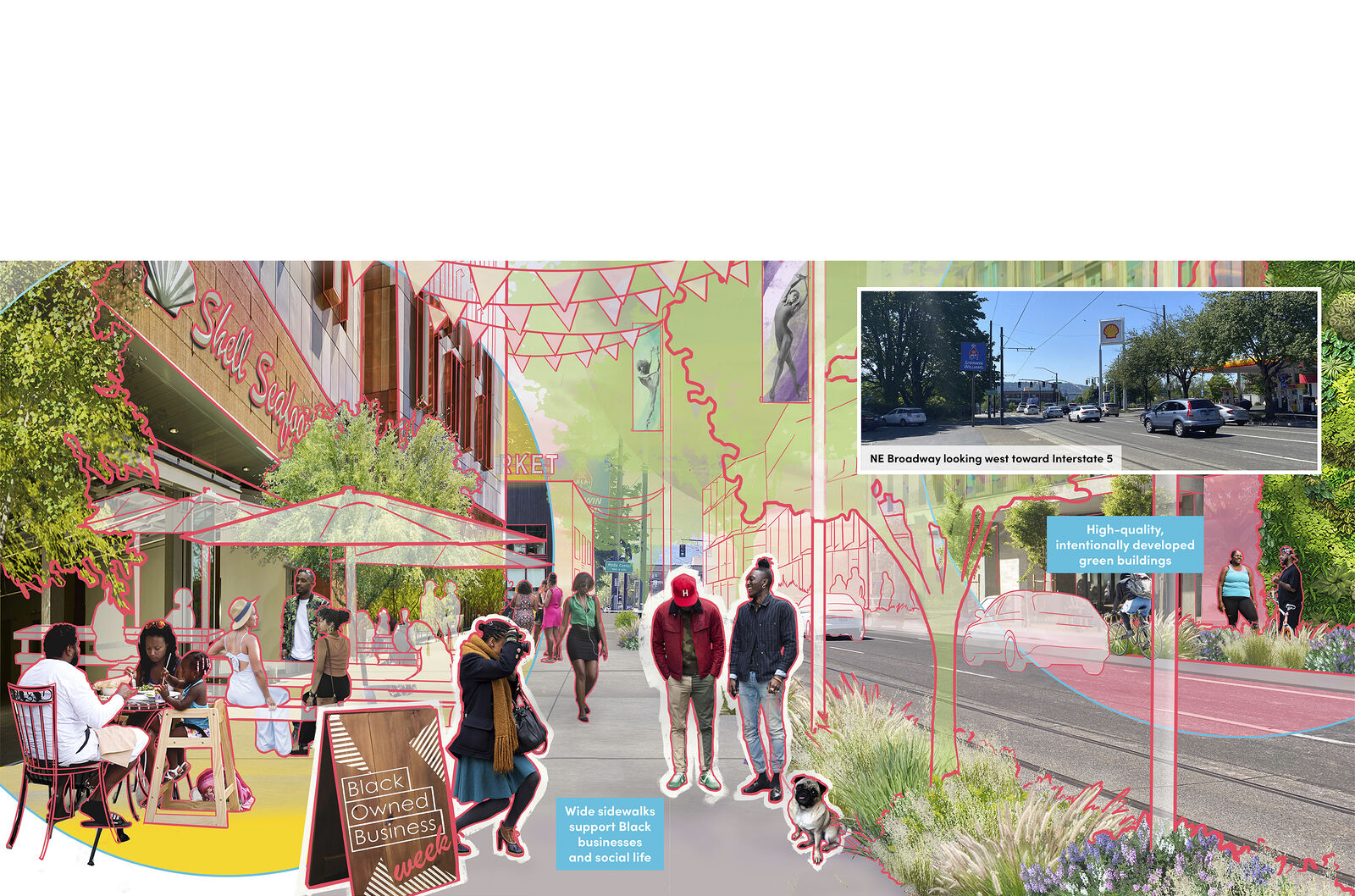
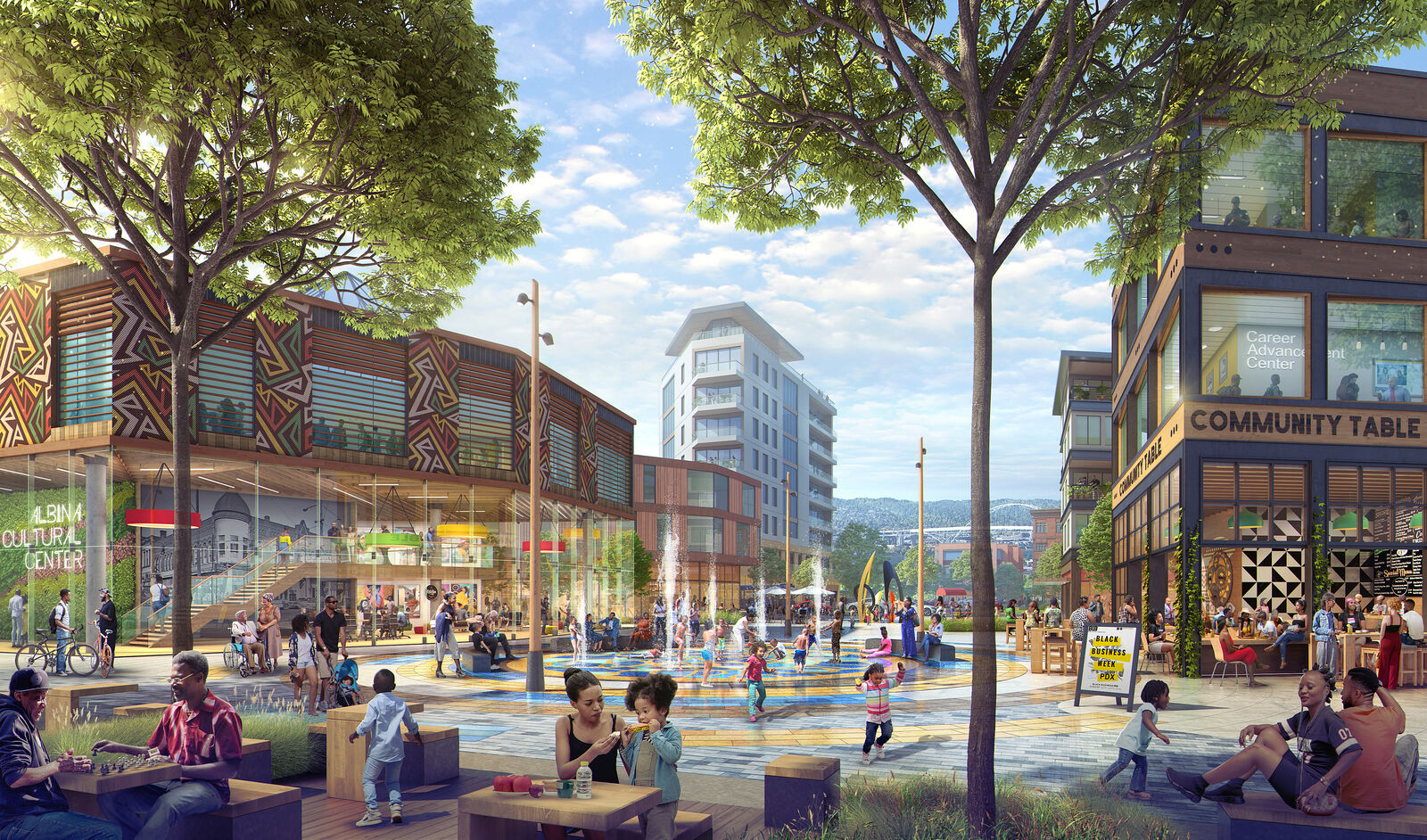
A vision of NE Broadway with new development on both sides of the street, creating active ground floor uses.
Stakeholders and community members shared diverse opinions on how best to satisfy community wealth goals: some favored building the project as quickly as possible to maximize near-term highway construction jobs, whereas others favored taking the time to maximize land delivered back to the community. The design team summarized the community’s feedback with strategies that could achieve both if they built, owned, and benefitted from the cover in the future. The timeframe in which the community received these benefits was crucial to the success of the project.
Some people shared a vision of community redevelopment that spanned the highway and extended to the river, rebuilding the community they could have had if the public sector hadn’t been rigged against them. It would take generations to reach this goal and the best support this project could provide was to maximize the amount and quality of land on which to build.
Local Black contractors shared a vision of social and economic uplift from their participation in this major infrastructure project; the type of project they would have been excluded from and harmed by in the past. They saw this project as an opportunity to provide family-wage jobs, establish generational wealth, and further their community’s careers in major infrastructure projects to provide long-term financial stability. They did not believe their community could wait on a project delay to receive this benefit
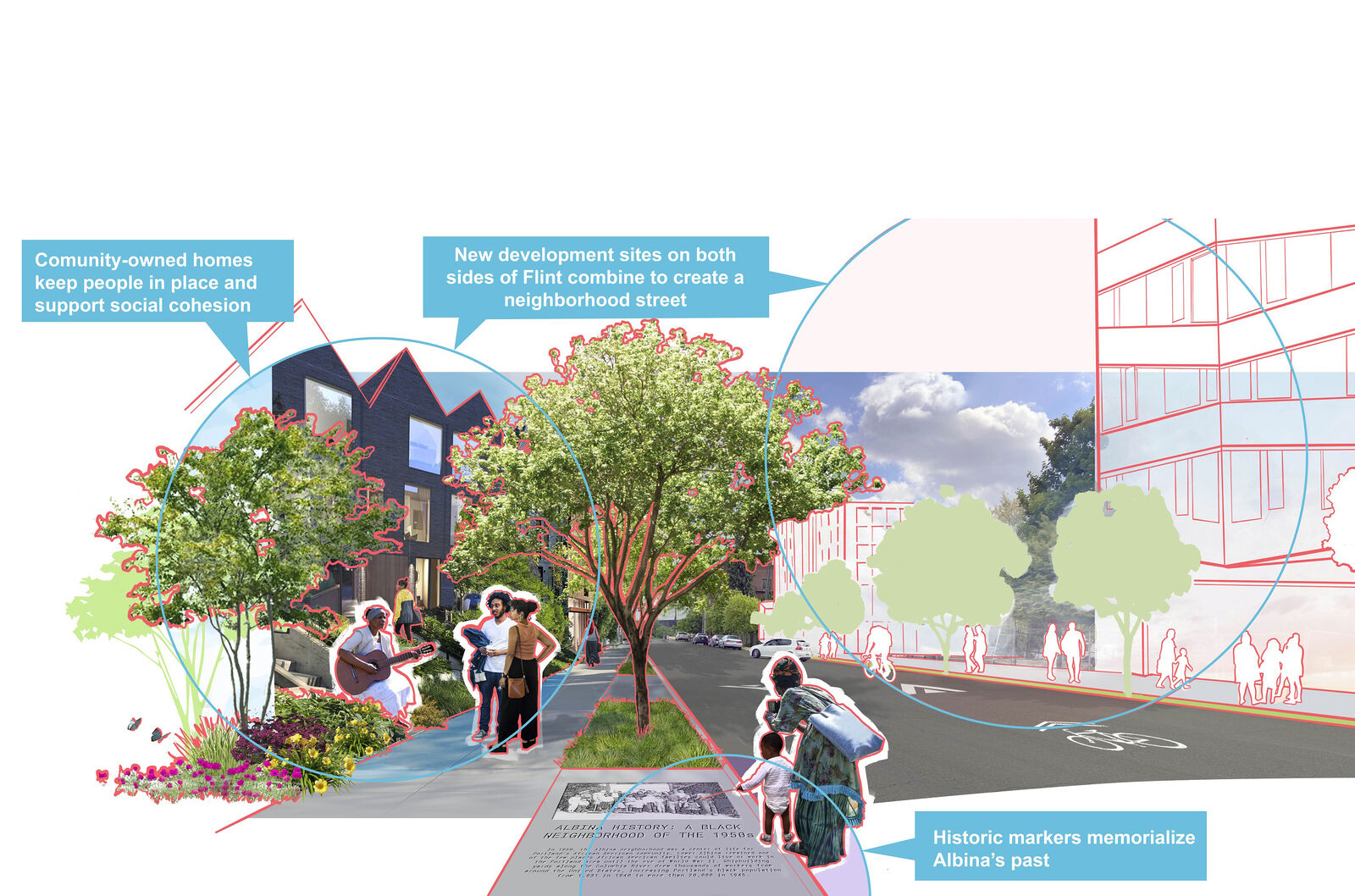
NE Flint reimagined as a neighborhood street with new homes and businesses.
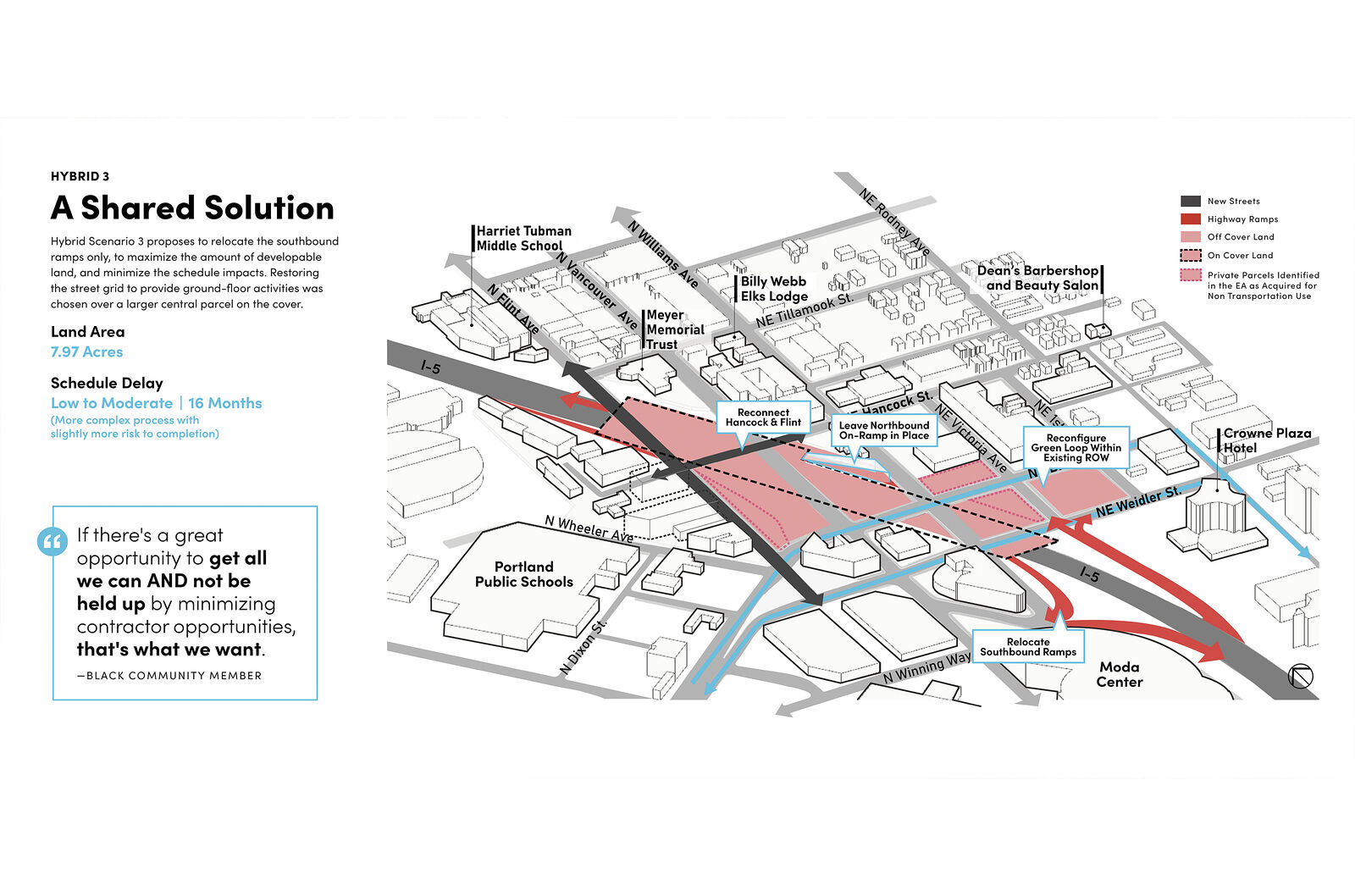
The Independent Cover Assessment team created three design scenarios and three hybrid design scenarios that were responsive to stakeholder goals and visions. The community deliberated on trade-offs including schedule, amounts of land, and quality of land. The initial scenarios focused on creating the most land possible by moving freeway ramps and reconfiguring surface streets, which came with significant delays to the schedule and therefore delayed construction jobs for Black contractors. We provided both qualitative images and detailed quantitative information about the scenarios so community members could make well-informed decisions and reach consensus on a shared solution. The scenarios were evaluated against an assessment framework that included metrics on amount of developable land created, quality of street improvements, transit access, schedule impact, and project cost.
The team’s governance experts developed next steps with the community and public partners to prepare for community oversight, ownership, and management of the developable land created by the project. Trust and collaboration can be difficult to achieve on any project. Communities, especially those who have experienced historic harm and discrimination from development projects, can be understandably wary of public engagement processes. The design team recognizing this community are the experts on their needs, worked hard to build trust and ensure their voices were heard.. The ultimate recommendation to the Oregon Transportation Commission was to move forward with the third hybrid scenario, which allows for more active streets, a greater amount of developable land, and more comfortable intersections with a lower impact to the original schedule.
Montgomery County Department of Transportation, US 29 BRT Station Design