Reshaping the Future of Healthcare: Empowering Collaboration, Discovery, and Community
University of Colorado, Anschutz Health Sciences Building
Laboratories and Research, Higher Education
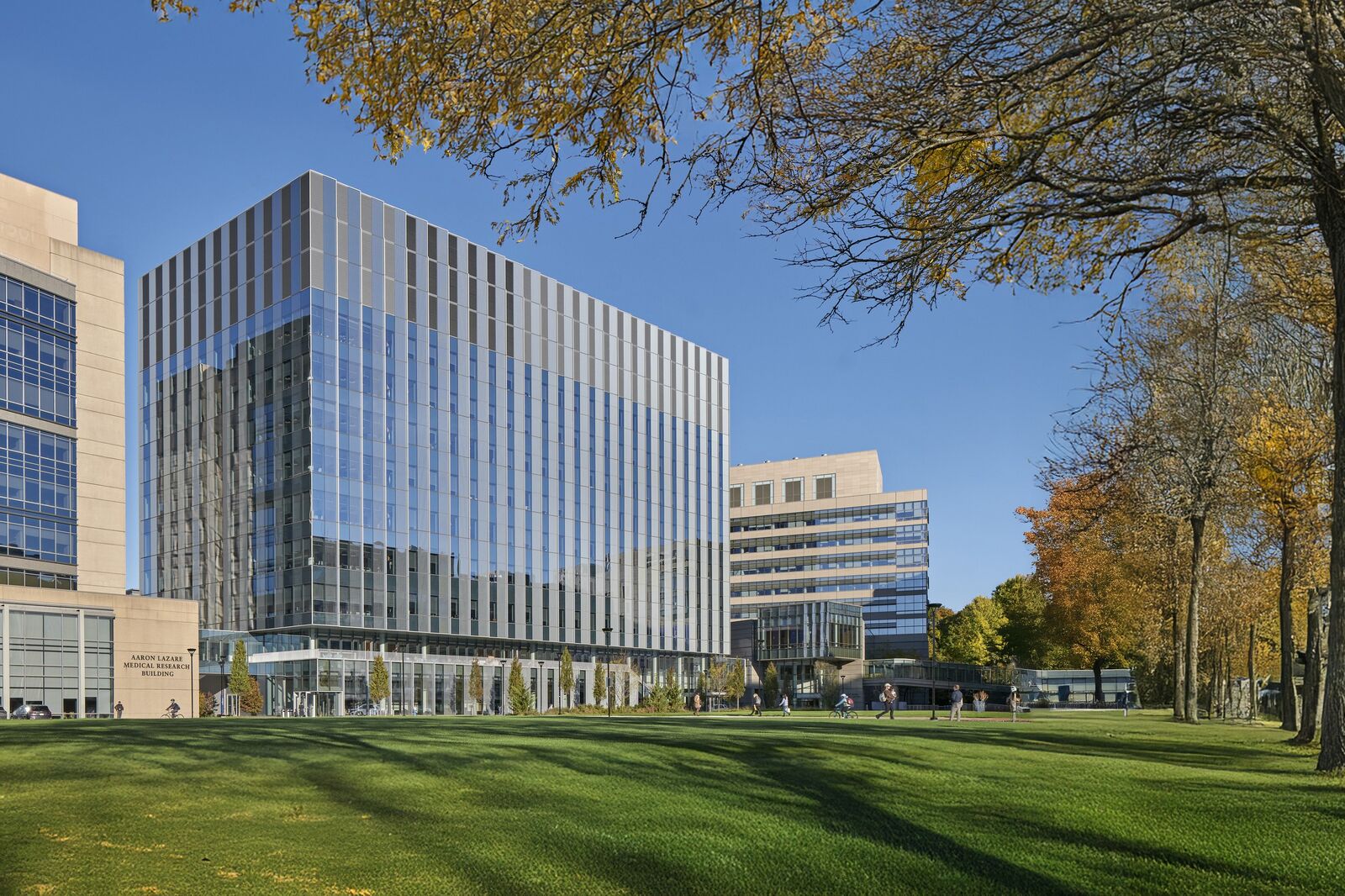
Designed as a catalyst for the next generation of translational health science research, mental and behavioral health, medical education, and personalized clinical care, the Anschutz Health Sciences Building (AHSB) at the University of Colorado Anschutz Medical Campus consolidates a myriad of formerly dispersed departments into an active interdisciplinary hub, creating a new paradigm for collaboration, discovery, and community.
ZGF, in partnership with Anderson Mason Dale, designed the seven-story building on a gateway site at the western edge of the CU Anschutz Medical Campus in Aurora, Colorado. The building celebrates a notable campus entry point while creating a glowing beacon and a vibrant node of activity on the quarter-mile Artwalk promenade, a major east-west campus path. The building invites the public realm of the campus inside through the use of transparency and a south facing ‘porch,’ providing a welcoming entrance as well as a place to linger.
Location
Aurora, CO
Square Feet
390,914
Completion date
2021
Project Component
Architecture services

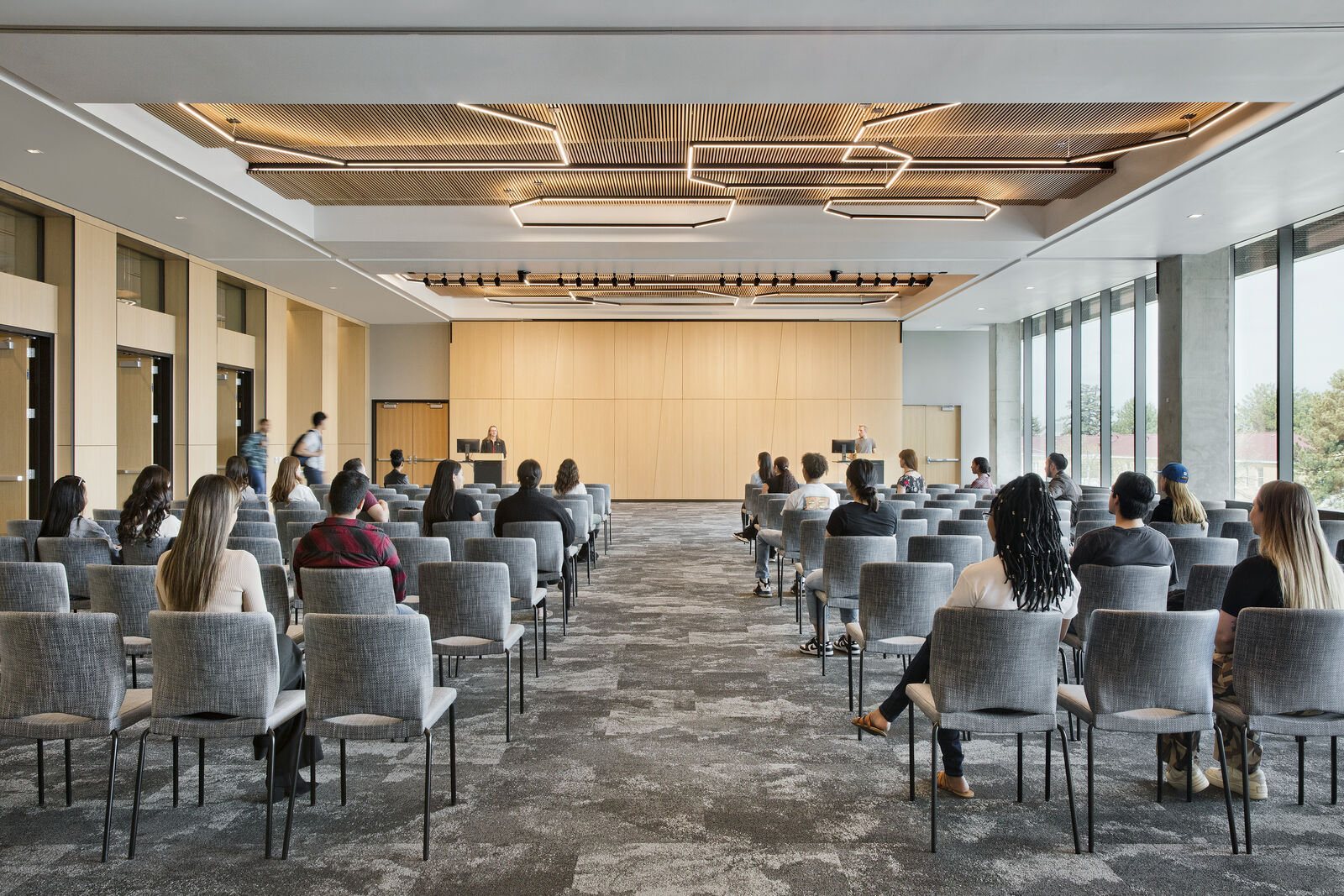
The building’s programmatic synergies empower the work of multiple and diverse users, including researchers, faculty and staff, students and patients, and includes facilities for computational research and clinical trials, an interprofessional medical simulation hub, mental/behavioral health research clinics, faculty offices, event spaces, a data center, and other shared educational and amenity spaces.
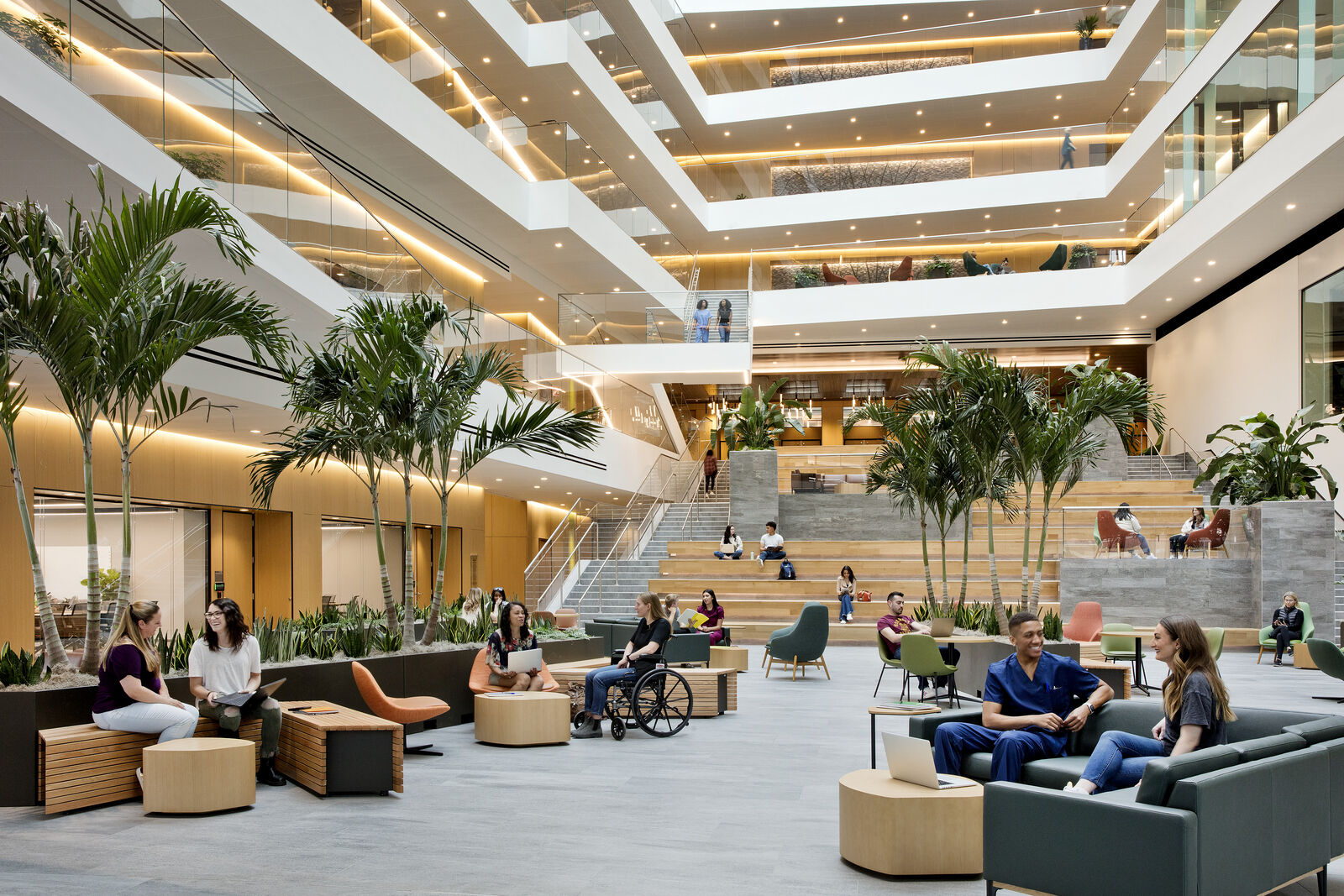
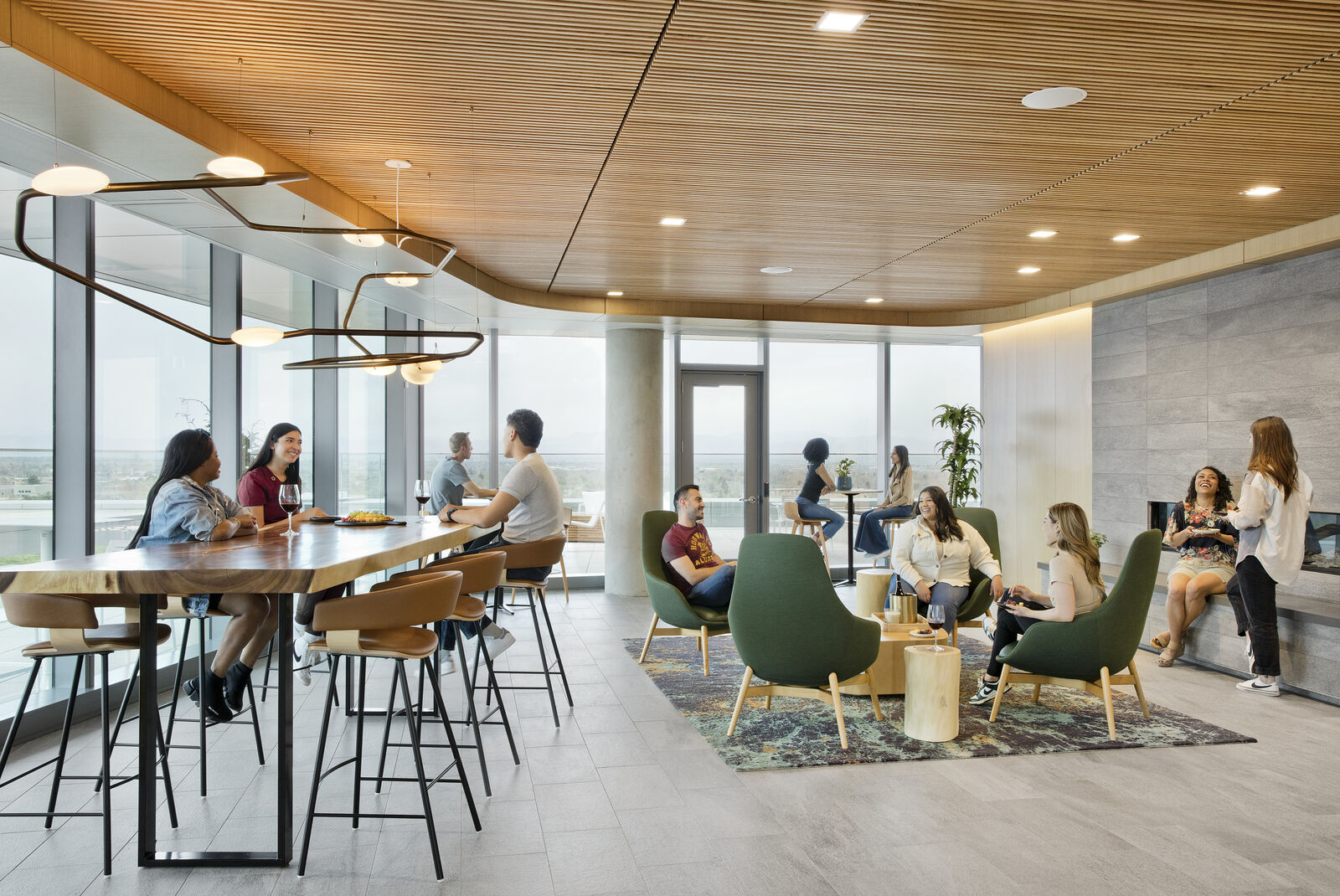
The building’s sky-lit atrium has become the new ‘living room’ for the Anschutz Campus, acting as its social heart and strengthening the sense of community on campus. The many departments within the building come together around this central space, fostering multi-disciplinary connections in a modern and uplifting workplace setting; enhancing collaborative exchanges through shared spaces for meeting and for informal interaction on all seven floors. The atrium also promotes efficient circulation and ease of wayfinding through increased visibility. Biophilic design, beautiful daylight, views, and diverse seating options make the Anschutz Health Sciences atrium one of the most sought-after places on campus.
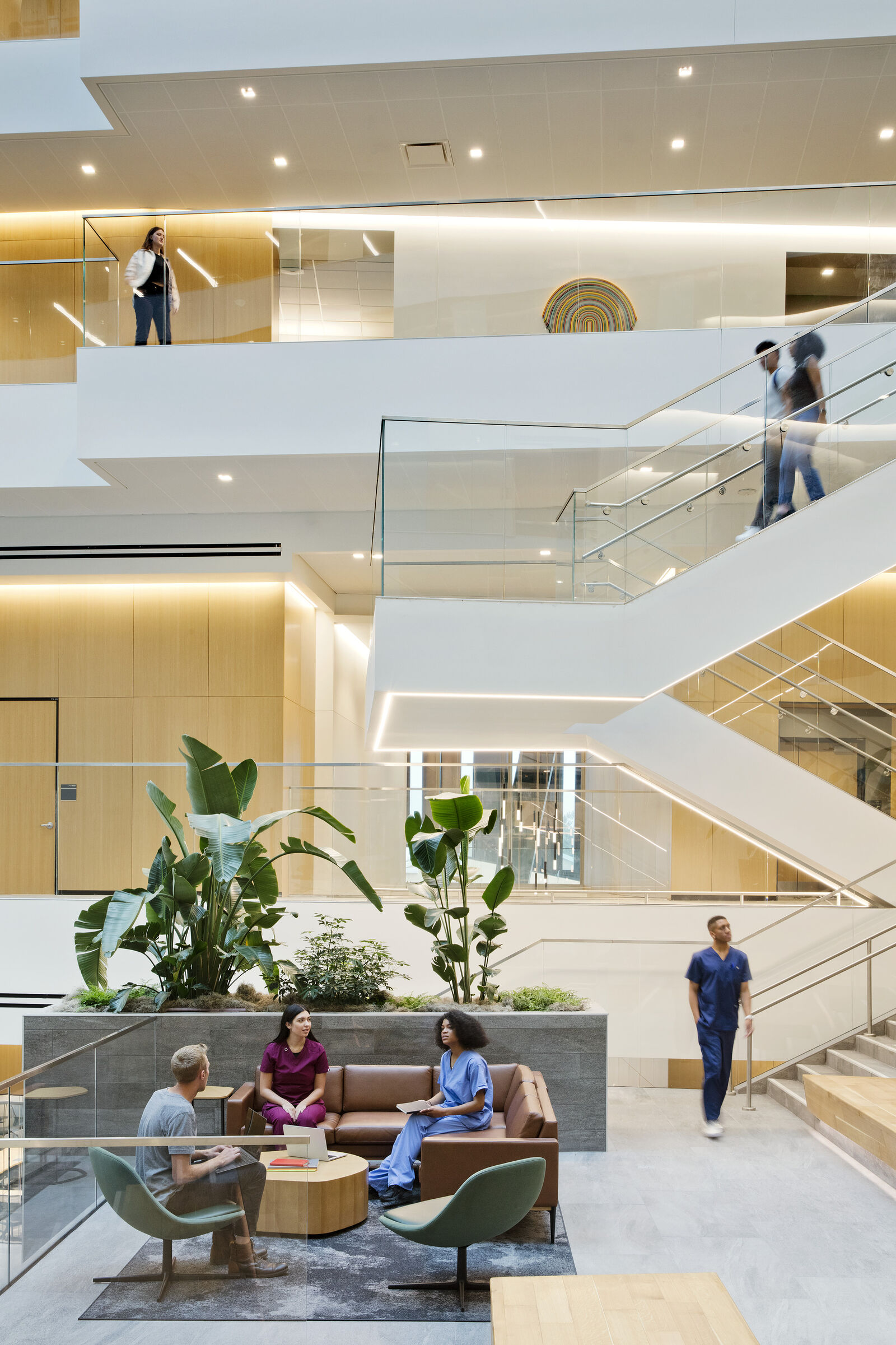
With sensitivities required for behavioral health patients, the building is organized to allow for privacy when necessary while still being open to encourage social interaction and collaboration. Patient wellbeing and safety was addressed through programming, space planning, and technology solutions.
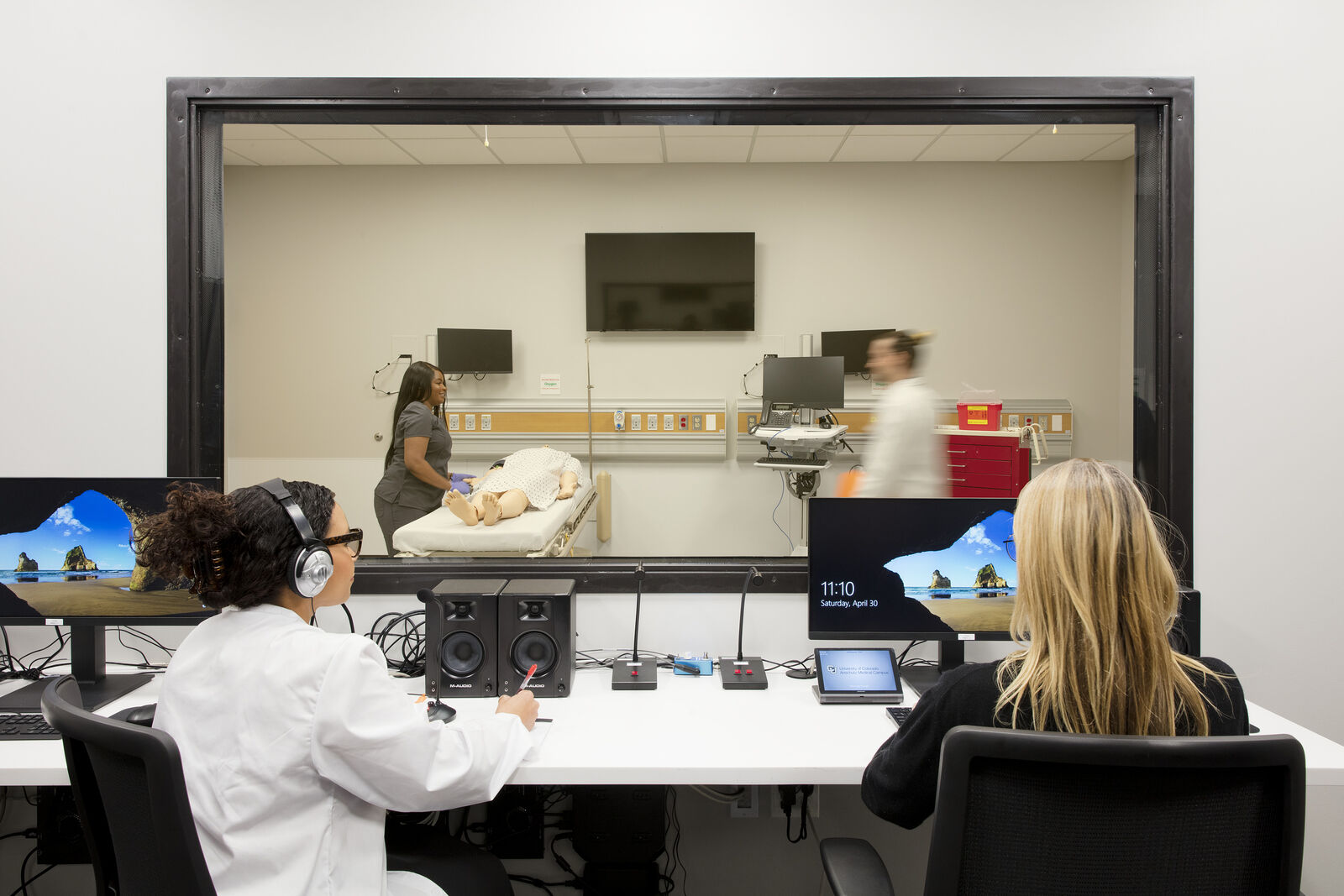
AHSB is designed to enable the rapid translation of scientific discoveries into improved health outcomes. Facilities include an advanced educational medical simulation hub – the Center for Advancing Professional Excellence — which offers an array of state-of-the-art patient simulation tools for building clinical knowledge and advancing multi-disciplinary expertise in healthcare.
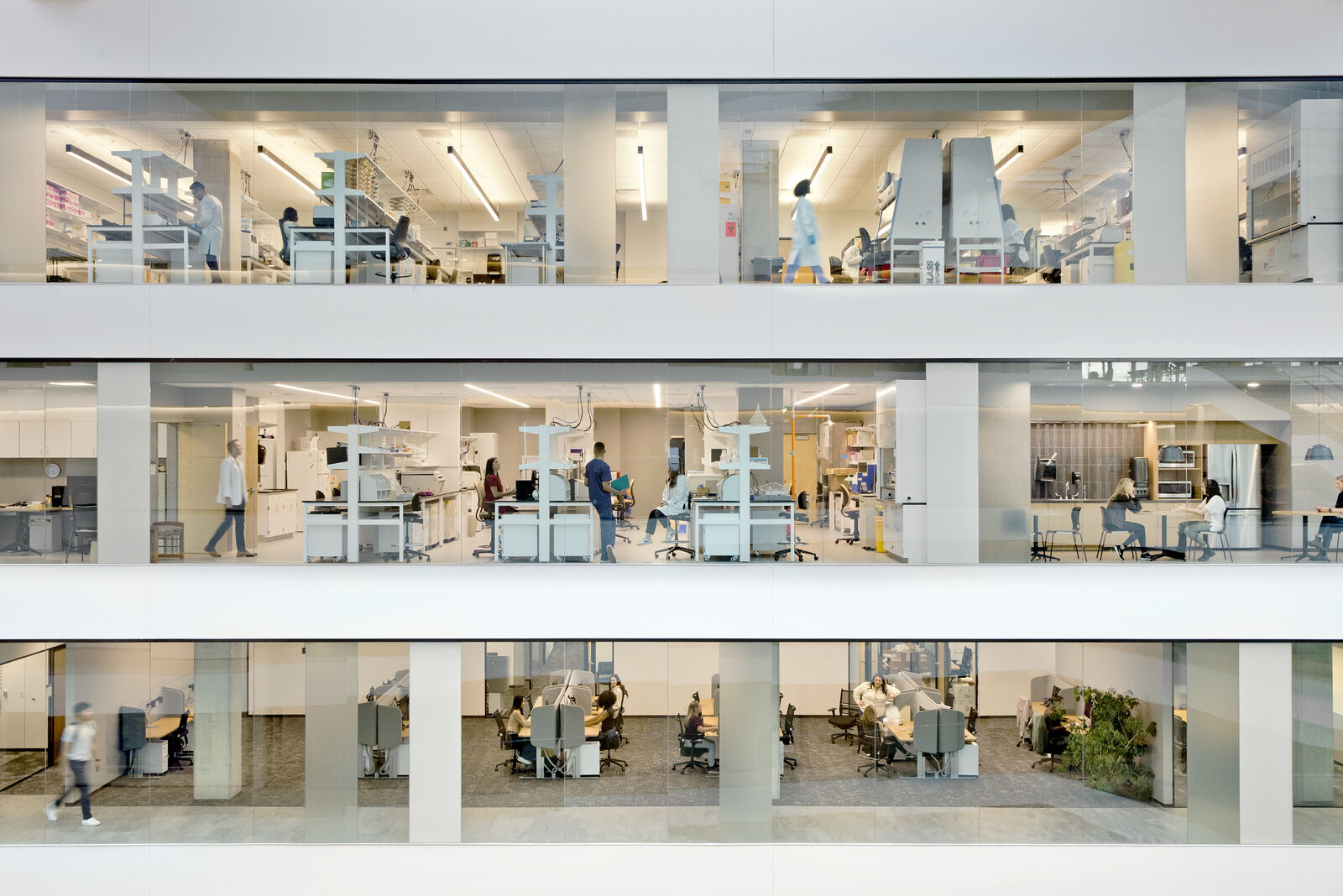
Groundbreaking science is put on display across the AHSB atrium, providing sightlines into classrooms, laboratories, and other active environments.
The building’s crystalline sculptural form takes inspiration from the carved mass of the surrounding mountains and canyons integral to Colorado’s regional identity. ‘Ledges’ and ‘overhangs’ give shape to varied indoor-outdoor spaces for occupants to interact and enjoy a heightened connection to nature through incredible views of the beautiful Colorado landscape.
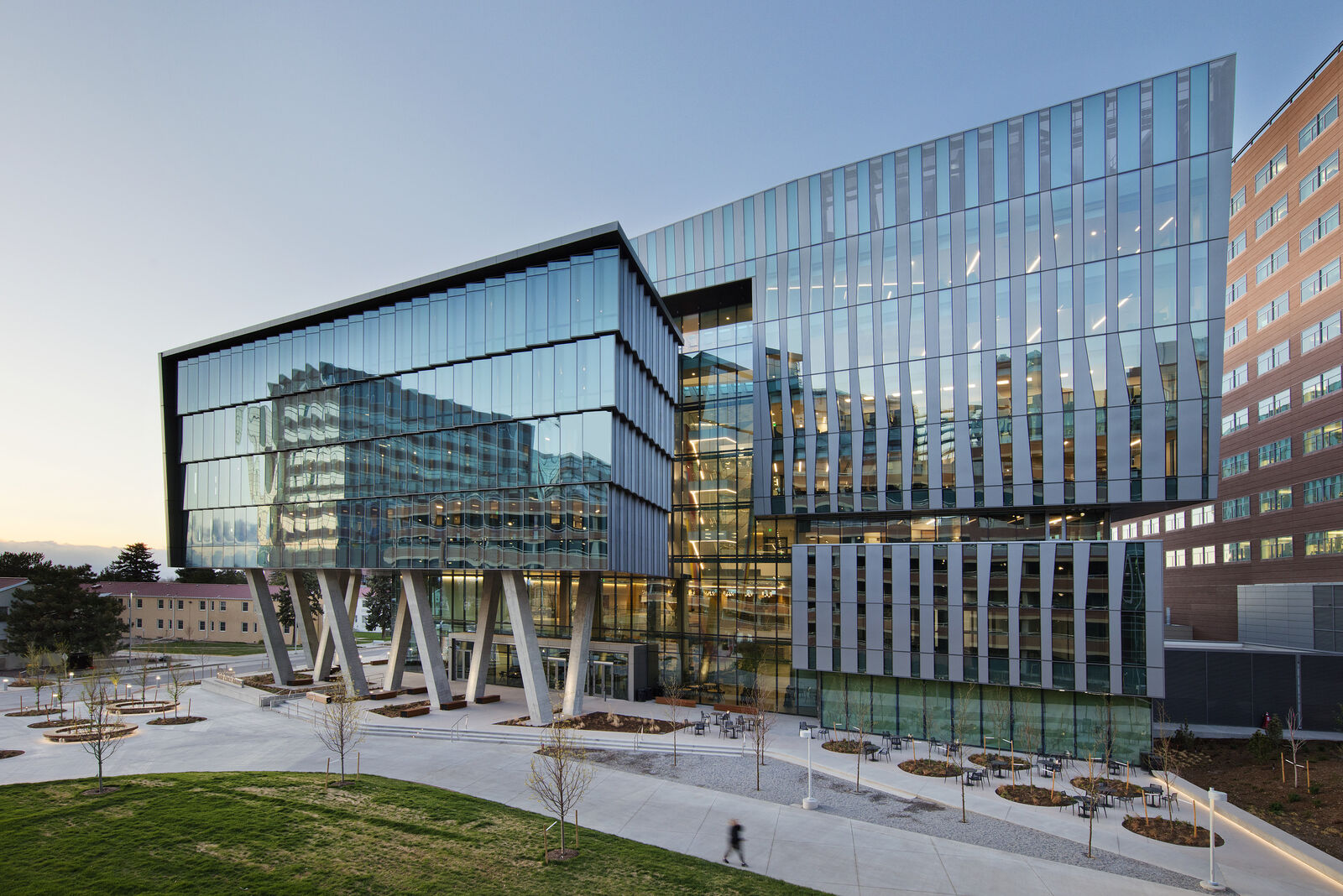
AHSB has achieved LEED Gold certification. Among many sustainability features employed, designers utilized parametric modeling to analyze the building envelope, to optimize daylighting, and to provide effective glare control in the central atrium. Parametrically generated facade patterns were developed in response to solar exposure on the building’s facades, informing a rich compositional design approach that combines performance and beauty into a truly integrated design solution. Under the atrium skylights, the parametrically generated custom skylight baffle system helps reduce glare for building occupants, blocking direct sunlight from sensitive interior environments while purposefully driving natural light to the lower levels. A highly efficient heat recovery system supports the University’s energy goals, resulting in an approximate 60% energy reduction versus existing buildings, and 20% energy cost savings against current energy code.

With a people-centric and holistic approach, integrating diverse users under one roof and prioritizing collaboration, community, occupant wellbeing, AHSB establishes a new standard for innovation on medical education campuses. A central interdisciplinary hub that also meets campus sustainability goals, it serves as a beacon of progress—and a model for future health sciences infrastructures everywhere.
City of Boulder, Western City Campus