FROM HISTORIC LANDMARK TO STUDENT HUB
Northeastern University, Seattle Campus Hub
Higher Education, Interiors, Adaptive Reuse
The transformation of the historic 310 Terry building into a new hub for Northeastern University’s Seattle campus is a focused and strategic example of adaptive reuse. Originally constructed in 1915 as an industrial warehouse, the building most recently housed two beloved restaurants—popular after-work gathering spots in South Lake Union. Following their closure during the Covid pandemic, the building sat vacant, a dormant structure within a rapidly evolving science and technology district. Within this context, 310 Terry’s industrial character has been recalibrated to support a future of education, research, and collaboration.
The design responds to pressing mental health needs across higher education, where 62% of students report overwhelming anxiety and over half of faculty and staff have considered leaving their positions due to burnout. The primary goal is to bring Northeastern students, faculty, and staff, together in a space that addresses their needs—providing resources, support, and refuge. For a largely remote student population, this reimagined space uses design as a catalyst for connection and belonging.
Location
Seattle, WA
Square Feet
13,500
Completion date
2024
Project Component
Interior tenant improvement
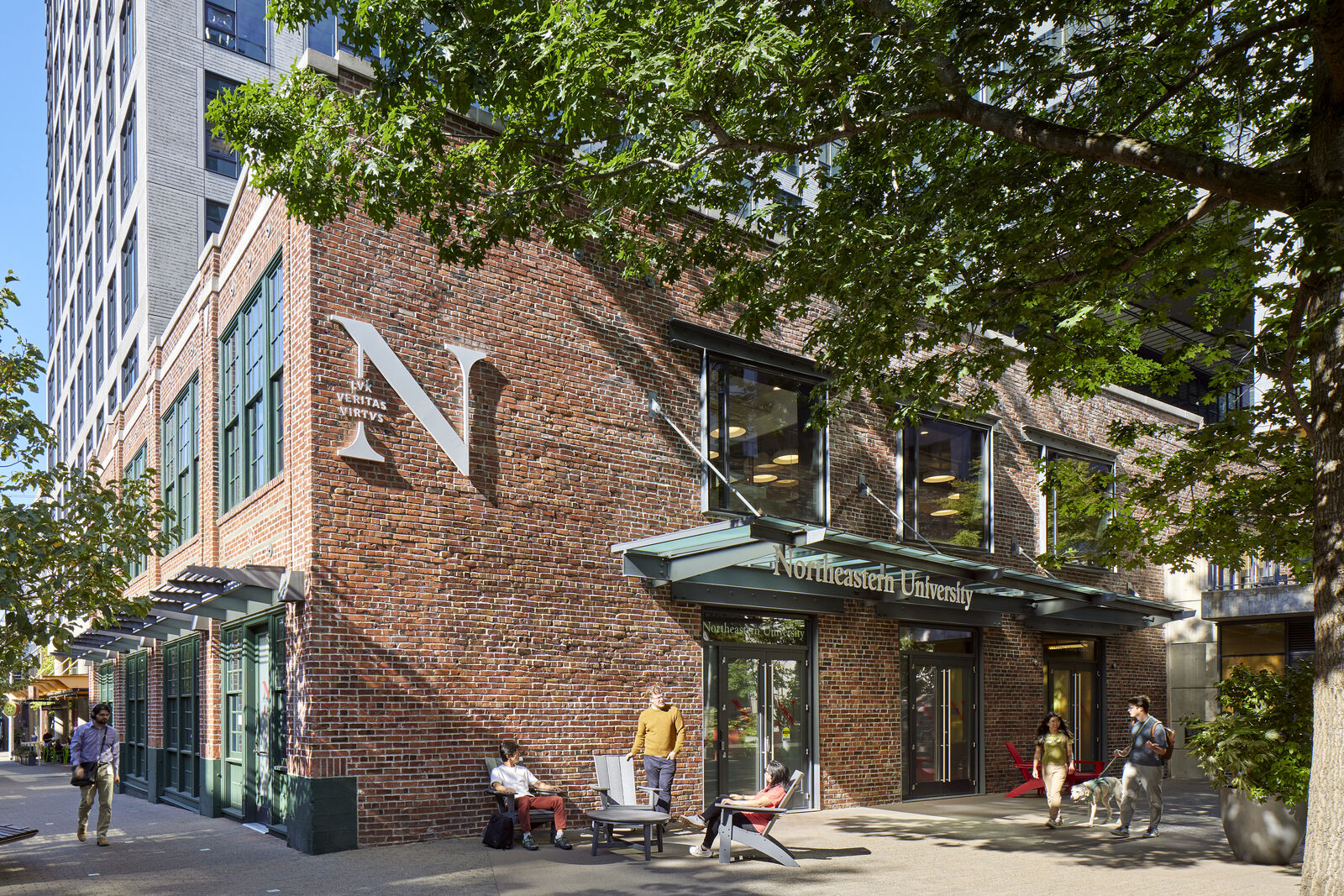
A historic part of the neighborhood’s low-rise industrial fabric, the building now engages the evolving urban context by integrating with the podiums of adjacent high-rises.
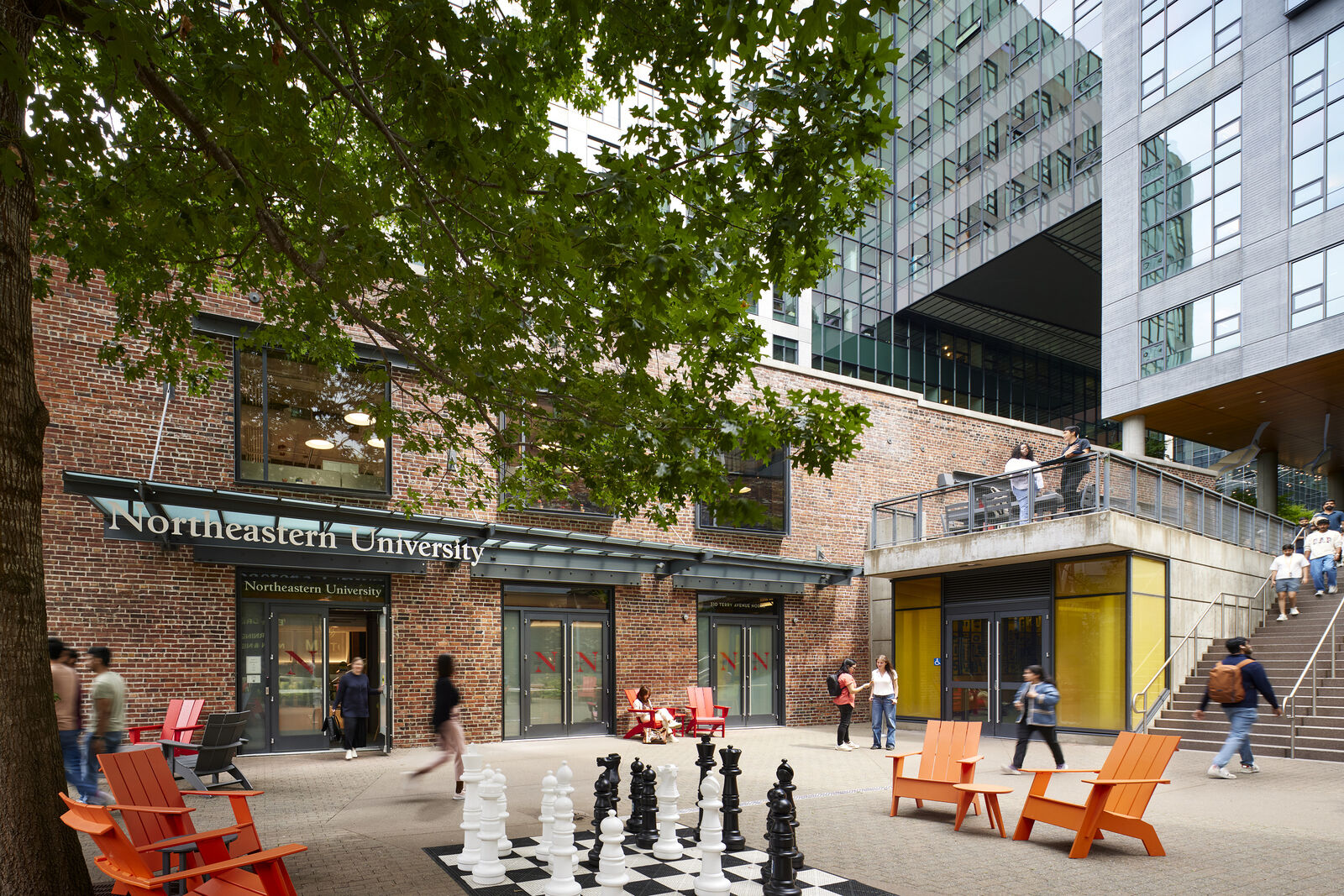
Its modest scale maintains a sense of approachability and humanism, offering a counterpoint to the surrounding verticality. Neighboring towers cast shifting shadows and sunlight in unexpected ways, adding dynamic light play to the site throughout the day.
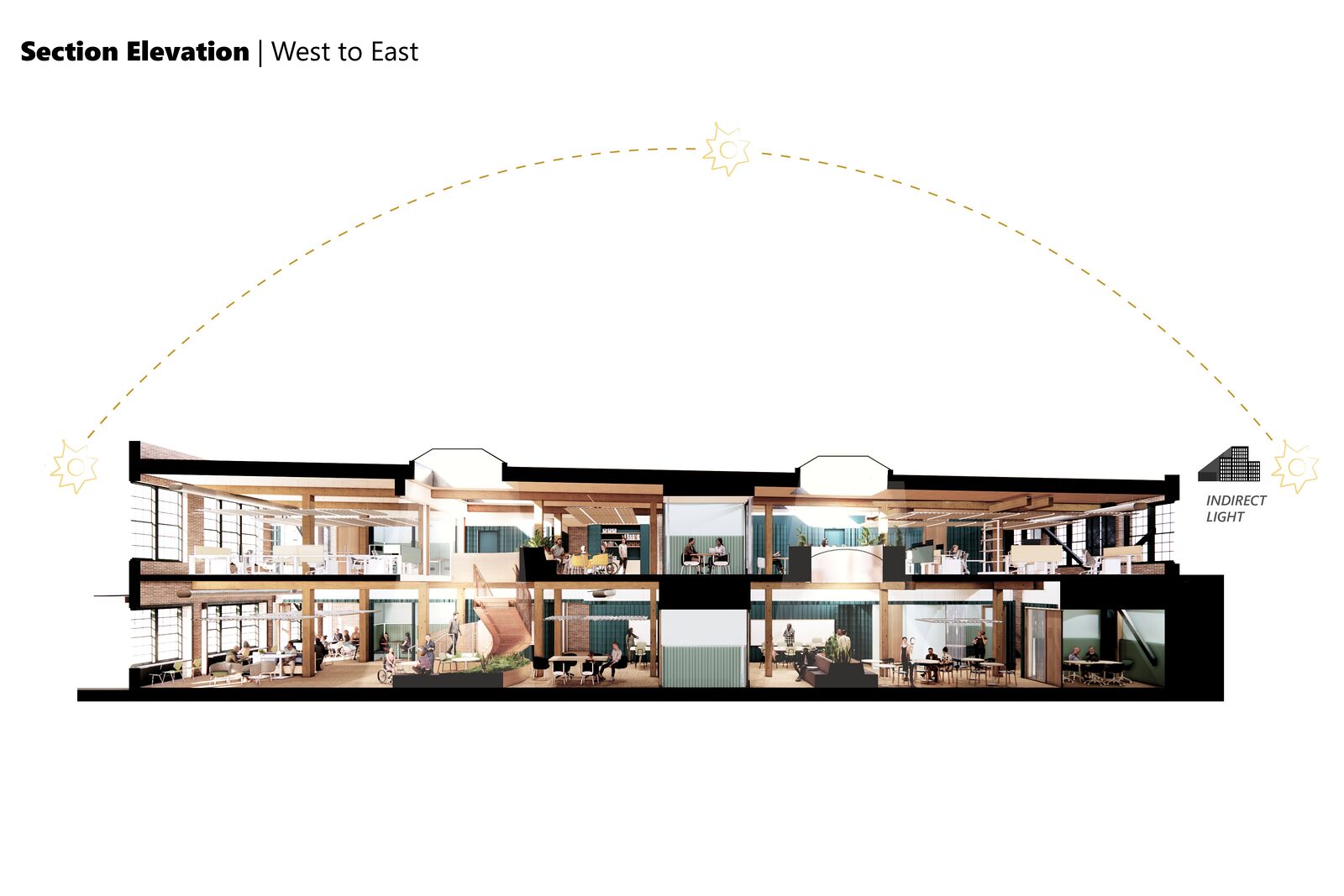
A core design challenge was how to convert a two-story industrial structure—with a partially buried, light-starved lower level—into a healthy, collaborative space. The team introduced carefully aligned apertures beneath existing skylights, allowing daylight to filter through the original car decking and illuminate the lower floor. This targeted move transforms the building’s interior and anchors the spatial experience around light and openness.
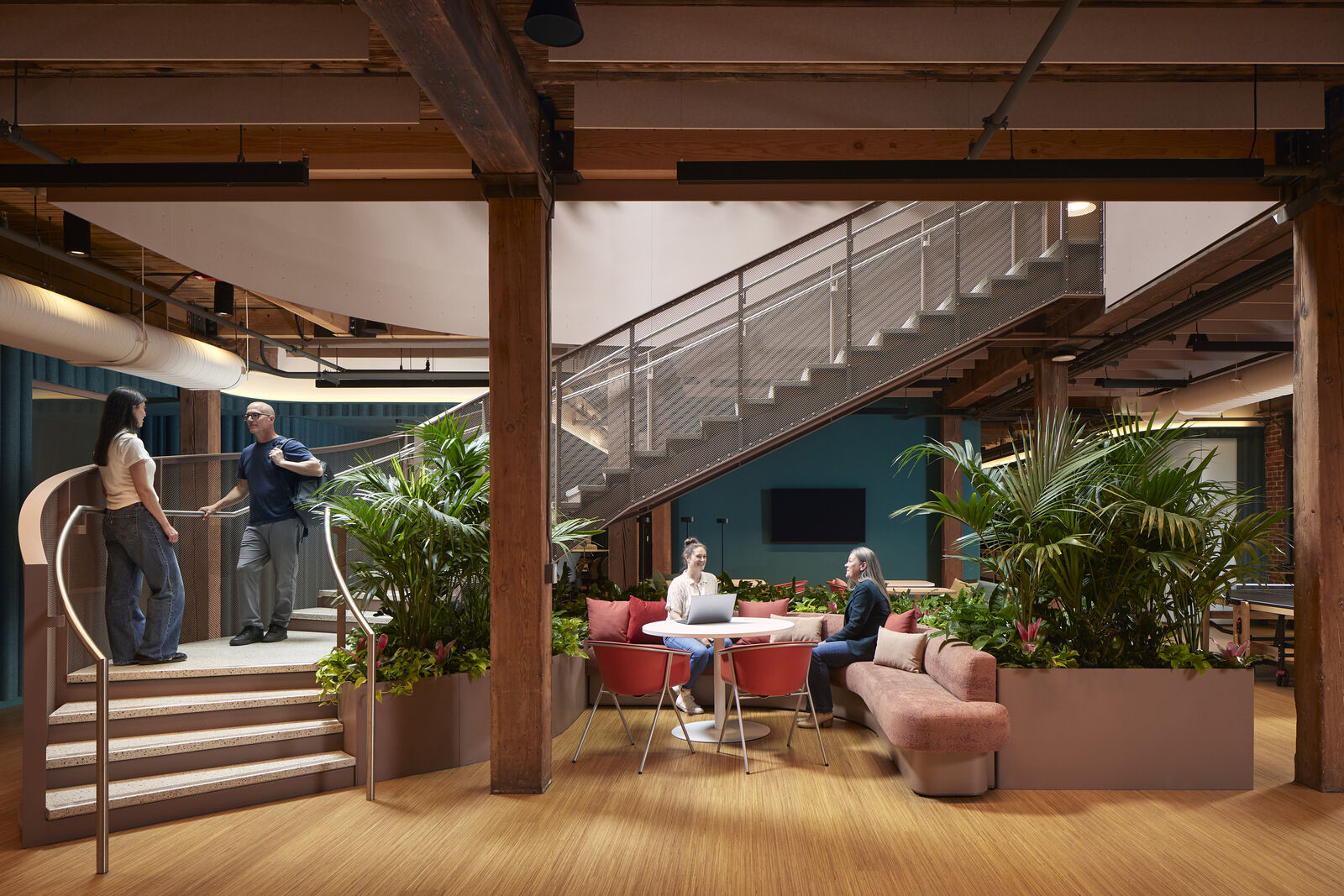
The project breathes new life into the historic structure, transforming a dormant building into a place of purpose and vitality.
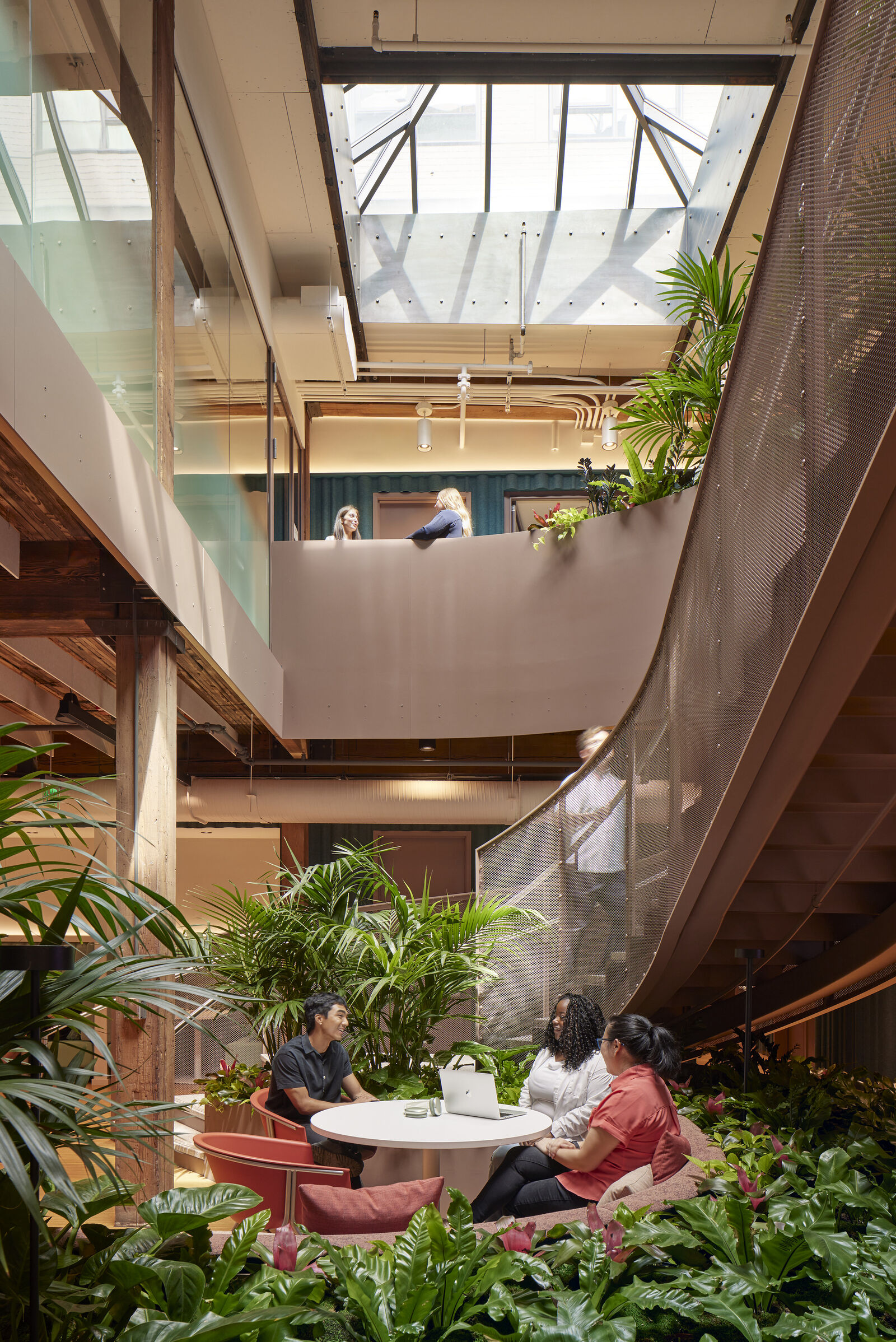
By repurposing rather than rebuilding, the design embraces sustainability, preserving embodied carbon and giving the structure renewed relevance for the future.
Historic Character
The renovation retains the building’s historic character—heavy timber, exposed brick, blackened steel—while introducing a new architectural language of simple curvatures, color, and transparency. A communicating stair links both levels, while new interventions echo the building’s original materiality, ensuring a timeless and integrated whole.
The openings below the skylights and a ribboned palette of earth and sky embrace the proven connection between natural light, reduced stress, and enhanced focus. Warm neutrals paired with soft tones of blues, greens, and dusty coppers echo the landscapes of the Pacific Northwest. Together light, texture, and biophilia transform the historic framework into a restorative environment.
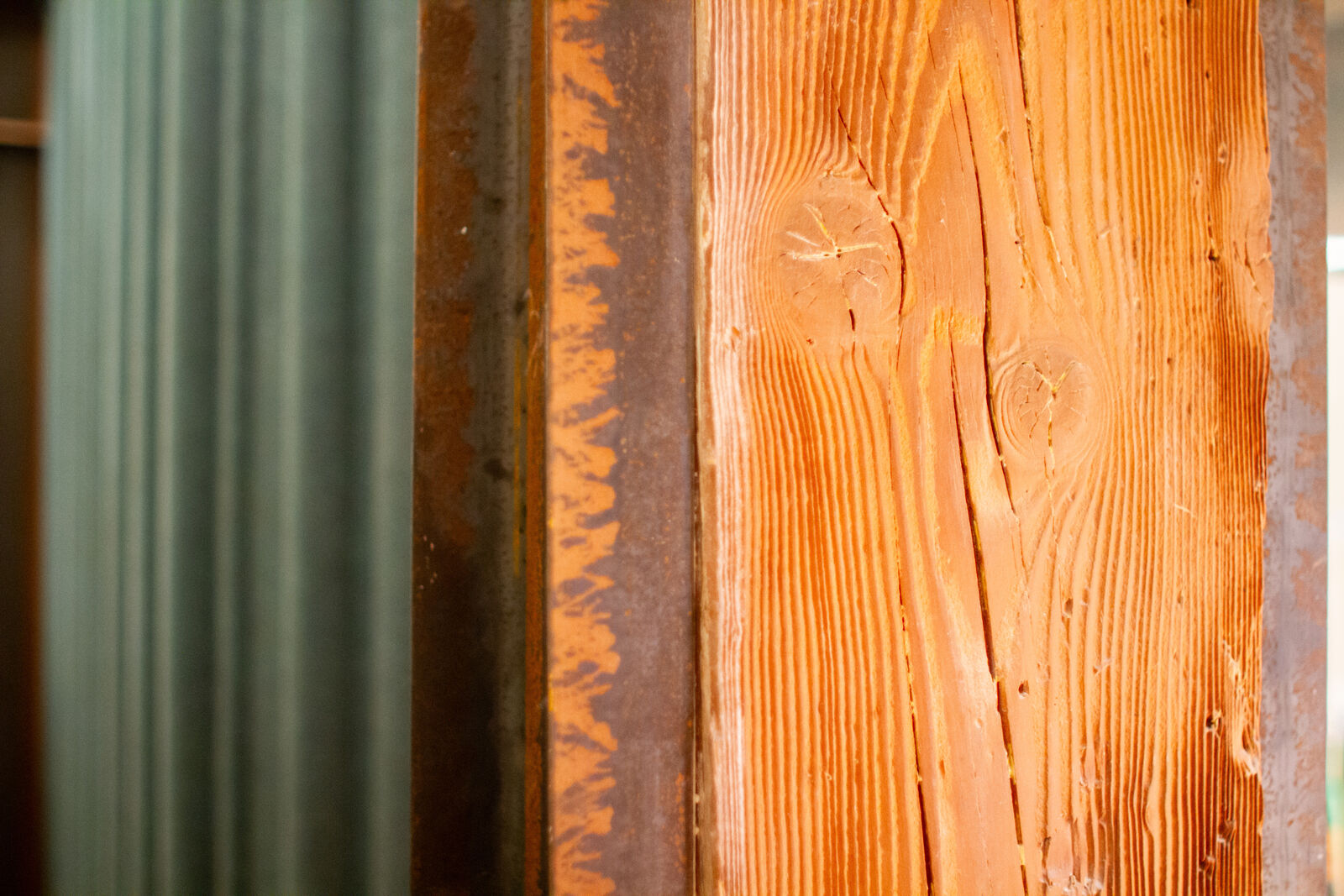
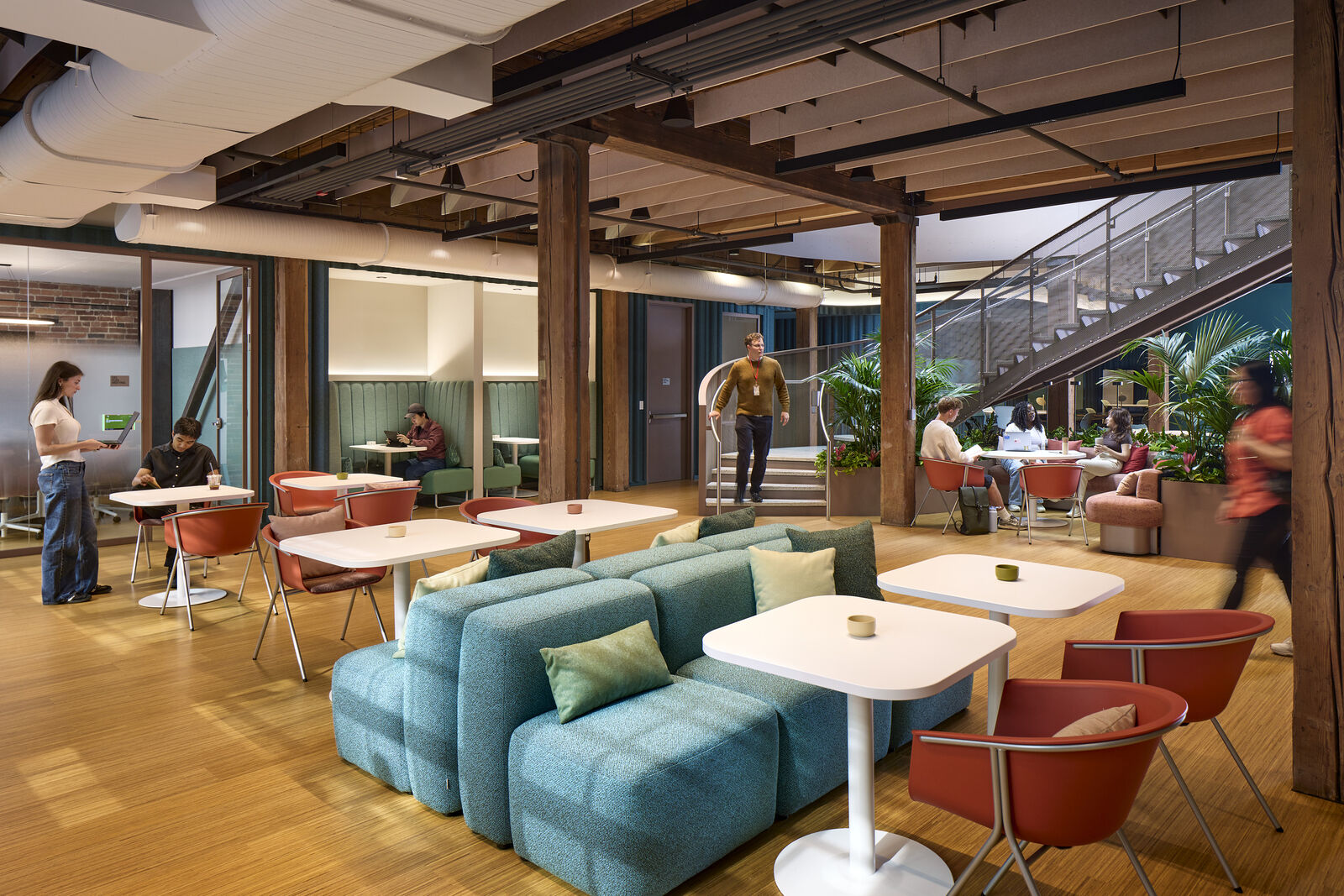
Warm timber, earthy tones, and tactile textures invite comfort and familiarity to ground occupants.
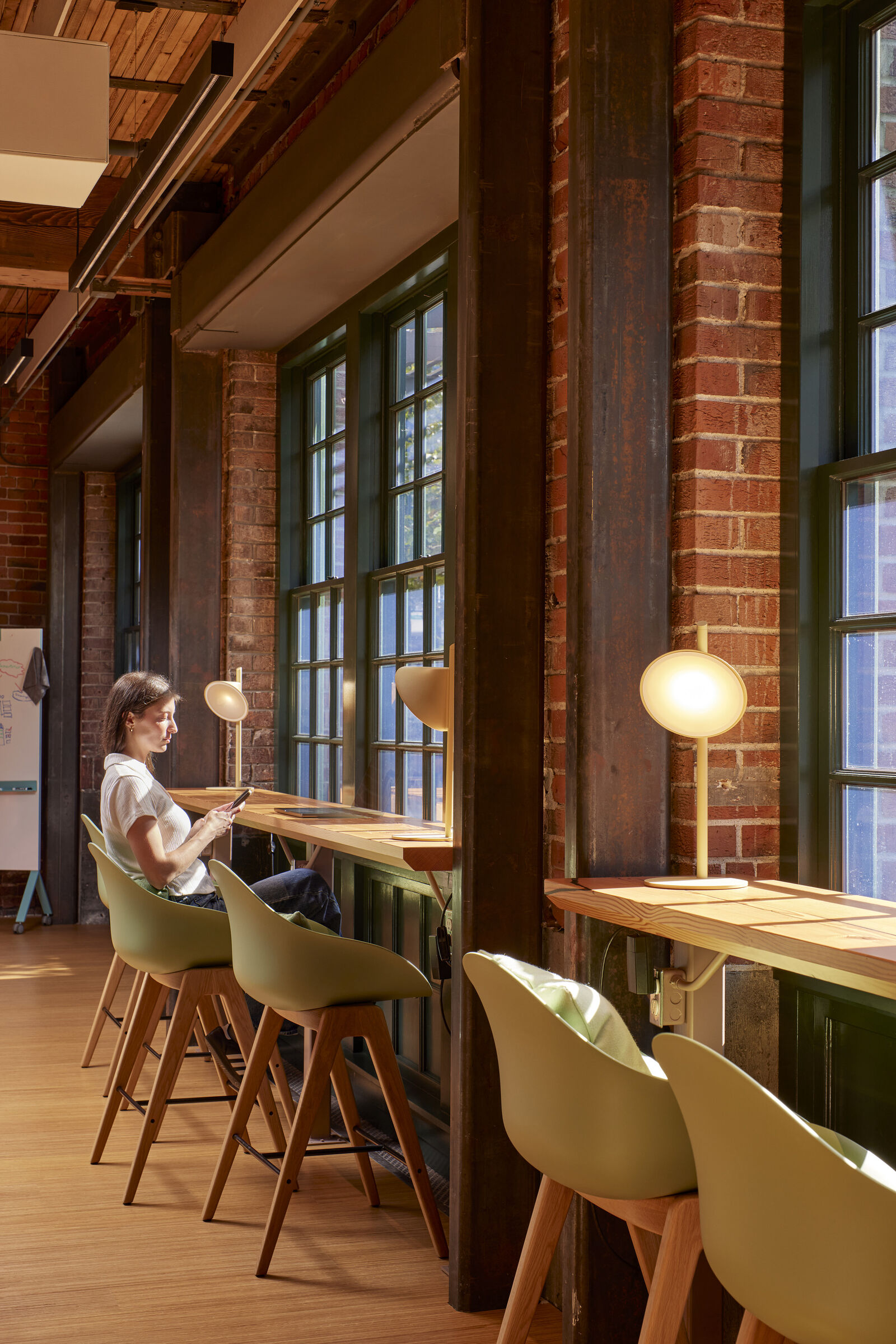
Reclaimed timber from the floor demolition forms a study perch overlooking Terry Avenue.
Student Engagement
Extensive student engagement informed the program. The goal extended beyond workspace: it aimed to support mental health, foster safety, and offer a sense of community.
Despite the building’s proximity to Amazon, Google, and other tech companies in South Lake Union, student feedback revealed that the neighborhood often feels inaccessible. Many noted that the area shuts down in the early morning and late evening hours when classes are held, affordable food options are limited, and safety can be a concern. The new student hub addresses these gaps by serving as a welcoming place outside of home, work, and class where the door is always open. Particularly for international and remote students, it offers a dynamic environment to re-energize in-person connections and collaborations.
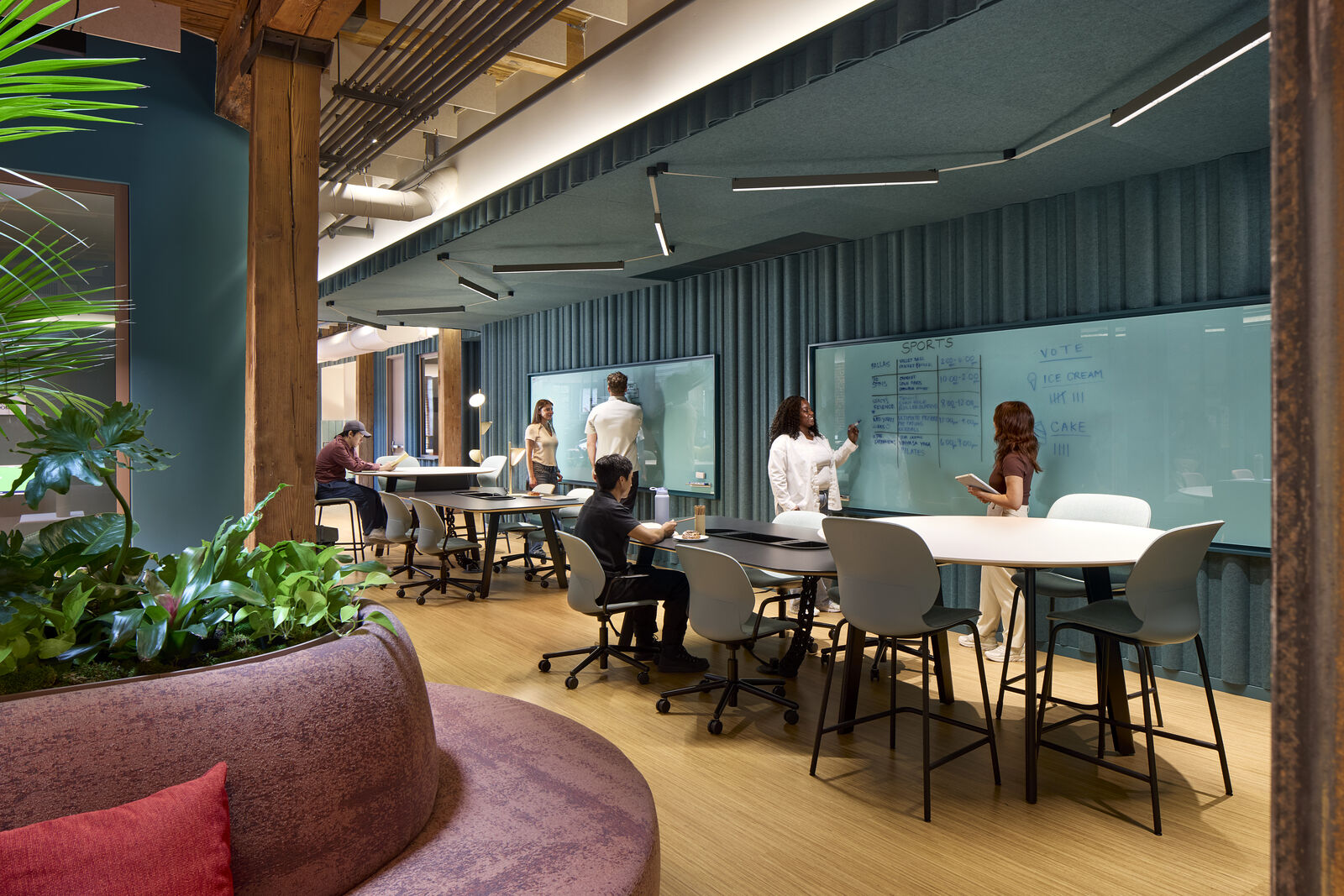
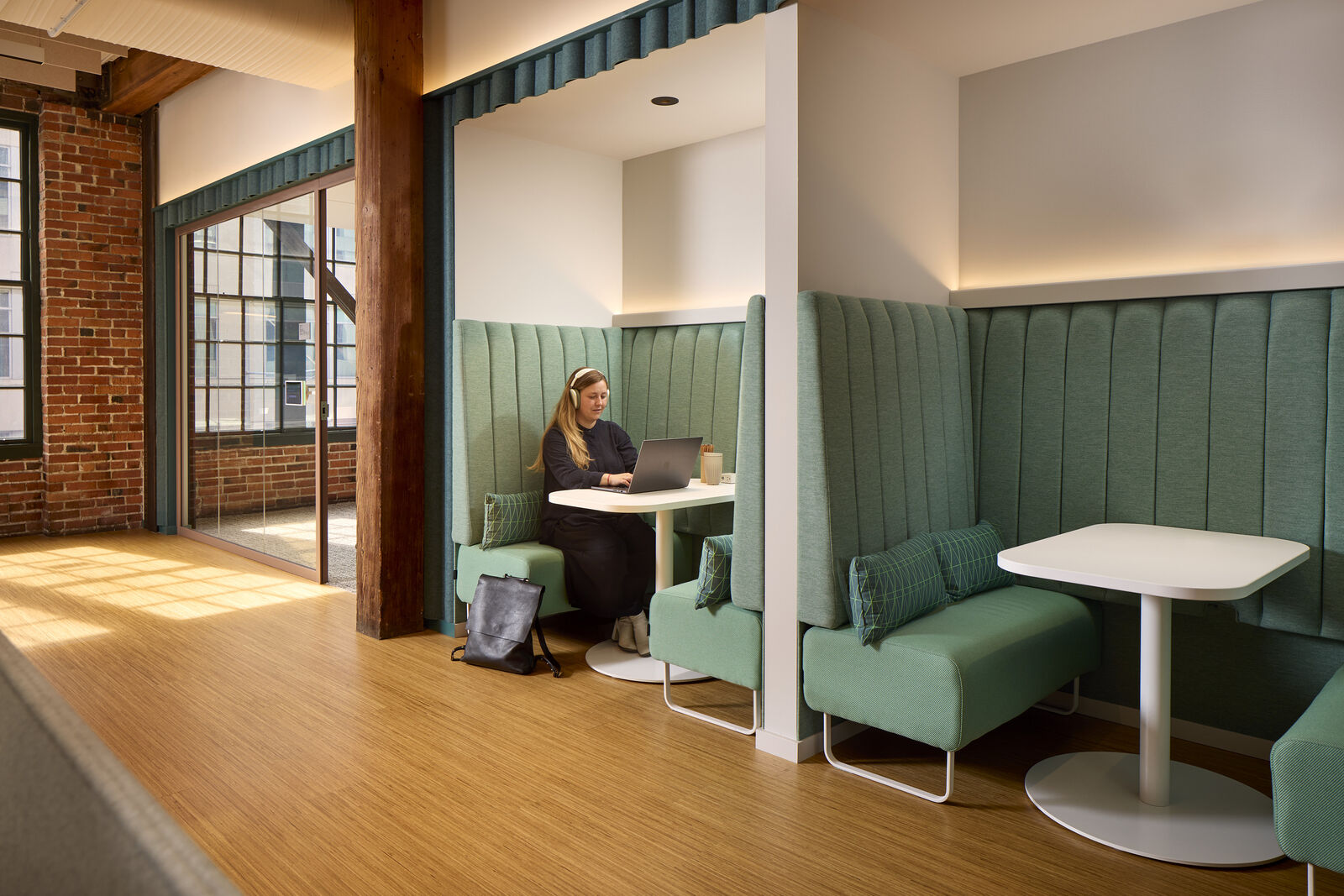
The design establishes a spectrum of settings that support the rhythms of campus life. Social spaces foster culture and trust. Focus rooms provide distraction-free environments. Learning areas encourage idea exchange. Restorative spaces enhance reflection and mental respite. Flexible collaboration zones spark innovation. Furniture postures from lounge and focus seating to group collaboration arrangements further comfort for every user.
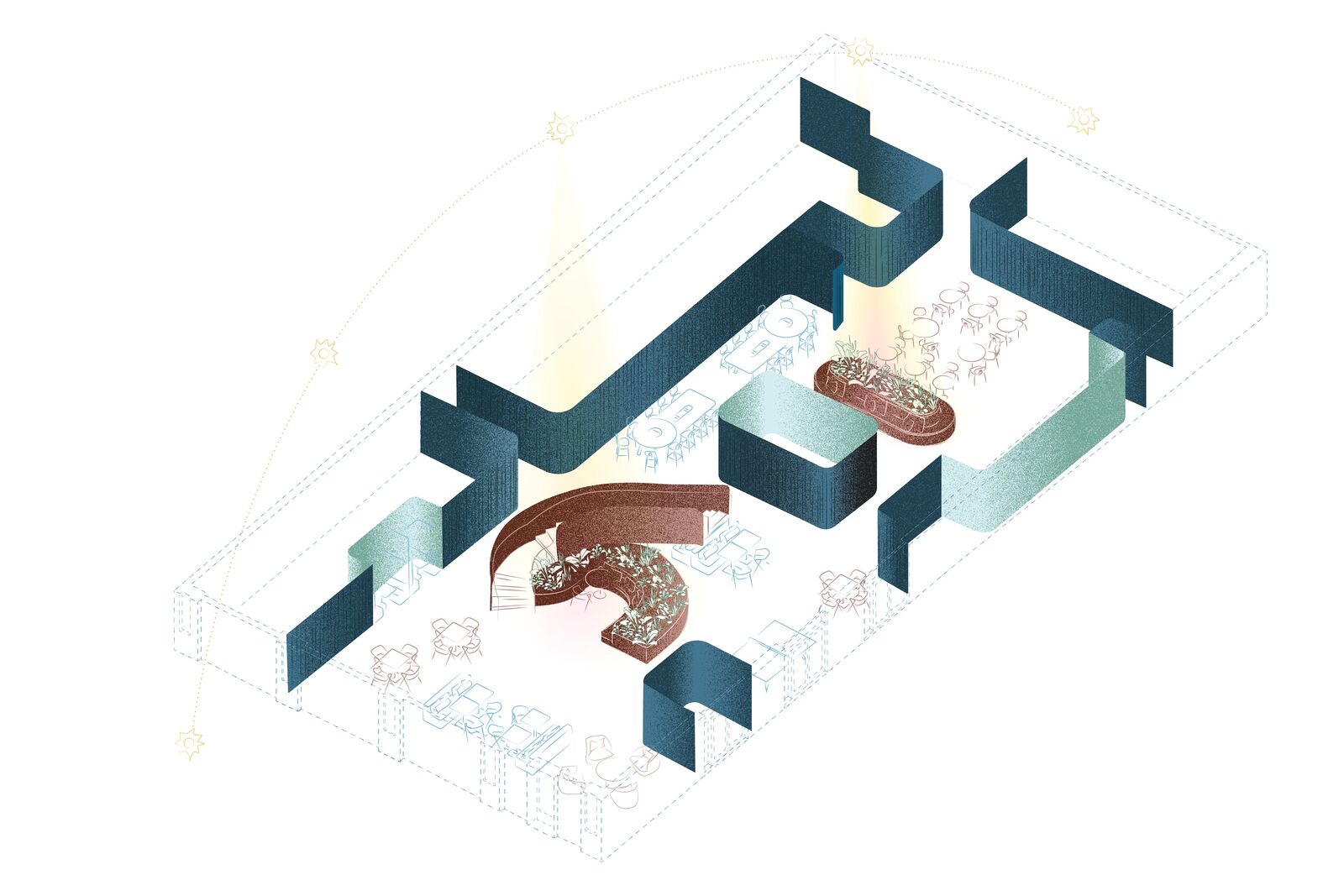
Echoing the ever-present puddles of reflected light in the Pacific Northwest, the design forms a ribboned palette of earth and sky—where warm neutrals meet soft, sunlit tones to create a cozy atmosphere within the historic framework.
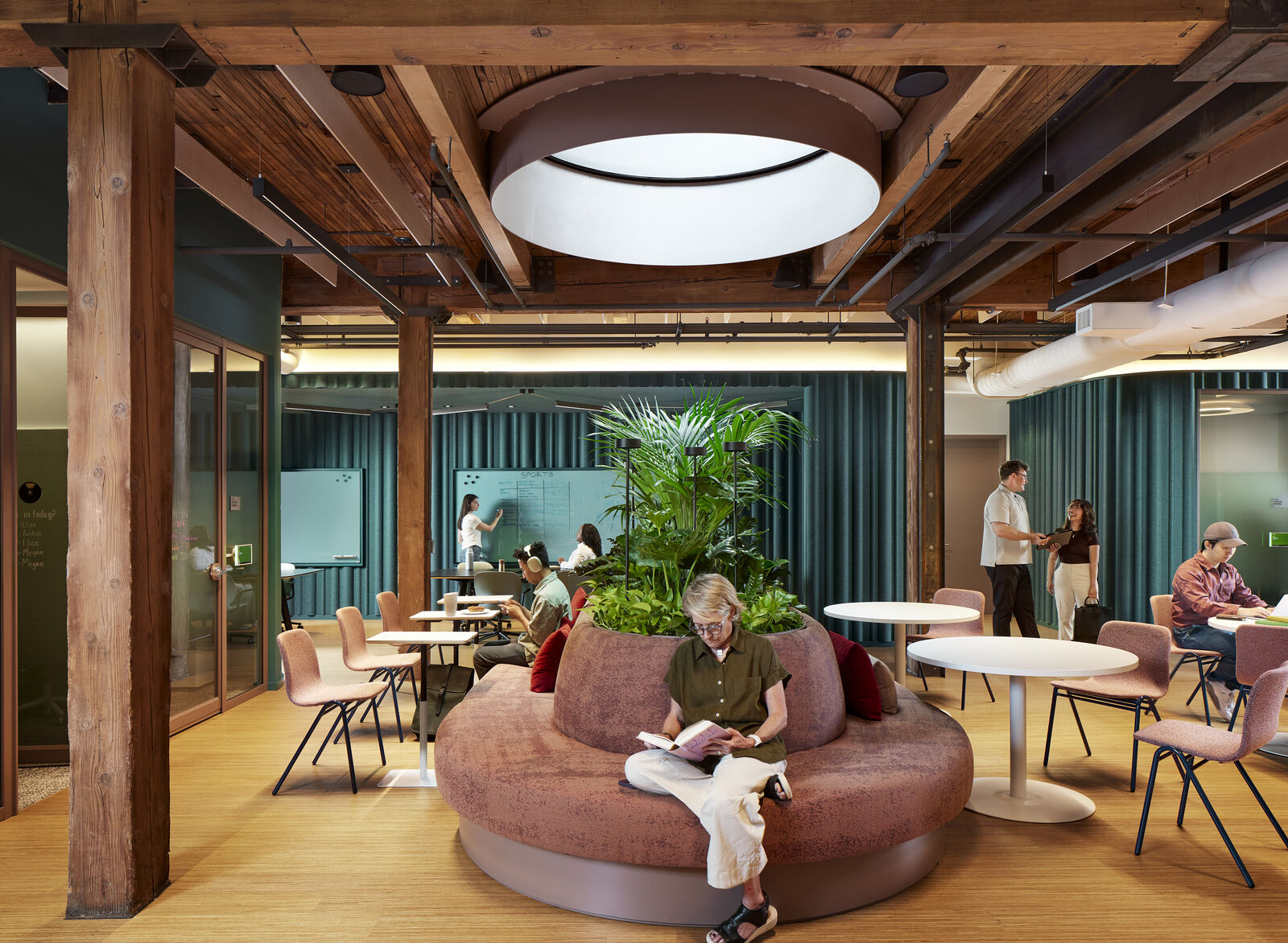
Biophilic principles guide every gesture, shaping spaces that nurture both wellbeing and performance. Skylights channel sunlight deep into the building, easing stress and supporting natural rhythms.
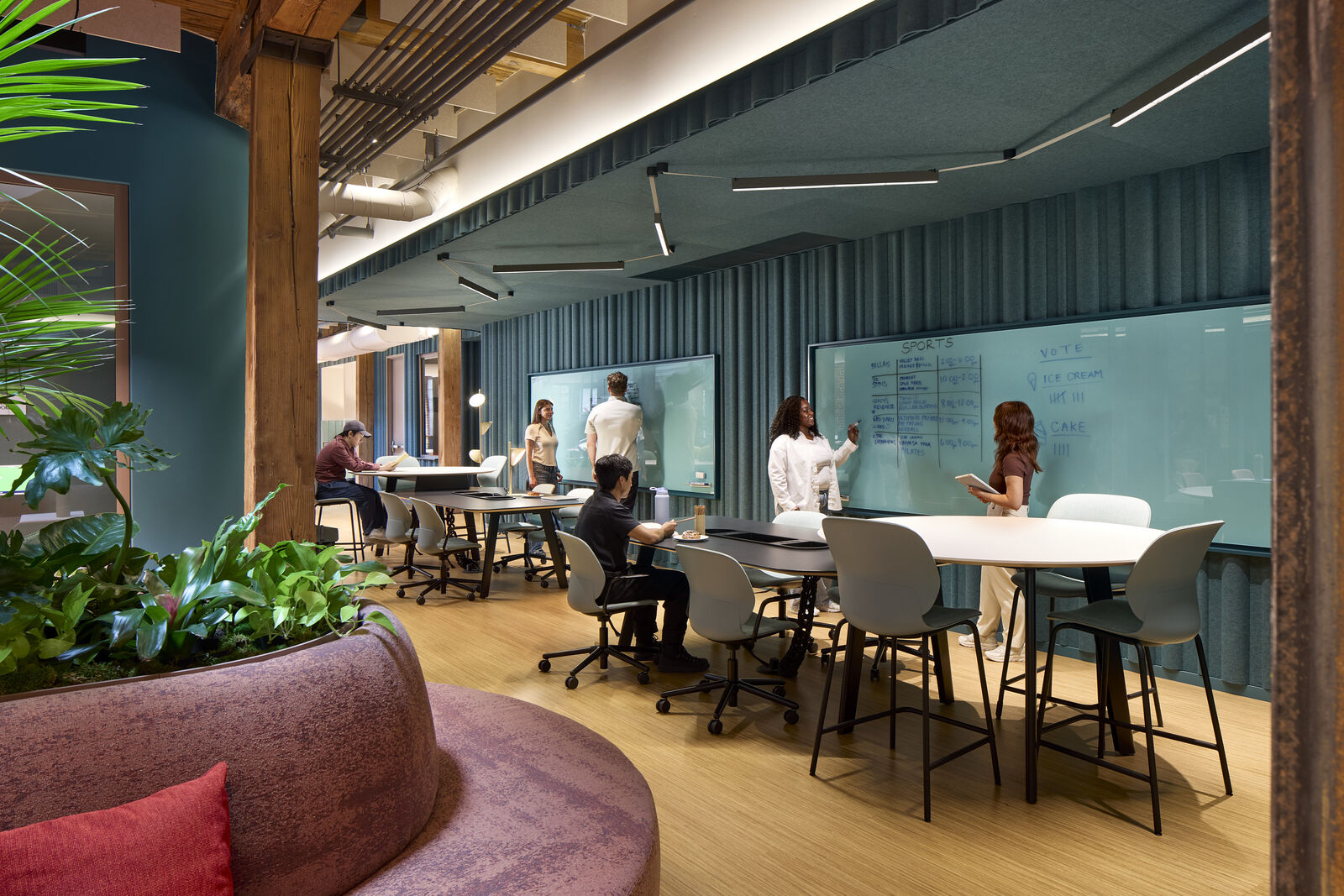
Vibrant student life activates the facade along Terry Avenue while more focused individual and collaboration spaces are set back from the busy streetscape.
Program
Level 1 serves as a student-focused touchdown space for study, advising, and informal gathering—resources previously absent on campus.
Level 2 provides workspace for faculty, researchers, and visiting professionals, organized around a central collaboration zone. Daylight and vertical movement connect the levels, encouraging spontaneous interaction.
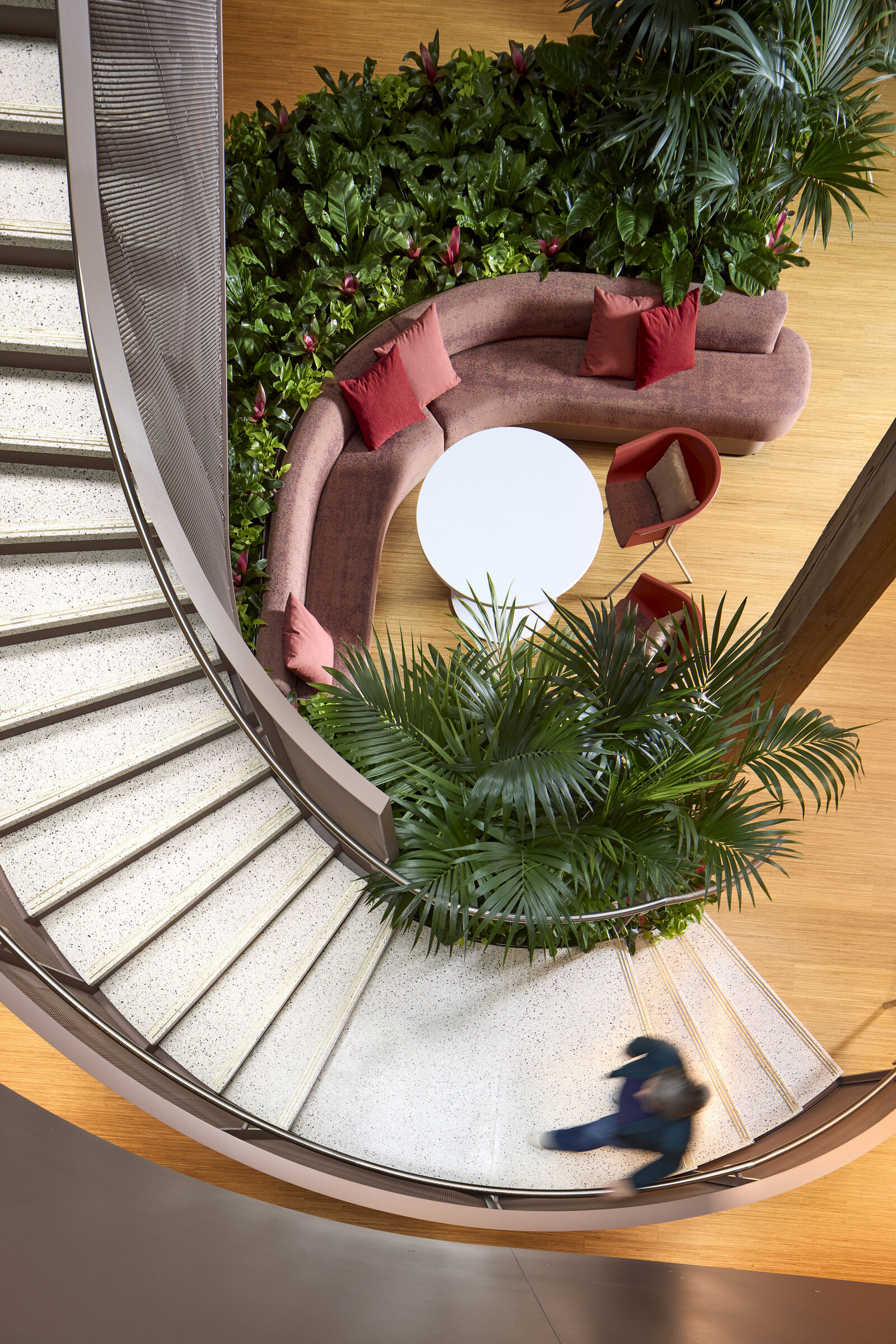
A palette of terrazzo, steel, timber, fabric, foliage and light shapes a connected space to support students, faculty, and staff.
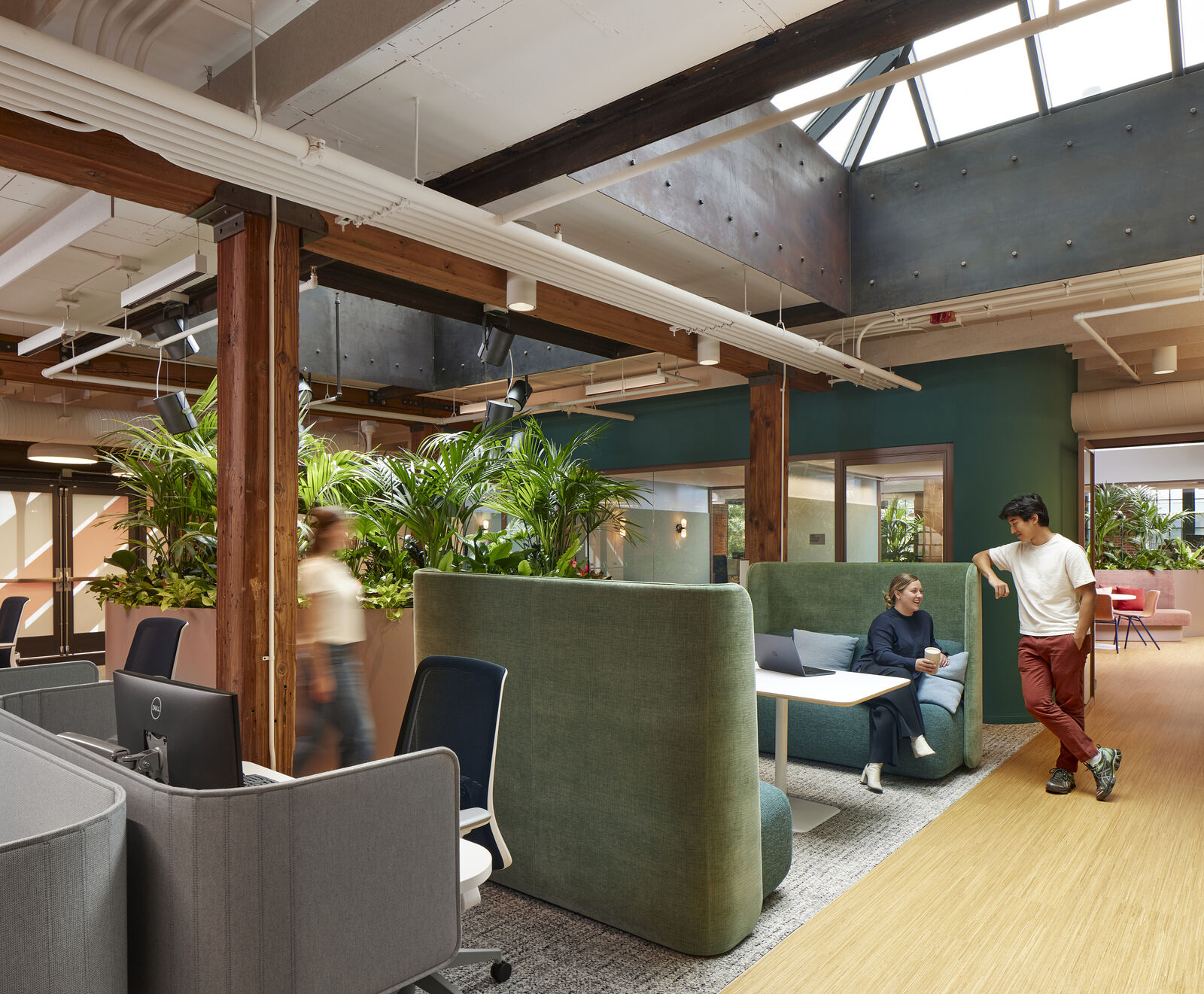
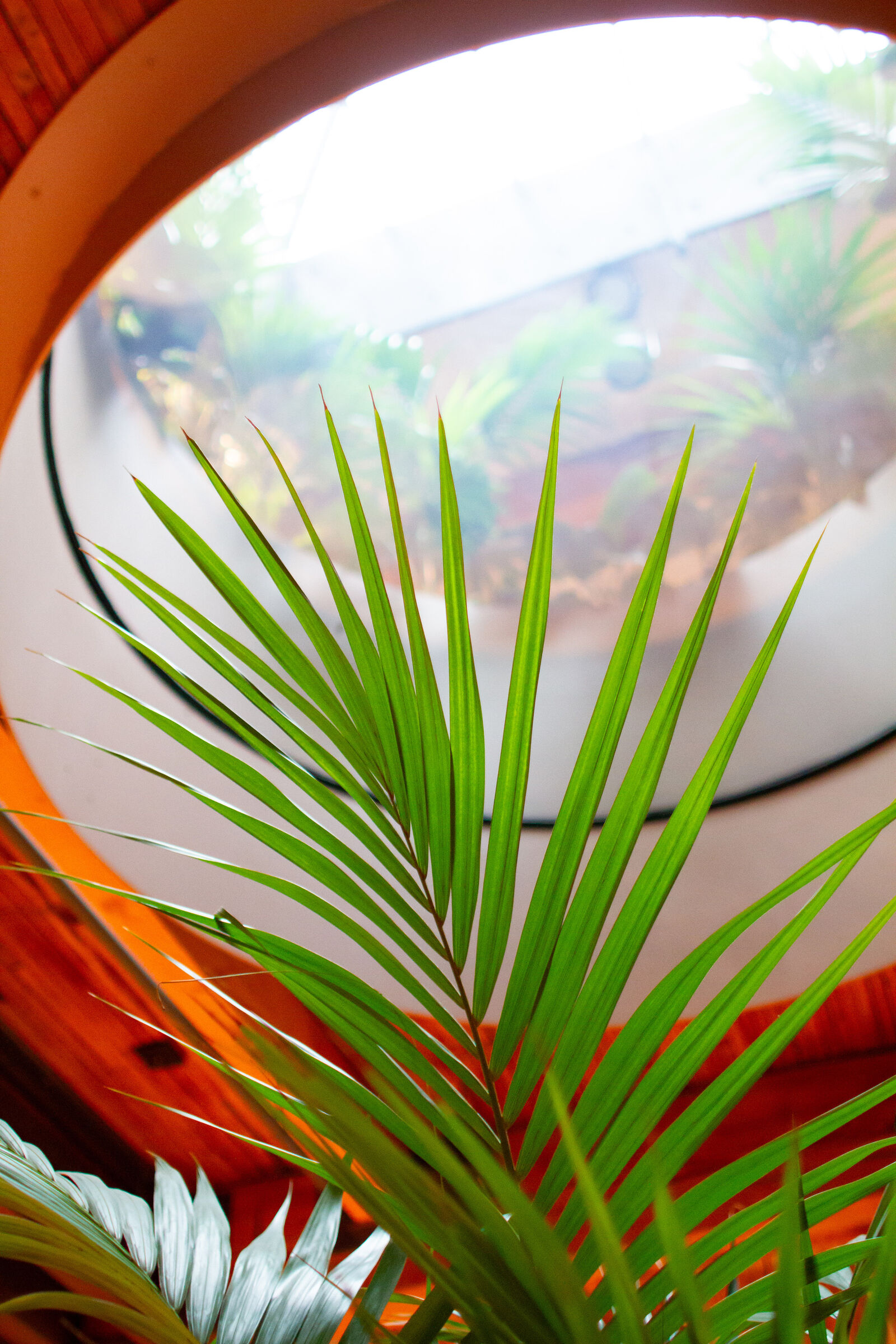
Verdant plantings soften the building’s industrial edges, enhancing air quality and offering moments of respite.
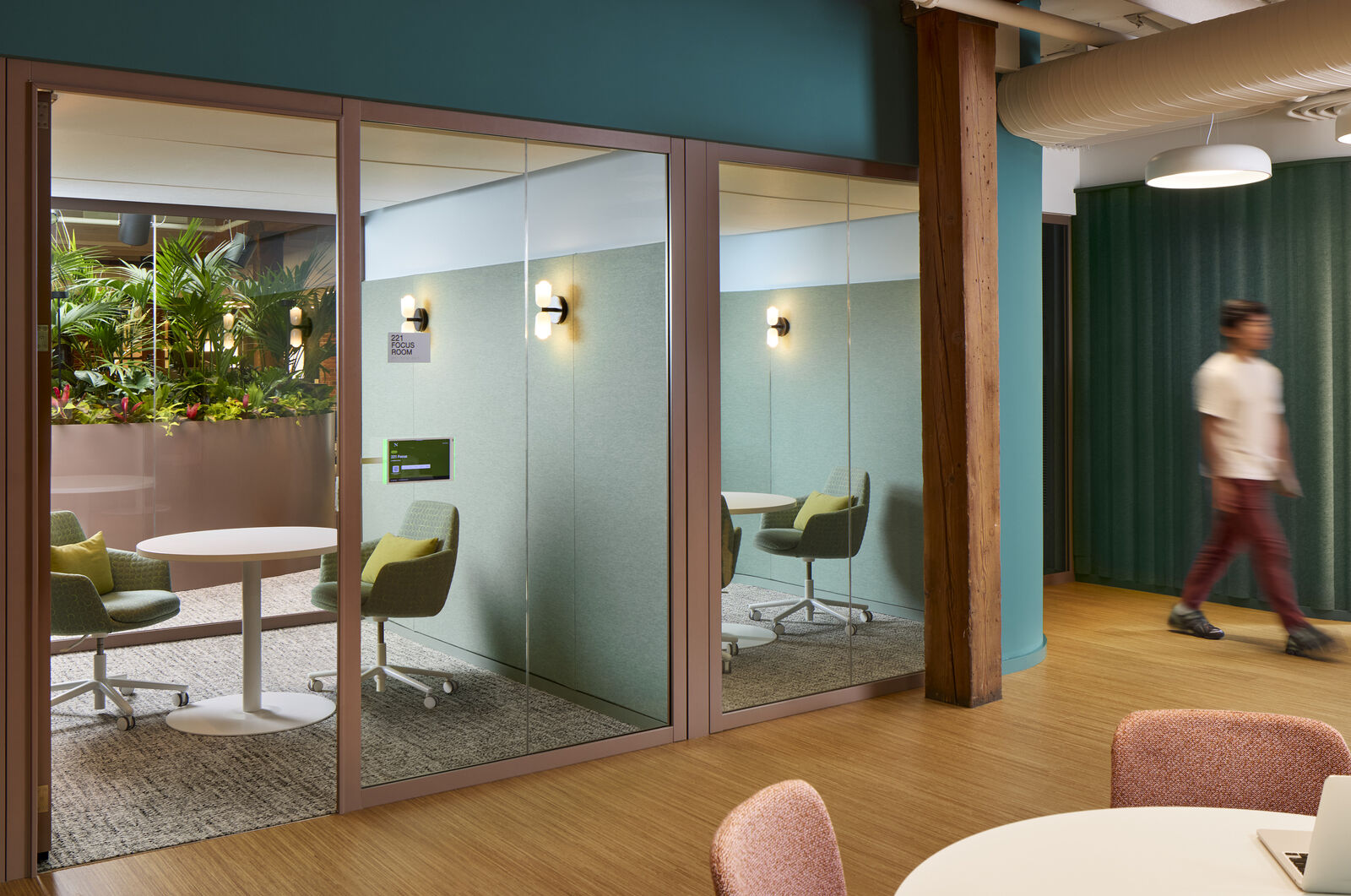
Wellness strategies are embedded throughout: transparent partitions provide openness; acoustic treatments support comfort and focus; lighting and color choices promote calm. Layered views, natural materials, and access to daylight contribute to a restorative, human-centered experience.
More than a building, the hub provides a sanctuary of care. The blending of daylight, nature, historic materiality, and human-centered design provides safety, connection, and a sense of belonging essential to individual wellbeing and community resilience.
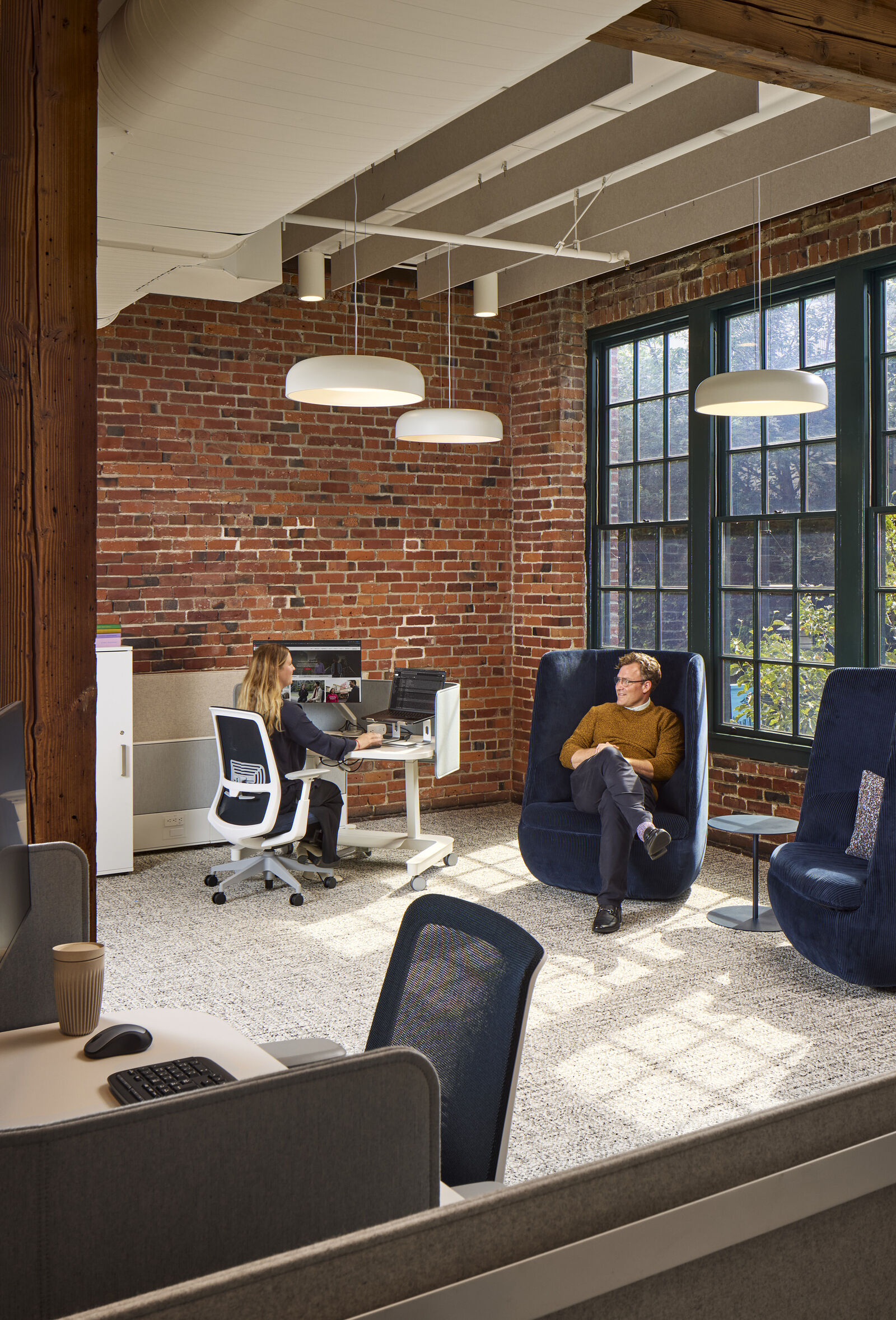
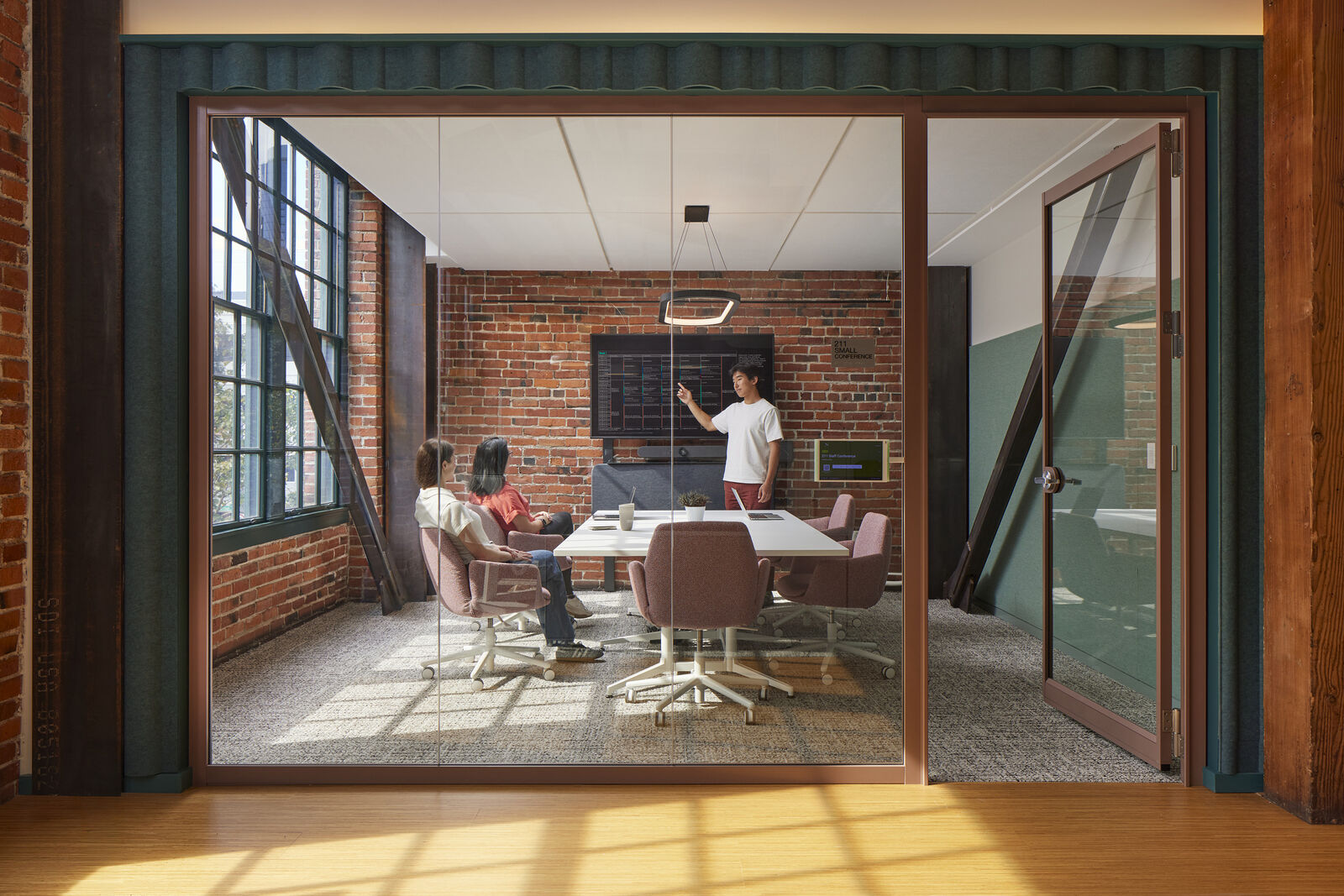
Level 2 leverages a restrained palette and carefully curated furnishings to support faculty and staff collaboration.

California State University, Los Angeles, Student Services Building
