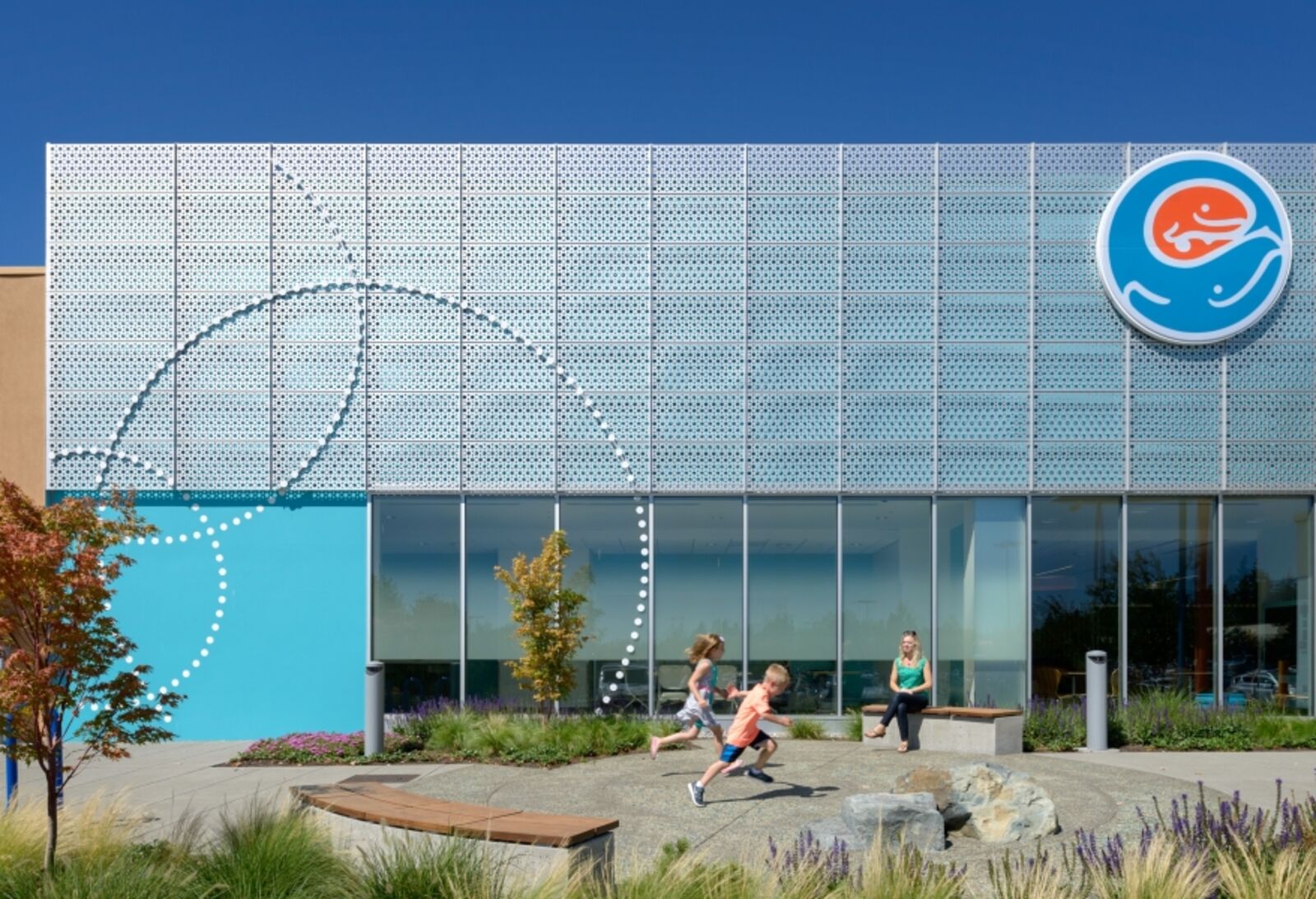
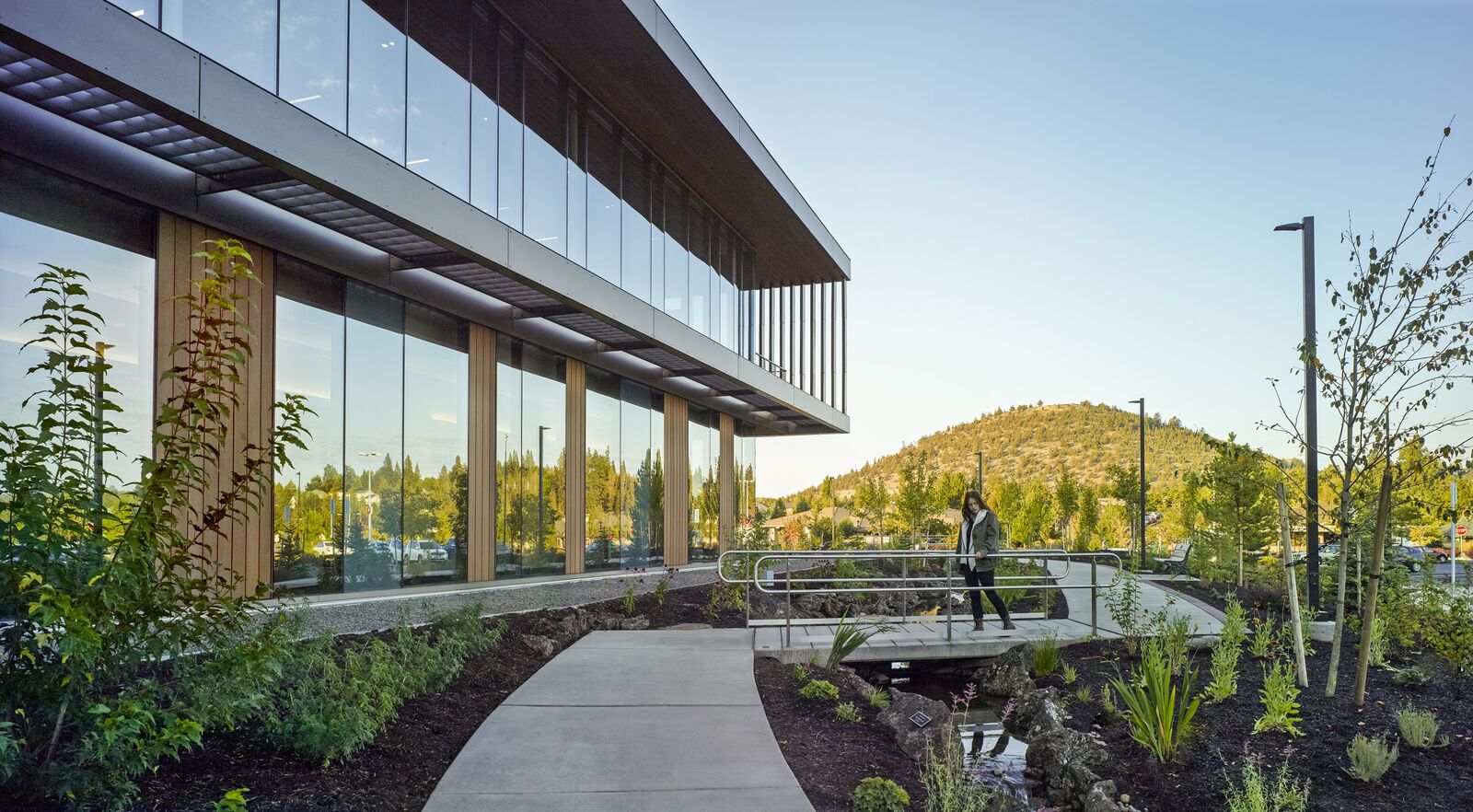
Outdoor Spaces That Heal
By David Grant, PLA, ASLA, LEED AP
From large hospital campuses to small outpatient settings, green spaces offer therapeutic benefits at all scales, allowing us to simply step outside, breathe fresh air, and get back to nature.
For patients, research has shown the connection between biophilic design and improved health outcomes. Views to nature—even just a tree—can lower a patient’s perception of pain, stress, and blood pressure. For family, it can be a quiet place to decompress, process a diagnosis, or make a difficult phone call. For staff, it’s a safe space to step away from the stress of the job, read a book, and care for themselves away from patients and families—something often overlooked but equally as important as caring for patients.
While outdoor spaces in healthcare settings aren’t new, many institutions are beginning to carve out more green space as they reimagine their facilities for the future. More than providing an amenity, it’s about creating a holistic healing environment with a variety of therapeutic spaces integrated throughout. It’s about inviting all users to embrace the outdoors, not only as part of the healing process but as part of a healthy lifestyle.
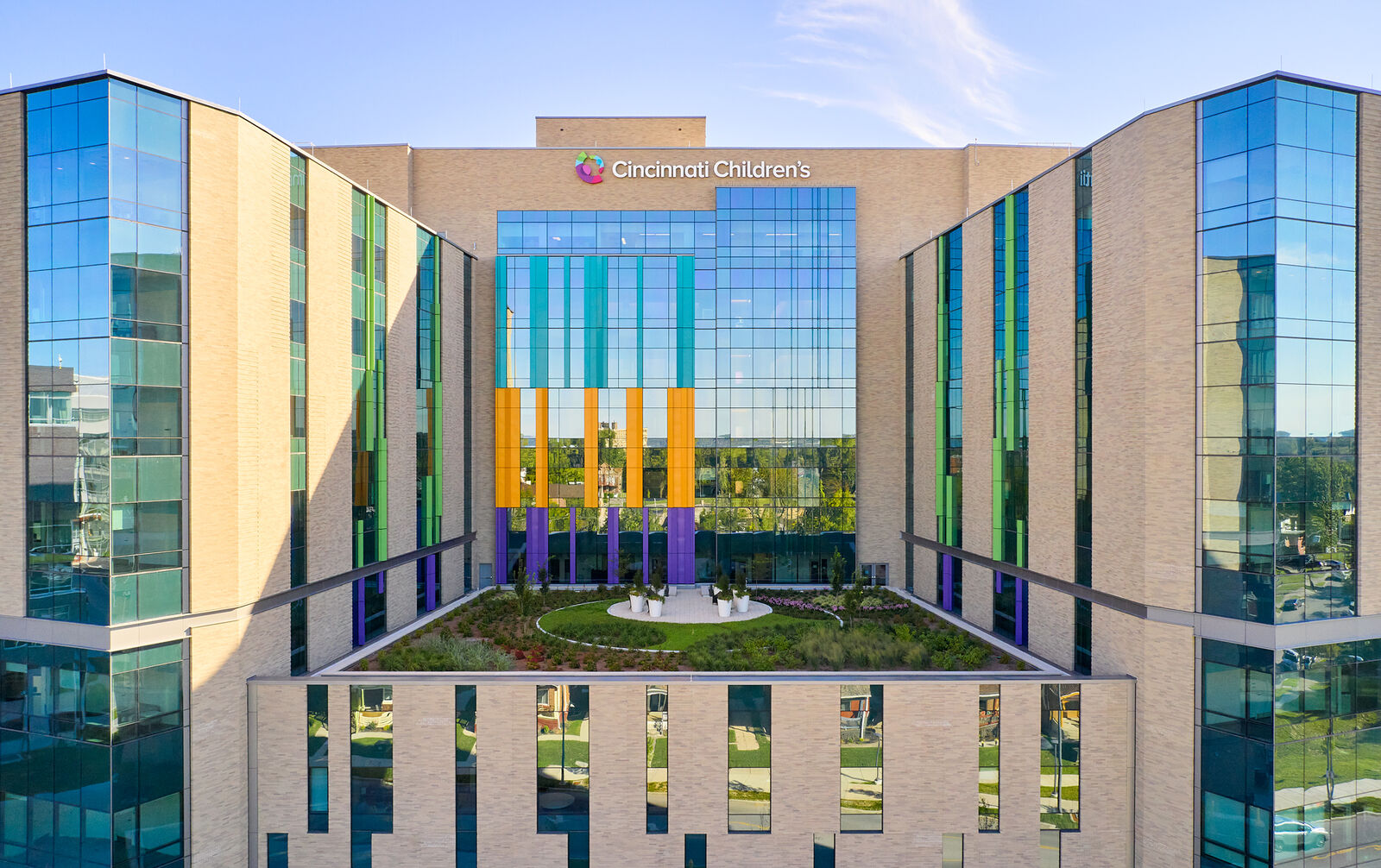
Cincinnati Children's, Critical Care Building, Terrace Viewing Garden
The new Critical Care Building at Cincinnati Children’s offers several types of outdoor spaces—some more social while others are quiet and contemplative. Parents and families had a hand in the design process, providing input on what they need in an outdoor space. The final design encourages them to step away from the patient room and care for themselves without having to venture too far.
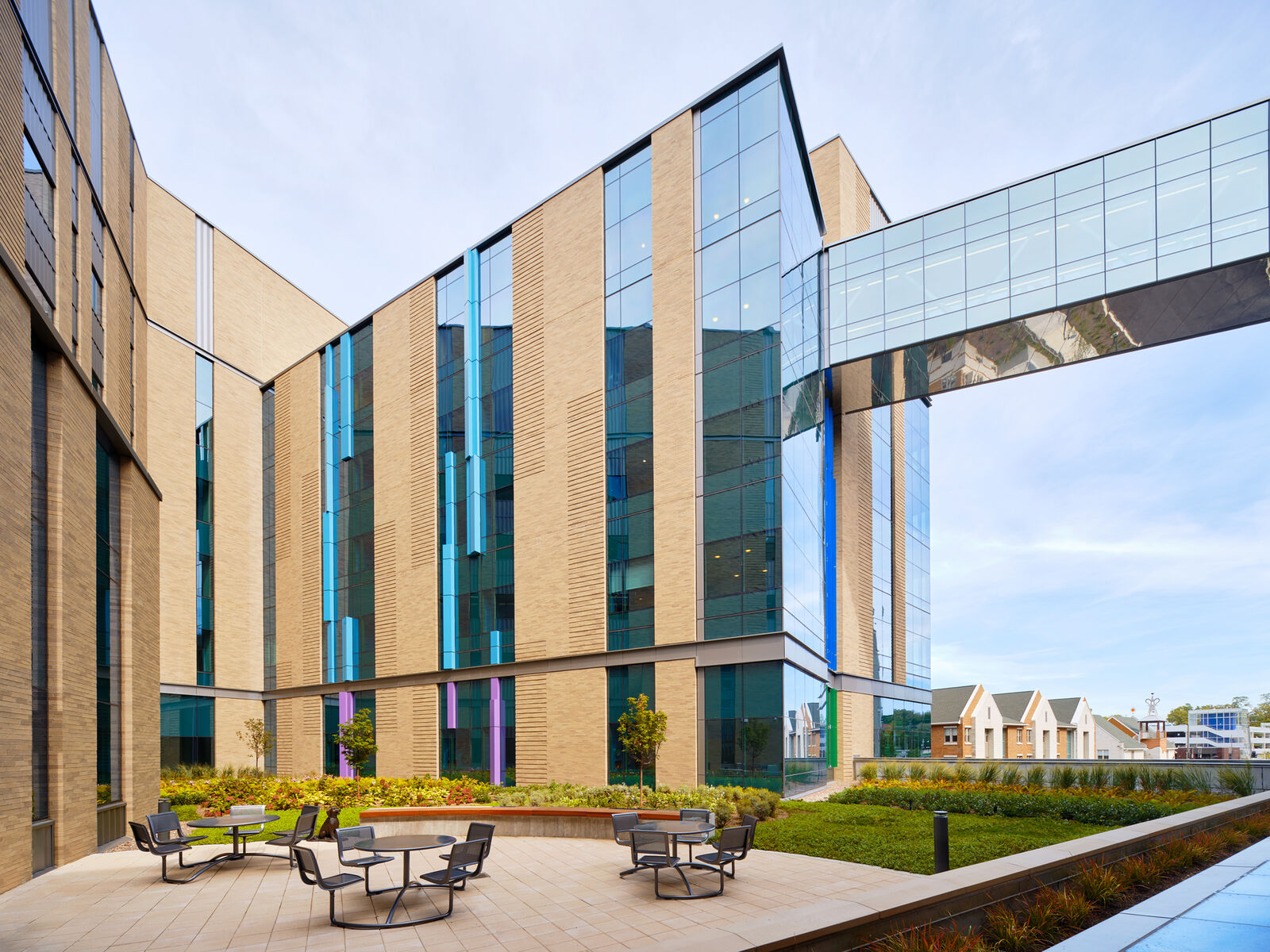
Staff Garden
The outdoor spaces are organized into zones:
- A public quiet garden where families and visitors can step away from the stressful clinical environment, contemplate, process emotions, and grieve if needed.
- A staff garden for caregivers and providers to decompress in private, out of sight from patients and families.
- A terrace viewing garden nestled between the two wings of the building. The circular motif in the center brings the kaleidoscope interiors theme outside. From colorful flowers to trees and grasses that sway in the wind, the emphasis on native plants reflects the character and landscape of southwest Ohio so that patients can experience the weather from inside their rooms.
- The main plaza at the front of the building doubles as a communal gathering space and provides a green buffer between the hospital and the Avondale neighborhood across the street.
In the next phase of the project, an existing building will be renovated into a new dining hall with an outdoor terrace that takes advantage of territorial views to the north and west, looking out over the prairies of Ohio.
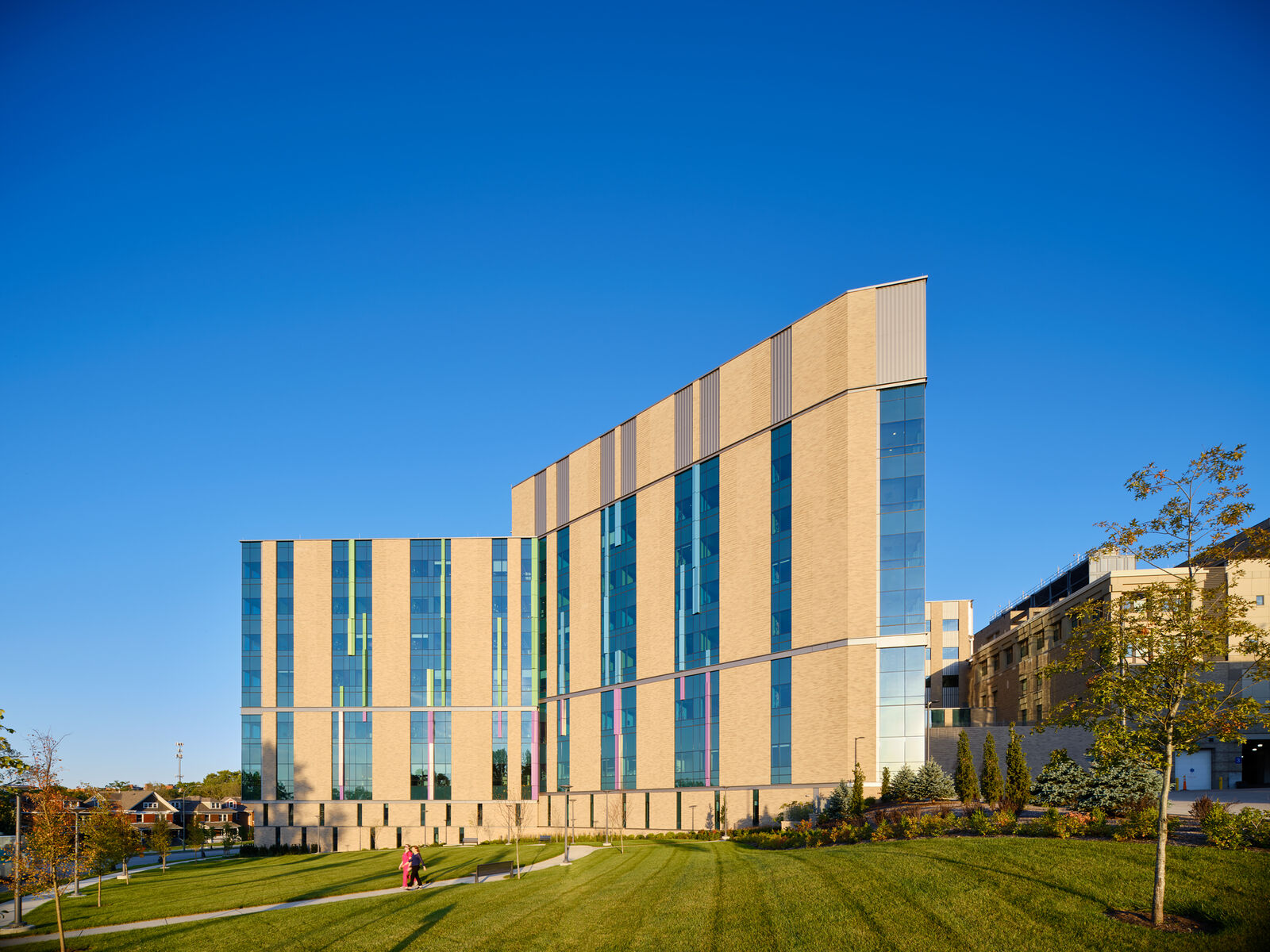
Main Plaza
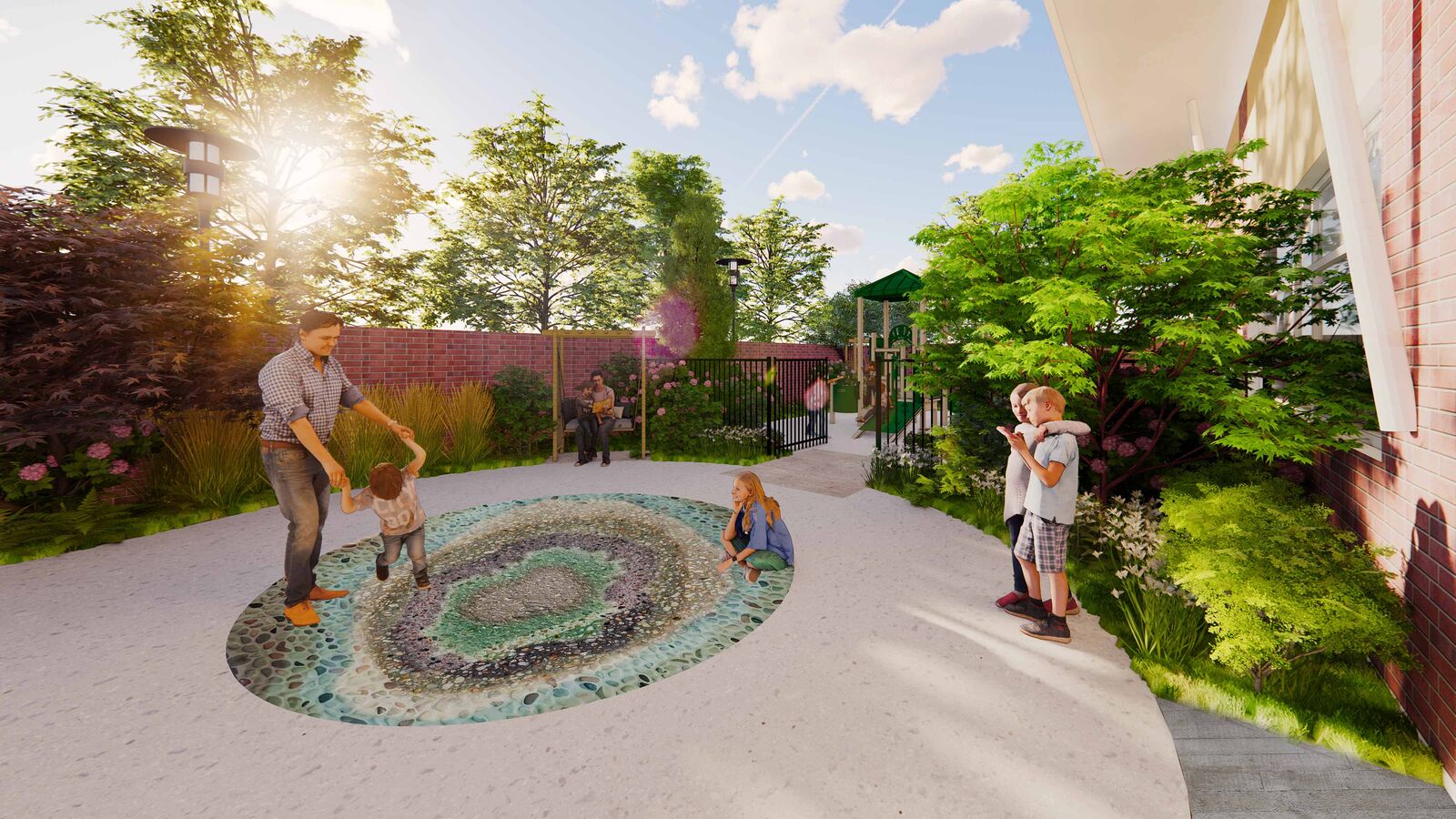
Seattle Children's Hospital, Autism & Behavioral Health Clinic, Outdoor Garden
Across the country, Seattle Children's Hospital is transforming an existing administrative building into a new Autism and Behavioral Health Clinic. The project reimagines an existing outdoor space into a green oasis where kids can experience the natural world and stimulation is carefully managed.
For many of these children—who often feel like they “don’t belong in the big world,” as we’ve heard them say in family workshops—this is the first time they will have a safe, welcoming, vibrant outdoor space designed just for them, where they can also receive specialized care. Working with this patient population was an opportunity to create a healing environment that responds to and supports their needs.
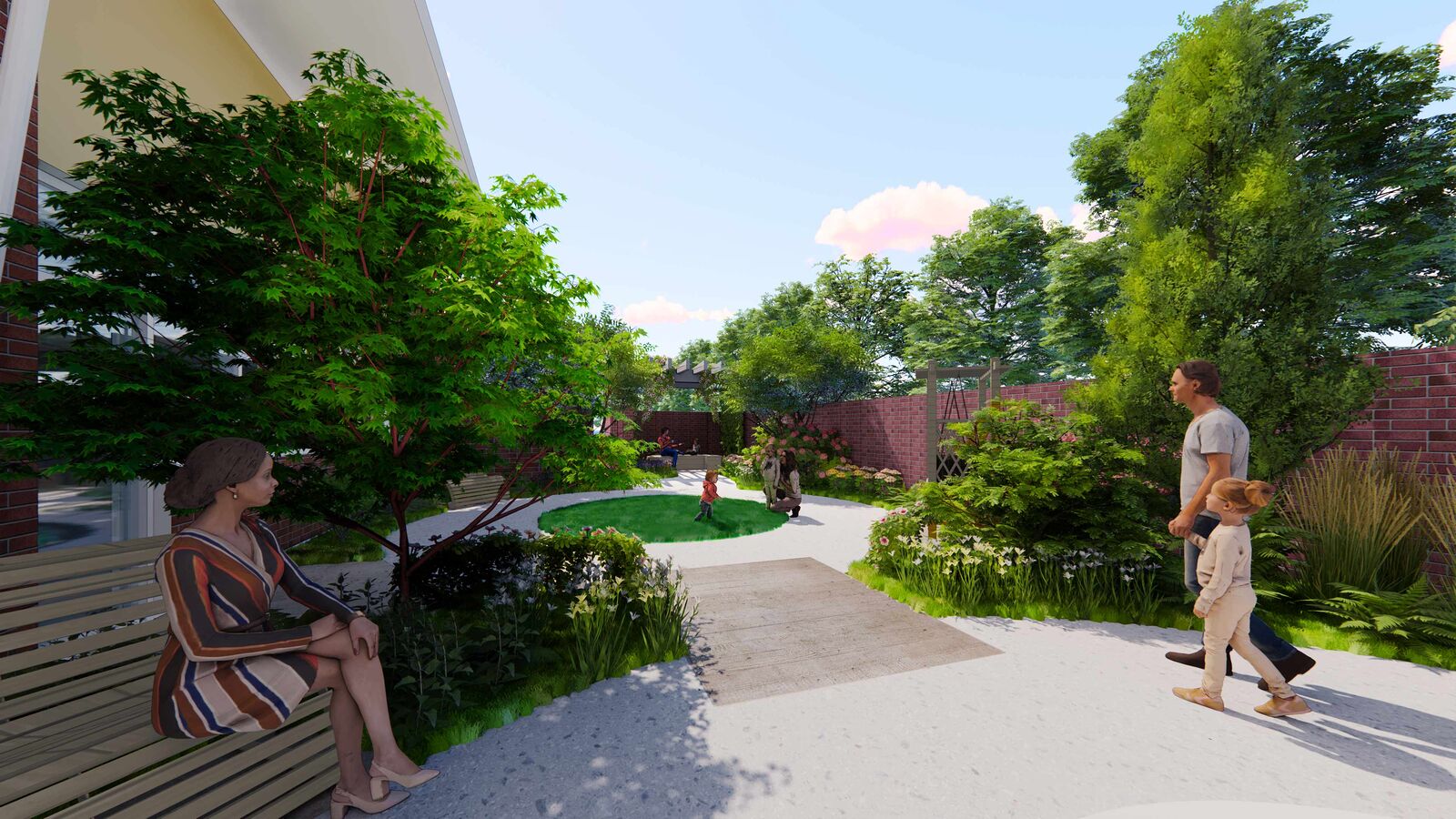
Interior Garden View
Significant research and input from the hospital’s therapeutic staff and parents informed the garden design, which includes zones for an outdoor classroom, gross motor skills development, play, quiet time, and decompression. Plants and materials were thoughtfully selected to stimulate the senses at various scales:
- Plants provide a range of colors, textures, fragrances, and blooming cycles.
- Furnishings, such as play and learning equipment, provide a variety of moveable objects for children who like repetitive movements and arranging things.
- A simple porch swing encourages social interaction and allows patients to practice sharing space.
- At one end of the garden, a domed turf mound provides an interesting challenge and a soft texture underfoot. At the other end, a colored glass aggregate in the pavement emulates a geode, tying into the clinic’s interior design theme.
- Perimeter walls incorporate textures and graphics designed in collaboration with Studio SC, adding visual interest to the existing brick, and translucent windows that allow light and color to filter in. With a busy road on the other side, the wall serves double duty as a design element that also shields patients from the noise of traffic.
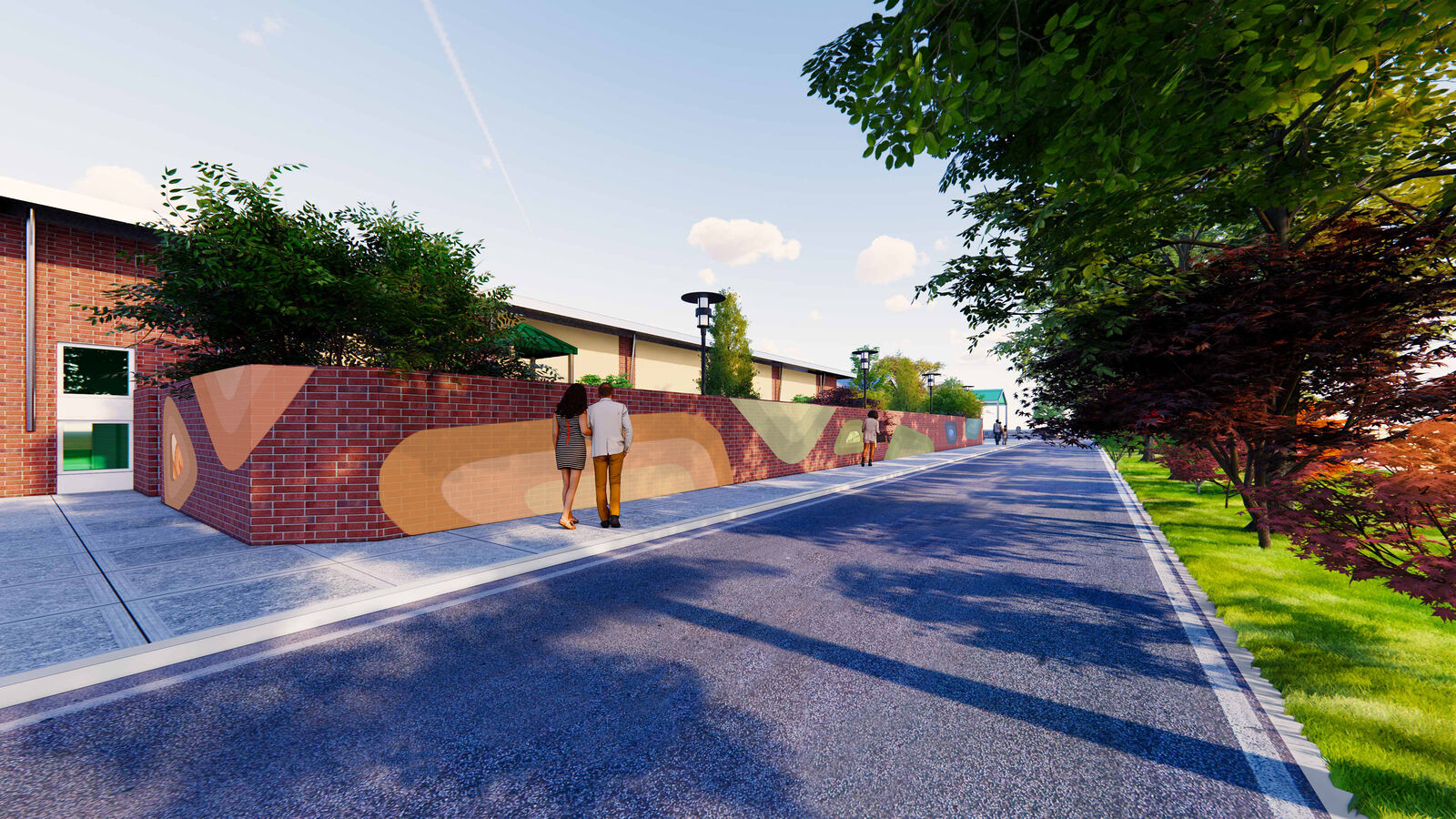
Garden Wall Exterior View (Courtesy of Studio SC)
Now that we’ve experienced a global pandemic together, we can agree that green space is more precious than ever. I’m optimistic that as healthcare institutions continue to modernize and adapt their outdoor spaces to meet the needs of tomorrow, and as awareness grows about the positive role nature can play in each of our healthcare journeys, we’ll all breathe a little easier.
David Grant, PLA, ASLA, LEED AP, is a landscape architect and urban planner who believes in the power of urban design to foster social exchange and interaction with the natural world.
