Karen Braitmayer Shares Why Accessible Design is a Social Justice Issue
When Karen Braitmayer, FAIA, arrived at her first design studio in architecture school, she was met with a sea of tall drafting tables and immediately felt out of place as a full-time wheelchair user. Later that day, some of her classmates went out and bought supplies to build Karen her own table, allowing her to operate like everyone else. In that moment, Karen realized that if she could change her environment, she could also change her abilities.
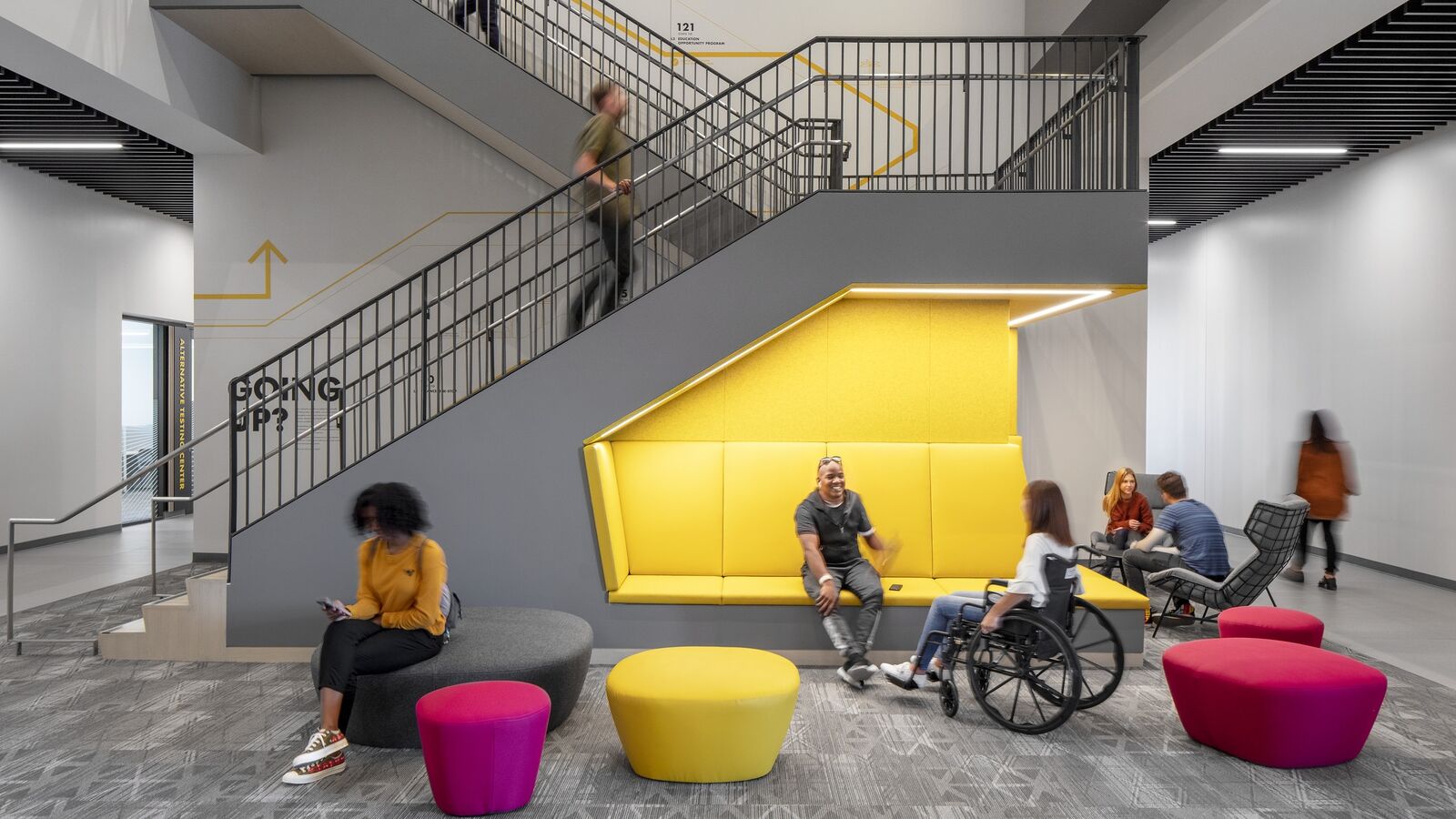
Karen recently joined us for an educational session on designing for accessibility—and it couldn’t have been timelier. July marked the 32nd anniversary of the passage of the Americans With Disabilities Act (ADA). It was also Disability Pride Month. As the founder and managing principal of Studio Pacifica, an accessibility consulting firm in Seattle, Karen and her team consult with local governments, school districts, architects, designers, and engineers, and organizations concerned with federal law and state code compliance. In the spirit of creating inclusive spaces that work for all users, ZGF has partnered with her studio on several projects, from large corporate workplaces to professional sports practice facilities.
Prior to the ADA, Karen explained, people assumed that individuals with disabilities must adapt to their environment; it was not going to change for them. In the 1940’s, as WWII veterans started returning home from war and reintegrating into civilian life—many of them with injuries—awareness grew of the challenges and barriers to living a full life with disabilities. These vets took to the streets to advocate for better accommodations. Around the same time, parents of children with disabilities began speaking out for better access to education, which was not considered “a given” for children with disabilities at the time. The disability advocacy movement grew into the 1970’s and 80’s, building momentum that eventually led to the passage of the ADA in 1990, which prohibits discrimination based on disability.
We’ve made significant progress since then, but the fight for change continues. One in four U.S. adults have a disability—roughly 61 million people. That doesn’t include children under 18 years old, parents pushing wheeled strollers, or aging populations that are beginning to deal with mobility issues. As architects and designers, we must do more to design spaces that are available and accessible to people of all abilities.
“Inclusion is exciting because everyone gets the same joy from design. Everyone wants to live a full life and have an equal experience."
- Karen Braitmayer, FAIA
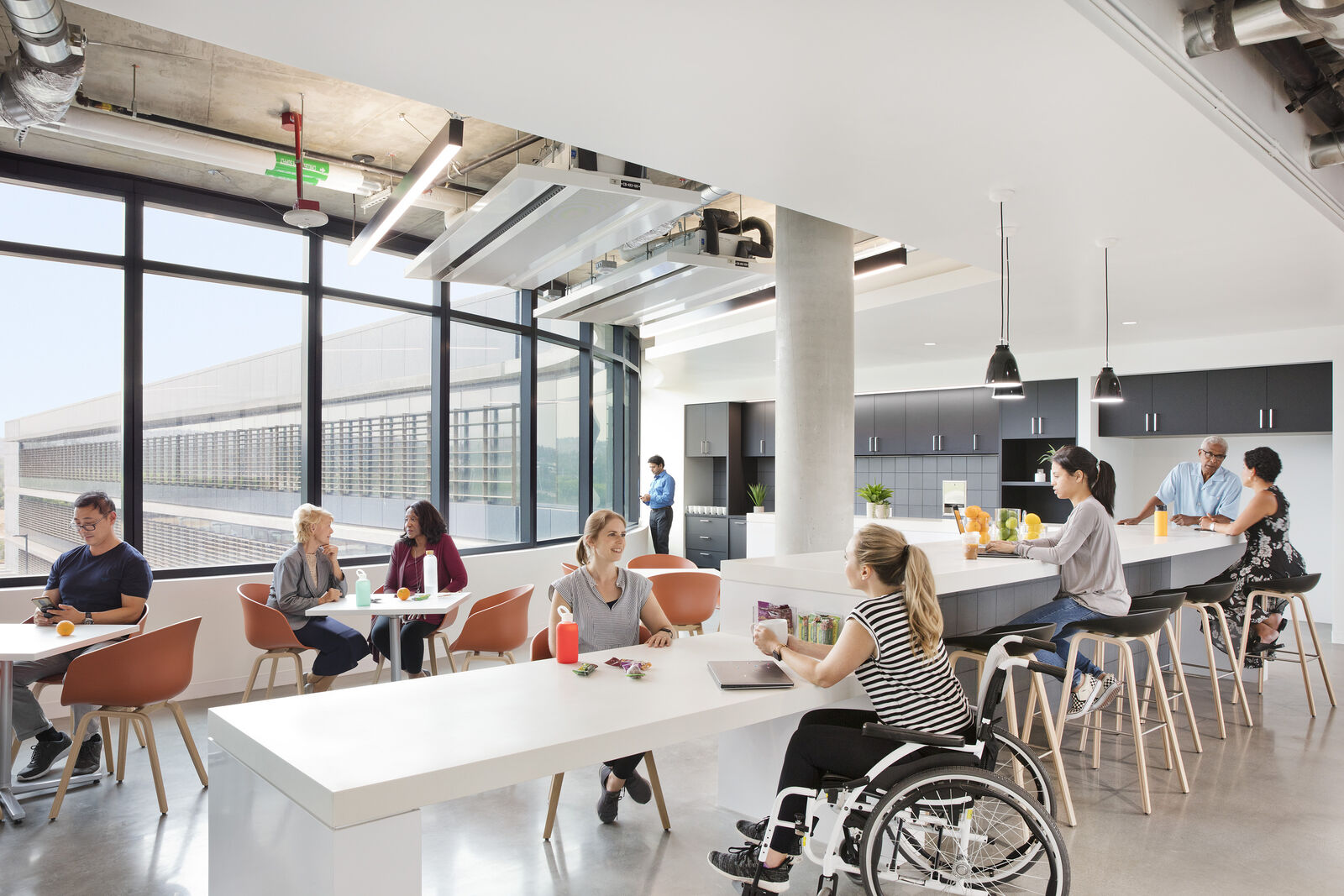
Karen also shared three things we can do as designers to create more inclusive spaces:
1. Provide options and choices for how people interact with their environment. For example, provide the same toilet accessory or paper towel dispenser at different heights in a restroom. Provide more seating options at different widths in an auditorium. Include more space at the bottom of a central grandstand stair where friends can sit shoulder to shoulder. In a restaurant or bar, provide tables and counters at multiple heights.
2. Learn to read building codes and regulations so you can identify areas to go beyond code minimums. For example, when code dimensions say something must be 34” maximum, designing below the maximum might actually be ideal. However, if the code requires 34” exactly, there is less wiggle room. Language is key. The code might require at least 5% accessible parking, but consider providing more than the minimum.
Karen has been helpful in our work with Microsoft, whose policy is to go beyond code minimums at their corporate campus. For example, all toilets are accessible height; they use tactile warning strips at the top and mid-landing of all stairs; and they provide automatic door operators on restroom doors.
3. Engage people with lived experiences on your projects. People with disabilities have been creating “hacks” all their lives to navigate the built environment, so they are best suited to provide suggestions on how it can be improved. When we bring together architects, designers, and people with lived experiences, we can co-create new design expressions that make everyone’s experience richer and more satisfying.
Karen reminded us that “inclusive creativity” goes a long way to foster a sense of belonging through design. Moreover, such design interventions should not be considered special accommodations anymore; they should simply be considered inclusive design.
7 Considerations for Designing Diverse Sensory Environments

What Does it Mean to Be Able to Bring your Whole Self to Work? Five Members of ZGF’s LGBTQ+ Community Discuss

8 Designers Discuss the Meaning of Community

9 Women Challenging Perceptions & Expectations in Design