Lessons Learned in Prefabrication at PDX Airport
By: Christian Schoewe, Principal at ZGF
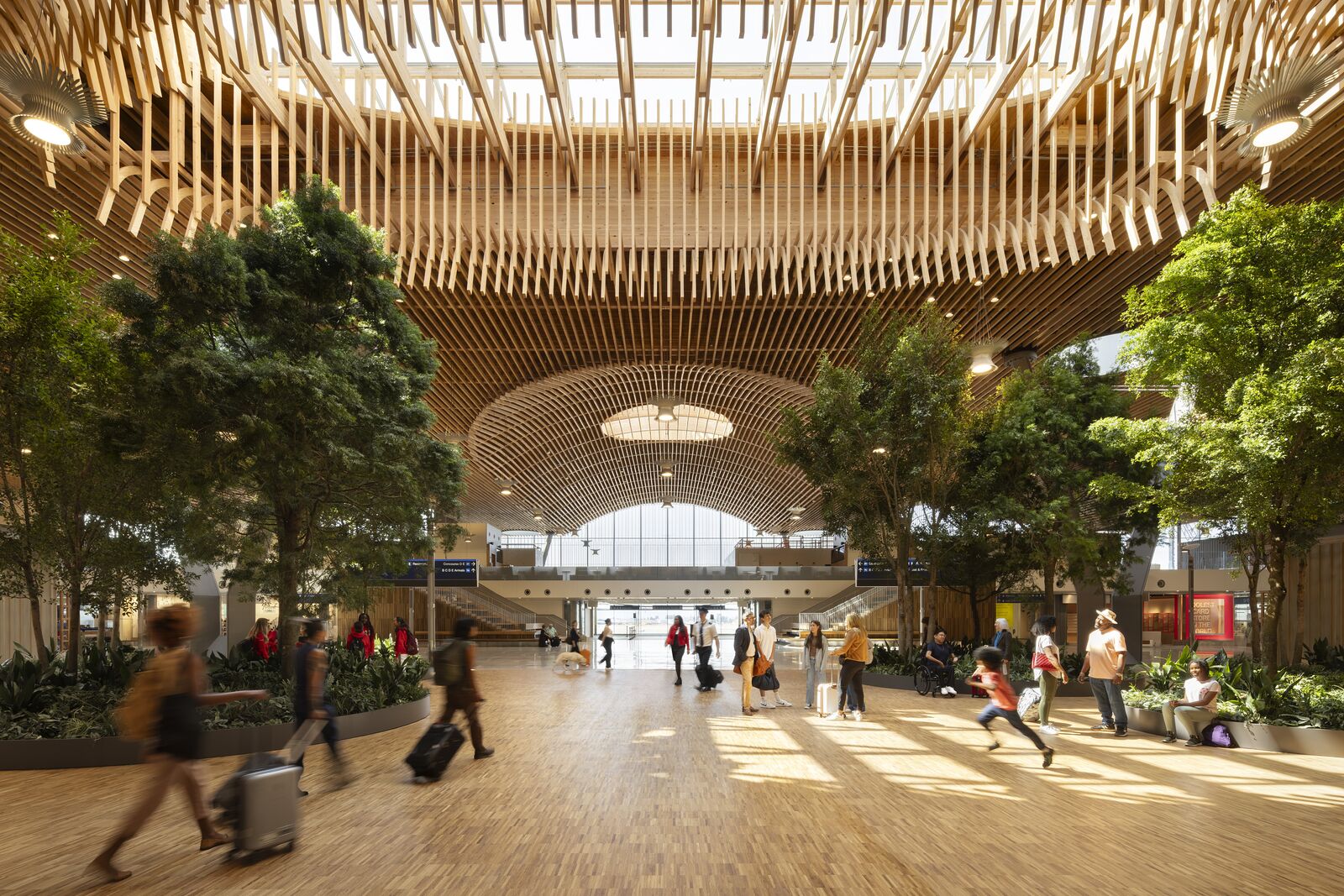
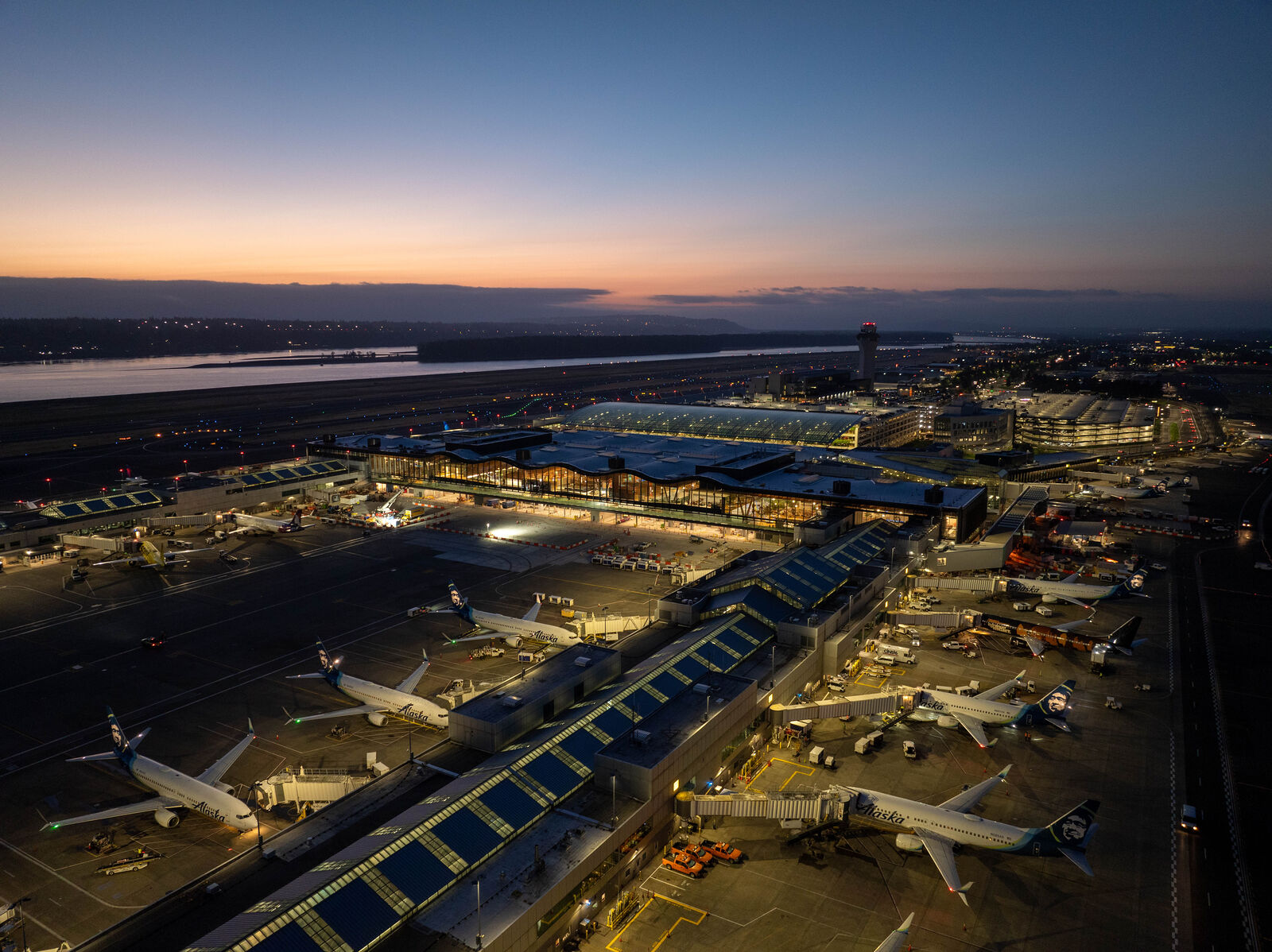
The main terminal expansion at Portland International Airport (PDX) is a case study in effective prefabrication and modular construction strategies. PDX successfully expanded the terminal, creating new spaces for column-free security checkpoints and adaptable check-in islands. These additions were built while maintaining full capacity at the existing checkpoint and ticket lobby. The prefab/modular approach significantly reduced the overall duration of construction, optimized efficiencies around the work sequence, ensured the airport remained fully operational, avoided disruptions to passengers, and increased cost certainty—while also improving quality of work and safety outcomes.
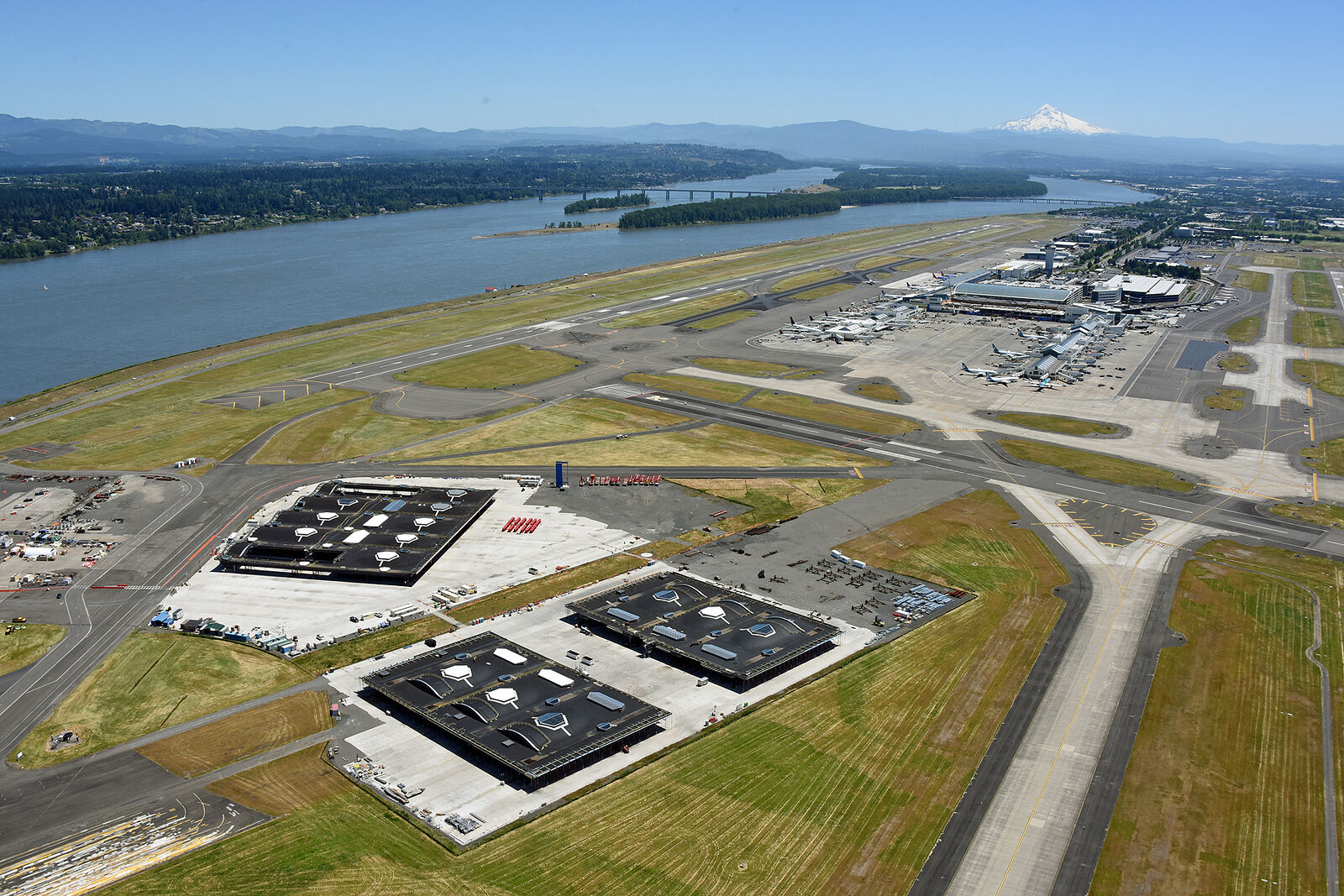
The endeavor required the project team’s embrace of guiding principles and the development of innovative design and construction solutions to safely choreograph the daily movement of passengers during five years of phased construction activities. Prefabricating and modularizing the roof structure was unique and pivotal to the project’s success in raising the roof. It required prefabricating a 9-acre roof, deconstructing it into (18) modules, transporting it, and then stitching it back together over an operating terminal.
However, prefab/modular strategies are not a one-size-fits-all approach to construction. And project stakeholders must assess how prefab/modular strategies help the team organize and inform the design solutions to achieve project goals.
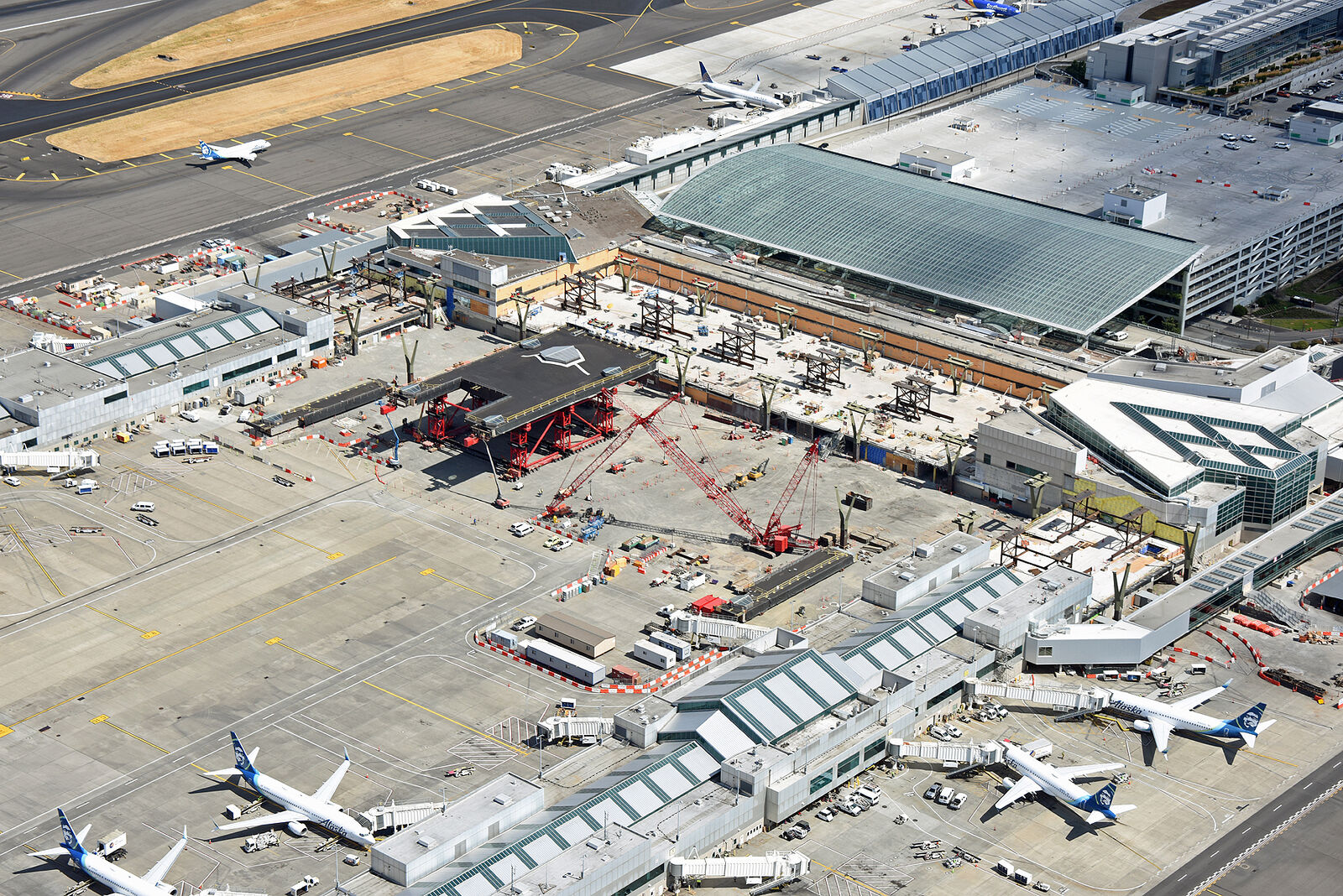
To reduce disruptions and expedite safe construction at the terminal, the prefabricated roof modules and steel Y-columns were transported and set overnight when passengers, airport staff and flights were not affected.
The Process
Considering the relatively constrained terminal site at PDX, prefabricating the roof structure adjacent to the terminal (about a half mile away) was an essential strategy. It supported the Port of Portland’s goal to reuse the existing terminal by expanding it in place while maintaining normal operations for its approximately 20 million air travelers per year during construction.
The project team capitalized on the prefab/modular strategy by sequencing parallel construction activities at the terminal. Over the course of 18 months, the massive 400-by-1,000-foot roof—including skylights, roofing, building system components and finishes—was assembled at the prefab yard. Simultaneously, construction crews at the terminal completed make-ready work to the existing structure and operations infrastructure, installed new below-grade utilities, and demolished the existing structure to make room for the terminal’s western expansion. After completing that work, Derr & Gruenwald Construction installed new, resilient 53-foot-tall steel Y-columns on top of footings at the terminal.
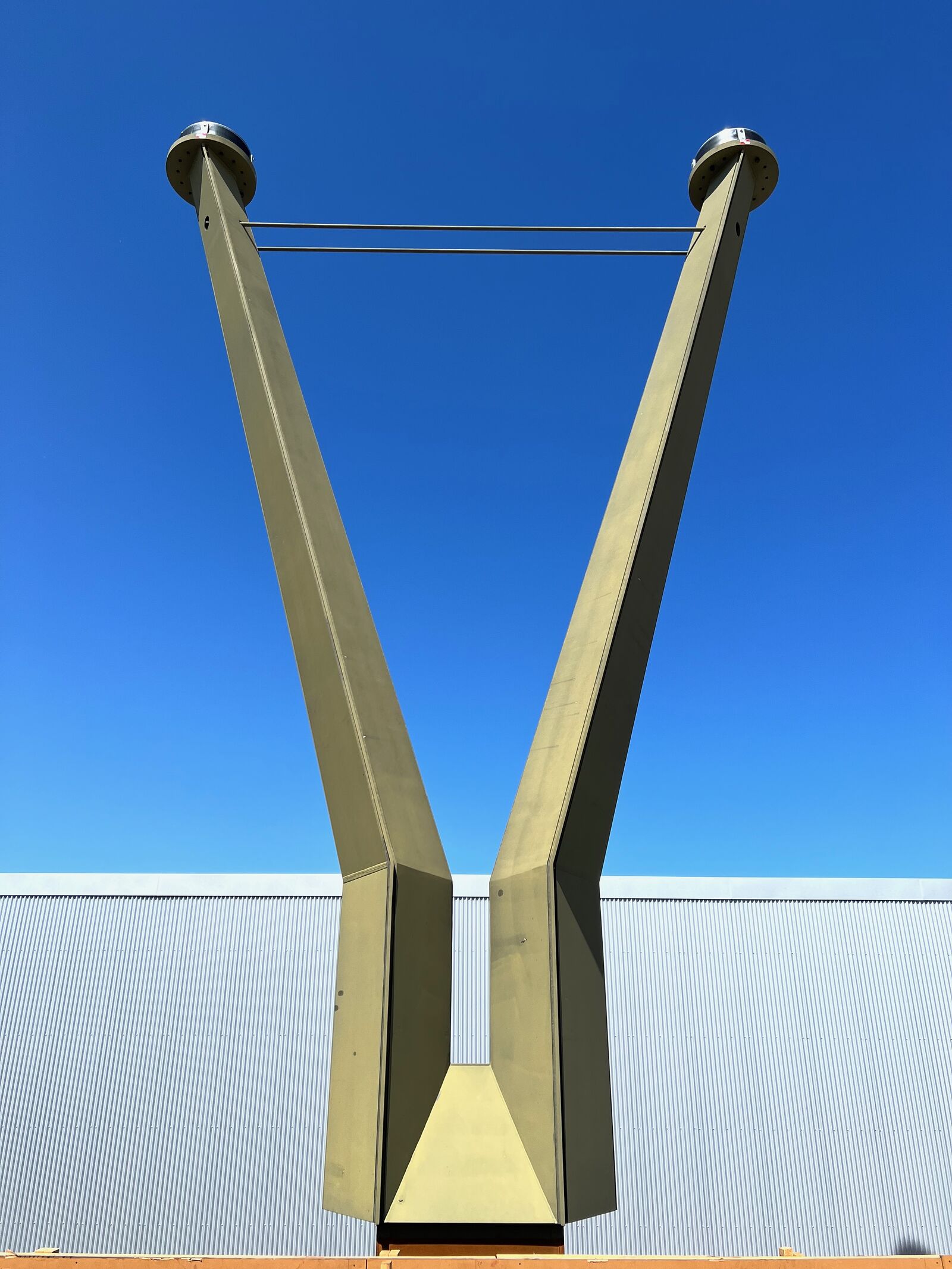
Y-column with primer coating and two seismic isolators on top installed at terminal, 2022.
34 Y-columns fabricated by Thompson Metal Fab will support the 9 acre roof. The 100’ x 150’ span between columns enabled greater flexibility with renovating and expanding the terminal in-place and allows for unobstructed floor plates and future adaptability to ticketing, security, concessions, and processing as the aviation industry evolves.
Concurrent to work at the terminal, the roof modules were remotely assembled into three sections in the prefab yard: one which would span the new ticket hall and market hall and two other sections to span the north and south halls. This approach significantly reduced the overall duration of construction time and optimized efficiencies around the sequence of work.
In August 2022, when the terminal site was ready, the three sections of the prefab/modular roof were temporarily disassembled into varying-sized modules, the largest being 240-by-140 feet and weighing 1.4 million pounds. These modules were then rolled via a self-propelled modular transporter and slid into place over the terminal. The installation took place over a three-and-a-half-month period during an FAA-regulated window at night and when there were no people below the construction area.
The decision to prefabricate the roof structure into modules expedited the construction process and led to safer outcomes for building occupants and construction workers. This approach also enabled craftspeople to execute higher-quality work in a less physically and logistically challenging environment, enhancing the overall project quality.
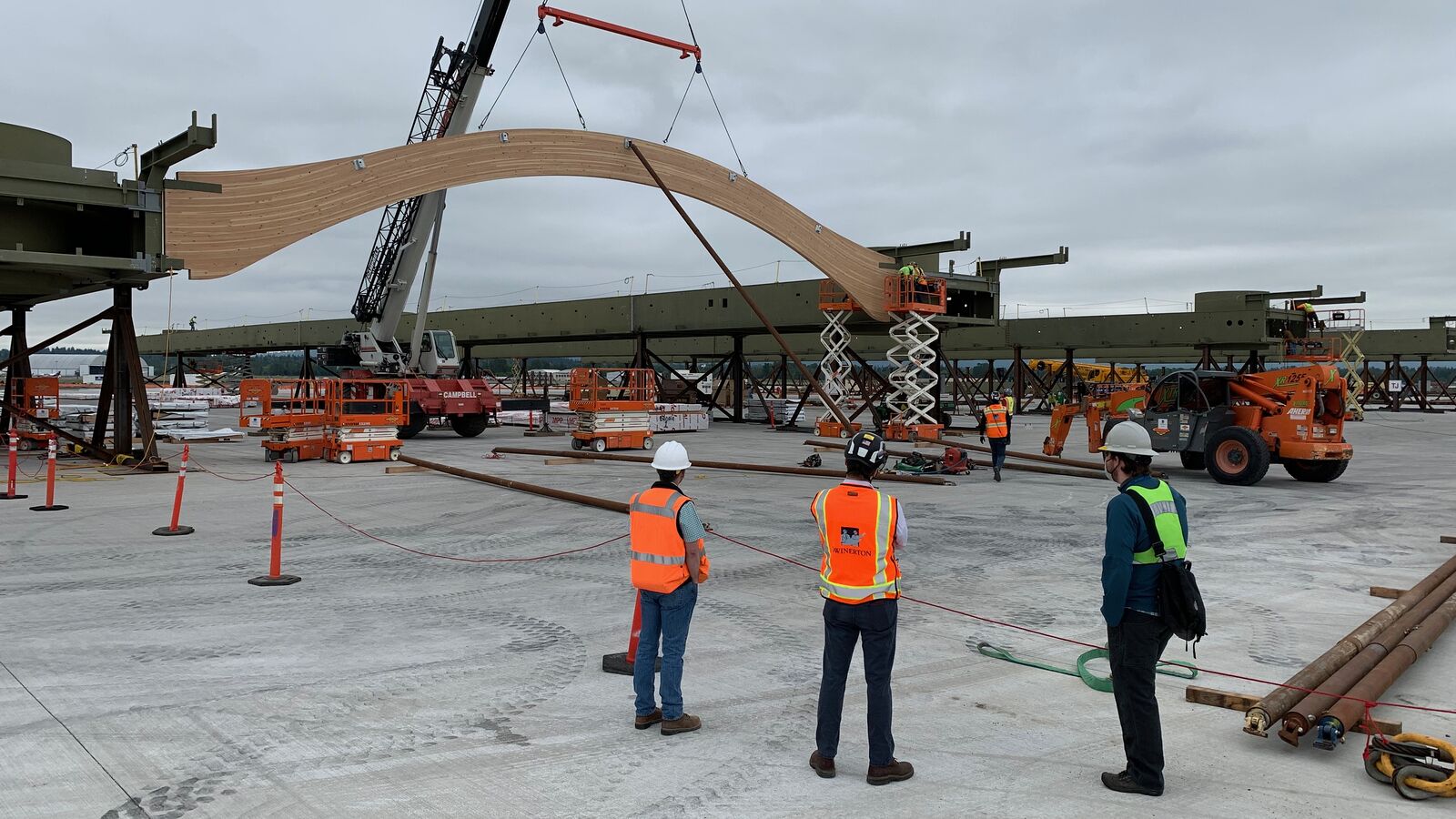
Members of the project team (Tom Wharton, PoP, at left; Jared Revay, Timberlab, Center; Chris Pitt, KPFF, right) observe the first glulam lowered into place between steel double girders at the prefab yard. Initially, this 80-foot arched glulam beam was manufactured by Zip-O Laminators as a proof of concept and process mockup. The mockup was essentially perfect, so the beam was incorporated into the project instead of being recycled or reused elsewhere.
Mammoet and Derr & Gruenwald Construction transported the first roof module from the prefab yard to the terminal in approximately 45 minutes. It took six nights to slide the first module into place. The majority of modules were set over two nights, with the last two roof modules being set on the final night.
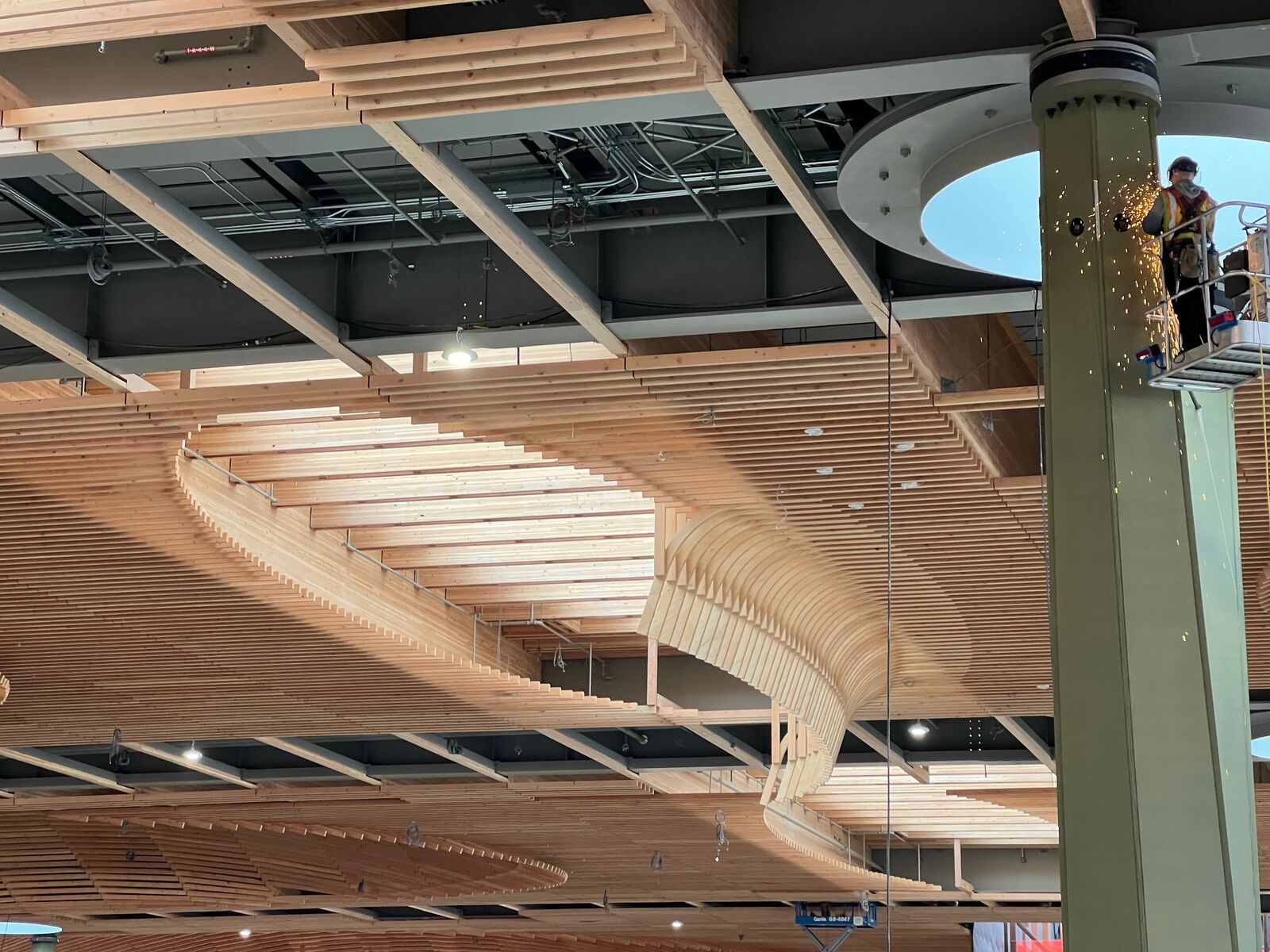
An ironworker grinds away temporary steel tabs used as anchors for cables that pulled the roof modules into place atop the y-columns.
Lessons Learned
Some of the essential lessons learned that contributed to our success at PDX:
-
Guiding Principles and Goals: It is important to reinforce guiding principles and align your teammates with the project’s common goals. This helps set expectations and focus the team. Knowing who you are designing/sourcing/manufacturing/fabricating/building for and why will inform every decision.
-
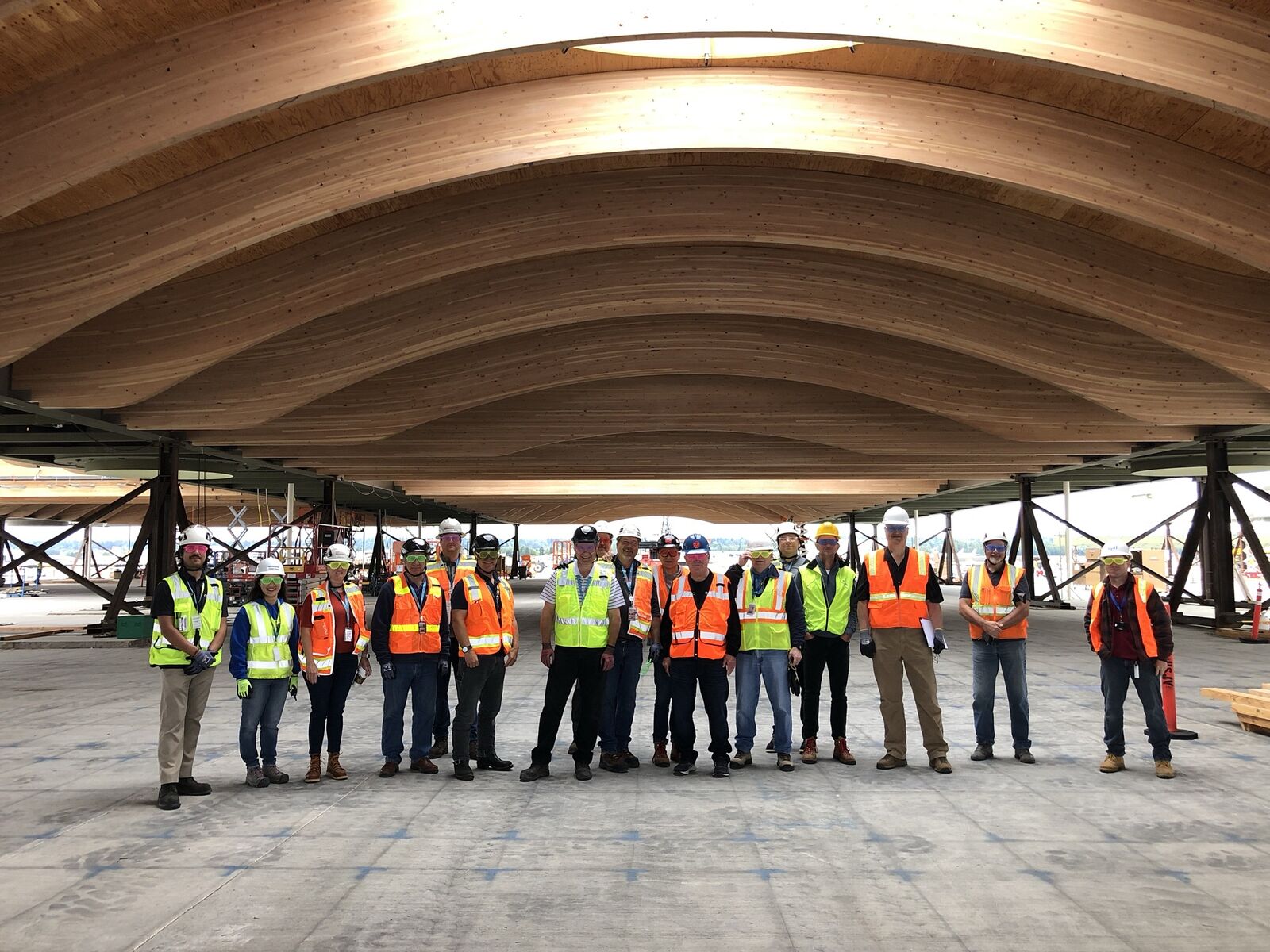
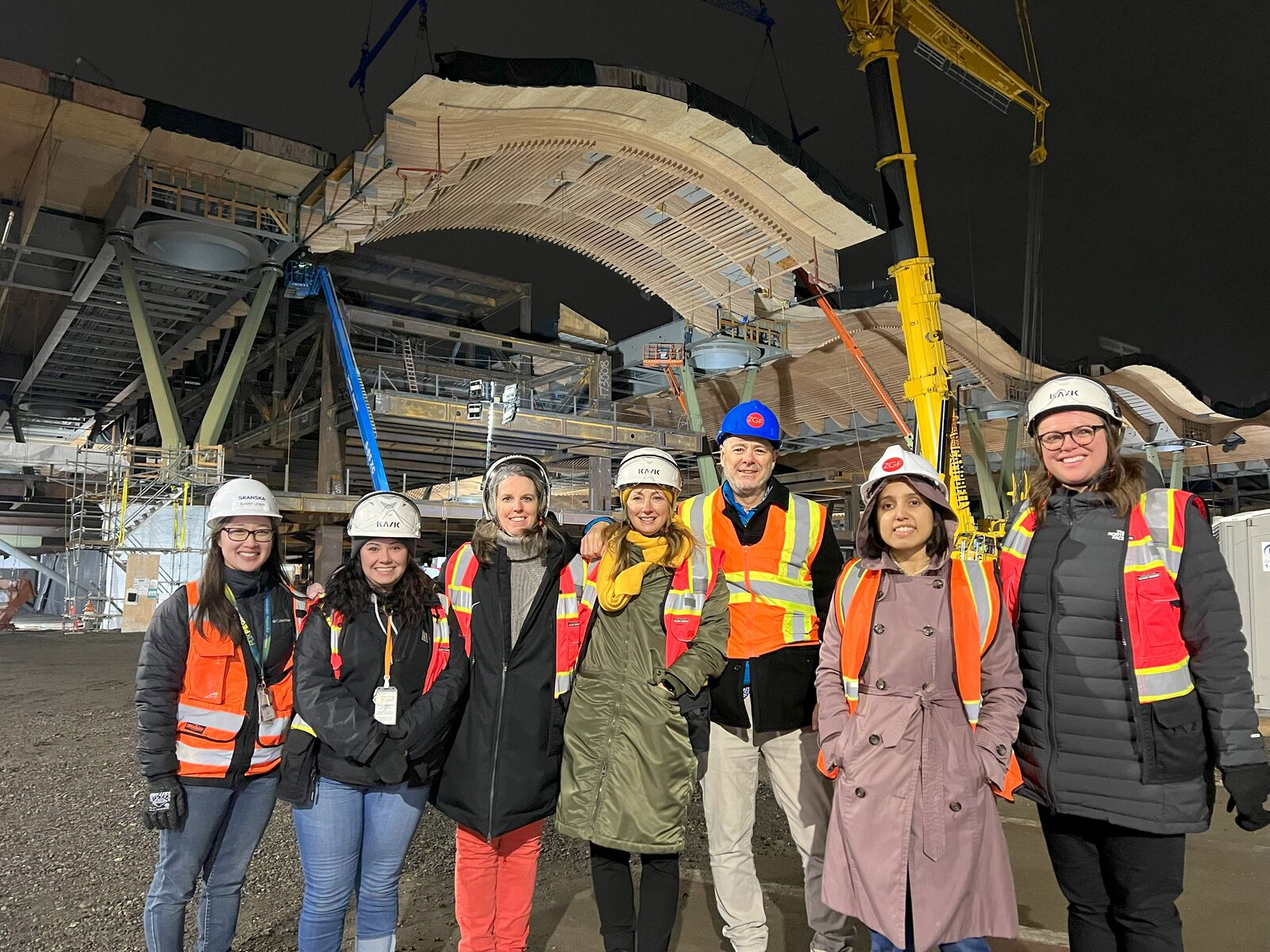
Teamwork and Open Mindedness: The success of this ambitious project is largely due to our collaborative teamwork and the open-minded engagement of all stakeholders. As Hoffman-Skanska’s Jason Koski noted, everyone embraced the spirit of "we all succeed or fail together," and was committed to active participation throughout the design, engineering, planning, and execution.
-
Design for Manufacturing and Assembly: To optimize PDX’s new roof architecture for prefab/modular construction, we explored how to best integrate building systems with structure. This effort garnered positive results; the timber-framed canopy with skylights at the peaks and valleys of the expressive roof, conceals myriad systems within its hybrid structure. Additionally, through our preconstruction coordination work, we verified that the roof’s design vocabulary could be commoditized and systematized into a kit of parts cost-effectively manufactured and efficiently assembled—then disassembled and reassembled to meet the project’s unique logistic and operational requirements.
-
Frequent Surveys: Surveys were paramount to our success. Surveys proved their value repeatedly because of how much the long-span hybrid steel and wood structure would shift due to anticipated movements like deflection, shrinkage, and creep. During construction, to set a piece of structure in its proper spot relative to its final condition, the team needed to know where in space module components were located at different points in time. We relied so heavily on the surveyor that “Can I get a survey of that?” became a comical refrain. Yet, this feedback loop helped the team set and erect the structure to meet its seismic resiliency goals: allowing the roof and exterior curtainwall lateral movement up to 24 inches to withstand a Mw 9 earthquake on the Cascadia Subduction Zone.
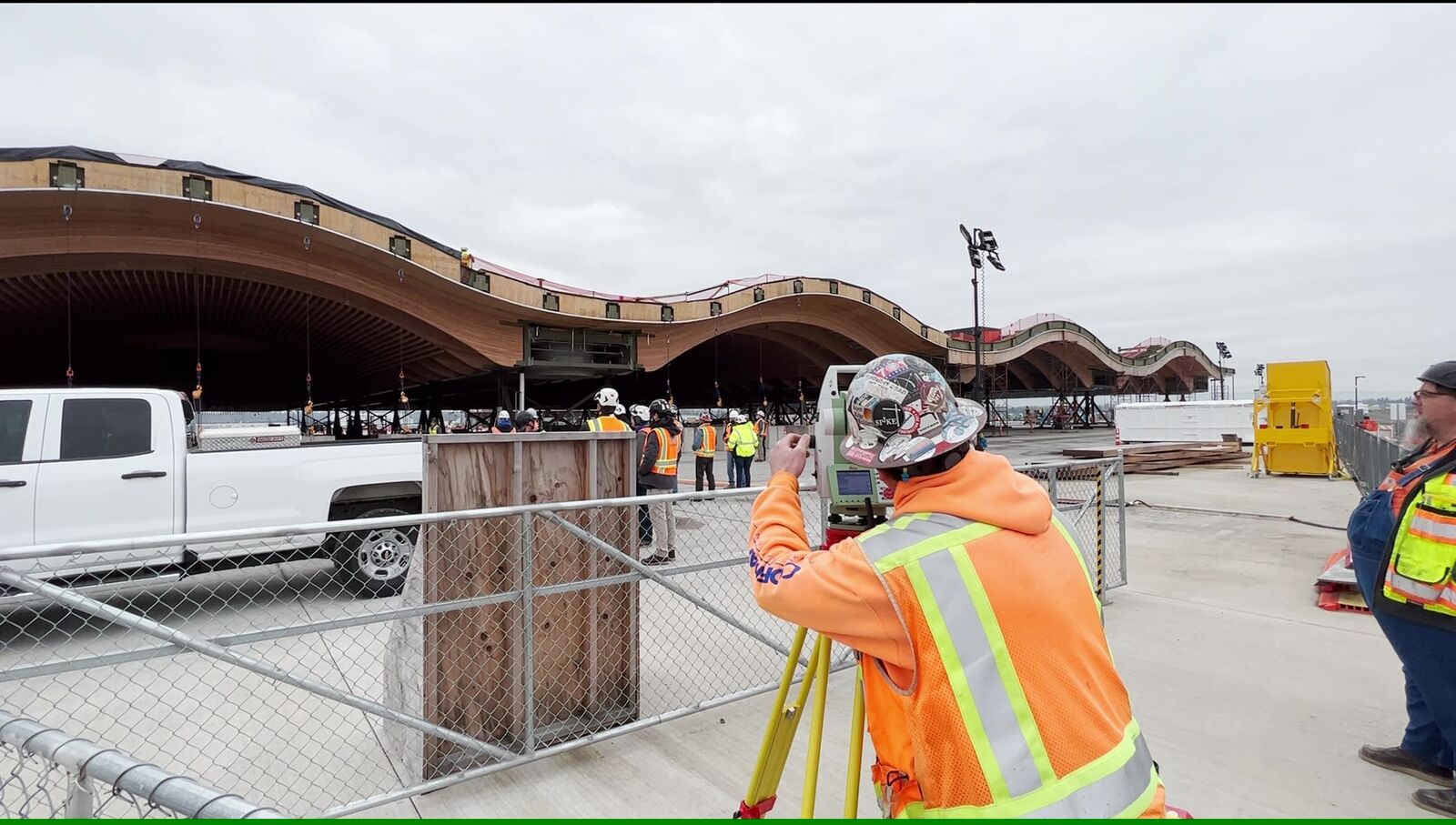
A surveyor measuring how much the roof deflects under preloading. This crucial step, first tested at the prefab yard and then implemented at the terminal, aided in verifying field measurements to accurately fabricate and install the curtainwall system.
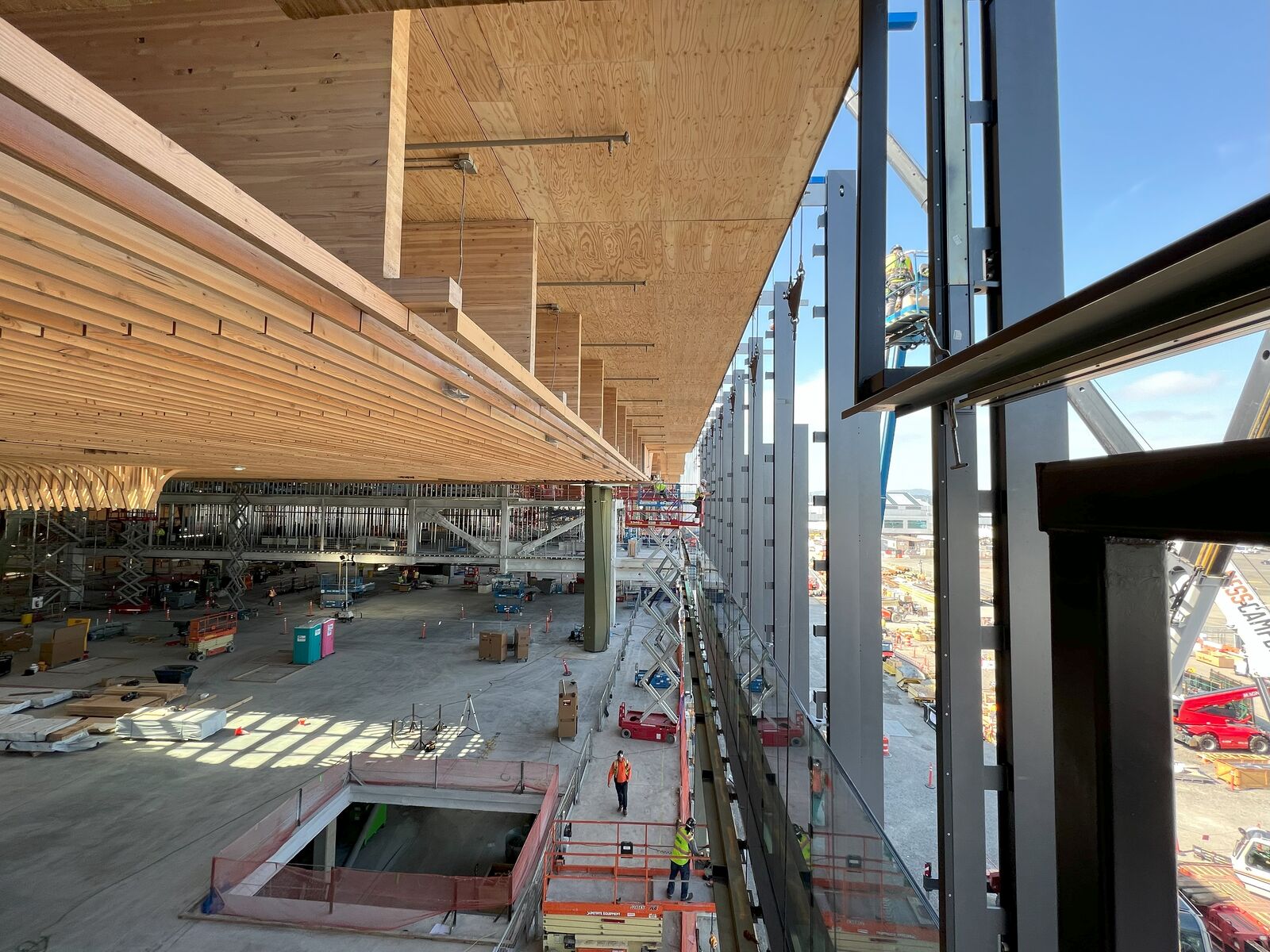
The 9 acre roof sits atop (68) seismic isolators on (34) Y-columns and is designed to withstand a Mw 9 earthquake within the Cascadia Subduction Zone. During such an event, the roof and roof-hung curtainwall can move laterally up to 24 inches in either direction.
- Mockups: Mockups were also integral to the process and quality of the final project. They allowed the project team the chance to test concepts and constructibility prior to construction. For partners such as Timberlab and Zip-O Laminators’, mockups served to demonstrate their manufacturing capability and precision. One outcome of these mockups was the elimination of a beam splice in the terminal’s custom arched glulam beams, which allowed the glulam to be assembled in one piece instead of two connected by large steel plates. This resulted in significant cost savings for the project and provided a higher quality final design.
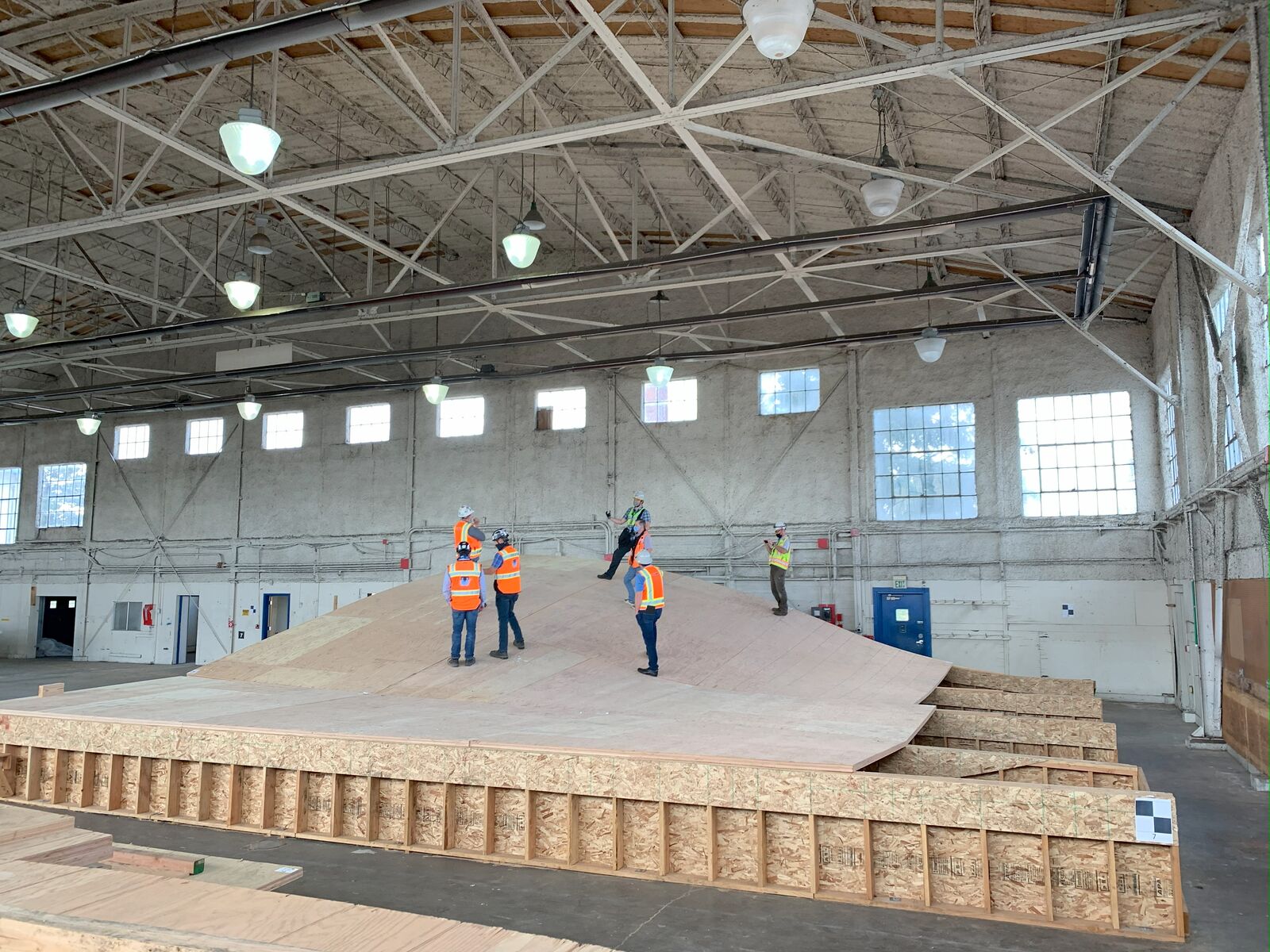
A full-scale mockup of a 1/4 dome of the terminal's new roof form.
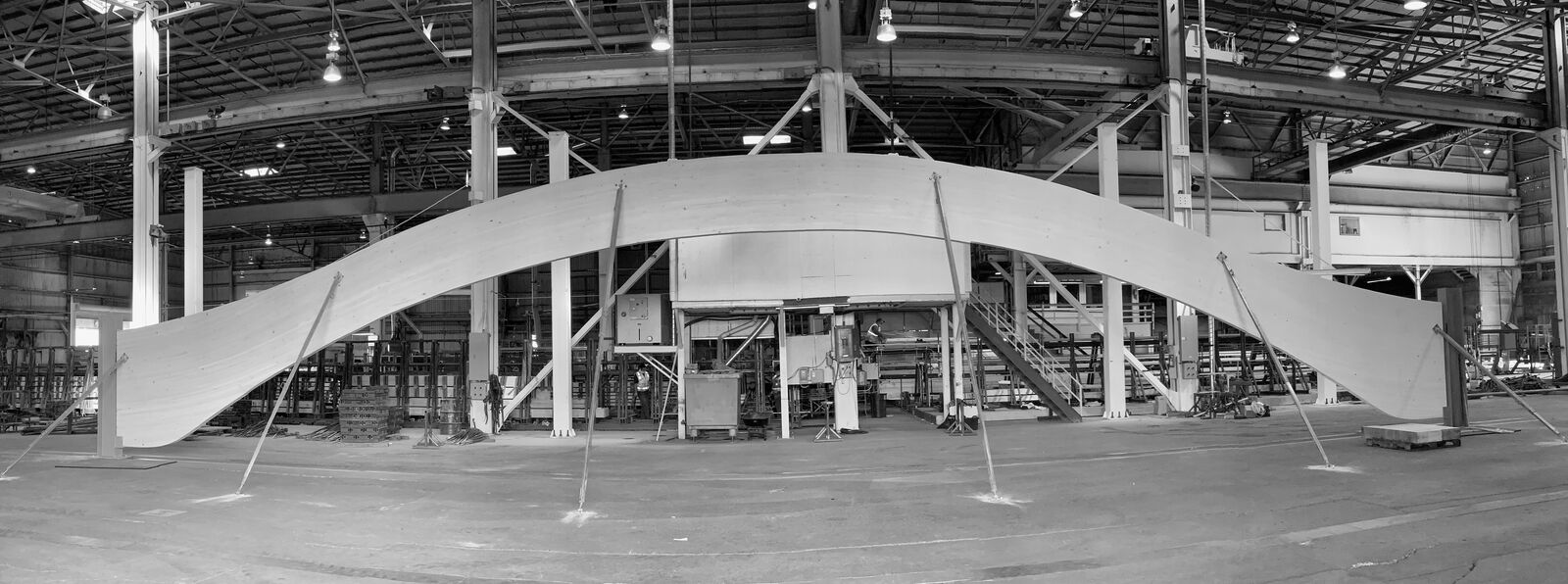
One of a pair of custom 80-foot arched glulam beams at Zip-O Laminators manufacturing facility in Eugene, Oregon.
Challenges and Pivots: No matter how comprehensive planning efforts are, it is inevitable that unexpected conditions will arise during construction and any successful project must be ready to pivot. In 2020, we had to procure building materials for our hybrid roof structure during COVID-19. In 2021, PDX experienced record-breaking heat; causing the steel to expand at a greater and faster rate relative to the mass timber, due to exposure to direct sunlight and air temperatures of 118 degrees. Thankfully, KPFF engineers had deep knowledge of long-span structures and how disparate materials perform under extreme thermal conditions. This allowed us to account for thermal expansion and design for differential movement without deleterious effects on the structure.
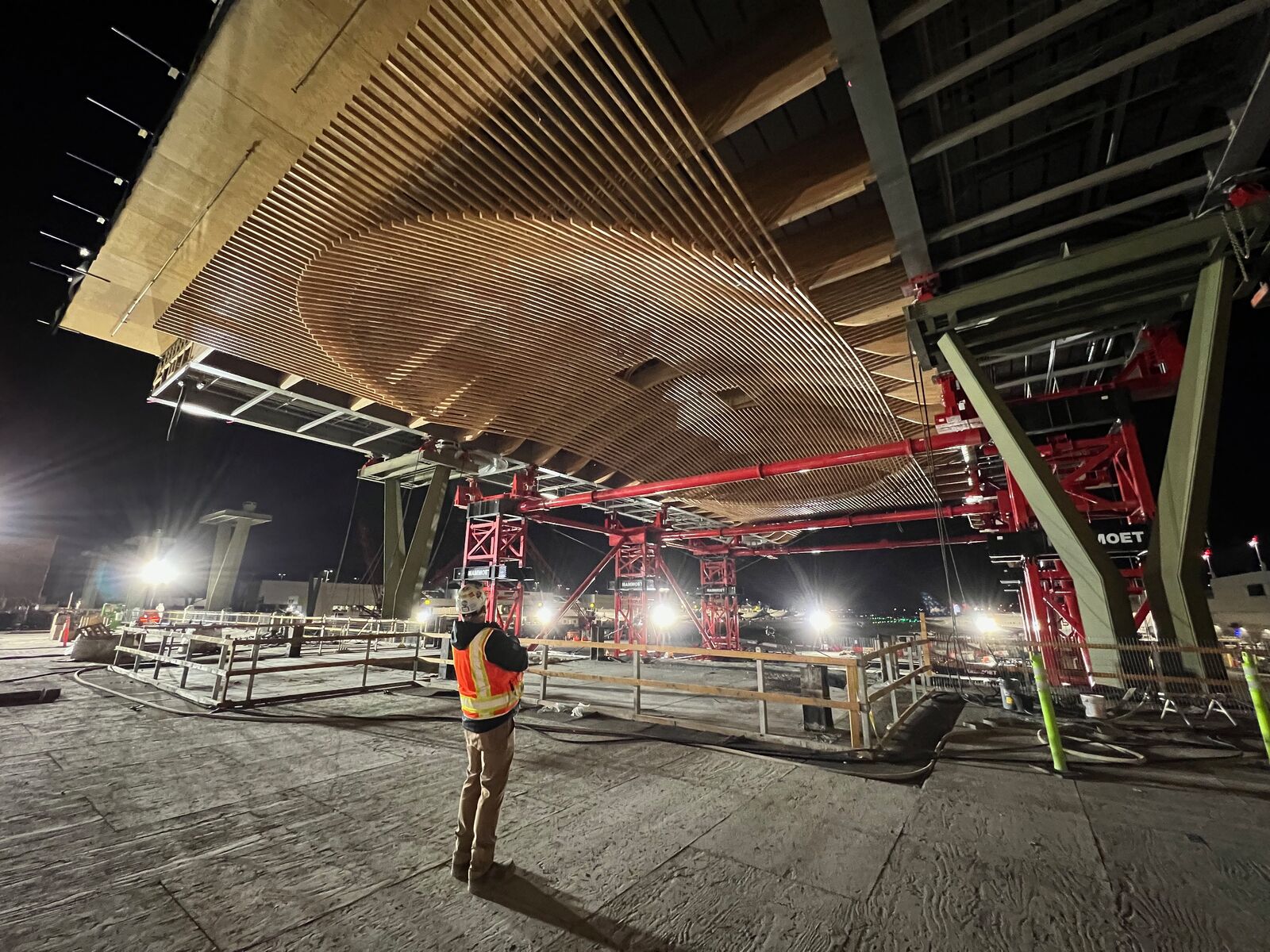
HSJV Superintendent Jason Koski keeping an eye on heavy lift and transport of the first roof module set at the terminal. The prefabricated roof structure, and the team that built it, proved resilient through COVID, scorching summers, wet and snowy winters and fire season.
The base material for our roofing system was a 2-ply BUR (built-up roofing). During construction, this component acted as a temporary roof and then serves as a vapor barrier throughout the life of the building. During the heatwave of 2021, this membrane softened and required localized repair. We also underestimated the durability of our temporary roof after repeated exposure to rain. After 16 months—2 months shy of our planned window—the exposure to the elements resulted in unexpected leaks. In hindsight, we could have built in a sacrificial material over the vapor barrier that would later be fully roofed in, building in redundancy and reducing the risk of bulk water intrusion behind the vapor barrier.
Accounting for Tolerances: Accounting for tolerances is a shared responsibility between designers, manufacturers, detailers, fabricators, and erectors/installers that must be addressed and coordinated as a team. Beginning with schematic design, we endeavored to set realistic expectations and give the team grace by leaving “room to improve” or “make adjustments.” To successfully set the seismically isolated prefabricated roof modules on top of Y-columns, we made a plan—and stuck to the plan by managing tolerances within a margin of error and created opportunities to zero-out or reset tolerances.
The design and fabrication of the roof’s mass ply panel (MPP), an innovative product manufactured by Freres Engineered Wood, is an example of where we nailed the design for manufacturing and assembly for an installed-verified tolerance of 3/16”. Every piece of MPP was cut offsite and when installed at the prefab yard never had a joint that exceeded its planned and allowable 3/16”. On average the joints never exceeded 1/8”.
Success in prefabbing PDX’s new roof was not guaranteed but we trusted our team and our process. Our sub-contractor Mammoet, whose expertise in heavy lift and transport was vital to our success, inspired ZGF during an initial 2019 preconstruction meeting with their assertion that it was possible to move anything. Over the following three years, fueled by recurring moments of inspiration, we worked diligently towards completion. When the Phase 1 airport roof move was completed in late 2022, the team was elated at the proven success of our prefab/modular approach.
In the Spring of 2025, during Phase 2 construction, the remaining four roof modules will be moved into place to complete PDX’s new terminal roof. We anticipate the process will be even smoother.
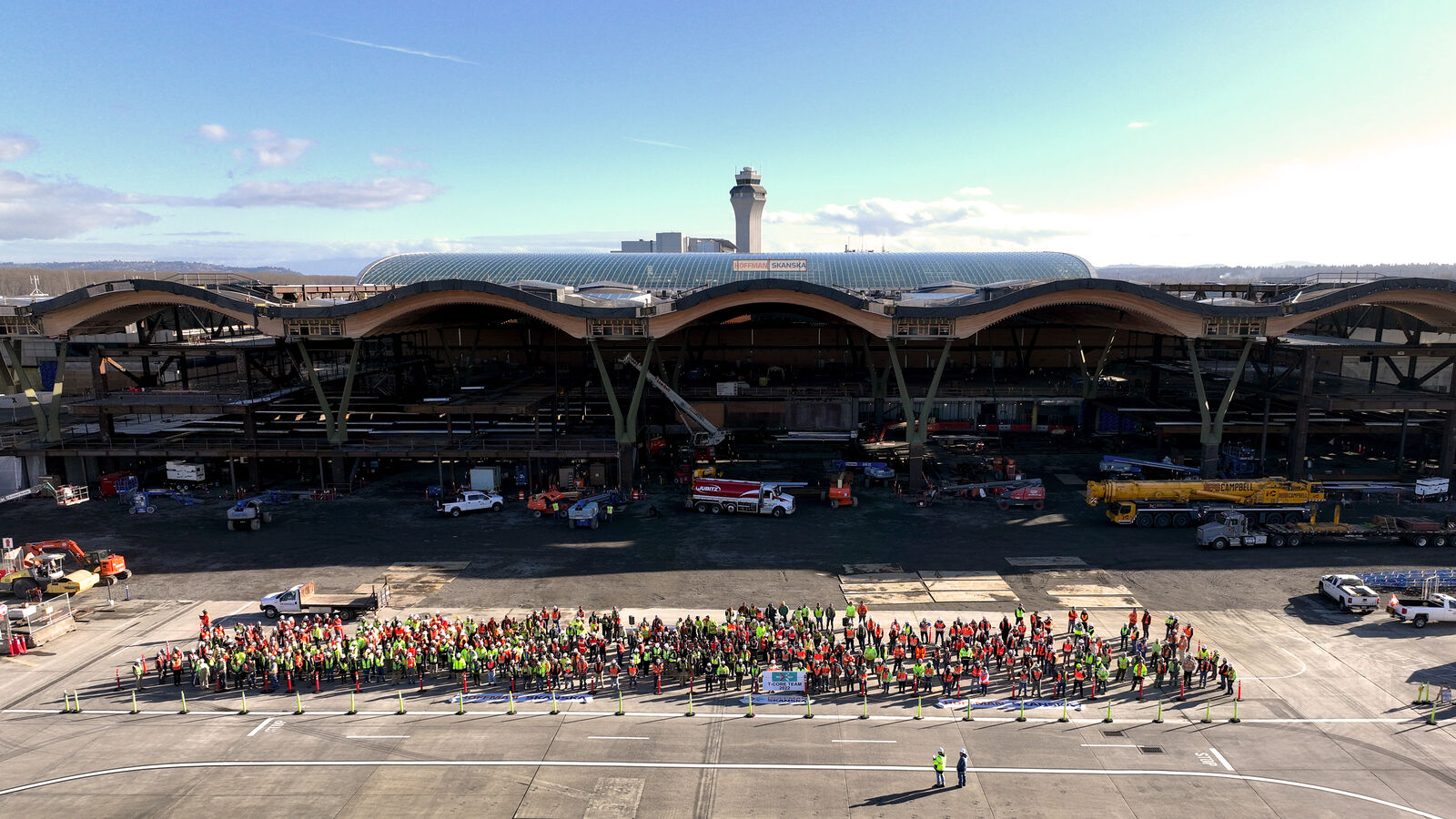
After 3 1/2 months of roof transport, the smallest modules, known affectiately as the "sock drawers" were set into place in a single night-shift. Project team members watched in elation as the last two puzzle pieces were placed.
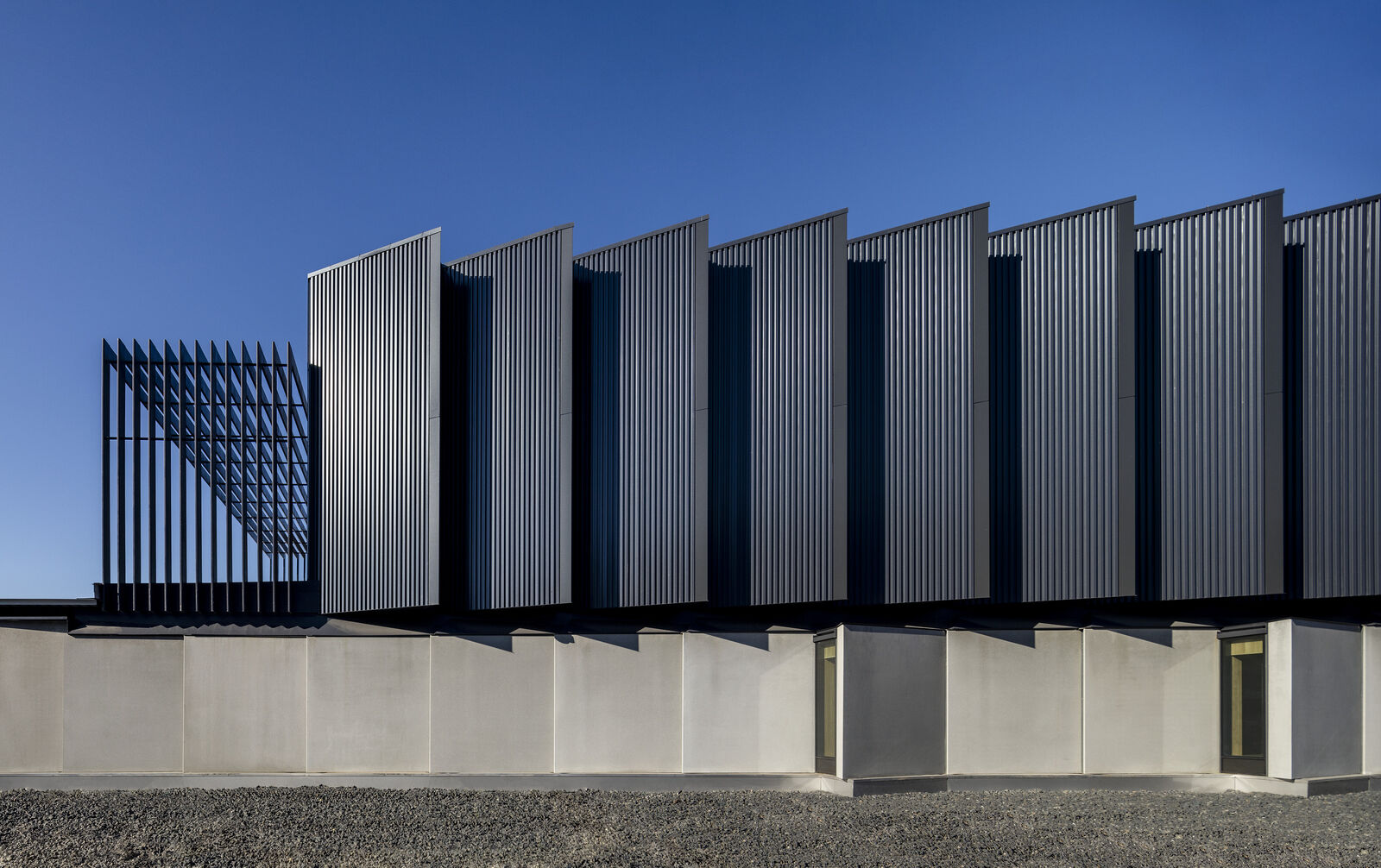
Port of Portland, PDX Next Concourse B