Lessons Learned in Prefabrication at PDX Airport
The main terminal expansion at Portland International Airport (PDX) is a case study in effective prefabrication and modular construction strategies.
Aviation and Transportation, Civic and Public, Interiors, Adaptive Reuse
The road to becoming “America’s Best Airport” was decades in the making. ZGF Architects began its long association with Portland International Airport (PDX) in 1965 when the Port of Portland first commissioned the firm to develop a master plan to double the size of its original 1958 terminal. It’s rare for an architecture firm and an airport to settle into a relationship that spans decades and results in multiple projects, however, nearly six decades later, ZGF remains the Port of Portland’s primary architectural partner, having completed numerous remodels and major expansions.
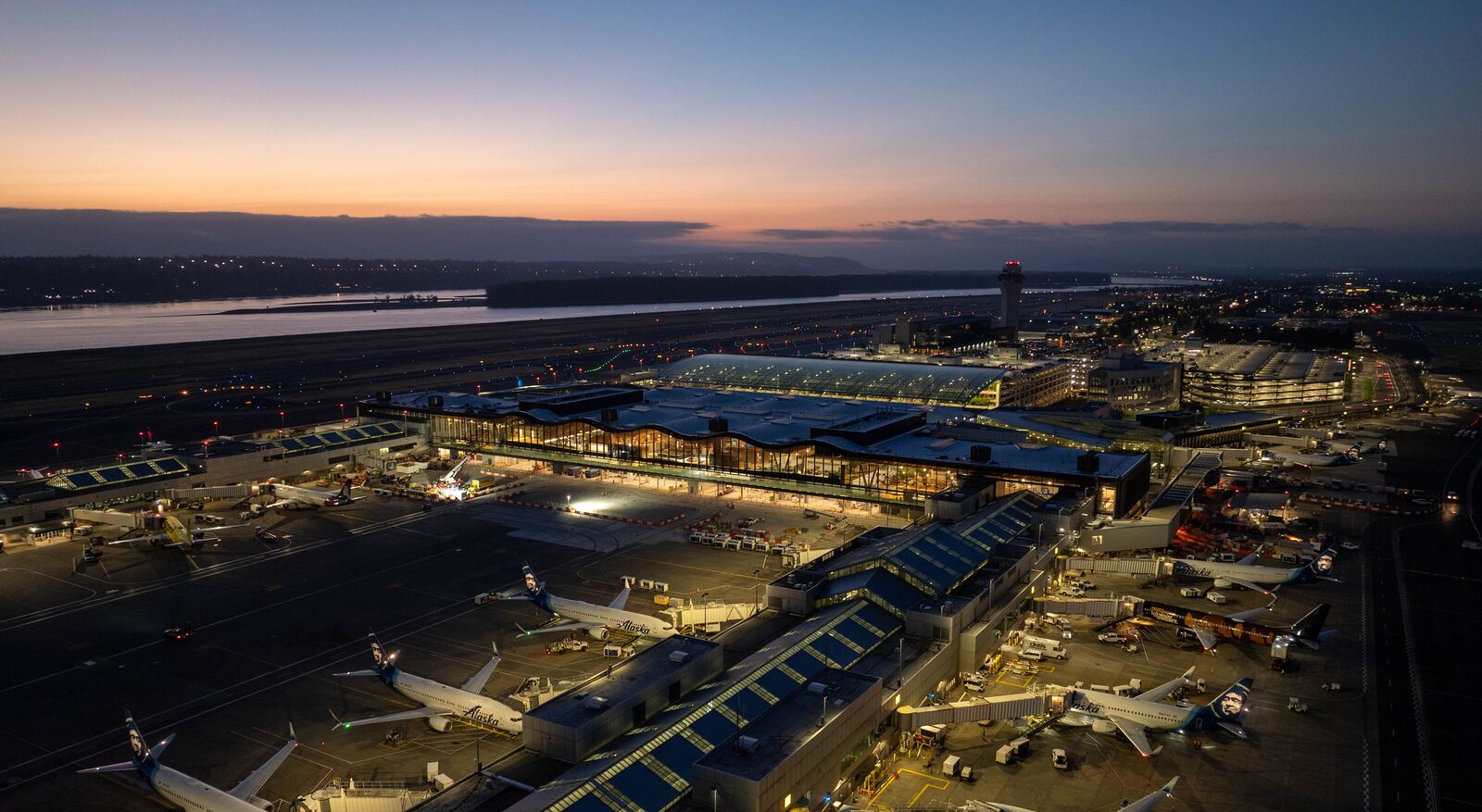
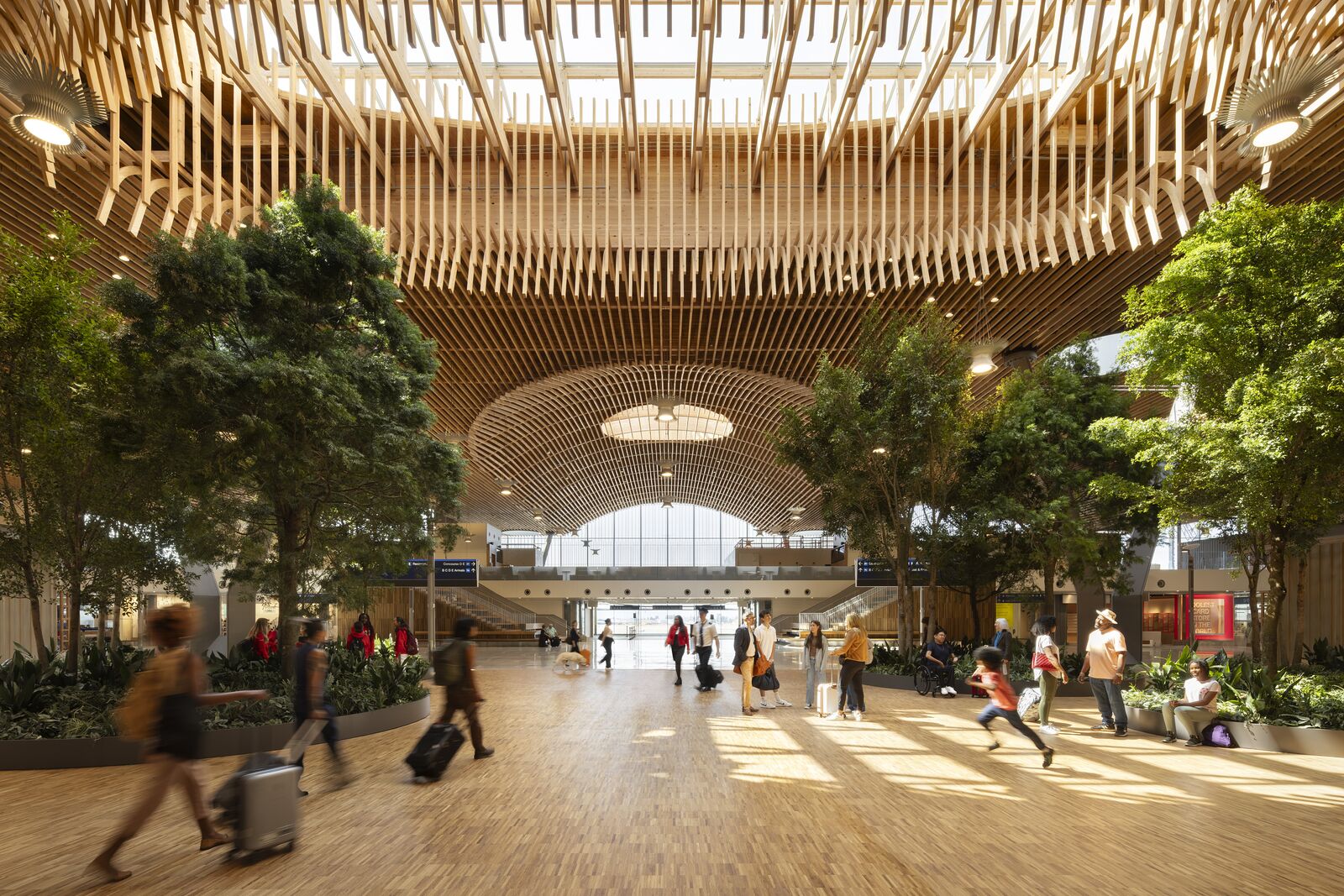
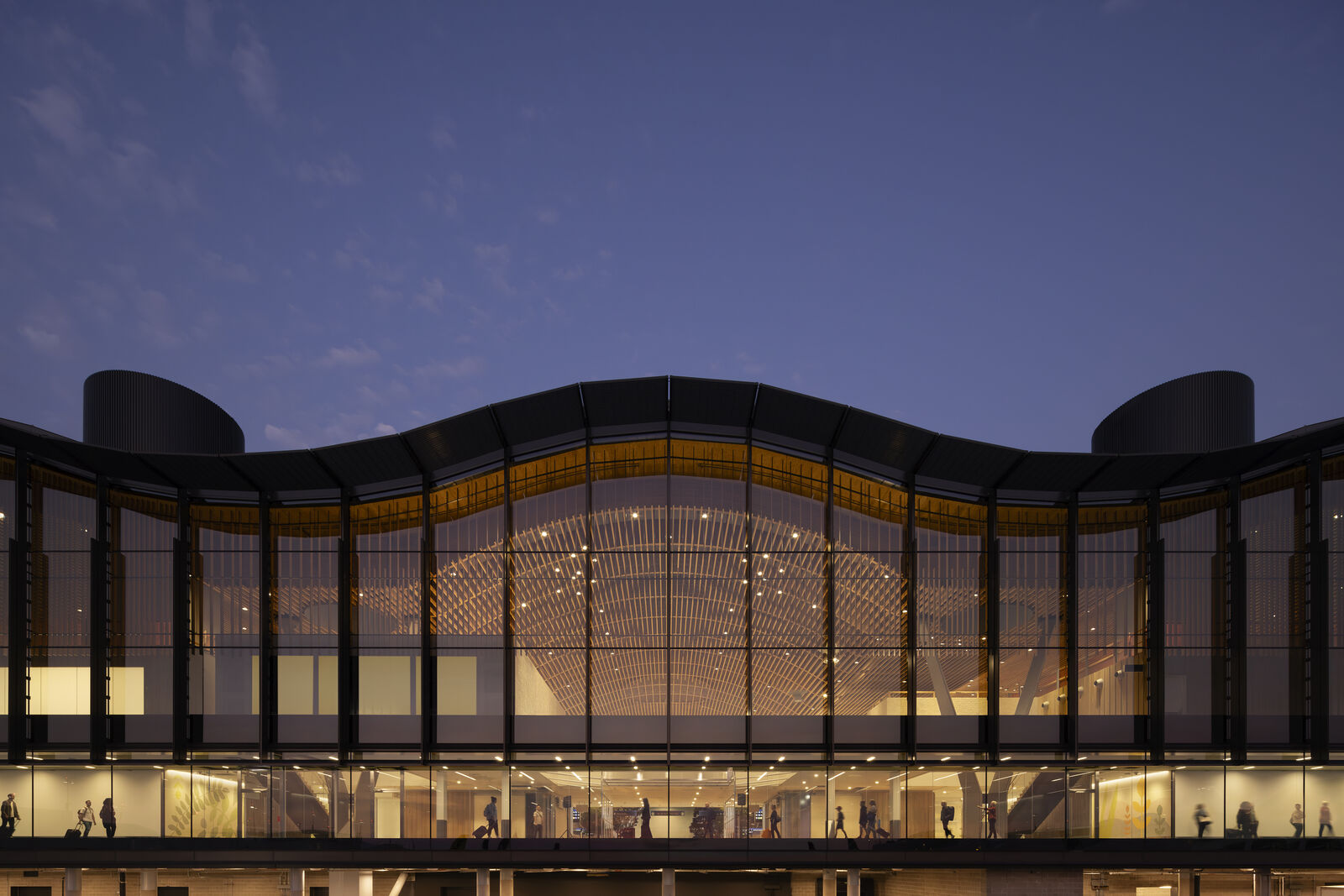
The ZGF-designed main terminal expansion is PDX’s most aggressive expansion to date—doubling the capacity of the airport while inviting passengers and employees to celebrate the beauty of the Pacific Northwest. Upon entering the newly reimagined terminal core, the stunning 9-acre mass timber roof invites visitors to take a walk in the forest. The roof’s undulating form celebrates the history and the future of Oregon’s forest product innovation by showcasing wood that was locally sourced from landowners and mills within a 300-mile radius of the airport, including small landowners, tribal lands, and community forests practicing sustainable forestry. Expansive glazing provides views of the airfield and the surrounding forested landscape—and interior finishes that reference the region’s natural beauty make it clear upon arrival exactly where you have landed.
Portland, Oregon
1,000,000
2026
Architecture Services
Interior Design & Space Planning


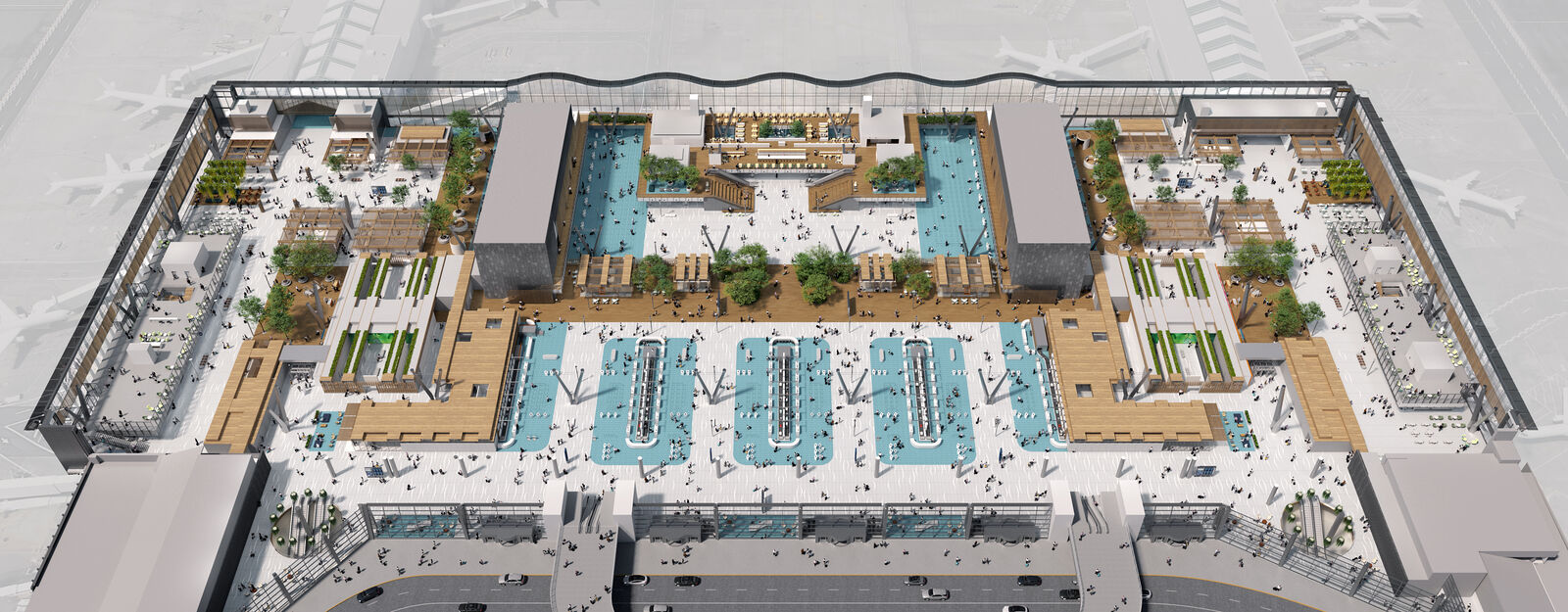
The interior environment of the new main terminal is designed to increase passengers’ comfort and reduce the stress that many people experience while traveling. Throughout the years, PDX has always placed an emphasis on cultivating a strong sense of place by incorporating some elements of wood, plants, and natural daylight into its design. Long before the benefits provided by indoor landscaping were widely understood, the airport incorporated biophilic elements as a reflection of the region.
Upon entry at PDX, the reconfigured and expanded ticket hall is designed to offer an experience of clarity and ease. It is also designed to support the future of travel, traveler needs, innovations in technology—and to keep the terminal “uniquely PDX”. The new main terminal adds one major destination between drop-off and take-off; and it is a significant one: a central threshold directly after ticketing transitions passengers through to the TSA Security checkpoints and then on to their gates.
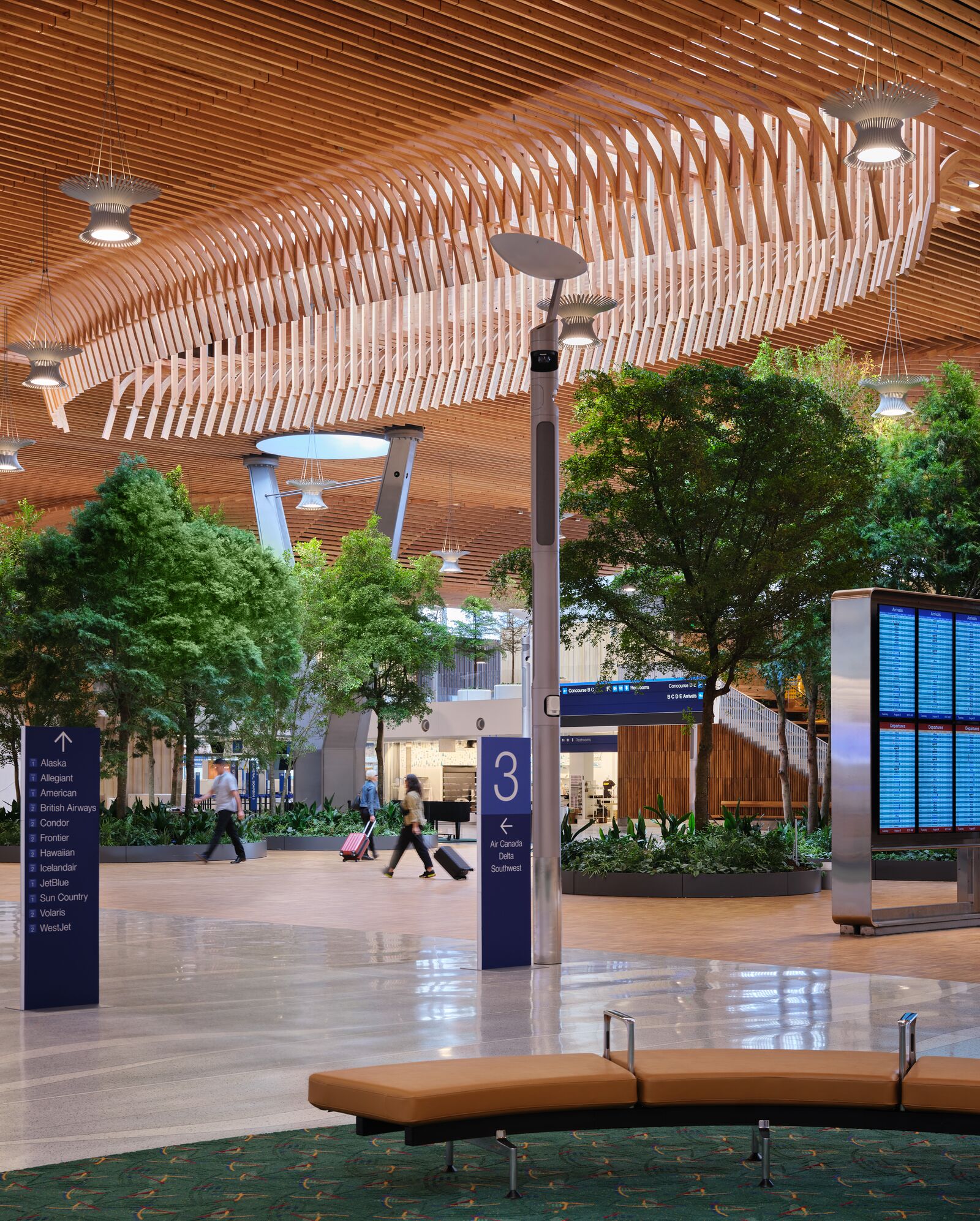
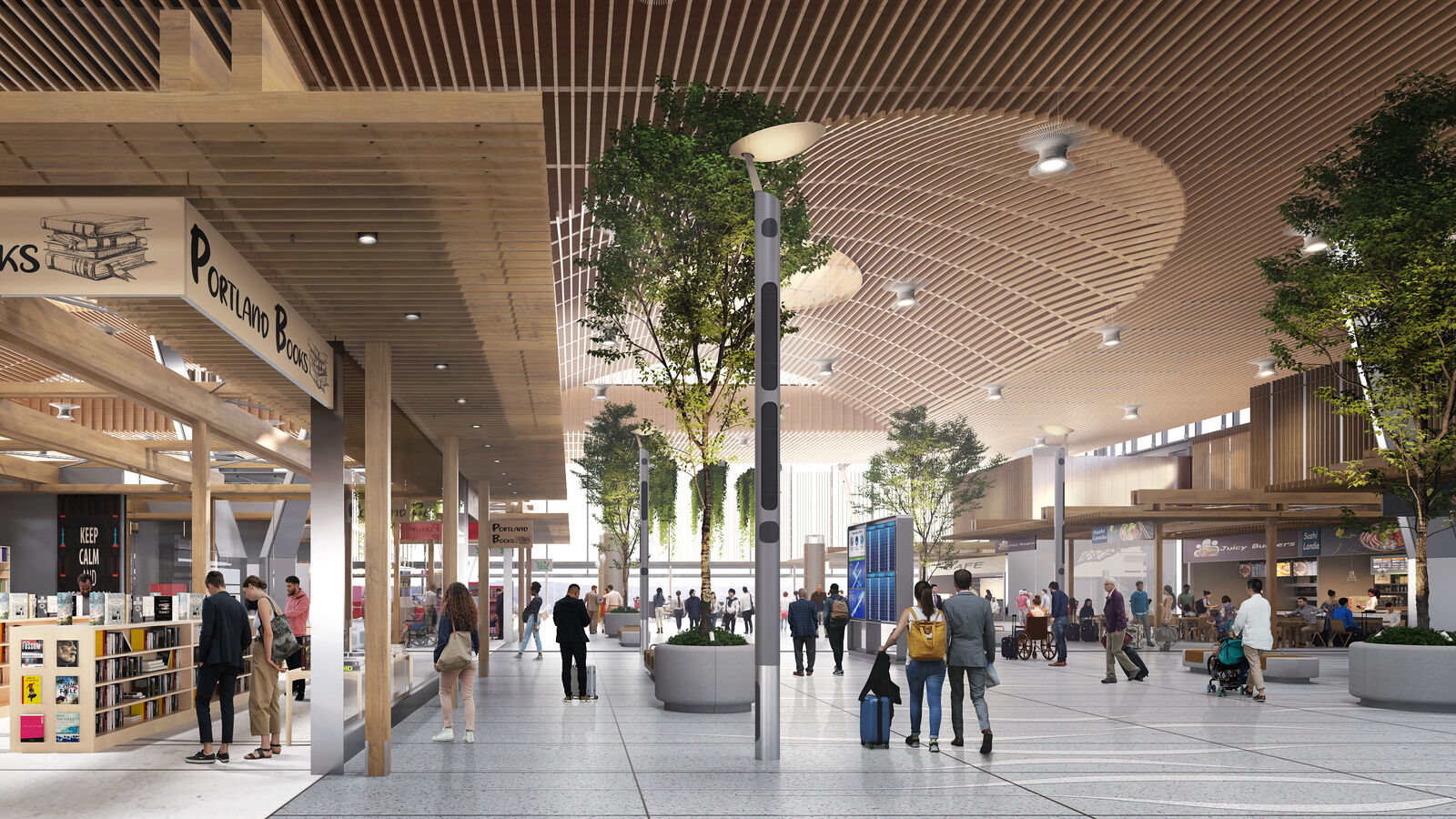
This space provides a forest-like experience that surrounds visitors with trees and diffused light—adding a moment of calmness after the brightness and bustle of entry and ticketing.
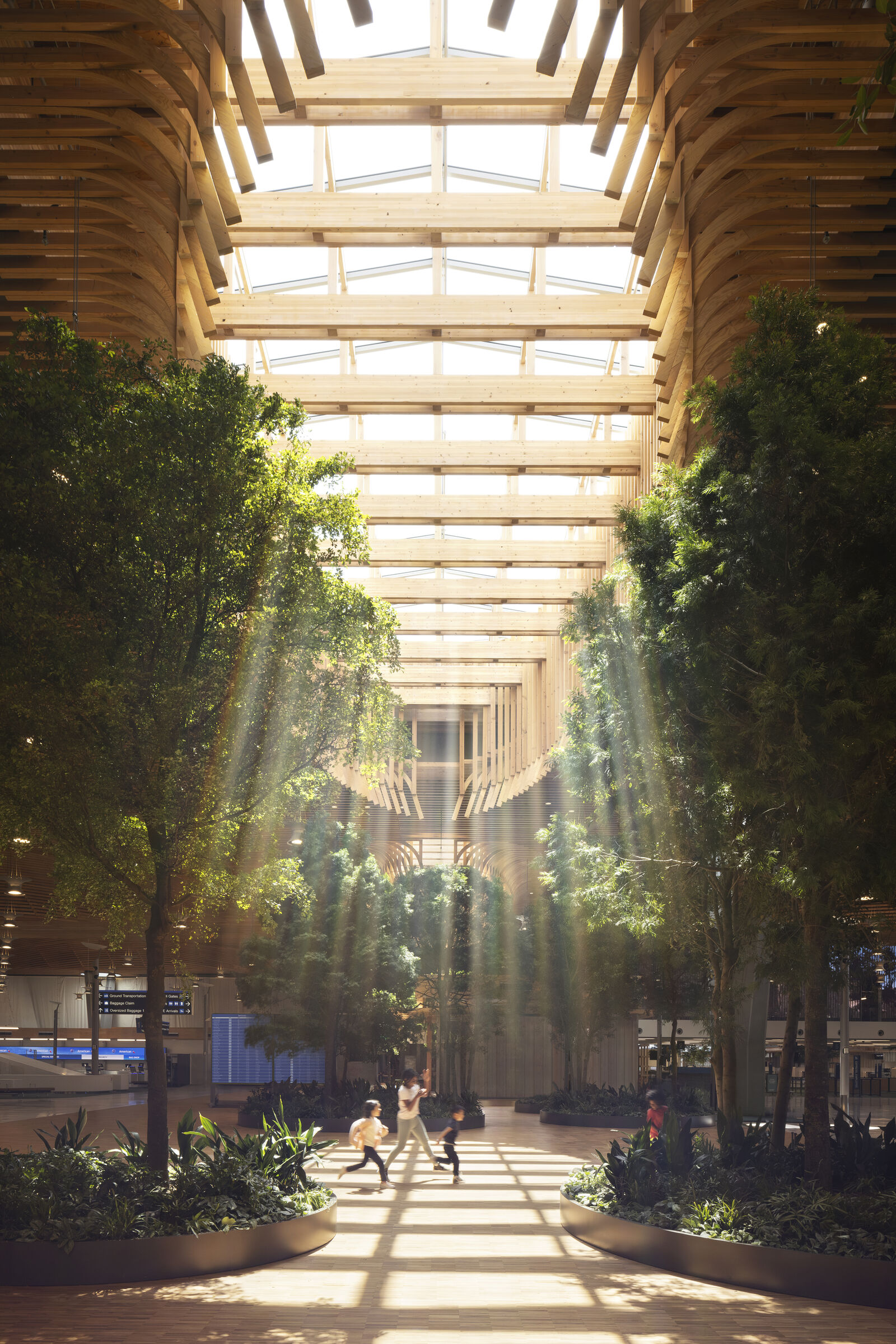
As passengers leave ticketing and enter the central threshold, daylight filters through the mass timber roof lattice and large skylight openings, like light filters through the trees within the protection of a tree canopy.
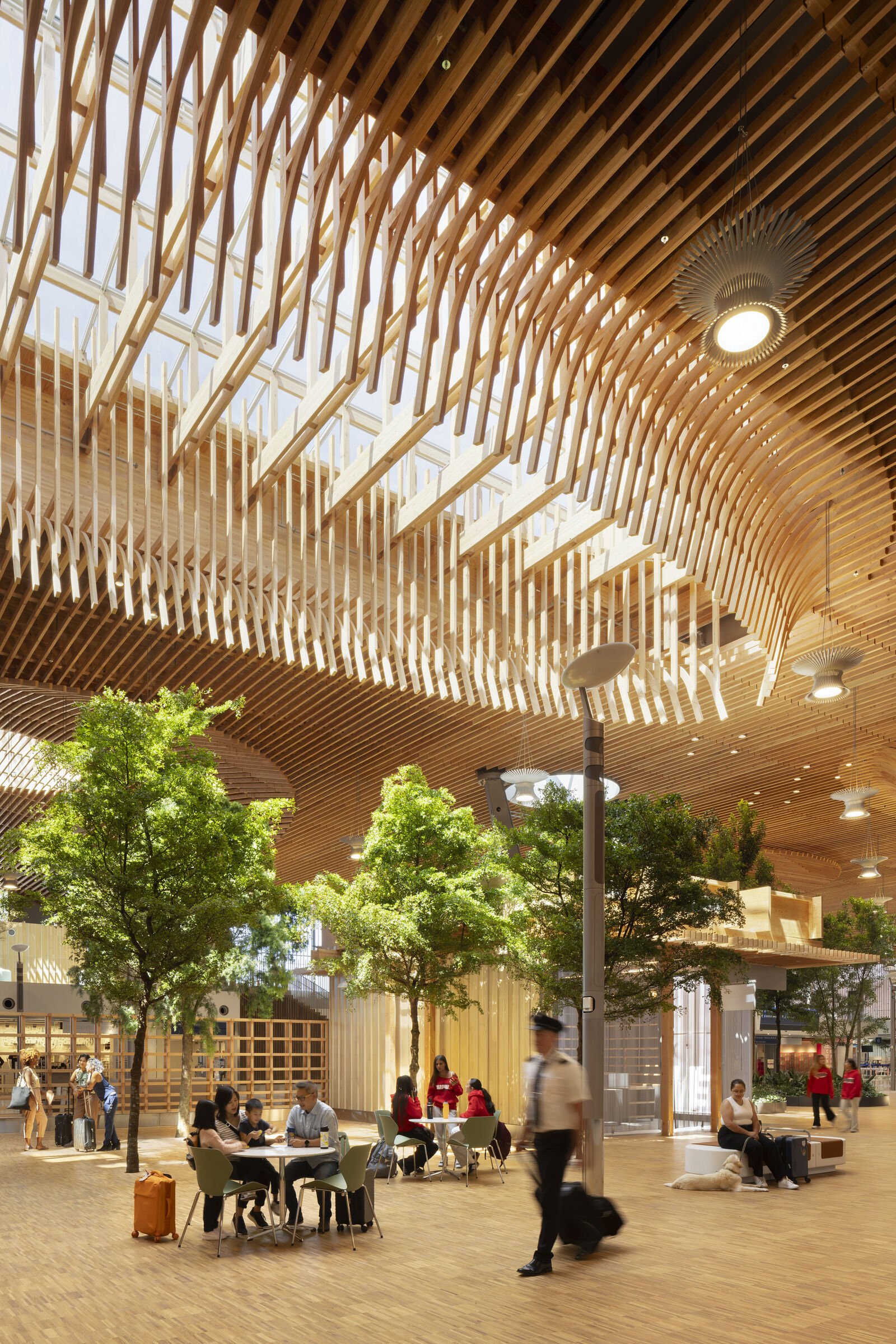
Through collaborations with Terrapin Bright Green and landscape architect PLACE, ZGF applied the concept of biophilia holistically throughout the airport. As a result, almost every corner of the terminal features touches of Oregon’s signature greenery and ample access to natural light. Pathways are filled with trees and plants, with 72 large trees up to 25’ tall, located at the seam and throughout the terminal; cascading gardens; and over 5,000 plants strategically placed throughout the terminal.
The landscaping provides a sense of wandering through a forest and serves double duty—acting as a wayfinding tool that guides passengers from security checkpoints to their ultimate destinations.
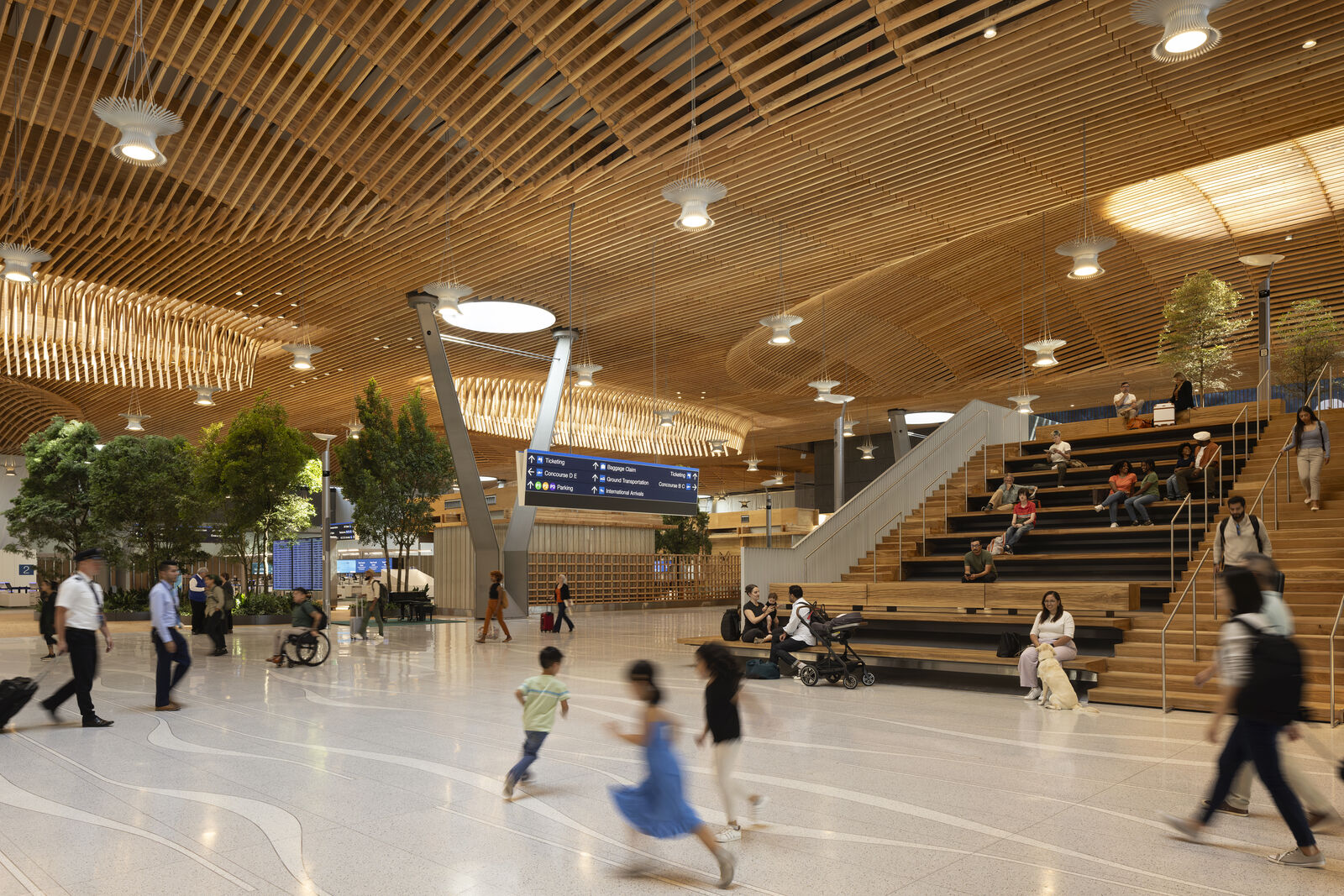
The Portland International Airport has a long history of prioritizing public space and ensuring all people have amenities and experiences that are open to them pre-security. Case in point: the new stadium seating at the heart of the new terminal which provides ticketed passengers, the general public, and airport employees alike with "free space" to relax or dine.
On average, American airport terminals are 40 years old and in need of renovation—and PDX’s main terminal, which had been completed by ZGF in the 1980’s, was no different. In 2007, the Port of Portland initiated a three-year conversation with the City of Portland and the wider Portland-Vancouver, Wash., metropolitan community, resulting in a long-range master plan and vision for land use under the auspices of the airport and city. The master plan, shepherded by a 30-member Planning Advisory Group, led to the formation of PDX Next, the Port of Portland’s $2 billion program to bring Pacific Northwest-inspired architecture and local businesses, along with inclusive design and carbon footprint-reducing technology, to PDX. Comprised of four transformative projects including the expansion of Concourse E (completed in 2020), a new Concourse B (designed by ZGF and completed in 2021), a new Parking Addition and Consolidated Rental Car facility (completed 2021), and the main terminal expansion, scheduled for completion by 2025, with Phase 1 opening in August 2024.
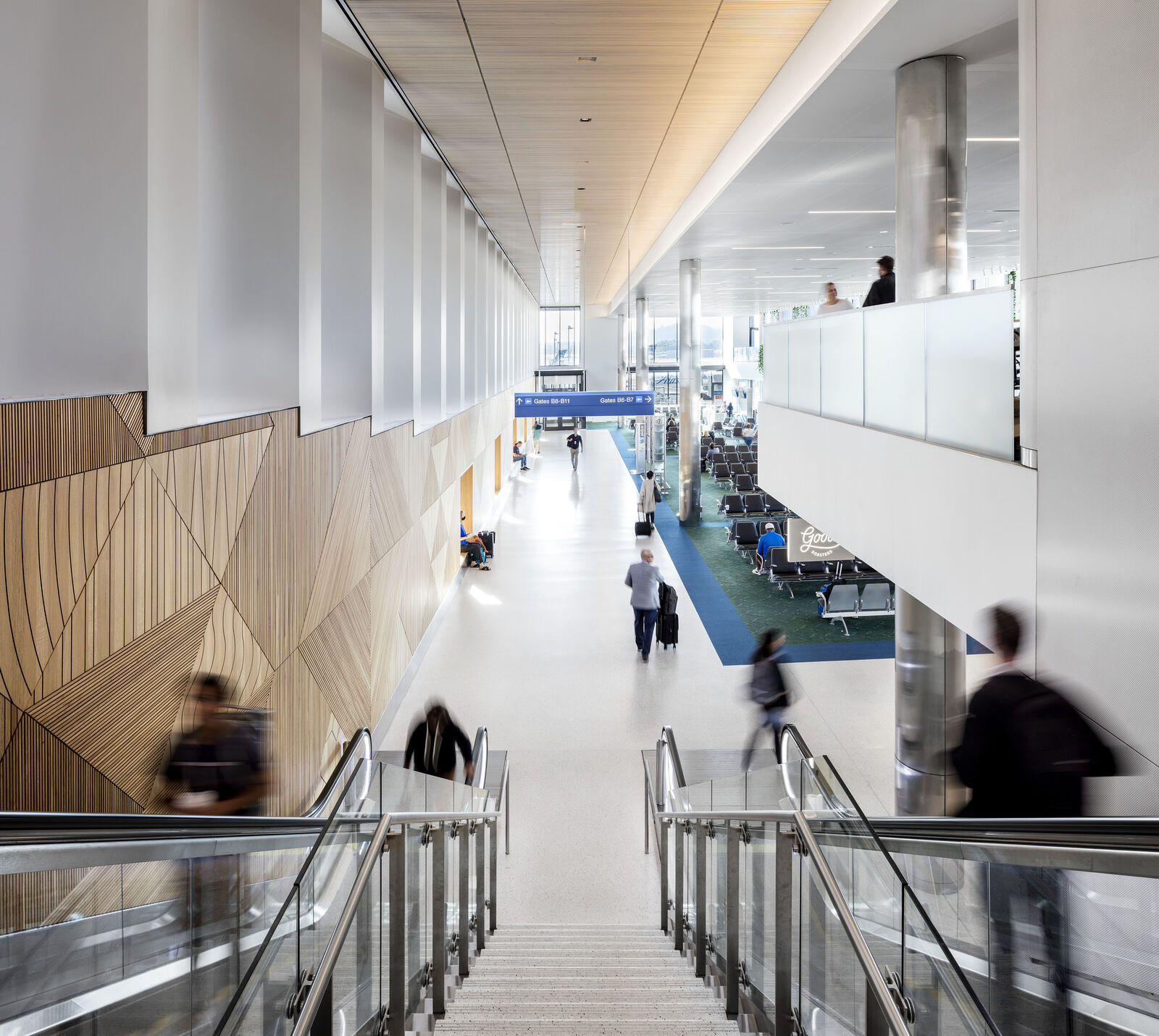
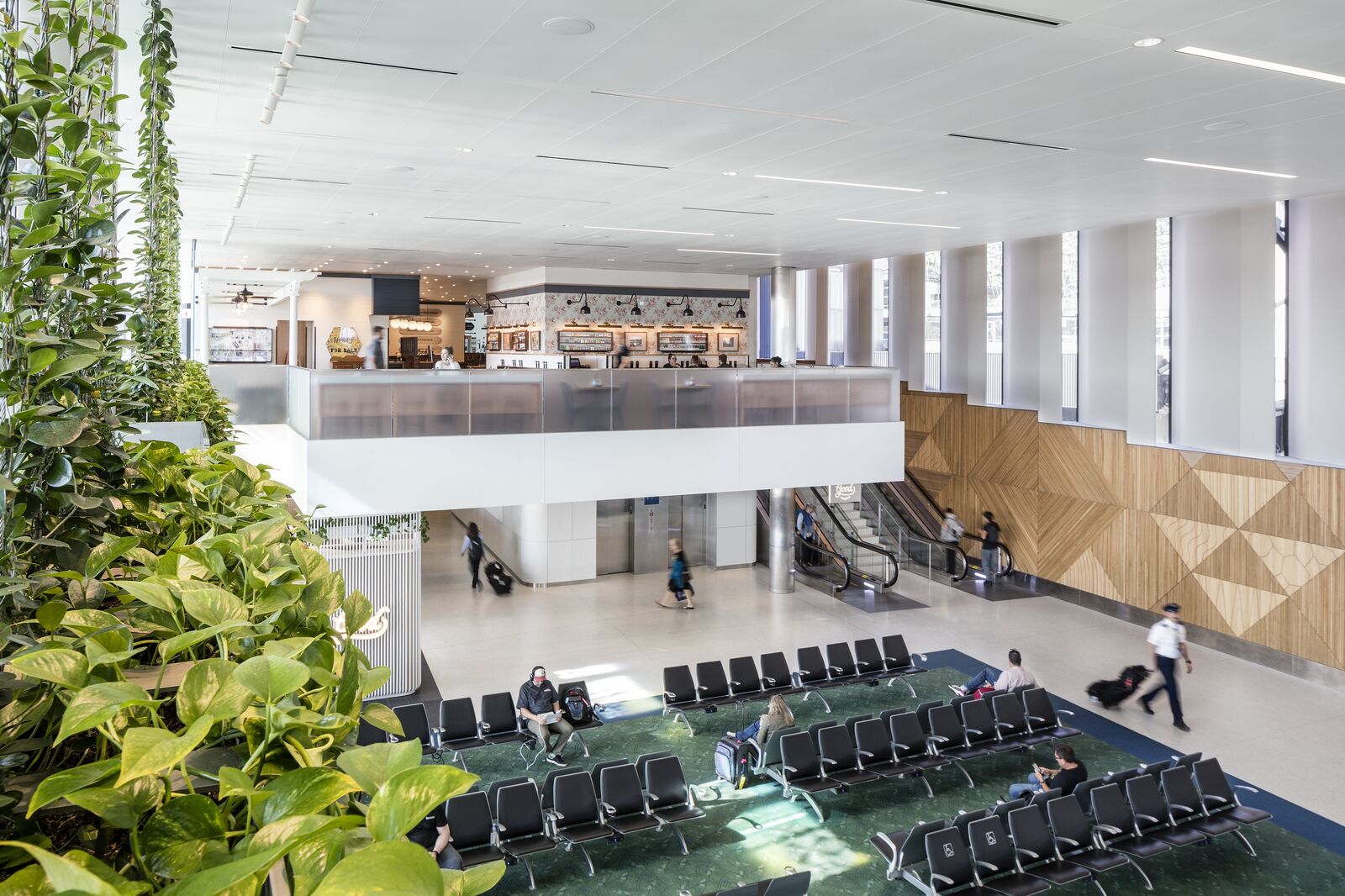
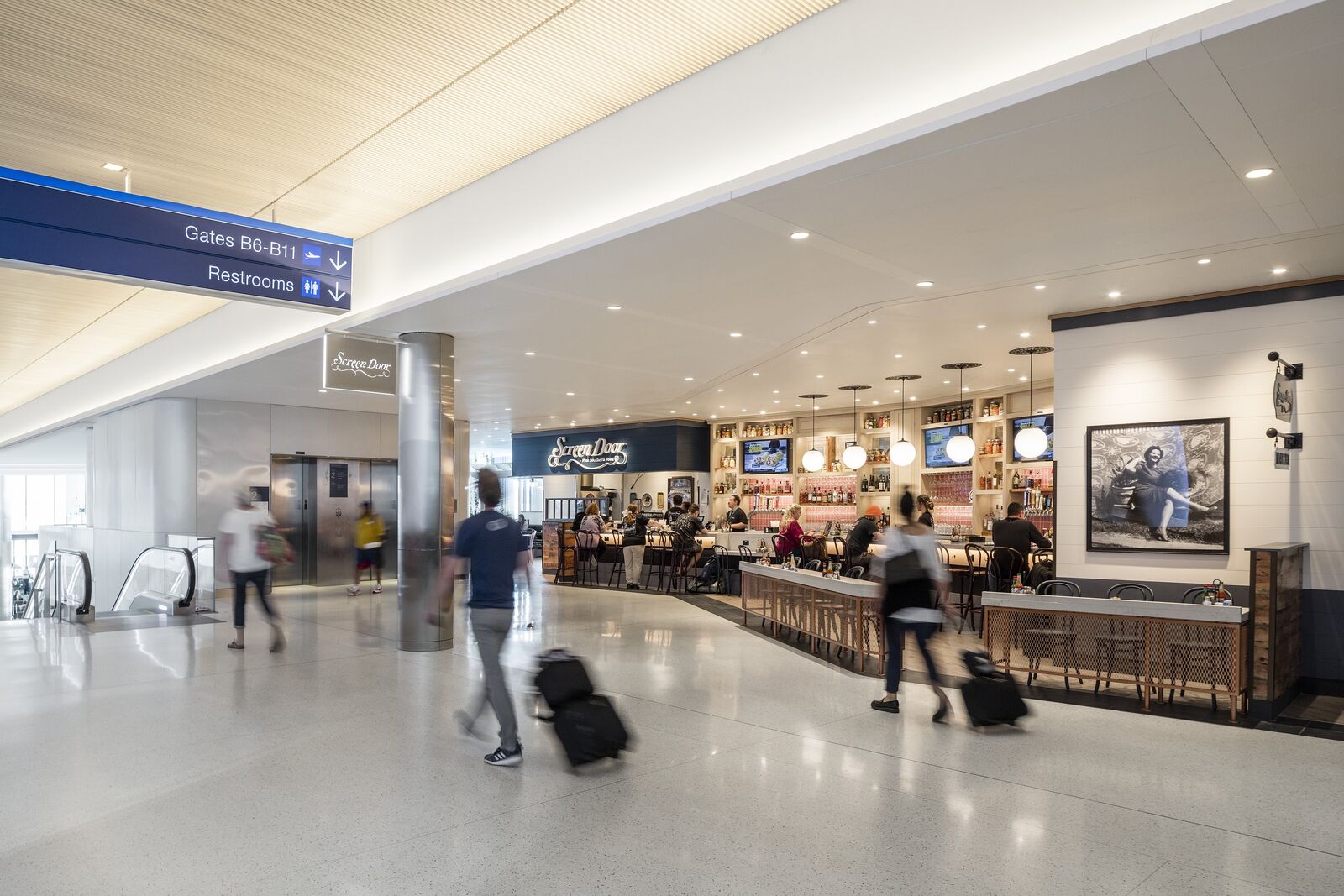
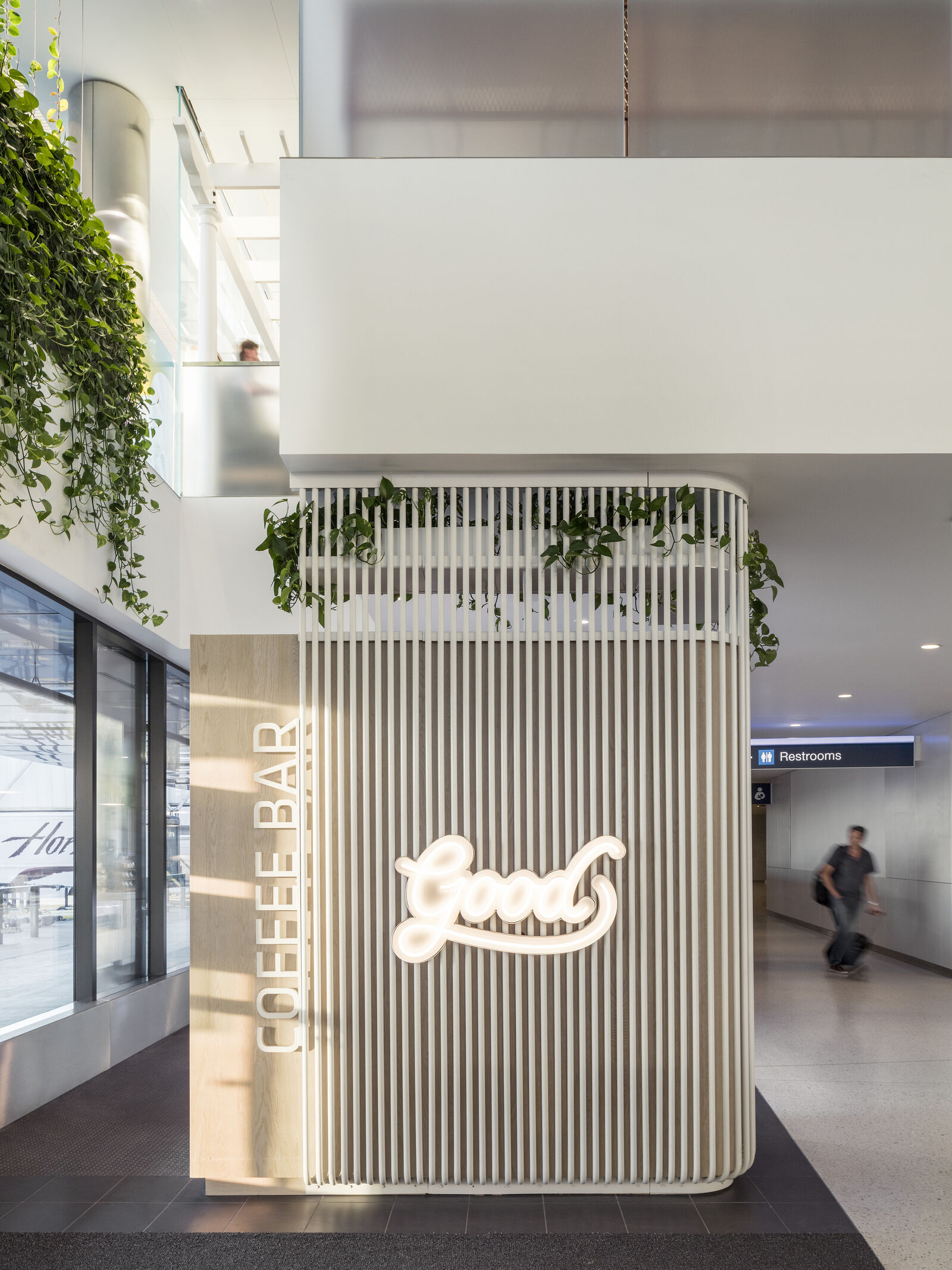
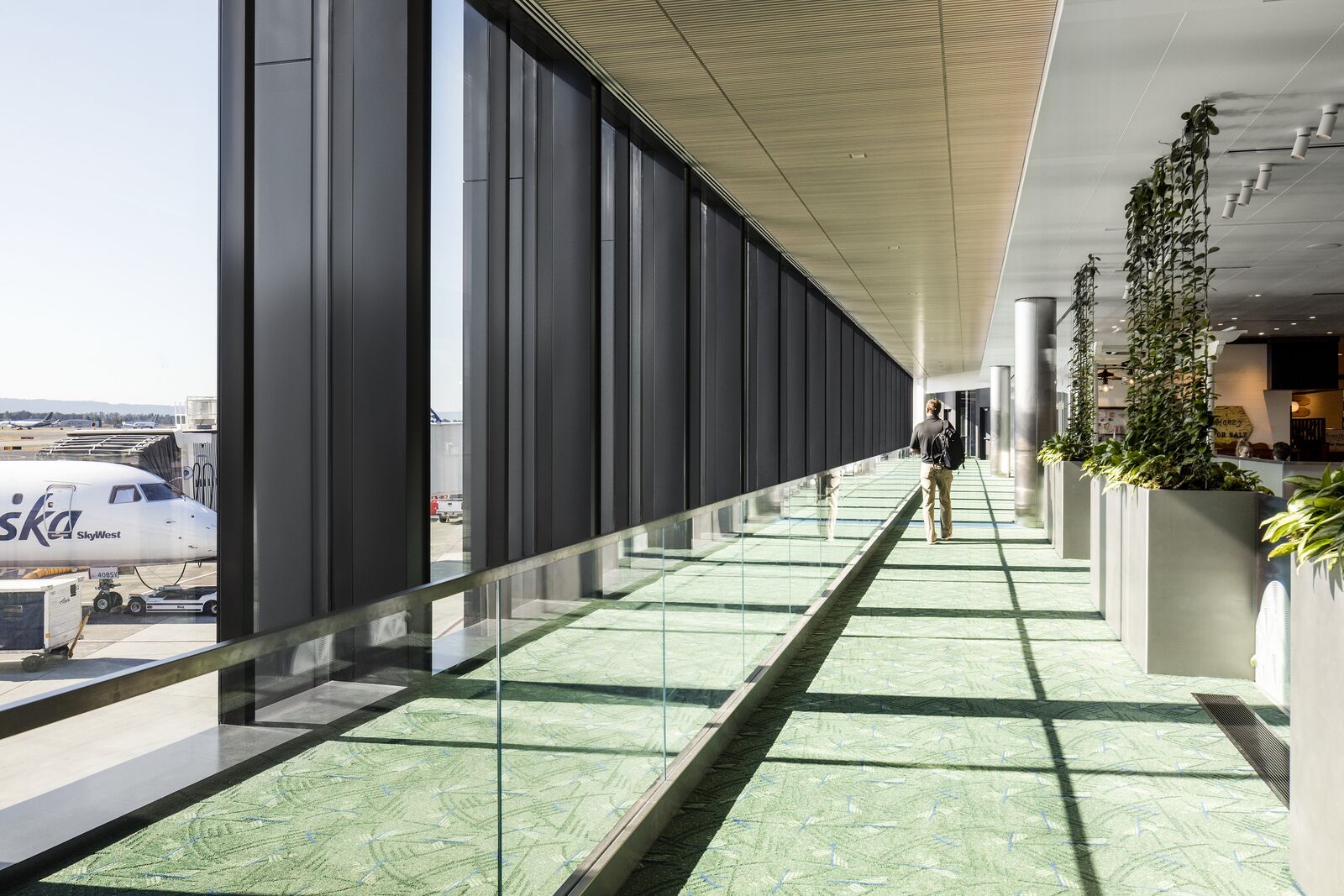
ZGF's design team traveled around the world, studying innovations at many airports and holding workshops with key airport leaders to better understand the direction of the future of travel and aviation design and to determine goals and aspirations for the airport’s expansion, the passenger experience, the processing, and the technology. The design was driven by four guiding principles: visionary design, the passenger experience, operational efficiencies, and sustainability. ZGF worked with the Port of Portland to choose between three potential expansion concepts, ultimately landing on the one that was most environmentally friendly, economically viable, enabled the airport to implement all the necessary improvements—and most importantly allowed PDX to renovate and expand in place.

The main terminal expansion at Portland International Airport (PDX) is a case study in effective prefabrication and modular construction strategies.
Sustainability was prioritized from the start of the design process. The decision to reuse much of the existing terminal, along with using wood and optimizing steel and concrete, enabled ZGF to achieve approximately 70% reduction in the overall structural embodied carbon footprint when compared with building an entirely new terminal.
The efficiency of the expansion enabled the capacity of the main terminal to be doubled while cutting its energy use in half. A highly efficient, all-electric, open loop ground-source heat pump provides 95% of the airport’s heating and 100% of its cooling demand, allowing the terminal to reduce its operational carbon footprint as the utility grid greens over time. The decision to convert to a ground source system enables growth without the need to increase the footprint of the airport’s existing central utility plant.
Other energy-saving details include the terminal’s high-performance facade which helps reduce peak cooling loads by up to 18%. Inside the terminal, the extensive daylighting strategy provides natural lighting to 60% of the terminal even under cloudy Oregon skies—with 7,800 LED bulbs providing the rest. Additionally, a 58% reduction in potable water usage was achieved via low-flow fixtures and well-water for non-potable use.
As passenger loads will continue to increase, it was necessary to design a flexible infrastructure that would allow for future innovations, evolutions in sustainable design, and the future need for expansions. From Hong Kong to San Francisco, ZGF’s design team examined global precedents to develop a structural spacing strategy for the new roof and large roof-supporting columns that would give the terminal a flexible future.
Key elements that made this possible were the use of 100 ft x 150 ft long-span structures and unobstructed floorplates. These long-span structures allow the airport the ability to successfully adjust to changing and future needs, creating column-free security checkpoints and adaptable check-in islands. The number of columns throughout the terminal was reduced from 670 to 34, further opening the space. Fabricated from 1-inch plate steel and filled with thermal grout for fireproofing, these massive Y-columns hold the 18-million-pound, 400,000-square-foot roof in place. The team was able to fine tune the grid and locate just 10 of the massive 53-foot columns within the existing terminal footprint, with the remaining 24 all outside its perimeter.
This innovative solution left more infrastructure in place and minimized operational disruptions during construction, saving both time and money. These were also important moves to future-proof the airport, as they create more operational flexibility—and enable ticketing, security, processing, and retail concessions the room to evolve.
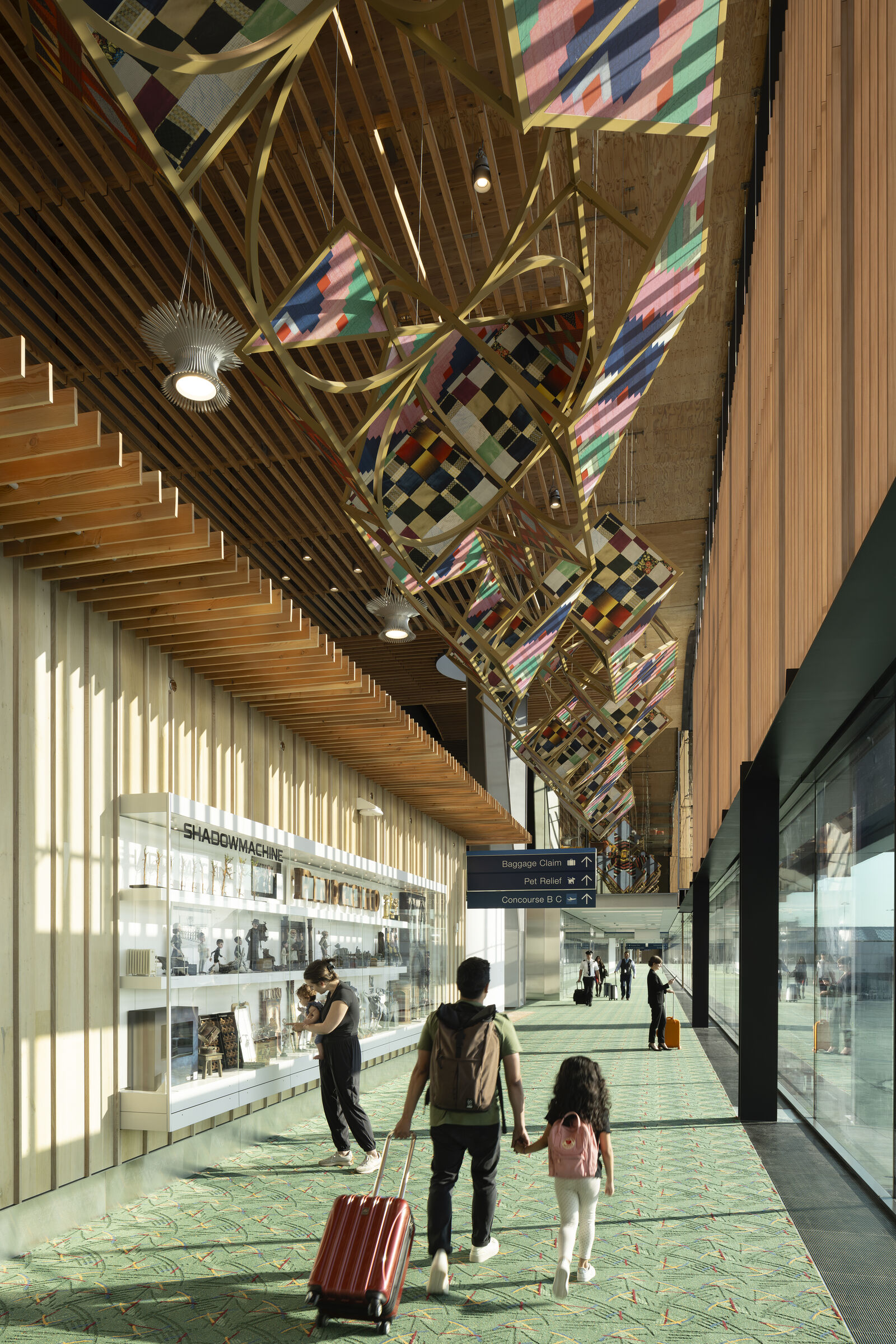
Sanford Biggers created two large scale, signature artworks inspired by antique quilts and textiles for the new PDX Airport. Suspended from the ceiling between both entries of the concourse connector passageway, these post-security artworks greet travelers after they pass through the security checkpoints on either end of the terminal.
ZGF looked at urban planning strategies to determine placement of spaces within the expansive terminal. The large and flexible main terminal houses smaller scale architecture that takes cues from the human-friendly scale of Portland’s short city blocks, the rhythm of urban neighborhoods, and the city’s parks and pedestrian-friendly, tree-lined streets—designed as a “series of rooms” that recreates the city of Portland’s unique, walkable sense of scale.
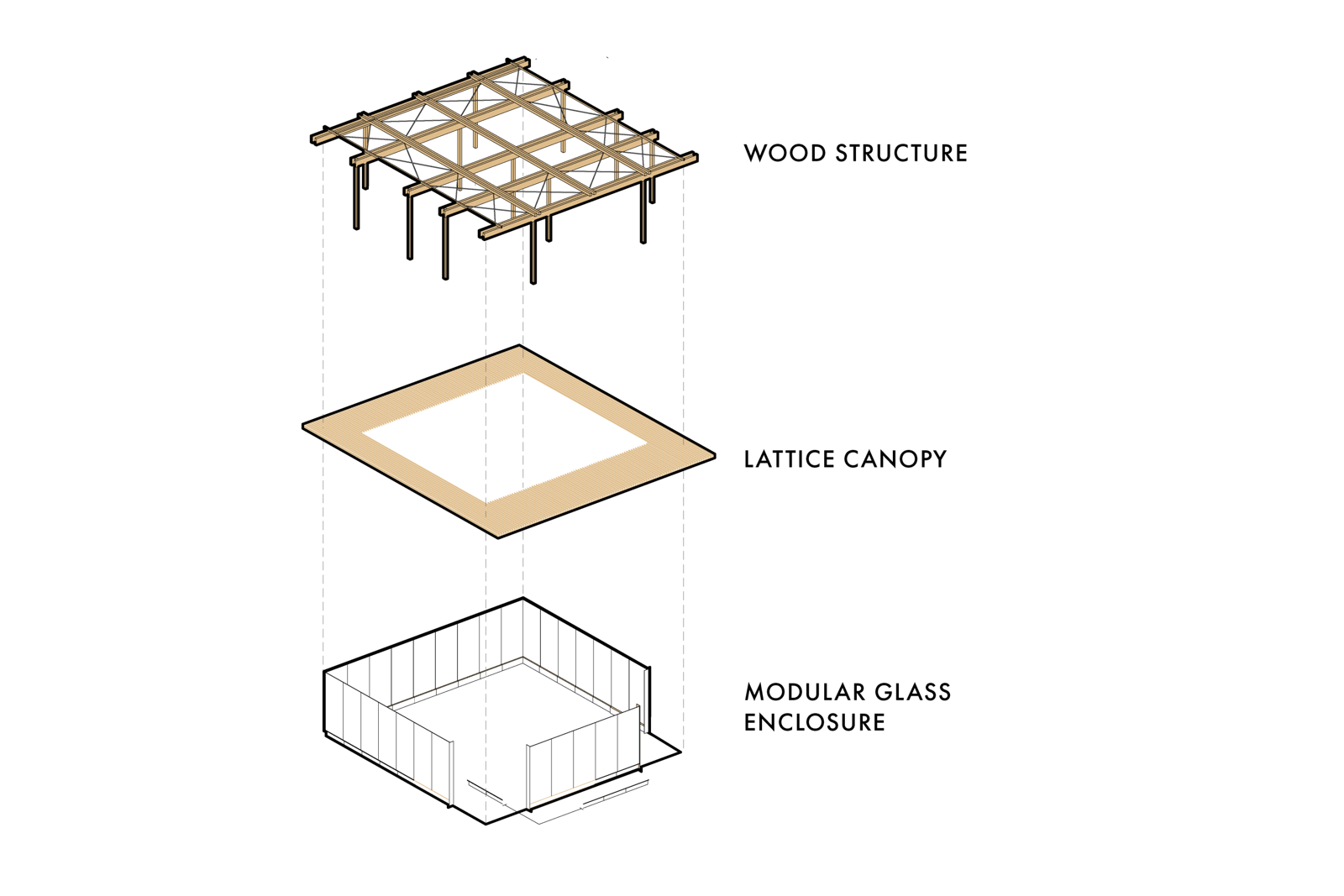
While the large-span roof structure of PDX Airport opens the space between columns for operational flexibility, the curvature also allows for a sequence of smaller independent structures below: concessions, offices, restrooms, and other airport services.
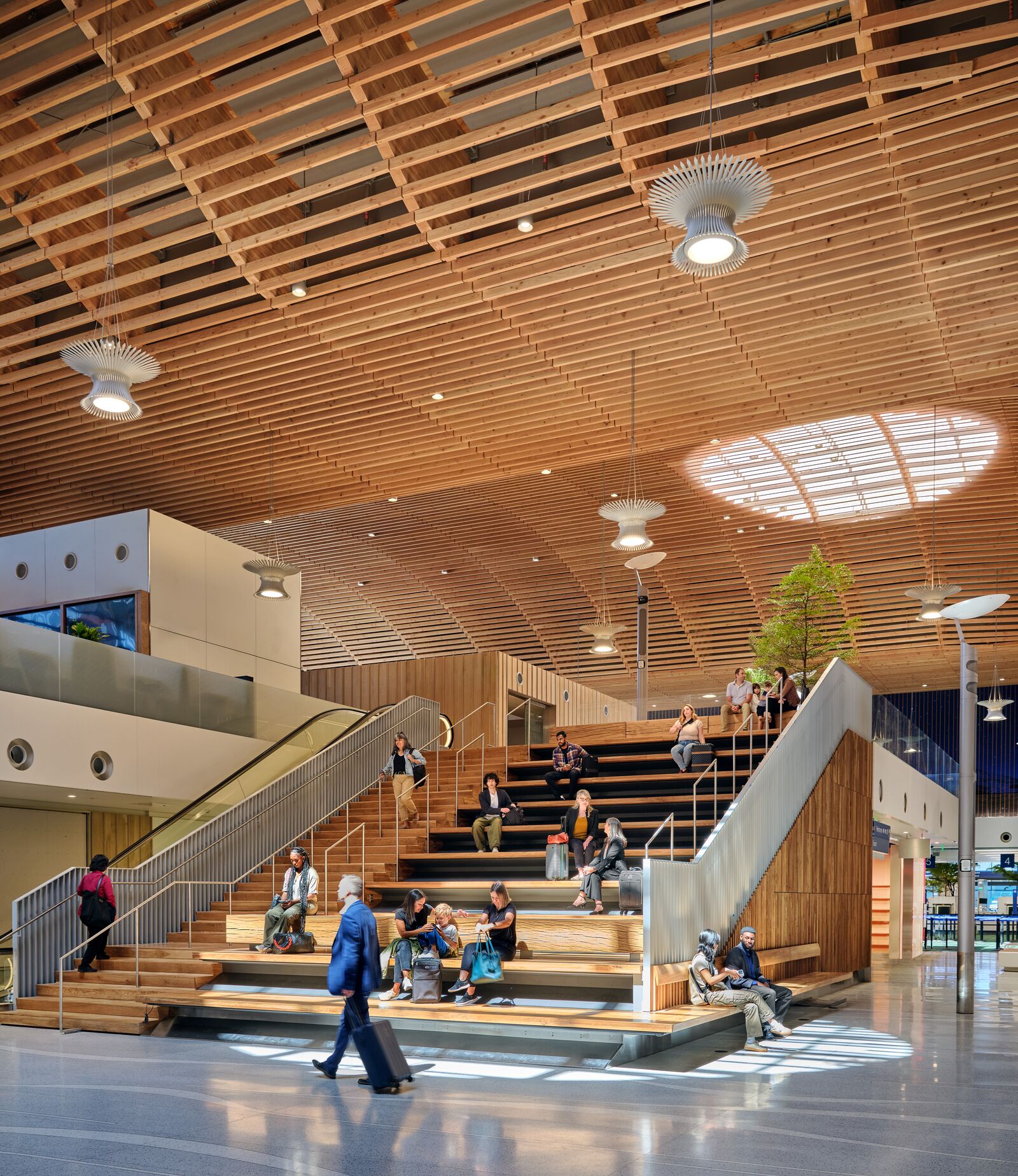
The central threshold gives way to a pre-security marketplace where 30% of the total concessions are located. The marketplace offers uniquely regional goods and dining that is open to anyone, including the community and employees, and features a new public space with stadium seating and restaurants on a mezzanine level.
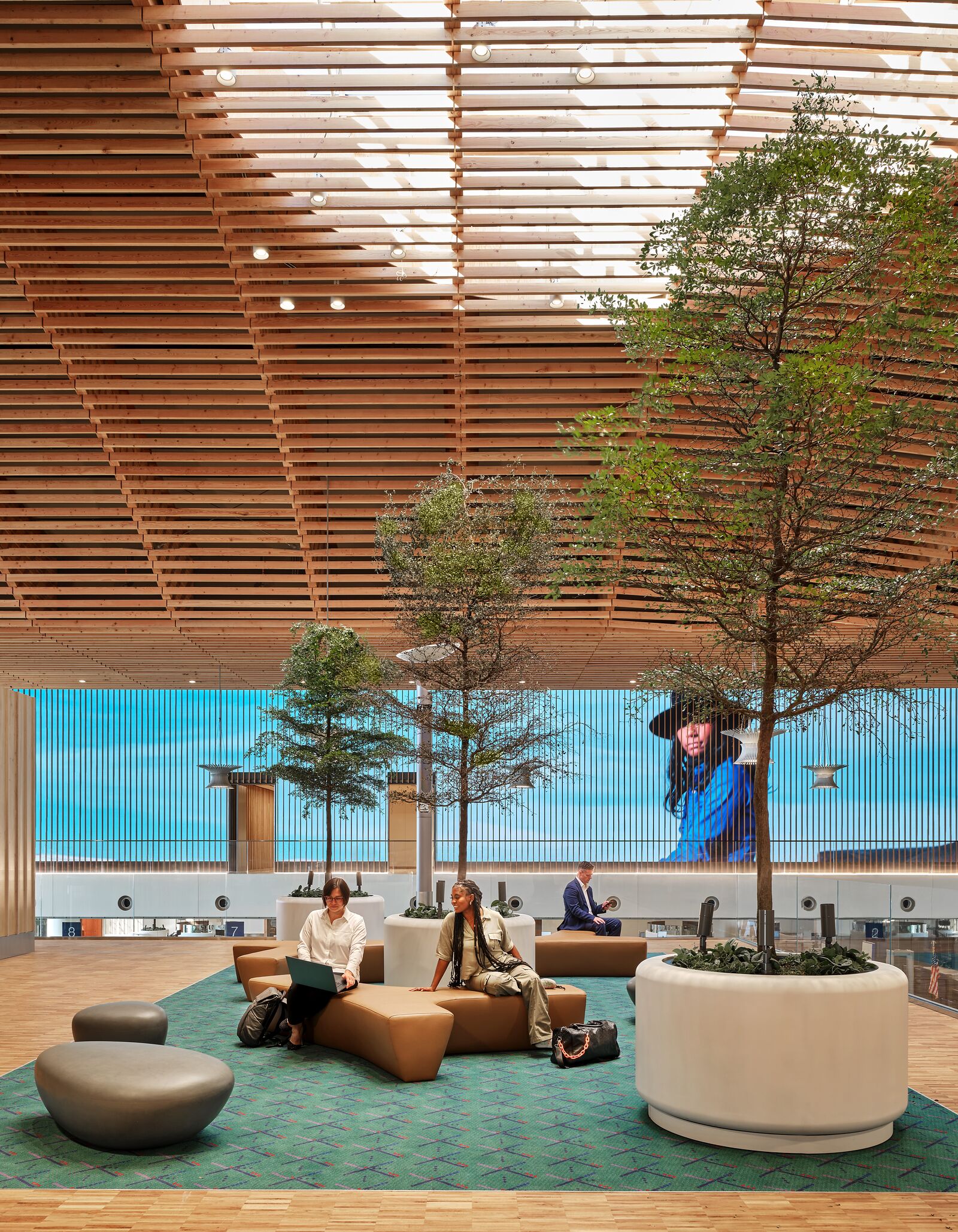
PDX’s two new video walls, which stretch above the security checkpoints, display a 24-hour art installation. “Extraordinary Windows,” as the piece is titled, mixes short artworks with Oregon-inspired landscapes that change according to the time of day, weather, and how many people are traveling through PDX. Extraordinary Windows is a creative collaboration between Half Sister Studio and Dot Dot Dash. The imagery of the cowboy pictured is by artist Ivan McClellan.
The next stop for ticketed passengers is the TSA security checkpoints located on either the north or south end of the terminal depending on their departure gate. Processing lanes at the updated security checkpoint move bins via conveyor belt, allowing for automatic bin return and better processing speed for everyone. Planters with built-in benches give travelers and families a place to sit as they recompose.
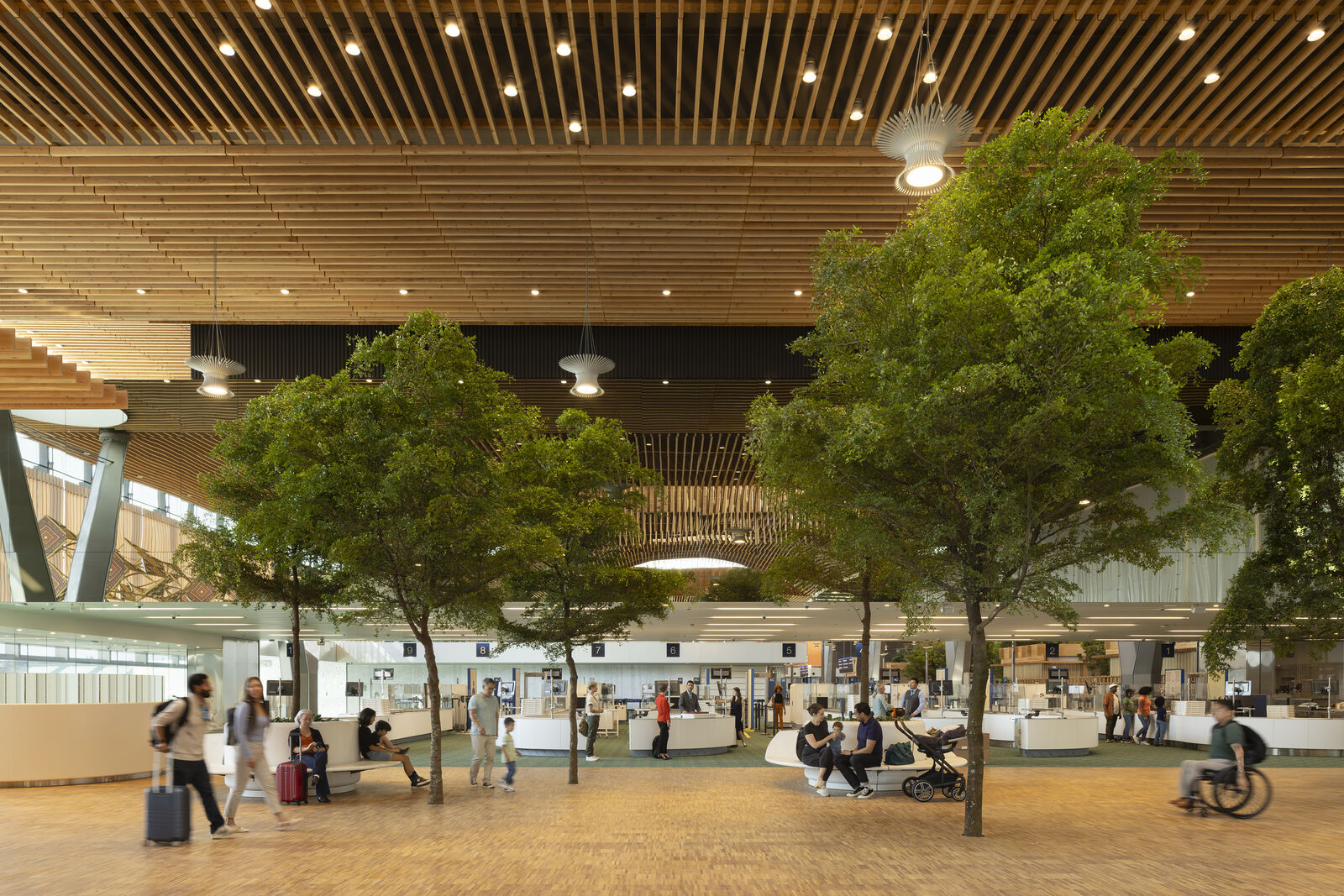
ZGF and the Port of Portland selected mass timber for the 9-acre roof for various reasons including cost, constructability, and as a nod to the Pacific Northwest’s thriving timber industry. PDX is the first major airport in the U.S. with a mass timber roof. The use of wood celebrates Oregon’s history and the future of forest product innovation, craftsmanship, and ingenuity, and because wood sequesters carbon, it is also a major sustainability feature.
Inspired by the sun filtering through a forested setting, the daylighting strategy consists of 49 thoughtfully placed skylights of different shapes and sizes that filter daylight through the mass timber roof’s lattice and large skylight openings—illuminating 60% of the terminal alongside custom hanging light fixtures. The expansive 9-acre roof is constructed from 3.5 million board feet of wood, comprised of three different wood products: mass plywood panels for the roof diaphragm, glulam beams, and 3 x 6-foot timbers for the lattice.
The beams were designed to eliminate the need for steel hardware; minimizing the need for metals, reducing cost, and aesthetically highlighting the wood. The peaks and valleys of the expressive roof design also conceal a myriad of systems within its hybrid structure and contribute to its seamless appearance. Adding to the grandness of the design, 34 massive Y-shaped columns hold the 18-million-lb, 400,000-sq-ft roof in place.
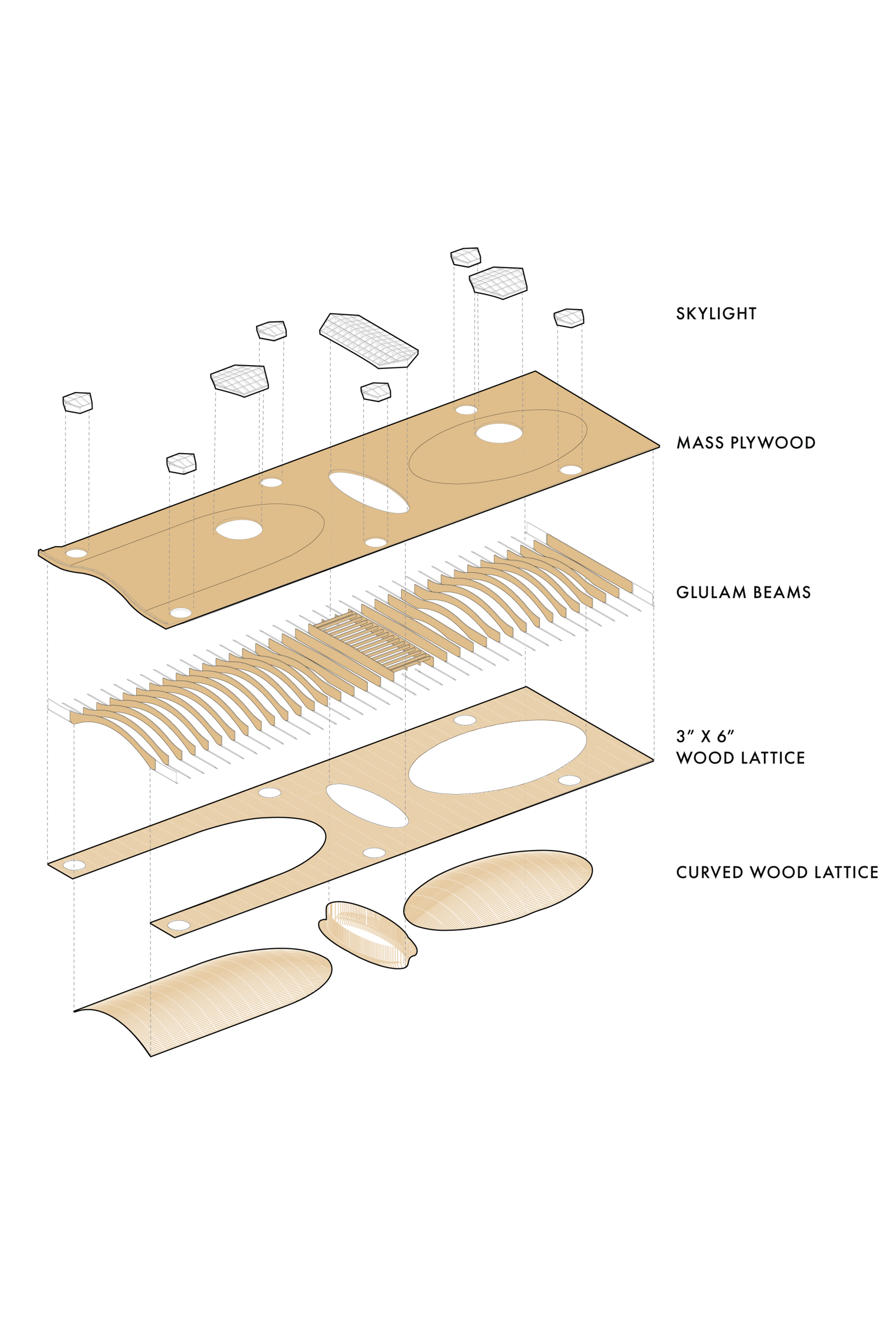
Individual pieces of wood are visible in the PDX roof, making the enormous structure feel like it has been handcrafted, connecting it to human experience on a very grand scale. The glulam beam and lattice overstory is a basketweave of arches and scalloped shapes, inspired by traditional weaving techniques indigenous to the region.
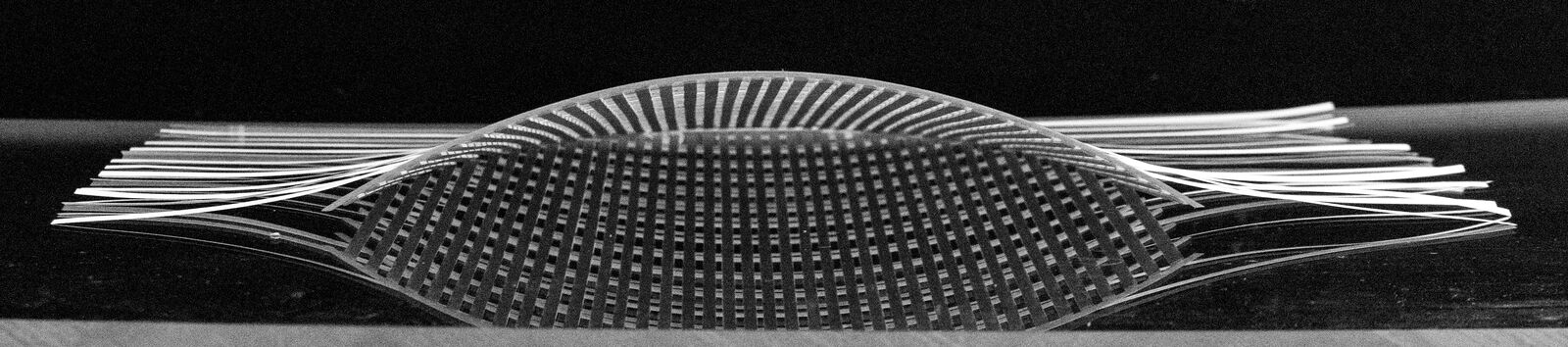
Given the technical complexity of executing a 9-acre roof and the impetus to make it feel bespoke and handcrafted, the team employed a series of physical models as part of the architectural process. Models at various scales were an important tool for visualization and allowed the team to verify concepts.
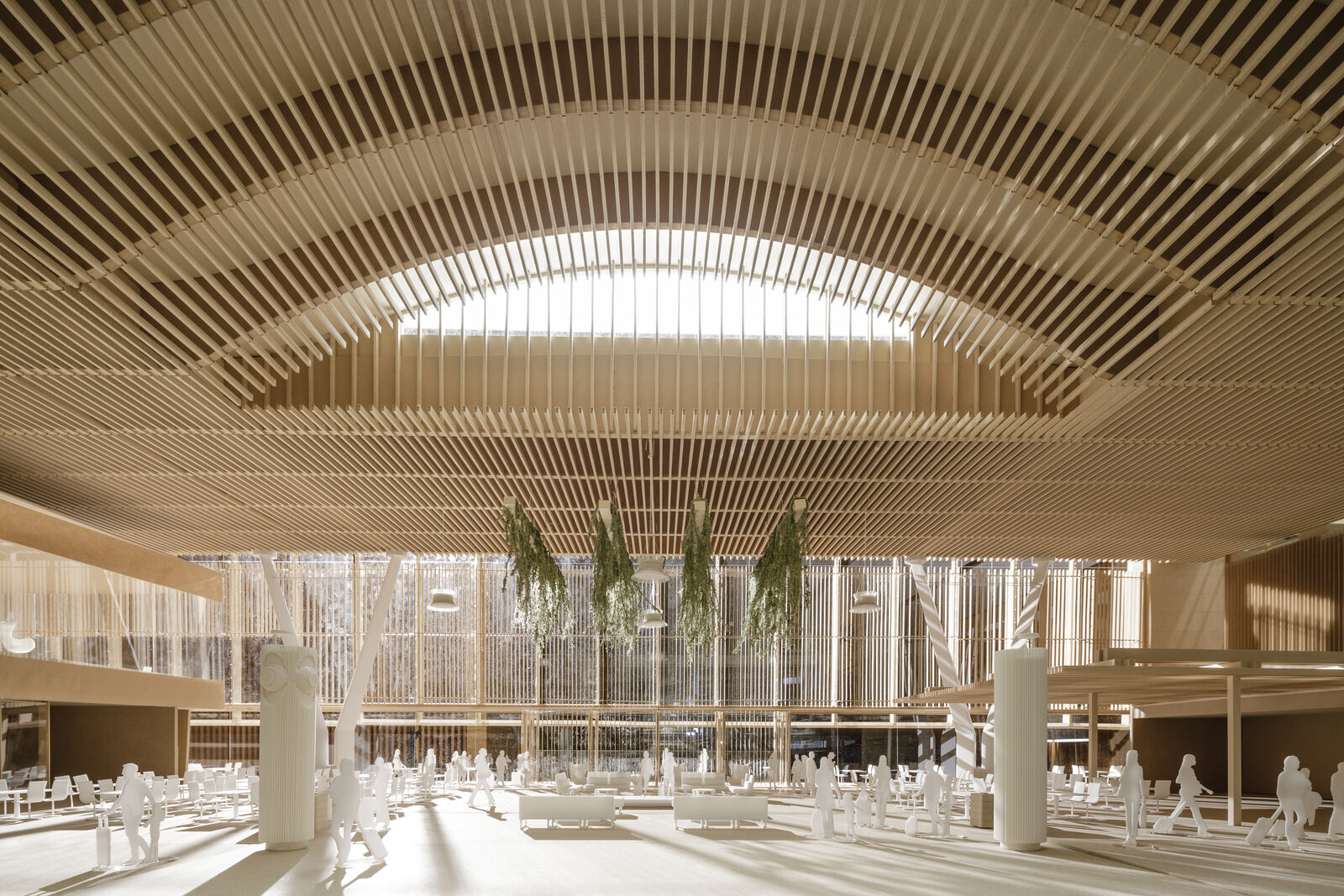
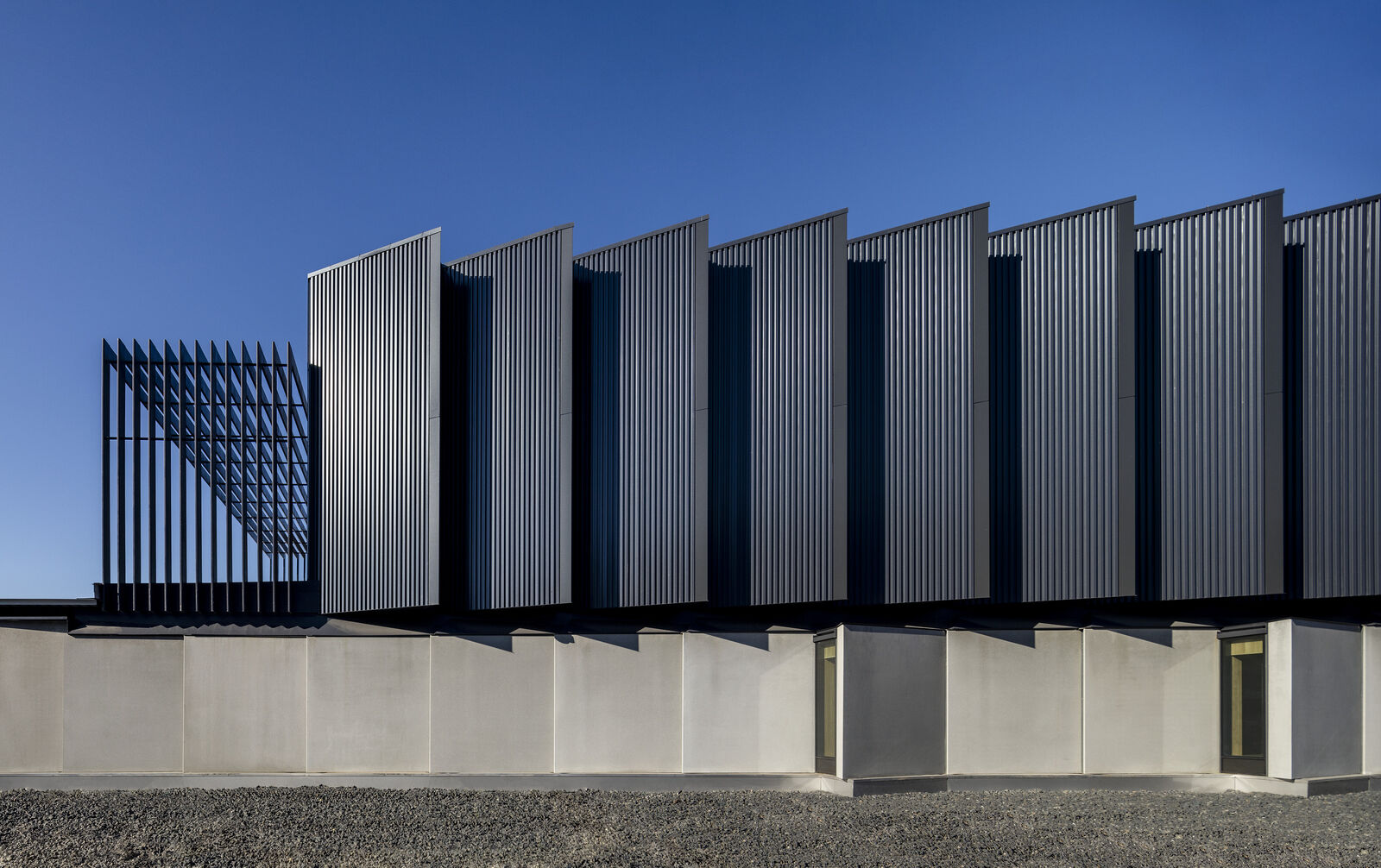
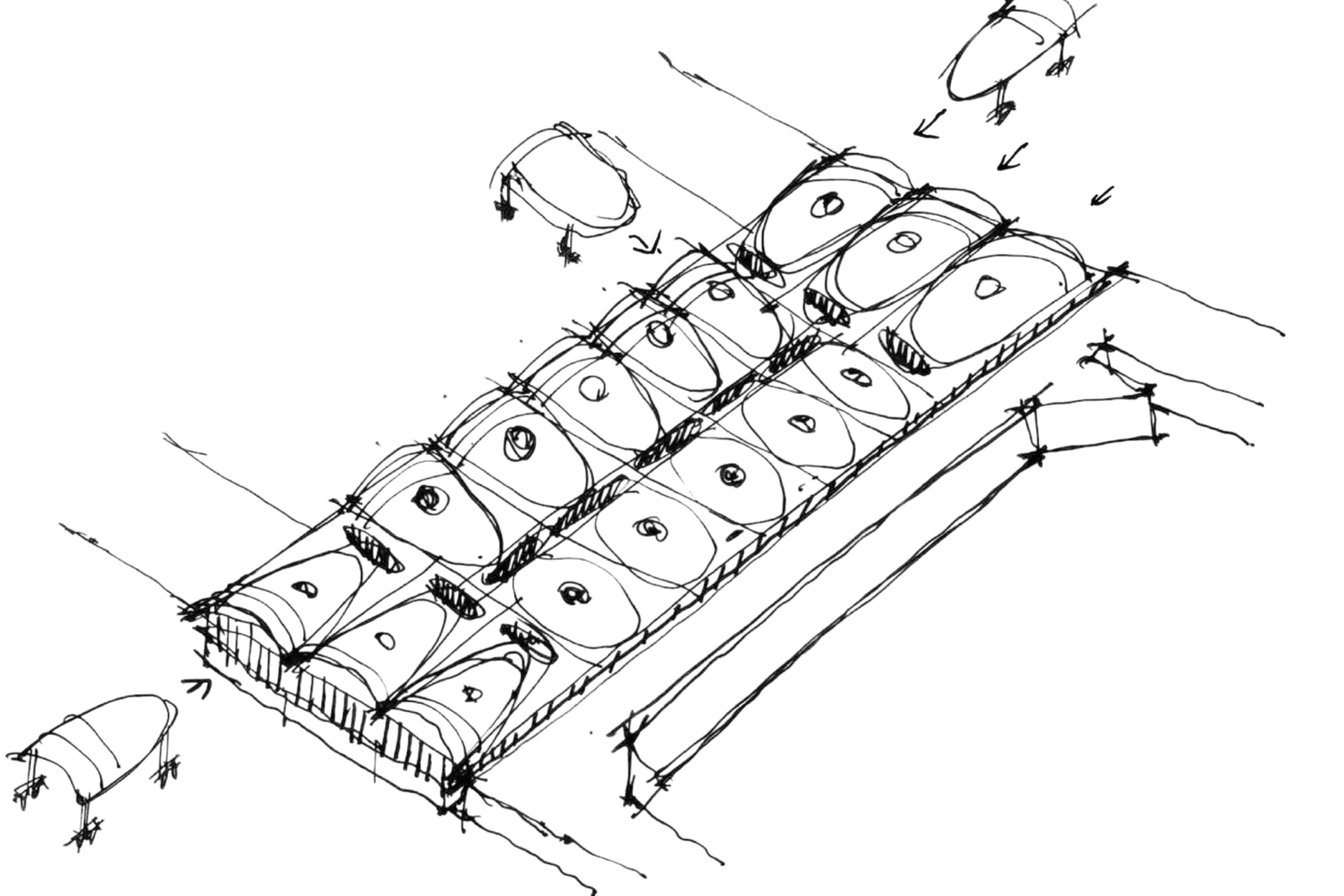
The main terminal expansion at PDX is a case study in effective prefabrication and modular construction strategies. Prefabricating and modularizing the roof structure reduced construction duration, ensured the airport remained fully operational while avoiding disruptions to passengers, and increased cost certainty—also improving quality of work and safety outcomes. The process required prefabricating a 9-acre roof, deconstructing it into the 18 modules, transporting it, and then stitching it back together over an operating terminal.
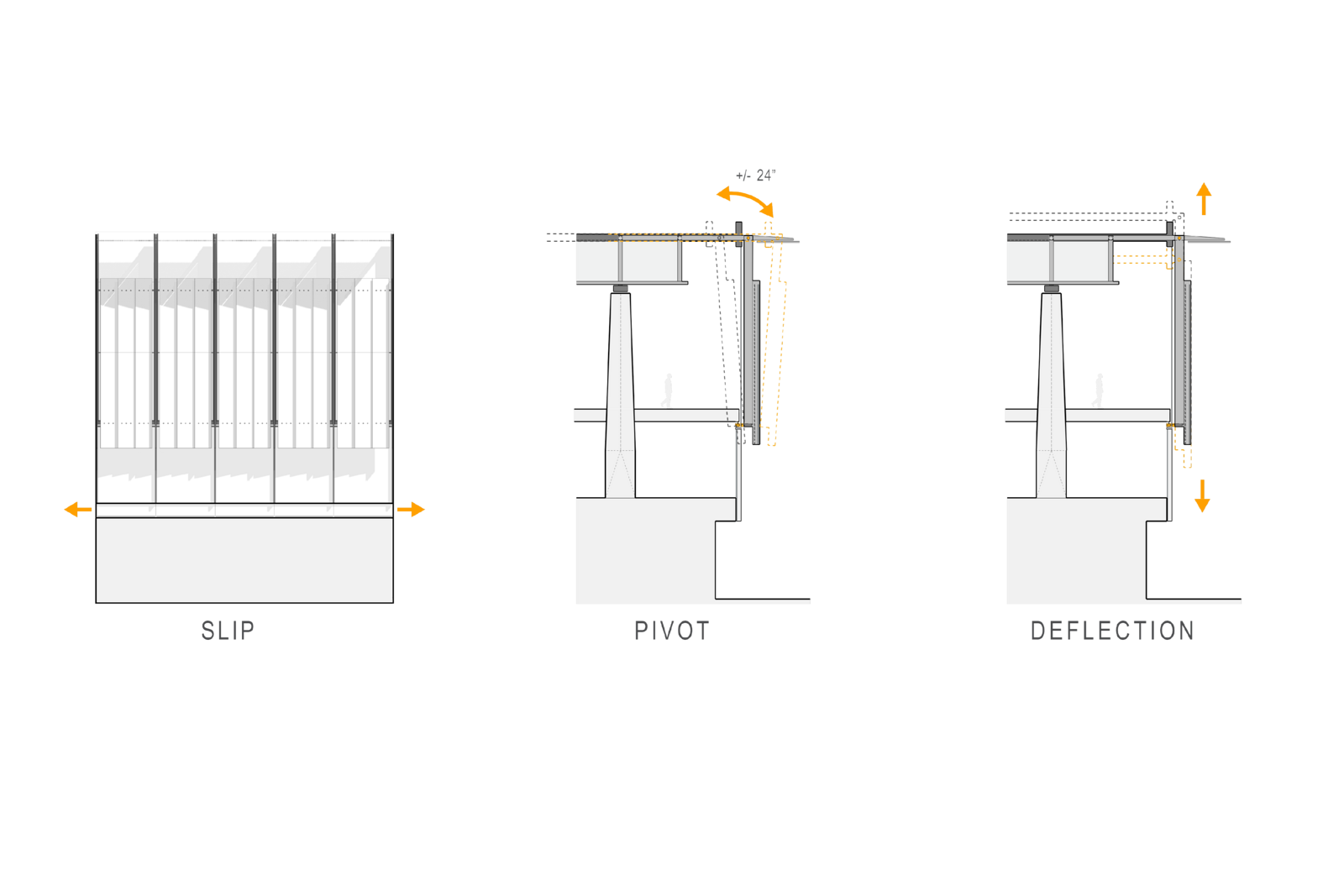
Ensuring resiliency was also critical. Due to PDX’s geographical location within the Cascadia Subduction Zone, ZGF designed the roof of the new structure to withstand a 9.0 magnitude earthquake. Seismic isolation bearings at the top of the Y-columns allow lateral movement up to 24 inches during a seismic event, while a hanging curtain wall is attached to the roof with hinged connections that permit it to slide and pivot relative to the structure below. A tight building envelope with passive heating and cooling systems and incorporation of natural daylight allow for passive survivability if the airport is disconnected from the power grid.

Portland International Airport is the first major airport in the US with a mass timber roof.
Maintaining operations while expanding PDX in-place required a phased approach to construction. Phase 2 of the project, which expands post-security spaces on the north and south ends of the terminal, is underway and expected to open in 2026. The space is currently open to passengers in a temporary capacity with roughly half of the concessions located beyond security already open. When complete, small plazas, pavilions, and active corridors will recall Portland’s tradition of urban planning.
A central boulevard, inspired by the smaller scale of Portland’s city blocks, with cafe seating and urban furniture invites travelers to linger with trees and planters to help reinforce a neighborhood feel. Clear views, a high ceiling, and dappled light are critical to ensuring reduced stress and optimizing the overall passenger and retailer indoor environmental experience.
The retail experience is also inspired by Portland. Retail concessions (22 in total) were designed as a “kit of parts” with plug and play utilities for ease of installation and to give operators flexibility and choice in their configuration and brand expression.
ZGF Design Partners
Industry Partners