
Creating PLACES: The Next Generation of Building Evaluation
PLACES is more than just an evaluation method—it’s a cultural shift. It invites institutions to go beyond operational performance and consider how their spaces foster connection, learning, wellness, and inclusion. With this new framework, Princeton Facilities is redefining what it means for a building to succeed and setting the standard for others to do the same.
Princeton Facilities, amid the largest period of growth in its history, set ambitious experiential and operational goals for each new campus facility through a Value Proposition (VP) and Preliminary Project Objectives (PPOs). As the university pursued these goals across a range of high-performance projects—including a new central utility facility, residential colleges, academic buildings, and an art museum—they recognized a critical missing element: an evaluation framework that allowed them to measure their success. And while traditional building performance evaluation models excelled at assessing the technological and operational aspects of an environment, they fell short in capturing the experiential and behavioral outcomes central to Princeton’s VPs and PPOs.
To address this challenge, Princeton Facilties partnered with ZGF to assemble a team of subject matter experts in behavioral science, community engagement, building performance, and sustainability—including The Decision Lab, Daylight, and BranchPattern—to completely reimagine the evaluation process. The result is PLACES, a groundbreaking performance evaluation framework that builds on the strengths of traditional building evaluation models, while introducing a holistic lens encompassing People, Learning, Access, Culture, Environment, and Sustainability.
A New Way to Evaluate
PLACES is a flexible evaluation framework that can be adapted to any building typology, incorporating the latest knowledge from behavioral science and sense of belonging research. It encourages active engagement with the campus community through multiple data collection methodologies and provides actionable findings to support the next generation of Princeton’s strategic priorities and initiatives.
The PLACES evaluation framework is anchored on four focus areas:
- Occupant Experience | Focusing on sense of belonging and environmental comfort
- Occupant Behavior | Including objectives such as collaboration and community building
- Building Performance + Sustainability | Including building operation and maintenance
- Site Performance | Including access to nature and art, pedestrian experience, and micromobility
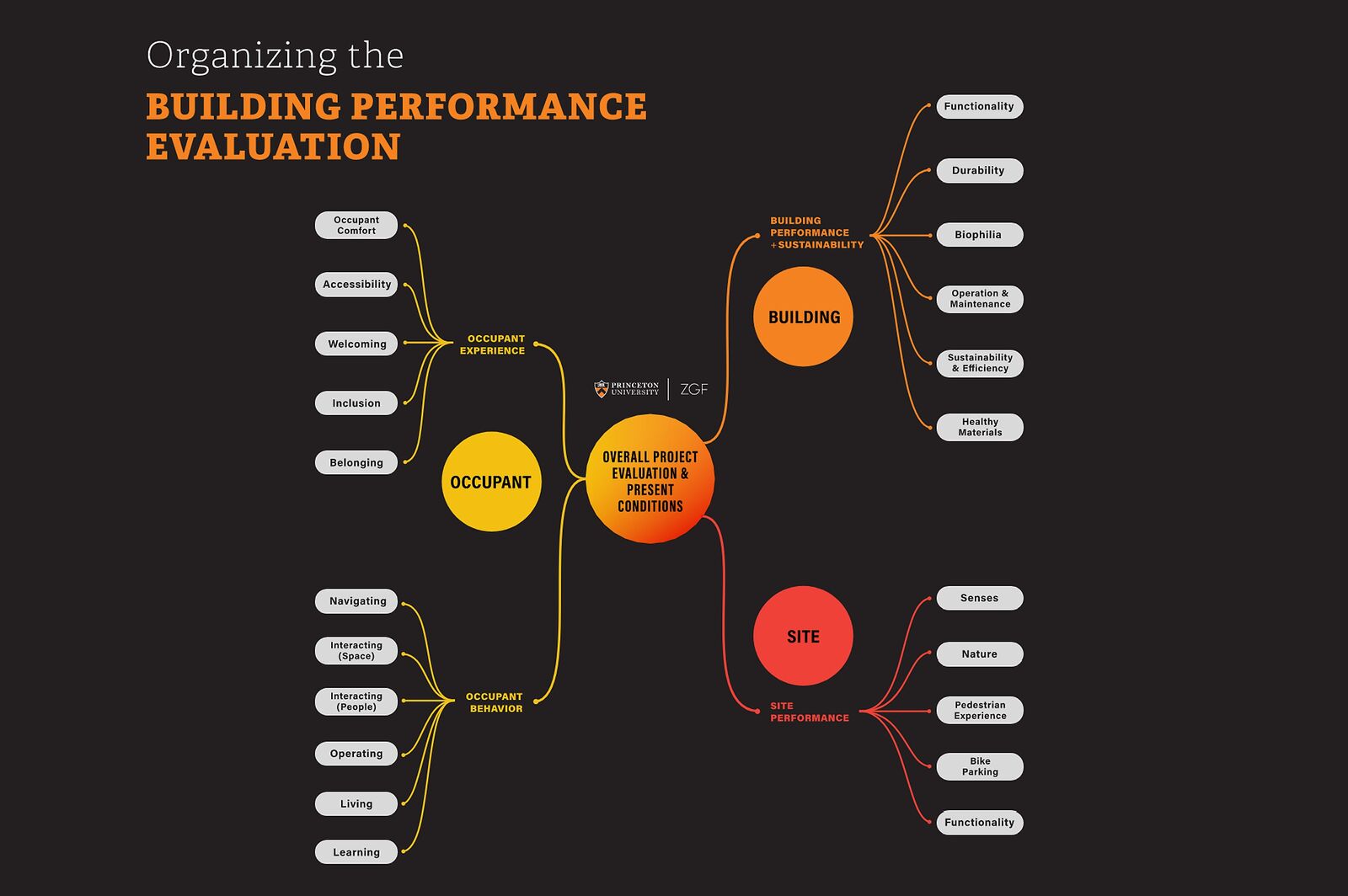
By embedding behavioral science, community engagement, and a sense of belonging into its core, PLACES provides a more complete and human-centered understanding of what makes a building successful.
Piloting the Framework
To put theory into practice, Princeton Facilities applied the PLACES evaluation framework to five diverse pilot projects across campus: Firestone Library, Yeh College, New College West (NCW), Rockefeller College, and Mathey College. Our team of subject matter experts employed 10 different data collection methodologies designed to engage a broad and representative sample of the campus community, including behavioral mapping, focus groups, walkthrough interviews, surveys, and pop-up feedback stations.
This inclusive participatory process yielded nuanced insights, which were organized into four actionable categories:
- Insights – Direct findings and observations for each pilot project organized by themes such as collaboration, community building, sense of belonging, and building performance.
- Short-term Recommendations – Project-specific improvement suggestions that can be implemented immediately.
- Long-term Recommendations – Project-specific improvement suggestions that can be incorporated during future renovations. Suggestions for improvement for the specific project evaluated that can be incorporated during a larger renovation.
- General Lessons Learned – Elements and design ideas that can serve as best practices for future project design teams.
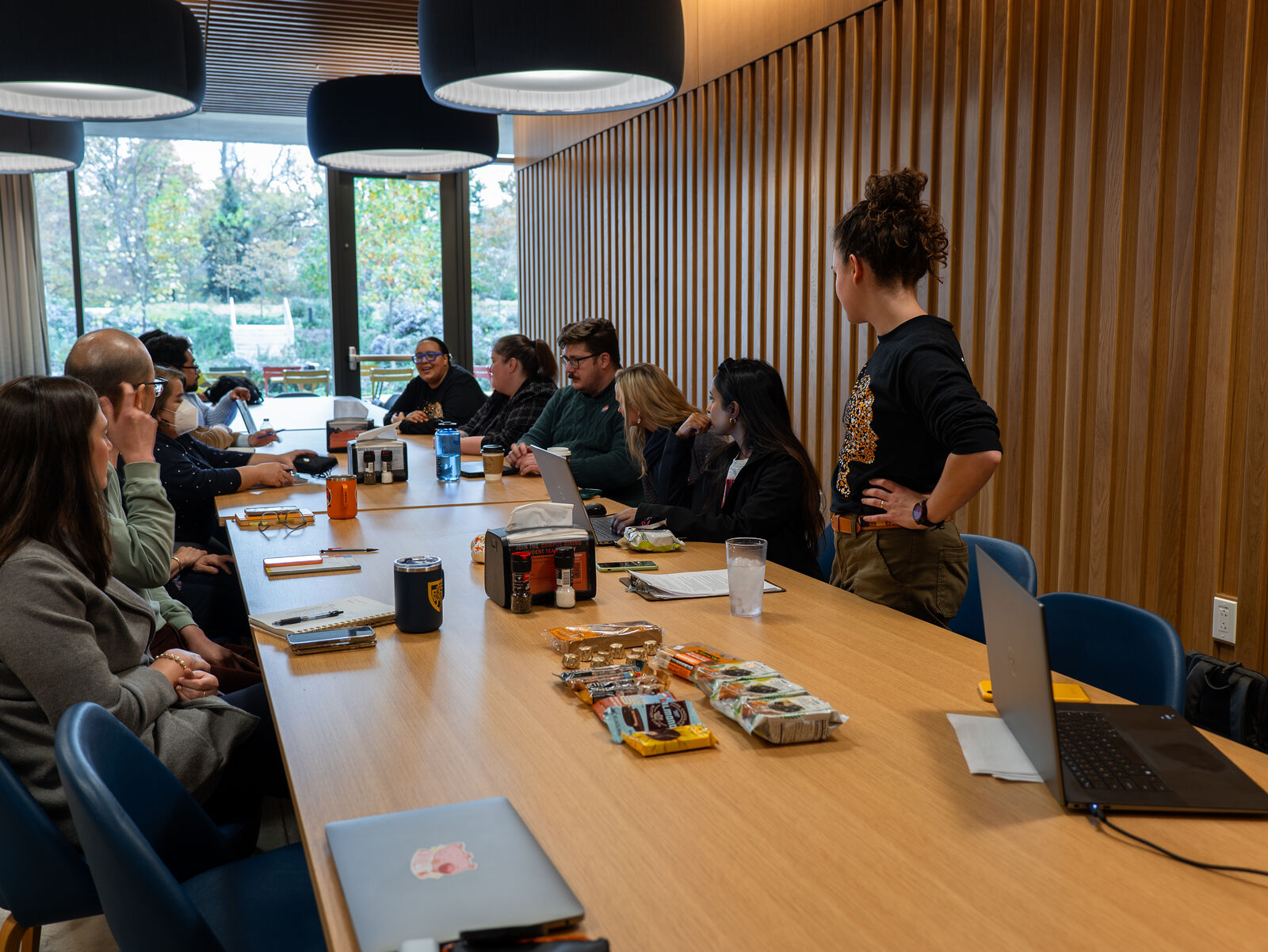
The PLACES team includes subject matter experts from ZGF, The Decision Lab, Daylight, and BranchPattern.
A Toolkit For Action
One of the most powerful outcomes of this initiative is its flexibility and potential to scale. The PLACES digital platform empowers Princeton to inform future projects and design teams, and train future evaluation teams to ensure continuity and consistency with the framework. The digital platform is comprised of:
- The PLACES feedback dashboard which allows Princeton Facilities and project teams to easily search through the insights, recommendations, and lessons learned to answer questions or help inform decision-making
- The PLACES evaluation framework report that describes the development process
- An evaluation report for each pilot project which includes a breakdown of the evaluation’s scope, objectives, space types, key results, and more
- Training videos that explain each data collection methodology and the analysis process
- A comprehensive glossary to ensure shared language across teams
The Princeton PLACES Evaluation Feedback dashboard
– Watch on YouTube
For Princeton Facilities, the PLACES framework has been a powerful, scalable tool that measures what truly matters—how spaces shape community. PLACES is an example of how Princeton Facilities is at the forefront of reimagining campus environments and setting a precedent for other institutions to follow.

Buildings That Serve Everyone Should Include Everyone
