Igniting Creativity at the Crossroads of Art and Science
Carnegie Mellon University, Richard King Mellon Hall of Sciences
Acclaimed for its achievements in science, technology, and the arts, Carnegie Mellon University (CMU) upholds a rich legacy of embracing diverse viewpoints to ignite boundless creativity. This interdisciplinary ethos is the cornerstone of the new Richard King Mellon Hall of Sciences, a 338,900 SF mixed-use building that will create a place of confluence for the Mellon College of Science, the School of Computer Science, the Institute for Contemporary Art (ICA) Pittsburgh, and the local community. Positioned at the crossroads of art and sciences, the new facility will blur traditional boundaries while inspiring scientists, creators, and students to deliver world-changing results.
Location
Pittsburgh, Pennsylvania
Square Feet
338,900
Completion date
2027
Project Component
Architectural design
Interior design & space planning
Environmental graphic design
“Carnegie Mellon University thrives at the intersection of science and art. The Richard King Mellon Hall of Sciences is no exception, expertly intertwining the worlds of creativity and critical thinking for society’s gain.”
Farnam Jahanian, CMU President
Campus Meets City
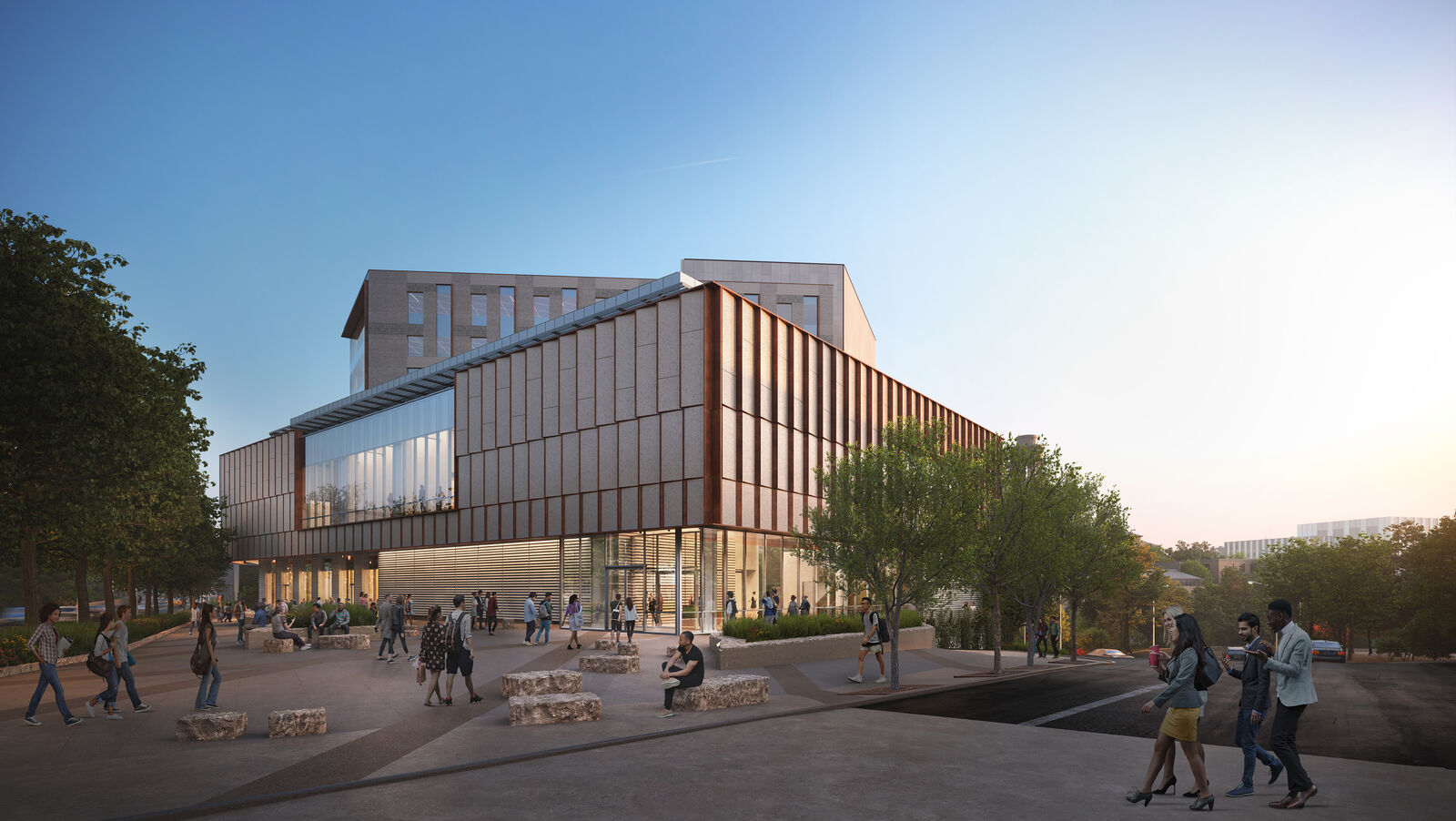
Occupying a prominent site adjacent to landmark Pittsburgh institutions such as the Carnegie Museum of Art, the Richard King Mellon Hall of Sciences will strengthen connections between CMU and the city’s broader cultural landscape while establishing a welcoming and exuberant campus edge.
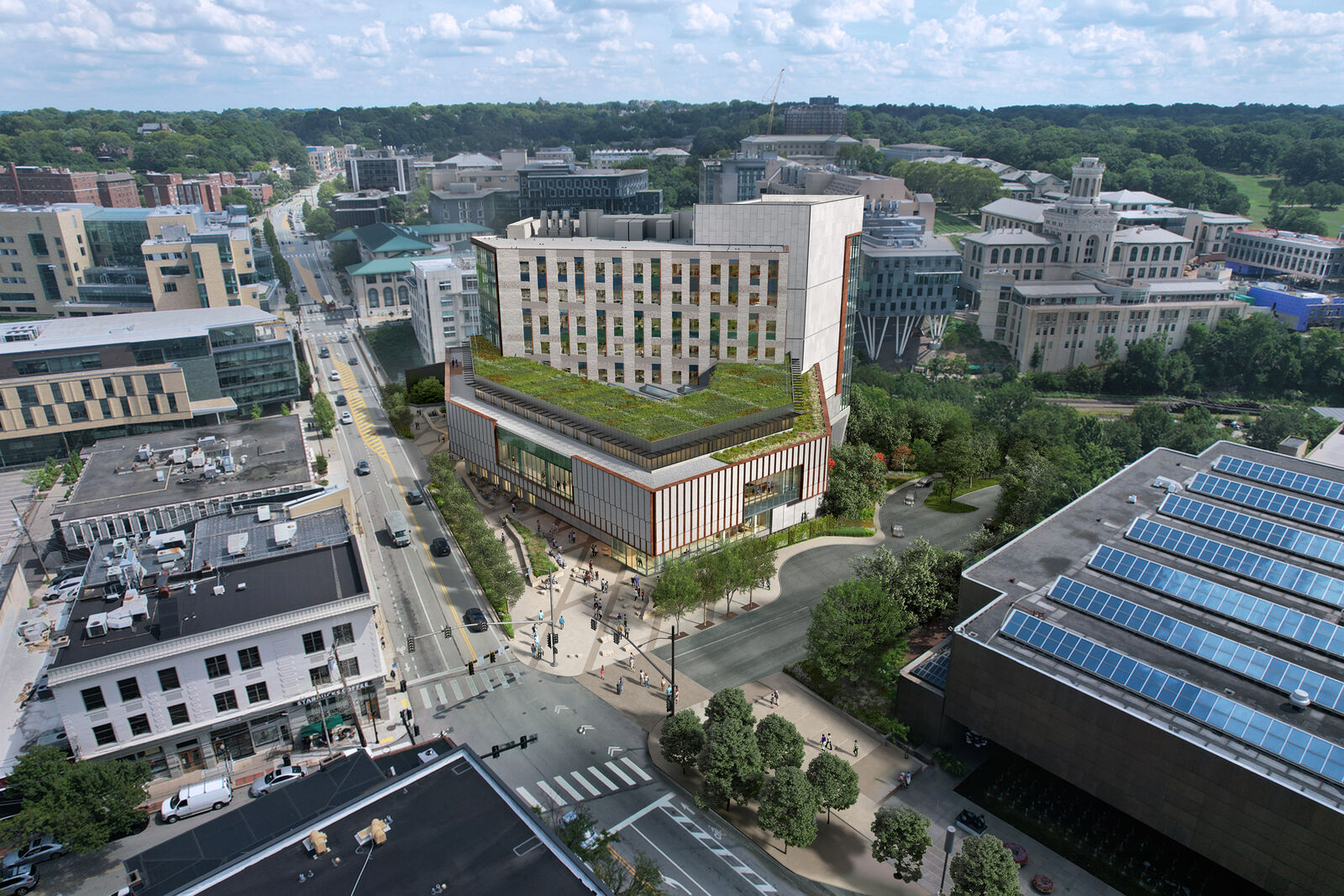
Passersby will encounter the structure as a dynamic entity, its visual form evolving according to one’s viewpoint.
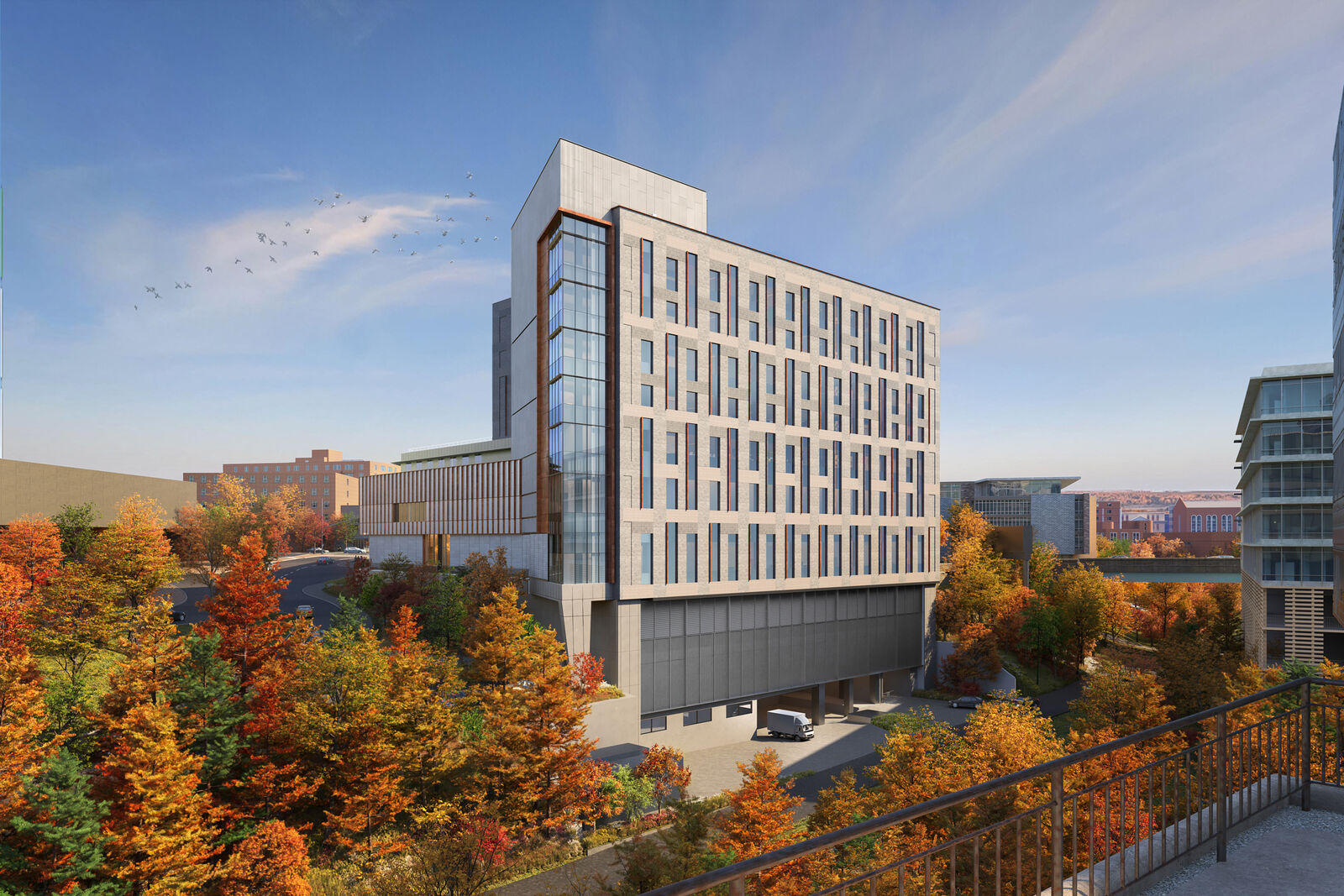
The building’s rich program and urban context inspired its parti. The first two levels are arranged in a loop, reaching outward to meet and welcome the community. A ground-floor restaurant and contemporary art museum (ICA Pittsburgh) will open onto a new civic plaza along Forbes Avenue, strengthening CMU’s connection to adjacent Carnegie museums. At the site’s rear, an efficient tower stacks flexible wet and dry research facilities over parking and service functions.
To craft an expression evocative of CMU, ZGF drew inspiration from the institution’s rich symbology. The tower’s patterned brick facade recalls the Carnegie family’s iconic Tartan plaid, whereas the loop’s cladding elicits the thistle, the national flower of Scotland and the centerpiece of CMU’s seal. Trimmed in aluminum, the loop’s high-performance concrete panels progress upwards in a Fibonacci sequence with a lenticular effect that conveys growth and innovation.
Welcoming the Public through Arts
The ICA Pittsburgh, is dedicated to curating transformative experiences through conversation and creative exchange. With its new home on the first two levels of the Richard King Mellon Hall of Sciences, the Institute will benefit from a prominent, highly visible location connected to the Pittsburgh art scene. Its 29,000 square feet of purpose-built galleries will support experimental exhibitions and programs that push the boundaries of contemporary art. Transparently positioned at the building’s front door, where it is visible from the new plaza and Forbes Avenue, the ICA places art within reach of community.
To foster dialogue and present critical perspectives, the modular galleries are intended to support rotating exhibits rather than a permanent collection. The spaces—contemporary, raw, and intentionally unpolished—range from sunlit white cubes to immersive black-box environments. Designed for ultimate flexibility and hackability, the galleries enable the ICA’s curators’ great control in installing diverse types of media, modulating natural light, and positioning works anywhere via a versatile mesh unistrut ceiling system.
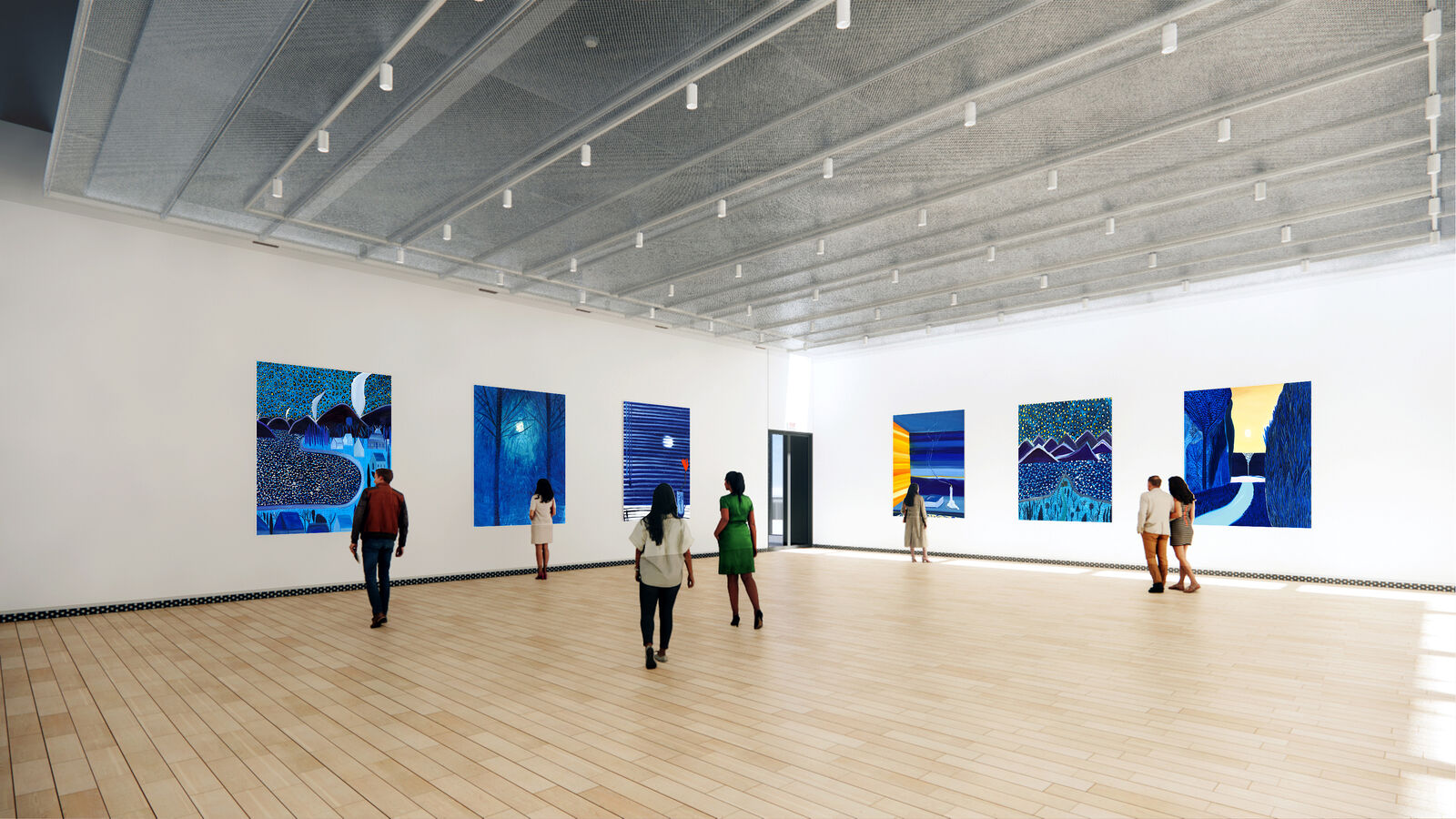
At the ICA Pittsburgh, each gallery offers a distinct character and can function either in concert or independently.
“With a welcoming design and artist-focused mission, ICA Pittsburgh will serve as an advocate for new ideas and an aggregator of communities, providing new lines of inquiry about the most pressing issues of our time through the lens of contemporary art."
Elizabeth Chodos, Director of the ICA Pittsburgh
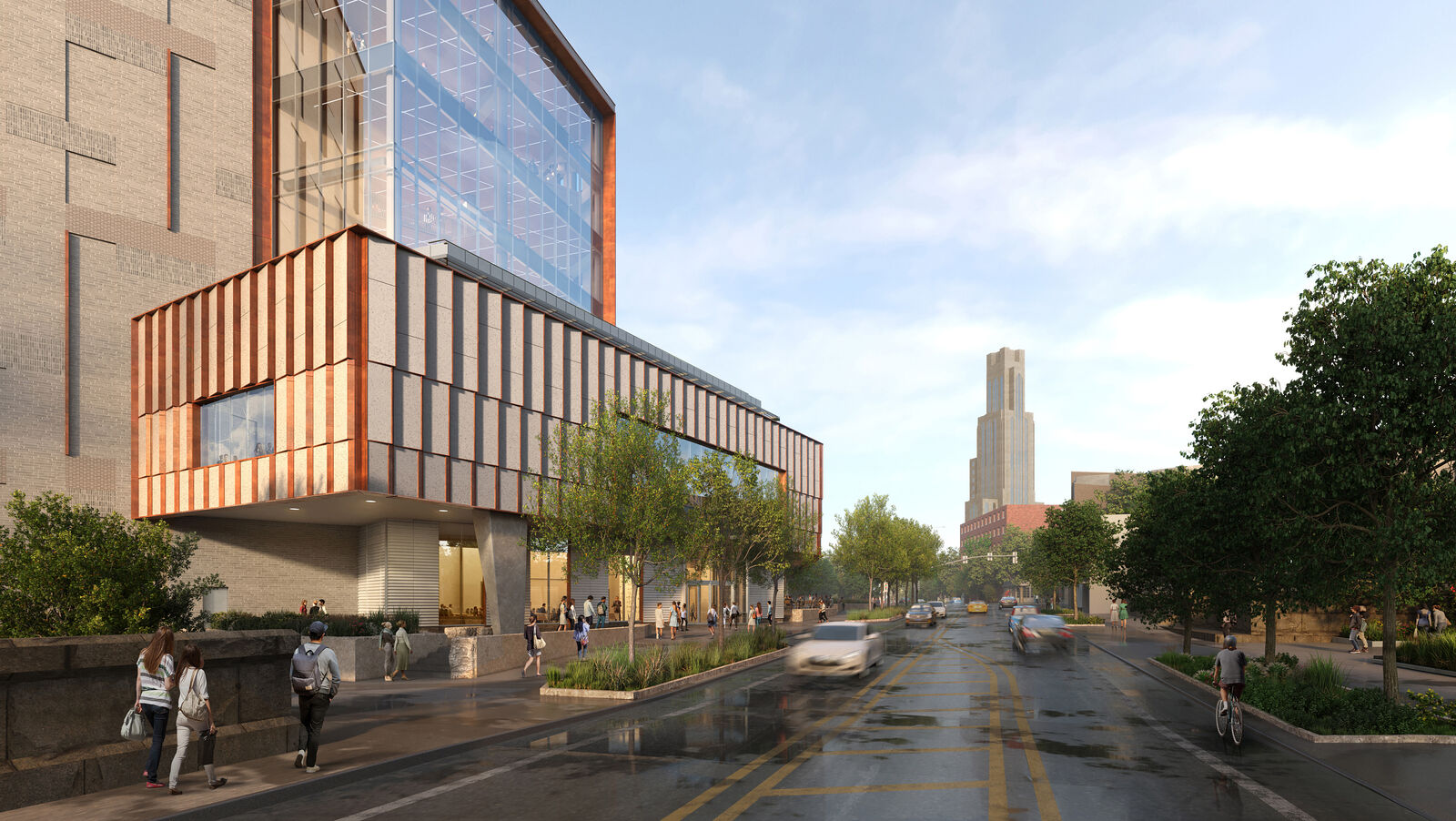
With transparent views along Forbes Avenue, the Institute offers an open, inviting face to contemporary art, in stark contrast to the opaque facades of neighboring Modernist and Beaux-Arts museums.
Pioneering the Future of Science
The Mellon College of Science’s expansion into the Richard King Mellon Hall of Sciences coincides with the launch of its Future of Science Initiative, which focuses on fostering collaborations across fields like biology, chemistry, computer science, AI, machine learning, and robotics to advance scientific discovery and innovation. As part of this initiative, CMU is pioneering the use of an off-site cloud lab to conduct routine wet-bench experimentation. The cloud lab will allow automation-controlled experiments using advanced robotic instruments, facilitating collaboration among scientists globally with a platform for sharing data and insights in real-time.
For CMU, the Richard King Mellon Hall of Sciences serves as the ideal opportunity to envision how the integration of robotics, machine learning, and AI pose to evolve the scientific workplaces of tomorrow. The building’s research facilities will more closely resemble ideation centers than conventional laboratories with greater space allocated to collaborative facilities than traditional lab setups. Understanding that adaptability is crucial, ZGF collaborated closely with the College to balance flexibility with practicality, addressing the question, “How flexible is too flexible?” Our exploration led to a modular floorplate with purpose-built, shared spaces that support a dynamic and evolving research environment.
In addition to serving the Mellon College of Science, the building will provide much-needed space to support the rapid growth of the School of Computer Science. It will feature dedicated research environments for the Ray and Stephanie Lane Computational Biology Department, the Language Technologies Institute, and Machine Learning. These computational laboratories will foster pioneering advancements, enabling the development of new disciplines and specialized applications within computer science.
Sparking Innovation through Collocation
“How can the Richard King Mellon Hall of Sciences transcend the sum of its parts and invite innovative, collaborative, and spontaneous interactions?” This pivotal question was central in guiding the design team to craft an environment that nurtures a thriving intellectual community across the arts and sciences. Beyond merely placing disparate academic programs adjacent to one another, the building actively facilitates their dynamic interplay.
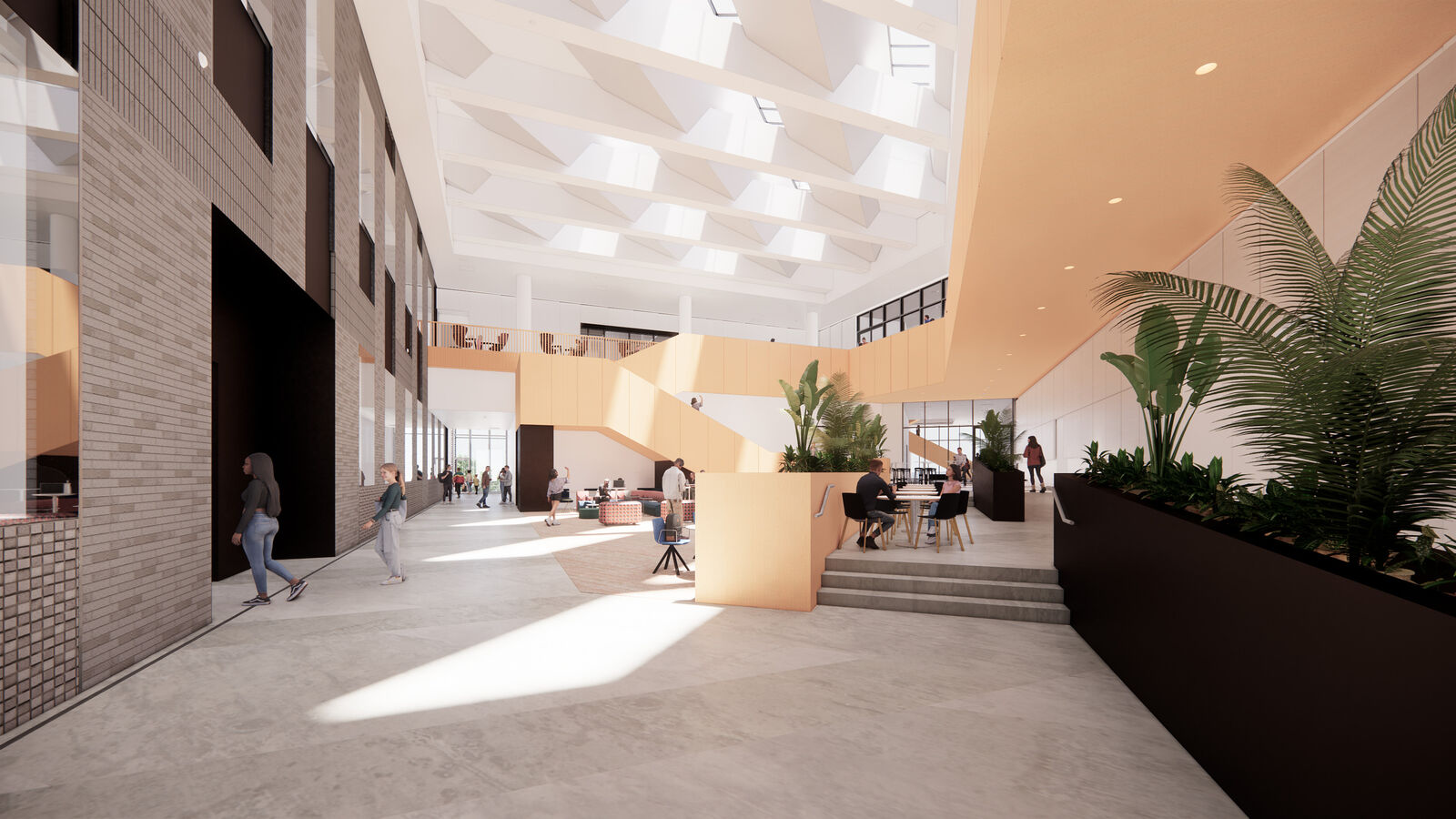
Key to doing so, the ground level was conceived as a “magical first floor,” an extension of the public realm that is energized by a rich concentration of activity radiating out from the ICA Pittsburgh, restaurant, multipurpose classrooms, and teaching laboratories. At the floor’s heart, a sunlit atrium shapes an inviting interior landscape, illuminated by overhead skylights, with a terraced staircase guiding visitors up and through the soaring double-height hall. This versatile space serves as a place for gathering that can fluidly transform into a formal venue for events and academic programs.
Leading by Example
CMU’s mission highlights its dedication to making a transformative societal impact, and the university walks the talk when it comes to reducing its environmental footprint. The Richard King Mellon Hall of Sciences will reflect this commitment, incorporating advanced, high-performance systems. Targeting LEED Gold or higher, the project takes a holistic approach to sustainability with efforts to curb carbon emissions, reduce site impact, manage stormwater, improve health, and incentivize responsible transportation.
With a predicted energy use intensity (pEUI) of 103, the building is designed to use 57% less energy than the average peer laboratory and is expected to outperform 93% of similar buildings, based on I2SL benchmarks. Advanced mechanical systems--such as heat recovery chillers, adiabatic humidification, waste heat recovery, low-temperature hot water systems, active chilled beams, and energy-saving lighting solutions--drive the building's efficiency. These innovations reflect CMU’s dedication to reducing operational carbon emissions, and the project will be considered “net zero ready” upon completion.
CMU is further taking steps to reduce the carbon emissions associated with the building's construction. Creative structural solutions, such as a bubble deck void slab, aim to reduce embodied carbon in concrete by 20%, addressing a major source of global emissions. The team has also set embodied carbon limits for steel, prioritizing procurement from mills that use electric arc furnaces.
Additional measures include a site design that preserves over 30% of area as open space, including a green roof that treats stormwater. A new rainwater collection and reuse system will capture approximately 4,500 cubic feet of water during storms, preventing excess runoff from entering the sewer system. Materials were selected with a focus on both embodied carbon and human health, while optimizing indoor air quality, thermal comfort, and lighting foster healthy, productive spaces for occupants. Located in a well-connected urban district, the building further promotes sustainable transportation with dedicated bicycle stations and electric vehicle charging points.
By advancing CMU’s academic mission while sustainably integrating into its urban context, the Richard King Mellon Hall of Sciences fosters not only internal progress but also invites the broader community to engage with the transformative potential of creativity and innovation.
California Polytechnic State University, San Luis Obispo, William and Linda Frost Center for Research and Innovation
Oregon State University, Jen-Hsun Huang and Lori Mills Huang Collaborative Innovation Complex
Amazon / Seneca Group, Amazon Visitor Landing
Mercat del Peix Research Center