


Setting the Stage for the Net-Zero Campus
Princeton University, High Performance Campus Infrastructure Projects
Higher Education
With the goal of achieving net-zero carbon emissions by its 300th anniversary in 2046, Princeton University is overhauling how energy is supplied to every building on its campus, while mobilizing to meet ambitious targets around alternative commuting, water use reduction, and responsible design and development. To help meet these commitments, ZGF worked with the University on four important infrastructure projects that are integral to its sustainability goals.
Phasing Out Natural Gas, Investing in Geo-Exchange
TIGER: The wild cat serves not only as Princeton’s emblematic mascot but also the acronym of its two new central energy facilities. Located in Princeton’s Stadium and Meadows neighborhoods respectively, TIGER and CUB (TIGER stands for thermally integrated geo-exchange resource; CUB stands for central utility building) house the heat pumps and electrical equipment needed for the campus’s new geo-exchange systems. Geo-exchange is the highly efficient process of taking heat out of buildings in the summer, storing it underground, and retrieving that stored heat to warm buildings in the winter.
The TIGER and CUB connect to two fields in their respective neighborhoods with more than 1,200 cumulative bores, some up to 850-feet deep, which act as thermal batteries to store seasonal heat far below ground. Two new thermal energy storage (TES) tanks adjoin each facility, storing a ready supply of water to heat and cool campus on a daily basis. In combination with on-site and off-site solar PV power generation, these integrated systems support Princeton’s transition away from fossil fuel combustion and will be used by the campus for the next 100 years. By harvesting and storing heat instead of rejecting it via cooling towers, Princeton’s new systems dramatically reduce potable water use as well.
Location
Princeton, New Jersey
Completion date
2023
Project Component
Architecture services

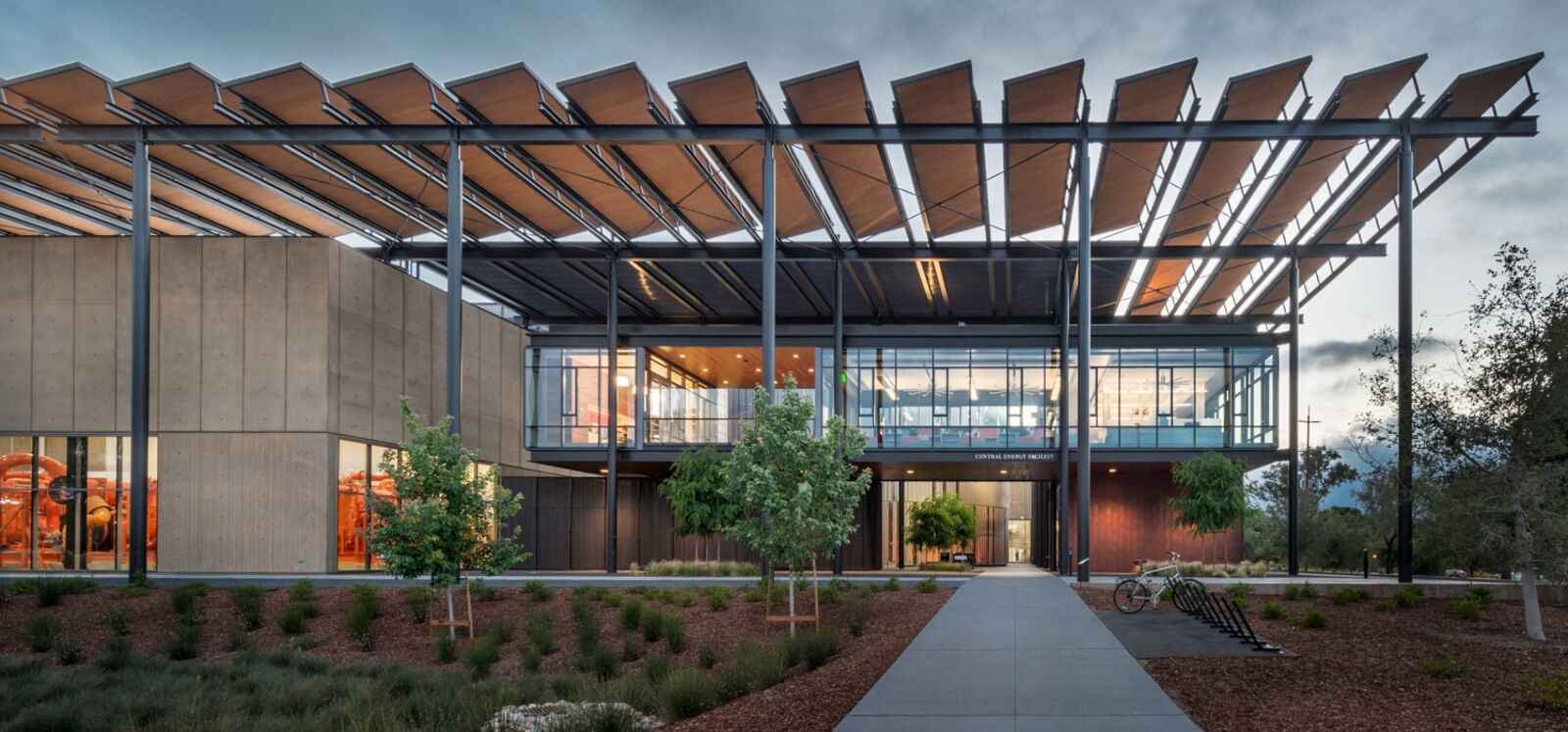
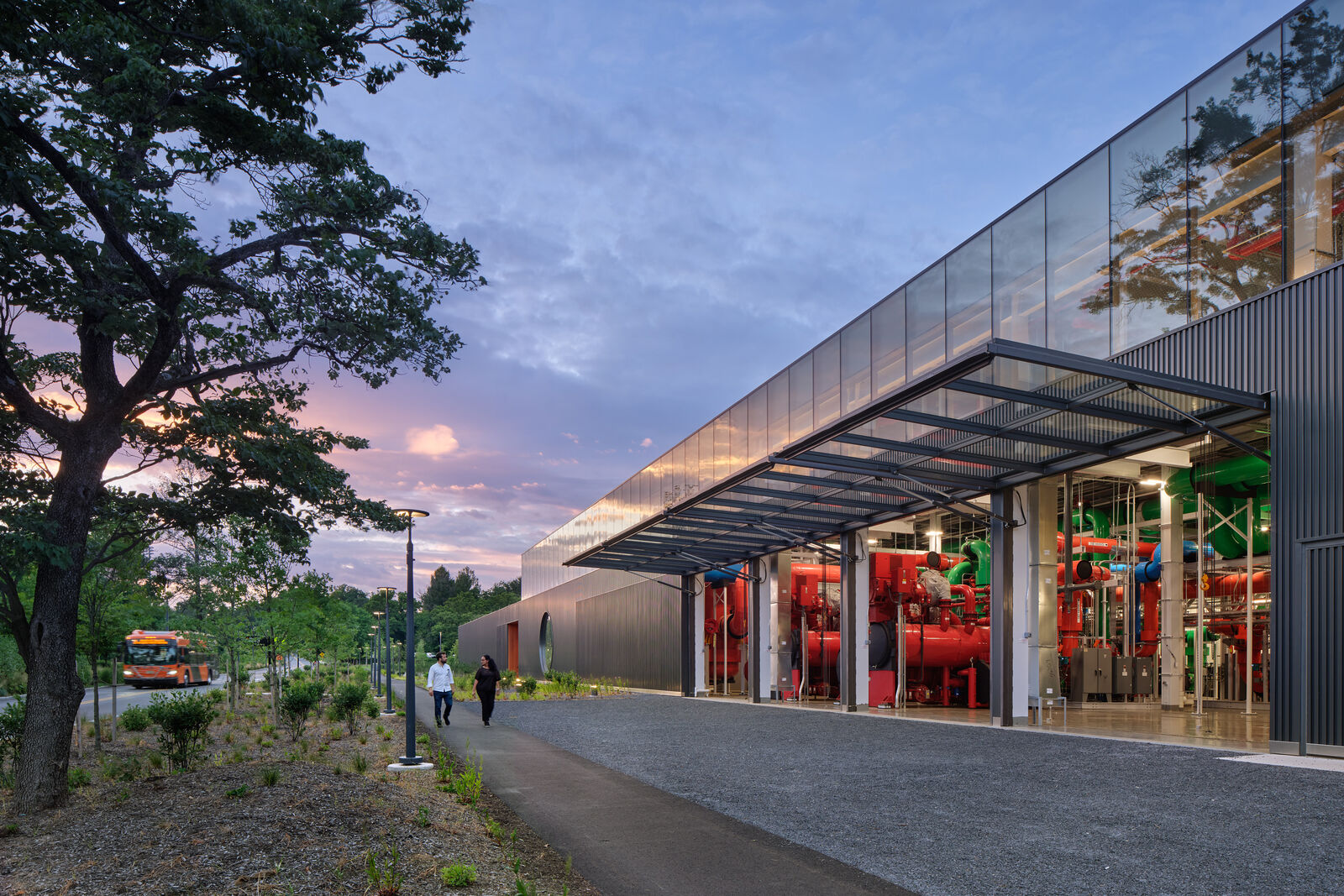
Clad in industrial metal panel, TIGER’s rectilinear form is crowned with an elegant glass cube over the equipment area—a visible beacon of Princeton's commitment to sustainable energy production and use of natural daylight.
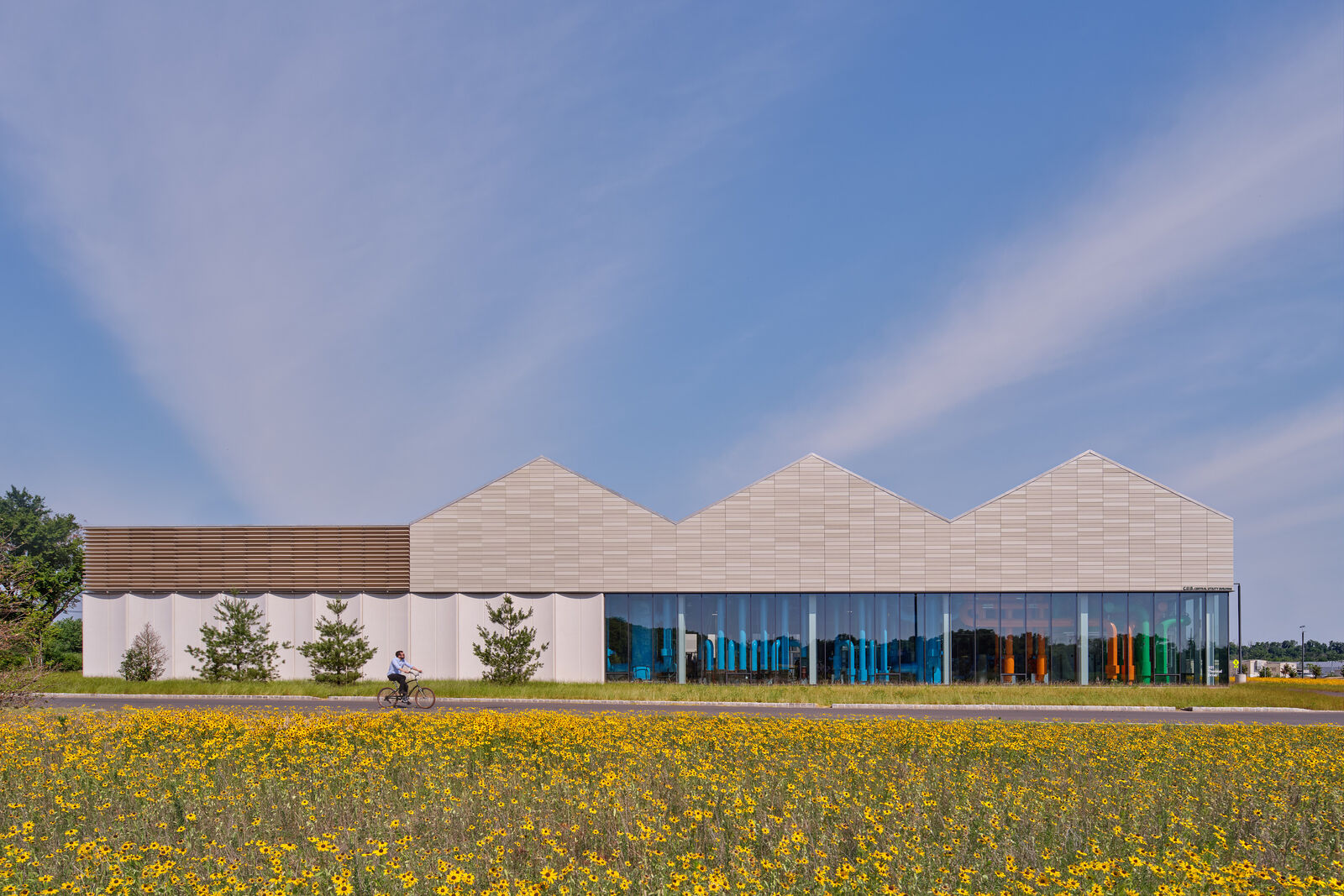
A reflection of its setting, the CUB anticipates future student housing planned for the Meadows neighborhood. With its triple gable roof and reduced scale, the building embodies a softer, pastoral expression.
While many universities view their energy infrastructure as “back-of-house” equipment they should hide, Princeton boldly elected to site TIGER and CUB at two prominent campus gateways. This decision was twofold: the sites have a functional role in enabling growth within the expanding Stadium and Meadows neighborhoods, while also allowing Princeton to create visibility around its energy transition and path to Net Zero.
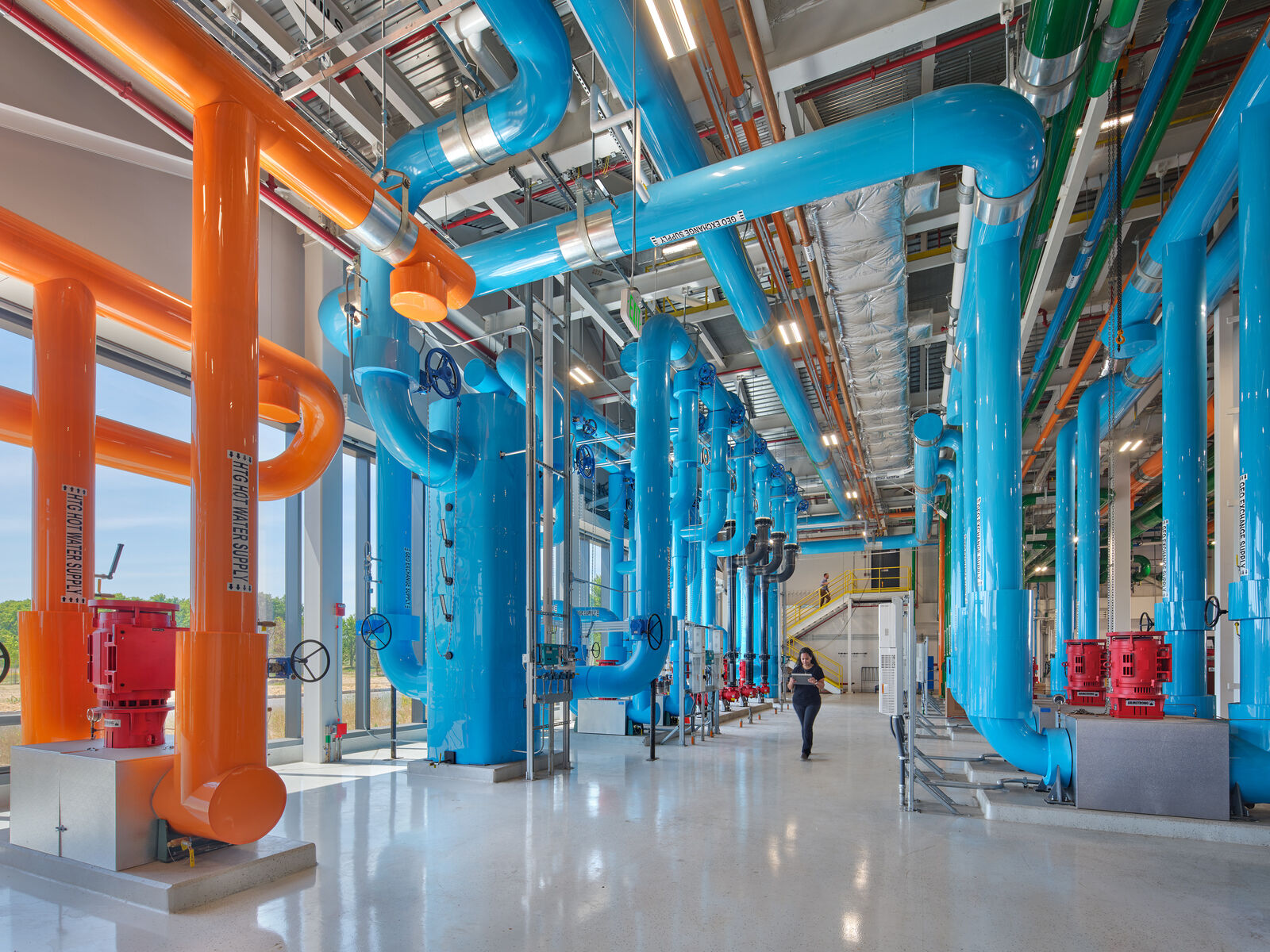
Rather than hide their equipment, TIGER and CUB are designed to showcase their systems, serve as a teaching tool, and educate the campus and community on sustainable energy production. While each building was crafted as a thoughtful response to its unique site conditions, landscape, and campus context, the two projects share an emphasis on transparency. Expanses of glazing welcome passersby to peek inside and observe innovative systems at work. Colorful annotated pipes and equipment invite a moment of discovery. Both facilities are pursuing LEED certification and incorporate passive systems to heat and cool the equipment they house.
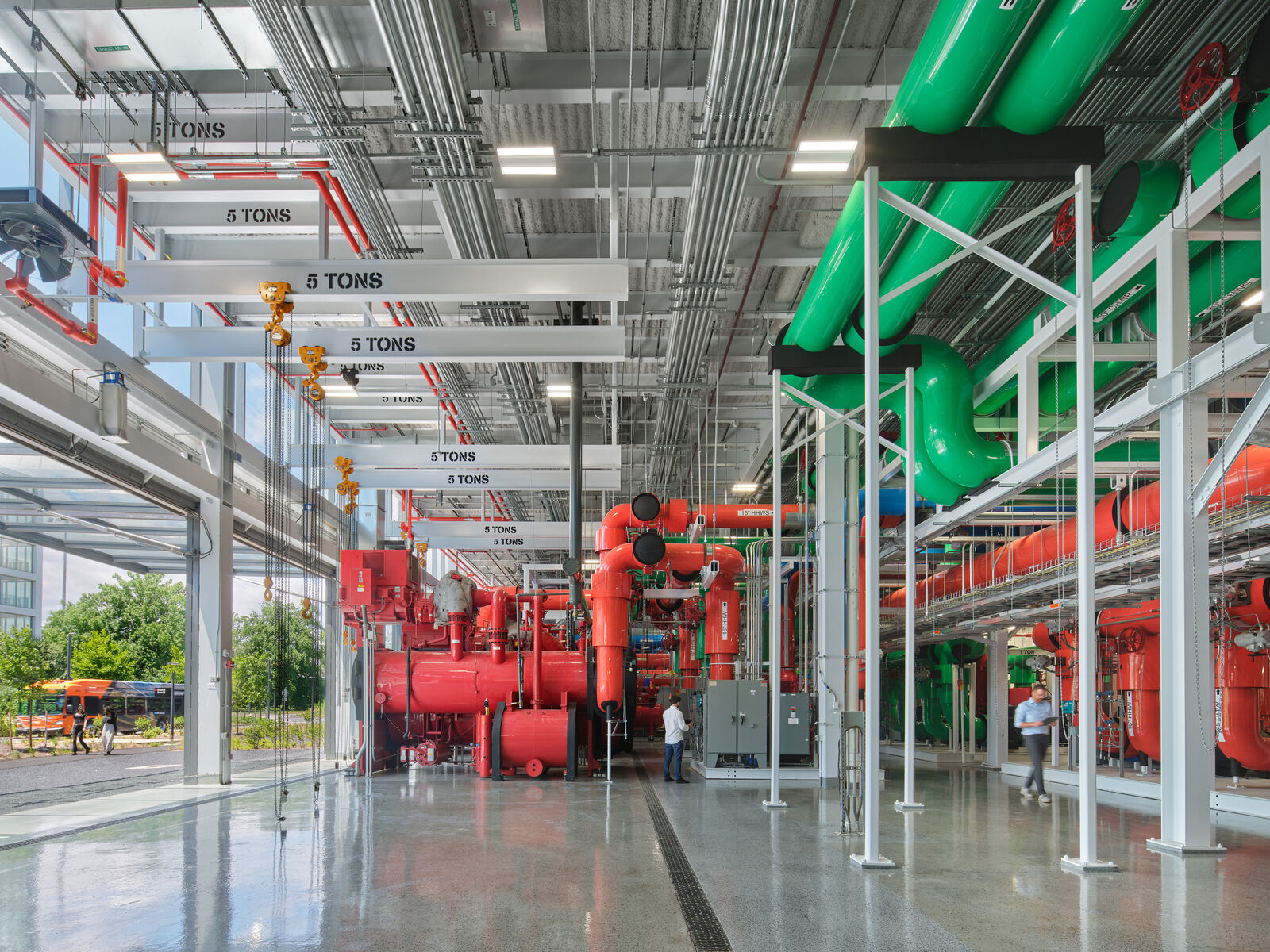
The pipe jackets are color-coded to showcase their respective functions; bore-hole-water supply and return (blue), chilled-water supply and return (green), and hot-water supply (red or orange).
Transforming Commuting Culture
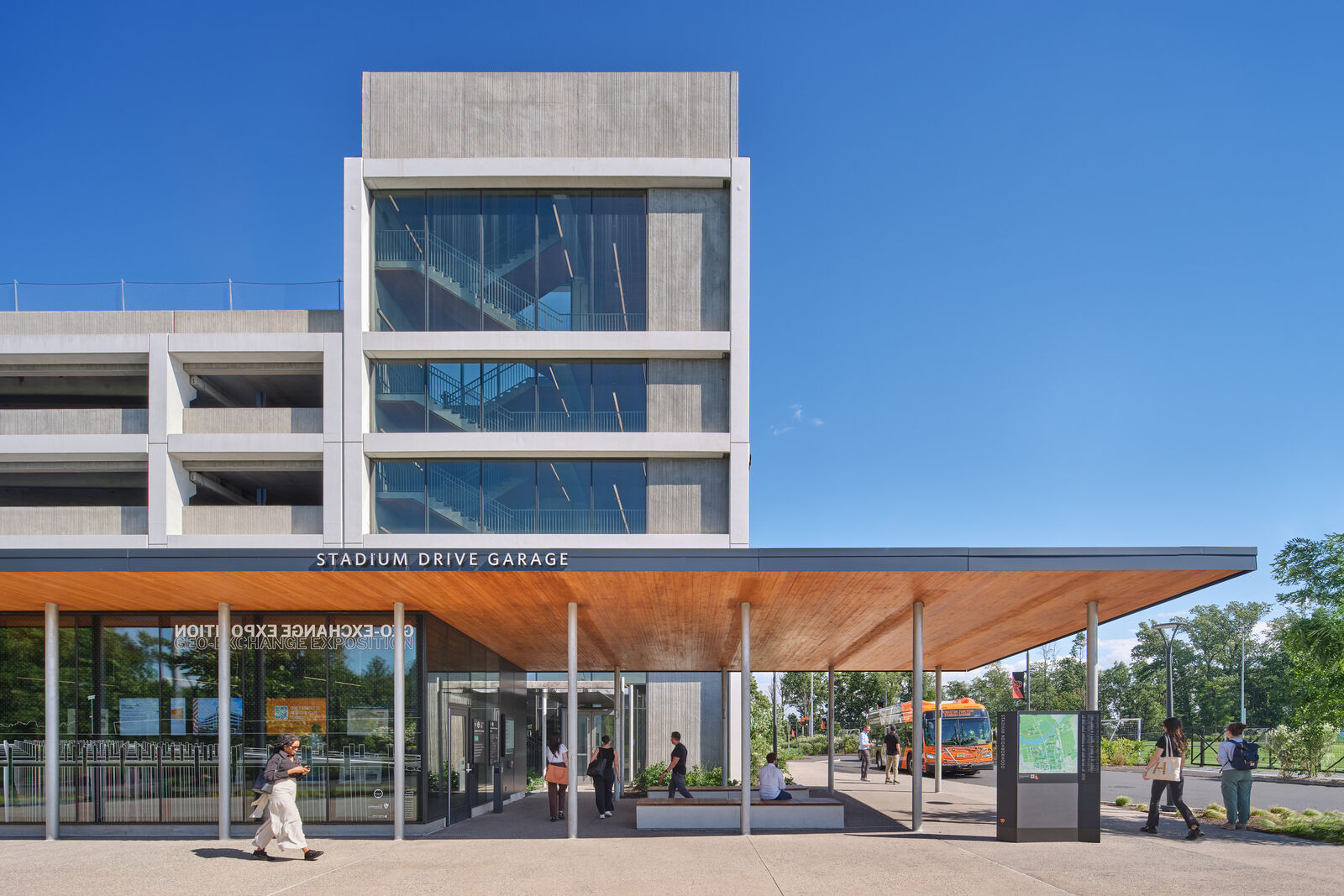
In addition to its energy transition, Princeton is equally focused on mitigating the impact of campus commuting and transportation. The university aims to double its percentage of alternative commuters by mid-century, expand access to on-campus transportation services, and support more widespread use of electric vehicles. Two new garages are sited adjacent to the TIGER and CUB and encourage campus commuters and visitors to access the rest of campus via sustainable modes of transportation. An enclosed Transit Hub, located on the ground-floor of the Stadium Drive Garage, provides space where Princetonians can borrow bikes, wait for a shuttle, and embark on their campus experience. Incentivizing the use of electric vehicles, the garages contain a combined 104 charging stations.
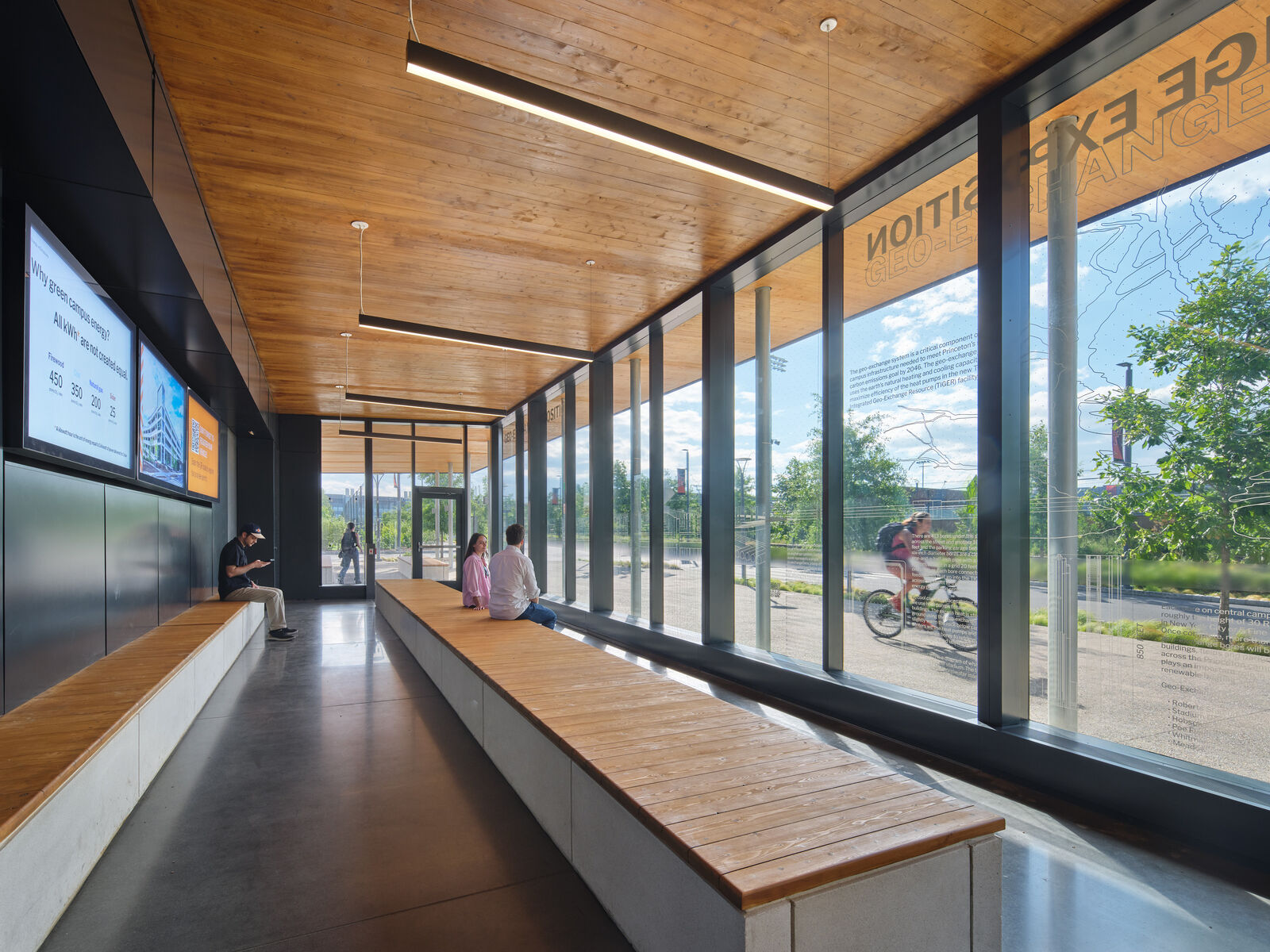
The Stadium Drive Garage Transit Hub’s laminated timber canopy fosters a warm, welcoming environment
A Holistic Approach to Responsible Development
Princeton approached the planning of its infrastructure projects with the understanding that one parcel of land has the potential to be used on multiple levels—below ground, at ground, and above the structure. The new Stadium Drive Garage sits over top geo-exchange borefields, providing parking at and above ground. The two garages are designed to accommodate solar photovoltaic panels in the future. In leveraging every opportunity each site presents to maximize resource efficiency and advance Princeton's net-zero goals, the two garages exemplify an advanced model of responsible land development.
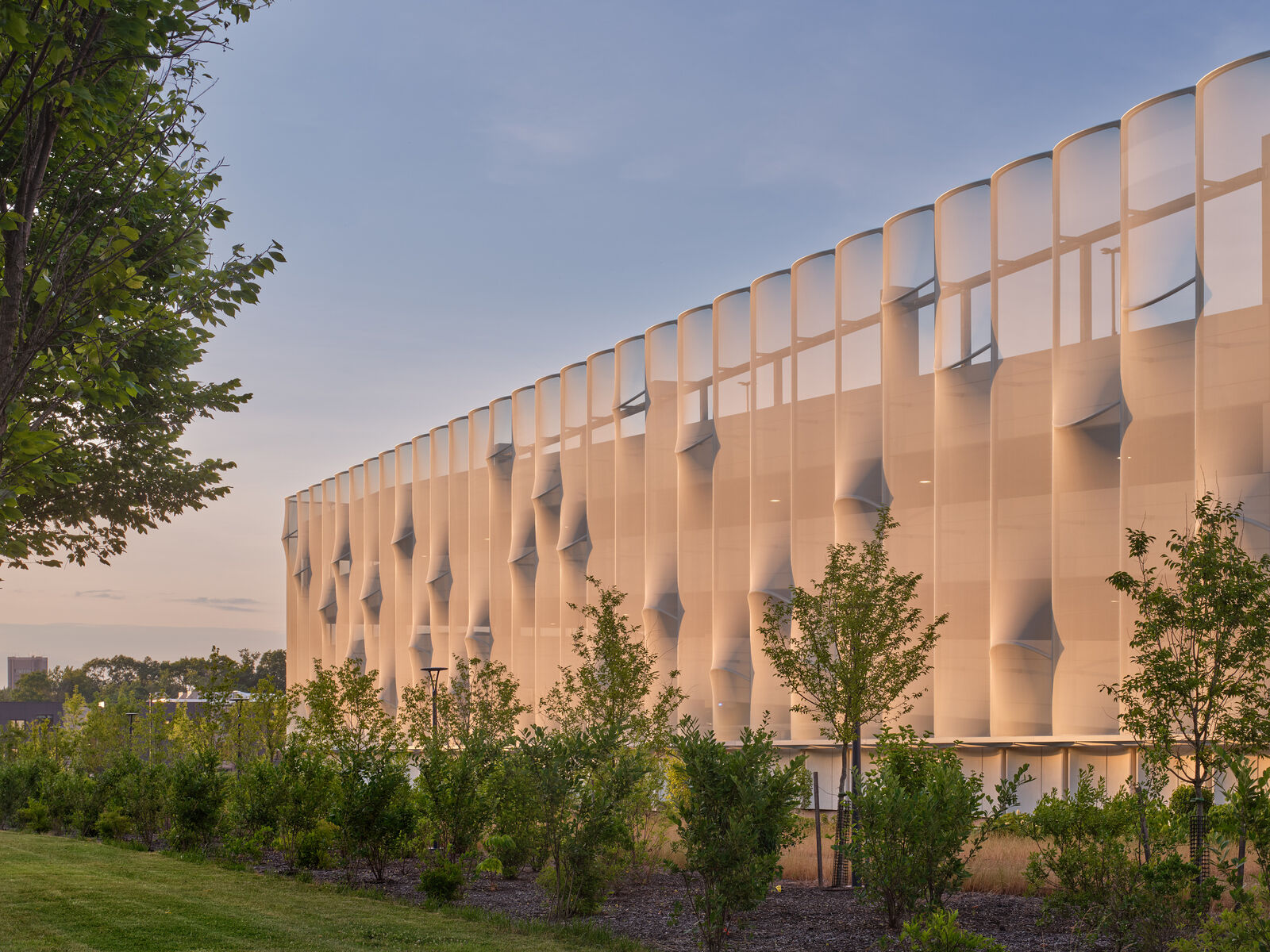
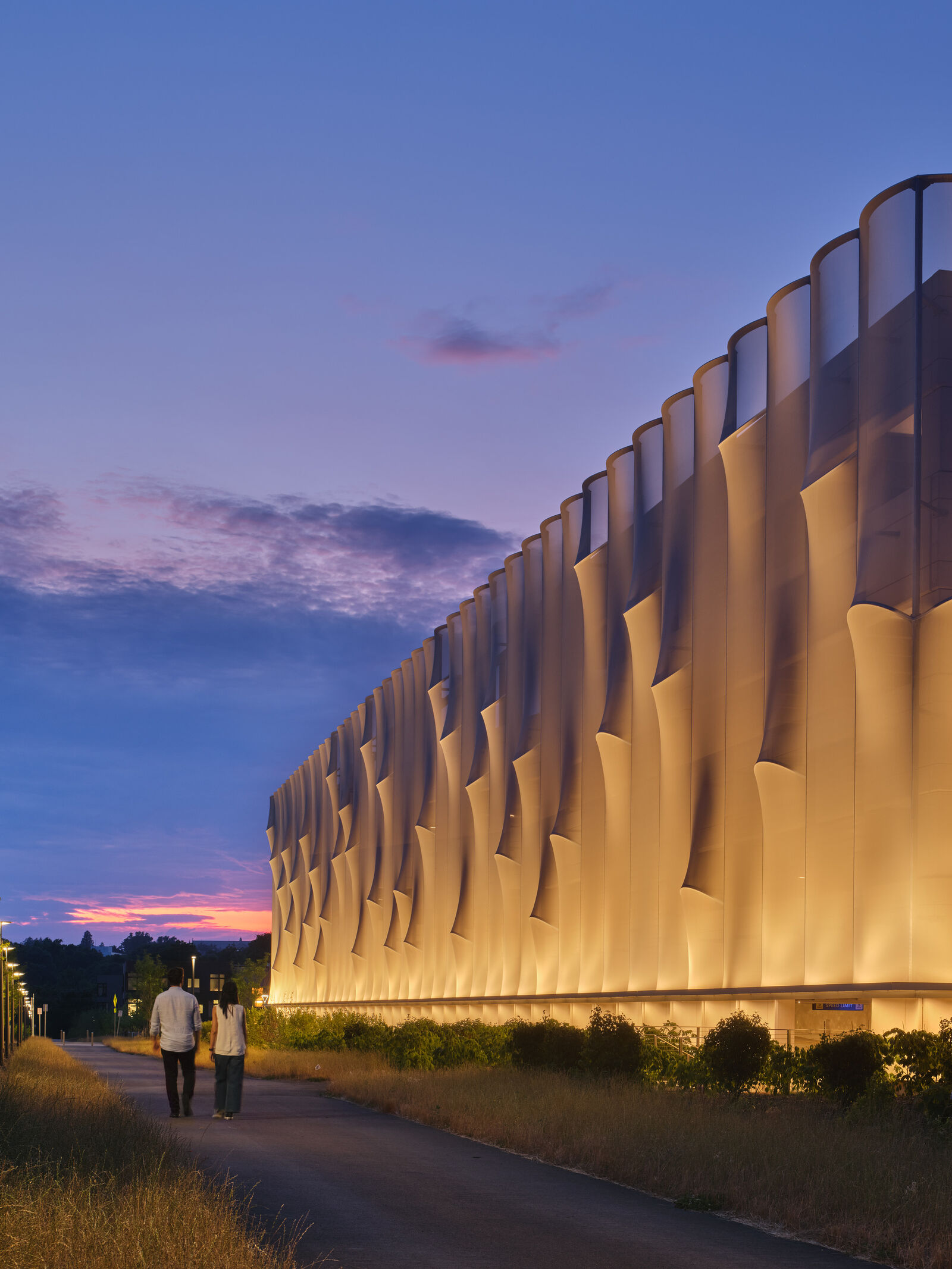
Light and ethereal in character, the Meadows Drive Garage is wrapped in a fabric mesh sculpted into an undulating form. Uplighting casts a variegated pattern of illumination and shadow to evoke movement.
Though unique in their individual designs, these four projects are united in their purpose of setting the stage for Princeton’s next phase of growth, while advancing the University's commitment to sustainable energy use and responsible development. Together, they offer a compelling example of how infrastructure projects can advance missions, embody values, and create distinct identity for the institutions they serve.
Design Partners
PAE Engineers, The PAE Living Building
An All-Electric Future: Approaches to Electrifying Our Building Stock

California Air Resources Board Southern California Headquarters, Mary D. Nichols Campus
District Department of Transportation, Car Barn Training Center
