ZERO ENERGY LAB & SAFETY TRAINING CENTER
State of Washington, L&I / WSDA Safety & Health Lab and Training Center
Laboratories and Research
This zero-energy laboratory and safety training center transforms a seven-acre wooded site into a new home for the Washington State Department of Labor and Industries (L&I) and Department of Agriculture (WSDA) as they do critical work protecting the health and safety of Washington’s workers and food supply. After decades of operating in inadequate laboratory facilities, both state agencies now have their own department-specific programming and infrastructure along with shared offices, labs, support spaces, and break areas. Nestled in the forested landscape of Tumwater, just ten minutes from the state capitol in Olympia, the high-performance project also paves the way for Washington’s clean energy transition.
Location
Tumwater, WA
Square Feet
53,417
Completion date
July 2023
Project Component
Architecture services
Interior design and space planning
Lab planning
Certifications
LEED Gold
EUI
85 kBtu/SF/yr

The Safety & Health Laboratory and Training Center is a joint effort, owned and operated by the Department of Labor and Industries (L&I) but shared by the Departments of Safety and Health Services (DOSH) and Agriculture (WSDA).
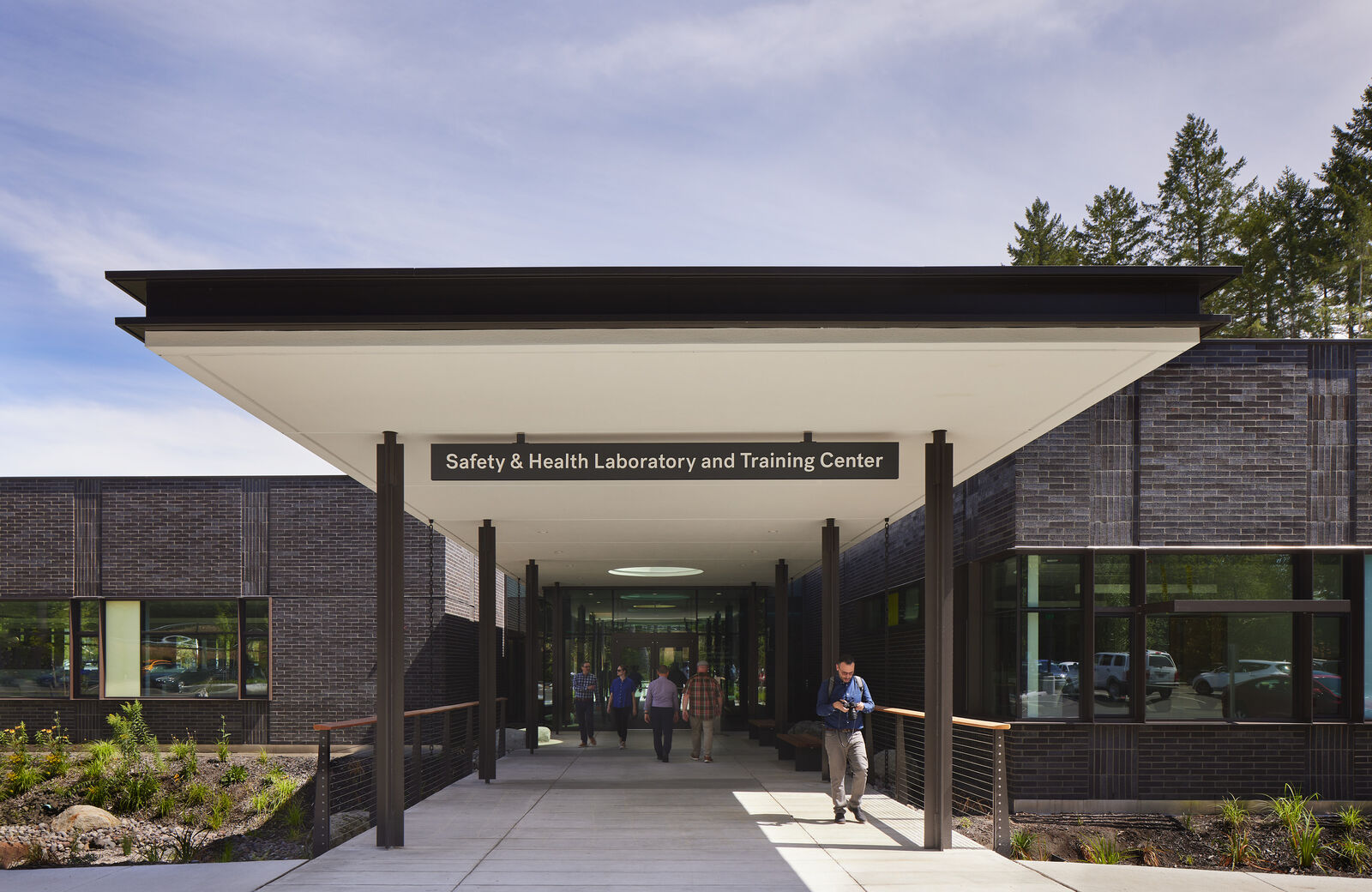
In 2023, the Washington state legislature allocated $3.7 million for rooftop and site PV panels that will generate enough energy onsite to operate the facility over a calendar year.
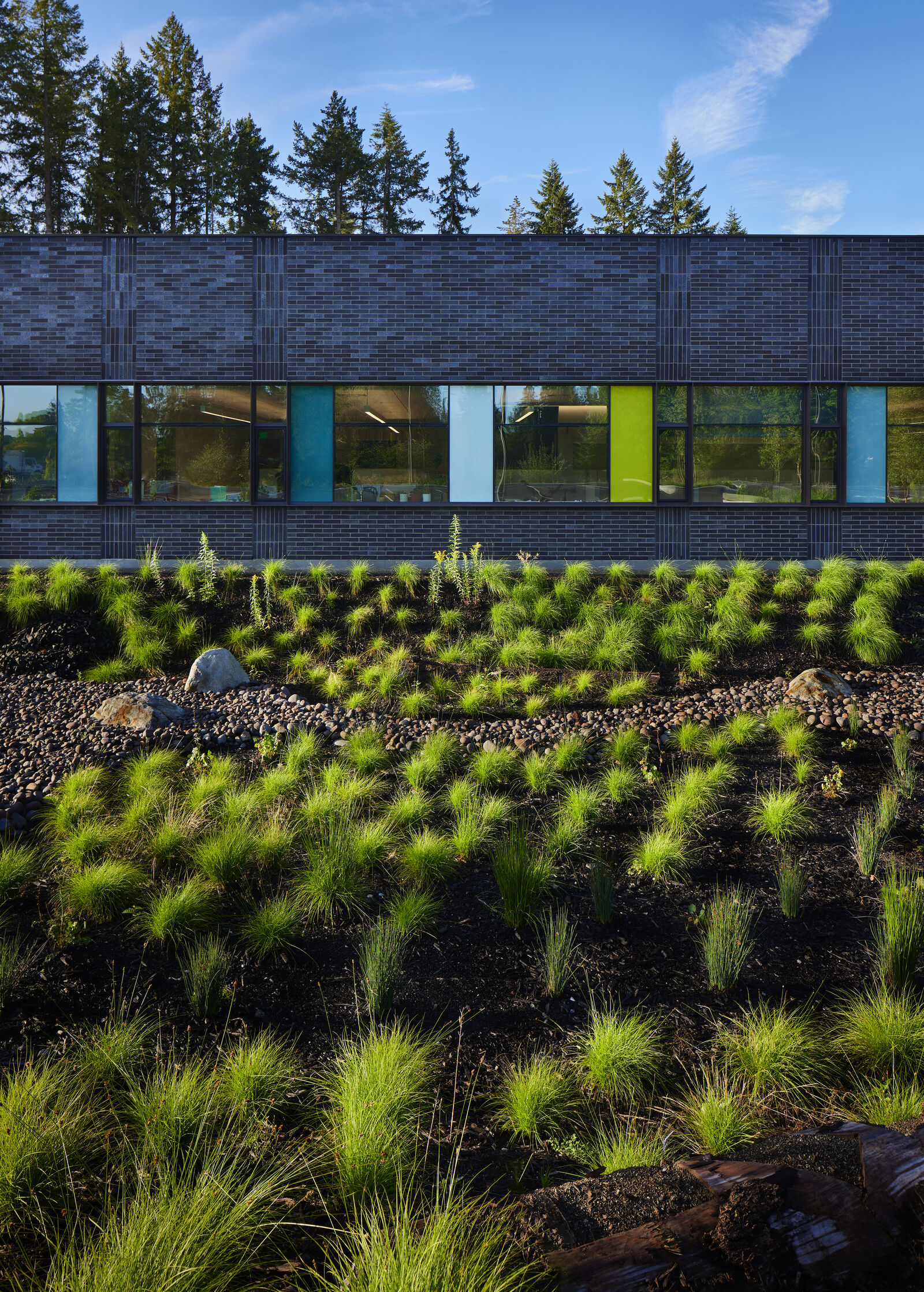
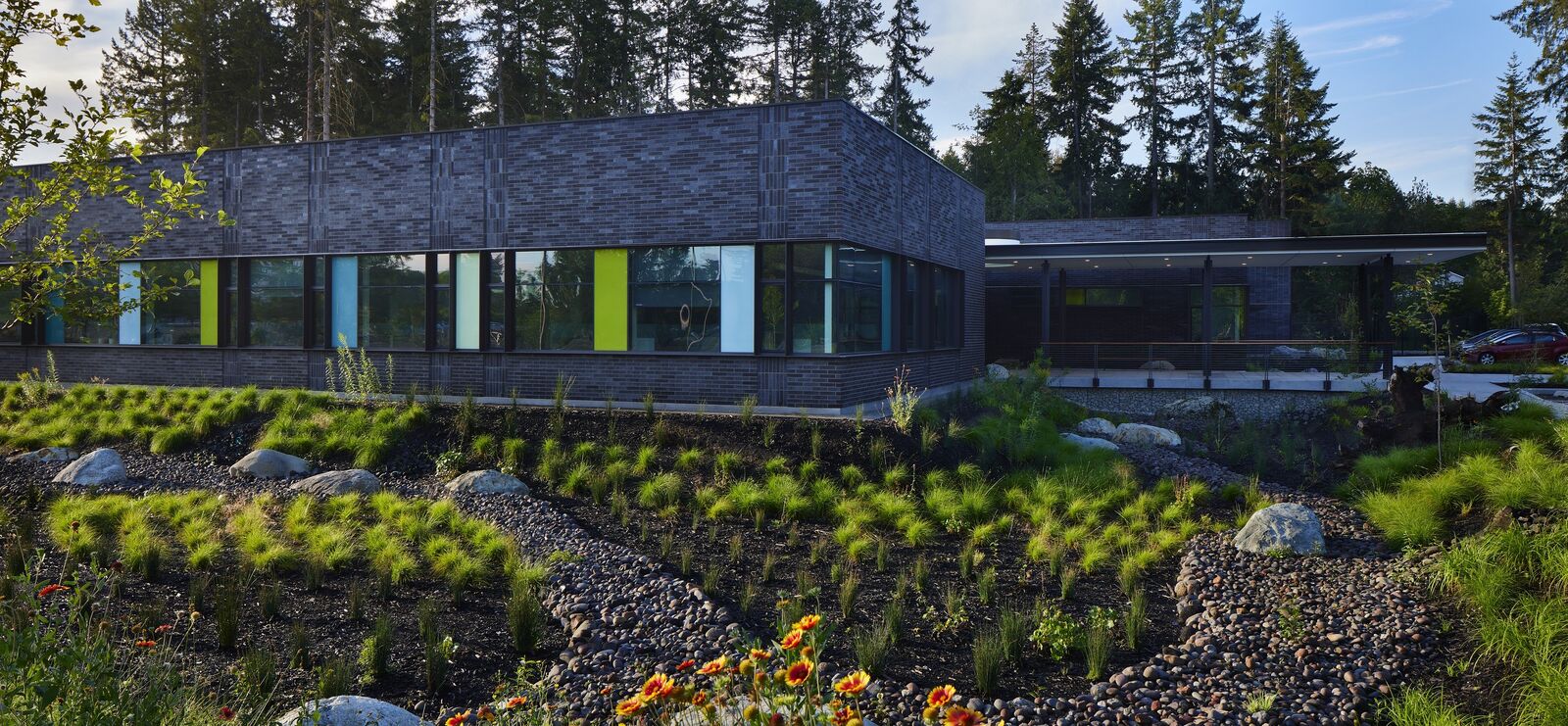
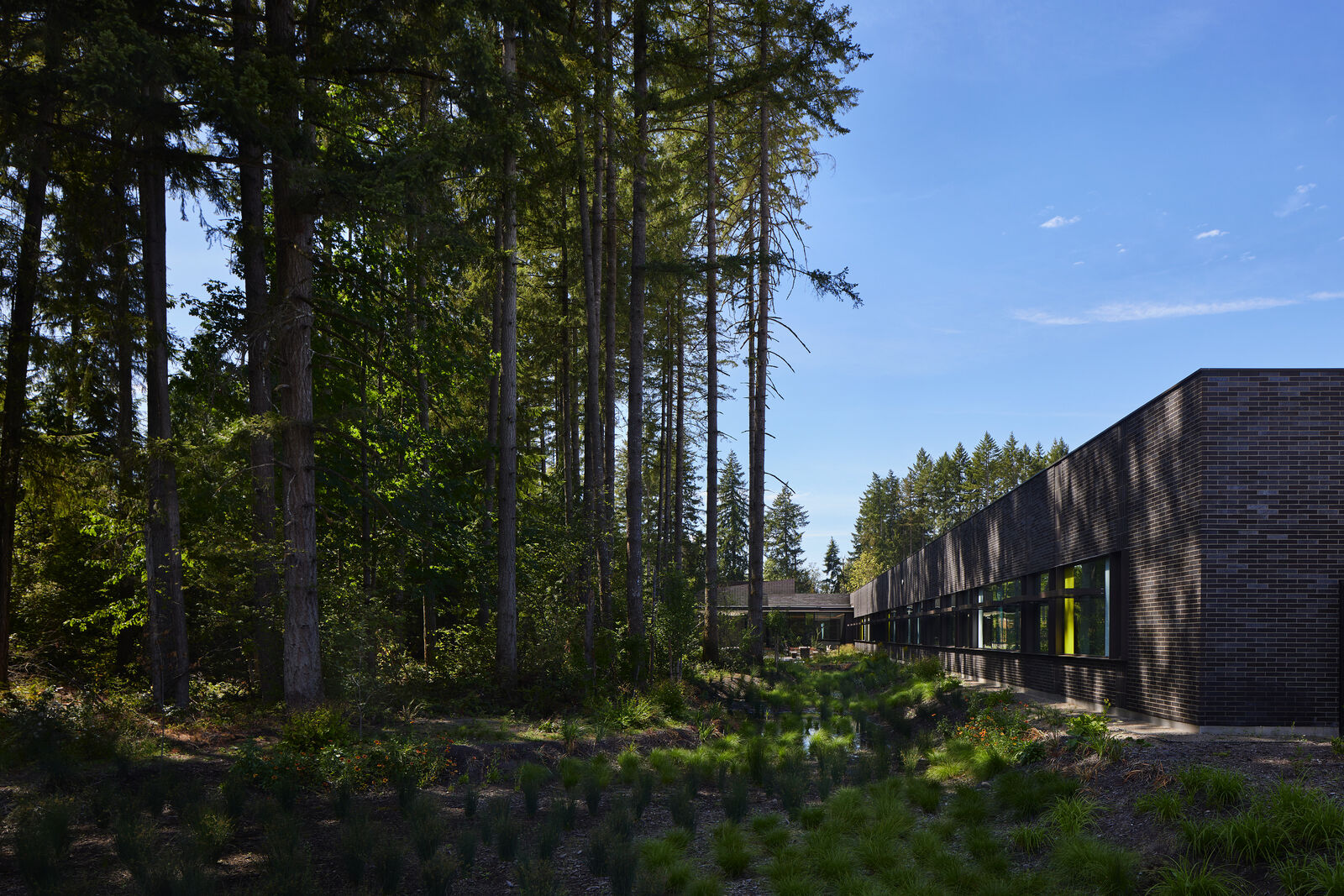
Dark brick extends the forest to the new building, with pops of colored glass echoing the hues of native lichens. Extensive landscaping includes riverbed-style stormwater retention and use of reclaimed stumps as nurse logs from the property.
In pursuit of zero energy
This is one of Washington’s first zero energy projects, with the addition of onsite renewables currently underway. The state’s role as a national leader in energy efficiency and embodied carbon reductions—and its obligation to future generations to eliminate greenhouse gas emissions from state operations—are front and center in the design. Executive Order 18-01 calls for all newly constructed state-owned buildings to be zero energy or zero energy-capable.
“Our workers will be more productive because of the design of this building. This is one of the things Washington is doing to fight climate change, right here, in this building.”
- Governor Jay Inslee
All-electric, high-performance systems include a dedicated outdoor air system, with active chilled beams in labs and hydronic radiant heating and cooling devices in offices and training areas, that only pulls in air when it’s the right temperature. This is 70% more efficient than standard HVAC systems. A central hydronic heating, cooling, and heat recovery plant with a closed-loop geo-exchange bore field and heat recovery heat pumps maximizes the efficiency of thermal energy generation and further reduces emissions compared to traditional combustion boilers for heating. An air-to-air runaround hydronic loop is also utilized between the supply and exhaust air systems for heat recovery of the building’s ventilation air. The result is an EUI of 85 kBtu/SF/yr—nearly 65% lower than the state average of 240 for lab facilities.
Other sustainability features include:
- Reduced energy demand through siting, massing, and enhanced building envelope
- Occupancy sensors that expand the thermal comfort range and controlled outlets to reduce non-essential energy use outside of normal operating hours
- Passive and low-energy systems with natural and mixed mode ventilation, including ceiling fans and operable windows
- Optimized natural lighting strategies with daylight sensors and LED interior lighting
- High efficiency water fixtures
- Onsite stormwater management
- EV charging stations
- Radiant floor
- Rooftop and site solar panels

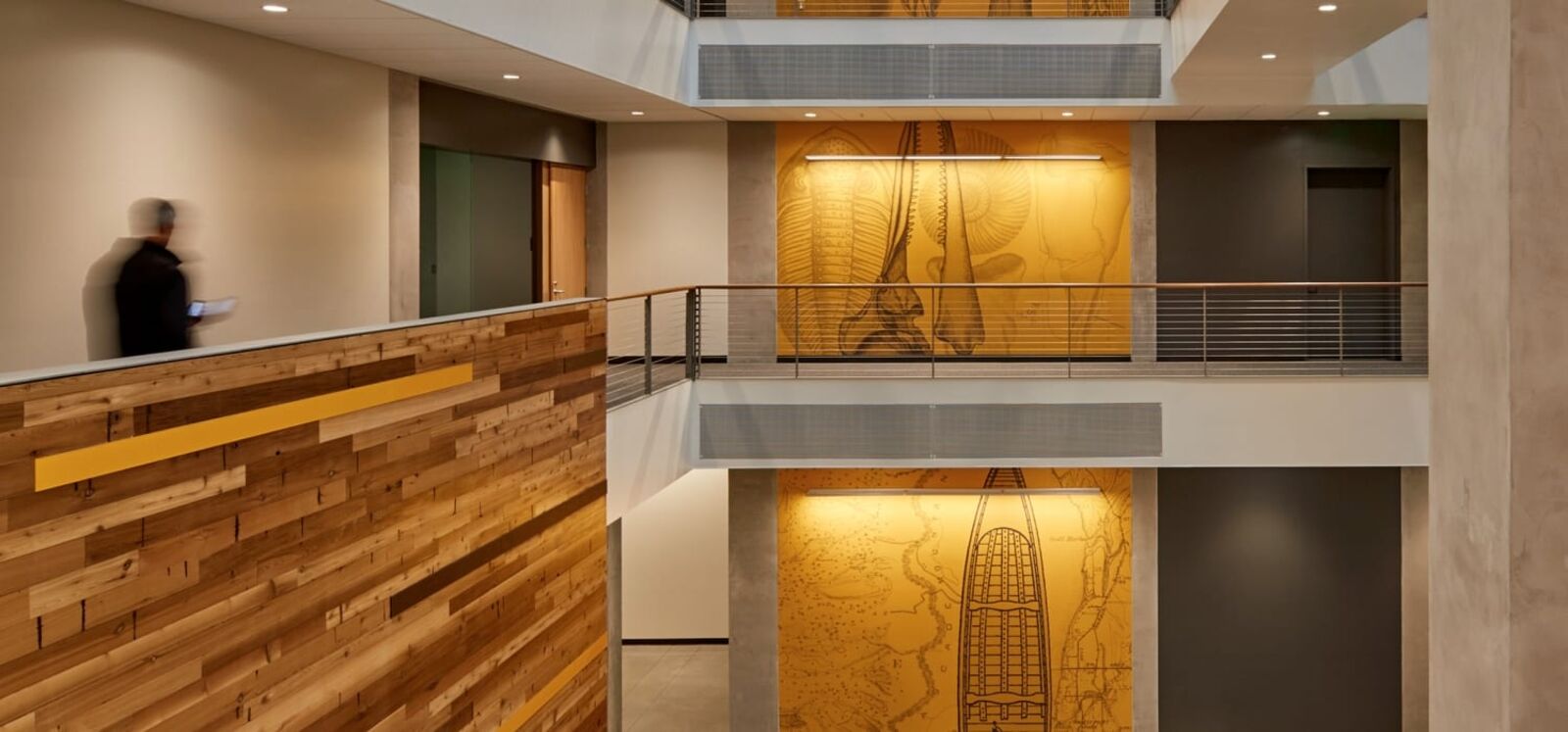
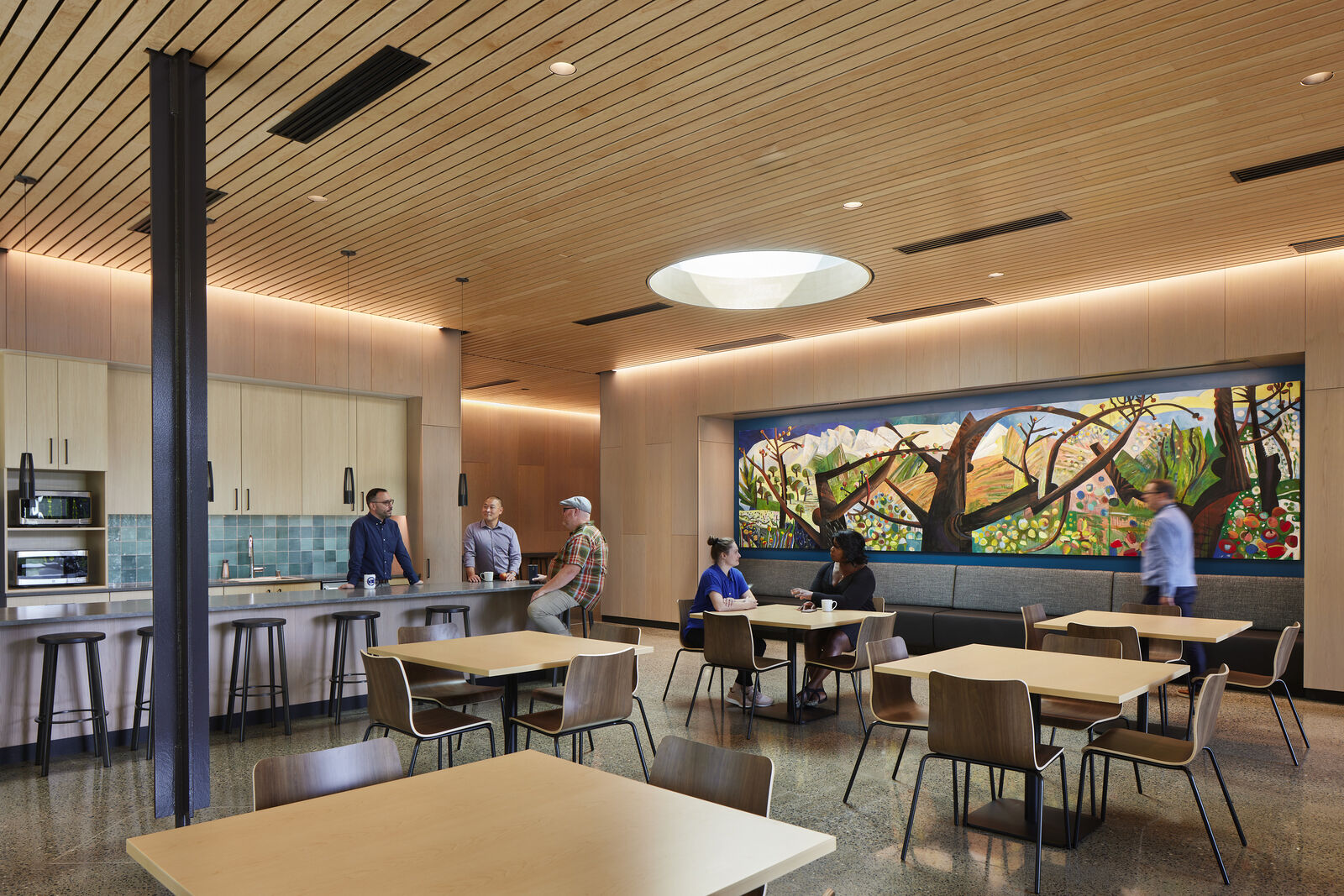
The new lobby welcomes employees and guests with natural finishes, polished concrete floors, and a series of murals by celebrated Northwest artist Lucinda Parker.
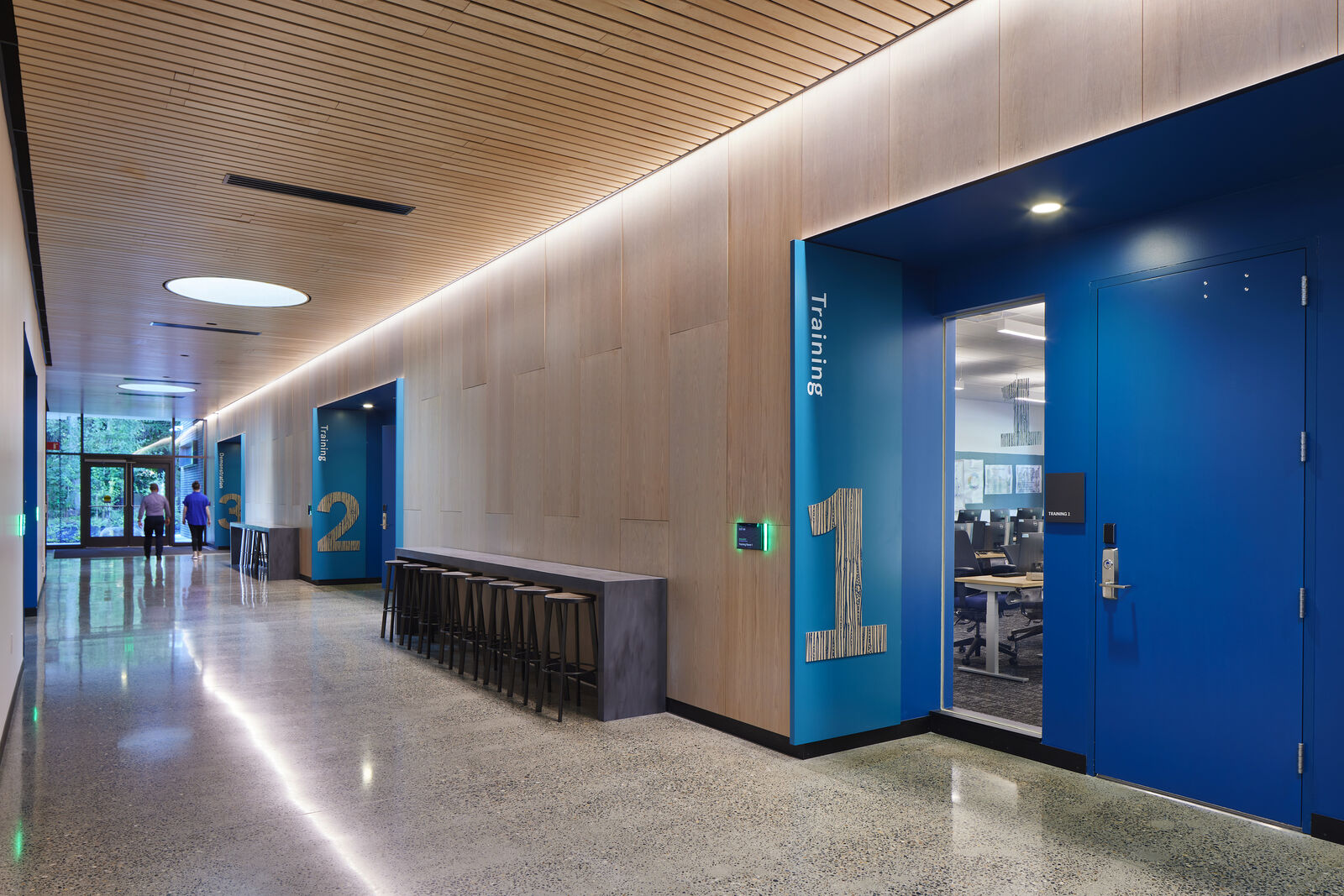
There are two training rooms right off the lobby, as well as a high bay demonstration space and outdoor training yard to more closely replicate the conditions inspectors will encounter on job sites and in workplaces.
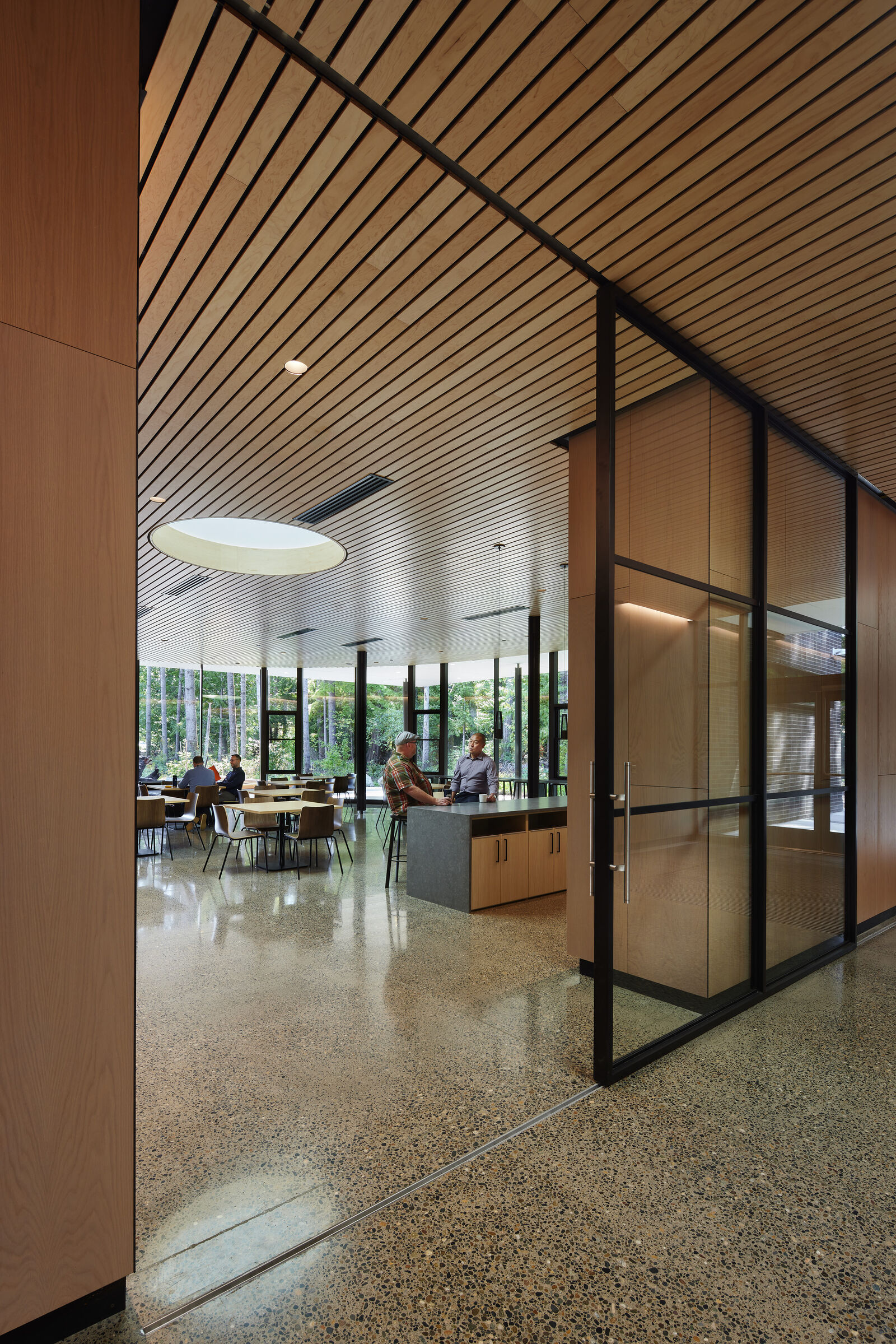
A skylit break room draws employees in through the lobby and out to the back porch overlooking the forested landscape beyond.
The forest as a feature
The building was sited and oriented to preserve forest and buffer the building from Interstate-5. From inside, the forest becomes a biophilic feature connecting users to the Pacific Northwest setting. A WiFi-enabled pathway meanders from the back porch into the woods and around the perimeter of the site, so employees can participate in virtual meetings outdoors.
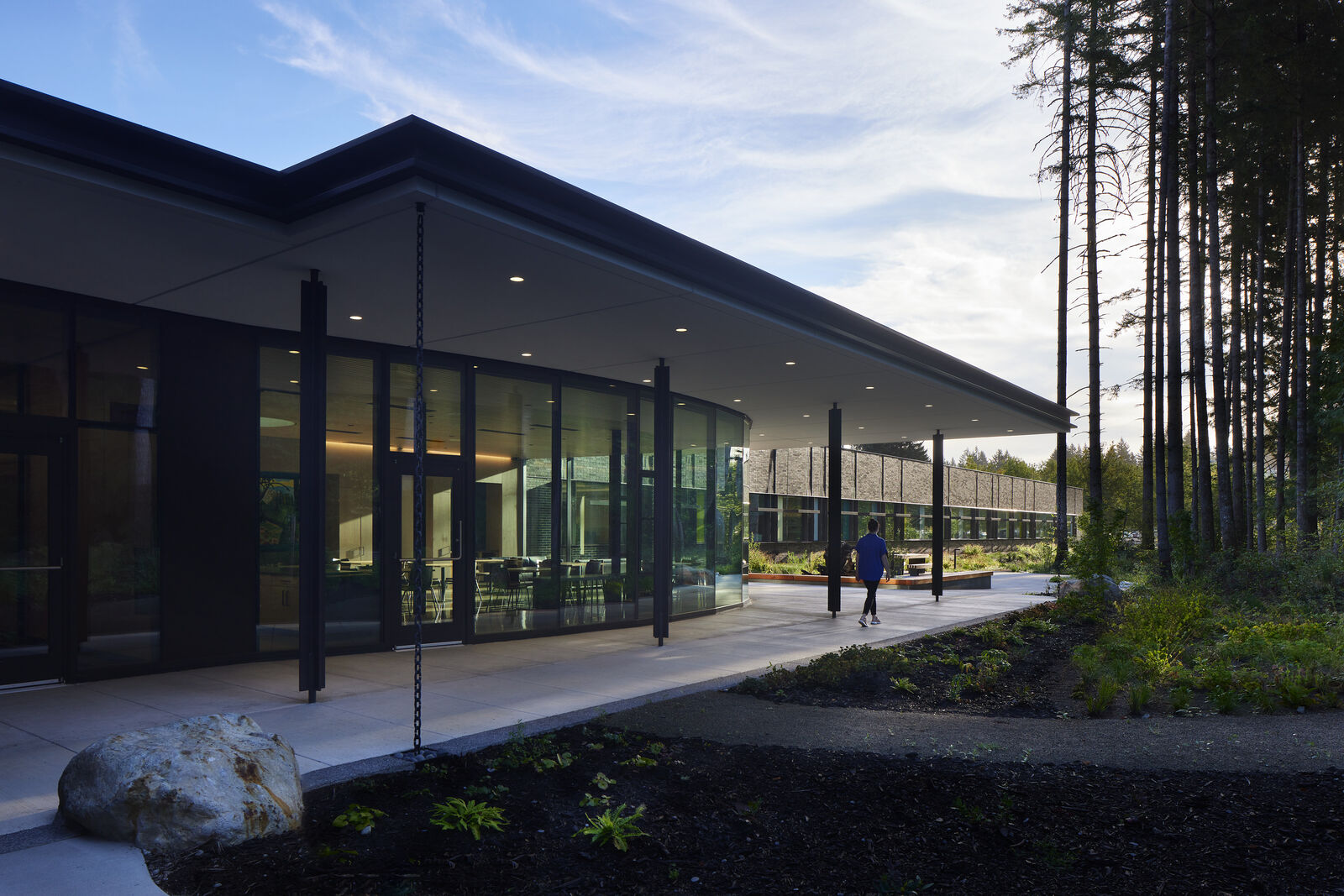
The building’s east-west orientation allows abundant natural light from window walls, skylights, and solar tubes, without direct heat gain.
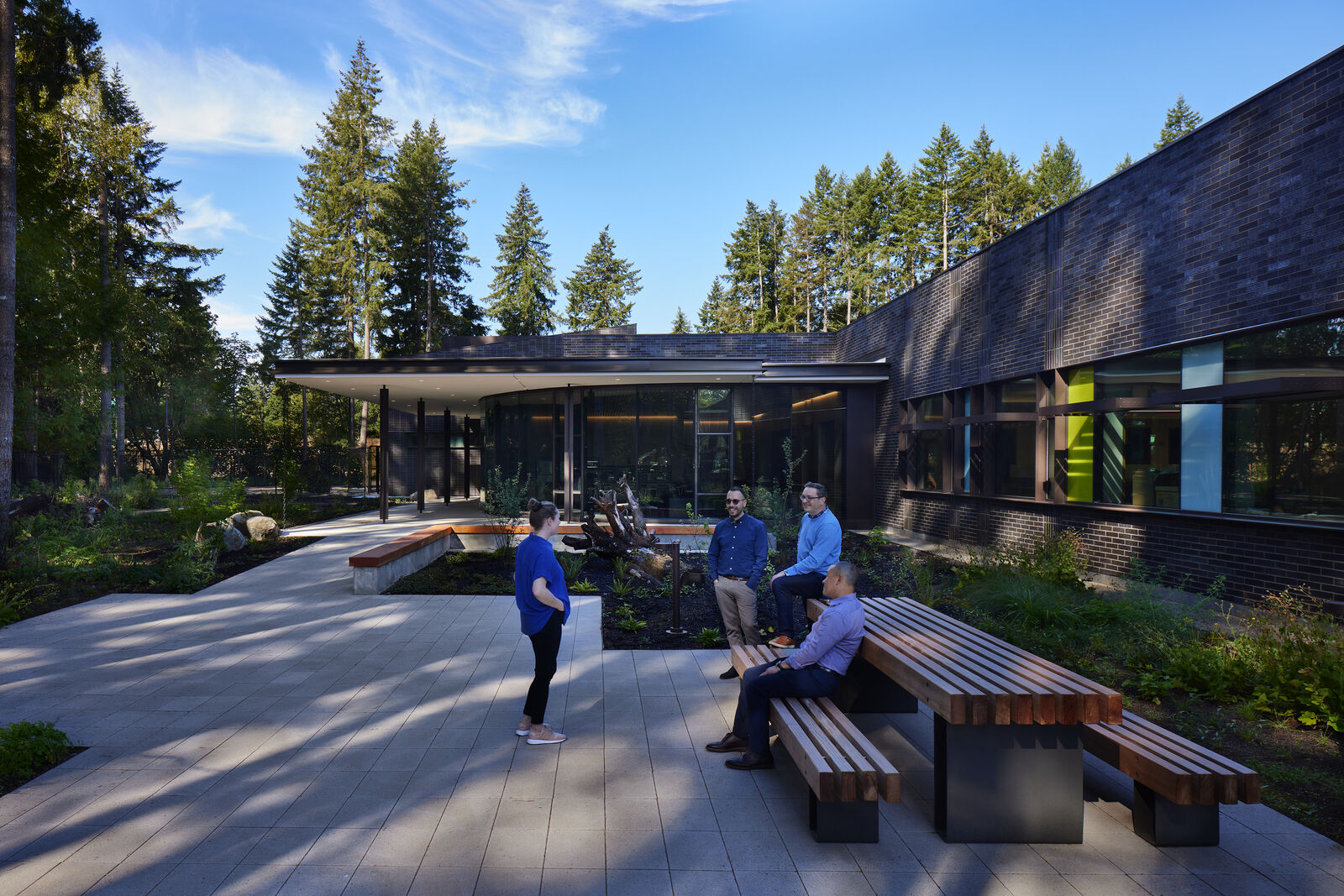
As a shared project with two distinct user groups, the design process required significant collaboration with multiple stakeholders. The agencies share similar requirements to protect public health and safety, but their laboratory needs differ. L&I prevents and responds to workplace injuries, illnesses, and deaths by training first responders to identify job site hazards and perform hazardous materials testing to ensure workers have proper protection when performing their duties. In addition to labs, the building features a high bay demonstration space and outdoor training yard to replicate the conditions inspectors will encounter on job sites and in workplaces. WSDA conducts health inspections, testing, and certifications to protect Washington's food supply, agriculture industry, public health, and the environment. Coming together in one building was a win-win to ensure both agencies have the right space and equipment to continue protecting Washingtonians.
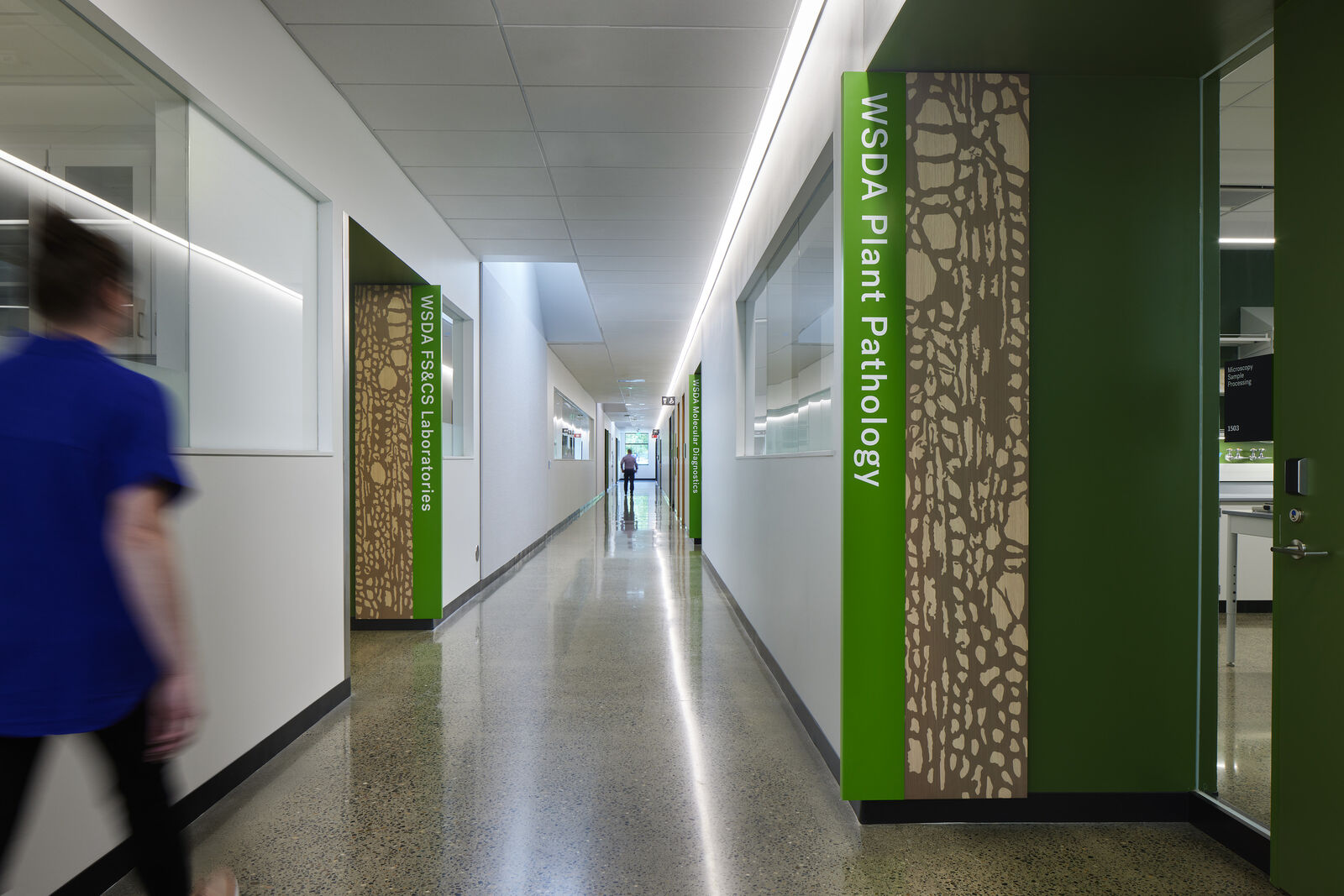
Green and yellow wayfinding distinguish between WSDA in the north bar and L&I (DOSH) in the south bar. Pops of color help break up the 300-foot corridors that organize the programs on either side.

Larger lab and office spaces are located on the perimeter to maximize daylight and views, while smaller, light-sensitive labs such as etymology and botany are housed in the core with support spaces.
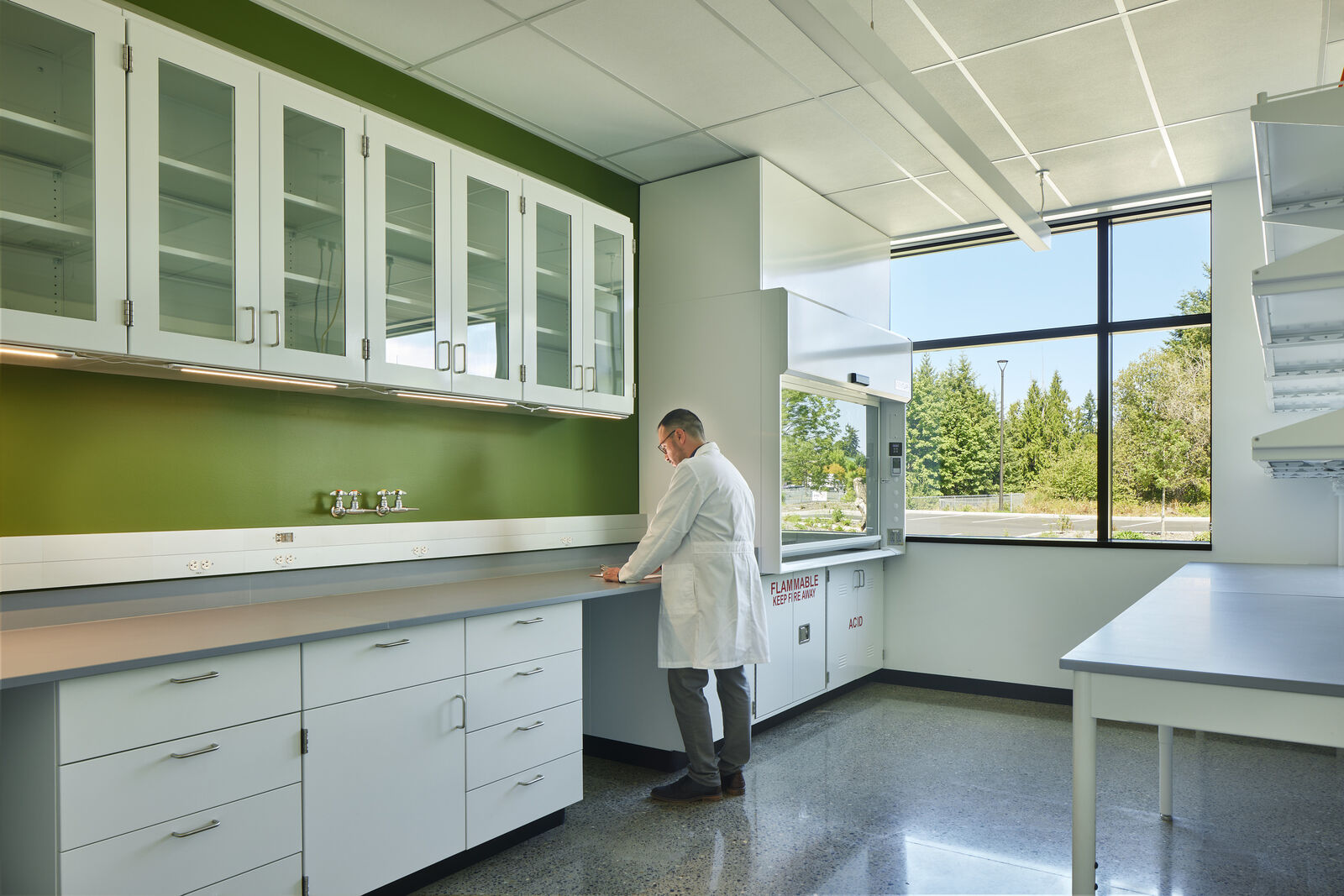
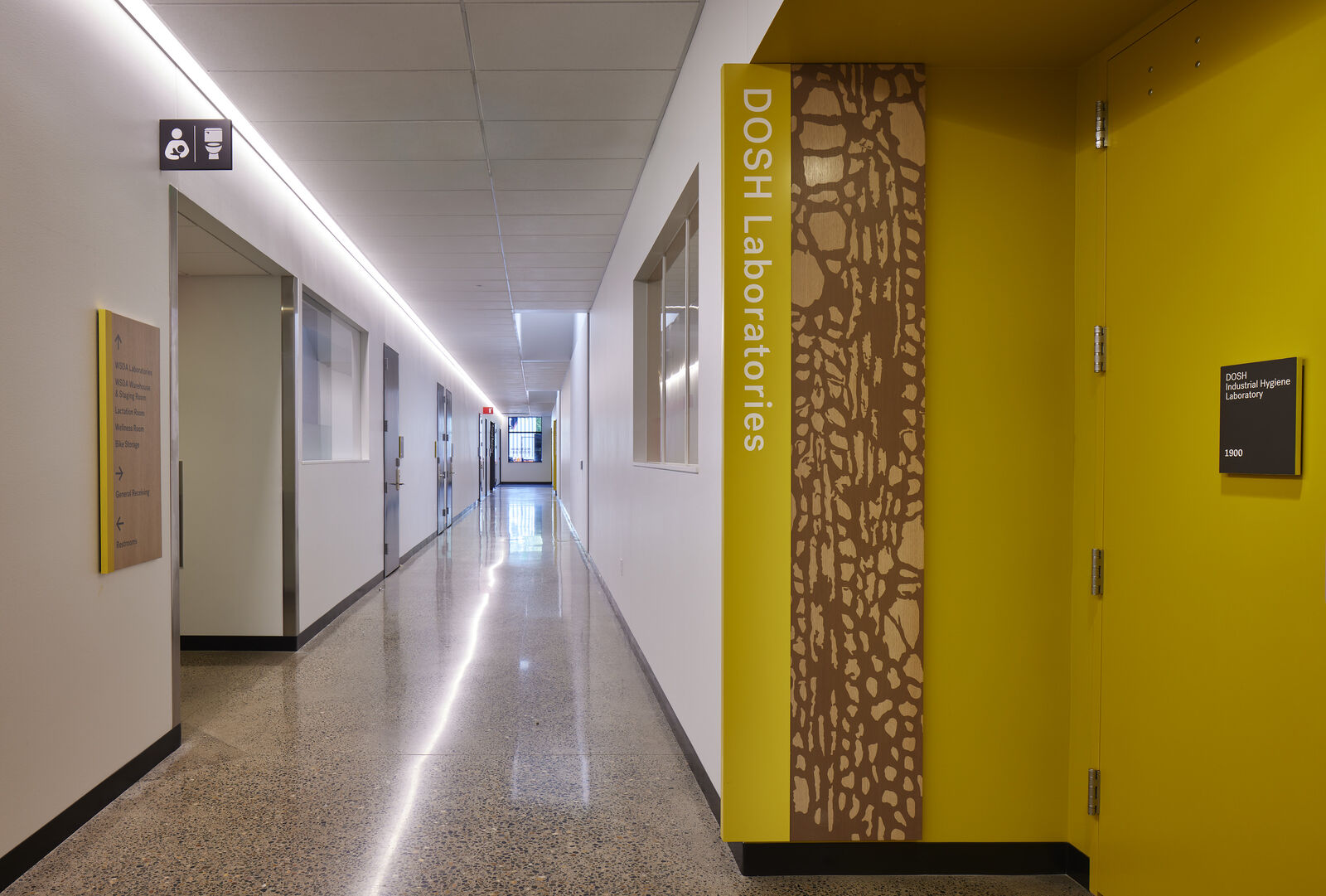
Interior glazing and solar tubes let daylight into corridors and inboard spaces.

DOSH labs feature specialized fume hoods and exhaust snorkels for hazardous materials and chemical testing.

Decades in the making
At the ribbon cutting in 2023, state employees who advocated for this project for years got to witness their dream become a reality. The building is especially timely given current events in Washington state and beyond that demand the type of creativity and innovation that went into its design. From agricultural workers facing rising temperatures, to increasing environmental threats from harmful chemicals and invasive species like murder hornets, to intensifying floods and wildfires precipitated by climate change—Washington is rising to the challenge to protect public health.
“This is a dream come true. Not only for worker safety and health, but for public safety and health.”
-Janet Kenney, Senior Operations Manager, Division of Occupational Safety & Health, Washington State Department of Labor & Industries
Clifford L. Allenby Building

California Air Resources Board Southern California Headquarters, Mary D. Nichols Campus
Department of General Services, May Lee State Office Complex

Wexford Science + Technology / University of Pittsburgh, The Assembly