IMPROVING THE PASSENGER EXPERIENCE
Sound Transit Station Experience Design Guidelines
Urbanism and Landscapes, Aviation and Transportation
Sound Transit’s mission is to connect more people to more places to make life better and to create equitable opportunities for all. To do that, the agency must expand its transit systems to support a growing Puget Sound region in a cost-effective manner which connects people to where they need to go. When the agency developed a new vision and action plan to enhance the passenger experience, they hired ZGF to co-create a set of guidelines for transit stations and station environments that recenters the passenger experience in the design process.
Published in 2022, the Sound Transit Station Experience Design Guidelines (SEDG) work in tandem with other Sound Transit criteria manuals and documents used by design teams. While existing documents provide details for station architecture and infrastructure, the SEDG extends to the station environment and includes plazas and connections to other modes of transportation. It’s the first document the agency has used to shape the passenger experience across the variety of environments they interface with during their journeys to, through, and from the region’s transit stations.
Location
Seattle, WA
Completion date
2022
Project Component
Urban Design
Station Architecture
Standards Development
With the goal of shifting Sound Transit’s focus from simply delivering on-time and on-budget capital projects to creating a better passenger experience for all, the SEDG governs all existing and future stations and station environments with chapters devoted to passenger experience, station design, and station environments.
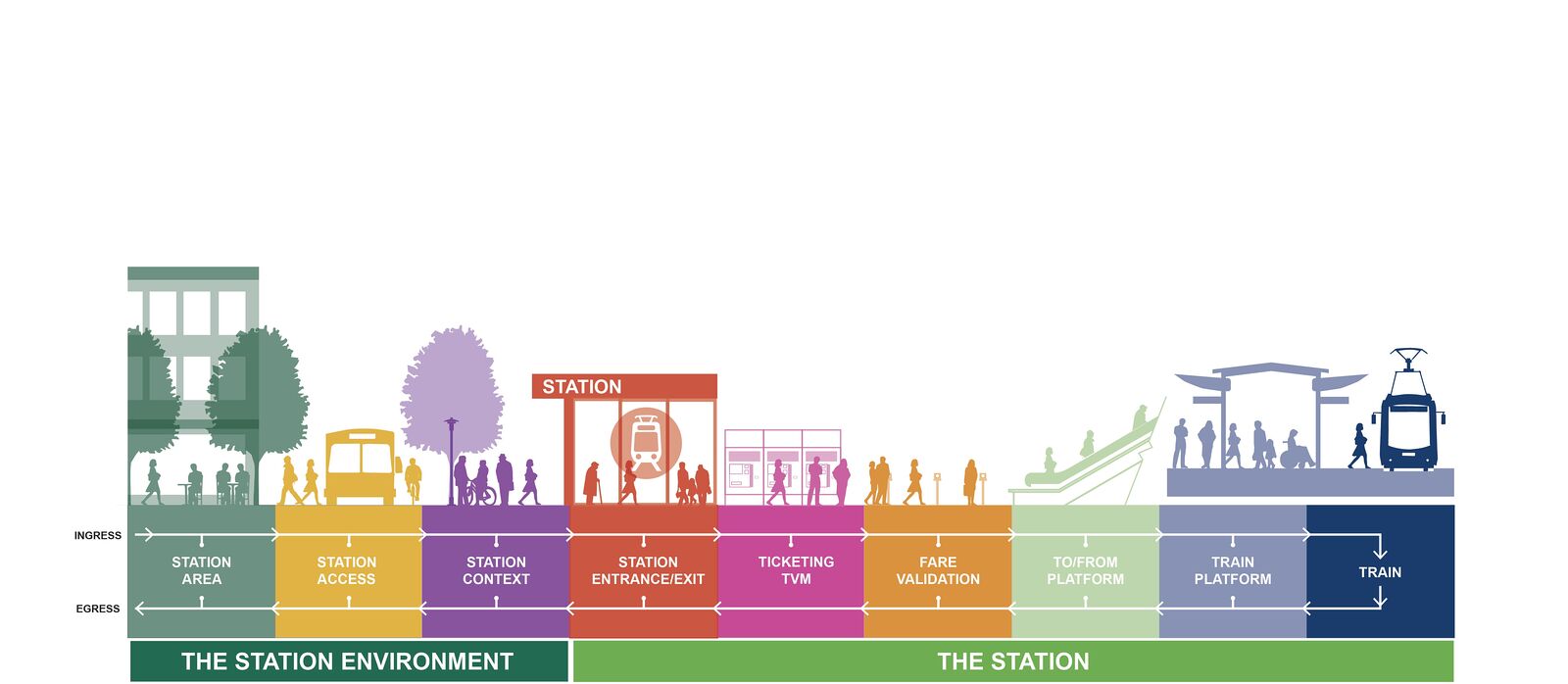
ZGF engaged a variety of Sound Transit departments to align their cross-disciplinary goals for improving the passenger experience and to seamlessly blend the station environment context with station architecture and interiors. With all voices at the table, the project team holistically evaluated how the design of Sound Transit facilities impact users at every point in their journey. The resulting guidelines ensure a simple, seamless, and intuitive experience for all passengers—from their arrival in the station environment by all modes of transportation, as they move through a station plaza or other urban threshold, to the ticketing area, fare paid zone, and platform, and then through the system by train, and as they exit at their destination.
Station Design
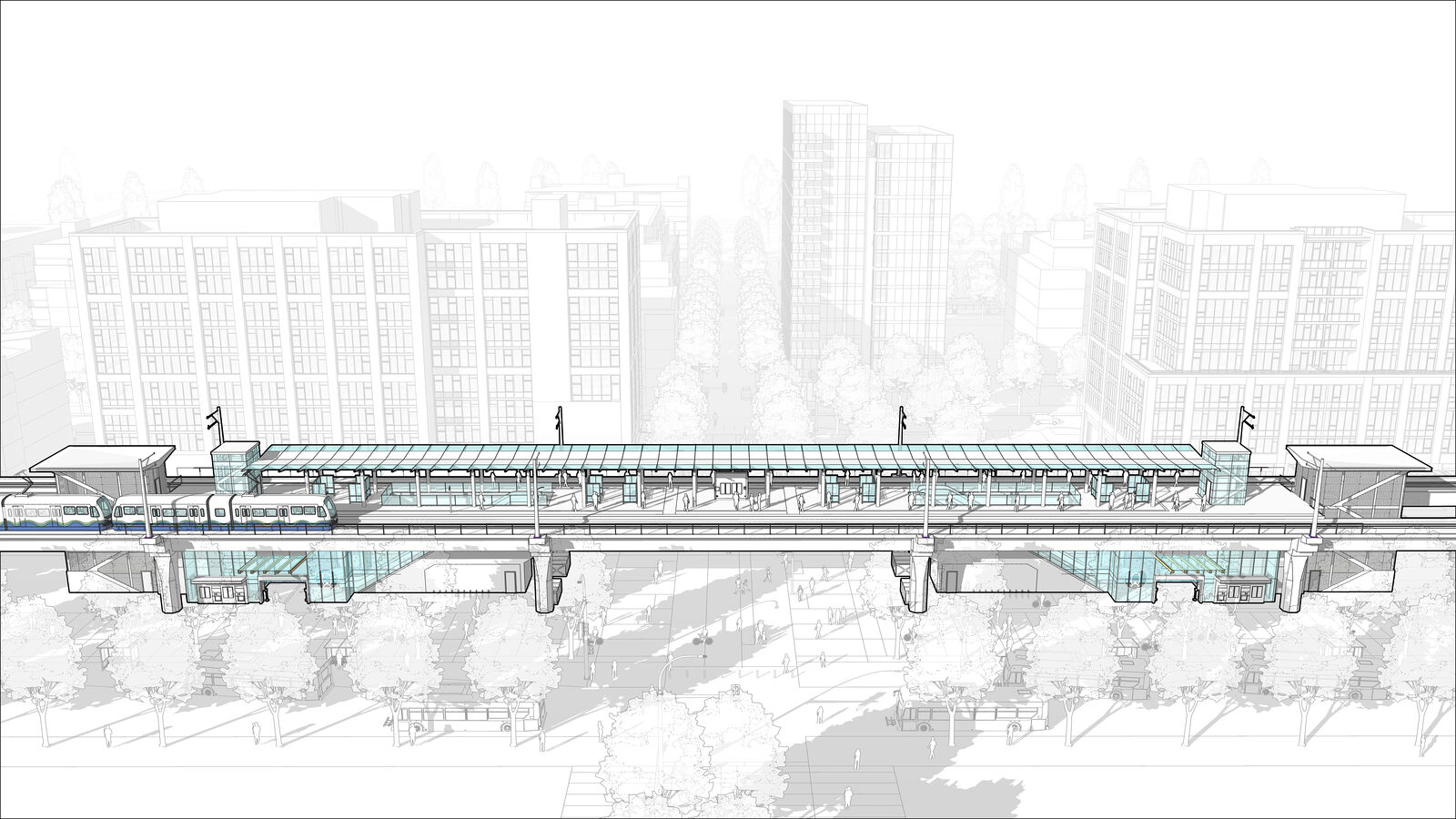
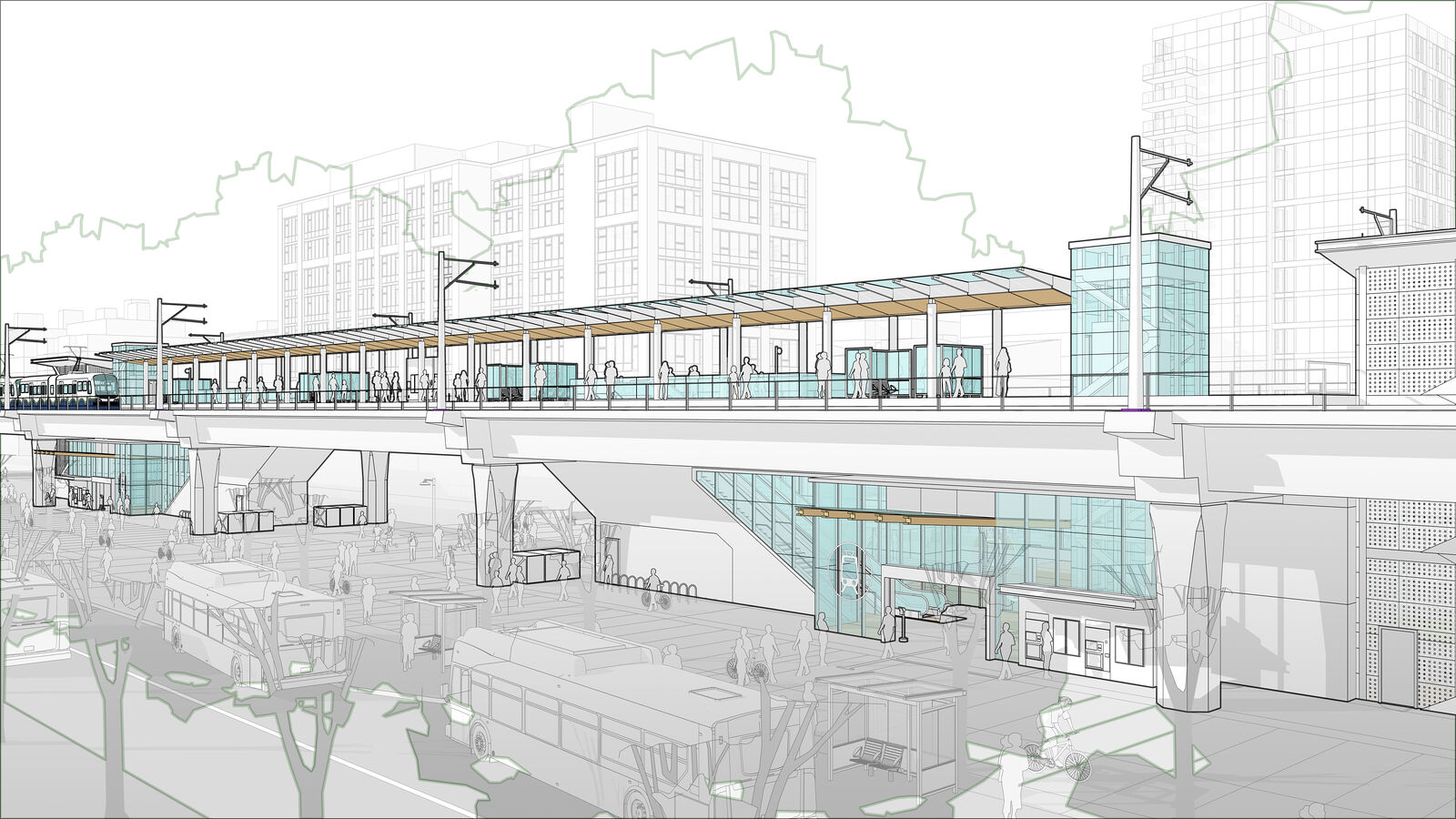
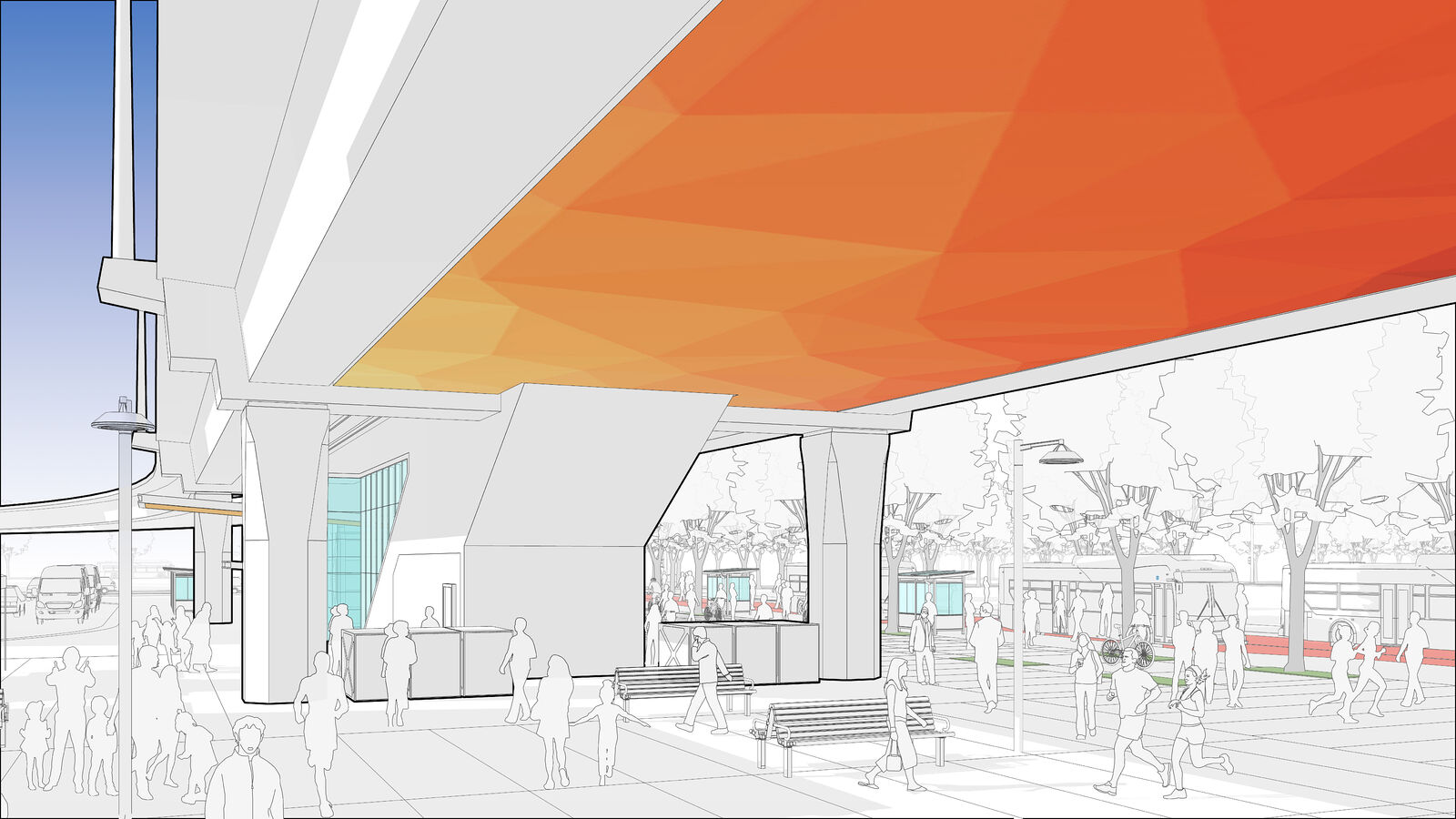
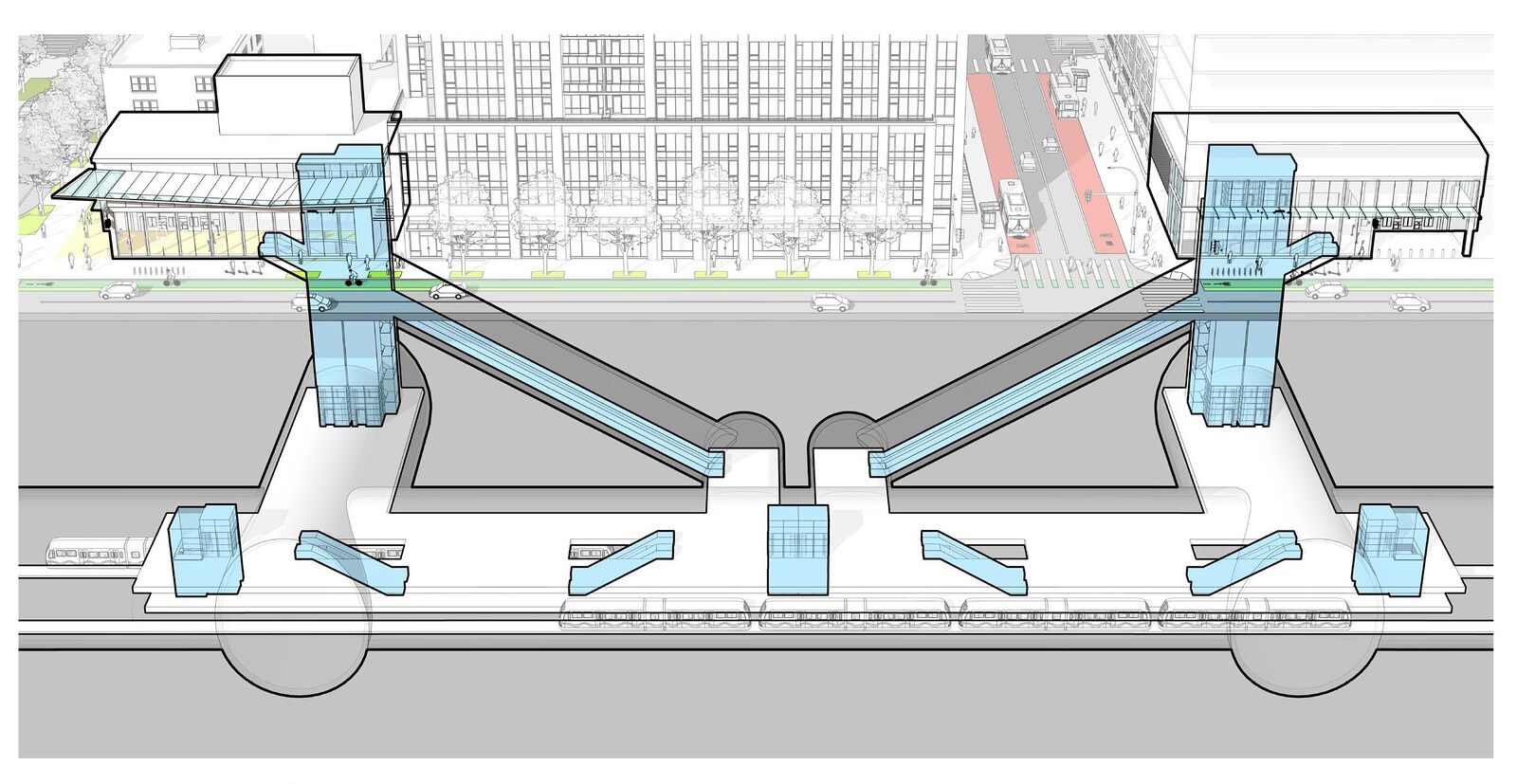
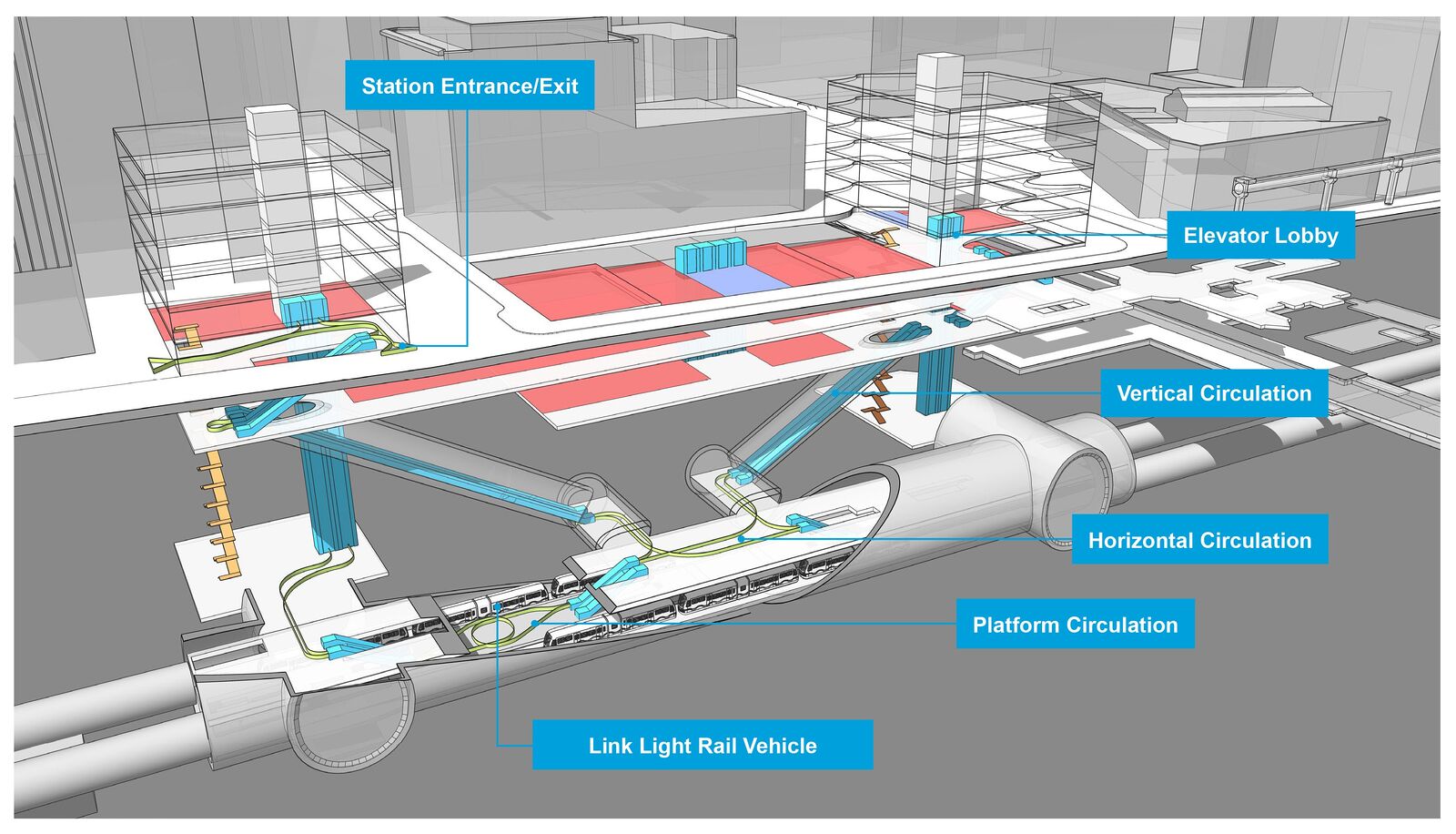
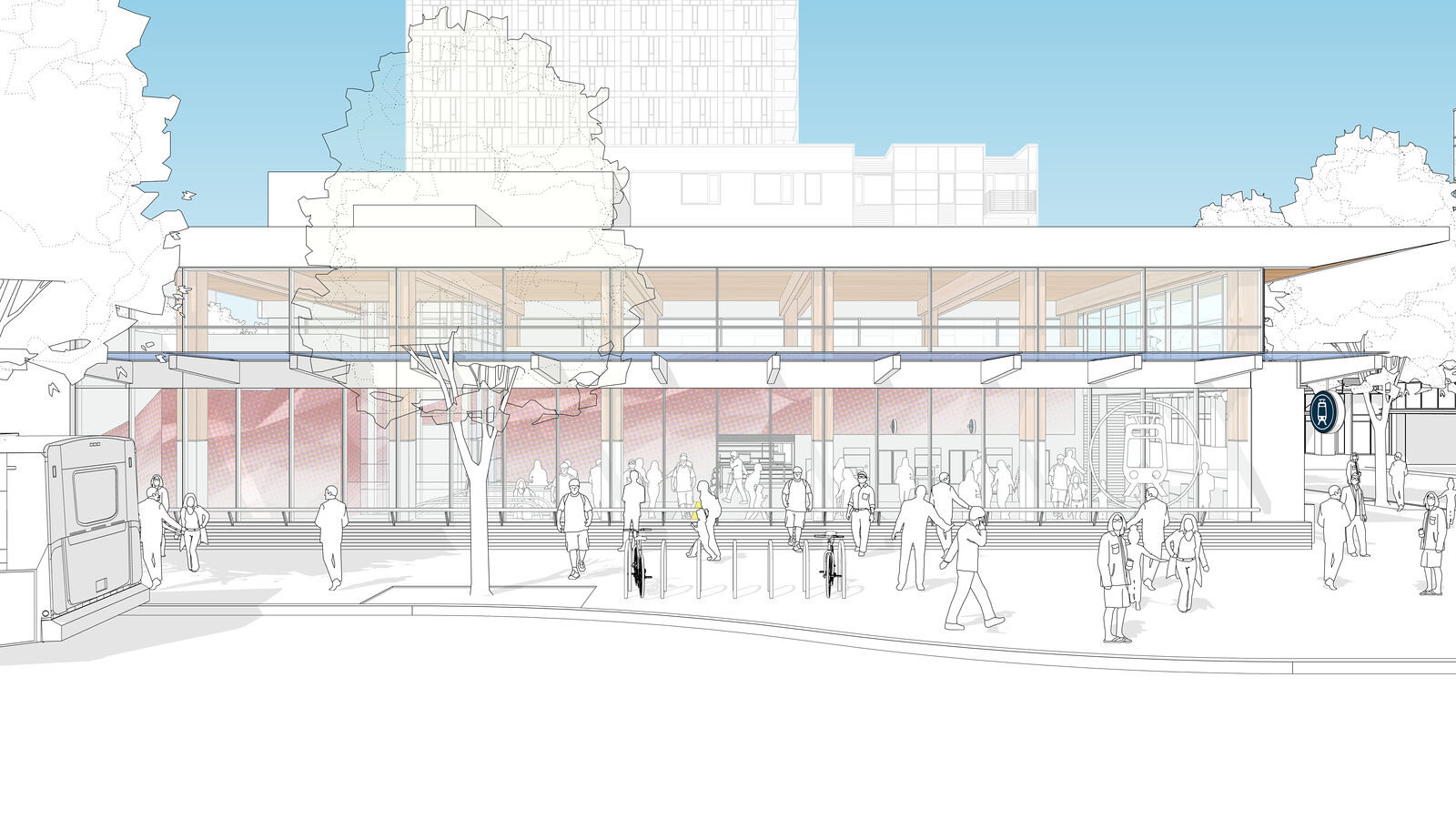
The Station Design chapter looks at elevated, at-grade, and below-grade station types and platform configurations; design principles including identity, navigation/wayfinding, and spatial legibility; and various station elements such as materials, lighting, entrances, canopies, vertical circulation, and transfer concourses. The chapter provides guidelines for the design and integration of each element in a way that supports a simple, seamless, and intuitive passenger journey.
Station Environments
At its best, transit is a community asset. Extending the passenger experience to the station environment creates urban design opportunities to anchor the station architecture within the neighborhood and become part of its identity. The Station Environments chapter includes definitions for both Land Use Types and Station Access and Approach Types and coordinates the overlapping guidelines for each. It also extends the thinking behind station area formation around a Sound Transit facility into guidelines for the public realm, equitable transit-oriented development (ETOD), parking facilities, and joint development.
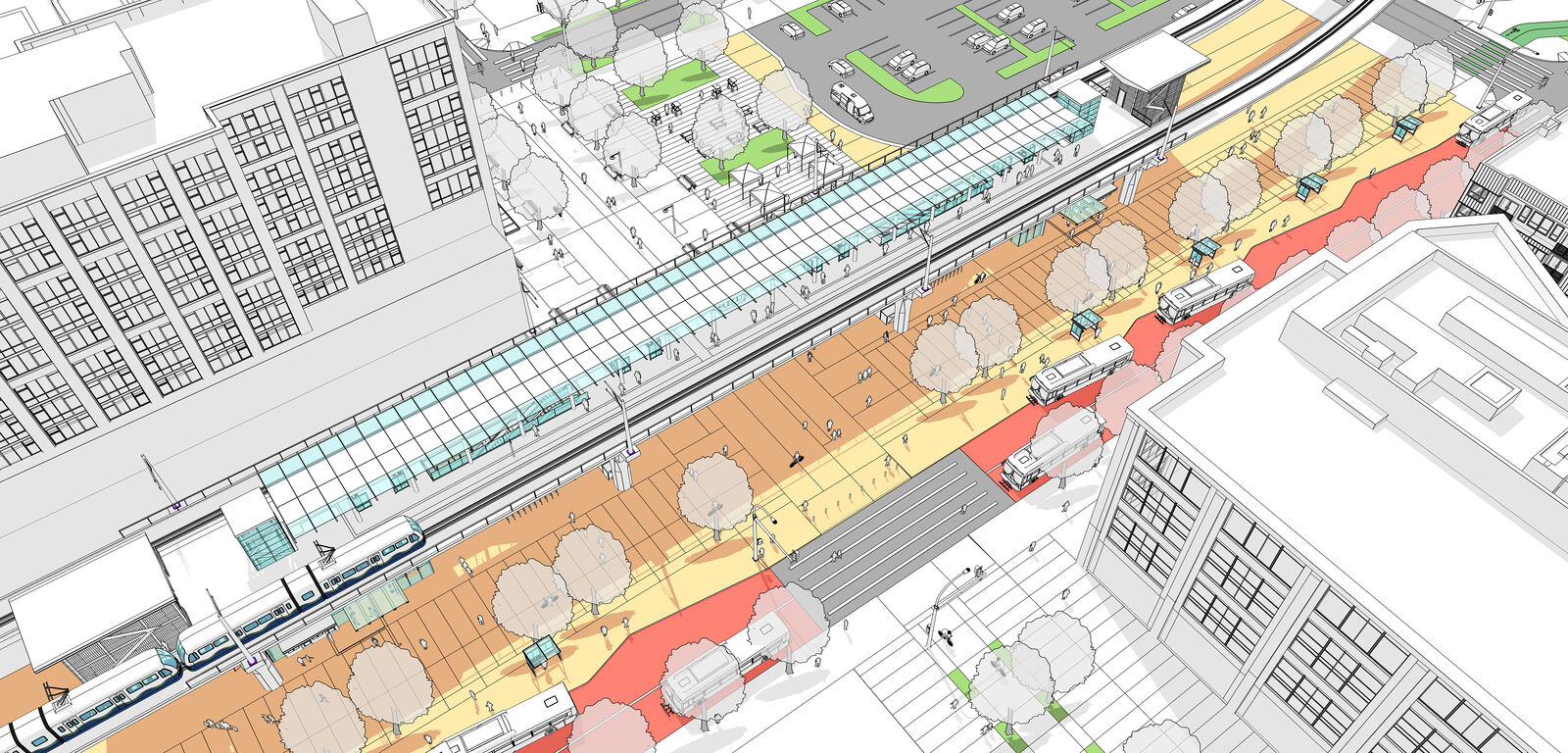
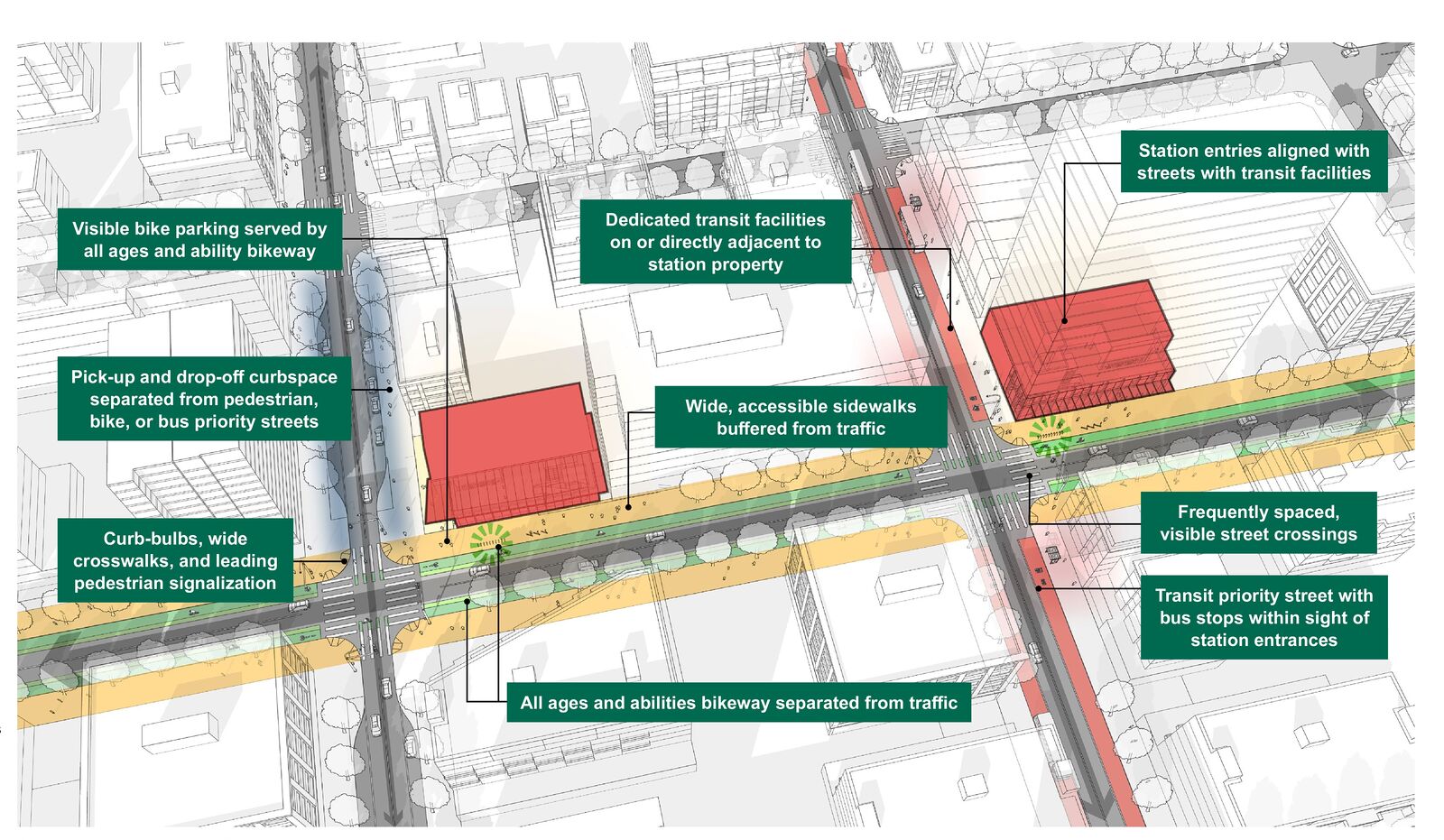
The Station Environment section considers the surrounding area of transit stations based on primary modes of arrival (walk/bike/roll, multimodal, or auto) and urban context.
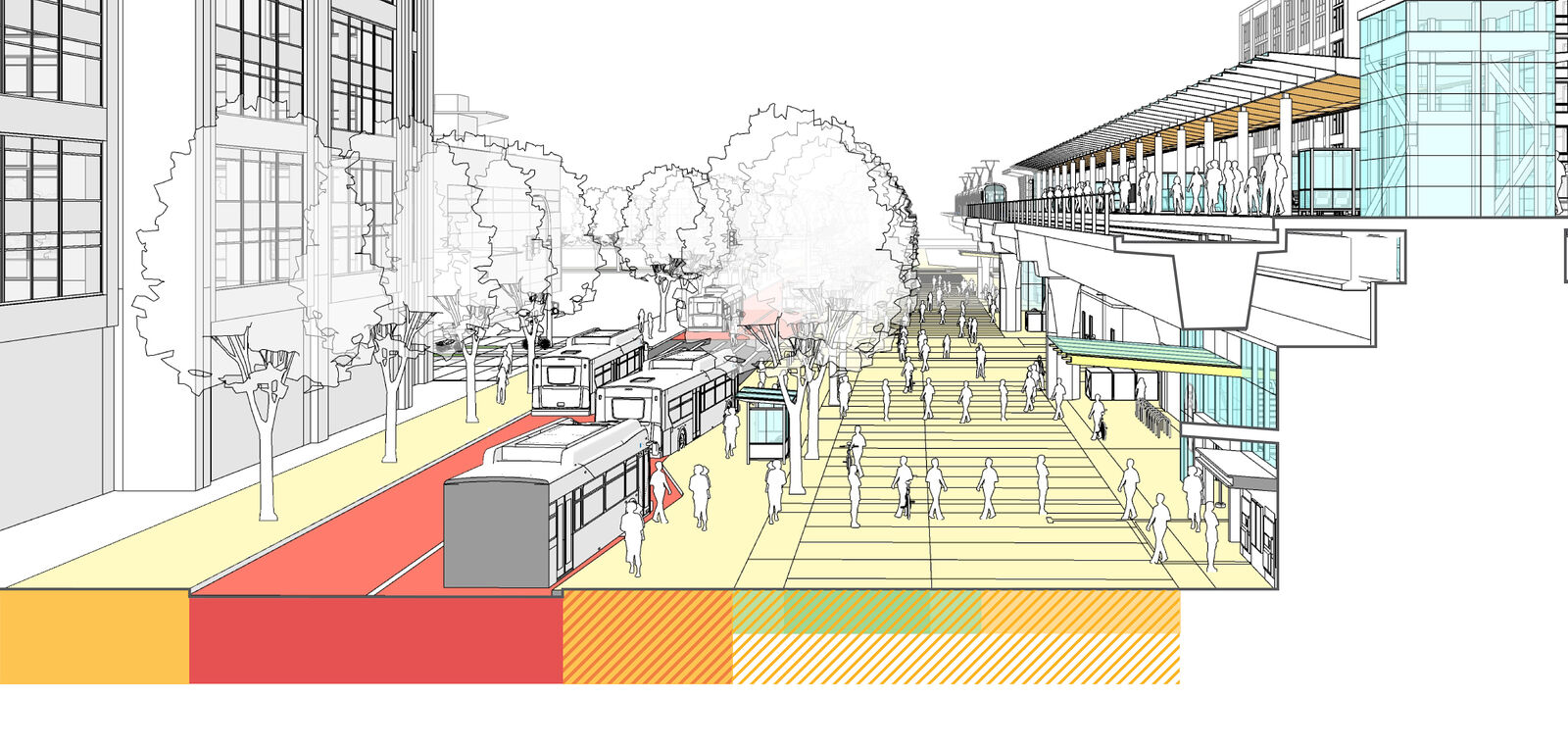
Different types of urban conditions and uses, as well as surrounding plazas and buildings, can influence station type and access. This section perspective depicts a multimodal station on a transit street.
Station environments are categorized in two ways that impact what design features the station includes and thus guide Sound Transit’s investment decisions;
- By land use type: Established Urban, Emergent Urban, and Single Use
- By modes of arrival: Walk/Bike/Roll, Multimodal, and Auto
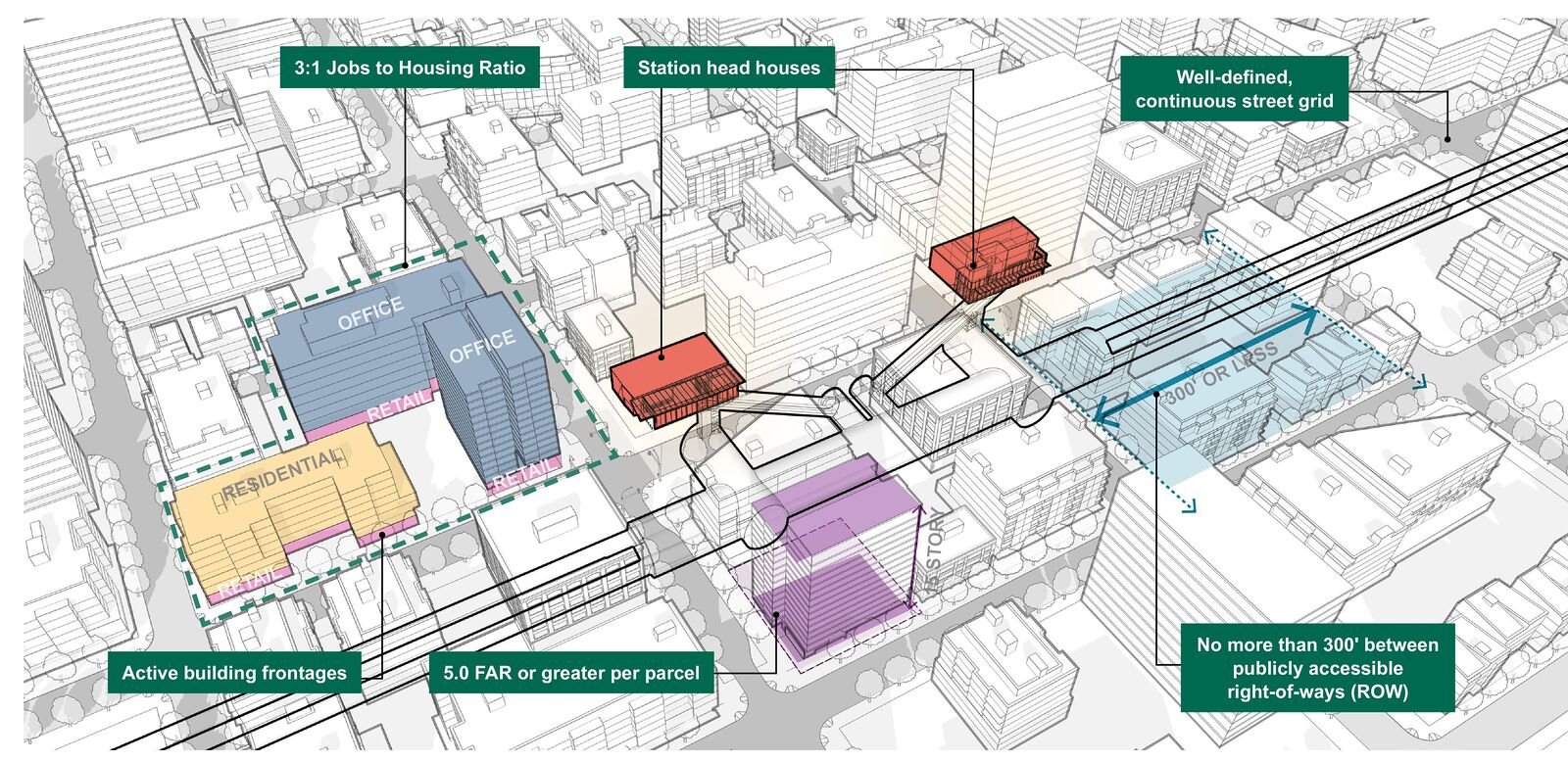
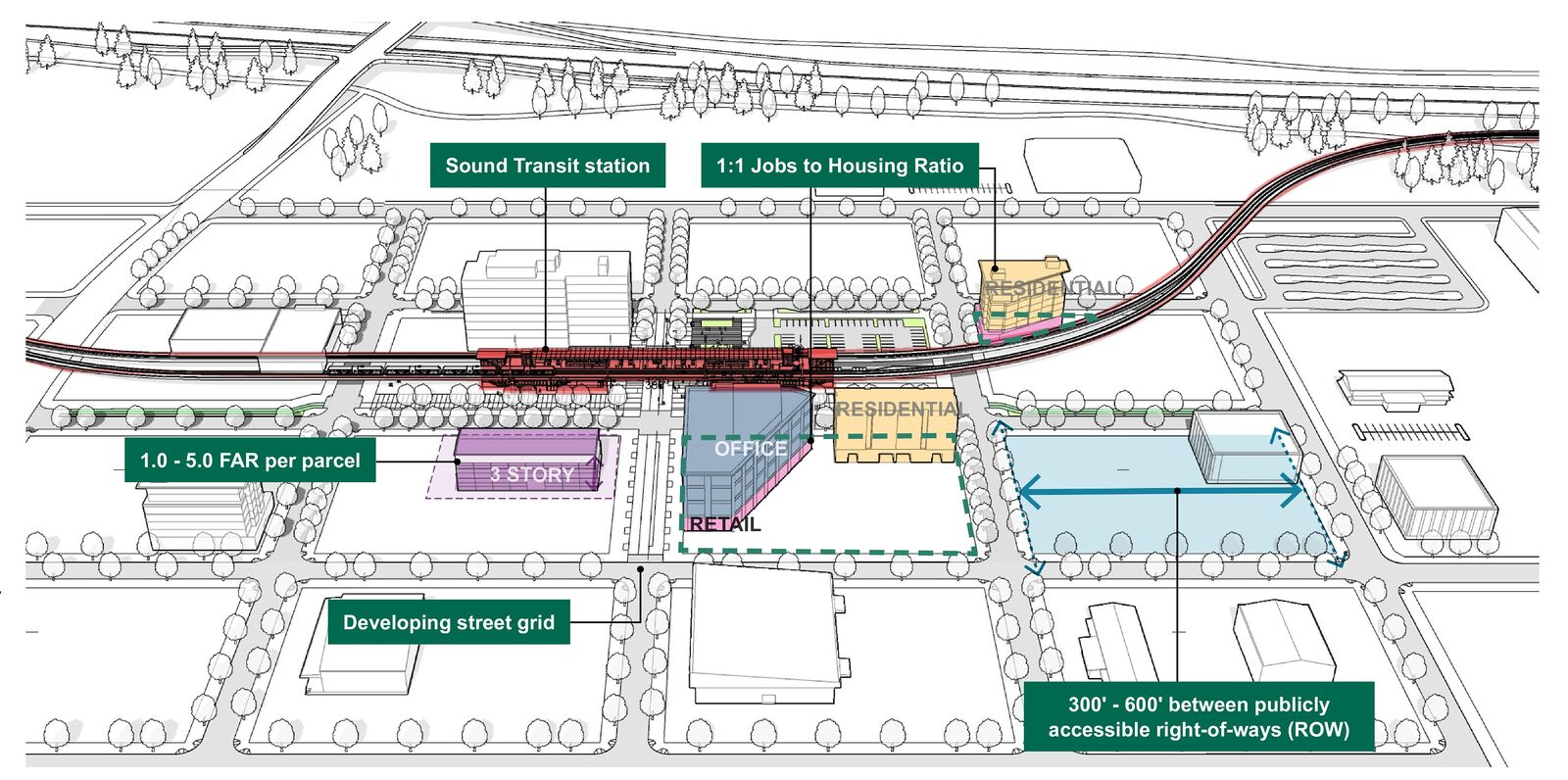
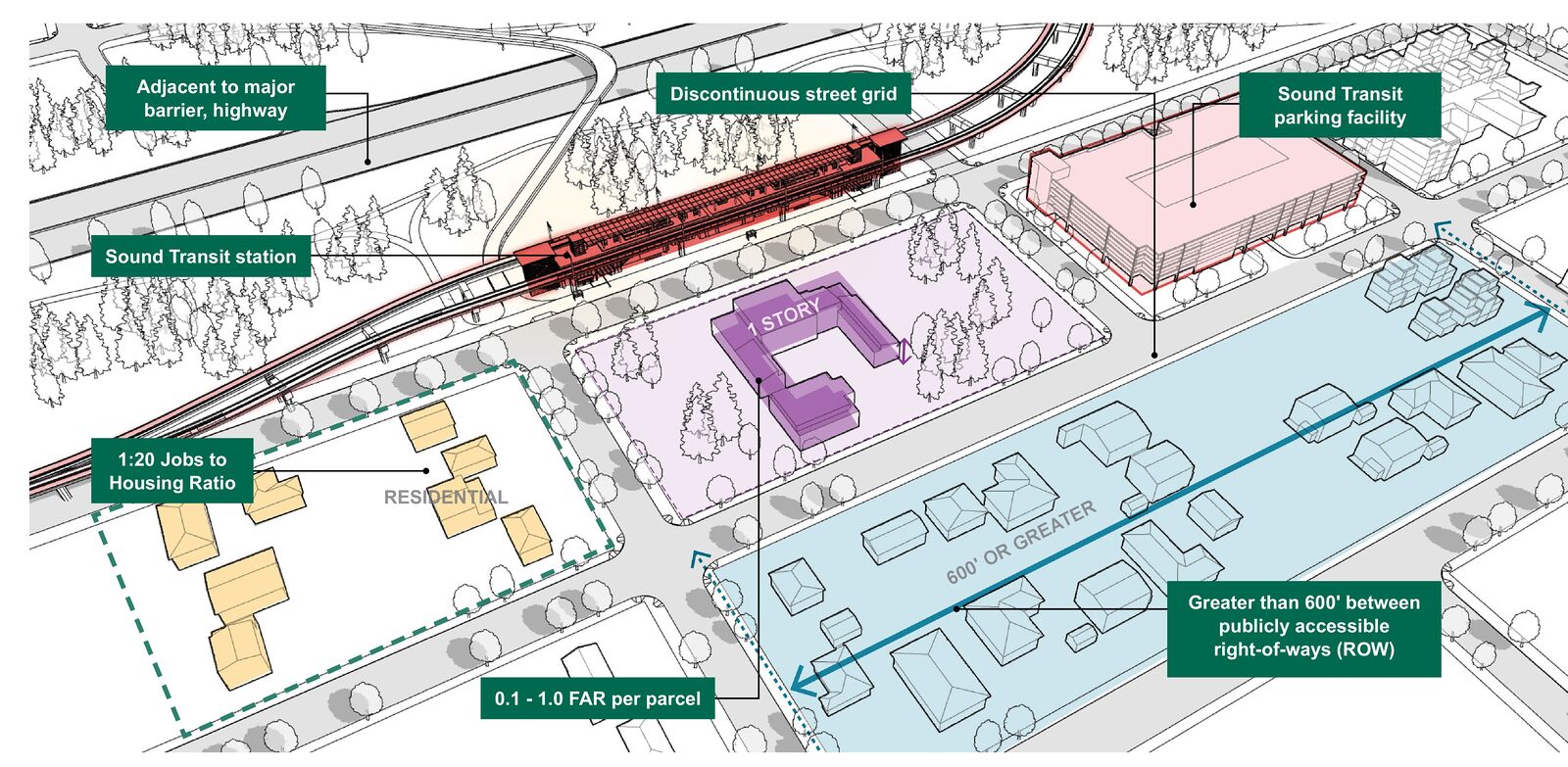
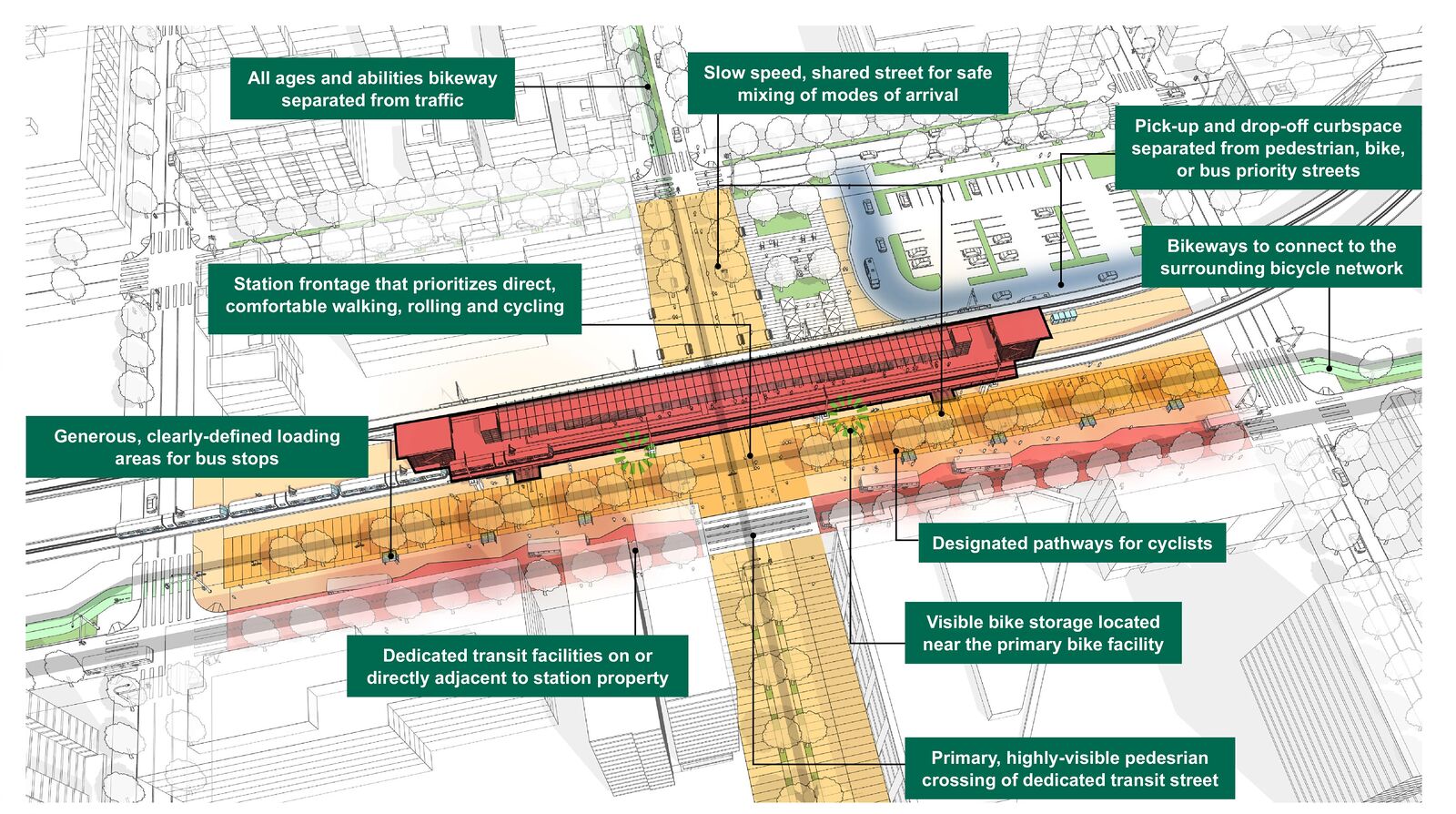
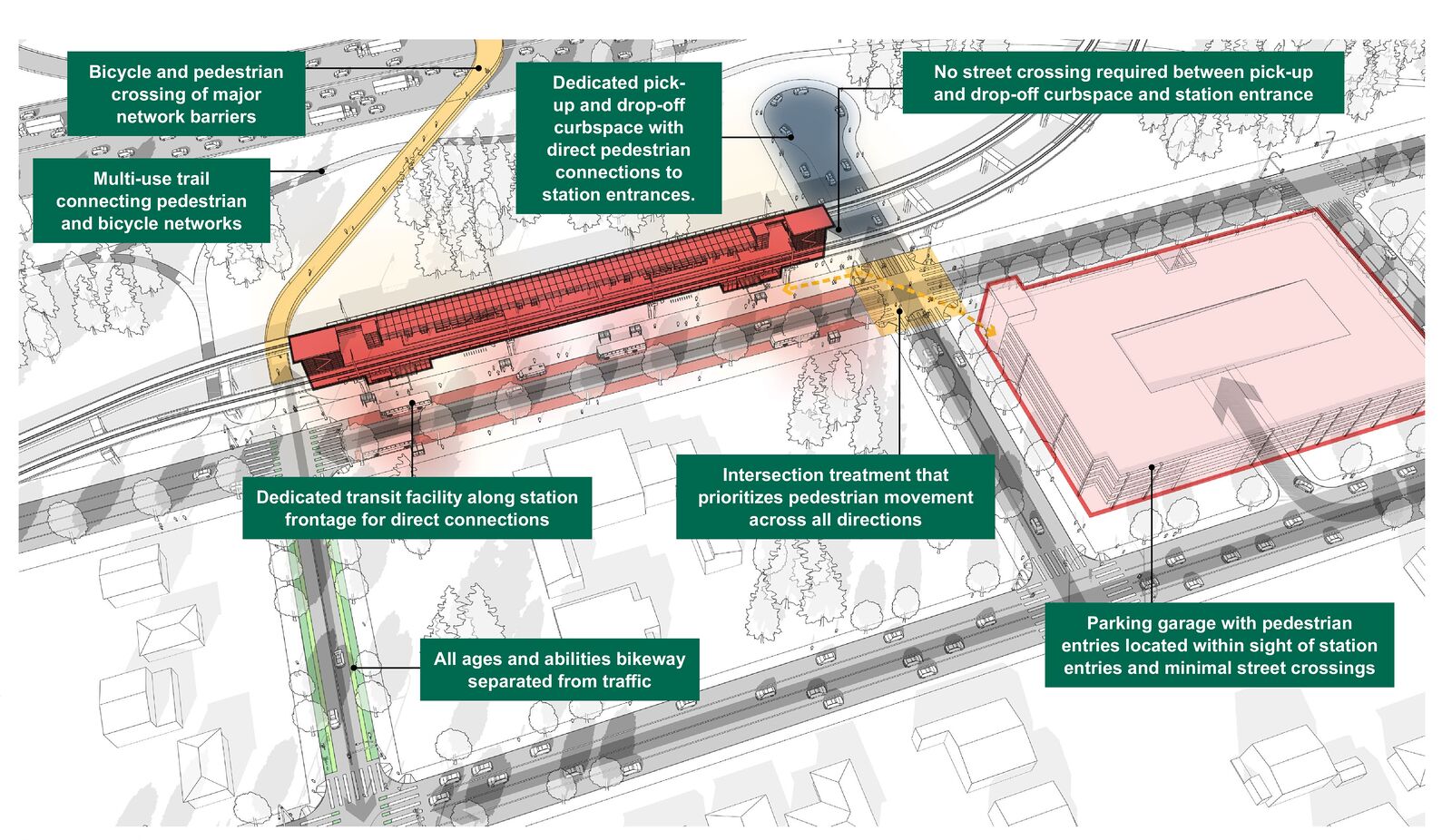
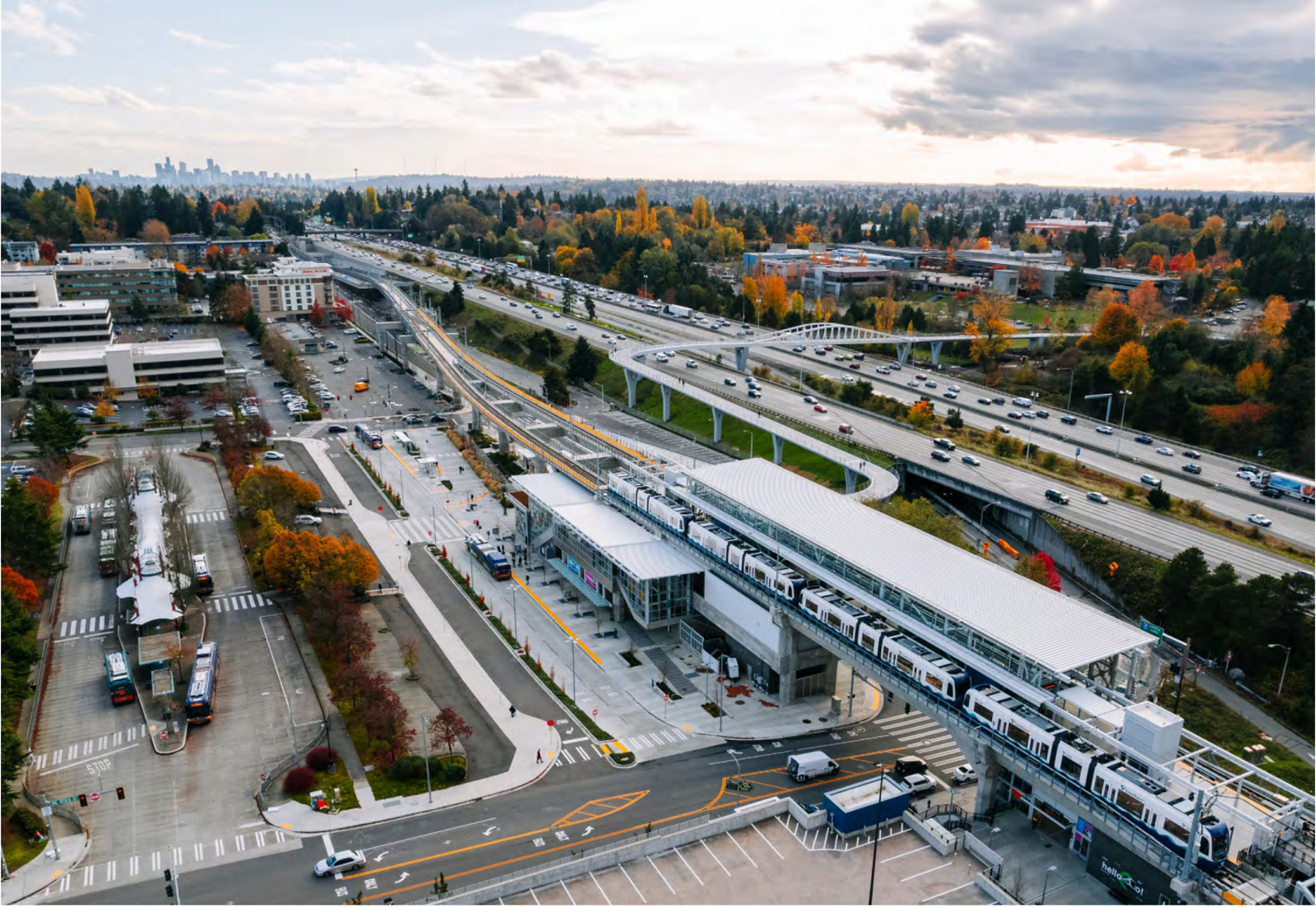
A bird's eye view of Northgate Station shows multimodal connections to surrounding neighborhoods—an example of robust travel options and enhanced resiliency for passengers. [Photo courtesy of Sound Transit]
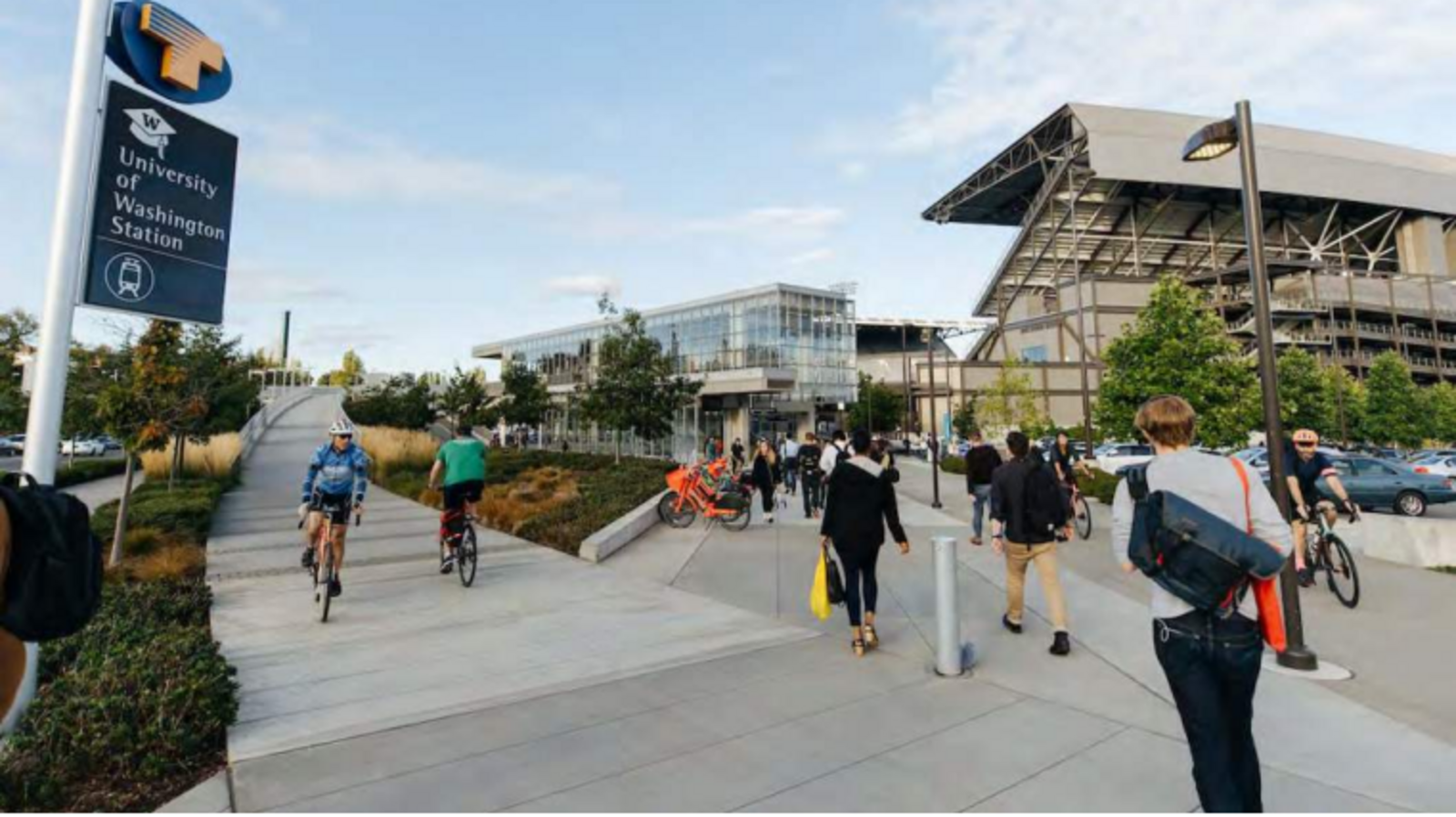
The University of Washington Station is an example of a Walk, Bike, and Roll station with pedestrian and bicycle amenities.
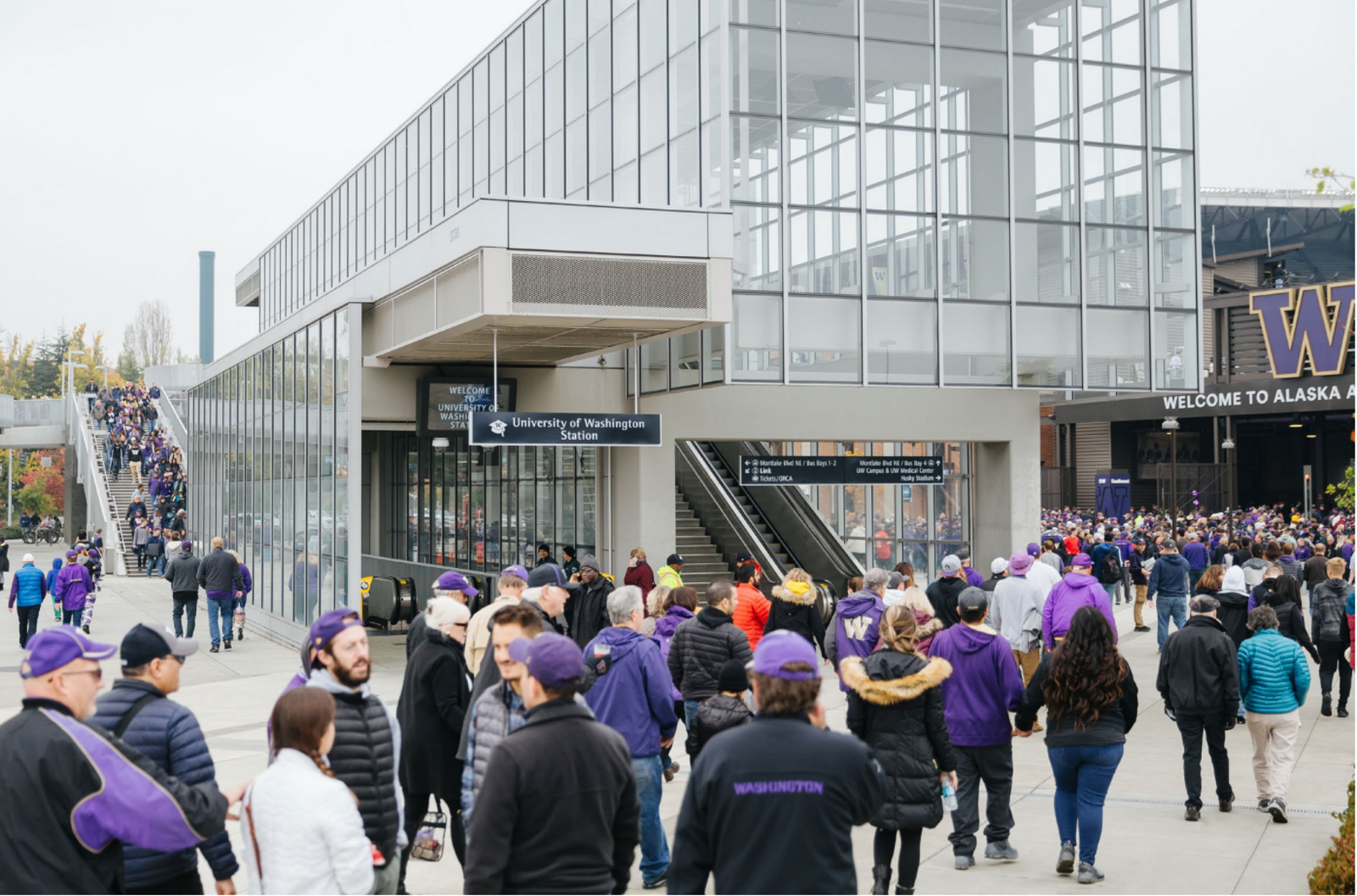
The plaza also helps manage surge events from the adjacent stadium. [Photos courtesy of Sound Transit]
Measuring Success
Importantly, the SEDG provides tools for incorporating passenger experience into the design process and an evaluation framework to review the design at key milestones. These include persona simulations, or day-in-the-life exercises, and journey mapping of spaces to evaluate how well the design is meeting Sound Transit’s experiential goals. Some of the resulting process improvements have substantially influenced station architecture, impacting how easily passengers can navigate the station and urban environment.
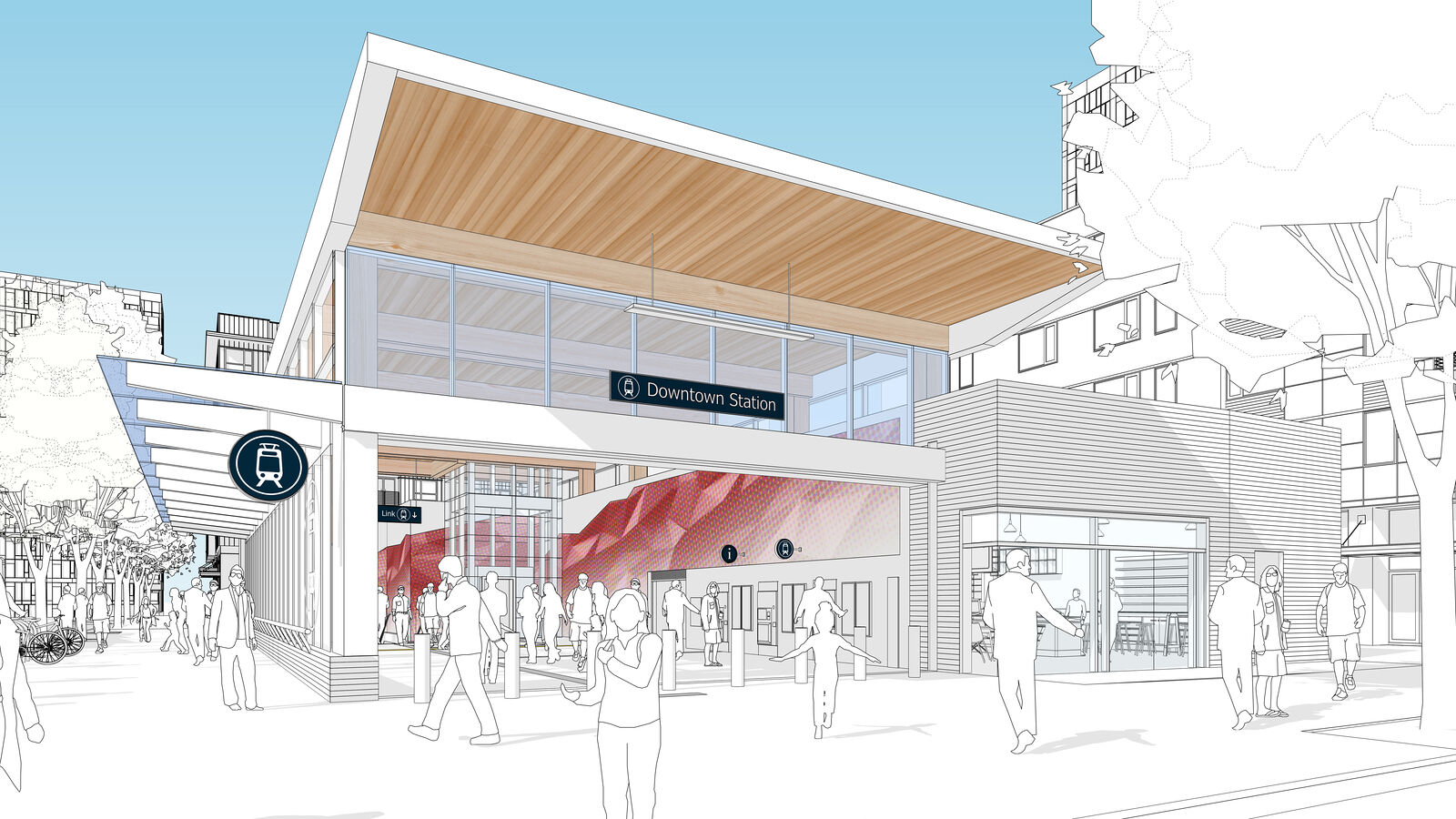
Decision points are places in the passenger journey sequence where a passenger must make an informed choice about their direction of travel.
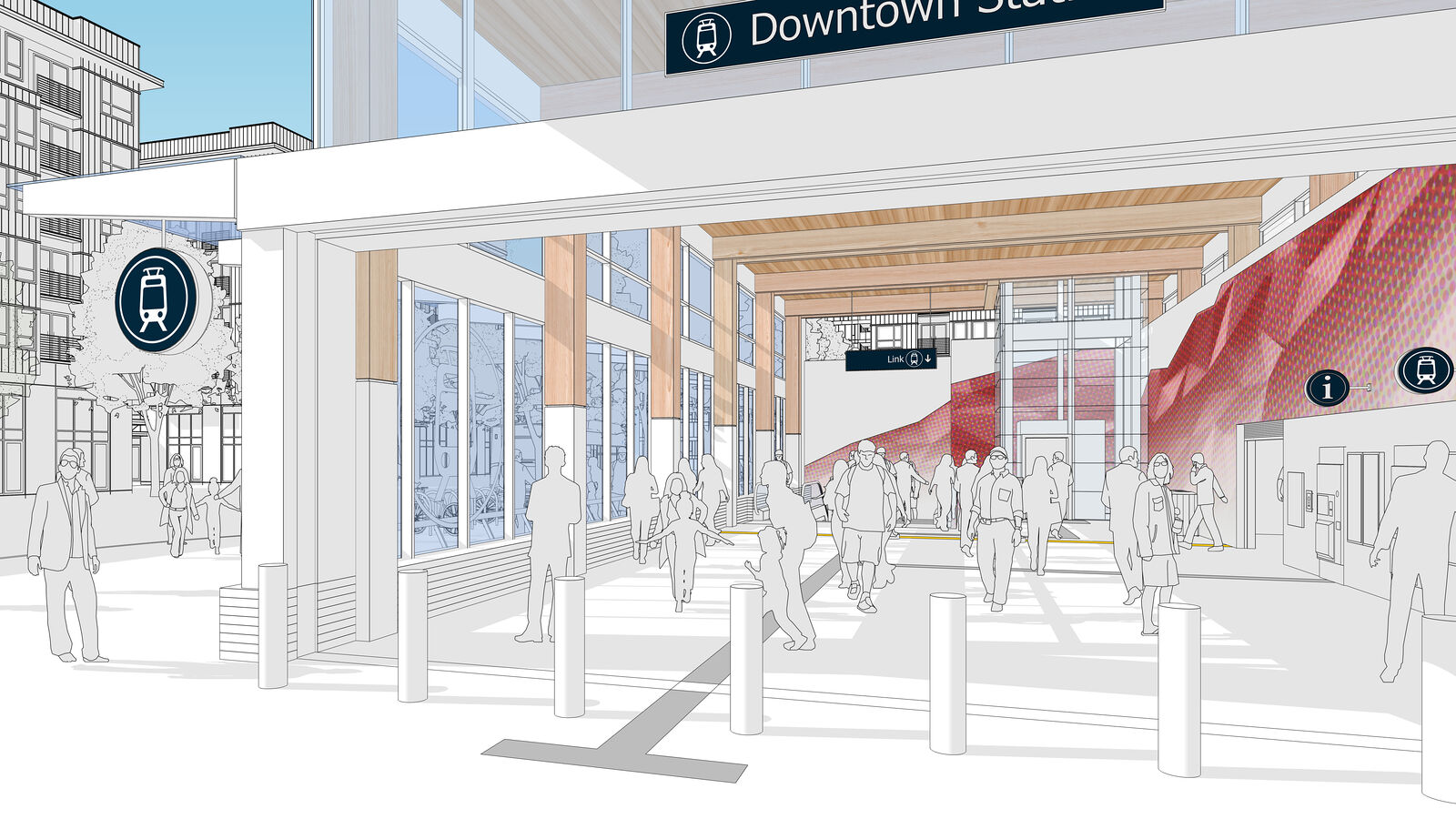
This starts outside the station, including identifying the station and entrance, purchasing tickets/planning a trip, and choosing circulation to the station platform.
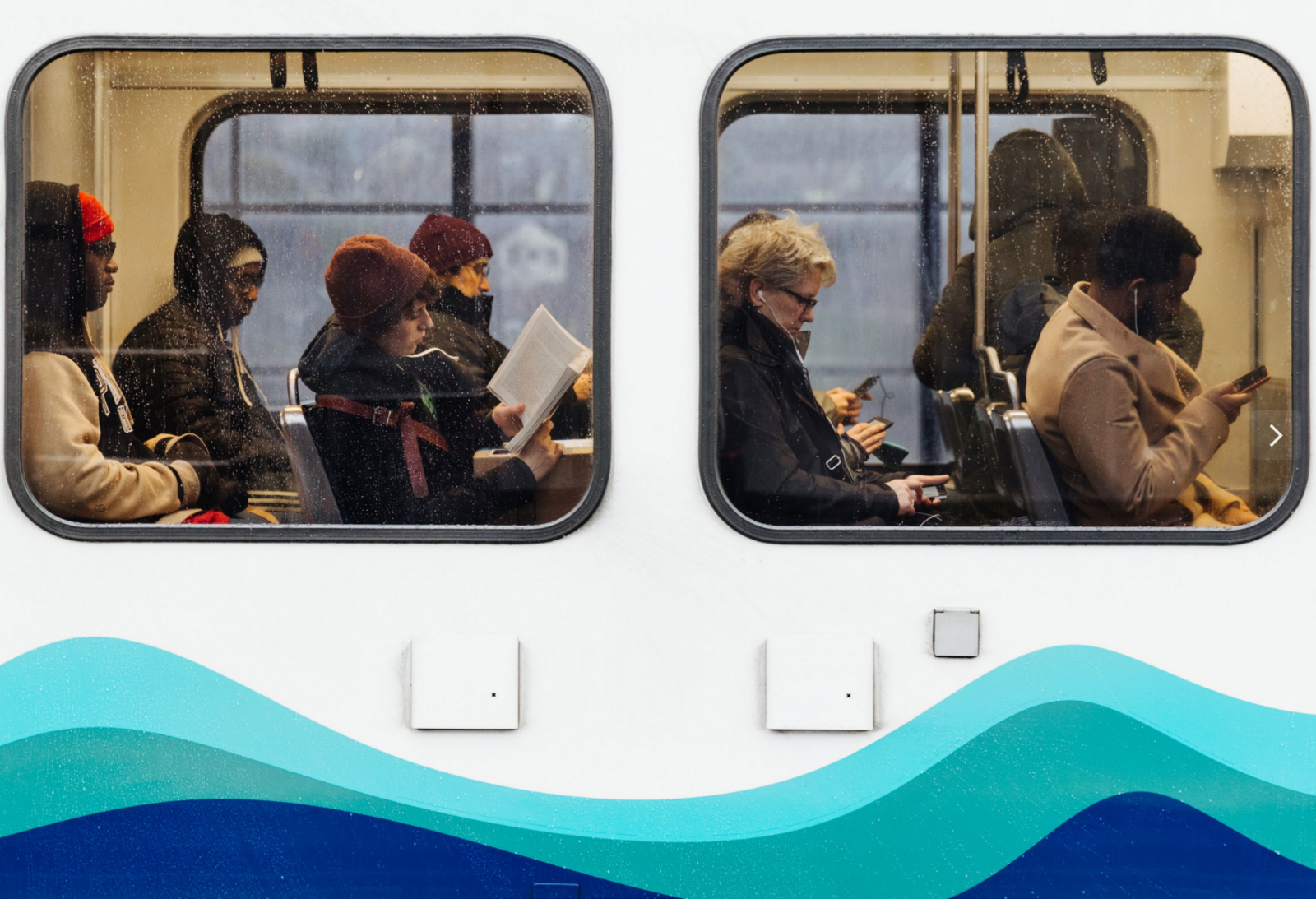
A well-designed station requires minimal signage to navigate because of how intuitive the circulation and architecture are. With clear sightlines from one decision point to the next (e.g. from ticketing to the station platform) and a range of circulation options to meet each passenger’s needs, even a first-time rider could easily understand where to go and how to get there. Persona simulations enable design teams to consider the diverse users who will pass through the station and positively impact their experience, while avoiding changes later in design.
Explore the full Sound Transit Station Experience Design Guidelines here.
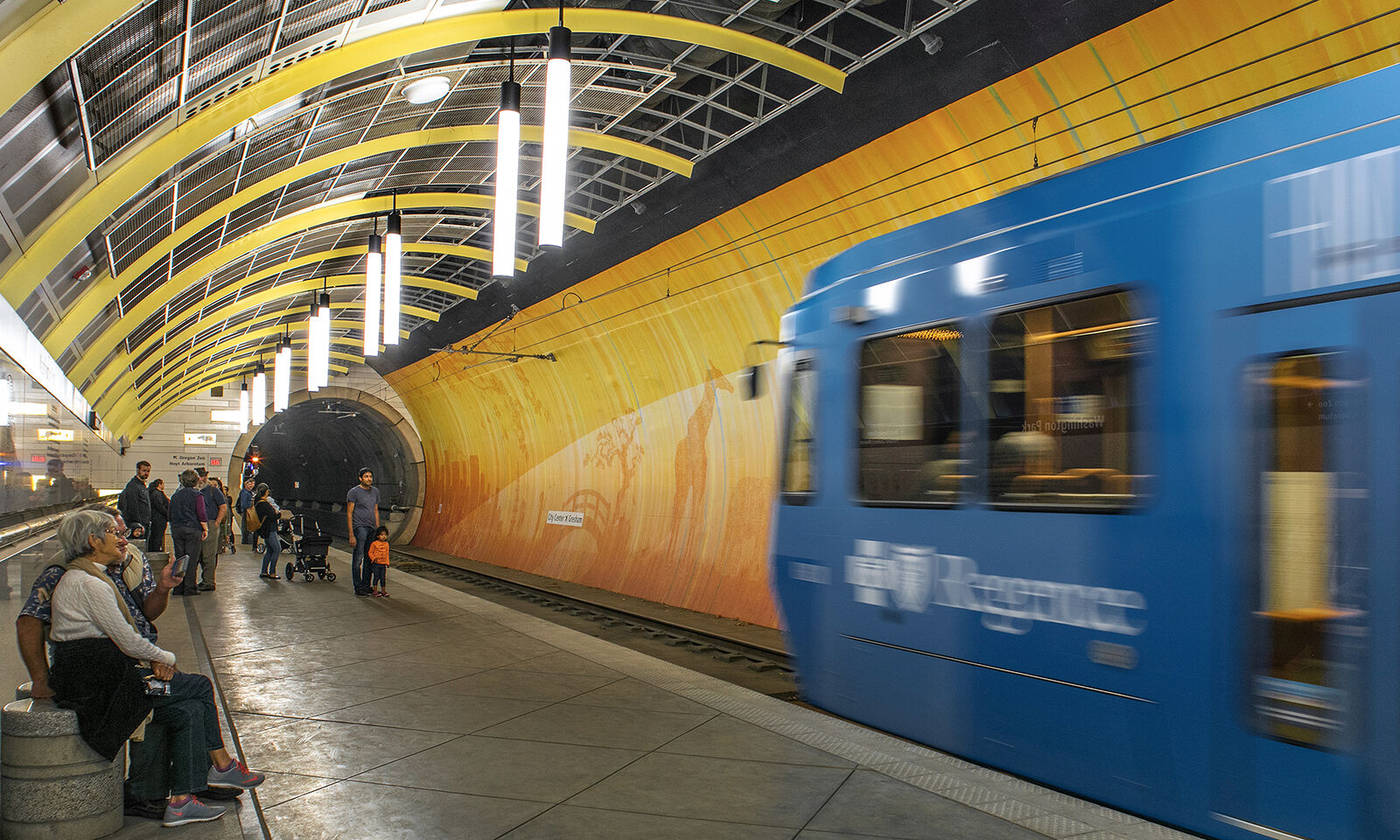
TriMet, Washington Park Station Improvements
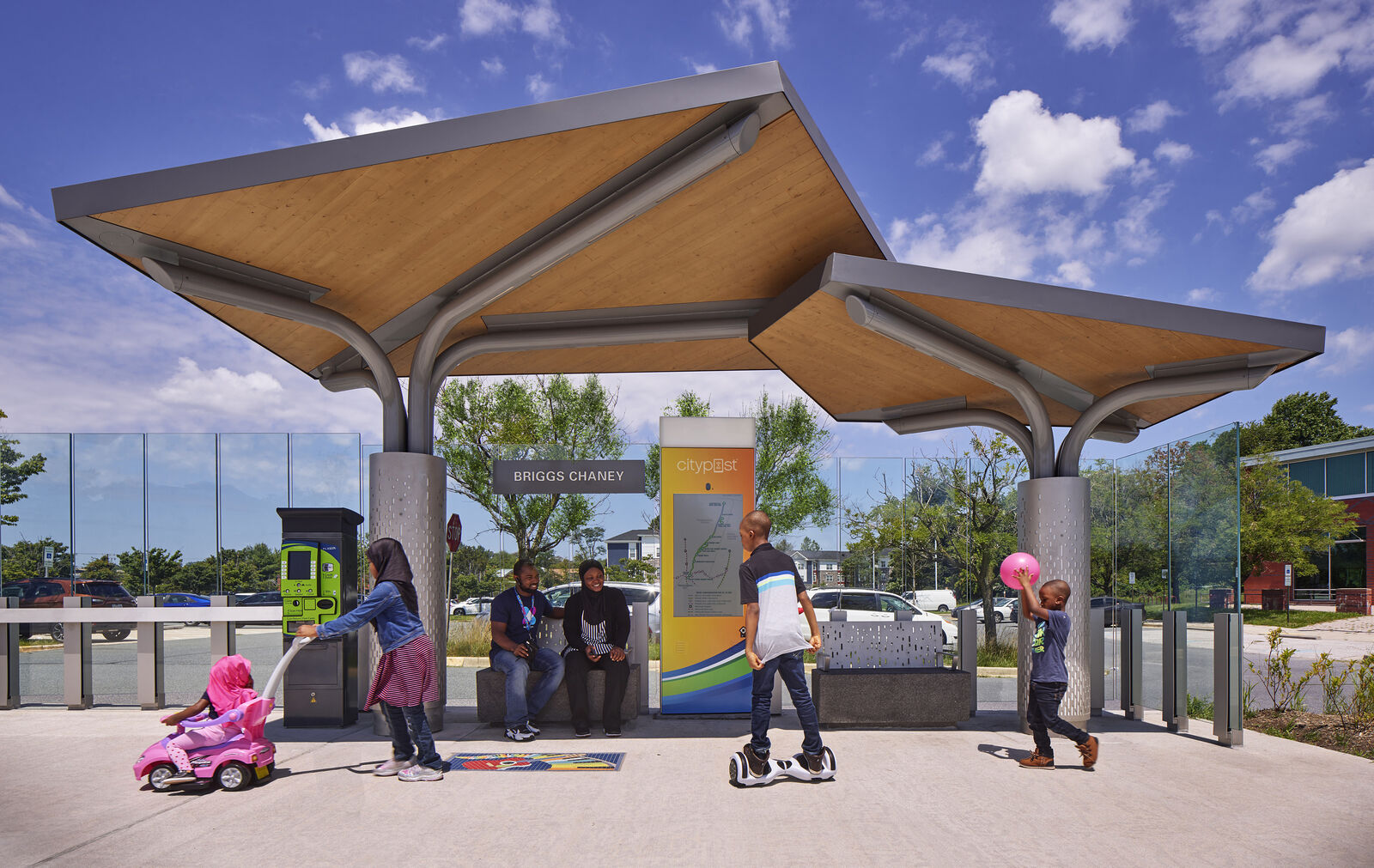
Montgomery County Department of Transportation, US 29 BRT Station Design
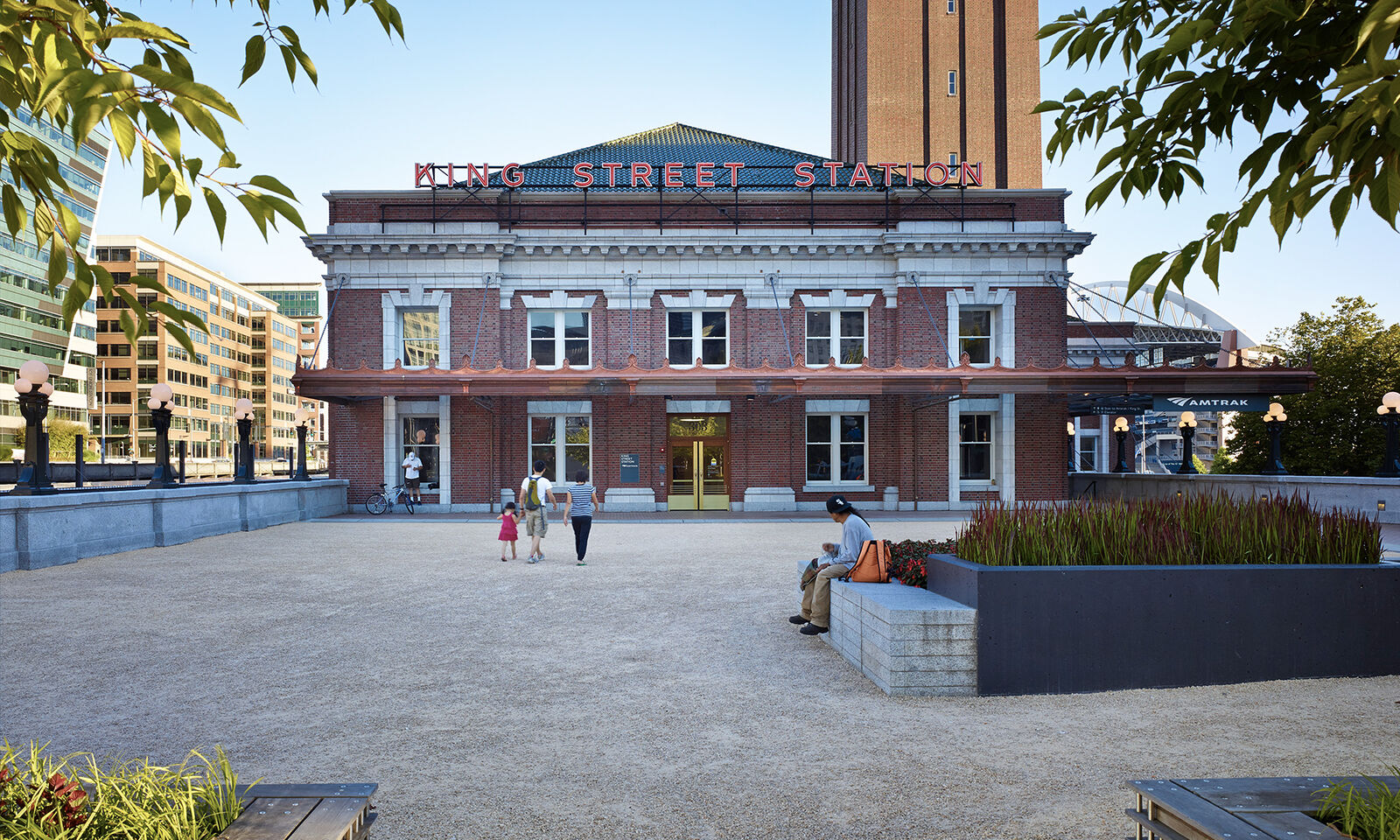
City of Seattle, King Street Station Renovation
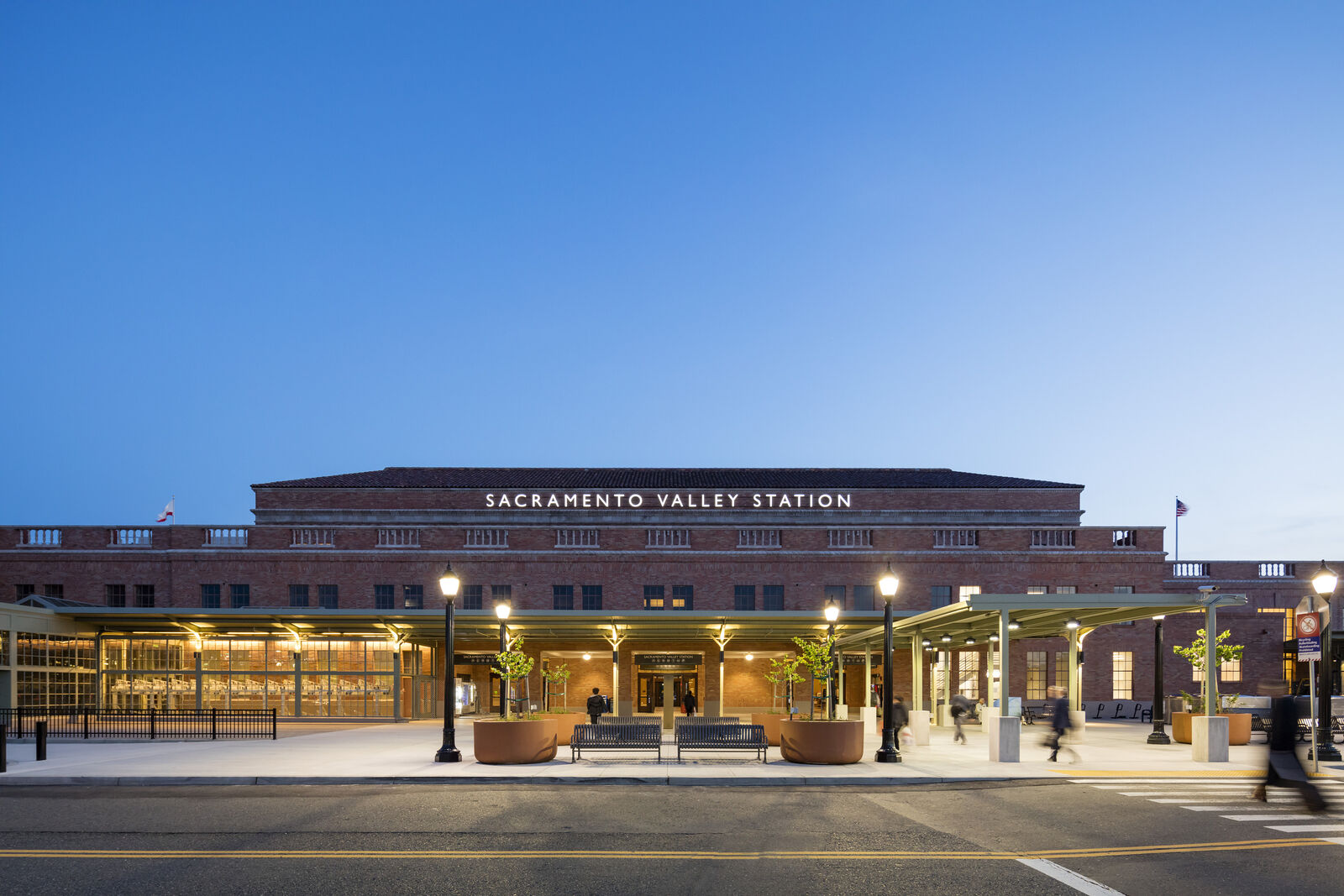
City of Sacramento, Sacramento Valley Station Renovation