

A Beacon for Care in San Diego
Rady Children’s Hospital San Diego, Intensive Care Unit and Emergency Services Pavilion
Healthcare
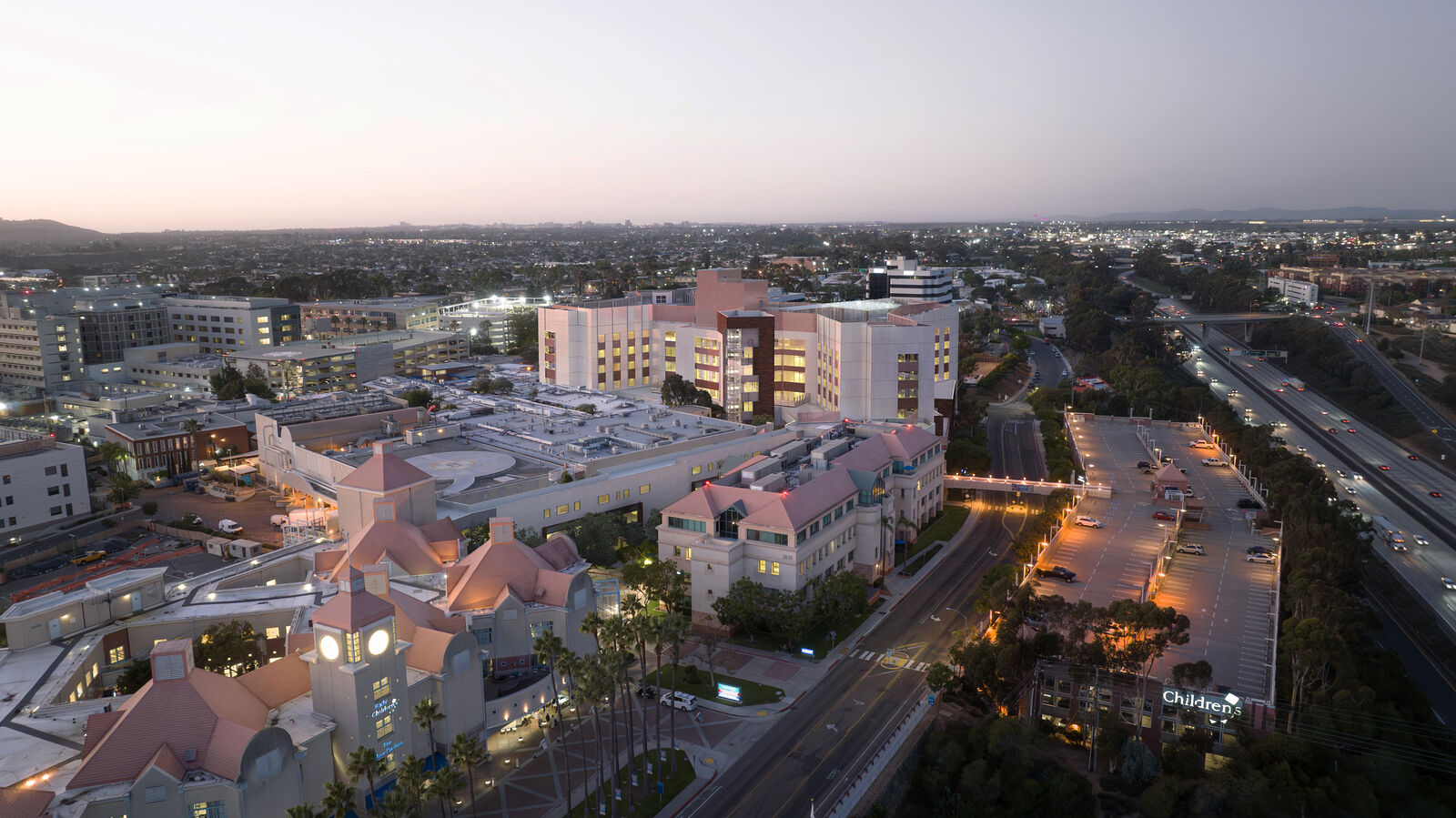
Rady Children’s Hospital San Diego is the largest standalone children’s hospital in California by admissions and the region’s only designated pediatric trauma center. It opened in 1954 as a small 12-bed facility for children with polio and has gradually expanded to its 27-acre main campus totaling over 1.3 million SF and 500+ licensed beds.
To address current capacity issues and projected needs for additional beds, Rady Children’s partnered with ZGF to develop a Campus Master Plan that would enable the hospital to continue delivering state-of-the-art care. Completed in 2020, the Master Plan provides a strategic framework to redesign the San Diego campus in phases, integrating Rady’s existing buildings with new and reconfigured facilities, all while reimagining a family-focused care environment that supports the evolving needs of patients and those invested in their health.
Location
San Diego, CA
Square Feet
555,000
Completion date
2028
Project Component
Master planning
Architecture services
Interior design & space planning
Environmental graphics
Certifications
Targeting LEED BD+C Healthcare v4
Phase 1 Build Out
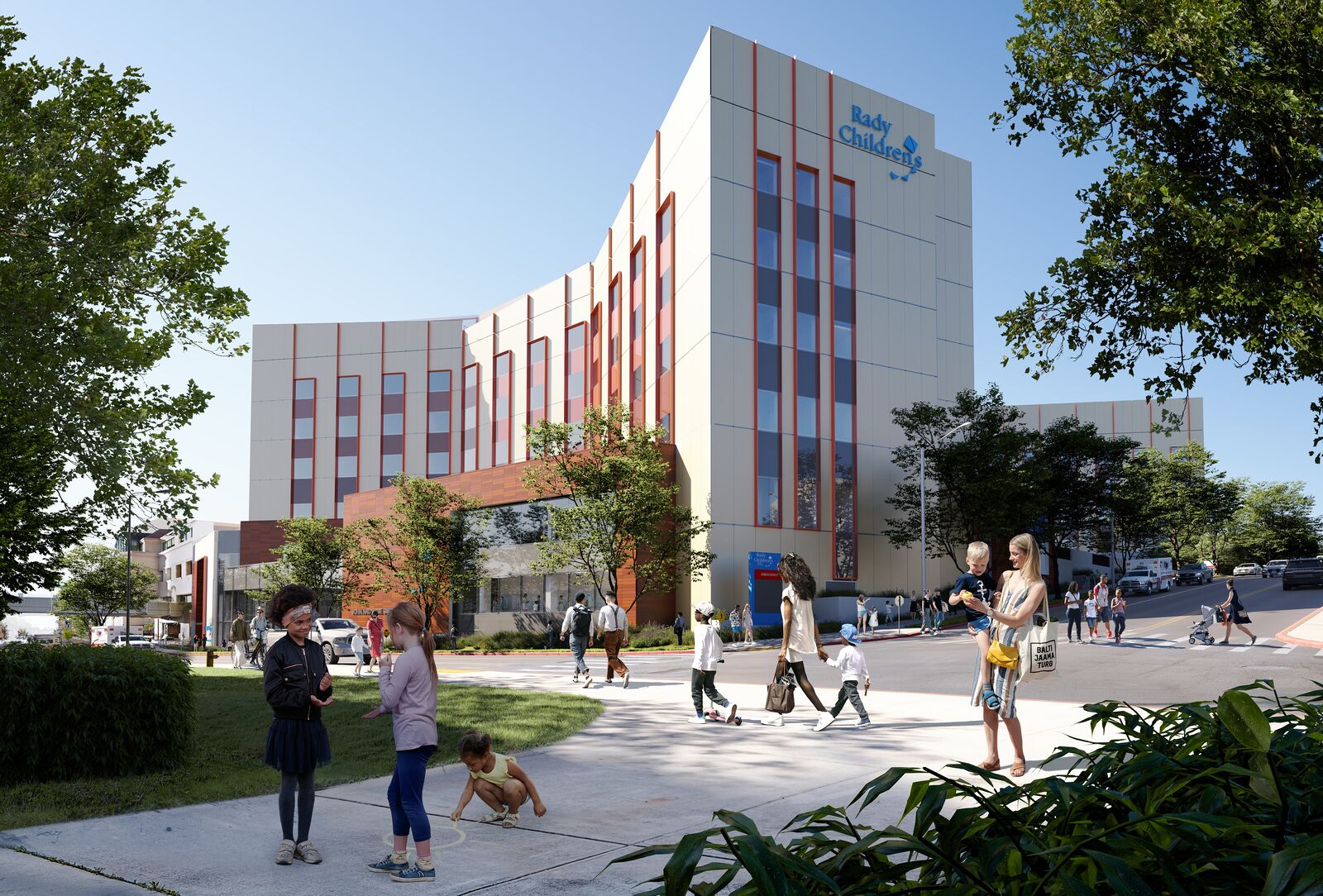
To address Rady’s most urgent capacity needs in its Intensive Care Units (ICUs) and Emergency Department (ED), ZGF is implementing phase one of the Master Plan—the new seven-story, 486,500 SF ICU and Emergency Services Pavilion.
It’s the largest construction project in the hospital’s 70-year history, adding 140 ICU beds and shell space for an additional 40 beds, a replacement ED with 84 treatment rooms, new operating rooms to support trauma and cardiac programs, shell space for the future relocation of the radiology department, a new lobby, dining area, family and staff amenities, outdoor gardens, and a new entry portal to the campus.
The new ED will nearly double the size of Rady’s existing ED, while the ICU Pavilion will consolidate Rady’s two existing neonatal intensive care units (NICUs) and provide a new home for comprehensive cardiac care.
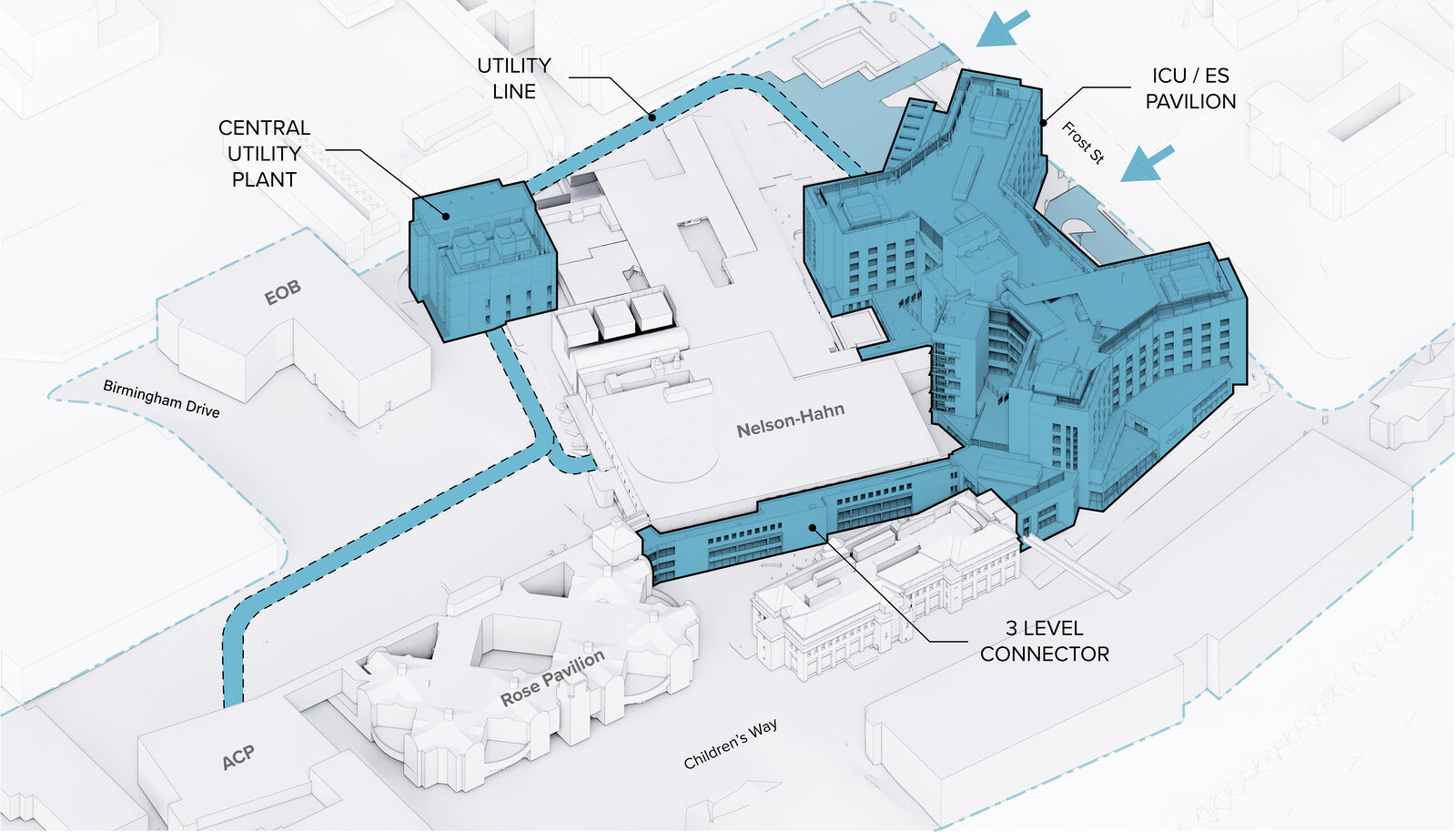
A three-level Campus Connector Building will connect the ICU Pavilion to the center of the existing campus for seamless public and service flows during future construction phases. Phase one also includes a new central utility plant to serve all four OSHPD-1 buildings on campus.
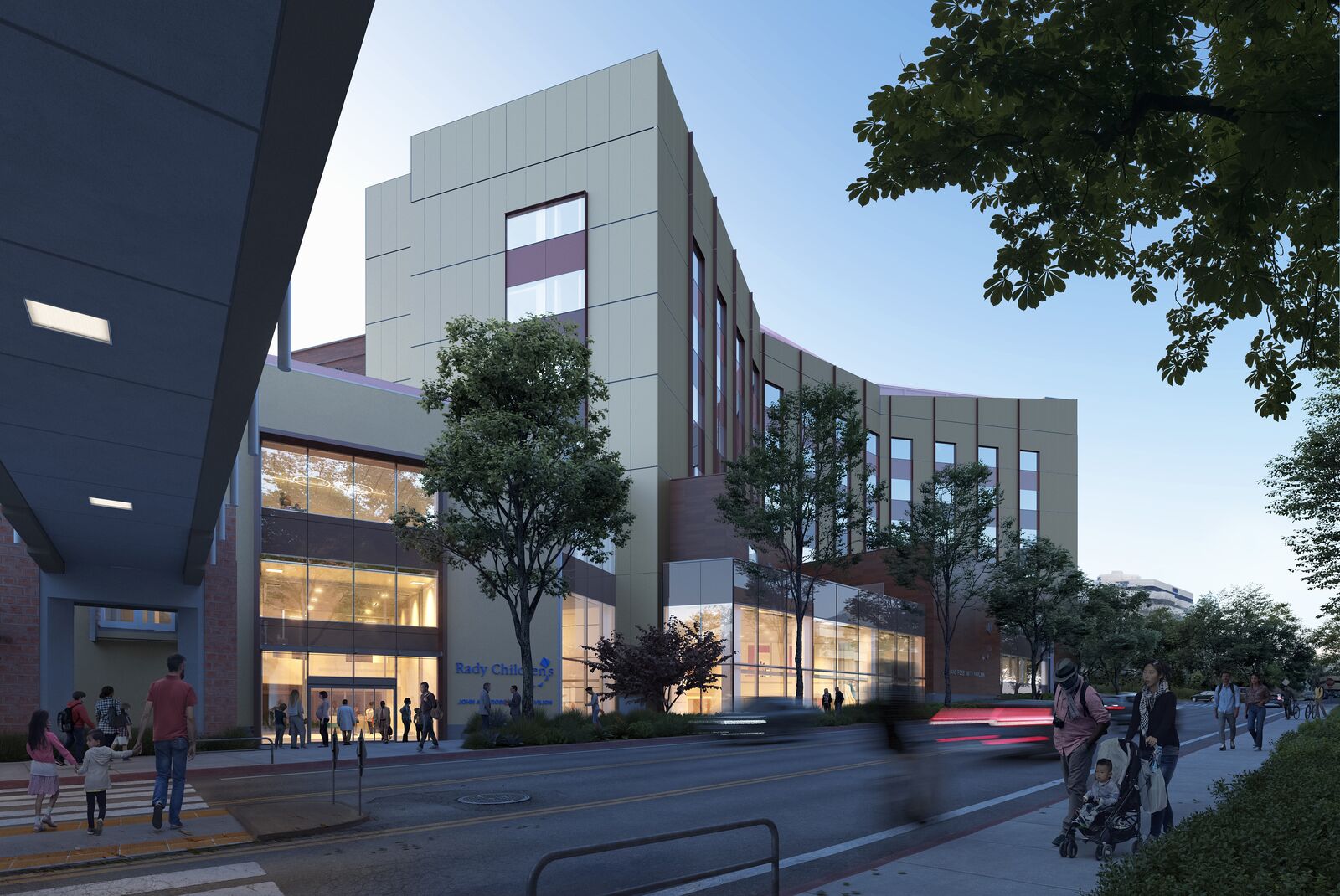
The building has two main entries on Children’s Way for the ICU Pavilion and on Frost Street for the ED.
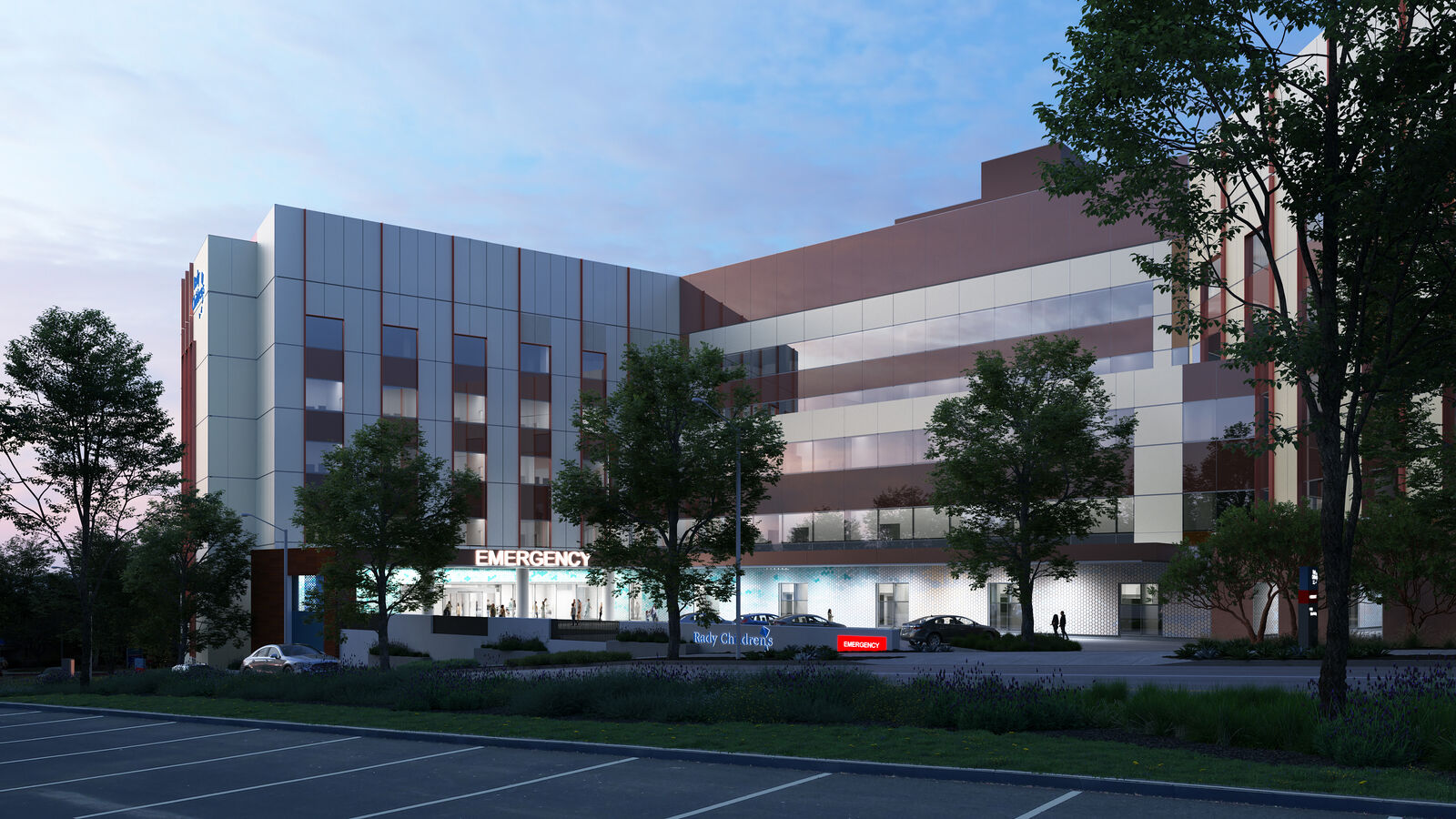
A grand canopy marks the ED front door and shields some of the activity from patients in the ICU tower above.
Designing For the Extreme, During the Extreme
Designed completely during Covid, the project comes at a critical time as Rady experiences unprecedented patient volumes and challenges related to staff burnout, exacerbated by the pandemic. In a case of designing for the extreme during the extreme, ZGF was tasked with developing a building that meets the hospital where it is today and serves it well into the future.
ZGF’s concept for the ICU and Emergency Services Pavilion was aptly named “the beacon building” because it signified hope during a difficult time. Anxiety was high as families and staff worked to maintain social distancing and infection control. Care teams were at capacity both physically and mentally. Simultaneously the hospital saw tremendous growth in its high-acuity programs such as urgent care and behavioral health because families were not receiving primary care due to Covid.
The beacon building offers many solutions to many different users—an opportunity to right size clinical spaces and enable them to flex up or down, to implement all-private patient rooms, more outdoor spaces for waiting and respite, and a large new dining space, among other family and staff amenities.
Discovering San Diego
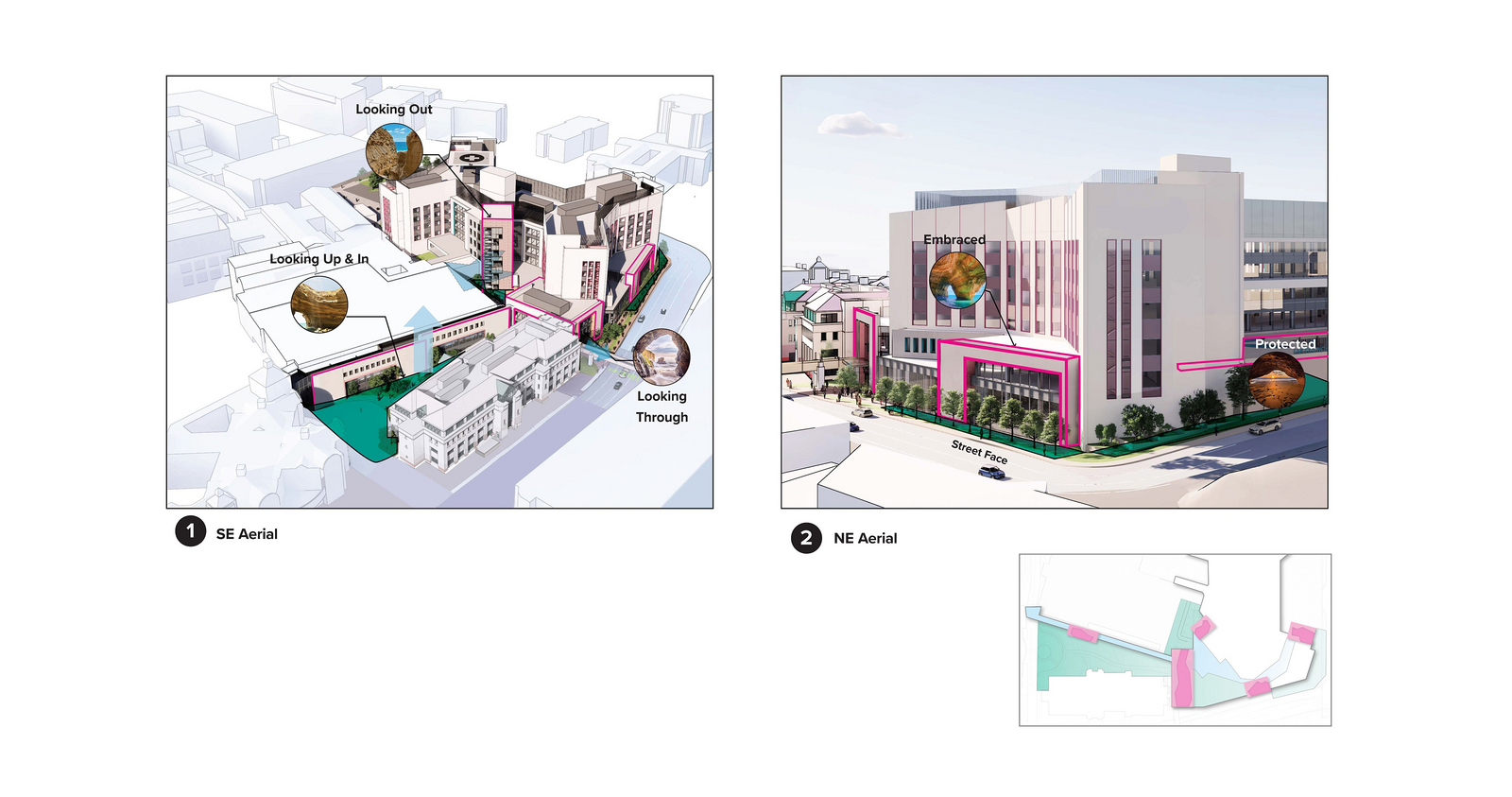
How will the beacon building help solve Rady’s current challenges while integrating cohesively into the existing campus ecosystem? It won’t be a new front door, yet many families and visitors will enter through the ED. ICU patients and families will also spend longer and more frequent stretches at the hospital, making campus cohesion and connection even more important. ZGF’s planning and wayfinding concept, “Discovering San Diego,” draws on the healing power of nature to allow families, staff, and visitors to experience the region’s natural beauty from different perspectives.

The building’s massing and façade expression echo Rady Children’s existing campus architecture and use natural materials to complement the rich landscape of the surrounding mesa.
The building architecture is broken into legible layers of base-middle-top, comprising a simple family of forms invoking the portal Mission-style expression common in San Diego. These forms take cues from the existing campus vocabulary to bring down the building scale to the experience of patients, families, and caregivers. They also translate to the interior planning, design, and wayfinding.
ZGF engaged users early in the design process to learn about their experiences firsthand and use the findings to create a more comforting, engaging, and welcoming environment for patients of all ages and backgrounds. The resulting wayfinding approach is organized into three “Coves of Discovery” that celebrate San Diego: the Coastline, High Desert, and Low Desert. Each cove has its own animals, shapes, colors, patterns, materials, finishes, and lighting.
Five natural nodes of arrival or intersection within the beacon building—the esplanade, lobby, public tower elevator, public podium elevator, and ED entrance—serve as portals to the Coves of Discovery. The architectural language of the main entry portal carries through to the interior, layered with playful forms, patterns, and textures that begin to define the wayfinding coves and how they transition from one to the next. Each portal is also met by an outdoor space to aid in wayfinding and connections to the existing campus.
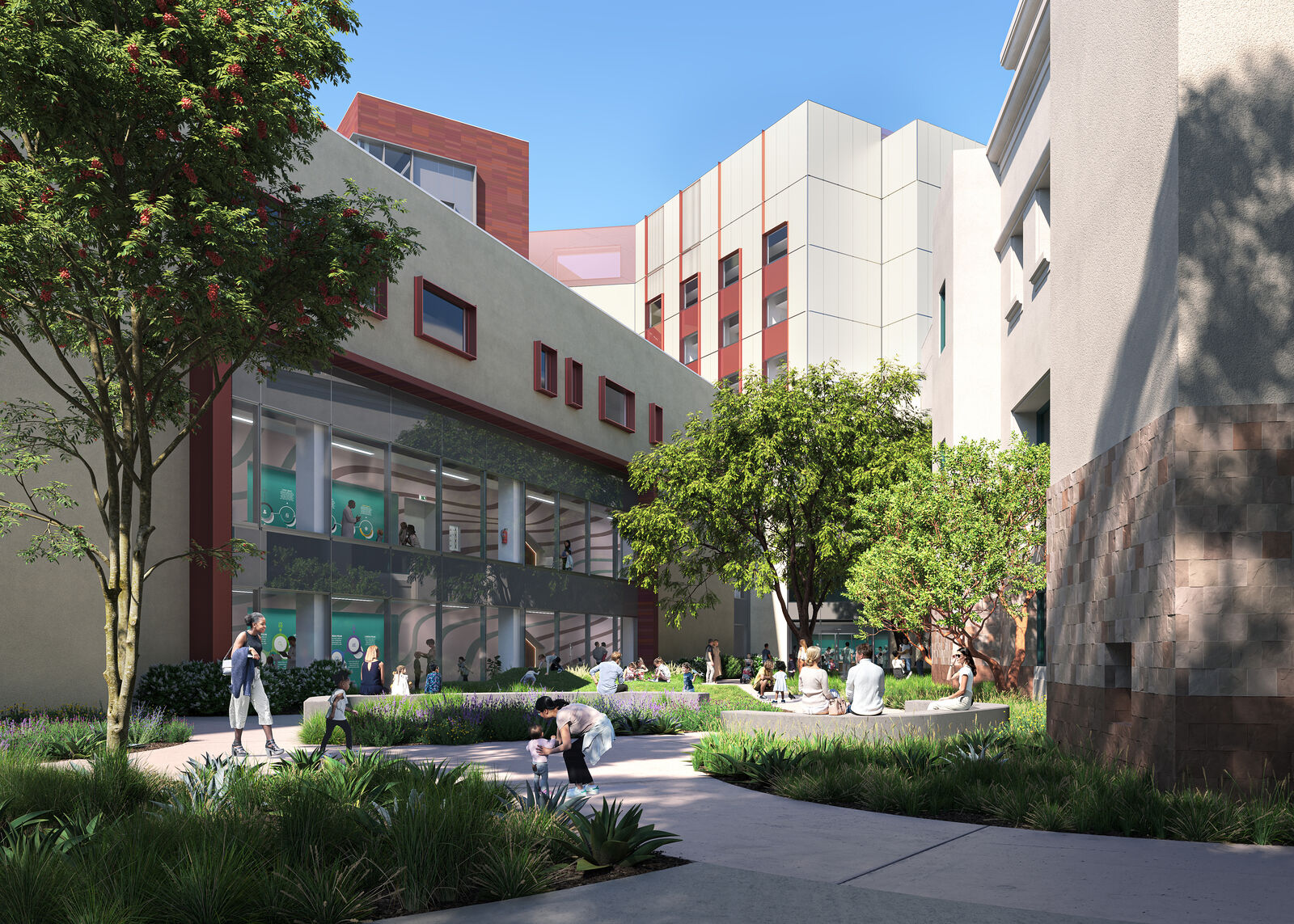
The Connector Building is defined by its portal expressions framing floor-to-ceiling glazing at Levels 1 and 2. The esplanade becomes a signature outdoor space connecting the new and existing buildings with a meandering path to wander, gather, and play.
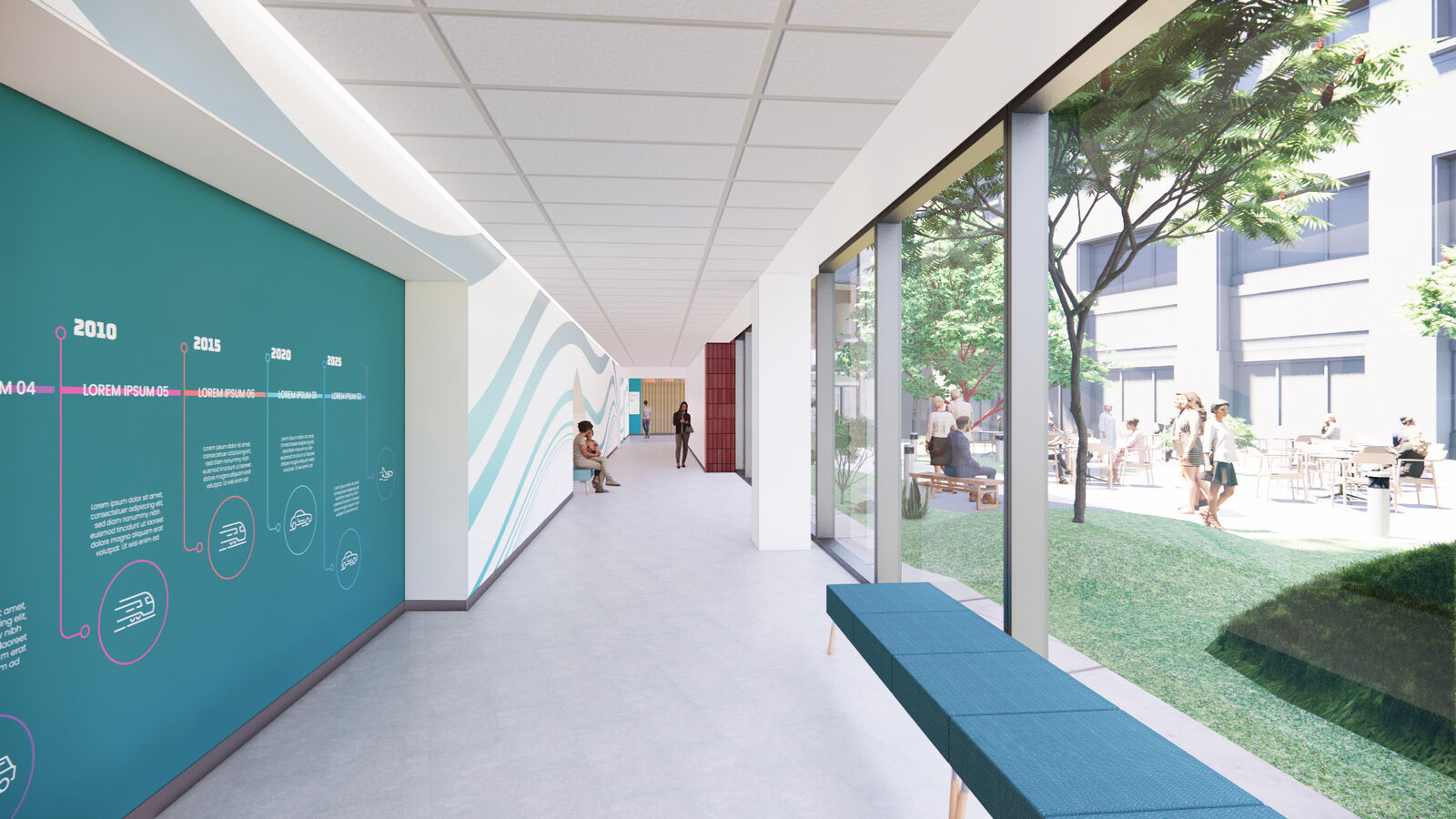
From inside, the Connector will showcase the campus history with environmental graphics that draw the viewer’s eyes through the glass and down the corridor.
The project's experiential wayfinding approach creates a distinct sense of place for patients and families traveling from all over the world. The Coastline is defined by San Diego’s stunning, ragged edges, beautiful coves waiting to be explored, and wide range of water activities and wildlife. The High Desert and Low Desert represent two deserts meeting, characterized by the fascinating variety of plants and animals that make their homes in a land sculpted by strong winds, dark night skies, and surreal geologic features that add to the wonder of the wilderness.
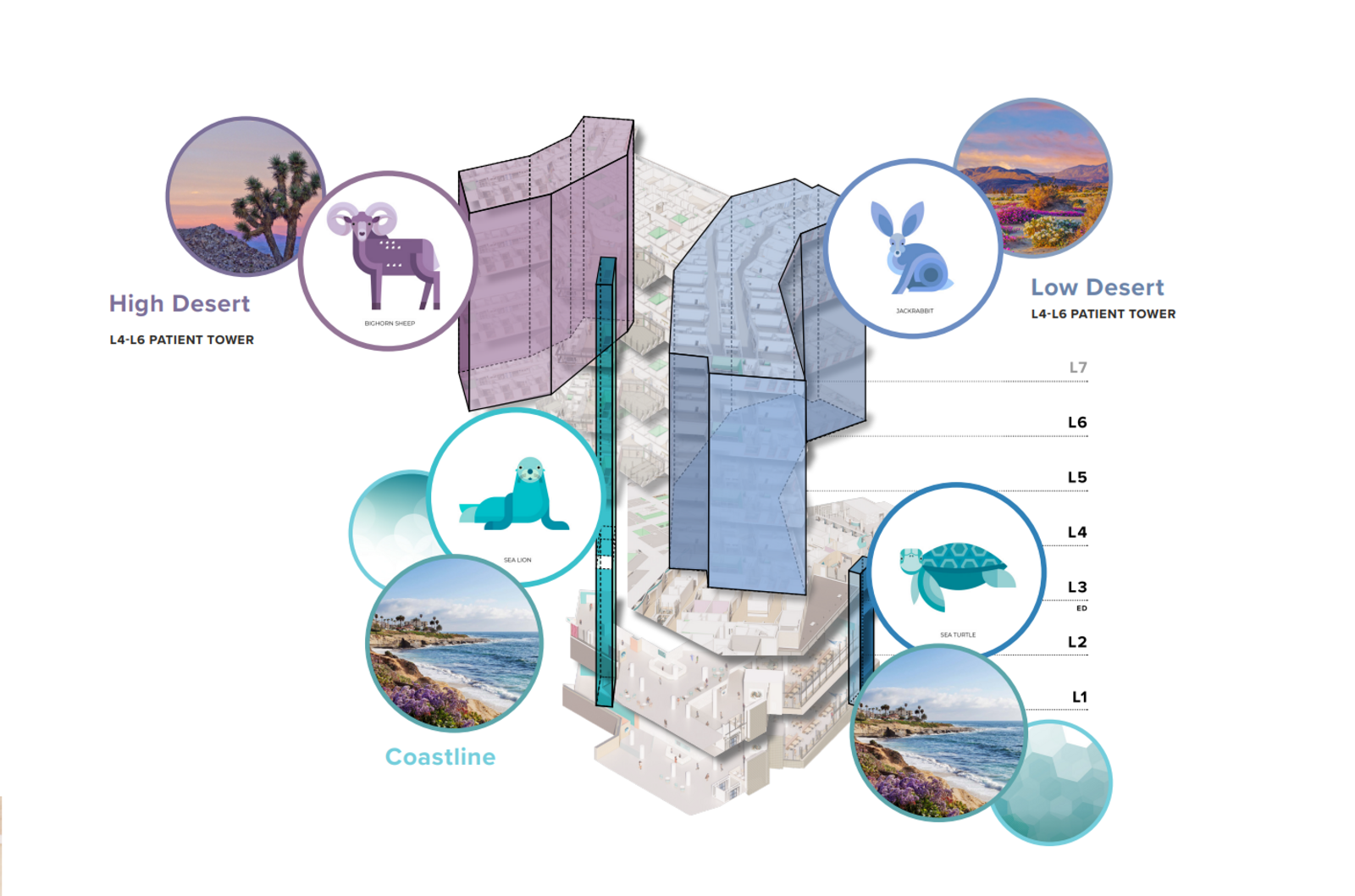
The Coastline takes visitors on a journey through the sea, beach, and sky on Levels 1 through 3. The Coastline transforms into the High Desert and Low Desert moving up into the bed tower.
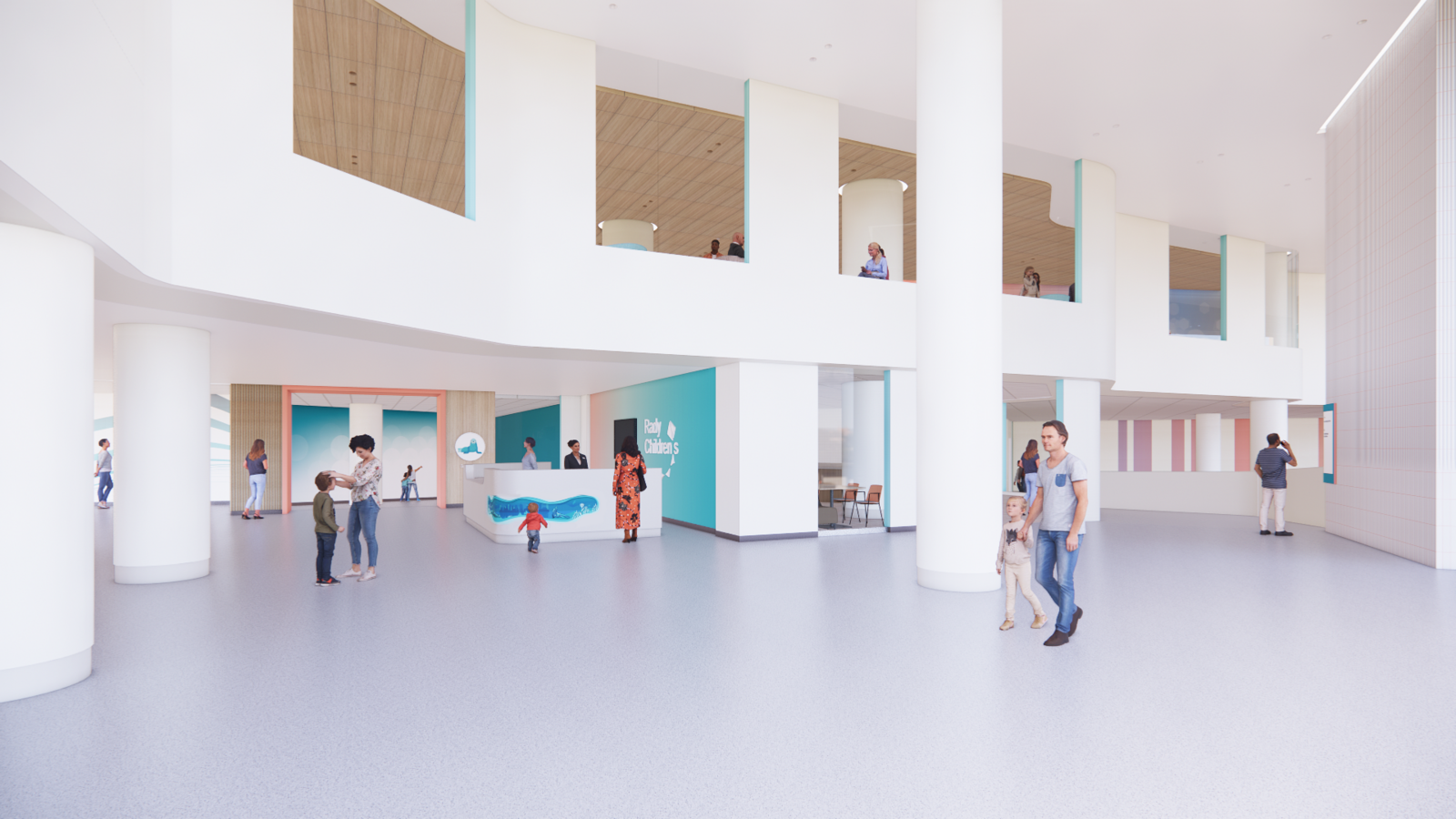
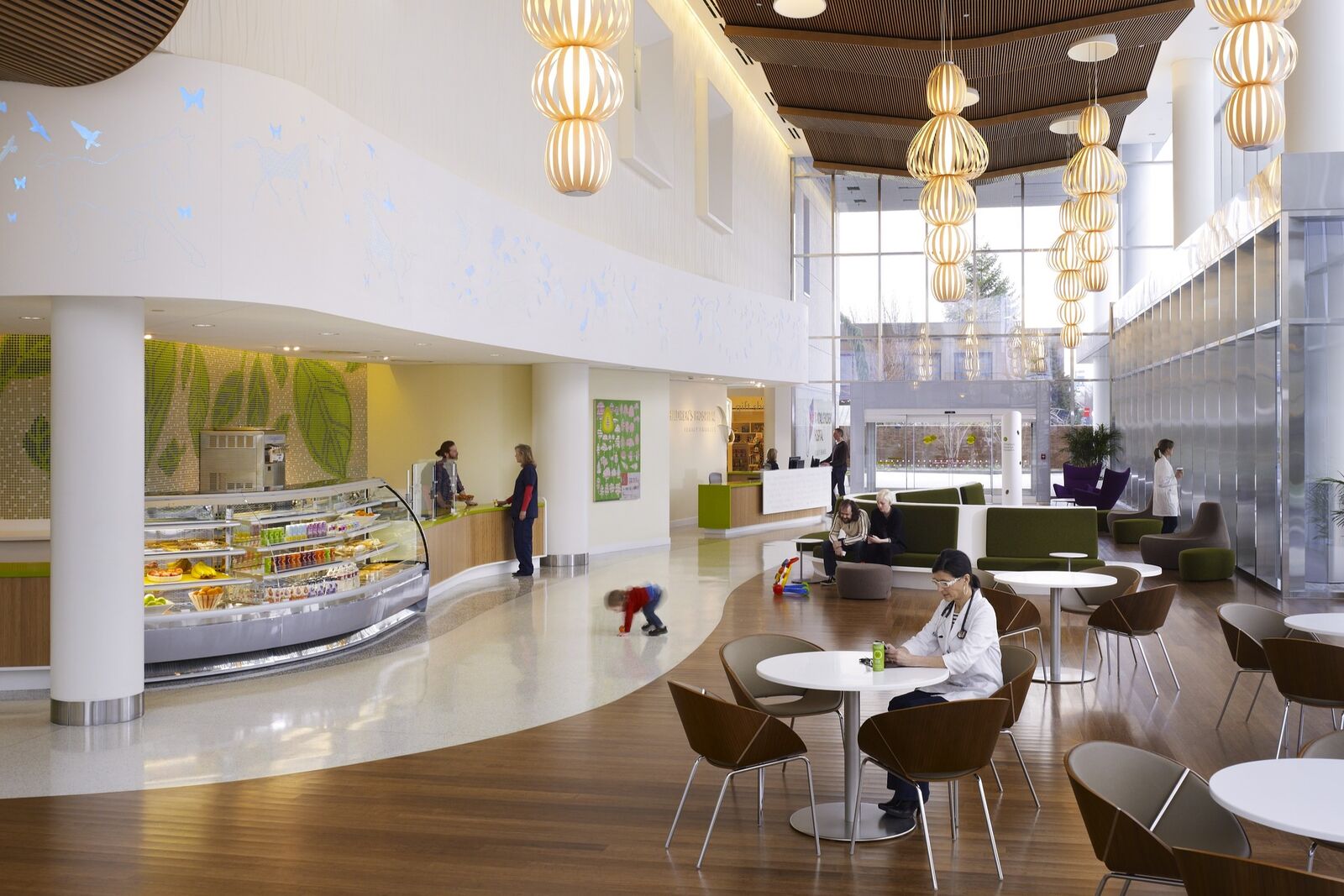
Families and visitors will arrive in a double-height lobby that connects to a large new dining area.
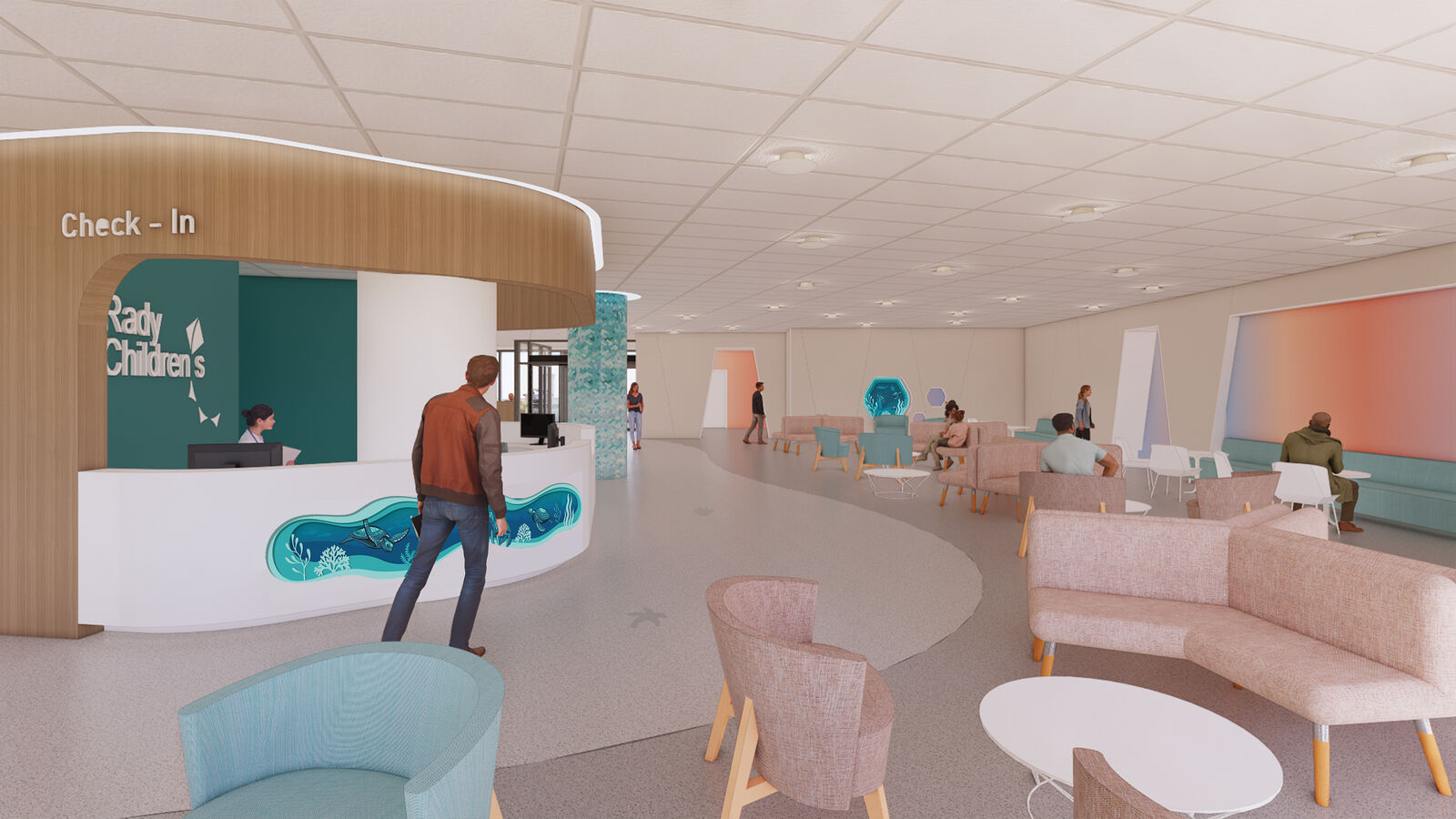
Accent walls on Levels 1 and 2 transition from teal, the hospital’s main brand color, to peach, one of the Coastline’s primary wayfinding colors. ZGF is fabricating custom shadow boxes for the reception desks and waiting areas on each floor, featuring scenes from their respective cove environment.
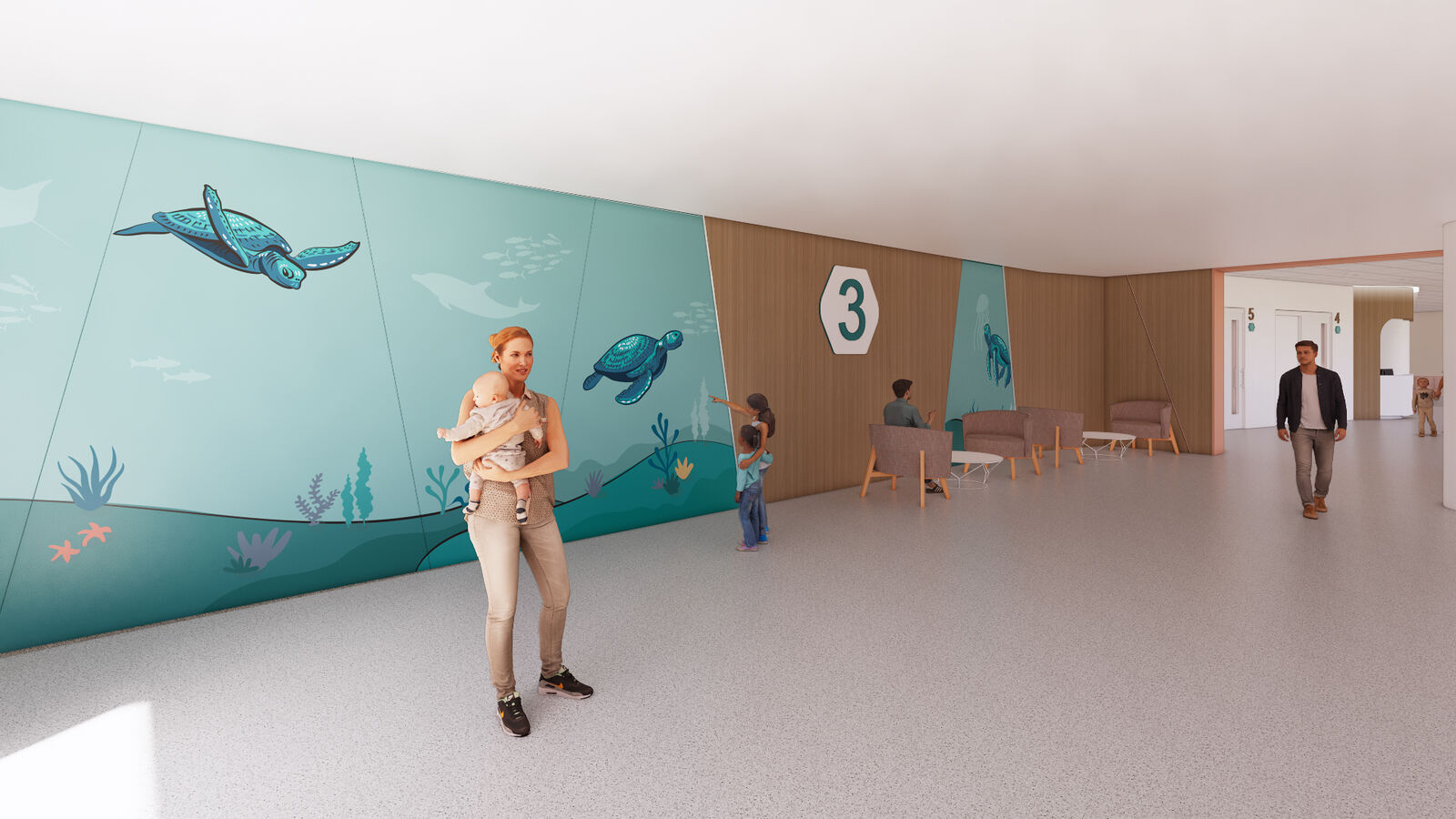
Larger-than-life wall graphics in elevator lobbies and waiting areas introduce the animal, color, and shape for that floor.
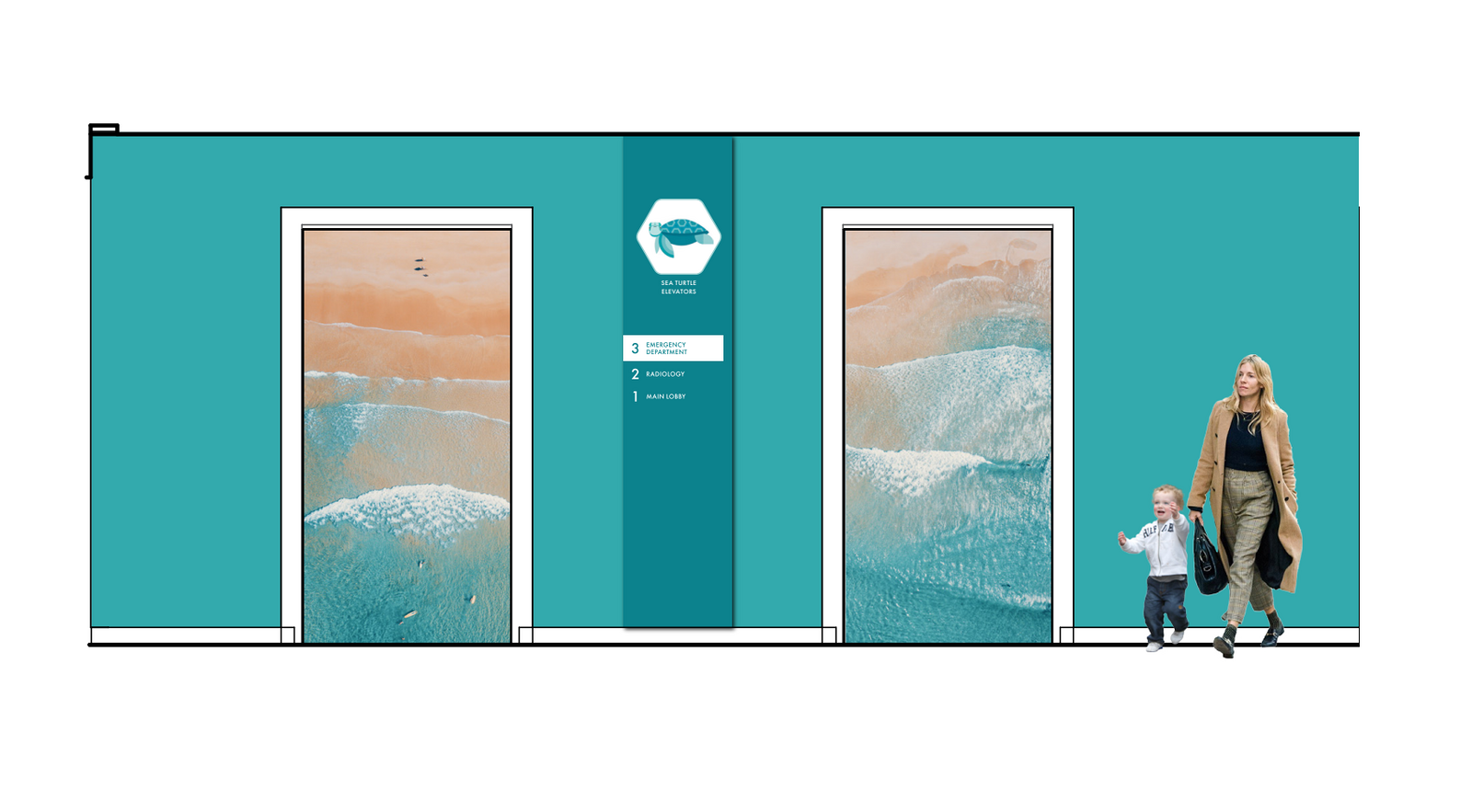
Scenic photography inside elevator cabs brings the outdoors into a space without windows, creating a sense of surprise and delight for all ages when the doors open.
Bed Unit Design
The geometry of the four-wing ICU Pavilion maximizes daylight and views from patient rooms to support healing and outdoor connections. Each wing has a patient care support core flanked by an east and west-facing row of patient rooms. A flexible middle row of patient rooms connects the north and south wings, resulting in a “chamfered X” plan and an iconic form visible from the eastern Freeway 805 and western Route 163.
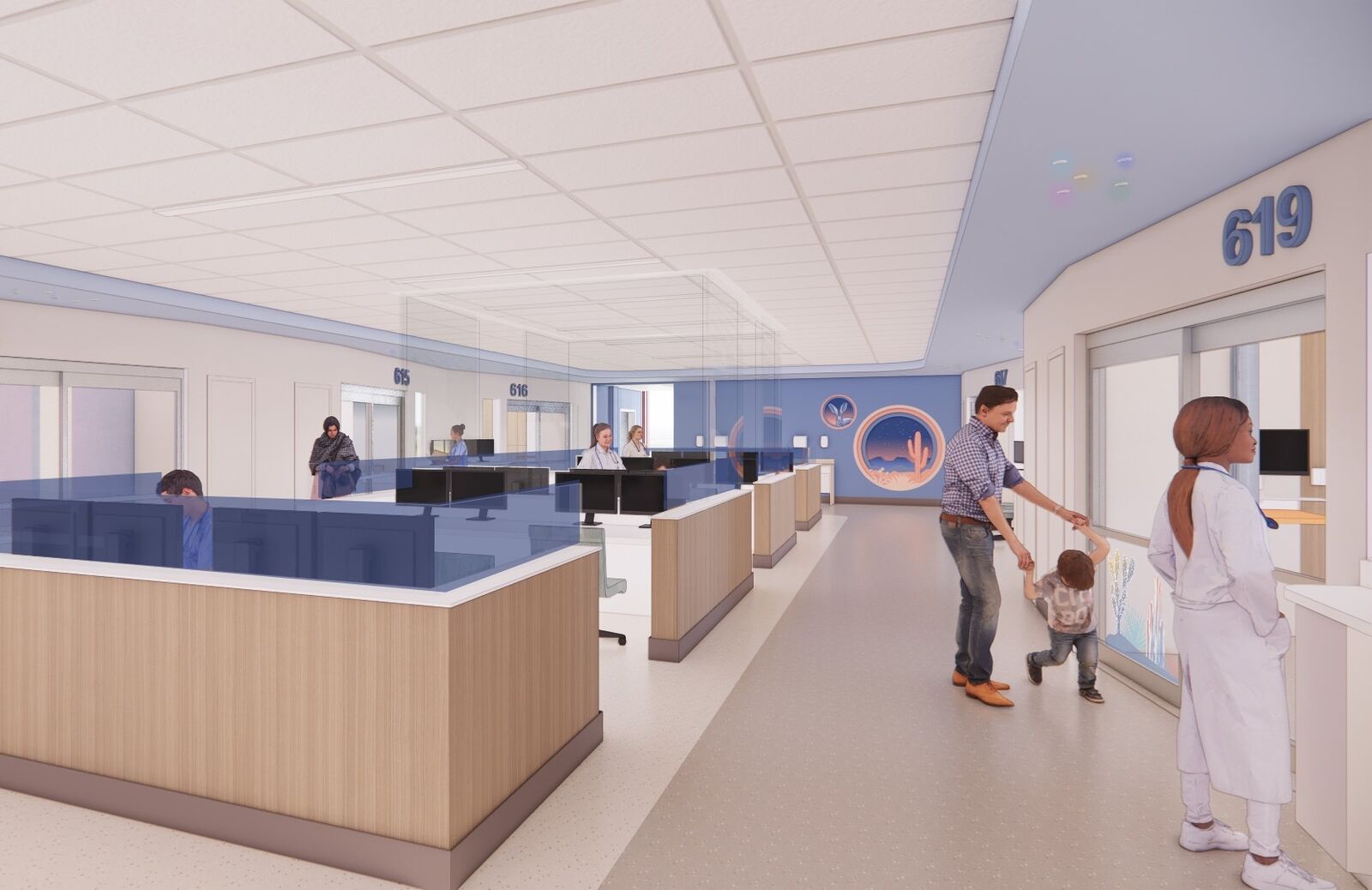
Bed floors feature universal footprints to enable more rapid operational responses to changing patient types over time.
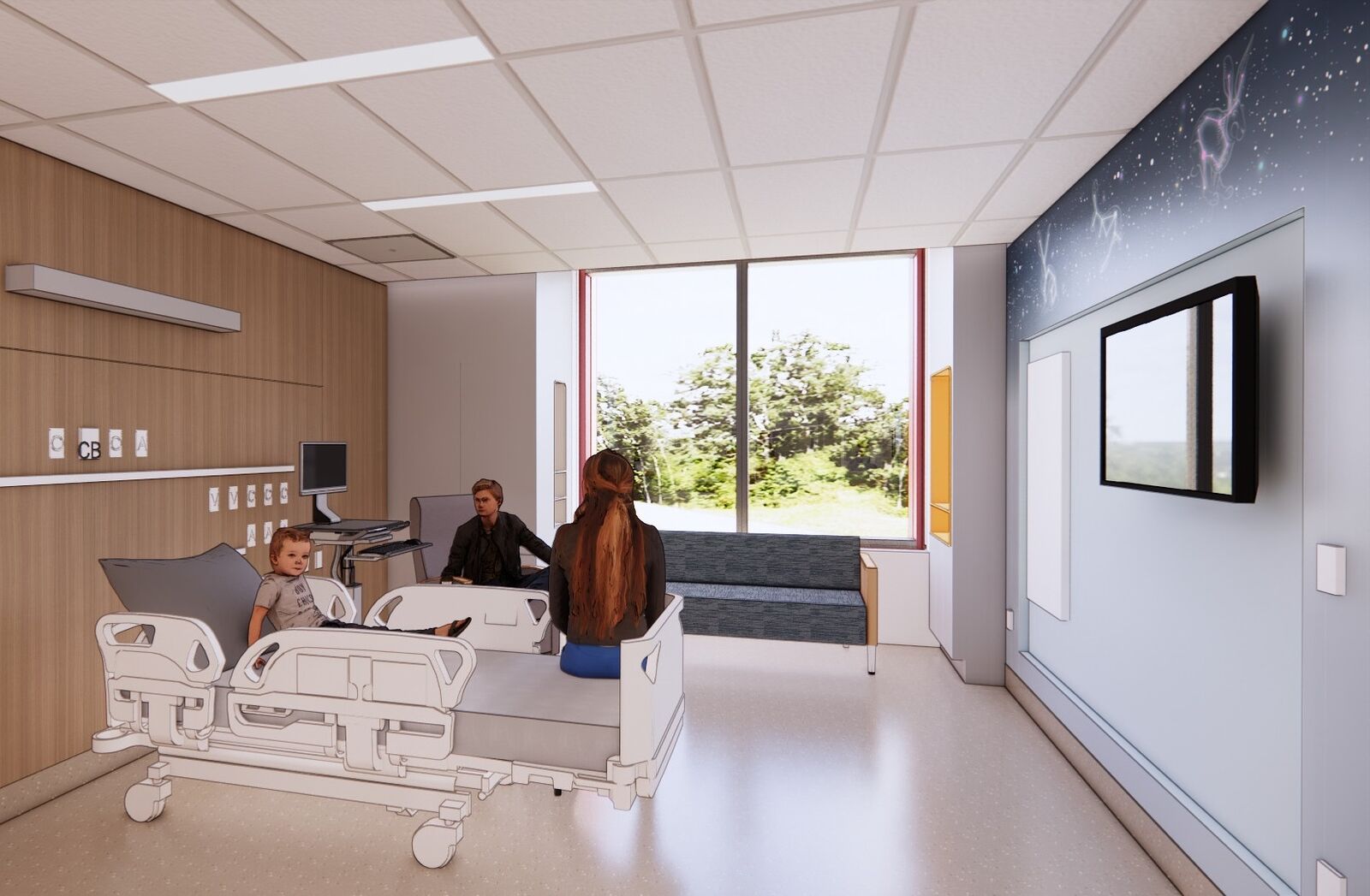
Private patient rooms feature wall graphics in a calming shade of blue, speckled with stars and animal-shaped constellations. Standard room layouts provide consistency for patients, staff, and families by minimizing the need to reorient and search for equipment, supplies, outlets, and devices as they move from room to room.

Seattle Children's, Building Care: Diagnostic and Treatment Facility

Seattle Children’s, Friends of Costco Building: Cancer and Critical Care Expansion
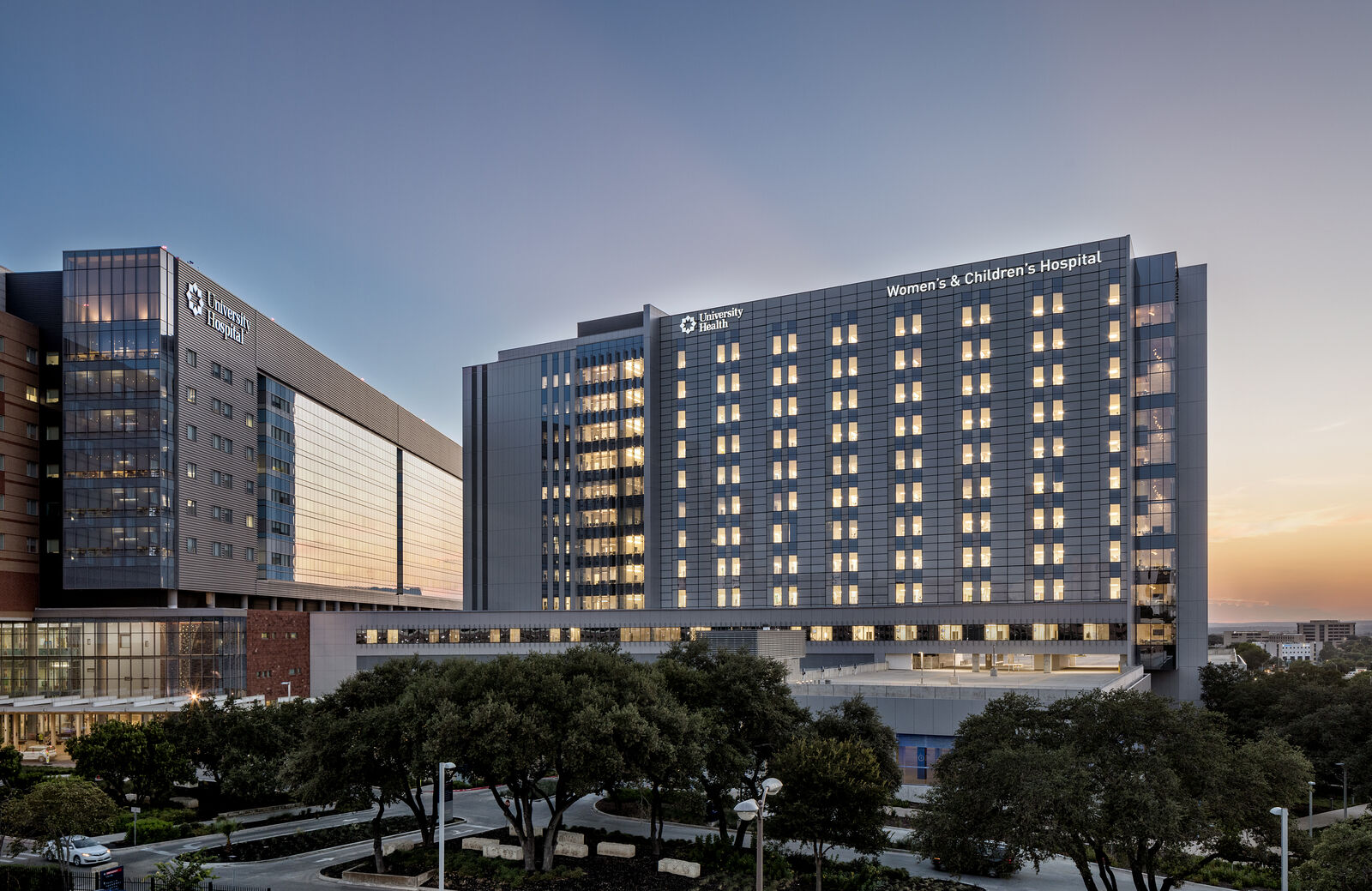
University Health Women’s & Children’s Hospital

Ann & Robert H. Lurie Children’s Hospital of Chicago