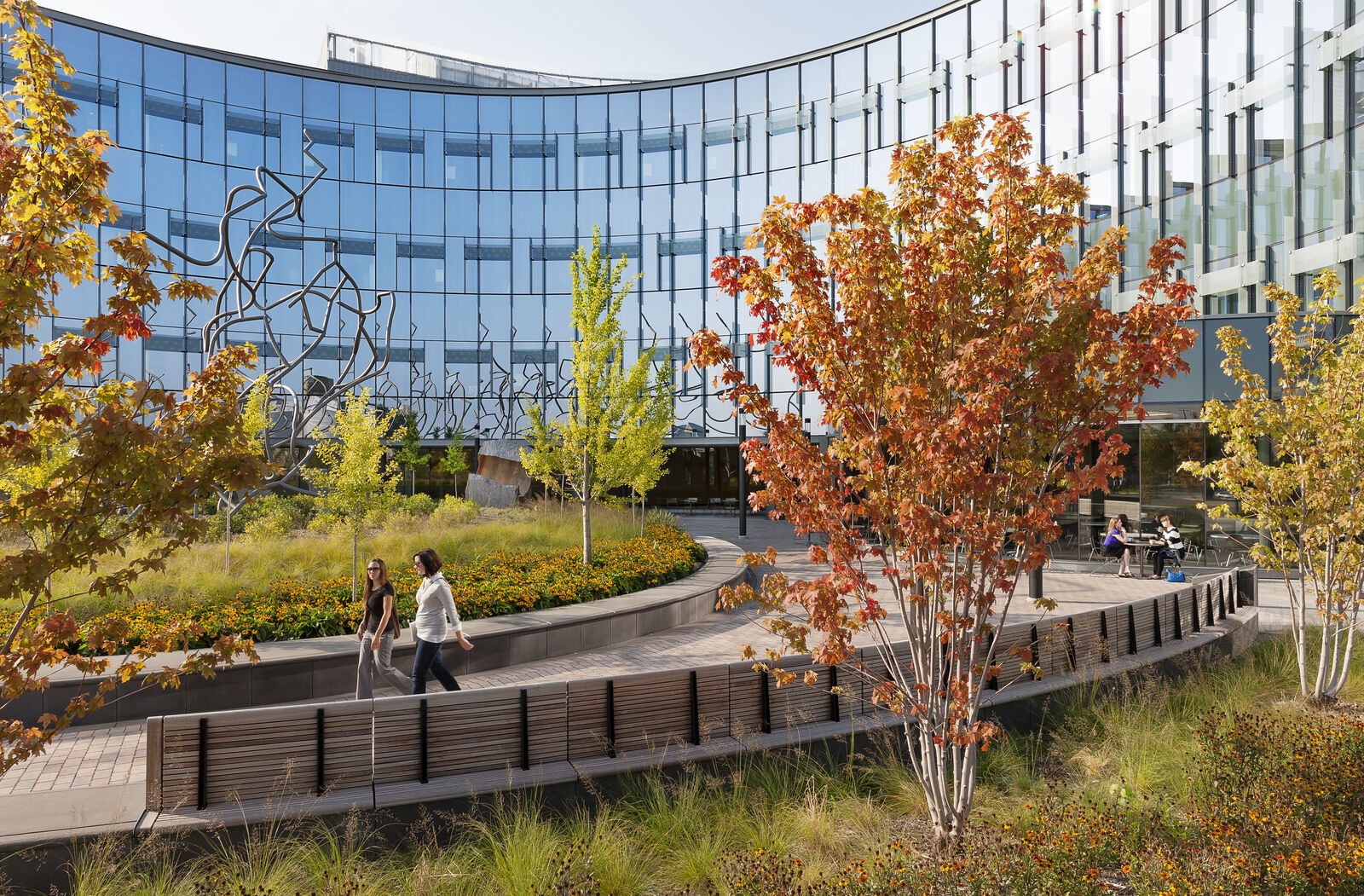

University of Minnesota, Physics and Nanotechnology Building
Higher Education
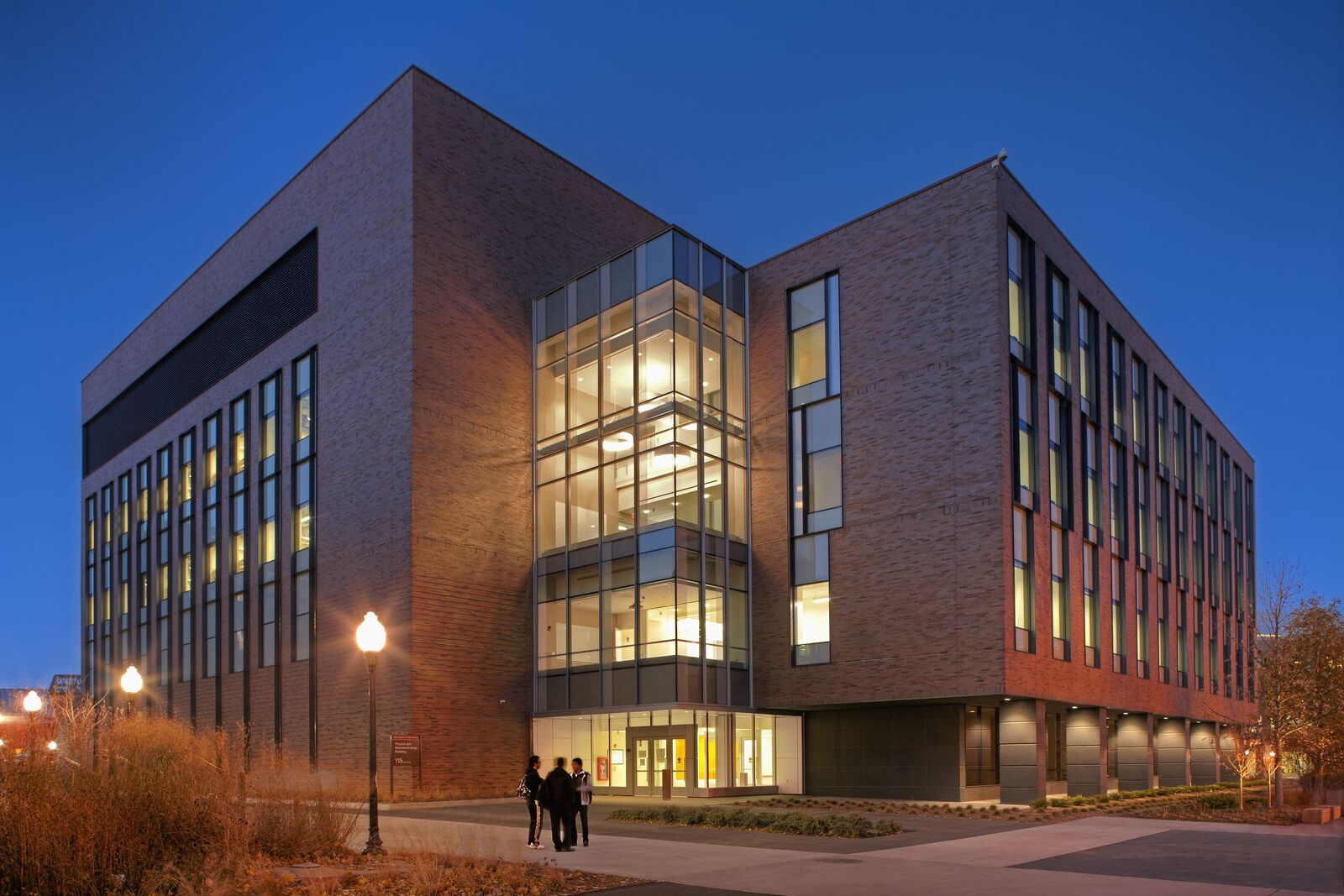
ZGF, in association with Alliiance, programmed and designed the Physics and Nanotechnology Building, which replaced outdated facilities and co-located disparate programs within a flexible, interdisciplinary laboratory in the heart of the University of Minnesota’s science district. The 144,000 SF facility houses experimental and theoretical research groups for the School of Physics and Astronomy, and includes faculty and graduate student office space, shared research infrastructure, computing laboratories, and a variety of meeting and conference rooms.
Location
Minneapolis, MN
Square Feet
144,000
Completion date
2013
Certifications
LEED Silver
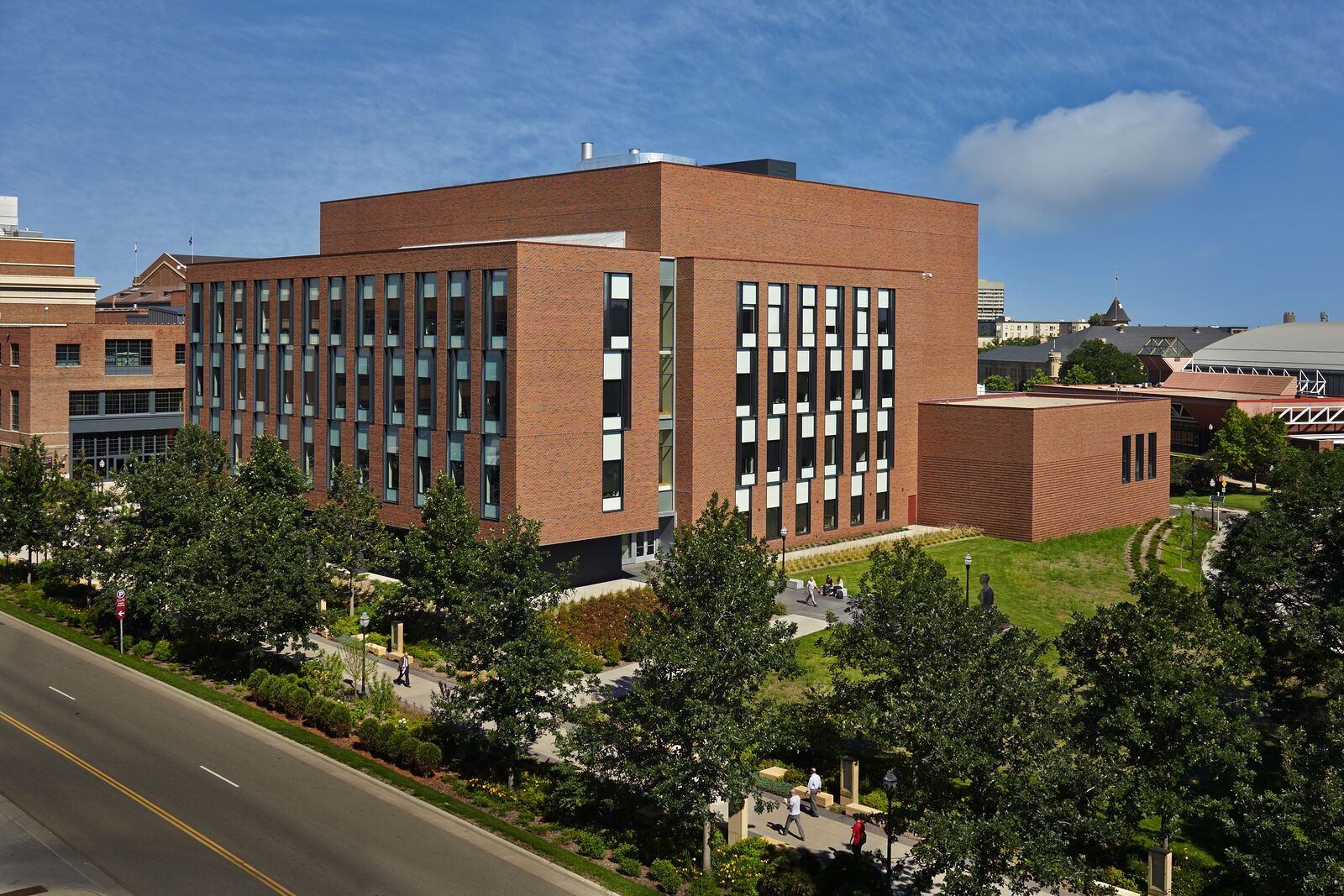
The building is an extension of the University's core science precinct and provides close connection to encourage cross-disciplinary collaboration within the building and across the precinct.

The design takes cues from both the historic and contemporary architecture of nearby buildings and appropriately reflects the progressive, forward-looking mission of the departments housed within.
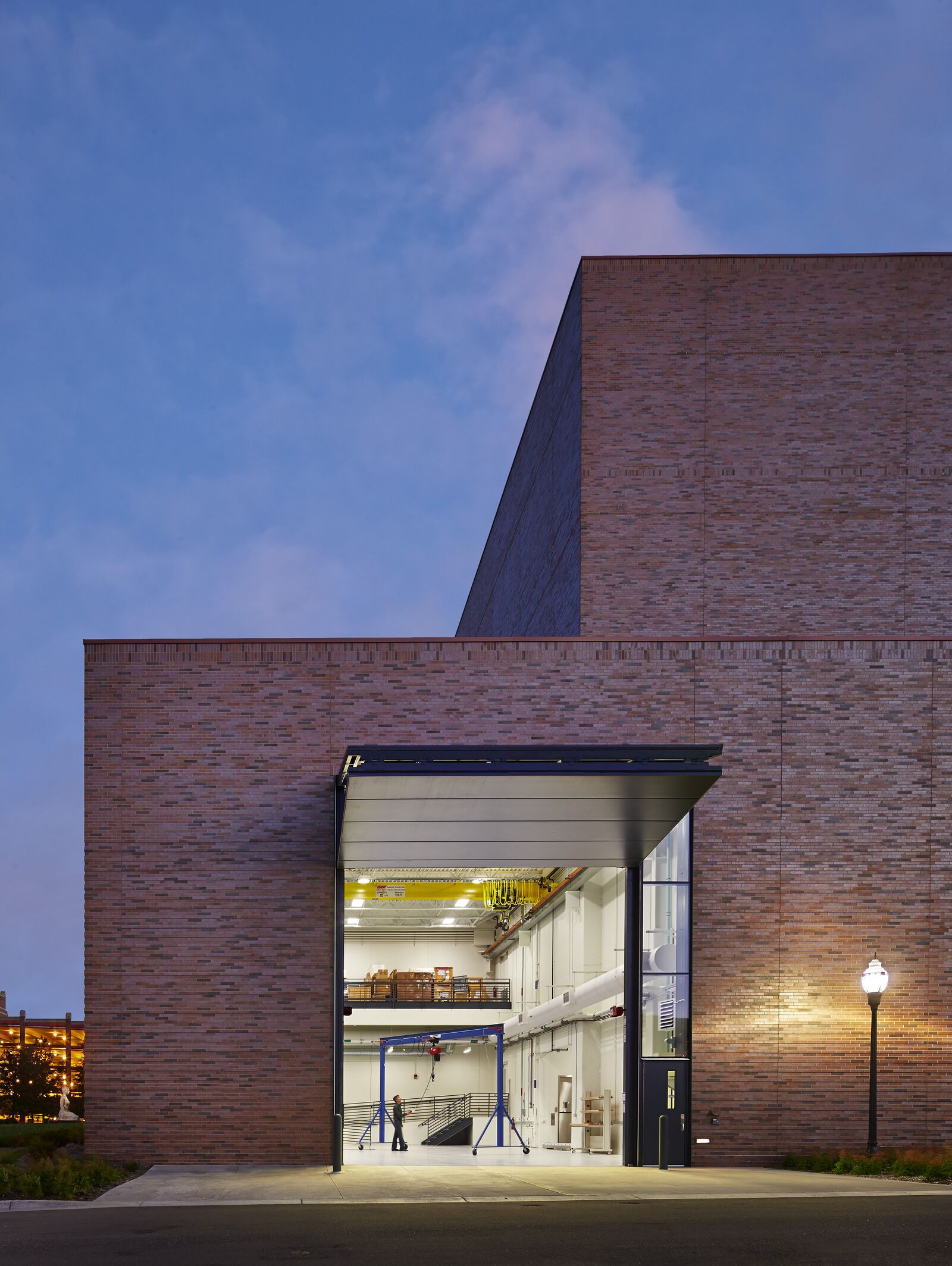
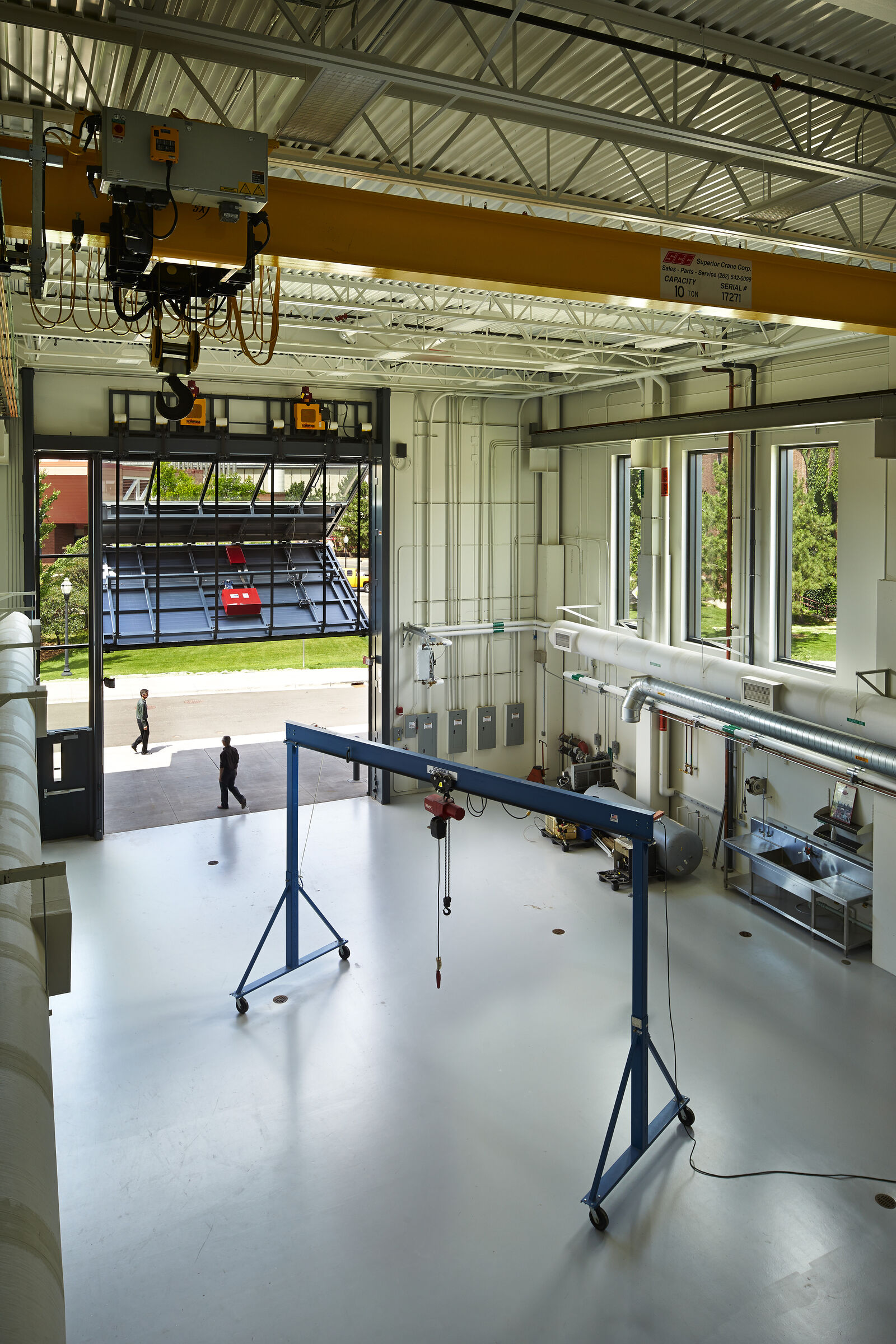
The building is also home to a 5,000 SF, Class 100 cleanroom for the new Center for Nanostructure Applications, a federally funded initiative to promote interdisciplinary collaboration in the study and advancement of nanotechnology research. Additionally, the building provides low-vibration, magnetically shielded, and light controlled spaces for highly sensitive equipment, as well as high-bay laboratory space and gas-intensive and deep-pit laboratory bays.
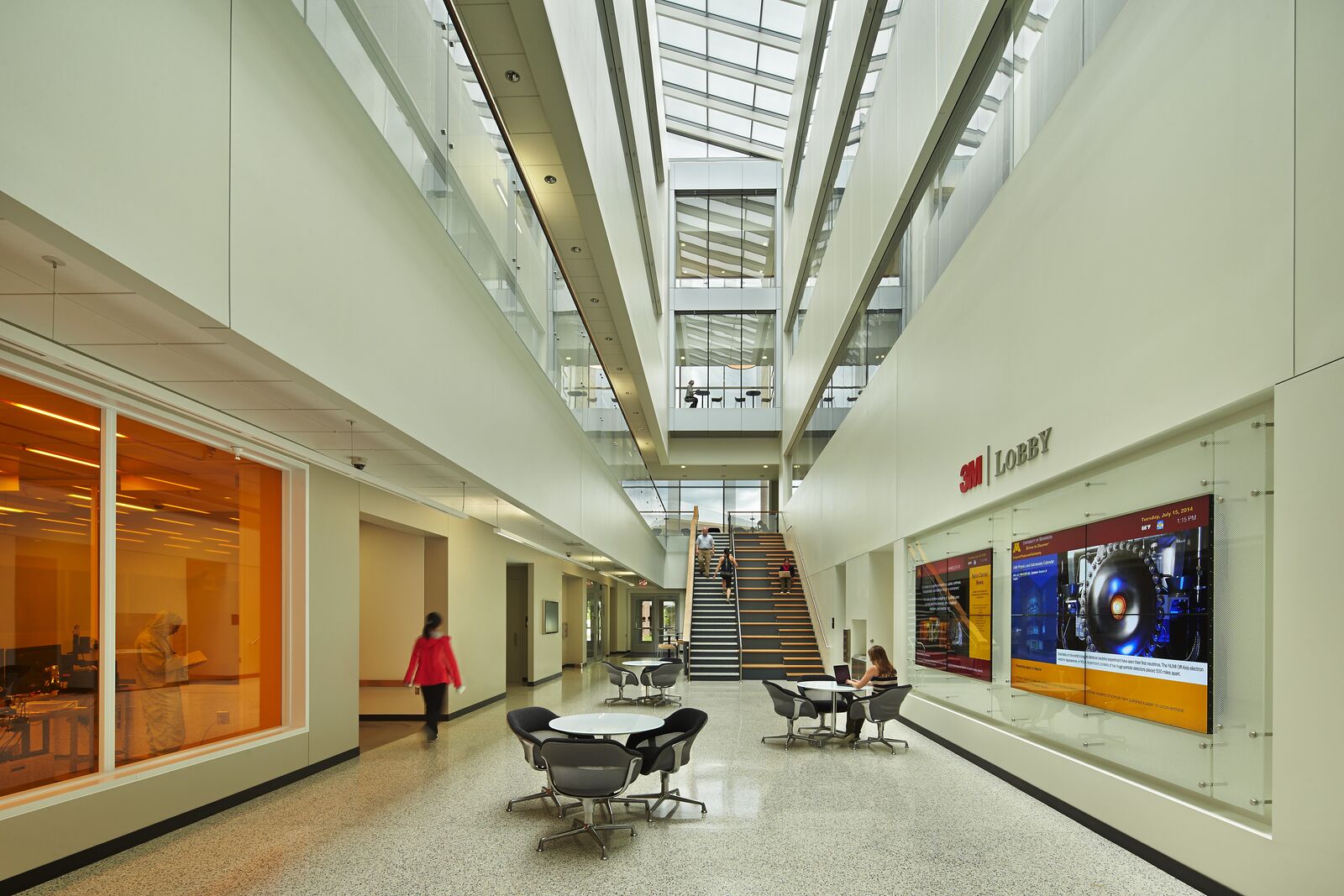
A 5,000 SF glass-enclosed Class 10 cleanroom is sited prominently on the first floor at the main entry, putting science on display and supporting institutional goals of education and recruitment.
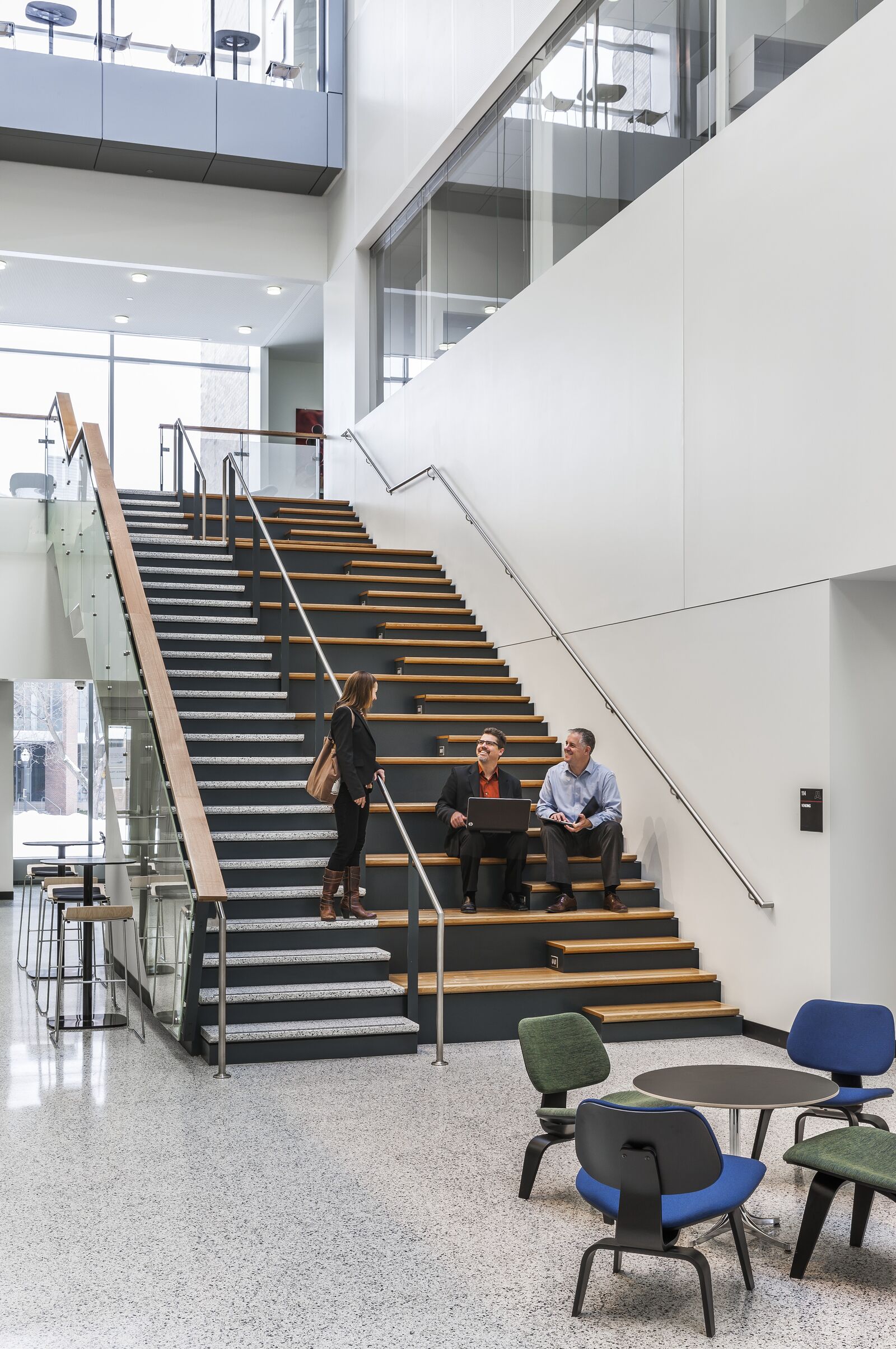
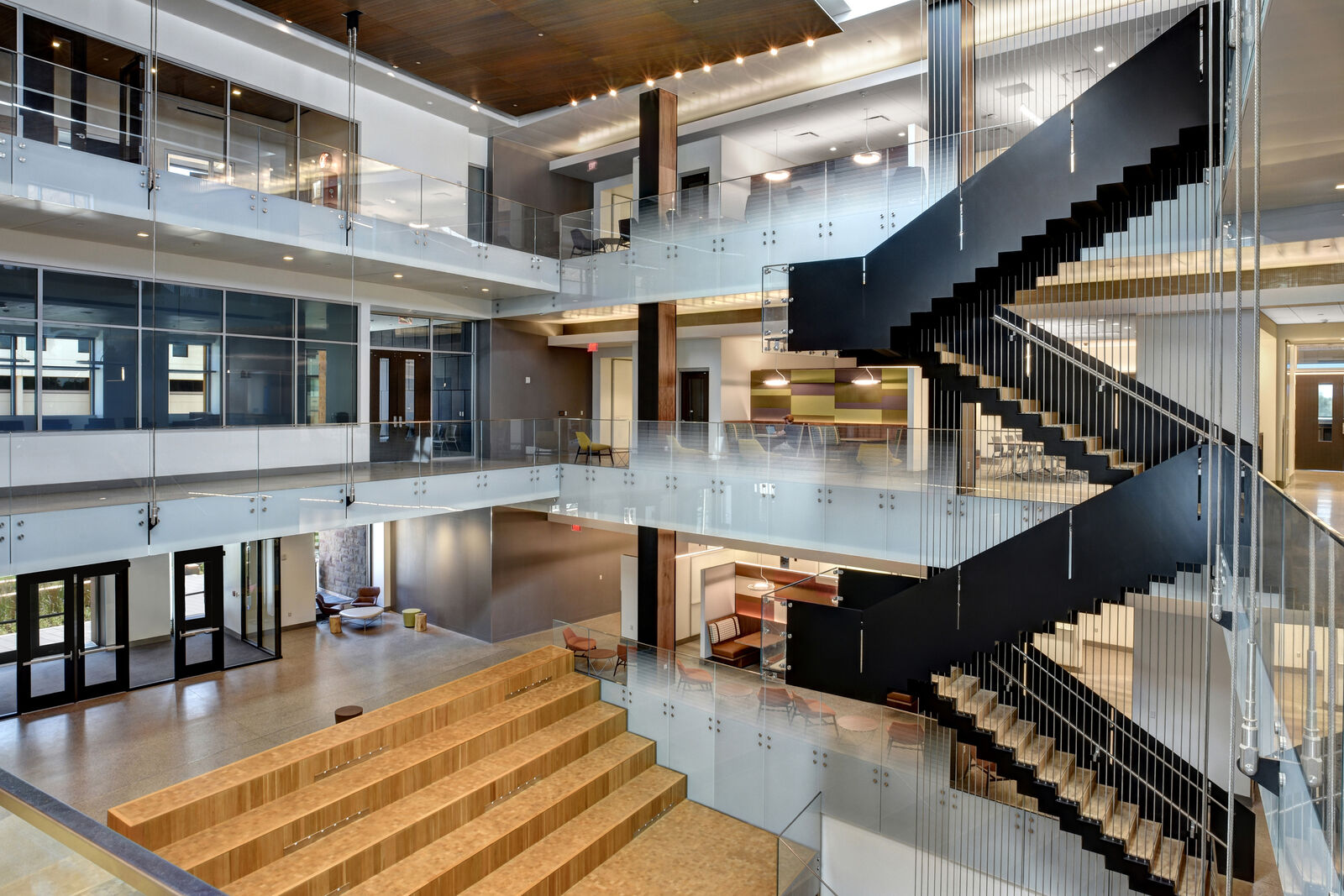
A monumental stairway in the central atrium doubles as stadium seating to inspire physical activity and social interaction.
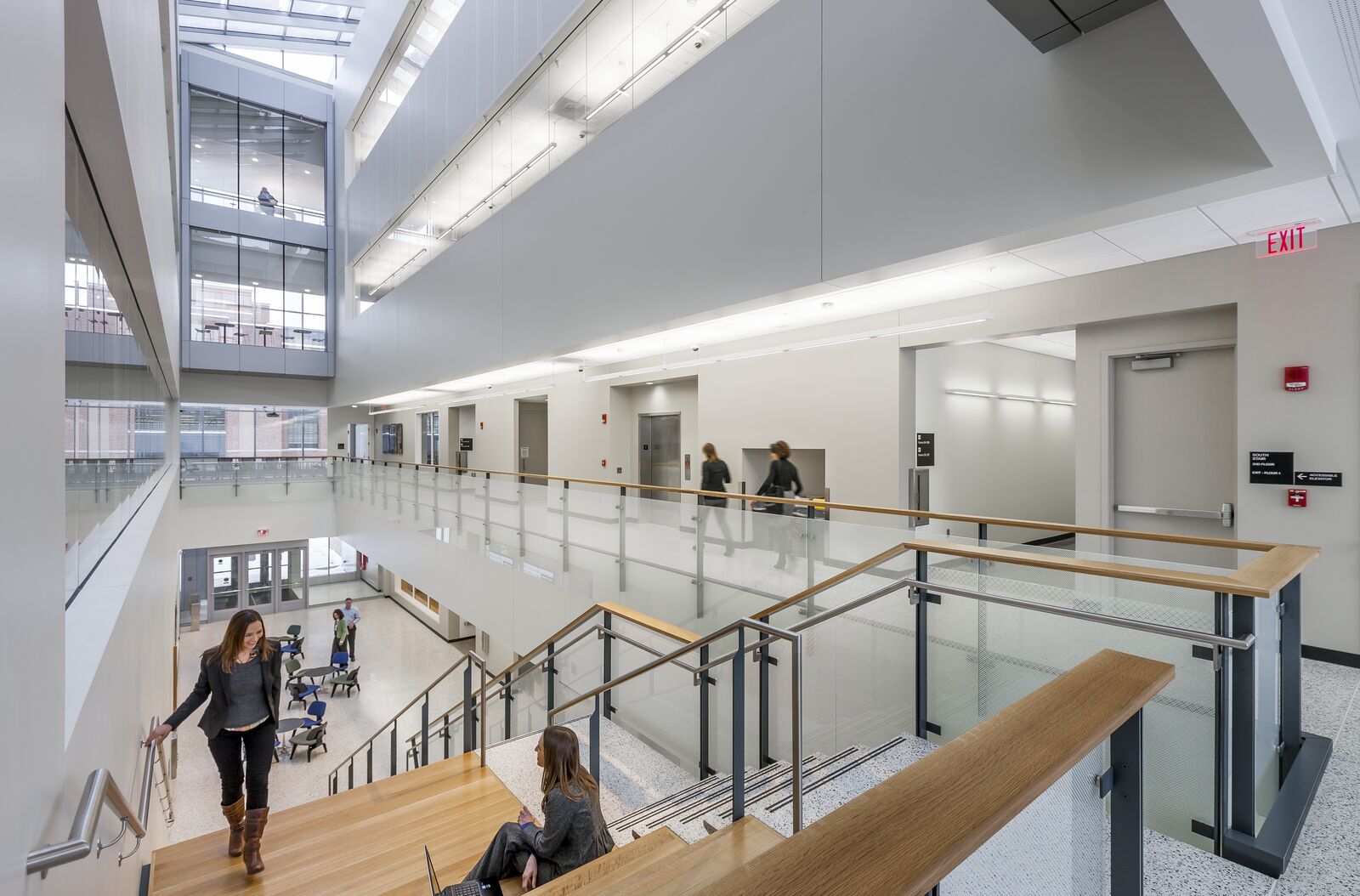
The first floor houses shared conference and meeting rooms, reception space, and lobby, encouraging interaction and fluidity of movement throughout the building. The space is defined by a central atrium, which features a mixing chamber and stadium seating.
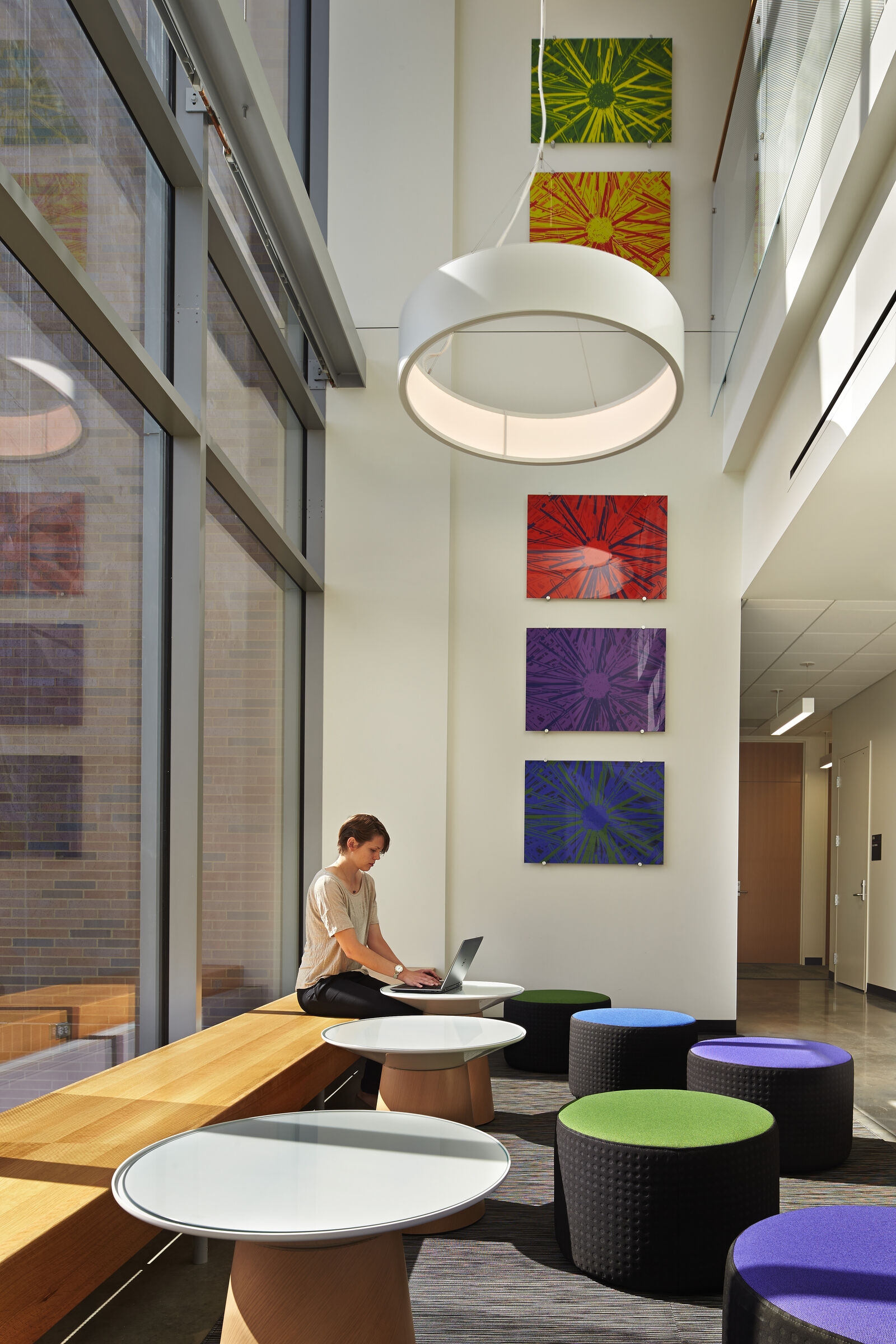
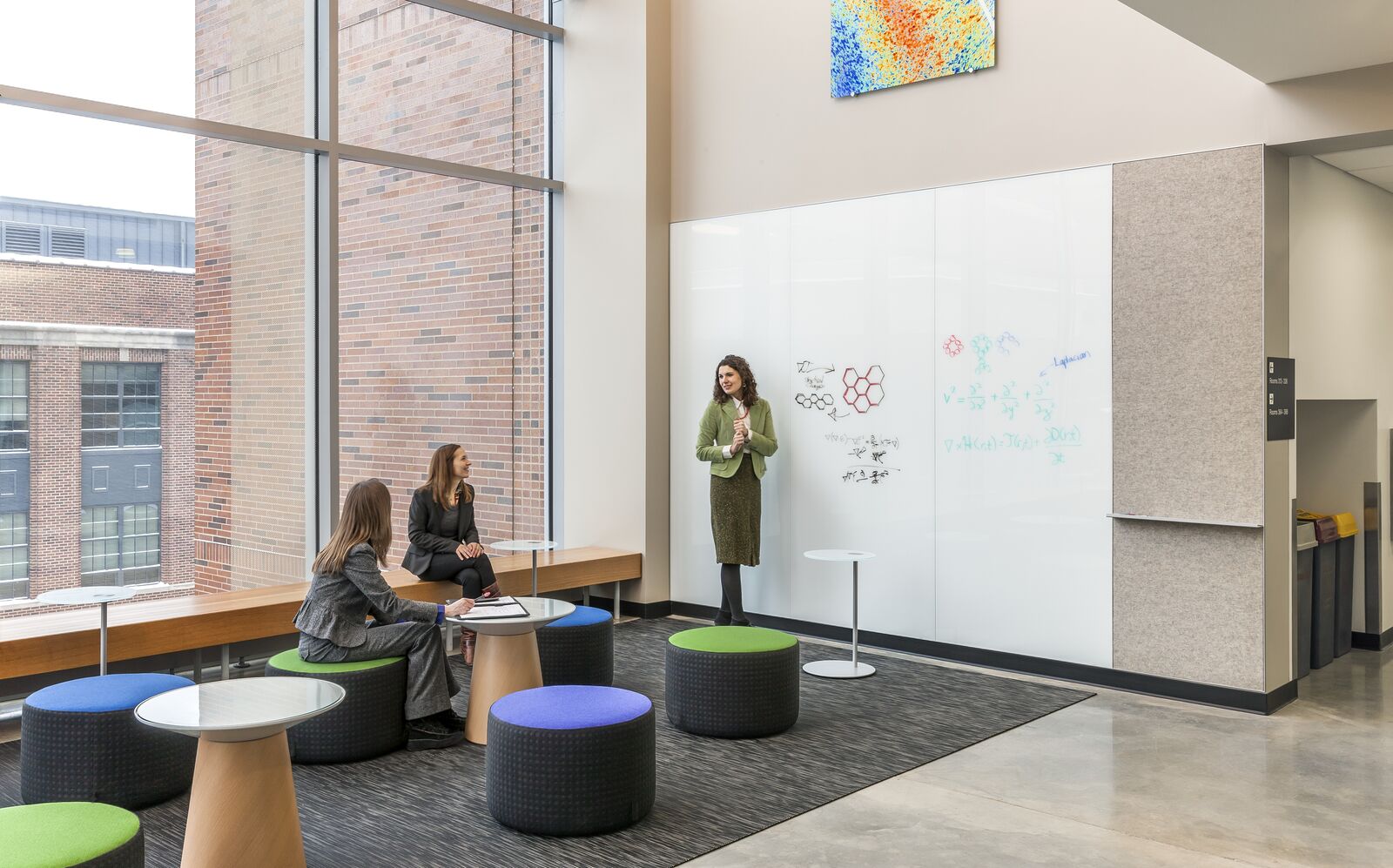
The second floor houses primarily physics research laboratories and offices accessible by the grand staircase, giving the department a distinct identity and visibility within the building. Corridors along the second floor are punctuated by light wells, allowing natural light to filter into the space. Seating nooks and niches are interspersed along walkways with casual seating and white boards to encourage impromptu interaction and collaboration.
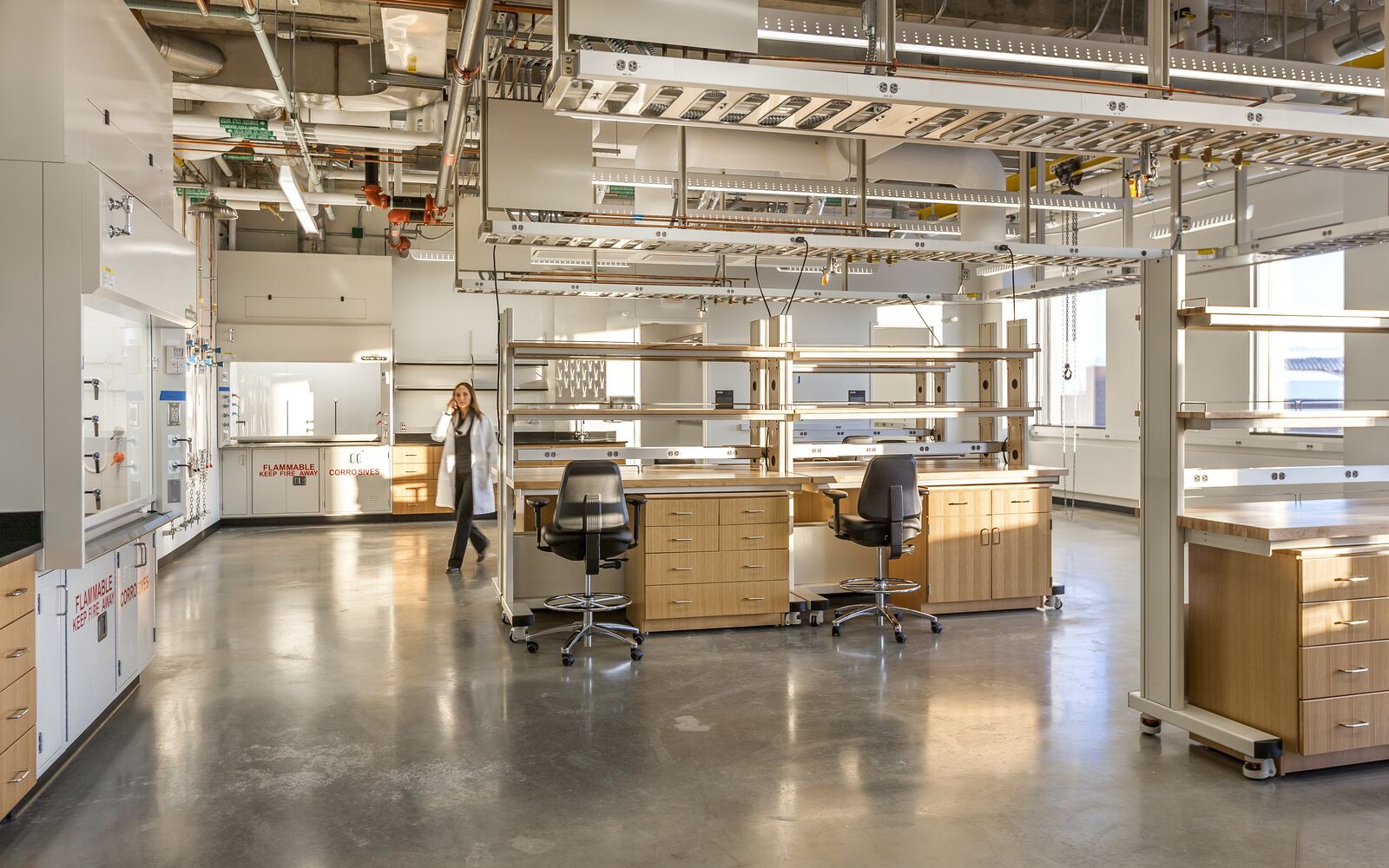
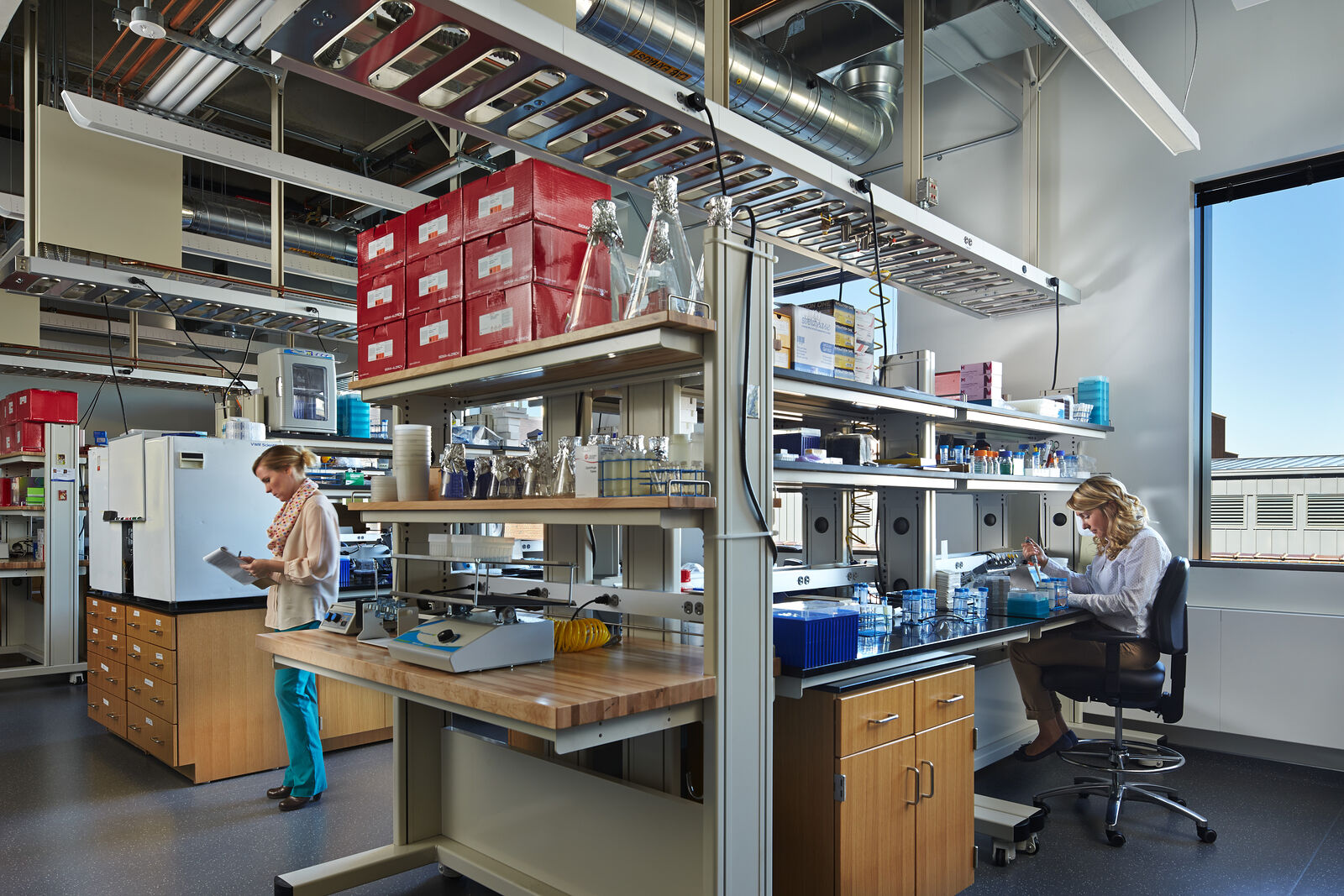
The third floor is comprised of laboratories, offices, and support space. It is equipped with environmental controls such as EMI and faraday cage and features clean and standby power, vibration isolation, helium liquefier and recovery system, pits for cryogenics, crane rails, fume hoods, and laser labs.
A green roof and outdoor deck sits on top of this space, which is further distinguished by the use of stone along the exterior and offers a unique contrast to the red brick cladding used on the larger lab mass components.
University of Washington, MolES and NanoES Buildings
Montana State University, Norm Asbjornson Hall
University of Wyoming, Engineering Education and Research Building
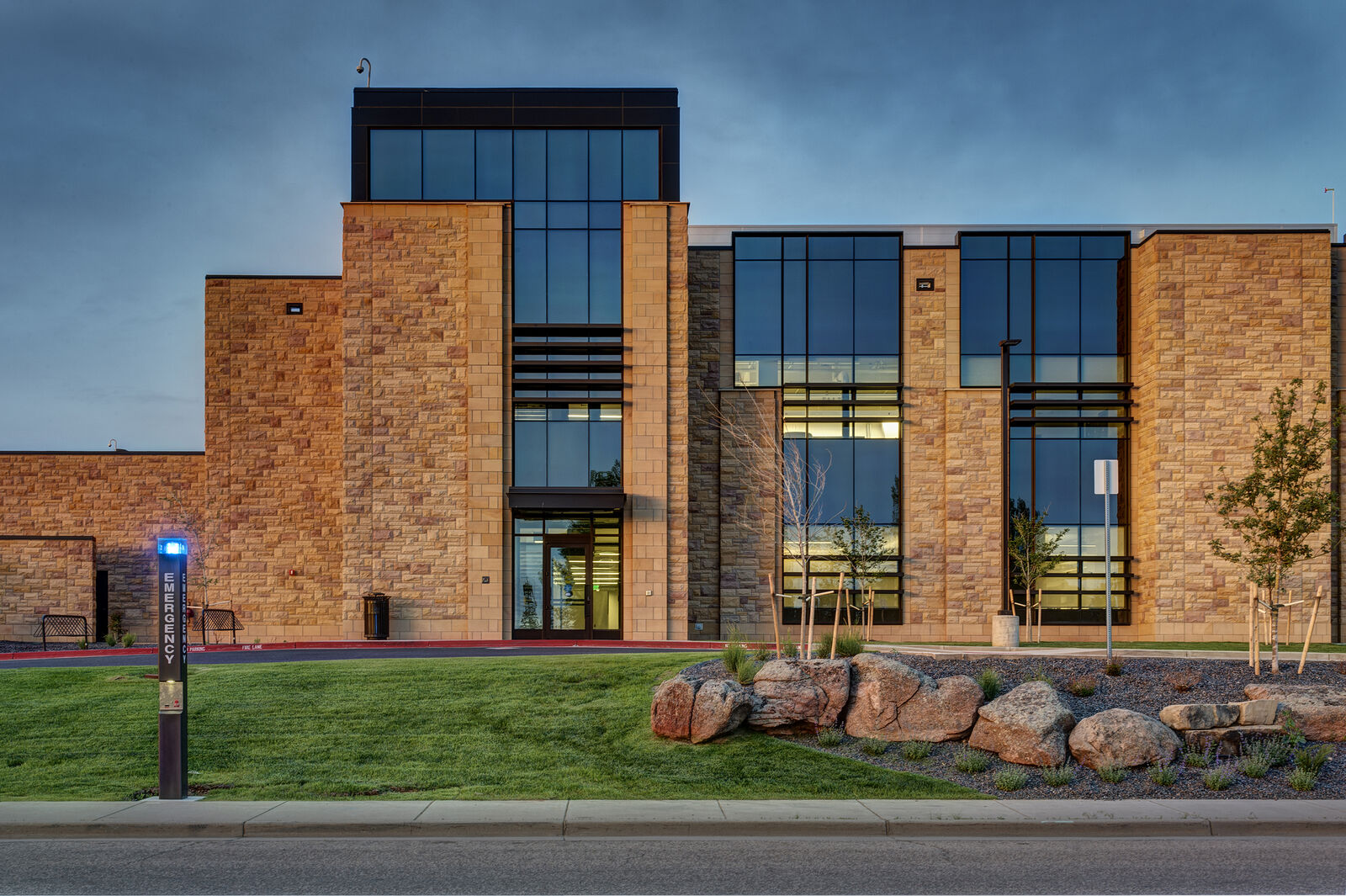
University Of Wyoming, High Bay Research Facility