A Vibrant New Neighborhood for Portland's Central Eastside
Oregon Museum of Science and Industry, Central City Master Plan
Urbanism and Landscapes, Civic and Public, Housing and Mixed Use
For over four decades, ZGF has partnered with the Oregon Museum of Science and Industry (OMSI) to shape its presence along Portland's Willamette River. Our work together began with early campus planning and grew into the design of the organization’s current facilities, district-scale studies, and most recently, the OMSI Central City Master Plan (CCMP), which OMSI led in partnership with tribal nations, Portland Community College (PCC) and Portland Opera. The CCMP sets the stage for redevelopment of 34 acres of Portland’s Central Eastside into a vibrant transit-oriented neighborhood where science, culture, and community converge.
Location
Portland, Oregon
Project Component
Master Planning
Urban Design
Landscape Design
Infrastructure Planning
Design Tenets
In 2019, OMSI selected ZGF to develop a comprehensive Central City Master Plan (CCMP) that addresses urban design, building massing, public realm improvements, and infrastructure planning for 34-acre riverfront, brownfield site in Portland's Central Eastside. The OMSI CCMP supports the expansion of major institutions within the plan area while accommodating commercial uses from offices to maker spaces. Up to 1,200 new residential units will provide homes for Portlanders, with a minimum of 20% serving those in need of affordable housing.
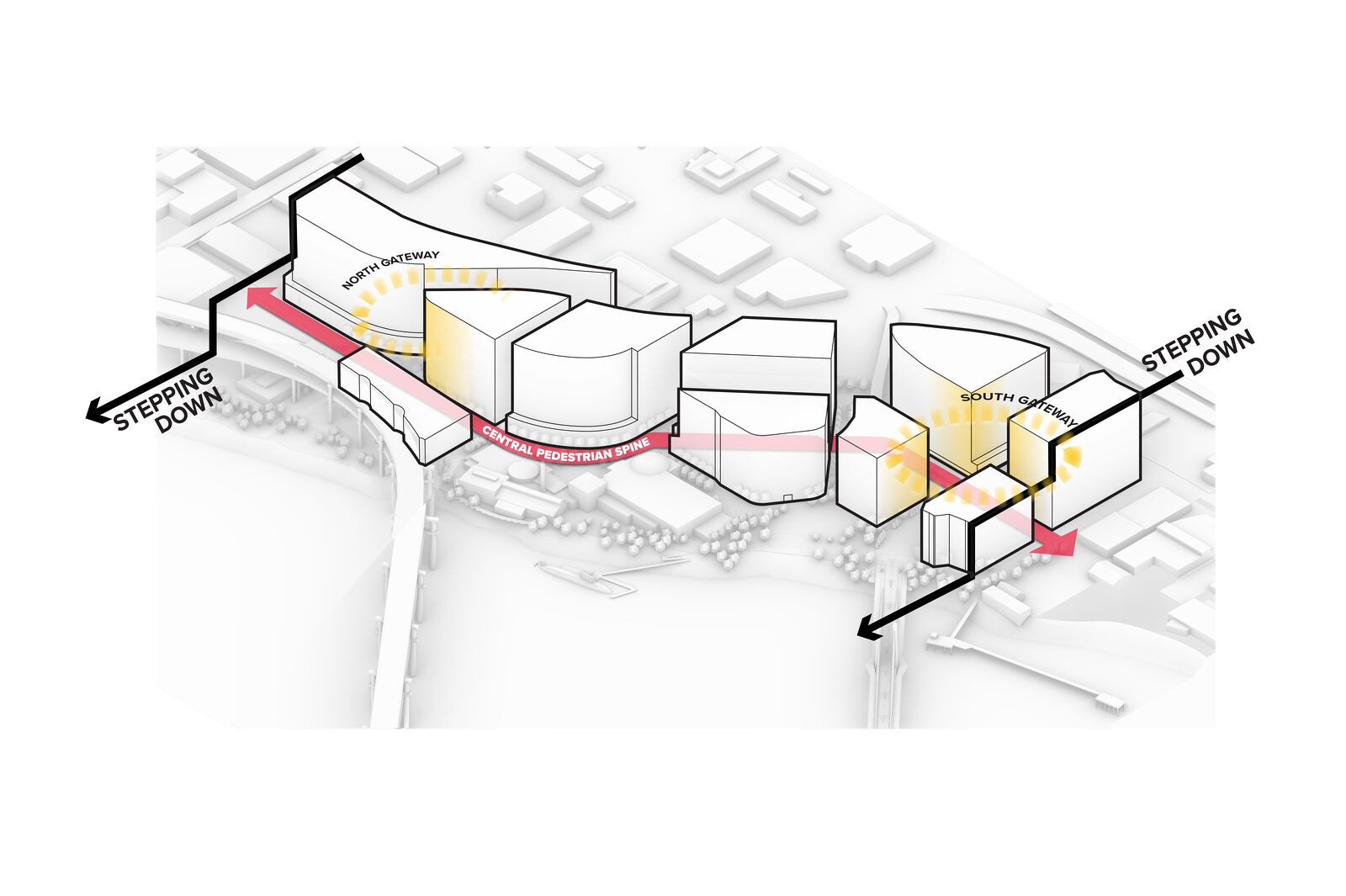
The master plan organizes the district through four major framework components: two distinct gateways, a central north-south pedestrian spine, a "ladder" of east-west connections, and a collection of gathering nodes. Design tenets respond to the existing context: honor the scale of OMSI buildings through height limits and setbacks, focus activity on the central pedestrian spine, step buildings down to the river, create gateways at the north and south ends of the district, and provide east-west connections to establish or reinforce connections to the river.
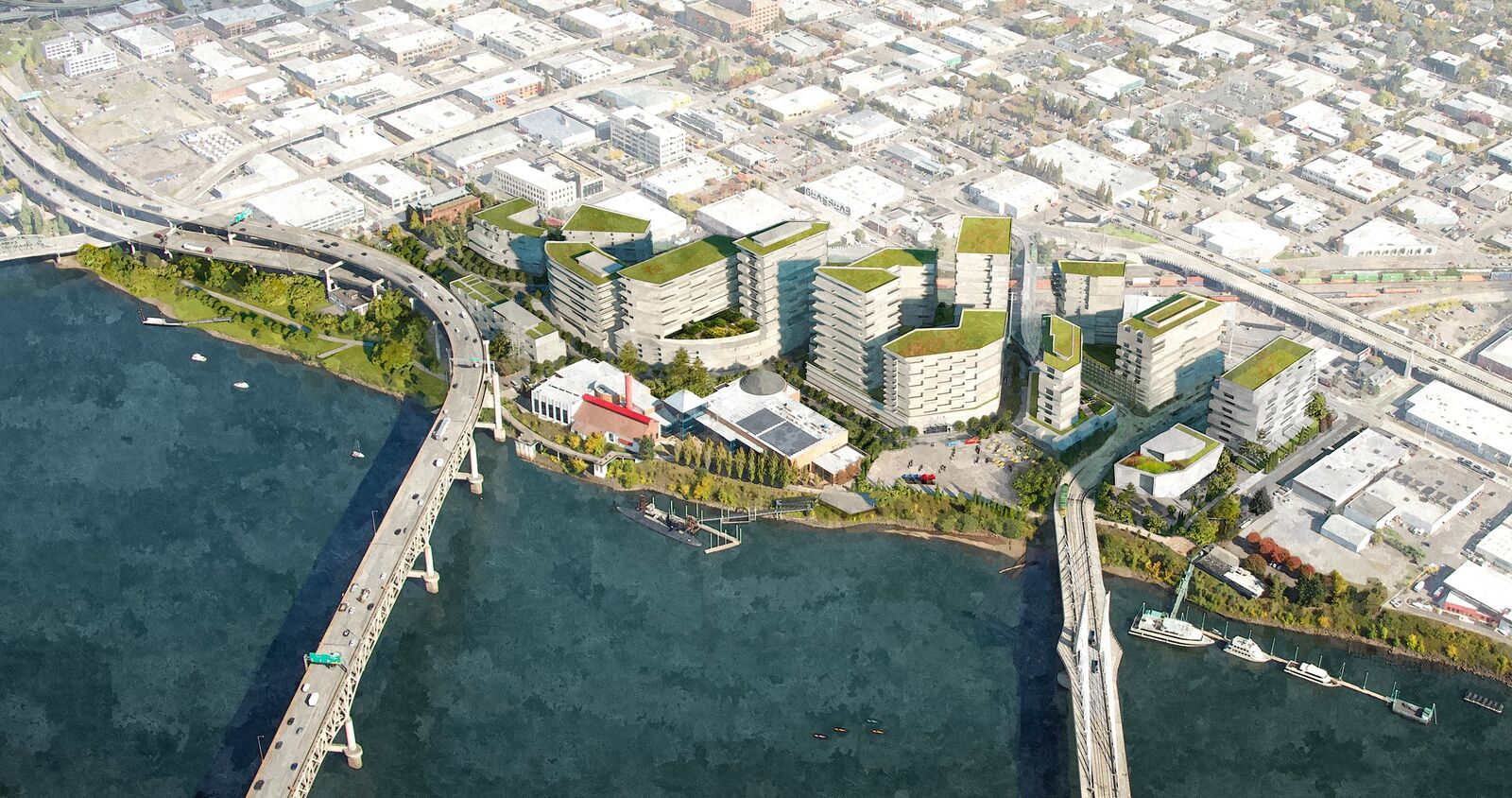
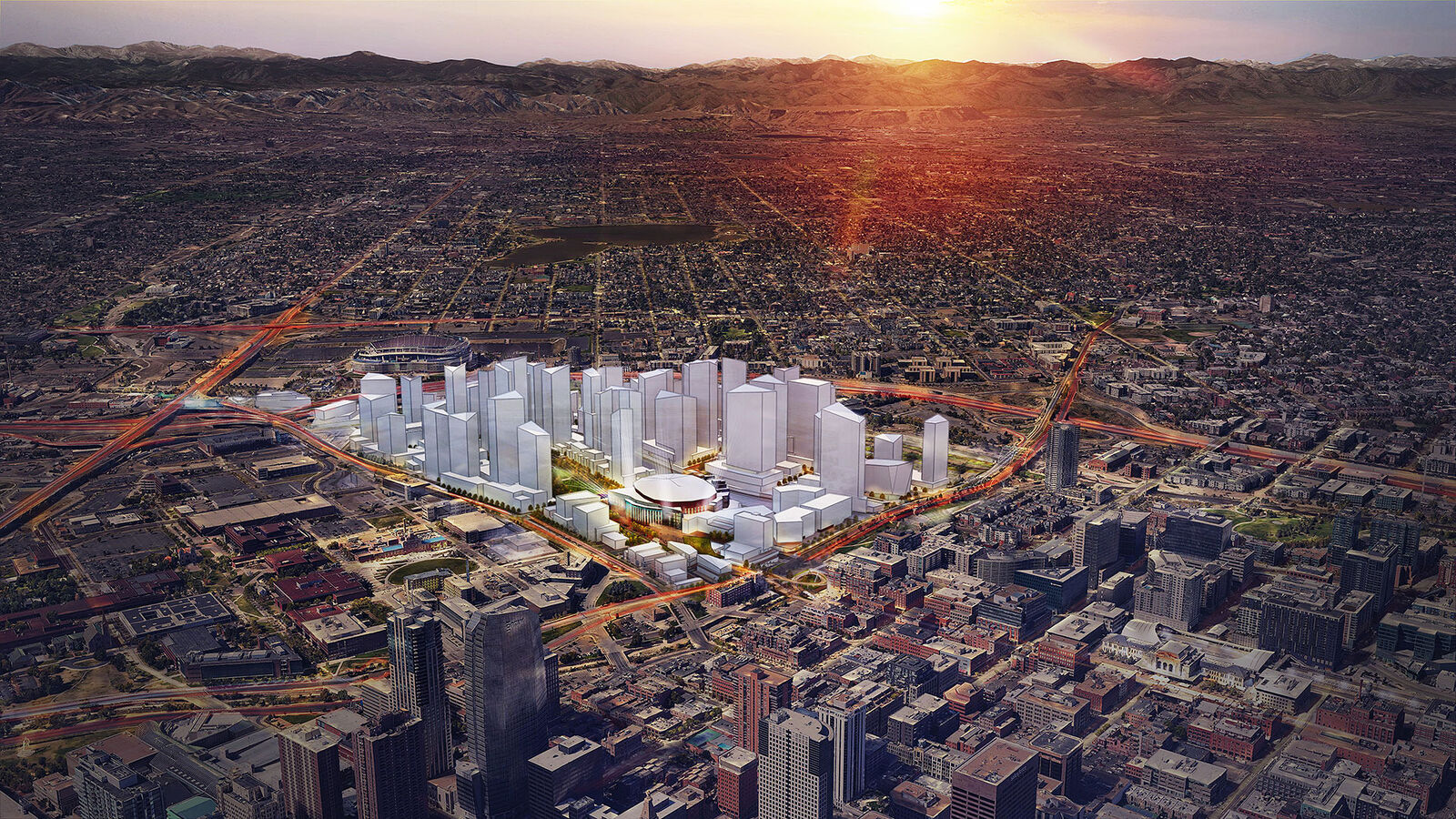
A hypothetical rendering of the OMSI District, with the Marquam Bridge carrying I-5 at lower left and the Tilikum Crossing Bridge, for light rail, bikes and pedestrians, at right.
The Evolution of the OMSI District: From Industrial Hub to Mixed-Use Neighborhood
The OMSI District is located on the east side of the Willamette River in Portland’s Central Eastside Industrial District. While the stormwater swales in the OMSI parking lot were groundbreaking for their time (the first in the nation), the site is currently largely impervious brownfield, dominated by surface parking uses, freight rail, and remnants of prior industry.
Historically, it was separated from nearby neighborhoods by train tracks and Highway 99E, giving it a unique and irregular layout that followed the river. Development in the area began in the 1800’s with industrial activity such as barrel-making and river transport. In the 1860s, railroads were added to support Portland’s growth. Between 1910 and 1929, Portland General Electric built the Station L power plant (now mostly gone except for OMSI’s Turbine Hall), which used wood debris as fuel and reshaped the land. By the 1990’s, land uses began to shift from power generation and heavy industry to public and institutional uses. Major developments included ZGF-designed projects including the OMSI Museum facilities in 1992, Portland Opera’s Hampton Center in 1996, and PCC’s CLIMB Center in 1998. By 2015, the Tilikum Crossing Bridge and nearby OMSI MAX transit station were completed, laying the groundwork for a new kind of neighborhood, one built around public transit featuring a more diverse mix of housing, corporate facilities and public spaces.
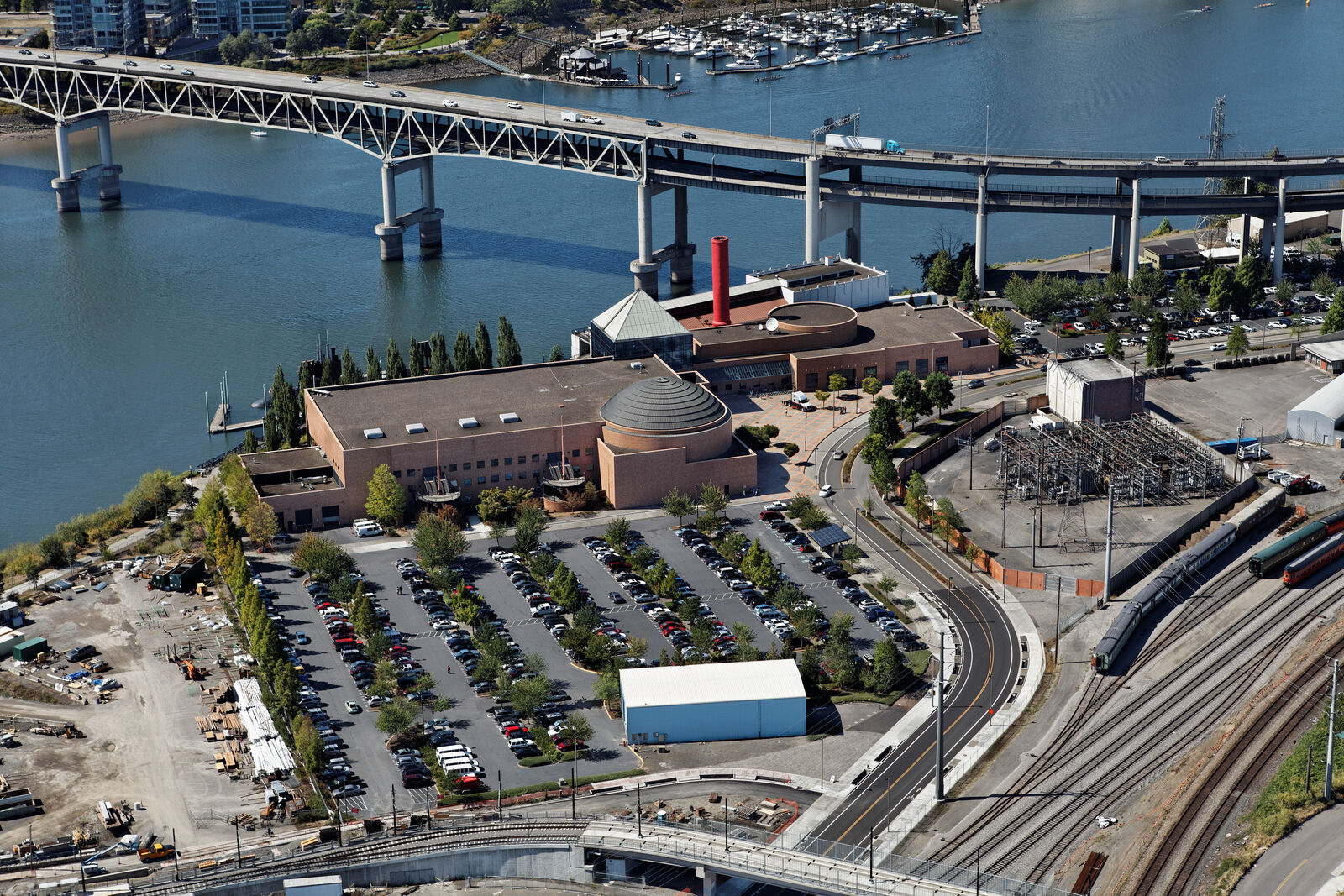
OMSI from the east looking west towards the Willamette River.
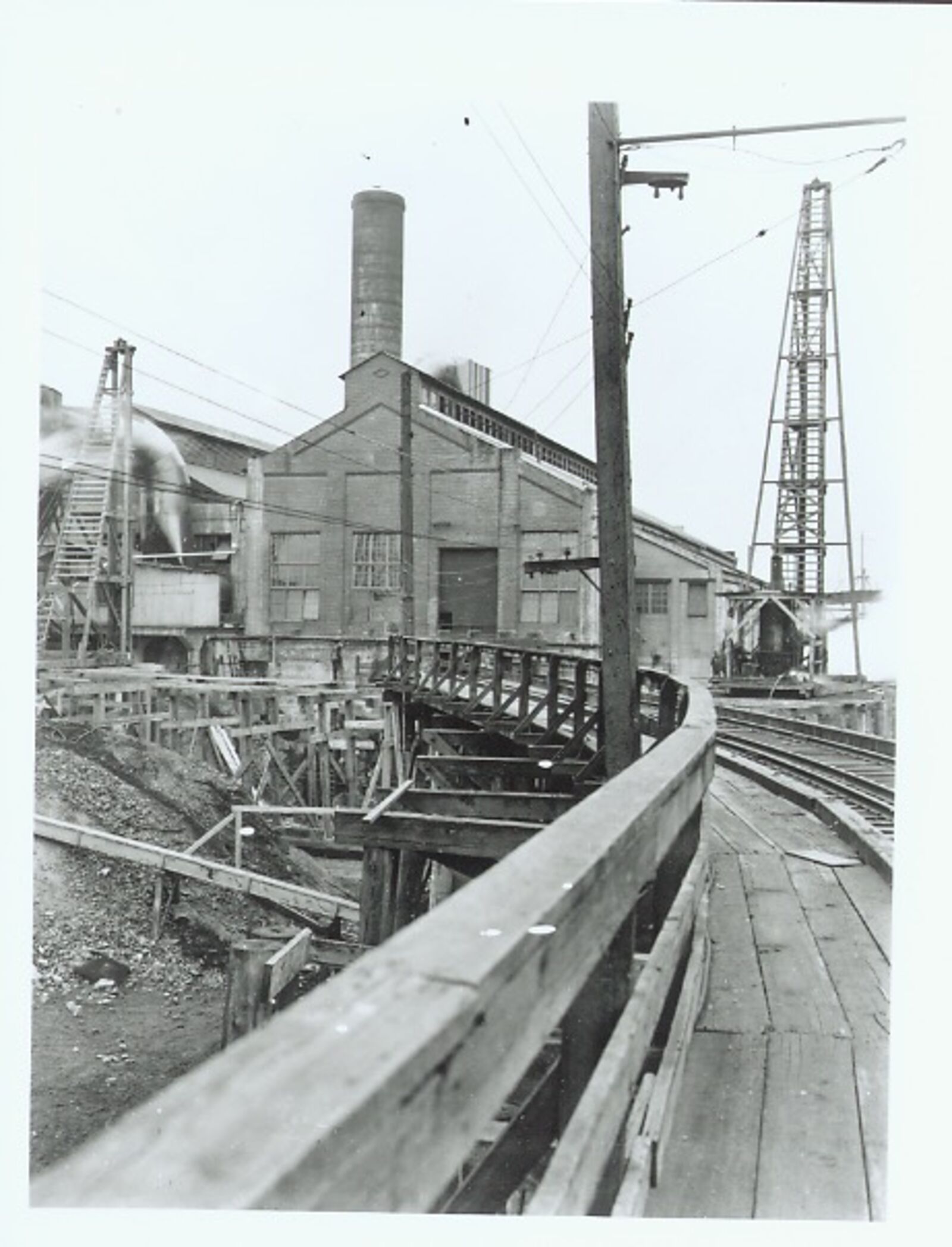
Portland General Electric's turbine hall in Portland, Oregon in 1920. The building housed the old PGE steam turbine that has been repurposed as museum space for OMSI. Today it serves the museum as a hub for educational programs and hands-on learning experiences.
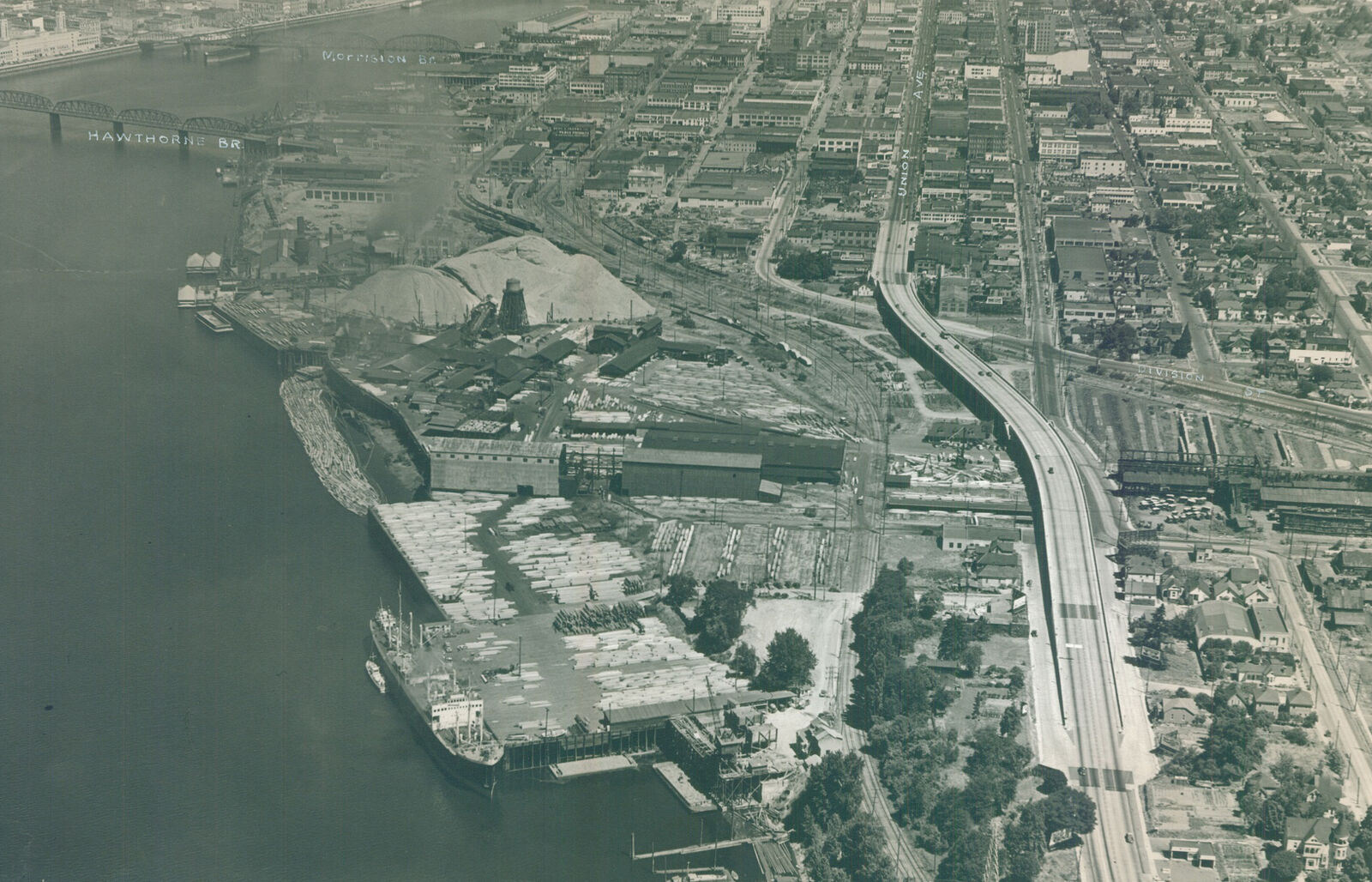
Portland's Central Eastside waterfront circa 1940. Note large pile of wood debris, used to power steam turbines for power generation, with turbine hall at rear.
OMSI Today: Honoring People and Place
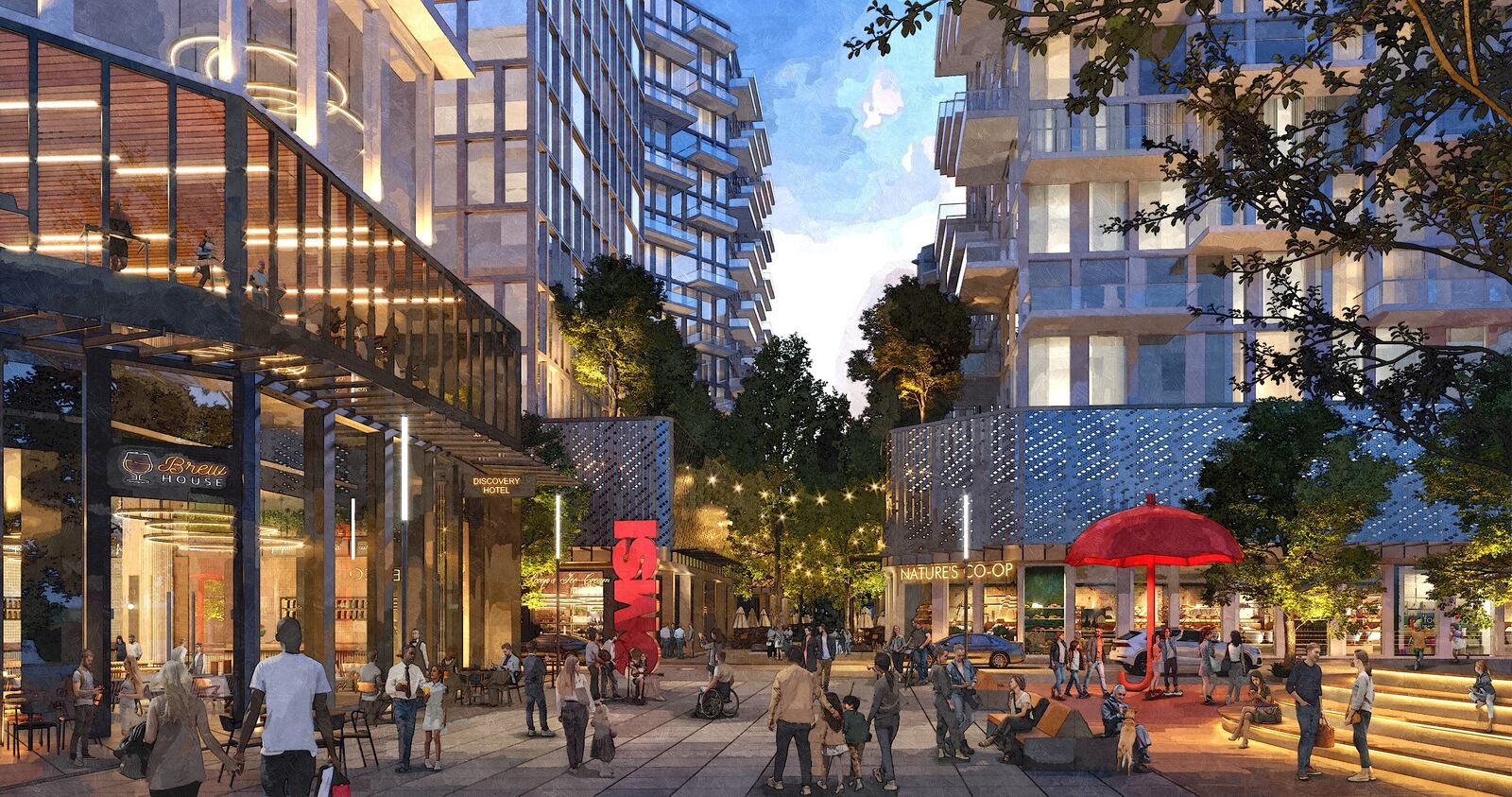
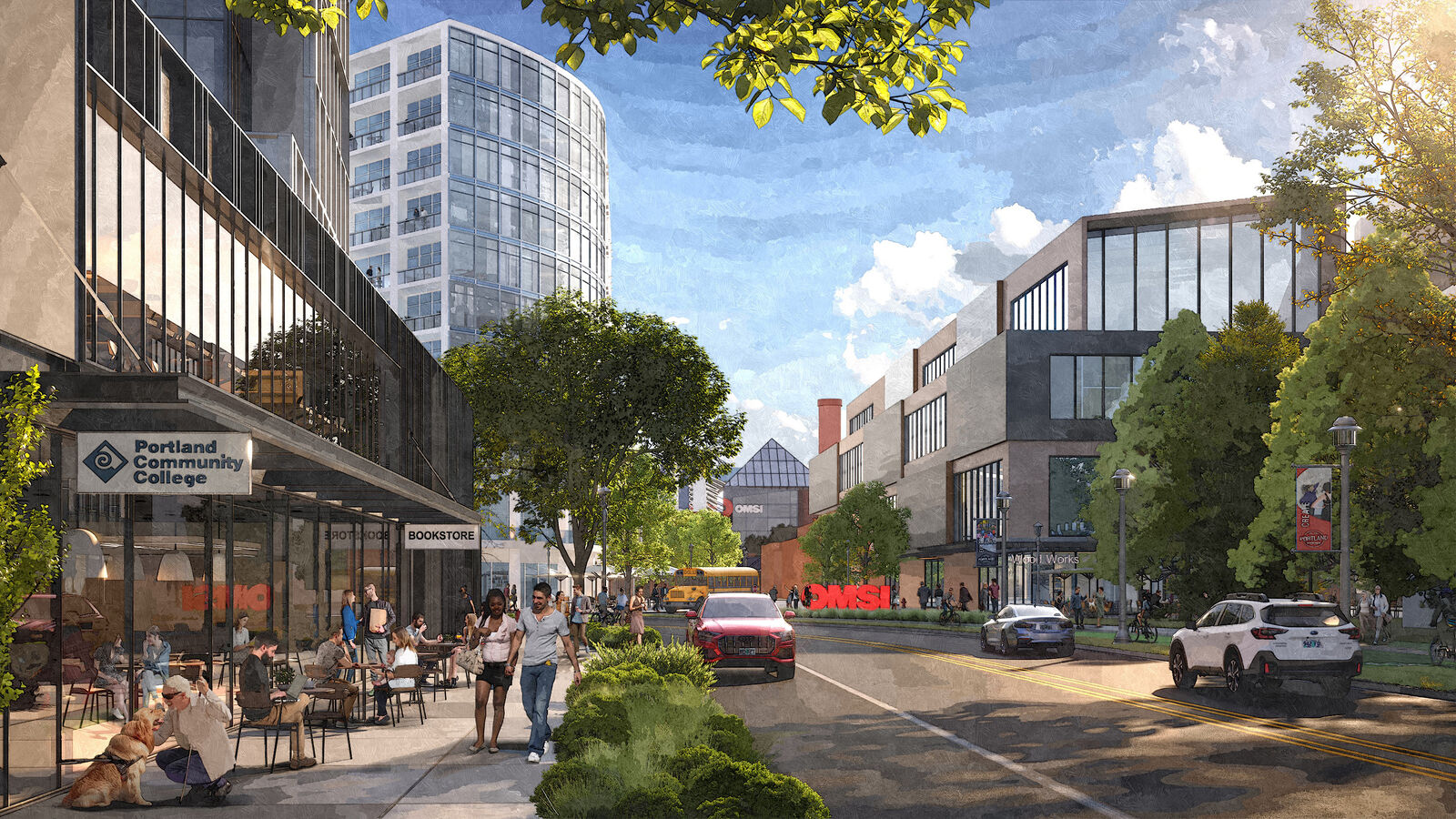
OMSI has engaged its tribal partners, PCC, Portland Opera and the surrounding neighborhoods to continue the transition of Portland’s Central Eastside into a mixed-use, transit-oriented neighborhood combining innovation, education, cultural and light industrial jobs. An important priority for the city and Central Eastside is to preserve the street network and the freedom to operate that businesses need to thrive, even as the population densifies and the uses diversify.
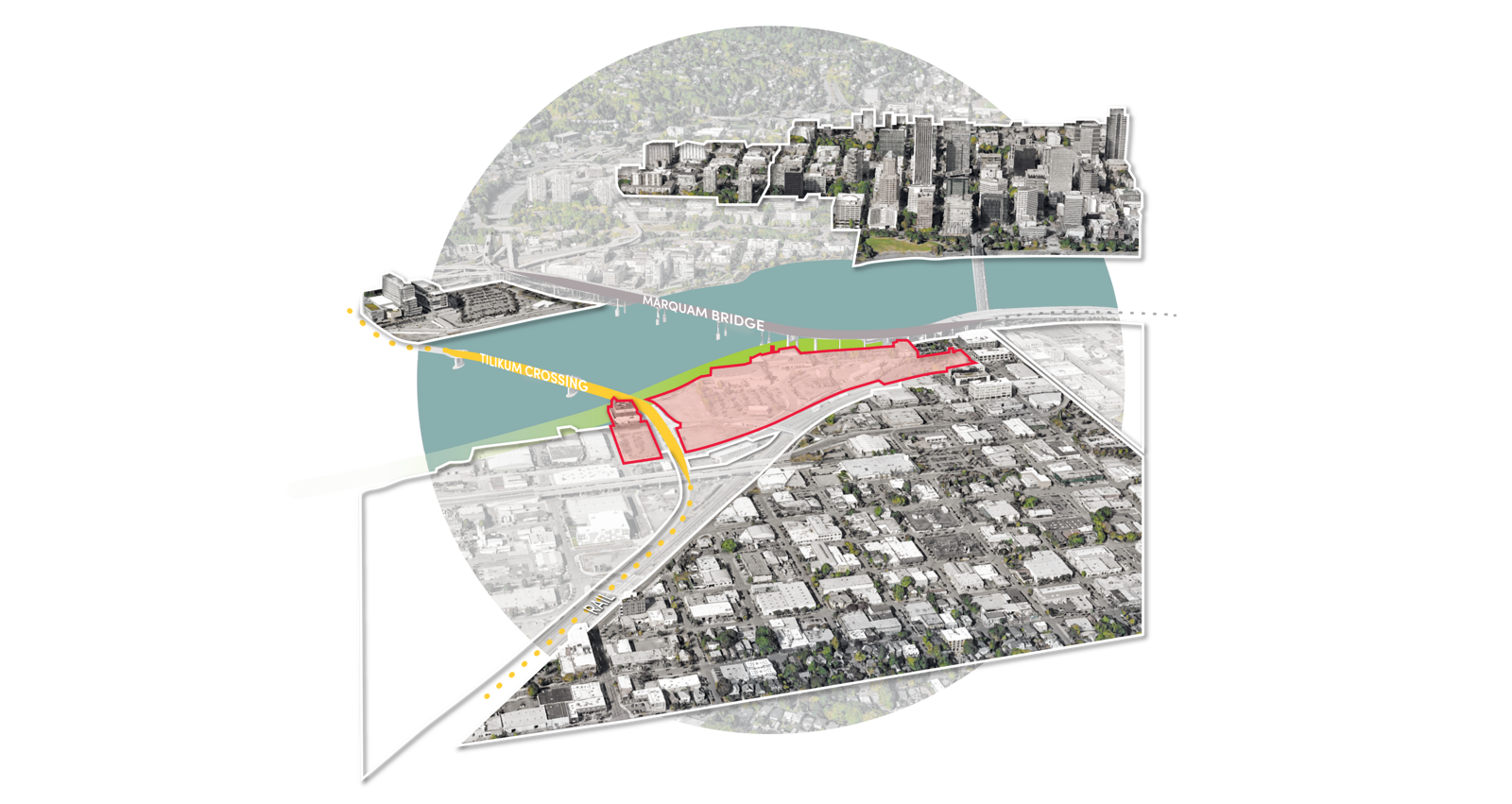
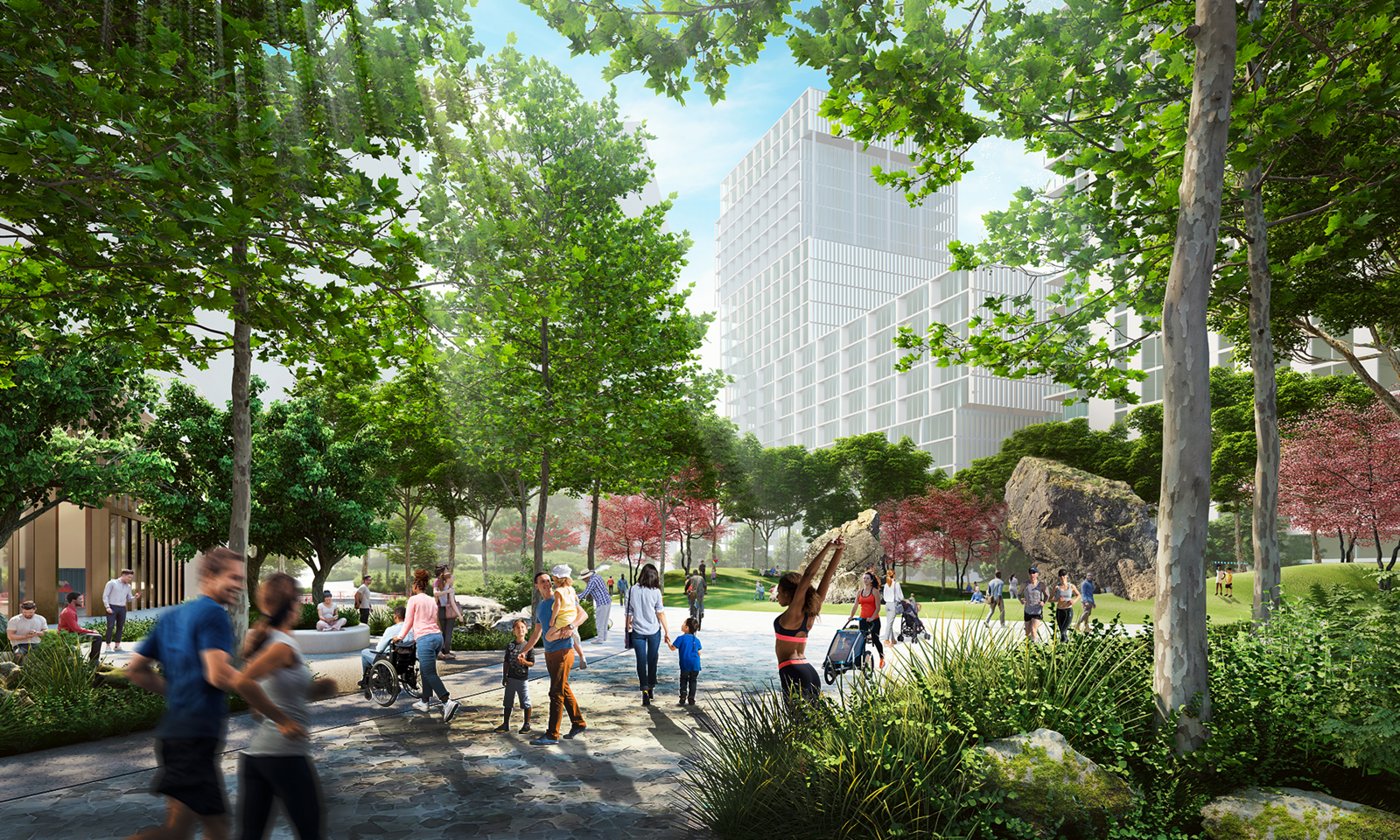
A centerpiece of the master plan is the Waterfront Education Park, which will preserve and enhance scenic viewpoints, restore riparian and shallow water habitats, and provide spaces for education and interpretation. Significantly, it will also mark the first restoration of urban tribal presence on the Willamette River, affirming and sharing indigenous ecological knowledge and cultural connections.
The City of Portland approved the CCMP in 2023, enabling up to 4.3 million square feet of development across the district.
Throughout the planning process, ZGF collaborated with OMSI and its partners including Portland Community College, Portland Opera, PGE, TriMet and the City of Portland to create a framework for innovation in climate solutions, transportation, and next-generation urban systems. Their contributions shaped the future district as a hub for science learning and culture—a place for everyone seeking to play, learn, and live, and set the stage for the on-going Center for Tribal Nations project, and the future Waterfront Education Park.
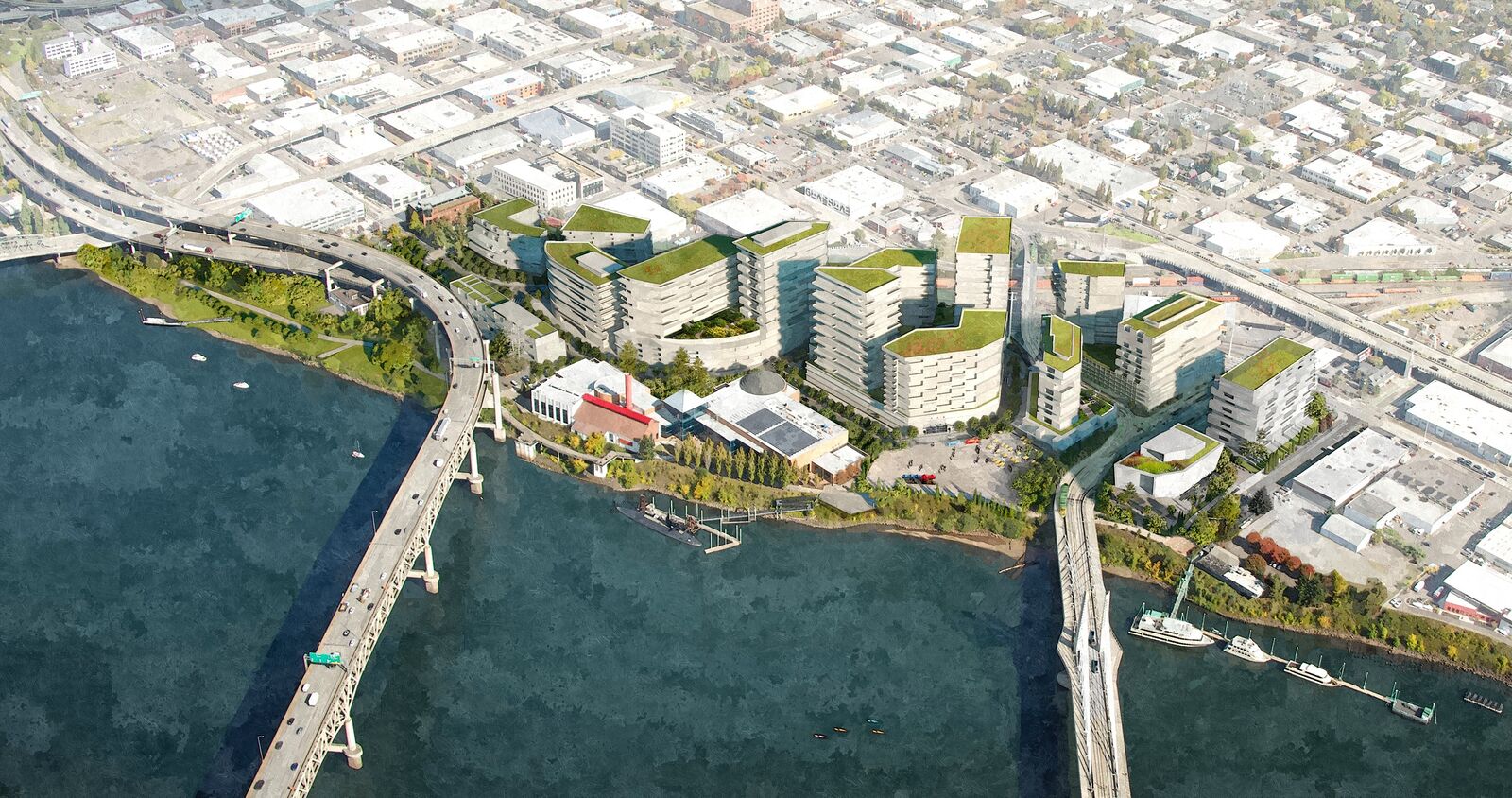
A rendering showing possible future development, looking from the west, with the Waterfront Education Park along the west bank of the Willamette River.
Urban Renaissance Group, Lloyd Center Redevelopment