Designing Engaging Brand Experiences
By Jenny Lee
What defines an experience in the built environment? Is it the physical shapes, materials, and colors in a space? Or sensory cues such as temperature, sounds, and scents that reverberate from room to room? While an environment’s physical elements contribute greatly to its overall composition, what really defines experience in the built environment are the elements that enable users to sense, feel, think, interact, and relate. By designing spaces that connect with people authentically and purposefully, brands come alive in ways that put the users at the heart of the design.
Whether the space is a sports facility that exudes energetic team spirit, or an office park that thousands of employees report to daily, the built environment relies upon environmental graphic design (EGD) to communicate a brand’s identity, establish a sense of place, create a smooth journey, and most importantly, create a memorable experience. ZGF associate principal and senior environmental graphic designer Jenny Lee shares her insights into how to enliven, enrich, and humanize brand experiences in the built environment.
Less Brand-centric, More Human-centric
It may seem counterintuitive to think more about people and less about brand when creating a brand experience; however, this is key to developing a branded environment that feels authentic, memorable, and sympathetic to users’ needs. Whether the users are customers who visit the space monthly or employees who work it in daily, people crave moments that allow them to connect and relate. After all, a company’s brand is its proverbial front door and the way companies express themselves visually and verbally. The goal is for that expression to resonate with those who experience it. We do this by understanding the brand and who their clients, customers, students, patients, and employees are—from their needs and struggles to their culture and the elements that spark joy.
The student-centric EGD package for California State University Los Angeles’s (Cal State LA) Student Services Building was designed to address the stressors faced by students who are navigating an unfamiliar space for the first time. Coupled with healthcare design strategies, the EGD and wayfinding program is intended to make the journey through the building a vibrant, easily navigable experience that celebrates Cal State LA’s spirit colors and heritage, as well as the city of Los Angeles. By incorporating elements that resonate with users’ values, interests, or culture, the space becomes more personalized, fostering a sense of ownership. This makes for a more meaningful, memorable experience.
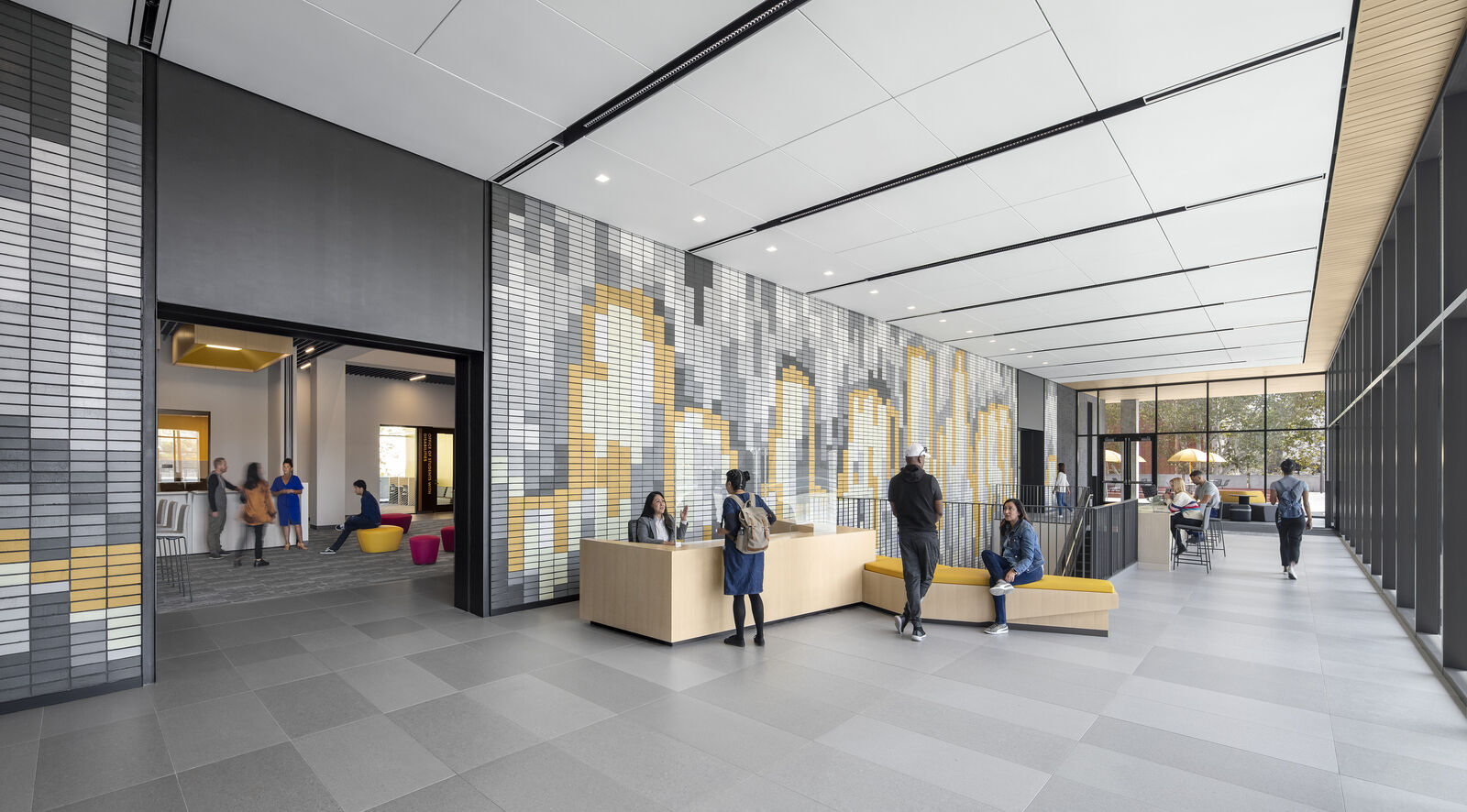
The custom designed mural that spans the lobby features a mosaic depiction of the Los Angeles skyline. Paying homage to the University’s logo and colors, the mural can be seen from across campus through the double-height windows on the ground floor.
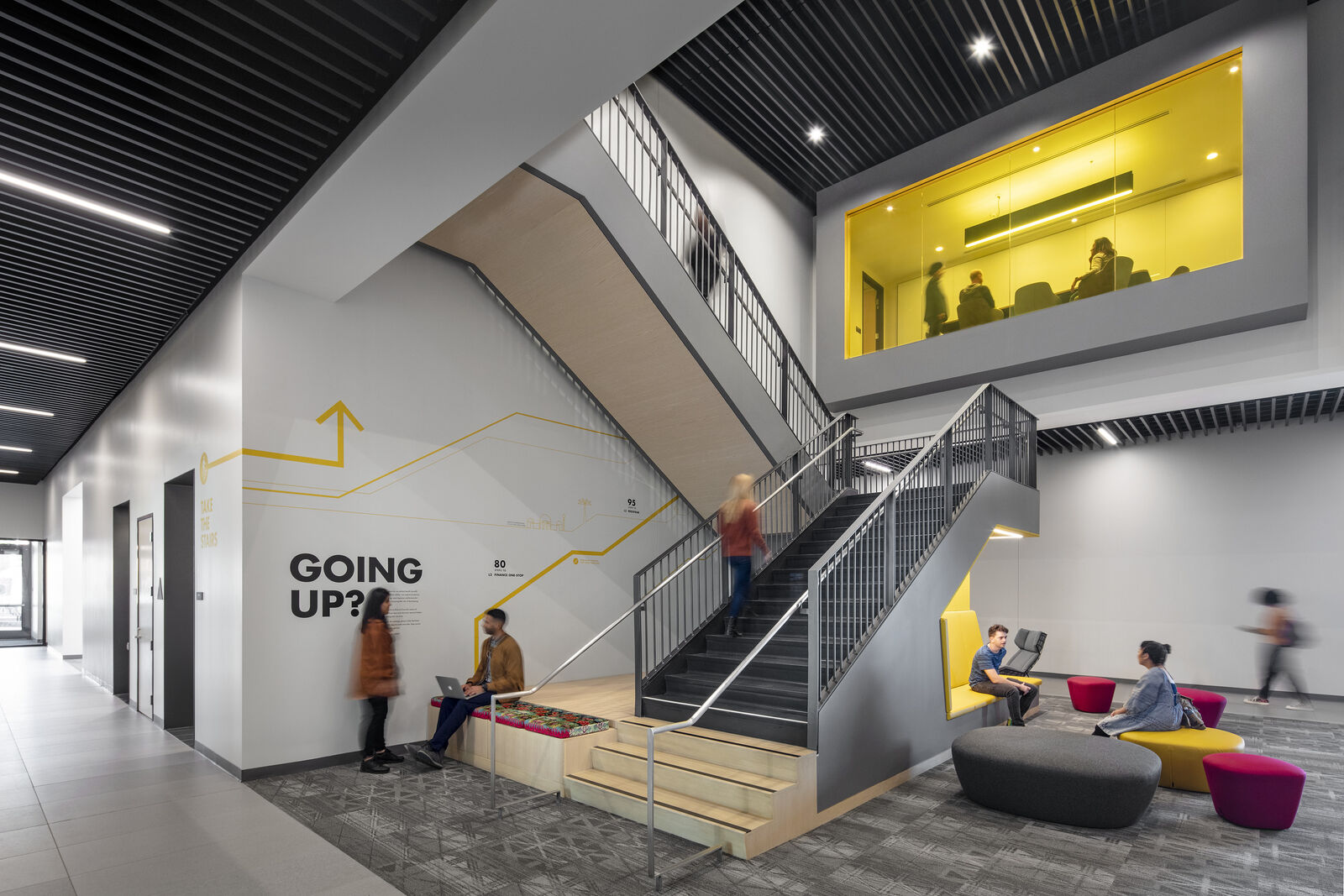
With step counts and elevation heights marked at each level, the graphics celebrate Angeleno hiking culture.
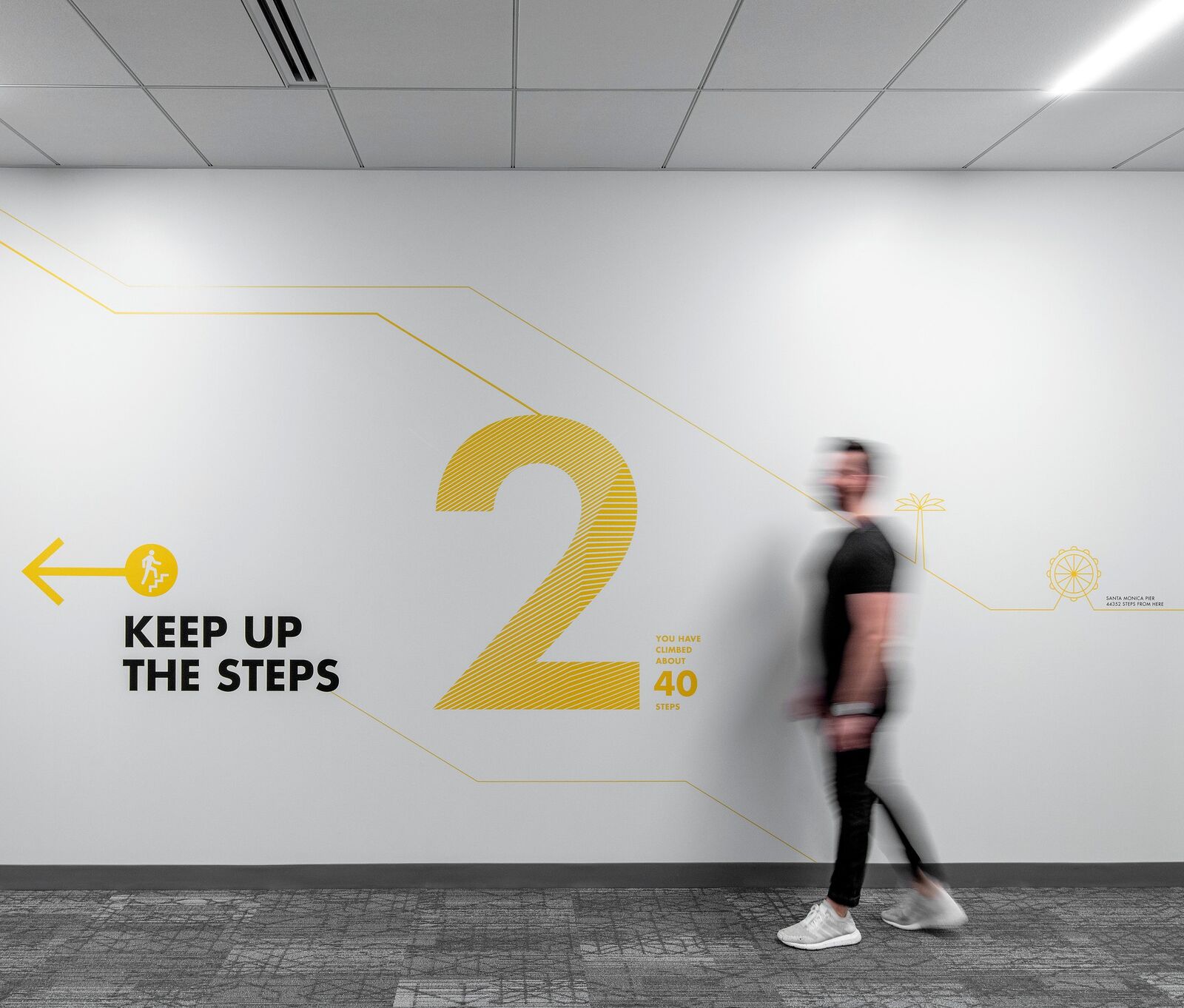
Bold wayfinding and environmental graphics add visual interest, while easing the challenges of navigating a new environment.
Connect People to Place
EGD plays a vital role in placemaking by reinforcing the identity and character of a place. The idea is to express its uniqueness to inspire, engage, and connect with users. Connecting people to place creates a strong sense of “you are here” as users journey through a space, which develops a sense of inclusiveness by bringing in the outside community—an element all users can connect with. Especially for projects that are community- or city-centric, motifs, maps, and murals can be leveraged to establish a connection between people and their surroundings within the built environment.
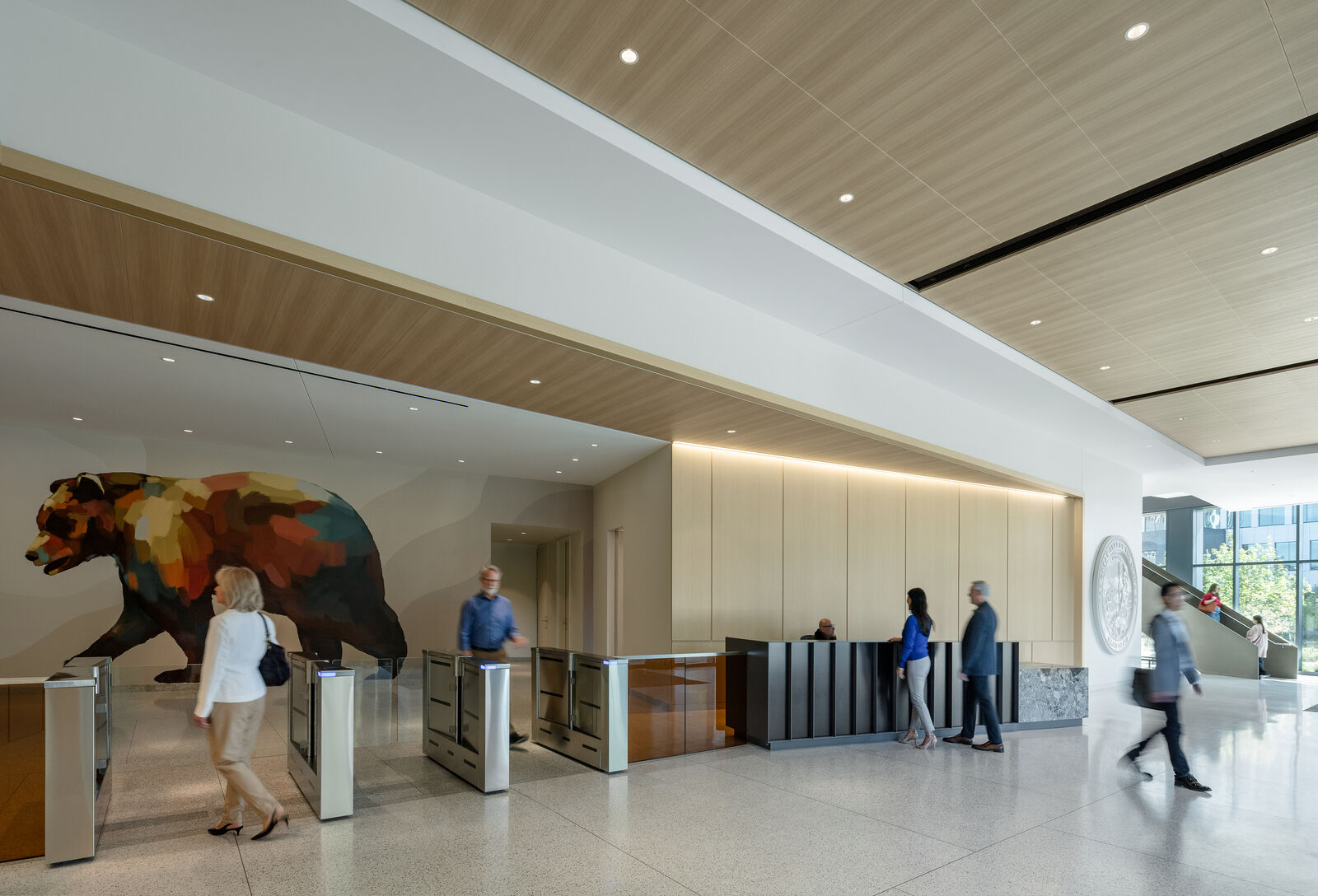
At the Department of General Services Richards Boulevard Office Complex (RBOC), placemaking was a design tenet as this campus is the first development in Sacramento’s River District—an area that’s actively being transformed from its industrial past into a modern, vibrant neighborhood adjacent to downtown. The graphics draw inspiration from local surroundings and state motifs, such as the nearby American and Sacramento Rivers and the California grizzly bear. Together, the EGD embodies three key drivers: paying tribute to the past, growing the present, and cultivating the future.
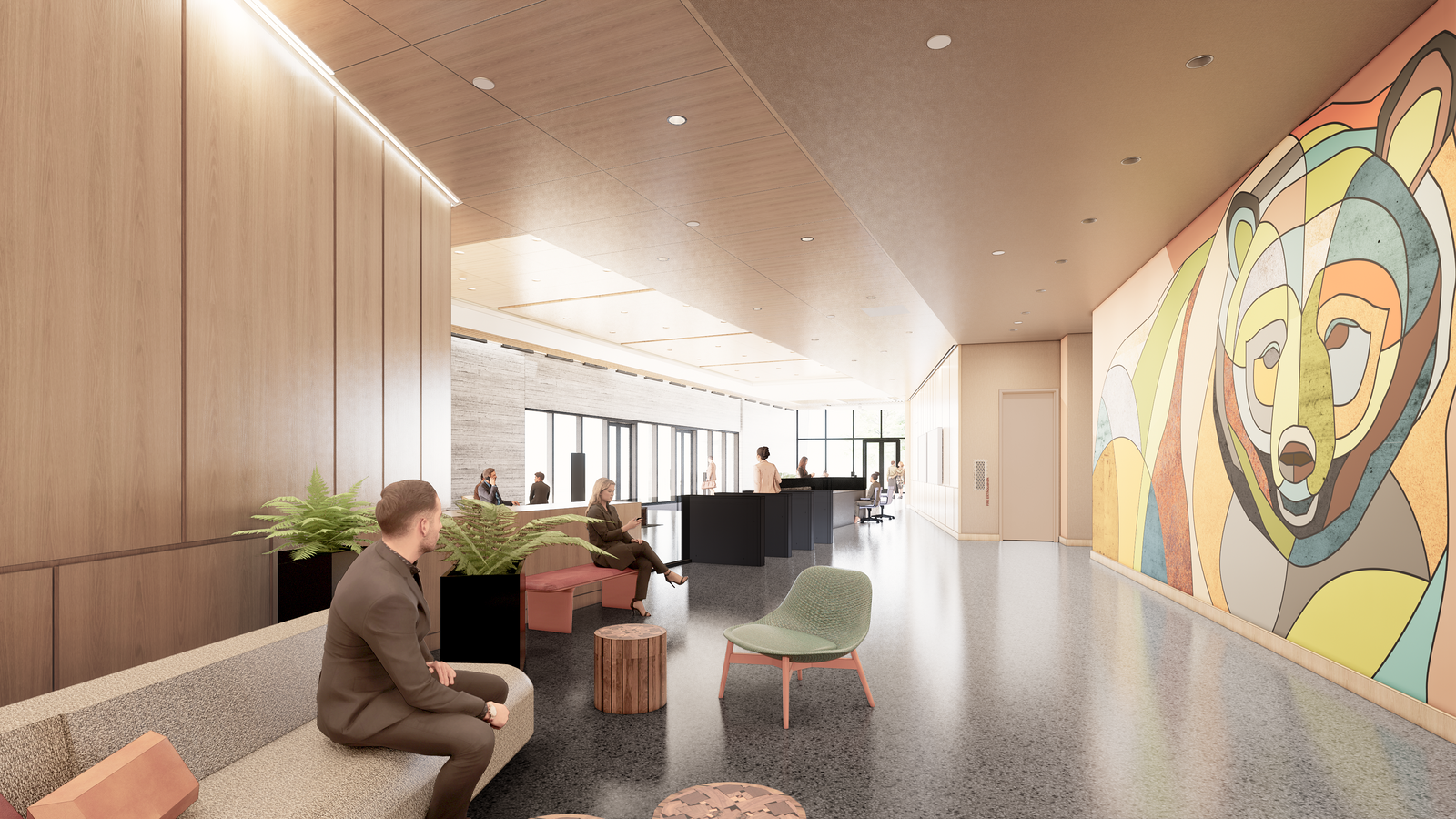
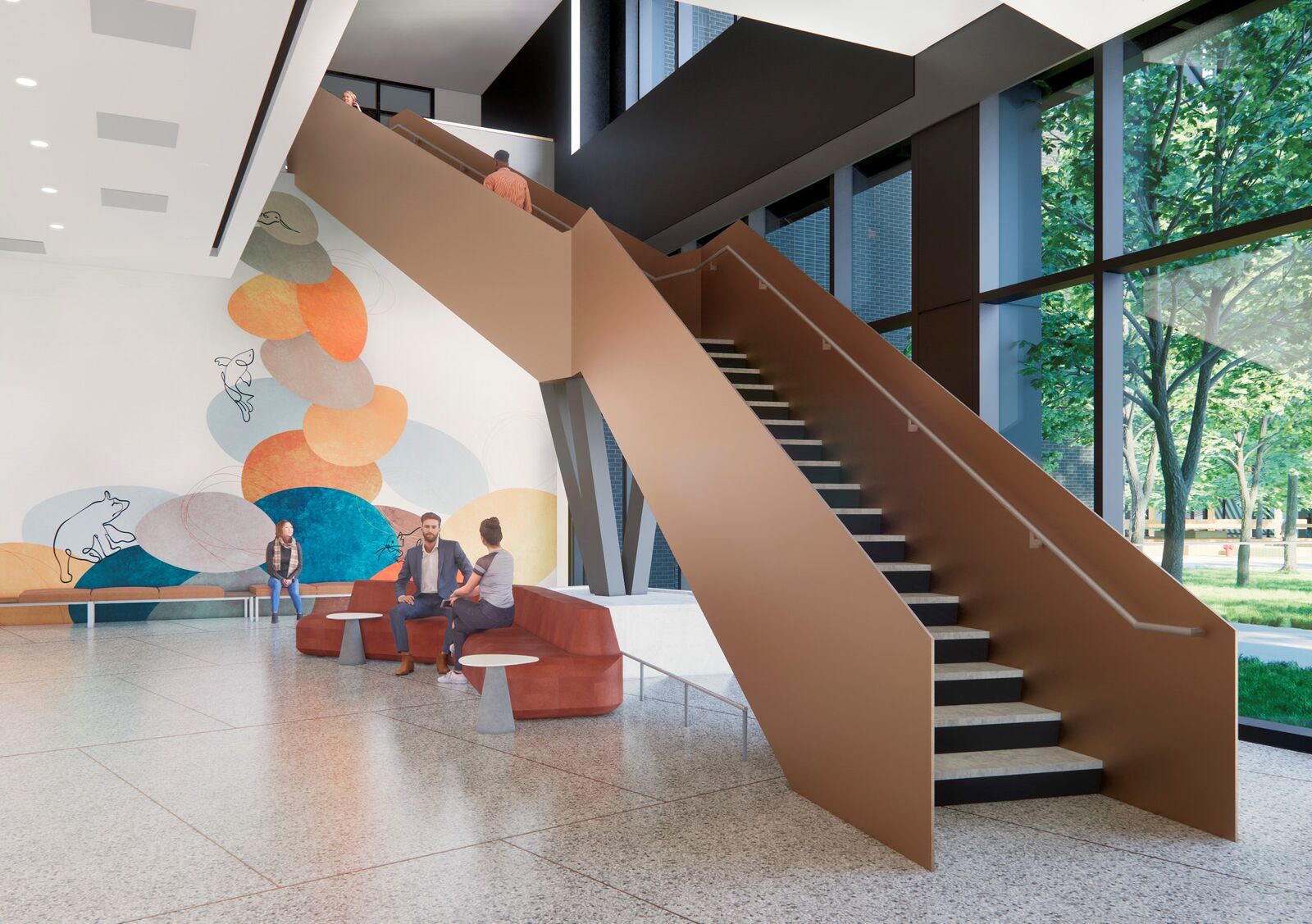
To create a connection with the evolving River District, biophilic elements in the wayfinding and environmental graphics reflect California’s flora and fauna. Nature is a main attraction to life in Northern California, so the intention is to infuse the interiors with biophilic design. This plays an integral role in improving the productivity and well-being of occupants throughout the complex.
Intended to emphasize accessibility and visibility, the carefully curated, large-scale custom graphic of the California grizzly bear in each lobby helps users navigate the complex and celebrate the identities of the individual spaces. Paying homage to the local art scene in Sacramento, close attention is paid to creating visual stimulation and variety in the expression of each bear, uniquely designed with use of different colors, patterns, gradients, and textures.
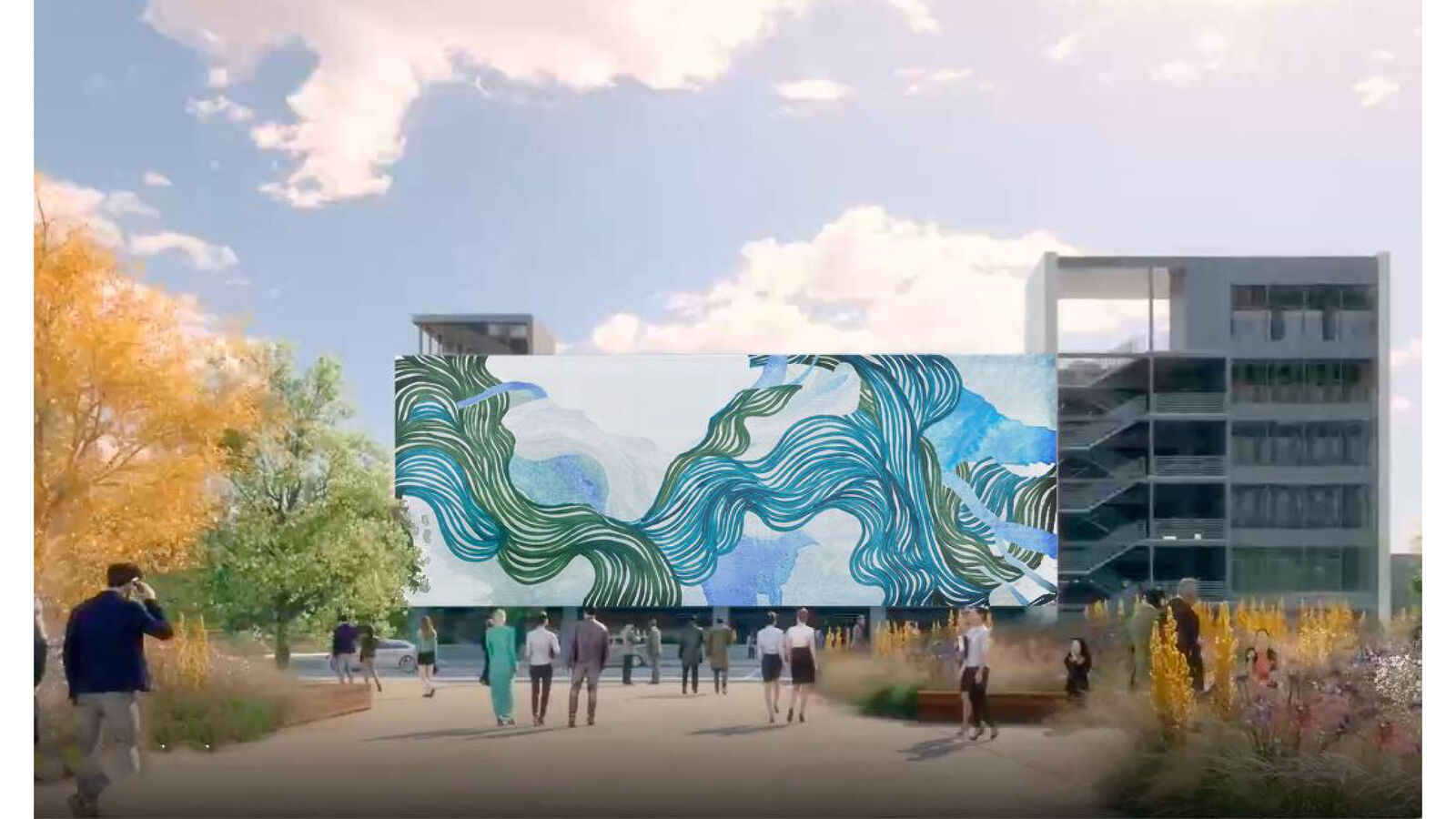
A mural by Paz de la Calzada will span the parking structure in an abstract expression of the confluence of the American and Sacramento Rivers. The design imagines the importance of water for life on Earth, and specifically to the City of Sacramento. As a metaphor for the flow of life, the artwork represents a blending of the past and future to express vitality and connection.
Storytelling Sparks Emotion
Brand storytelling through EGD has the power to evoke the emotions needed to deeply engage, spark interest, and instill loyalty between users and the brand. Illustrating why a brand exists, its history, who the brand effects and how, its mission, values, and even failures establish understanding, spark empathy, and foster genuine connection. These elements create true engagement with the brand, which enriches and enlivens the user experience. It also opens myriad opportunities to create custom installations, timelines, and brand-centric art that allow for deeply creative, beautiful brand expressions.
The University of California, Los Angeles (UCLA) Wasserman Football Center is a prime example. A cohesive branded environment was created for the football training facility by incorporating archive photography, stats, and memorabilia. This created an engaging and consistent visual vernacular to pass down the lore and legends of the program and paint a picture of the team’s culture that new recruits can envision themselves a part of and current athletes and resonate with and celebrate. Embracing tradition while expressing forward momentum, the graphics address identity, signage, and wayfinding; showcase living timelines and historic milestones; honor donors and recognize victories.
Through the environmental graphic pieces that share the team’s history, celebrate its heritage and strength in the NCAA, and acknowledge the players both past, present, and future, coaches, athletes, new recruits, and visitors are immersed in UCLA Football’s stories that are at once motivating and meaningful.
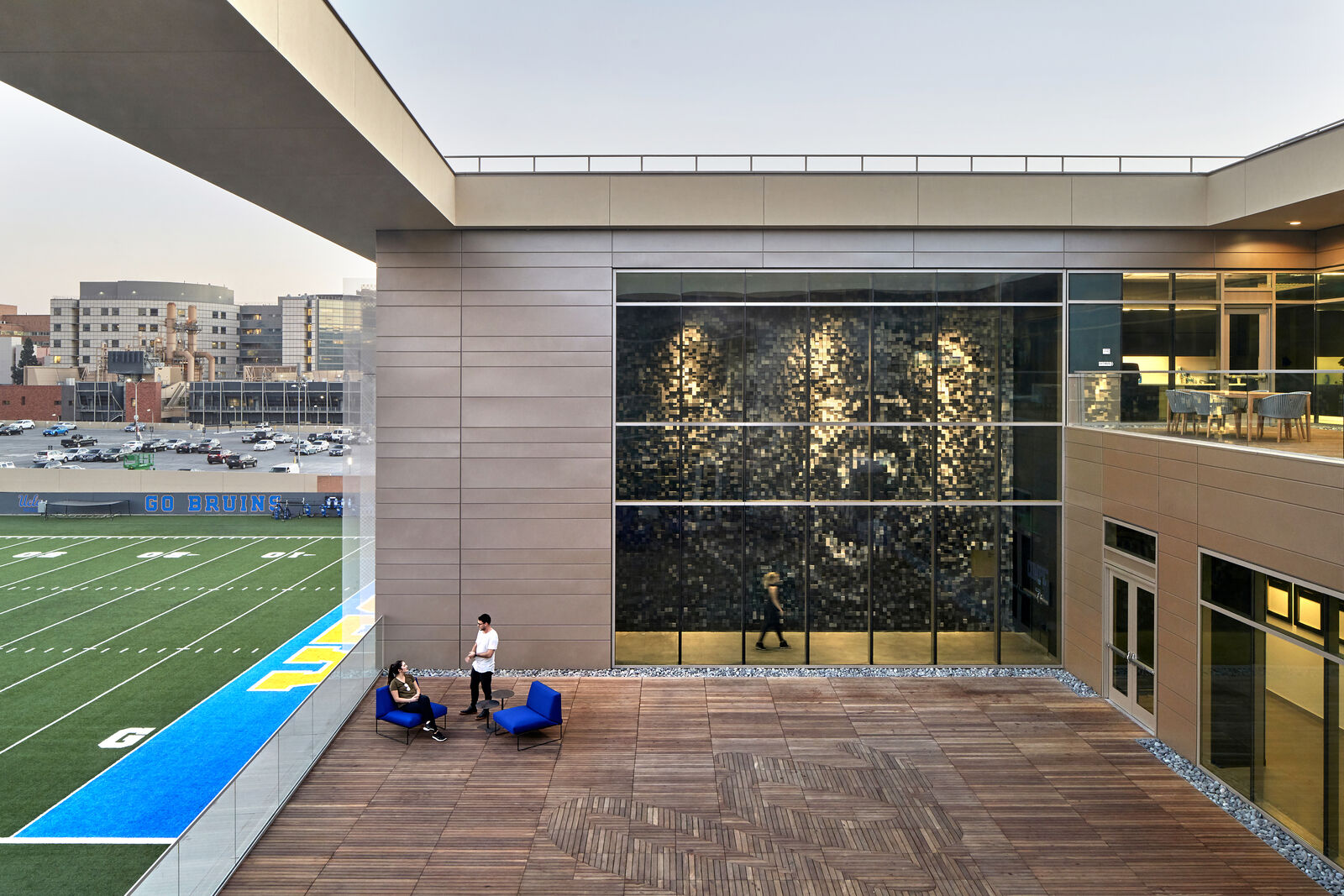
One of the most impactful installations is the ferocious roaring Bruin bear mosaic, stretching 37 feet between the second and third floors. Created with 11,520 three-and-a-half-inch wood blocks stained with various shades of grey, it recognizes the team’s “All American” honorees.
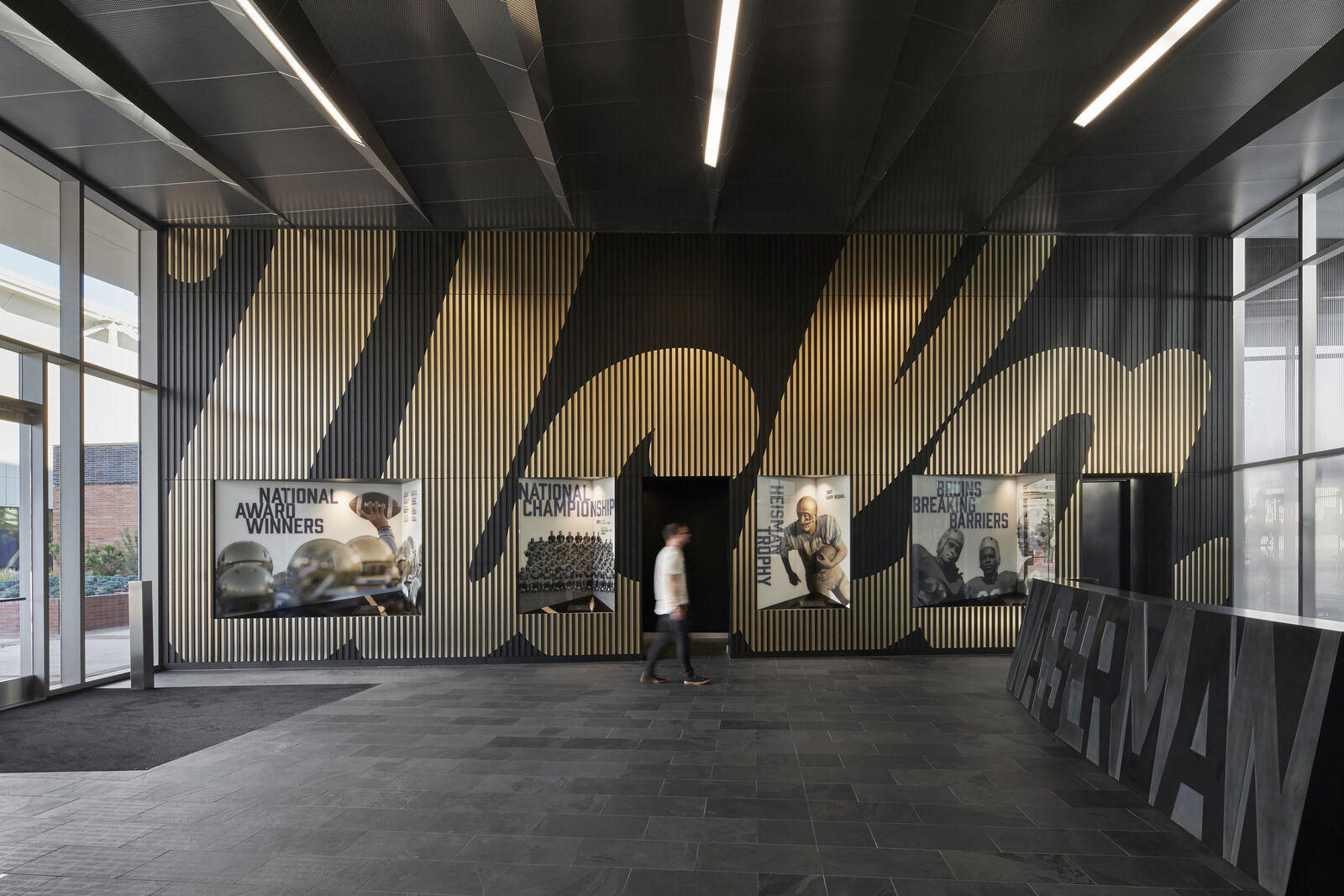
The double-height lobby features a black ribbed wood wall that was designed as an art exhibit with inlaid with a floor-to-ceiling brass logo and recessed multimedia vitrines displaying significant events in the program’s history.
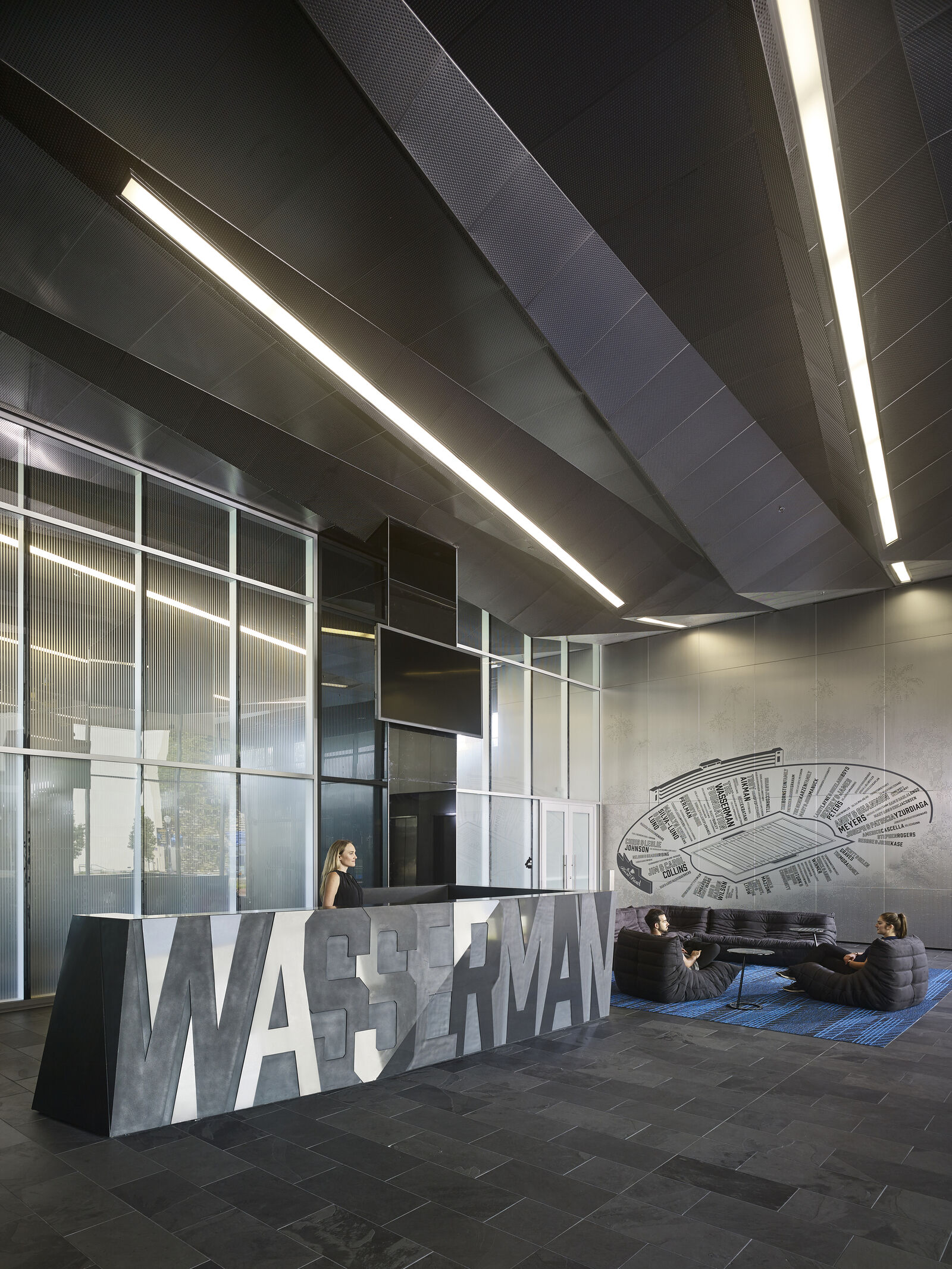
A series of metal panels perforated with a custom design spans the length of the ground floor. Known as the “Beach to Bowl Wall,” it represents the UCLA presence across Los Angeles, from Santa Monica to their Pasadena stadium, the Rose Bowl.
Enhancing Architecture Through Artistic Expression
Integrating EGD seamlessly with the architecture and interior design is the cornerstone of ZGF’s design approach. Spatial moments created by EGD shine when they complement and enhance the structures that feature them, including their form, materials, and aesthetic nature. Collaborating closely with architects, interior designers, and stakeholders to ensure a harmonious relationship between the physical environment and the graphic elements is imperative. The result is a cohesive, unified brand experience that blurs the boundaries between the space itself and the graphics.
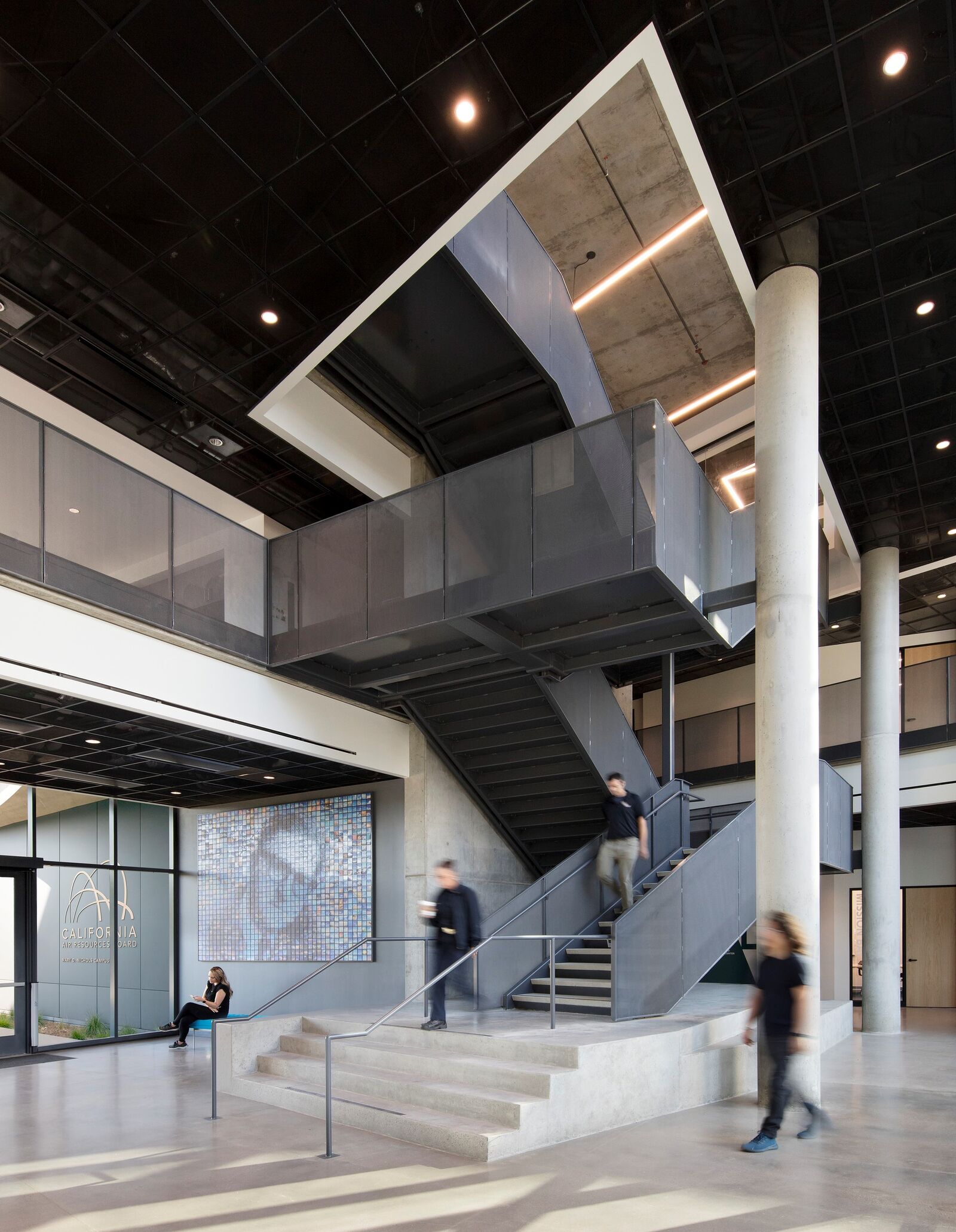
At California Air Resources Board’s (CARB) Southern California Headquarters, Mary D. Nichols Campus, the EGD fuses CARB’s storied brand with the architecture and interior design, while providing a guide through the facility’s sprawling footprint. At 403,000 SF spread across just three stories, it was imperative to make the user journey through the expansive space scalable and navigable for daily use. Users can easily keep themselves oriented through wayfinding, views to the outdoors from all spaces, and a series of staircases and bridges that makes the scale manageable for employees and visitors.
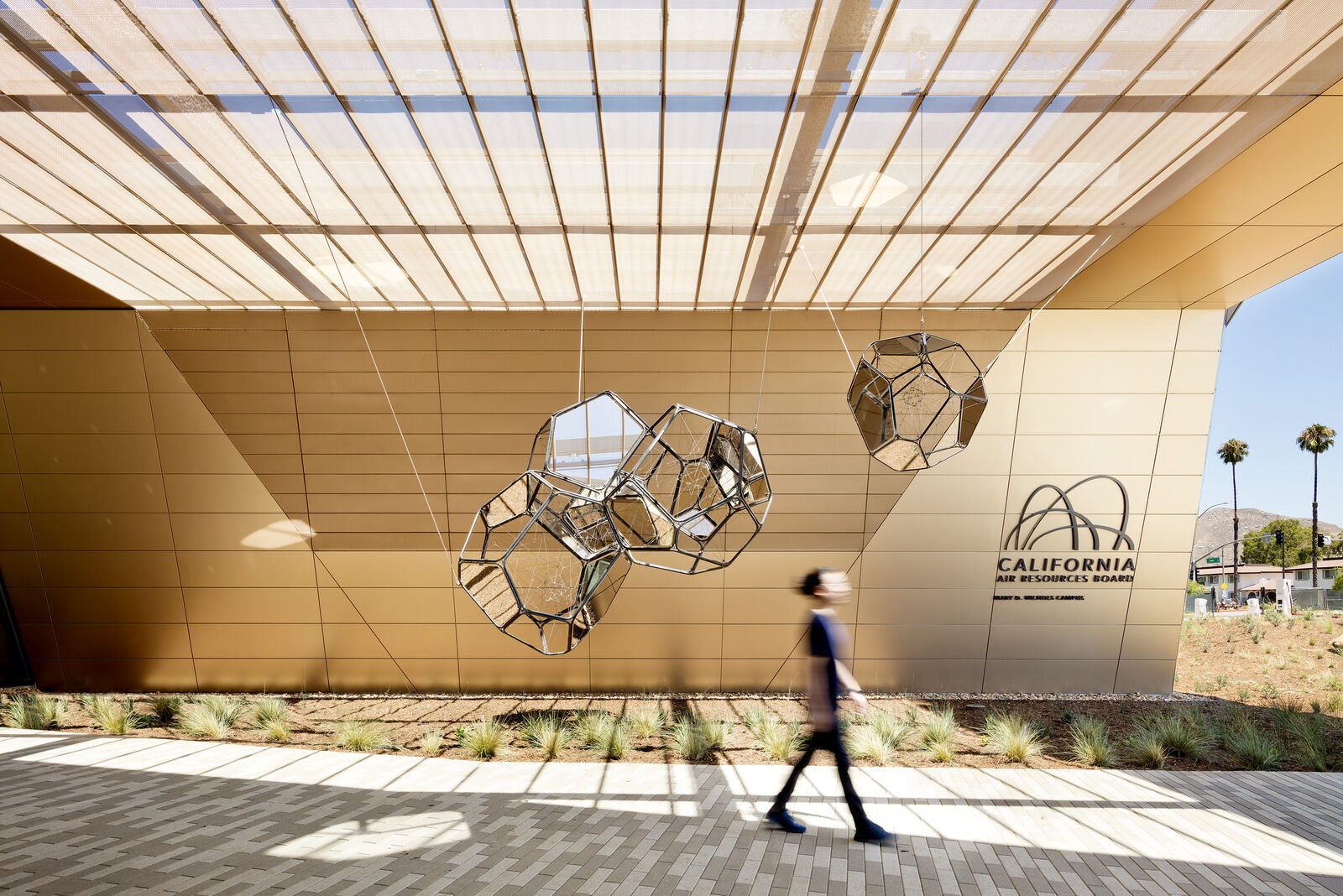
An art installation by Tomas Saraceno suspends in CARB’s main entrance. The mirrored, geometric forms appear to be floating, presenting a sculptural representation of the idea that air molecules project a reflection of the state of our natural environment.
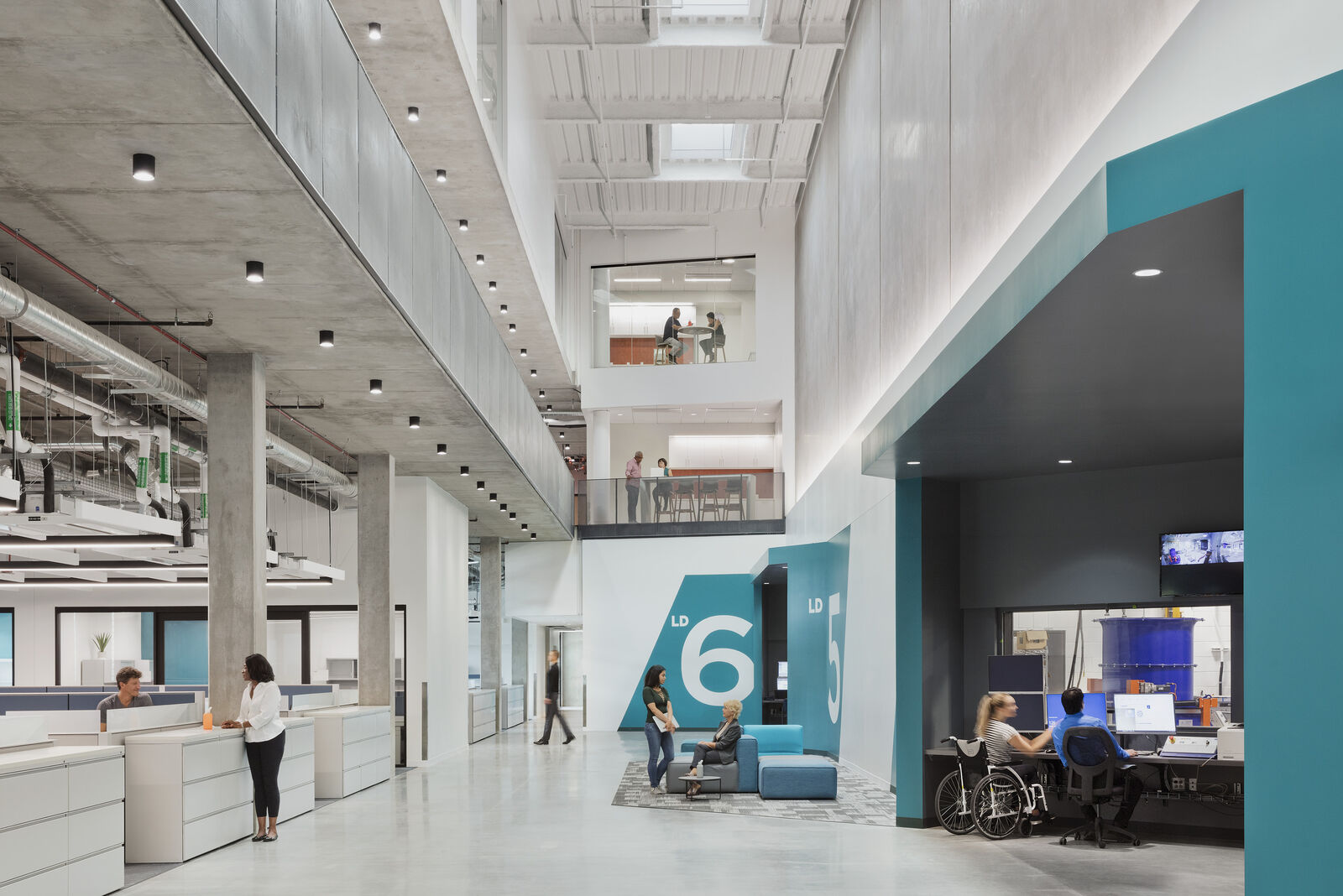
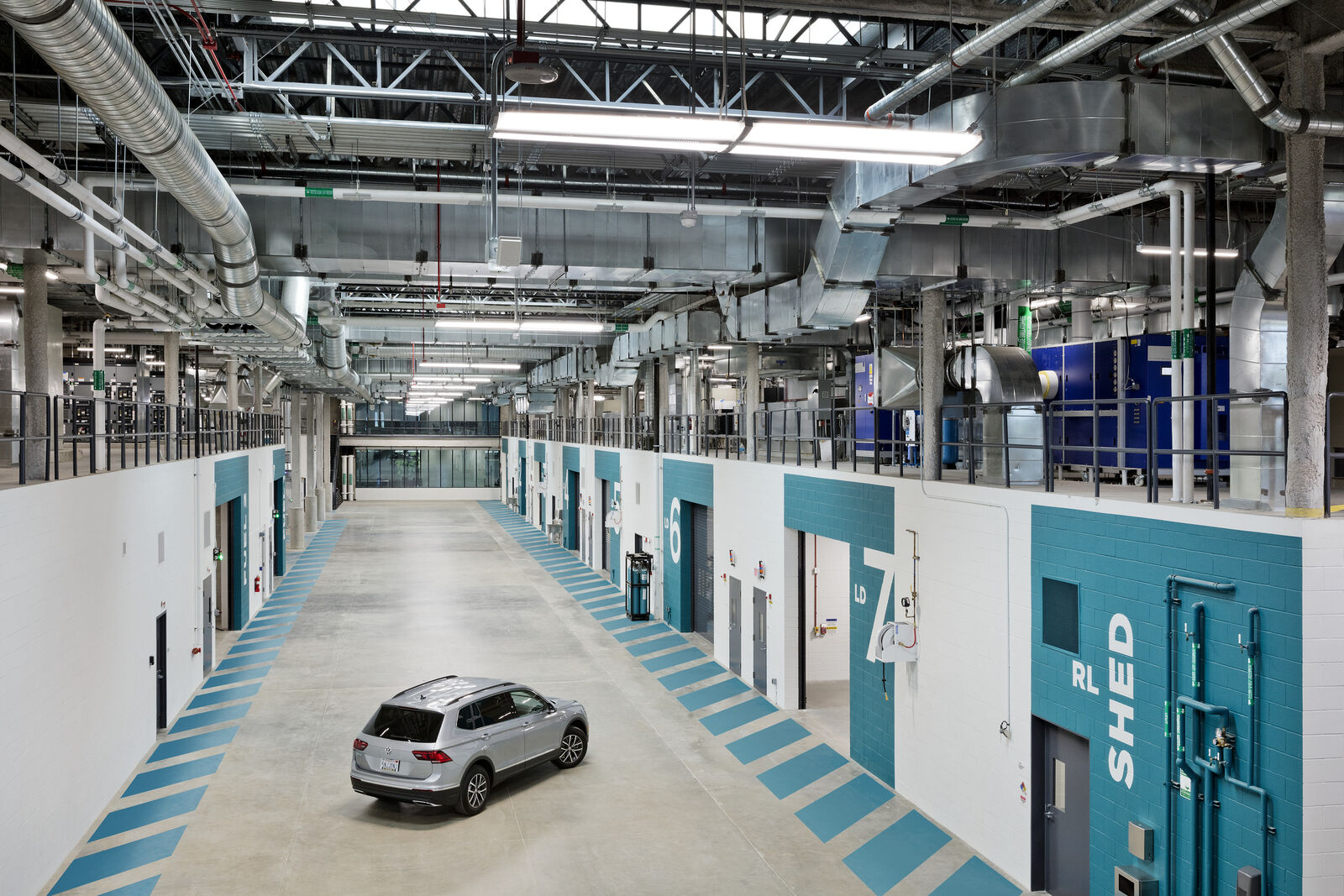
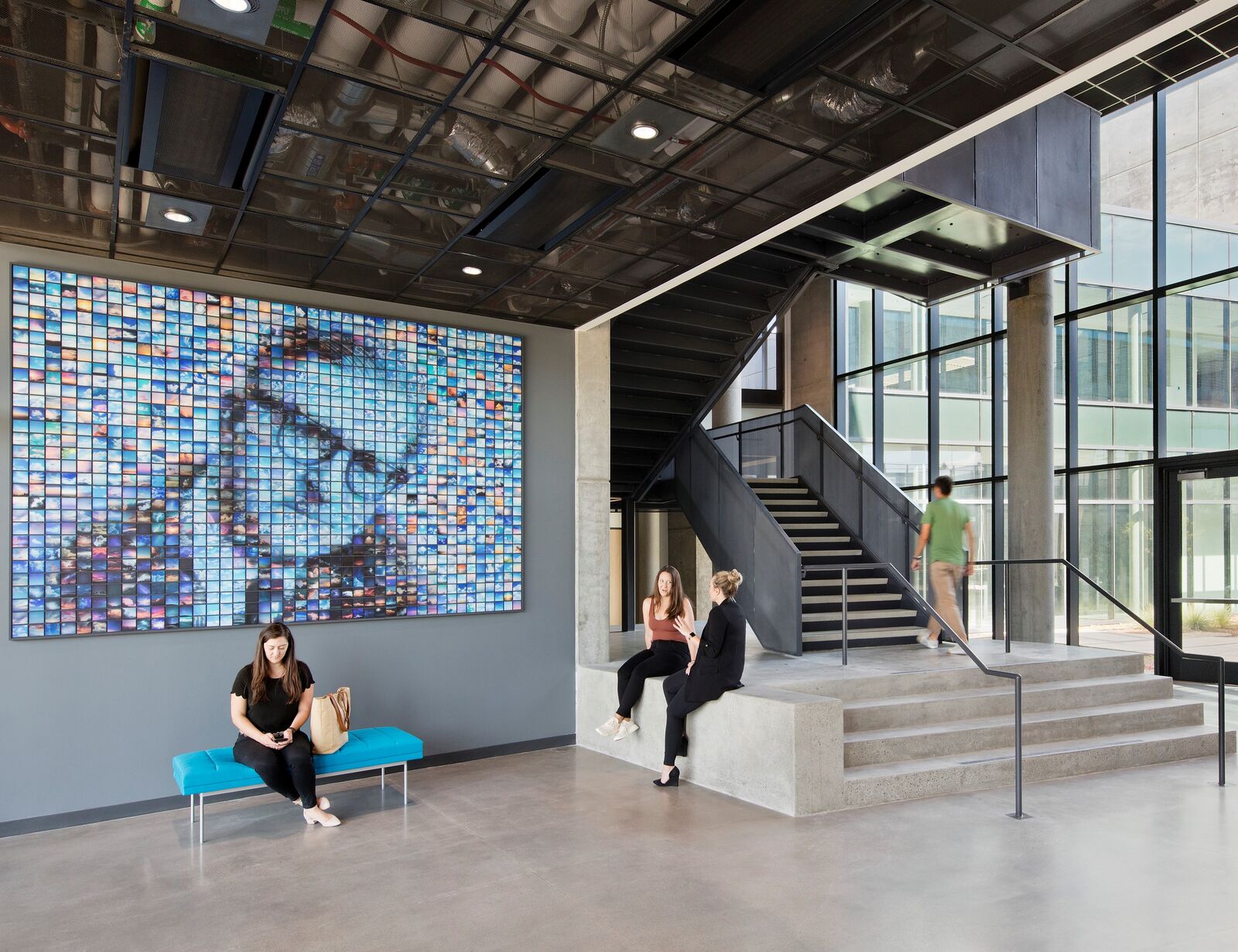
The wayfinding environmental graphics draw on CARB’s brand colors—teal, blue, and golden yellow—and the hues and angular forms defined by the exterior architecture. Bold numbers and lettering in white contrast with the color palette to create eye-catching directional signage and location markings throughout the facility. At the employee entrance a large, custom-designed portrait commemorates Dr. Arie Jan Haggen-Smit, known as the “father of air pollution control” and the first Chairman of CARB, created by carefully assembling more than 1200 digital sky views.
With any environmental graphics application designed by ZGF, our core driver for experience design relies upon a seamless integration of story that fuses graphic design with architectural and interior design to create a cohesive, enriched user experience. An intimate understanding of the brand is important, but an even closer understanding of the audience who will experience the brand is the writing on the wall.

University of California, Los Angeles, Wasserman Football Center
Amazon / JBG Smith, HQ2 at Met Park
Department of General Services, May Lee State Office Complex
Clifford L. Allenby Building