The Future of Labs is Mass Timber
Reducing vibration to accommodate highly-sensitive instruments like mass spectrometers and powerful bench microscopes is a big deal that's a small number. Two thousand micro inches small — or half the thickness of a Post-It note. That's how much a building can vibrate per second when someone is walking down a nearby hall or when trucks are rumbling on adjacent roads.
For decades, only concrete offered the necessary stability, making laboratories cold, harsh places. That's changed. Mass timber, a growing alternative to concrete and steel, promises not only superior sustainability at a competitive cost but also an opportunity to embrace a new aesthetic.
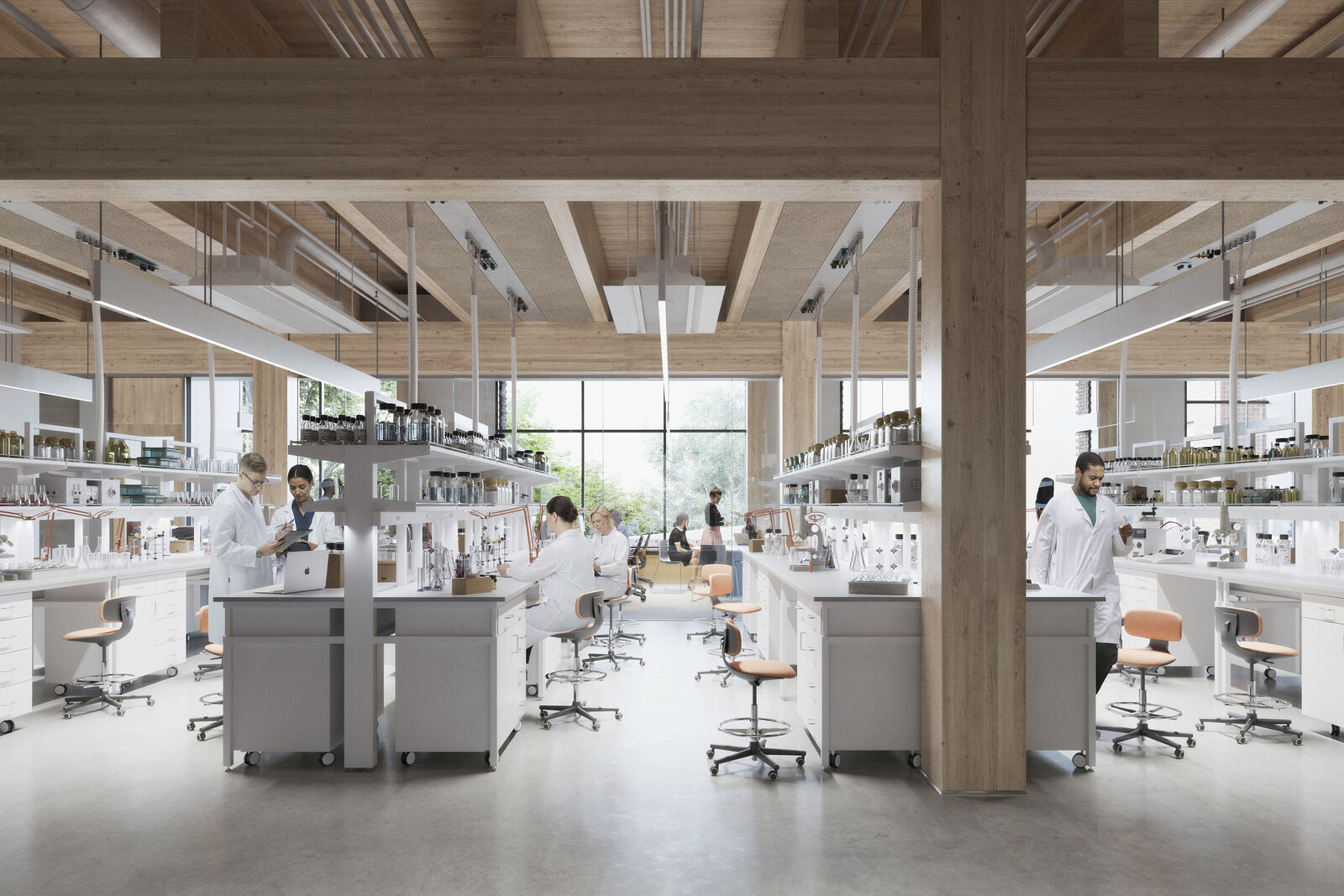
Once thought unfeasible, mass timber can now match the 30x30 structural grid that allows for lab module flexibility.
"The preconceived ideas we had about what a lab building is and what the constraints are disappear when you're doing this kind of laboratory with exposed wood."
Ted Hyman, ZGF Partner
Future of research facilities
That combination drove ZGF's design of the Jen-Hsun Huang and Lori Mills Huang Collaborative Innovation Complex at Oregon State University, the first all mass-timber experimental research laboratory in the U.S. The complex not only meets rigorous vibration standards, 2000 MIPS, but helps the university toward its 2025 Path to Carbon Neutrality with a warm, inviting look unlike any other lab.
In the efforts to decarbonize buildings, research laboratories have been a stubborn challenge. Typically, those attempts have focused on a hybrid approach of steel or concrete with limited portions of wood structure, or relegating mass timber to non-laboratory wings without vibration requirements. The Huang Collaborative Innovation Complex lab doesn't compromise. ZGF worked with the university's expertise in wood and regional forestry practices leading to collaborations with the manufacturer and university testing labs to achieve certification for the use of innovative mass-plywood panels for structural members.
Using mass timber throughout the complex, the project’s cradle-to-grave embodied carbon for the typical structural bay is reduced by 108% compared to just 55% when using the hybrid concrete and timber approach.
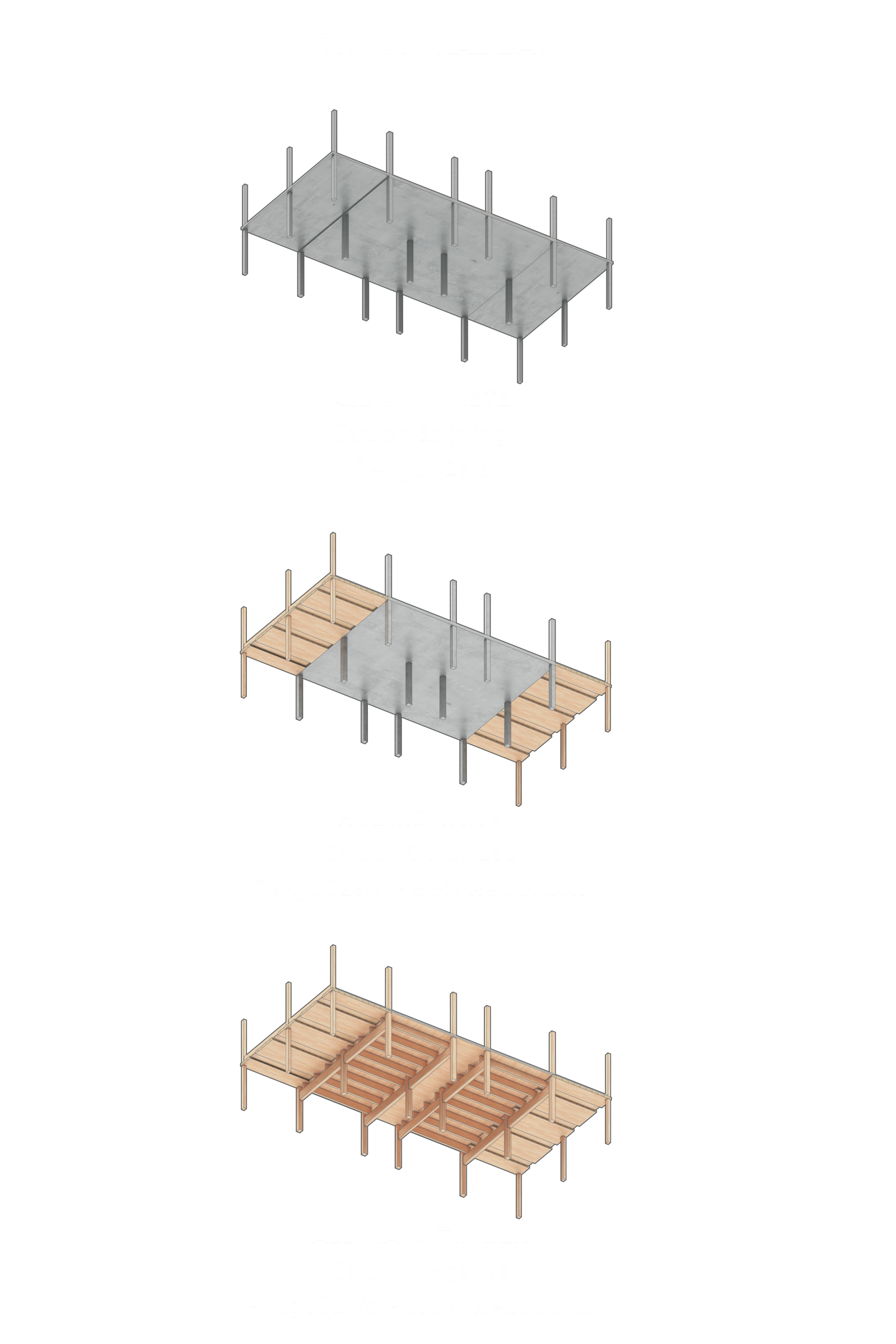
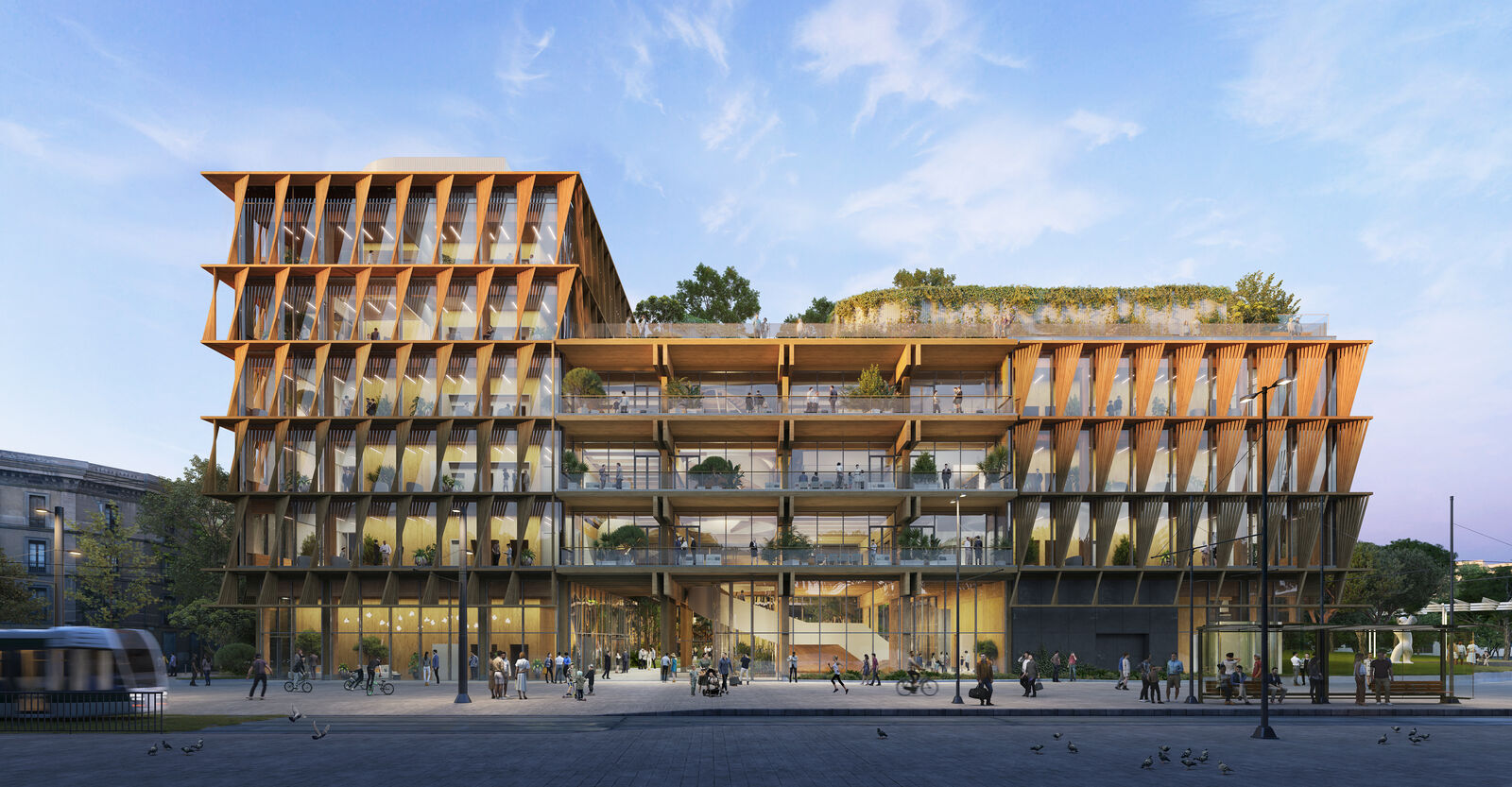
Finding those solutions for the Huang Collaborative Innovation Complex led to changes in another ZGF project, the Mercat del Peix Research Center in Barcelona, which transitioned from a hybrid design to all mass timber. The Center's building envelope and innovative placement of mechanical systems, first pioneered with the Oregon project, will significantly reduce both embodied and operational carbon, decreasing the ventilation air required and energy demand by more than 60%.
Those answers to the climate crisis embody the Center's mission to research biodiversity, biomedicine, and planetary well-being and develop interdisciplinary projects in the economics and governance of climate change, biodiversity loss, and global law and governance. Steel and concrete account for roughly 21% of global greenhouse gas emissions. Utilizing bio-based structural materials that take less carbon emissions to produce and sequester carbon helps position the Center as a leader in addressing climate change, starting with its design and construction.
Originally planned as a hybrid concrete and mass timber structure, the Mercat del Peix Research Center’s switch to all mass timber greatly reduced the project’s impact, jumping to a 76% reduction in embodied carbon emissions, compared to 12% for the hybrid solution.
Applying decades of experience
Figuring out how to use mass timber is something ZGF has been doing for 30 years, including at the Bellevue Regional Library, which opened in 1993. Designing laboratories is something we have been doing for even longer. Solving the riddle of reducing vibration enough to use mass timber in those laboratories is a new frontier being forged by the project teams.
What is mass timber? Large panels, posts, and beams are glued under pressure or nailed in layers. Stacking the wood's grain perpendicular creates strength making it a substitute for concrete and steel without the greenhouse gas emissions generated by those materials and with the bonus of sequestering carbon in the wood for decades. To reduce its impact, the wood can be locally and sustainably sourced to decrease transit miles and support local economies.
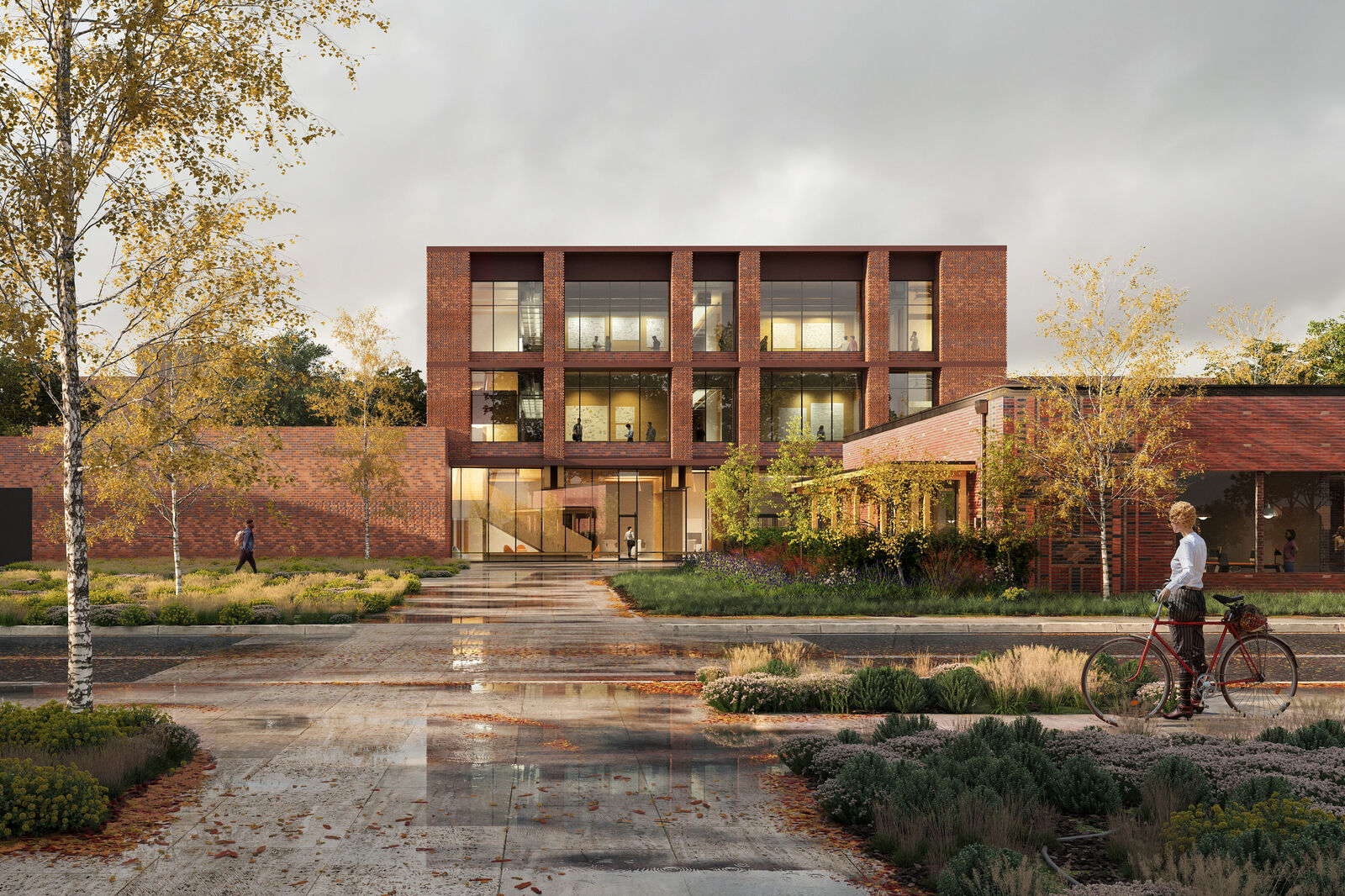
At the Huang Collaborative Innovation Complex, labs are organized on two stories above ground in a bar shape oriented to the campus grid, maintaining the classical proportions of surrounding historic buildings.
The key to making mass timber a solution for laboratories like at Huang Collaborative Innovation Complex is coordinating with the project's partners from the outset. That meant working with the contractor, Anderson Construction, and structural engineer, KPFF, to develop a design that added a line of joists between beams and integrating the mechanical systems to reduce vibration.
Locally sourced mass plywood panels ensure necessary stiffness and have the added benefit of fulfilling the university's sourcing and equity desires. Because of supply chain issues in acquiring concrete, mass timber proved more cost effective in this case. The prefabricated materials can be erected quickly onsite, cutting months off construction time, another savings. Once in place, the mass timber is left exposed, and there’s no need for additional finishes like drywall.
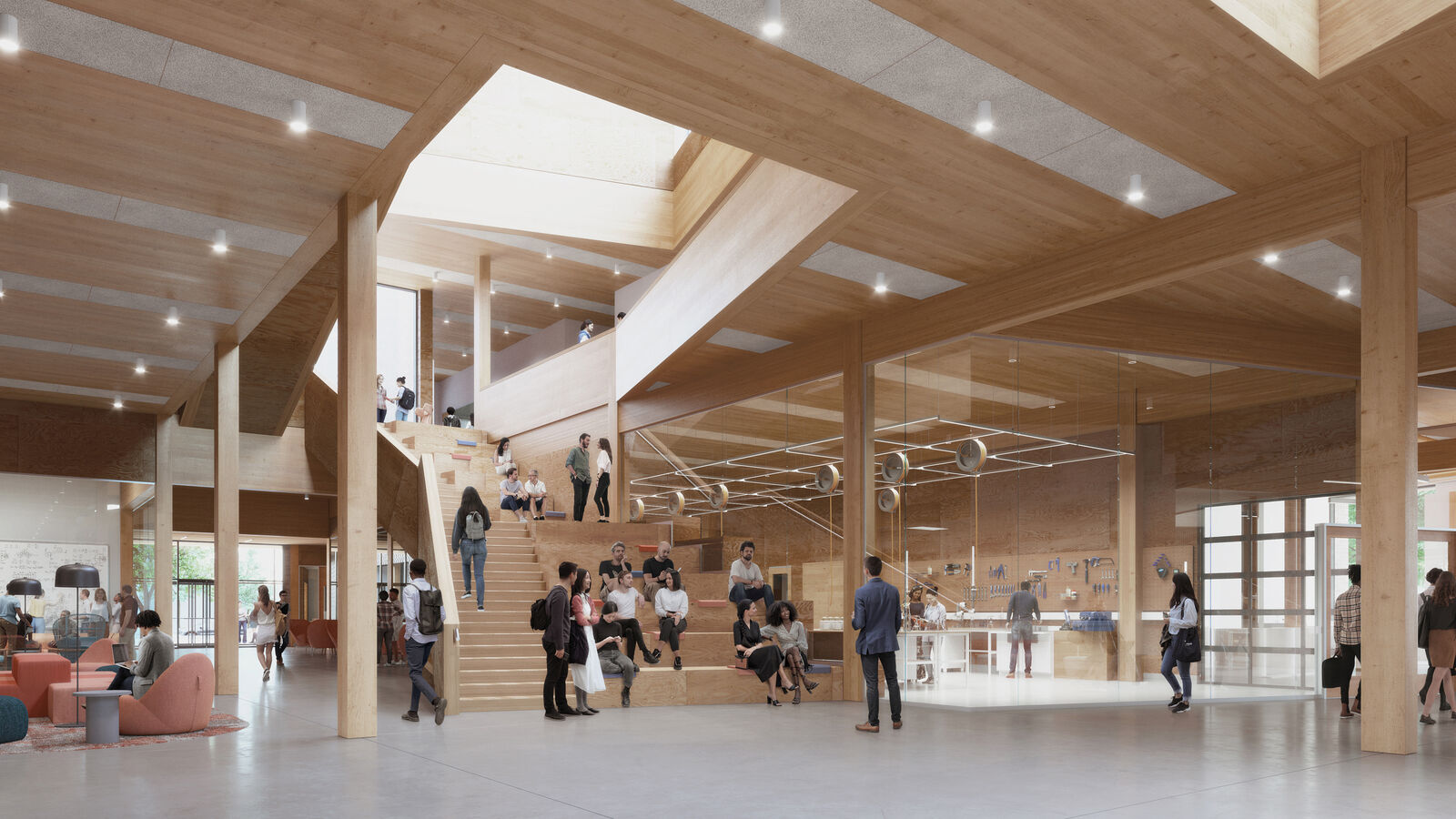
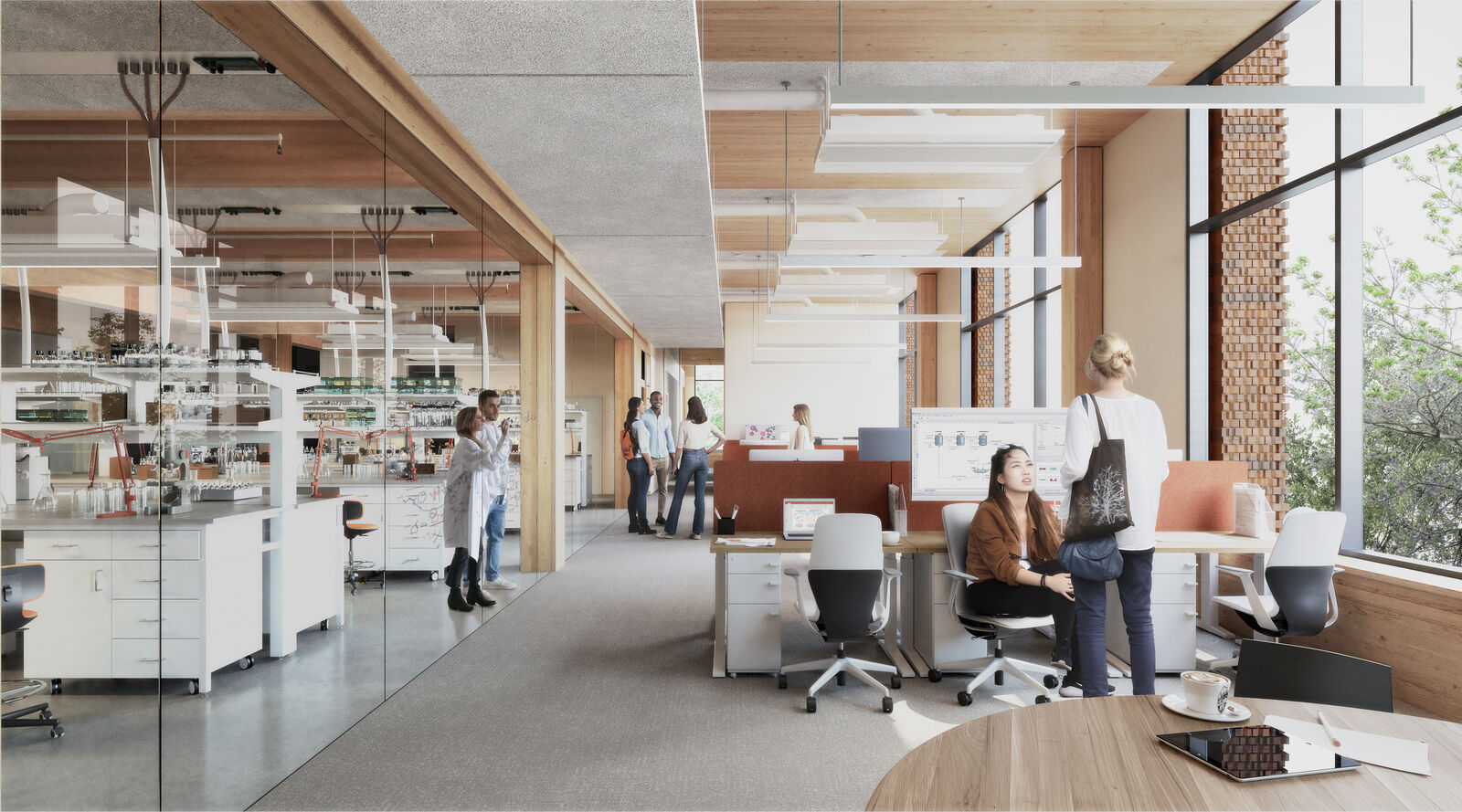
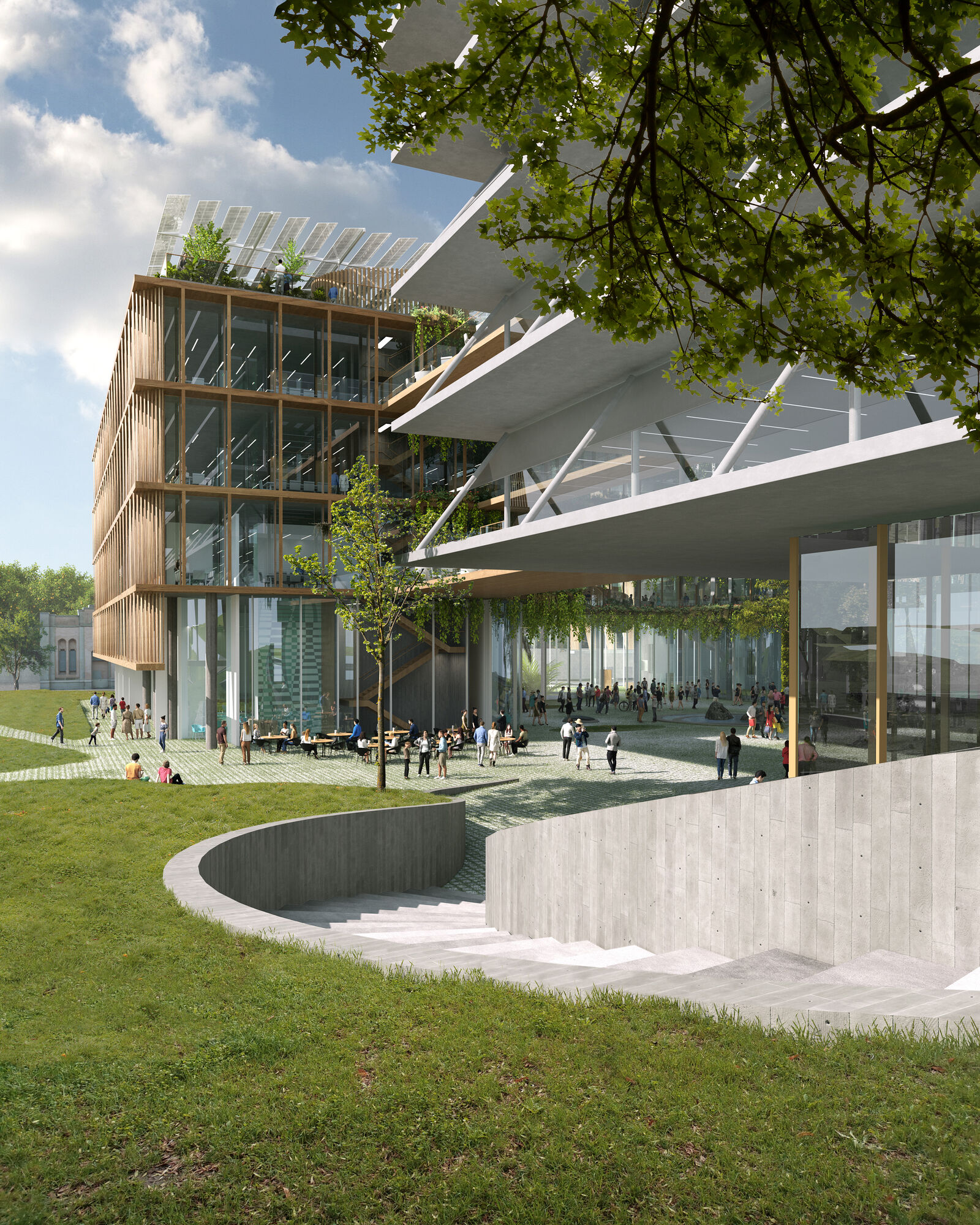
Left: An exposed mass timber atrium and central stair anchors the Huang Collaborative Innovation Complex. Interior spaces at various scales provide quiet space for individual work and social areas for groups to gather.
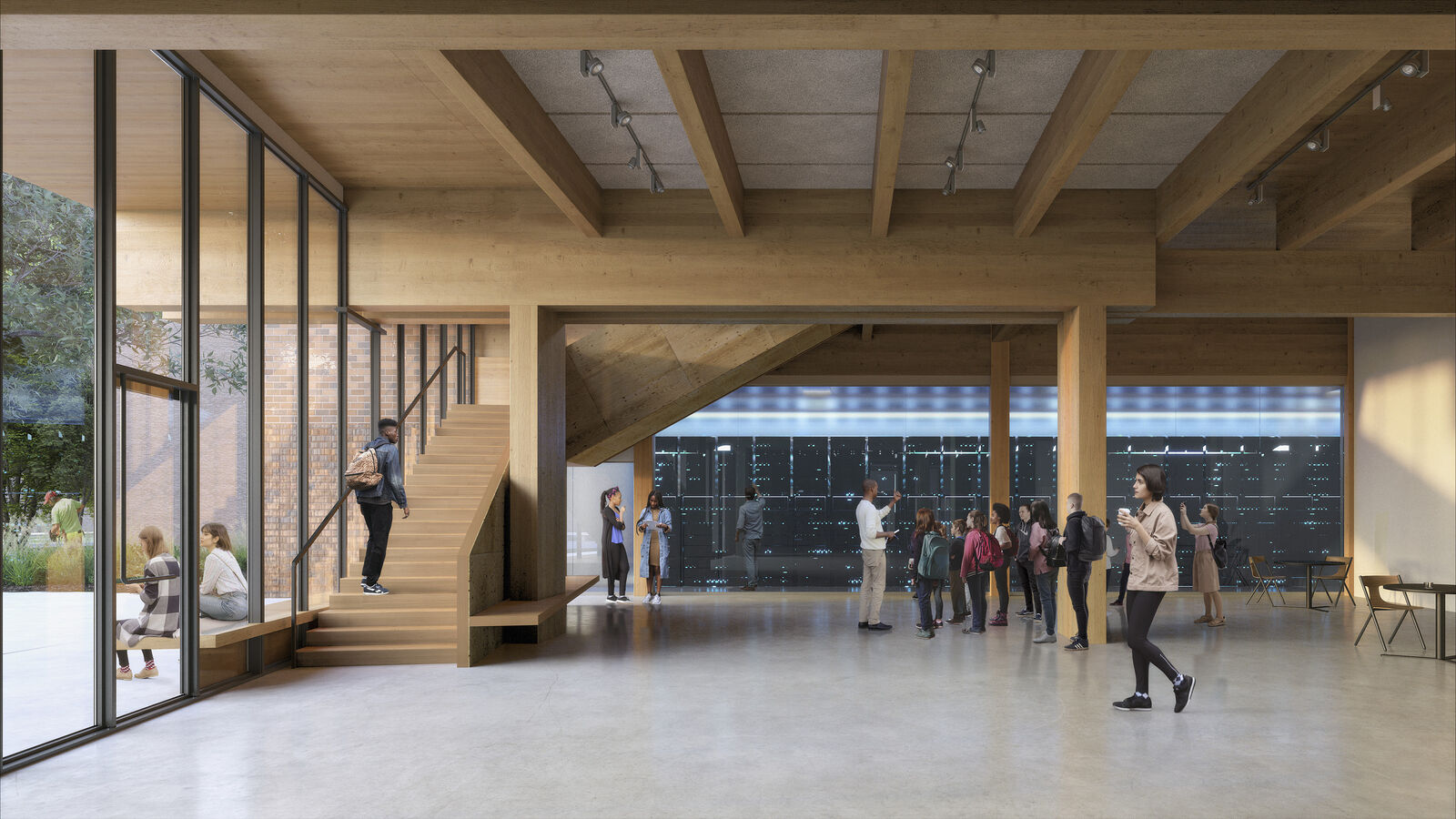
Above: The structure will also house—and showcase on its public ground floor—one of the world's fastest university supercomputers and an associated heat recovery system.
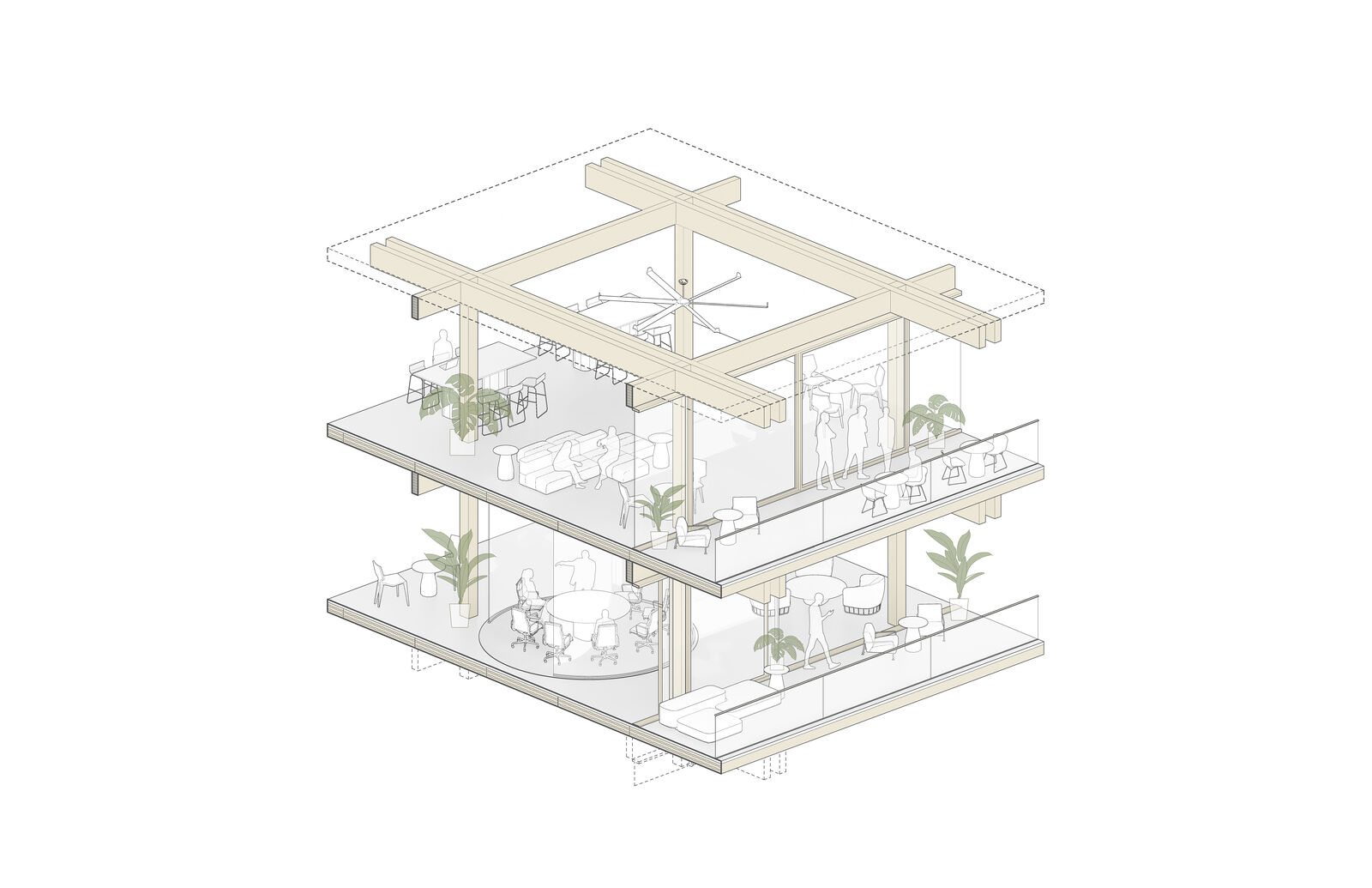
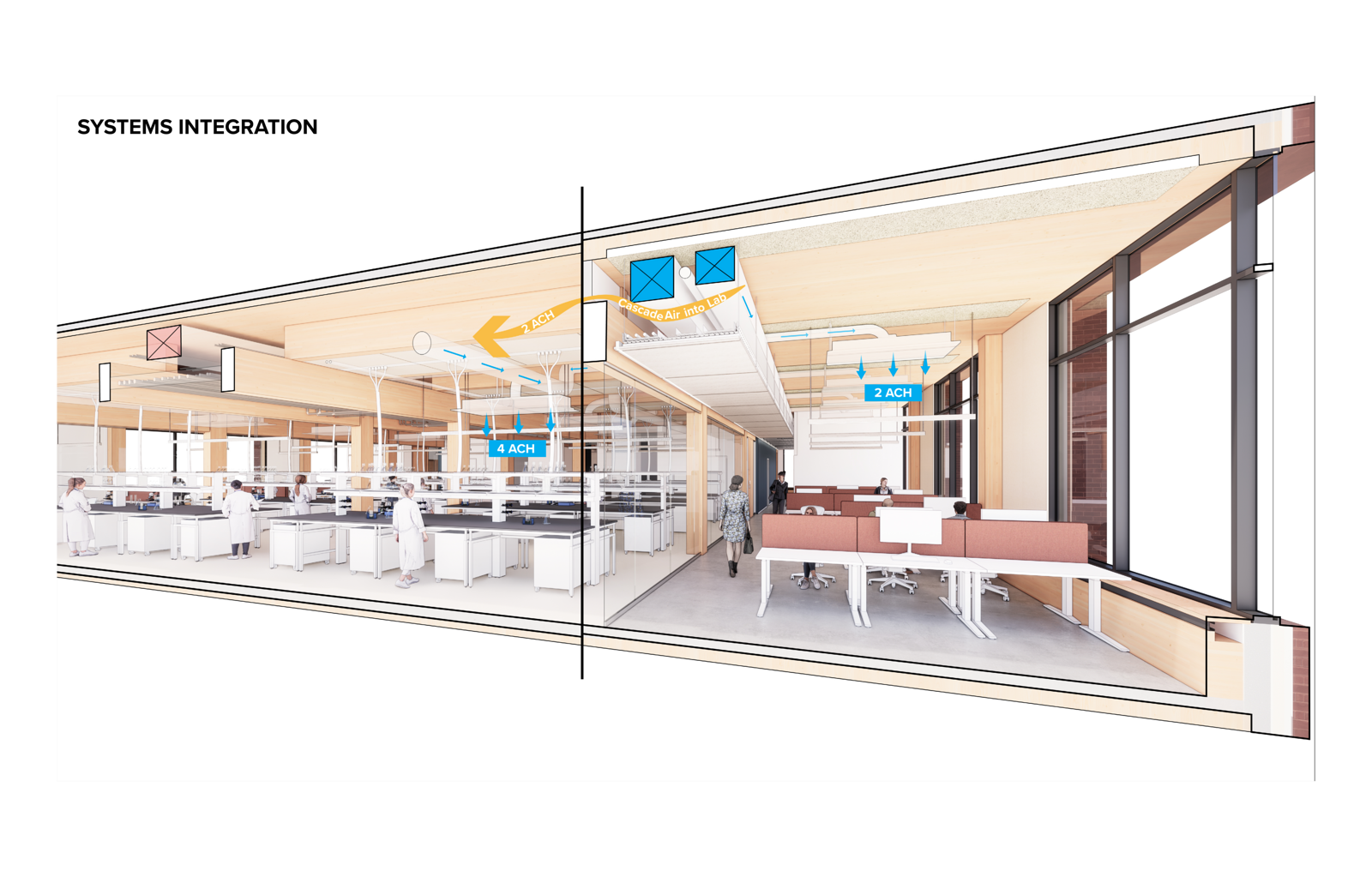
Below: A section diagram of the complex laboratory design. Highlighted aspects showcase how the integration of systems can meet stringent vibration, ventilation and exhaust requirements while still providing a warm and open interior experience.
Benefits for researchers and institutions
The benefits of mass timber extend beyond initial construction. Laboratories are typically designed in modules. They evolve over their lifetimes. The Huang Collaborative Innovation Complex laboratories, for instance, are nestled in flexible neighborhoods that can be adapted to either experimental (wet) research or computational (dry) research. Integrating the mechanical systems means spaces are more adaptable when the inevitable renovations occur. And because the mechanical systems are so well organized, changes are cheaper and easier. There's no ceiling covering a mass of wires. Instead, piping and conduit routings are streamlined by a network of utility racks lined with acoustical panels, providing access as well as sound absorption.
There are also qualitative advantages. Research shows wood is soothing, leading to lower stress, better mental health, and even improved cognitive function, key in a place where people may work long hours and require precision focus. Those warm spaces create a dramatic and appealing contrast to traditional labs, an attraction when recruiting laboratory staff and students, for research universities like Oregon State.
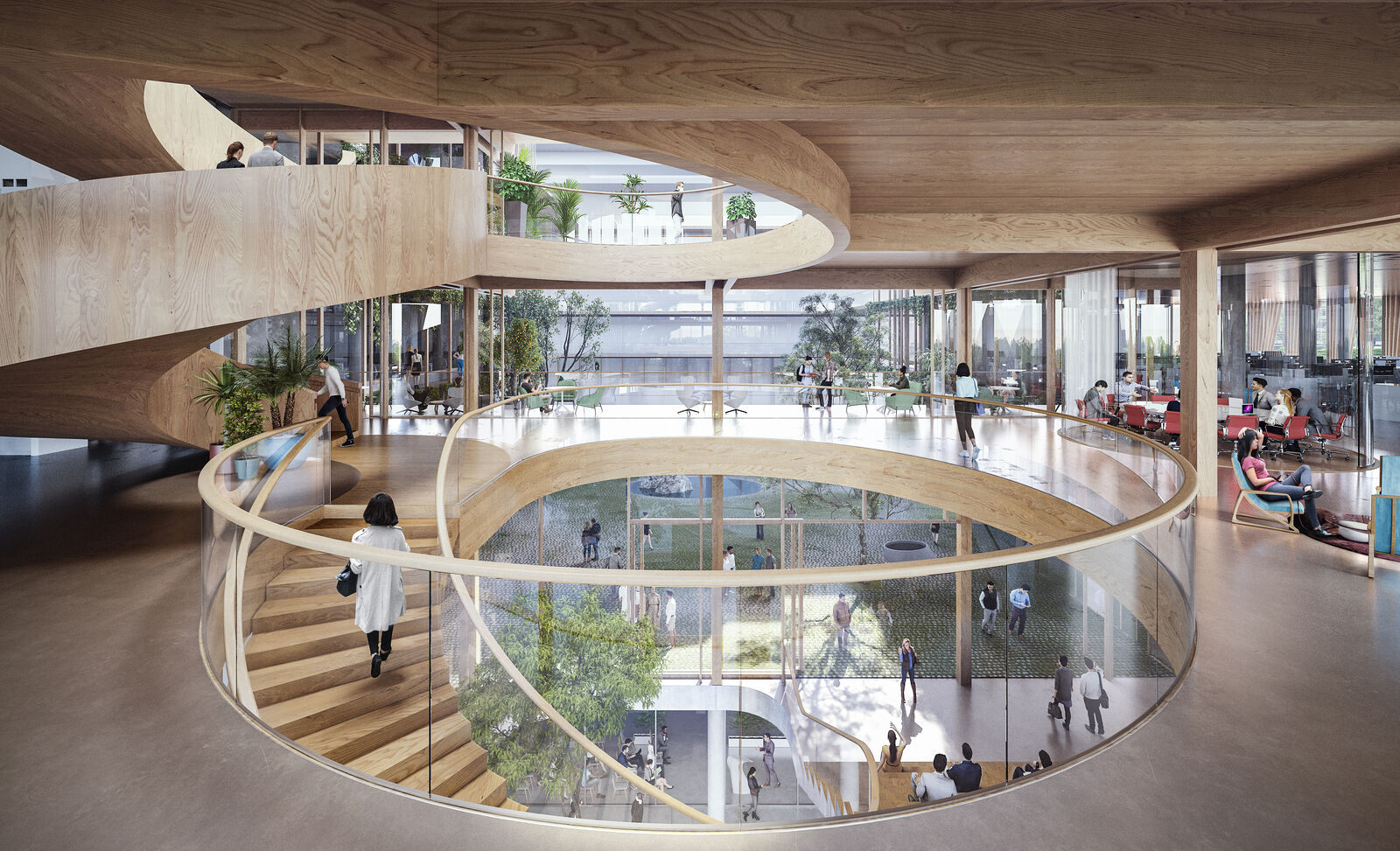
The design for Barcelona's Mercat del Peix Research Center links two research buildings with a middle connecting bar and a sweeping mass timber stairway.
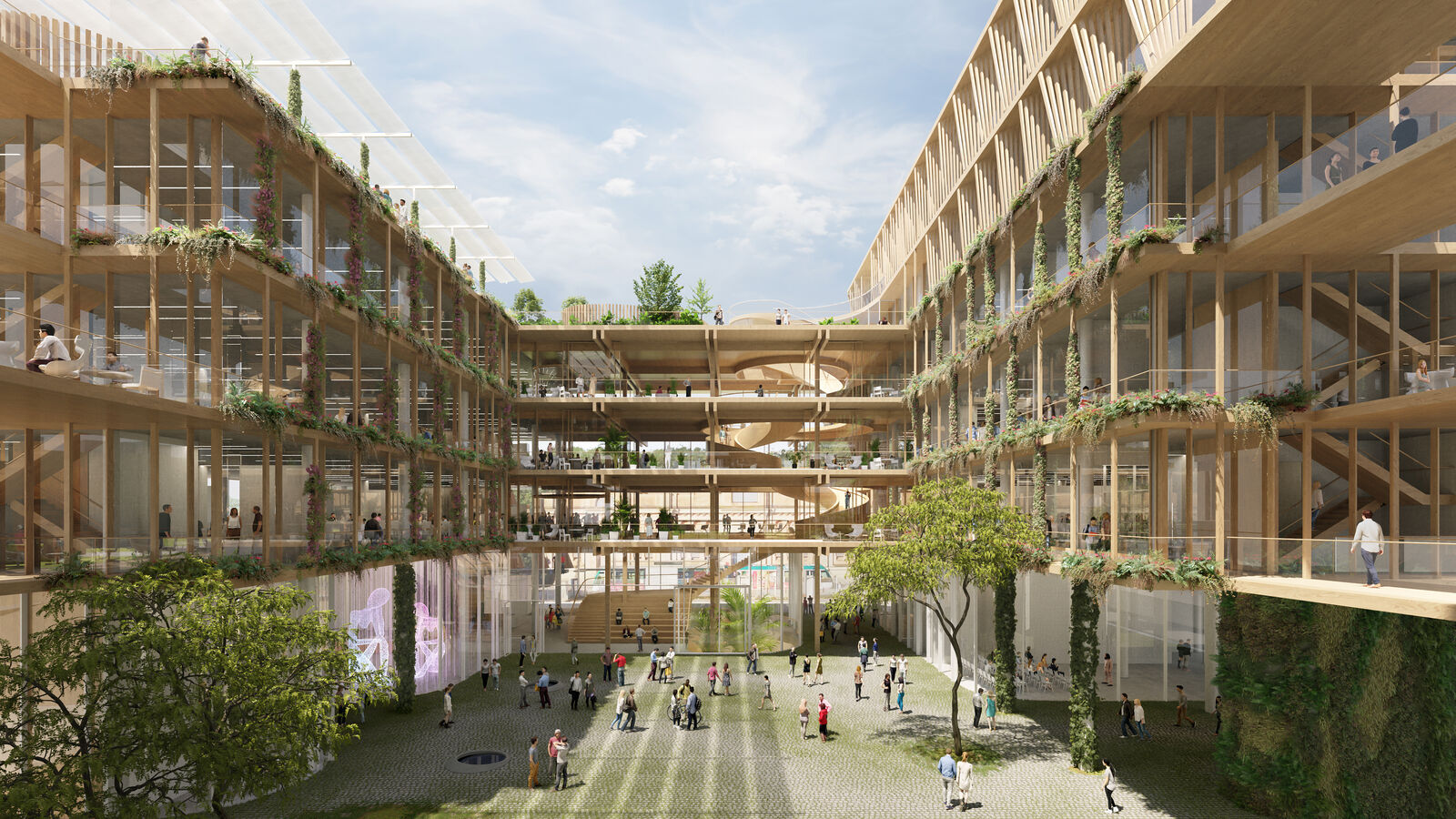
"Mass timber is a great solution for lab buildings. Wood structures require early planning and thoughtful integration of the mechanical systems - forcing you to be more rigorous about how you design - resulting in higher design quality and more efficient buildings."
Vlad Pajkic, ZGF Partner
Eliminating the need for finishes like drywall and hung ceilings cuts costs, but it also adds complications. There's no covering up ducts or pipes. There's no disguising mistakes or sloppy work. That requires critical attention to detail from the beginning, one fostered by the experience working with mass timber and designing laboratory facilities that ZGF brings to projects.
Only a few years ago, using mass timber in laboratories seemed impossible. Now, in the right place, it is the future of research facilities.
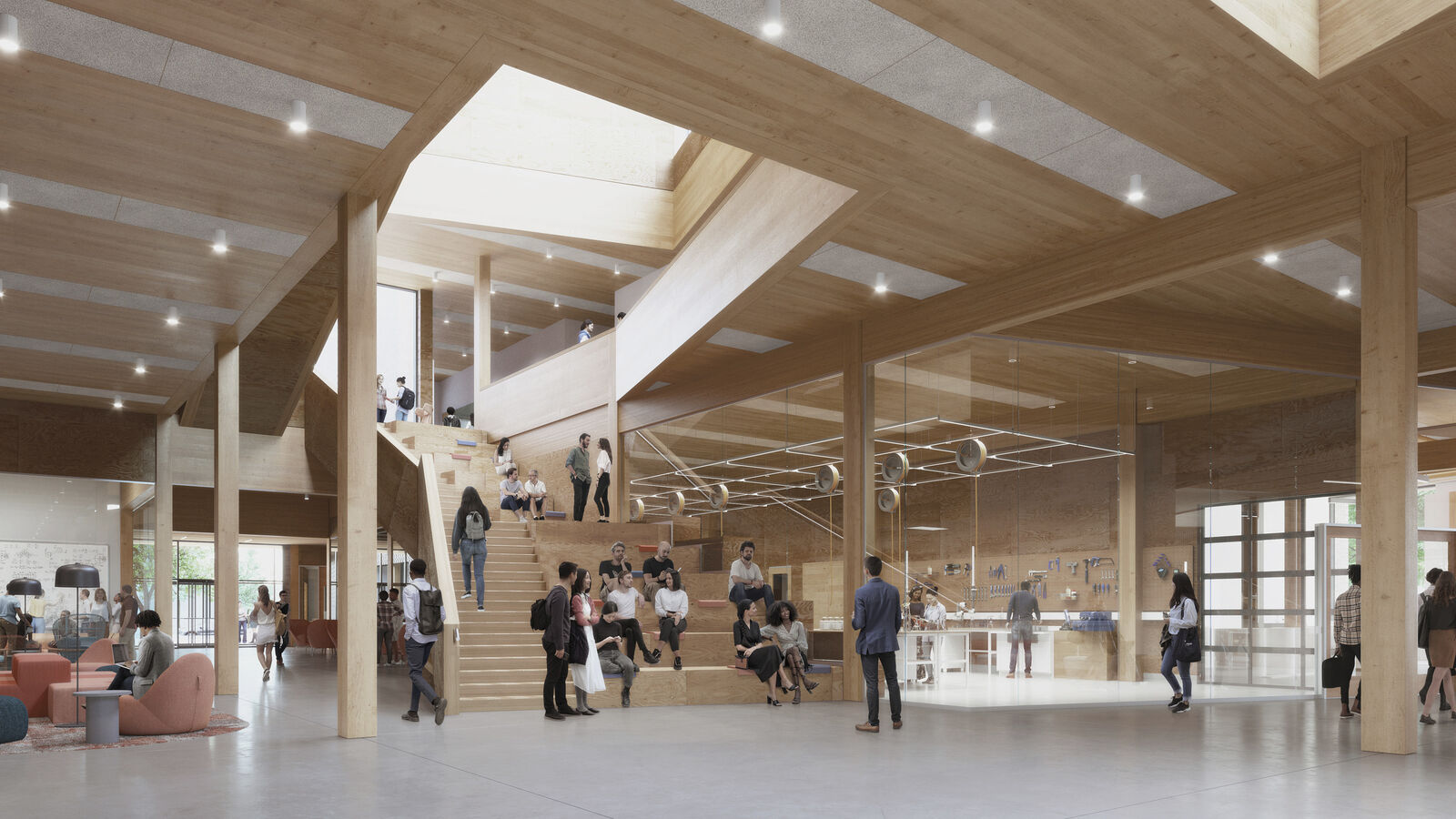
Oregon State University, Jen-Hsun Huang and Lori Mills Huang Collaborative Innovation Complex
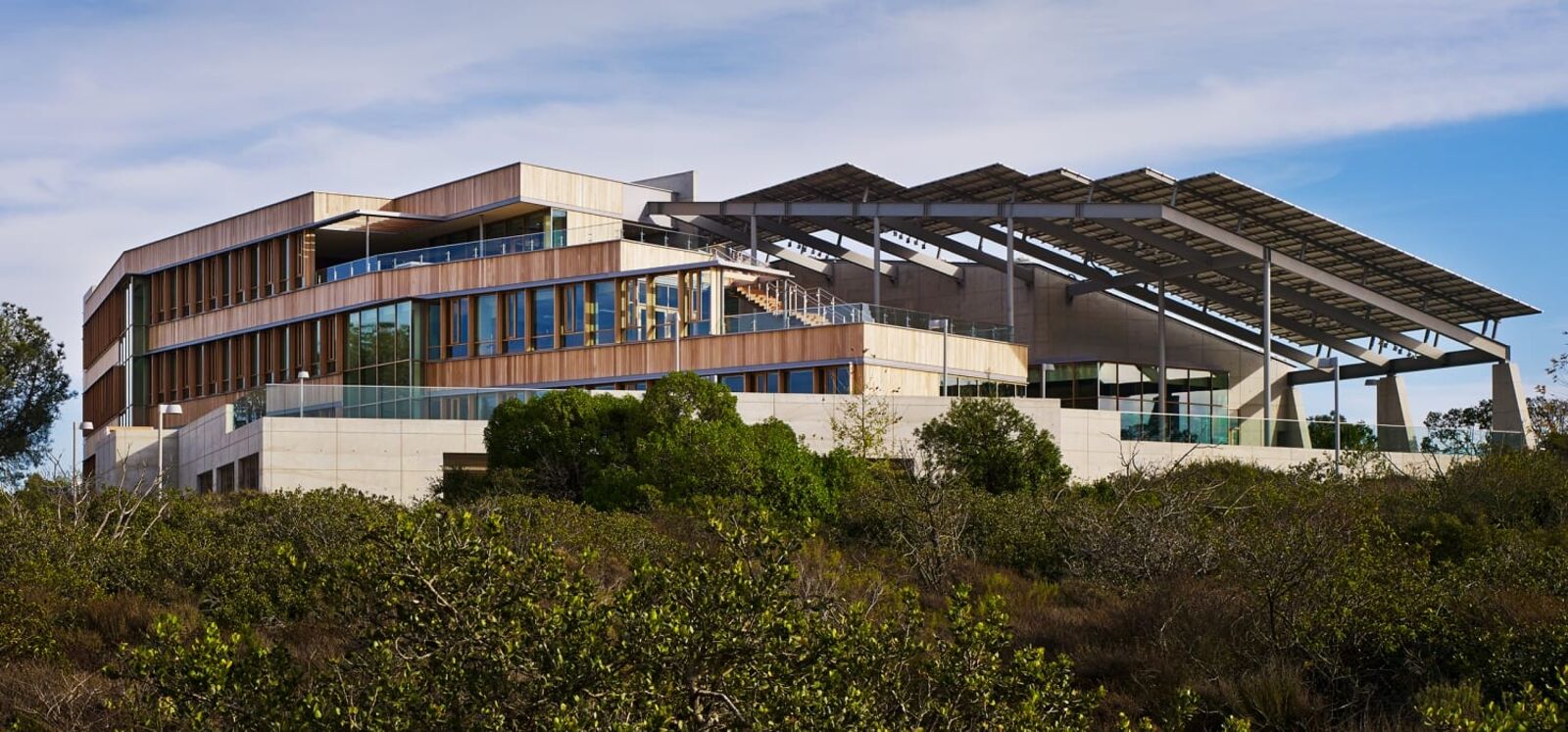
J. Craig Venter Institute, J. Craig Venter Institute La Jolla

Cultivating a Replicable and Transparent Wood Supply Chain at PDX Airport

How to Drive Rapid Decarbonization With a Few Easy Tools