Is the Hospital of the Future Made of Mass Timber?
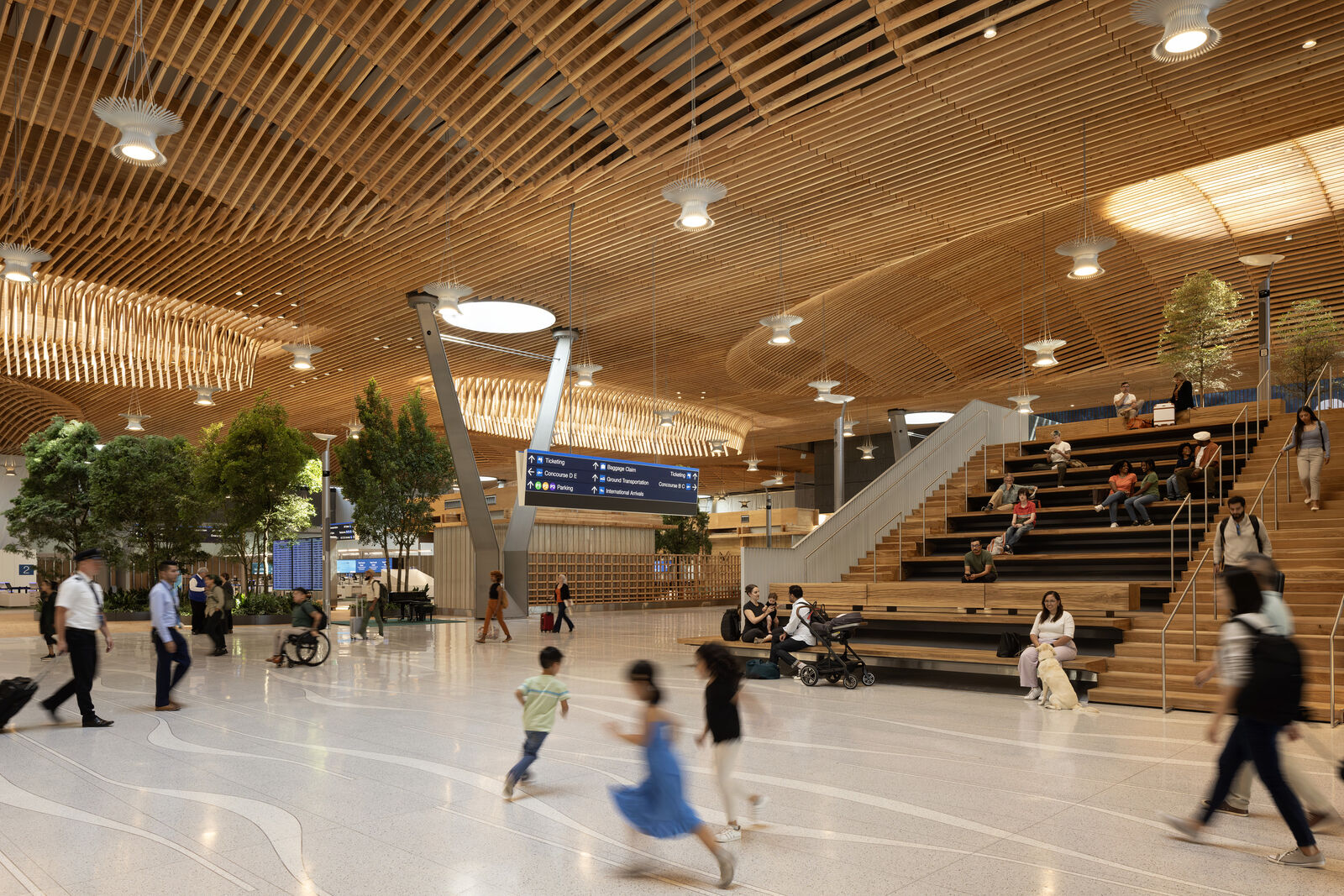
For centuries, mass timber has proven to be a reliable and durable material and structure for buildings. Wood is renowned for its natural beauty, low carbon footprint, and constructability benefits. Mass timber structures have quickly gained momentum across building types in North America, from airports to offices to labs, yet mass timber remains underutilized in hospitals and healthcare settings.
ZGF and Swinerton, along with an expert team of technical consultants, set out to study current barriers to adoption of mass timber in acute care settings and create a technical kit of parts. The resulting report, “Mass Timber Hospital: The Future of Healthcare,” explores strategies and solutions for increasing the uptake of mass timber in healthcare and offers a proof of concept for a 40-bed mass timber hospital.
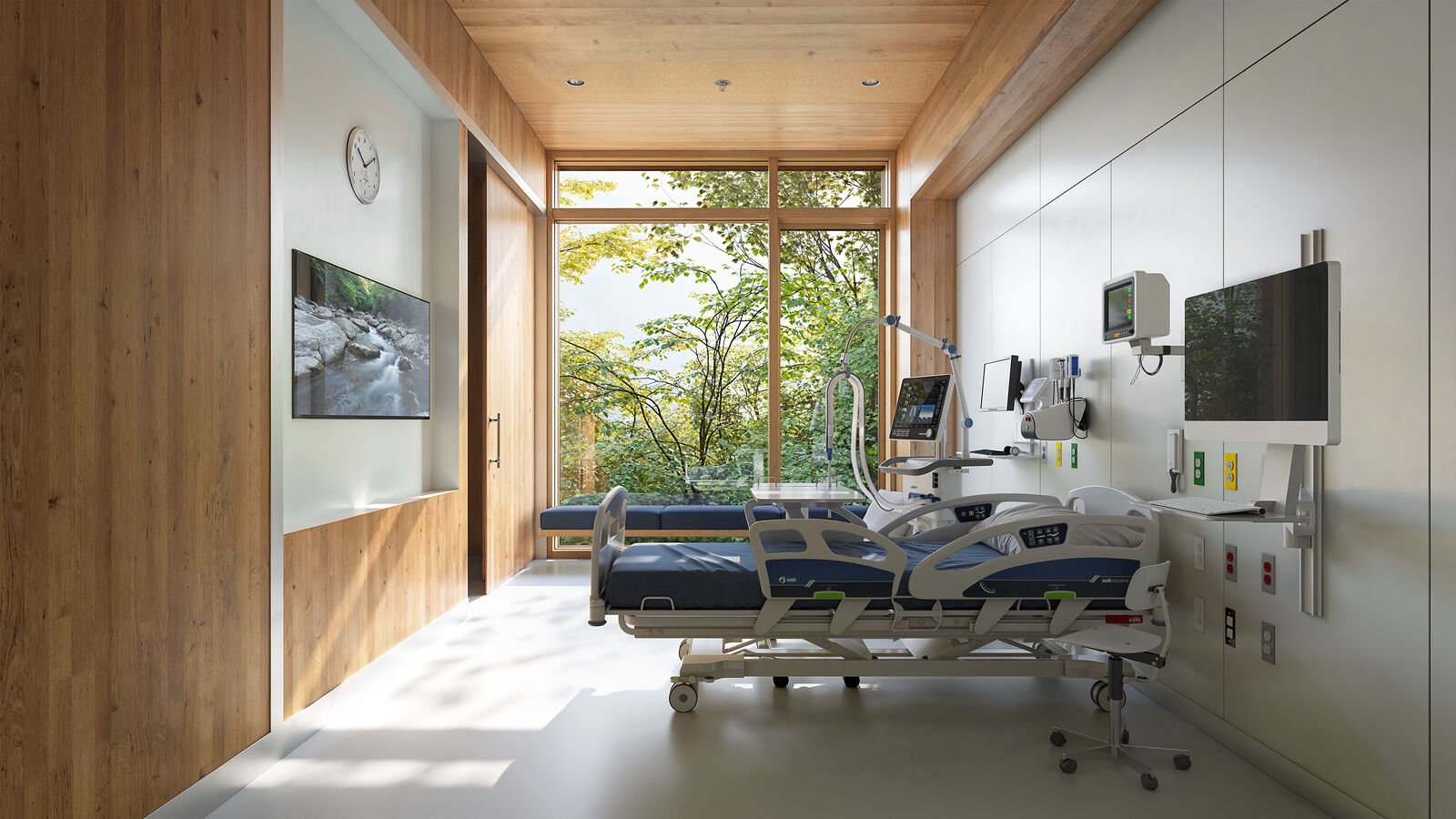
Studies show positive physical and emotional user responses in spaces that emulate natural environments. “Mass Timber Hospital: The Future of Healthcare” also explores the application of operable windows in acute care patient rooms.
Mass Timber’s Benefits
Today, timber is transitioning back to the forefront of our construction industry as a sustainable alternative to carbon-intensive steel and concrete. With hospitals and medical offices as some of the most energy and carbon intensive building types, mass timber can offer a cost-effective solution in the healthcare industry's push toward reducing embodied carbon, while improving outcomes for patients and staff.
Healthy Environments: Studies show positive physical and emotional responses in environments that mimic natural environments. Wood plays a vital role in creating a sense of well-being and can improve perceptions of interior acoustics, help regulate humidity, and reduce the presence of volatile organic compound (VOC) emissions. Wood also has naturally occurring microbial properties.
Lower Carbon Footprint: Wood stores biogenic carbon from its time as a tree and as part of a forest. Climate Smart Forestry can result in forests that grow more trees than are harvested. Timber manufacturing has significantly lower carbon emissions than traditional materials like concrete and steel.
Sourcing Benefits: Sustainably and responsibly sourcing wood creates an opportunity for a project to support rural communities and underrepresented parts of the supply chain. Transparency-based procurement practices tie wood back to its forest of origin and its local community. The lower cost of ground transportation makes wood feasible in any region.
Cost Efficiencies: Wood structures benefit from quicker assembly through prefabrication and modular construction, reductions in foundation materials given the lighter weight, less site work for soil stability, and lower cost for additional interior finishes.
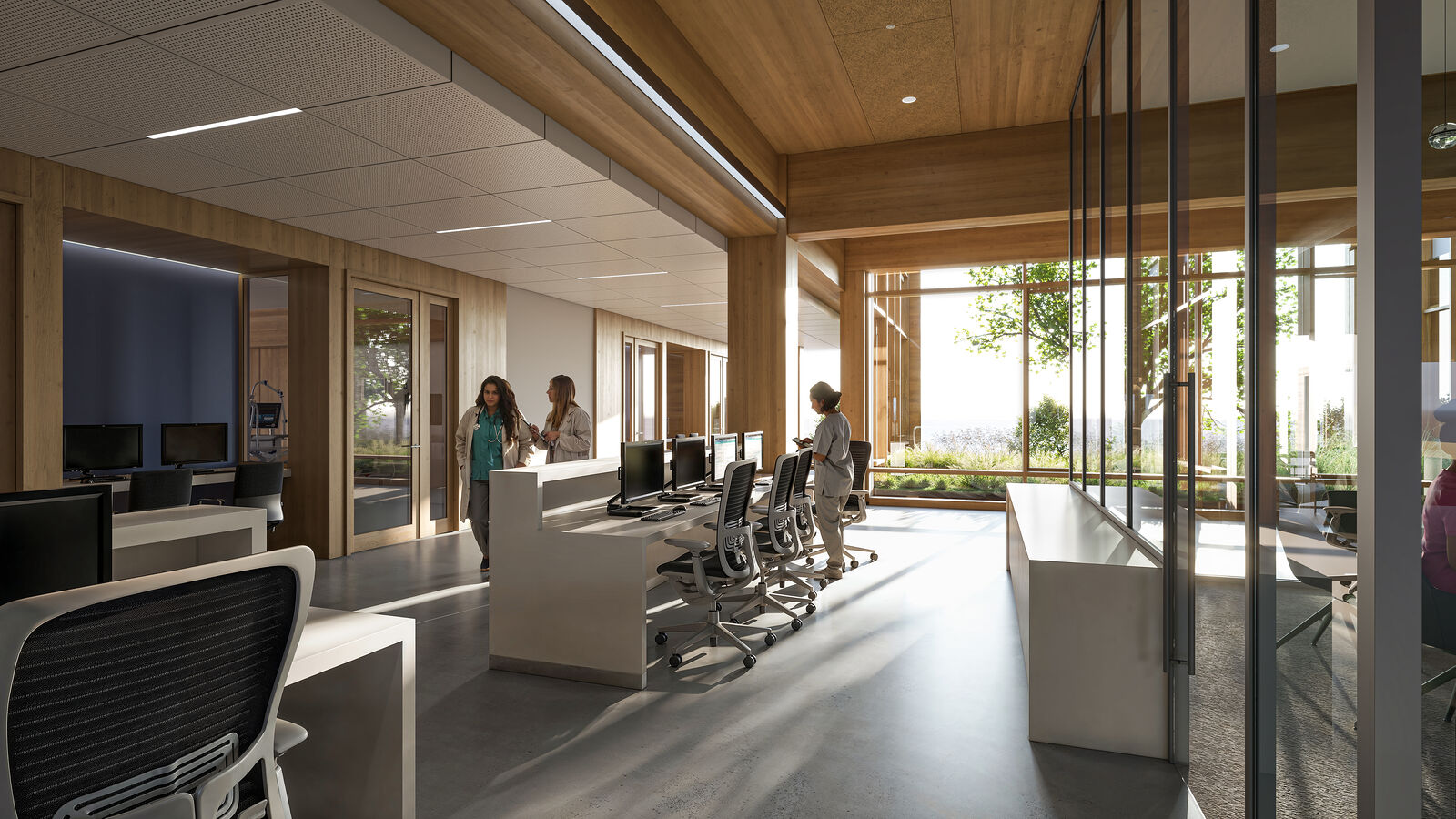
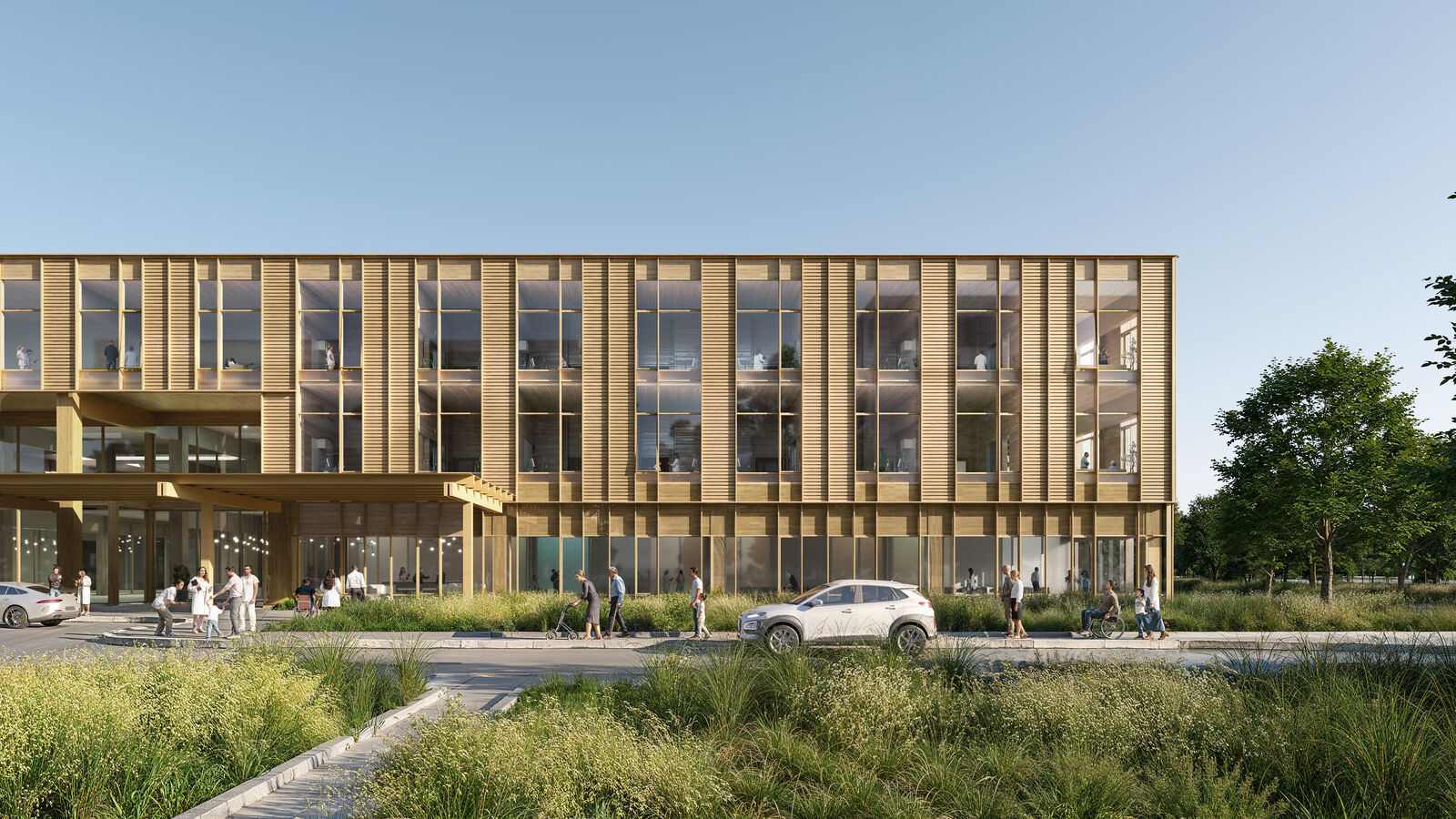
The mass timber hospital case study conceptualizes a 220,000 SF mid-sized community hospital, including a 40-bed program supported by an emergency department, labor and delivery, surgery, imaging, food service, and a full array of clinical support.
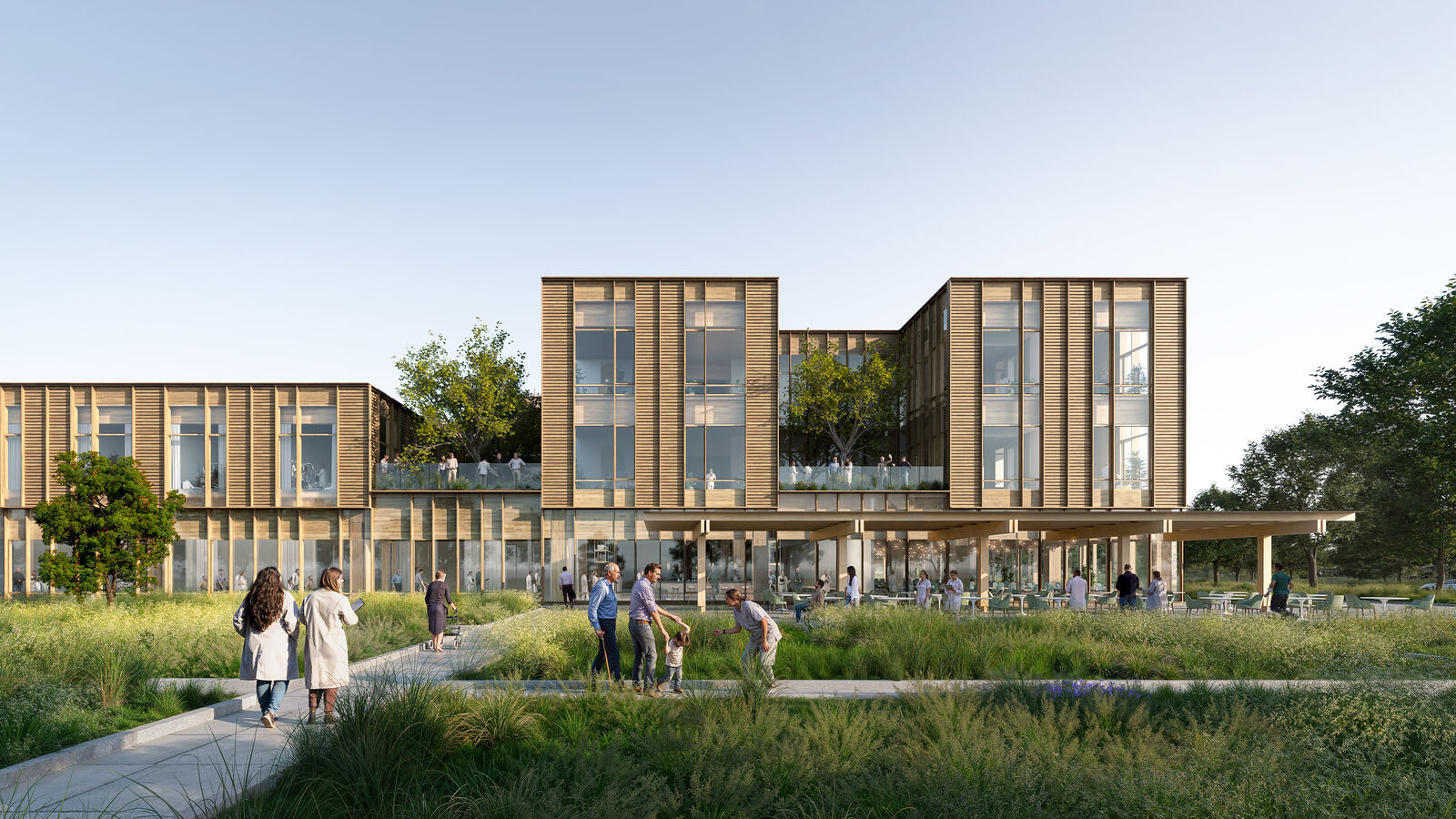
Mass Timber in Healthcare Design: A Proof of Concept
Even with wood’s many documented benefits, technical challenges unique to healthcare design impact mass timber usage. “Mass Timber Hospital: The Future of Healthcare,” explores the material cost, construction process, schedule impacts, and counters the perception that mass timber costs more than steel or concrete construction.
To test hypotheses and address critical questions and technical solutions, the team developed a proof-of-concept hospital. The 220,000 SF mid-sized community hospital concept includes a 40-bed program supported by an emergency department, labor and delivery, surgery, imaging, food service, and a full array of clinical support. Detailed within the report are approaches to code, infection control, vibration, MEP integration, and more to provide healthcare institutions and project teams a framework to make informed decisions about mass timber in healthcare design and construction.
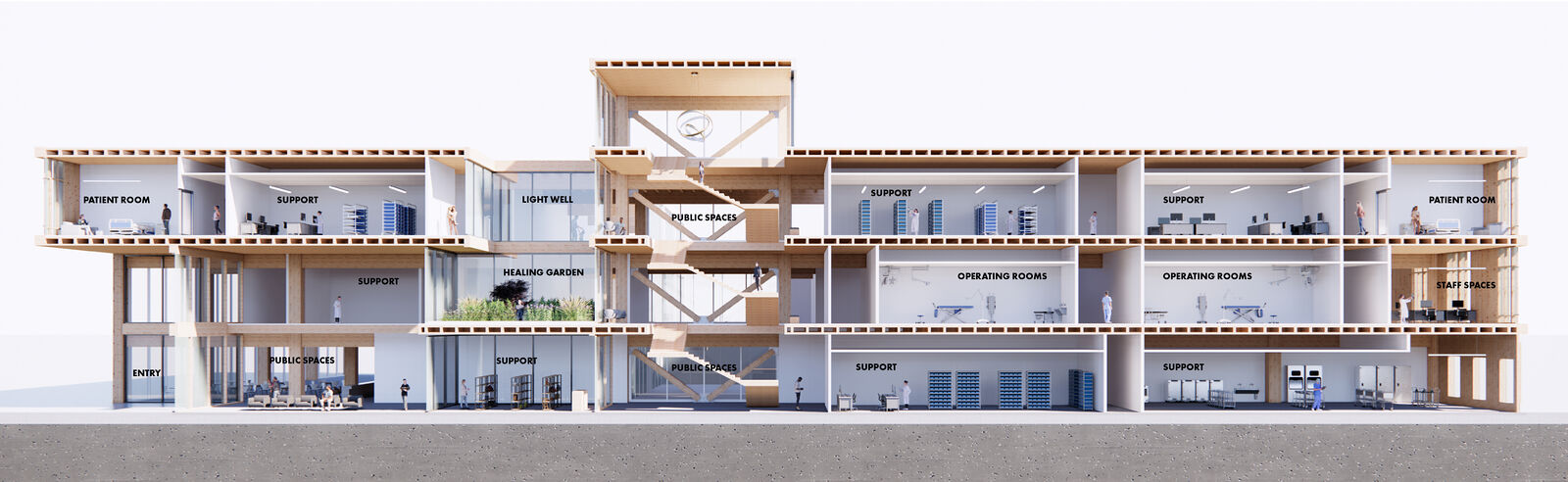
Use the interactive section diagram above to explore key takeaways from the report.
From Concept to Reality
Taking advantage of all that mass timber has to offer requires alignment of mission, vision, and values; early goal-setting; and close coordination amongst all stakeholders and disciplines. Embracing the benefits of mass timber in healthcare settings can yield significant opportunities for a more sustainable care model, for both healthcare institutions and the communities they serve.
“Mass Timber Hospital: The Future of Healthcare” was developed by ZGF and Swinerton, in partnership with Timberlab, Degenkolb, Arup, University of Oregon Institute for Health in the Built Environment, PeaceHealth, KPFF, Jensen Hughes, and Pierce McVey.
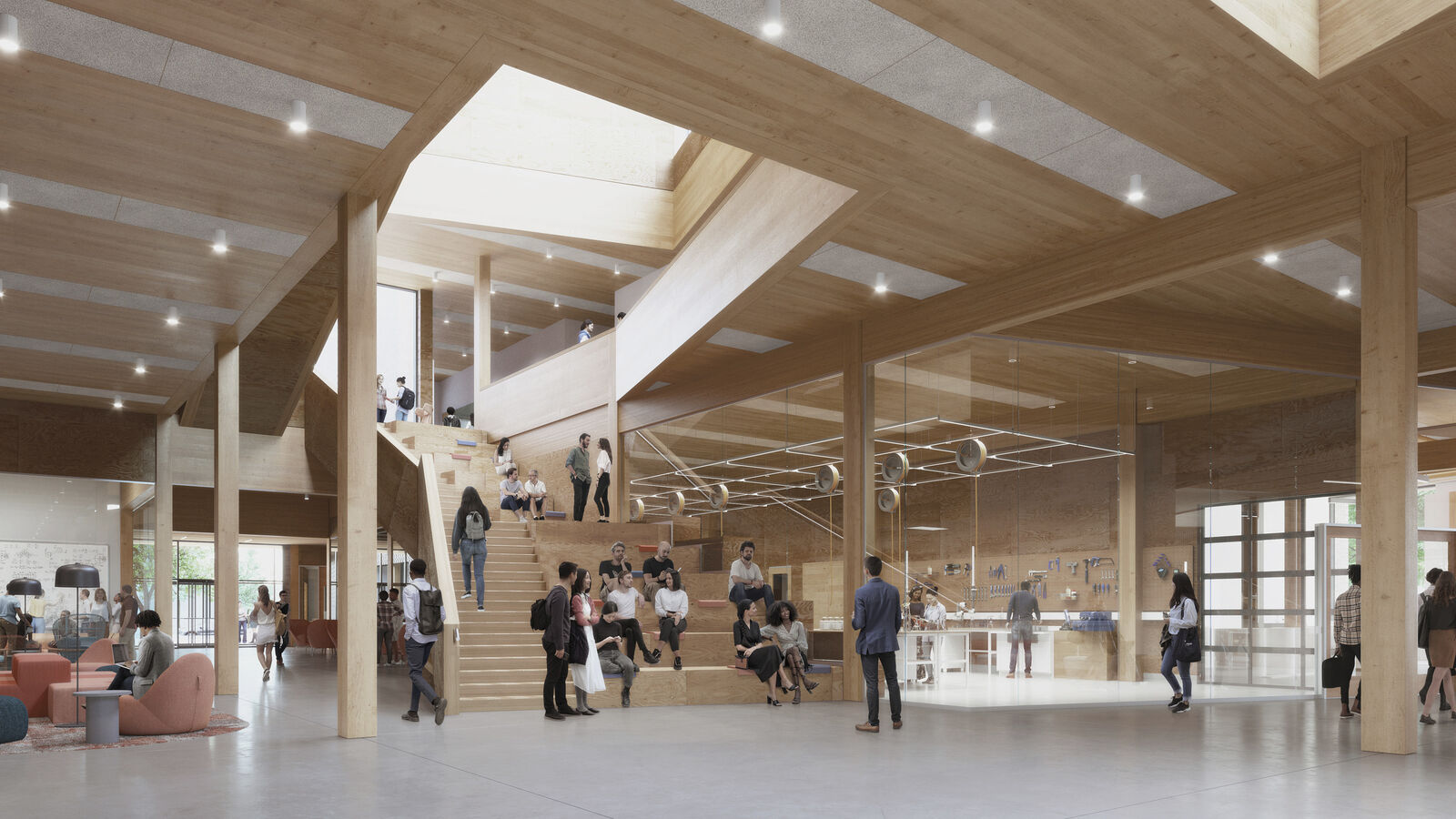
Oregon State University, Jen-Hsun Huang and Lori Mills Huang Collaborative Innovation Complex
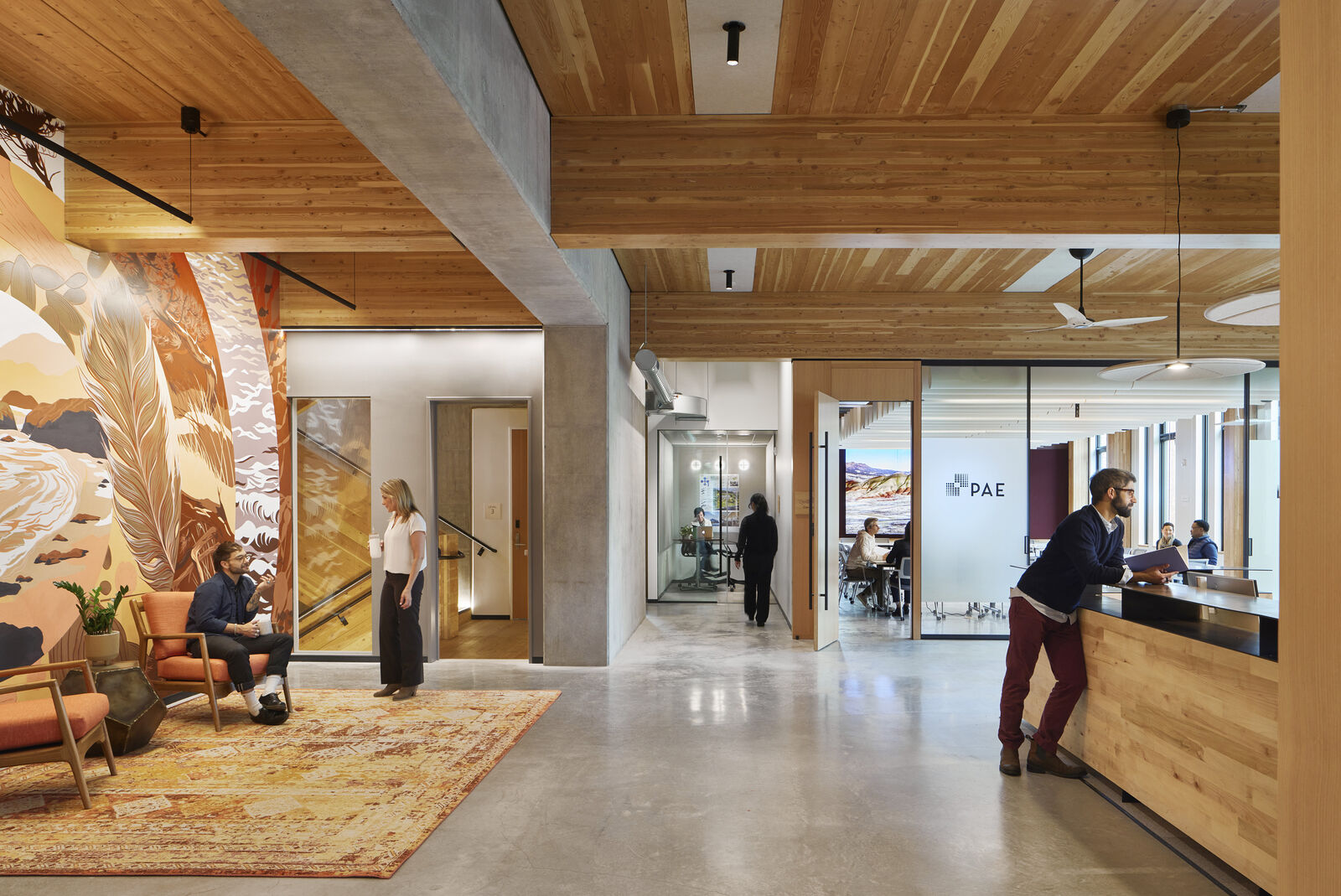
PAE Engineers, The PAE Living Building
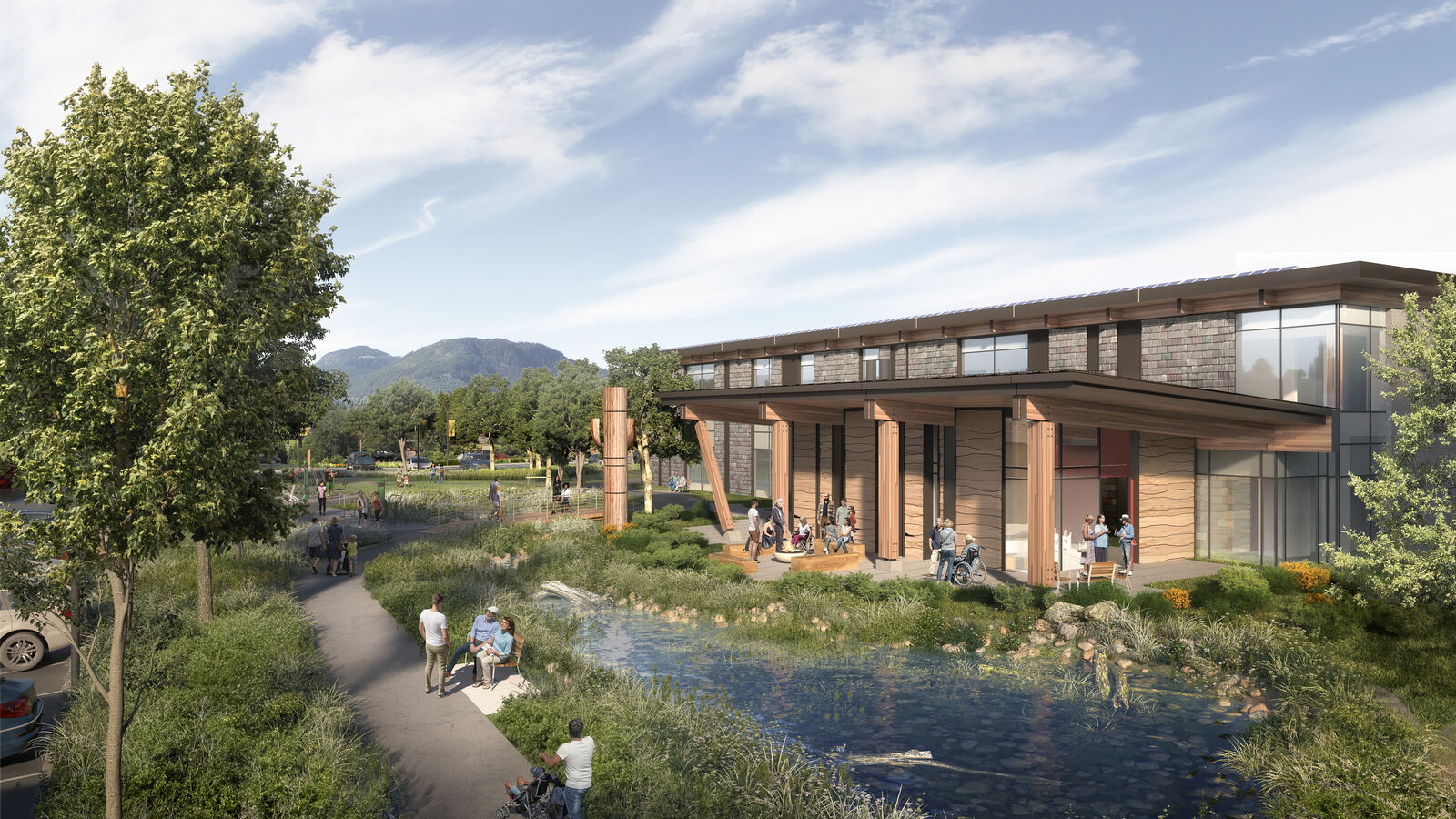
Decarbonizing Healthcare for Healthier Communities
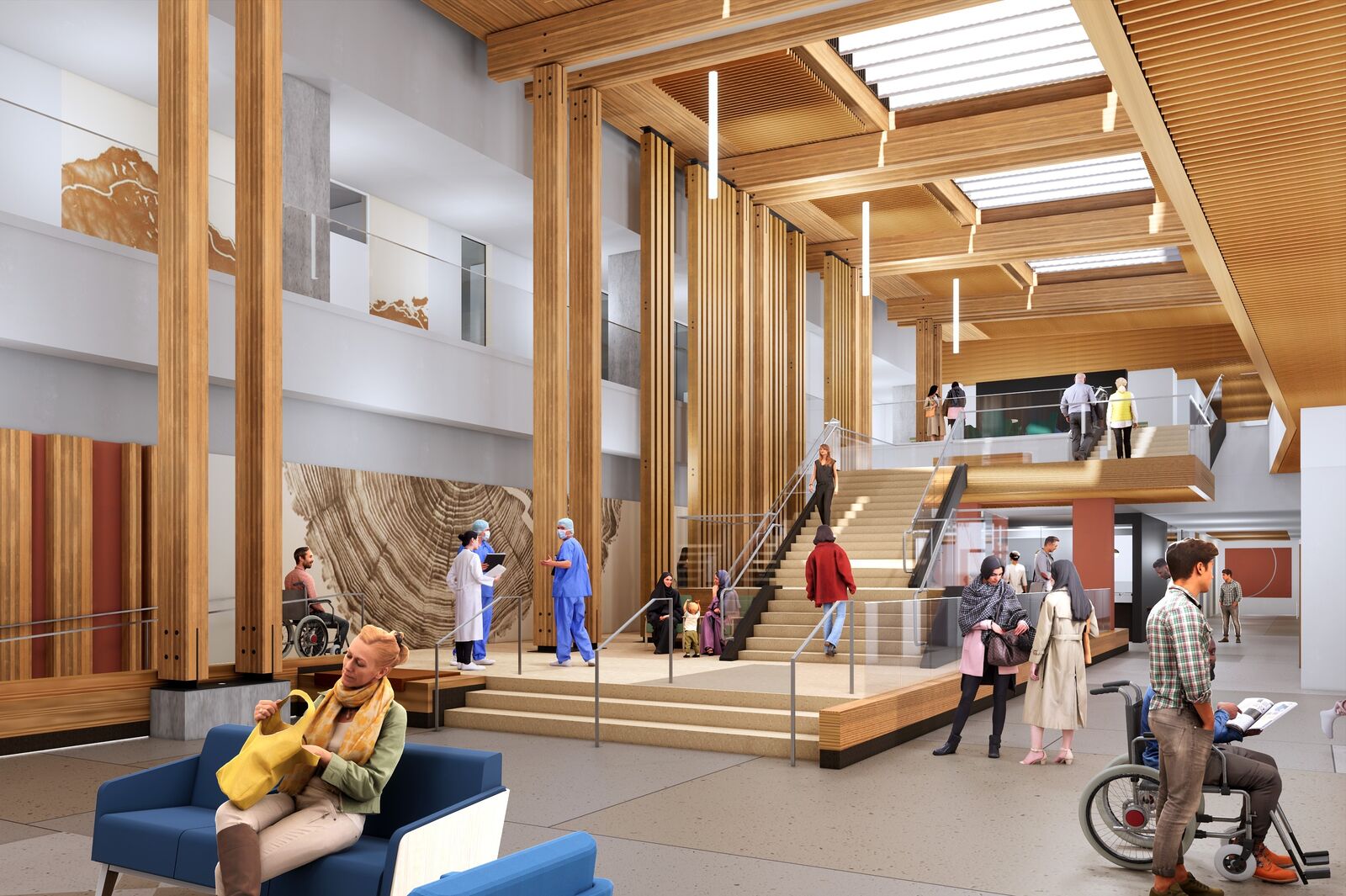
Island Health, Cowichan District Hospital