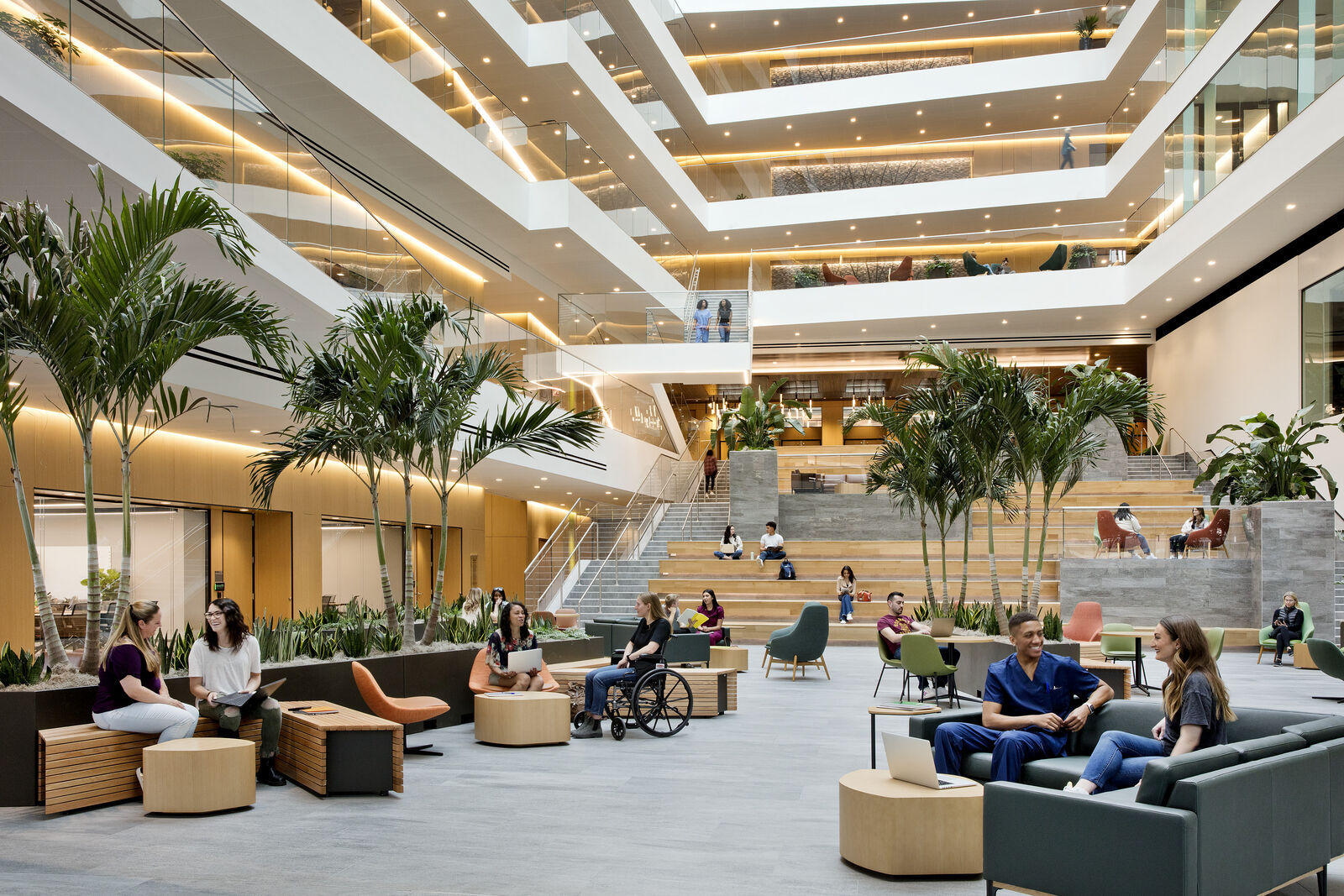
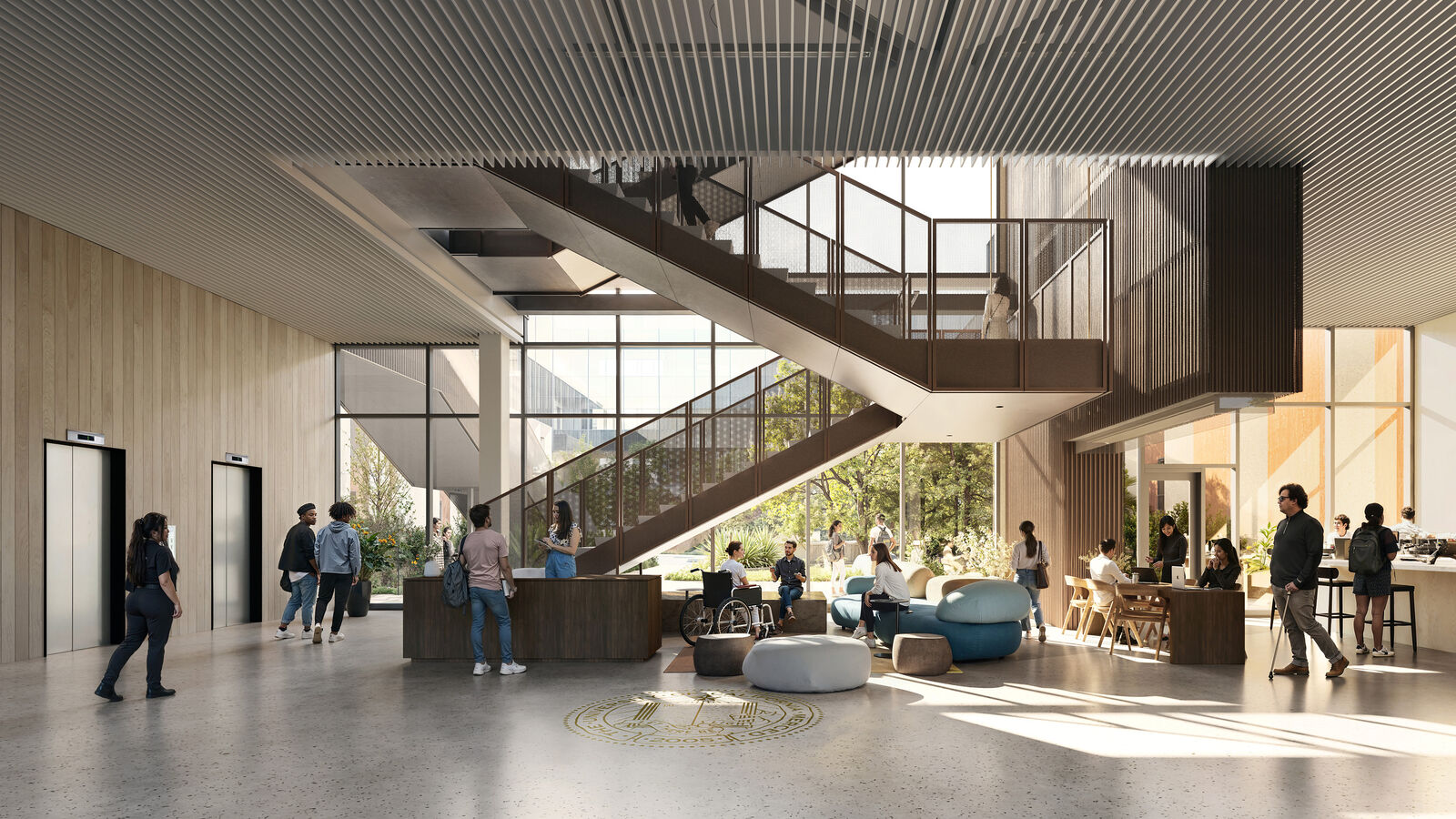
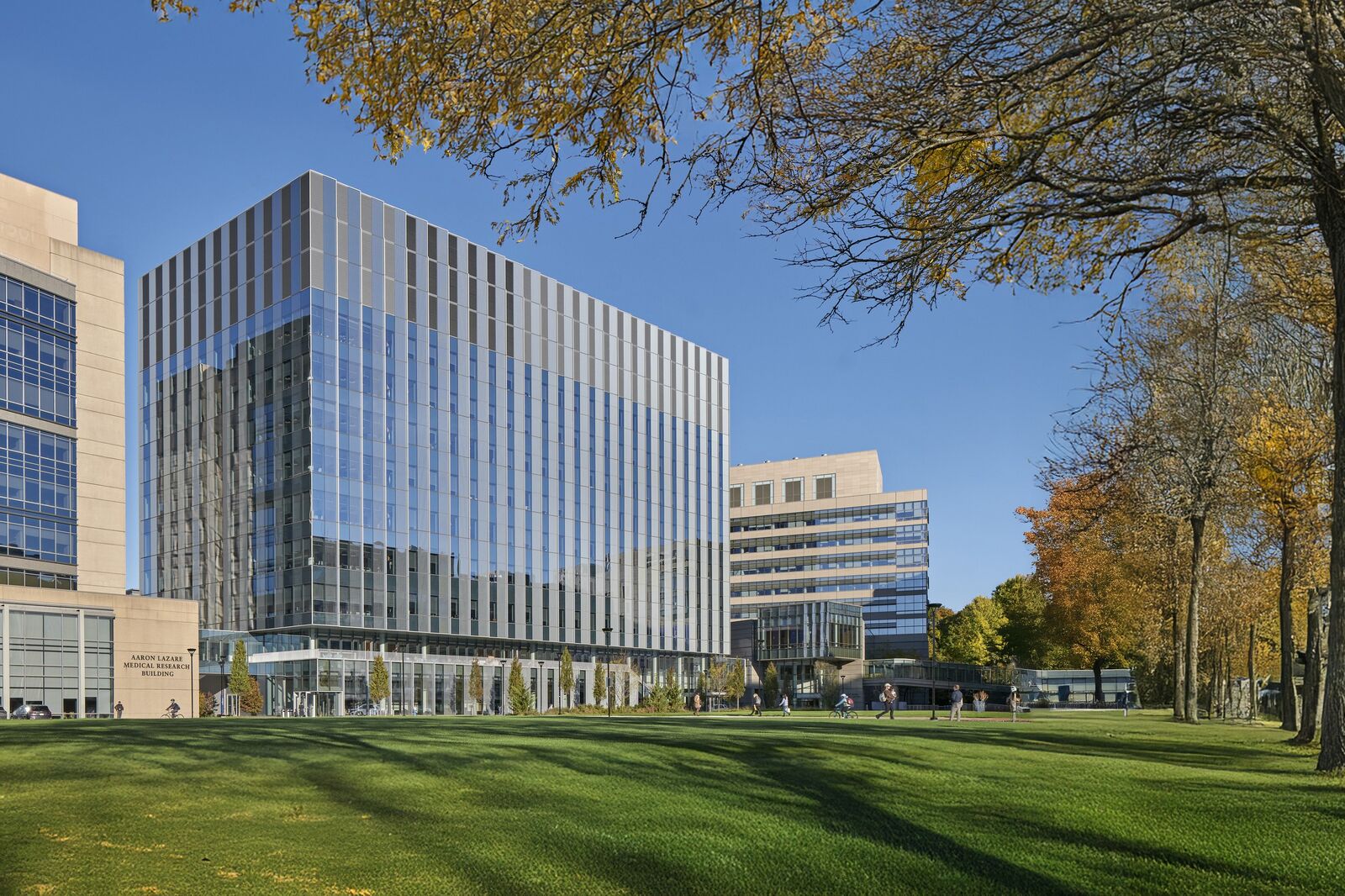
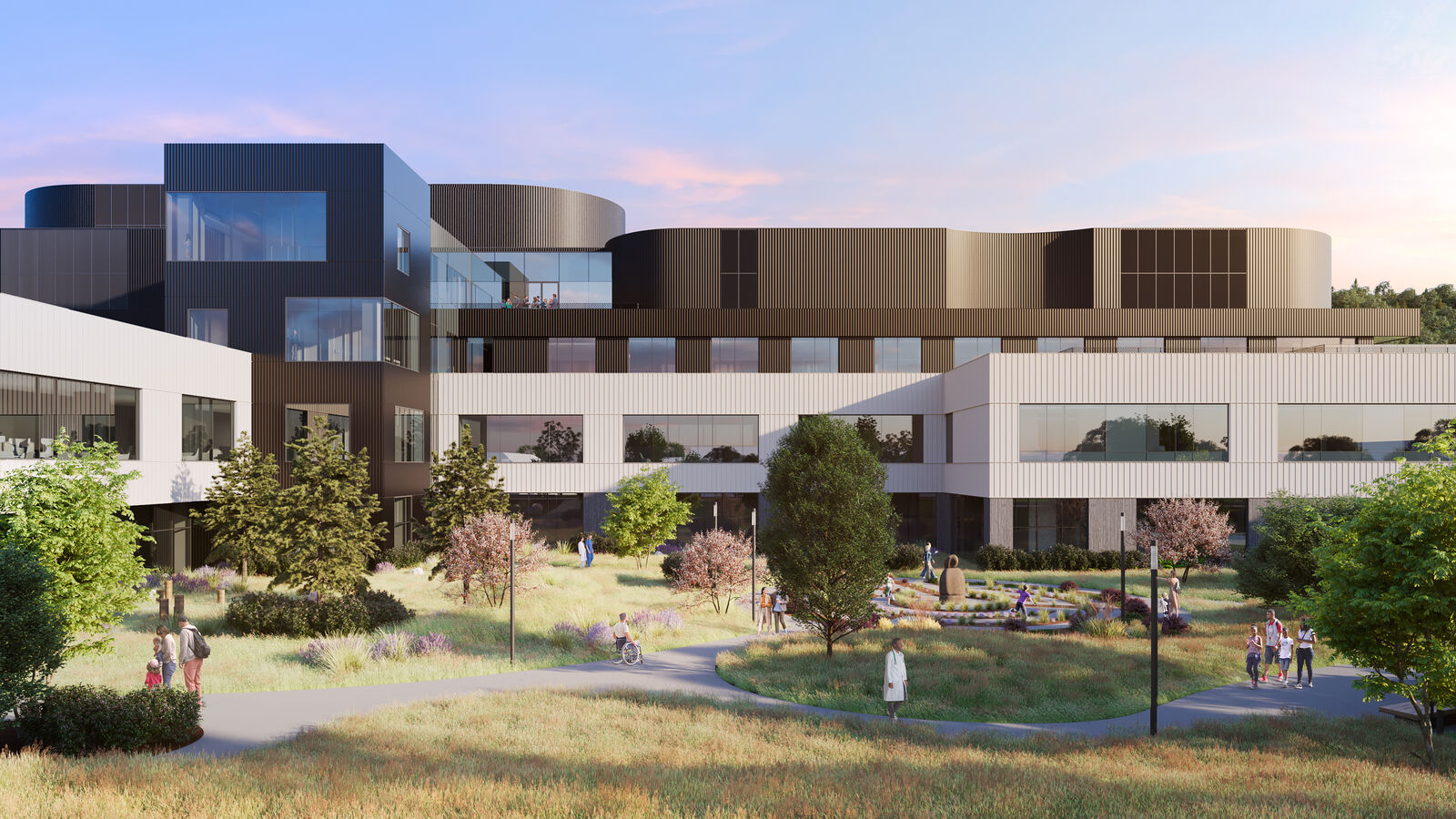
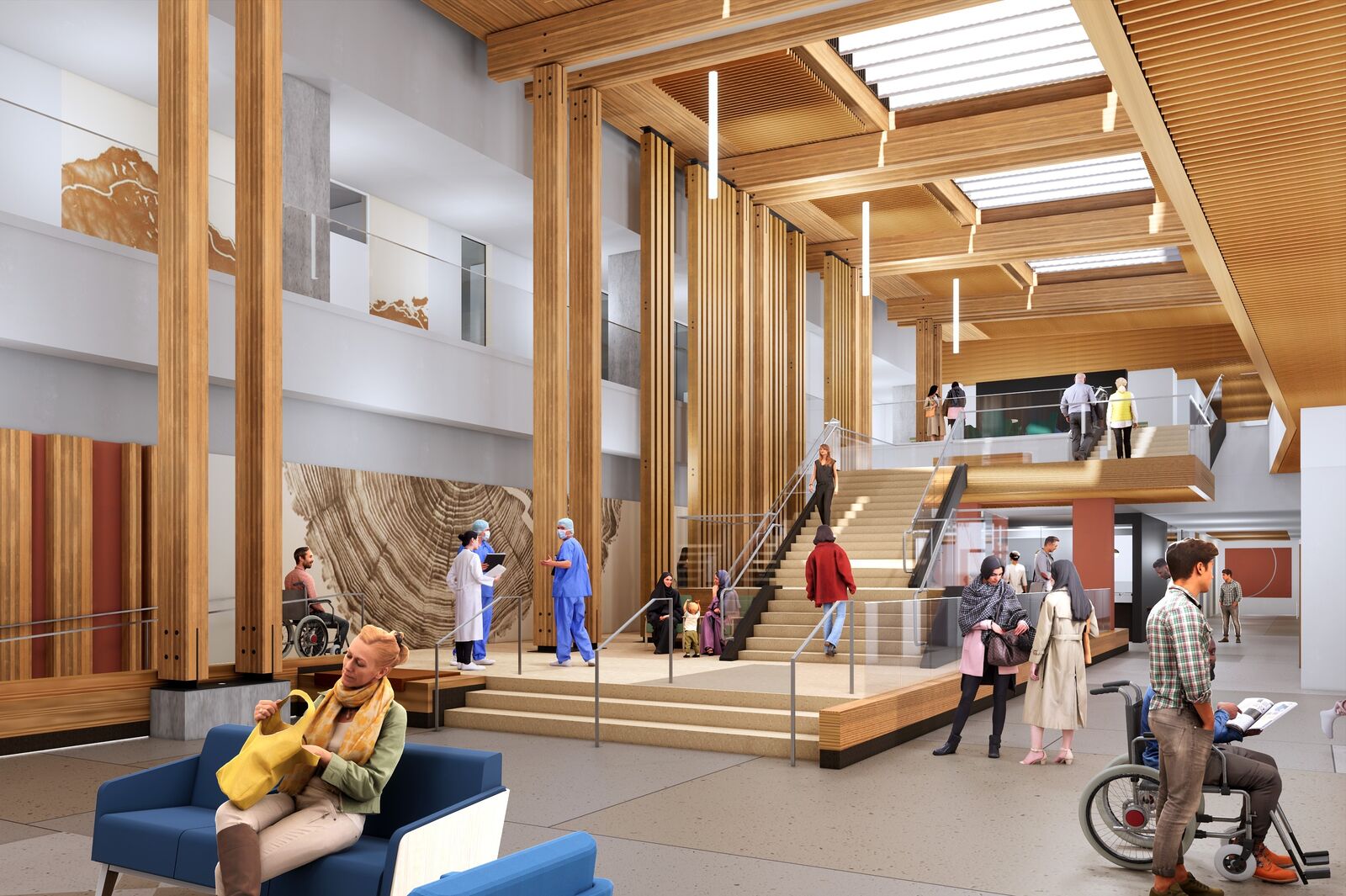
To prepare students for today’s team-based, interprofessional health care delivery models, the best medical school buildings holistically leverage education, research, and clinical care to squarely sit at the intersection of data science and technology and human empathy and communication. They are welcoming environments designed to foster social interaction at varied scales from small groups to entire states. They serve as dynamic, interdisciplinary hubs that draw in diverse voices to spark innovation and promote collaboration—acting as catalysts for community among students, faculty, and researchers. They are the center of it all, like a “town square” where people want to be.
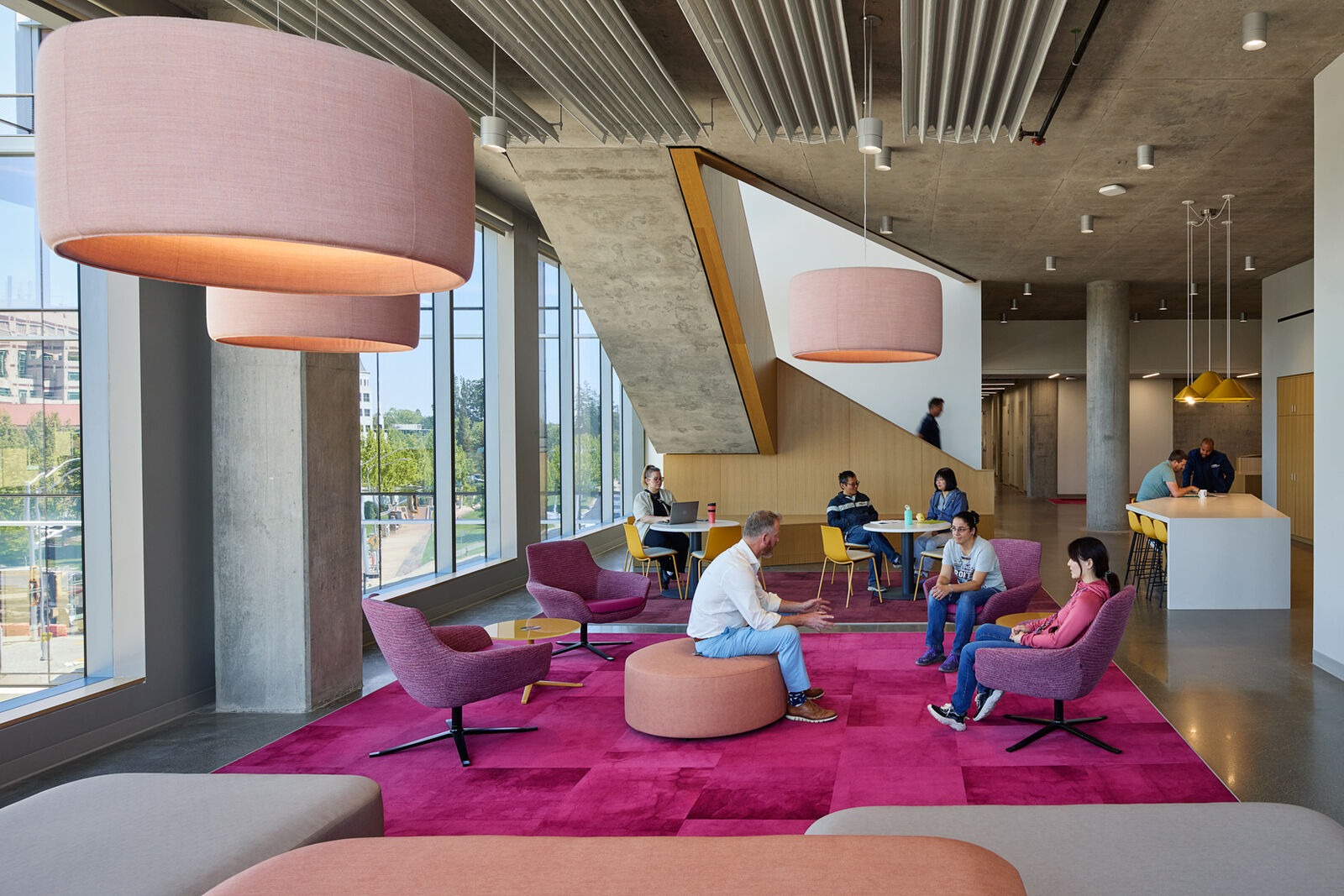
The “town-square” approach to designing med-ed buildings involves the layering of key programmatic elements interwoven with welcoming informal spaces. As the “home base” for medical students, school of medicine buildings are most successful when they are healing environments which contribute to student well-being and teach them how to maintain professional and emotional resiliency. Biophilic design strategies such as open areas with access to daylight, natural materials, and the interplay of short- and long-views help alleviate student stress. The thoughtful interplay of quiet spaces and engaging public spaces that are the social heart of the school help teach balancing self-care with engagement. Amenities like interdisciplinary co-working spaces, study nooks, lounge-like areas, and cafés provide de-stressing benefits for students and increase opportunities for intellectual collisions. They can also be powerful career coaches, connecting students to continuing professional development via skills and simulation centers, or through strong visual and programmatic connection to biomedical research and innovation.
Furthermore, designing buildings to feel inclusive and be reflective of their communities (land, people, and place) can give students a strong sense of belonging. This is particularly crucial for first-generation medical students, many of whom may come from far-flung rural communities—and who may return for a career of rural care and service.
Embracing this holistic approach establishes a new paradigm for mixed-use medical education buildings by using architecture to create true “town square” hearts for academic medical campuses. ZGF’s place-based design approach can pair programmatic ambitions around interior atriums, outdoor courtyards, and/or pedestrian streets to create these vibrant hearts. By finding the right design approach for a medical school and its setting, it is possible to ignite collaboration and innovation while supporting student needs and the evolving needs of the profession—all the while strengthening the emotional and cultural connection between a medical school and the communities and it serves.