







Creating a Research Ecosystem
Wexford Science + Technology / University of California, Davis, Aggie Square
Laboratories and Research, Higher Education
ZGF and Wexford Science + Technology partnered with the University of California, Davis to design and build a hub adjacent to the Sacramento medical campus where higher education, industry, and government can come together for the betterment of the community. The result is Aggie Square: an innovation district and ecosystem where companies, researchers, students, and faculty work side-by-side with the common goal of accelerating discovery.
The design of Aggie Square knits together welcoming public spaces and pedestrian-focused development into the heart of a major research hospital. By placing academic researchers and private industry on the same floor, the design breaks down traditional silos to drive real-world impact. Flexible, light-filled labs and incubator spaces are purpose-built to foster interaction, resource-sharing, and breakthrough thinking. Transparent ground-floor maker spaces put research on display—inspiring the next generation of STEM researchers.
The two new ZGF-designed buildings, 200 and 300 Aggie Square, house state-of-the-art research facilities, flexible labs, private industry partners, and community-focused programs and spaces.
Location
Sacramento, California
Square Feet
594,500
Completion date
2025
Project Component
Architecture Services
Interior Design & Space Planning
Laboratory Planning
Environmental Graphic Design
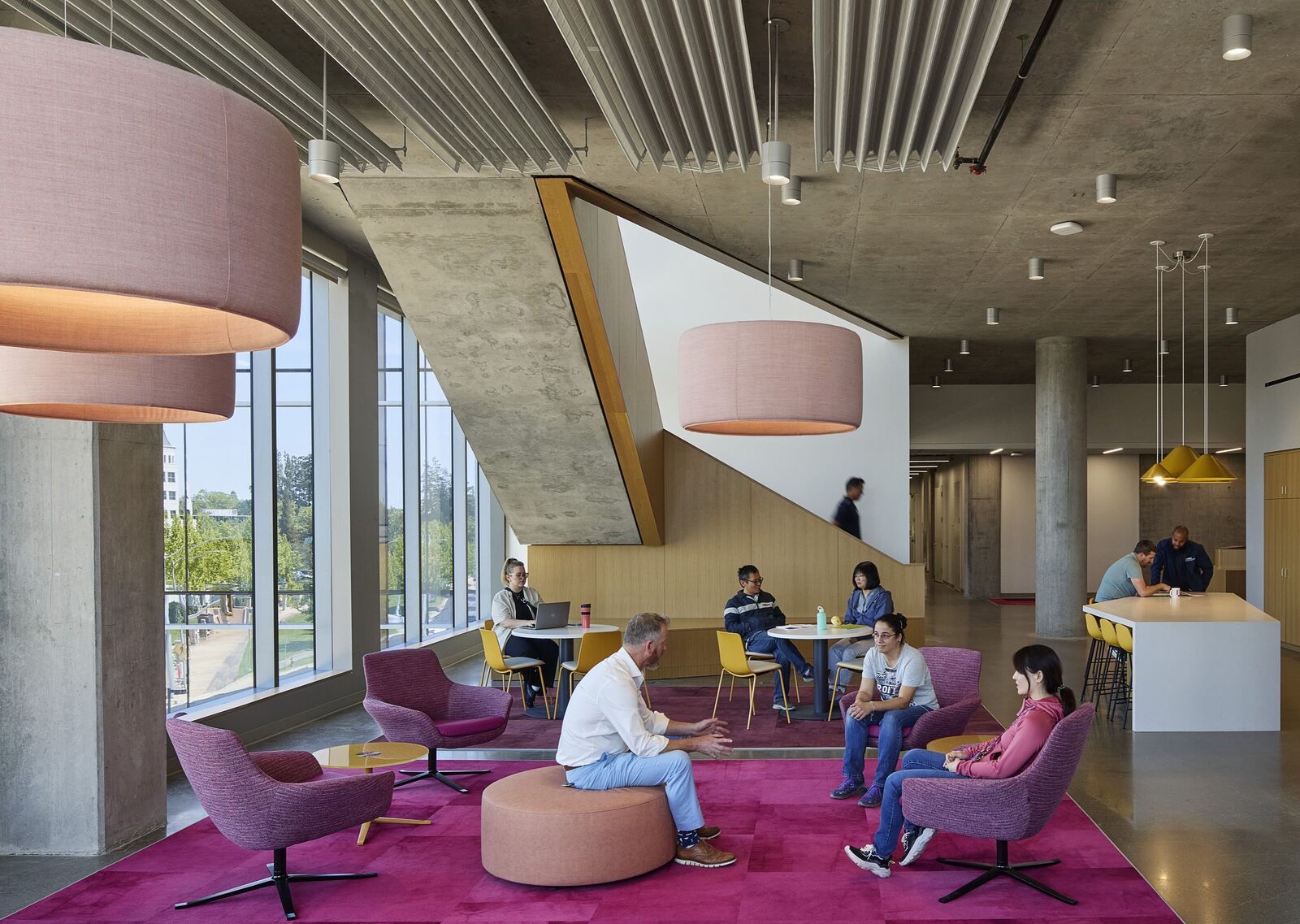
By placing academic researchers and private industry on the same floor with shared amenity and collaboration spaces, the design breaks down traditional silos to drive real-world impact.
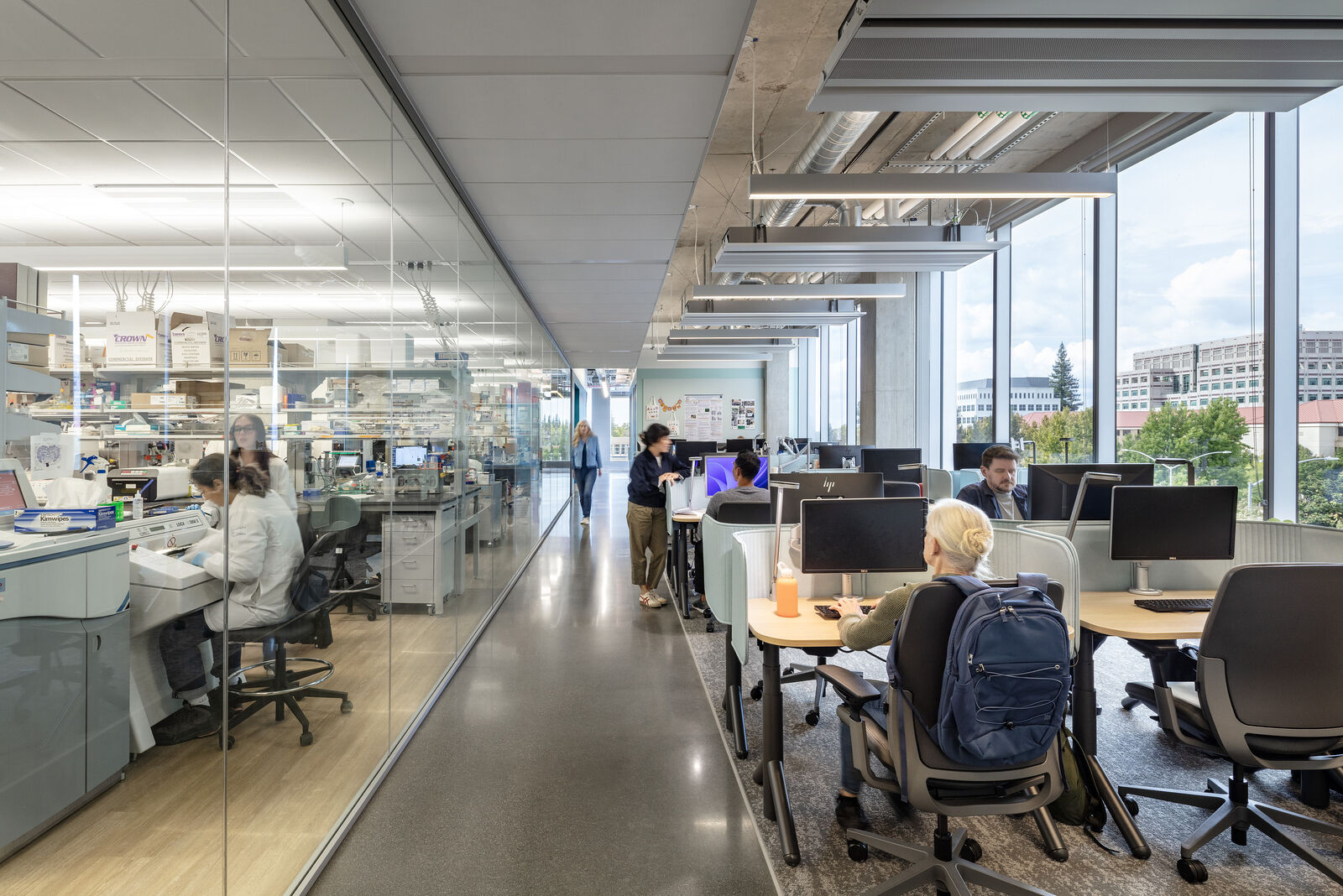
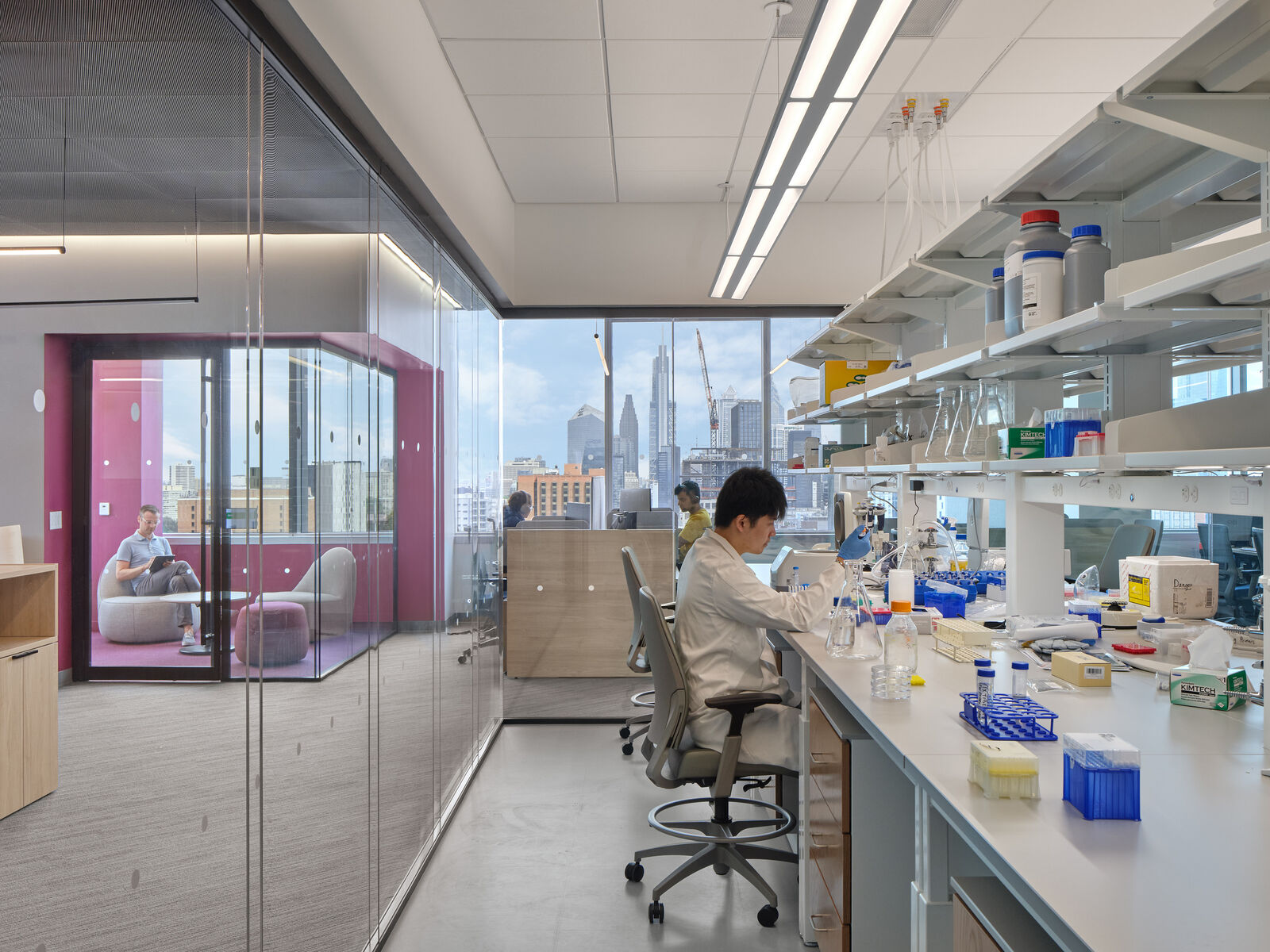
Research teams share flexible laboratories and prep rooms, while dry write-up desks are provided along the perimeter of the building. Ample interior glazing allows for visual connection between lab and write-up zones so occupants can take breaks or eat / drink at their desks without losing sight of their research.
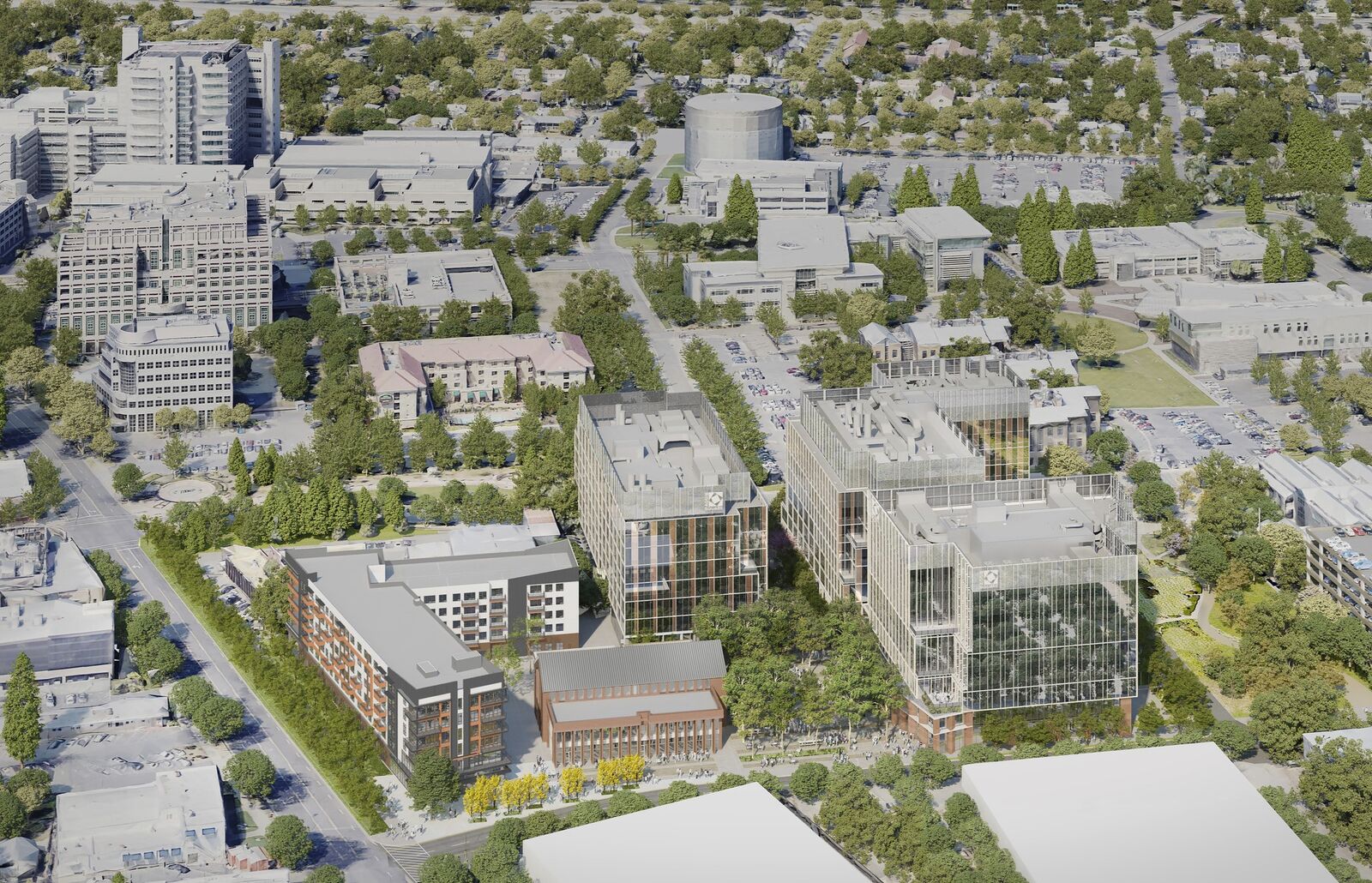
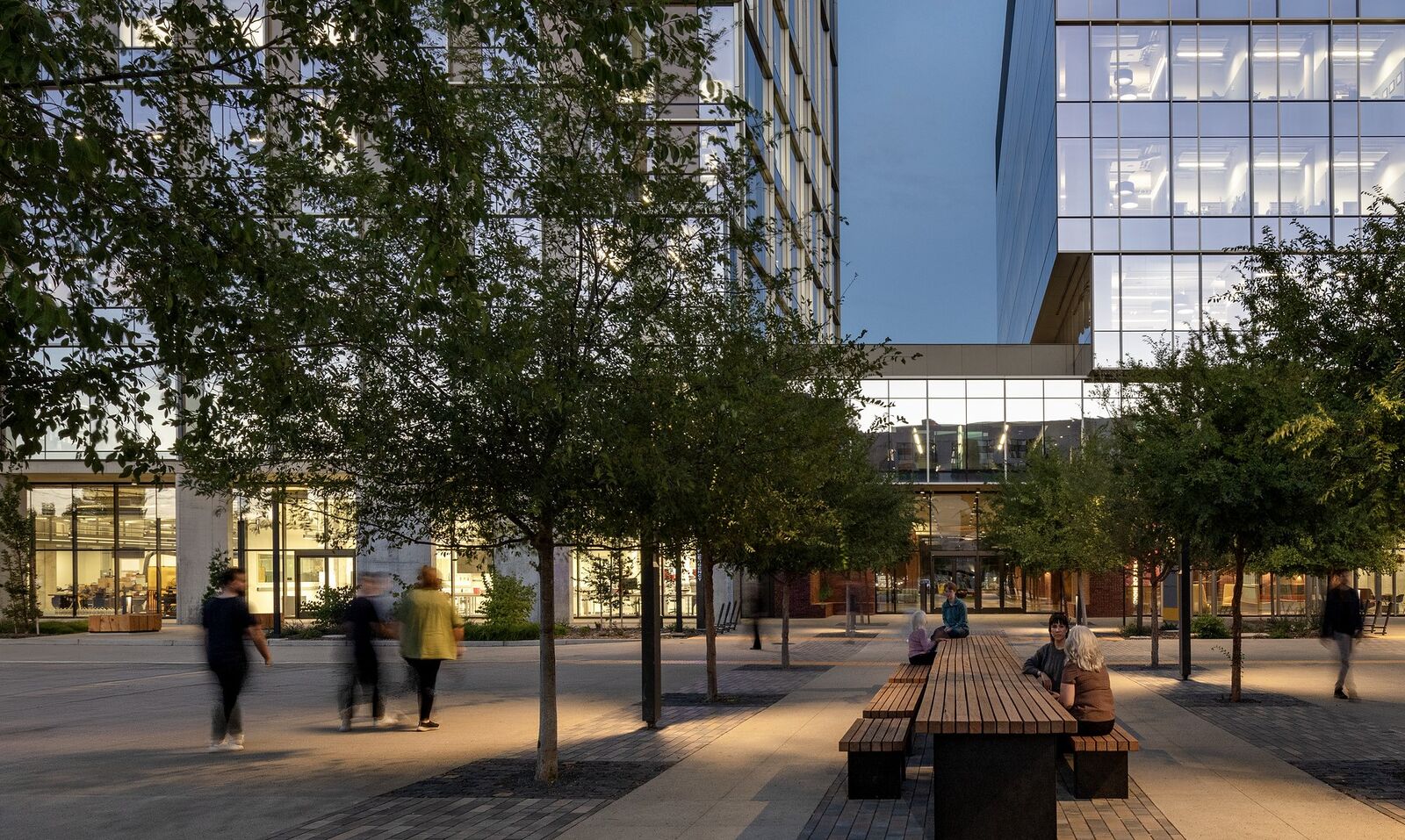
The site knits Aggie Square into the surrounding neighborhoods and is conceived as a series of outdoor rooms that support public engagement while providing ample shade in Sacramento’s hot climate.
The first phase of the Aggie Square campus transforms a surface parking lot into a dense, urban innovation district. Designed to bring the city, students, university, and industry together, this development model attracts private companies to lease space on university land, creating a hub that pushes the boundaries of innovation. Strong integration with the surrounding community is achieved through key access points and site amenities.
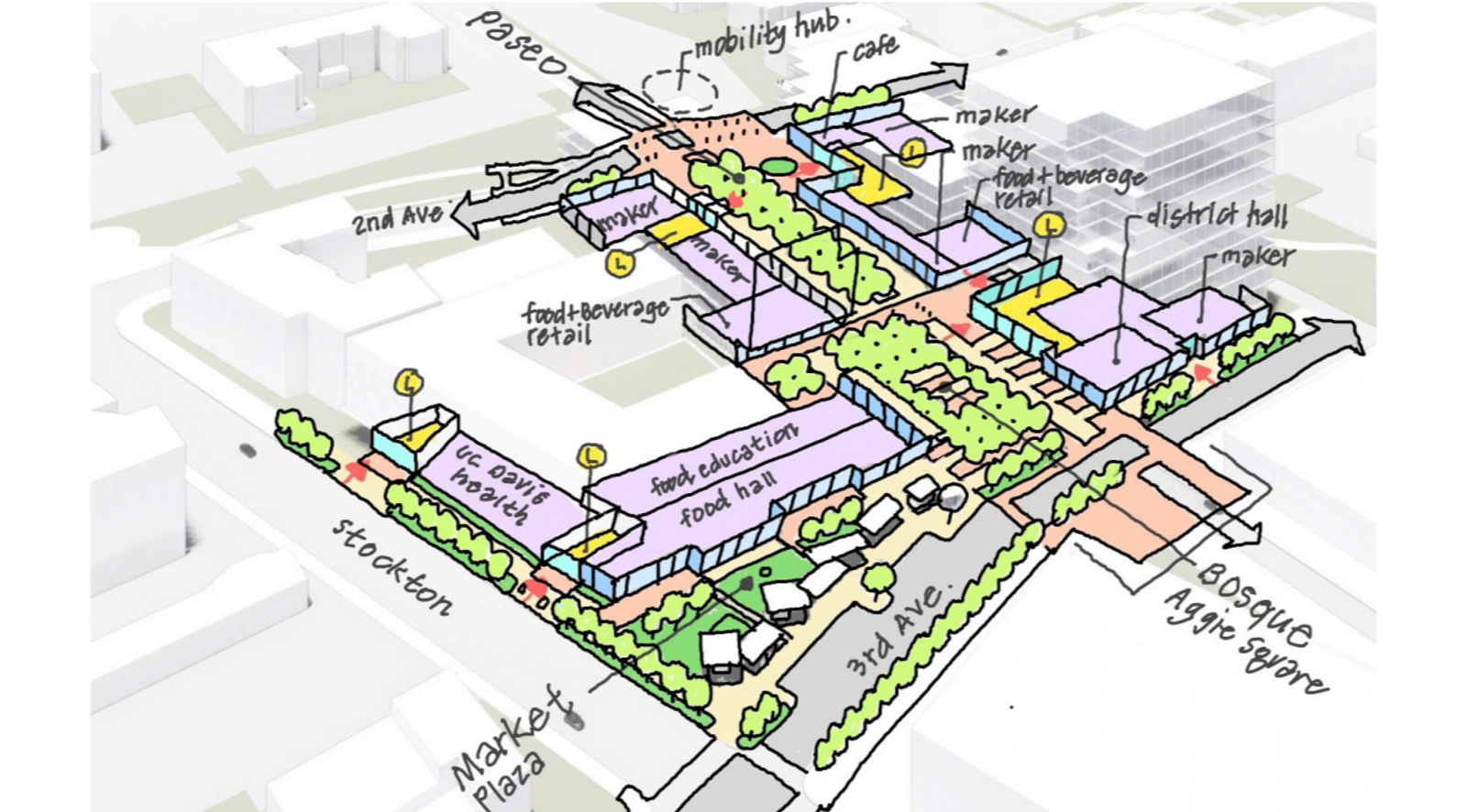
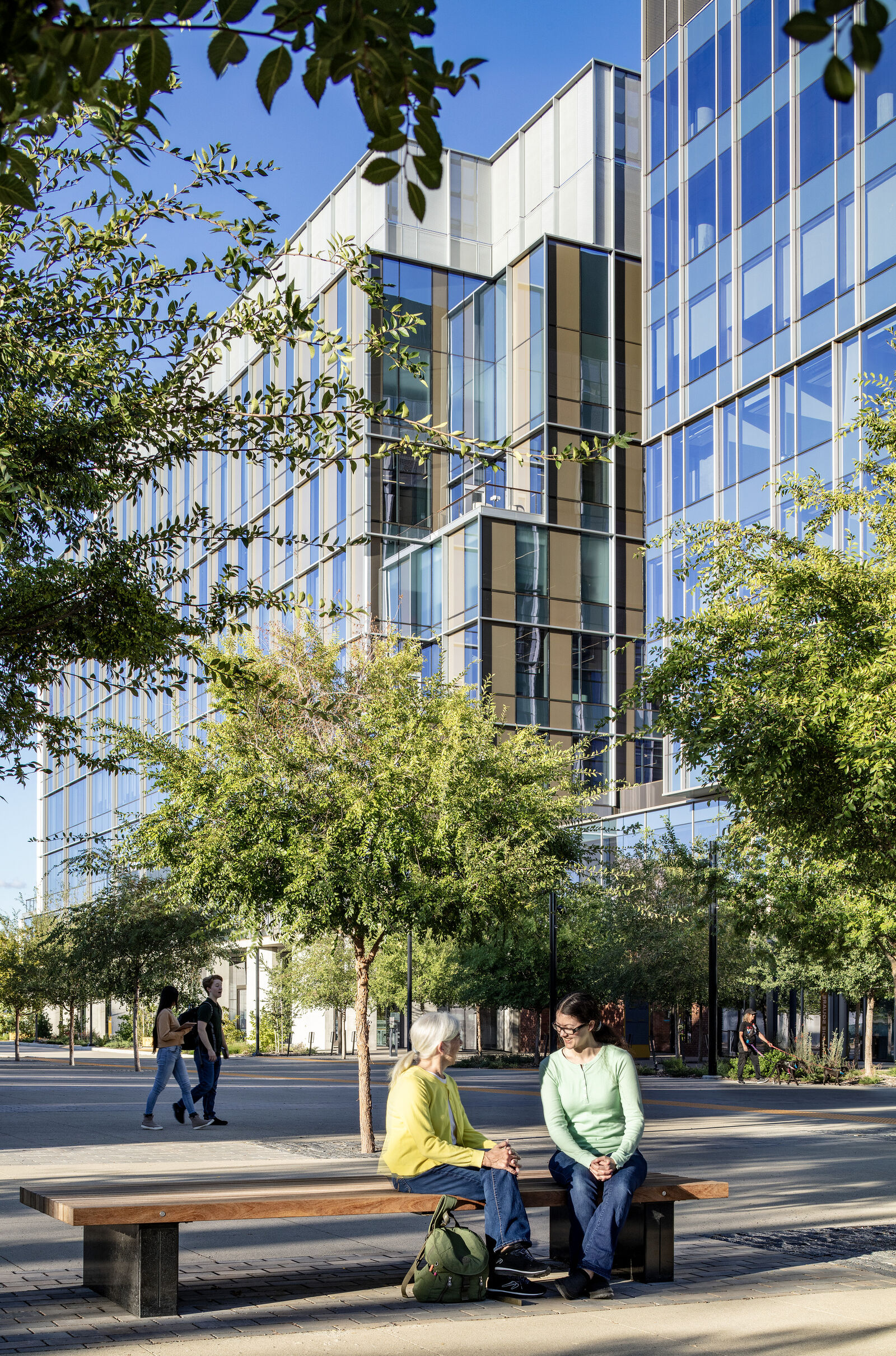
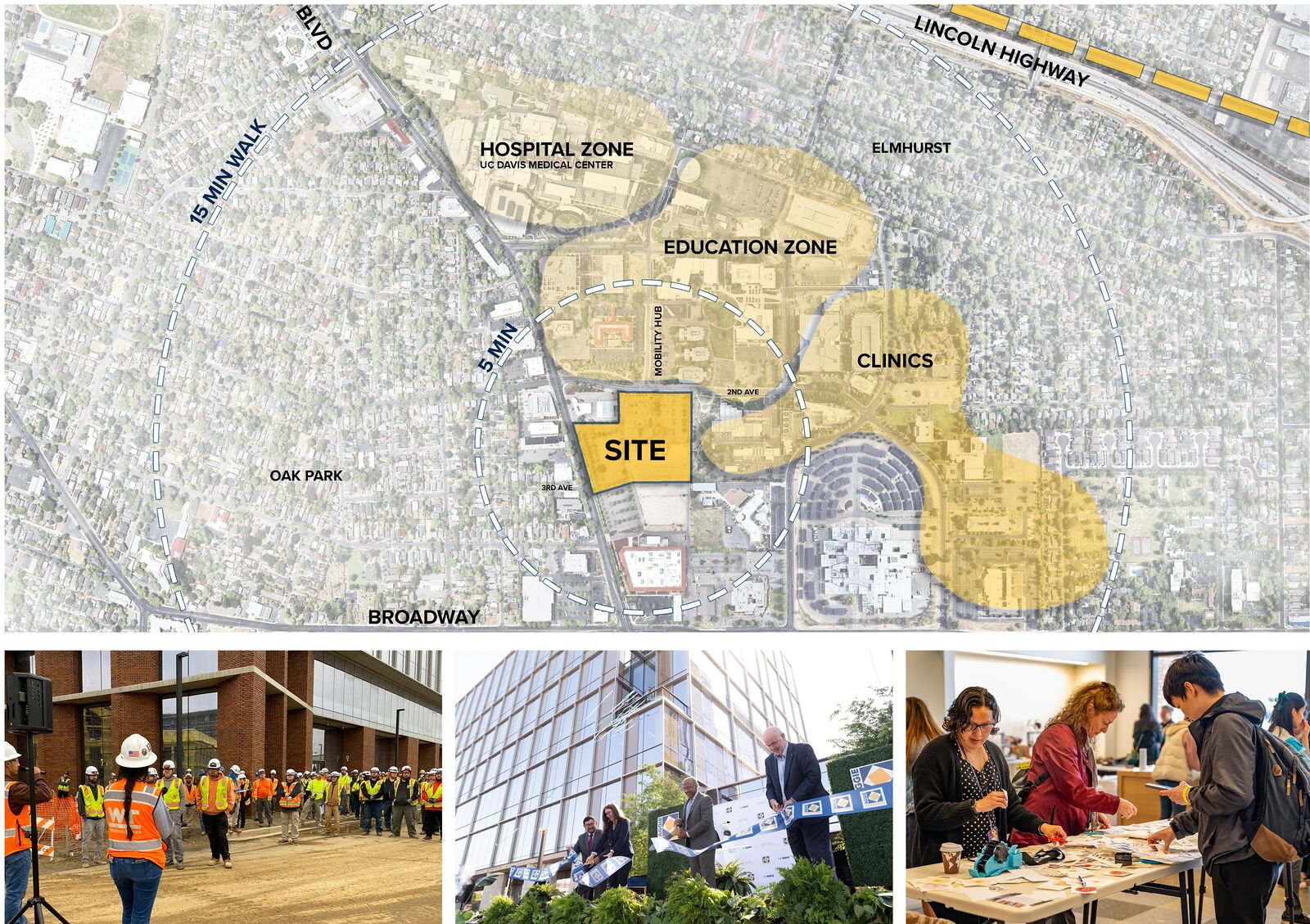
Sited on 8.25 acres, Phase 1 of Aggie Square is bordered by residential neighborhoods and the UC Davis medical campus. At its center, the namesake Aggie Square is a ¾-acre plaza that serves as an outdoor room, connected by a tree-lined paseo. The development delivers 594,500 SF across two buildings—200 Aggie Square for research and 300 Aggie Square for office and classroom uses—unified by a community-serving ground floor. The ground floor is open to the public in all directions, inviting the community into light-filled spaces for learning, making, and gathering.
COMMUNITY IMPACT
Conceived as a life sciences campus with the power to shift Sacramento’s identity from a government center to a thriving hub of innovation, Aggie Square is designed to amplify opportunity across the region.
Aggie Square channels UC Davis’s research strength into shared prosperity for South Sacramento. At full build-out, it is projected to generate roughly $500M in annual regional economic output and support 3,200 ongoing jobs, while construction and early tenancy have already created thousands of local employment opportunities.
Through a precedent-setting Community Benefits Partnership Agreement and Enhanced Infrastructure Financing District, Wexford, UC Davis, and the City of Sacramento have committed $50M for affordable housing and housing stabilization along the Stockton Boulevard corridor, alongside investments in workforce development, youth programs, and neighborhood infrastructure—ensuring the innovation hub grows together with the surrounding community.
“Aggie Square is the ultimate ‘innovation ecosystem’. It’s part laboratory, classroom, workplace, business incubator and community gathering place. We’re building a place where companies, researchers, students, faculty and community advocates work side by side."
Gary S. May, UC Davis Chancellor
One Building Fits All
Aggie Square is designed as a connected ecosystem where physical space actively accelerates collaboration. By linking public ground floors, visible maker spaces, education zones, and open vertical connections, the district is designed to be a hive of activity. These “active invites” foster serendipitous encounters among students, researchers, industry partners, and the public. The result is an environment where collaboration happens more naturally, authentically, and at scale.
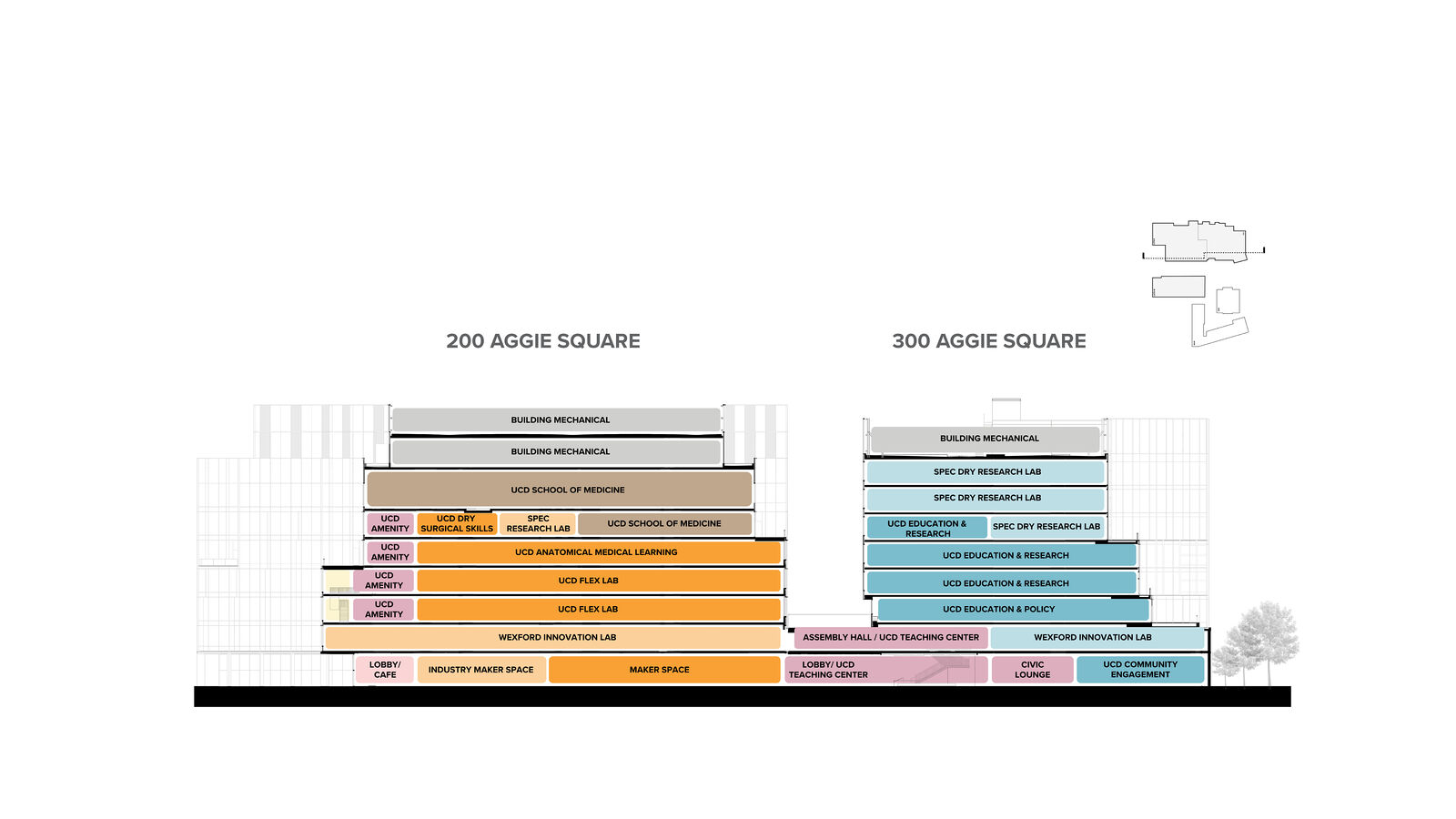
Across its seven floors, Aggie Square’s vertical stacking creates a clear continuum from the most public, community-facing spaces at the ground plane to increasingly specialized medical education and research environments above. Maker spaces and public-facing spaces anchor the entry level, giving way to co-working labs and teaching spaces on the second floor. Higher levels transition into UC Davis’s wet labs, support zones, and shared cores, followed by medical education spaces on the fifth floor. The lab spaces on the sixth and seventh floors are carefully planned to bring an abundance of daylight in wherever possible. This level of integration transforms the building from a collection of programs into a living ecosystem—one that supports the full arc of learning, research, and community engagement within a single, navigable framework.
The first two floors of Aggie Square operate as a unified public realm, linking the lab and office buildings to create a connected experience. Across these levels, a mix of classrooms, a maker space, community-facing programs, and event space fosters collaboration, activation, and an inviting sense of openness.
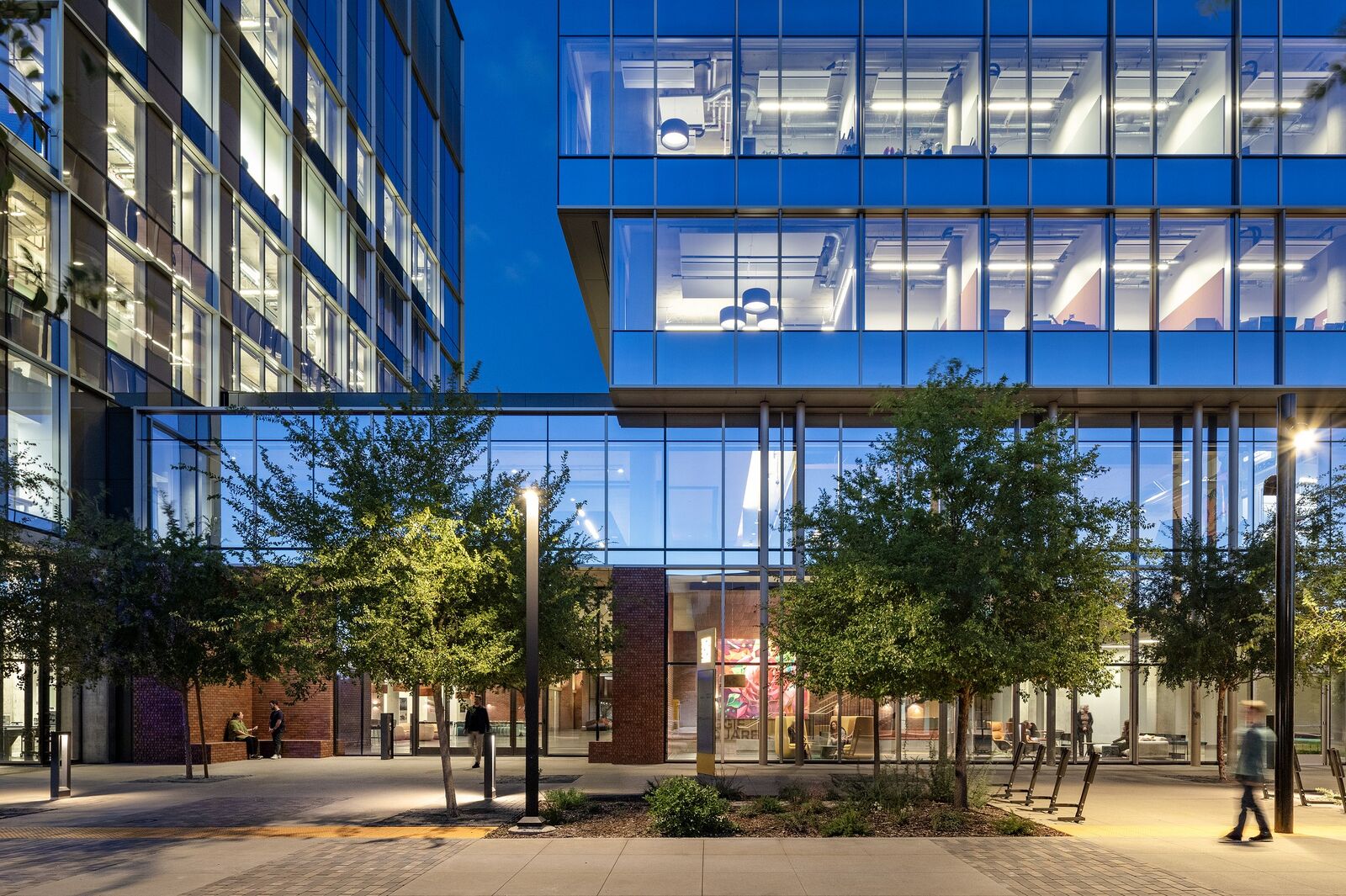
Ground floor connection between 200 and 300 Aggie Square.
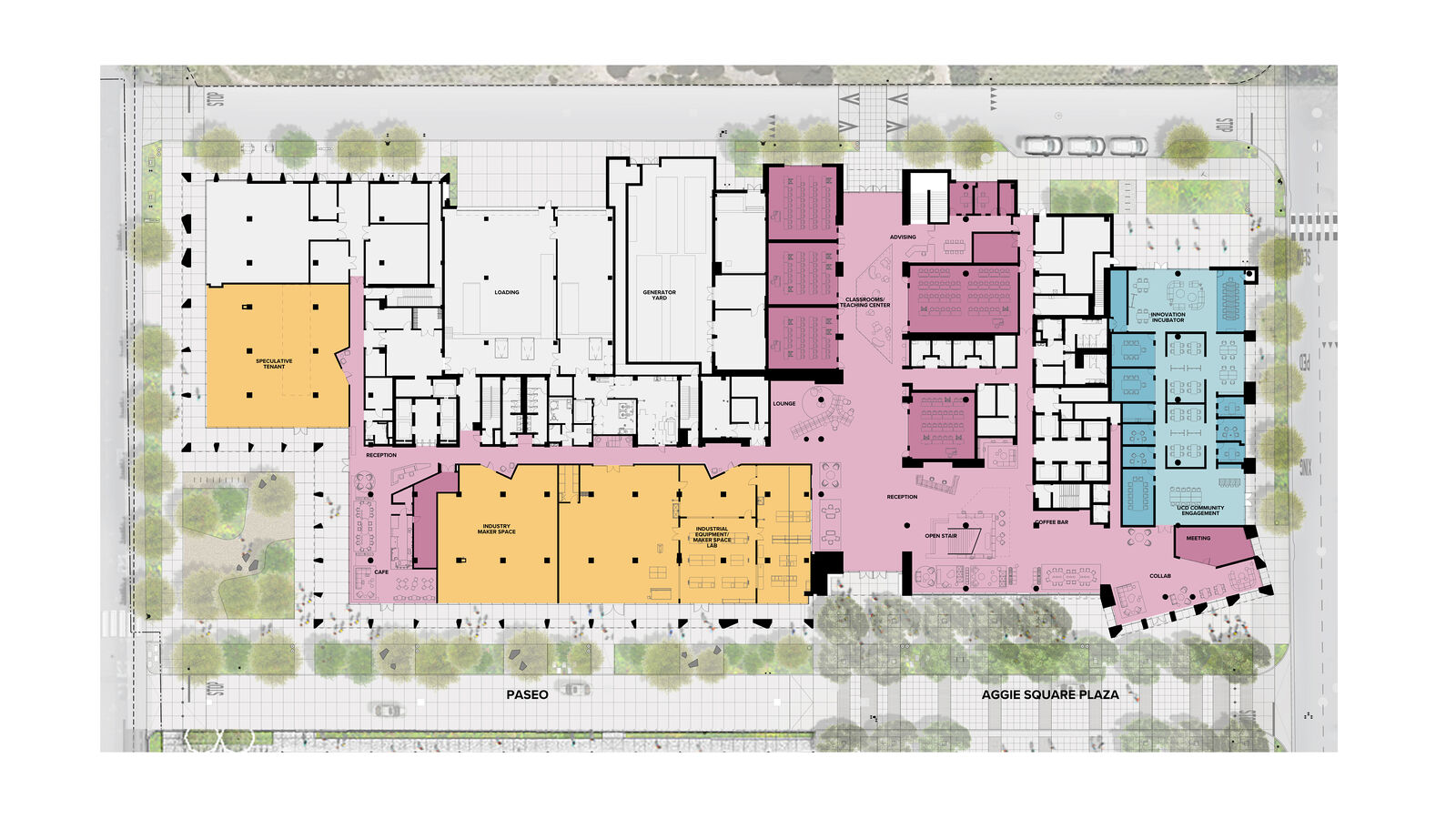
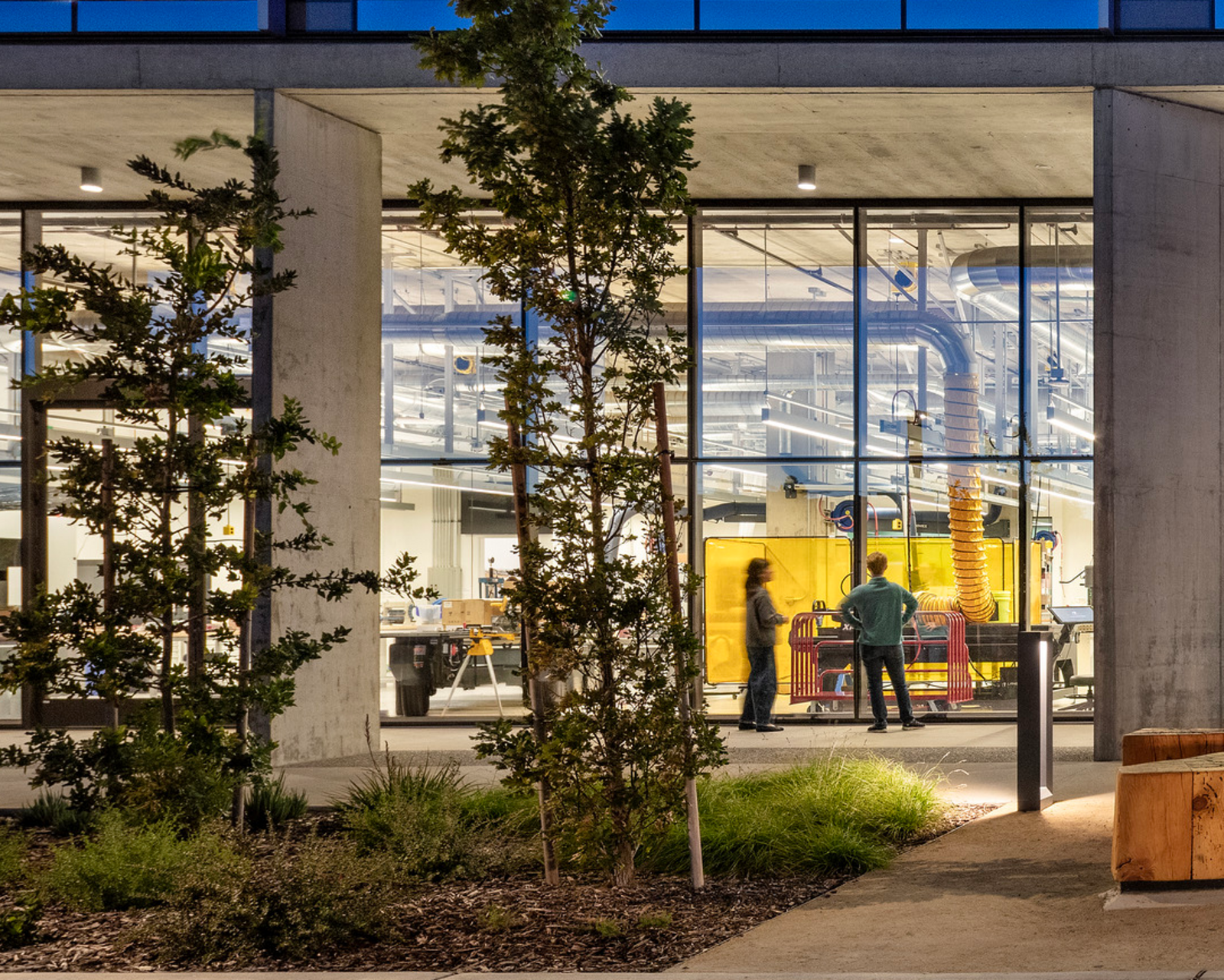
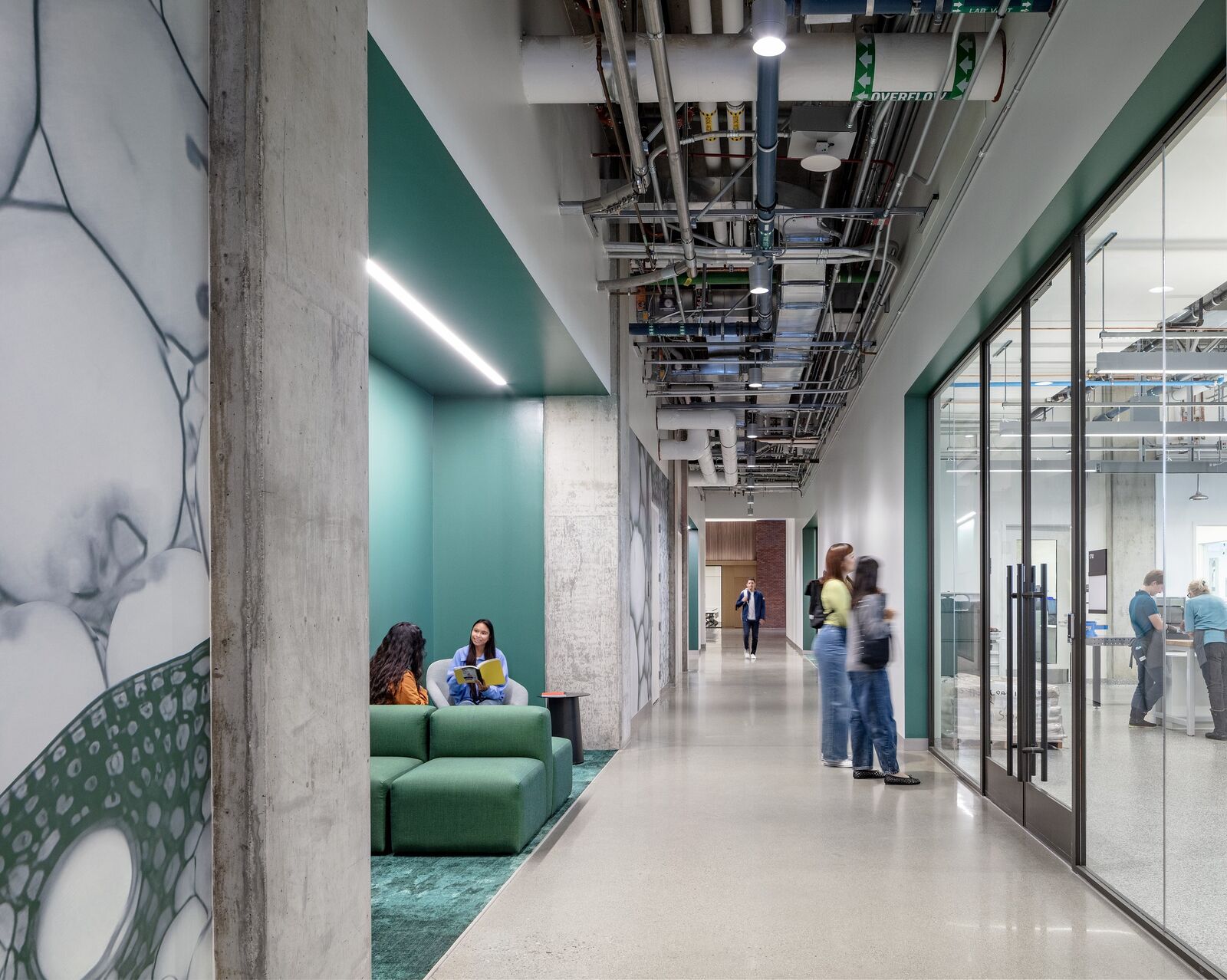
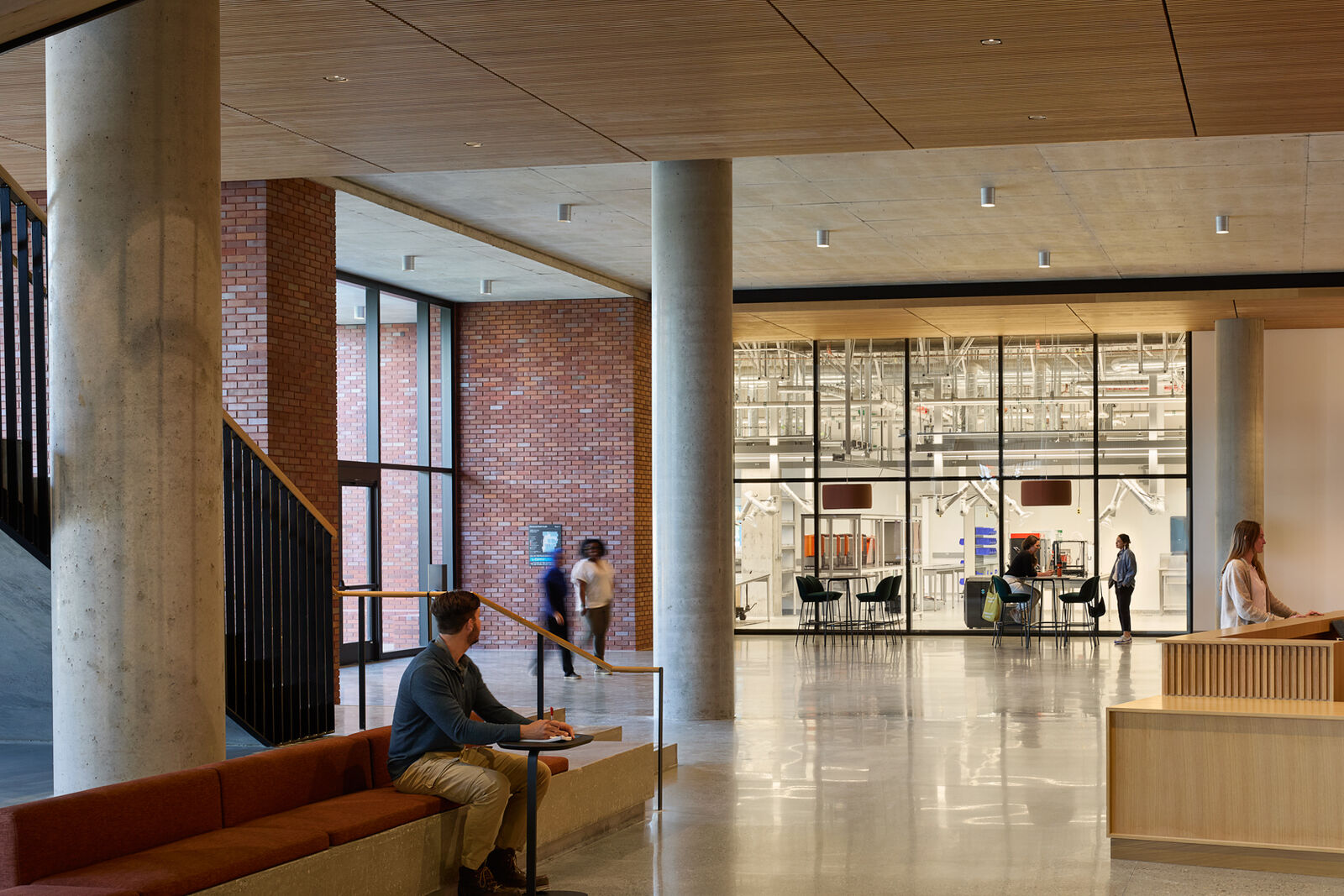
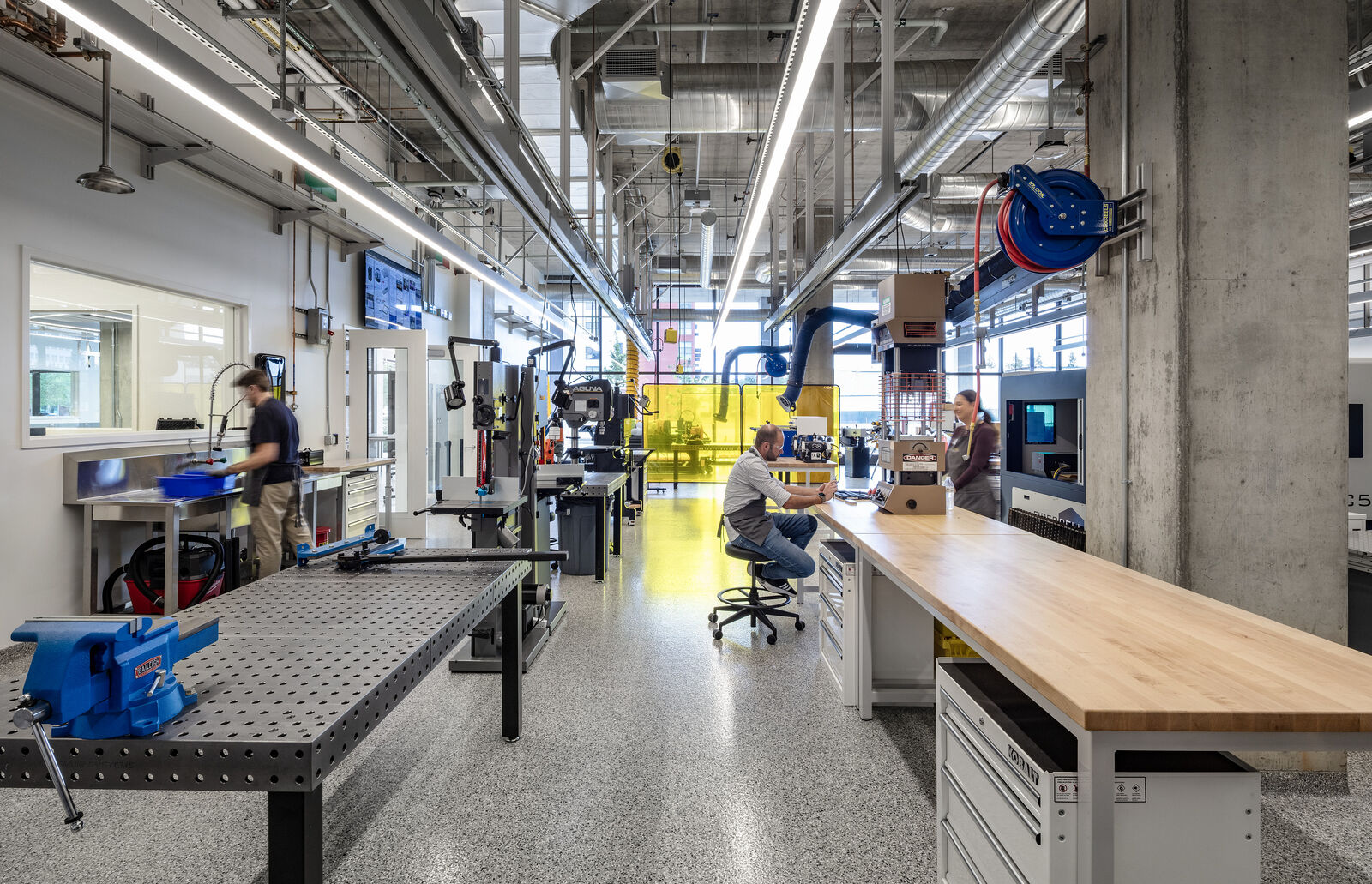
Located at Aggie Square’s front door, the ground-floor maker space puts science on display, with 3D printers, laser cutters, and fabrication tools visible from the lobby and primary circulation corridors. A long, glass-lined passage along the lab building showcases ongoing activity—from prototyping to the creation of specialized veterinary training models—offering students, tenants, and visitors a vivid glimpse into the innovation happening within the district.
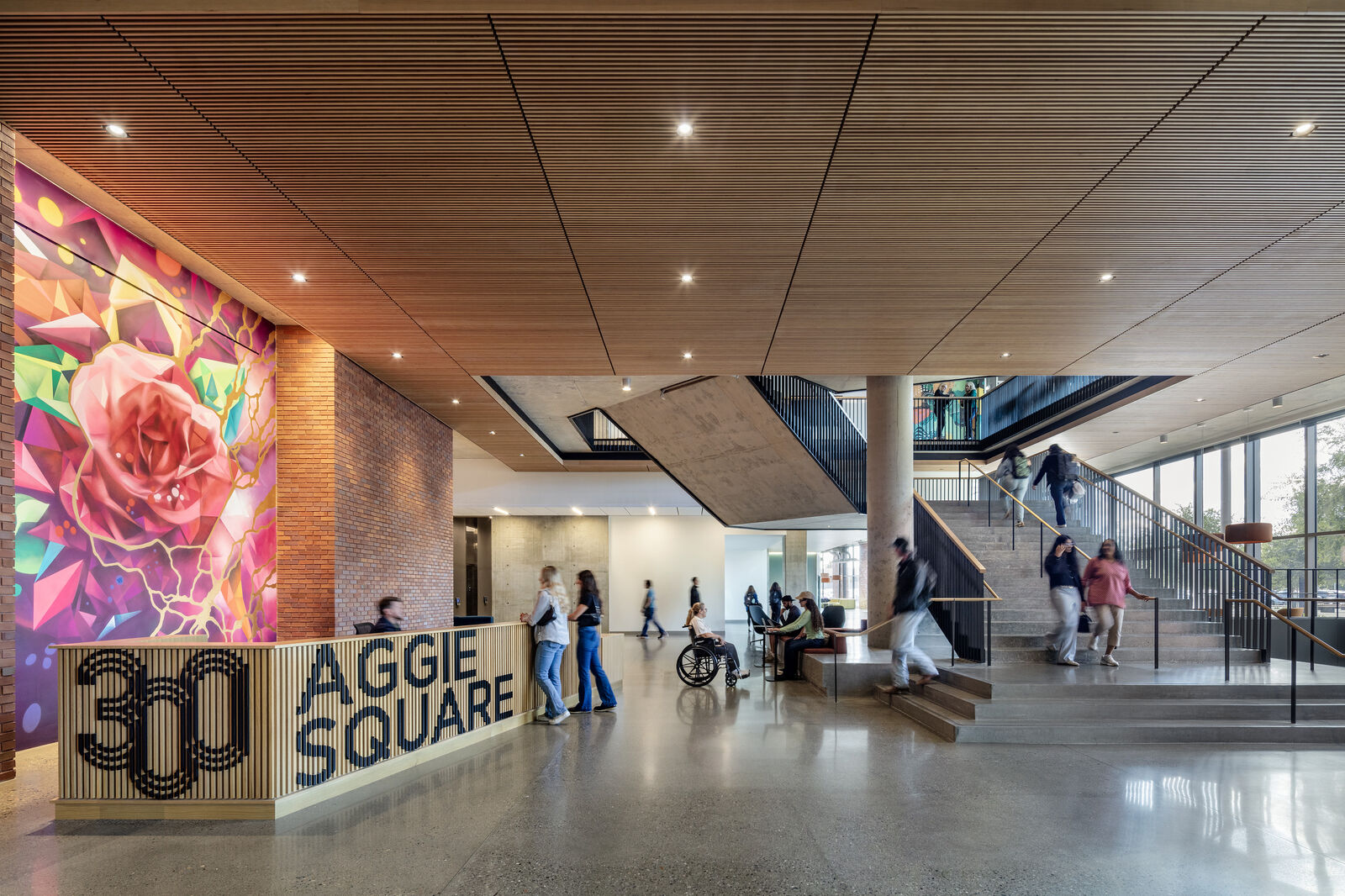
Vibrant public spaces are intended to reinforce the integration of Aggie Square with the local community.
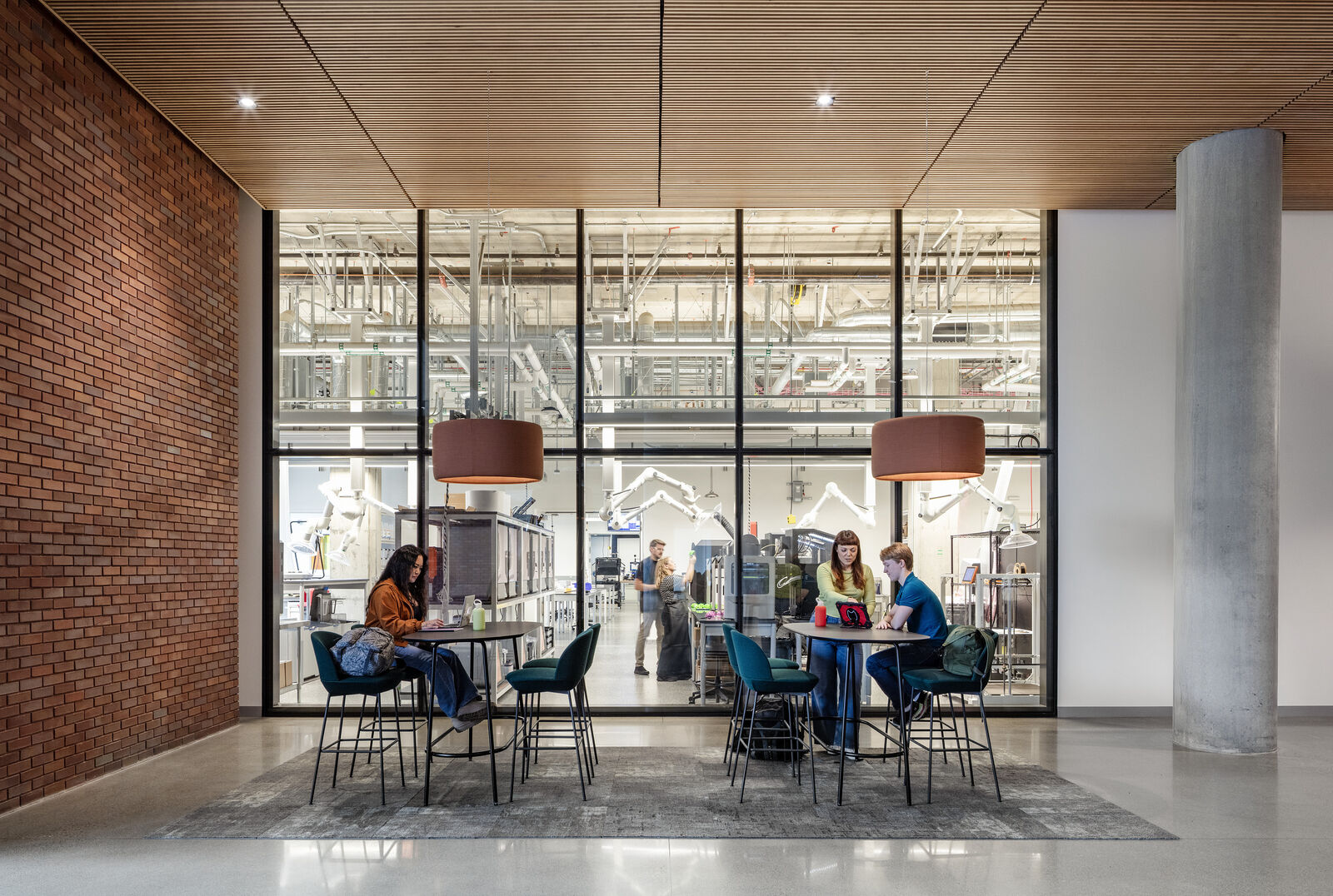
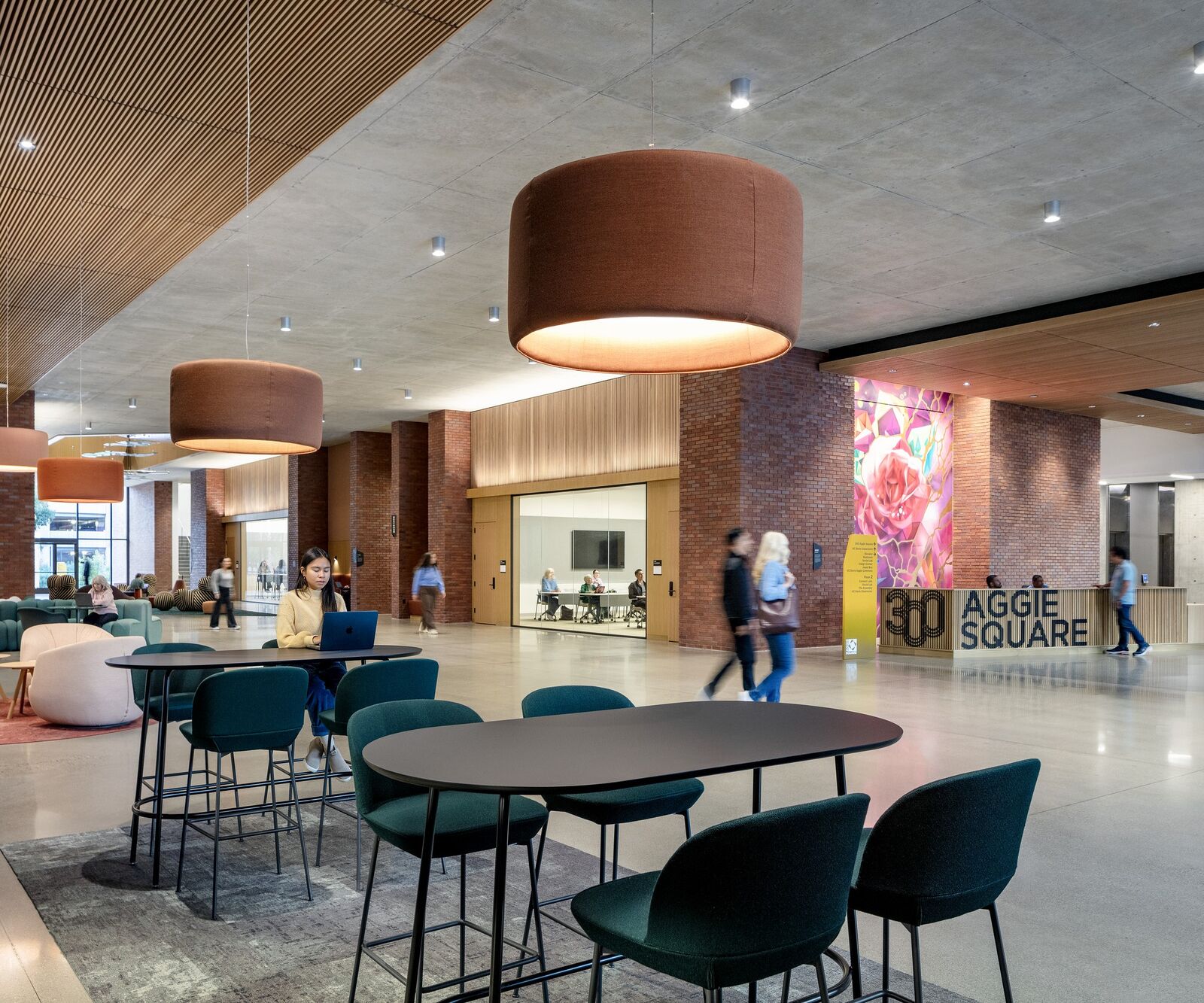
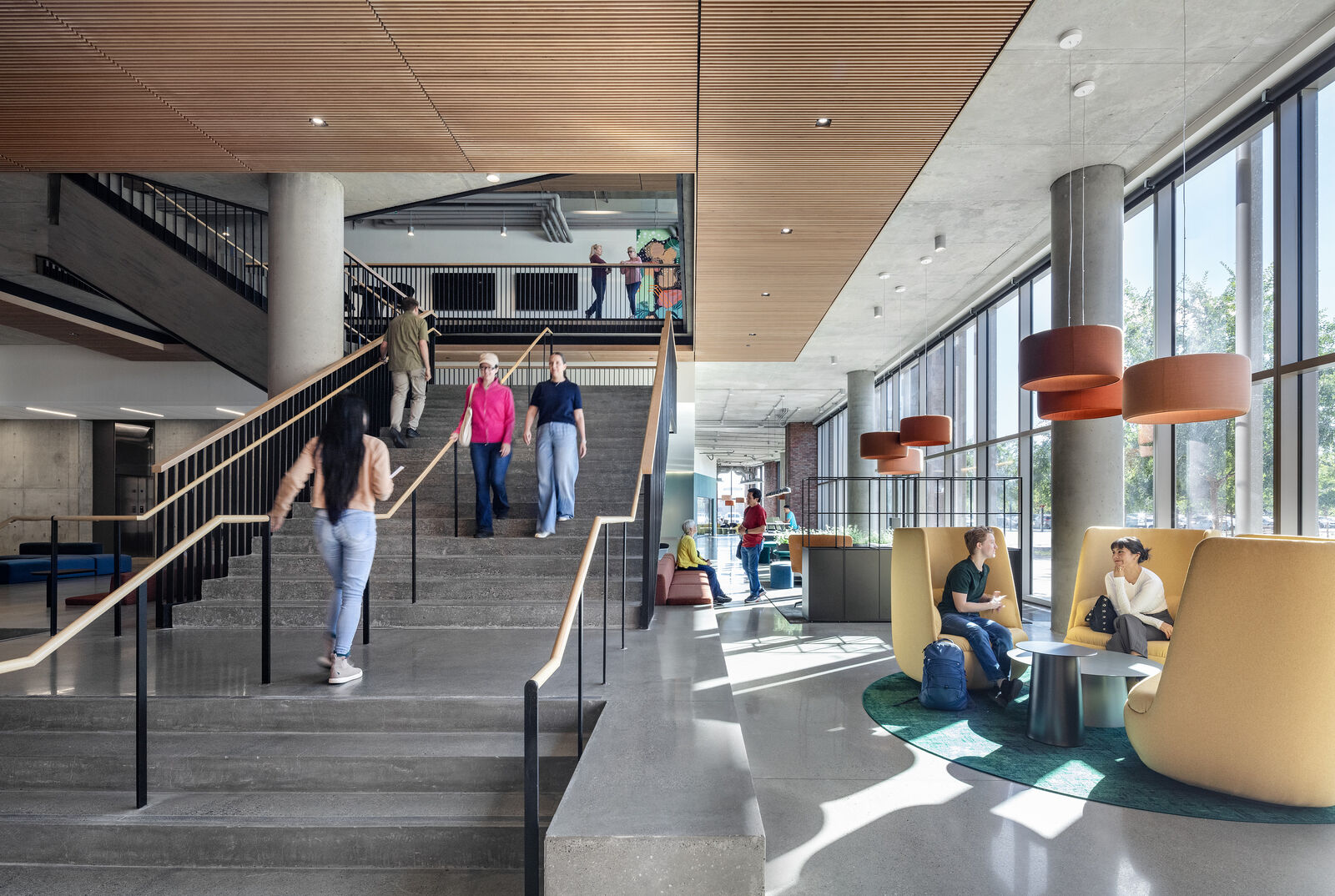
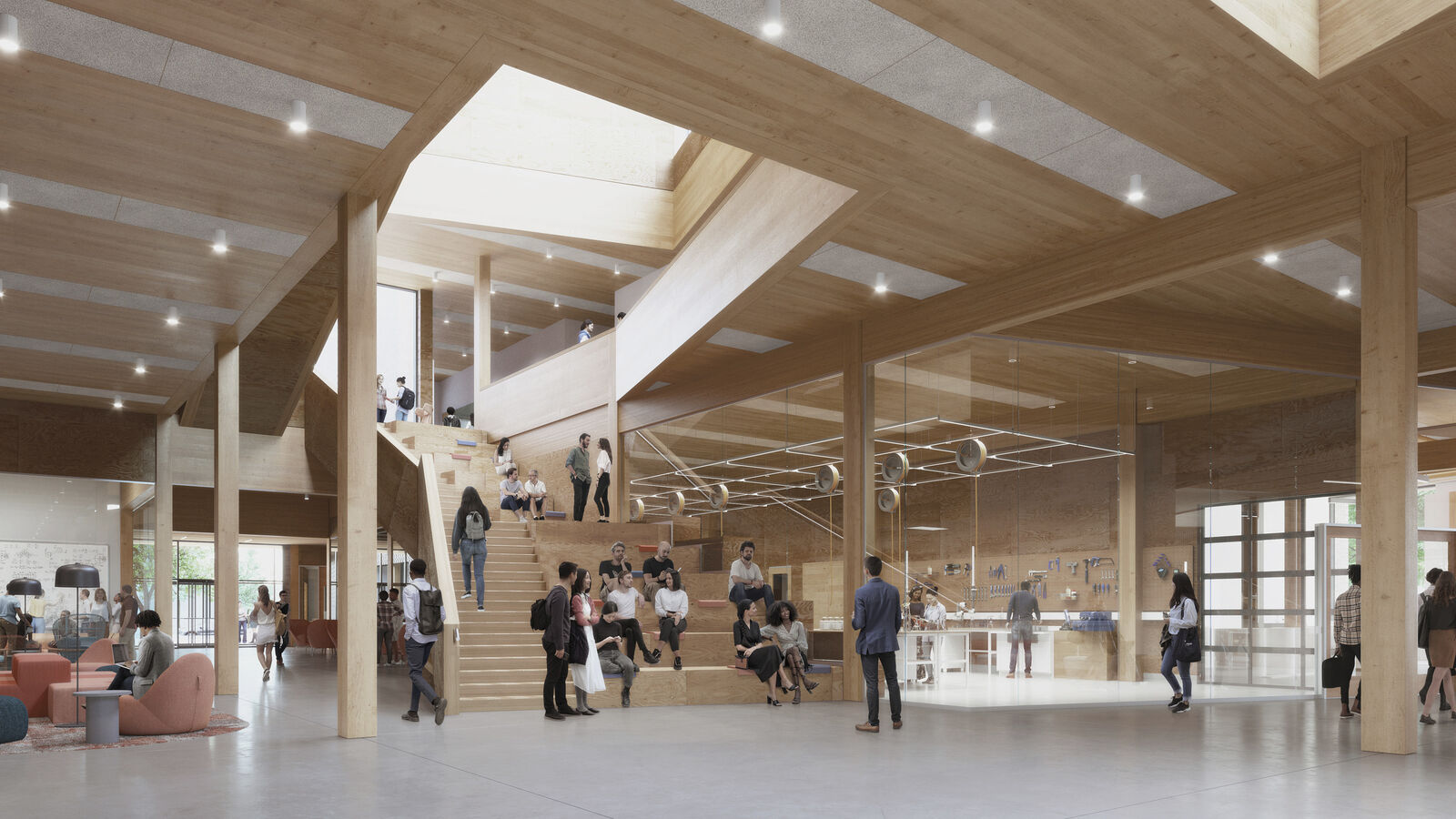
From the public lobby, a prominent open stair rises to teaching and co-working labs on the second level, inviting the community upward to access additional public amenities.
A LIVING ROOM FOR LIFE SCIENCES
The interior environments are fundamental to how academia, industry, and community gather at Aggie Square. Guided by principles of hospitality, openness, and cross-pollination, the design reimagines the research campus as a place defined not by institutional thresholds but by warmth, texture, and movement. Across the district, interiors invite users into spaces that encourage connection, foster creativity, and make the processes of scientific discovery visible and accessible.
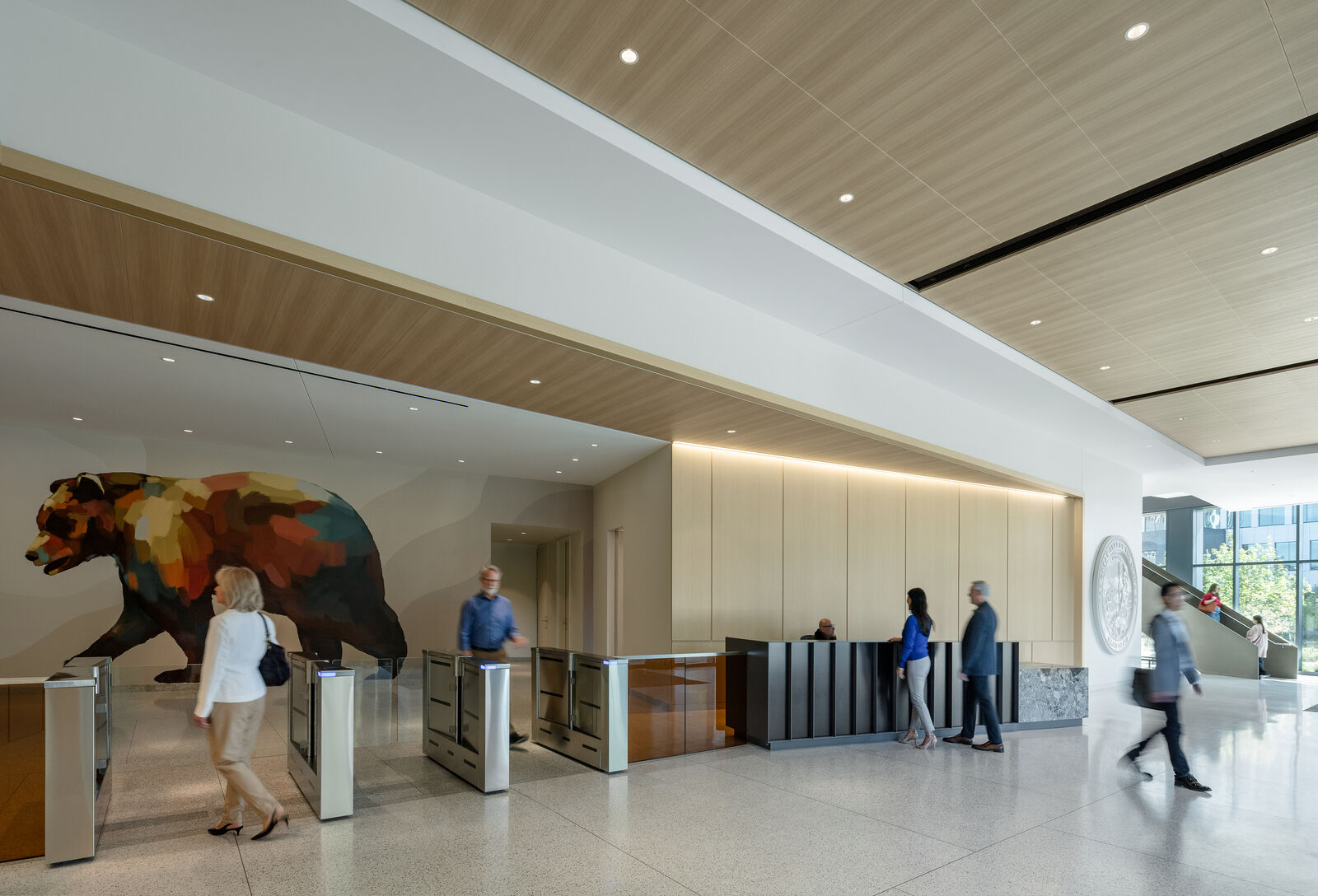
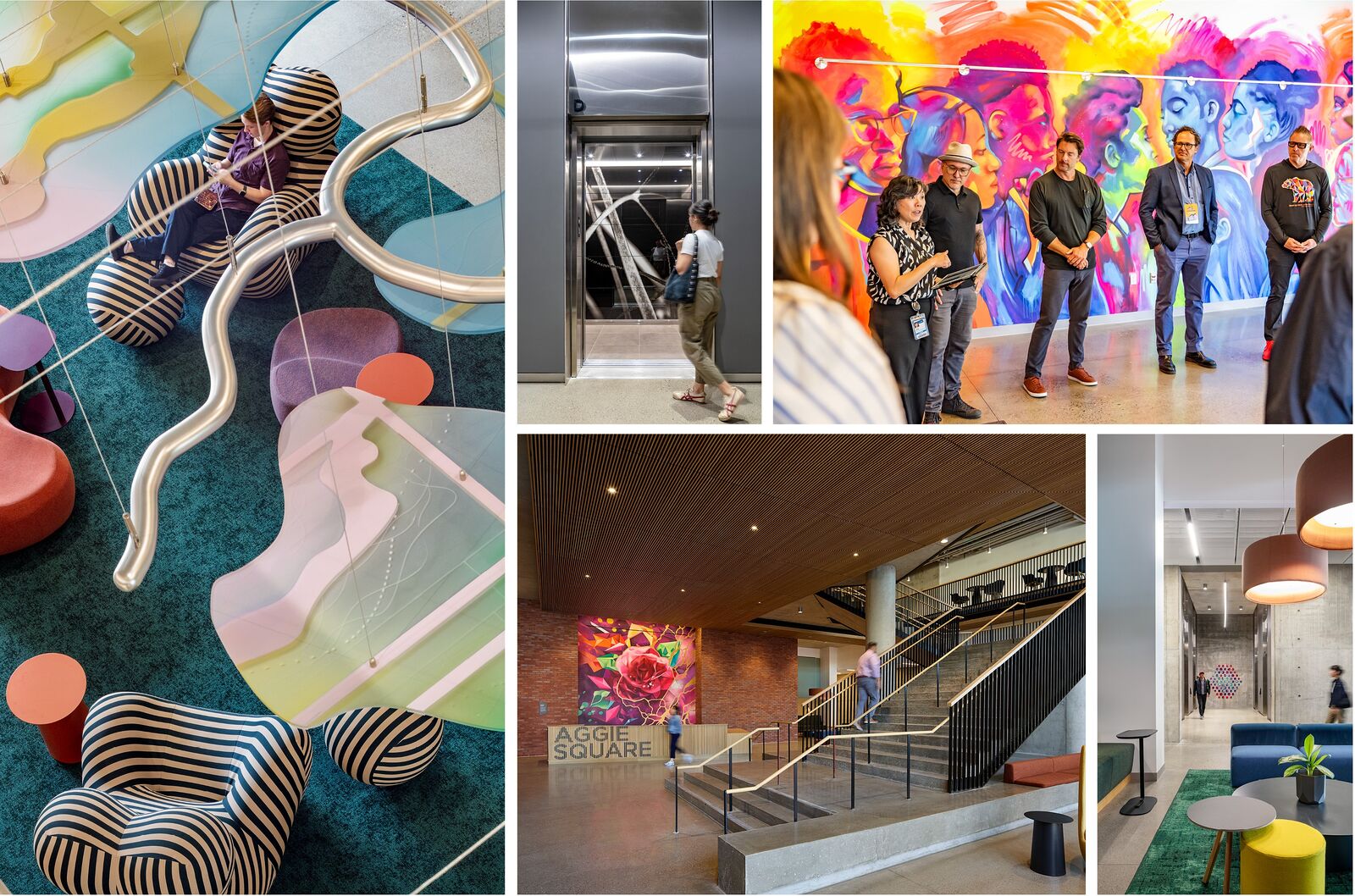
Light-filled ground floors open in all directions, forming a porous public realm anchored by warm woods, exposed structural concrete, and regionally sourced brick. Artworks by local artists and a diverse, playful mix of furnishings establish a vibrant, textural palette rooted in Sacramento’s cultural fabric. Monumental stairs and open vertical connections form the social spine of Aggie Square, linking key floors to encourage circulation, collaboration, and a sense of shared ownership. These elements create active gathering spaces that welcome neighbors, students, and faculty into the life of the district.
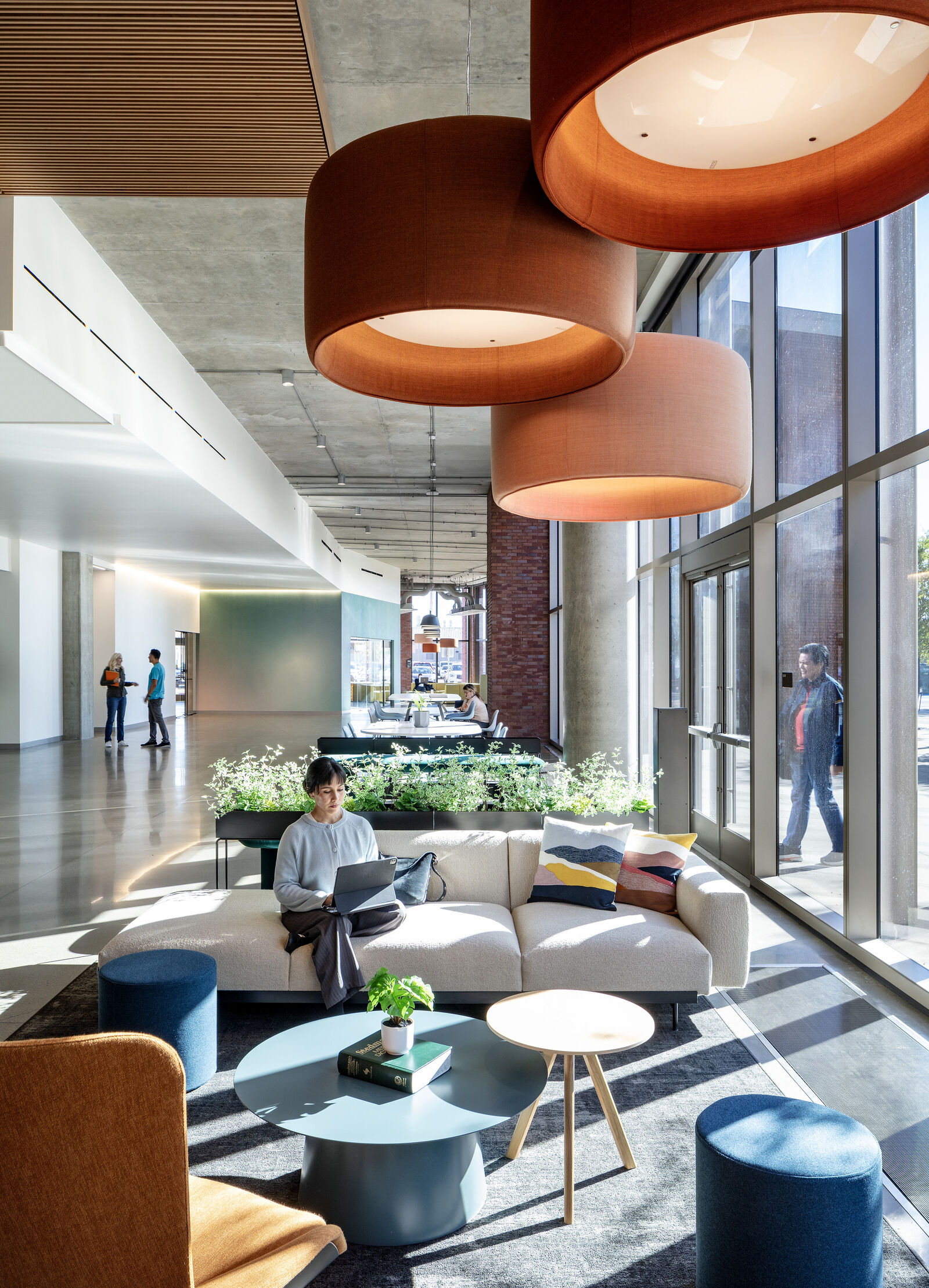
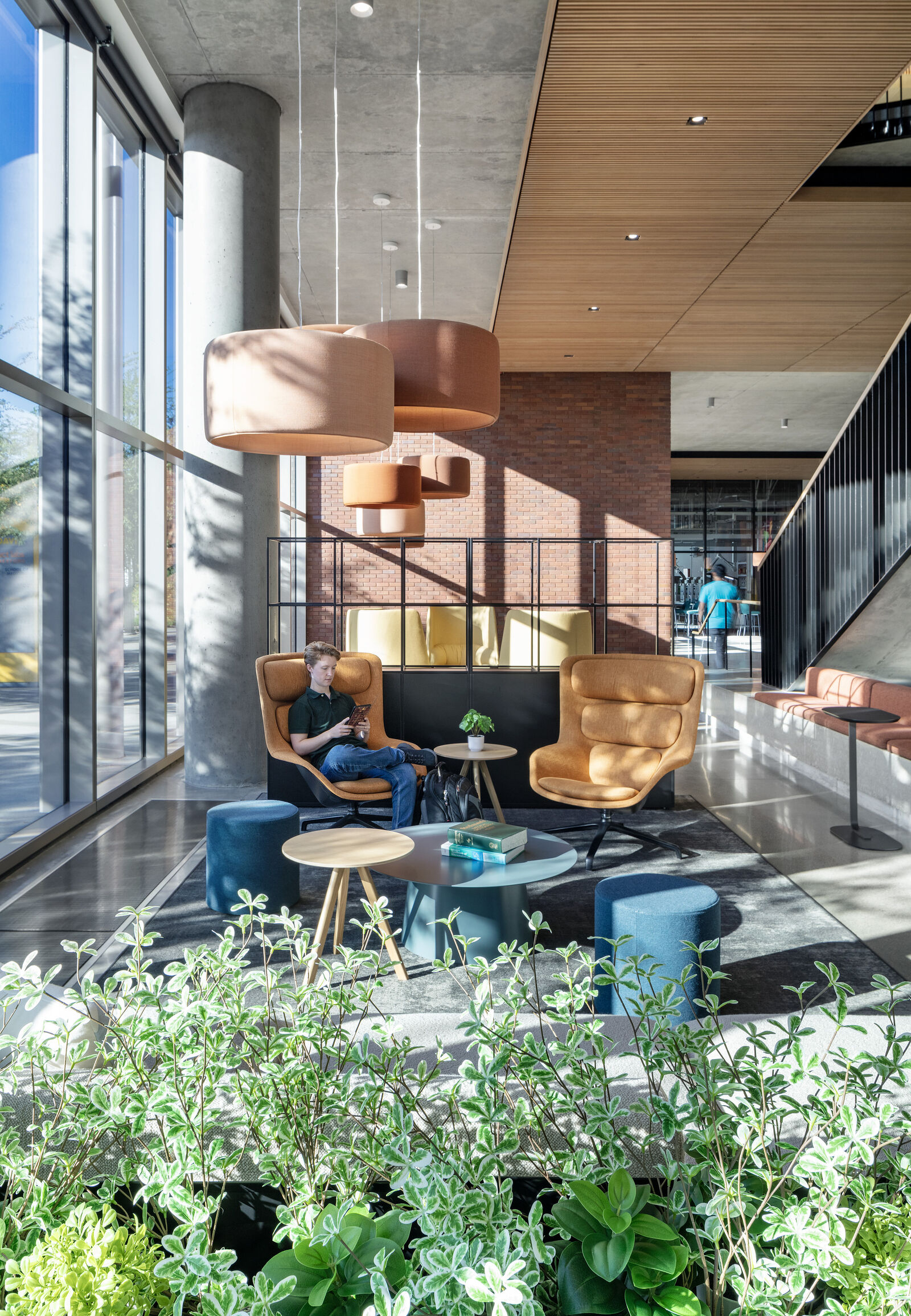
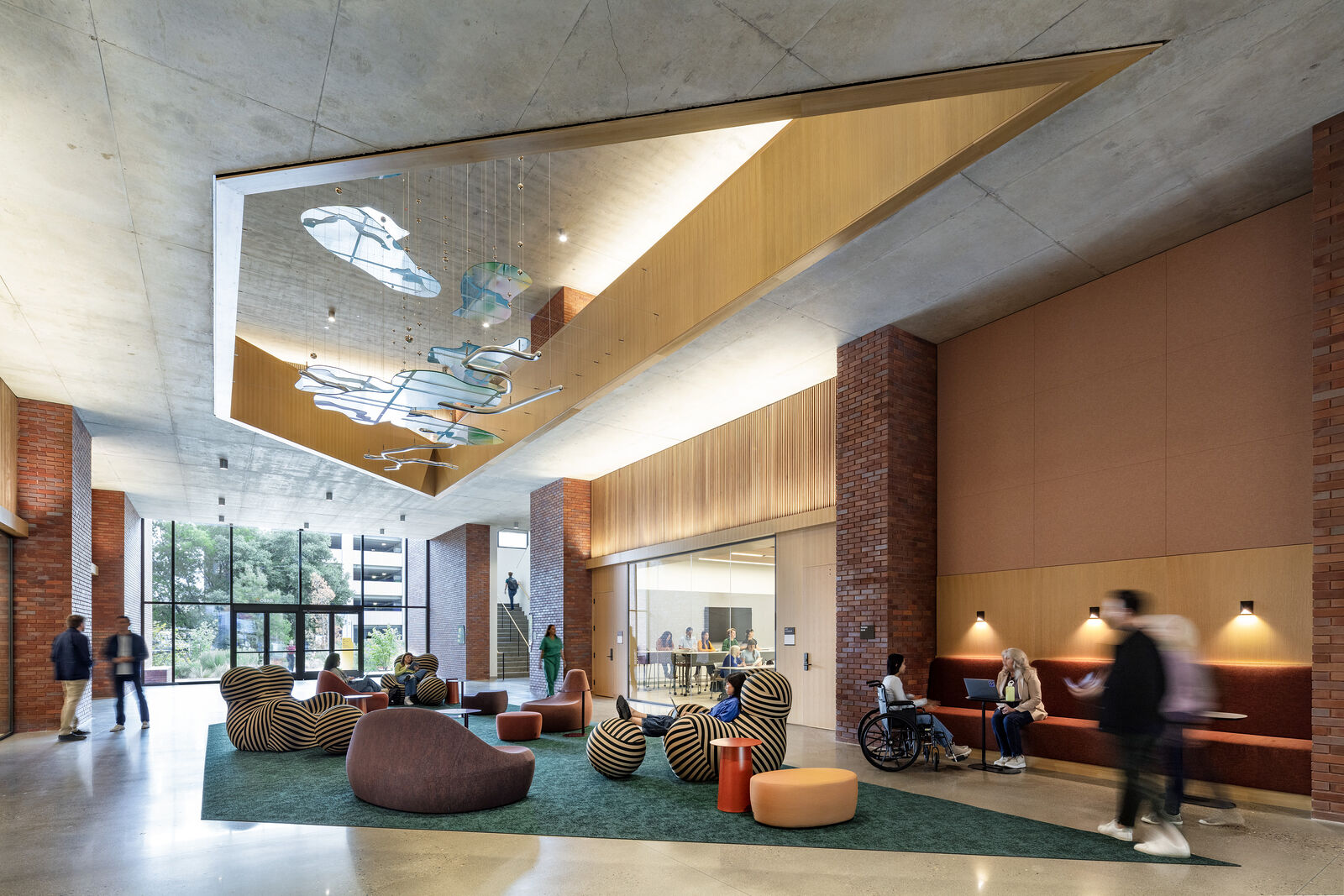
A second-floor oculus, tactile sculptures and murals, varied seating clusters, and glass walls that offer transparency into classrooms and lab spaces work together to activate the ground floor lobby.
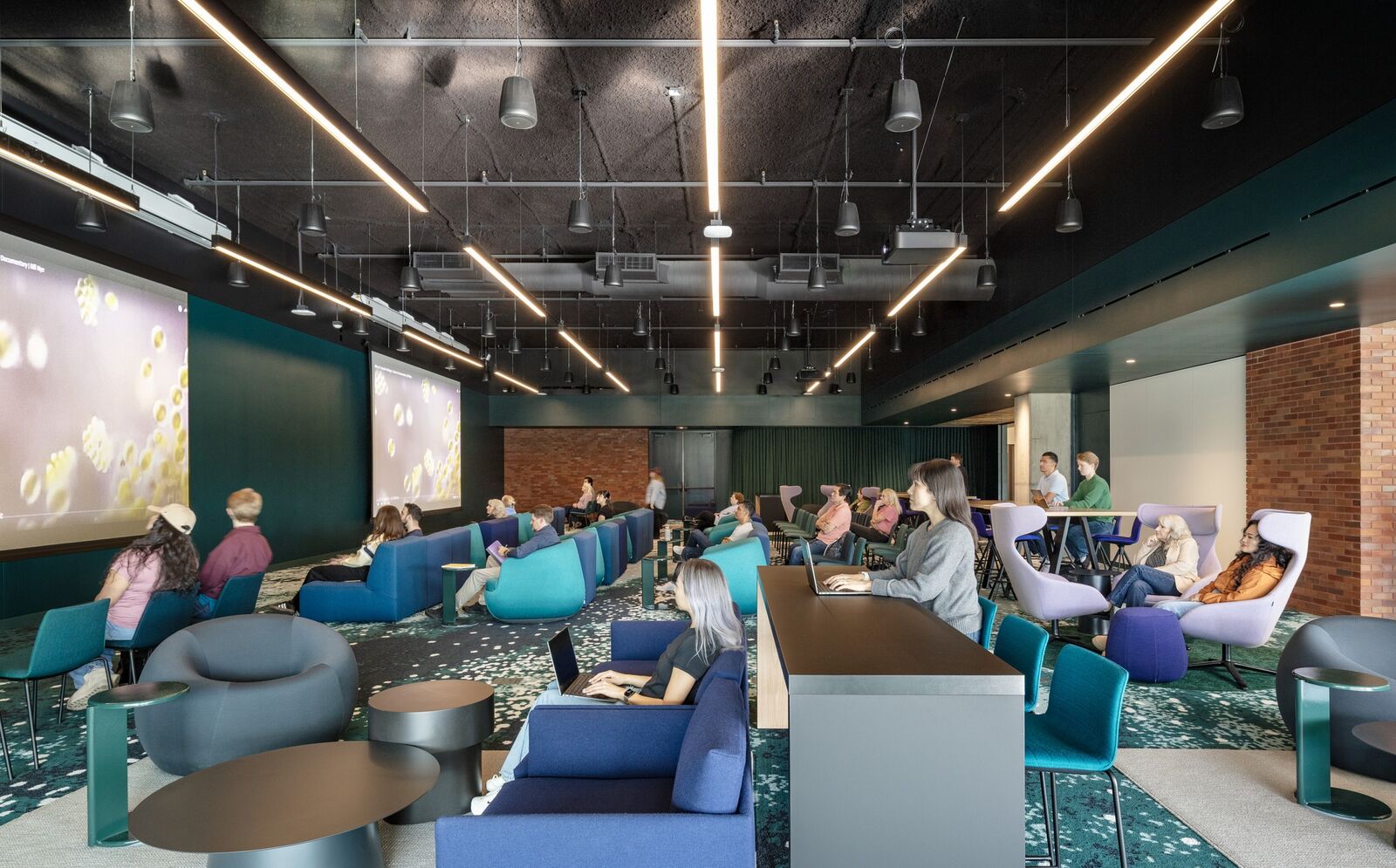
Anchoring the second floor, the Social Lab functions as Aggie Square’s primary gathering zone—an assembly hall that energizes the district’s two connected public levels. Framed by Wexford’s co-working labs, the space adopts a hospitality-forward approach, offering a spectrum of seating and work settings that encourage all-day use. A two-level bronze genius bar supports hoteling, event check-ins, and accessible collaboration, while telescoping doors allow the room to flex for programs of varying scale.
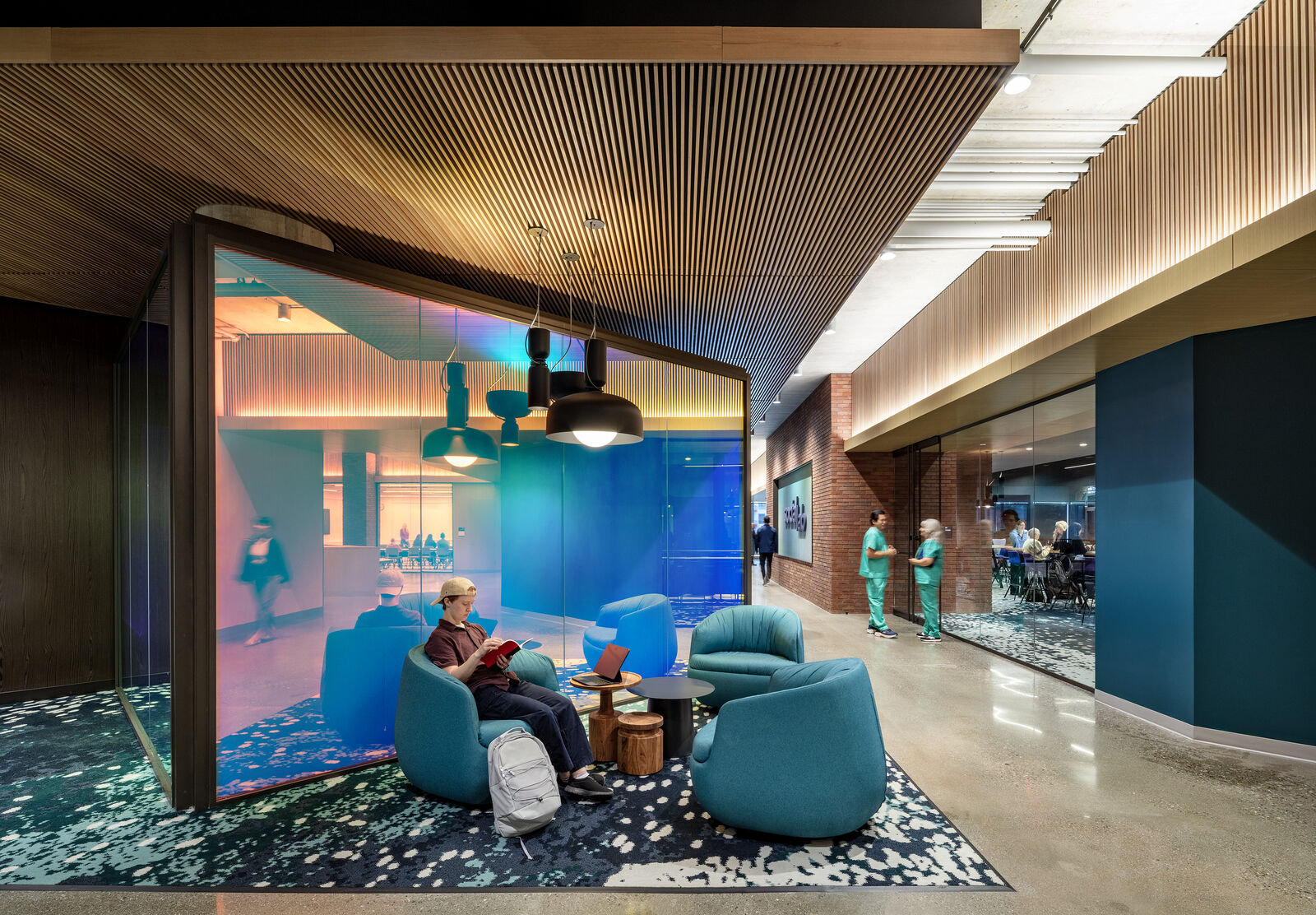
Color and light play an essential role: a dichroic glass volume introduces shifting hues that echo through the teal and aqua palette, creating a cohesive visual identity across the floor. Ancillary settings further activate the environment, making this zone a catalyst for connection, creativity, and continuous engagement.
A Home for Research
Shared amenity knuckles dissolve the boundaries between university researchers and industry innovators—placing kitchens, conference rooms, and circulation at the crossroads where their paths intersect. This intentional overlap becomes the keystone of the innovation ecosystem: a design strategy that sparks chance encounters, accelerates collaboration, and fuels breakthrough discovery.
Strategically placed shared kitchens, lounges, and collaboration zones at elevator landings and within lab neighborhoods further activate these nodes, creating natural moments of cross-pollination between research groups, students, community members, and industry partners. By placing academic researchers and private industry on the same floor with shared amenity and collaboration spaces, the design breaks down traditional silos to drive real-world impact.
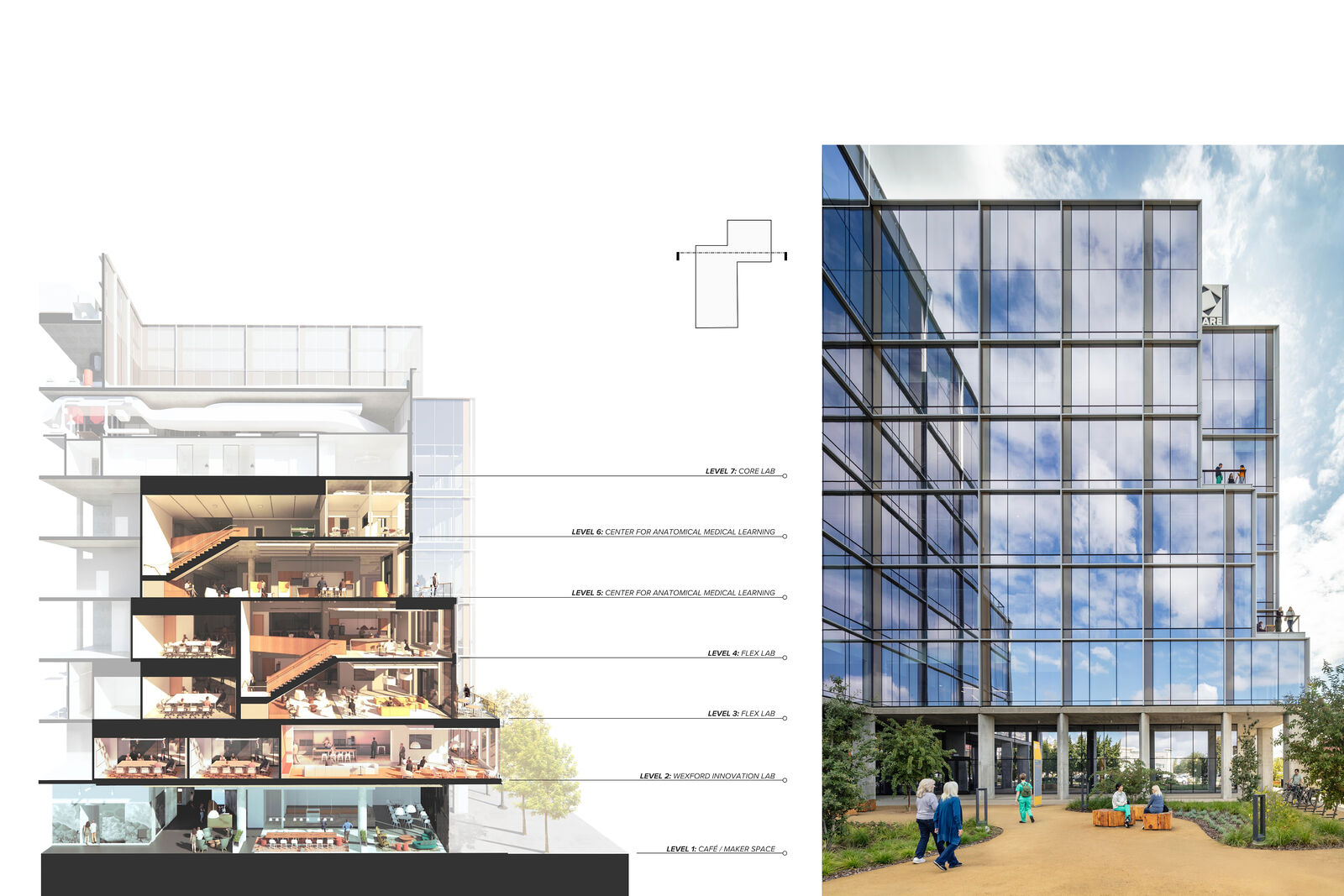
200 Aggie Square is programmed to accomodate a variety of science and educational uses all in a single building.
Because Aggie Square serves tenants ranging from biotech startups to university wet-lab researchers and the UC Davis School of Medicine, the lab design prioritizes adaptability to ensure each group can thrive. Strategic lab planning concepts such as side-loaded cores, shared-cores, and planning for flexibility and future proofing ensure 200 Aggie Square has been designed to support a wide range of laboratory programs and layouts.
The lab floor plan illustrates the flexible neighborhood planning concept, which can accommodate many different types of research such as biology, physics, chemistry or computational science. This perimeter layout also allows for a more efficient mechanical system, with cascading air from write-up spaces into labs, resulting in reduced make-up air loads.
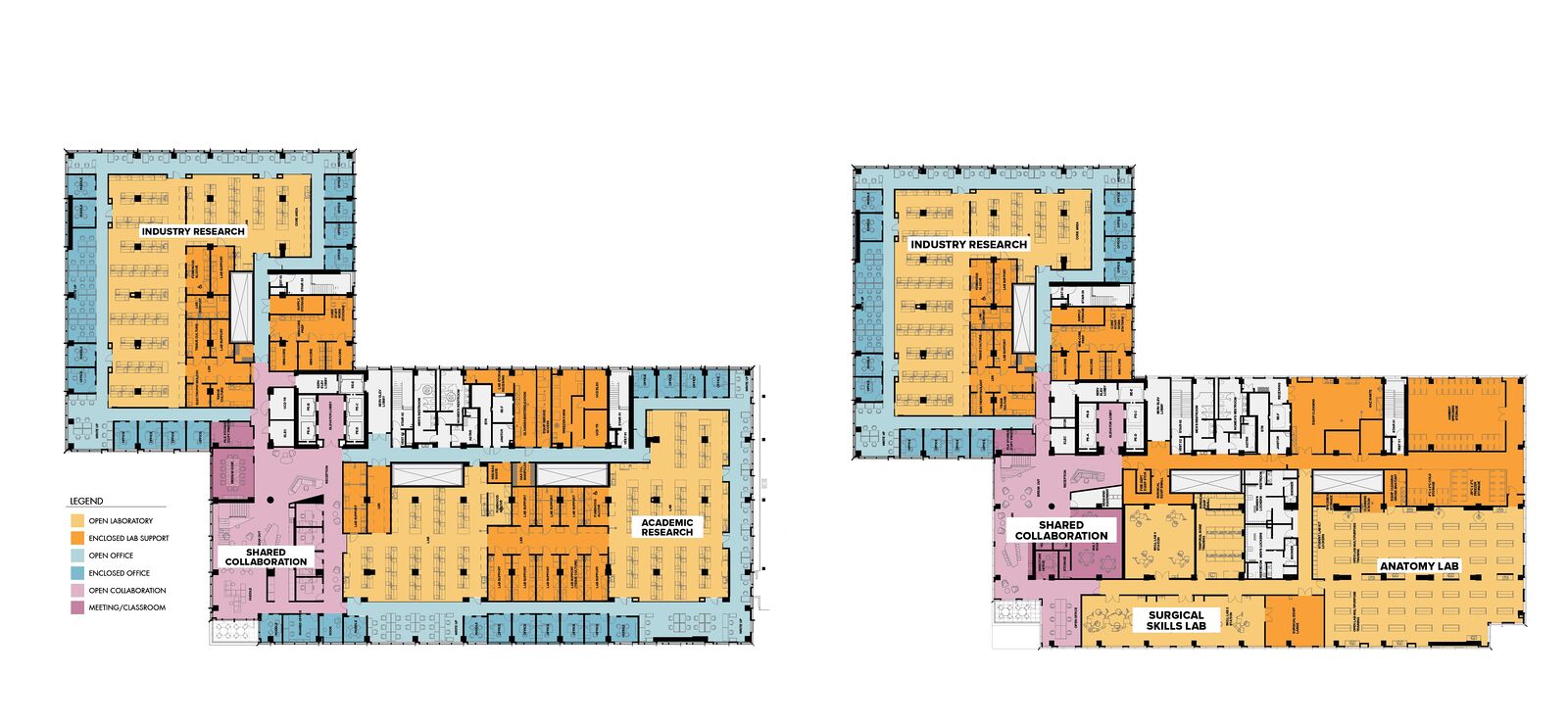
Left: Third floor plan
Right: Fifth floor plan
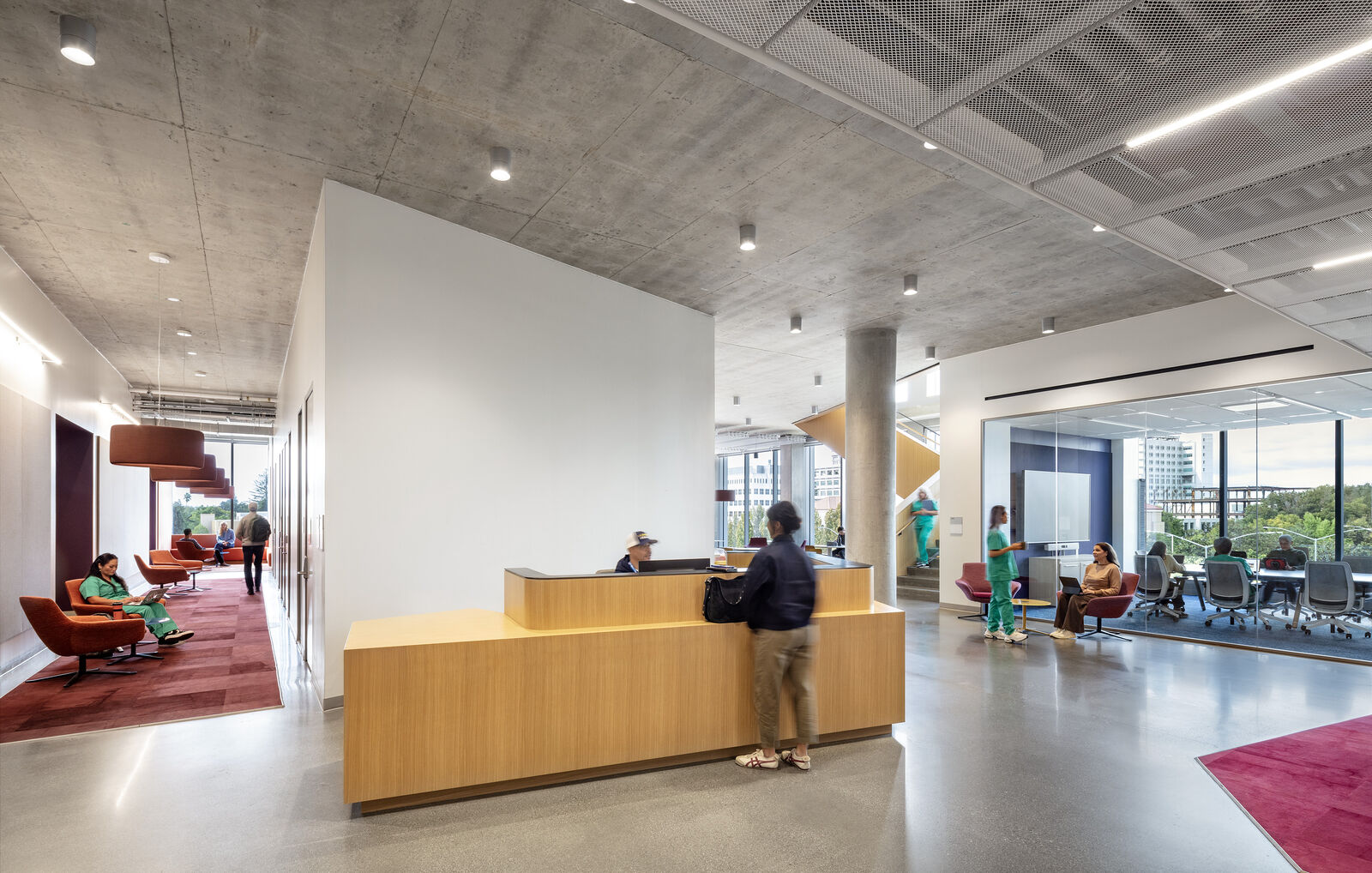
By placing academic and industry research labs on the same floor with a shared point of arrival, the programming fosters daily interaction across disciplines.
Sustainability
Aggie Square leverages one of the cleanest energy grids in the country—SMUD’s 100% renewable power—to deliver a fully electric, net-zero-operational carbon campus. Close collaboration among UC Davis, Wexford, and UC Davis’s EH&S team enabled the transition from combustion-based systems to safe, electric alternatives in labs, eliminating natural gas and improving safety by removing open flames. As a result, each building exceeds California energy standards by at least 20% and is on track for LEED Gold®.

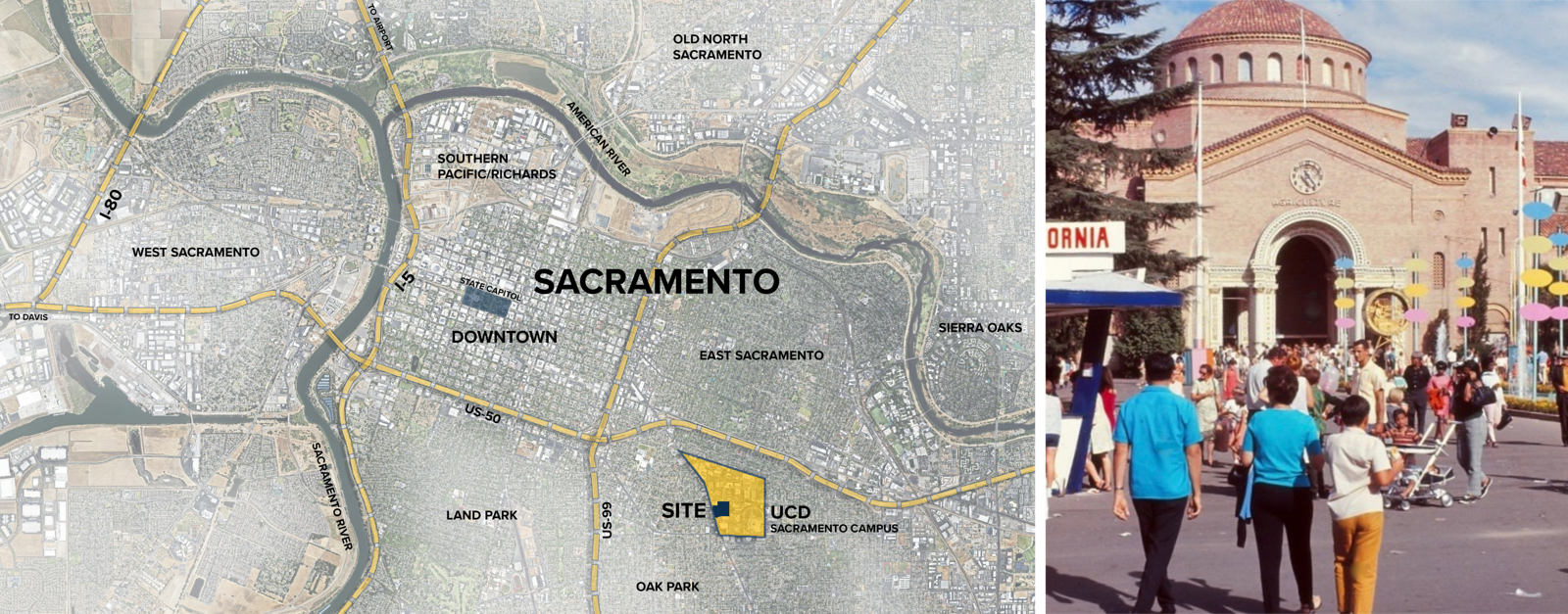
Located on the site of the old state fairground, Aggie Square is surrounded by residential neighborhoods and the UC Davis medical campus.
Designed to Reflect Local Character
Rooted in Sacramento’s historic character, the design takes inspiration from the city’s red brick architecture, tree-lined streets, and porch culture to create a welcoming, walkable district. From masonry manufactured locally to artwork by community artists, the design reflects Sacramento’s cultural identity and UC Davis’s connection to place and community.
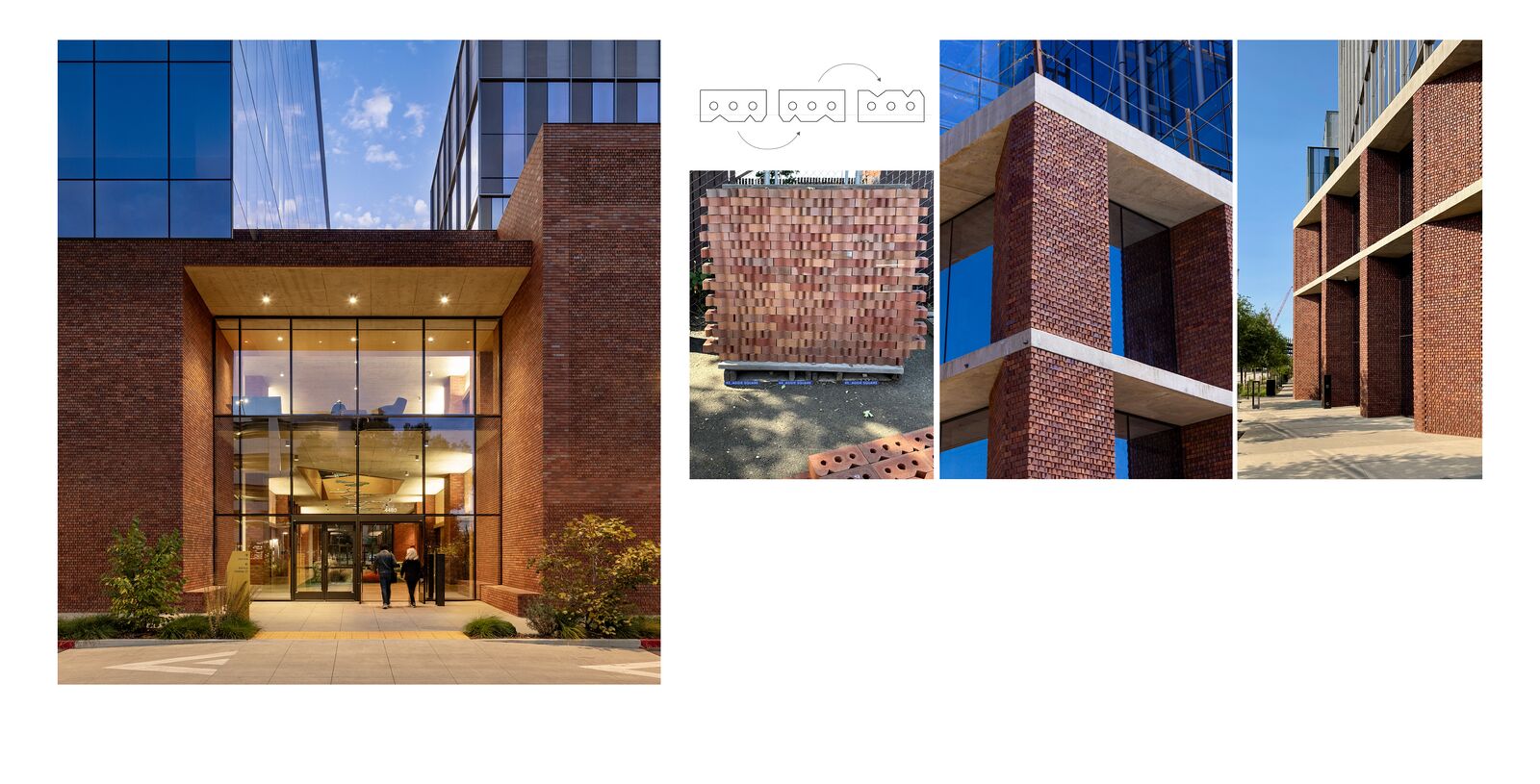
The masonry work—crafted locally from Sacramento red clay—was designed with a bespoke profile, using a standard mix shaped through a custom die to create textured edges and a distinct identity for the buildings. Its use roots the project in the city’s masonry tradition, drawing a connection to Sacramento’s historic brick structures. H.C. Muddox, who has been producing brick locally for 145 years, extruded, baked, and flashed the material just nine miles from the project site.
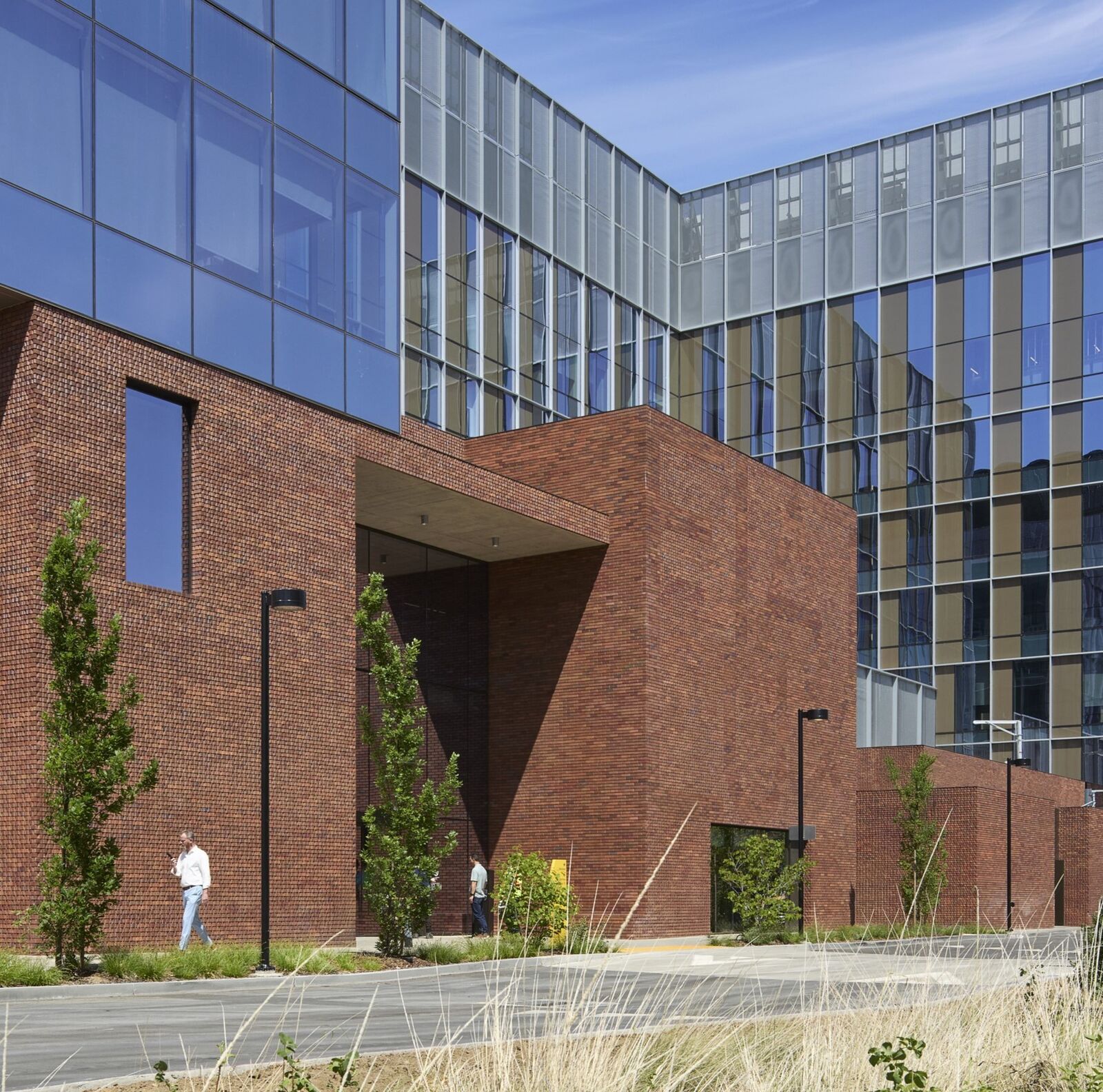
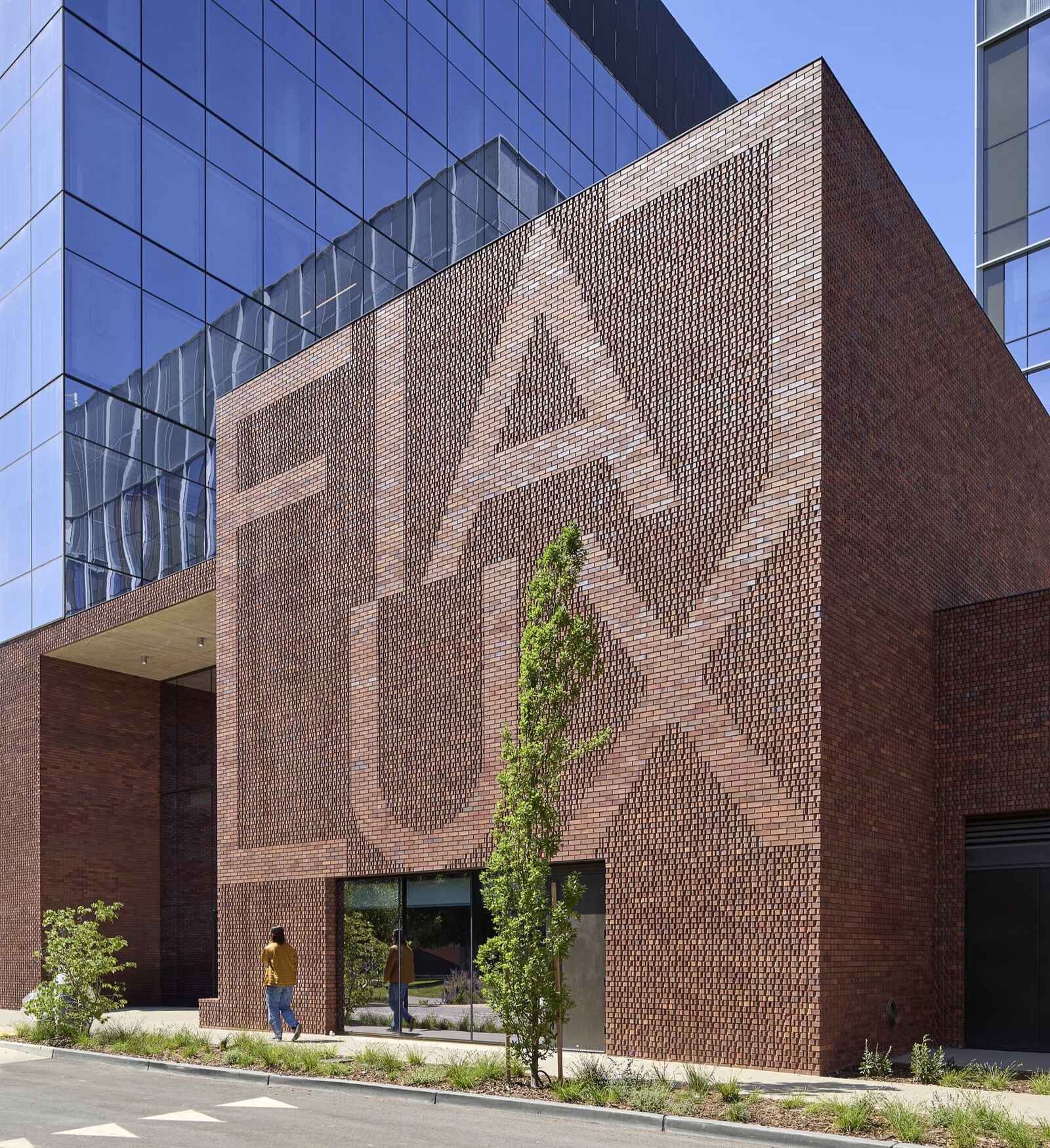
Applied across the first two levels in varied patterns, the brick becomes a subtle graphic element. Near the main entry on the east façade, the patterning stacks to reveal the UC System’s motto, Fiat Lux—Latin for “Let There Be Light.”
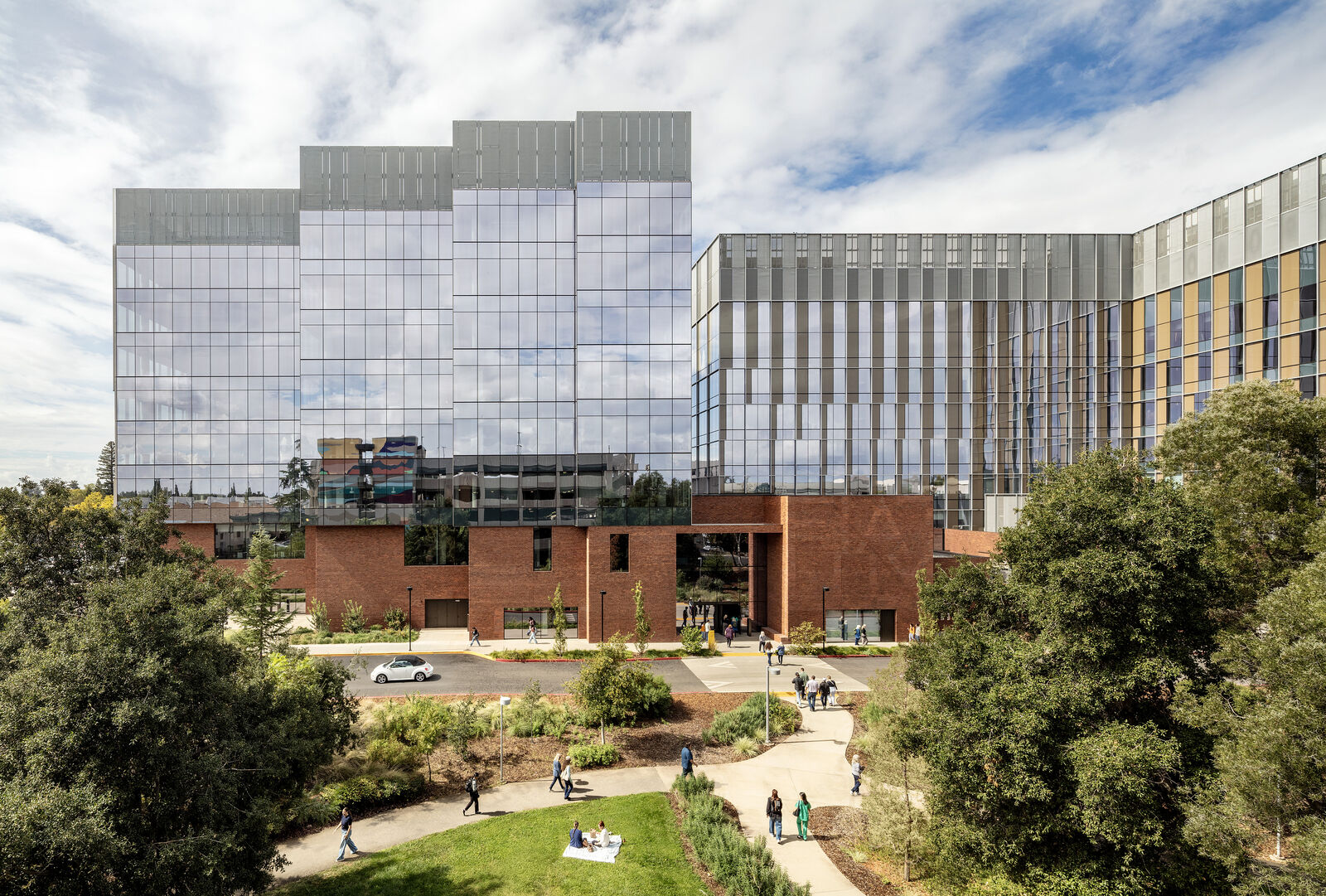
East exterior elevation.
Works from Aggie Square’s art program are woven throughout the public spaces, connecting users to surrounding neighborhoods, community artisans, and the research taking place within the buildings—while reinforcing Sacramento’s deep ties to agriculture, science, and technology.
Spanning large-scale murals and sculptural installations, the artworks weave together themes of nature, research, and community. The result is a collection of commissions whose work deepens the project’s sense of place. Pieces such as Data Delta by SPMD honor the region’s waterways and agricultural roots through scientific symbolism, while murals including Blossoms of Innovation and Unity in Motion by Shane Grammer celebrate Sacramento’s heritage, resilience, and collective spirit. Together, these artworks ground Aggie Square in the culture, history, and creative spirit of Sacramento.
Design Partners
Industry Partners

Wexford Science + Technology / University of Pittsburgh, The Assembly

Designing the High-Performance Labs of the Future
Oregon State University, Jen-Hsun Huang and Lori Mills Huang Collaborative Innovation Complex
Wexford Science + Technology, One uCity Square