Designing Multifamily Communities That Perform
Across North American housing markets, the growing demand for multifamily development reflects a fundamental shift away from homeownership. Rising home prices driven by limited supply, financing challenges that have constrained the condo market, and a cross-generational preference for flexibility over long-term mortgage commitments have led more people to rent longer—and, in many cases, indefinitely.
As the renter population expands and diversifies, the market has moved beyond one-size-fits-all apartments aimed primarily at younger renters. Today’s successful multifamily communities must support a wider range of lifestyles, offering varied unit types, amenities, and experiences that remain relevant across life stages.
Our approach to multifamily and mixed-use design is grounded in a deep understanding of both local market dynamics and site-specific conditions. By aligning people-centered experiences with performance, efficiency, and adaptability, ZGF develops tailored design solutions that respond to a site, its surrounding neighborhood, and market demands. This integrated approach supports long-term value for developers—driving resident retention, lowering operating costs, and enabling rents that remain competitive over time.
Three recent projects—Phase One of the Bridge District in Washington, DC; 11W in Portland, Oregon; and Century City in Surrey, British Columbia—illustrate how this strategy translates into vibrant communities and strong financial performance.
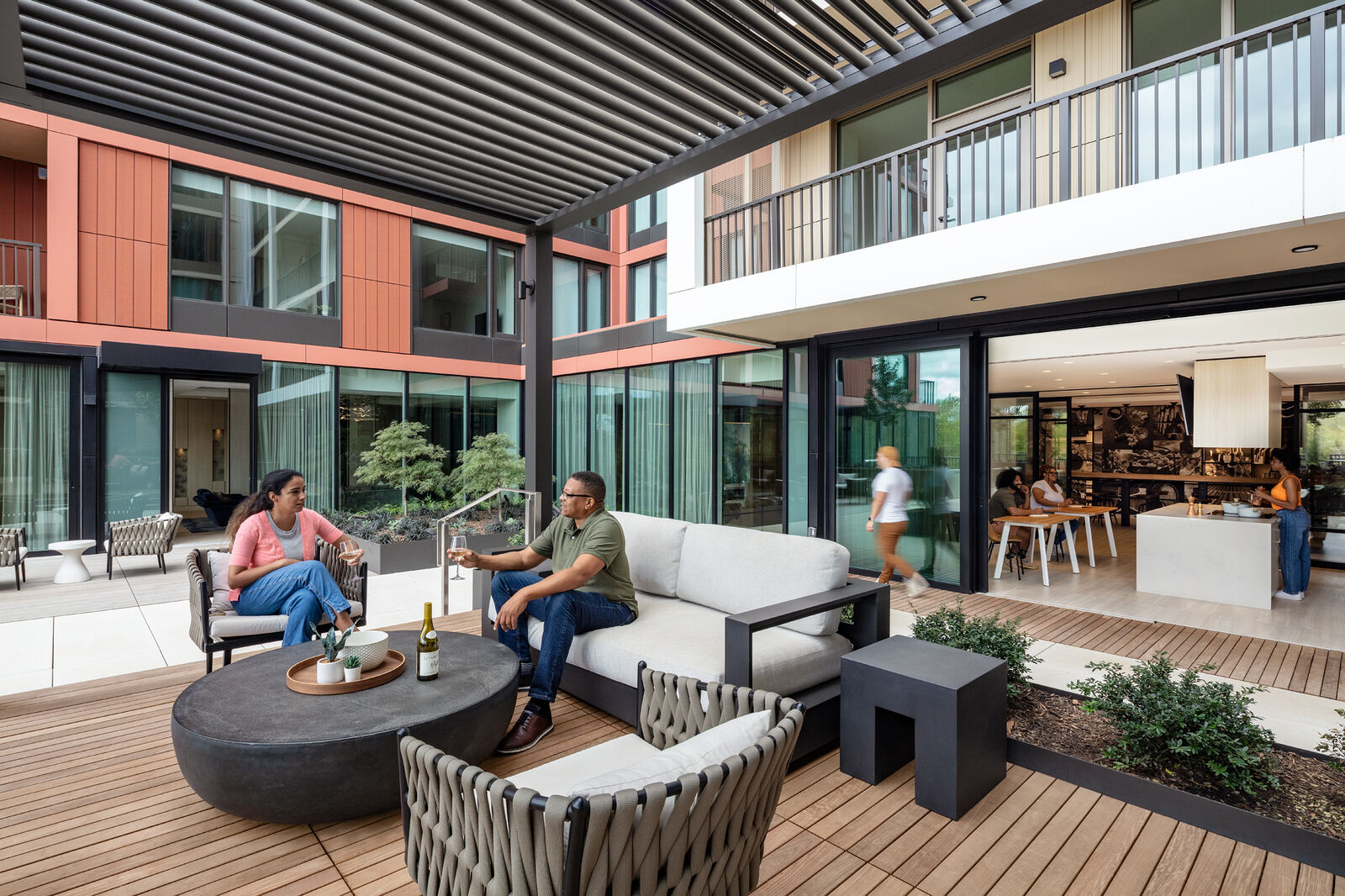
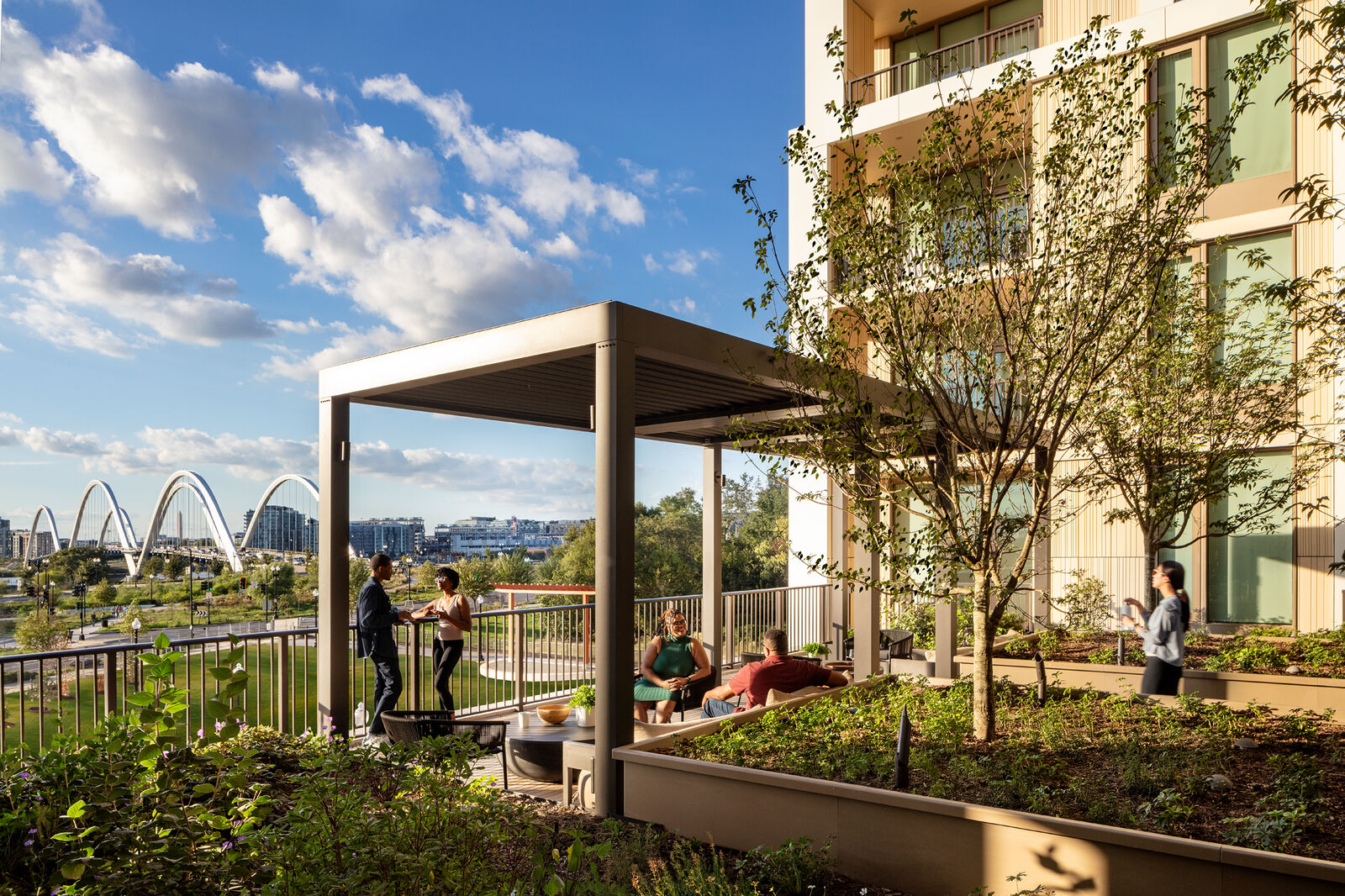
The event terrace at Phase One of the Bridge District is fully equipped with an adjustable pergola for shade, outdoor grills, and floor-to-ceiling sliding doors for indoor-outdoor connection. In this expansive space, casual gatherings and formal occasions feel equally at home.
Community Building and Placemaking
At the neighborhood scale, successful multifamily projects create value by complementing and amplifying the character of the communities they are part of. Celebrating the unique assets of the surrounding neighborhood—and even treating them as an extension of the amenity offering—allows developers to create inviting communities with distinct identities, increasing resident loyalty and market differentiation.
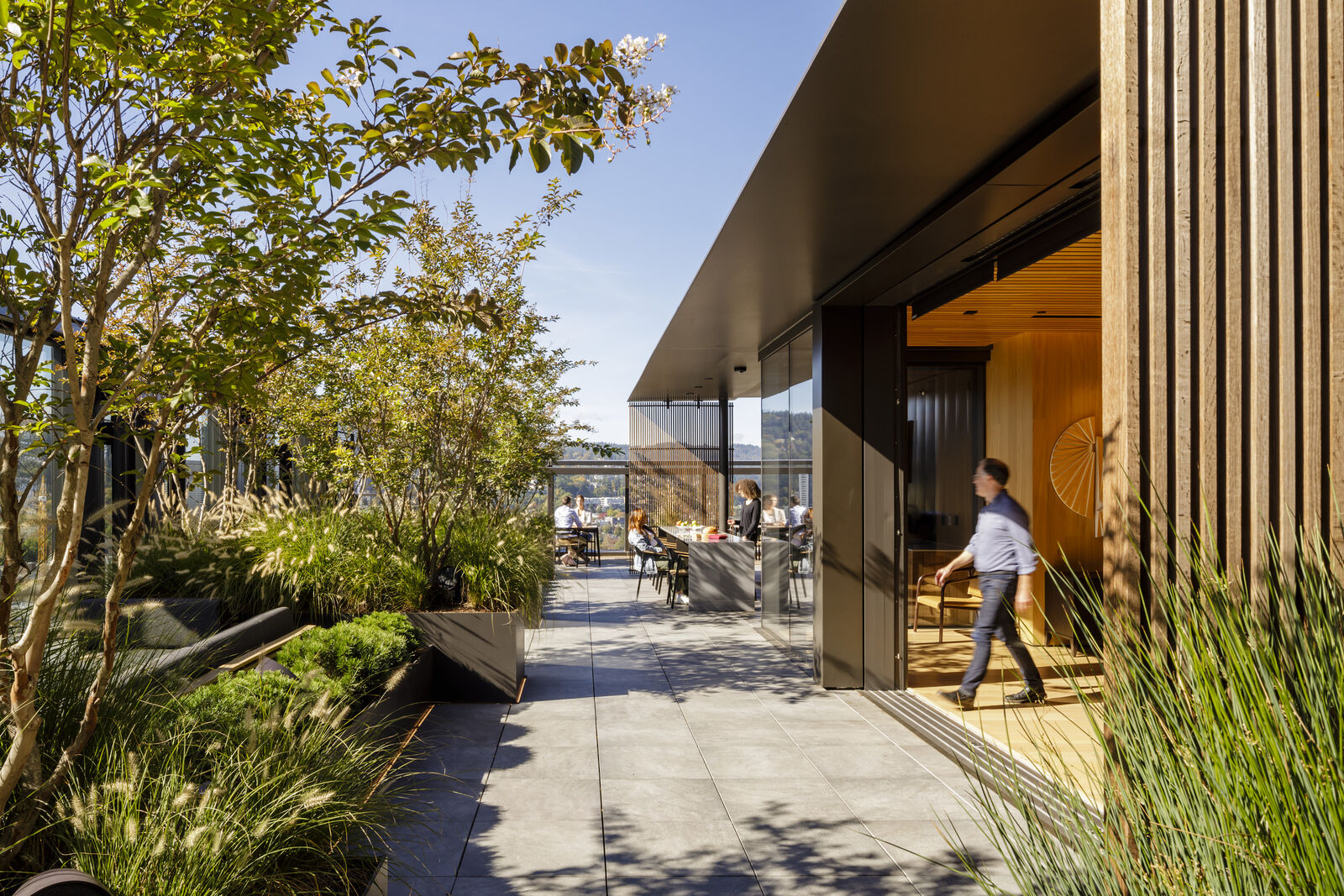
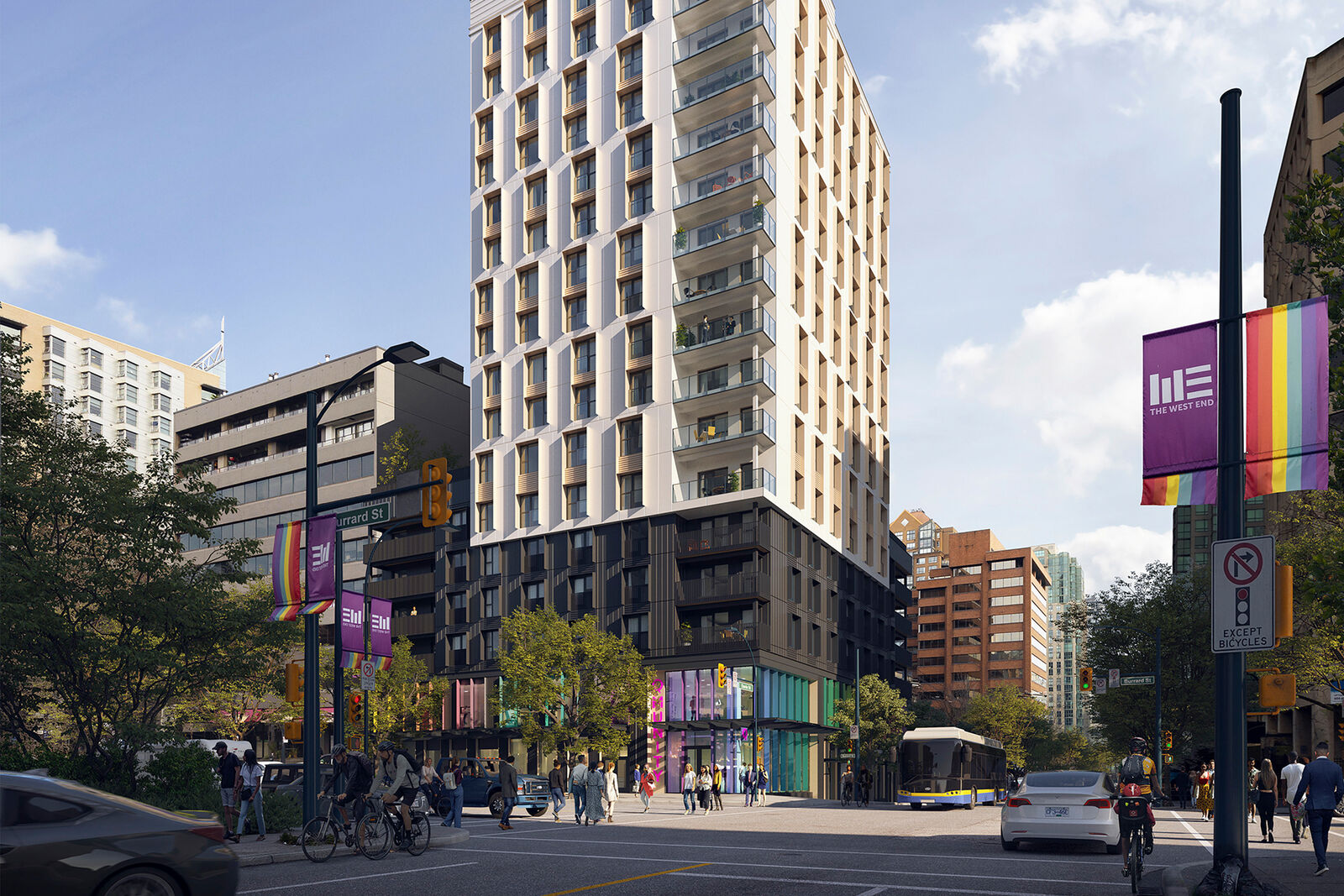
In Portland, 11W plays a catalytic role in the West End, integrating into a vibrant, evolving downtown neighborhood. Paired with the adjacent 12W building, the mixed-use development brings together residential, office, and retail uses to create an 18-hour environment, supporting street life throughout the day and evening. Ground-floor retail is positioned to activate city corners and designed with a modular approach, allowing spaces to evolve alongside changing retail trends—helping attract new restaurants and shops to the area. Paired with outdoor terraces and large operable sliding doors that provide indoor-outdoor connections, these strategies have increased the neighborhood’s vitality.
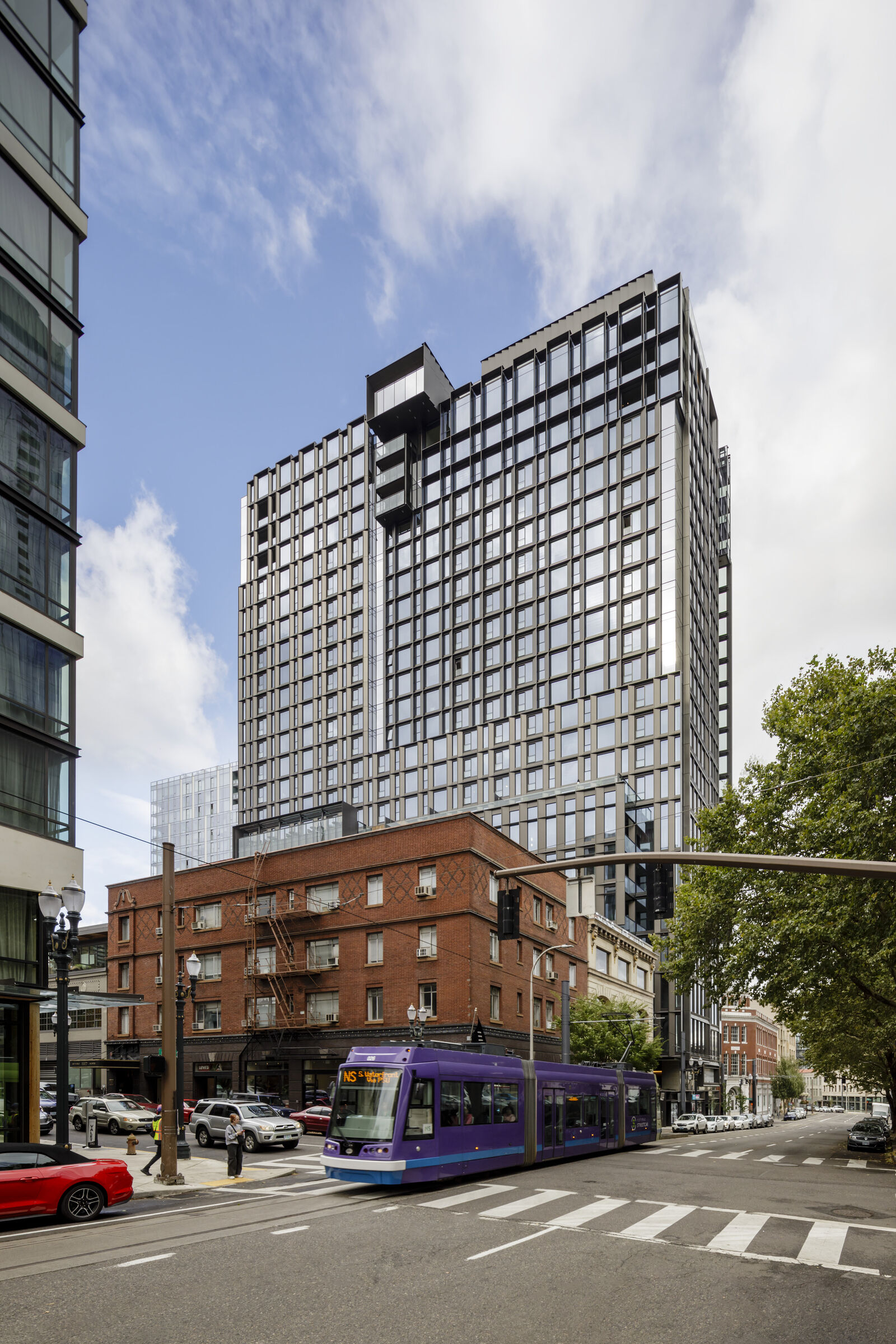
The design of 11W respects the diverse character of the West End district. A unique circumstance of the site involved building a high-rise on a half block adjacent to two historic buildings, two- and four-stories, respectively. The challenge was making the entire block appear as a beautiful tapestry to design a building that shares a synergy amongst all three.
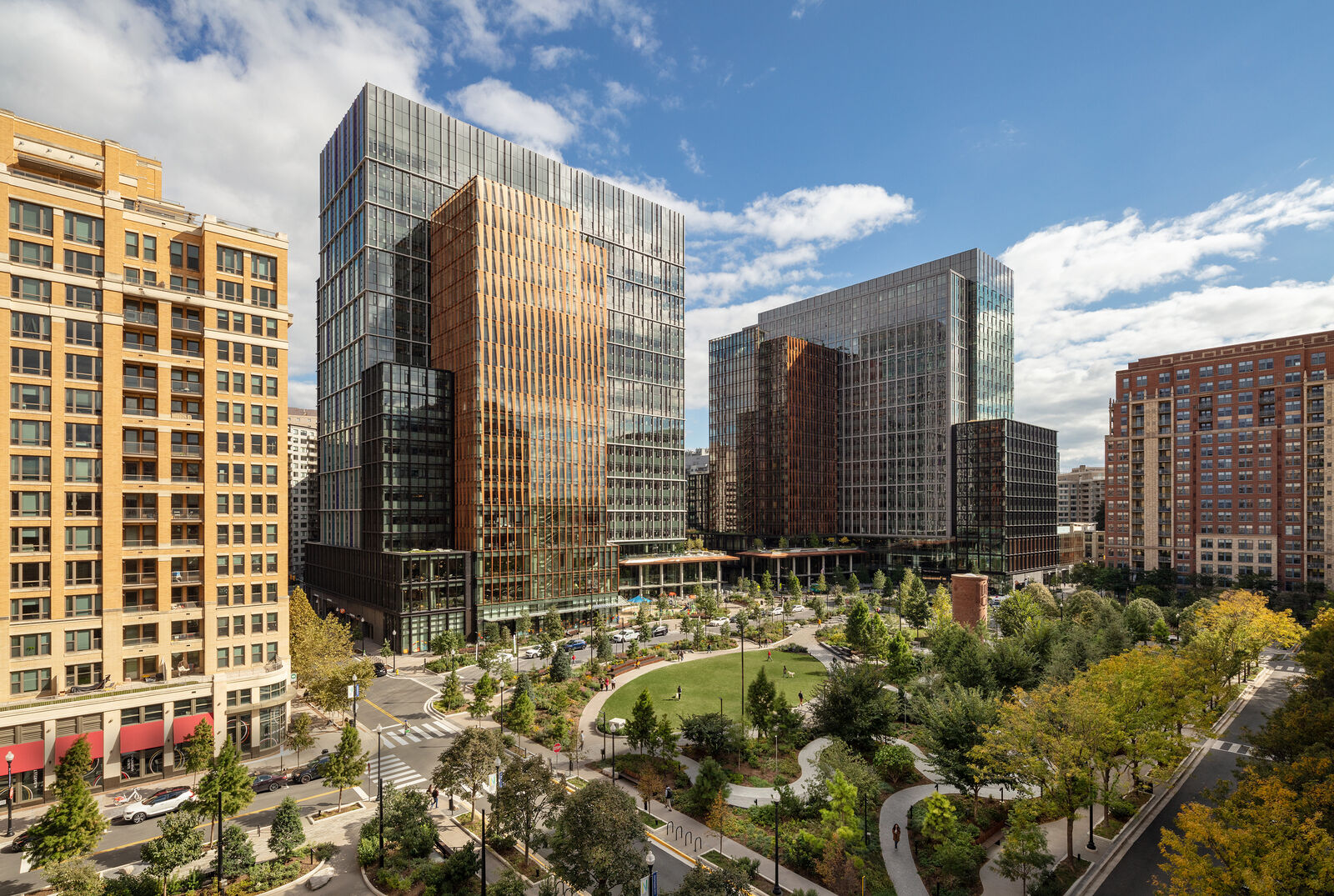
The Bridge District in Washington, DC was conceived as a new neighborhood on the banks of the Anacostia River that connects the established Capitol Riverfront neighborhood with the communities south and east of the river. Phase One of the Bridge District—consisting of 757 units in three residential towers—includes ground-floor local retail that expands economic opportunity, while luxury communal spaces encourage residents to engage with surrounding parks and riverfront landscapes. By colocating vehicular access and loading at the center of the block, the building delivers a four-sided pedestrian experience with active uses on every street front.
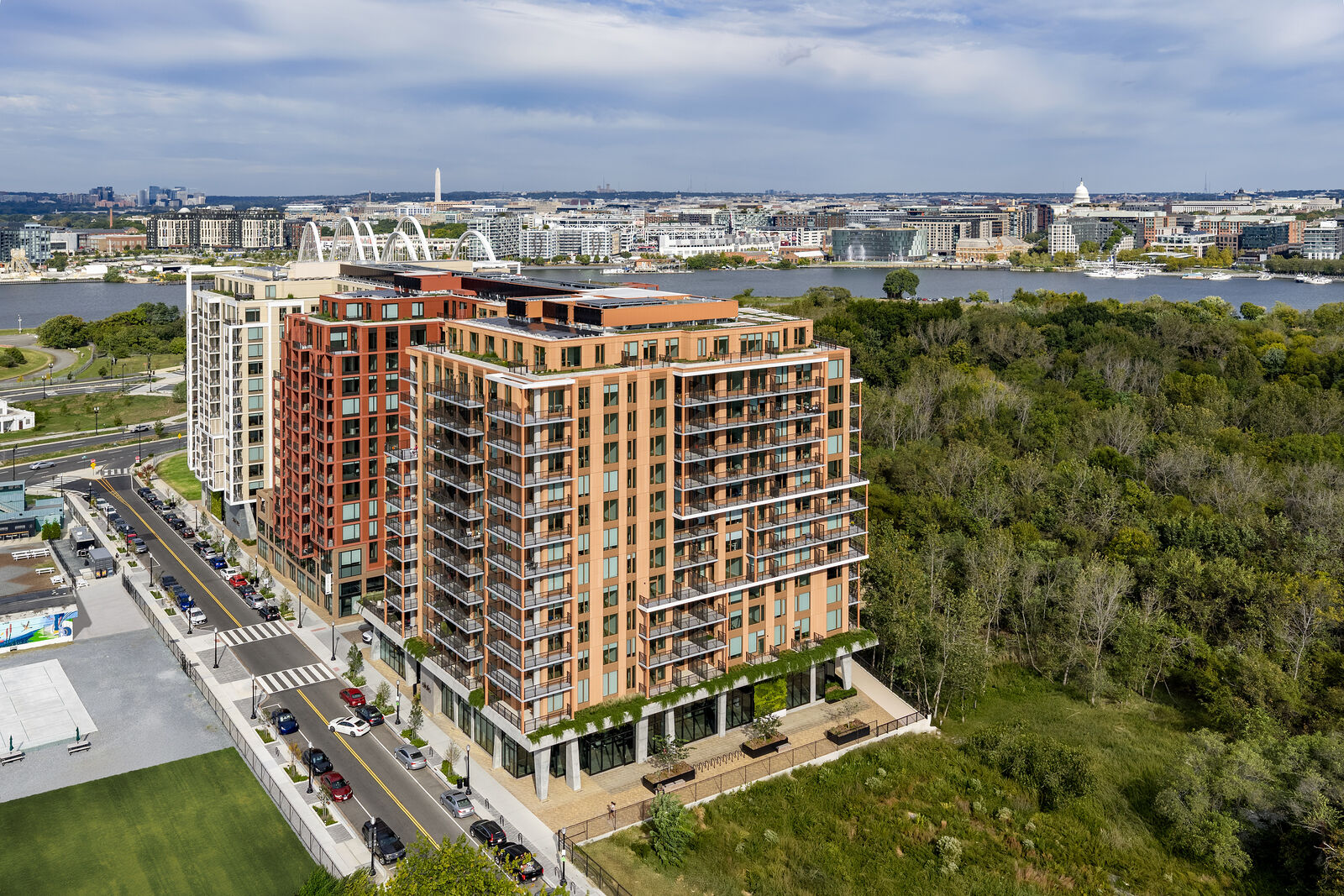
By activating the public realm and prioritizing connections to transit, trails, and adjacent neighborhoods, Phase One of the Bridge District establishes a strong sense of place and sets the framework for growth across future phases.
Phase One of the Bridge District is located along the southern bank of the Anacostia River and is adjacent to an expansive park and trail network.
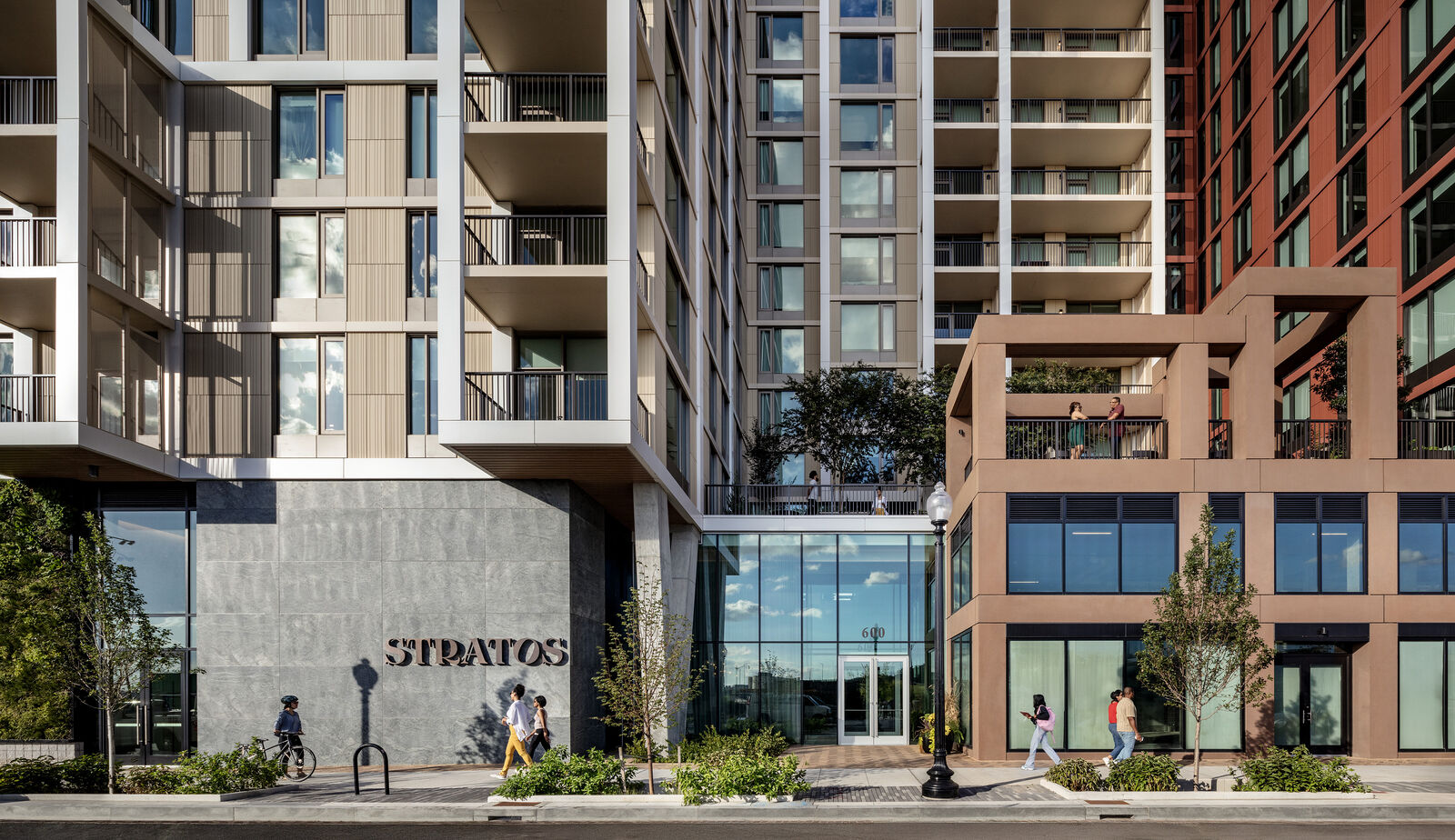
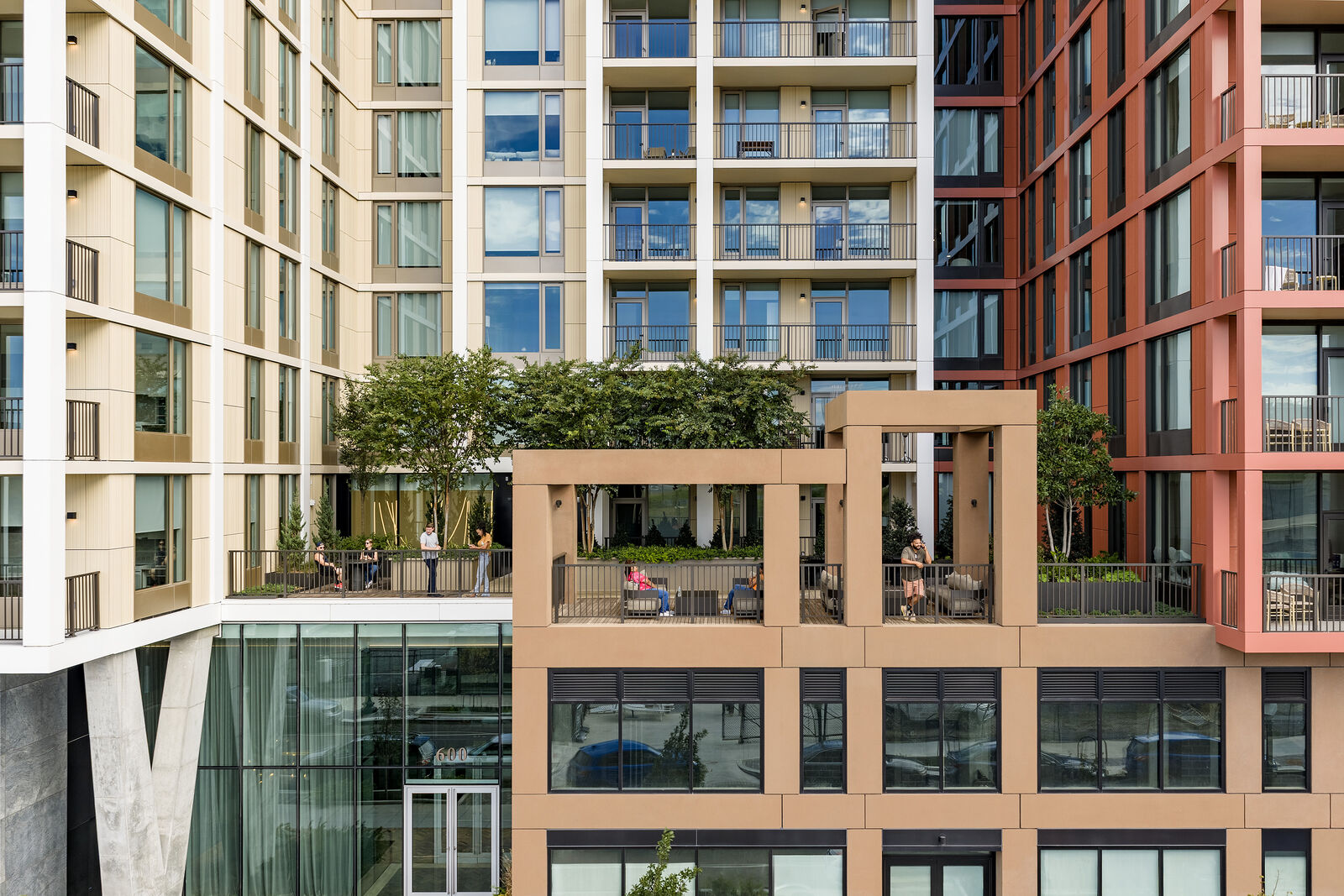
Stratos, Poplar House, and Alula each offer a distinct residential brand experience, with dedicated entrances, private elevator banks, and curated finishes.
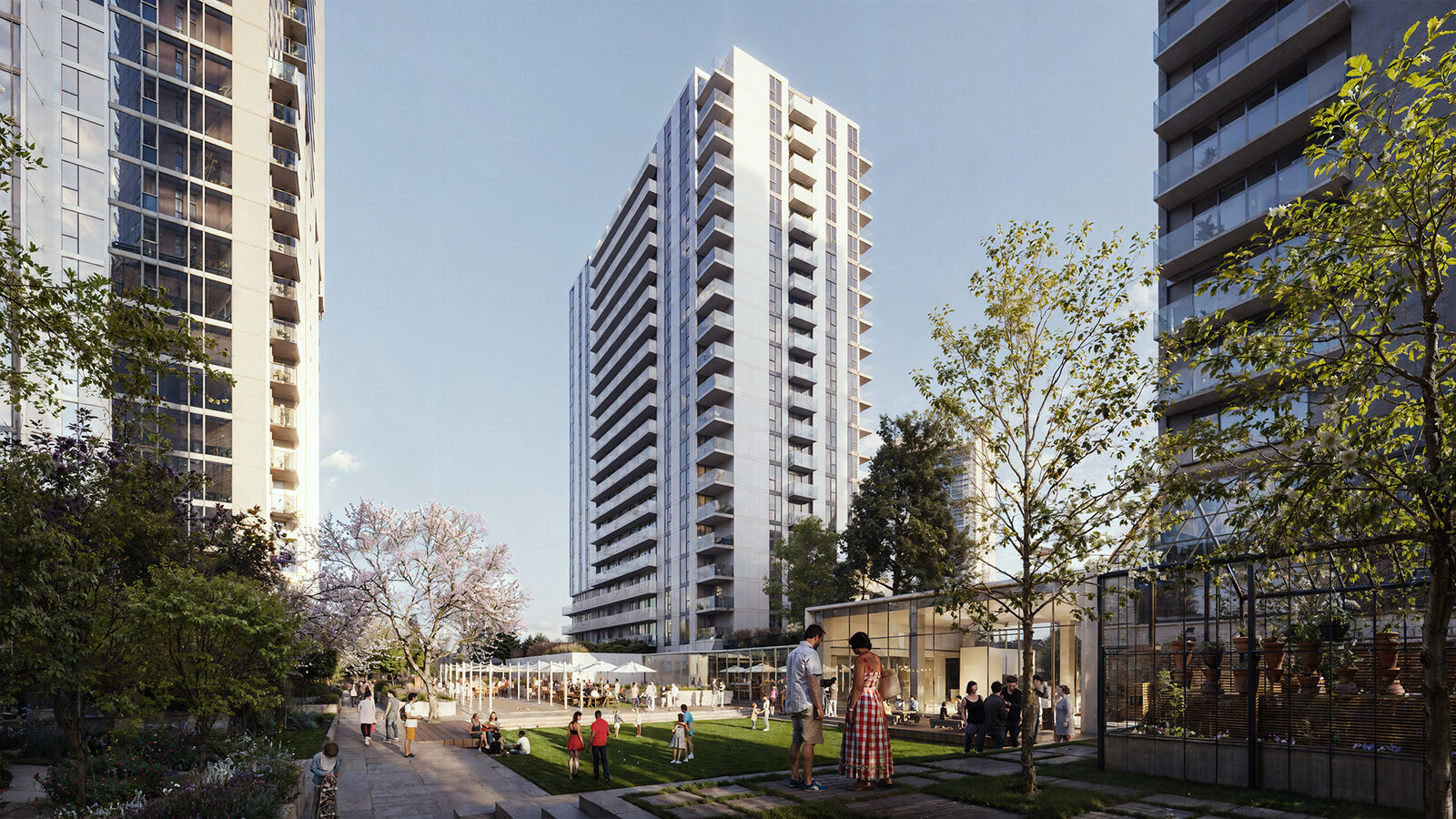
Century City in Surrey, BC—within the Greater Vancouver metropolitan region—adds density adjacent to a large transit hub while strengthening connections to nearby parks and public spaces. Positioned across from a major civic park, the development intentionally draws the openness of the landscape through the site, creating shared amenity spaces that feel outward-looking and integrated with the broader neighborhood rather than inward and insular.
Building Value for Residents
ZGF approaches interior amenities in multifamily developments as strategic tools for both leasing momentum and retention. The most effective amenities deliver a memorable first impression that encourages prospective residents to join the community, while also providing the everyday functionality that encourages them to stay over time.
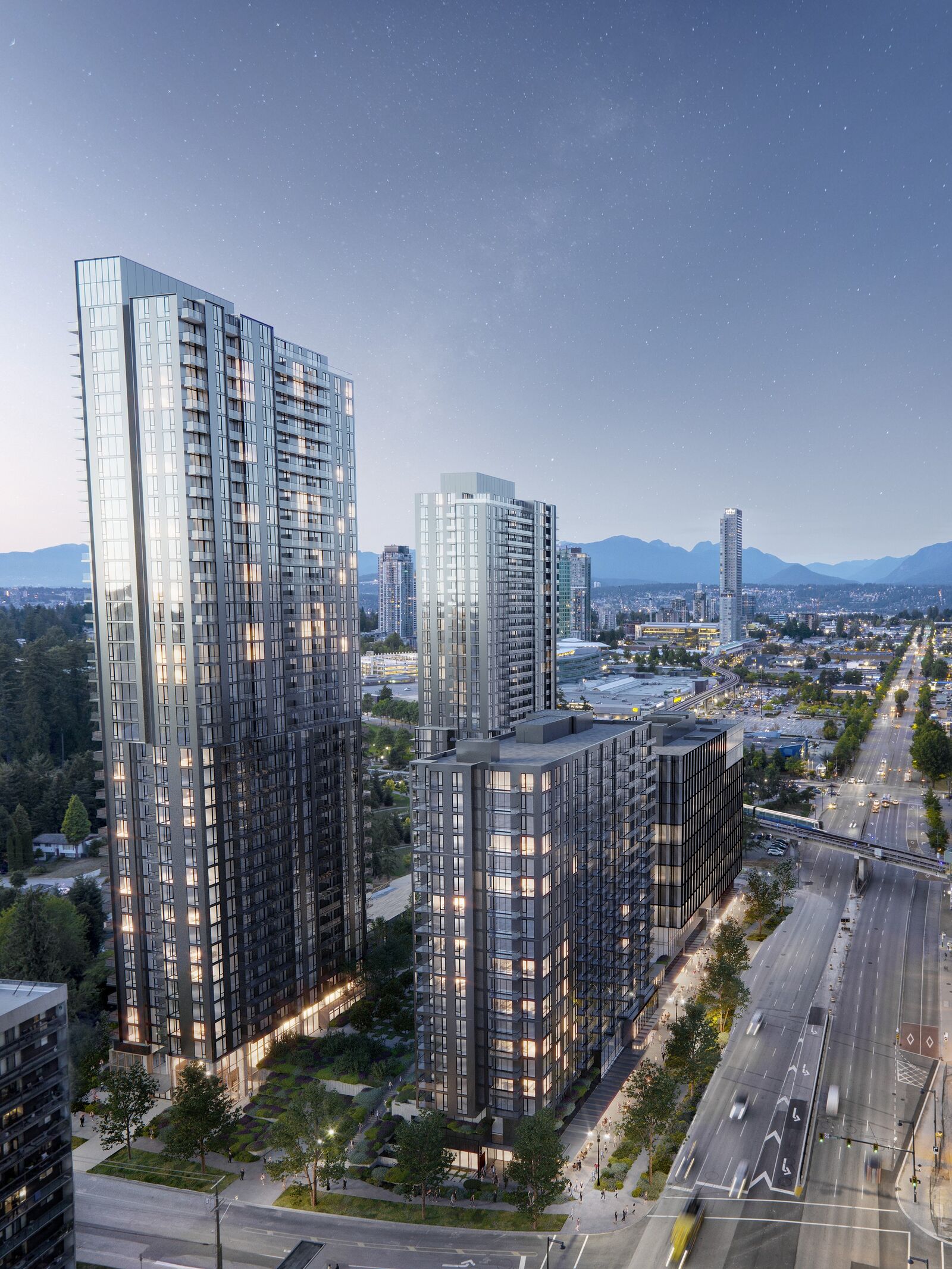
Located across from Holland Park and a transit hub, Century City provides resdients with a connection to nature and public transportation.
At Phase One of the Bridge District, amenities are designed to balance visual impact with daily practicality. The rooftop infinity pool and children’s playroom create immediate appeal during leasing tours, reinforcing lifestyle and brand identity. At the same time, these spaces are designed for real use: the pool deck supports everyday activities like grilling, lounging, and enjoying river views, while the children’s playroom—located adjacent to the fitness center—allows parents to integrate childcare and wellness into a single routine. Complementing these highly visible amenities are quieter, retention-driving conveniences, including work-from-home pods on each floor, full-size laundry facilities, and multiple terraces that provide outdoor respite.
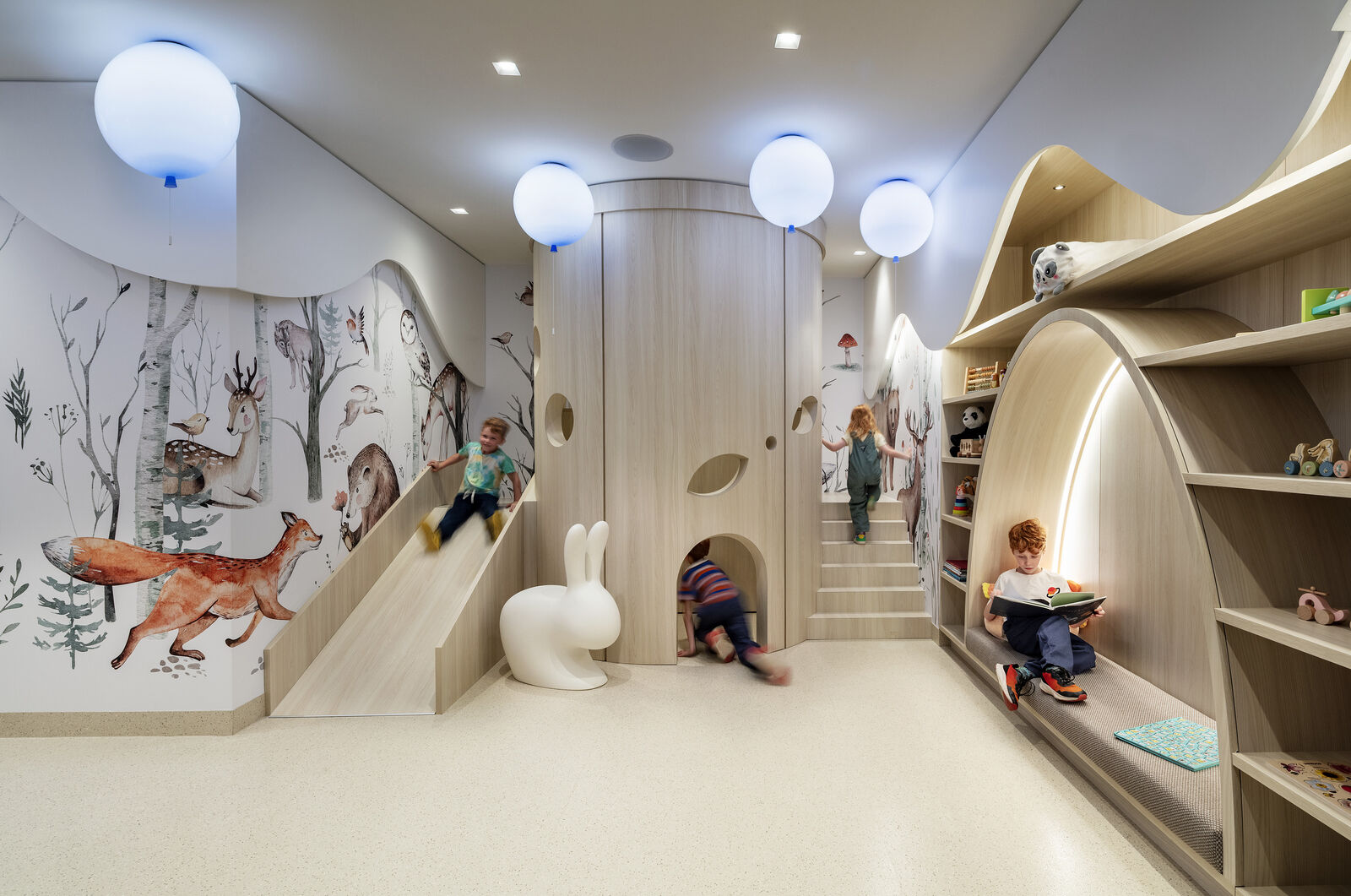
Designed with families in mind, a dedicated children’s playroom at Phase One of the Bridge District offers a safe, welcoming space for little ones, while parents can enjoy the gym or take a meeting.
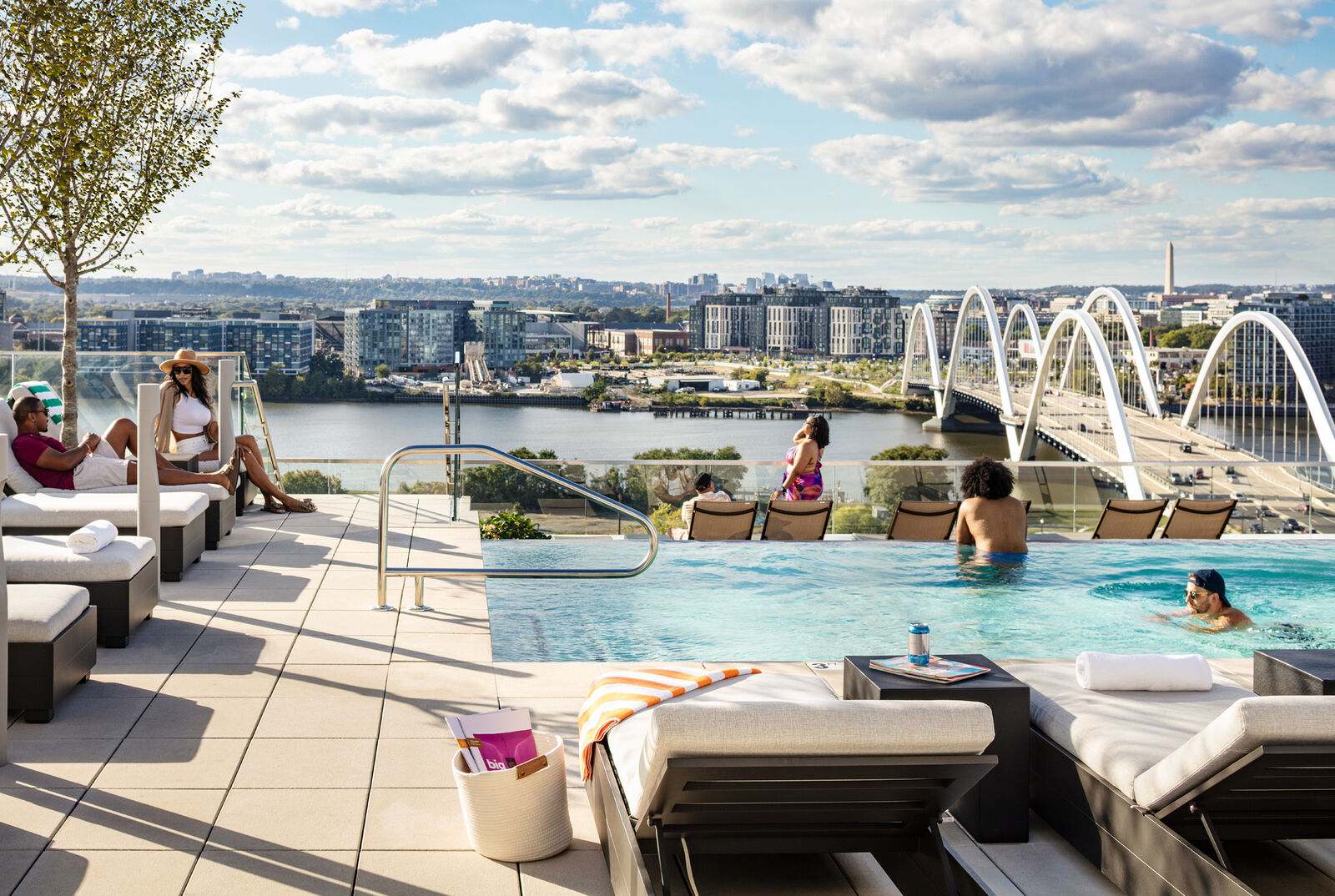
The rooftop terrace unfolds as a curated escape at Phase One of the Bridge District, anchored by an infinity pool from which residents can admire unobstructed Capitol views.
At 11W, amenities are organized on multiple floors, serving both commercial and residential tenants and helping create a vertical community. A shared event kitchen, pool, game room, fitness spaces with outdoor connections, coworking areas, and expansive planted decks support both daily use and social gatherings. At street level, the lobby functions as a true front porch—balancing openness and privacy while encouraging informal interaction and reinforcing a strong sense of arrival.
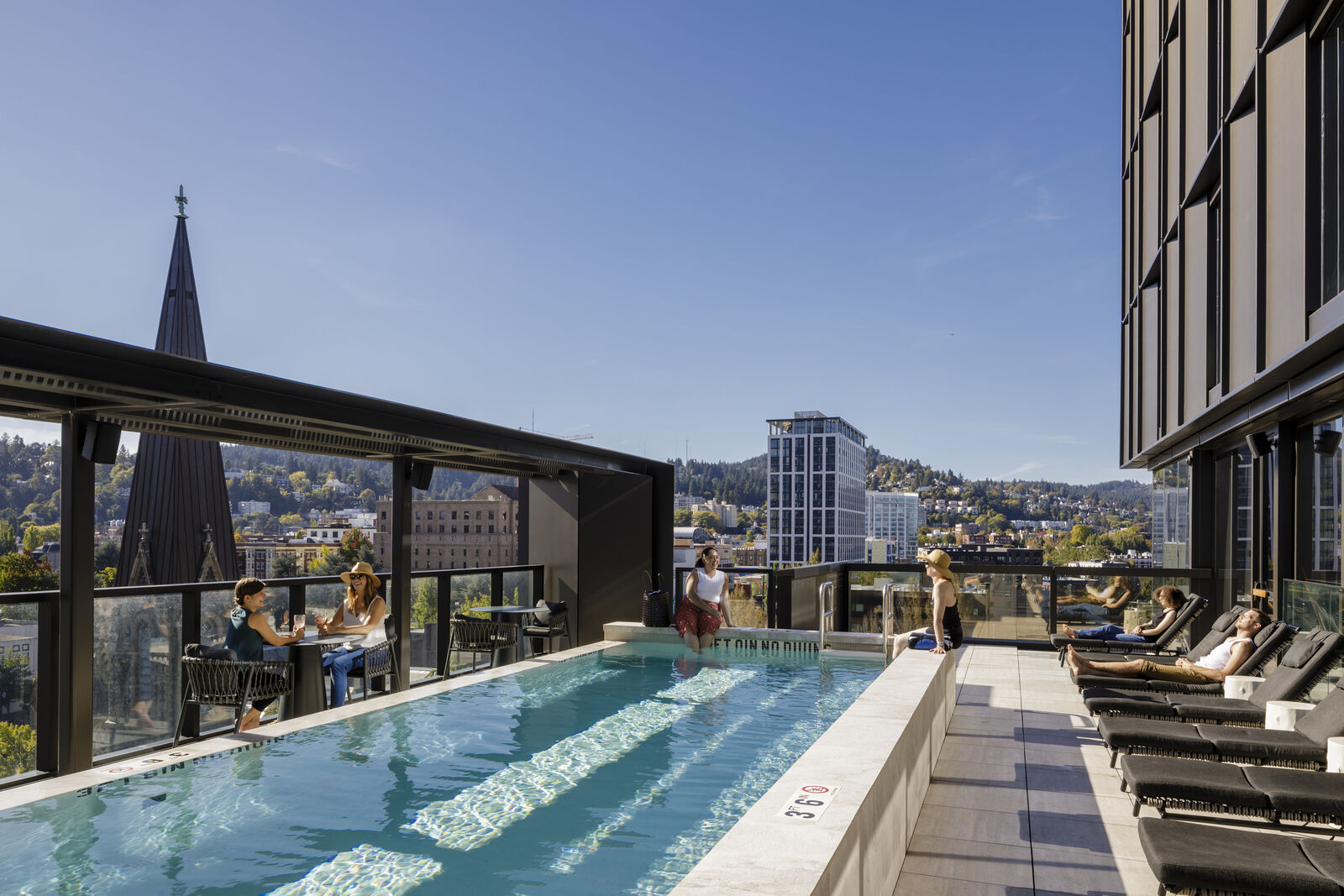
Among the luxury amenities provided at 11W is a lap pool that cantilevers off the building, unique in Portland, with adjoining fitness facility, yoga studio, and massage room on Level 8 – the first residential floor.
Century City reflects changing preferences toward smaller but higher-quality units, supported with amenity spaces and visitor parking shared across the rental towers. By consolidating these spaces, the project delivers elevated experiences for residents while fostering a strong sense of community. That sense of community is further reinforced by extending amenities outdoors into a large central courtyard, where private outdoor spaces interact with semi-public areas featuring orchards and a flexible gathering space that brings together residents and the public.
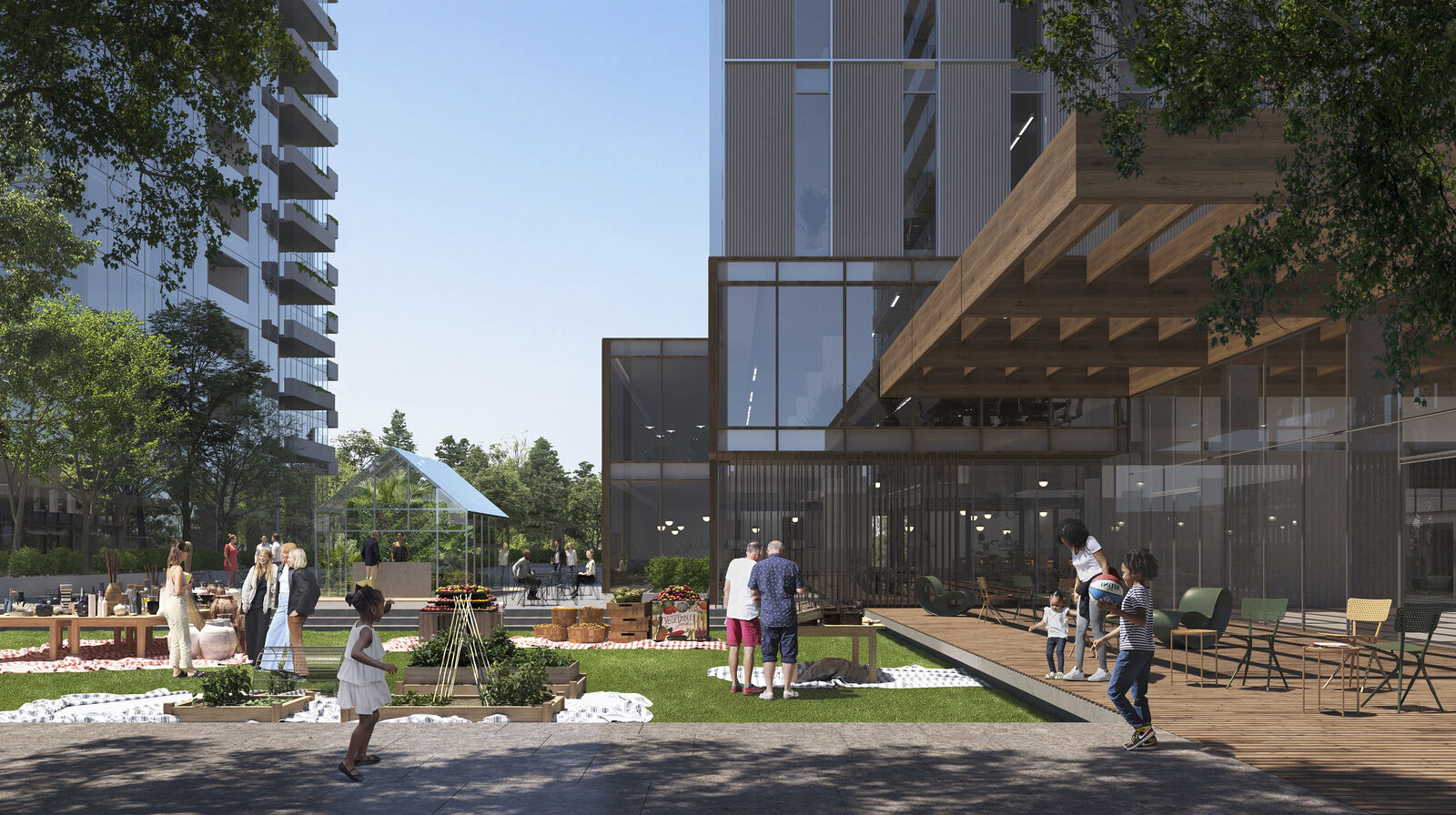
A central courtyard at Century City provides flexible gathering space, fostering connection between residents and the broader community.
Maximizing Developer Return
From the earliest planning stages, ZGF works closely with developers to align design decisions with financial performance at every scale—from site strategy to building systems to individual units. A deep understanding of local market dynamics allows unit types, amenities, and building systems to be precisely tailored for residents, while maintaining cost discipline and operational efficiency.
Value creation begins at the unit level. At Phase One of the Bridge District, units are intentionally slightly larger than typical market offerings, incorporating dedicated work nooks and generous storage to respond to the growing prevalence of remote and hybrid work. Across the three residential towers—Stratos, Alula, and Poplar House—ZGF developed distinct residential brands that appeal to different renter profiles while sharing common infrastructure, such as leasing and core amenities. This strategy delivers differentiated experiences without sacrificing economies of scale.
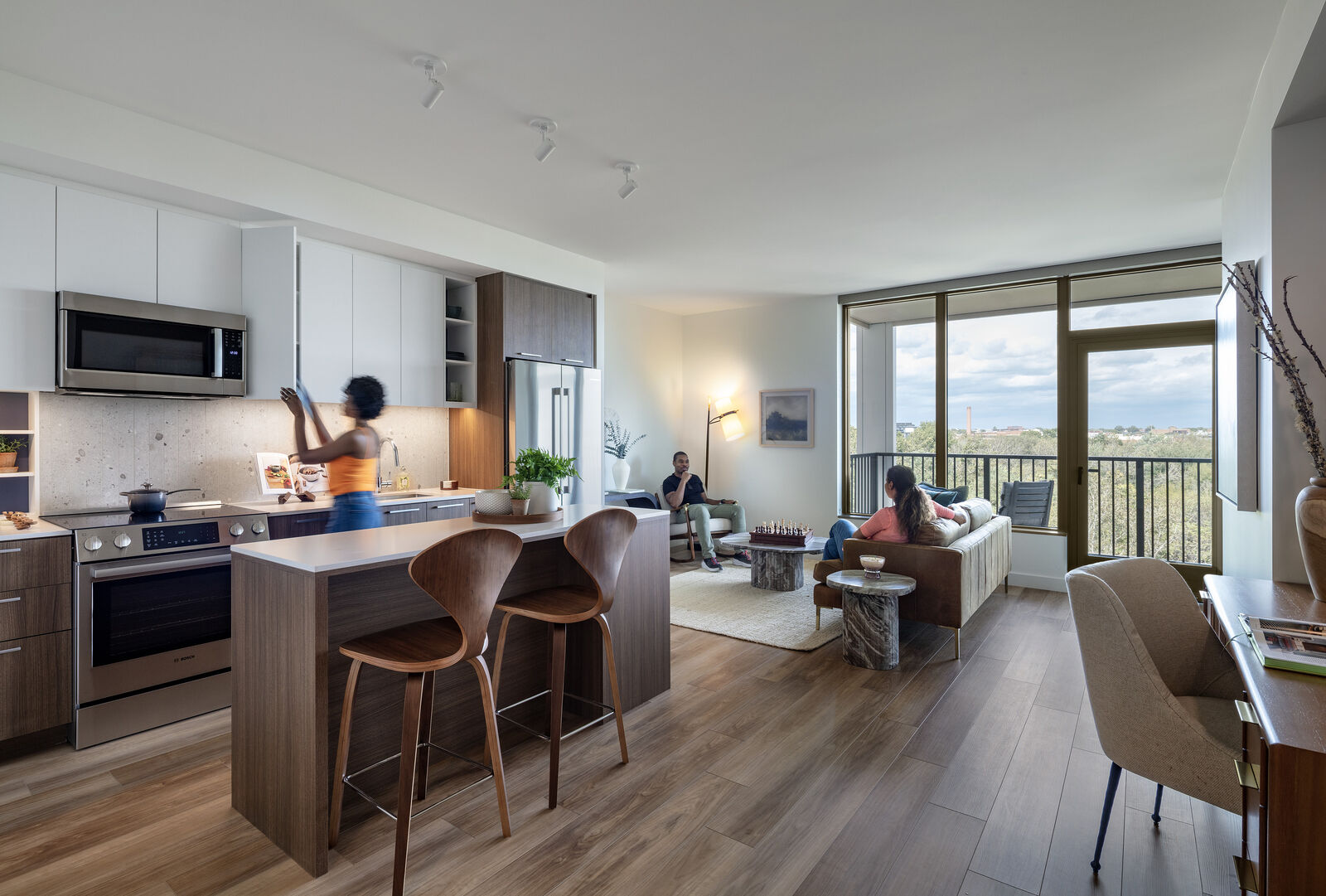
Each building at Phase One of the Bridge District features distinct unit layouts and finish palettes which are tailored to attract a diverse range of residents to the neighborhood.
At 11W, optimized unit mixes offer access to premium living across price points—from efficient studios to condo-like residences and penthouses with large balconies that extend living space outdoors. A bar-shaped floor plate brings natural daylight into corridors, while thoughtful stacking maximizes rentable area—an atypical approach that enhances both efficiency and the resident experience. The façade further differentiates the project, maximizing vision glazing beyond typical market standards and increasing daylight and views—key drivers of leasing and long-term value.
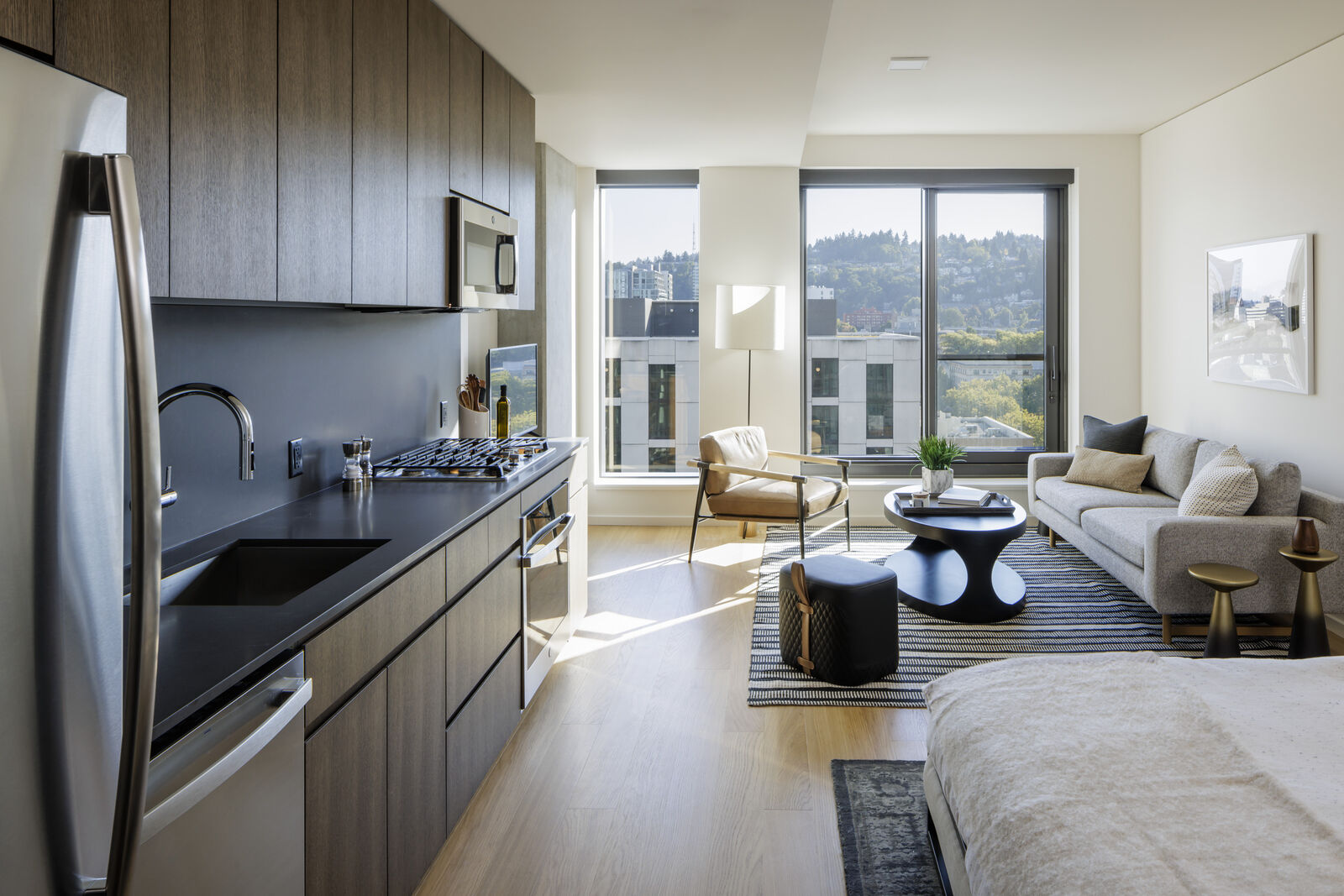
Levels 8 through 25 at 11W accommodate 213 units of rental apartments, featuring a mix of 1-, 2-, and 3-bedroom units; some studios; and four levels of luxury penthouse suites.
Cost and performance were also central to the Bridge District’s façade design. Terracotta cladding was selected for its durability, cost efficiency, speed of installation, and low-carbon profile. ZGF worked closely with the manufacturer to optimize the panels in a way that kept costs comparable to a traditional masonry facade, while delivering a rich and varied facade that belied its relatively low cost. The facade also uses two glass types, depending on a unit’s orientation. Higher-performing glass on southern and eastern exposures minimizes solar heat gain and reduces energy costs, while a lower cost and higher VLT glass on the north and west allow more light deep into those units while keeping material costs down.
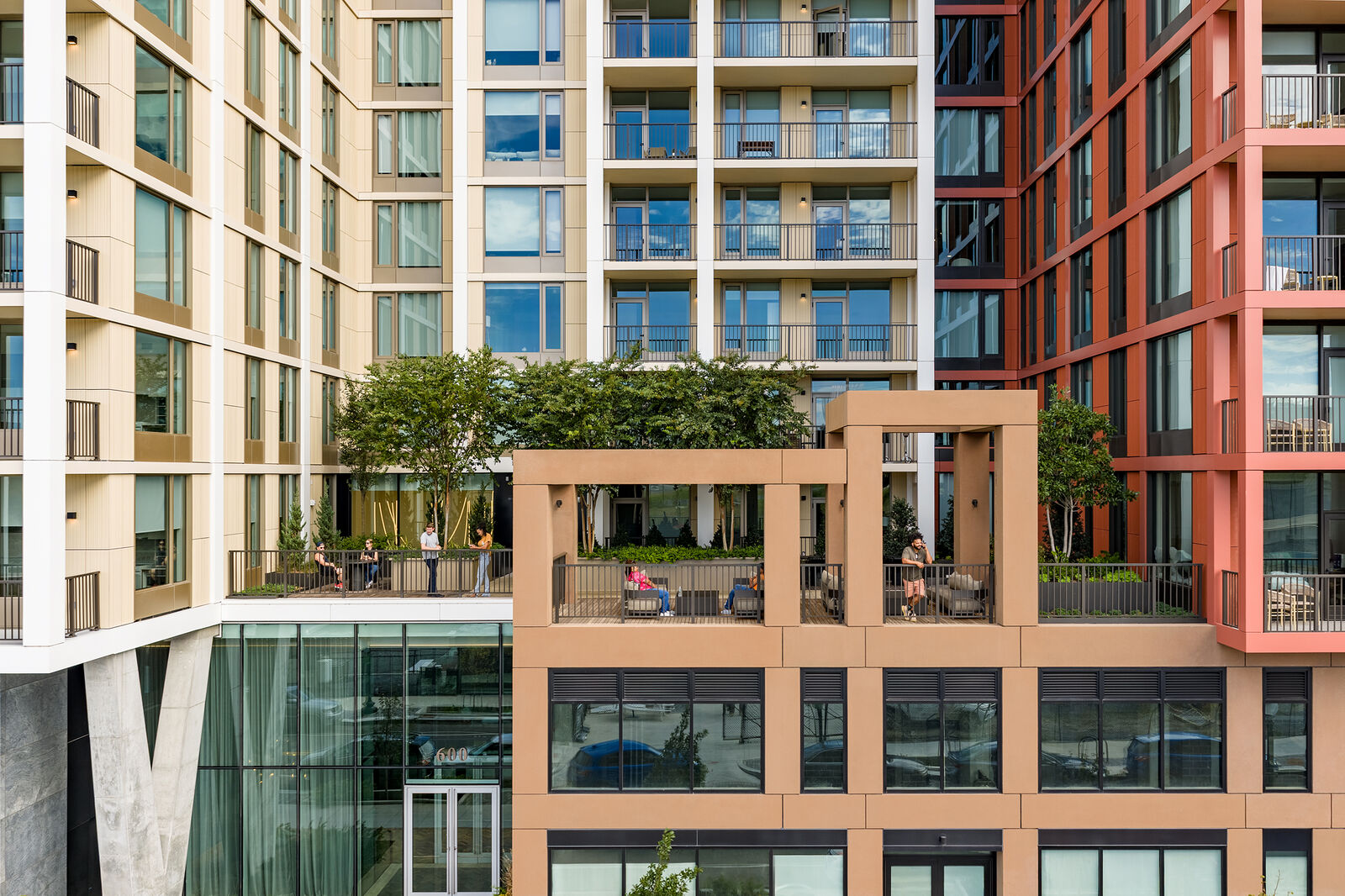
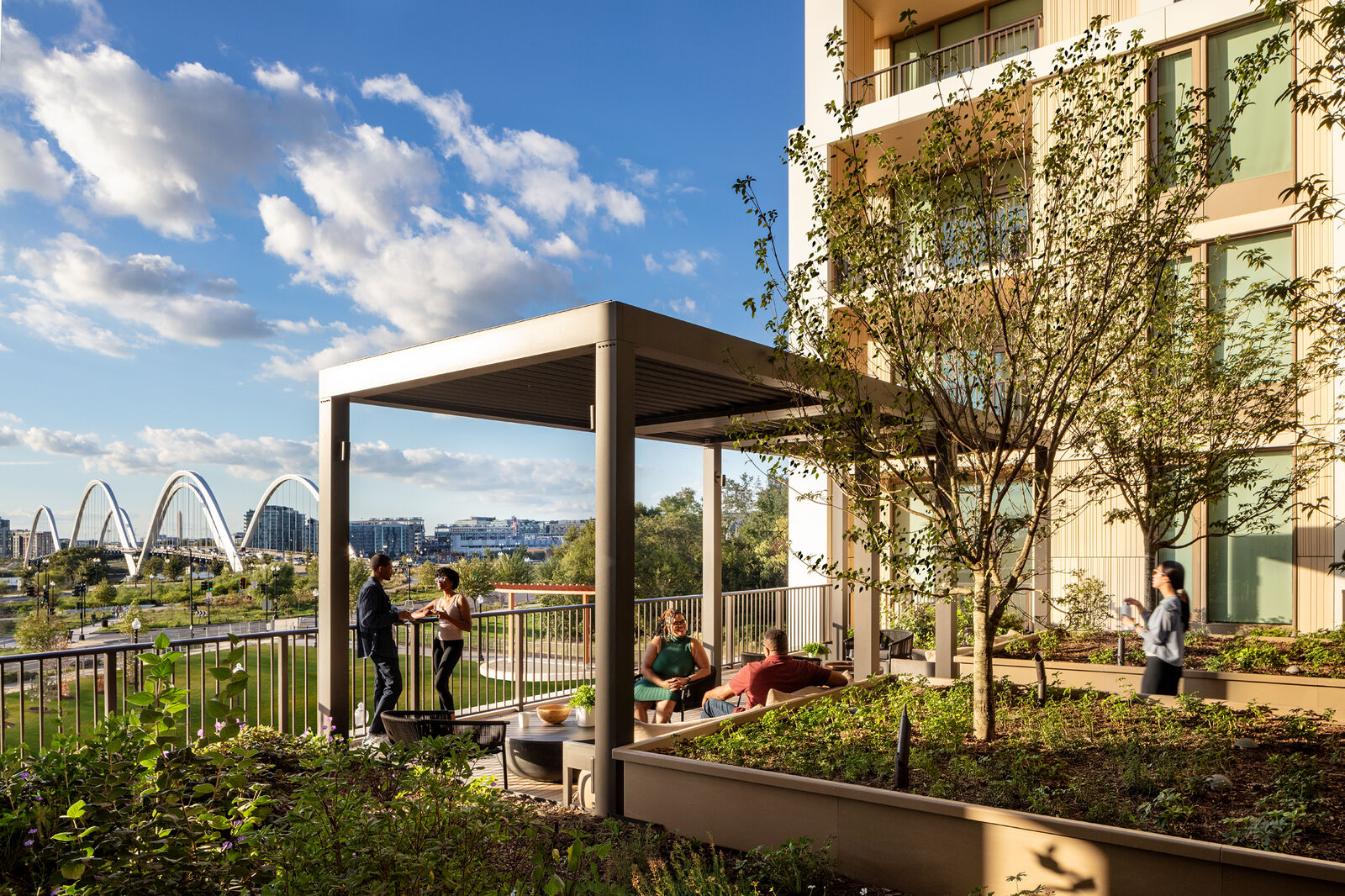
In addition to private balconies, which are included with more than 80% of units, residents can access uniquely programmed outdoor terraces, including landscaped courtyards and a yoga terrace.
Century City further demonstrates ZGF’s focus on long-term operational value. The project integrates digital access systems and tracks key building components in BIM models, making it easier for owners to assess performance and manage operations throughout the building lifecycle. This approach reflects a broader shift toward prioritizing long-term performance and value beyond initial delivery.
Today’s multifamily market is defined by longer-term renters, greater demographic diversity, and heightened expectations for both experience and building performance. Meeting these demands requires more than adding housing—it requires design strategies that are deeply informed by place, responsive to market realities, and calibrated for long-term financial return.
Projects such as Phase One of the Bridge District, 11W, and Century City demonstrate how tailored, multi-scale design can deliver differentiated communities that lease efficiently, retain residents, and perform over time. By aligning neighborhood context, resident experience, and operational efficiency from the outset, ZGF helps developers create multifamily assets that are not only compelling at opening, but resilient, adaptable, and profitable throughout their lifecycle.
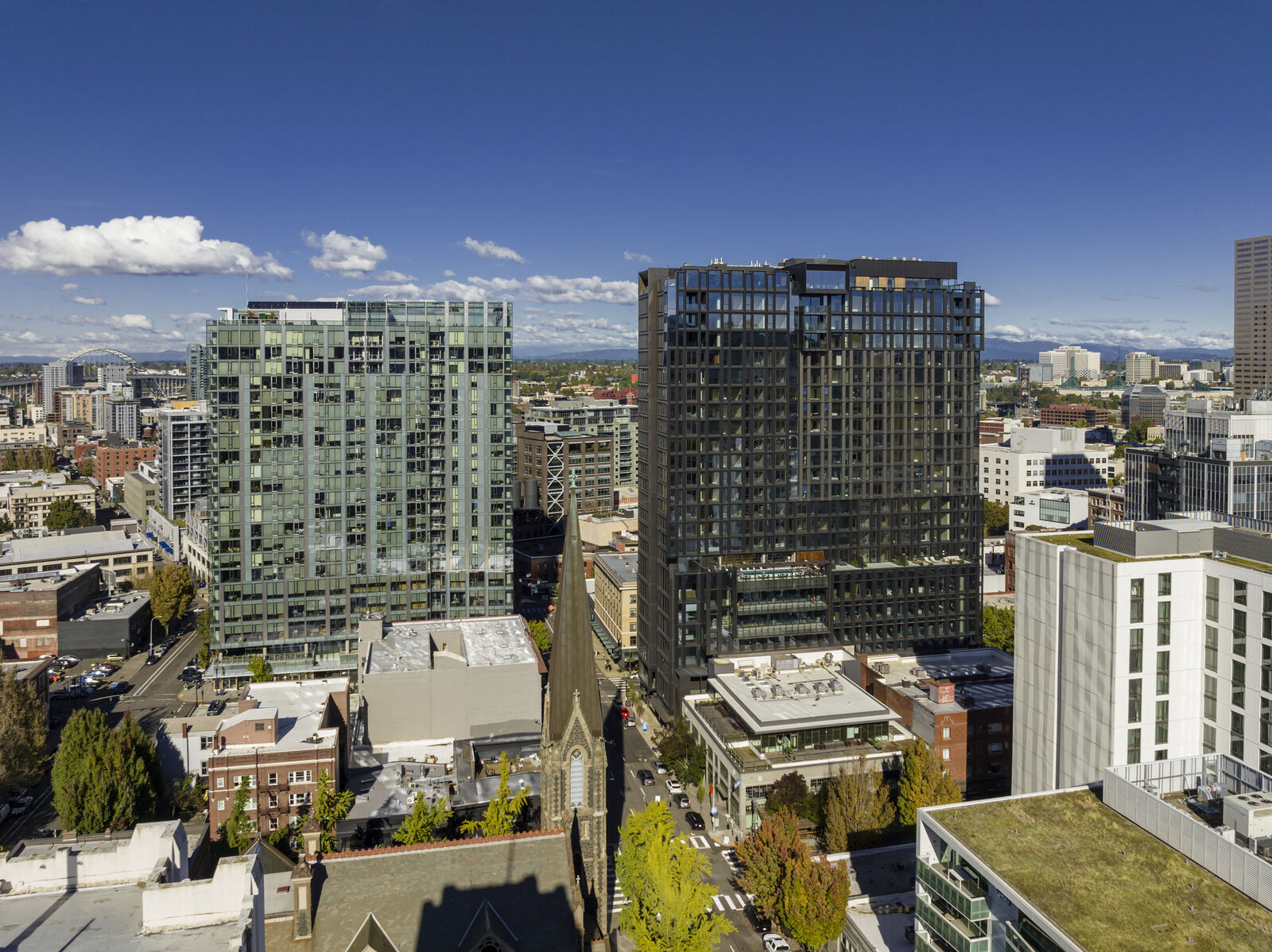
Downtown Development Group, 11W
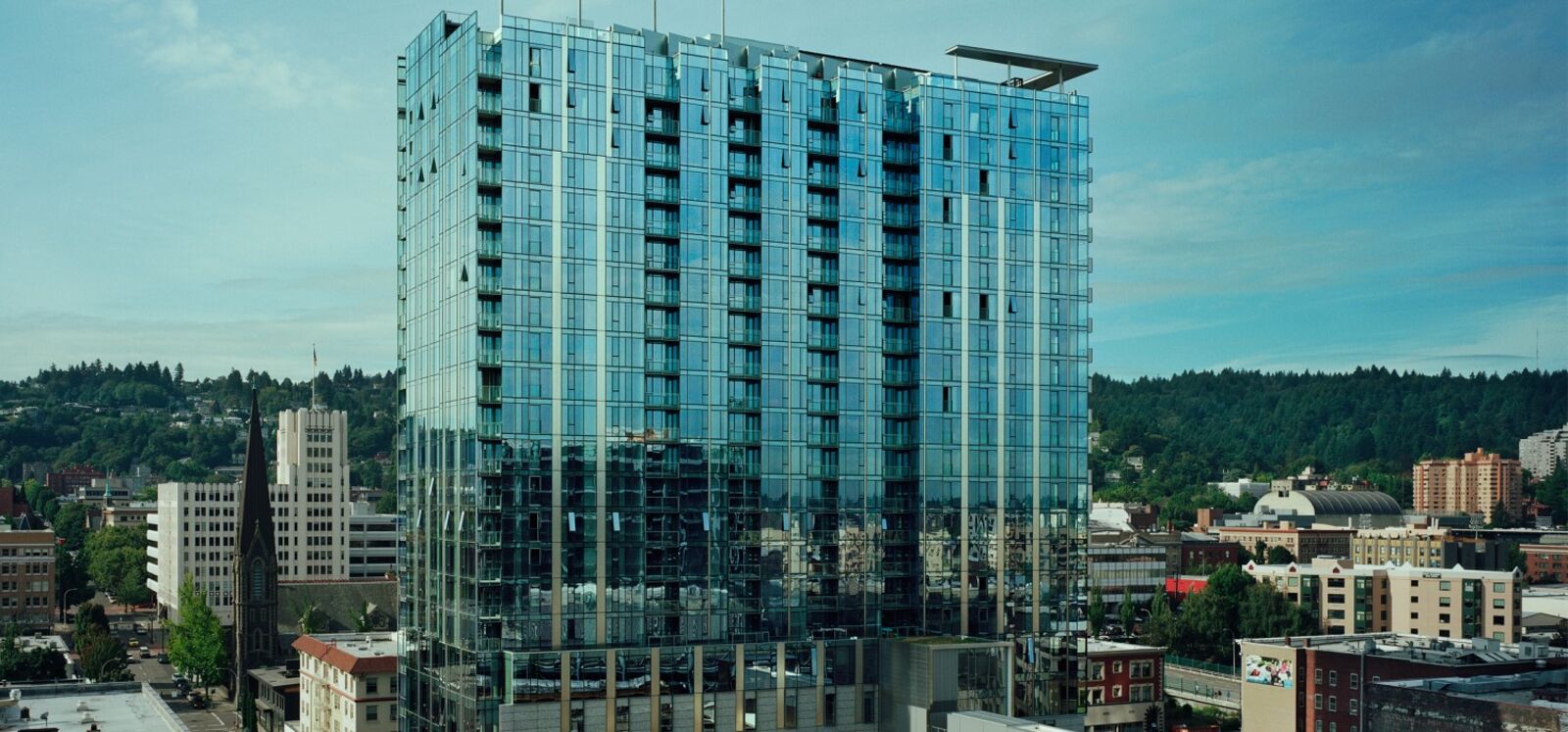
Gerding Edlen Development Company, Twelve | West Mixed-Use Building
Community Land Trust Foundation of BC, 981 Davie St.

ZGF to Lead Design of Office-to-Residential Conversion in Arlington’s National Landing