Multifamily Living Takes on 21st Century Challenges
Redbrick LMD, Phase One of the Bridge District
Housing and Mixed Use
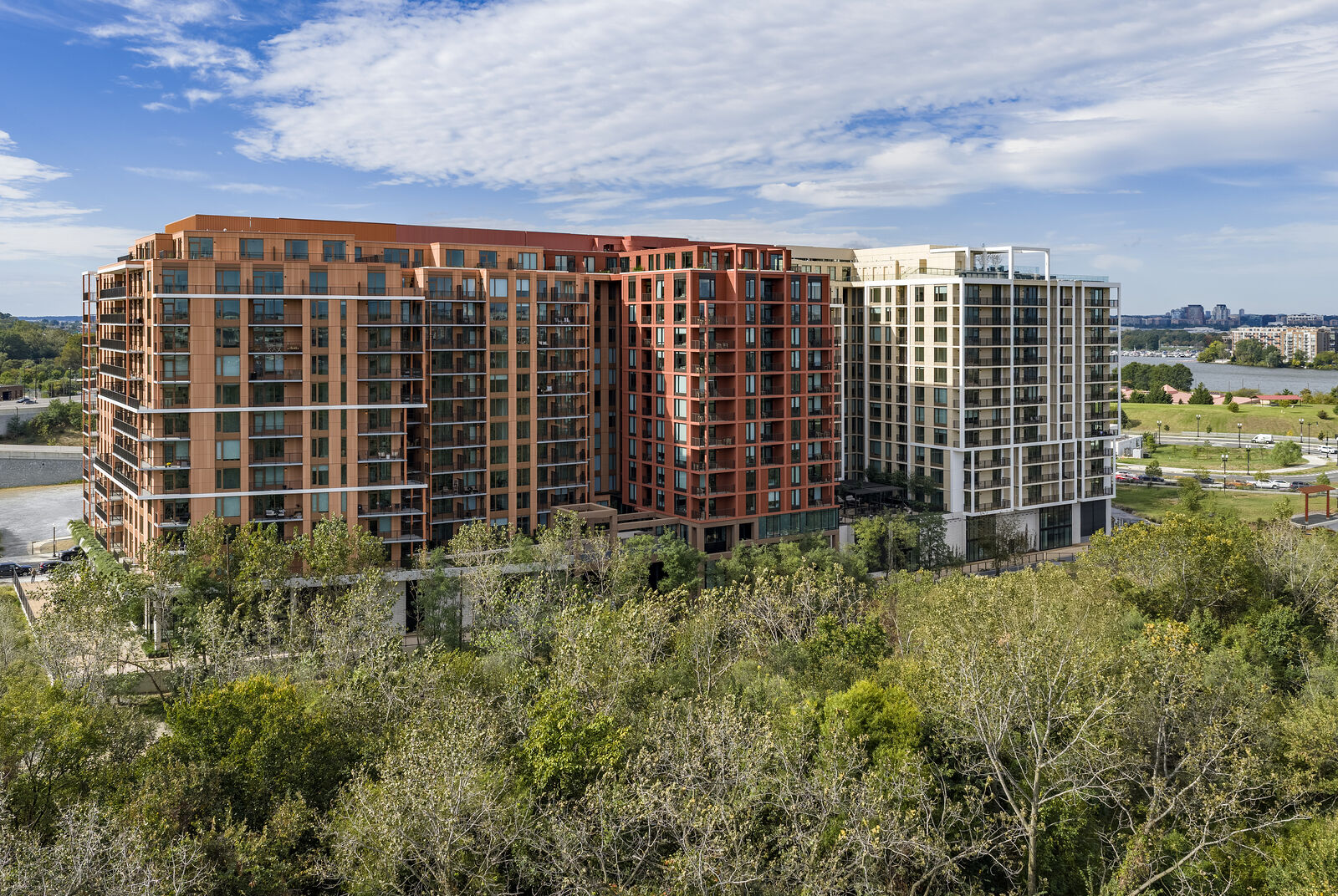
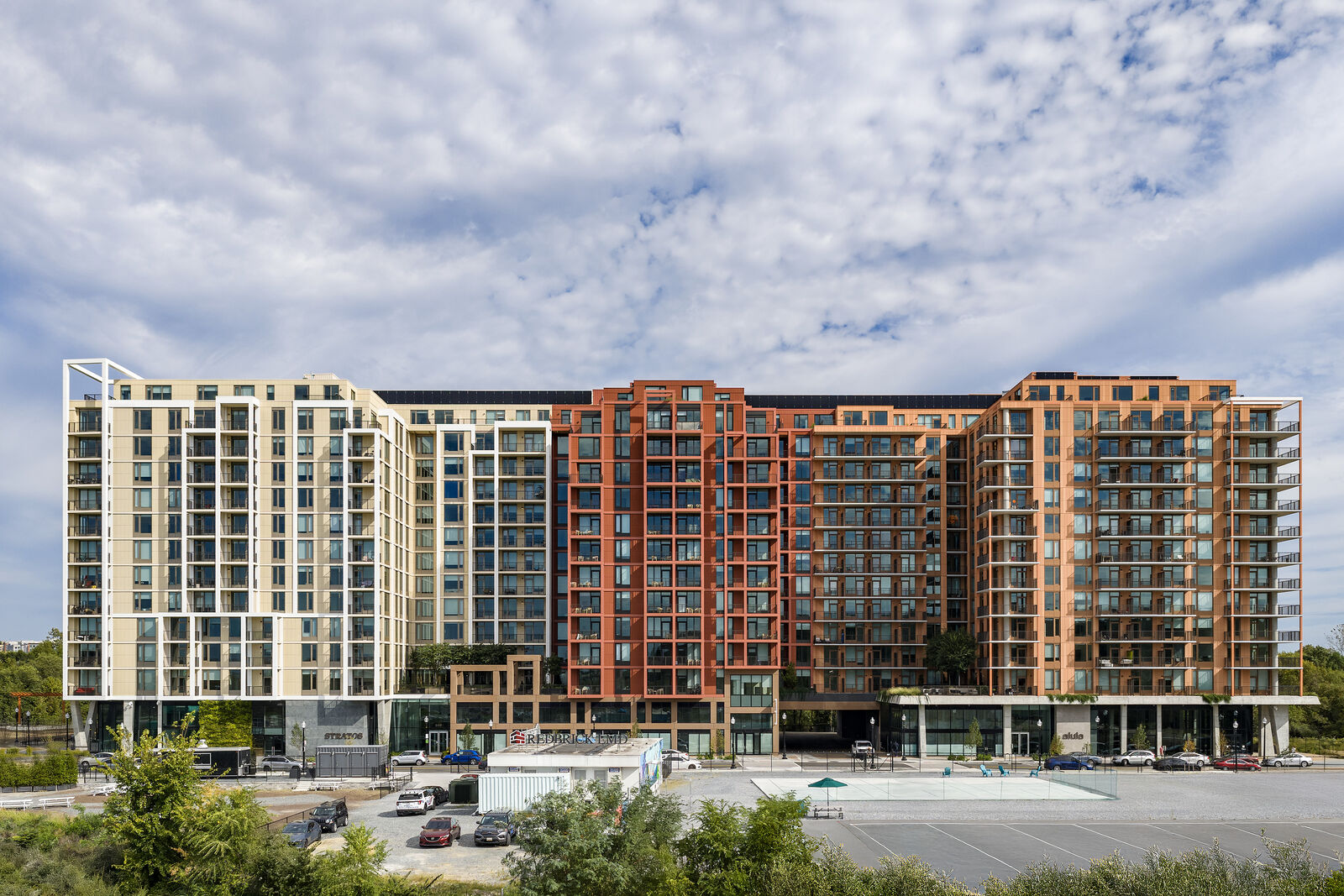
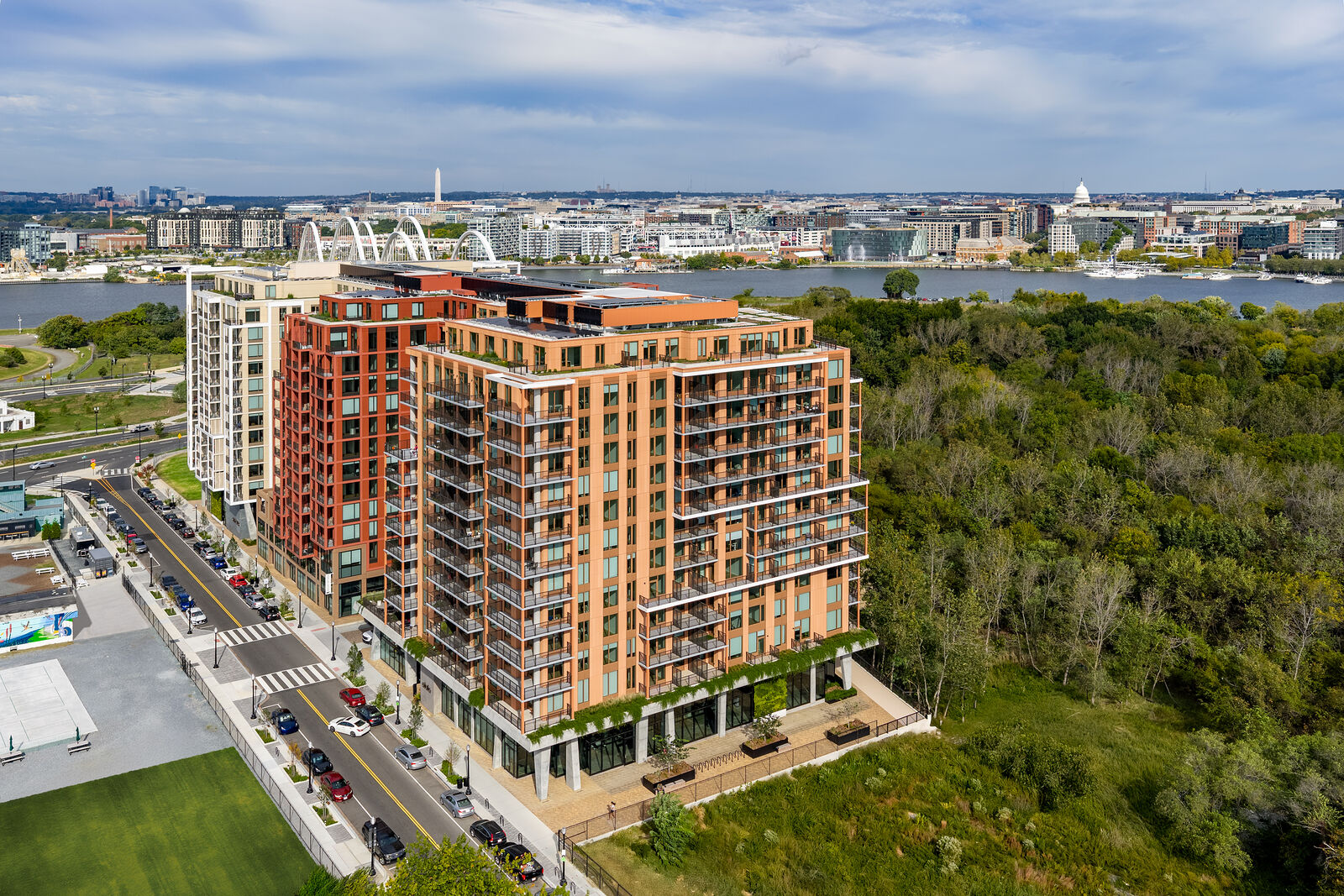
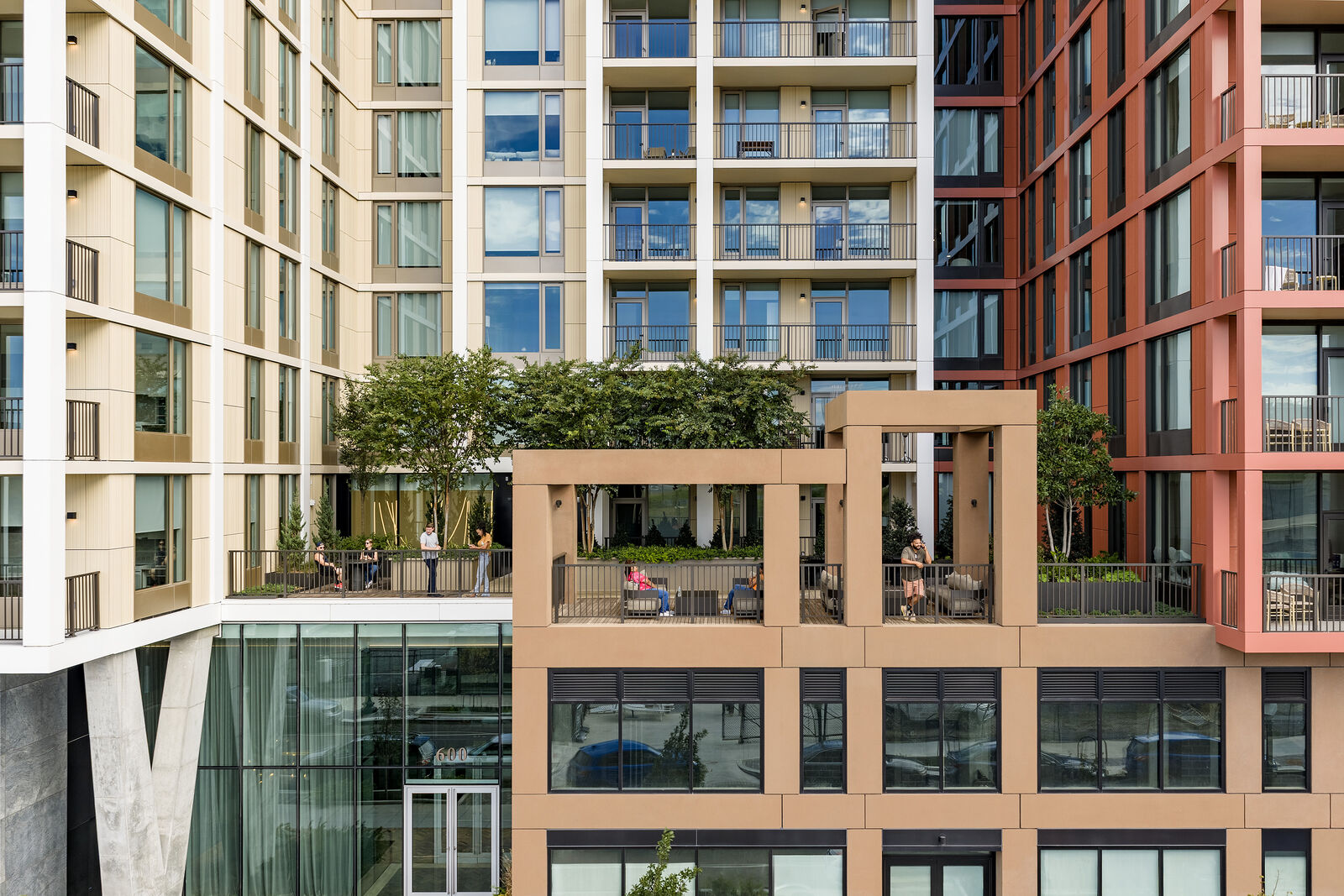
The Bridge District in Washington, DC serves as a model for how responsible development can foster community connections, support flexible and healthy living for residents, and mitigate the impacts of climate change. Phase One of the Bridge District serves as the cornerstone of the future development. The mixed-use building brings 750,000 square feet of market-rate and affordable housing and 40,000 square feet of community-serving retail to Southeast DC and is on track to become the largest ILFI Zero Carbon multifamily residential building in the world.
Location
Washington, DC
Square Feet
915,000
Completion date
2025
Certifications
ILFI Zero Carbon, LEED v4.1 Platinum
The tower form strategically elevates occupant wellness by increasing daylight, airflow, and views throughout.
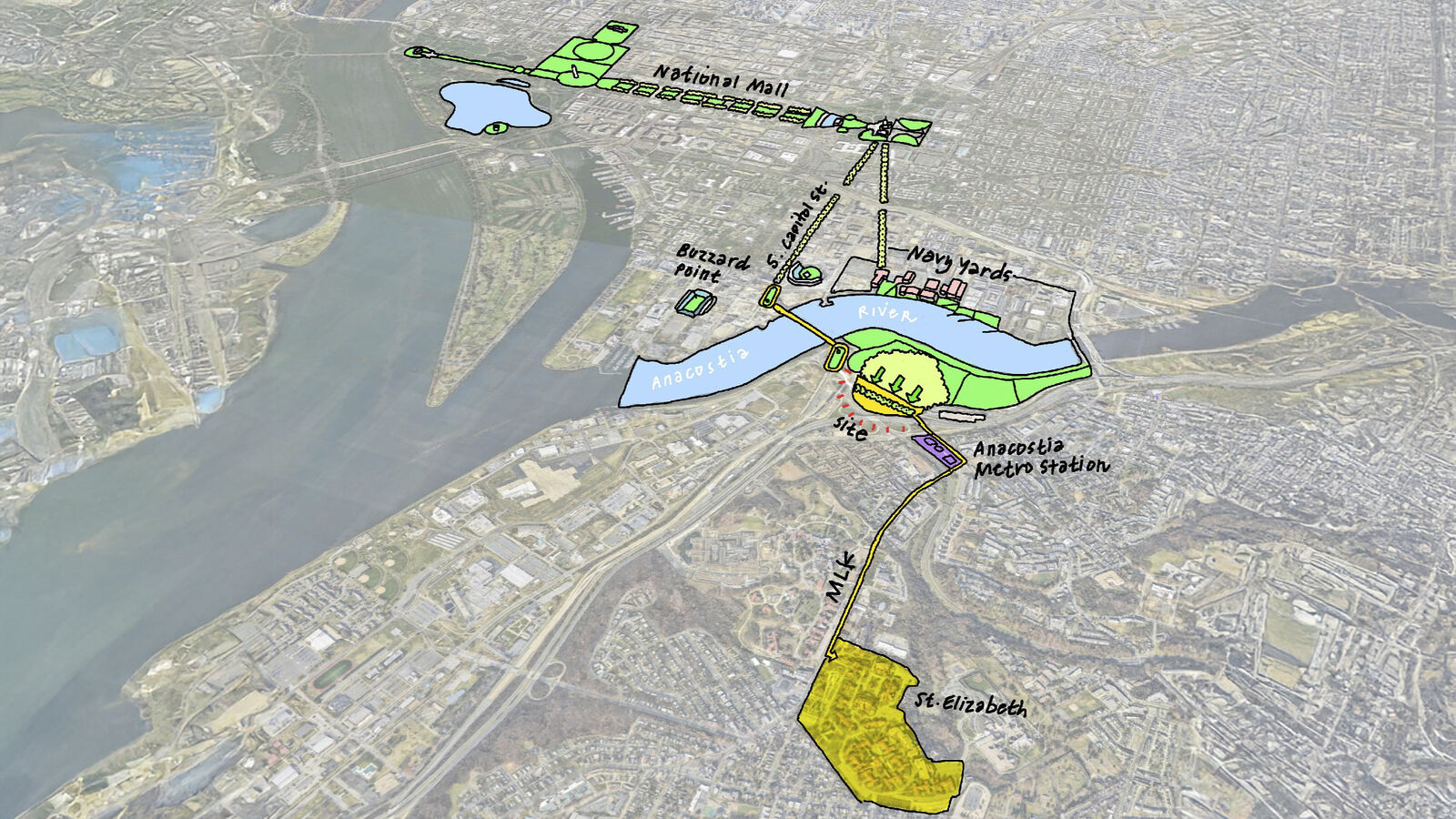
The Bridge District aims to connect Southeast DC neighborhoods with Downtown.
Strengthening Connections, Expanding Opportunities
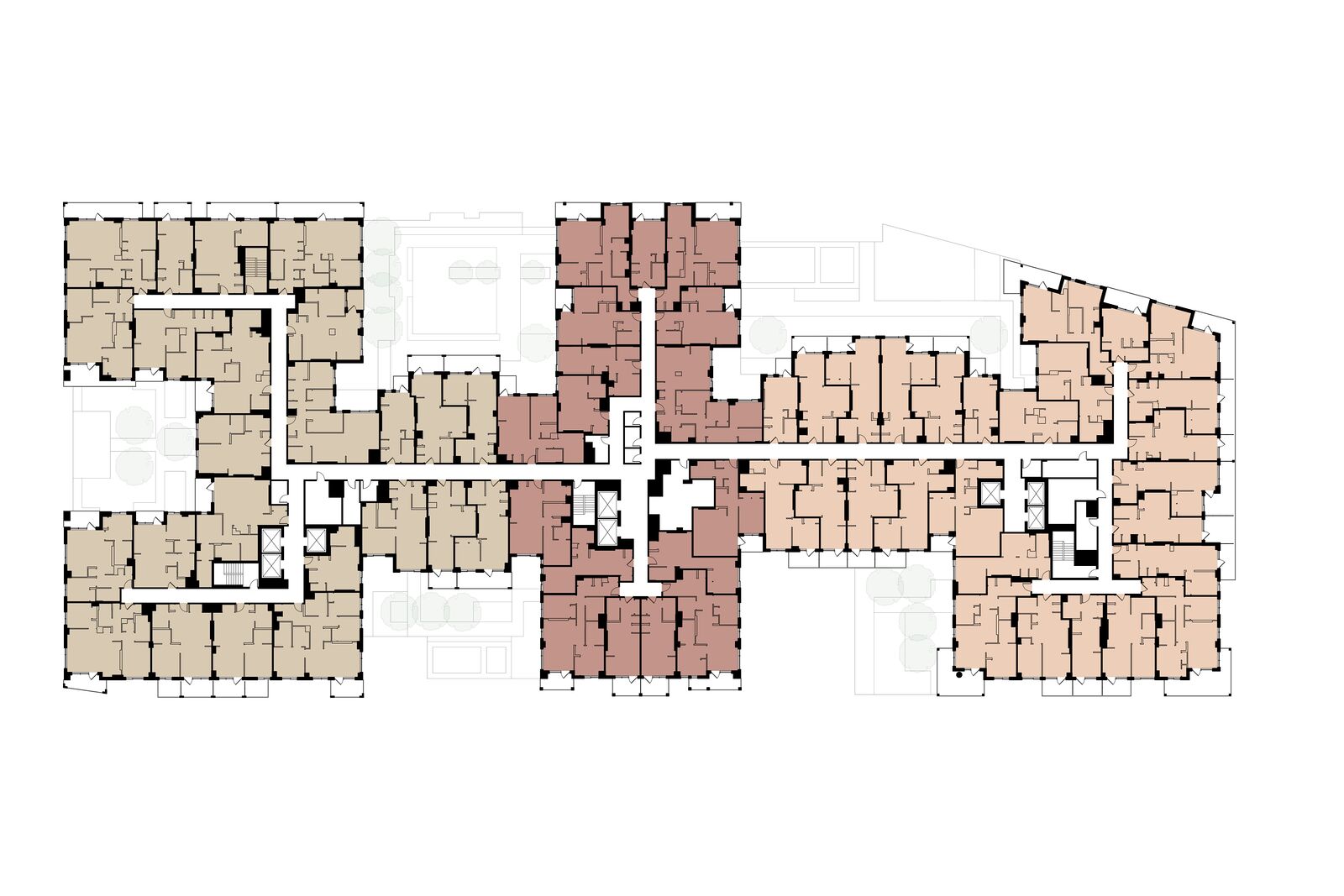
Located on previously undeveloped land at the foot of the Frederick Douglass Bridge, the Bridge District connects the established Capitol Riverfront neighborhood with the communities south and east of the Anacostia River. Although Southeast DC is home to 25% of DC’s population, it has been historically overlooked for investments in housing, healthcare, and services that have benefitted other areas of the District. Phase One, consisting of three distinct towers; Stratos, Poplar House, and Alula, aims to bridge this divide by establishing new housing and retail responsive to the community’s needs and wants. Seventy-eight of the building’s 757 units are affordable and rented to those making no more than 60% of the area’s median family income. In response to the community’s desire for greater housing options for families, 29 of the units have three bedrooms. Recognizing that Phase One serves not only its own residents but the greater Anacostia neighborhood, the building maximizes the amount of ground-floor real estate dedicated to retail and community uses. The project aims to attract local retailers to expand economic opportunity and ground the new development in the surrounding neighborhood.
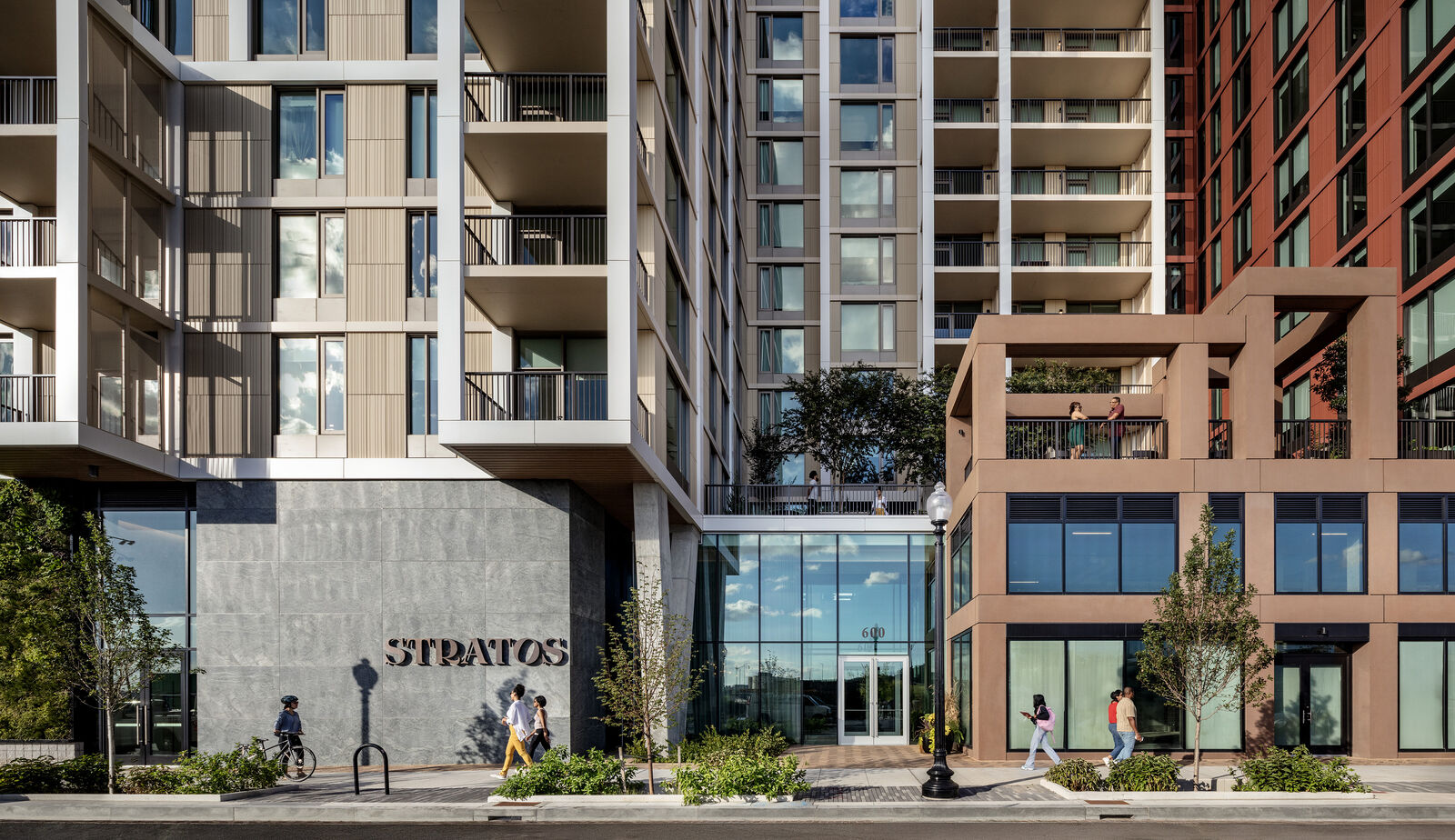
Community-serving retail spills out onto the streetscape creating a vibrant pedestrian experience.
Stratos, Poplar House, and Alula each offer a distinct residential brand experience, with dedicated entrances, private elevator banks, and curated finishes
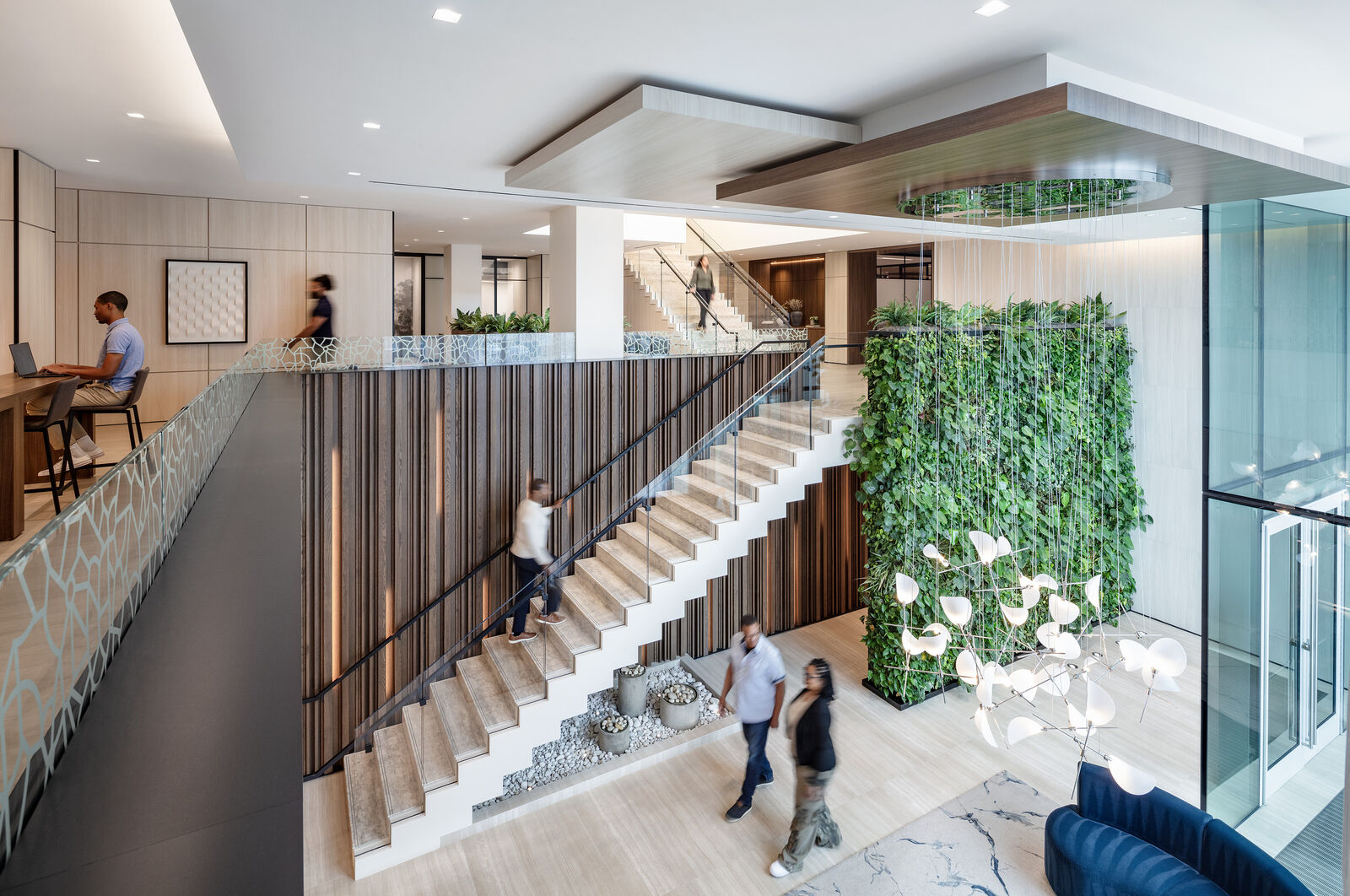
Stratos Lobby
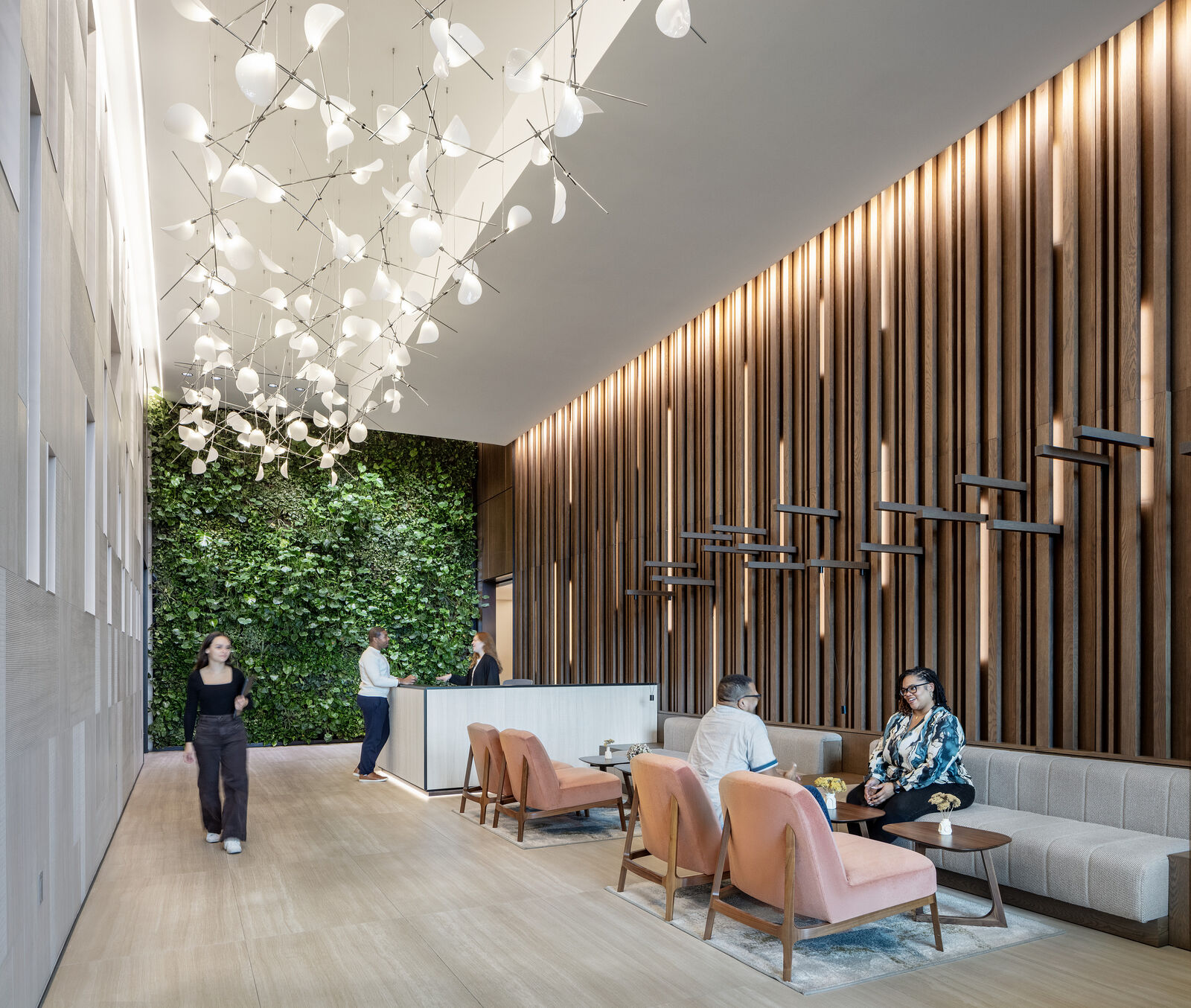
Alula Lobby
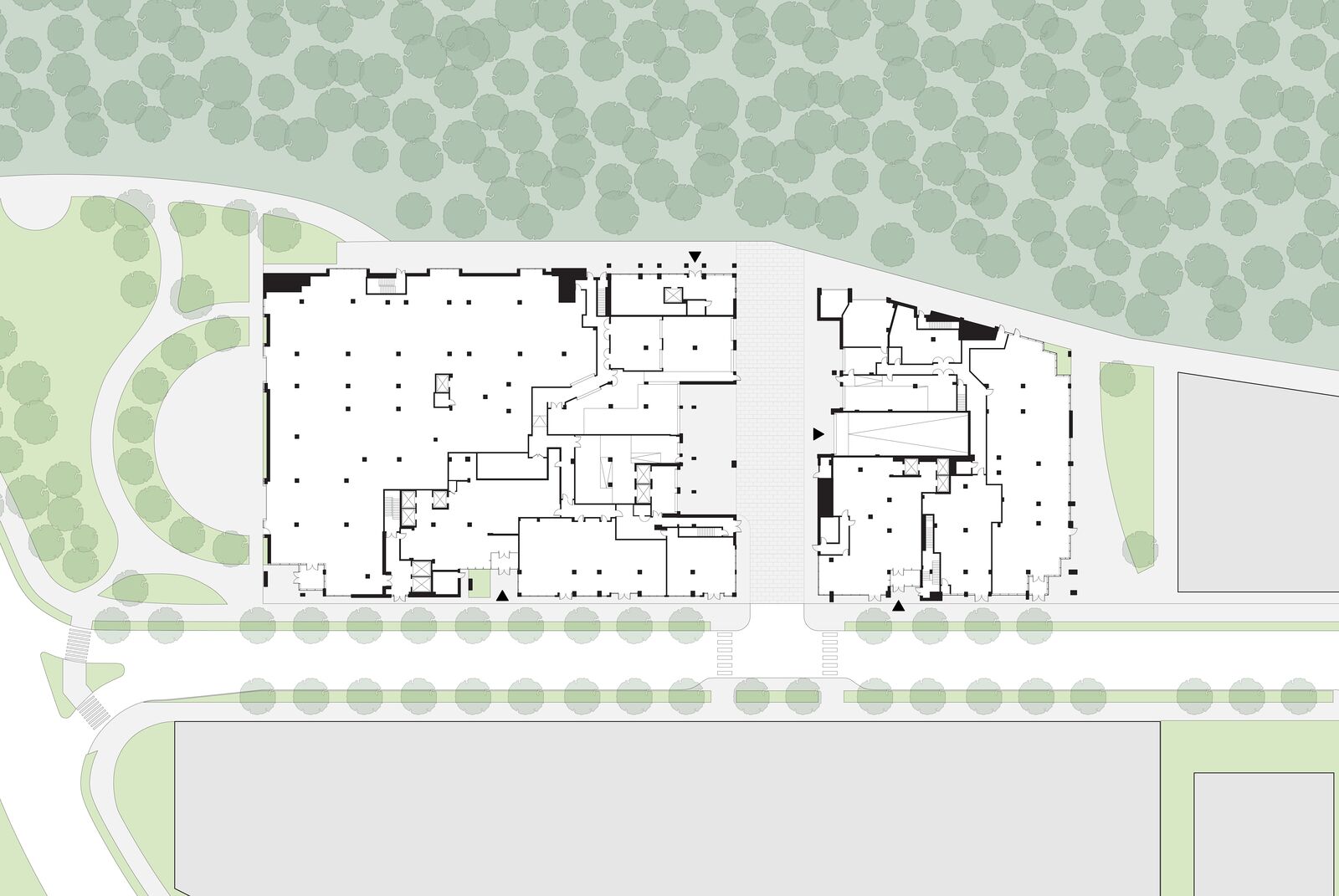
The ground floor serves the public with active pedestrian spaces and retail on all four sides of the building.
Post-Pandemic Living
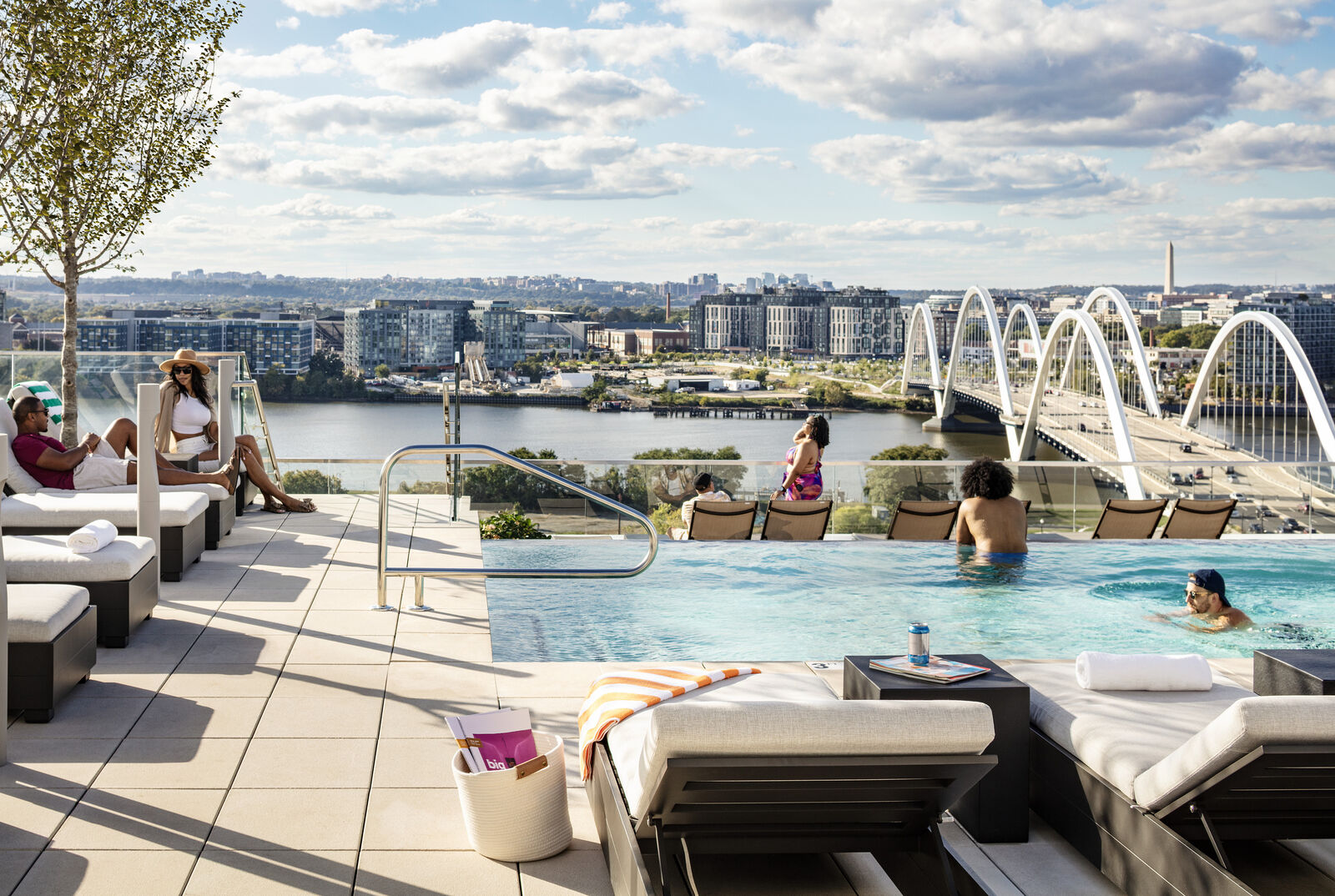
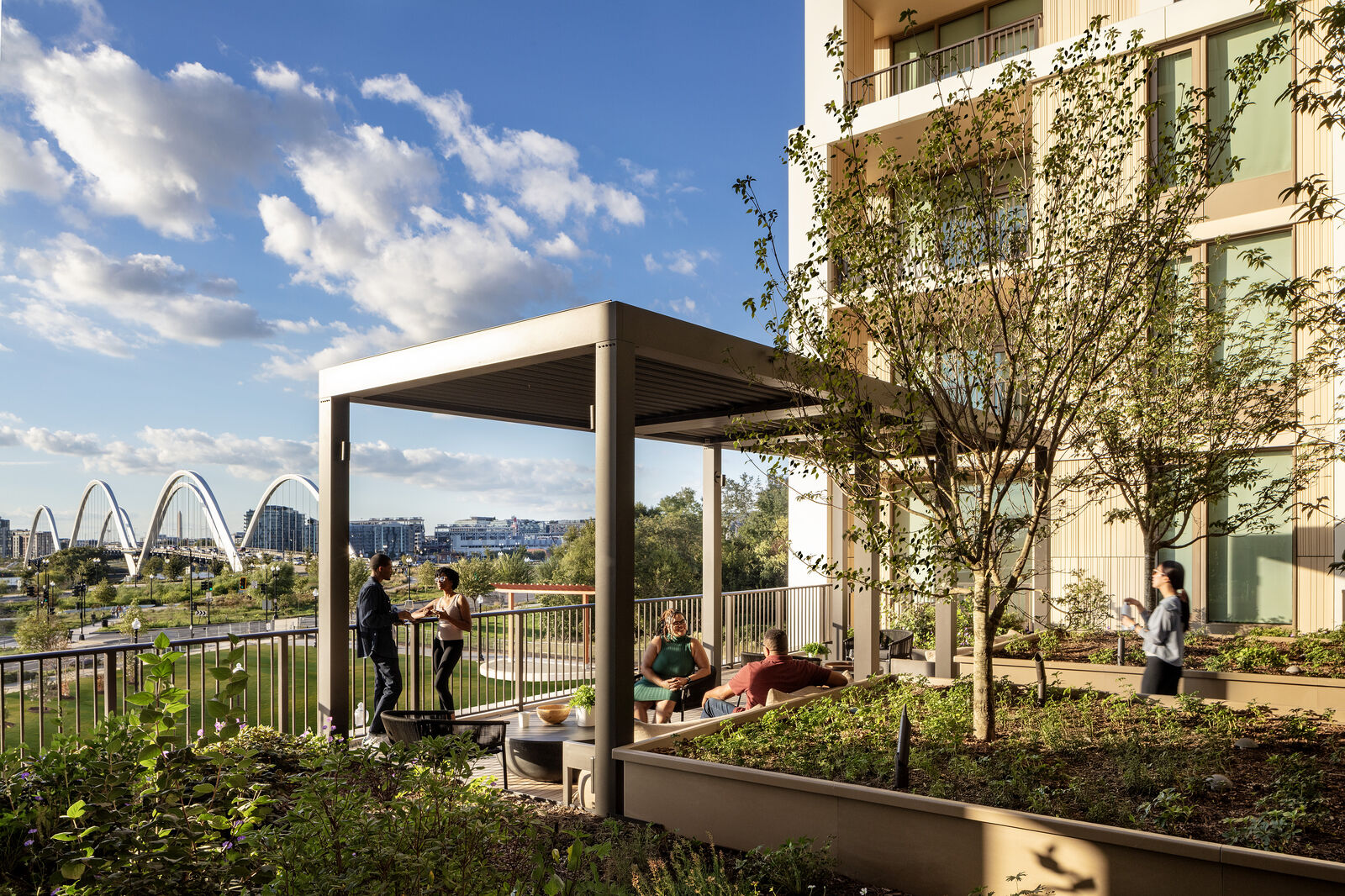
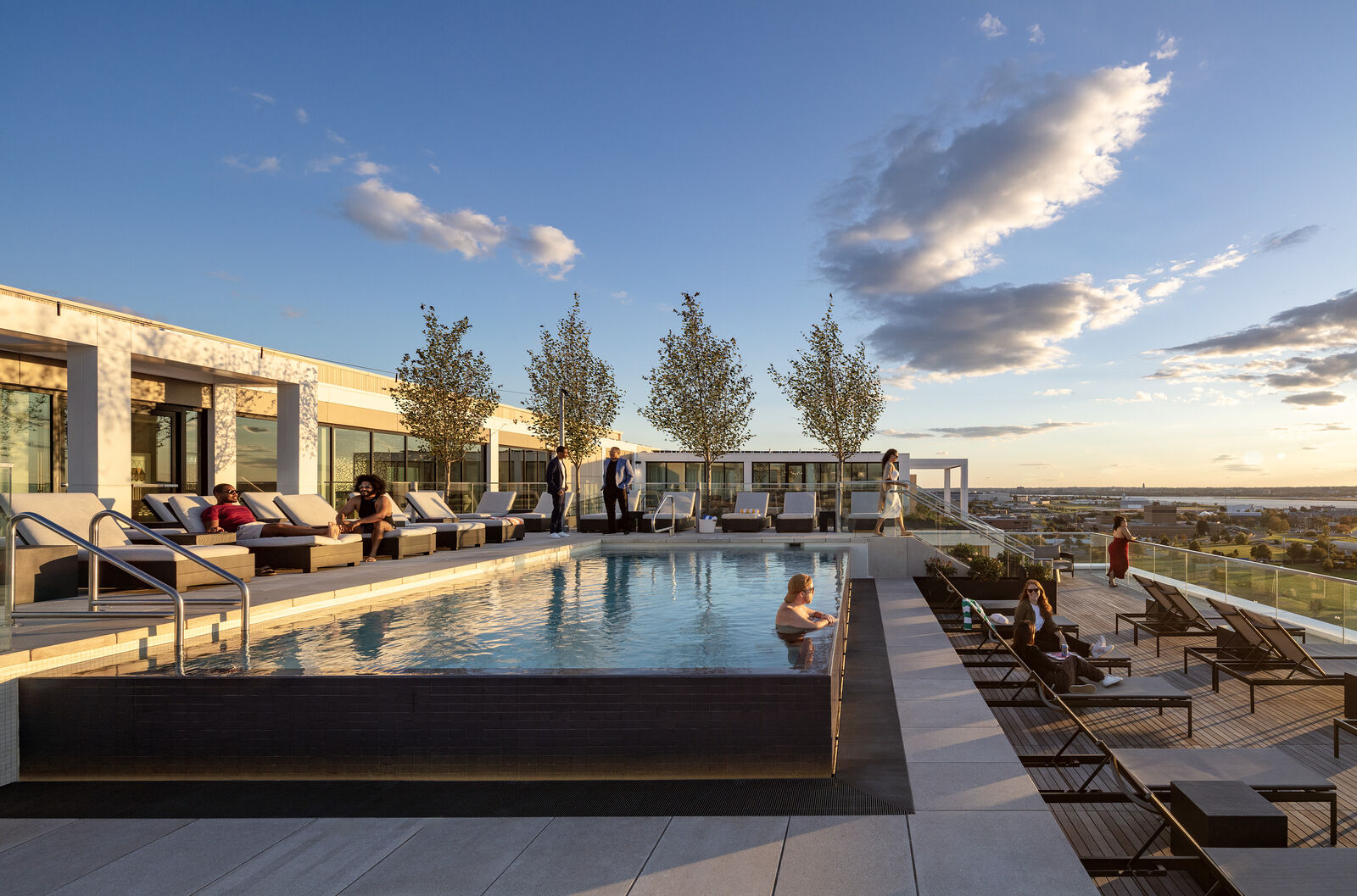
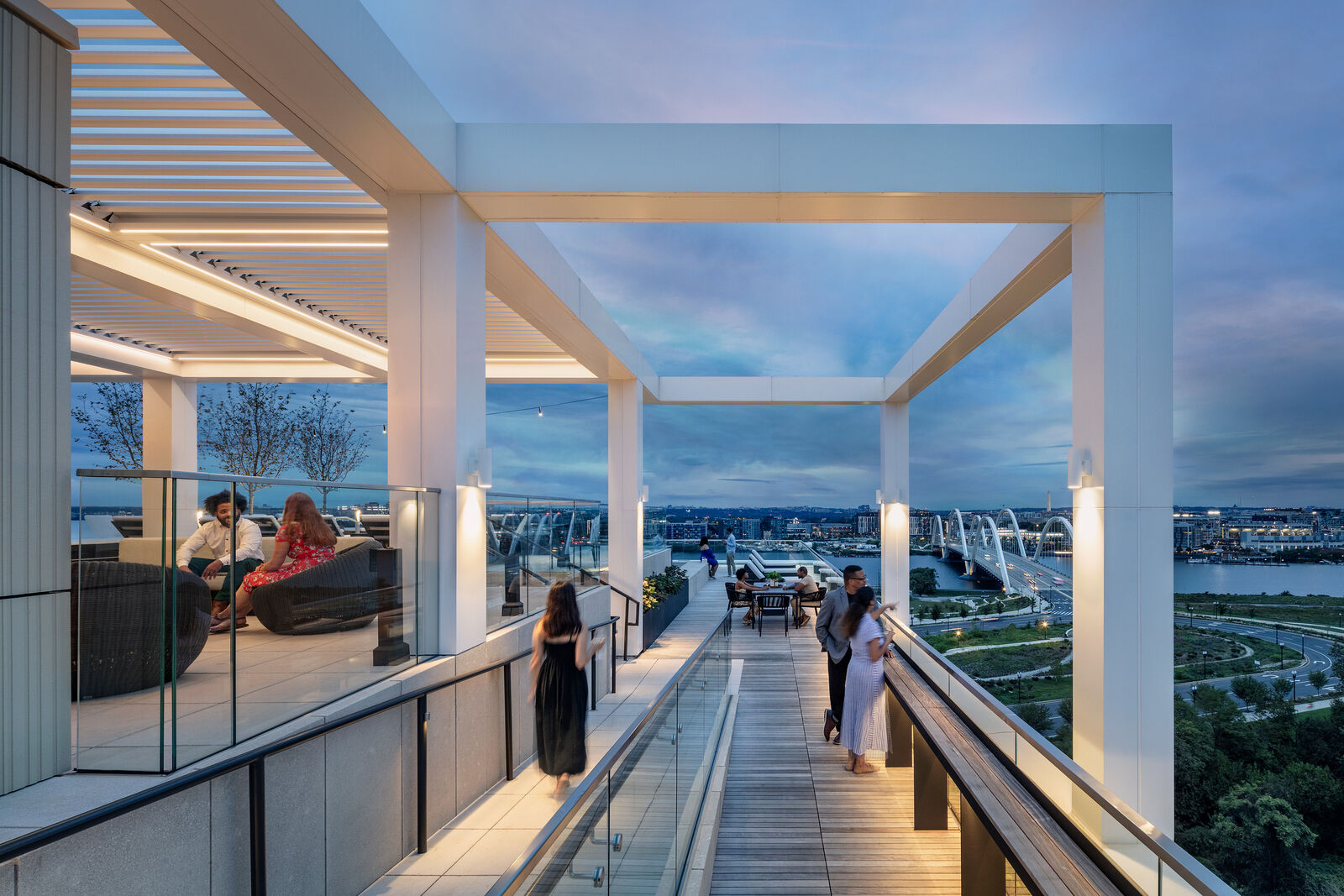
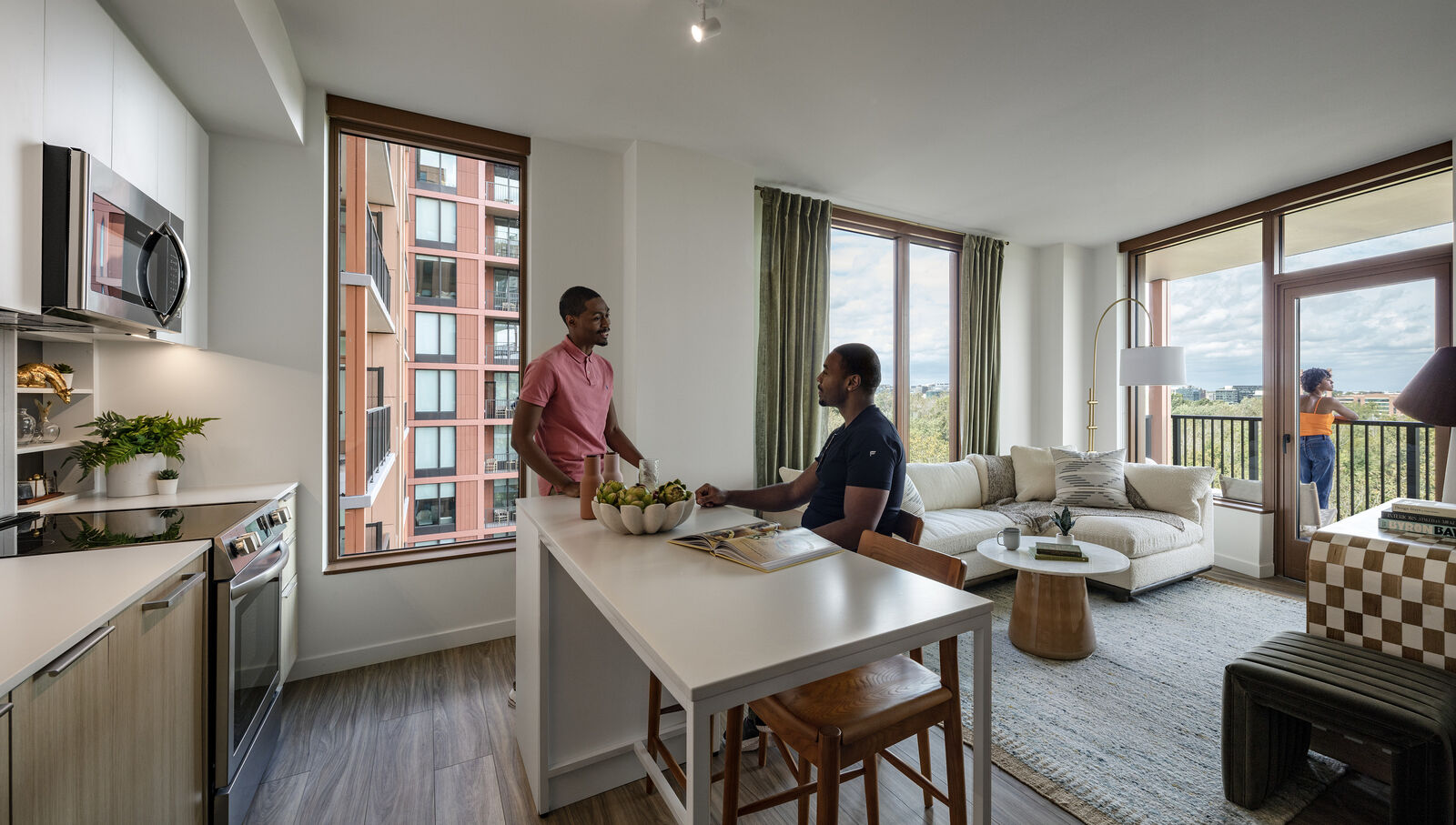
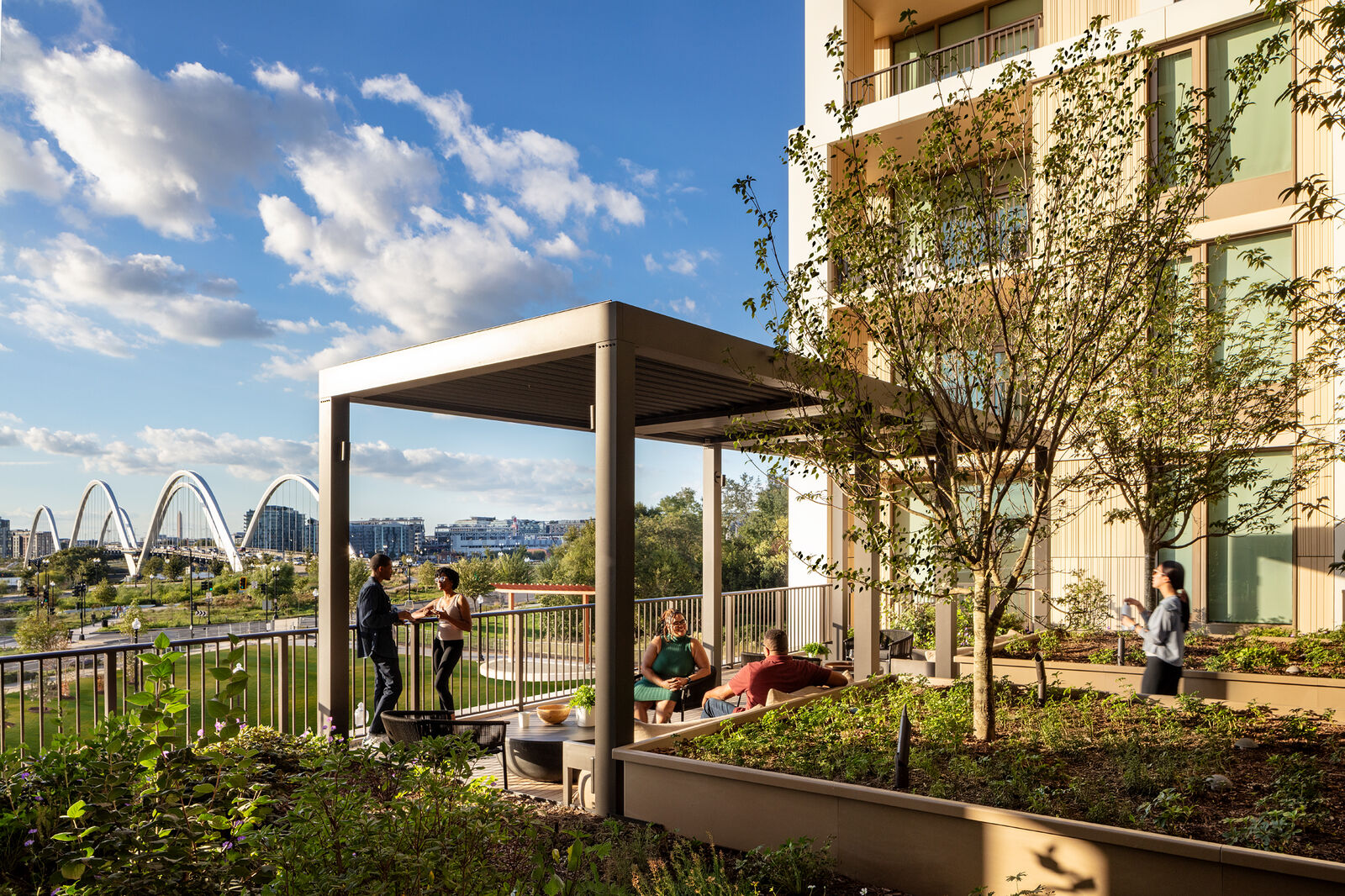
Through a focus on natural daylighting, views to nature, and indoor-outdoor connections, Phase One of the Bridge District prioritizes residents’ health while also catering to the demands of the work-from-home era. The building is located along the southern bank of the Anacostia River and is adjacent to an expansive park and trail network. To capitalize on the site’s expansive viewsheds, the towers form is sculpted to maximize the number of units with monument and river views and to optimize opportunities for natural daylighting. A park-facing lobby provides direct connection into Poplar Point and a future pedestrian promenade. In addition to private balconies, which are included with more than 80% of units, residents can access uniquely programmed outdoor terraces, including landscaped courtyards, a yoga terrace, and a rooftop pool deck.
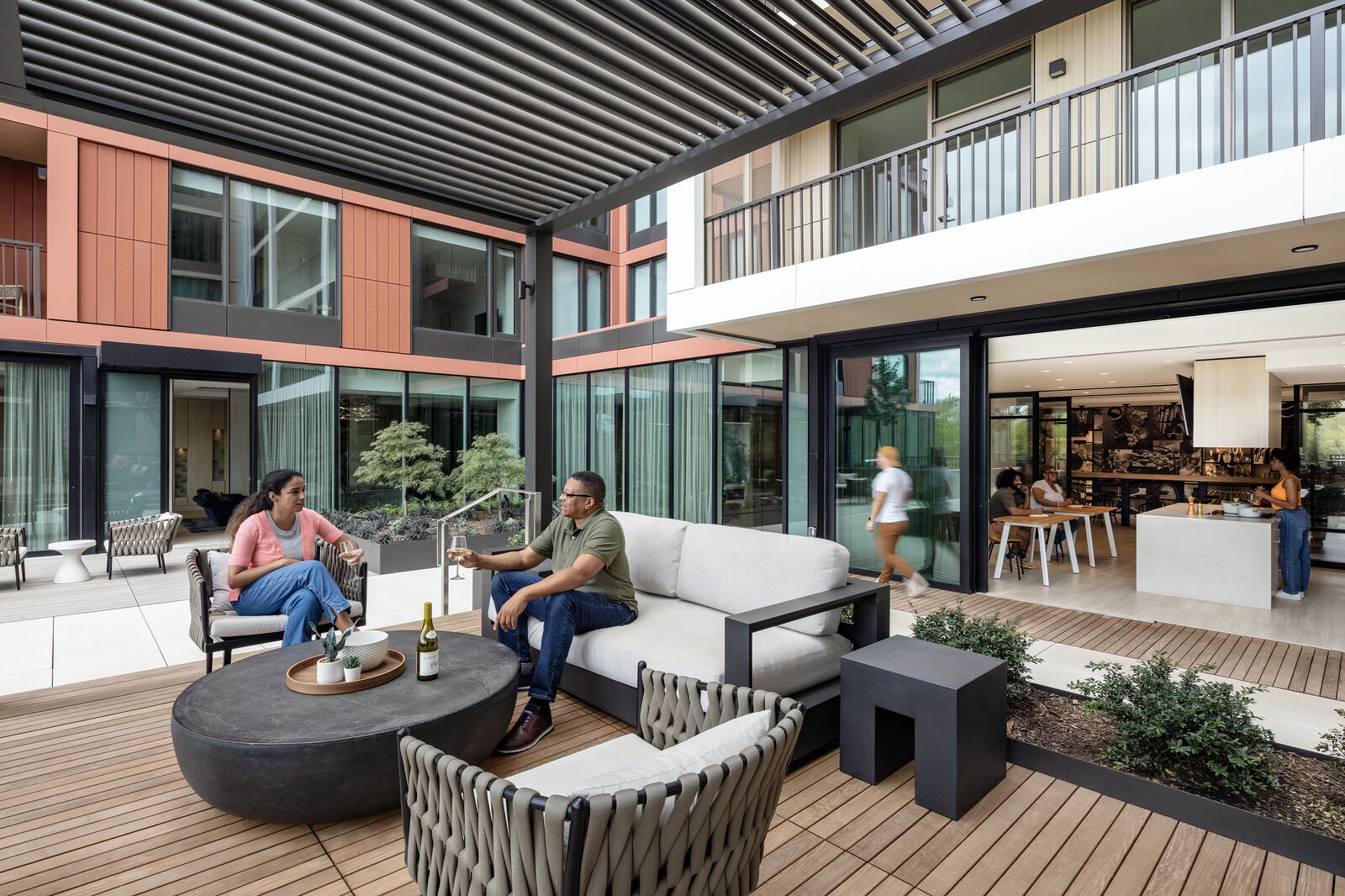
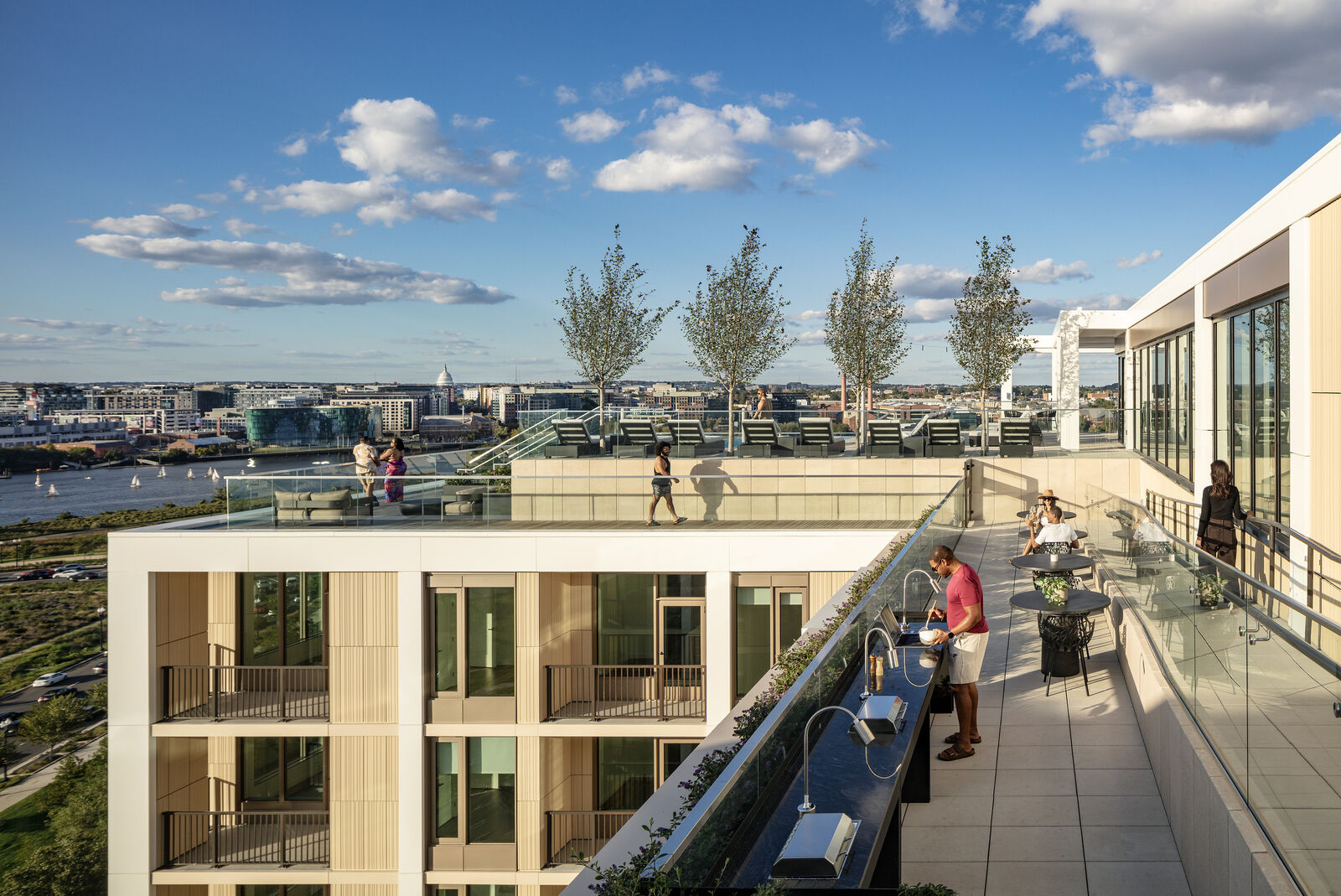
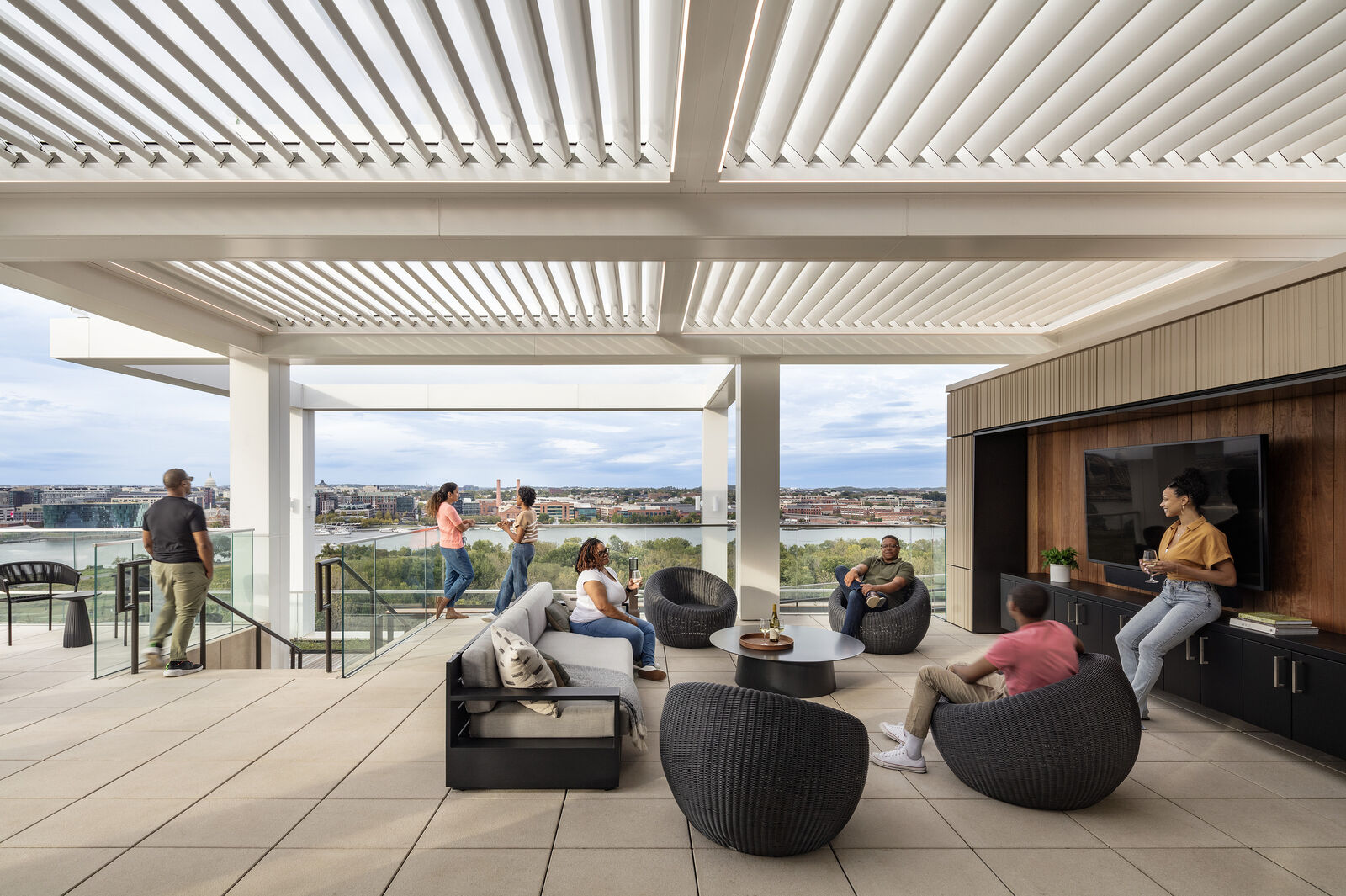
The event terrace is fully equipped with an adjustable pergola for shade, outdoor grills, and floor-to-ceiling sliding doors for indoor-outdoor connection. In this expansive space, casual gatherings and formal occasions feel equally at home.
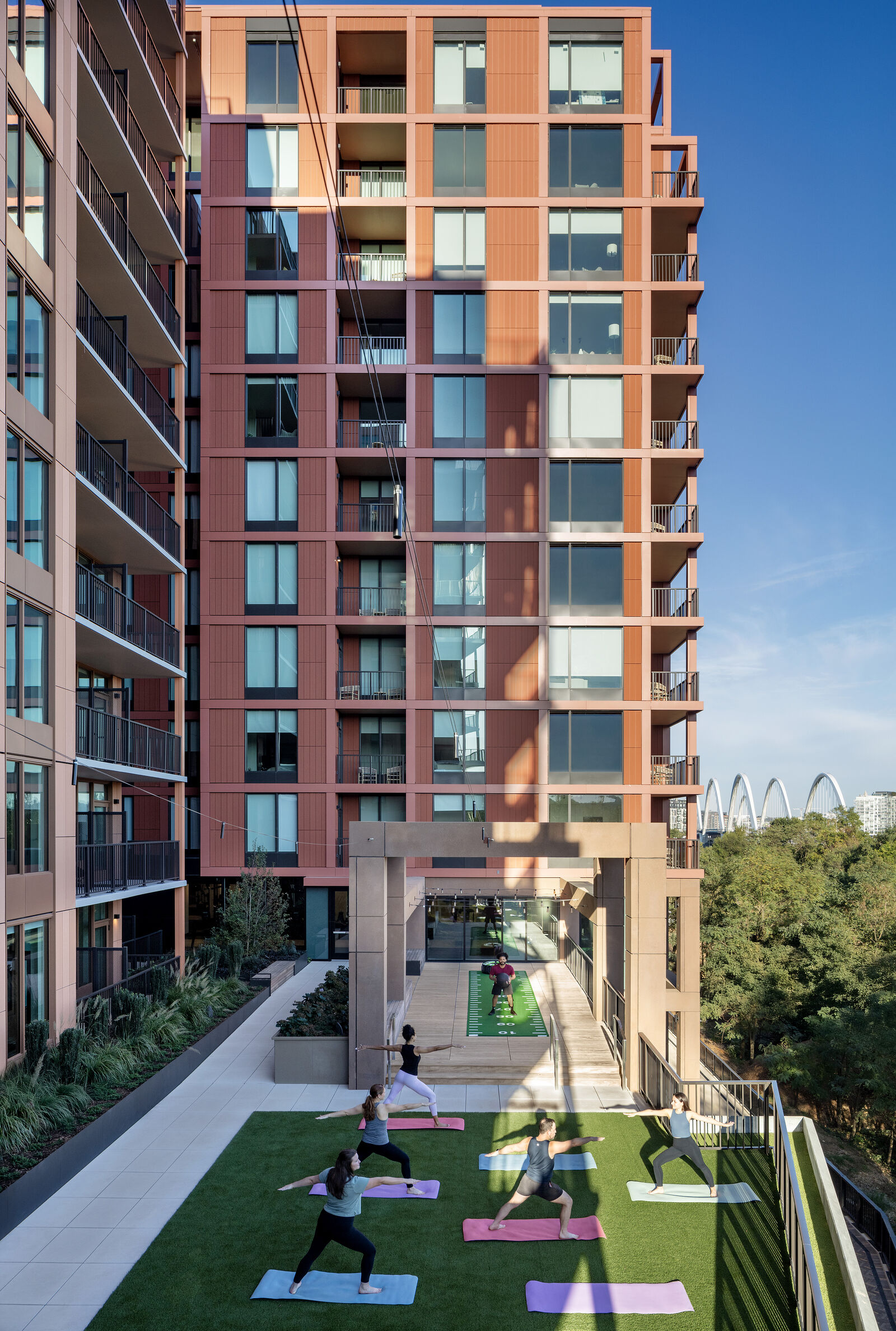
Spilling out of the fitness center is an exercise terrace that provides an outdoor space for cardio and strength training as well as lawn space for morning yoga sessions.
Additional amenities—a fitness center, a dog spa, bike lounge, event rooms, and a children’s playroom—center around wellness and multigenerational living. The building also incorporates biophilic elements including exterior and interior green walls, natural materials, and interior plantings.
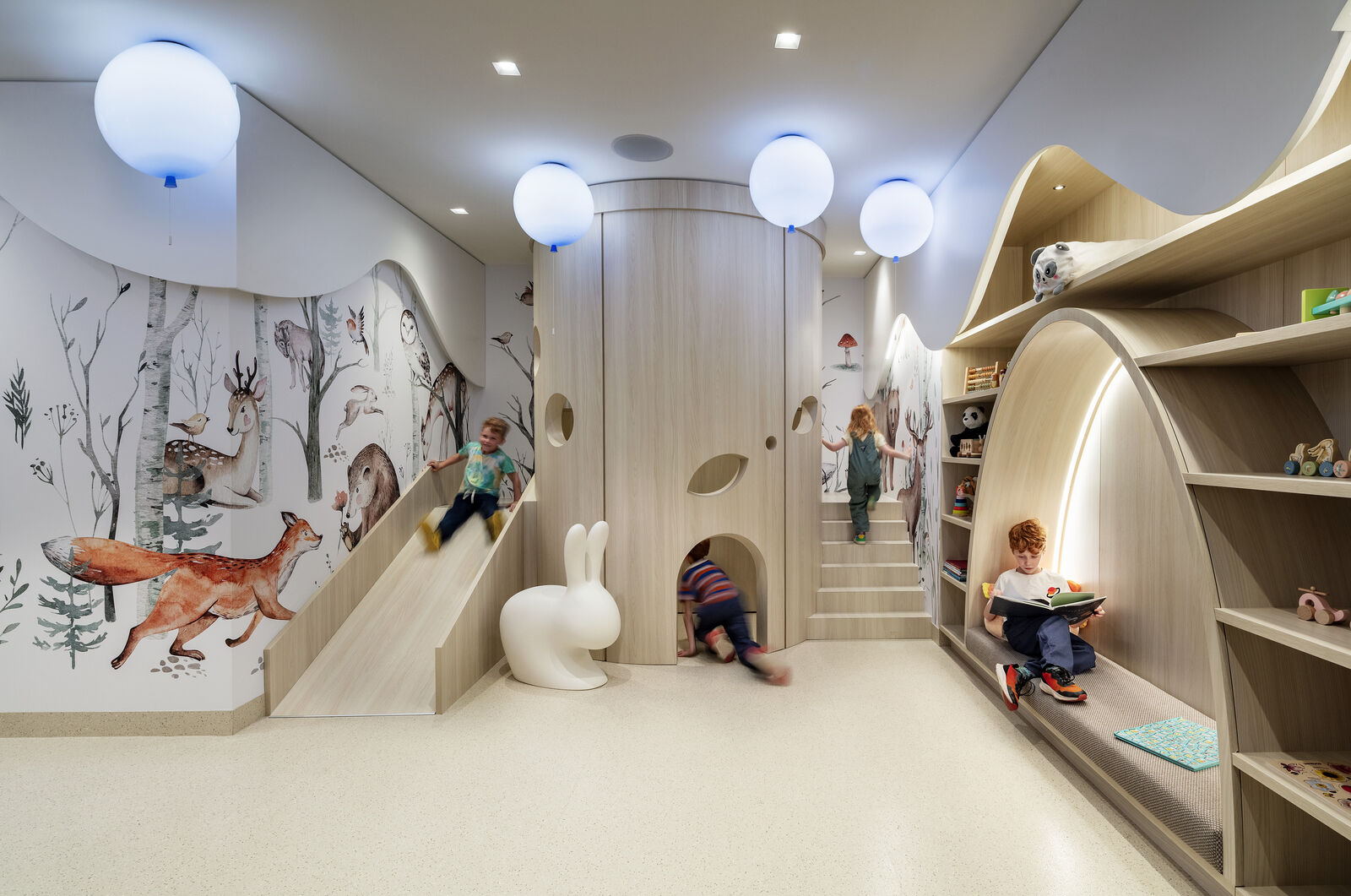
Designed with families in mind, a dedicated children’s playroom offers a safe, welcoming space for little ones, while parents can enjoy the gym or take a meeting.
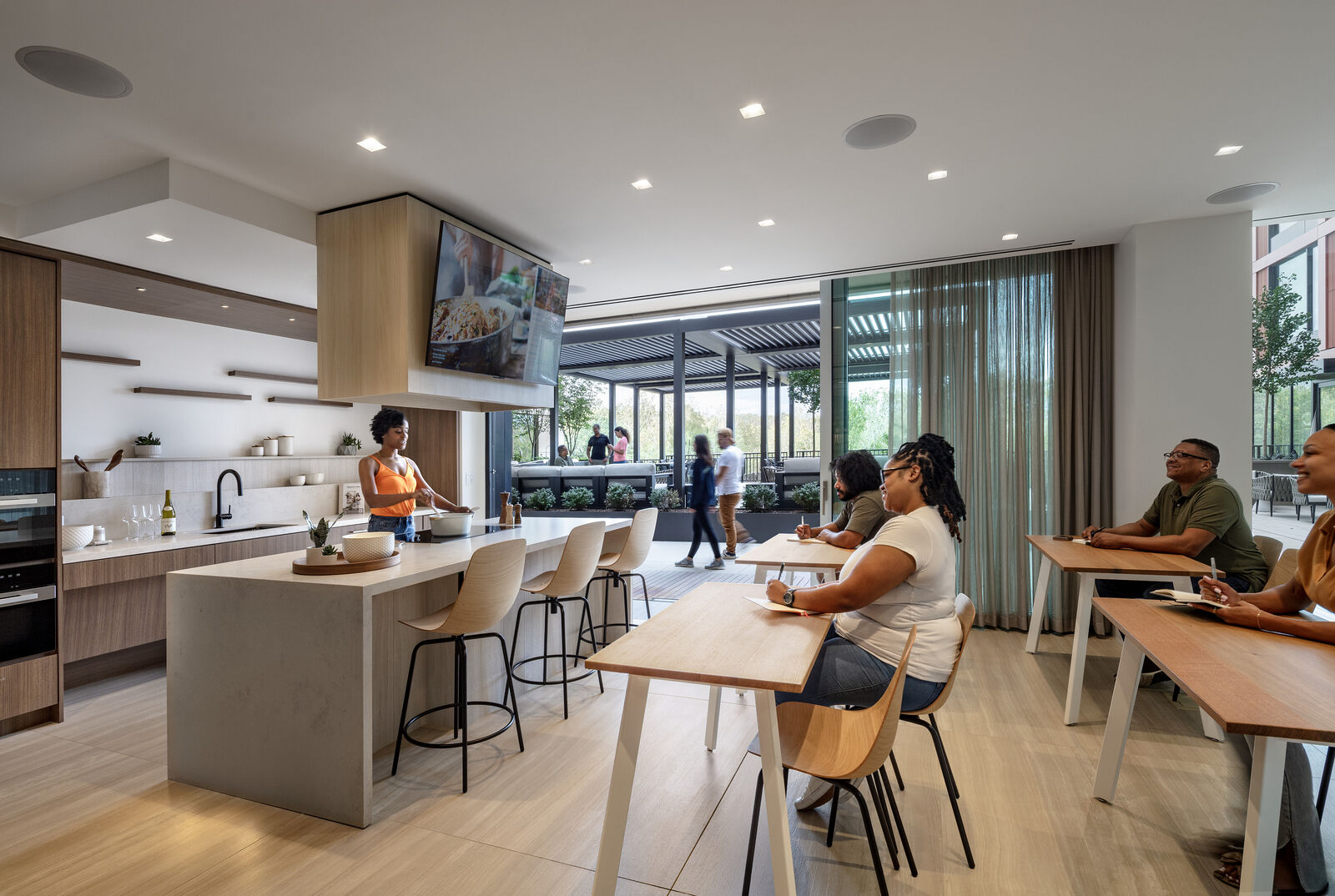
A demonstration kitchen and wine bar brings residents together through regular culinary classes meant to be enjoyed and shared. Floor-to-ceiling sliding doors open directly onto the event terrace so gatherings can continue long after classes are over.
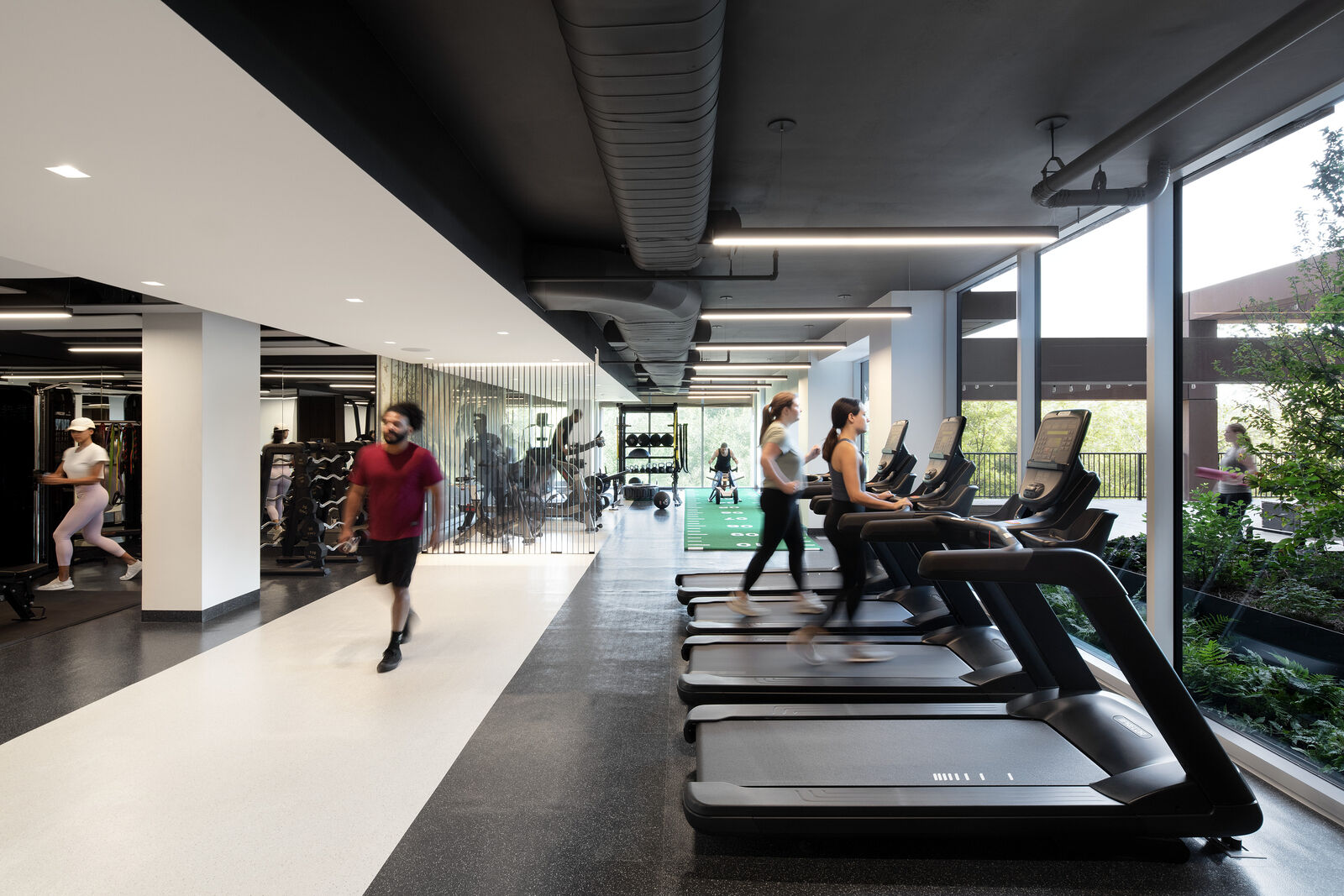
The fitness center offers a fully equipped gym, a dedicated massage area, and a serene yoga studio.
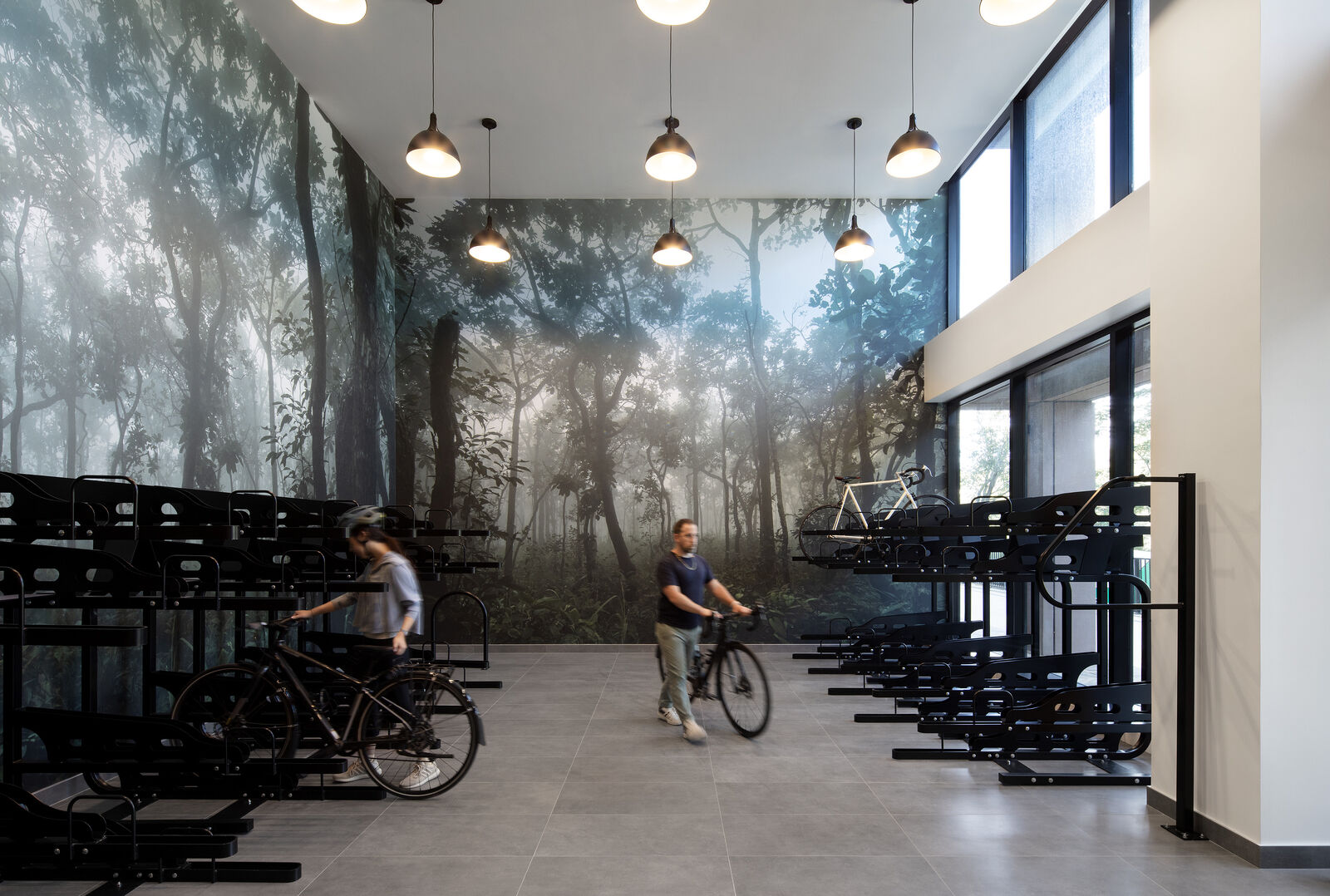
The bike lounge includes parking, a repair station, and a wash station to make bike use more convenient for residents.
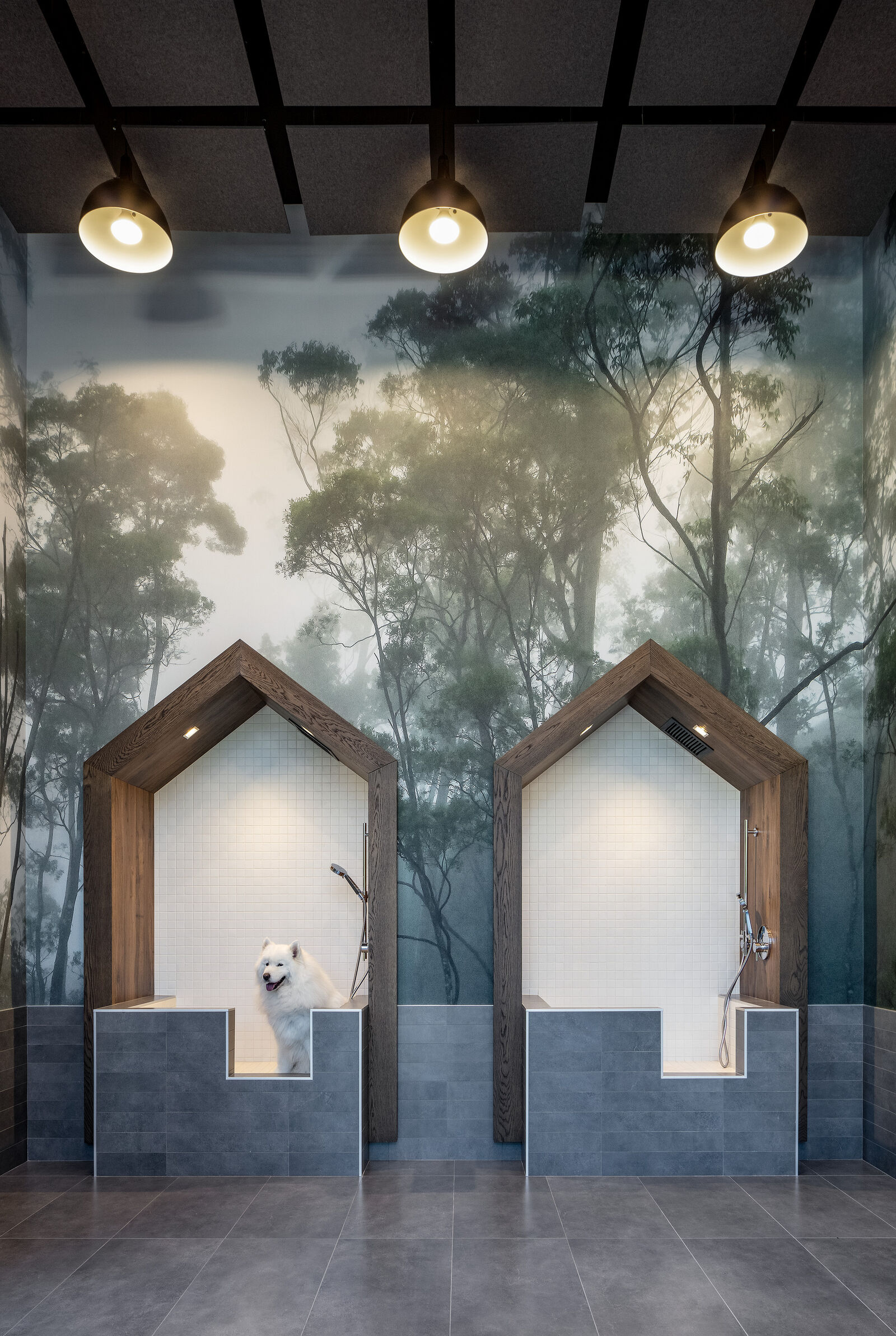
The dog spa imbues forest wallpaper and wood accents to evoke a tranquil, nature-inspired environment for pets to feel at ease.
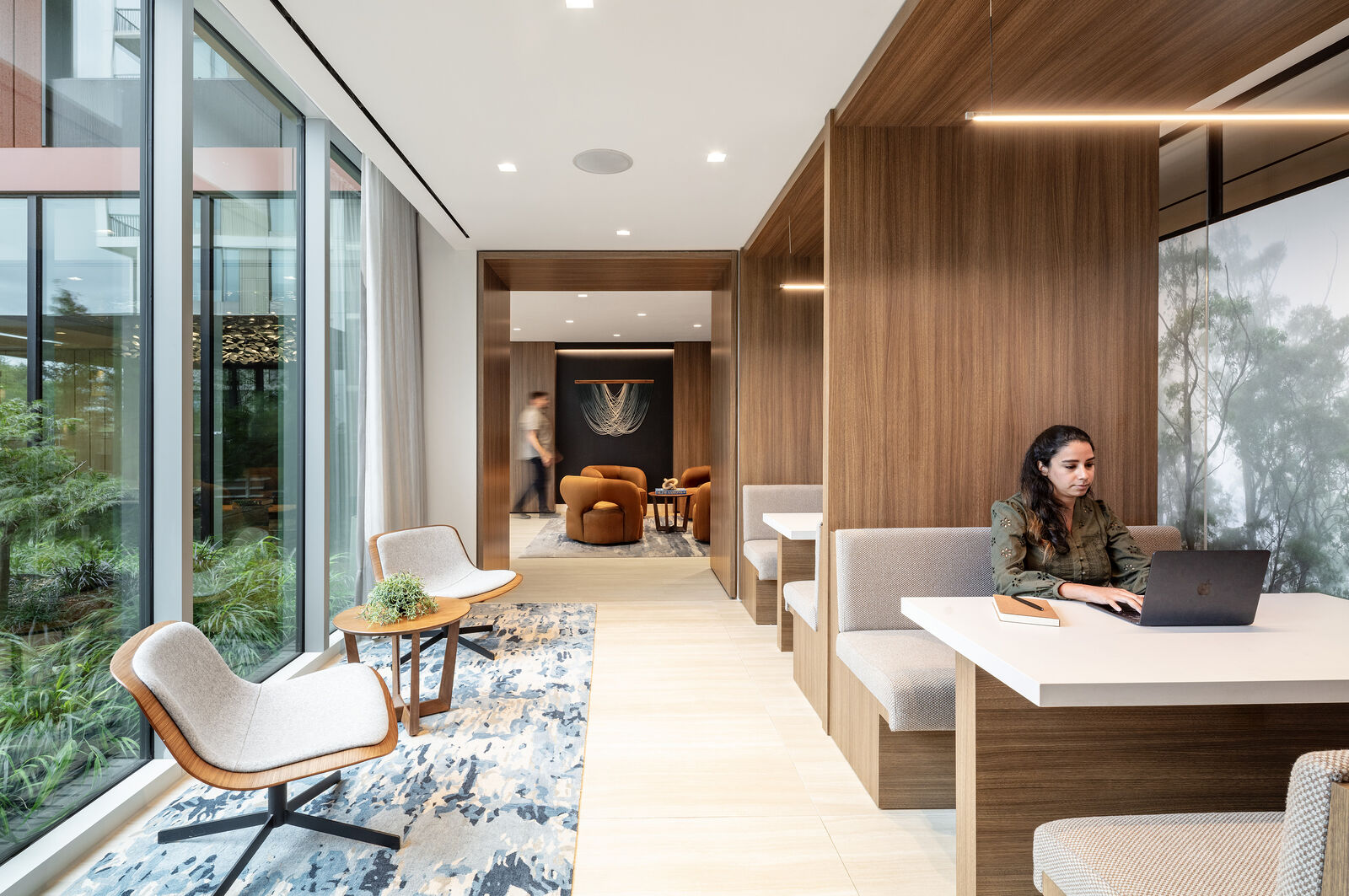
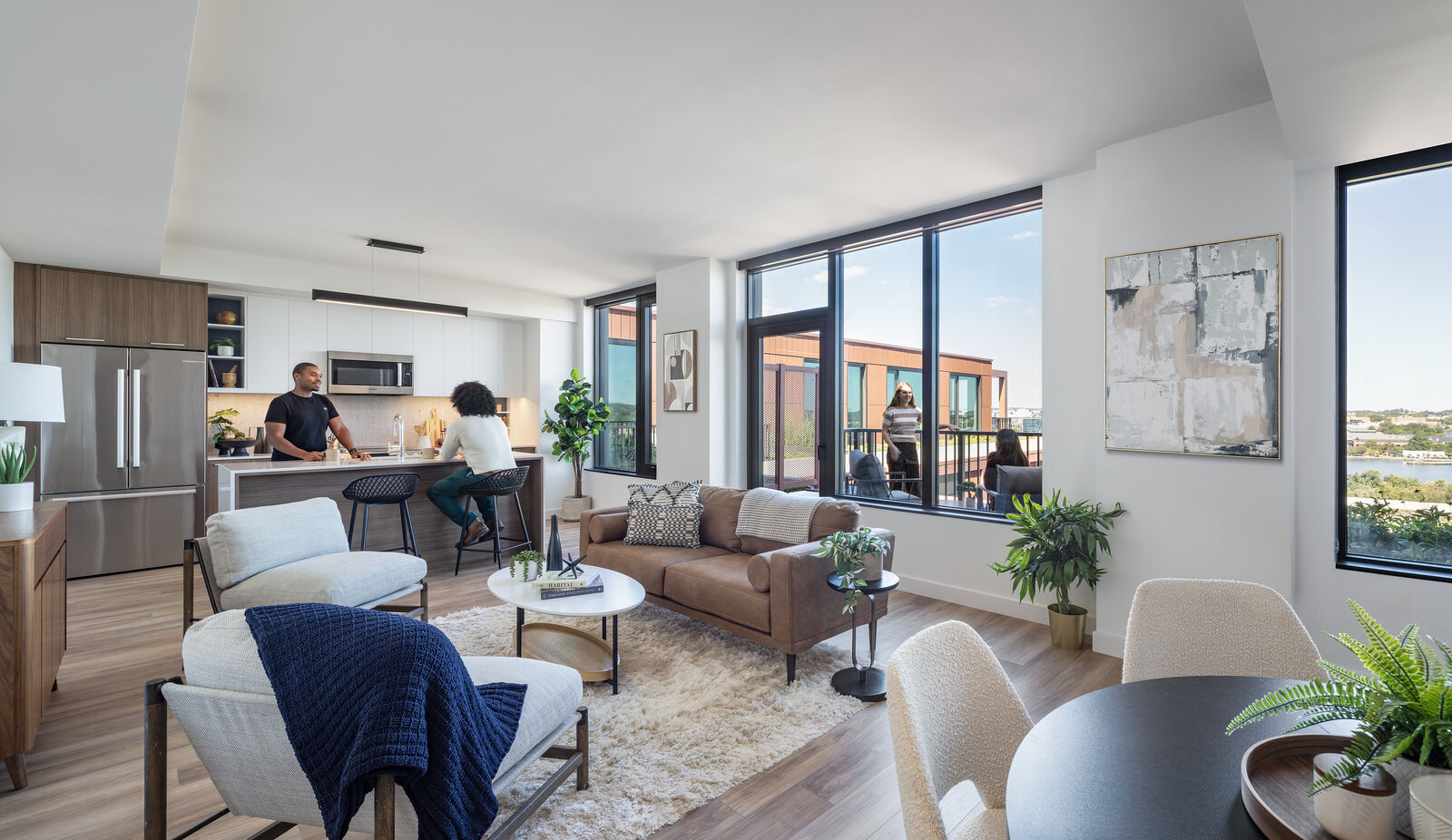
To support the rise of remote and hybrid work, the design integrates flexible spaces across scales of the building. At the personal scale, each unit includes a flex space that can be adapted to an office. A centralized co-working space with connections to retail and outdoor terraces is available for the whole community of residents. Reservable phone booths and conference rooms are offered throughout the building for residents who need greater focus.
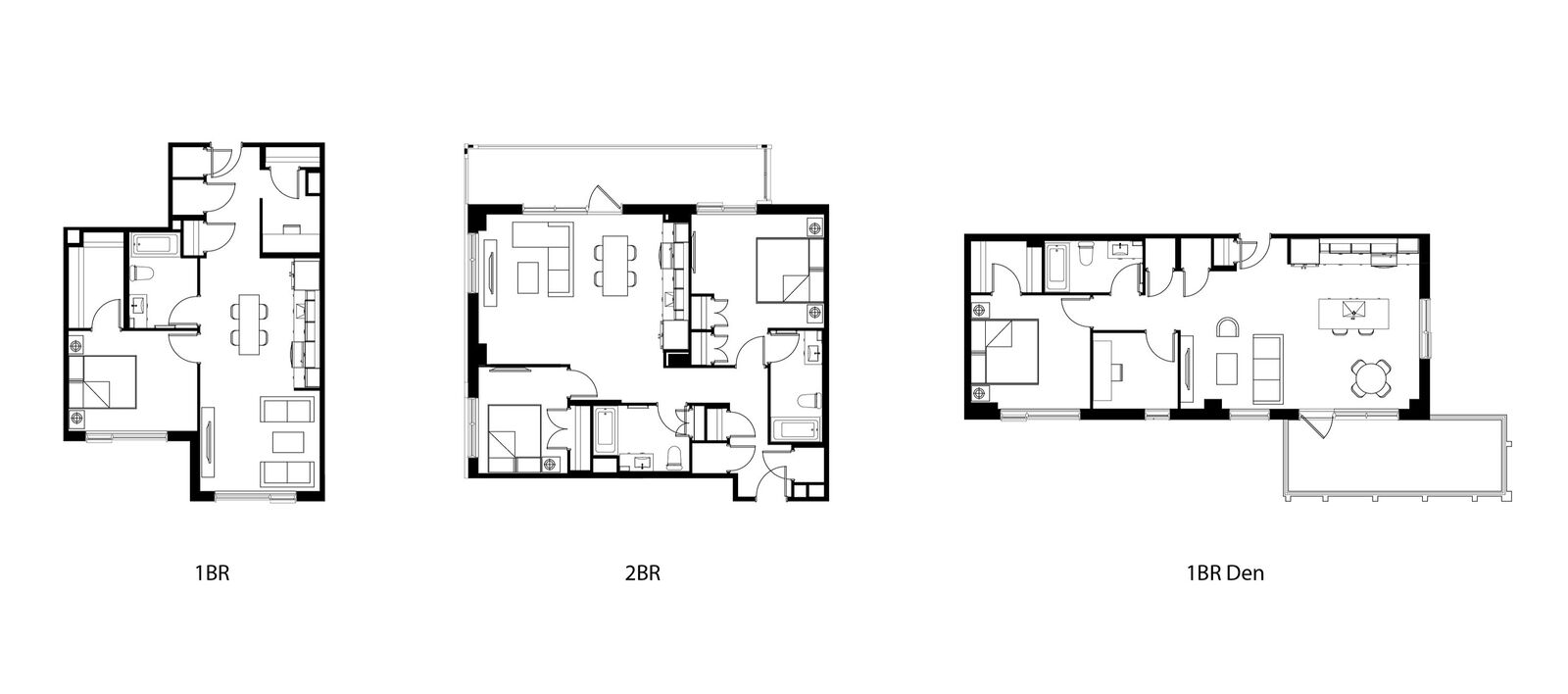
Each building features distinct unit layouts and finish palettes which are tailored to attract a diverse range of residents to the neighborhood.
A Milestone for Zero-Carbon Multifamily Housing
The Bridge District’s holistic approach goes beyond designing for the individual and the community, but for the planet through its emphasis on sustainability and decarbonization. With a focus on reducing both operational and embodied carbon, Phase One is on track to become the largest ILFI Zero Carbon multifamily residential building in the world and the first in the DC region. The building is all-electric and powered by renewable energy generated via a rooftop solar array and off-site sources, an achievement that aligns with the District’s goal of electrifying all new homes and commercial buildings by 2032. Solar analyses influenced the building’s orientation, massing, and glazing, resulting in an anticipated 30% energy reduction over baseline. The design team worked with Redbrick LMD and HITT Contracting to reduce the carbon emissions associated with the building’s structure, envelope, and interiors. The team used ZGF’s open-source Concrete LCA tool to calculate and compare the carbon impacts of proposed concrete mixes for the building’s structure, while EC3 helped the team measure the whole building emissions. The project is tracking a 37% reduction in embodied carbon. Furthermore, the building encourages sustainable transportation by providing bicycle parking, a bike repair station, a bike wash, 20% electric vehicle charging stations, and proximity to public transportation.
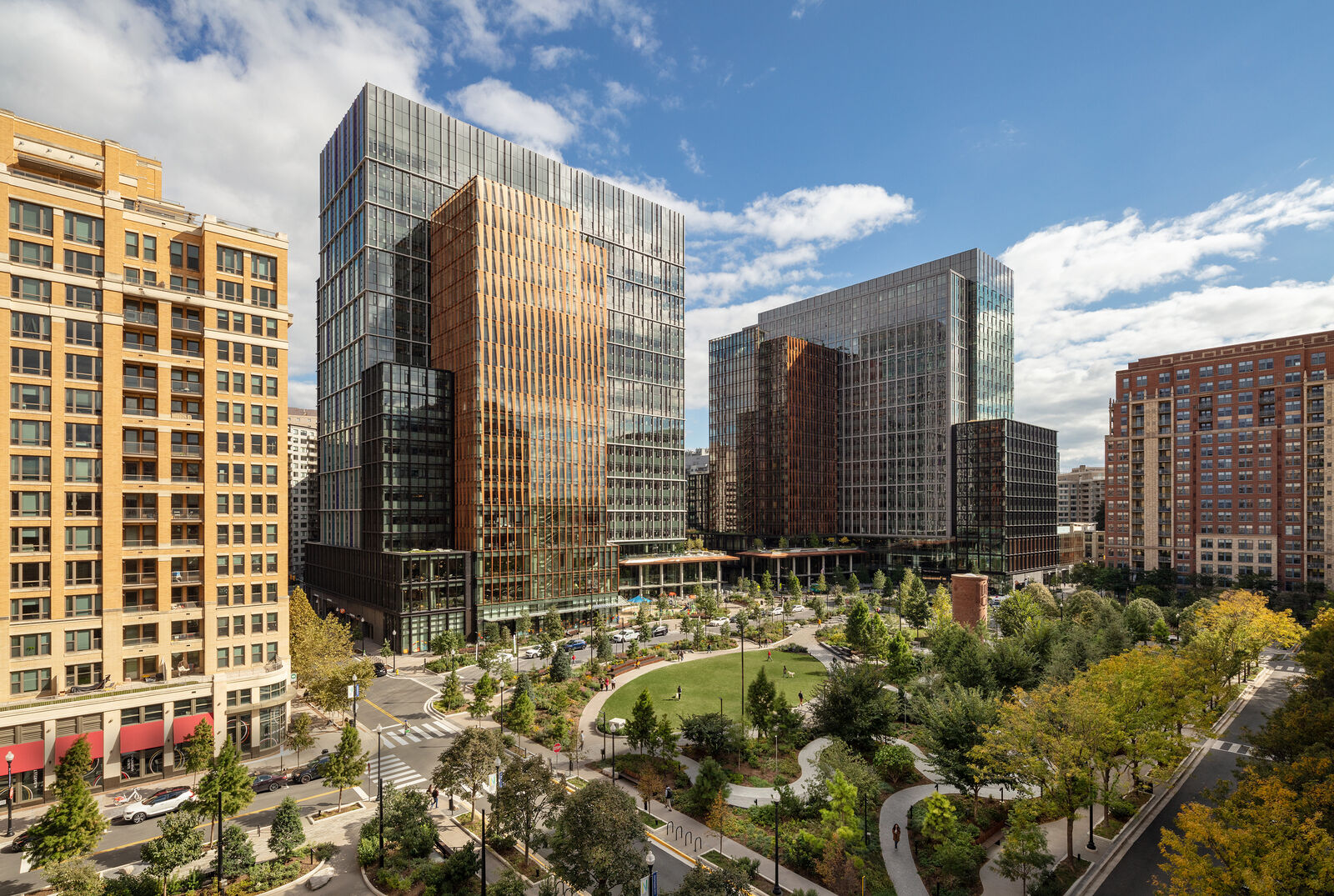
As future phases of the Bridge District come to fruition, the development will continue to create opportunity and expand connectivity in an area that has been historically isolated from the rest of the District. This project paves the way for future developments to promote inclusive, sustainable, and healthy communities while taking credible climate action.
Design Partners