An Airport Terminal Designed to Accommodate Rapid Growth
Terminal Expansion South - Port of Portland, Portland International Airport
With passenger volumes at Portland International Airport (PDX) doubling throughout the 1990s, the Port of Portland embarked on an ambitious three-phase expansion program. The Terminal Expansion South (TES) project was the final phase of this development program.
Phase one of this project added a 140,000 square foot addition to Concourse C, creating 10 new gates, a new concept for the concessions area, with a centralized node and related facilities. The 536,000 square foot Phase two enlarged and upgraded the terminal building with a second large concessions node, an expansion of the concessions spaces, a ticket lobby expansion, baggage processing, and a MAX light rail station.
Location
Portland, Oregon
Square Feet
676,000
Completion date
2003
Project Component
Architecture services
Interior design and space planning
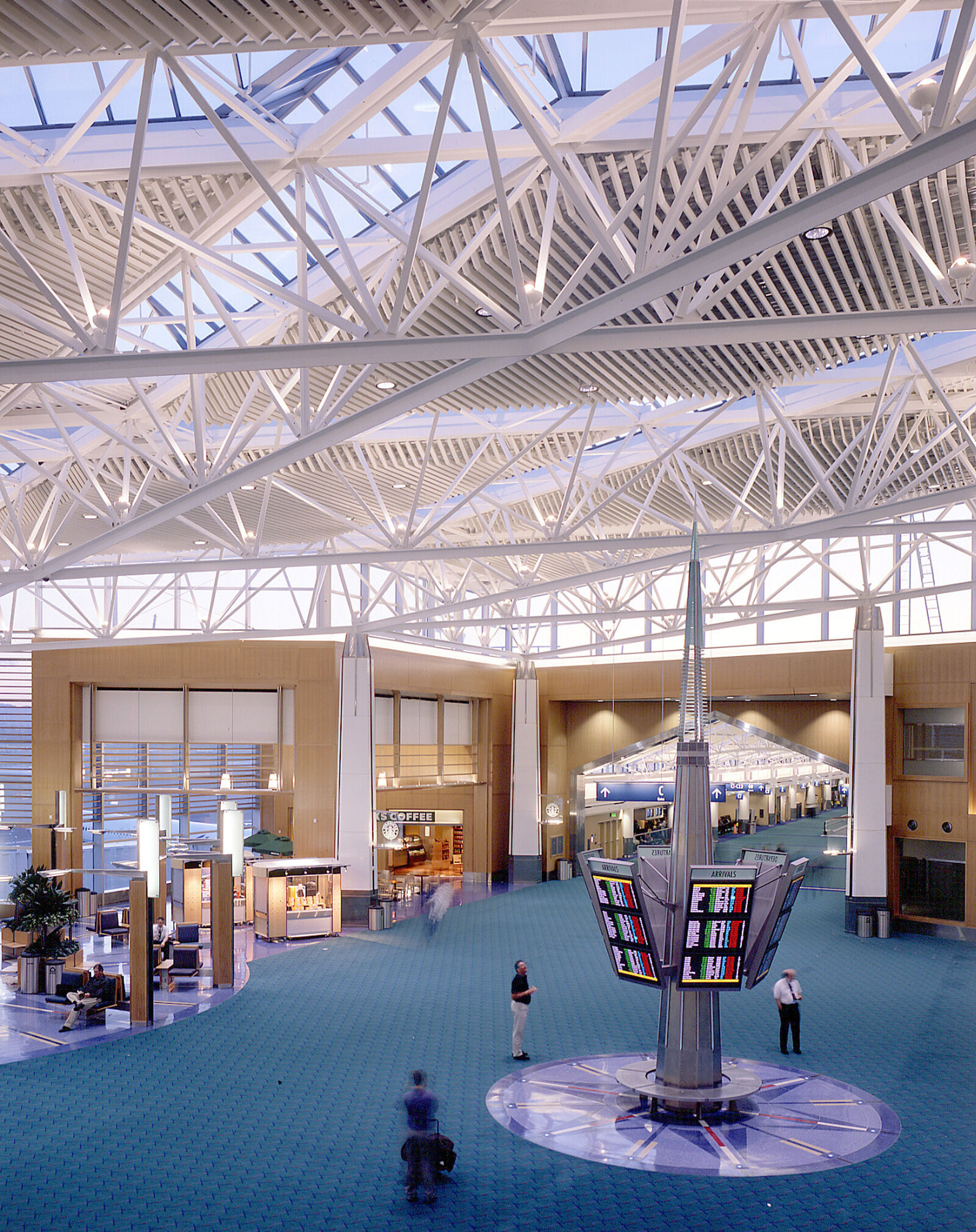
Design elements implemented in previous phases—such as the structural expression of exposed trusses and skylights, clear pathways, and daylighting were incorporated.
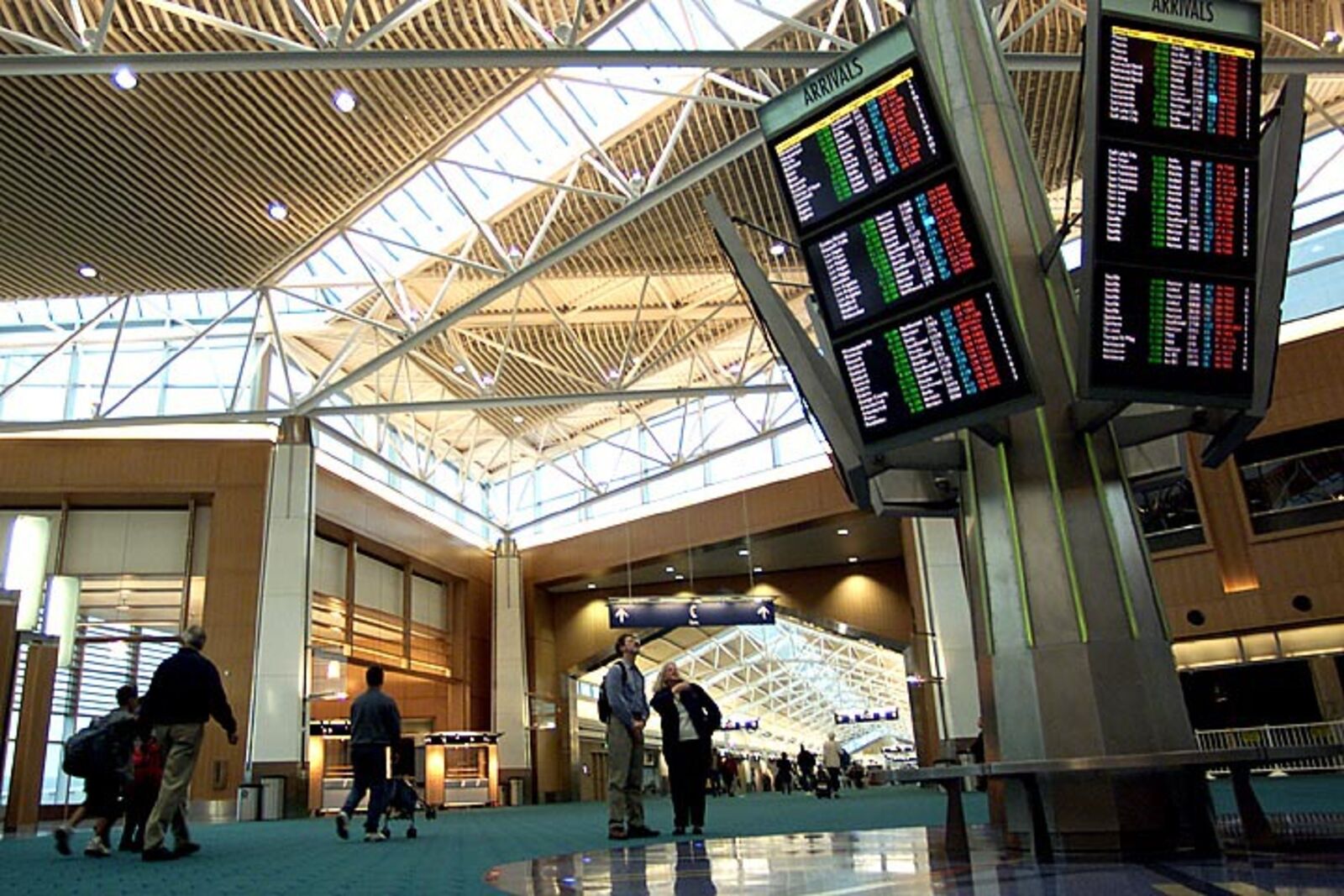
A consistent palette of materials was maintained to create a cohesive visual—and human experience.
DESIGN APPROACH
Many of the design ideas implemented in previous phases—such as the structural expression of exposed trusses and skylights, clear pathways, daylighting, and local concessions—were incorporated into TES. The design intent was to maintain consistency and clarity, including use of a consistent palette of materials (exterior anodized aluminum panels, green-tinted glass, wood paneling and carpet). Wood and natural materials were utilized to give a sense of richness to the space while directly referring to the region’s lush natural environment. The new concourse lobby, retail, and the food concessions node in Concourse C were designed to enhance the shopping and food service experience. ZGF coordinated a concessions team of local and national retail consultants to develop the program, design, and standards that became the basis for the next concessions expansion at the airport. The need for flexibility influenced the design of storefronts and waiting and check-in areas, to adapt quickly to the changing demands of airlines and the industry. The space was designed to function as an indoor piazza and features built-in wooden furniture and planters located next to food concessions; canopy-sheltered storefronts; and inventive public art.
The Port prioritizes incorporationg regional artwork into their public spaces, and work by Larry Kirkland includes expresses the Columbia River in terrazzo flooring and tall rotating art poles depicting scenes along the Columbia River.
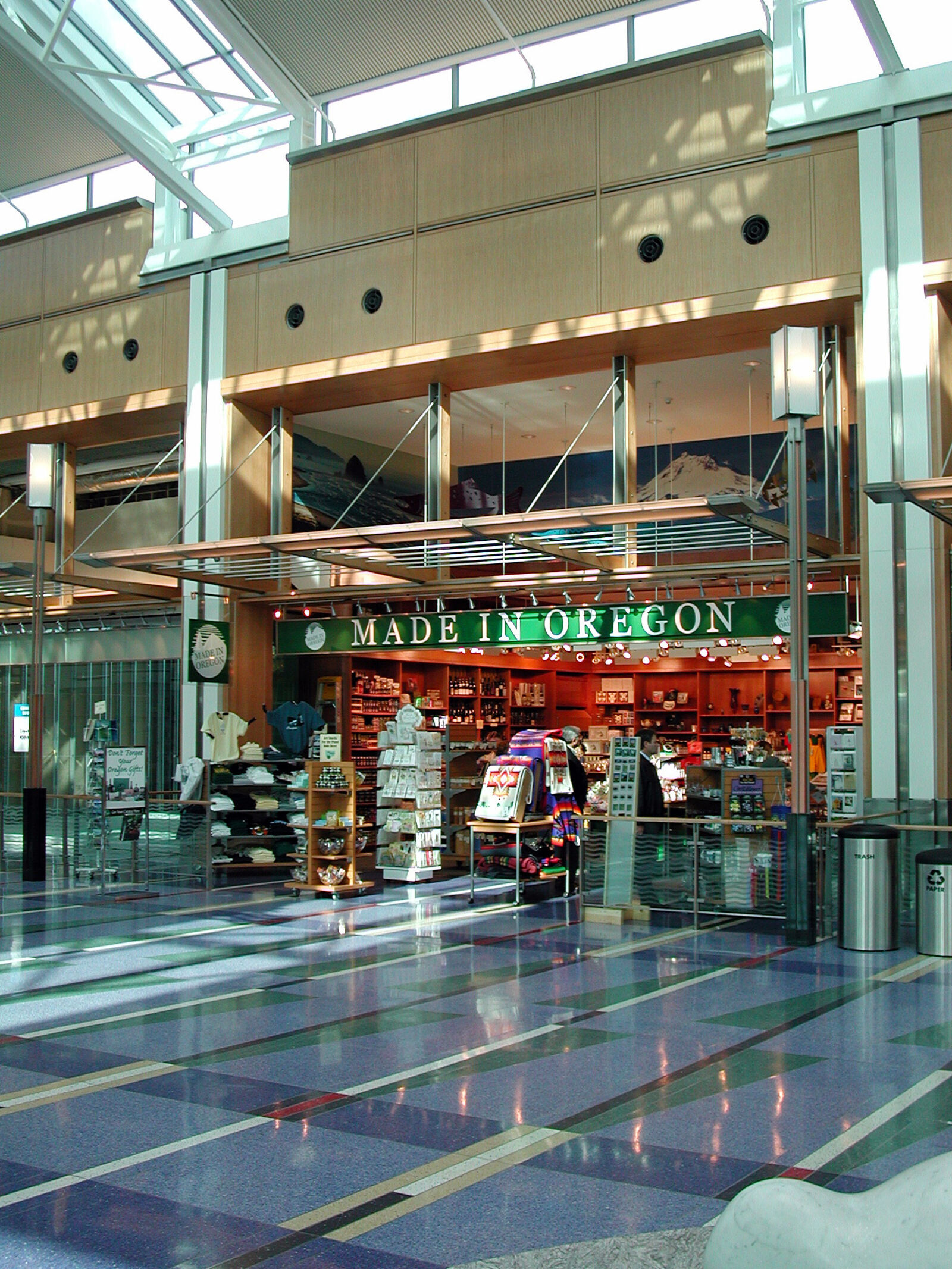
Retail and the food concessions node were designed to enhance travelers' shopping and dining experiences in the new concourse.
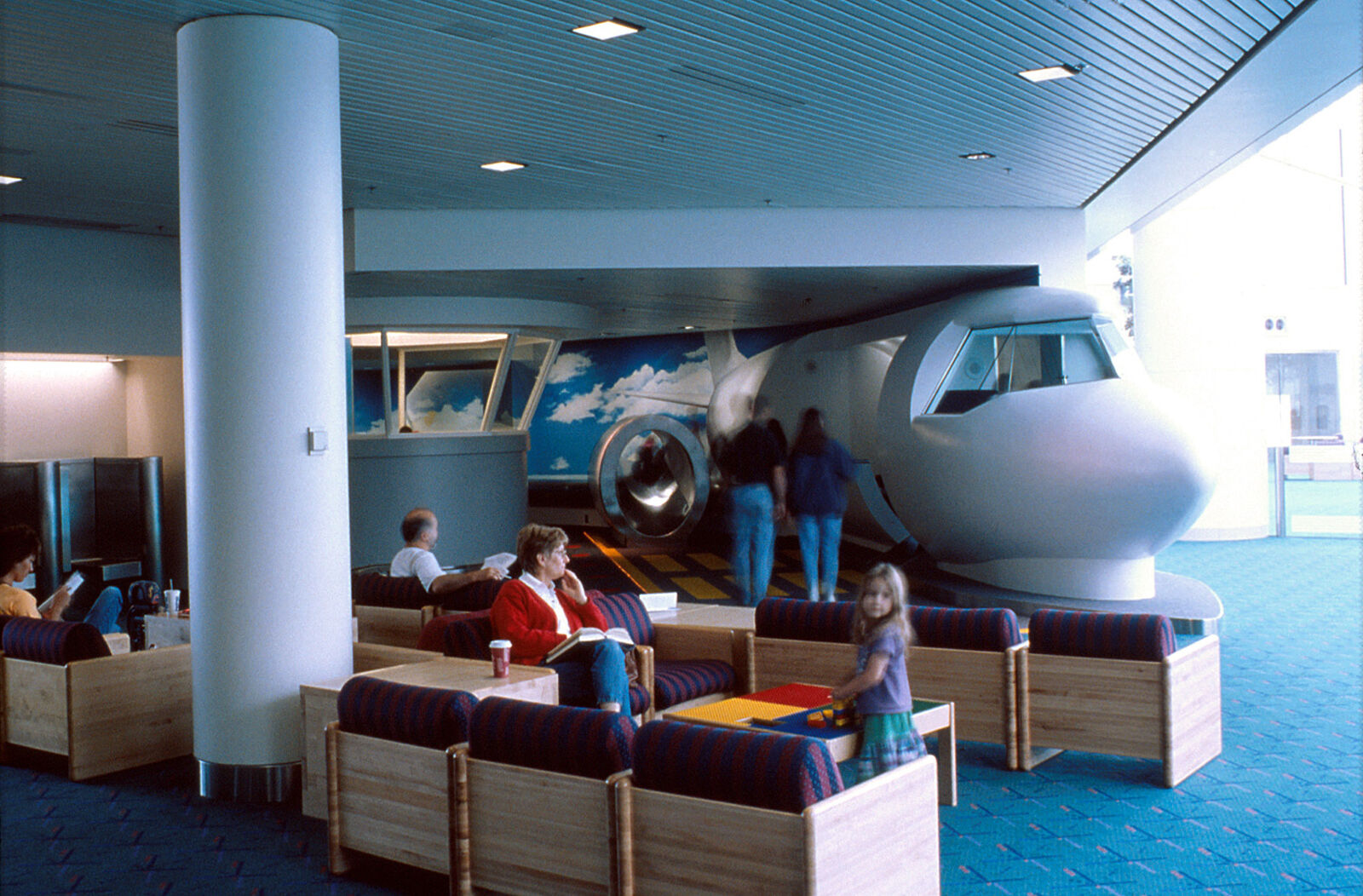
Areas for social interaction, rest, play, and contemplation were added.
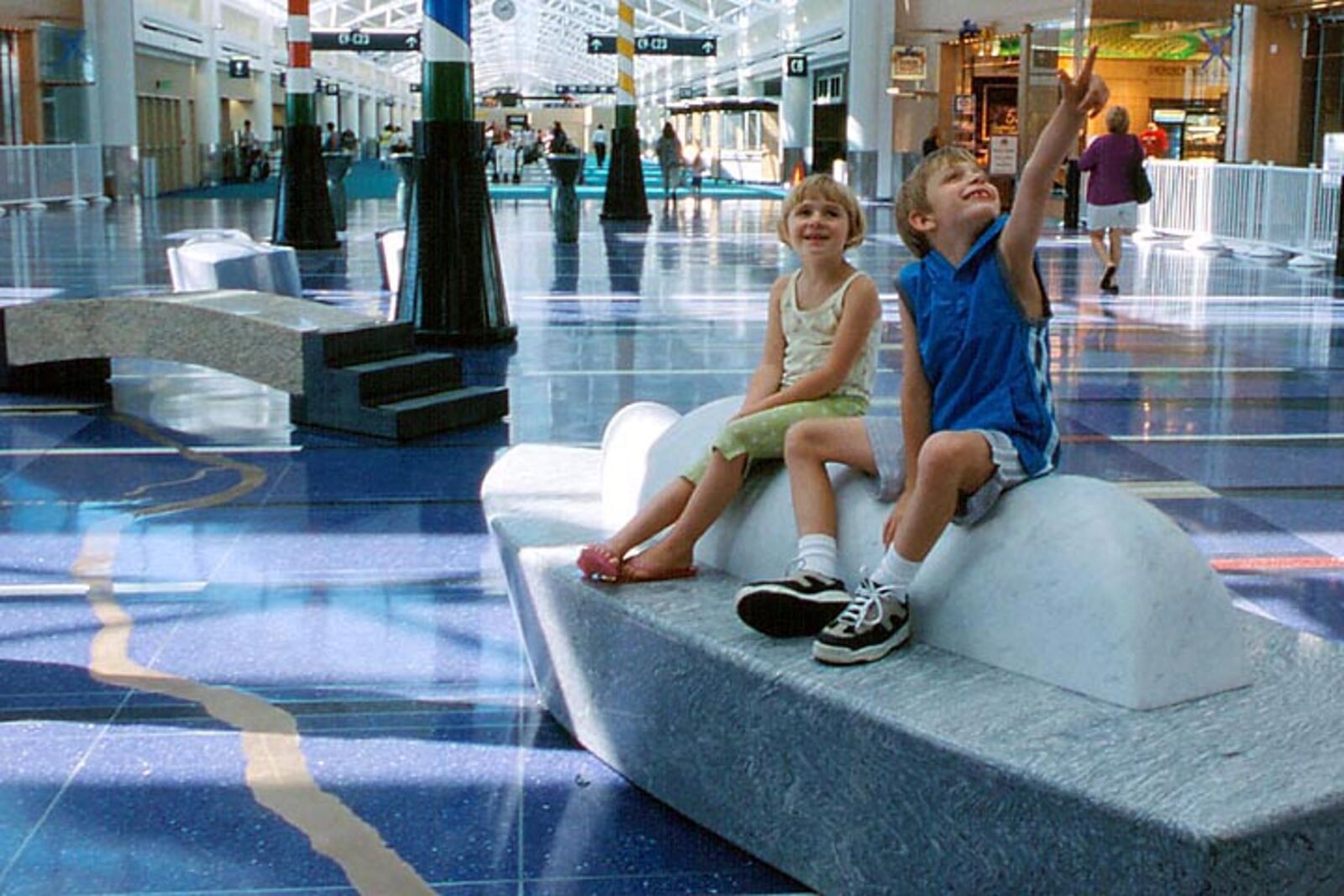
Collaboration with artist Larry Kirkland produced a series of whimsical interactive art installations that tell the natural history of the region.
SUSTAINABILITY
The design for the expansion displays a commitment to sustainability that was ahead of its time. From the addition of a new MAX Light Rail station serving as an alternative mode of transportation that reduces pollution in the community to to the incorporation of native plants and trees into paving systems to reduce need for irrigation. The extensive use of skylights, clearstories and areas of the exterior glazing improved acces to daylight; energy efficient light fixtures, and water efficient plumbing fixtures were used; and a commitment to recycling was demonstrated with collection bins placed throughout the public spaces and loading dock. Pollution monitors and fan systems were included in the design of the expanded roadway system in order to improve the air quality in the public drop-off and pick-up areas. Healthy materials were also a consideration throughout the facility with low emitting materials, local/regional products, and the use of building materials with a substantial recycled content.
TECHNICAL DETAILS
The existing central utility plant (CUP) was expanded and renovated to address increased terminal capacity. The project added approximately 5,000 square feet for a new chiller room and remodeled 3,500 square feet of existing space into a separate boiler room. The expansion included both boiler and chiller replacements, updated control systems to enhance energy performance and expanded the cooling tower yard for new and future equipment. The design incorporated brick and glass exterior walls to fit with the airport terminal architecture, continuing the original design intent to expose the inner workings of the utility plant with a transparent curtain wall, while minimizing the impact of the building.
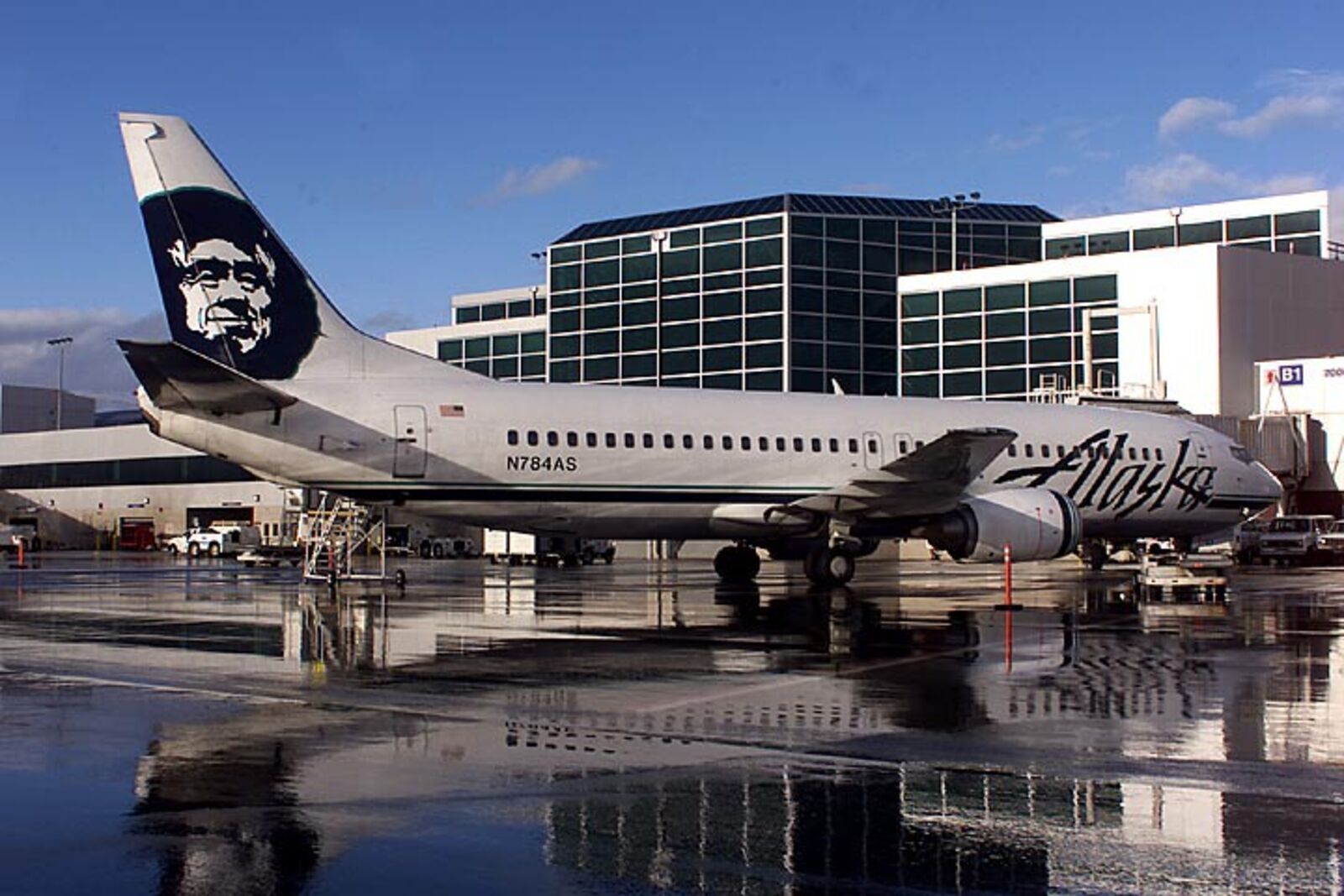
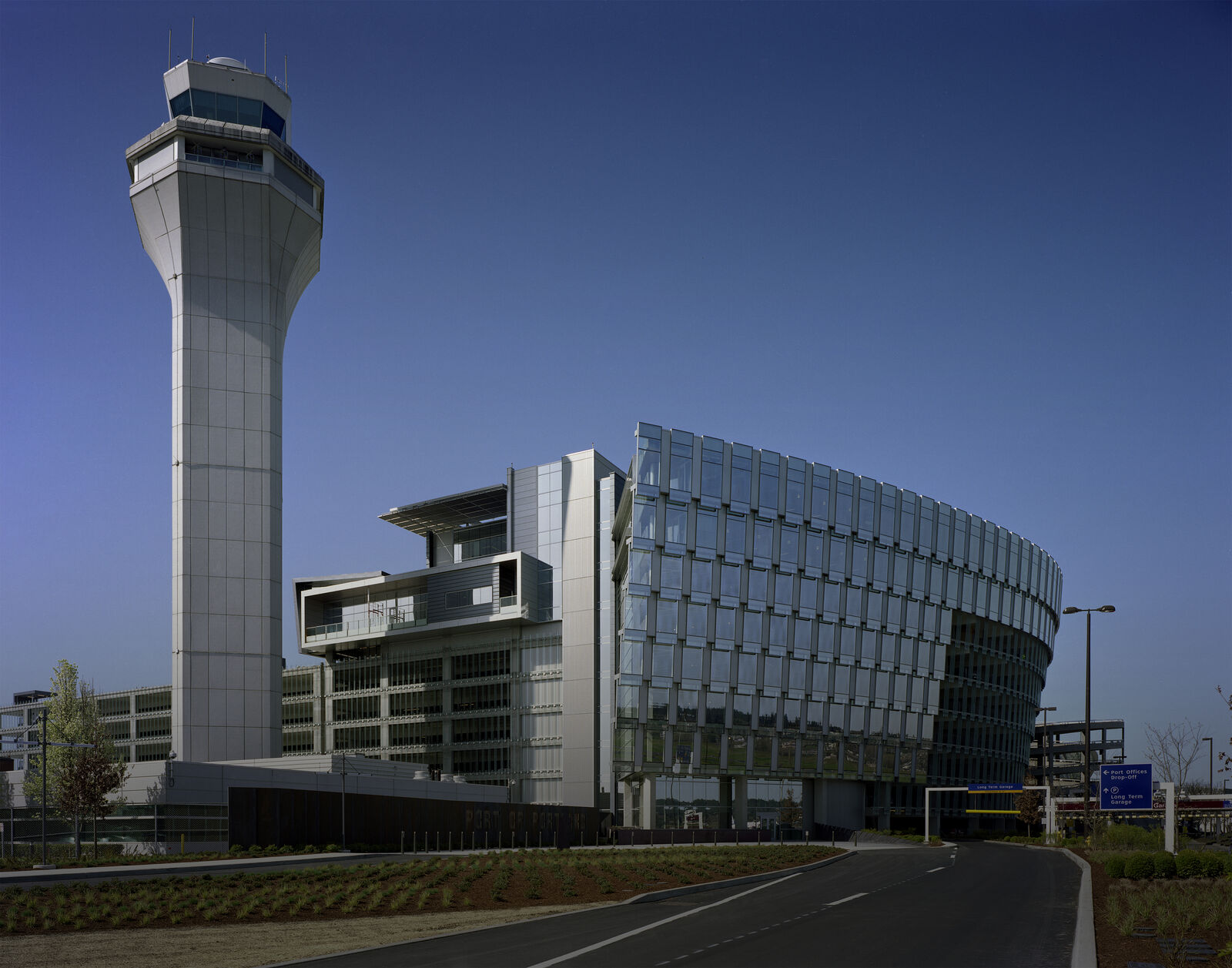
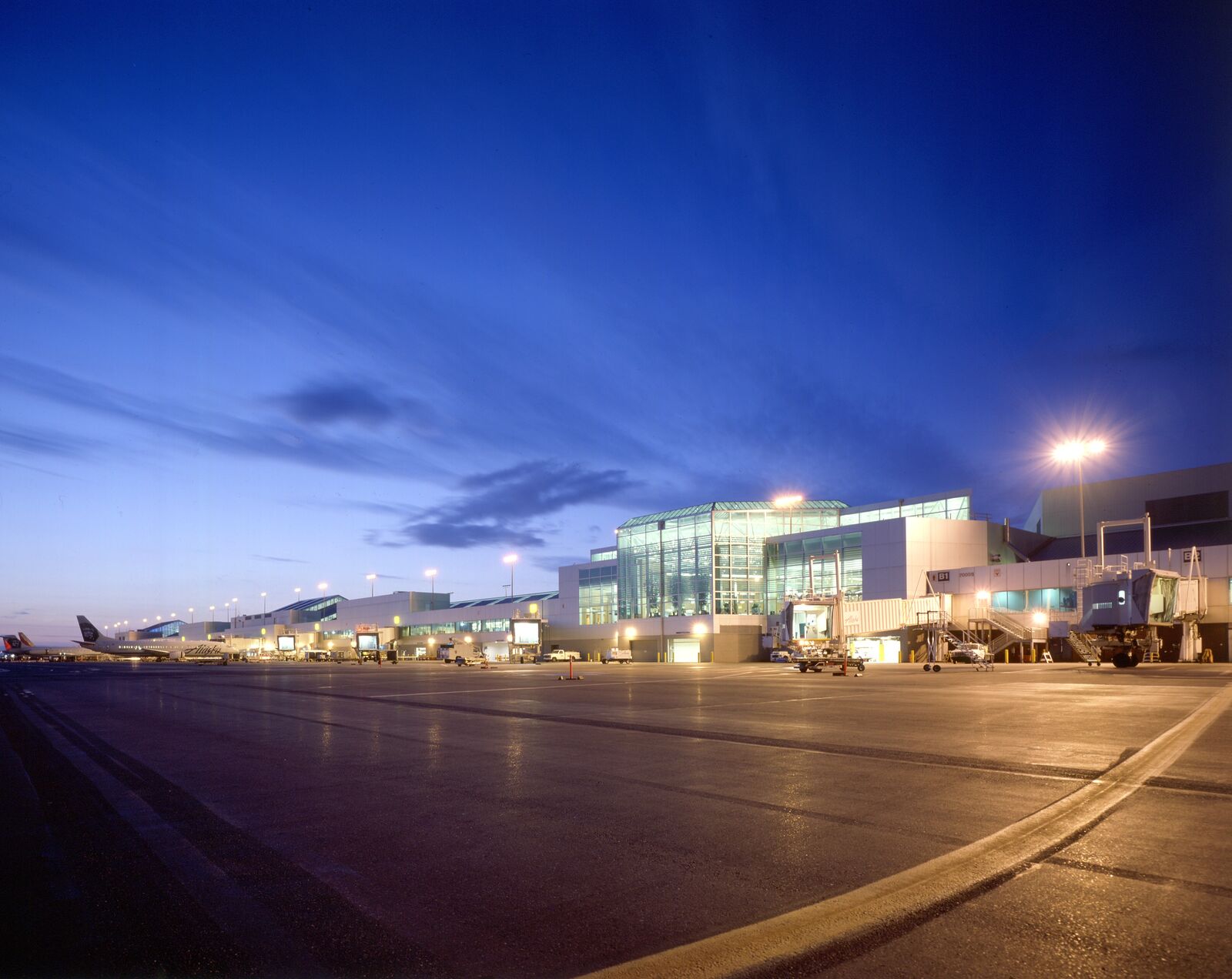
An exterior view of the expansion.
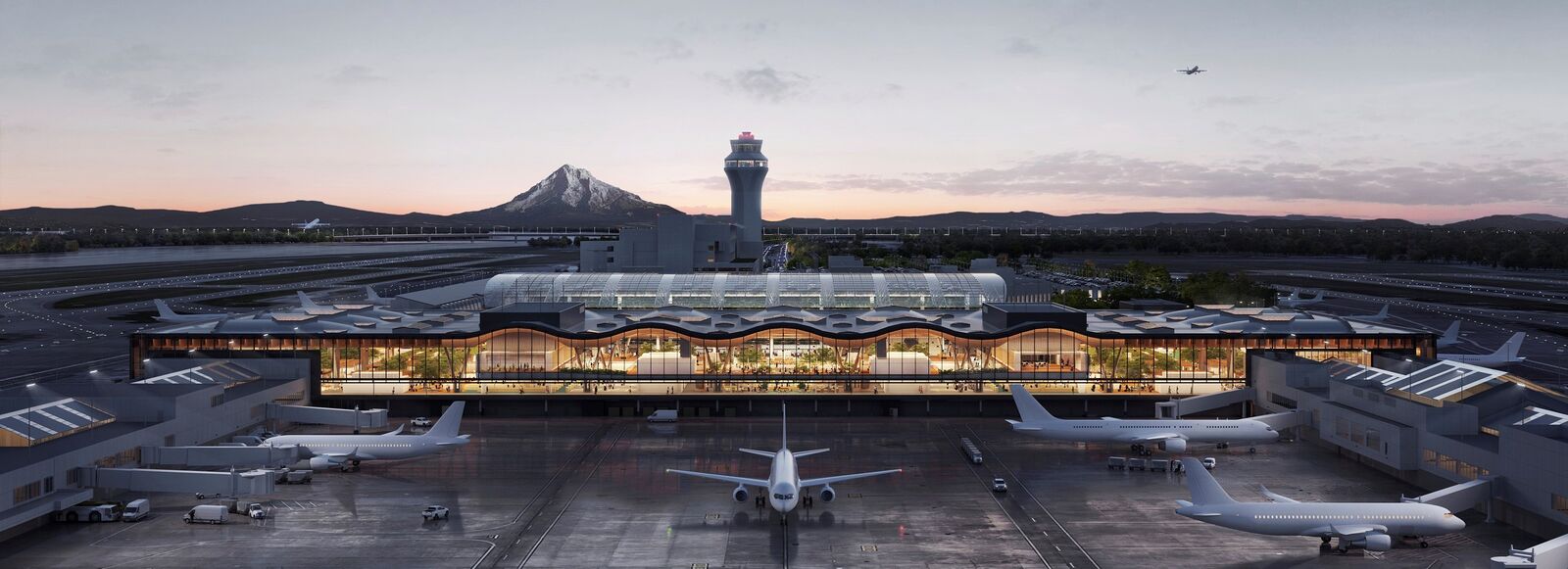
Port of Portland, PDX Airport Main Terminal Expansion
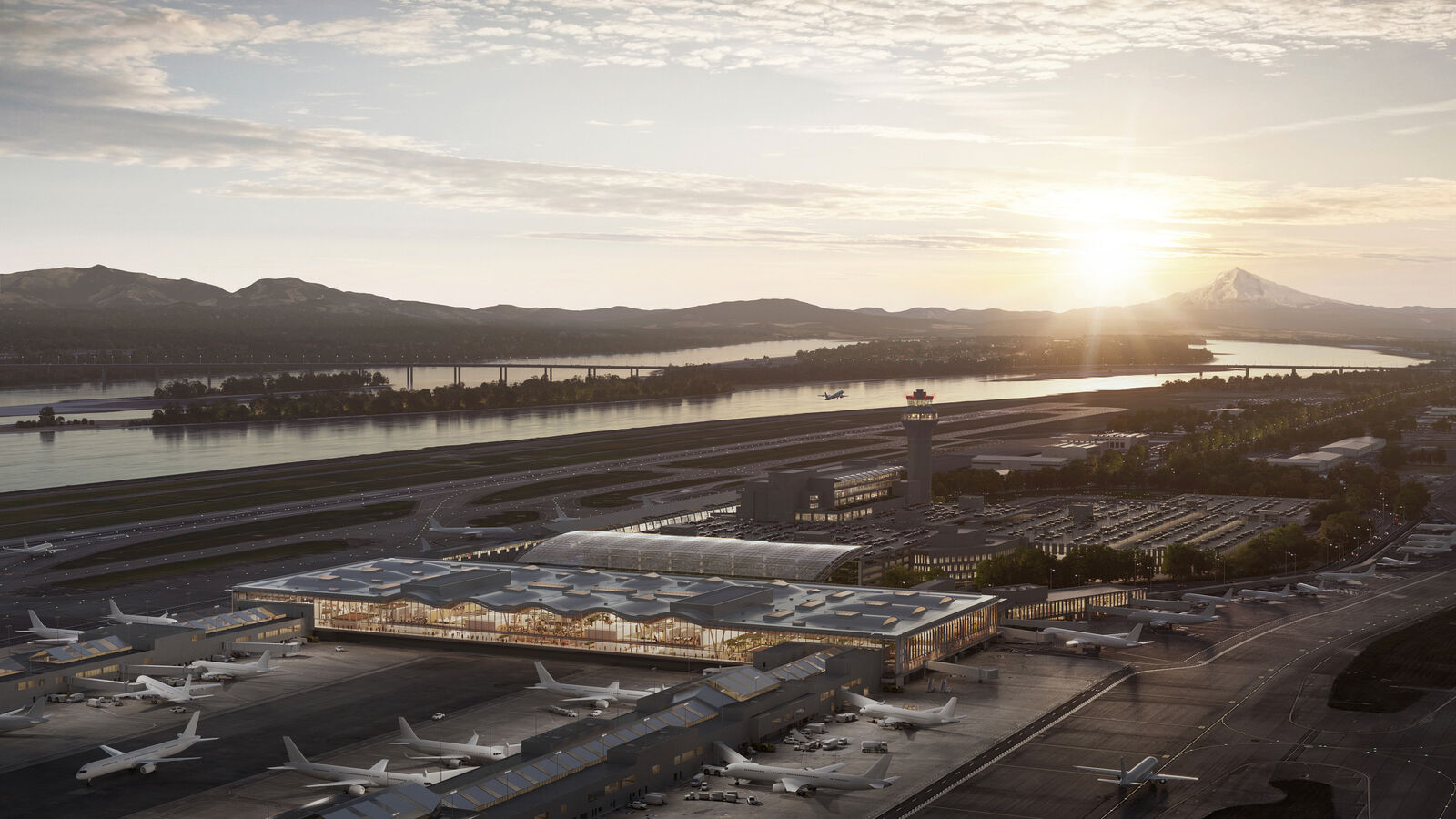
Port of Portland, Portland International Airport
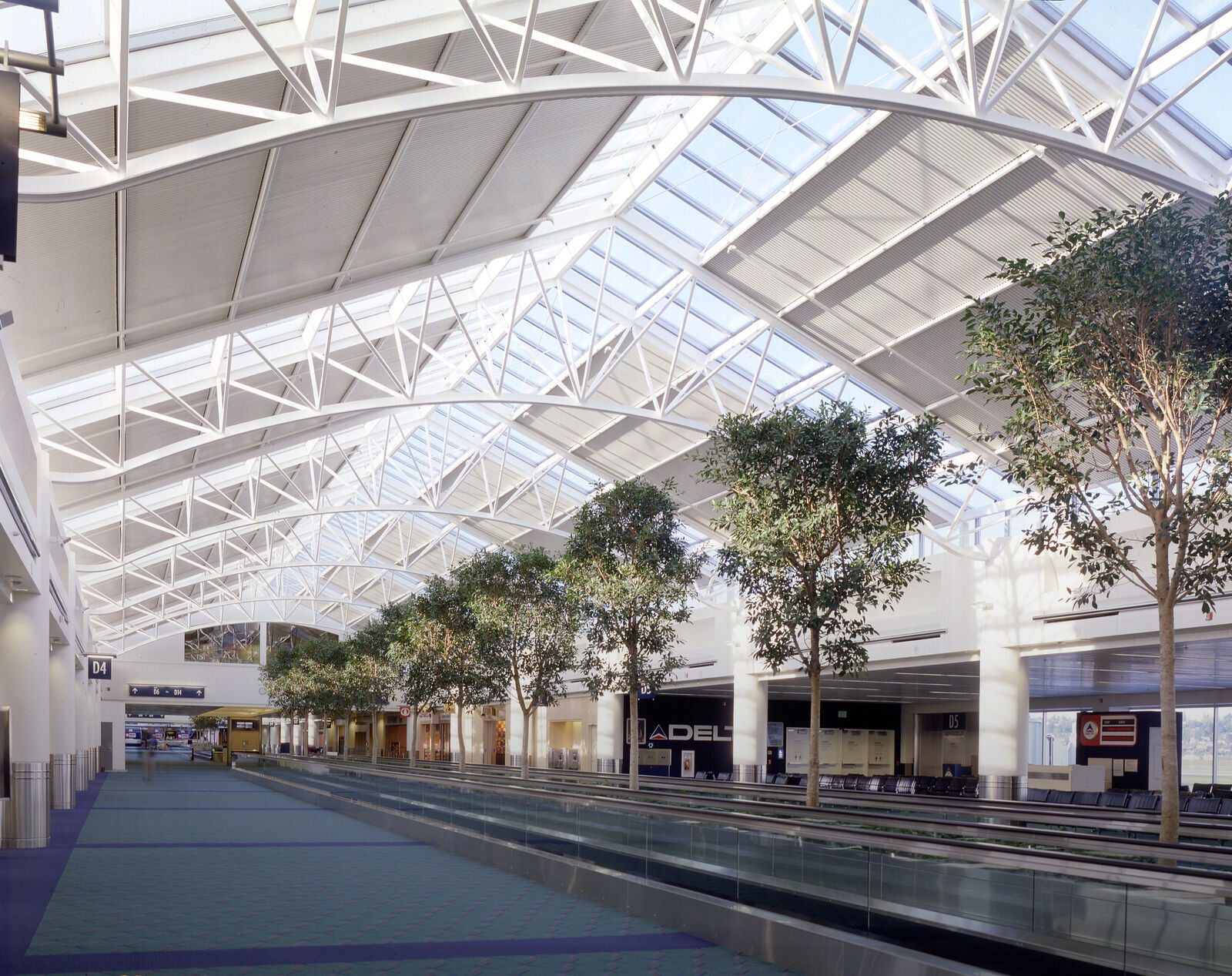
Terminal Expansion North - Port of Portland, Portland International Airport
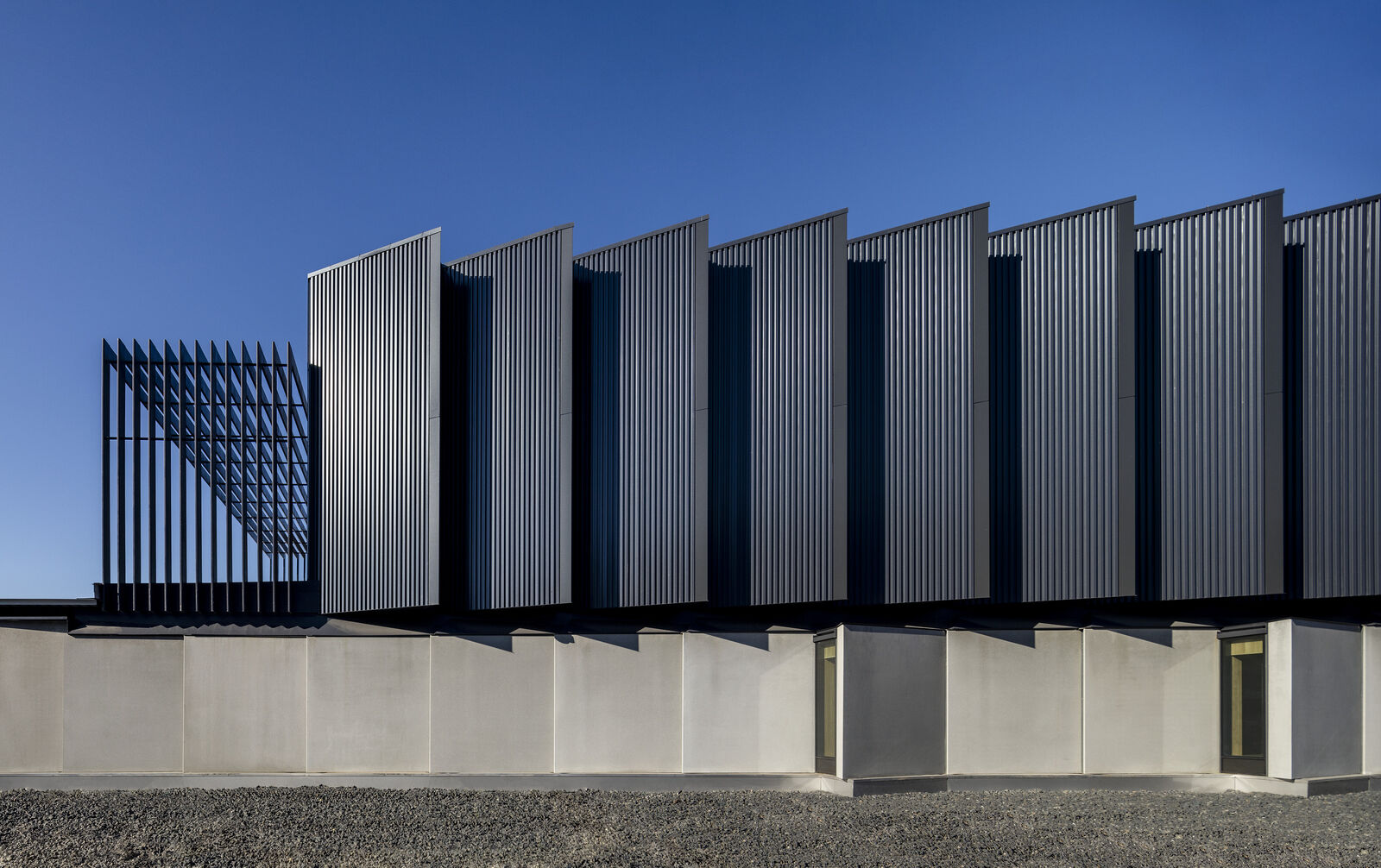
Port of Portland, PDX Next Concourse B