An Urban Knowledge Community
Wexford Science + Technology / University of Washington, Brightwork West Campus Research Facility (Site W27)
Higher Education, Laboratories and Research
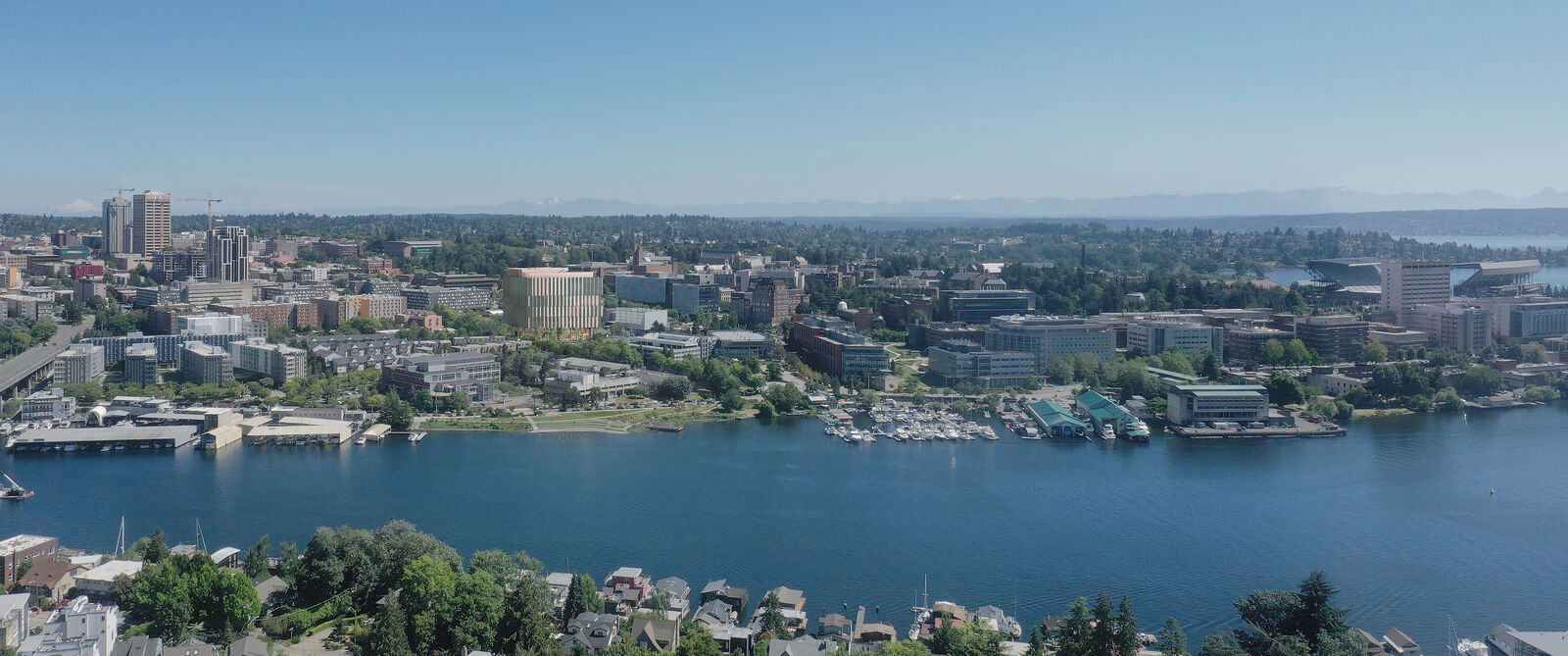
In collaboration with Wexford Science & Technology and University of Washington (UW), ZGF is designing Brightwork as the inaugural building for UW’s planned knowledge community, Portage Bay Crossing. The 11-story facility will bring UW researchers and students together with public and private partners to catalyze solutions for the world’s most pressing problems. As a gateway project, Brightwork will anchor the long-term redevelopment of 69 acres of underutilized campus land into a new urban district that merges education and student life with cutting-edge research and innovation.
Location
Seattle, WA
Square Feet
340,000
Project Component
Architecture services
Interior design and space planning
Certifications
Targeting LEED Gold

Brightwork is a nautical term for the varnished wood and exterior metal on boats—a nod to Seattle’s maritime legacy—as well as an allusion to the quality of research and entrepreneurship that will take place in the new facility.
ZGF partnered with local landscape architecture firm Jones & Jones to honor the site’s Coast Salish origins through environmental stewardship, indigenous plantings, and water strategies to support local salmon populations in Portage Bay. The project will also feature artwork from Coast Salish artist Danielle Morsette.
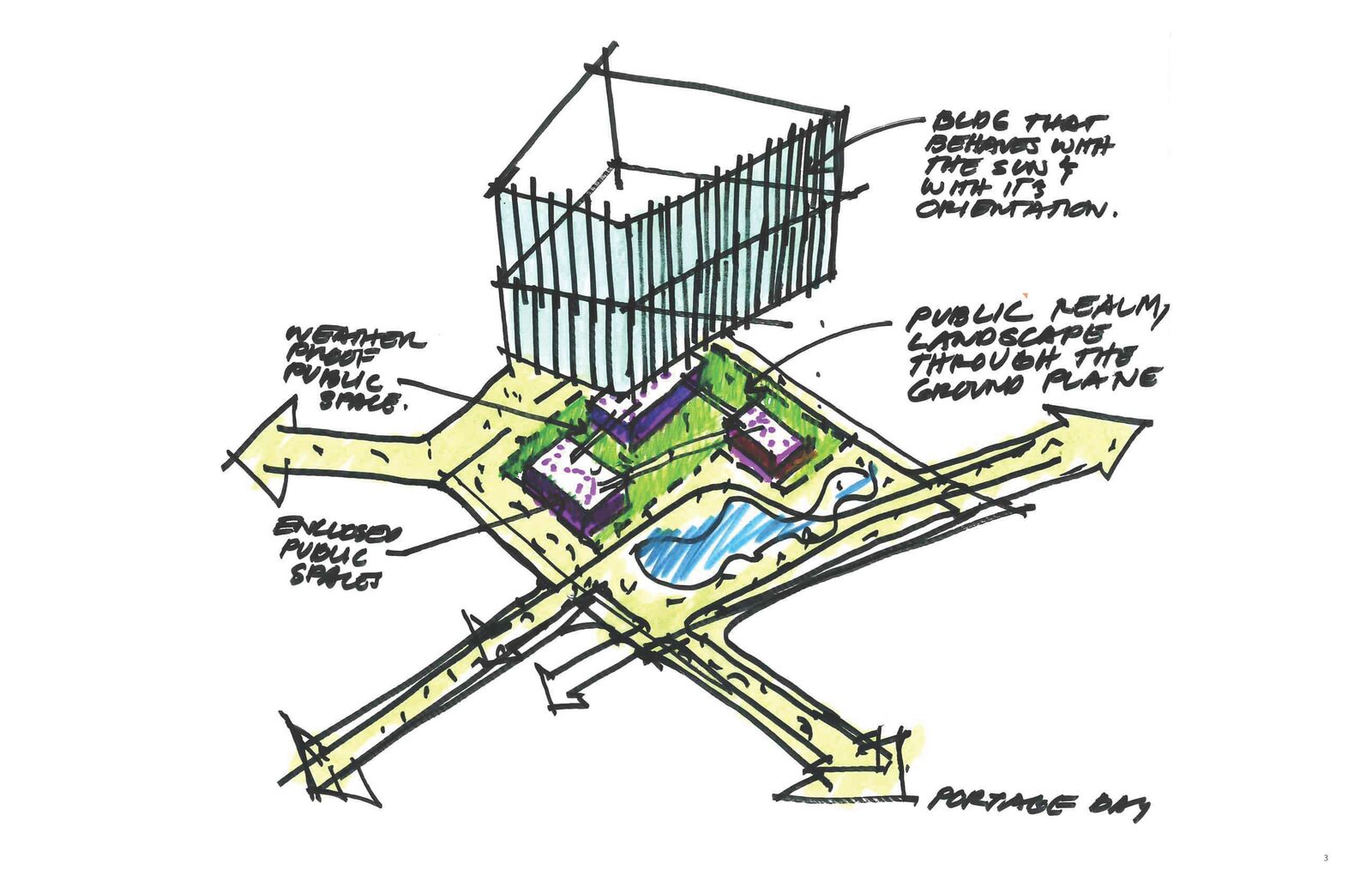
The landscape design celebrates the site’s special connection to water with a bioretention pond that will naturally treat and filter stormwater as it makes its way out to Portage Bay. On the west side of the building, rainwater collected from the roof will flow into a native rock garden.
BRIDGING CAMPUS + COMMUNITY
The 340,000 SF laboratory and office building includes space for UW research and education as well as market-rate leasable spaces for partners aligned with the UW mission, including three anchor tenants:
- The Washington Clean Energy Testbeds, created by the UW Clean Energy Institute to accelerate R&D of new climate technologies, including next-generation solar, batteries, and grid hardware and software.
- The Brotman Baty Institute for Precision Medicine, a research collaboration between UW Medicine, Fred Hutch Cancer Center, and Seattle Children’s to develop precision approaches to healthcare.
- The Institute for Protein Design, creating new proteins to address the most pressing challenges in medicine, energy, and technology, including experimental therapies for diseases such as Covid-19.
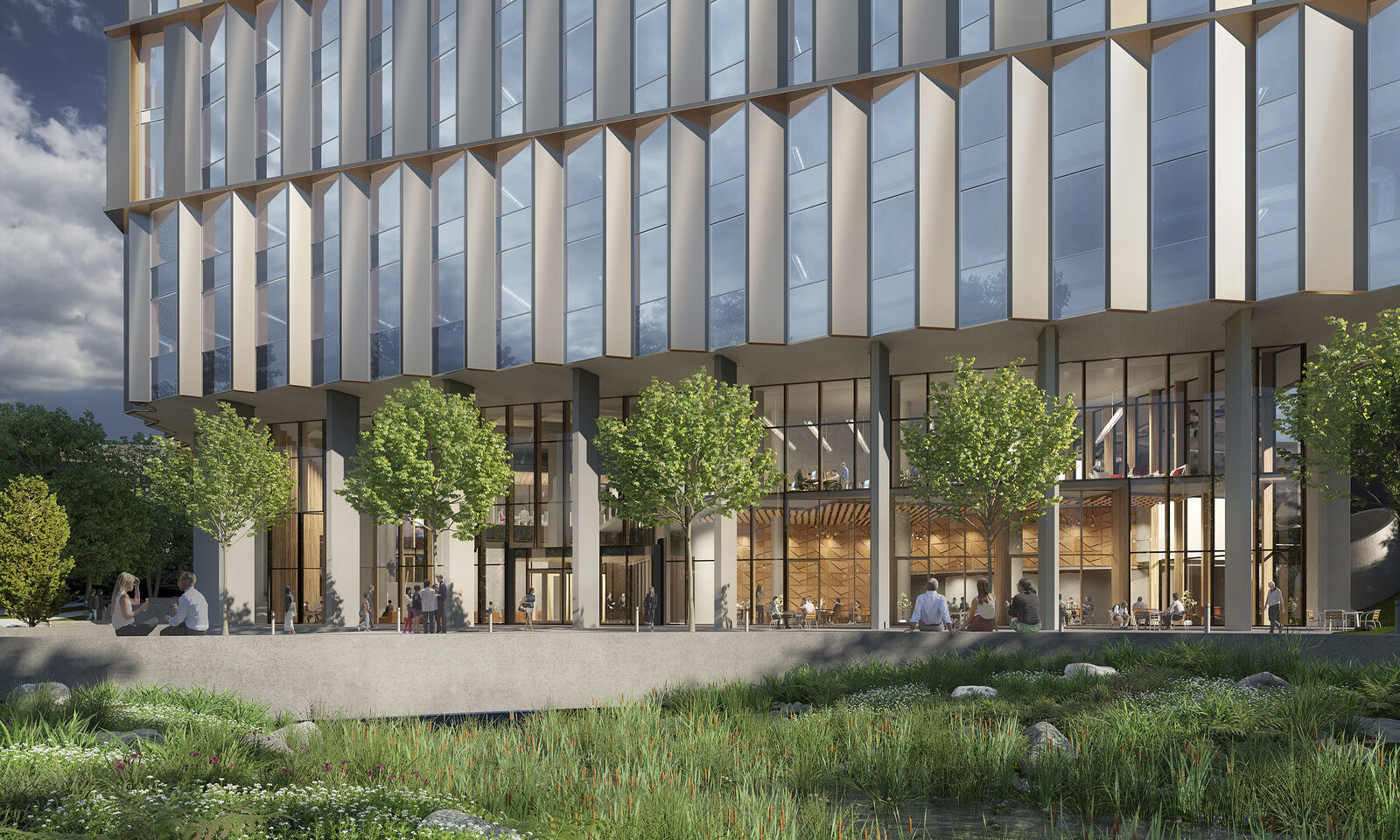
Brightwork will provide an active gathering space for innovators, investors, and academia to collaborate on groundbreaking solutions that extend far beyond the building’s walls. Emblematic of the science and research it will house, the building design was developed using parametric modeling to study heat gain, daylight, views, and prevailing winds. Overlaid on this analysis was an investigation into the timeless proportions and materiality of the surrounding UW campus and community. The building’s serrated façade operates at several scales, creating both a dynamic, visually activated presence in the immediate neighborhood and a distinct identity of research and science for the growing West Campus and city beyond.
“The intellectual work that will occur inside these buildings, and inside this space, we hope will solve some of the world’s biggest problems.”
– Randy Hodgins, UW Vice President for External Affairs

Targeting LEED Gold certification, Brightwork will leverage rooftop PV, chilled beams, and a serrated façade to achieve superior energy performance.
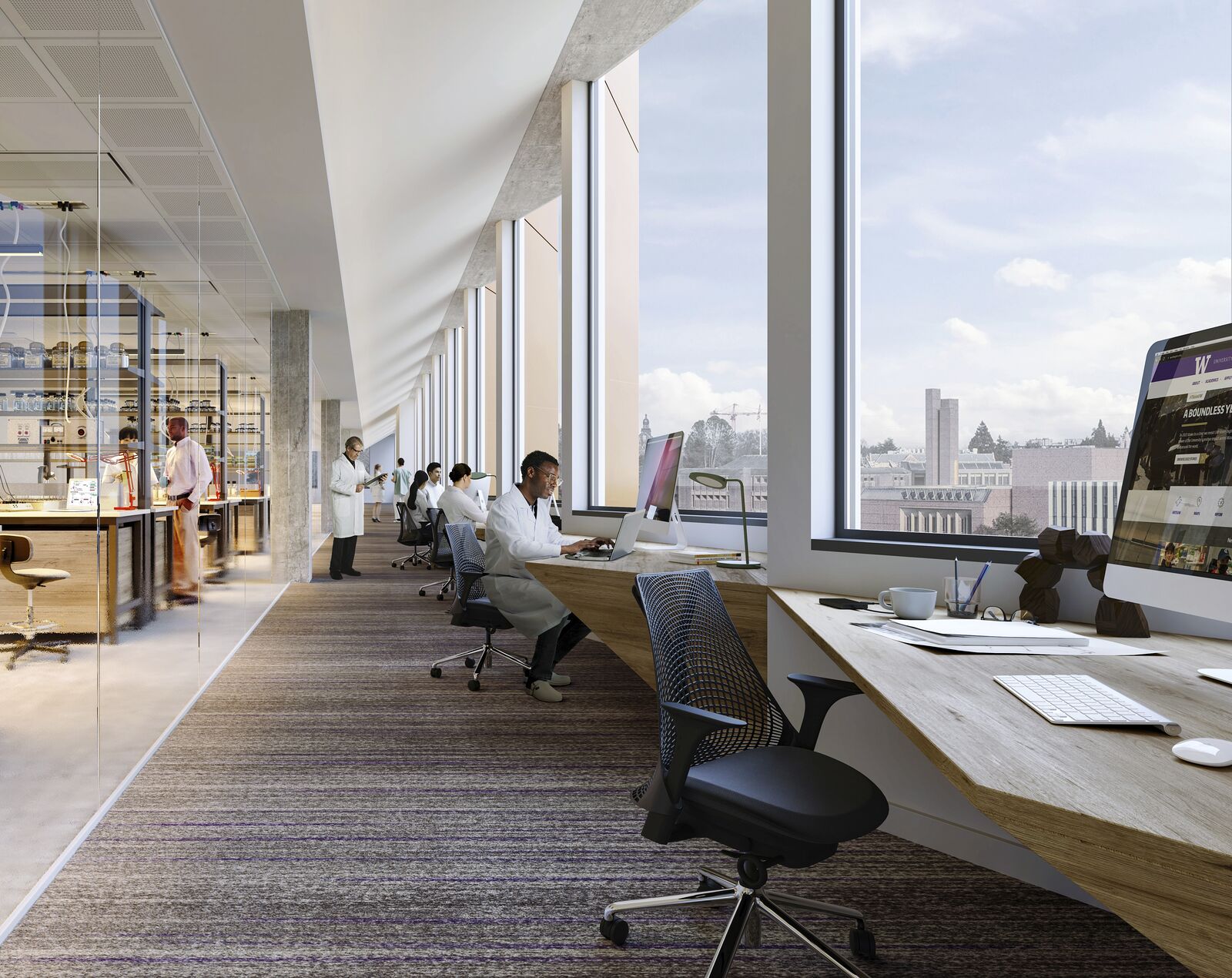
Inside, workspaces tucked into the serrated façade enjoy targeted views to Portage Bay, downtown Seattle, and Mount Rainier.
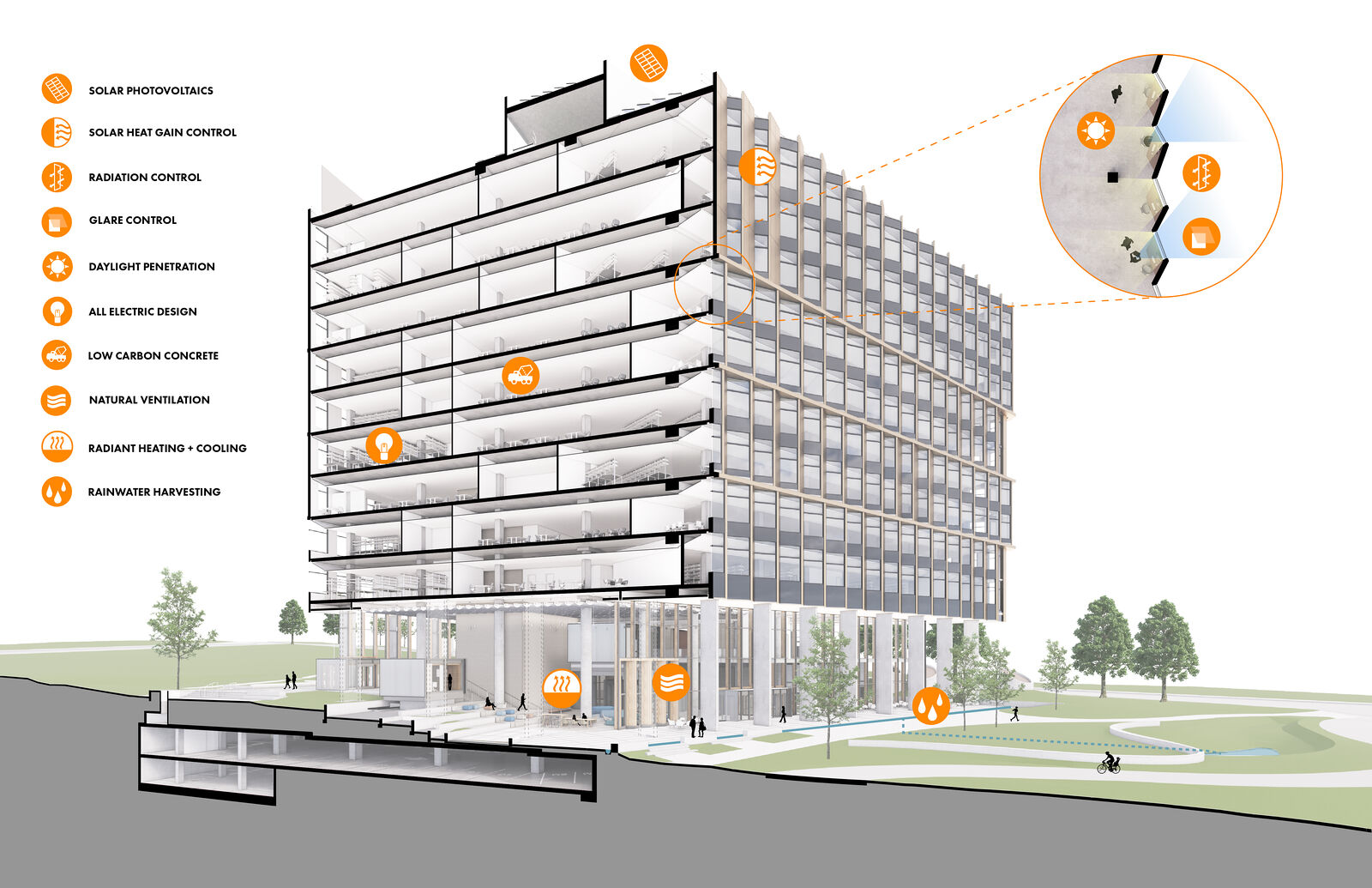
The project is also pursuing low carbon systems and materials, such as low-carbon concrete, to help UW meet its greenhouse gas emissions reduction goal of 45% by 2030.
KNOWLEDGE + GATHERING
ZGF conceived the building form as a tree in the lush landscape of the site. With the building core as its trunk, the surrounding landscape flows into and through the transparent understory in celebration of community and congregation. The tower above serves as the metaphorical canopy, reaching out to the neighborhood, campus, and city.
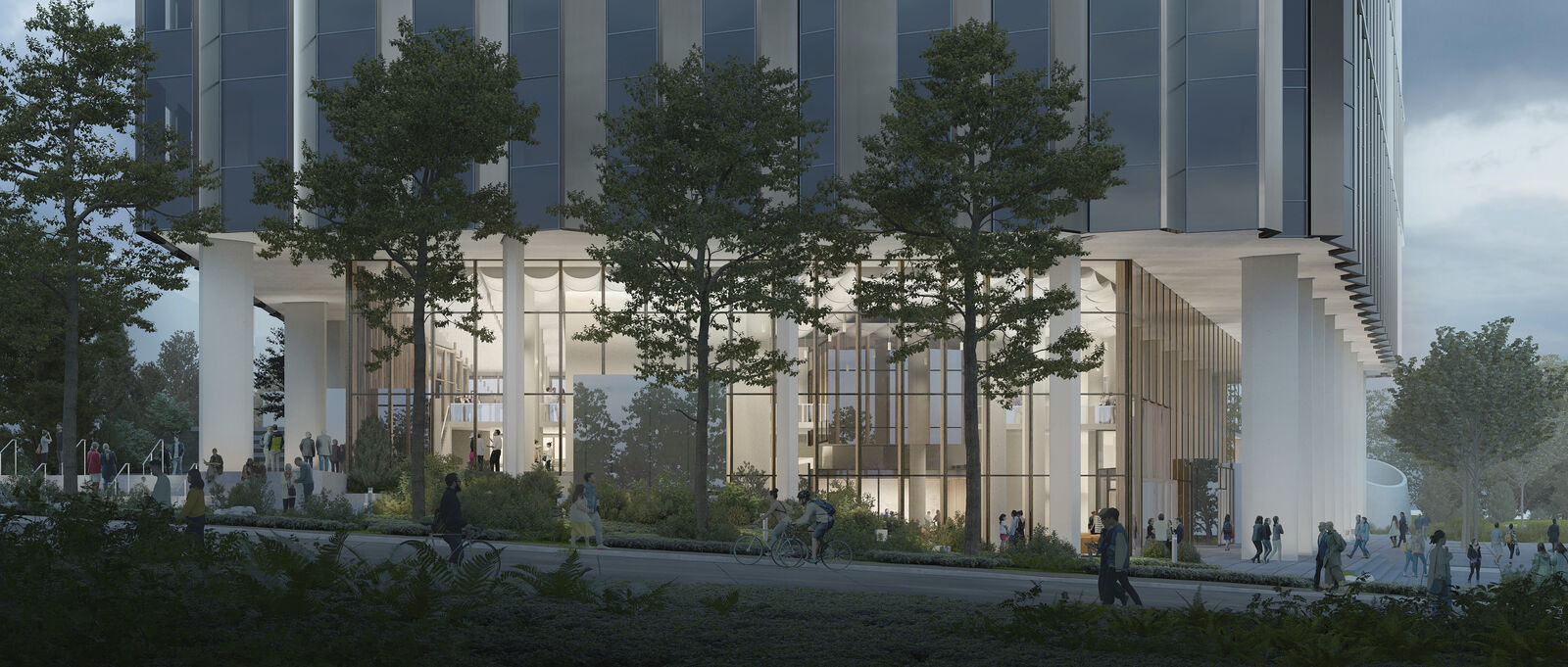
The understory’s transparent and inviting spaces stream from the inside-out and outside-in, creating an epicenter of programming for the building and future West Campus.
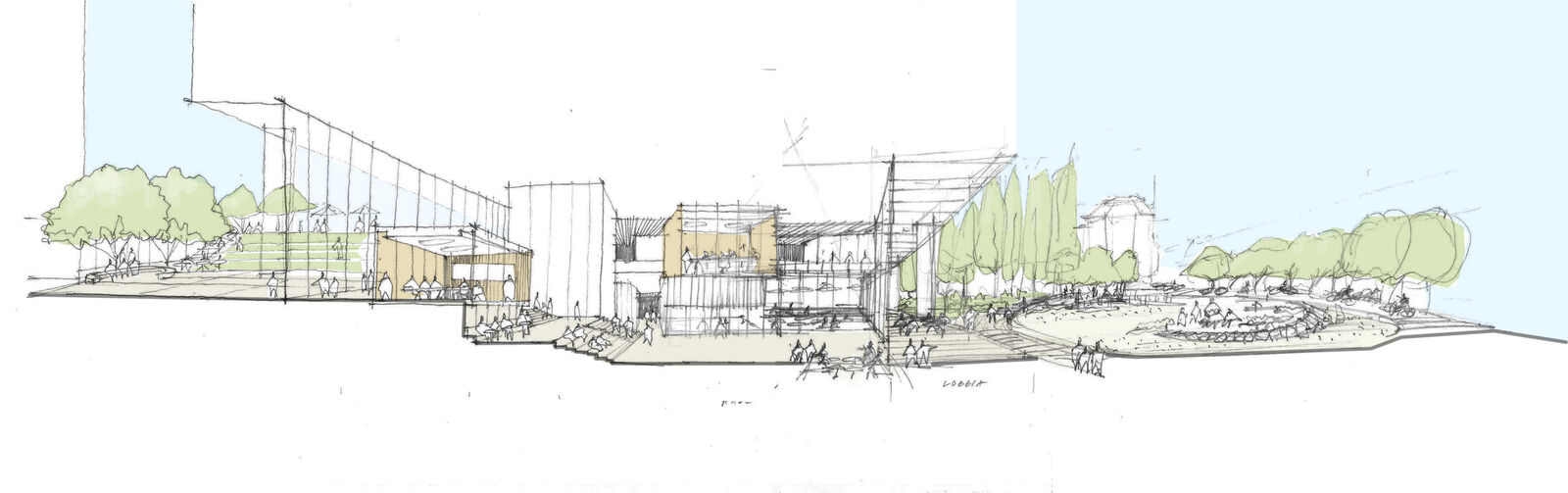
The site cascades with the existing topography, bridging a 20-foot grade change between the upper plaza and lower park. Overhangs on all sides of the building give as much area as possible back to the community spaces on the ground plane.
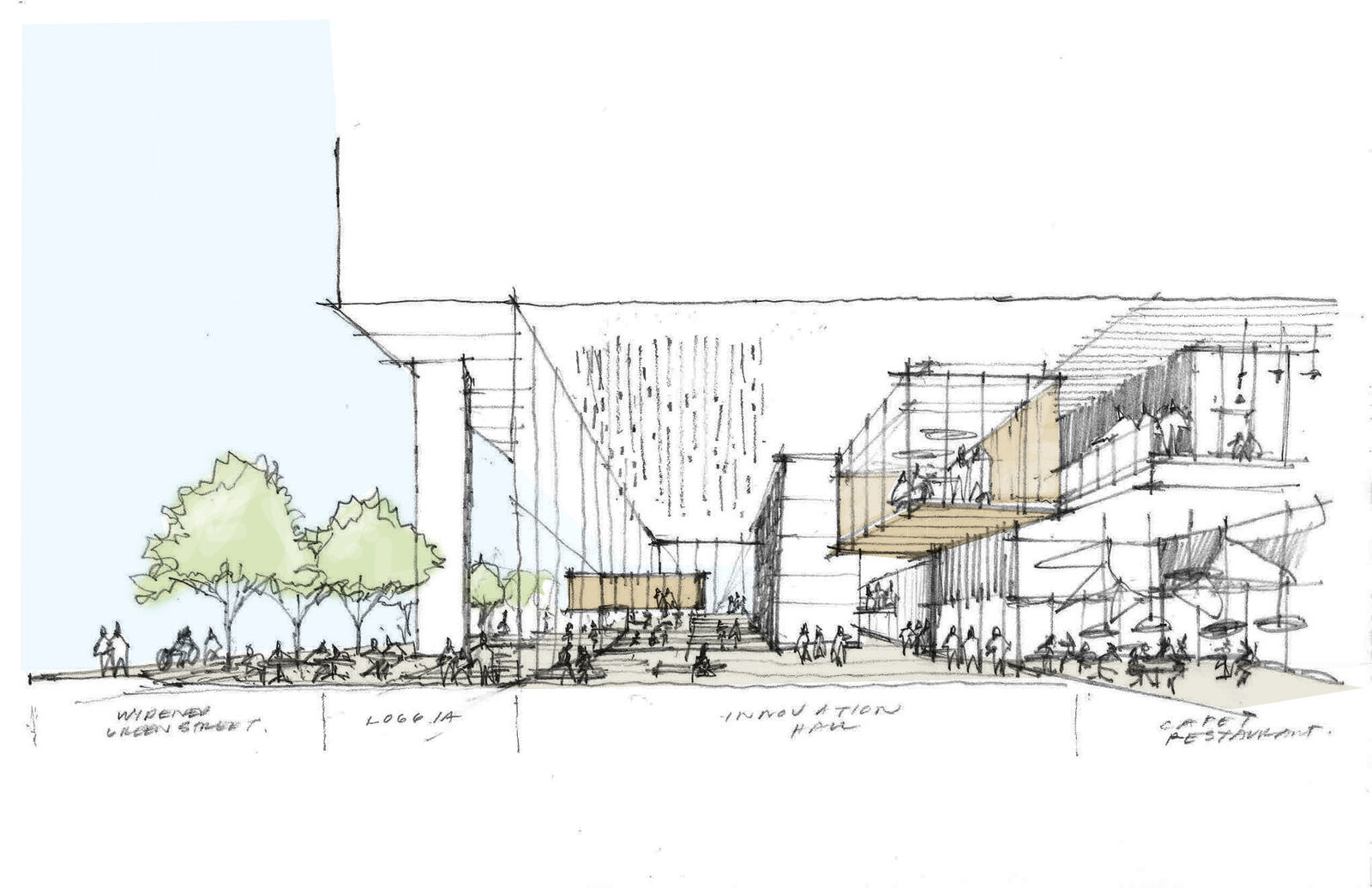
Dialogue with adjacent buildings, green spaces, and the Burke-Gilman Trail activate the ground plane and create a disinct sense of place on UW’s campus.
RESEARCH + DISCOVERY
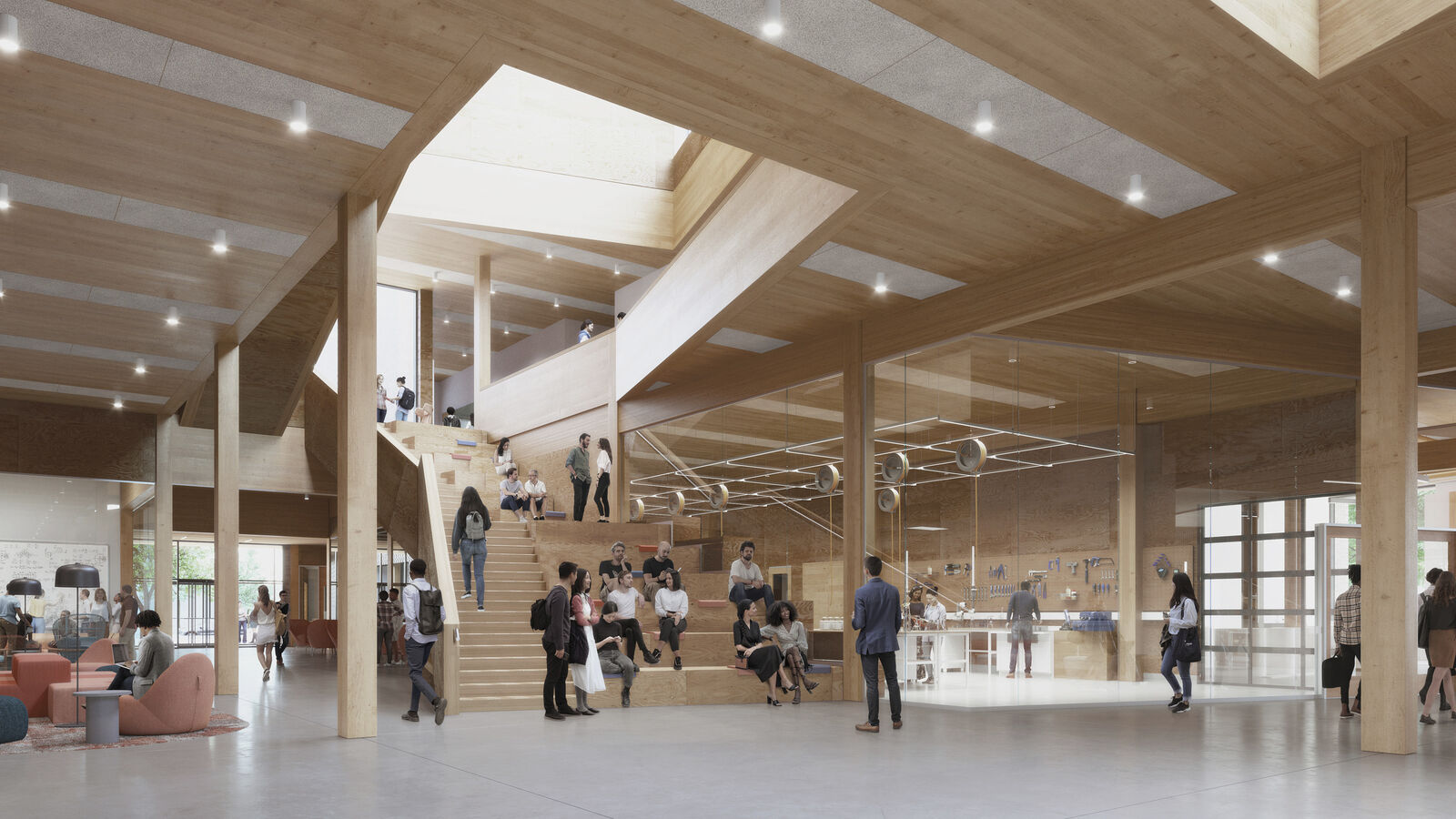
The understory’s triple-height lobby capitalizes on connectivity and mobility by incorporating a range of formal and informal meeting spaces and shared amenities to encourage social collisions. Designed as belvederes, these spaces frame biophilic views out to Portage Bay and the Burke-Gilman Trail.
The upper floors will co-locate UW researchers and students with public and private partners working in the fields of clean energy, biotechnology, healthcare, advanced materials, and environmental sciences.
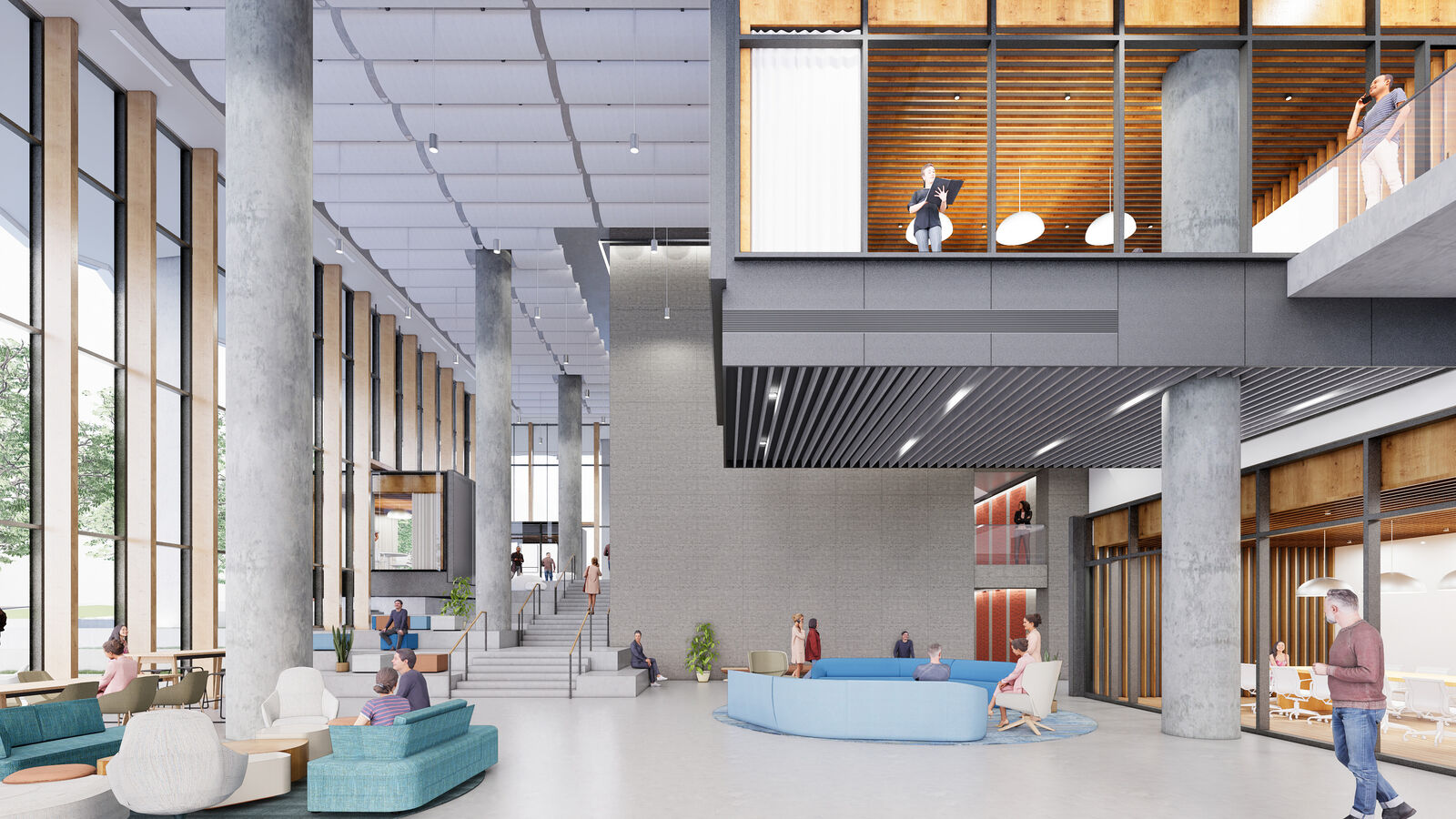
Akin to a hotel, the lobby design encourages people to linger, explore, and meet.
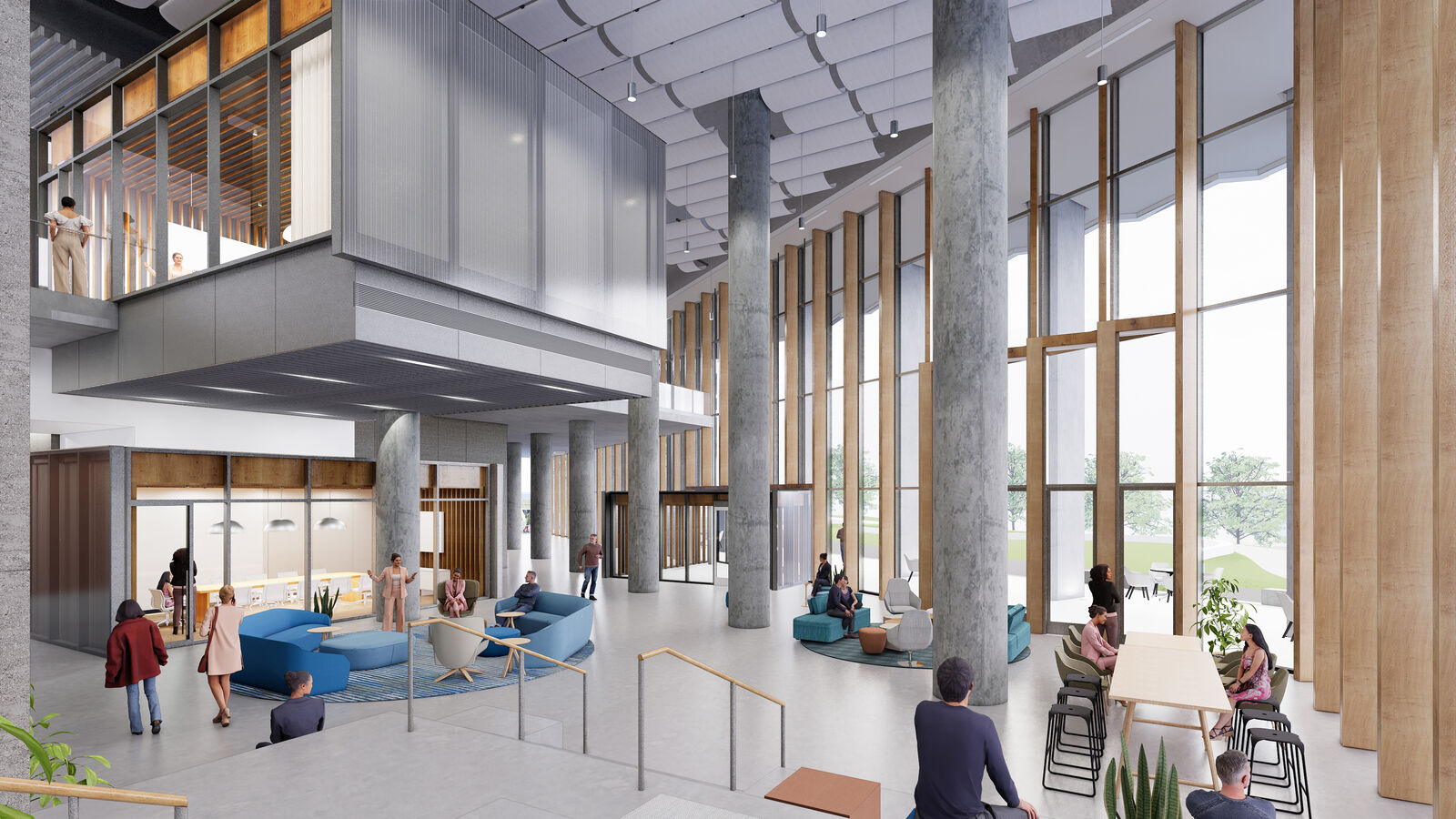
Programmatic volumes within the triple-height space create rooms within rooms without visual barriers.
“The dynamic environment in this new space will unleash students, faculty, and companies to create home-grown technologies that can scale solutions to address the climate crisis.”
– Daniel Schwartz, Director, UW Clean Energy Institute
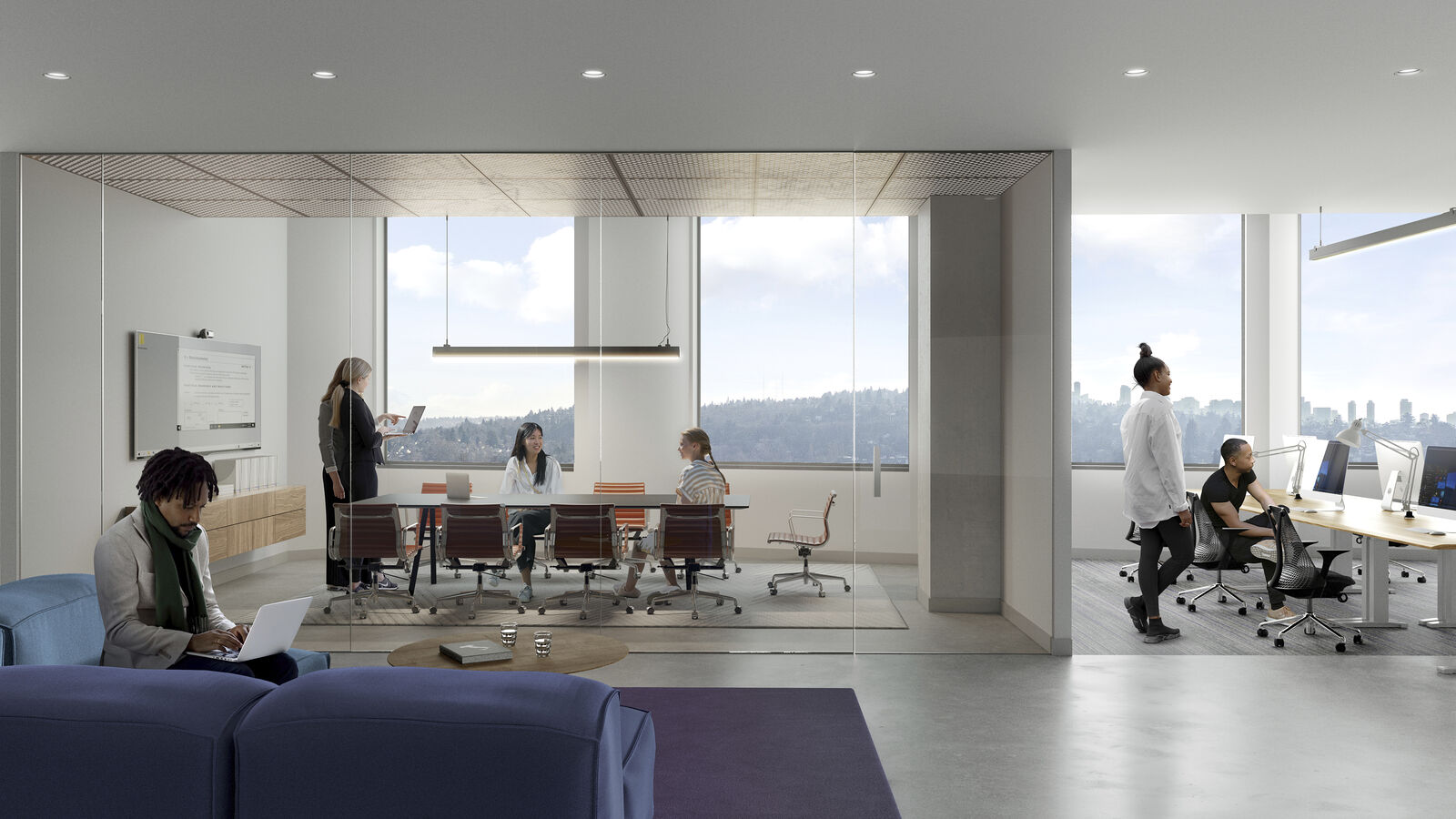
Typical conference room
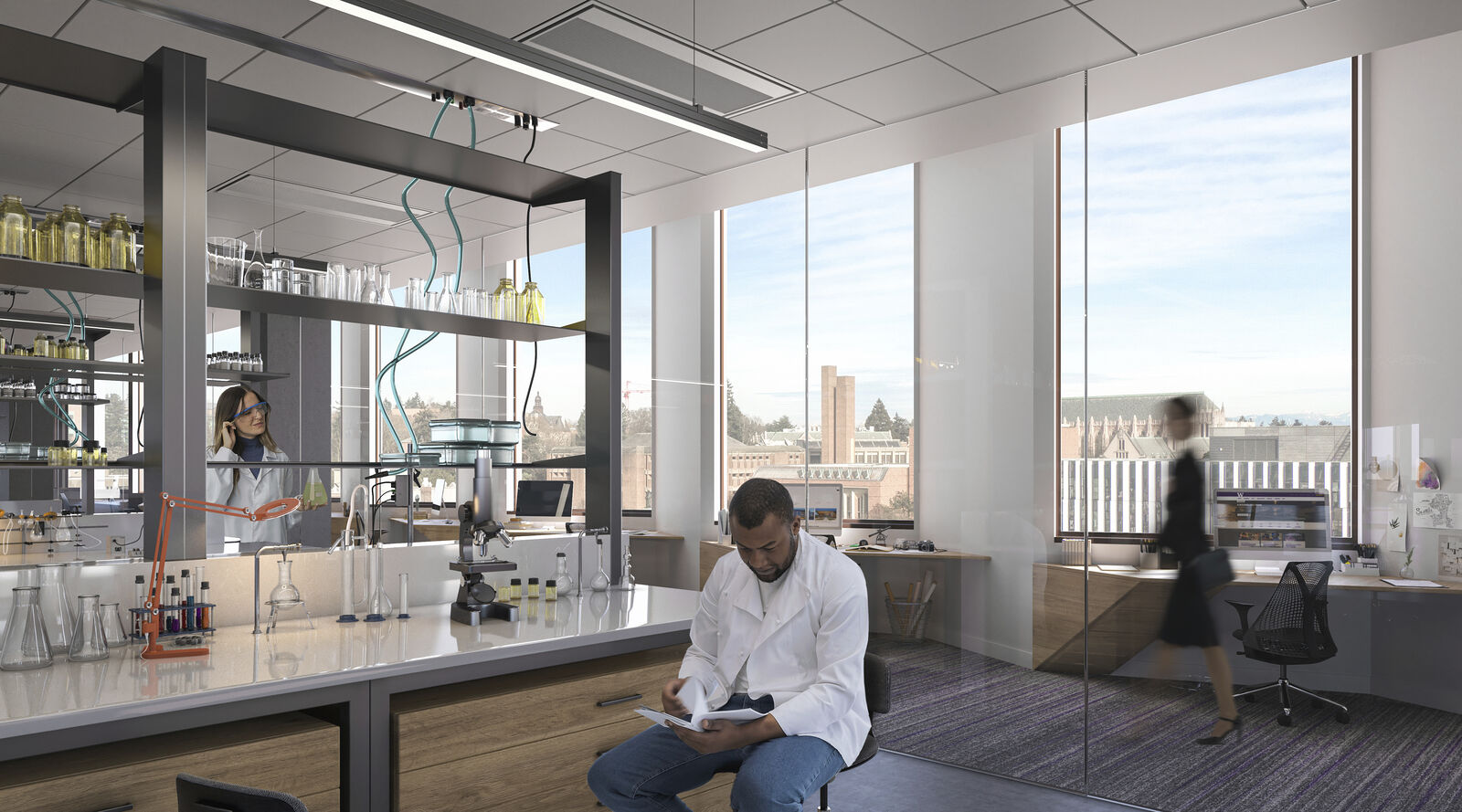
Typical wet lab
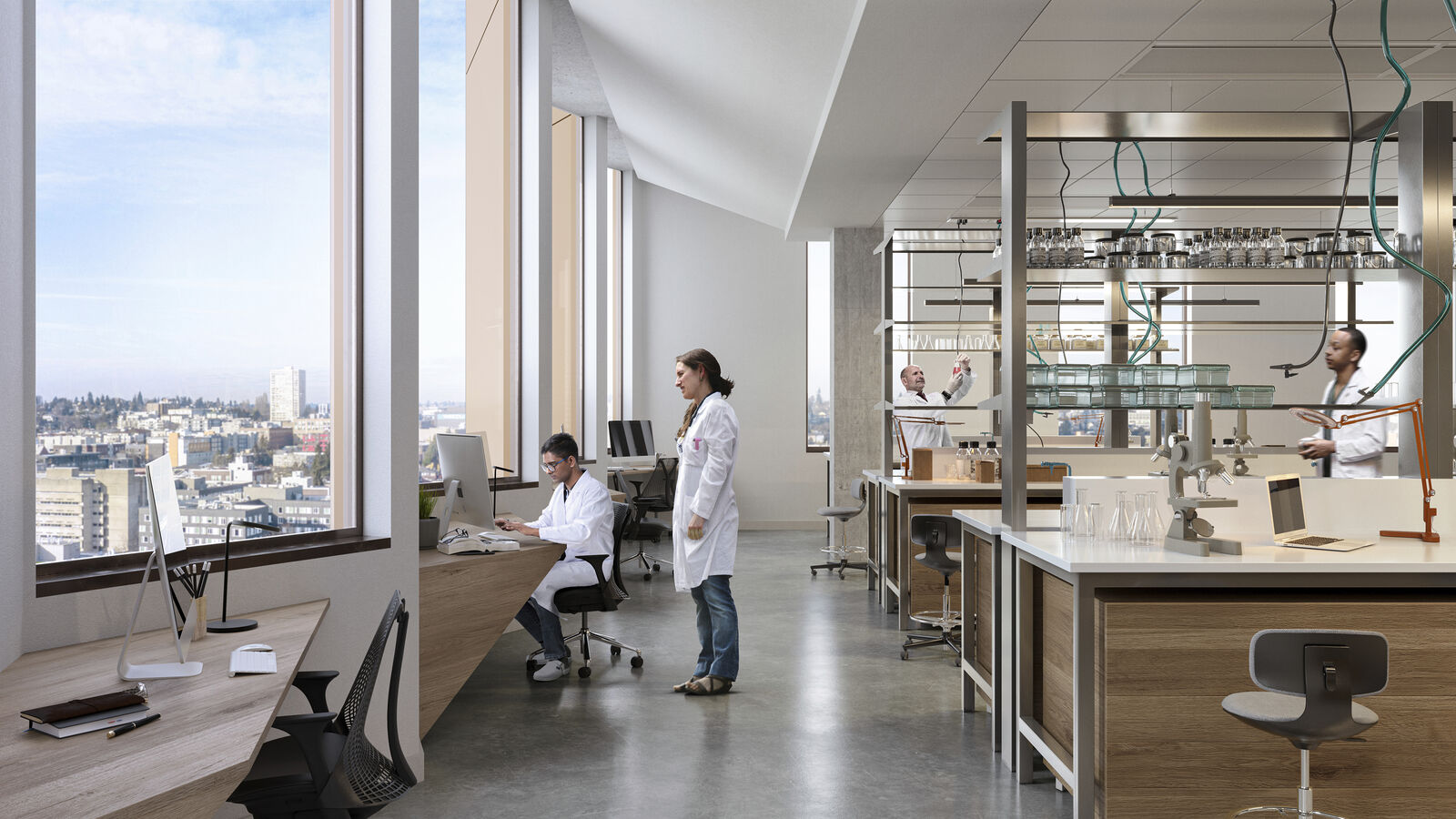
Typical touchdown stations along façade perimeter
Portage Bay Crossing represents a long-term commitment spanning 30 years, 19 construction sites, and up to 3 million square feet of mixed-use development including a lakeside park, bike trails, and pedestrian pathways. With Brightwork at the helm, this planned knowledge community provides new options for how UW uses its campus space for generations to come.
Oregon State University, Jen-Hsun Huang and Lori Mills Huang Collaborative Innovation Complex
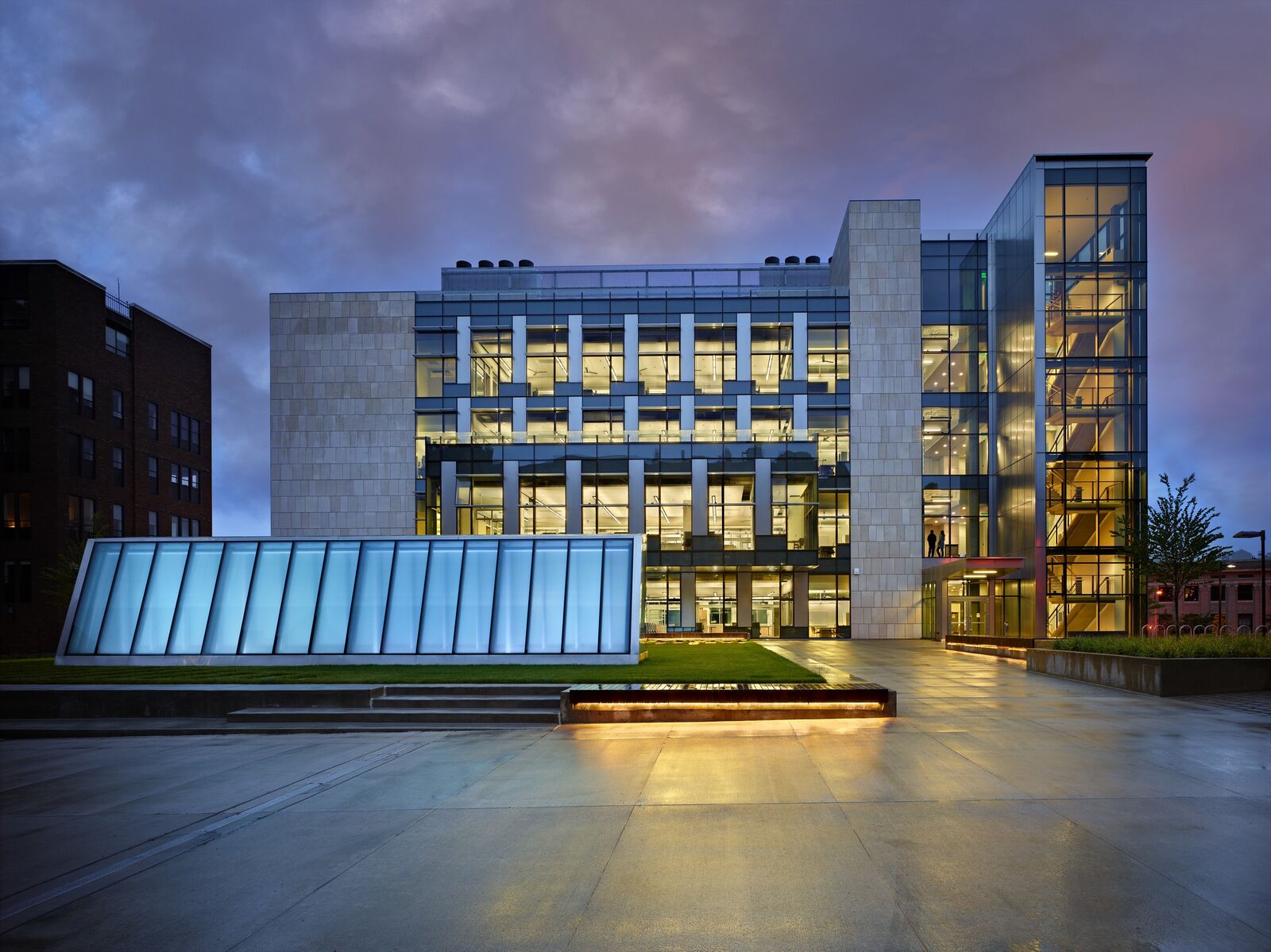
University of Washington, MolES and NanoES Buildings
Driving Discovery